Home Blog Page 5149

Want ban on cow-slaughter, liberation of Kashi and Mathura temples as Dakshina: Ram Mandir Bhoomi Pujan priest Gangadhar Pathak

0

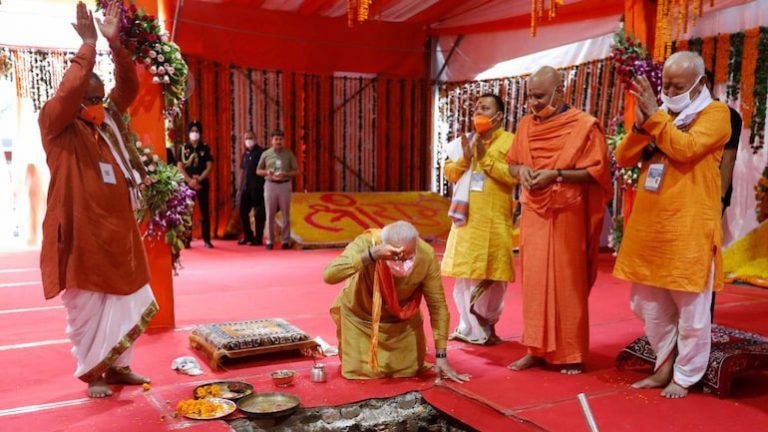
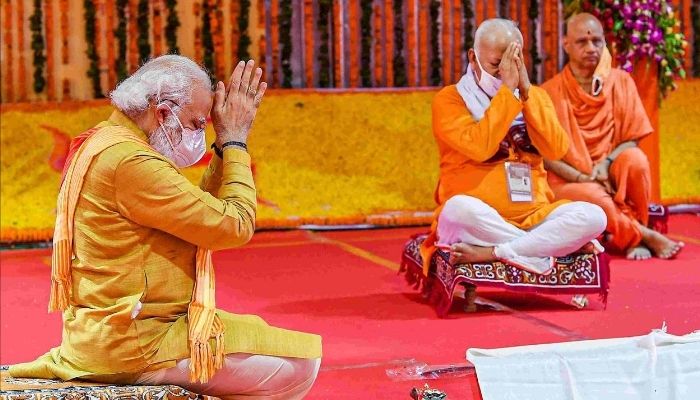
The chief priest of the Ram Mandir Bhoomi Pujan Gangadhar Pathak, who had returned to Vrindavan after duly completing the foundation laying ceremony of the Ram Mandir in Ayodhya has sought ‘dakshina’ from PM Modi. 

Calling PM Modi his ‘yajman’, Pathak has asked him for the abolition of cow-slaughter and liberation of Kashi Vishwanath temple and Lord Krishna’s temple in Mathura as his ‘dakshina’. 

Interview of Acharya Pandit Gangadhar Pathak

In an interaction with the media, Pathak revealed that the trust members in Ayodhya had stopped him from asking for ‘dakshina’ from PM Modi at the time of Bhoomi pujan. 

Pandit Gangadhar asks for ban on cow-slaughter as his dakshina

Acharya Pandit Gangadhar said that he wanted to ask yajman PM Narendra Modi for three things in ’dakshina’ after the pujan and added that it is not a crime for a Brahmin to ask for dakshina from a yajman in a pujan. However, the people of the trust stopped him from asking for dakshina due to the prevailing atmosphere . 

“In view of the atmosphere at that time, I asked for dakshina only as a gesture but now I want to convey my point to him through the media. Firstly, a legislation should be brought in to abolish cow slaughter across the country. The holy land of India should not be sullied by the bovine blood,” Gangadhar said. 

The chief priest of the Ram Mandir added further, “I would also urge him to liberate the abode of Lord Krishna in Mathura and Kashi Vishwanath temple from the illegal encroachments.”

Speaking of the opportunity to carry out the historic Bhoomi pujan, Pandit Gangadhar said that he had been extremely privileged and fortunate that the Lord chose him for the momentous occasion and that he has brought laurels to his hometown Munger and his parents who put him on the Vedic path. He also said that to get the opportunity to make a yajman like Prime Minister Modi do puja was an honour in itself.

Bhoomi Puja of Ram Mandir

The 500 years of struggle came to fruition for millions of Hindu devotees across the world today as Prime Minister Narendra Modi performed the Ram Mandir’s Bhoomi Pujan at 12.44.08 PM. PM Modi who returned to Ayodhya after 29 years, expressed gratitude to all citizens of this nation, Indian diaspora across the world and all the Ram Bhakts on today’s auspicious occasion. 

“Ram Janmabhoomi has got its freedom today. Like August 15 is Independence Day for the country, today holds a similar significance for crores of those who devoted their lives for the cause of Ram temple”, said PM Modi addressing the luminaries and dignitaries present for the Ram Mandir’s Bhoomi Pujan ceremony.

Live telecast of Bhoomi Pujan becomes most watched

The Doordarshan Live telecast of the Bhoomi Pujan of Ram Mandir became the most-watched live telecast. The CEO of Prasar Bharti took to Twitter to inform that the live telecast which was used by over 200 channels in India garnered over 8 billion viewing minutes and 160 million viewers on the 5th of August.

Unethical therapist who revealed personal details of Sushant Singh Rajput on Barkha Dutt’s show accused of money laundering: Read details

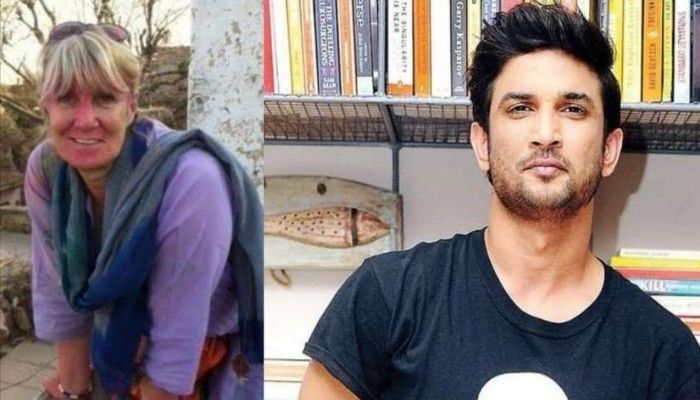
In a recent development, Ashish Shelar, BJP MLA from Maharashtra, has reportedly sought action against the psychotherapist of late actor Sushant Singh Rajput for breaking the ‘confidentiality clause’, sharing his mental health details in the public domain and demanded a probe into alleged financial irregularities.

BJP MLA demands probe into alleged financial misconduct

As per the report, Ashish Shelar, who is an advocate by profession, has asked the law enforcement authorities to acquire the CCTV footage of the clinic of psychotherapist Susan Walker Moffat, verify the list of her clients and check her financial records to figure out whether she is a part of a money-laundering racket.

He asked the Enforcement Directorate and the Income Tax Department to scrutinise her financial records for ‘anomalies which could indicate money laundering’.

In his complaint to the Mumbai Police Commissioner, Joint Director (CBI), Joint Director (ED), Chief Commissioner (Income Tax), and Mumbai Police, the BJP MLA accused the therapist of misconduct and trying to influence the police investigation. “Her actions seem prima facie in violation of the Mental Health Act 2017 and her India residency visa conditions,” he was quoted as saying.

Practicing without valid licence is illegal, says Ashish Shelar

The advocate asked whether someone encouraged the therapist to violate the confidentiality clause and demanded that she should be interrogated in Mumbai. Shelar urged the agencies to take action against her for violating Section 23 (2) of the mental Health Act.

He added that the treatment of Sushant Singh Rajput by a foreign citizen, without a valid Indian licence, is illegal. Shelar demanded verification of her client list to identify politicians or filmstars who might have been in contact with her.

Therapist breached confidentiality clause during an interview about Sushant Singh Rajput

Barkha Dutt on 1st August posted an interview with Sushant Singh Rajput’s therapist, Susan Walker Moffat, which prompted netizens to raise serious questions. While Moffat, who is a practising Clinical Psychologist/Psychotherapist and Hypnotherapist, claimed that Sushant had Bipolar disorder, serious questions are being raised on her breaking client confidentiality. In her statement, Moffat claimed that it was her “duty” to go public.

Further, in a bid to give clean chit to Rhea, Susan Walker said how Rhea was nothing but strong support to Sushant. Rhea Chakraborty, Sushant Singh Rajput’s ex-girlfriend is currently under investigation over her alleged involvement in Rajput’s death. She is now reportedly untraceable and gone into hiding.

‘These numbers are bewildering’: Watch how Rajdeep Sardesai refuses to believe India Today survey’s approval rating of PM Modi

On Friday, the ‘veteran journalist’ Rajdeep Sardesai seems to have had an extremely tough day at the job following his refusal to trust a survey that was carried out by his own channel – India Today as the results were in favour of Modi government.

A year after the 2019 Lok Sabha elections, the India Today-Karvy Insights Mood of the Nation poll was published on Friday. The extremely significant survey, which comes amidst the Chinese pandemic that has struck the country, revealed how Indians continued to be satisfied with the performance of Prime Minister Narendra Modi.

What the survey said

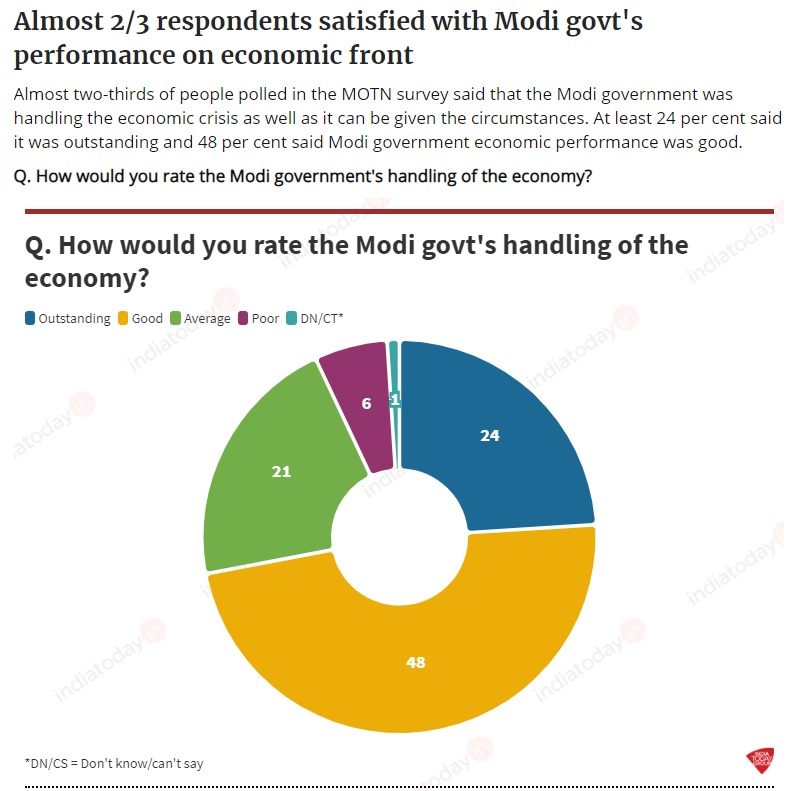
According to the India Today-Karvy Insights Mood of the Nation poll, almost two-thirds of people who participated in the survey were happy about the Modi government’s handling of the economic crisis. At least 71 per cent of the citizens have rated the Modi government’s handling of the economic distress caused by coronavirus pandemic as ‘outstanding’ or ‘good’.

Image Source: India Today

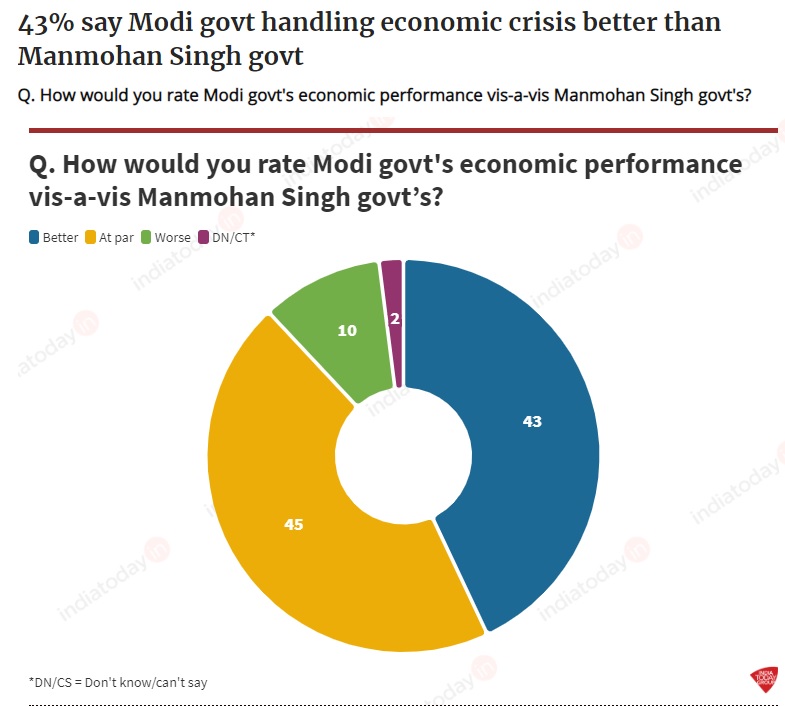
The MOTN survey of India Today also stated that 43 per cent of the total respondents said that the Modi government had handled the economic crisis better than the previous Manmohan Singh government. The poll showed that at least 88 per cent of the respondents said that the Modi government was better or at par when compared with the previous government in handling the economic crisis.

Image Source: India Today

Rajdeep Sardesai ‘bewildered’ by high ratings that the Modi government got in his own survey

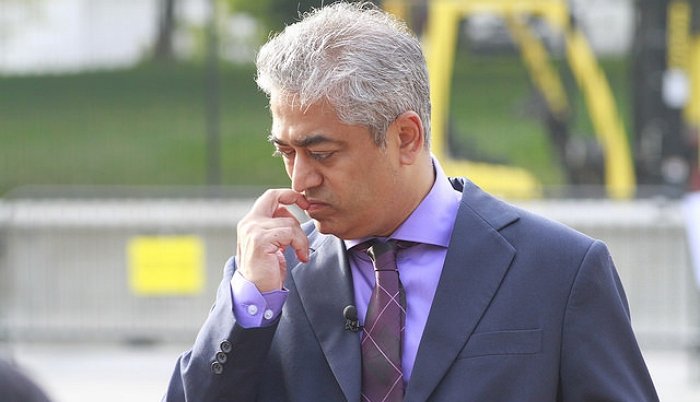
As Rahul Kanwal published these above numbers on his show on Friday, a look of utter shock and despondency swept over the face of Rajdeep Sardesai, who found it extremely hard to believe such favourable response to the Modi government, especially on the economy front that too at a time when the country’s economy has been facing its worst crisis.

Commenting on the survey, Rajdeep Sardesai said that he was ‘perplexed’ to believe the survey, saying that he would trust India Today’s MOTN poll on Modi government’s handling of the recent skirmishes with China but not the one showing favourable results for Modi government on the economy front.

“I can to a certain extent understand the China numbers, but I find these numbers bewildering. This is an issue that should be hitting and hurting the common man. If 24% say outstanding and 48% say good, that is a total of 72%! Let’s try and make some sense of that!” the shocked and disappointed Rajdeep Sardesai said failing to agree on the numbers published by India Today, the very own network to which he works for.

Essentially, when Rajdeep says that he can “to some extent” believe the positive response as far as the China skirmish is concerned but not the numbers that support the Modi government’s handling of the economy, he is basically refusing the believe the numbers that have been put out by his own channel.

Further, questioning Economist Shamika Ravi, he asked how can people actually support the Prime Minister when “everything seems to be going northwards”. In his blinding hate for the Prime Minister and his utter dismay at his approval ratings, Rajdeep even made a Freudian slip and said that the economy was going “northwards” instead of saying it was going “southwards”.

The perennial pessimists like Rajdeep Sardesai, who has been throwing the ‘economy on crisis’ bogey against the Modi government for a very long time now, was perhaps found it difficult to believe that the common masses were pretty much happy with the Modi government’s way of handling the economy.

PM Modi still king of Indian politics, says MOTN survey

According to the India Today-Karvy Insights Mood of the Nation poll, a whopping 78 per cent of the people surveyed found the performance of PM Modi to be outstanding or good. The approval ratings of PM Modi is at its highest presently.

The India Today survey comes at a time when India is facing multiple crises in the form of the coronavirus pandemic, economic crisis as well as escalating border tensions with China.

DD’s live coverage of Ram Mandir Bhoomi Pujan watched by over 160 million people, garnered over 7 billion viewing minutes across channels in India

The Bhoomi Pujan event that laid the foundation of the majestic Ram Mandir in Ayodhya on August 5 was historic. On Friday, Shashi S Vempati, the CEO of Prasar Bharti, informed that estimates suggest that the event had recorded massive viewership.

He said that preliminary viewership data suggest that more than 160 million people watched the live broadcast of the ‘Bhoomi Pujan’ event that took place at Ayodhya on August 5. He further added that about 200 channels carried the live coverage by Doordarshan between 10:45 am and 2 pm.

The historic event also garnered over 7 Billion viewing minutes across TV channels in India, revealed Vempati.

The Bhoomi Pujan event in Ayodhya

The 500 years of struggle came to fruition for millions of Hindu devotees across the world today as Prime Minister Narendra Modi performed the Ram Mandir’s Bhoomi Pujan at 12.44.08 PM. PM Modi who returned to Ayodhya after 29 years, expressed gratitude to all citizens of this nation, Indian diaspora across the world and all the Ram Bhakts on today’s auspicious occasion.

“Ram Janmabhoomi has got its freedom today. Like August 15 is Independence Day for the country, today holds a similar significance for crores of those who devoted their lives for the cause of Ram temple”, said PM Modi addressing the luminaries and dignitaries present for the Ram Mandir’s Bhoomi Pujan ceremony.

Delhi Police responds to article on Delhi anti-Hindu riots, asks if ToI is trying to influence investigation and expects police to take guidance from media

On August 6, the Times of India had published an editorial titled, “Capital aberration: Delhi police, shamed by rioters in February”, in which it went on to castigate Delhi Police for its investigation into both anti-CAA protests and the subsequent Anti-Hindu riots that rocked the national capital in February this year.

In the article, claiming that the northeast Delhi riots of February were a traumatic moment, the editors at Times of India compared the February riots to the 1984 Anti-Sikh riots in Delhi. Blaming the politician-police nexus, the ToI article said that the February riots have reopened old wounds.

It is interesting to note, that witness statements in the chargesheet related to the murder of Ratan Lal also said that DS Bindra, who was hailed as a champion by the media, had also instigated rioters by saying the same thing. The statement by a Muslim witness says that DS Bindra used to tell the Muslims there that if CAA and NRC are implemented, Muslims would meet the fate that Sikhs met during the 1984 pogrom.

Further, questioning the Delhi Police for interrogating Delhi University professor Apoorvanand for his role in the Anti-CAA protests, the Times of India in its article alleged that the investigators were trying to spin a deceptive narrative. It claimed that the Delhi Police was trying to bring a false equivalence between dissent and rioting, which according to them was “absurd and self-defeating”.

“Dissent makes democracy meaningful and representative. CAA and NRC were riddled with enough biases and procedural dangers that a significant section of society, not least its youth and Muslim citizens, felt compelled to come out in peaceful protest. Months later, Delhi police seem to be making little distinction between criminal conspiracy and peaceful protest in that multitude of anti-CAA voices. The stringent anti-terror Unlawful Activities (Prevention) Act with its restrictions on bail, a record of lengthy incarcerations, and abysmal conviction rate at the end of much harassment, is a warning few with a mind to dissent can ignore,” the Times of India report claimed.

Further, blaming Delhi police for not quelling riots, the Times of India article had accused the police personnel of barging into a Jamia library to assault unarmed students.

“Police’s distraction with dissent could be their ticket to exoneration. Every rioter spared, on specious religious grounds as a reported top cop note to subordinate cops hinted, is an invitation to more rioting. Police must stop chasing shadows,” the Times of India editors lamented over the manner in which Delhi Police was carrying out the probe into Anti-CAA and Anti-Hindu riots.

Delhi Police responds to Times of India editorial on the Delhi Riots investigation

A day after Times of India published its editorial on the Delhi-riots investigation, the Delhi Police on Friday wrote a detailed response to counter all the claims made by ToI in its editorial.

The Delhi Police, stating that the editorial was loaded with innuendos and insinuations of a kind, explained how it was wrong on part of the editors at ToI to call the lawful interrogation of Apoorvanand as “absurd and self-defeating”.

Quipping the editors, the Delhi Police said that they have neither issued a press note for summoning Apoorvanand nor have put information regarding the same in the public domain, to ask why did they jump the gun. The Delhi Police also added that they cannot be seeking guidance from the author of the article as to whom to examine during the course of the investigation.

“Is he trying to pressurize the police into abstaining from its lawful duties?,” asked Delhi Police raising doubts over the intentions of ToI editors. The Delhi Police said that the insinuations made by ToI was nothing but ‘thinly-veiled, but doomed, attempt at influencing the investigation itself.

Responding to allegation of Delhi Police shaming the rioters, the Delhi Police in a fierce reply said that the whole society was shamed and taken aback by the violence and they did what they were supposed to do to restore order and carry out meticulous investigation to bring the culprits to book.

The Delhi Police also slammed the authors for their inability to understand criminal jurisprudence and differentiate between the act of conspiring to commit the crime to actually committing the crime itself. The Delhi police said, with a skewed understanding, the author has attempted to create a false narrative that the actual rioters will be spared.

Delhi Police categorically stated that they have the capability and the resolve to bring all those responsible for the riots and said that they have already arrested more than 1500 accused and registered more than 750 cases in connection with the Anti-CAA and the Anti-Hindu Delhi riots in the national capital.

Responding to the allegations of Delhi Police’s investigation into riots will curb dissent and imperil democracy, they said the claim is unfounded as the process of investigation of criminal cases has several checks and balances.

“Democracy is neither protected by uttering homilies nor by penning hastily-put-together articles short on facts and expertise but replet with rhetorics and platitudes,” Delhi Police slammed the editors of Times of India for making such wild accusations.

Concluding their response, the Delhi Police said it was confident of its investigation, which is being carried out in a fair and professional manner, which is solely based on evidence. The Delhi Police said the article like the one ToI published, will only strengthens and fortify their resolve to spare no effort to peel away the cunningly spun web of lies and deception and expose the despicable truth which lies at the heart of this conspiracy.

The Delhi Police also asked the editors of Times of India to publish the rejoinder in the op-ed page of the Delhi edition of Times of India.


‘Be a good wife’: 14-year-old Christian girl Maria Shahbaz, abducted and converted to Islam, to be returned to her abductor, rules Lahore HC

The persecution of religious minorities is rampant in the Islamic Republic of Pakistan. In a shocking decision, the Lahore High Court has ruled in favour of a Muslim perpetrator who abducted, forcibly converted to Islam and married an underage Christian girl called Maria Shahbaz.

Reportedly, a 14-year-old Christian girl, Maria Shahbaz, was abducted in Faisalabad in Pakistan in April 2020 by Muhammad Naqash and his accomplice while she was travelling to her workplace. The Lahore High Court has recently overturned the verdict of a Sessions Court in Faisalabad which had directed that the victim is rehabilitated in a woman’s shelter home. Ruling in favour of Muhammed Naqash, the Lahore High Court ordered that the 14-year-old girl should be returned to the man who abducted her.

The Court ruled that Maria Shahbaz had willingly converted to Islam and married her abductor. Therefore, she must live in his custody and be a “good wife,” WION reported. The Lahore High Court refused to accept documents that revealed that Maria was a minor at the time of her abduction and marriage. As per the report, she was in tears when the judges proclaimed the judgment in favour of her abductor.

Reportedly, 1000 girls belonging to the minority community are abducted, forcibly converted, and married each year.

The case of Maria Shahbaz: Abducted, forcefully converted to Islam and married to her abductor

Eye witness accounts by Pervez Masih, Younas Masih, and Naeem Masih state that Maria was forcibly abducted in a car while she resisted. The men were armed and as such the eyewitnesses could not help the victim. The accused also fired shots in the air. Speaking to International Christian Concern, her mother, Nighat, expressed fears of rape, forceful conversion to Islam, and even murder.

She was indeed married off to her abductor and forcibly converted. While Maria’s marriage certificate stated her age as 18, it contradicted her National Database and Registration Authority (NADRA) certificate. As a part of the modus operandi, a typed statement that she had left her home willingly was also produced.

Persecution of Religious Minorities

This is not the first time that such a case has come to light. Earlier, Huma Younus, a Christian girl who was kidnapped from her home in Karachi on October 10 last year, was reported to have become pregnant due to the incessant sexual violence perpetrated by her abductor Abdul Jabbar. As per the report, she was confined to the four walls of one room in the abductor’s house and was not allowed to meet her parents.

Air India Express flight coming from Dubai crashes while landing at Kozhikode, breaks down in two pieces

0

An Air India Express flight from Dubai skidded of the runway while landing at Kozhikode airport, causing the fuselage of the aircraft to disintegrate. According to initial reports, the flight number IX1344 had 191 passengers on board, apart from 6 crew members. The flight was operating under the Vande Bharat mission during the Coronavirus pandemic.

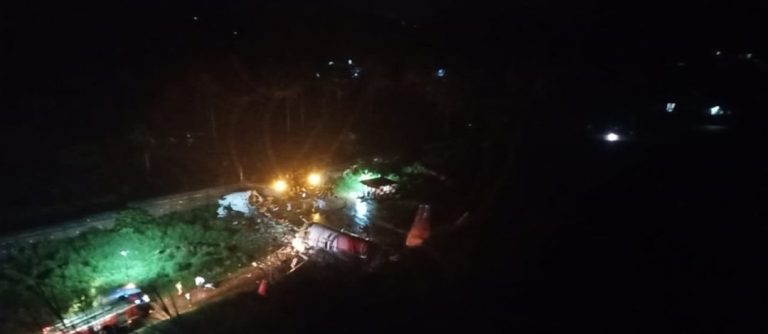
Two persons have died in the crash, while several others are injured. The Boeing 737 aircraft overshot the runway while landing, and crash-landed on the valley below the runway. Images posted by media houses show that the aircraft was broken into two, with its cockpit part separated from the main fuselage, and was lying several feet ahead. The incident took place amid very heavy rainfall in the area around 7:40 pm. The Kozhikode airport has a tabletop runway like Mangalore airport.

According to a statement issued by DGCA, the airport was receiving heavy rains and the visibility was 2000 meters. After landing on runway 10, the aircraft could not stop due to heavy rain and water on the surface. It skidded on the runway and continued to move ahead to the end of the runway, overshot it and fell down the valley approximately 35 feet below. The Boeing 737 plane broke down in two pieces due to the impact of the steep fall. Its front section, which was separated from the rest of the plane, was damaged the most. The plane broke just in front of the wing section, and the middle and the rear part of the plane was intact. The aircraft did not catch fire after crashing. The plane had circled over the airport before landing.

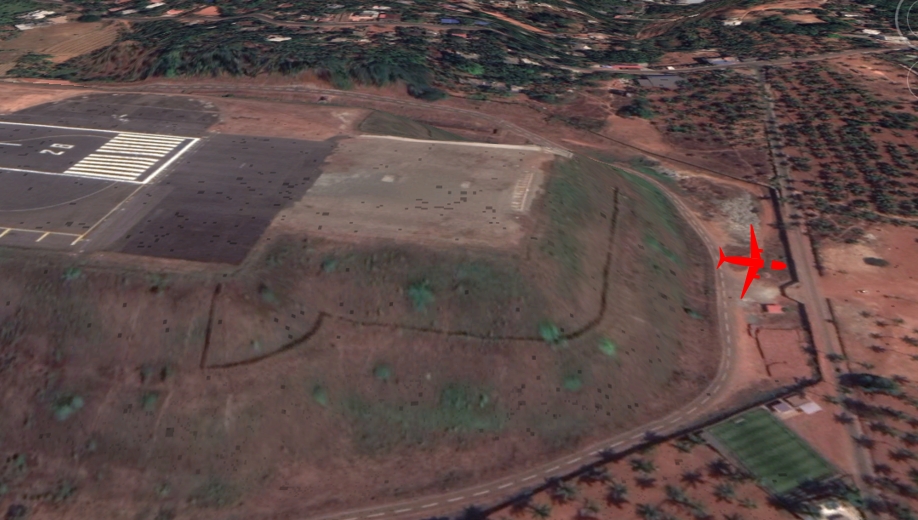
Approximate location of the crashed plane on the eastern end of the table top runway

According to reports, one of the two pilots in the aircraft died in the crash. Captain Deepak Vasant Sathe, a former Indian Airforce pilot, has been identified as the deceased pilot. As per latest reports, 16 people have lost their lives. Several dozen injured passengers have been admitted at hospitals. Most passengers on the flight were people returning home after losing their jobs in the gulf due to Coronavirus pandemic.

By 11.30 PM, the rescue operation was over, as informed by Kerala CM Pinarayi Vijayan. The evacuation was done by an NDRF team and local emergency services. All injured passengers have been shifted to hospitals in Malappuram and Kozhikode. DGCA has ordered a probe into the accident.

India cites Pakistani patronage to Dawood Ibrahim’s D-company in a fresh FATF appeal at the UNSC

0

A day after China raised the Kashmir issue at the United Nations Security Council, India said that it has been a victim of terrorism across the border. Referring to the crimes perpetrated by D-Company operated by mafia don and terrorist Dawood Ibrahim, the Indian envoy said that India experienced first-hand cruel linkage between transnational organized crime and terrorism.

Citing the terror activities in the past, the Indian envoy said, “An organized crime syndicate, D-Company, that used to smuggle gold and counterfeit currencies transformed into a terrorist entity overnight causing a series of bomb blasts in Mumbai in 1993. It resulted in the loss of more than 250 innocent lives.”

The Indian envoy accused Pakistan of being a sanctuary for India-centred terrorists, asserting that the mastermind of 1993 Mumbai attacks continues to enjoy protection from the Pakistani government. 

“The perpetrator of 1993 Mumbai blasts, unsurprisingly, continues to enjoy patronage in a neighboring country, a hub for arms trafficking and narcotics trade, along with other terrorists and terrorist entities that have been proscribed by the United Nations,” the Indian envoy said at the UNSC debate.

India also suggested United Nations to step up its coordination with bodies like Financial Action Task Force (FATF) which have been playing an important role in setting global standards for preventing and combating money laundering & terrorist financing. 

“India strongly condemns terrorism in all its forms and manifestations. There can be no justification of any form of terrorism. And looking for root causes for terrorism is akin to finding a needle in a haystack,” India said.

Uttar Pradesh: Hindu activists block highway, demand arrest of Md Arif, Shadab and others for communal posts on Facebook on Bhoomi Pujan

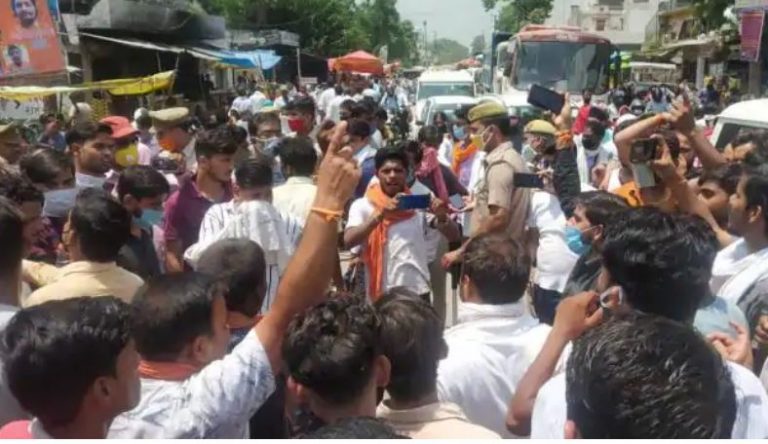
Activists belonging to various Hindus organisations took to the streets in Uttar Pradesh’s Lakhimpur-Kheri district, demanding the arrest of a few Muslim youths for their communally charged posts on Facebook on the day of Ayodhya’s Ram Mandir Bhoomi Pujan event, reports Live Hindustan. 

The protestors allegedly created a ruckus in Uttar Pradesh’s Lakhimpur Kheri’s Mohammadi town and blocked the Lakhimpur-Bareilly NH 370A after one Banne, Mohammad Arif, Mohammad Shadab, and three-four others, who had written the anti-religious post on Facebook on the day of Ayodhya’s Ram Mandir Bhoomi Pujan event, escaped police custody.

Vehicles coming from Delhi and Bareilly got stuck in bumper-to-bumper traffic for hours due to the massive protest. MLA Lokendra Pratap Singh, SDM Swati Shukla and CO Pradeep Yadav reached NH 370A to pacify the protestors and extra police force was deployed in Mohammadi town to gain control of the situation.

In what transpired one Sagar Kapoor, a resident of Bazar Ganj town falling in Muzaffarnagar municipal limits, had filed a complaint on 5 August, against one Mohammad Fayyaz Mansoori’s son Banne, for posting a communally charged posts on his Facebook page and also aginst Banne’s friends, including Mohammed Arif, Mohammed Shadab and three-four others for allegedly supporting Banne. Based on the complaint, the police had registered an FIR against the accused, but somehow the accused managed to escape police custody.

Enraged by this incident, the Hindus had taken to the streets, demanding immediate arrest of the accused.

OpIndia tried contacting Kheri police for more information on the incident, but could not get through.

Three linked to radical Islamist outfits PFI and SDPI arrested for sharing communal posts on Bhoomi Pujan Day

In a similar incident, earlier in the day, Uttar Pradesh police had arrested three people associated with radical Islamist outfits Popular Front of India (PFI) and Social Democratic Party of India (SDPI) for their communally charged posts on social media on the day of Ayodhya’s Ram Mandir Bhoomi Pujan event. As per reports, one of them is a doctor.

The KGB ties of Indira Gandhi: How India became a puppet of USSR during the Cold War

After the Second World War that saw the Allied powers winning a trouncing victory against the Axis, ideological differences began to emerge between the USSR and USA. While the Soviets pushed Communism and Socialism in countries, the US spread democracy and capitalism through proxy civil wars in various countries.

The end of World War II led to the sun finally setting on the British Empire, with countries such as India gaining independence from the British Raj and many other colonies also being freed. The end of the Second World War also witnessed the grand era of espionage led by CIA and KGB; espionage agencies of the two powers.

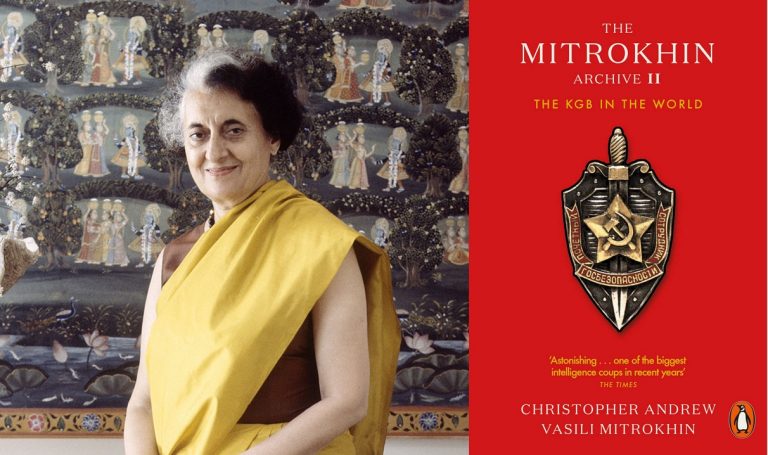
Vasili Mitrokhin, a KGB spy who later defected to the United Kingdom, revealed many secret documents and information to the world through his archives called ‘Mitrokhin Archive’. In the archives, there are several chapters dedicated to India and the Gandhi family.

After India gained independence in 1947, attention of the two espionage agencies diverted to India. Both the countries wanted to gain indirect control of the country, since it would give them control over a potential regional power. In the chapter ‘The Special Relationship With India’ (Part 1: The Supremacy of the Indian National Congress), Mitrokhin reveals that Joseph Stalin had a rather poor opinion of Jawaharlal Nehru, the first Prime Minister of India.

According to the archives, Stalin regarded Nehru and Mahatma Gandhi as “imperialist puppets” who bowed before the British and betrayed their people, helping the British tighten their hold over India. Despite his harsh words for the PM, Nehru often praised the Communist revolution of Soviet Russia and took inspiration from it.

After becoming Prime Minister, Nehru paid a diplomatic visit to the USSR, where each incident was ‘carefully staged’. According to Mitrokhin, the Soviets were eyeing India as a ‘playground’ for CIA and KGB agents. After Indira Gandhi (given the codename ‘Vano’ by Mitrokhin) became Prime Minister, the KGB managed to infiltrate deeper into the Indian government.

Mitrokhin reveals that Indira Gandhi was given 20 million rupees in exchange for crucial information, and to the surprise of Soviet chiefs, didn’t even return the bag in which she received the money. Like Nehru, Indira Gandhi too was made to believe that the Communist revolution of Russia was a ‘beaming light’ for the world, and often praised the ‘revolutionary’ principles followed in Soviet factories which were carefully staged during her visits.

The concerns arise when Mitrokhin claims that 7 cabinet ministers from the Congress party were elected due to Soviet funding during the regime of Indira Gandhi, while the defense minister during Nehru’s tenure (V. Krishna Menon) was also given Soviet backing. Mitrokhin Archives claim that due to Soviet backing and influence, former defense minister V. Krishna Menon purchased Soviet MiGs instead of British lightnings after his election campaign got funded by KGB in 1962 and 1967.

The archives also reveal the Soviet connections of the Communist Party of India. According to Mitrokhin, the CPI was funded in multiple ways by the Soviets; and had received funds in several bizarre ways including through car windows during Delhi traffic! At several instances, the Intelligence Bureau of India had intercepted transfer of funds to the Party treasury of CPI from USSR, to which Nehru chuckled saying that the Soviets had “underestimated” India’s intelligence.

However, he didn’t realise that the Soviets had penetrated deep into Indian embassies and were extracting information via their agents. As per Mitrokhin, many Indian diplomats abroad were seduced (and later blackmailed into revealing classified information) by female KGB agents called ‘sparrows’.

By 1972, the KGB had over 10 Indian newspapers under their payroll and had apparently planted over 3,500 articles in Indian newspapers.

The Archives of Mitrokhin also claim that in the 1977 elections, campaigns of 21 non-communist leaders were financed by the KGB. Under the Nehru-Gandhi regime, espionage wasn’t uncommon in India and the country had become a playground for foreign espionage agencies.

While countries like the UK and USA formed special committees to investigate the claims made by Mitrokhin, the UPA-1 government led by Congress party dismissed the claims and didn’t form any committee to investigate his claims. While the world looks at the archives as the most sensational counter-intelligence document, India did not perform a single enquiry into the archives.

The Congress party dismissed the claims without any investigation or enquiry. There is much to be revealed about the dark history of the Grand Old Party of India, and Mitrokhin’s archives show us the tip of the iceberg of the dirty history of India’s opposition party.