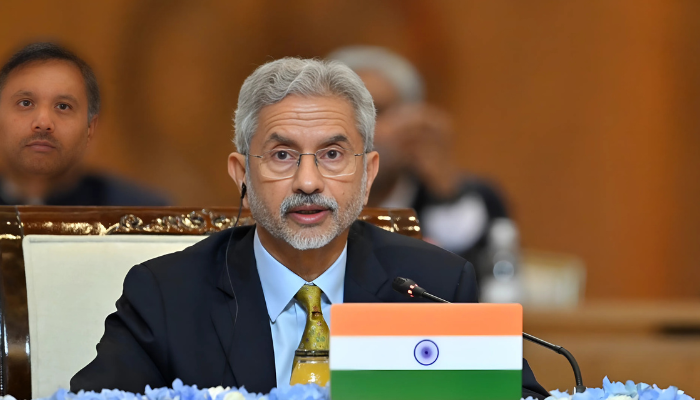
On 22nd February, External Affairs Minister Dr S. Jaishankar said that the government is looking into the statements made by the United States President regarding possible foreign interference in Indian elections. He asserted that the facts would soon come out.
#WATCH | Delhi: On USAID, EAM S Jaishankar says, "…Some information has been put out there by the Trump administration people, and obviously, that is concerning… I think, as a government, we're looking into it. My sense is that the facts will come out…USAID was allowed here… pic.twitter.com/UZT5aimfXX
Dr Jaishankar was speaking at the Delhi University Literature Festival. During the session, he addressed the concerns raised following US President Donald Trump’s statement that the United States Agency for International Development (USAID) allocated $21 million to boost voter turnout in India. In his statement, Trump questioned whether the funds were meant to “get someone else elected,” raising concerns that the money from USAID was used to help the opposition in the elections.
Sanjeev Sanyal, a member of the Economic Advisory Council to the Prime Minister, asked Dr Jaishankar for remarks on the matter. In his reply, Dr Jaishankar acknowledged that USAID was permitted to operate in India “in good faith, to do good faith activities.”
However, he asserted that the suggestions emerging from the US point towards the possibility that “there are activities which are in bad faith.” He said, “I think some information has been put out there by Trump administration people, and obviously, that is concerning. It would suggest that there are activities which have a certain objective out here to push a narrative or a viewpoint.”
He further said, “As a government, we are looking into it, because such organisations have an obligation to report. And my sense is, the facts will come out.”
Notably, on 20th February, US President Trump questioned why USAID sent $21 million for voter turnout in India and wondered whether it was meant to get someone else elected. The Government of India, on 21st February, said that the revelations about USAID funding for certain activities are “deeply troubling” and raised concerns over possible foreign interference in the country’s internal affairs.
During the weekly briefing, MEA spokesperson Randhir Jaiswal said that the relevant departments and agencies are looking into the allegations. He said, “We have seen information that has been put out by the US administration regarding certain USAID activities and funding. These are obviously very deeply troubling. This has led to concerns about foreign interference in India’s internal affairs.”
He further added that the Government of India is looking into the matter. However, he did not provide any details about the investigation.
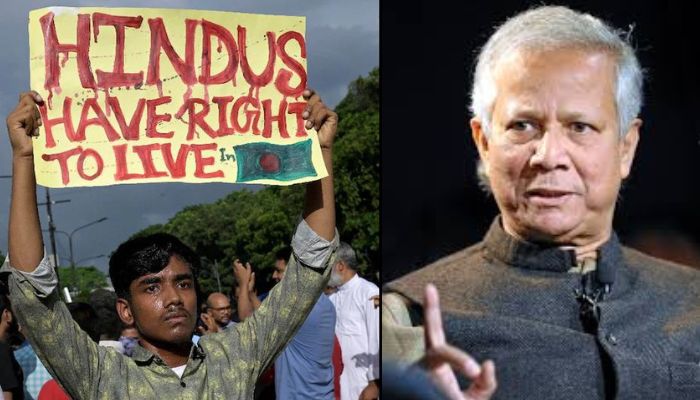
In a bid to control the narrative surrounding its rise to power, the Yunus-led regime in Bangladesh is aggressively attempting to suppress Chapter-6 of the recently released UN Human Rights Commission (UNCHR) report [pdf].
While the regime is actively using media channels and PR firms to highlight alleged human rights violations by the previous Sheikh Hasina government, it is simultaneously blocking access to crucial sections of the report that expose the violent and extremist forces behind its own ascent.
Chapter-6 details chilling accounts of mob lynchings, targeted killings of police officers and political opponents, and the role of Islamist-jihadist groups in orchestrating the crisis.
This raises serious concerns about the legitimacy of the new government and its broader implications for regional security. Why is the Yunus regime so desperate to bury this chapter, and what does it reveal about the forces that brought it to power?
Revelations made by the UN report
The February 12, 2025, report issued by the United Nations Human Rights Office (UCHR) has been extensively used by the Yunus regime to portray Sheikh Hasina’s government as a major violator of human rights and a perpetrator of crimes against humanity.
By leveraging media coverage and public relations campaigns funded with significant financial resources, the new regime seeks to legitimize its rule.
However, at the same time, it is making every effort to suppress Chapter-6 of the report and prevent its publication in local and international media. Understanding the contents of this chapter is crucial in exposing why the Yunus administration fears its dissemination.
Chapter-6 of the UNCHR report states:
“During the protests, sections of the radicalized crowd carried out beatings and other serious retaliatory violence targeting police and Awami League officials or supporters, which in many cases appeared to be a direct response to unlawful violence perpetrated by or blamed on the victims”.
For example, on July 19 in Uttara, a mob severely beat the former mayor of Gazipur and lynched one of his aides to death after he and several other armed Awami League supporters allegedly opened fire on protesters.
The most serious incident occurred on August 4. As the previous government gradually lost control over the country, incidents of retaliatory violence against the Awami League and the police increased.
In Raiganj, under Sirajganj district, a group of armed men – who, according to witnesses, appeared different from other protesters in terms of clothing -attacked the local Awami League office and set it ablaze. The attackers killed five local Awami League officials and a journalist. One of the slain officers was first publicly humiliated – held up by the ear – before being beaten to death.
On the same day, another large group of youths attacked Enayetpur Police Station in the same district. According to police sources, 15 policemen were killed in the incident.
On August 5, three police stations were torched and looted in Feni district, and 16 policemen were attacked. A day earlier, 300–400 armed Awami League supporters had allegedly attacked student protesters in Feni, resulting in the deaths of eight protesters and serious injuries to 79 others.
In Rangpur, armed Awami League supporters – including an Awami League city councilor – opened fire on protesters. Later, a mob captured the councilor and one of his associates, beat them to death, and dragged their bodies through the streets.
In Narsingdi, six Awami League supporters were chased down and beaten to death by a mob after allegedly opening fire on protesters.
A reign of terror unleashed by Islamist-jihadist forces
Chapter-6 of the report further details how Islamist and jihadist forces -including Hizb Ut Tahrir, Ansar Al-Islam (the local affiliate of Al Qaeda), ISIS, and Hamas – established a reign of terror across Bangladesh.
Their activities included lynching police officers, targeting religious minorities such as Hindus and Christians, and engaging in widespread violence, including looting, arson attacks, abductions, and rape.
A vast cache of weapons and ammunition was looted from police stations and prisons, much of which remains unaccounted for, with no apparent effort by the current regime to recover these arms.
USAID and its influence in Bangladesh
Meanwhile, during the second week of January, Elon Musk and his Department of Government Efficiency (DOGE) launched a massive offensive against the US Agency for International Development (USAID) over allegations of wasting billions of American taxpayer dollars on dubious political agendas, including regime change operations orchestrated by the Biden-Kamala administration.
The DOGE, led by Musk and his team, entered the offices of USAID, shutting down much of its operations. Thousands of staff members were placed on administrative leave, and foreign-based employees were ordered to return to the United States.
Musk publicly condemned USAID as a criminal organization responsible for nefarious activities worldwide. There were also allegations that billions of dollars channeled through USAID had found their way into the pockets of key Democratic Party figures, including Joe Biden, Bill and Hillary Clinton, and Barack Obama.
On January 20, 2025, President Donald Trump issued an executive order shutting down USAID. In Bangladesh, USAID played a significant role in the ouster of Sheikh Hasina and in installing the current Islamist-backed regime, with Yunus as its figurehead.
On February 20, 2025, President Trump publicly questioned why the Biden administration had allocated substantial funds through USAID for political activities in South Asia, including US$29 million for “strengthening the political landscape in Bangladesh”. Trump asserted that such funding had been part of a broader regime-change agenda and was now permanently terminated.
Even more alarming are allegations that a significant portion of USAID’s Bangladesh allocation was used to procure weapons – specifically, 7.62 bore sniper rifles.
These rifles were later handed over to Islamist and jihadist elements in Bangladesh and were used during the July-August anti-Hasina coup. Hundreds of innocent civilians and law enforcement officers were killed with these weapons, while training for their use was allegedly provided by the Pakistan Army.
Following Sheikh Hasina’s removal from power, reports indicate that a significant number of these sniper rifles were smuggled into India and distributed among jihadist and insurgent groups.
Conclusion
The suppression of Chapter-6 of the UNCHR report by the Yunus regime is a desperate attempt to conceal the dark realities behind its ascent to power. The documented violence, the involvement of extremist groups, and the alleged foreign interference paint a grim picture of the current government’s legitimacy.
With growing international scrutiny and the exposure of USAID’s controversial role, the global community must question whether Bangladesh’s new leadership is truly committed to democracy and human rights – or if it is merely a front for more sinister forces. The world cannot afford to ignore the implications of this dangerous shift in Bangladesh’s political landscape.
A knife attack in Mulhouse, eastern France, left one person dead and two police officers seriously injured on Saturday. French President Emmanuel Macron condemned the incident as an “Islamist terror act,” France 24 reported.
Prosecutors said that three more officers were lightly wounded in the attack in the city of Mulhouse, carried out by a 37-year-old suspect who is on a terror prevention watchlist, called FSPRT, as per France 24.
The suspect was arrested. France’s national anti-terror prosecutors unit (PNAT), which has taken charge of the investigation, said the suspect first attacked the municipal police officers, shouting “Allahu Akbar” (God is greatest), as per France 24.
Macron said there was “no doubt” that the incident was “a terrorist act”, specifically “an Islamist terrorist act”.
The government was determined to continue doing “everything to eradicate terrorism on our soil”, Macron added, as per France 24.
The FSPRT watchlist compiles data from various authorities on individuals with the aim of preventing “terrorist” radicalisation. It was launched in 2015 following deadly attacks on satirical magazine Charlie Hebdo’s offices and on a Jewish supermarket. One of the seriously injured police officers sustained an injury to the carotid artery, and the other to the thorax, Heitz said.
Police established a security parameter after the attack that happened shortly before 4:00 pm (local time) during a demonstration. Military units were sent to the scene as backup and forensic scientists searched for evidence, as per France 24.
According to union sources the suspect, born in Algeria, has been under judicial supervision and house arrest, and under an expulsion order from France.
“Horror has seized our city,” Mulhouse mayor Michele Lutz said on Facebook. The incident was being investigated as a terror attack, she said, but “this must obviously still be confirmed by the judiciary”.
(This news report is published from a syndicated feed. Except for the headline, the content has not been written or edited by OpIndia staff)
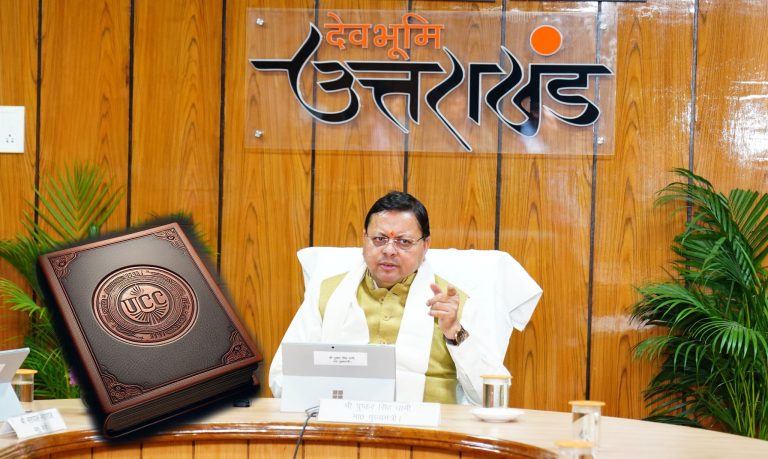
The home department of the Uttarakhand government put an end to rumours regarding some provisions of the Uniform Civil Code (UCC), where it is being said that outsides would get the domicile certificate, saying that it was “wrong and misleading”.
“It has come to notice that some people are spreading misleading and wrong information on social media and other means regarding some provisions of the UCC, such as outsiders will get the residence certificate (domicile) of the state by registering marriage under UCC in Uttarakhand. This is a wrong and misleading fact,” the home department said.
The Uttarakhand government clarified that marriage registration has no links with the residence certificate given that there was no provision in the UCC to ensure domicile to any person based on marriage or other registration.
The Home Department warned of legal action under section 353 of the Bharatiya Nyaya Sanhita (BNS) against those who indulge in the propagation of misleading information and spread of rumours regarding UCC.
The Home Department of the state has requested the general public to trust only the information received from official sources and avoid spreading any kind of rumours.
If anyone has any doubts or needs clarification regarding any provision related to UCC, they can contact the Home Department of the government of Uttarakhand through official channels.
Earlier, Uttarakhand Chief Minister Pushkar Singh Dhami on Friday underscored the state’s efforts to implement the UCC, highlighting its potential to curb violence in live-in relationships.
In the context of live-in relationships, the UCC seeks to provide a framework for registering and regulating these partnerships, which would help prevent violence and abuse.
“Those who have been living in live-in relationships will now have to inform the administration and their parents about it. Our effort is not to violate anyone’s privacy. Our effort is to stop the violence that takes place during live-in relationships,” posted Uttarakhand Chief Minister’s Office on X.
Uttarakhand became the first state to implement UCC. CM Dhami launched the UCC portal and rules on January 27, 2025, marking a significant milestone in the state’s journey towards social justice and equality.
The Uniform Civil Code seeks to establish a set of uniform, personal laws that apply to all citizens, regardless of religion, gender, or caste. This would cover aspects such as marriage, divorce, adoption, inheritance, and succession.
The UCC applies to all residents of Uttarakhand, except Scheduled Tribes and protected authority-empowered persons and communities. This Act does not apply to the Scheduled Tribes (ST) notified under Article 342 and Article 366 (25) of the Constitution, and protected authority-empowered persons and communities under Part XXI have also been excluded from its purview.
Uniform Civil Code Act, 2024 of Uttarakhand, provides a public welfare system promoting the protection of individual rights and social harmony to streamline and simplify the legal processes related to marriage.
Under this, marriage can be solemnised only between those parties, none of whom has a living spouse, both of whom are mentally capable of giving legal permission, the man should have completed at least 21 years of age and the woman 18 years of age and they should not be in the ambit of prohibited relationships.
(This news report is published from a syndicated feed. Except for the headline, the content has not been written or edited by OpIndia staff)
A recent verdict by a district court in Indore, Madhya Pradesh, has brought to the fore grim challenges that members of non-proselytising faiths face from the zealots who go to great lengths to convert people, including young impressionable children, in their “service” for the community.
The district court sentenced a woman, her lover, and an accomplice to ten years in prison for forcibly circumcising her minor son and enrolling him in a madrasa in an attempt to convert him to Islam.
Those convicted include 27-year-old Prarthana Nahata, her Muslim partner Iliyas Ahmed Qureshi (33), and Mohammad Zafar Ali. The trio was found guilty under various sections of the Indian Penal Code (IPC), including charges of forgery and fraud, as well as violations of the Madhya Pradesh Freedom of Religion Act.
The case is an illustration of a father’s unwavering love for his son and his resolute determination to bring perpetrators who took his son away and tried to convert him to Islam to the books.
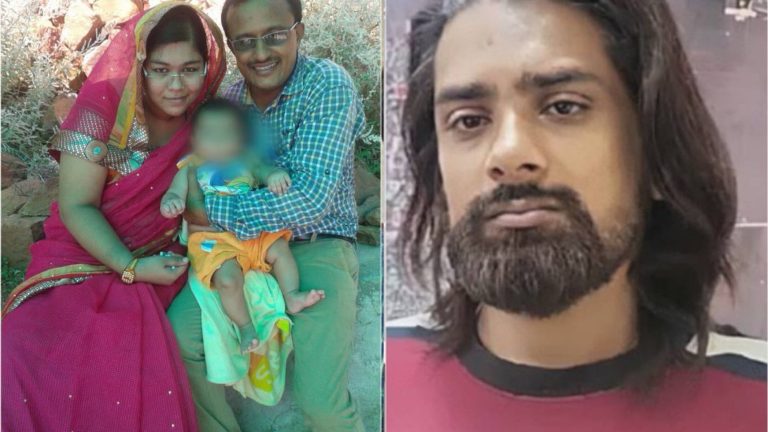
In 2015, Mahesh Nahata, who hailed from Rajasthan’s Barmer, had a son with his wife Prathana who was named Manan. But soon after Manan turned three, Prarthana eloped with her paramour, Iliyas Ahmed Qureshi, taking her son along with her.
-Mahesh Nahata, a native of Barmer, Rajasthan, married Prarthana from Shajapur, Madhya Pradesh, in 2014
-In 2015, they had a son, whom they lovingly named Manan (picture attached)
-But Prarthana eloped with her former lover from her school days, Iliyas Qureshi, taking… pic.twitter.com/330lCEjF23
Manan, who was born into a Jain family, was forcibly circumcised—a ritual commonly practised in Islam. Furthermore, he was enrolled in a madrasa under the name Mohammad Manaan, with Iliyas falsely listed as his biological father. Disturbingly, Iliyas, an active member of the banned Islamist group Popular Front of India (PFI), also instructed Manan in slaughtering chickens and cutting meat—practices that directly contradict the core principles of Jainism.
Despite the challenges he faced, Mahesh remained determined to regain custody of his son. For five years, he fought legal battles to achieve this goal, but his efforts were unsuccessful. In 2023, he filed a new case against Illiyas and his accomplices under MP’s anti-conversion law.
Soon thereafter, an investigation began and the couple, Iliyas and Prarthana, and accomplice Zafar Ali, were jailed.
The Jain community also came forward to help Mahesh get custody of his son. 8 years after he was first taken away by Iliyas and Prarthana, Manan united with his father and a formal ‘Ghar Wapsi’ function was organised to revert him back to Jainism.
In an interview with Organiser following the verdict, Mahesh revealed that Iliyas was a repeat offender, having previously received a ten-year sentence under the Protection of Children from Sexual Offences (POCSO) Act. Mahesh also asserted the case extends beyond personal misconduct and is part of a broader network involving influential figures and political connections.
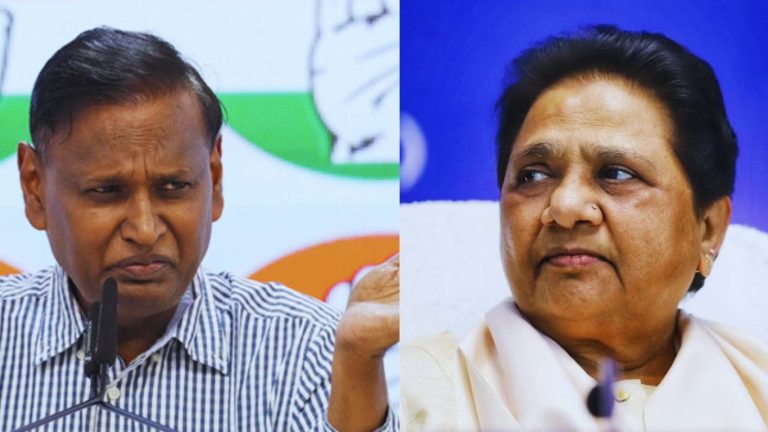
Congress leader Udit Raj has alleged that a reward of Rs 1 lakh has been announced on his life and he is receiving death threats ever since he made remarks criticising Bahujan Samaj Party (BSP) supremo Mayawati. Raj demanded security from the police saying that he has been receiving hundreds of threat calls every day.
#WATCH | Delhi: On receiving death threats, Congress leader Udit Raj says, "You can see the tweets of BSP chief Mayawati, BSP national coordinator Akash Anand, in which they have written in a threatening tone, after which I am getting death threats, and I have also recorded about… pic.twitter.com/UYmpZbqAcQ
Raj said that he recorded some of the threat calls and submitted them along with a written complaint before the Delhi Commissioner of Police Sanjay Arora. He held Mayawati and her nephew Akash Anand, who is also BSP’s national coordinator, responsible for inciting threats against him and demanded an FIR against them.
What did Udit Raj say?
Raj had made a controversial remark against Mayawati during a press conference in Lucknow on Monday (17th February). Referring to the conversation between Lord Krishna and Arjun in Mahabharata, the former MP said, “When during the war in Mahabharata, Arjun asked Krishna, ‘how will I kill my cousins and relatives’, Krishna said, ‘fight for justice and kill your own people’. Today, my Krishna told me to ‘first kill your enemy’. And the enemy of social justice (is) Mayawati, who strangled the social movement. Now, the time has come to strangle her.” Urging Muslims and Dalits to unite against their oppressors, Raj said, “Muslims cannot fight this alone…the Dalits are also not capable alone.”
Urgent attention please..⚠️??
Congress leader Udit Raj openly gave death threat to Behen Mayawati ji. He is threatening to strangle her. Horrifying!
Following his remarks, BSP protested in Lucknow and other cities on Tuesday (18th February) demanding action against Raj. Condemning Raj’s distasteful remarks, Akash Anand posted on X urging the Uttar Pradesh Police to take action against Udit Raj within 24 hours. He added that if swift action was not taken against Raj then the Bahujan youth of the country would not sit quietly.
आज लखनऊ में मान्यवर कांशीराम साहेब के कुछ पुराने सहयोगी और कभी भाजपा कभी कांग्रेसी चमचे उदितराज ने साहेब के मिशन पर लंबा चौड़ा ज्ञान दिया है। जबकि उदितराज अपने स्वार्थ के लिए दूसरे दलों में मौका तलाशने के लिए कुख्यात है। उसे बहुजन मूवमेंट की चिंता सिर्फ इसलिए है ताकि वो किसी दल… https://t.co/Fp8lk500is
Udit Raj later posted on X on 19th February clarifying his statement on Mayawati. He said that when he asked to strangulate Mayawati he did not mean it rather he said that metaphorically. He added that he was merely urging people to recognise her true face and stop supporting her.
मुझे आश्चर्य हुआ कि बीएसपी के लोगों में कोई सोच भी है या नहीं। प्रेस कांफ्रेंस में मैंने कहा कि सुश्री मायावती ने बहुजन आंदोलन का गला घोटा है और अब इनका गला घोटने का समय आ गया है। बहुजन आंदोलन का गला घोटा, मतलब तलवार से किसी का गला मायावती जी ने नहीं काटा। मैंने एक ही वाक्य में…
During his visit to Raebareli Lok Sabha Constituency on 20th February, Congress leader Rahul Gandhi took a dig at Mayawati accusing her of distancing herself from the I.N.D.I. Alliance during the 2024 Lok Sabha elections. Gandhi said that the Congress wanted the BSP to join them in fighting elections against the BJP but Mayawati did not join the alliance for some reason.
#WATCH | During his interaction with students in Rae Bareli today, Congress MP Rahul Gandhi said, "We wanted Behenji to be with us in the fight against BJP. But for some reason, Mayawati ji did not do so. If all three parties had come together, the BJP would have never won…" pic.twitter.com/wwSnP54Z7x
Responding to Gandhi’s accusations, Mayawati posted a series of posts on X accusing the Congress party of having a dual character and a casteist mindset. She said in states where Congress is strong, it harbours hostilities against BSP. But in states like the UP where it is weak, it misguides people by talking of an alliance with BSP.
1. कांग्रेस पार्टी जिन राज्यों में मजबूत है या जहाँ उनकी सरकारें हैं वहाँ बीएसपी व उनके अनुयाइयों के साथ द्वेष व जातिवादी रवैया है, किन्तु यूपी जैसे राज्य में जहाँ कांग्रेस कमजोर है वहाँ बीएसपी से गठबंधन की वरग़लाने वाली बातें करना यह उस पार्टी का दोहरा चरित्र नहीं तो और क्या है?
She added that alliance with Congress has always been detrimental to her party as in such alliance, BSP’s base vote gets transferred to the other parties but other parties’ base vote never transfers to the BSP.
Kuldeep Singh Dhaliwal, who is a Cabinet Minister in the AAP government in Punjab, was relieved from the charge of a department that never existed. Dhaliwal was given charge of two departments in the Punjab government – the NRI Affairs Department and the Department of Administrative Reforms. However, it was revealed through a gazette notification from the Punjab government that the Department of Administrative Reforms does not exist.
The Punjab government issued a notification on 21st February 2025 informing that the Department of Administrative Reforms which was allotted to Dhaliwal via a notification dated 23rd September 2024, ‘is not in existence as on date’. “In partial modification of Punjab Government Notification No. 2/1/2022-2Cabinet/2230 dated 23.09.2024, regarding allocation of portfolios among ministers, the Department of Administrative Reforms earlier allotted to Kuldeep Singh Dhaliwal, Cabinet Minister, is not in existence as on date. Therefore, on the advice of the Chief Minister, the Governor of Punjab is pleased to make the amendment w.e.f. 07-02-2025,” the notification read. Now, the minister is left with only one department.
What did Dhaliwal say?
Responding to the notification, Dhaliwal reportedly said that he was not bothered about any departments as he only wanted to serve the people of Punjab. “You must have read that they had wound up the department. As for me, I had returned from the US to serve Punjab and not take up any departments. These departments have no meaning to me. My only aim is to save Punjab and bring it back on track. It is up to the CM to take whatever kind of work he wants to take from me. The department’s existence is not my concern, “the Tribune quoted Dhaliwal as saying.
In an attempt to cover up the blunder, Punjab CM Bhagwant Mann said that the only department’s nomenclature has been changed.
The department had no staff
As per reports, the Department of Administrative Reforms did not have any staff. After being given the charge of the department, Dhaliwal kept asking the government to appoint a secretary but no such officer was posted. He was later informed that administrative reforms fell under the Governance Reforms Department. Dhaliwal was given the Administrative Reforms Department after stripping him of the Agriculture and Rural Development departments in 2023.
Opposition attacks the government over non-existent department
Taking a dig at the Punjab government BJP leader Amit Malviya wrote on X, “You can imagine the crisis in Punjab government if it took nearly 20 months to realise that a department assigned to one of its prominent ministers never actually existed. Arvind Kejriwal is a charlatan who must be banished from public life.”
You can imagine the crisis in Punjab government if it took nearly 20 months to realise that a department assigned to one of its prominent ministers never actually existed.
Arvind Kejriwal is a charlatan who must be banished from public life. https://t.co/DbP0XlWbNx
Reacting to the news, Shiromani Akali Dal MP from Bathinda Harsimrat Kaur said that this is happening because ministers have no role in governance in the AAP government in the state. “Governance AAP-Punjab style. Allocate non-existent departments to ministers who themselves are ignorant of the portfolios they hold. All this is happening because ministers have no role in governance as the government is being run in remote control from Delhi,” she said.
Gorakhpur Development Authority has issued a 15-day ultimatum to demolish a three-storey mosque which was rebuilt recently after a previous demolition. As per the GDA, the mosque was built ‘illegally’ on municipal land near Ghosh Company Square.
In a notice issued on February 15 to Shoaib Ahmed, son of the mosque’s trustee, he has been asked to demolish the mosque within 15 days saying it was built without getting the map approved within the stipulated time limit. The notice adds that if this is not done, the GDA will demolish the structure with bulldozers and recover the cost incurred from the builder. GDA also pasted a copy of the demolition order on the mosque.
However, Shoaib Ahmed claims that the municipal board had approved the land allocation, and the mosque does not need approval of a map as it is under 60 square meters. The mosque committee has filed an appeal with the divisional commissioner, and the case will be heard on February 25.
The mosque was constructed just a year ago, in place of a mosque demolished by authorities in January 2024. The old mosque named Abu Hurera along with several residential and commercial establishments was demolished in a drive to remove encroachments in the area. This led to a protest by Muslims in the area.
As a result, the municipal board allocated a plot near the site of the earlier mosque to build a new shrine. Reportedly, when officials visited the mosque during its construction, it was found that construction was going on in rapid speed without the approval of the map. Authorities sent reminders several times, but the builders failed to submit the approved map.
As a result, the GDA has directed the mosque committee to demolish the structure within 15 days.
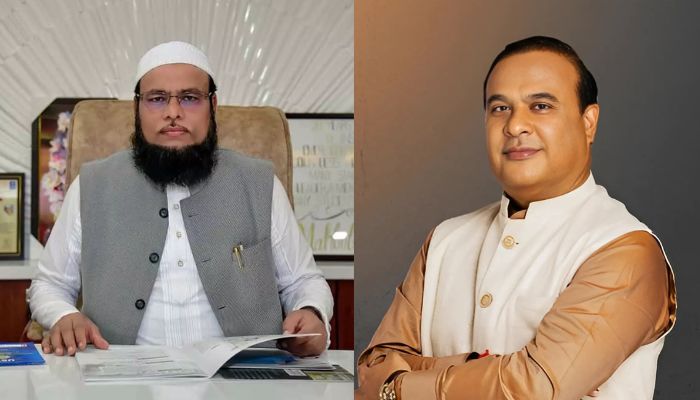
On 21st February, Assam Police arrested the founder and Chancellor of the University of Science and Technology, Meghalaya (USTM), Mahbubul Hoque, from his residence in Guwahati. He has been arrested based on a complaint filed against him in Sribhumi district, linked to alleged disturbances during the CBSE Class 12 physics examination at a school affiliated with his foundation.
Law and order situation at Patharkandi school
According to police reports, the incident took place during the CBSE Class 12 exam at the Central Public School in Patharkandi. The school is operated by the Education and Research Development Foundation of Hoque. Reportedly, out of 274 students who appeared for the exam, 214 were enrolled in Vision 50, a special coaching programme run by USTM. It has been alleged that these students created a “law and order situation,” claiming they were promised “necessary assistance” by invigilators to clear the exam. However, they did not receive any such assistance.
Speaking to The Indian Express, a senior police official said, “Prima facie, it seems to be a case of massive criminal conspiracy having a larger sinister design.”
It has been alleged that students were assured assistance in the 30-mark MCQ section of their CBSE Class 12 exams in the school in Patharkandi. However, when external invigilators refused to comply with the conspiracy, the students protested, leading to chaos. The angry students locked the students inside, leading to a law and order situation, and the police had to be called. When police arrived to calm the situation, the real conspiracy was exposed.
Mahbubul Haque was arrested from his residence in Guwahati’s Ghoramara in the intervening night of February 21 and 22 by a police team comprising Panbazar Police and Special Task Force (STF) of the Assam Police.. A case has been registered in the case.
Notably, Hoque’s Education and Research Development Foundation runs several educational institutions, including the University of Science and Technology, Meghalaya, on the outskirts of Assam.
Arrest follows repeated attacks by Assam CM
Notably, a few days ago, the Chief Minister of Assam, Himanta Biswa Sarma, laid fresh allegations against Hoque, suggesting that USTM was a “fraudulent” institution issuing “fake certificates and degrees.” The university, however, dismissed the claim, saying it was “unfounded.”
CM Sarma, in August last year, accused the university of being involved in construction activities that led to flash floods in Guwahati. He used the term “flood jihad” to allege that deforestation and hill-cutting by USTM led to the floods.
He also criticised the architectural design of the university’s main gate, which features three domes. He said, “It’s embarrassing to go there, you have to go under ‘Mecca’.” He suggested that a namghar (a Hindu community prayer hall) and a church should also be included. “They have kept a ‘Mecca’ there. Let them make a namghar, make a church. We will walk under all three, why will we walk under just one?” he had stated.
He had also threatened to file an FIR against Hoque, accusing him of wrongly obtaining an OBC certificate in 1992.
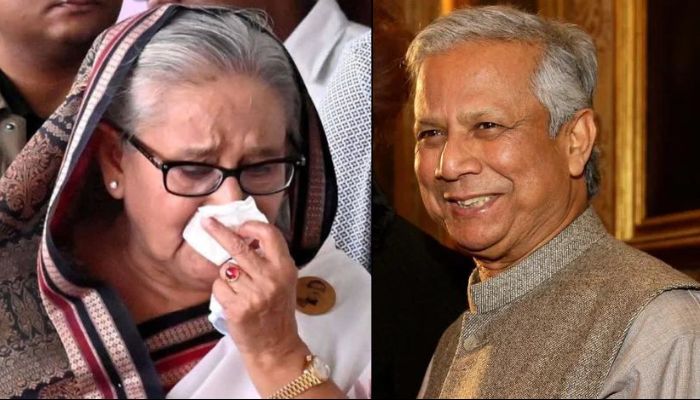
The interim government in Bangladesh, led by controversial Nobel laureate Muhammad Yunus, has launched a campaign to hunt down Awami League (AL) leaders from across the country. The nefarious mission has been dubbed ‘Operation Devil Hunt.’
Yunus was tasked to lead Bangladesh following the undemocratic ouster of former Prime Minister and Awami League supremo, Sheikh Hasina. He was expected to take the Islamic Republic on the path of ‘democracy’ in the politically turbulent time.
However, the regime of the Nobel laureate is busy pandering to Islamists, ensuring the revival of the opposition BNP and crushing the Awami League with an iron fist as part of a well-thought-out political strategy.
Mass arrest of Awami League leaders and supporters
On 8th February this year, the interim government led by Muhammad Yunus launched the infamous ‘Operation Devil Hunt’.
A day earlier, violent clashes broke out between ‘student protesters’ and Awami League supporters after the former attacked the residence of AL leader Mozammel Haque in Gazipur.
Muhammad Yunus seized the opportunity to hunt down the leaders and supporters of his arch-rival Sheikh Hasina under the pretext of providing justice to ‘student protestors.’ And thus the never-seen-before saga of political witchhunt began against the Awami League.
? BREAKING: Early this morning, one of the coordinators of the anti-discrimination student movement(SAD), Hasnat Abdullah, and Sarjis Alam, openly ordered the MURDER of former Gazipur Mayor Jahangir Alam, Minister for Liberation War Affairs Mozammel Haque, and Gazipur District… pic.twitter.com/8sV7RQZaMj
The Home Ministry of Bangladesh issued a statement, shrewdly labelling the clashes between the ‘student protestors’ and Awami League supporters as ‘terrorist attacks.’
Home Affairs Advisor Jahangir Alam Chowdhury declared, “Those who attempt to destabilise the country will be arrested.” The repeated dehumanisation and attempts to portray the Awami League as an ‘enemy of Bangladesh’ were soon followed by mass arrests.
The situation is so grim that a whopping 7,301 people have been put behind bars in connection to the Gazipur attack. Needless to say, most of the people arrested belong to the Awami League.
Initially, the witchhunt was limited to Gazipur but it later spread to Cumilla and Noakhali. The centrally supervised campaign was executed by the police, Bangladesh Army, Navy, Air Force, Border Guard Bangladesh (BGB), Ansar and the Coast Guard.
The interim government had made its sinister agenda clear even before the launch of the ‘Operation Devil Hunt’
Muhammad Yunus as ‘mute spectator’ and facilitator of persecution
Muhammad Yunus has largely remained a ‘mute spectator’ to targeted attacks, aimed at erasing the history of Awami League in the context of Bangladesh’s independence and politics.
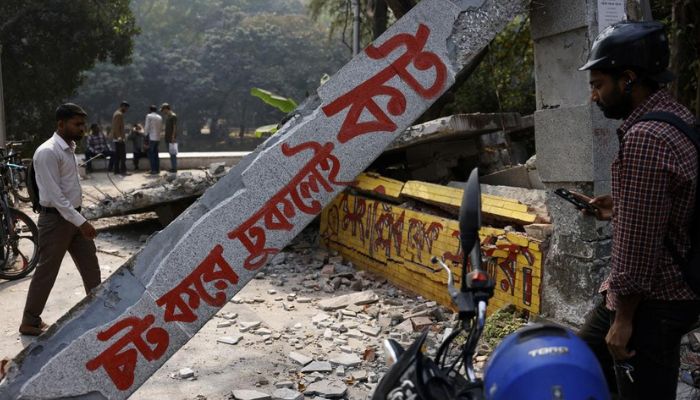
The ‘student protestors’, who oversaw the ouster of Sheikh Hasina, had launched ‘Bulldozer procession’ outside the residence of Bangabandhu Sheikh Mujibur Rehman on 5th February this year. They carried out vandalism and set the building on fire.
The radical elements, who enjoy the backing of the Yunus regime, also damaged murals of the founding Father of the Nation. They also carried out destruction and arson attacks on the residences of Sheikh Hasina’s late husband and cousins.
A demolished structure in front of residence of Sheikh Mujibur Rahman, image via Reuters
The ‘student protestors’ also attacked the homes of ex-President Abdul Hamid and former Bangladeshi army chief Moeen U. Ahmed. Far from condemning the vandalism, Yunus appeared to justify the actions. This explains why no ‘student protestor’ has been arrested.
He has also remained tight-lipped on attacks on Awami League leaders and the destruction of the party office.
In January this year, Yunus’ regime introduced new textbooks for primary and secondary students which falsely claim that the first declaration of independence of Bangladesh was made by Ziaur Rehman, the founder of BNP, and not Mujibur Rehman.
The ‘Nobel laureate’ has made it clear that he is willing to go to any length to distort the country’s history and erase the contribution of the Awami League in the Independence Movement.
Thus, Muhammad Yunus had been a facilitator as well as a mute spectator of the persecution of the Awami League based on the circumstances.
Interim government and its attempt to eradicate the Awami League
Soon after coming to power, Muhammad Yunus chalked out plans to ban the Awami League. The plan did not go through due to fierce opposition from rival political parties.
In October 2024, the interim government banned the Bangladesh Chhatra League, the student wing of the Awami League, over supposed violence committed by its members since 2008.
On 25th January this year, Mahfuz Alam announced, “The elections will be contested among pro-Bangladesh groups only.” He defined pro-Bangladesh groups as BNP, Jamaat-e-Islami etc and said that these parties would form a government through ‘fair electoral process’.
“But Awami League’s rehabilitation will not be allowed in this country,” he emphasised, indicating that there are no plans to let Awami League contest elections in a ‘democratic’ Bangladesh.
For the unversed, Mahfuz Alam is an ‘adviser’ to the interim government of Bangladesh. The anti-India propagandist had previously served as a ‘special assistant’ to Muhammad Yunus.
Interestingly, Yunus had described the same man as the ‘brain’ behind the campaign to remove Sheikh Hasina from power in August 2024.
Remind: In the video, Dr. Yunus is introducing his special assistant Mahfuz Alam, also known as Mahfuz Abdullah, and he is a member of Hizbut Tahrir of the banned organization.The Mastermind of the fall of Bangladesh Ex Government Sheikh Hasina. pic.twitter.com/5KJHBRh9ml
Islamist Sarjis Alam, who had previosuly threatened India and demanded the handover of former Prime Minister Sheikh Hasina, had also demanded a blanket ban on the Awami League.
“We cannot hold voters accountable for the crimes of the party. However, the registration of the Awami League as a political party must be completely revoked,” Alam had declared.
Owing to his anti-Indian rhetoric, the Islamist was made the chief organiser of the Jatiyo Nagorik Committee. Sarjis Alam is also close to the Muhammad Yunus-led-interim government in Bangladesh.
Asif Mahmud Shojib Bhuyain, the Youth and Sports Adviser to the interim government of Bangladesh declared on Wednesday (19th February) that Awami League should be ‘eradicated politically and ideologically’ from the Islamic Republic.
He declared, “The Awami League should not only be banned but also politically eradicated from Bangladesh. This is my personal stance. Now, discussion may take place on how it will be implemented. There are precedents of this in various countries”
“I have seen my brothers martyred by their [AL men] firing before my eyes. I have been a victim of disappearance; I have seen death up close. It is impossible to even think of the political rehabilitation of Awami League,” Bhuyain brazened out.
BNP and Muhammad Yunus are ‘natural allies’
Muhammad Yunus and Bangladesh Nationalist Party are united through their common dislike for Sheikh Hasina and the Awami League.
After Hasina fled Bangladesh, Yunus described the moment as ‘Second Liberation Day.’ BNP Chairperson Khaleda Zia had also hailed ‘brave children’ for their struggle that made the ‘impossible possible.’
Both the BNP and Yunus regime did not hold back from making their anti-India agenda clear. Prior to Hasina’s ouster, BNP was openly supporting the boycott of Indian goods and products.
Although Yunus couldn’t afford to openly endorse the ‘India Out’ campaign, he tried to temporarily placate the anti-India Islamists by not exporting Hilsa fish to India.
When Khaleda Zia was politically active, she would openly support insurgents in India’s North East by hailing them as ‘freedom fighters.’
Her anti-India sentiment was recently echoed by one of the advisors of the Yunus regime, Mahfuz Alam.
BNP has always promoted a ‘Bangladeshi identity’ based on Islam. Its politics centred around the majoritarian form of Islamic nationalism that had no place for Hindus and other religious minorities in the story of Bangladesh.
The party had also been involved in anti-Hindu atrocities. While Yunus has not directed Muslim mobs to run rampage, he has strategically remained tight-lipped on their activities.
It is now increasingly clear that Muhammad Yunus, through his advisors and ‘student activists’ are creating a conducive environment to ban Awami League and end its political participation in perpetuity. The draconian, large scale arrests of supporters of Awami League under the garb of ‘Operation Devil Hunt’ is part of the same strategy.