Home Blog Page 5454

UP CM Yogi Adityanath’s father passes away, was admitted in AIIMS

0

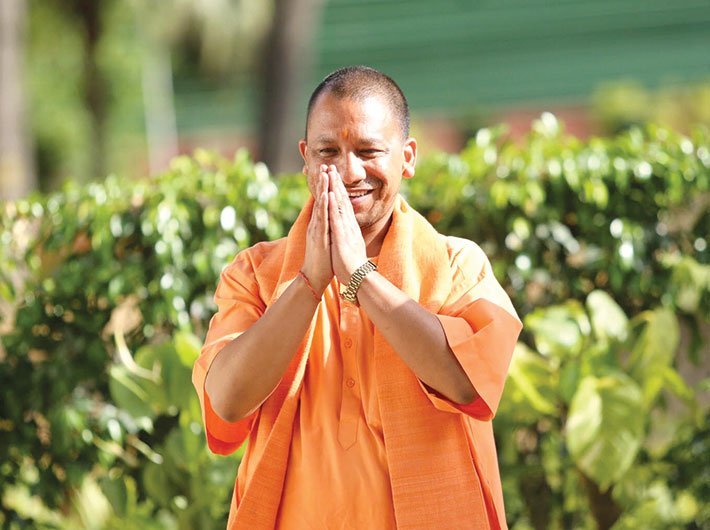
UP CM Yogi Adityanath’s father Anand Singh Bisht has passed away in AIIMS, today morning at 10.44 am. He was suffering from liver and kidney ailments.

As per reports, the CM’s father was admitted in Delhi AIIMS on April 13 and was critical. He had liver and kidney issues and also given dialysis. He was brought to Delhi AIIMS from Rishikesh in a critical condition on April 13.

UP state’s additional chief secretary has offered the deepest condolences on behalf of the UP government over the news.

UP CM Yogi Adityanath had accepted ‘Sanyas’ at an early age. His family is from Uttarakhand. Yogi’s father was a retired government employee. Yogi Adityanath, born as Ajay Singh Bisht in 1977, had taken Sanyas, renouncing family life and social relations at a young age when he had joined the Nath sect in 1994.

Yogi Adityanath is the fifth child of his parents Anand Singh Bisht and Savitri Devi.

Despite Yogi Adityanath being an MP from the age of 26 and eventually becoming the CM of Uttar Pradesh in 2017, his parents and siblings have maintained a humble lifestyle.

It is reported that CM Yogi was in a meeting when the news of his father passing away was conveyed to him. The CM, however, continued his meeting and got up only after completing the meeting on coronavirus situation in the state.

The UP CM has conveyed that he could not meet his father during his last days because he has been tied up to perform his duties as the CM of the state to ensure the battle against coronavirus goes on. Referring to his father as the “Janmadata in his Purvashram” (the birth-father in his pre-Sanyas life), the CM stated that he had learned the values of social welfare, selflessness and hardwork from his father at an early age.

The CM has conveyed that he also won’t be able to participate in the last rites of the father because he is duty-bound towards the 23 crore people of the state. He has requested his mother and the family members of his Purvashram to obey lockdown rules and perform the last rites of their father in compliance to the social distancing norms laid down by the government.

CM Yogi has stated that he will meet his family only after the lockdown has been lifted.

Radio Mirchi RJ Fahad gives communal colour to Sadhus lynchings, suggest it’s result of lynching of Muslims

Radio Mirchi RJ Fahad who hosts ‘Purani Jeans’ on Radio Mirchi UAE today took to Twitter to give a communal colour to the lynching of the two Sadhus in Palghar, Maharashtra.

RJ Fahad implied that had everyone condemned the lynching of Muslims, the Sadhus may not have been lynched by the mob in Palghar on the fateful night of 16th April. As a self-professed “Nehruvian”, RJ Fahad reiterated that the Sadhus being lynched by a mob as Palghar Police stood by and even let the mob take over the beatings, was because of Muslim lynching.

Ironically his attempt at giving the barbaric incident a communal angle came hours after he claimed there was no communal angle as Maharashtra Home Minister Anil Deshmukh claimed that the victims and the perpetrators were both of the same religion.

Radio Mirchi RJs and their Islamist ideology

Radio Mirchi RJ Fahad is not the only one to have displayed the Islamist ideology. His colleague, RJ Sayema has also defended the allegations of misbehaviour against Tablighi Jamaat members amidst coronavirus outbreak. She had dismissed allegations of nurses being molested and doctors being spat on as ‘fake news’. Earlier, she had incited a mob to gather outside Delhi Police headquarters during the anti-CAB protests. She had also justified the anti-CAA violence in Delhi because everyone was ‘silent’ when Article 370 was abrogated making Jammu & Kashmir an integral part of India.

RJ Sayema’s tweet

Another former Radio Mirchi VP Akash Banerjee was caught spreading fake video.

Coronavirus lockdown relaxations in some states, MHA objects to Kerala lifting bans in certain districts: Read details

On April 14, Prime Minister Narendra Modi had announced the extension of the nationwide lockdown to May 3, owing to the rising cases of the Wuhan Coronavirus outbreak. The decision to extend the lockdown came at the backdrop of the sudden surges in Coronavirus cases from the Tablighi Jamaat linked individuals.

Prime Minister Modi in his address said, “Till April 20, every area, district, city, state will be keenly observed and checked how the lockdown is being followed. Whichever area succeeds in this 1-week test, will get some conditional relief and relaxation.” As of April 20, the Chinese virus had infected 14,175 people and claimed 543 lives. Several State Governments had decided to extend the lockdown further or tighten the restrictions to flatten the curve of Coronavirus cases.

The NHAI has resumed toll collections on national highways.

Delhi

On Sunday, following a ‘comprehensive assessment’ of the Coronavirus outbreak in Delhi, the State Government had decided to provide no relaxation in restrictions until April 27. All Central government employees above the rank of Deputy Secretary have to attend their offices. The attendance for the lower staff has been kept at 30%. All such employees would be permitted on the basis of their identity cards.

Maharashtra:

The Maharashtra Government had allowed some industries to operate in non-containment zones, keeping in mind the financial crunch that the state would face after the humanitarian crisis caused due to the Coronavirus outbreak was over. Stricter provisions had been imposed in hotspots.

Moreover, suburban trains have been kept closed to the public until May 3. โ€œDoor-to-door delivery of newspapers would not be allowed in Mumbai and Pune which are in the red zone,โ€ CM Uddhav Thackeray informed.

Uttar Pradesh:

The Lucknow district administration and the Gautam Buddha Nagar district administration has announced that there would be no ease in restrictions until May 3 that have been imposed, amidst the Coronavirus lockdown. The collection of toll tax in the State will begin from today.

The movement of people has been restricted in the hotspots zones such as Agra, Kanpur, Varanasi, and 16 other districts. The Public Works Department (PWD) has been permitted to resume operations while 11 types of industries have been allowed to work in non-containment zones.

Telangana

On Sunday night, following a Cabinet meeting, the Telangana Government had decided to extend the lockdown in the State till May 7. Besides the extension of the lockdown for an additional four days, the State Government has ruled out any scope of relaxation in the current restrictions.

According to an ‘intensive survey’ conducted in the State, 95% of people are in favour of extending the lockdown without any ease. Chief Minister K Chandrasekhar Rao said the decision was taken after analysing the situation of Coronavirus outbreak in the State from all angles.

Punjab:

On April 19, the Chief Minister Office (CMO) of Punjab informed that there would be no ease in the curfew in the State. Chief Minister Amarinder Singh has asked District Commissioners to enforce the curfew strictly in all districts with no relaxations during the month of Ramzan. Having said that, farmers and those involved in the procurement of wheat will be exempted from these restrictions.

Madhya Pradesh:

On Sunday, Chief Minister Shivraj Singh Chouhan had informed the media that limited activities such as agriculture, procurement of wheat, MGNREGA, construction, road repairs, etc. would be allowed in some districts of Madhya Pradesh from April 20. “We have told industries to resume operations as per the Centre’s guidelines”, he was quoted as saying.

Chouhan, however, ruled out any ease in restrictions in the cities of Indore, Bhopal that account for 80% of the cases in the State. 26 out of 52 districts in Madhya Pradesh are affected by the Chinese virus.

Kerala:

On April 17, the Kerala Government had announced new lockdown guidelines wherein several districts in the State had been marked as red, orange (A & B), and green zones.

Areas such as Kasaragod, Malappuram, Kozhikode and Kannur which are classified as ‘red zones’ will remain under complete lockdown till May 3. While regions that fall under Orange A category will have relaxations in restrictions from April 24, those in the Orange B Category will have partial lockdown from April 20 onwards.

Lockdown restrictions would be completely lifted in Kottayam and Idukkiย from Monday. Public transport has been allowed to ply in these areas. The Kerala Government had also allowed the opening of restaurants, local workshops, bookshops and short distance commute via two and four-wheelers. The Ministry of Home Affairs has, however, objected to the decision. The MHA has stated that allowing bus travel, pillion riders and passengers in cars are a violation of lockdown orders.

Haryana:

The Haryana Government has decided to permit limited industries to operate from April 20. No operations are allowed to continue in red zones. Passes of different colours will be issued to individuals to ascertain the nature of work.

For instance, blue passes will be issued to construction workers, red ones for essential workers and ordinary passes for business organisations. Eateries along highways will remain operational while farmers can transport their crops to the market on receiving a text message from the State Government.

Bihar:

On Sunday, the Deputy Chief Minister of Bihar, Sushil Kumar Modi, has announced that work on 40,000 pending projects across 8,386 panchayats would resume from April 20 onwards. Reportedly, a total of 5 lac workers would be hired by the State Government for the pending projects. All Group A and B officers will have to report to their offices while 1/3rd Group C employees will work on a given day.

Karnataka:

The Karnataka government has extended the lockdown till April 21. A decision on extending the lockdown further or easing out some of the stringent restrictions would be made in a cabinet meeting on Monday. Malls and showrooms will remain closed in the State. 33% of employees will work in Government Departments and they will be ferried in contract buses. An incident commander has been appointed for each containment zone in the State.

Earlier, the government had permitted IT Companies to resume their operations with 1/3rd workforce and allowed two-wheelers to run on the roads from Aril 20 onwards. But, the decision was soon rolled back.

Bengaluru: Health workers attacked by a violent mob in coronavirus hotspot Padarayanapura, 59 including local marijuana seller Firoza arrested

On the evening of Sunday, 19 April, a team of health workers and BBMP officials in Bengaluru was brutally attacked by a violent mob in the Padarayanapura locality, a coronavirus hotspot. As per reports, the government health team was there to quarantine the primary contacts of coronavirus positive patients.

The visuals of the incident doing rounds on social media show an unruly mob chasing, beating the government staffers, breaking the arrangements made by them and creating a mayhem.

A group of BBMP doctors, nurses and ASHA workers had gone to the Padarayanapura locality to take into quarantine 58 primary contacts of coronavirus positive patients to a government-run quarantine centre. As per reports, the Padarayanapura locality is one of the worst affected localities in Bengaluru, with 17 positive cases has been identified so far.

The Padarayanapura locality off Mysuru Road and Bapujinagar were the two areas in Bengaluru that were completely sealed off from April 10 onwards.

It had been declared a hotspot and barricades had been set up by the police to enforce a complete lockdown. The violent mob also broke down the barricades. As per a report in Times of India, two Tablighi Jamaatis who had returned from Delhi’s Nizamuddin Markaz had first tested positive and then 15 of their contacts were found to be coronavirus positive.

The violent mob attacked the police after the primary contacts of the coronavirus patients refused to be taken into quarantine. The mob is seen brutally attacking the policemen and health workers and damaging the barricades, tents and other set ups made by the officials.

As per latest reports, the violence in Padarayanapura may have been pre-planned. A report by TV9 states that the mob had operated in 4 teams. While 1 team was seen indulging in violence on the main road, a second team was vandalising the check post, a third team was pelting stones on policemen and a fourth team was vandalising public property.

As per the latest reports, a total of 59 people have been arrested after police finally managed to control the mob. A woman named Firoza, allegedly a local marijuana seller, have been arrested for instigating the mob. Reports say that over 100 violent miscreants had gathered to attack the health workers and policemen.

Karnataka Home Minister has stated that a total of 5 FIRs have been lodged so far. He added that he has met the CM and briefed him over the issue and such acts of violence will not be tolerated.

This is not the first such attack on ASHA workers and healthcare staffers in Bengaluru. Earlier, in a similar incident, ASHA workers and nurses were brutally attacked in the Sadiq Layout near Tannisandra. It was reported that the calls to attack the health workers were given from a local Mosque.

Palghar lynching: 110 including 9 juveniles arrested for murder of two Sadhus and a driver where police acted as mute spectator

Horrifying visuals have emerged in the Palghar lynching incident where a mob of over 100 people killed two Sadhus and their driver even as the Police stood there as mute spectators, just letting the barbaric act unfold.

Disclaimer: The videos contain violent images, viewer discretion recommended.

As one can in the above video, one of the Sadhus is running to save his life and trying to latch on to the policeman as the cop he releases himself and walks away, leaving the Sadhu to the mob.

Another haunting video is when the police are escorting the Sadhus out to a bloodthirsty mob where one of the Sadhus can be seen latching on to the cop, hoping he’d be safe with the man in the uniform. However, the cop can be seen leading him to an open space where mob starts beating him and the cop just shakes his hands off, leaving the old man to die.

Palghar incident details

The blood-curdling incident happened on 16th April, 2020 in Palghar, Maharashtra. Two Sadhus, 70-year-old Kalpavrishka Giri Maharaj and 35-year-old Sushil Giri Maharaj along with their driver 30-year-old Nilesh Telgade associated with the Juna Akhara and were on their way from Mumbai to Gujarat to give Samadhi to another Sadhu. At Gadakchinchale village, a wild and frenzied crowd of over more than 100 people attacked them. The villagers deemed them as thieves and started attacking them. The police claims that their team which had rushed to the spot to rescue the 70-year-old man also came under the attack of the violent mob.

People of the Sadhu community say that this village is tribals dominated and most of them are Christians while some are Muslims. Some even say that the police, out of fear of the tribals, handed over the Sadhus to the mob which later beat up those Sadhus to death with sticks. Reportedly, when the tribals of a particular religion started beating up the Sadhus, the police did not intervene.

Questions raised over Palghar incident

After the videos of brutality went viral on social media, many questioned the role of police as mute spectators in the barbarity that was unleashed on the Sadhus. In one of the videos, one of the policemen can be seen leading Kalpavriksh Giri Maharaj and letting go of his hand after handing him over to the mob.

Akhara Parishad condemns the Palghar incident

Speaking to OpIndia, Akhil Bharatiya Akhara Parishad President Mahant Narendra Giri hinted at a bigger conspiracy over the murder of the Sadhus.

Appealing to Sadhus he said that if any Sadhu takes up Samadhi, then only those Sadhus in the same village should visit so that the coronavirus lockdown guidelines are not violated. “In front of the police, two of our mahatmas were murdered. Are the Muslims in the area targeting Sadhus under the guise of coronavirus? I appeal to Maharashtra government that this should be investigated. Once lockdown is over, Akhil Bharatiya Akhada Parishad will talk to Juna Akhara and hold Maharashtra government accountable for this. The father of Maharashtra Chief Minister has always respected Sadhus and Mahatmas. In your rule if two Sadhus get killed brutally, it is highly condemnable. There are reports that the culprits were Muslims. I appeal that they be arrested and action is taken,” he said.

Juna Akhara letter

In its appeal to the Maharashtra CM, Juna Akhara has condemned the murder of two Sadhus in front of the police.

Palghar arrests

As per reports, the authorities on Sunday filed and FIR against the villagers and 110 people including 9 juveniles have been arrested so far. 101 have been sent to judicial custody till April 30 while the juveniles have been sent to juvenile shelter home.

Former Maharashtra Chief Minister Devendra Fadnavis has called for a high-level inquiry into the matter to ensure justice.

Maharashtra Chief Minister’s office took to Twitter on Sunday night and said that the Palghar incident has been acted upon.

“Nobody guilty in this heinous crime and shameful act will be spared and they will be brought to justice in the strongest way possible,” The CMO tweeted.

Rajasthan Congress office-bearer, who had justified attack on Police, arrested for spreading hatred and enmity on social media

Rajasthan police have arrested an office-bearer of the Congress party for posting provocative messages on social media. Mohsin Rasheed Tonk, a resident of Tonk in Rajasthan, was arrested by Katowali police on 19th April for objectionable posts on Facebook.

According to reports, Mohsin Rasheed Tonk had posted messages and videos related to Coronavirus pandemic on the social media platform, which promoted hatred and enmity between communities. A case under section 505 (2) (Statements creating or promoting enmity, hatred or ill will between classes) of the IPC has been registered against him by Rajasthan police.

He has presented before the magistrate, after which he was sent for judicial custody.

Mohsin is the state general secretary of the minority cell of the Congress party, and he is also the incharge of the website of the Rajasthan Congress, as per the party website.

Although it is not clear for which post he was arrested, on 17th April, Mohsin had posted a video on his Facebook account where he had justified the brutal attack on police personnel in Tonk on that day. On April 17, a police patrol team was attacked by a violent mob at Kasai Mohalla in Tonk. As per reports, a crowd had started gathering in the Kasai Mohalla area on Friday morning despite lockdown orders. A police team was sent to patrol the area and convince the locals to stay at home. However, the locals gathered outside allegedly started attacking the police team.

But the Congress leader chose to justify the violence by saying that the locals attacked the policemen believing them to be RSS workers as they were in plainclothes. He said that it was a case of misunderstanding as rumours were going on that RSS and Bajrang dal workers were roaming around in streets as policemen, and the locals mistook the policemen in plainclothes as RSS/Bajrang workers and attacked them. He said that if locals knew that they were policemen, they would not have attacked them. By this, he sought to justify that attack on RSS and Bajrang dal workers is correct, although it was wrong to attack policemen.

Other images of Mohsin Rasheed are also doing rounds on social media where he is seen posing for photographs with NDTV India Editor Ravish Kumar amongst other Congress leaders.

West Bengal sitting on a time bomb as many believe Mamata Banerjee government is fudging coronavirus positive and death numbers

The suppression of facts and fudging of data has become a major worry for authorities and health experts in West Bengal, which has now snowballed into a huge controversy between the Trinamool Congress-led West Bengal government and doctors who are whistleblowing against the state government for forcing health authorities not to declare deaths from coronavirus unless certified by a state government-nominated panel.

According to a Sunday Guardian report, the manipulation of data on coronavirus cases by the Mamata Banerjee-led government, expectedly, has come under fire from officials of the Kolkata-wing of the Indian Council of Medical Research, who have blamed the TMC-led government for slowing down the mandatory tests related to the deadly virus.

The worst part is that the state government has not even responded to the Ministry of Health and Family Welfare of the Central government’s declaration that the whole of Kolkata city and some of its districts should be declared as Coronavirus hotspots.

“It is requested that the states should utilise the extended lockdown period to the maximum extent to convert the hotspots (identified by the red colour) to orange and green zones,” a senior official of the ministry had said in a note.

However, shockingly, the notification is of no value in Kolkata and parts of Bengal.

Mamata Banerjee-led govt disposing dead bodies

Recently, there have been reports that the cops and health workers close to Mamata Banerjee’s regime, hiding their identity, disposed of dead bodies in the dead of the night raising suspicion regarding the extent of coronavirus scare in West Bengal.

Meanwhile, young doctors have taken to social media platforms to state how the Mamata Banerjee-led government has been threatening and pushing them to sign death certificates. The junior doctors further said many hospitals in Kolkata and across the state lacked the proper gear to handle such patients and the levels of infection were high and spreading fast because there were large-scale violations across the city and the state.

Reportedly, there was an ugly incident in Bankura over the ‘secretโ€™ cremation of two bodies, allegedly by the ruling party workers. A case was initiated against the local MP for protesting against the surreptitious cremations.

No social distancing norms

The policy of social distancing norms has also been casually implemented in the state. In particular, life has been near-normal in Muslim-dominated localities and questioning this indulgence of a health hazard as the home ministry in Delhi subsequently did invited charges of ‘communal’ bias.

It is believed that the state government has not treated the need to locate, test and isolate those 300 or more from West Bengal who attended the Tablighi meet as a matter of priority.

A doctor, who circulated his message through his colleagues, said he was shocked to see how a pregnant woman was handled by the Medical College in north Kolkata, despite she being a coronavirus positive patient.

“She was in the labour room and eventually had a caesarean operation. She came in contact with over 50 nurses, doctors and paramedics. The labour room is overcrowded, each bed has three patients. So the woman would have infected many who came in her contact. Once it was known that she came from Eden Hospital (in the Medical College) on College Street,” said the doctor.

Shockingly, the entire news was suppressed. The authorities initially announced that 50 paramedics would be singled out even though their numbers were much higher. Later, the number was reduced to 25. After a few days, all those suspected paramedics were asked to join work back.

“We have many patients who are ill and desperate for medical care and supplies,” said a young doctor requesting anonymity.

In another case, a coronavirus infected patient was pushed into the general ward because the hospital had not develop a separate facility. At each step, the state government officials are telling doctors to fudge data on coronavirus related cases.

The doctors allege that they do not have enough protective gear. As a result, doctors, nurses and paramedics are all highly exposed to the virus. What worse is, the state government is forcing healthcare workers to do their duty.

“If this is happening in the heart of the city, you can imagine what could be happening outside Kolkata,” a doctor said. The doctor added some of the whistleblowers were reprimanded by police for warning others about the current crisis in Kolkata. Many were forced to delete their posts, the doctor revealed.

Fudging coronavirus figures to show less positive patients

The manipulation of information heralds a new stage in the state governmentโ€™s response to the huge coronavirus, the doctors claim. The doctors express fear of losing their job if they reveal the real state of affairs in Bengal. The doctors say the official tally of infected patients is far lower than the true scale of the outbreak across the state.

“I have a feeling that the state government is telling us that the discussions online are entering into the zone of perceived sensitivity for the state,” said Dr Ranabir Sen, a private practitioner. Earlier, Dr Sen had said that uninhibited reporting provided valuable public knowledge about the outbreak.

“It is very clear to us we need more supplies and more diagnostic equipment. So letโ€™s get those so that we can all work better. We need to save Bengal from a bigger crisis and the state government needs to realise it fast. There is a benefit of allowing social media critique. You get to know what is wrong and what is right. But in this state that is also getting slimmer,” Dr Sen added.

Low testing centres, facilities

In addition to that, there are many other problems in the state. The director of the National Institute of Cholera and Enteric Diseases (NICED), the primary testing facility in West Bengal, had also alleged that the institute was getting fewer samples of coronavirus to test than it was getting in the initial days of the outbreak.

“We are all waiting here to do the tests but the samples are not coming. It dropped to 20 last week. During the initial days of the outbreak, we got about 90-100 samples to test. We really do not know what is happening,” NICED Director Shanta Dutta had alleged.

She further said NICED Kolkata had over 27,000 testing kits, enough for the whole of the eastern region, but the decision to send the number of samples to a particular laboratory is taken by the West Bengal government. She said she was surprised at the recent comments of the state government blaming the Centre for a “shortage of kits”.

According to the stateโ€™s Health Bulletin released on 13 April, the number of persons tested for coronavirus in the state stands at 2,793. The number of tests done till 12 April according to state data was 2,523 and till 11 April was 2,286. Thus, it is only 507 samples, which is about 18% of all coronavirus samples tested in the state, have been carried out since 12 April.

The number of testing centres in the state has increased to seven, which include five government facilities and two private. NICED has given about 7,500 testing kits to the West Bengal government. The total number of active cases in Bengal till 12 April was 110.

Instead of giving the total number of infections in West Bengal, the state health department has been giving active cases in the state, which exclude those who have recovered from the viral infection or who have expired. This makes it difficult to gauge the true scale of the infection in the state. All other states are reporting total cumulative positive cases, along with cured, death and active numbers, maintaining much better transparency. The number of 15 active infections in a day is the highest in the state so far. 270 samples were tested in two weeks until 15 April, which was also one of the highest in the state so far.

Further, the state government claimed only seven people have died from corona in the state, the number is highly contested by doctors and paramedics who claim the state government is not sharing details of those dying from coronavirus. When Coronavirus patients die in the state, the authorities are listing them under any other disease that they may be having, and not classifying them as Coronavirus deaths. Last week, a patient, named Sudipta Mukherjee, got admitted and eventually died. She was 43 years old and her body was sent out of the hospital as a Hepatitis B case.

Another patient, suspected to be a coronavirus patient was admitted into the hospital. Nurses and paramedics refused to touch her, saying they do not have any protective gear. Eventually, one gear was organised and the patient was asked to put on the gear and was sent to the general ward. “Why is it we are not sending patients to the wards identified for positive corona cases and suspected corona cases?โ€ asked Dr Majumdar.

She said she was seeing these restrictions being accompanied by intensified propaganda. It is reported that the state government officials are working overtime to hide the severity of the disease. Doctors complain that state authoritiesโ€™ approval is needed for each test, and is regularly refused. As a result, patients suspected to be suffering from coronavirus are not being isolated soon enough.

“If you suspect coronavirus and send the samples, they are routinely refused, there are times when the report returns after five days,” said Dr Arjun Dasgupta from the West Bengal Doctors Forum, which represents 19,000 doctors.

The services in at least four major government hospitals and two private facilities in Kolkata have been hit after doctors and nurses came into contact with patients who later tested positive. The doctors are unanimous that coronavirus deaths are not being fully reported, with only a state-appointed committee allowed to declare if a patient has died from coronavirus.

Propaganda by Mamata Banerjee-led government

Many in Kolkata believe the state government is working to re-establish control over the narrative by releasing expensive advertisements to news channels.

Filmmakers have been encouraged to make films to highlight the stateโ€™s governmentโ€™s coronavirus-related health operations. Arindam Sil, a top filmmaker, has started directing a movie, titled ‘Ek Din Jhor Theme Jabe’ (One day the Storm will End). Interestingly, these lines are written by none other than Mamata Banerjee herself. Some of the TMC MPs, Nusrat Jahan and Mimi Chakraborty will act in the film.

Bengal – a time ticking bomb

The situation in Bengal is very grave, top health officials reported. Besides Kolkata, the districts of Midnapur, North and South 24 Parganas, Murshidabad, Malda and Dinajpur are sitting on a ticking time bomb, said Abishkar, a social worker who has been travelling across the state with relief material.

According to the Reuters report, only 3,000 tests have been conducted in a state which has a population for more than 90 million people. West Bengal has done just 33.7 tests per million, compared to a national average of around 156.9 per million, and 442 per million in Rajasthan.

“Take a look at what happened at the Howrah hospital where 17 nurses and four doctors tested positive only because they had no protective gear. As a result, the whole hospital was shut down. If you are having such a crisis in Kolkata, then you can easily realise what is the case in the districts where the hospitals are totally ill-equipped to handle such crises. Worse, members of a particular community are just not following health warnings and are congregating for prayers and routinely visiting crowded markets without any protective gear. The cops are unable to control them,” alleged Abishkar.

“There are places where the medical centres have no doctors, no nurses, no paramedics. This is a very dangerous situation. The doctors are flatly refusing to work saying they are at risk without the protective gear. In many places across the state, riots have broken out over distribution of food through the public distribution system (PDS). The situation needs to change. All I hope is that the people have the right to hold the government accountable rather than to be managed. I want everything to become better in Bengal,” added Abishkar.

โ€œCo-operate with the administrationโ€, absconding Tablighi Chief Maulana Saad has a message for his followers

0

On Sunday, Maulana Saad Kandhalvi, the Tablighi Jamaat Chief who has been on the run from the law enforcement, released an audio clip wherein he urged the Tablighi Jamaat members to cooperate with the administration and health officials during quarantine and Coronavirus testing.

Interestingly, Saad was responsible for organising the religious congregation at the Nizamuddin Markaz which was attended by more than 3400 jamaatis. According to the Tablighi Jamaat Chief, the epidemic is, in fact, the result of people distancing themselves from their Creator.

Saad added, “It is important to get treated after contracting a disease. Take care of your neighbours. Ensure that none sleeps hungry. Help others as per your capacity.” He further emphasised, “If we exhibit brotherhood and treat others humanely, then, our creator Allah will have mercy upon us.”

It must be noted that in a sermon on March 23, Saad instigated Muslims to defy the lockdown. He said, โ€œThis is the time to fill the mosques. I have been saying this since the beginning that this is the time to fill up the mosques. Do not come into the talks to empty the mosques. In fact, it is time to increase the mosques.โ€

Maulana Saad on the run

The Tablighi Jamaat chief is still absconding. The Delhi Police crime branch had sent two notices to Maulana Saad under Section 91 of the Criminal Procedure Code. The police have asked Maulana Saad to provide some documents. The second notice was sent after the first notice was found โ€œunsatisfactoryโ€. While Maulana remained untraceable Delhi police slapped another notice with 36 questions at his farmhouse in Shamli near Delhi.

There were reports that the head of the Tablighi Jamaat, Maulana Saad, who claims to have quarantined himself in the wake of the Wuhan Coronavirus outbreak was reportedly using his time to gather support and mobilise the Jamaatis. Saad, a resident of Zakir Nagar is allegedly hiding on the outskirts of Delhi at a supporterโ€™s house. Reportedly, the Islamic cleric had hidden in a densely populated area, knowing well that it could help evade arrest. 

Charges of Culpable Homicide, Money Laundering

On March 31, the Delhi police had registered a First Information Report (FIR) against Maulana Saad under the Epidemics Act 1897 for allowing religious congregation in the month of March, despite repeated warnings from the center and the state government. On Wednesday, the Tablighi Jamaat Chief was booked for culpable homicide not amounting to murder under Section 304 of the Indian Penal Code (IPC).

On April 16, the Enforcement Directorate (ED) had registered a money laundering case against the Maulana Saad and nine others under the Prevention of Money Laundering Act (PMLA) based on predicate offence that was registered by Delhi police. The agency had begun investigating the trust and the transactions of the trust that belonged to the Tablighi Jamaat chief.

Coronavirus Spread in India- With and without the Tablighi Jamaat incident: A quantitative estimation

We are now witnessing the spread of COVID-19 pandemic arising from the novel Coronavirus. Several countries are battling this disease adopting a multi-pronged approach. The primary focus in all the countries has been to flatten the curve so that their medical infrastructure can handle the number of infected people. Discovery of a vaccine against this virus, newer and faster ways of detecting this virus, and curbing the spread of this infection are being taken up in war footing manner in our country too. In this direction, the government of India have been taking several diverse yet focussed measures and declaring a countrywide lockdown for duration of 14 hours Janata curfew on March 22, 2020 by when 396 cases were detected positive for the novel coronavirus in India.  This was followed by a countrywide lock-down from 24/03/2020 initially announced till 14/04/2020. Furthermore, the government has extended this lock-down till 03/05/2020 with a review on 20/04/2020. This has been a very bold, well-planned and strategic step taken by our government with the sole aim of containing the spread of COVID-19 despite the possible deleterious effect of the lock-down on our economy.

Unfortunately, there have been few unprecedented activities that have severely affected the social distancing pattern anticipated during this lock-down period. The congregation of thousands of people at Markaz Nizamuddin Mosque in Delhi during March 13-15, 2020 followed by the attendeesโ€™, hereinafter referred to as the Jamaats, movement and clandestine activities have proved to be detrimental in containing the spread of this infection. This has been a major source of a disruptor in the social distancing pattern during the first phase of lock-down in our country. It must be noted that the news about Jamaats and they showing positive for the infection started emerging not before 01/04/2020.    

In this work our aim is to quantify the effect of jamaats in disrupting the social distancing pattern. We study the change in social contact structures throughout the timeline of the lock-down 1.0 (first phase of lock-down from 23rd March to 14th April).

Mathematics and the algorithm used

We used a modified version SIR (Susceptible-Infected-Recovered) epidemic model. Modification to this model was brought in by coupling it with a machine learning algorithm that estimates the value of the parameters through the previous data of the country and thereby not merely assuming the parameters a priori. This epidemic model predicts the spread of the coronavirus infection.

Without getting into the technicalities, it would suffice to state that the parameter of significance here is ฮฒ. This parameter directly gives an estimation of the social contact structure of this pandemic. Naturally, the social contact structure is specific to the specific country, and so is ฮฒ. The parameter obviously changes with the social distancing pattern and hence is expected to be different during and before the lock-down. Through this parameter, we quantify any disruptions in social distancing pattern, like the Tablighi jamaat incident.

Read- How to debate the Tablighi Jamaat issue around Coronavirus with โ€˜liberalโ€™ idiots

Using the above-mentioned method, besides taking cognizance of reality, we simulate a hypothetical situation by assuming that the jamaat incident did not happen at all. In the following paragraphs, we depict the results and the inferences drawn thereof. Please note that the congregation had happened in the middle of March and that the incubation period of this virus, that is the number of days between contracting the virus and showing symptoms, is around 6 days. But as mentioned above it is only after 1st April 2020 that news about the Jamaats started emerging and they were traced and tested causing a sudden spike in the number of infected cases in our country. This clearly shows that the Jamaats did not come forth for getting tested in the first week of the lock-down 1.0 lest the number would have spiked early on, between March 23 and 30. Hence in our analysis, which is aimed at quantifying the impact of the Jamaats, it is only the period from 01/04/2020 till 14/04/2020 that is of significance and hence we focus only on this period.

Scenario 1: Assuming No Tablighi Jamaat incident

Figure 1a shows the predictions of our model where the jamaat incident is taken into account.ย  The grey dots in the figure are the actual data (taken from the health ministry website) and the blue line is the outcome of our modelling. The same is magnified with an appropriate scale in the Y-axis in Figure 1b. The orange line in Figure 1aย  is the projection of cases in the absence of any lock-down.

Figure 1a: Predictions of our model in the presence and absence of the lock-down, without considering the Jamaat incident
Figure 1b: Actual data and our prediction for number of cases under lock-down but without considering the Jamaat incident

From the magnified figure (1b) it is clear that the coronavirus positive numbers predicted by our model vary significantly from the actual data. In fact, they are much lower than the actual data. This is because the parameter beta is obtained from the data between March 23 and 30. The actual data is indeed more because of the Jamaat incident. Actual data reveals that there are around 11,500 cases as of 14/04/2020 whereas our model predicts it to be around 7000 (without the Jamaat incident). Herein we show that around 40% of cases have been contributed directly by the Jamaat incident.

In a pandemic where one infected person has the potential to infect hundreds of people, a difference of 4500 cases will have a huge outcome over the results that hold for India.

The orange trend line in the above figure is the prediction of number of cases in the absence of both the Jamaat incident and lock-down. We would have touched an appalling figure of 1 lakh cases by 14/04/2020, a number which would have bled our medical infrastructure making some irreparable losses to the country.

Scenario 2: Reality: Taking the Tablighi Jamaat incident into account

Now we present the results of our predictions for the real situation by taking the Jamaat incident into account in figures 2a and 2b. These results are to demonstrate both the robustness of our model as well as to analyse the effect of the country-wide lock-down announced by our government as a measure of social distancing and thereby contain the spread of the disease. Like before, Figure 2b is the magnification of a portion of Figure 2a. The orange trend line in 2a indicates that in the absence of lockdown and given the Jamaat impact, the number of cases in our country would have been nearly 3,40,000 by April 14, 2020.

Surely this is very different from the actual number of 11,500 cases which is squarely attributable to the country-wide lock-down. It must be noted that this number of 3.4 lakhs cases is less than half of 8.2 lakh coronavirus cases predicted by ICMR. This difference is possibly arising due to the difference in the underlying models. The numbers have been quite different from our own predictions when we had employed a different model.ย  Figure 2b clearly shows that the model developed by us and used for the prediction is indeed robust as the predictions have an excellent agreement with the actual data. So, even if the lockdown didnโ€™t completely halt the COVID 19 cases in India, it saved the health care system in India from breaking.

Figure 2a: Predictions of our model in the presence and absence of the lock-down.
Figure 2b: Actual data and our prediction for number of cases under lock-down and considering the Jamaat incident

Though the number of cases today, owing to the Tablighi Jamaat incident, is high, lockdown still was effective in saving India from a community transfer.

Disruption in the social contact structure through the timeline

Finally, we would like to present the variation in the parameter beta for India. This reflects the change in the social contact patterns. Beta values presented here are learnt from a week-long duration of data. The lower value of beta directly corresponds to a lower number of positively infected cases and vice versa. We see that the beta value spiked up to 0.3031 in the first week of April, owing to the Jamaat incident. Subsequently, owing to the restricted social contacting pattern through lock-down the value of beta then dropped to 0.2526. This trend once again reinforces the deleterious impact of the Jamaat incident.

Figure 3: Trend of Beta over different points in time.

Summary

 No JamaatJamaat
Lock-down7,00011,500
No Lock-down1,00,0003,40,000
Positive cases as for 14/04/2020

We summarise the quantification of the Jamaat incident in the matrix above where the numbers indicate the number of positive cases as for 14/04/2020.


Authors: Jay Naresh Dhanwant and V. Ramanathan, Department of Chemistry, IIT (BHU), Varanasi

Meerut: Kashif Ali, who had made viral video of people defying lockdown, apologizes for it, says he regrets making the video

An unusual video went viral on social media recently where one person could be seen informing his audience how the lockdown was having no impact in a particular area and narrating how grapes were available in the market and so were shows. The person appeared jubilant that people continued to crowd the streets defying the lockdown. The video caused outrage on social media and people were horrified by the threat the open defiance of norms posed to public health. The video is apparently from Meerut.

Now, Meerut Police has released a clip of the man who was giving his audience a guided tour of the defiance of lockdown norms. The man is apparently named Kashif Ali and he narrated his history of trouble with the Police on social media. He says that a long time ago, he was visited by the Police at his home in Mumbai due to some misunderstanding. He had abused the Police and when he came to Meerut, he realized his mistake and submitted a written apology over the matter.

A few days earlier, when the lockdown was being enforced, his brother’s phone store was shut down by the Police due to which he was aggrieved. It was following this incident that he made the video that went viral on social media. He said that he regrets it and apologized for it.

The Police across the country has had to deal with a great many lockdown violators who have made the task of the Police extremely difficult in this times of crisis. While Kashif Ali here was not violent, there have been numerous other occasions when the Police and medical teams had to suffer violence during the lockdown.