Home Blog Page 5508

NYT Propaganda: Insiniuates Hindus are behind Tiktok videos urging Muslims to shun social distancing during Coronavirus crisis

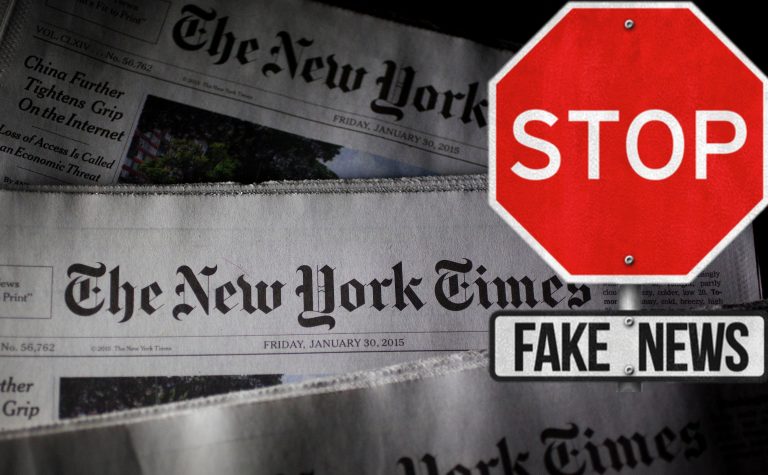
The New York Times (NYT) has again demonstrated its unwillingness to report objectively and peddle fake news even on the face of a looming apocalypse. In a report co-authored by Jeffrey Gettleman, Kai Schultz and Suhasini Raj, the NYT claimed that the Wuhan Coronavirus was fanning ‘religious hatred’ across India. In their report, the authors have made horrendously inappropriate and misleading claims that are laughable on the face of it.
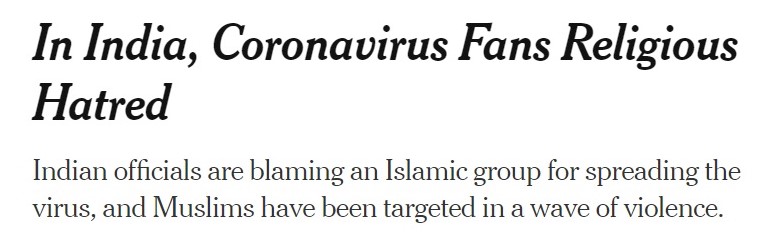
The headline of the NYT report that peddled fake news

During the course of the report, the authors claim, “Hateful messages have bloomed online. And a wave of apparently fake videos has popped up telling Muslims not to wear masks, not to practice social distancing, not to worry about the virus at all, as if the makers of the videos wanted Muslims to get sick.” A deliberate attempt is made to insinuate that the videos on the video-sharing platform TikTok, where Muslims advocate against social distancing and ask fellow Muslims to place their faith in Namaz and Allah instead, was somehow created by Hindus to make Muslims fall sick. This when there is enough evidence to indicate that the videos were created by Muslims themselves.

The maker of one such video, Sameer Khan, had later tested positive for the Wuhan Coronavirus. Another Muslim man who had posted a video of himself wiping currency notes on his face and declaring that the virus was Allah’s punishment was later arrested by the Police. Furthermore, Maulana Saad of Markaz Nizamuddin, which has become the largest vector of the coronavirus, had himself offered sermons where he urged his followers to defy government guidelines on social distancing. Under such circumstances, there is absolutely no reason to doubt that the videos of Muslims on TikTok advocating against social distancing and calling the virus “Allah’s NRC” was indeed created by Muslims themselves. The effort by NYT to insinuate otherwise is further evidence of their rabid Hinduphobia.

Apart from the usual accusations of Prime Minister Narendra Modi running a ‘Hindu Nationalist’ government and pursuing ‘majoritarian’ policies, the report engages in victim-mongering in significant measure. The authors managed to conjure some scared Muslims suffering from paranoia and a persecution complex and elicited responses from them that cements their narrative. The report also made a reference to the anti-Hindu Delhi riots in February and gave their readers the impression that it was an anti-Muslim pogrom.

“The government should not have played the blame game,” Khalid Rasheed, the chairman of Islamic Center of India, was quoted as saying. “If you present the cases based on somebody’s religion in your media briefings,’’ he said, “it creates a big divide.” “Coronavirus may die,” he added, “but the virus of communal disharmony will be hard to kill when this is over.” Again, the reporters did not make it a point to mention the fact that mentioning the Tablighi Jamaat cases separately is necessary in order to prevent the masses fro panicking. Instead, NYT allows Rasheed to engage in his own self-serving propaganda.

Past Antecedents of NYT – Fake News Unlimited

The report by NYT is just another instance of its unabashed propaganda against India and the ruling dispensation in the country. The NYT has a history of peddling anti-India narratives, whether it be the events that transpired in the aftermath of the Balakot Airstrikes or Narendra Modi in general. In the past, it has published racist cartoons to denigrate India right after the Mangalyaan Mission. In one article, NYT claimed that as the 2019 general elections were closing in, Modi’s popularity was on a low and the “rejuvenated opposition was landing punch after punch with corruption allegations. But one bombing in Kashmir, and weeks of military brinkmanship with Pakistan afterward, appears to have interrupted Mr. Modi’s slump.”

NYTimes’ former Delhi bureau chief Ellen Barry had also indulged in white-washing the 2002 Godhra carnage where as many as 59 people were burnt alive in a train. She had also spread lies to insult the victims of Godhra carnage in her report on the Gulbarg Society verdict. NYTimes also encourages troll-like behaviour while reporting on democratically elected public representatives by attempting to trivialise the personal lives of female politicians.
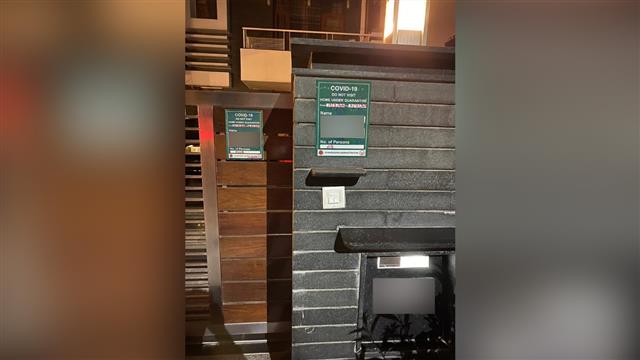
Chandigarh: VIP elites in quarantine throw tantrums, demand gourmet bread and ice cream

0

VIP elites quarantined in Chandigarh demand imported items and gourmet food while throwing tantrums. As per an Indian Express report, the VIPs, instead of making to do with whichever fruits and vegetables are available amidst nationwide lockdown are upset over unavailability of fresh strawberries, gourmet bread and fancy ice cream.

As per reports, the administration has been bombarded with the demands of freshly-baked bread from Nik Bakers, ice-cream from Baskin Robbins, olive oil from Figaro and kiwi fruit. BJP Councillor Mahesh Inder Singh Sidhu while speaking to Indian Express said that he has given one pass to three volunteers to help the people to get their basic ration, but he has been dealing with a lot of tantrums now. He said, that one of the VIP threw a temper fit and demanded strawberries instead of making do with whatever was provided. Inder Singh Sidhu deals with the VIP population of the sector 1 to 11.

Sidhu further added that some are also demanding freshly baked bread from specific store only, thereby adding more strain on the already stressed out force. He further added they these VIPs flour the lockdown guidelines and go for walks. Earlier, some residents had that the VIPs don’t follow the guidelines even go for a walk. Earlier, some elites in Chandigarh had even made a list of domestic help who should be given passes so that they could come to their house for cleaning and household work. Not only that, they have also demanded passes for their salon women, barbers and fruit juice vendors.

Read: Did you know that the concept of ‘quarantine’ emerged from Italy? Here is what it means

Congress councillor Devinder Singh Babla who deals in another VIP lot in Sectors 27 and 28 said that he receives hundreds of calls from people in his ward demanding only branded stuff including liquor without realizing that liquor isn’t available in lockdown. Babla said also said that the VIPs demand particular brand milk and milk powder and ice cream as well as high-end liquor amidst the lockdown.

The entitled behaviour is not limited to just unreasonable demands. The VIP elites in Chandigarh recently threatened an administration officer with legal consequences for not being able to arrange for the exotic fruits and vegetables.

Despite repeated govt appeal, 6000+ Tablighi Jamaat members still ‘underground’, mobiles phones switched off: Report

0

The Tablighi Jamaat congregation has prolonged the entire process of containment of the deadly Wuhan coronavirus in the country, compelling the government to extend the nationwide lockdown by another 19 days. Despite all the efforts, fears of an uncontrollable outbreak are growing, as many potential carriers of the virus are still untraceable.

According to what has been revealed in the investigation of Crime Branch, more than nine thousand people of Tablighi Jamaat had gathered in Nizamuddin Markaz, out of which only 3193 have been identified. 

Tablighi Jamaat members absconding:

While authorities across India are scrambling to locate, test and isolate thousands of people spread across the country after attending a religious gathering at a mosque in the capital, that has become a hot spot for the virus, India TV reports that almost 6000+ Tablighi Jamaat members are still underground. These absconders have switched off their mobile phones and despite repeated government appeals, they are not willing to come forward.

Till date, the states have been tracing those who attended the event at Nizamuddin Markaz in Delhi. Each infected Jamaatis who has gone underground has the potential to infect 1000s of other people, directly or indirectly.

Dozens of incidents of people who have attended the Tablighi Jamaat hiding in mosques and madrasas have emerged, and many of them have tested positive for coronavirus.

Bharatiya Janata Party (BJP) leader Kapil Mishra on Monday also took to Twitter to claim that 6,000 Tablighi Jamaat members, who attended a congregation at Nizamuddin Markaz in March, are yet to be traced.

“These people are not coming forward on their own. Their mobile phones are switched off. What is their intention? Who is helping them to hide?,” asked Mishra.

765 out of 3100 Jamaatis test coronavirus positive:

According to the report, out of the 3193 jamaatis identifies, 765 have been reported to be coronavirus positive. The rest are housed in different quarantine centres across states. They are being specially monitored.

A week ago, the authorities had detected 102 people in 13 mosques in the Chandni Mahal area of Delhi. 52 of them have tested positive for the Wuhan Coronavirus. Furthermore, three of them have died in three days due to the virus. 

Of the Jamaatis holed up in two mosques of Jahangirpuri, 10 were from Bangladesh, 14 from West Bengal and two from Assam. The reports of all these are yet to come. 

Out of the 3000+, Tablighi Jamaat attendees identified, 765 corona positives have been kept in different hospitals. Among these, LNJP Hospital in Delhi has the highest number of 385 patients admitted there. There are 152 patients in AIIMS of Jhajjar, 136 in Delhi’s Rajiv Gandhi Super Specialty Hospital. Similarly, 84 patients are housed at Ram Manohar Lohia Hospital. 

The rest of the 2000+ attendees have been shifted to different quarantine facilities. The Quarantine Center in Narela, Delhi has the highest number of 937 members. Likewise, 194 in Sultanpuri, 123 in Bakkarwala, 131 in Dwarka and 157 Jamaatis were isolated in the Quarantine Center in Badarpur. Similarly, there are 143 in Tughlakabad, 307 in Jogbai, 60 in Wazirabad, 94 in the staff quarters of Mandoli Jail in Jamati Quarantine. In Saket, Chhatarpur Temple, Gulab Bagh, Rouse Avenue and Jahangirpuri too, many Jamaatis have been kept in different quarantine facilities. 

The massive jump of cases in India is solely due to the Tablighi Jamaat members who had gathered in the Nizamuddin mosque despite government orders against mass-gatherings. The Jamaat members taking buses and trains to their respective localities all over India has resulted in a massive nation-wide spread within a span of few days. As per government reports, thousands of Tablighi Jamaat attendees and their primary contacts have so far been quarantined.

Ambedkar Jayanti: In 2019, casteism was the only hope of ‘liberals’ to stop Modi

What did Dr. Ambedkar want? The title of his most famous book makes it quite clear. The Annihilation of Caste. He was not a man who would mince his words.

Today as the nation remembers Dr. Ambedkar on his 129th birth anniversary, let us go beyond the token tributes and ask the really important questions. Who in contemporary India really stands against casteism? And who stands to gain the most when Hindus are divided on caste lines?

The answer is fairly obvious. In 2019, the opposition to Modi had no clear leader and no coherent agenda. The opposition had only one backup plan: casteism.

In Uttar Pradesh, the BSP and the SP had been poles apart for decades. But the arch rivals decided to fight the 2019 election in a Gathbandhan. Not only the two parties themselves, there was also intense pressure from within the liberal ecosystem for the two parties to come together. Nobody wanted to ask what two regional parties, with a total footprint of around 80 seats, had to offer in terms of a national agenda. Instead they added up the share in population of Yadavs and Dalits and decided that, along with Muslims, this was a winning formula.

In other words, Uttar Pradesh was presented with a clear choice. Modi vs caste.

Incidentally, the Congress stayed out of the alliance, seemingly for strategic reasons. It was expected that the Congress would put up upper caste candidates, thereby cutting into the BJP’s votes. That way, the Congress could be more useful outside the alliance than inside it.

Caste, caste, caste… they had nothing else to offer.

Read: Why are Muslims, including the Tablighi Jamaat indulging in violence and defying lockdown: The answer lies in what Babasaheb Ambedkar said

In Maharashtra, India’s second most populous state, the strategy was quite similar. All through the 2014 to 2019 period, there were a number of attempts to provoke the Marathas against so called ‘Brahmin rule,’ a direct reference to the caste of then Chief Minister Devendra Fadnavis. When that didn’t work, the ultra left set up flash points like Koregaon-Bhima. Memories of a 200 year old war with Maratha soldiers on one side and Dalit soldiers on the other were used to provoke violence in January 2018.

In the caste conflict planned by the left, the winners would neither have been Marathas nor Dalits. The winners would have been Lutyens liberals who had been writhing in pain since losing the 2014 election. Just like the Battle of Koregaon in 1818, where the real winner was the British East India Company.

Like the British, the ‘secular’ opposition bats on the side of a different caste group in each state. In Haryana, they are all about consolidating the Jats against a Chief Minister who happens to be a Khatri from Punjab. But doesn’t the Congress also have huge stakes in Punjab? Who cares? Different states, different demographic combinations, but the same policy of Divide and Rule.

Read: 10 things Ambedkar said that Indian secularists wouldn’t bear to hear

It gets better. Sometimes, the caste strategy of the secular opposition can reverse itself between two successive elections in the same state. In PM Modi’s home state of Gujarat, the strategy was to stop the BJP using Hardik Patel. Incidentally, there are two subgroups among Patels : Kadva Patels and Leuva Patels. Now, Hardik happens to be a Kadva Patel. This means that the Congress 2017 Assembly election strategy was built around courting Kadva Patels, projecting Modi as pro-Leuva Patels. This is ironic, because the 2012 Assembly election strategy of Congress was all about courting Leuva Patels using the newly formed Gujarat Parivartan Party (GPP) and projecting Modi as pro-Kadva Patels.

This may seem funny, but it really isn’t. Because this is the kind of pathetic politics that has kept India from becoming a superpower.

The creativity of casteist politics does not end here. In Karnataka, the Congress is up against B S Yediyurappa, who happens to be a Lingayat. So in 2014, the ruling Congress in Karnataka decided to bring a bill that would allow them to take over religious mutts, the obvious targets being the Lingayat mutts all across the state. But the bill was met with fierce protests and it fell through.

With Plan A failing, the Congress did a perfect U-turn on caste politics in Karnataka. Plan B was to stop fighting the Lingayats and instead project the party as their savior. Just before the 2018 Assembly elections, the party announced hastily that Lingayats were now a separate religion and thus entitled to benefits of being a minority!

When Plan B didn’t deliver good enough results, the Congress came up with Plan C. Ally with the JDS and secure the votes of the Vokkaliga caste!

If only all this creativity had gone into nation building instead of playing one caste against another.

Read: Babasaheb Ambedkar: A scholar, a Nationalist and a visionary wrongly appropriated by the Left

I could go on and on about other states, how the ‘secular’ opposition plays caste politics in Bihar, in Andhra Pradesh and so on. But you get the point.

Caste is a system of hereditary privilege. When we examine any system of privilege, we have to ask : who benefits?

With all its talk of social justice, the Congress got away with over six decades of submission to a single upper caste family from the Hindi heartland. Incidentally, the Congress did have a Dalit President for a while in Sitaram Kesri. Reportedly, he was locked in the toilet to make way for you know who. By the way, don’t miss the symbolism of the toilet here.

Today, even the most loyal Congress supporter in the world would not bet on Rahul Gandhi, except perhaps to show off his “janeudhari” status. No! The politics of India’s secular opposition runs on casteism.

In 2019, India rejected the politics of caste. That was one step towards fulfilling Dr. Ambedkar’s dream.

Maharashtra: Mumbai Police resorts to lathi charge as migrant workers gather in large number at mosque in Bandra demanding to go home

Migrant workers have gathered in large number in Bandra, Mumbai, demanding to go back home as the nationwide lockdown got extended till May 3.

The crowd has gathered at Ahle Sunnat Sunni Raza Jama Masjid near Bandra station as can be seen in this video.

The videos show thousands of migrant workers gathered in a bid to go to their respective home states.

Meanwhile, Mumbai Police has resorted to lathicharge to contain the crowd.

The states have sealed their borders in March after PM Modi had announced the 3-week lockdown which concluded today. Those migrant workers who were in other states were to be taken care of by the states where they were in case of emergency.

Maharashtra govt’s mess in coronavirus

Maharashtra has seen the highest number of coronavirus positive cases in the country with as many as 2,337 having reported positive as of 5 PM on April 14. The Maharashtra government, however, despite the PR stunts has not been able to contain the spread of the contagion. Moreover, there is a lot of evidence to suggest that the cases in Maharashtra may be under-reported, especially, due to the sheer incompetence of the Maharashtra government. While there are several things that the Maharashtra government has done right, for example, its outreach program to keep its people calm, there are several issues that have clearly come to the fore as well.

Bihar BJP leader taken into custody for passing objectionable remarks on coronavirus super-spreader Tablighi Jamaat

0

The police officials in Bihar have objected to a social media post uploaded by BJP leader Ajit Singh and arrested him for passing remarks on Tablighi Jamaat, says a report published by ABP.

Arrested in Vaishali, Bihar

Singh, a BJP leader from Bihar and reportedly a Railway Board member, had reportedly uploaded a social media post regarding Tablighi Jamaat’s role in spreading coronavirus. This evidently did not sit well with the Vaishali Police authorities who proceeded to arrest him, serving as a deterrence to others from posting anything controversial about Markaz Nizamuddin.

As many as 4 people have been arrested by the Vaishali police in Bihar in the last 24 hours for making objectionable remarks on social media amidst coronavirus outbreak.

Tablighi Jamaat Congregation

The role of Tablighi Jamaat in spreading the coronavirus in the country came to the fore in the last week of March when around 300 people with Wuhan Coronavirus symptoms were admitted to various hospitals in Delhi from the Markaz Nizamuddin and surrounding places. Subsequently, the area around the Markaz Nizamuddin was cordoned off by the Delhi Police. Soon, cases began to erupt across the country with links to the Tablighi Jamaat and the country stood horrified as the magnitude of the Islamic Missionary organization’s careless conduct became known.

Soon enough, it became known that thousands of people had attended the event and as late as the 22nd of March, 2500 people were present at the premises of the Markaz Nizamuddin and around 1500 of them left the place on the 23rd of March. Even so, it meant that around a thousand people were still stuck at the global headquarters of the Tablighi Jamaat as of the 24th of March. Since then, it has been a continuous series of escalations and atrocious conduct by the members of the Jamaat who have made things difficult for the administration and the healthcare providers at every step along the way.

Many of the Tablighi Jamaat members held in quarantine have displayed perverse and malicious tendencies to infect and spite others. Some of them were caught spitting on nurses, doctors and other healthcare professionals, while others created a ruckus and took a dump in the corridor of the quarantine centre. Some others ran around naked and passed lewd remarks against the nurses tending to them.

Bihar: Spitting of tobacco in public to be penalised, can lead to a fine and 6-months imprisonment

In a bid to check the transmission of the Wuhan Coronavirus, the Bihar government on Monday has issued an official order to fine ₹200 or imprison a person for 6 months, if found guilty of spitting tobacco in public spaces.

Government Diktat

The official order stated that spitting tobacco on roads can endanger public health and safety and thus is an offence under the Indian Penal Code (IPC) Sections 268 (Public Nuisance) and 269 (Negligence that can lead to the spread of infection).

The Bihar Government has ordered all SPs and District Magistrates to ensure implementation of the government-sanctioned penalty on public spitting of tobacco. Given that 25.9% of the population consumes tobacco, it will be an uphill task to prohibit people from doing so.

“The ban on Khainee will not only decrease the ill impact on one’s health and society but also bring a welcome change on Bihari culture of spitting anywhere without any remorse”, a senior IAS officer was quted as saying.

Several districts in Bihar such as Vaishali, Samastipur, Champaran and Sitamarhi are the largest producers of tobacco in the State. According to the Ministry of Health, Bihar has reported 65 cases of the Chinese virus infection with 26 recoveries and 1 death.

Andhra Pradesh follows suit

The Andhra Pradesh government has also passed an order prohibiting people from spitting tobacco and pan masala in public spaces. Special Chief Secretary (Health) KS Jawahar Reddy said, “People are refrained from consuming the smokeless tobacco or chewable tobacco/non-tobacco product, sputum, etc and spitting in public places/institutions with immediate effect during the COVID epidemic.”

The order stated that the unhealthy practice was restricted in an attempt to maintain hygeine and cleanliness in both public and personal spheres.

Previously, the UP, and Haryana governments had banned the sale and distribution of Paan Masala and Gutkha too.

Pan-masala Delivery via drones

As restrictions have been imposed over non-essential goods across the country due to the nationwide Coronavirus lockdown, several people are struggling as their lives have come to a standstill. However, addicts across the country are leaving no stone unturned to procure non-essential items like Gutka, tobacco, cigarettes, and alcohol. One of the tools being used for the delivery of such items is the drone, which is one of the latest gadgets that have become popular.

Reportedly, a young man named Hiren Patel managed to fly a drone with packets of tobacco in Morbi near Rajkot during the ongoing lockdown. Patel had shared the video on TikTok. As the video went viral, the Rajkot police detained Patel and his friend Ravi, the owner of the drone. The police have initiated a probe against the two people under the Epidemic Act. Both Hiren and Ravi have been booked under IPC section 188. The drone worth Rs 25,000 has also been seized.

Lessons learned during Coronavirus lockdown: A way forward for environmental issues

We are witnessing world’s biggest catastrophe in the form of zoonotic contagious virus named novel coronavirus (COVID-19/SARS-CoV-2). More than sixteen lakhs humans have already been infected by this COVID-19 and more than one lakh deaths related to coronavirus have been reported across the world till date. The current statistics of COVID-infections and accounted deaths clearly indicates the severity of situation. The world health organization (WHO) had already announced it as pandemic. Most of the world’s leading countries have announced national emergency and adopted partial or complete lockdown to control the transmission of infection. Indian population is no stranger to this highly contagious virus. Indian government has also taken some stringent and wise decisions to curb down the infection at its early stage. Nationwide lockdown (started since 22 March, 2020) is one of the important decisions taken by the central government to break the transmission chain and provide ample time to different institutions for preparation to face the future situation. Aside from the Coronavirus lockdown arresting the spread of the pandemic, it has also had an impact on the environment and there are certain lessons we must not ignore.

Impact of Coronavirus lockdown on air quality

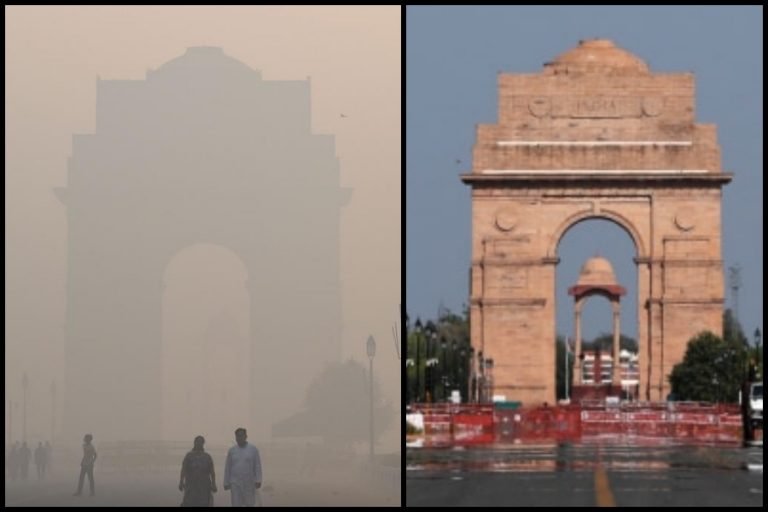
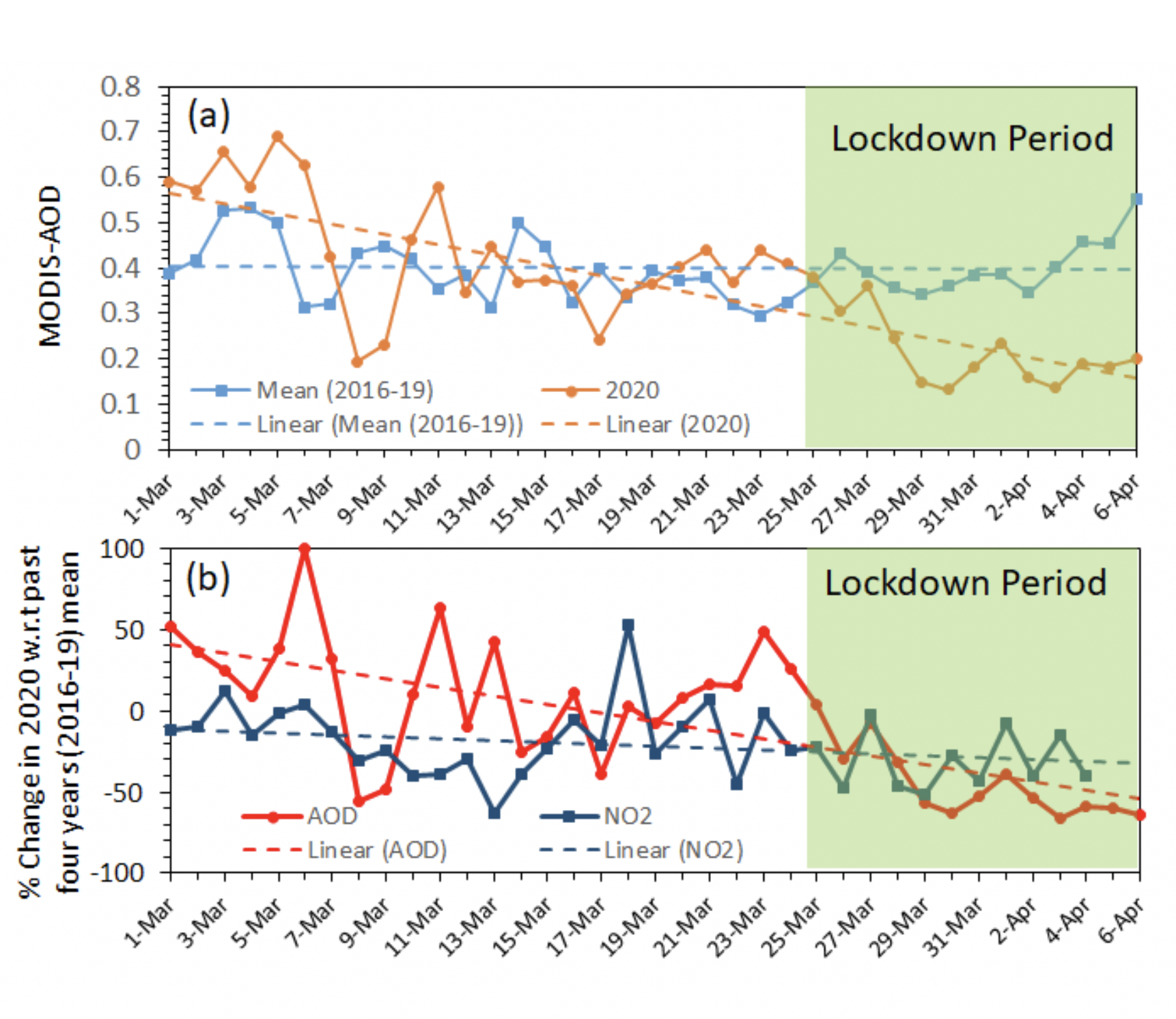
Nationwide lockdown brings shutdown of all kinds of factories/industries, construction works and major transportation (public and personal vehicles) except necessary sectors across the country. Most of these sectors use fossil fuel based energy sources, which are the major source of anthropogenic pollutants and greenhouse gases, responsible for climate change. The forced restrictions on vehicular and industrial emissions are expected to results in better air quality. Within a week of the lockdown, the social media got flooded with various news/pictures/videos, showing twinkling stars in clear night sky, increased visibility during day and better air quality etc., as a result of lockdown. In fact, my scientific analysis using satellite observations also indicates a significant decrease in atmospheric particulate matter and gaseous pollution over India during lockdown period (see Figure). Satellite retrieved aerosol optical depth (AOD) and nitrogen dioxide (NO2) are used as proxies for air-borne particulate matter and anthropogenic gaseous pollutant, respectively. My study shows a significant decrease (about 20 – 60%) in AOD during lockdown as compared to past four years mean for the same period. As expected, the drop in concentration of particulate matter increases as a function of days in lockdown period. The gaseous pollutant (NO2) also shows a significant drop (about 20 – 40%) during entire month of March and early April, 2020.

Figure: Impact of COVID-lockdown on air pollution over India. Time series of (a) MODIS-derivedaerosol optical depth (AOD, proxy for air-borne particulate matter) for year 2020 (orange) and four years [2016-19] mean (blue), and (b) percentage change in value of AOD (red) and OMI-derived tropospheric NO2 (blue) with respect to four years [2016-19] mean during 01 March – 06 April over India. Respective Broken lines show linear trends. It shows significant decrease in 2020 during lockdown period. The data is averaged over 22 – 290N & 74 – 860E. Data source: https://giovanni.gsfc.nasa.gov.

Impact of Coronavirus lockdown on water quality

Coronavirus induced lockdown is not only benefiting in terms of air quality but also have greater impact on water quality and health of riverine systems. The discharge of chemical pollutants from factories and industries into rivers is completely closed, which accounts for a significant reduction in the pollution load of rivers flowing near urban agglomerates. However, there is no change in organic pollutants discharge through sewage from urban regions. In the absence of significant amount of chemical pollutants, self-cleansing capacities of rivers via dilution by natural runoff and natural degradation by microbial activities, may be able to deal with organic pollutants. Various social media posts and mainstream media articles show significant improvement in visible color and smell of water of Yamuna and Ganges as compared to past. However, scientific analysis results are yet to be seen before endorsing these claims. 

The wild animals

Another important environmental aspect during lockdown period is related with increased frequency of spotting wild animals in residential/urban locations. Several Facebook’s and WhatsApp’s posts are displaying videos of elephant, deer and other animals roaming around in residential localities as per their claims. The marine animals are also frequently seen near coast during this period. Though a number of such claims are found to be false, these kinds of scenarios are natural in lockdown regulated silence zone of urban locations. The wild animals are claiming back their spaces and roaming freely while humans are sheltering in their houses during the lockdown period. 

Coronavirus lockdown, the environment and lessons to be learnt

Better air quality, healthy riverine and flourishing ecosystems during lockdown give me a soothing touch as an environmentalist, but I can’t rejoice it. These environmental benefits are temporary and post-lockdown ‘as usual scenario’ may even pose greater threat to environment. These positive environmental changes are seen as a result of compulsive lockdown under the threat of pandemic outbreak, which have claimed a number of lives. This sudden lockdown has already costed lakhs of jobs, social security and mental peace of fellow citizens. Lakhs of poor and marginalized population are suffering despite the concerted efforts of states and central government’s machineries. Therefore, we can’t celebrate these temporary environmental benefits, but certainly can learn lessons from this lockdown. 

This lockdown provides a natural laboratory condition of environment to gather baseline data for different environmental parameters. The academic/research institutions may use this scenario to build a nationwide baseline data for environment by collecting (with taking all necessary health precautions) measurements of various atmospheric, hydrological and ecosystem parameters. These baseline data can be helpful in determining the shares of different sectors in environmental pollution. Further, it can be used by stakeholders and policy makers to build a sustainable development model for the nation. In my view, this lockdown scenario gives us better understanding to differentiate between our needs and luxuries at individual levels. The goals of sustainable development can’t be achieved without balancing between ‘needs and luxuries’ at various scales such as individual, community, state and global levels. The lessons learned from lockdown can be used as arsenals in our fight for clean air, clean water and a healthy environment. 

Bhima Koregaon Violence Case: Urban Naxal Gautam Navlakha surrenders before the NIA

0

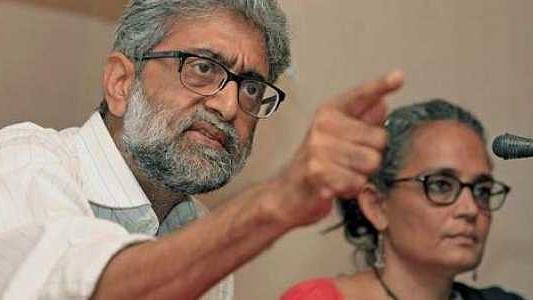
Urban Naxal Gautam Navlakha finally surrendered before the National Investigation Agency in connection with the Bhika Koregaon Violence case on Tuesday. On the 8th of April, the Supreme Court had given Gautam Navlakha and Anand Teltumbde a week to surrender. He has been charged under the Unlawful Activities (Prevention) Act (UAPA).

Before his surrender, Gautam Navlakha had penned an open letter where he had expressed his hope for a ‘speedy’ and ‘fair’ trial. “My hope rests on a speedy and fair trial for myself and all my fellow co-accused. This alone will enable me to clear my name, and walk free, having also used the time in jail to rid myself of acquired habits,” he wrote. He further stated, “I can now begin to face the actual legal process, which accompanies cases where provisions of Unlawful Activities (Prevention) Act are invoked. Such Acts turn the normal jurisprudence upside down. No longer is it the axiom that ‘a person is innocent unless proven guilty’. In fact, under such Acts, ‘an accused is guilty unless proven innocent’.”

Past Antecedents of Gautam Navlakha

Earlier in February, the Bombay High Court declined to grant anticipatory bails to Bhima Koregaon violence accused Gautam Navlakha and Anand Teltumbde in the Elgar Parishad-alleged Maoist links case. Following the violence in Bhima Koregaon village on January 1, 2018, Gautam Navlakha, Anand Teltumbde along with others were booked by the Pune police for their Maoist links and several other charges.

It has also been reported that Gautam Navlakha was in touch with Hizbul Mujahideen and other Kashmiri separatist leaders. Navlakha had earlier attended events organised by Ghulam Nabi Fai who was sentenced to two years of jail by the US for concealing the fact that Fai’s organization, Kashmiri American Council (KAC), was funded by Pakistani Spy Agency, ISI, to deliberately tilt USA’s policy regarding Kashmir against India.

What is the Bhima Koregaon Violence Case?

The event by the name of “Elgar Parishad” was organised to commemorate the Battle of Bhima Koregaon of 1818, wherein the Peshwas fought against the between East India Company. In the war, an army of Dalit soldiers had fought under the British forces against the Peshwa, the reason for the celebration by Dalits. In 2018, it was the 200 year anniversary of the war and extreme violence erupted over the matter. Soon after, the case was transferred to the NIA. The Pune police had arrested a total of nine supposed “intellectuals” such as Sudha Bharadwaj, Rona Wilson, Surendra Gadling, Mahesh Raut, Shoma Sen, Arun Ferreira, Vernon Gonsalves, and Varavara Rao for inciteful speeches.

Maharashtra cabinet minister Jitendra Awhad had tested positive for coronavirus 3 days ago, claims Thane councillor

0

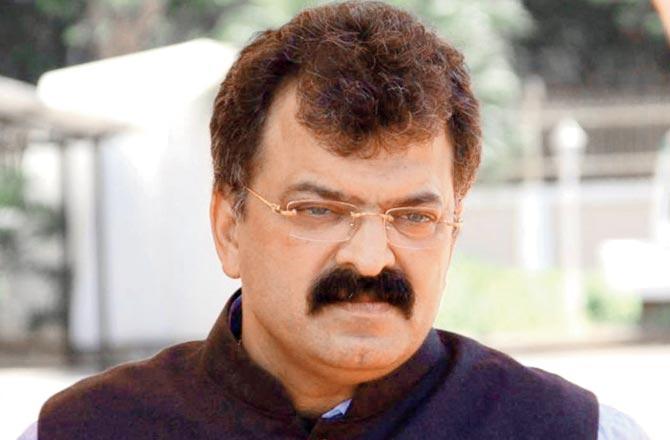
In a shocking revelation, Thane councillor Milind Patil claimed that the controversial firebrand politician, Jitendra Awhad, who went into self-quarantine yesterday after allegedly coming into contact with a COVID-19 police official, had tested positive for coronavirus three days ago. Patil contended that Awhad tested positive for the virus in the first test that was carried out 3 days back.

Patil’s shocking claim

“Three days ago, Jitendra Awhad’s coronavirus test had come positive. But in three days of treatment, his subsequent test for coronavirus has come negative. There will be a third test whose result will determine if Mr Awhad had truly recovered from the contagion or not. Most of the people around him have tested positive. His driver, his wife’s driver, his bodyguards and his 3 personal assistants, all have tested positive for the novel coronavirus. In all, 7 to 8 people working with them have had the infection. Jitendra Awhad is now in quarantine,” Patil said.

Patil further added that with the help of cabinet minister Jitendra Awhad, he and his colleagues were helping feed thousands of people daily in the Thane suburb of Kalwa which will now have to be stopped abruptly as Awhad had gone into quarantine. The Thane councillor said that since he was in touch with the NCP leader to carry out the relief work during the 21-day lockdown for those stranded in the financial capital along with those quarantined in the hospitals, he is himself going to undergo tests for coronavirus after many members of Awhad’s retinue tested positive for the virus.

16 persons associated with Awhad have already been tested positive

Patil’s revelations about Maharashtra Housing Minister and Nationalist Congress Party leader Jitendra Awhad testing positive in his first test for the Wuhan Coronavirus comes a day after the cabinet minister Awhad voluntarily took the decision to self-quarantine as a precautionary measure even though he has reportedly not tested positive.

On Monday, Maharashtra Housing Minister and Nationalist Congress Party leader Jitendra Awhad reportedly tested negative for the Wuhan Coronavirus while 16 of his contacts were diagnosed with the deadly infection. The family members of the politician, including his wife and children, had also tested negative.

Source of infection

The source of infection is traced back to a senior police inspector who nabbed 21 foreign nationals belonging to the Tablighi Jamaat and who had tested positive for the Chinese Virus. When he began exhibiting symptoms of the Coronavirus pandemic, he was tested and admitted to the Apollo Hospital in Nashik in Maharashtra. The infected cop is believed to be the source of transmission of the deadly disease to the 16 contacts of NCP politician.