Home Blog Page 5676

Coronavirus hits Surat’s diamond business, likely to face a loss of Rs 8,000 crore

The Coronavirus outbreak in China has now created its first problem for India. Because of this virus, Hong Kong has declared a state of emergency and shut all routes to Mainland China and shut all schools and colleges till the first week of March, or until the virus is not tackled effectively.

The Surat diamond industry is likely to face a loss of Rs. 8,000 crore as Hong Kong is a major business hub for the Surat diamond industry. “Due to the month-long vacation declared by Hong Kong govt, Indian businessmen are returning. The exhibition, going to be held in March in Hong Kong, has been cancelled. It used to set our orders for the year,” news agency ANI quoted Dinesh Navadiya, Regional Chairman of Gems and Jewellery Export Promotion Council in Surat.

According to Navadiya, 37 per cent of the total export comes from here. Now Gujarati traders having offices in Hong Kong are coming back to India. Surat diamond industry polishes about 99% of all rough diamonds. If the situation does not change, it is likely to have a huge impact on the industry.

Another industry expert and diamond merchant Pravin Nanavati told news agency PTI, that there is a possibility of cancellation of an international jewellery exhibition in Hong Kong due to the Coronavirus. ” Polished diamonds and jewellery made in Surat reach across the world through Hong Kong. Now due to vacation there, our business is totally closed.”

Hong Kong is a major transit port for China and the Far east. Orders are placed at that event which sets the manufacturing target for an year. Now, that’s in jeopardy as Hong Kong tries to curtail the deadly virus. Around 18 people have tested positive for the disease, with one death reported so far.

As of now there have been three confirmed cases of coronavirus in India. All three have been in Kerala. India has temporarily suspended e-visa facility for Chinese and foreigners residing in China.

Scope of Article 226 and Article 227: That the same result can be achieved by 2 different processes, does not mean the processes are the same

The writ jurisdiction is a very potent and important tool given to the High Courts under the Constitution of India. The purpose of writ jurisdiction is to ensure that necessary directions in the form of writs can be issued both as administrative orders as well as on the judicial side. In this article, I will not go in detail as to the nature of the writs. As known, Constitution of India has given powers to the High Courts under Article 226 to issue directions or orders or writs in the nature of Habeas Corpus, Mandamus, Prohibition, Quo Warranto and Certiorari as per the respective requirement and the necessity. Under Article 227, the High Courts are vested with the powers of General Superintendence over all Courts and Tribunals. The powers vested to the High Courts under Article 227 are wider than the one conferred on the High Court by Article 226. This is because the power of Superintendence under Article 227 is not subject to the technicalities of the procedure or traditional fetters which are found in writ jurisdiction.

Difference between Article 226 and Article 227

The Hon’ble Supreme Court in a decision reported in (2017) 5 SCC 533 titled Ram Kishan Fauji vs State of Haryana has explained that under Article 226, the High Courts have the power to issue directions, orders and writs to any person or authority including any Government.  Under Article 227, every High Court has the power of Superintendence over all Courts and Tribunals throughout the territory in relation to which it exercises jurisdiction. However, the power to issue writs is not the same as the power of superintendence. There is a fine line of distinction between the two. Sometimes there has been confusion that while challenging a decision passed by an administrative authority, whether the petition is to be filed under Article 226 or under Article 227. There have been instances where a lawyer to avoid this objection from the Court, labels the petition both under Article 226 and 227 of the Constitution.

The said situation was comprehensively explained by the Hon’ble Supreme Court in the matter titled “Umaji Keshao Meshram vs Radhika Bai” reported in 1986 (Supp) SCC 401. The Hon’ble Supreme Court held that these two Articles stand on an entirely different foundation. It was explained that the fact that the same result can at times be achieved by two different processes does not mean that these two processes are the same. Their source and origin are different and models upon which they are patterned are also different. It was also held that the power to issue writs under Article 226 is not the same as the power of Superintendence under Article 227. The power of superintendence conferred upon every High Court by Article 227 is a supervisory jurisdiction and is in addition to that conferred upon the High Court by Article 226.

The basic difference which was drawn was that in Article 226, the person, authority or state against whom the direction, order or writ is sought is a necessary party. However, under Article 227, what comes up before the High Court is the order or judgment of a subordinate Court or Tribunal for the purpose of ascertaining whether in giving such judgment or order that subordinate Court or Tribunal has acted within its authority and according to law. Further, under Article 227, the High Court in addition to setting aside of the judgment or order of the Tribunal can further issue directions to such subordinate Court or Tribunal to act in a particular manner whereas no such power is conferred to the High Court under Article 226.

The proceeding under Article 226 is an original proceeding when it concerns civil rights of a person whereas a proceeding under Article 227 is not an original proceeding.

Therefore, if an order passed by a subordinate Court or a Tribunal is being challenged before the High Court where there is no remedy of filing an appeal, it has to be judged that whether it is seeking a simpliciter setting aside an order or that in addition to the setting aside / quashment of the order, certain directions are also prayed for. If along with the prayer of setting aside/quashment certain directions are prayed, a petition can only be filed under Article 227 of Constitution of India.

In the aforesaid circumstances, even if the petition is labelled under Article 226, then it is the duty of the High Court to consider the same under Article 227 and not under Article 226. Similar shall be the result if a petition is labelled both under Article 226 as well as 227 of the Constitution.  However, if any civil rights of a person have been infringed by any Government authority or state then the remedy lies only under Article 226 and certainly not under Article 227.

Provision of Writ Appeal

The High Courts by virtue of their own rules have provided a right of appeal against the order passed under Article 226. It has also been a matter of debate that whether an order passed by the High Court while deciding a petition under Article 227 can be challenged by way of appeal before the Division Bench of the concerned High Court.  The said situation was dealt with by the Hon’ble Supreme Court in (2008) 15 SCC 233 titled “State of Madhya Pradesh vs Visan Kumar Shiv Charan Lal”.  The Hon’ble Supreme Court while deciding the said issue held that the nomenclature is of no consequence and it is the nature of the relief sought for and the controversy involved which determines the Article which is applicable, i.e. whether a Petition is to be treated under Article 226 or Article 227.  As stated by above, if the nature of the prayer relates only to quashing or issuance of a specific writ against the state, the same shall be considered under Article 226 irrespective of its nomenclature.  Therefore, even if a petition was filed and labelled as Article 227 but the same after examining its contents comes out to be that of a petition under Article 226 certainly the litigant has a right for filing the appeal as provided under the rules of a respective High Court.

Conclusion

Therefore, it is the paradox that there is no difference between Article 226 and 227.  Rather this is no more res-integra that both Articles 226, as well as 227, operate under different situations and different areas. The jurisdiction of a Court under Article 226 as well as 227 are also different and the powers under both the Articles vary.  At the risk of repetition, it is stated that under Article 226, High Courts have powers to issue directions, orders and writs to any person or authority including any Govt whereas under Article 227, every High Court has a power of Superintendence offered to Courts and Tribunals throughout the territory in relation to which it exercises jurisdiction.

The power of superintendence conferred upon every High Court by Article 227 is a supervisory jurisdiction intended to ensure that subordinate Courts and Tribunals act within the limits of their authority and according to law.  The orders, directions and writs under Article 226 are not intended for the purpose and power of superintendence conferred upon the High Court by Article 227. Rather the powers given under Article 227 are in addition to the power conferred upon the High Court by Article 226. The fact that the same result can at times be achieved by two different processes does not mean that these two processes are the same.

(This article has been written by Sameer Vashisht who is a B.Com, LLB (Hons), LLM and Additional Standing Counsel (Civil), GNCTD) 

BJP MP Tejasvi Surya asks Hindus to stay vigilant against Islamists: Here are the 5 ways in which the media is expected to outrage

The left-liberal media and its leftist foot soldiers marching on social media platforms have been just been recovering from the shocking blows of Anurag Thakur’s slogans, BJP’s Delhi election campaign song and the sad incident of the Shaheen Bagh shooter turning put to be an AAP member when young MP Tejasvi Surya and his comments in Lok Sabha yesterday has riled them up again.

Speaking in the Lok Sabha yesterday, the 29-year-old Bengaluru(South) MP stated, “What is happening today in Delhi’s Shaheen Bagh is a stark reminder that if the majority of this country is not vigilant, the patriotic Indians do not stand up to this, the days of the Mughal Raj coming back to Delhi are not far away.”


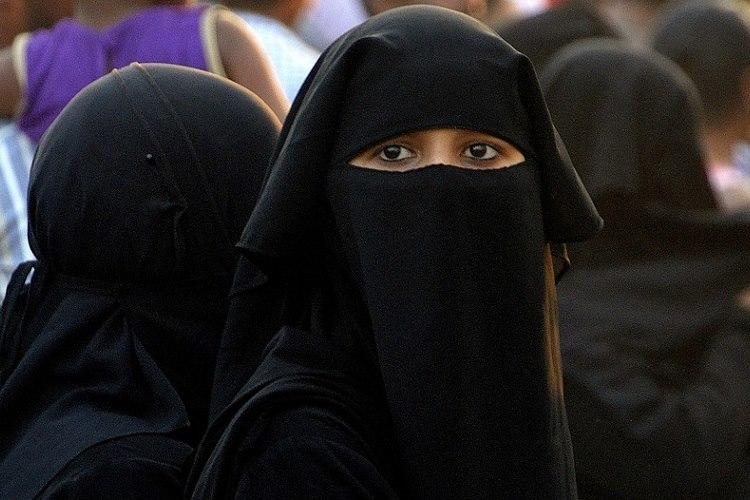
Since the attempts by the left-liberals to hold the government by the collar and threaten it to take the CAA back did not work despite trying to incite violent protests, arson and stone peltings, they have been focussing all their energies in trying to cover up the blatantly anti-Hindu sloganeering, hate-mongering and misinformation campaign camouflaged as ‘Shaheen Bagh protests’ as an organic, peaceful protest ‘led by hijab-clad Muslim women’ to challenge the Modi government.

Comments by Tejasvi Surya have riled up left-liberals and the media, that is either leftist by design, or leftist by habit, again. Times Now declared that Surya has ‘stoked a row’ by his ‘divisive’ comment.

Times Now on Tejasvi Surya
Republic on Tejasvi Surya’s comment

Since the left-liberals in India think that the Mughal Raj in India was a heavenly period where everyone was so rich and so happy that they happily converted into Islam, vacated their forts and palaces out of happiness, surrendered their wives and daughters at the feet of Mughal kings out of happiness while everyone ate Biriyani and danced to Sufi music, Surya’s comments are bound to hurt them.


A look into how left-liberals on social media are reacting to Tejasvi’s comments and all one gets is how India was a thriving economy under the Mughal rule, how Mughals have made all tasty food possible, having brought rice recipes from the desert lands from where they had come, how Mughals had made all beautiful monuments in India out of their pocket money etc.

Since there is no point in fact-checking starry-eyed fans of Mughals, here are five ways one can see the reactions.

Mughal rule was awesome, they brought Biriyani, poetry, etc

Mughals were so awesome that they had discovered Biriyani. Since they were experts in the rice-cooking techniques in their desert lands, they had taught the unwashed Indians how to mix Indian grown chicken and mutton to Indian grown rice and make it flavour-rich by adding Indian grown spices to it.

Mughal rule would be better than Hindutva rule anyway

Left-liberals have us believe that all the evil in the world originates from Hindus and Hindu rituals, practices and anything related to Hindus. The way they worship Mughals they proclaim that they had come as saviours from beyond the Hindukush mountains to rid this land of greedy Brahmins and lustful kings who made the masses worship money and elephant gods.

Since the Mughals died away, and Hindutva goons conspired with the British to take Edwina Ji away from Nehru Ji, they have now again captured the Delhi throne after only a brief ‘secular’ rule. From 2014 onwards, India has been thrown again into an abyss of communalism, hatred and bigotry. Only, and only the Mughals or someone inspired by their great ideas can save India now.

BJP is dividing Hindus and Muslims, violent Muslim mobs and rioting Muslims are just fake news

Left-liberals spectacularly ignore the dozens of policemen who sustained bullet injuries in UP after Muslim mobs went on a rampage post the CAA. They had blissfully ignored Muslims torching trains, railway stations, buses and two-wheelers all over the country in the name of protests.

They have also ignored ‘Kafiron Se Azadi’ slogans and calls to establish ‘Allah’s Kingdom’ after destroying idols of Hindus. Only when a BJP MP raised a slogan asking traitors to be shot and a boy from UP waltzed into a road in Jamia with a country-made gun, liberals saw a bright red line connecting the two incidents.

They had also drawn a blazing red-line connecting the BJP MP’s slogan and the shooter that went into Shaheen Bagh with another country-made gun. However, due to an unfortunate Hindutva conspiracy involving time-travel, hypnotism and sorcery, the shooter turned out to be an AAP member. Hence, all discussions of that shooter were promptly stopped and the search was focused on the next ‘communal comment’ by the next BJP MP.

Expected better from a ‘young’ BJP MP Tejasvi Surya

Such comments are actually brilliant. They do not sound hateful, or negative. They just add the right amount of sanctimonious intellectualism to a mixture of hollow elitism and passive Hinduphobia. What they actually want to say is, “How can a ‘kal ka ladka’ BJP MP dare to speak his mind, express Mughal-phobic opinion?

They also are angered because the young MP punctures an Amethi-sized hole into their ‘youth icon’ balloon floated over Rahul Gandhi’s head. As per them, no youngster should dare to sound smarter than the Congress prince.

But what about ‘Hindu terrorist’ Kapil Gujjar, Tejasvi Surya?

The incident where an individual called Kapil Gujjar fired three shots in the air near Shaheen Bagh protests has become the favourite incident of the ‘liberals’ to shame Hindus. The shooter, Kapil Gujjar, after firing the shots in the air had hailed Hindu Rashtra and said that in India, only Hindus will prevail. The fact that a ‘shooter’ with a gun merely fired shots in the air should have raised suspicions. But if that wasn’t enough, the fact that he looked into the cameras and repeated the trope that the ‘liberals’ hope “Hindu terrorists” would be suspicious enough.

Read: AAP leader deletes tweet, but party forgets to delete their article confirming Shaheen Bagh shooter is AAP member

While the “liberals” blamed “Hindutva” for this incident, links of Kapil Gujjar with the Aam Admi Party emerged. Pictures where he was being felicitated by AAP leader Sanjay Singh. Kapil Gujjar has also admitted that he and his father were members of AAP and had political ambitions.

With the speech delivered by BJP MP Tejasvi Surya, it is expected that the ‘liberals’ will pull out this trope and say that while Surya fear-mongers about Islamists, there are “Hindu terrorists” shooting guns. The media and ‘liberals’ are expected to completely ignore that Gujjar is an AAP leader and the entire fiasco reeks of a conspiracy.

Barkha Dutt’s ‘Shero’ Ladeeda Farzana expresses her unconditional solidarity with Shaheen Bagh mastermind Sharjeel Imam, urges Muslims to express their Islamic identity

Ladeeda Sakaloon alias Ladeeda Farzana, one of the Jamia Millia Islamia ‘students’ who was hailed by controversial former anchor Barkha Dutt as a ‘shero’, has yet again come out in support of Shaheen Bagh mastermind Sharjeel Imam and has urged fellow Muslims of the country to openly express their Islamic identity.

Speaking at an event organised by JNU Defense Committee to express solidarity with radical Islamists Sharjeel Imam, she said that the state has historically targetted Muslims for their identity. “Whenever Muslims talks about his identity and political subjectivity, they have been haunted by Hindutva nationalists,” said Ladeeda Farzana who rose to fame during anti-CAA riots at Jamia Millia University. “I am here to extend my solidarity to my friend, leader Sharjeel Imam and to those who are targetted by Hindutva state. By hounding Sharjeel Imam, the state is trying to delegitimise CAA-NRC protests across the country,” Ladeeda said.

[youtube https://www.youtube.com/watch?v=Iq-4kHMbh18]

Indulging in fear-mongering and inciting Muslims, Farzana claimed that Muslims of the country are being targetted for their identity and their faith. She was targetted by both left-wing workers and nationalists for being a Muslim, claimed Farzana. “I am here to assert my identity. Even Sharjeel Imam was asserting his Islamic identity to criticise this Brahminic country,” said Ladeeda Farzana as she proudly proclaimed herself as a Hijabi Muslim woman.

Read: Jamia ‘shero’ hailed by Barkha Dutt celebrates Moplah massacre, when Muslims massacred thousands of Hindus in 1921 in the name of Islam

Blaming the media for exposing the sinister designs of Sharjeel Imam and fellow Islamists, Farzana went on to claim that media specifically targetted Sharjeel Imam as he was a Muslim. She further attacked media for publishing Imam’s secessionist speeches which had exposed the ultra-left wing Islamists who are at the forefront of the anti-CAA riots across the country. “This what happened in Sharjeel Imam’s case, Afreen Fathima, Ayesha Renna case,” said Jamia Islamia student as she blamed media for targetting radical Islamists.

Farzana also provoked ‘students’ at JNU while stating that ‘Chakka-Jam’ or blocking of public roads and infrastructure was not wrong. She urged people to resort to similar ‘Chakka-Jam’ to protest against the Citizenship Amendment Act as she expressed her solidarity Kashmir and Islamic fundamentalists.

In the past too, Ladeeda Sakaloon aka Ladeeda Farzana had expressed her unconditional support to Shaheen Bagh mastermind Sharjeel Imam. However, she had to delete her radical posts and pictures following social media users exposed her extremist tendencies.

Read: From The Wire to everything else, the Anatomy of an Islamist: Into the mind of Sharjeel Imam, mastermind of Shaheen Bagh

“This witch-hunting of Sharjeel Imam and Sharjeel Usmani need to be stopped. If you share this witch-hunting psyche are equally dangerous at this juncture. I unconditionally stand with both our brothers who are at lead against this fascist government,” Farzana had posted in support of Shaheen Bagh mastermind Sharjeel Imam.

Radical Islamist Sharjeel Imam – the brain behind the anti-India protests at Shaheen Bagh was caught making secessionist speeches at Shaheen Bagh. Urging Muslims at Shaheen Bagh, he had vowed to cut off North-east from the rest of the country. Imam had said, “If 5 lakhs Muslims are organised then we can cut the North-east from rest of India. If we cannot do permanently, at least we can cut North-east from India for months”.

“Our main aim is to permanently cut Assam and North-east India from rest of India,” he could be heard saying in the video.

Further, Sharjeel Imam who is also a columnist with The Wire and mastermind of Shaheen Bagh protests had said, “Our responsibility is to cut the Assam from India then Govt will hear our voice. If we have to help the Assam then we will have to cut the Assam from rest of India”.

Government’s persistent efforts have succeeded in securing release and repatriation of 2133 Indian prisoners, including fishermen from Pakistan’s custody since 2014

2,133 Indian prisoners, including fishermen have been repatriated to India from Pakistan’s custody since 2014. Responding to a question in the Lok Sabha by Congress MP Gurjeet Singh Aujla about Indians in Pakistani prisons, Minister of State in the Ministry of External Affairs V Muraleedharan [pdf] said that as per the information available 2,133 Indian prisoners have been repatriated back to India. This includes 20 Indian fishermen who were repatriated on 6th January 2020.

The government of India further stated that 275 Indians including fishermen are presently believed to be in Pakistan’s custody. However, as per a list shared by Pakistan as on 1st January 2020, it has acknowledged custody of only 262 Indians. In addition to this, there are about 83 Indian defence personnel including Prisoners of War (POW) whose custody Pakistan has not yet acknowledged.

Moreover, the Government of India has asked Pakistan to provide consular access and release remaining prisoners in its custody. This includes 110 Indian civilian prisoners and fishermen whose Indian nationality has been confirmed and have completed their sentences. The Indian government has also requested its Pakistani counterpart to facilitate the visit of a team of Indian medical experts to meet prisoners of unsound mind, who are believed to be Indian nationals, with a view to facilitate their nationality verification and subsequent repatriation. However, Pakistan has not yet responded.

Saudi Arabia, de-facto leader of ‘Ummah’ reluctant to support Pakistan’s Kashmir bogey at OIC meet: Here are the details

0

In a big setback to terror-state of Pakistan, Organisation of Islamic Cooperation (OIC) – the collective voice of the Muslim world, is reluctant about accepting Pakistan’s request for an immediate meeting on Kashmir. According to the reports in Pakistan newspaper Dawn, Saudi Arabia – the de-facto leader of the Ummah (community of Muslims across the globe) has shown reluctance to accept Pakistan’s request for an immediate meeting of the Council of Foreign Ministers (CFM) on the issue of Kashmir.

Pakistan is one of the 57 members of the Organisation of Islamic Cooperation which claims to represent a collective population of over 1.8 billion Muslims.

Pakistan has been pushing for the foreign ministers’ meeting of the 57-member bloc of Muslim countries on Kashmir. However, it is reported that Saudi Arabia is reluctant to support Pakistan on the Kashmir issue. The support from Riyadh is considered a must for any move at the OIC.

The kingdom has made several proposals to Pakistan to avoid the CFM including holding of a parliamentary forum or speakers’ conference from Muslim countries and also a joint meeting on Palestine and Kashmir issues. But, Pakistan has persisted with its proposal so far.

Read: Pakistan Magazine claims Saudi Crown Prince snubbed Imran Khan by calling back his private Jet which was to fly Khan back from USA

Pakistan feels that the speakers’ meeting is not commensurate with the seriousness of the situation in Kashmir. Secondly, some in Islamabad are also worried that the speakers’ forum will be used by Saudi Arabia to bash Iran, further sidelining Kashmir issue at the OIC meeting.

Moreover, there are also apprehensions that clubbing the Kashmir dispute with Palestine at a meeting would effectively put the Kashmir issue on the backburner.

Reportedly, the Indian diplomats have also achieved success in watering down OIC’s meet on Kashmir as the Ministry of External Affairs has managed to get OIC to downgrade the level of participation for the meeting that could take place to discuss the issue of Kashmir.

Due to hectic negotiations from India’s diplomats, it has been learnt that only parliamentarians of member nations will participate at the meeting and no high-level meetings would take place on the issue of Kashmir. Further, the lower level meeting could be held in Pakistan itself and not in Riyadh.

Read: 134 counties deported half a million illegal Pakistanis since 2014, Muslim countries Saudi Arabia, UAE, Turkey leading the charge

According to the senior officials in charge of the 47th CFM, it is expected that the usual resolutions on Kashmir may be included in the agenda of the foreign ministers’ meeting scheduled to be held in Niger in April. However, there will be no special focus on the Kashmir issue, especially on India’s decision to abrogate the special status of Jammu and Kashmir.

Pakistan has time-and-again attempted to internationalise the Kashmir issue to put pressure on the Indian government. However, apart from facing severe embarrassment, Pakistan has achieved nothing in its efforts to publicise the Kashmir issue. India, on the other hand, repeatedly reiterated that Kashmir is an internal issue and any discussions with Pakistan will only be bilateral.

Meanwhile, Pakistan Prime Imran Khan facing yet another humiliation has reacted to the OIC’s rejection to hold a high-level meeting on Kashmir. Pakistan PM Imran Khan has now criticised the OIC for failing to speak in one voice on the Kashmir issue, indirectly chiding its leader Saudi Arabia for diluting support toward the cause.

Read: After ignoring China on Uyghur issue, Organisation of Islamic Cooperation expresses ‘concern’ over CAA, SC judgement on Ram Mandir

Having failed to drum up support from Saudi Arabia and the UAE, Khan, in his address at a Malaysian think tank expressed his regret that the OIC wasn’t unified on the Kashmir issue. “The reason is that we have no voice and there is a total division amongst (us). We can’t even come together as a whole on the OIC summit meeting on Kashmir,” Khan said.

Pakistan had faced a similar embarrassment last year too as the Islamic organisation OIC had invited the then India’s External Affairs Minister Sushma Swaraj to be the guest of honour at the inaugural plenary of Organization of Islamic Cooperation (OIC) conference at Abu Dhabi, UAE. Pakistan, which had attempted to put pressure on the OIC to cancel the invitation was forced into not attending the OIC Council of Foreign Ministers.

Despite the objections raised by Pakistan, India did attend the conference today where External Affairs Minister Sushma Swaraj targeted Pakistan over its support to terrorists. She urged the OIC to urge states indulging in Terror activities to dismantle their networks, and stop financing and harbouring elements that pose a grave security threat for the region.

Twitter account of user who exposes bias of cartoonists through ‘corrected’ cartoons suspended

Account of Twitter user ‘“टीपूडा” whose username is @PR1CELES5 has been suspended by the micro-blogging site. Netizens took to Twitter to express their outrage at arbitrary suspension of @PR1CELES5 whose real name is Amol.


Last night he had yet again ‘corrected’ a cartoon of a biased cartoonist following which his account got suspended.

@PR1CELES5 cartoon from earlier this week

Some of this other cartoons exposed bias of other cartoonists like Satish Acharya.


Ahead of Delhi elections, Acharya posted a cartoon which tried to imply that BJP is trying to make these elections about Kejriwal vs Pakistan. However, he seems to have conveniently forgotten that when India carried out surgical strike against Pakistan after the Uri attack, Kejriwal, along with other politicians, had questioned the strike and demanded proofs.

In January, Acharya drew a cartoon which showed that it was India which was bringing global economy down with moves like demonetisation. Amol showed how Satish, who through his cartoons shows that people voted for Modi because they are Islamophobic, is actually a Hinduphobic himself.

Read: Twitter suspends young boy’s account after he was doxxed and harassed by AltNews founder Pratik Sinha and Islamists

This is not the first time Twitter has suspended accounts of people with right wing ideology and those who are Modi supporters. In fact, Twitter is also accused of trying to curtail voices of right wing supporters. Earlier, a Twitter user who makes hilarious spoofs of Rahul Gandhi had also got his account permanently suspended by Twitter which made people wonder if it was due to his political ideology.

Stone-pelting, violence amidst ‘Azadi’ slogans in Azamgarh: 19 arrested

0

The Uttar Pradesh police on Wednesday arrested 19 persons on charges of sedition from Azamgarh for shouting secessionist slogans during an anti-CAA protest.

As per reports, a number of women had gathered in the Jauhar Ali Park of Bilariyaganj in Azamgarh from Tuesday afternoon to protest against the CAA. Like Delhi’s Shaheen Bagh, the local Muslim community had arranged for tea and snacks for the protesting women.


SP Azamgarh has stated that despite section 144 enforced in the district, women and children were gathered to hold protests. When police had tried to disperse them, some rowdies and started pelting stones and attacked the police personnel.

According to the reports, the police had named 35 protestors in the FIR, however, arrested 19 for carrying out violent protests against the citizenship law. One woman named Munni Bano was allowed to go by the police after she reportedly informed them that she is a heart patient.

The rioters had allegedly pelted stones at the police resulting in police using tear gas shells. The women were allegedly injured in the stone-pelting by the rioters, the police also said. The police asserted that there was no lathi-charge against protesters at Jauhar Ali Park in the Kasimganj area. The police have admitted that some tear gas shells were fired to disperse the agitated crowd.

It was further alleged that the protesters had gathered on Tuesday afternoon and surrounded the park from all sides. They even beat up people who were standing nearby.

Reportedly, the district police also said that the protestors had put up women and children at the front, who were holding stones and lathis.

“They were raising slogans against the government and the nation. They were saying they will snatch Azadi and will get Azadi anyhow. They were making hateful announcements against the Hindu religion. They were abusing Prime Minister Narendra Modi and also Chief Minister Yogi Adityanath,” the police said.

The protesters, on the other hand, alleged that the police had used communal slurs against the women. The police denied this allegation and said that at the protest venue, the people gathered had chanted anti-national slogans.

Read: Muslims in Bulandshahr pay over Rs 6 Lakh to the UP govt for damage caused to public property during anti-CAA riots

An FIR was lodged at Bilariyaganj police station under various IPC sections, including 124-A (sedition), 147 (rioting), 153-A (promoting enmity between different groups), 504 (insult with intent to provoke breach of the peace), 307 (attempt to murder), 120-B (criminal conspiracy) and under sections of the Prevention of Damage to Public Property Act and CLA Act.

Azamgarh police have also announced a reward of Rs 25,000 for information on three persons accused of rioting. They have confiscated four motorcycles claiming that they were used by the rioters. The police have stated that some policemen have sustained injuries and many police vehicles have been damaged in the stone-pelting by the mob.

Several cases of riots, violence, arson and vandalism by Muslim mobs in the name of ‘protests’ against the enactment of the law have taken place across the country. Uttar Pradesh has seen rampant violence in several cities as Muslim mobs had gone on a rampage across the state in the name of protests.

“Hindu baat se nahin, laat se maanta hai”: Pak PM Imran Khan’s party leader spews venom against Hindus

On ‘Kashmir Solidarity Day’ which is observed in Pakistan and Kashmiri separatists, Pakistani leader spewed venom against the Hindus by putting up a poster declaring that Hindus can be taught a lesson only by violence, not dialogue.


As per a tweet shared by Pakistani journalist Naila Inayat, leader of Pakistan’s ruling party PTI had put up a poster in Lahore which said, “Hindu baat se nahin, laat se maanta hai” in Urdu. The poster also carried photographs of Pakistan PM Imran Khan and Mohammad Ali Jinnah, founder of Pakistan who led the two-nation theory. A flag of India ‘cancelled out’ was also added on the poster.

Another video shared by Naila Inayat showed Pakistan’s Khyber Pakhtunkhwa chief minister Mahmood Khan say that Hindus are ‘darinde‘ (violent animals).


In a five-second clip, he could be heard saying, “Narendra Modi aur Hinduon mein ehsas nahin hai, inmein insaniyat nahin hai, yeh darinde hai. (Narendra Modi and Hindus don’t get it. They do not have humanity, they are violent animals)”.

Read: Former Pakistani pacer Shoaib Akhtar reveals how ex-cricketer Danish Kaneria was mistreated for being Hindu

The bigoted poster only gives a glimpse of how the atrocities and persecution against the Hindus and other religious minorities in Pakistan is institutionalised. Hindus in Pakistan do not have religious freedom and minorities there are under constant threat. There have been innumerable cases of forceful religious conversion where Hindu girls were abducted and forcefully converted.

The forceful conversion programs have often been unleashed against the minorities especially Christians, Sikhs and Hindus living in Pakistan with utmost brutality.

This violence against Hindus in Pakistan is now a common affair. A series of abductions and forceful conversions of minority Hindu and Sikh girls had recently rocked the country. In March, two underage Hindu girls Raveena (13) and Reena (15) were abducted from the Ghotki in Pakistan’s Sindh on the eve of Holi. The girls were later forcefully converted and married off to older Muslim men.

In another attack on Hindus, a medical student was found under mysterious circumstances inside her hostel room at a college in the Larkana area. The Hindu student Namrita Chandani, a final year BDS student in the Bibi Asifa Dental College of Larkana, Pakistan was found dead in her room on Monday. Namrita Chandani was found lying down with a rope tied around her neck under suspicious circumstances.

183 incidents of drones flying around border areas reported: Aviation Minister Hardeep Singh Puri

0

Aviation Minister Hardeep Singh Suri on Wednesday made a statement in parliament in a written reply saying that there were 183 incidents of flying drones that were reported near border areas. However, the time period was not specified.


“As per information received, 183 incidents of flying of drones have been observed on the borders”, Aviation Minister Hardeep Singh Puri said.

He showed a concern saying that all the security agencies need to buy anti-drone technology as per their requirement.

Read- Pakistan’s ISI using drones to deliver weapons for Khalistani groups, Amrinder Singh cautions central govt

“All security agencies are required to procure anti-drone equipment according to their requirement,” He said.

The Union Minister said that the Indian Air Force is the main in charge of airspace control and trains several security agencies and police of states and all union territories against the threat from drones and anti-drone measures.

Last month, the aviation ministry had given an 18-day registration period to all drone users in India. A total of 20,531 users registered their drones with the Aviation Ministry.