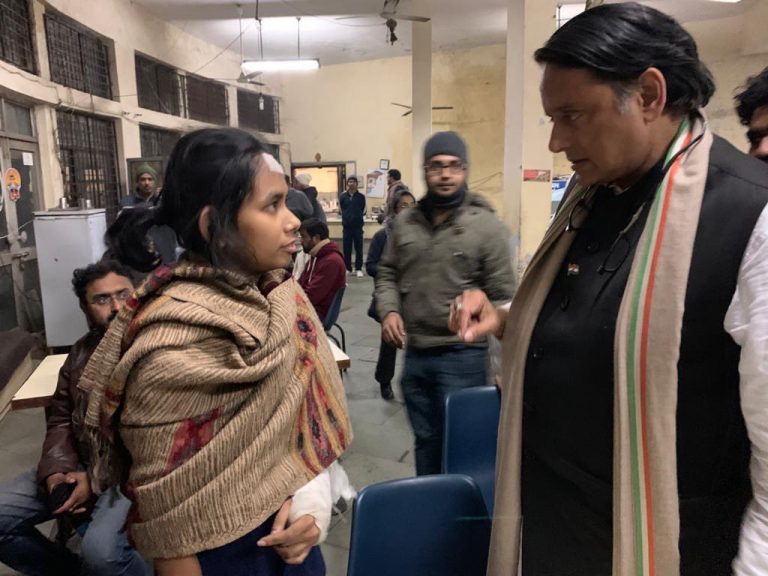
While visiting Jawaharlal Nehru University (JNU), the new epicentre for violent protests in the country, Congress MP Shashi Tharoor peddled lies about Citizenship Amendment Act (CAA) again.
Shashi Tharoor, Congress: First time a religious test has been introduced into the definition of Indian citizenship. Never before in our country has it mattered what your religion was to qualify to be an Indian citizen. #CitizenshipAmendmentAct (12.1.2020) https://t.co/UgEHnxeHIopic.twitter.com/wVdnPJjeVT
The students at JNU, who are violently protesting against marginal fee hike which has been partially rolled back, were given wrong notes on CAA by Tharoor. He said that first time a religious test has been introduced into definition of Indian citizenship. This is blatant lie. CAA is about speeding up granting of Indian citizenship to persecuted religious minorities from three neighbouring Islamic countries, Pakistan, Afghanistan and Bangladesh. CAA does not concern Indian citizens. Muslims from these countries can apply for Indian citizenship under the normal provisions and they may be granted Indian citizenship as per due process.
This blatant display of ignorance by Tharoor comes a day after he tweeted low IQ poster on CAA and questioned the government. As a lawmaker himself, who was once a junior minister serving the government of India, one would expect he’d know the basics of how things work in India.
Seriously, Shashi. As someone who almost made it as United Nations Secretary General, has been a Member of Parliament for 3 terms and a junior minister in previous government, what is this behaviour?
For the Bigg Boss fans out there. Pooja, what is this behaviour?
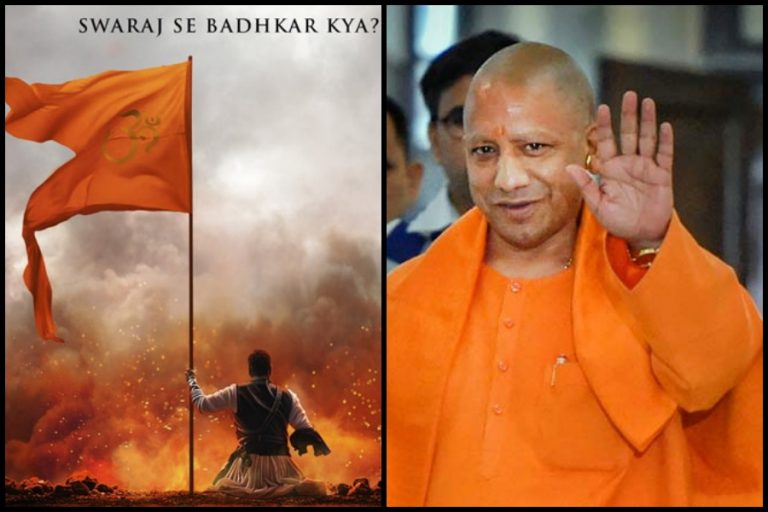
The Yogi Adityanath led Uttar Pradesh government is all set to make Tanhaji: The Unsung Warrior tax free in the state. According to sources, the notification for the same is set to be out later today.
The Ajay Devgn starrer details the Battle of Sinhagad that was fought between the Tanaji Malusare, a military commander under Chhatrapati Shivaji Maharaj and Uday Singh Bhan for the Kondana Fort. After a bitter duel between Tanaji and Bhan, the fort was reclaimed by the Marathas in the year 1670.
It was in this battle that Tanaji Malusare laid his life down while fighting Uday Bhan. In his honour, Chhatrapati Shivaji Maharaj had renamed the Kondana fort to ‘Sinhagad’.
The famous one liner of Shivaji Maharaj, ‘Gadh Ala, Pan Singh Gela’ was said afterr Tanaji laid his life down, essentially meaning that the Marathas won the fort, but lost the lion.
The movie is a grand display of cultural pride and historical grandios of the Marathas. In fact, the distinctly Hindu symbolism in the movie did not go down well with several “liberals” who criticised the movie for being “Islamophobic” and “promoting Hindutva”.
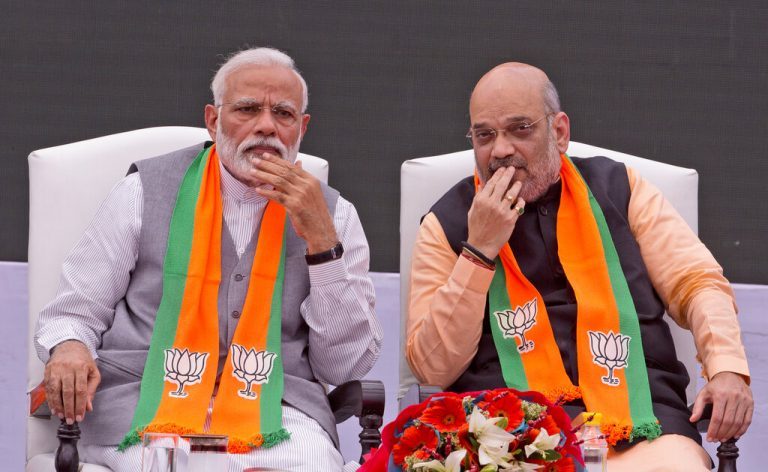
The Left wing propaganda website The Wire even managed to somehow connect the movie with Prime Minister Modi and Amit Shah. Calling it a tribute to ‘Hindu Rashtra’, The Wire wrote, “less of a feature film and more of a presentation to Modi and Amit Shah’ to realise their deeply egregious ideas about India. ‘Tanhaji’ tells a deeply divisive story when the country is on the brink of getting torn”.
The Quint, was not to be left behind. “The underscoring of the characters’ religion, however, occurs most prominently during the songs. From ‘Maay Bhawani’ to ‘Shankara Re Shankara’, the songs picturised on Tanhaji and his wife Savitribai Malusare (played by Kajol) seamlessly integrate religious positivity with the side of the protagonists. By association, therefore, Tanhaji and those fighting with him receive divine sanction in the minds of the viewers. They are righteous. They are the ones fighting the good fight,” wrote Quint.
Tanhaji and Deepika Padukone starrer Chhapaak went head to head at the box office on Friday. Tanhaji in the opening day did a business of Rs 16 crore while Chhapaak tanked and managed to rake in only Rs. 4.75 crores.
Congress MP Shashi Tharoor after raising concerns that CAA protests on ‘secularism’ may be getting hijacked by Islamist slogans which pronounce that Allah is the only god, has been trying to monkey-balance his way back to the good books of radicals.
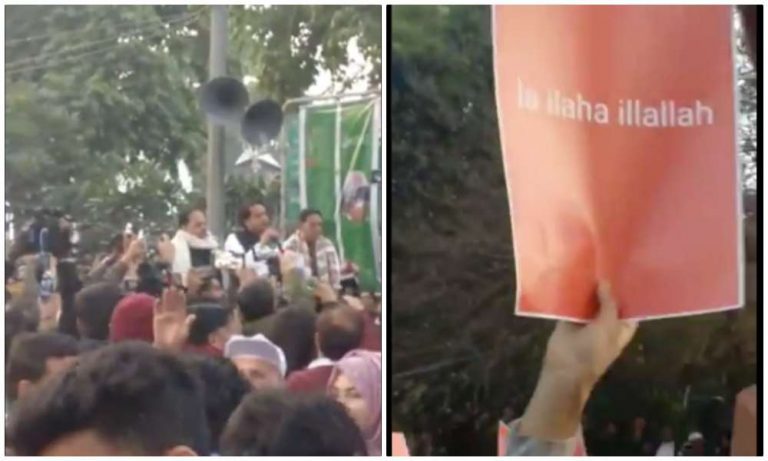
When he was in Jamia Millia Islamia to express solidarity against CAA, the radicals chanted ‘La Ilaha Illallah’ (There is only one god, Allah).
Upset at Tharoor being shouted down, Congress workers and members of Jamia Coordination Committee tore down the ‘la ilaha ilallah’ posters which were raised.
The reason Tharoor is being attacked by radicals is that in December 2019, Tharoor had reacted to protestors chanting La ilaha illallah, the Islamic Shahada which means “There is no god but God”, where the second God means Allah. The chant is often followed by muḥammadun rasulu llah, which means “Muhammad is the messenger of God”. The religious chant represents the central philosophy of Islam, that Allah is the only god, and there is no other god.
Our fight against Hindutva extremism should give no comfort to Islamist extremism either. We who’re raising our voice in the #CAA_NRCProtests are fighting to defend an #InclusiveIndia. We will not allow pluralism&diversity to be supplanted by any kind of religious fundamentalism. https://t.co/C9GVtB9gIa
Tharoor said that their “fight against Hindutva extremism should give no comfort to Islamist extremism either”. He said that the fight against the Citizenship Amendment Bill is fight to defend inclusive India. “We will not allow pluralism & diversity to be supplanted by any kind of religious fundamentalism,” he added. Soon, the radicals descended upon his timeline to call him a ‘soft bigot’.
Tharoor was accused of soft bigotry for his comments, and said that it is “their fight”, asking him to stop telling what to do. After that fateful day, all the attempts of Tharoor to pacify the radicals have failed. Not only that, he even managed to offend them further by likening ‘Hindutva’ (which by ‘secular’ definition is Hindu extremism) to Islam and Christianity in a flawed infographic he shared last week.
As Tharoor’s pacifying attempts fail harder every time he tries, one can only wait and watch when does he finally give in and join the chanting chorus.
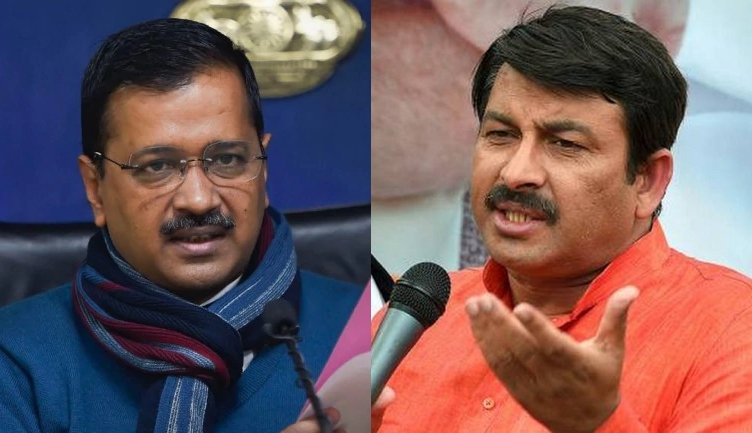
Delhi BJP has filed a defamation case against Aam Aadmi Party seeking Rs 500 crore seeking in damages for an edited video posted by AAP. BJP also filed a complaint with the Election Commission after AAP had posted a video on Twitter which had shown Manoj Tiwari dancing to the tune of AAP’s election campaign song.
On January 11, the Aam Aadmi Party had posted an edited video of using the sound-tract of its election campaign song Lage Raho Kejriwal, but with a compilation of visuals of politician-actor-singer Manoj Tiwari dancing and acting in various movie scenes and music albums. The video with very poor taste implied that the BJP leader was hailing Delhi CM Arvind Kejriwal and singing the AAP election campaign song in his praise.
Strongly objecting to such misuse of his scenes from movies and albums, Manoj Tiwari asked, “Who gave AAP the right to use my videos for its theme song for the polls?”
Tiwari said a complaint has been made to the Election Commission about the video, and Rs 500 crore has been sought as damages for defamation and violations of intellectual property rights.
Delhi BJP said that the sole purpose of the video is to malign the image of BJP and their star campaigner Manoj Tiwari. They have termed it as a violation of model code of conduct, and also a punishable offence under the I-T Act. They have claimed that the video was made and circulated “for the purpose of bringing ill-repute to the leader and the party”.
Delhi BJP’s media relation head Neelkant Bakshi said that AAP used Manoj Tiwari’s visuals in its campaign song because he is more popular than Kejriwal.
The credibility of India Today, which was already dithering at awfully low levels, suffered yet another critical blow and was left in tatters when its remarkably shoddy reportage on the JNU violence was exposed. In a series of reports, OpIndia has thoroughly rebutted the claims India Today made in its ‘sting’ and revealed what a remarkable piece of garbage it was.
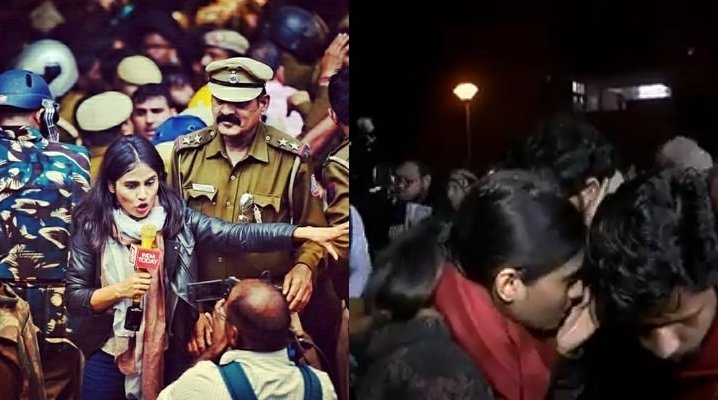
Now, OpIndia has accessed a video of an India Today journalist interviewing one of the students at JNU where she appears to be ‘coaching’ the person. The student himself is member of a leftist political dispensation in the university. In the video, the journalist, quite clearly, appears to be having extensive discussions regarding what the events that transpired at the University and at one point, has a prolonged hush-hush discussion with the student that’s not audible to the ears.
The student, here, is the Vice-President of the JNU Students’ Union (JNUSU) Saket Moon who belongs to the Democratic Students Federation, one of the Leftist organizations at the University. The journalist here is Tanushree Pandey of India Today. The video itself appears to be from the 11th of January. An interview between the two was published in a video on the website of India Today on the said date.
In the interview, it can be seen that the ‘journalist’ provides ample opportunity to Saket to peddle his agenda and she goes out of her way to help him pin the blame on the ABVP, all the while absolving the leftist student organizations of all guilt. Saket also, rather weirdly, brings Nathuram Godse into the question and yet, the journalist makes no effort to counter him. The interview, quite clearly, was a deliberate effort to provide the leftist organizations with a platform to peddle their agenda and that is precisely what he does. The journalist does not ask him a single tough question regarding the involvement of the leftist organizations and gives them a free pass completely.
In the video that we have accessed, it can be seen that the two of them have a conversation off the record where an attempt is deliberately made to have a hush-hush conversation so that the content of it is not audible to the observers. Furthermore, in the video, it appears that it isn’t journalism that was happening but propaganda with active collusion between the journalist and the Vice-President of JNUSU. The journalist appears to be buying wholeheartedly into whatever the JNUSU VP was selling and there doesn’t appear to be any effort on her part to verify the claims made by Saket.
From the parts of the conversation that are audible, the two of them can be heard having some discussion of the servers at JNU. At one point, the JNUSU VP says, “I am not a technical person.” Given the fact that he admits such a thing, it’s still not clear as to why the journalist would have such an extensive discussion with someone who, by his own admission, does not have much knowledge on the subject at hand. Weirdly enough, despite his lack of technical knowledge, the journalist appears to be taking his words very seriously. At this point, we have to ask, why?
It is important to note that it is the same journalist who had spread misinformation regarding the JNU servers on social media, a lie OpIndia had busted comprehensively. She had shared the same on Twitter, claiming that despite the claim of JNU administration that university servers were not working between January 3rd to 5th as they were damaged by JNUSU activists, JNU was sending mass mails on January 5. But it was quickly pointed out that JNU is using Gmail services for email, which means its mail servers are not located in JNU campus but at a server farm run by Google. Given the fact that she was talking about servers with the JNUSU VP, it strenghtens the doubt about possible collusion.
Certain questions need to be asked here. There is clear evidence available on record that the cycle of violence was initiated by the Leftist student organizations, why doesn’t the India Today journalist ask a single tough question to the JNUSU VP? Secondly, what was the need to have such a hush-hush conversation with the JNUSU VP under circumstances that are still very murky? Thirdly, to what extent was India Today’s reportage on the matter a collaborative project between the Leftist student organizations and the news network? Or in more simple terms, was India Today’s shoddy reportage on the violence in JNU a consequence of their collusion with Leftist student organizations?
There are enough instances in the past where journalists have resorted to ethical malpractices in order to peddle a certain narrative. The credibility of India Today’s report is already thoroughly compromised and the video that we have accessed now only serves to further dent its credibility. India Today, certainly, has a lot to answer for.
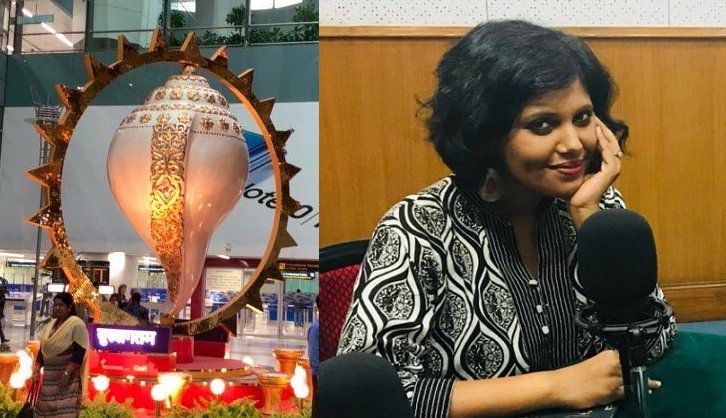
National Political Editor of Hindustan Times and former NDTV journalist Sunetra Choudhury was subject to criticism on Twitter after she posted a tweet objecting to installation of a giant conch at the Delhi airport. Sunetra Choudhury found the installation, a holy symbol among Hindus, ugly.
Taking to the microblogging site to express her disapproval of the rotating conch or Shankha at the Delhi airport, she said that it is uglier than the carpet, and asked the airport to remove it, tagging the Twitter handle of the Delhi Airport.
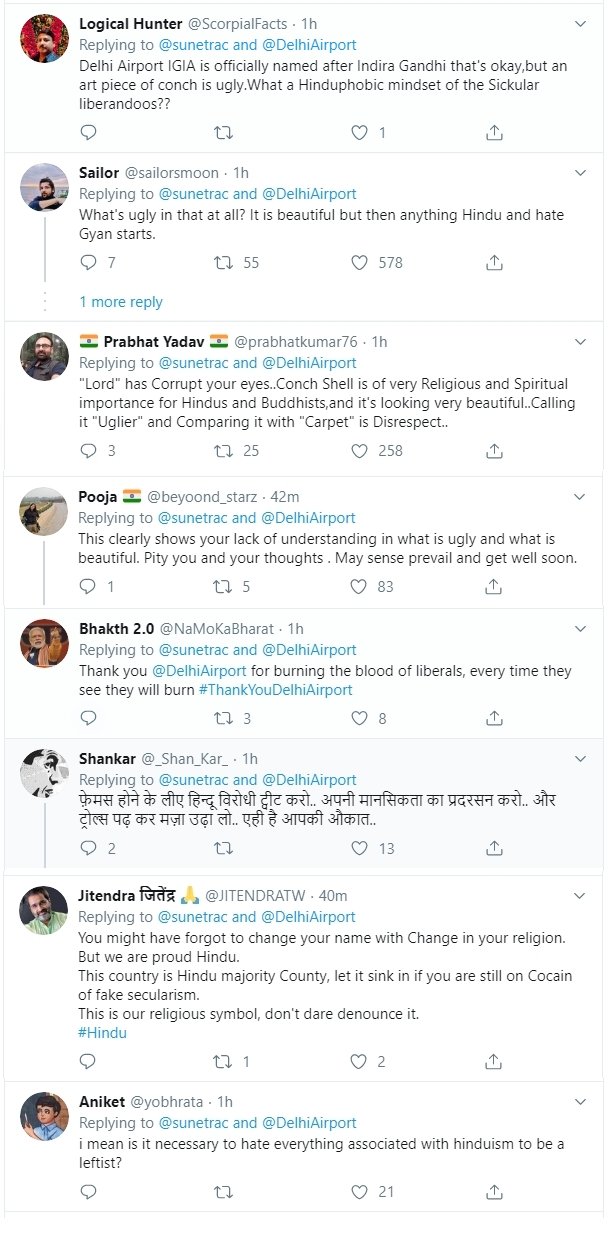
This didn’t go down well with Twitter users, who were quick to label it as Hinduphobic. People also commented that the installation looks beautiful to them, and it is looking ugly for the journalist due to her biased vision. And as with any debate over social media, some of the users chose to hit below the belt and commented on Sunetra’s looks in response to her tweet.
Reactions to the tweet of Sunetra Choudhury
The conch was installed at the Terminal 3 of the Indira Gandhi International airport in October last year as part of the beautification of the airport. The large shining installation slowly rotates on its vertical axis.
After it was installed, BJD MP from Odisha had tweeted saying he is extremely happy to see it, which also the symbol of the Biju Janata Dal.
Extremely happy to see the “Sankha” (Conch), symbol of our Biju Janata Dal, at the Terminal-3 of Delhi International Airport after landing from Bhubaneswar along with Hon’ble Rajya Sabha MP Shri. Prasanna Acharya and Hon’ble Lok Sabha MP Shri. Chandrasekhar Sahu. pic.twitter.com/7CVRlgAVK4
— Dr. Sasmit Patra I ଡ଼ଃ ସସ୍ମିତ ପାତ୍ର (@sasmitpatra) October 21, 2019
The conch shell, known as Shankha in India, has religious importance in Hinduism and Buddhism. The Shankha is a sacred emblem of the Hindu preserver God Vishnu. It is also the used as a trumpet in Hindu rituals, and in the past was it used as a war trumpet. It is often used in Hindu art, and households also use as a decorative item.
The Shankh also finds place in the official state emblem of Kerala state, which is derived from the Royal coat of arms of the Kingdom of Travancore. The emblem features the national emblem, two elephants, and a conch shell.
As for whether the Shankha installed at the Delhi airport is ugly or not, this tweet describes it perfectly, ‘Beauty lies in the eyes of the beholder’.
The India Today ‘sting’ that claimed to reveal ABVP’s involvement in the violence that erupted at JNU on the 5th of January has blown on the face of Rahul Kanwal and the entire team of the news network. In a series of reports, OpIndia has comprehensively busted the narrative of the mainstream media that sought to pin the entire blame for the violence on the ABVP.
They have consistently tried to absolve the Left student unions of all blame despite the fact that it has been obvious from the very beginning that it is the Left that is to be blamed for the escalating tensions in JNU. One tweet by Rajdeep Sardesai perfectly captures the mentality of the mainstream media. They are more offended by the alleged retaliation by ABVP than the violence perpetrated by the Left which initiated the whole vicious cycle.
As more videos/photos identifying Akshat Awasthi with ABVP tumble out, my humble Sunday suggestion to student body:Why not just accept some ABVP members may have been involved in Jan 5 violence and realise ‘revenge’ attacks are unacceptable. End denial, troll attacks! #JNUTapes
Truth be told, it has become the favoured tactic of the Left and the mainstream media. Their conduct has proved definitively that they are not averse towards violence, they are only opposed to it when their footsoldiers are the ones who have to suffer the consequences for the violence they themselves unleashed.
The most evident example of it is the manner in which the Leftist intelligentsia treats Naxals and ‘Urban Naxals’. The ‘liberal’ establishment, in the past, has gone so far ahead as to claim that Naxals are ‘Gandhians with Guns’. While a million crimes of the Maoists have been ignored, the Indian State and security forces have been regularly targeted and even slandered over flights of fantasy for attempting to put an end to the menace of Leftist terrorism.
The same narrative is at work in Kashmir. The genocide of Hindus was whitewashed, the rampant Islamic terrorism in the valley has been ignored and the Jihadist inclinations deeply ingrained in the psyche of the Kashmiri community has been completely given a free pass. Simultaneously, a carefully crafted narrative of the Indian Army being aggressors has been hyped up and the Left has portrayed India as an occupying force in Kashmir despite the fact that legally, morally and historically, Kashmir is Indian territory.
The same mentality was observed during the anti-CAA protests across the country. The virulent anti-Hindu bigotry was ignored, the Islamic supremacist colours of the protests were not paid any attention and the extensive damage to public property and the rabid mob violence that was unleashed across the streets were whitewashed. Even then, the Liberal Establishment only condemned the Police for taking adequate measures in order to put an end to the escalating spate of violence.
The same worldview is at play when the blame for ‘cow vigilantism’ is put entirely on Hindus. The ‘liberal’ establishment deliberately suppresses the huge menace of cattle smuggling and the inability of even the Police to curb it entirely. ‘Cow vigilantism’ cannot be controlled without cracking down on cattle smuggling because the former is often a reaction to the latter. In order to stop the ‘reaction’, which can and does end up harming innocent people sometimes, efforts must be made to stop the frequency of the ‘action’. However, again, we see that the Liberal Establishment hates violence only when it adversely impacts communities they have designated as ‘protected categories’.
This is not a phenomenon unique to India. In the USA, the Democrat establishment has continuously whitewashed the violence unleashed in the streets by Antifa, a vigilante group that considers everyone to the left of Ilhan Omar and Alexandria Ocasio Cortez as fascists or ‘fascist enablers’. The Antifa has attacked innocent Trump supporters for simply exercising their democratic right and the Democrat Establishment, in response, which includes the mainstream media, has glorified them beyond all measure.
In the current JNU episode, we see the same phenomenon at work. The ‘liberal’ establishment has entirely ignored and attempted to suppress the cycle of violence that was initiated by the Leftists on the campus. Instead, they are on a joy ride to prove that the ABVP is to be blamed for the mess that the University is in right now. The Liberal Establishment should just be honest for once.
They should say it clearly that they are hurt only because there’s the possibility that some of their footsoldiers got hurt in the process. They should admit that they have no problem with using street violence as a tactic to achieve political goals. The Left appears to have forgotten the age-old lesson of ‘As you sow, so shall you reap’. They appear to have forgotten that once a cycle of violence has been initiated, it’s very difficult to predict how it would all pan out. It appears that they love violence but just do not want to bear the consequences of it. They might play the victim card now but they will find that there are very few people outside of their bubble who will sympathize with them.
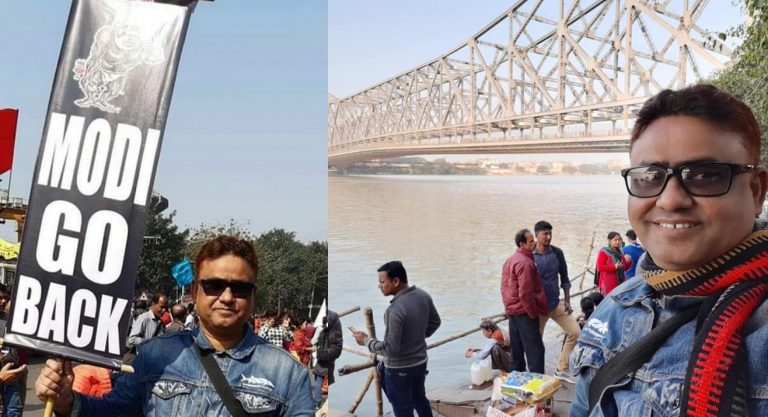
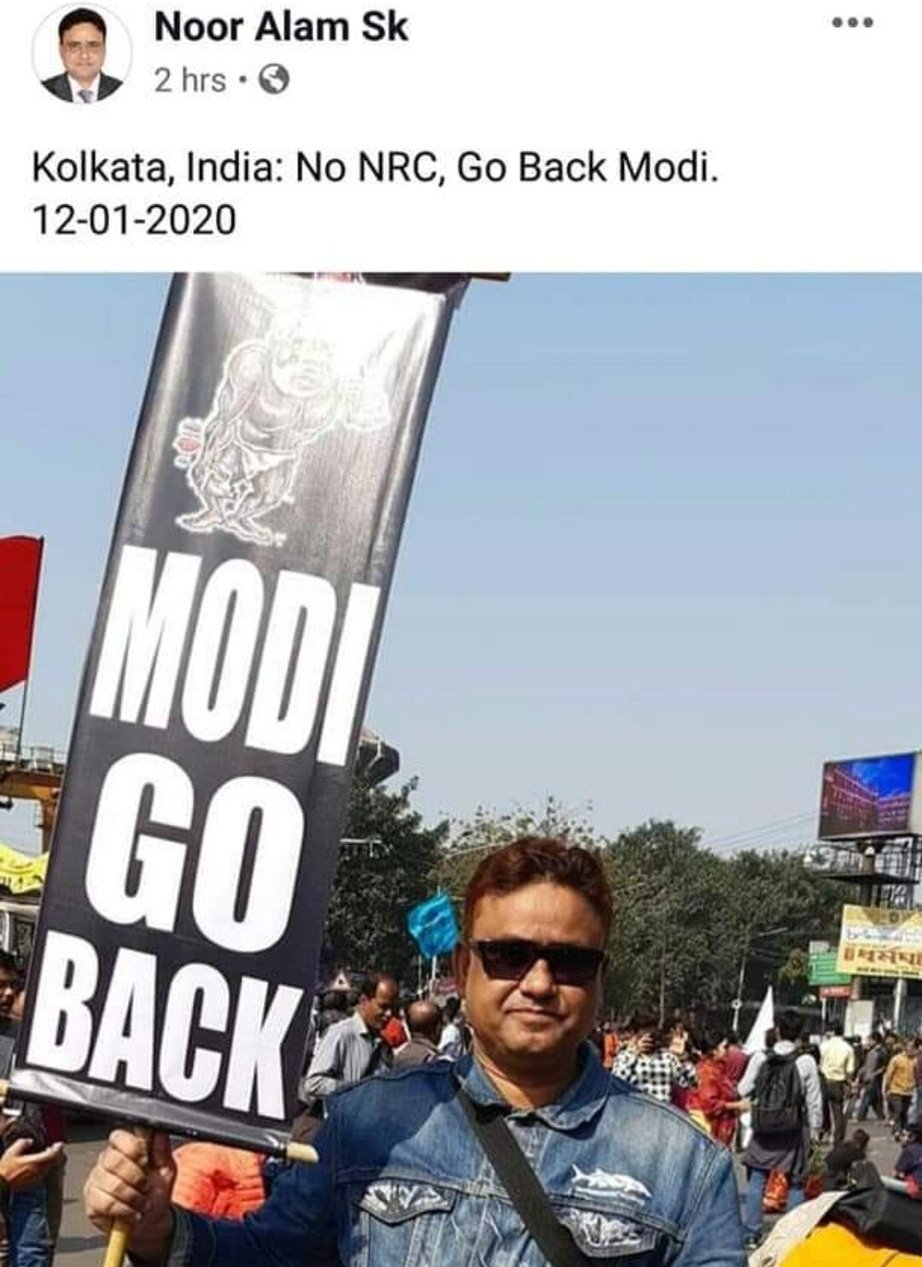
A Bangladeshi journalist, who is visiting Kolkata this week, was seen participating in anti‑NRC, anti-Modi rally in the West Bengal capital. Md. Noor Alam Sk, a journalist with Bangladeshi media house Unique News 24, was photographed holding a poster saying ‘Modi Go Back’ today, on a day when Prime Minister Narendra Modi is visiting Kolkata.
Noor Alam had posted the photograph on his Facebook profile, with the caption ‘Kolkata, India: No NRC, Go Back Modi’. Later he deleted the post, but not before alert social media users had taken screenshot of the same.
Screenshot of deleted FB post
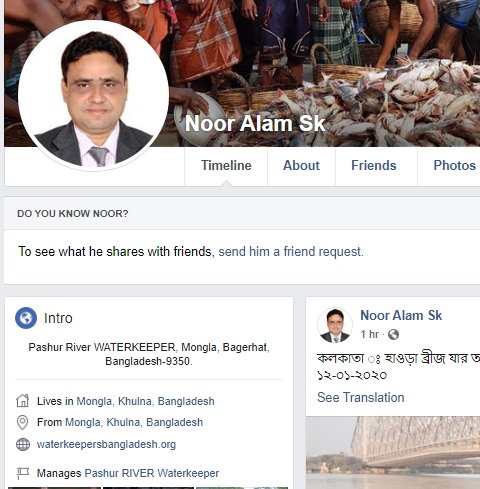
Going by the Facebook posts of Noor, he had arrived at Kolkata on 10 January. Apart from attending a quiz competition among school children at Jodhpur garden on January 11, he has been visiting tourist places in Kolkata. Even before arriving in India, he had posted anti-CAA, anti-NRC messages on his social media account.
As per his Facebook profile, Noor Alam lives in Mongla, Bagerhat in Bangladesh.
This is not the first incident of visitors from Bangladesh participating in political activities in Kolkata. Ahead of Lok Sabha elections last year, one Bangladeshi actor named Ferdous Ahmed was seen campaigning for a candidate of Mamata Banerjee led Trinamool Congress. Subsequently, he was asked to leave India by the union home ministry and his visa was cancelled. He was also blacklisted by MHA for campaigning in an election in India.
After Ferdous, another Bangladeshi actor Gazi Abdun Noor was found participating in a roadshow of a TMC leader. He too was asked to leave India immediately, after it was found that his visa had already expired.
Following the brutal violence unleashed by the left-wing forces on the students inside JNU campus on January 5, more than 200 academicians, including vice-chancellors of reputed universities have written a letter to Prime Minister Narendra Modi on Sunday, blaming a “small coterie of Left-wing activists” for a deteriorating academic environment in the country.
“We observe with dismay that in the name of student politics, a disruptive far-left agenda is being pursued. The recent turn of events in campuses from JNU to Jamia, from AMU to Jadavpur alarms us to the deteriorating academic environment due to the shenanigans of a small coterie of left-wing activists,” they wrote to the prime minister.
The signatories to the statement include Hari Singh Gour University VC R P Tiwari, Central University of South Bihar VC HCS Rathore and Sardar Patel University VC Shirish Kulkarni, among others.
In a letter titled, “Statement against left-wing anarchy in educational institutions”, the academicians have blamed the left-leaning groups and said it has become difficult to organise public talks or speak independently due to the “censorship imposed by the left-wing politics”.
“Strikes, dharnas and shutdowns over maximalist demands were common in Left strongholds and personal targeting, public slandering and harassment for not conforming to the Left ideology were on the rise,” the academicians wrote to Modi.
The worst sufferer of this kind of politics were poor students and those from marginalised communities, the statement said.
“They (these students) lose out on the opportunity to learn and build a better future for themselves. They also lose out on the freedom to articulate their own views and alternative politics. They find themselves constrained to conform to the majoritarian left politics. We appeal to all democratic forces to come together and stand for academic freedom, freedom of speech and plurality of thoughts,” it added.
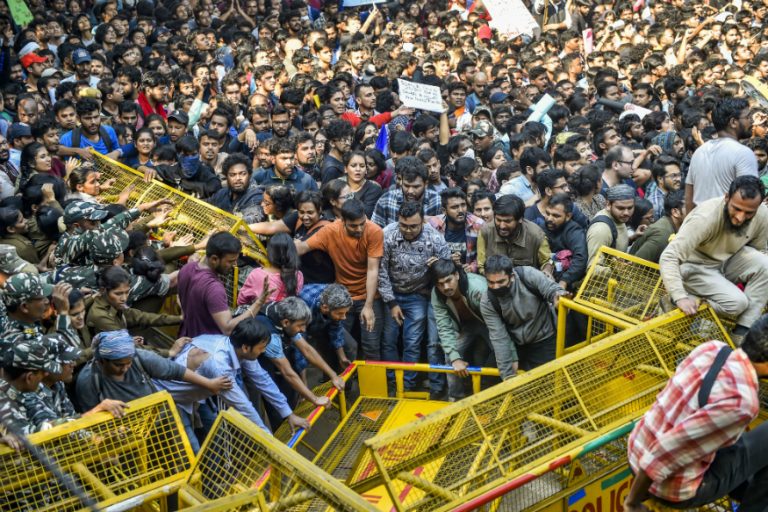
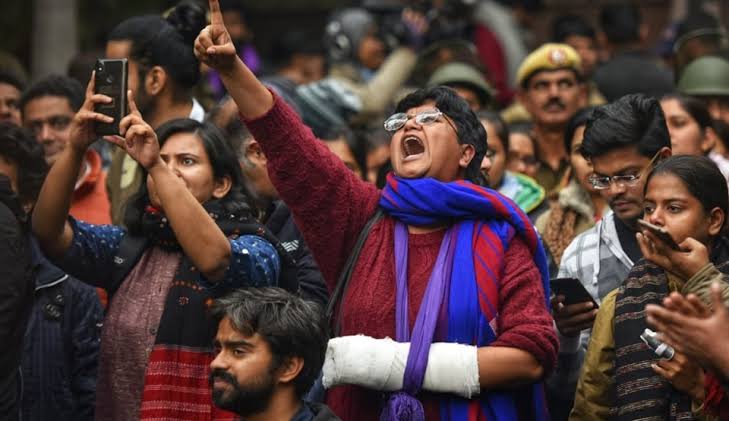
Earlier on Sunday, January 5, a large group of masked goons had entered the JNU campus and assaulted students, faculty and other staff members. JNU Student Union president Aishe Ghosh was also attacked and she was injured in the incident.
Prior to that, on January 4, leftist groups had tried to stop students from registering for the winter semester. The students had disrupted the registration process for the winter semester by barging into the Centre for Information System office and cut off the power supply and damaged the servers to protest against the fee hike.
The Delhi Police have now filed an FIR against JNUSU President Aishe Ghosh and 19 others for attacking security guards and vandalizing server room on January 4.
This fight against fascism really takes a toll on you, you feel lost at times, you start wondering whether this is all worth it, but during those times, you see the brave freedom fighters of JNU and your spirit is reinvigorated! What brave souls diary, what brave souls, they shook the foundations of Modi empire this week.
Let us recap quickly for you diary, so as you know, our brave fighters in JNU have been on strike against the fascist step to raise monthly hostel rent from 10 Rupees to 300 Rupees. These warriors have been bravely stopping the fascist students from the fascist step of registering for new courses and exams. However, some fascists registered despite our appeal to save democracy so begrudgingly, comrades beat up those fascist students.
All was well till then, but then, the other side (fascist side) also started retaliating! How can people not just stop comrades from beating them up, but also beating up comrades in return?? These monsters are all supported by Amit Shah diary, he is the one personally leading the students towards fascism.
However, they underestimated us diary, they didn’t know how united the liberals are. Immediately, we instructed all news channels to focus on the retaliation, and ignore the initial violence. That is how you save liberalism diary, for every terror incident, say it was retaliation for Babri demolition, for every communal riot, say it was in retaliation for 2002, for Kashmiri Pandit exodus, say it was in retaliation for KPs getting Government jobs, and for JNU violence, stick to retaliation.
Anyway, we are going to make sure Amit Shah and Narendra Modi lose their deposits in front of Kanhaiyya and Umar during the next Lok Sabha elections over this issue diary. That will be our revenge for their supporters not watching comrade Deepika Padukone’s film.
Talking of Deepika’s film reminds us of the communal Bollywood. This week, they released the violent communal film Tanhaji. There was so much saffron diary, so much saffron that our eyes started bleeding. When leading A listers like Anurag Kashyap and Swara Bhaskar are standing bravely against fascism, B grade actors like Ajay Devgn and Kajol are pandering to the majoritarian sentiments of this government. This is how Nazis spread their propaganda diary, and we are seeing a repeat here in India.
Our stir against CAA and imaginary NRC is also continuing diary, even though Government went ahead with the CAA. We have decided not to show our documents to people who are not asking for the documents. That will show these fascist people the power of the common man. Want to write a lot more but have to go to British embassy to submit our bank statements from last 6 months to get the Visa. See you next week diary, ciao.