

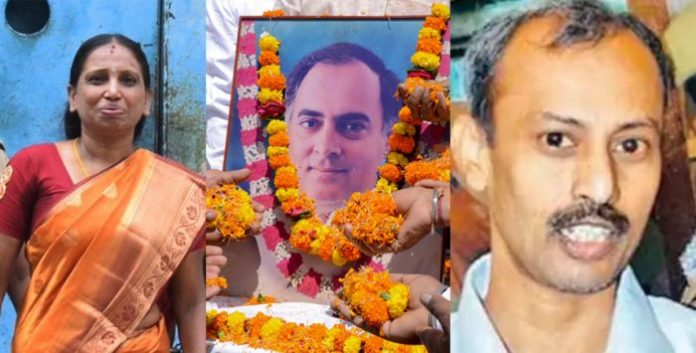
Days after the central government filed a review petition contesting the Supreme Court’s decision to free all convicts in the assassination of former Indian Prime Minister Rajiv Gandhi, one of the six convicts, RP Ravichandran, stated that he will fight the review petition legally.
Ravichandran’s statement came after he visited the Viduthalai Chiruthaigal Katchi (VCK) party headquarters on Monday. Speaking to reporters, Ravichandran, who was serving life sentences for almost thirty years for the assassination of Rajiv Gandhi, said, “Today I came to meet VCK chief Thirumavalavan at his Chennai office. I thanked him as they (VCK) were with us for our freedom.” He added that he would be pursuing a legal fight against the centre.
Centre files a review petition challenging the Supreme Court order to release the killers of Rajiv Gandhi
On 17th November 2022, in opposition to the Supreme Court’s decision to release all convicts in the killing of former Indian Prime Minister Rajiv Gandhi, the Center filed a review petition with the top court.
The centre has asked for this review petition on the grounds that the centre wasn’t heard on the matter by the Supreme Court despite this being the case of the murder of a former Prime Minister of India. The centre is contending as to why it was not made a party in this case when its top office bearer was the victim in this incident that took place on 21st May 1991.
On November 11, the court released Nalini Sriharan and the five other remaining prisoners who were serving life sentences for almost thirty years, stating that the previous decision freeing AG Perarivalan also applied to them.
It is notable that, on May 18, a panel of Justices B R Gavai and B V Nagarathna, exercising its exceptional authority under Article 142 of the Constitution, ruled in favour of Perarivalan, who had spent more than 30 years in prison.


