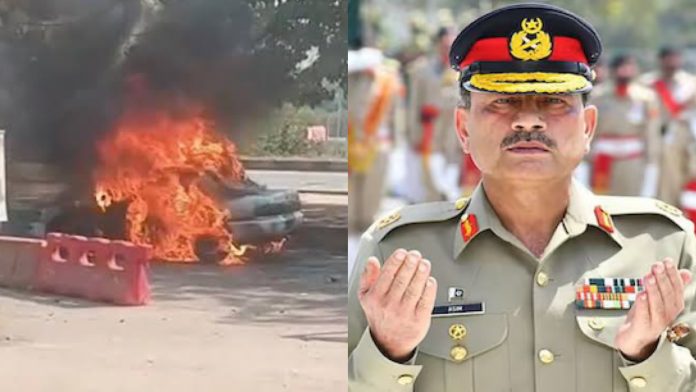
They say lightning never strikes the same place twice. But terrorism, especially the Pakistani variety, has a knack for doing exactly that, and then blaming the weather.
Just hours after the Delhi Red Fort car bombing that killed nine innocent people, a powerful explosion ripped through the Islamabad Judicial Complex, killing twelve. Two capitals, two blasts, two “coincidences” and one unmistakable puppeteer in Rawalpindi’s GHQ.
Field Marshal Asim Munir, the self-promoted Caesar of a collapsing state, seems to have pressed the panic button. Because if India’s Operation Sindoor 2.0 is indeed loading, then the Islamabad blast may well have been Pakistan’s version of “self-harm to gain sympathy.”
Too timed to be a coincidence
The timeline of events itself reads like a script, not chance. The Red Fort blast occurred on Monday evening around 6:45 pm. Barely 18 hours later, at 12:39 pm on Tuesday, the Islamabad court complex was rocked by a suicide explosion. Both attacks featured suicide bombers, both used ANFO-based explosives, and both unfolded precisely as India began dismantling a sprawling Jaish-e-Mohammad (JeM) doctor module spanning Faridabad, Kashmir, and Uttar Pradesh.
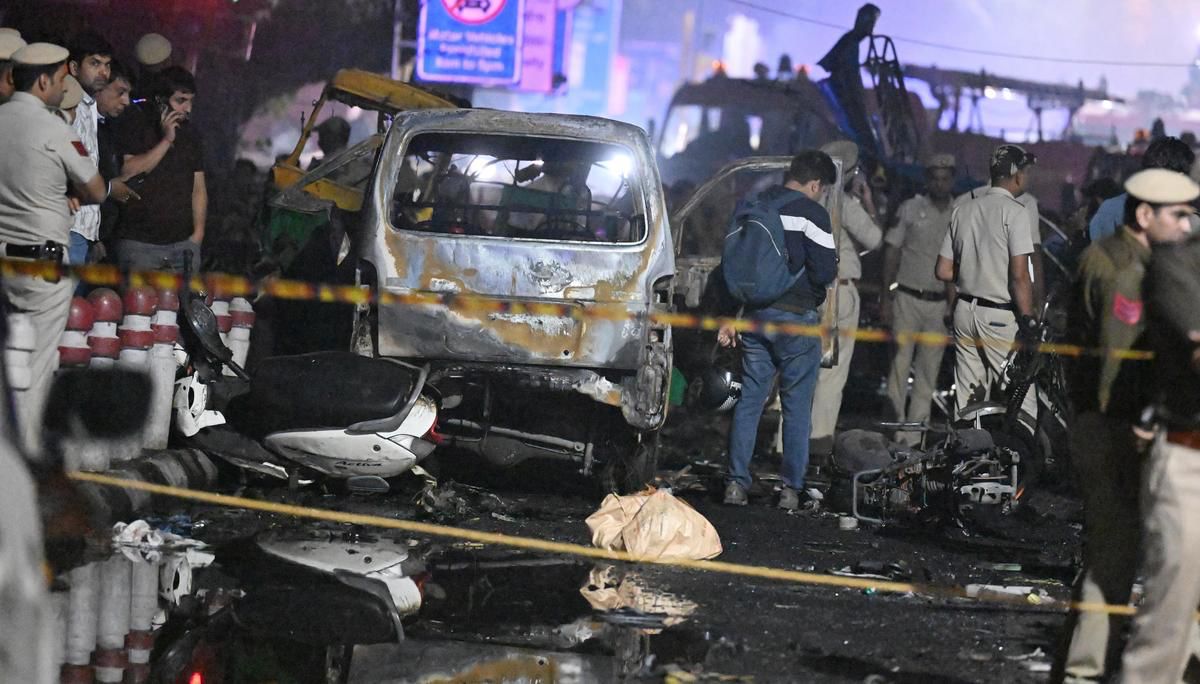
This isn’t coincidence. This is choreography. For decades, Pakistan’s deep state has mastered the art of blowing up its own backyard whenever it needs to play the victim card. And right now, Asim Munir desperately needs to look like a victim. Because after the Delhi blast, every intelligence intercept, every seized device, every investigation trail and explosives point directly toward Pakistan-backed JeM, a terror outfit Munir has coddled for years as his personal proxy. In fact, JeM terrorists killed in Operation Sindoor were granted state funeral, attended by senior Pakistani Army officials.
And with Operation Sindoor 2.0 now a matter of when, not if, Islamabad needed a diversion, fast.
Munir’s nightmare: Operation Sindoor 2.0
To understand Munir’s desperation, one must revisit May 2025, when India’s Operation Sindoor shredded Pakistan’s terror ecosystem in one precise, calculated stroke. The operation flattened nine terror camps, ten military bases, and multiple radar stations. It also humiliated the Pakistan Air Force when India’s BrahMos-A cruise missiles struck the Nur Khan airbase, just kilometres away from Pakistan’s nuclear command.
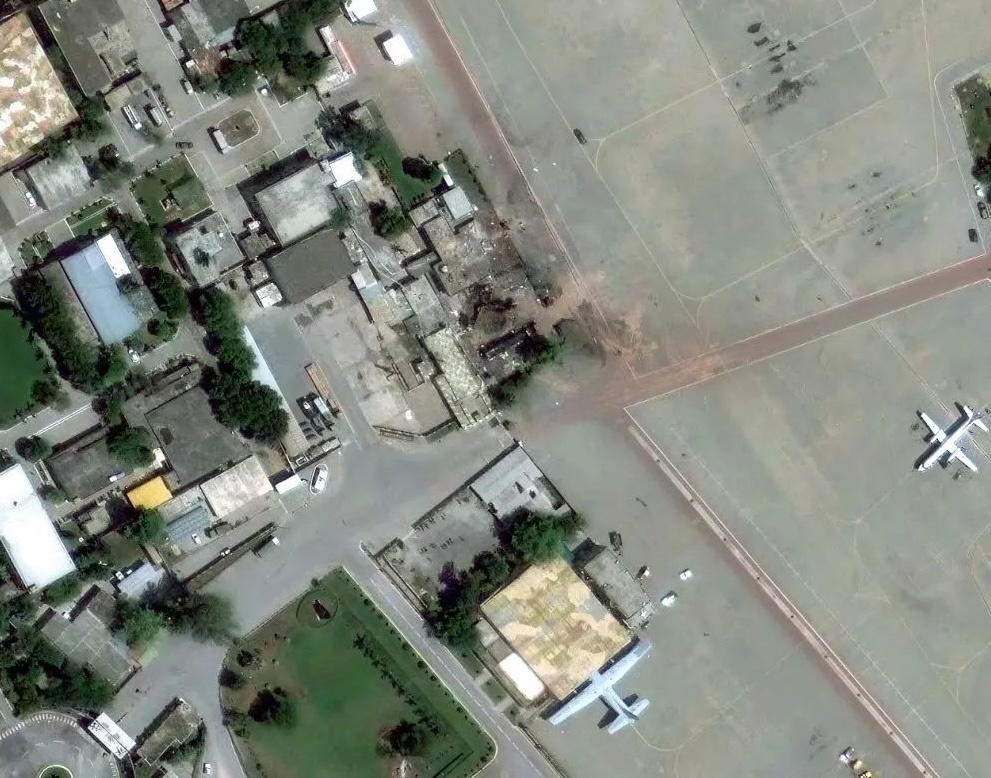
That single strike did more than destroy infrastructure; it destroyed illusions. It told Pakistan, in no uncertain terms: Your nukes no longer shield your terror.
The fallout was catastrophic for Islamabad. The military establishment broke down under pressure and begged Washington for a ceasefire. India, confident and resolute, refused to even acknowledge Pakistan’s calls for “de-escalation.” This is why Pakistan has bent over itself to talk up US President Donald Trump. The inordinate charm offensive of the US President is an admission that Operation Sindoor was a roaring success that brought Pakistan on its knees.
Asim Munir, the man who presided over this disaster, survived politically only by promoting himself to Field Marshal, hoping a new rank could erase old failures. But now, after the Delhi Red Fort attack, clearly linked to JeM operatives under ISI supervision, Munir knows India’s response could be swift and unforgiving.
And this time, it won’t stop at Balakot or Bahawalpur.
From doctors to bombers: JeM link to Faridabad terror module and Delhi blast
The Delhi attack wasn’t random. It was the last convulsion of a dying network, triggered in panic after Indian agencies busted a major JeM-linked module in Faridabad. This wasn’t a ragtag group of radicals; it was an organised network of doctors, academics, and medical professionals radicalised into running a terror logistics chain.
At the heart of this network was Jamaat-ul-Mominaat, the newly launched women’s wing of JeM, headed by Masood Azhar’s sister, Sadia Azhar, from Bahawalpur. Her key India operative, Dr Shaheena Shahid from Lucknow, was arrested with arms and ammonium nitrate. Her handler, Dr Muzammil Shakeel, a Pulwama native teaching at Al Falah University, Faridabad, was caught with over 2,900 kg of explosive material.
When one of their top operatives, Umar Mohammad, realised the network had been compromised, he allegedly detonated the car bomb near Delhi’s Red Fort, killing nine people. It was a suicidal act of defiance, but it also exposed the depth of Pakistan’s reach inside India’s urban centres.

So much for the endlessly repeated myth that “terror has no religion.”
The Islamabad blast: A false flag in broad daylight
Now comes the twist that even Pakistani journalists are whispering about. Hours after the Red Fort explosion, a suicide bomber “mysteriously” appeared outside Islamabad’s judicial complex, lingered for nearly ten minutes, and then blew himself up near a police van. The explosion killed lawyers, policemen, and bystanders, the perfect optics to paint Pakistan as a “victim of terrorism.”
No terror group has claimed responsibility. Instead, Pakistan has rushed to blame India and Afghanistan for the attack, even before a preliminary investigation was ordered. How convenient.
Even Afghanistan’s media hinted that the Islamabad bombing could be “a calculated attempt by Pakistan’s establishment to deflect Indian retaliation under Operation Sindoor 2.0.” When Kabul calls you out for manufacturing terror, you know the credibility crisis has reached new depths.
BREAKING NEWS ?
— Khurasan English (@KhurasanEng0) November 11, 2025
Asim Munir sacrificed Pakistanis in order to escape India’s reaction.
As a result of today’s explosion in Islamabad, at least 40 Pakistani citizens have been killed and injured so far.
This explosion in Islamabad comes just a few hours after another blast… pic.twitter.com/PoztA8ckCH
Pakistan’s military has a long, bloody tradition of sacrificing its own citizens to shape international perception. From the Peshawar school massacre to the Quetta police academy bombing, the ISI has repeatedly looked away, or worse, looked within, when terror suited its strategic calculus.
The Islamabad court attack fits this pattern perfectly. It also offers Pakistan and Munir an opportunity to cast themselves as victims of terror, and fool the West like it has been for over three decades now.
Munir’s gamble at self-harm to buy time
At its core, the Islamabad blast appears to be a suicidal diversion, a way for Asim Munir to buy time. Having seen Pakistan’s air defences shredded and key bases reduced to rubble during Operation Sindoor, Munir knows another Indian strike could cripple what remains of his command. His economy is imploding, his army demoralised, and his Western patrons indifferent.
So he resorts to the old ISI playbook: stage a domestic tragedy, blame “non-state actors,” and rush to Western embassies claiming shared victimhood. The hope is that Washington, London, or Doha will once again pressure India to show restraint, giving Pakistan’s military just enough breathing room to rebuild its terror infrastructure.
But the world has changed. India has aptly demonstrated in the last few months that it will no longer allow western capitals to dictate its strategic decisions.
Meanwhile, the Afghan Taliban, once a junior partner in Pakistan’s jihad project, now openly accuse Islamabad of “state-manufactured chaos.”
When Afghanistan, of all countries, calls you out for exporting terror, you know the mask has slipped.
A country addicted to its own terror
Pakistan today resembles an arsonist trapped in his own burning house, still clutching the matchbox, still insisting someone else lit the fire. The Islamabad blast wasn’t a terror attack in the traditional sense; it was a political message, broadcast in blood.
By detonating a bomb in his own capital, Asim Munir sent a signal to India, the West, and his domestic rivals: “If I burn, you burn with me.” It’s the language of desperation, the same one spoken by dictators on their last night in power.
But this time, the smoke won’t confuse anyone. India has moved on from appeasement and ambiguity. Operation Sindoor wasn’t a one-time retaliation. It was a doctrine, a standing policy that every act of cross-border terror will be avenged, and every mastermind made to pay. PM Modi echoed similar sentiments a day after the Delhi blast that claimed 9 lives thus far. During his visit to neighboring Bhutan, PM Modi vowed that perpetrators of the ghastly attack will be brought to justice.
Munir’s flirtation with terror boomerangs
Asim Munir thought a suicide blast outside Islamabad’s court would win him sympathy and strategic pause. Instead, he has earned suspicion abroad and contempt at home. His attempt to fake victimhood has only confirmed the truth that Pakistan’s greatest terrorist doesn’t hide in caves; he wears stars on his shoulders.
If India does proceed with Operation Sindoor 2.0, it won’t merely be retaliation; it will be a reckoning. Because for too long, Pakistan has exported jihad and called it strategy. This time, like many times in the past, it has used terrorism to inflict self-harm and play victimhood, even if it meant bombing its own capital and killing its own citizens.
The Islamabad bombing is therefore not a terror attack, much less sponsored by India or Afghanistan, against Pakistan. It is Asim Munir engineering a false-flag operation to project victimhood and attempt to thwart India’s Operation Sindoor 2.0. But like India has demonstrated it writ large, it won’t allow, whether it is a megalomaniac narcissist or a tinpot military despot, can dictate the timing and terms of India’s response.