

The second part of the River Linking series shifts the focus from the national river-interlinking vision to ground reality: the chronically drought-prone region of Bundelkhand, spanning thirteen districts across Uttar Pradesh and Madhya Pradesh. For decades, Bundelkhand has been defined by acute water scarcity, dried-up borewells, repeated crop failures, and widespread distress migration. The crisis is not a lack of seasonal rainfall, but the absence of long-term water storage infrastructure in its hard-rock terrain.
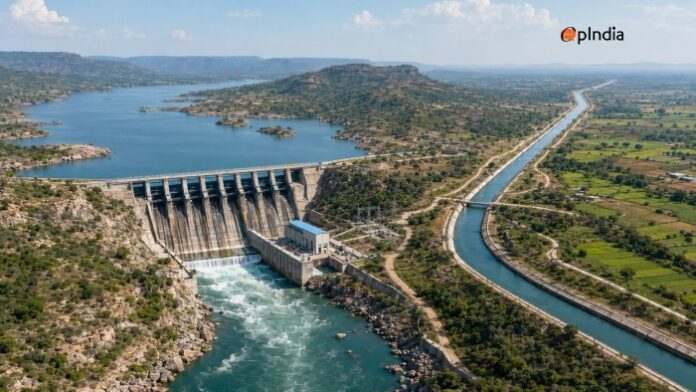
Part 2 examines the Ken-Betwa Link Project (KBLP), the pioneer model and first flagship initiative launched under India’s National Perspective Plan for river interlinking. The core objective of KBLP is to transfer excess monsoon water from the surplus Ken River basin in Madhya Pradesh to the water-deficit Betwa River basin via the major Daudhan Dam and a 221-kilometre canal network.
The report highlights the transformative scale of the Ken-Betwa project. Once fully operational, it will provide clean drinking water to over 62 lakh people across dry districts like Banda, Mahoba, Jhansi, Lalitpur, Tikamgarh, Panna, and Chhatarpur. Furthermore, the project aims to bring more than 10.6 lakh hectares of land under year-round irrigation, boosting agricultural yields and ending the painful cycle of rural migration that forces farmers to leave their homelands for basic livelihoods.
Beyond drinking water and agricultural security, KBLP acts as a multi-purpose economic booster for the region. The infrastructure includes power generation facilities designed to produce 103 megawatts of hydropower and 27 megawatts of solar power, laying the foundation for local industrial growth and regional employment.
The analysis also details how the project successfully overcame decades of complex inter-state political hurdles between Uttar Pradesh and Madhya Pradesh, setting a historic precedent for cooperative federalism. Addressing ecological concerns, the report explains how integrated landscape management plans were created to preserve the ecosystem around the Panna Tiger Reserve. Ultimately, Part 2 discusses how the Ken-Betwa Link Project is not just a civil engineering feat, but a lifeline that offers Bundelkhand a permanent escape from ecological distress and economic stagnation.
The full article is available on Chapter One Mag.


