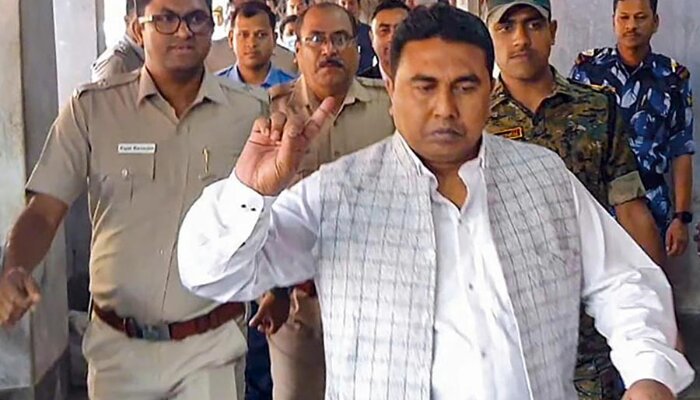
According to police sources, Sheikh Shahjahan of the Trinamool Congress, who was apprehended on 29th February, admitted to encouraging a crowd to attack an Enforcement Directorate team last month, the police said in the plea seeking his remand, reported Telegraph. After being at large for 55 days, Shahjahan was eventually arrested by the authorities in Minakhan, North 24 Parganas district and during interrogation, the 53-year-old acknowledged that he was involved in the 5th January attack on the officials of the national agency who were searching his property as part of a ration scam investigation at Sandeshkhali in North 24 Parganas.
“Shahjahan was arrested late on Wednesday night from Bamanpukur area at Minakhan in North 24 Parganas. He was arrested in connection with the case related to the attack on ED officials on January 5. He was one of the principal accused in the case. Several other cases have been lodged against him after protests broke out in Sandeshkhali earlier this month. Those are being investigated,” Supratim Sarkar, Additional Director General (ADG) South Bengal informed the media.
The police made several disclosures in the remand plea. As per it, Shahjahan is the mastermind of the attack on ED team, adding that he not only obstructed the ED officials on duty but also “assaulted (them) mercilessly using his influence, men, and muscle power as well robbed their official articles.”
It states that “the reputation of the accused is very bad and there is every possibility of his absconding violating the order of the learned court and hampering the evidences as well as the process of investigation.”
The police said that during the interrogation after he was arrested by sub-inspector Pratap Sarkar of Nazat police station, he “confessed” his “guilt” and “involvement in the instant case.” Justifying the demand for police remand, the police said that Shahjahan’s help would be required to identify the other “large number of miscreants” involved in the case. The plea said, “the accused Shahjahan Sheikh is the only means who can provide the details of those involved absconding accused persons.”
Shahjahan was produced in a municipal court in Basirhat at around 10:30 and was remanded to police custody for 10 days. The development transpired following a ruling by the Calcutta High Court that Sheikh Shahjahan “should be detained” and the action could be carried out by the state police, the Central Bureau of Investigation or the Enforcement Directorate. Additionally, the police had been given a 72-hour window by West Bengal Governor CV Anand Bose to capture him.
Over a month has passed since many women accused Sheikh Shahjahan and his associates of sexual assault and land grabbing at Sandeshkhali in the North 24 Parganas district of West Bengal.
He has been charged with under sections 147 (guilty of rioting), 148 (guilty of rioting being armed with a deadly weapon), 149 (unlawful assembly), 307 (attempt to murder), 333 (whoever voluntarily causes grievous hurt to any person being a public servant) and 392 (robbery) of the Indian Penal Code.
According to the police, in the last few weeks alone, over 100 complaints have been submitted against Sheikh Shahjahan. These complaints have led to the filing of several cases against him and his companions, including 376D (gang rape). Shibaprasad Hazra and Uttam Sardar, two of his close aides, had previously been taken into custody on similar allegations.
Meanwhile, the investigation of the cases filed against Sheikh Shajahan was taken over by the West Bengal Criminal Investigation Department (CID) department.
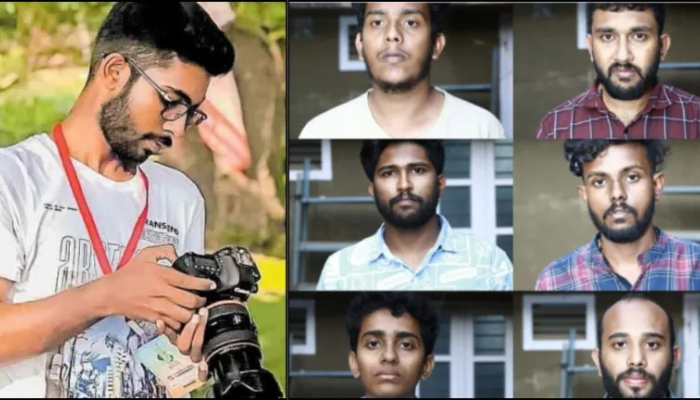
In a shocking occurrence from Kerala, a 20-year-old student, JS Sidharth a native of Nedumangad, Thiruvananthapuram committed suicide on 18th February in Wayanad. He was reportedly subjected to severe physical and verbal abuse by the left-wing student leaders who also provoked him to end his life. He was likewise paraded naked by them. Six pupils affiliated with the Student Federation of India (SFI) were apprehended on 28th February by police after interrogation. The father of the deceased, Jayaprakash also charged the student leaders of the SFI with murder.
The accused have been identified as Billgate Joshua (23) from Sultan Bathery, Abhishek S (23) from Idukki, Dons Daayi (23) from Thodupuzha, Akash SD (22), Rahan Binoy (20) and Sreehari RD (23) from Thiruvananthapuram. A case was previously launched against K. Arun, N. Asif Khan, SFI Unit Secretary Amal Ihsan, K. Akhil, R.S. In addition, an official complaint was also brought against Kashinathan, Amin Akbar Ali, Sinjo Johnson, J Ajay, EK Saud Rizal, A Altaf, V Adityan and M Muhammad Danish.
According to information, on 18th January, JS Sidharth, a second-year student of the College of Veterinary and Animal Sciences in Pookode, Wayanad took his own life. The body was found hanging in a toilet of the college hostel in the afternoon. His post-mortem report carried many revelations including that he suffered a severe beating before death. Furthermore, his stomach was empty and there were wounds on his body. He sustained head, jaw and back injuries.
Afterwards, the police registered a case of unnatural death in this case. Twelve students comprising left-wing student leaders were also suspended from the college after its anti-ragging committee found the victim was brutally beaten up by fellow students days before his death. The arrested individuals are not among the suspended students who are evading capture. According to Sidharth’s father, left-wing students regularly tortured his son. The suspended SFI leaders and members include the college union president, a union member, and the SFI unit secretary.
He charged, “On February 14, Sidharth danced with senior students during a Valentine’s Day function, for which he was beaten up in front of around 100 students. Sidharth’s friends told us that the college union secretary and his gang threatened to kill them if they revealed the assault,” and slammed the Vythiri police for prolonging to take action against the offenders.
He mentioned that on 14th February, Valentine’s Day, Sidharth had danced with a girl. This infuriated the accused. The victim was supposed to return home the next day. However, he was summoned to the hostel by the SFI student leaders who then began tormenting him. He endured three days of relentless misery. Food and drink were off-limits to him. A rod was used to batter him. He was humiliated and led around the hostel in a naked state. The news of Sidharth’s suicide followed after the horrifying developments.
According to the victim’s family members, he had purchased a train ticket on 15th February, but he had to cancel the trip after receiving a call from a friend after which he became unusually quiet and depressed.
Sidharth’s father disclosed that the former called two hours before the news of his death. He stressed that his son didn’t commit suicide but was killed and hanged there. According to him, no action has been taken in the matter since the culprits are connected to organisations that support the ruling left parties. K. Akhil, one of the primary offenders was nabbed on 29th February from Palakkad. Kerala’s opposition parties have also charged that the administration is being indifferent to the issue. It is alleged that a fight about Valentine’s Day celebrations at the campus led to Siddharth being exposed to vicious violence and a mob trial.
The suspects allegedly attended college till 24th February but the police had no interest in apprehending them. Six students were ultimately apprehended after the authorities were charged with negligence. Leading the probe, Sajeev claimed that following receipt of the anti-ragging committee’s report, police had charged the students both apprehended and absconded under the Prohibition of Ragging Act and abetment of suicide (IPC Section 306).
He noted, “The accused include senior students and Sidharth’s batchmates. The police took eight students into custody and recorded the arrest of six. They are not among the suspended students.”
The Union Cabinet chaired by Prime Minister Narendra Modi on Thursday, 29 February, approved the establishment of International Big Cat Alliance (IBCA) with headquarters in India with a one-time budgetary support of Rs.150 crore for a period of five years from 2023-24 to 2027-28.
Acknowledging India’s leading role in conserving tigers, other big cats and many of its endangered species, the Prime Minister of India during his speech on the occasion of Global Tiger Day, 2019 called for an Alliance of Global Leaders to curb poaching in Asia. He reiterated this on the occasion of Commemorating 50 years of India’s Project Tiger on April 9, 2023 and formally announced launch of an International Big Cat Alliance aiming at securing the future of big cats and landscapes they thrive. The pioneering and long standing tiger and other big cat conservation good practices evolved in India may-be replicated in many other range countries.
Seven big cats include Tiger, Lion, Leopard, Snow Leopard, Puma, Jaguar and the Cheetah out of these five big cats viz. Tiger, Lion, Leopard, Snow Leopard and Cheetah are found in India.
The International Big Cat Alliance has been conceived as a multi-country, multi-agency coalition of 96 big cat range countries, non-range countries interested in big cat conservation, conservation partners and scientific organizations working in the field of big cat conservation besides business groups and corporates willing to contribute to the cause of big cats, to establish networks and develop synergies in a focused manner so as to bring to a common platform a centralized repository of successful practices and personnel, backed by financial support which can be leveraged to strengthen the conservation agenda in the field to arrest decline in big cat population and reverse the trend. This will be a demonstrative step in leadership position on big cat agenda, to bring range countries and others on a common platform.
IBCA aims for mutual cooperation among countries for mutual benefit in furthering the conservation agenda. IBCA would have a multipronged approach in broad basing and establishing linkages manifold in several areas and help in knowledge sharing, capacity building, networking, advocacy, finance and resources support, research and technical support, education and awareness. With big cats as mascots for sustainable development and livelihood security, India and the big cat range countries can usher in major efforts on environmental resilience and climate change mitigation, while paving a future where natural ecosystems continue to thrive, and gain centrality in economic and development policies.
IBCA envisages synergy through a collaborative platform for increased dissemination of gold standard big cat conservation practices, provides access to a central common repository of technical know-how and corpus of funds, strengthens the existing species-specific intergovernmental platforms, networks and transnational initiatives on conservation and protection and assists securing our ecological future and mitigate adverse effects of climate change.
The framework of IBCA would have a multipronged approach in broad basing and establishing linkages manifold in several areas and help in knowledge sharing, capacity building, networking, advocacy, finance and resources support, research and technical support, insurance against failures, education and awareness. Brand ambassadors across range countries would play a greater role in carrying forward the concept and will boost the impetus to ensure Big Cat Conservation-campaign amongst the masses including the youth and local communities who are important stakeholders in the whole process. Country’s climate leadership role through a collaborative action oriented approach and initiatives, leading to enhanced green economy projects is possible through IBCA platform. Thus, the impetus across Big Cat alliance members could change the face of conservation and prosperity of enabling partners.
The International Big Cat Alliance recognizes the importance of integrating biodiversity policies with sustainable development goals (SDGs) to achieve holistic and inclusive conservation outcomes. The aforementioned advocates for policy initiatives that align biodiversity conservation efforts with local needs and contribute towards the attainment of UN SDGs within IBCA member countries. Mainstreaming Biodiversity across Sectors to embrace integrating biodiversity considerations into sectoral policies and development planning processes; including agriculture, forestry, tourism, and infrastructure development; promoting sustainable land-use practices, habitat restoration initiatives, and ecosystem-based approaches that support biodiversity conservation and contribute to SDGs related to climate change, food security, clean water, and poverty reduction.
IBCA governance consists of Assembly of Members, Standing Committee and a Secretariat with its Head Quarter in India. Framework of Agreement (statute) has been drafted largely on the pattern of International Solar Alliance (ISA) and to be finalized by International Steering Committee (ISC). Host Country Agreement prepared on the lines of ISA and Government of India. Steering Committee will be constituted with nominated national focal points of founding member countries. Appointment of DG by MoEFCC as Interim Head of IBCA Secretariat till IBCA appoints its own DG during Assembly meeting. IBCA Assembly at Ministerial level to be chaired by President, HMEFCC, Gol.
IBCA has secured Government of India’s initial support of Rs. 150 crore for five years (2023-24 to 2027-28). For augmented corpus, contributions from bilateral and multilateral agencies; other appropriate institutions and mobilizing financial support from public sector organizations, national and international financial institutions and donor agencies will further be explored.
The Alliance ensures sustainable use of natural resources and mitigates challenges emanating from climate change. By safeguarding big cats and their habitats, the IBCA contributes to natural climate adaptation, water and food security and well-being of thousands of communities reliant on these ecosystems. IBCA would instil cooperation among countries for mutual benefit and immensely contribute in furthering long term conservation agenda.
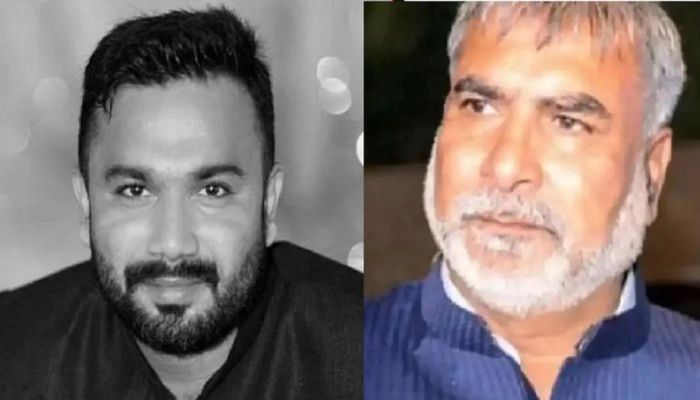
On Wednesday (28th February), the Uttarakhand police arrested Abdul Moeed, son of Haldwani violence mastermind Abdul Malik, from Delhi in connection with the case. Abdul Moeed is one of the key accused of the Banbhulpura violence in Haldwani. Abdul Malik, the mastermind of the incident, was arrested on 24th February.
Information about Abdul Moeed’s location was revealed during the interrogation of Abdul Malik. After that, several teams of Uttarakhand Police were raiding. Based on the precise information, Moeed was apprehended from Delhi. He was among the top 8 wanted accused in the Banbhulpura violence. Now the police have arrested all the key conspirators related to this violence.
Nainital SSP Prahlad Narayan Meena said, “Six police teams were formed to arrest the miscreants associated with the Banbhulpura violence. The teams are continuously raiding all possible places in different states of the country – Gujarat, Delhi, Mumbai-Maharashtra, Uttar Pradesh, Bihar etc. One of these teams has achieved great success. This team has arrested Abdul Moeed, a wanted accused in the Haldwani riots, from Delhi. Abdul Moeed had been dodging the police for 21 consecutive days, but now he is in the custody of the police.”
Abdul Malik, the main accused in the Haldwani violence, was arrested from Delhi on 24th February. The Nainital police team arrested him. Abdul Malik was brought to Haldwani after his arrest. He is being questioned continuously there. He has been sent to police custody by the court. It is being told that the police have asked more than 150 questions to Abdul Malik.
6 killed, more than 300 policemen injured
On 8th February, a municipal team and policemen were attacked when they went to remove the illegal mosque-madrasa in Banbhulpura, Haldwani. The role of Abdul Malik and Abdul Moeed in this incident came to light. They are accused of inciting the miscreants. Six people were killed in the violence that started in the ‘Malik Ka Baghicha’ area. More than 300 policemen and municipal workers, including City Magistrate Richa Singh, and Ramnagar Kotwal, were injured in stone-pelting.
The miscreants also torched the Banbhulpura police station. More than 70 vehicles, including police jeeps, JCBs, fire brigade vehicles, and two-wheelers, were burnt. Uttarakhand CM Pushkar Singh Dhami had ordered to shoot the rioters on sight in this case. The violence was brought under control by imposing a curfew in Haldwani.
More than 85 accused arrested
According to media reports, more than 85 accused have been arrested so far in the case registered by the police in the Haldwani violence case. Since the Haldwani violence case, continuous action has been taken at the level of the police and administration team. All the named accused have been arrested in this case.
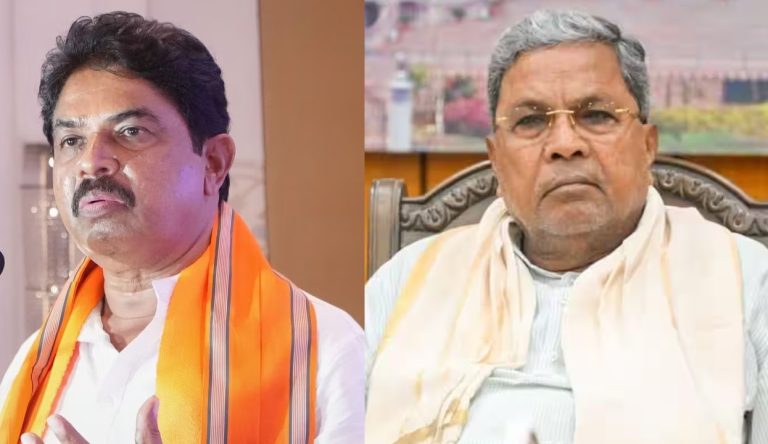
Leader of Opposition in Karnataka Assembly R Ashoka on Thursday alleged that the Karnataka government are giving the animal husbandry property in Bengaluru to minorities in a bid to appease them and termed it a “big scandal.”
“The goverment of Siddaramaiah, they are giving the animal husbandry property in Bengaluru, which is worth more than Rs 500 crores to minorities because minorities are more. It is a big scandal. BJP will protest inside and outside Vidhana Soudha”
In post on X, Leader of Opposition in Karnataka Assembly asked what was the necessity of closing down the government veterinary clinic that treats cattle and giving it to minorities.
“Land Jihad of Congress Government, CM @siddaramaiah you dare to give two acres of valuable animal husbandry land in the heart of Bengaluru city to Muslims. What was the necessity of closing down the government veterinary clinic that treats cattle and giving it to Muslims? That clinic is not set up only for cattle. The treatment of other domestic animals was also established. We will not let the land in the heart of the city, worth more than five hundred crores, be handed over,” he posted on X.
ಕಾಂಗ್ರೆಸ್ ಸರ್ಕಾರದ ಲ್ಯಾಂಡ್ ಜಿಹಾದ್
ಬೆಂಗಳೂರು ನಗರದ ಹೃದಯ ಭಾಗದಲ್ಲಿರುವ ಬೆಲೆಬಾಳುವ ಪಶುಸಂಗೋಪನೆ ಇಲಾಖೆಯ ಎರಡು ಎಕರೆ ಜಾಗವನ್ನು ಮುಸ್ಲಿಮರಿಗೆ ನೀಡುವ ಹುನ್ನಾರ ಮಾಡುತ್ತಿದ್ದೀರಲ್ಲ ಸಿಎಂ @siddaramaiah ನವರೇ, ಮುಸ್ಲಿಮರ ಓಲೈಕೆಗೆ ಒಂದು ಇತಿ ಮಿತಿ ಬೇಡವೇ?
He further asked “Can this move by Congress Govt be called Land Jihad by @INCKarnataka government?
Ashoka further suggested that state government that if the government wants to please minorities they can buy or purchase land and give it to them.
“Why take land dedicated to animal husbandry department. Where should the pet or domesticated animals of that area go?” he added.
Meanwhile, amid the ongoing row over alleged ‘Pakistan Zindabad’ slogans outside Karnataka Assembly, BJP MLAs staged a protest in Vidhana Soudha demanding action on the incident.
Slogans including, ‘down down congress government which is deciding nation, Spineless governmenrt is not capable to take action, we want justice, arrest the culprit, down down government,’ were raised by the BJP MLAs in assembly.
Leader of Opposition R Ashoka said that today in Karnataka emergency and dictatorship has been brought to Vidhana Soudha. “Indira Gandhi then brought emergency in 1975 and now they brought this here,” he added.
“What we are demanding is don’t make Vidhana Soudh Pakistan agents spot or pro-Pakistan slogan raisers. They are brining censored videos to prove themselves right. They haven’t taken action against those who raised slogans. We are protesting for nation and to keep our nationality safe. Dignity of the nation is degraded and Home Minister also admitted that they are bens asked about what happened,” he added.
Responding to the protest, Chief Minister Siddaramaiah said that the government has sent the voice report to FSL and action will be taken after the report is received.
“As I have told you already government is committed, we’ll not spare any person once the report come. We have given it for FSL. We’ll take action once report comes,” the Chief Minister said.
Congress’ Rajya Sabha arty’s MP-elect Syed Naseer Hussain on Wednesday dismissed the BJP’s allegation that his supporters raised pro-Pakistan slogans at Vidhana Soudha.
“I can understand the frustration of the BJP. They have lost badly despite both parties (BJP-JDS) coming together and trying every trick in the book to get an extra Rajya Sabha seat from Karnataka,” Hussain told ANI.
“The supporters were sloganeering ‘Naseer Sahab Zindabad, Naseer Khan Zindabad, Naseer Khan Zindabad’,” he added.
Meanwhile, the BJP MLAs are going to hold ‘Raj Bhavan Chalo’ march from Vidhana Soudha againt the state govt over various state issues, specially on the Budget.
Karnataka Chief Minister Siddaramaiah presented the state budget at the assembly on February 16, in which he allocated funds for fee reiumbursement of minority students, Rs 100 crore for the development of Waqf properties.
(This news report is published from a syndicated feed. Except for the headline, the content has not been written or edited by OpIndia staff)
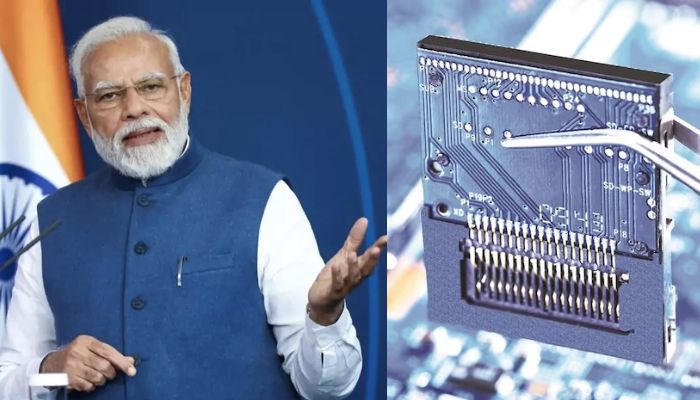
In a major initiative in fulfilling the Narendra Modi government’s ambition to turn India into a semiconductor manufacturing hub, the Central government on Thursday (29th February), approved the proposal for setting up three semiconductor plants in India. Two of these plants will be established in Gujarat while one in Assam. The construction of these plants will commence in the next hundred days. The decision was taken by the Union cabinet chaired by Prime Minister Narendra Modi.
Two of the units are being built by Tata group, while the third one is by Murugappa Group’s CG Power. One plant by Tata Electronics will be a full-fledged semiconductor fabrication unit, while the other two are Assembly, Testing, Marking, And Packaging (ATMP) units.
Tata Electronics Private will establish a semiconductor fab (fabrication plant) in Dholera, Gujarat, in collaboration with Taiwan-based Powerchip Semiconductor Manufacturing Corp. It will have the capacity to produce 50,000 wafers each month. One wafer has approximately 5,000 chips. This plant will be set up at a projected cost of Rs 91,000 crore.
In a press release, the Ministry of Electronics and Information Technology informed that high-performance compute chips with 28 nm technology and Power management chips for electric vehicles (EV), telecom, defence, automotive, consumer electronics, display, and power electronics, will be the segments covered under this fab. The ministry said that power management chips are high voltage, high current applications.
The Tata Semiconduct fab unit was announced by Tata Group Chairman N Chandrasekaran during the Vibrant Gujarat Summit in January this year, saying that the operations will start this year itself.
The second project to be approved by the union cabinet is a semiconductor testing and packaging unit by Tata Semiconductor Assembly and Test Pvt Ltd in Jagiroad in Morigaon district, Assam. This unit will be set up with an investment of Rs.27,000 crore. The unit will have a capacity of 48 million per day. TSAT Semiconductor is developing indigenous advanced semiconductor packaging technologies including flip chip and ISIP (integrated system in package) technologies. The unit will produce chips for automobiles, electric vehicles, consumer electronics, telecom, mobile phones, etc.
The Assam unit by Tata Group was announced by Assam CM Himanta Biswa Sarma in December 2023.
CG Power, based in Mumbai, will also establish an Assembly, Testing, Marking, And Packaging (ATMP) facility in Sanand, Gujarat in partnership with Renesas Electronics Corp. of Japan and Stars Microelectronics of Thailand. The ministry said that this unit will be set up with an investment of Rs.7,600 crore. With a capacity of 15 million per day, the CG power semiconductor unit will manufacture chips for consumer, industrial, automotive and power applications.
Outlining the strategic significance of these semiconductor plants, the ministry said, “Within a very short time, India Semiconductor Mission has achieved four big successes. With these units, the semiconductor ecosystem will get established in India. India already has deep capabilities in chip design. With these units, our country will develop capabilities in chip fabrication. Advanced packaging technologies will be indigenously developed in India with today’s announcement.”
Notably, these three semiconductor fabs will create thousands of direct and indirect jobs. These units will generate 20,000 direct jobs in high technology and over 60,000 indirect jobs. These units will stimulate job creation in downstream automotive, electronics, telecom, industrial, and other semiconductor-consuming industries.
#WATCH | Union Minister Ashwini Vaishnaw says, "Today the Prime Minister has taken an important decision to set up semiconductor fab in the country. The first commercial semiconductor fab will be setup by Tata and Powerchip-Taiwan, whose plant will be in Dholera…" pic.twitter.com/7ZVtGdgHlF
Speaking about this significant leap, Minister Ashwini Vaishnaw said, “Today the Prime Minister has taken an important decision to set up semiconductor fabs in the country. The first commercial semiconductor fab will be set up by Tata and Powerchip-Taiwan, whose plant will be in Dholera…”
#WATCH | Union Minister Ashwini Vaishnaw says, "…All three units will start construction within the next 100 days. 50,000 wafer per month will be manufactured. 300 crore chips will be manufactured annually through this facility. Northeast will get its first semiconductor Unit… pic.twitter.com/58Y4gkqDSm
“…All three units will start construction within the next 100 days. 50,000 wafers per month will be manufactured. 300 crore chips will be manufactured annually through this facility. Northeast will get its first semiconductor Unit in Assam. 48 million chips per day will be manufactured from here. Cumulative investment in all three units will be one lakh twenty-six thousand crore. The breakdown is investment in FAB will be 91,000 crore. Investment in the Assam unit will be 27,000 crore. Investment in the Sanand unit will be Rs 7,600 crore…” Minister Vaishnaw added.
In the eerie realm of nature’s horrors, a sinister phenomenon unfolds as a parasitic fungus, Ophiocordyceps unilateralis, masterfully manipulates its unsuspecting host: the carpenter ant. When the fungus infiltrates the ant’s body, it seizes control of its central nervous system. The ant then becomes the slave of the fungus, with zero control over its behavior and functions.
What ensues next is a nightmarish transformation, as the fungus compels the ant to abandon its colony and ascend to the highest possible point. In the final act of this macabre drama, the fungus makes the ant bite down hard onto a leaf or twig, effectively nailing itself alive.
As the fungus consumes the ant from the inside out, the body of the ant bursts open, releasing stalk-like structures from where the fungus releases spores down onto the ant colony, claiming more and more victims.
Nature is full of such examples of total parasitic control. The thing is, even human history has been full of eerie manifestations of such acts. When an infestation takes control over a new host body, it uses the host body’s resources for its own benefit, manipulates its behavior and metabolism, eventually kills the host body to produce offspring, and continues the cycle on new hosts.
When a thriving, vibrant nation falls prey to the colonialism of a foreign power, the same scene unfolds in a wider, grander, manner transcending through generations of sociopolitical changes. The parasite feeds on the host nation, manipulating its politics, controlling the behavior of the masses, using the resources of the country for its own benefit, and eventually sucking it dry. The coloniser dehumanises the subjects and keeps using the host country till the resources last and the utility continues.
The bane of a short human lifespan, shorter memories, and even smaller human perception is that most colonies fail to notice their own slavery when the act lasts. It is only in retrospective reminiscence that they realise they have been sucked dry, taken for a ride, and cheated. Sometimes there are enough citizens left to organise and rebuild, sometimes, there are not enough good people left and the host country turns into an annihilated ruin. There are plenty of examples of this phenomenon in the past and present world.
The world has been watching as Ukraine, the largest country in Europe, gets decimated, and blasted to ruins each passing day. Those who blindly believe the mainstream media and the Western Koolaid of sanctimonious, self-righteous snobbery, will nod their heads and repeat what has been fed to them all these months. “Putin is evil, and Zelenskyy is a hero. Ukraine is good, evil Russia is destroying it and NATO forces are protecting it by pumping billions of dollars and all their weapons.”
Those who have been reading both sides of the story, and have been observing the world in the last few years, know that no story is that black and white. Ukraine is effectively being sacrificed to serve NATO’s purpose of a decimated grey zone between its own empire and Russia. A conscious observer would notice how the US infiltrated Ukraine’s politics and propped politicians to further its own interests, and how the Maidan massacre was orchestrated and highlighted with precision to take an elected government down. And how the Ukrainian puppet government thereafter was controlled and manipulated by the controlling forces, bombing their own citizens, turning people against people, slowly becoming a host body for NATO, and essentially the slave of the US military-industrial complex.
Back in 2014 when the Post Maidan Coup Regime of Petro Poroshenko began a full scale assault on his own people in Donbas, CNN produced this report.
The Kiev Regime unleashed this violence against its dissenting citizens in the East. They began the bombing. The killing. The War pic.twitter.com/y9KcfyCkEw
Zelenskyy became the president of Ukraine with active US support and worked further to propagate the military agenda of NATO. Though people believe that the Russia-Ukraine war began on February 24, 2022, the hostilities, in fact, have been going on since 2014, after the color revolution in Ukraine to topple the Yanukovich government and the Russian annexation of Crimea, by a popular referendum by the people of Crimea.
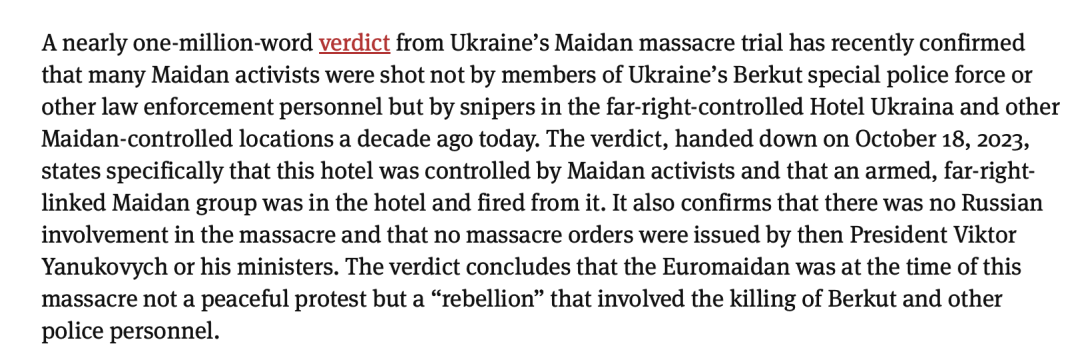
Shortly before the 10th anniversary of the Maidan massacre, a trial verdict has confirmed in October 2023 that the Maidan protestors were shot dead not by the then government, but by snipers located in Maidan-controlled buildings. The verdict also highlights that after the ‘orchestrated’ firing on the Maidan activists, the subsequent media narrative, political decisions, and statements from the Western world have been mostly misleading, propagating a wrong trope of ‘good Ukraine’ and blaming Russia for everything.
from a detailed report by Canadiandimension on the verdict of the Maidan massacre by Ukrainian court
Since the war and hostilities under Zelenskyy’s rule, the West, which never stops pontificating over democracy, human rights, rules -based international order, and such fancy ideologies, has witnessed and enabled Zelenskyy to discard a peace agreement with Russia that would have stopped the war, suspend all opposition parties in Ukraine, ban all independent media, enforce military enrollment on the general public, and pushing for the NATO expansion eastward, the ONE thing Russia has been telling that it won’t allow.
When the leaders of a nation are controlled by foreign powers, furthering their interests and acting as their puppets, Ukraine is what happens.
Coming to India, we are a far more diverse country. There are a thousand socio-political differences in India, a hundred faultlines. We are the bloodied, battered survivors of hundreds of years of brutal colonisation and have somehow lived to tell the tale. We have faced centuries of exploitation, brainwashing, and deprivation and have yet somehow managed to stay alive as a nation. However, India is neither immune nor alien to foreign powers asserting their control and expanding their tentacles continuously to bend India to their will.
The victory of Narendra Modi in 2014 was a significant event in India’s political landscape and the geopolitical dynamics of the region. The decades of Congress rule, essentially the rule of Jawaharlal Nehru and his descendants, was finally over and a nationalist political party that put Indian interests ahead of global pressure was elected with a brute majority, unlike Vajpayee’s previous government that depended on motley alliance partners to stay in power.
Congress has been a dynasty party, they want the Gandhi family in power
The Gandhi family, which was out of power after decades of almost a dynasty-like control over India, did not take this lightly. They had assumed a smooth power transition to Rahul Gandhi, the latest dynast, after Manmohan Singh, who basically was the rubber stamp for Sonia Gandhi.
The politics of Congress since then has been gradually more and more divisive. Deprived of power, the Gandhi family keeps seeking foreign intervention. Many may have dismissed Mani Shankar Aiyer’s ‘Unhe hataiye, hemein le ayiye” in Pakistan as a low level rant, but Rahul Gandhi has been saying the same thing over and over, sending the same message to Western powers for years, in English and wrapped in the shiney packaging of sophistication. The message has been the same: appealing for a regime change in India.
Over the years, through repeated election defeats, Congress has more or less understood that they will not be able to win against Modi. Through the mainstream media, through NGOs and foreign-funded civil society organisations in India and abroad, through talks, protests, and debates, Congress has been trying to push one narrative: that the Modi government must be removed from power, by whatever means.
In their hunger for power, and the desire of the Gandhi dynasty to hold that power, the Congress has been insulting the public mandate. Elections in India have been free and fair. Modi was chosen by the people of India with an overwhelming majority, twice, but the narrative the Congress always tries pushing is that the choice has been wrong.
Congress’ stand on the Adani-Hindenburg issue, exactly what George Soros wanted
In early 2023, speaking at the Technical University of Munich (TUM) in Germany ahead of the Munich Security Conference, Soros gave away the political designs behind the attacks on the Adani Group. He had stated that the issue is going to be raised in the Parliament, and may even trigger a ‘democratic revival’ in India, exactly what Congress has been trying to do.
Soon after Soros’ statement over the Adani-Hindenburg issue went viral in India, triggering discussions that the attack on the conglomerate was intended to target PM Modi politically, Congress had to hurriedly come clean. Party spokesperson came to clarify that everything Congress has been doing was on their own accord and they have nothing to do with Soros.
2 weeks after the George Soros fiasco, Rahul Gandhi traveled abroad to Cambridge University. Addressing students and faculty there, the Congress prince tried to paint a fake, dire, and grim picture of India. He spoke blatant lies, claiming that he and other MPs have been jailed by the Modi government, despite the fact that he had just concluded a pan-India tour under full media fanfare.
“Indian democracy is under attack (by the Modi government). The institutional framework required in a democracy, the parliament, the judiciary, the free press etc are also under constraint. The idea of mobilisation, the idea of just moving around, is under constraint. We are facing an attack on the basic structure of the Indian democracy…” lied the Congress prince, rightfully expecting the Western organisations, and media to totally ignore the fact that he was free to tour the country in ultra-luxury vehicles, constantly holding rallies and addressing media and the public with full fanfare in his Bharat Jodo Yatra.
2 days later, speaking to the Indian Journalist Association in the UK, Rahul Gandhi fearmongered some more. “The structures of India’s democracy are under brutal attack and the opposition is fighting the institutional structures of the country. The media, the institutional frameworks, the judiciary, and parliament are all under attack. And we were finding it very difficult to put our voice and the voice of the people through normal channels. This has never been seen in modern India before”. Rahul said.
Falsely positioning himself as the “leader of all the Opposition parties that are trying to unite against Modi”, Rahul Gandhi spoke as if India is a tinpot dictatorship and he is the hounded, harassed revolutionary trying to fight for the rights of the people. Only the Indian public knows that Rahul is a fourth-generation dynast who expects to sit on the family throne and “rule” India, just like his father, grandmother, and great-grandfather did.
Only the Indian public knows that far from the “leader of all the Opposition parties standing up against Modi”, Rahul Gandhi cannot even gather 50 MPs of his own to select him as their leader. However, the mainstream media, the foreign-funded NGOs, and their ‘civil society’ agents who decide the dominant Leftist media narrative in India and the West alike, props Rahul Gandhi up as some sort of tragic hero, a lone knight who is challenging the maniacal, tyrant king that they portray Modi as.
In India, and abroad, Congress has been pushing hard against the EVMs. They have not managed to produce a shred of evidence that EVMs in India can be tampered with and they conveniently choose silence when they win state elections with the same EVMs, but Congress has been trying to frame a narrative around EVMs, with the larger agenda of calling the Indian elections fraudulent. Their goal is simple, discredit the democratic process and gain power through backdoor policy.
In June 2023, during his 10-day US tour, Rahul Gandhi was seen with Sunita Vishwanath in a picture of a talk shared by the Hudson Institute.
Sunita Vishwanath is the co-founder of a US-based organisation called “Hindus for Human Rights” which has spread lies and propaganda mainly against Hindus, allied with Islamists, and has ties to George Soros. Sunita Vishwanath, who was pictured alongside Rahul Gandhi, had tried to create hysteria and panic among Indian Muslims about the National Register of Citizens (NRC).
George Soros has made his intentions clear against the Modi government and has pledged over a billion dollars for regime change operations through civil society organisations, in countries that have governments that he doesn’t like.
Congress’ association with anti-India forces around the world has been an open secret for years now. From signing a secret MoU with China’s community party to hobnobbing with organisations peddling the Islamist narrative, to mirroring the anti-Modi agenda so much so that almost mimicking the government of Pakistan, Congress has been virtually knocking on every door, every ‘donor’ to help them gain power from the hands of India’s democratically elected government.
In 2021, a Congress toolkit surfaced on social media which described a deliberate attempt by the Congress party to use the Covid-19 crisis to undermine the NDA Government at the Center. The toolkit spoke of deliberately maligning the Kumbh Mela, and blocking hospital beds, and using international media to aid the Congress campaign against the BJP.
Interestingly, Congress wrote to Twitter calling the toolkit fake, and like clockwork, the US-based company, under its earlier ownership which was admittedly Leftist, started flagging all tweets by pro-BJP handles that were sharing that toolkit as ‘manipulated media’.
The govt of India registered strong objections to Twitter’s behavior, which was politically biased. From maligning the Kumbh Mela as a ‘super spreader’ event to unwarranted attacks against PM Modi for the Central Vista project to collaborating with ‘friendly’ journalists and international media to defame the Modi government, the toolkit had detailed instructions to the Congress leaders and supporters to milk the ongoing Covid-19 crisis and mount an anti-Modi propaganda blitz.
In April 2021, speaking at Harvard Kennedy School’s Institute of Politics, Gandhi insisted that the US government establishment should ‘say more’ about ‘what is happening in India.
In 2022, at the ‘Ideas for India’ conference in the United Kingdom, Rahul Gandhi had sought foreign intervention again. During his controversial address, Rahul Gandhi signaled his desire for foreign intervention two times.
A list of Rahul Gandhi’s mysterious foreign trips and repeated calls for foreign interference in India’s internal affairs can be read here.
Bloodshed, anti-democratic behaviour, and enabling genocide: Congress has done it all for power
When it comes to snatching and keeping power, there are few things that the Congress party hasn’t done or won’t do. Rahul’s grandmother imposed an emergency in this country when she was about to lose power. She jailed opposition politicians, muzzled media, and unleashed relentless atrocities on dissenting voices when her legitimacy was challenged by a legal case.
When Indira was assassinated by her Sikh bodyguards, her son Rajiv dismissed the rampant massacre against Sikh civilians. Waving away the widespread murders of Sikh men and women, Rajiv had famously said, “When a big tree falls, the earth shakes”.
If one looks deeper into the history of modern India, it will become clear that from the early days, the intentions and actions of the Congress party have been less about the welfare of the people of India and the protection of India’s interests, and more about attaining, and keeping power. It was Congress, after all, that oversaw, agreed to, and watched the partition of India on religious lines, being fully aware that it would unleash the bloodshed of millions and weaken the country.
So, how far will Rahul Gandhi go to sit on the throne?
Rahul Gandhi has been fanning a divisive agenda on the basis of caste, economy, and regionalism for years now. Wherever there is a faultline, Rahul Gandhi tries to exploit it to his benefit. Be it inciting caste hatred among the masses or instigating the poor against the wealth creators in the country, Rahul Gandhi has been subtly, and sometimes not so subtly displaying the intentions to let the country burn in chaos.
Through speeches, promises and talks, the Congress, with Rahul Gandhi as their prince in waiting, has been playing a dangerous game. The caste census push, the rampant lies and fanning of misplaced anger against corporates, the attempts to sow rifts between South and North, spreading misinformation against the army and government, Congress has been searching desperately for conflicts. India has a thousand faultlines, another aspect of its thousand shades of diversity, and Congress has been keen on exploiting them all to their benefit. From the farmer protests to the Delhi riots to language divides to anti-Hindu agenda, they have their fingers dipped everywhere.
The only thing that is standing between complete chaos and stability in India is a strong public mandate and the brute majority of the Modi government at the centre. The India of now is a strong, independent global power that does not bend to the Western world’s will, but political entities like the Congress would gladly trade that with foreign players in exchange for a grab at power. All it would take is incidents like the Maidan massacre, some riots, a coordinated assault of media misinformation against certain individuals, and India would be lost in chaos. How far will Rahul Gandhi go?
As another general election approaches, India needs to brace for chaos, internal and external alike, because the parasitic powers are always lurking, searching for a perfect host to infect. Multiple war fronts are now open across the world, and more conflicts are brewing. Strong democratic nations like India that do not cede control to neocolonial powers are the only forces standing for peace. For India to be safe from parasites, India has to elect leaders that put Indian interests ahead of their personal ambitions and narrow self-interests.
We must vote wisely. Because we cannot be the next Ukraine.
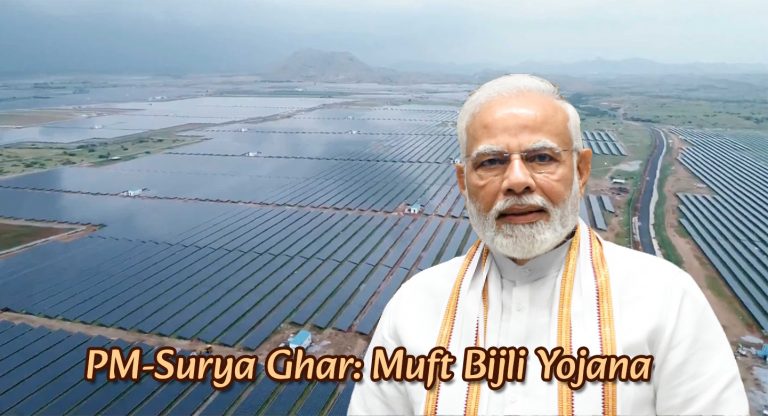
The Union Cabinet on Thursday approved ‘PM-Surya Ghar: Muft Bijli Yojana’ with a total outlay of Rs 75,021 crore for installing rooftop solar and providing free electricity up to 300 units every month for one crore households. Prime Minister Narendra Modi had launched the scheme on February 13 this year.
Addressing a press conference after a meeting of union cabinet, Information and Broadcasting Minister Anurag Thakur said the initiative will give thrust to solar manufacturing and supply chain and provide direct employment to 17 lakh people.
“It will strengthen solar energy eco-system. It is estimated that the scheme will create around 17 lakh direct jobs in manufacturing, logistics, supply chain, sales, installation and other services,” he said.
An official press release by the union cabinet said that the scheme provides a Central Financial Assistance (CFA) of 60% of system cost for 2 kW systems and 40% of additional system cost for systems between 2 to 3 kW capacity. The CFA will be capped at 3 kW. At current benchmark prices, this will mean Rs 30,000 subsidy for 1 kW system, Rs 60,000 for 2 kW systems and Rs 78,000 for 3 kW systems or higher.
The households can apply for subsidy through the National Portal and will be able to select a suitable vendor for installing rooftop solar. The National Portal will assist the households in their decision-making process by providing relevant information such as appropriate system sizes, benefits calculator, vendor rating etc.
Households wanting to install rooftop solar panels under this scheme will be able to access collateral-free low-interest loan products of around 7% at present for installation of residential RTS systems up to 3 kW.
The National Portal will assist the households in their decision-making process by providing relevant information such as appropriate system sizes, benefits calculator, vendor rating.
Households will be able to access collateral-free low-interest loan products of around 7 per cent at present for installation of residential RTS systems up to 3 kW.
The press release added that a model solar village will be developed in each district of the country to act as a role model for adoption of rooftop solar in rural areas. The release said that urban local bodies and Panchayati Raj Institutions shall also benefit from incentives for promoting RTS installations in their areas.
The scheme provides a component for payment security for renewable energy service company (RESCO) based models as well as a fund for innovative projects in Residential Rooftop Solar.
As per the government, the households will be able to save electricity bills as well as earn additional income through sale of surplus power to DISCOMs through this scheme. “A 3 kW system will be able to generate more than 300 units a month on an average for a household,” the release said.
The proposed scheme will result in addition of 30 GW of solar capacity through rooftop solar in the residential sector, generating 1000 BUs of electricity and resulting in reduction of 720 million tonnes of CO2 equivalent emissions over the 25-year lifetime of rooftop systems. It is estimated that the scheme will create around 17 lakh direct jobs in manufacturing, logistics, supply chain, sales, installation, O&M and other services.
Households can visit the website of the national portal to register for the scheme. After registering at the portal with relevant details like phone number, email, consumer account number allotted by the power distribution company etc, one needs to login to the portal, and apply for Roogtop Solar using the online form. After that, the DISCOM will conduct a feasibility study. After the company grants approval, the consumer can install the system through a registered vendor. After the installation is done, the household needs to submit the details of the system installed and apply for a net meter. After that, the DISCOM will install a net meter, and generate a commissioning certificate from the portal.
After this, the household needs to submit their bank account details through the portal. The Subsidy will be paid within 30 days.
Notably, net meter installed with solar plants allow households to sale excess electricity generated by the solar panels. When solar power generated is more than the consumed power in the house, the excess power flows into the grid. And if the consumption is more than the solar generation, and in night when there is no solar power, the house gets power from the grid. The meter keeps track of the electricity drawn from grid and contributed to the grid, and the bill is generated for the net power consumed.
On Wednesday, 28th February, the District Court in Lucknow dismissed a revision plea filed by Imam Mutawalli (Maulana Kari Sayyed Shah Fazlul Mannan) of Teele Wali Masjid. In his plea, Maulana Mannan challenged a September 2023 order issued by a Civil judge upholding the maintainability of the suit filed by the Hindu side for the disputed site. Notably, the disputed structure in question was built during Aurangzeb’s regime after Hindu temples dedicated to Bhagwan Shiv and Bhagwan Sheshnag were demolished.
Additional District Judge Narendra Kumar observed in his order that there was no illegality in the order passed by the Civil Judge. Notably, in 2023, the Civil Judge dismissed the Muslim side’s application filed under Order 7 Rule 11 CPC, questioning the maintainability of the case filed by Nripendra Pandey and Others. In the plea at the District Court, the Muslim side claimed that the Hindu side’s suit was based on “imagination”, and no records were filed to support their claims. They further claimed that the Hindu side’s petition was not maintainable, and the Civil Judge passed the order without implication of mind.
In the order, Justice Kumar opined, “From a perusal of all the pleadings and all the forms available on the file, it is clear that the case in question differs from the normal cases of permanent and mandatory injunction. The facts described are based on mixed questions of law and fact. Therefore, in a cursory manner, in the application under Order-7 Rule-11 CPC, instead of disposing of the case, it would be fair to allow both parties to be heard and to dispose of the application along with evidence, etc. Thus, there is no legal error in the impugned order dated 06.09.2023 of the learned lower court. Therefore, there is no justified basis for interference in it”.
In 2023, eight devotees of Bhagwan Sheshnagesht Teeleshwar Mahadev Virajman and ‘Laxman Teëla Sheshnag Tirath Bhoomi Asthan’, filed a suit seeking protection from interference in performing Puja, Archana, Aarti and recitation of Hanuman Chalisa at Sheshavtar Mandir, Sheshnag Patal Koop, and Sheshnagesht Teeleshwar Mahadev Mandir within Laxman Teela (Teele Wali Mosque premises).
The Hindu side said in their plea that the mosque was built during Aurangzeb’s regime by demolishing a pre-existing Hindu temple and religious structure at the site. Furthermore, they said that the demolition of the temple was in sync with the Islamic practice of destroying temples or Hindu places of worship and then erecting a mosque at the same location.
OpIndia accessed the judgment in the matter. The judgment pointed out that the Hindu side said that the religious character of the Hindu place of worship was altered unlawfully. They said that despite the historical evidence and their attempts to worship as per Hindu rituals at the site, the Muslim side was threatening and preventing them from doing so. Meanwhile, Muslim side claimed that the property belonged to the Waqf Board.
In their submission at the district court, the Muslim side contended that the lower court did not examine the facts and legal principles. They cited Places of Worship (Special Provisions) Act, 1991, and the Waqf Act, 1995. They claimed the current religious character of the property could not be altered simply by installing idols and offering prayers to the deity.
Justice Kumar noted that the case presented a mix of legal and factual questions requiring a full trial. Consequently, the petition filed by the Muslim side was dismissed, and the orders passed by the lower court in the Teele Wali Masjid case were upheld.
On 29th February, the investigation into cases filed against Trinamool Congress leader Sheikh Shahjahan who was taken into custody in Minakhan, North 24 Parganas district, was taken over by the West Bengal Criminal Investigation Department (CID). “We will probe into the cases against him (Sheikh). He has been brought to Bhavani Bhavan (Bengal Police headquarters) for questioning,” a senior official stated.
Sheikh Shahjahan was transported to Bhawani Bhawan from a municipal court in Basirhat where he was brought at 10:30 am, after he was given a 10-day police custody, after he was captured on the 29th of February morning. He was apprehended in two cases related to an attack on Enforcement Directorate (ED) personnel on 5th January which transpired during a raid at his residence about a ration scam. “He was booked under various sections of the Indian Penal Code (IPC) including 147 (rioting) and 307 (attempt to murder),” authorities revealed.
Following a complaint from the Enforcement Directorate, Sheikh Shahjahan was nabbed and charged under sections 147 (punishment for rioting), 148 (rioting, armed with deadly weapon), 149 (unlawful assembly), 353 (assault or criminal force to deter public servant from discharge of duty), 427 (offence of mischief), 323 (voluntarily causing hurt), 506 (criminal intimidation), 34 (common intention), and provisions under the Prevention of Damage to Public Property Act.
The development occurred three days after the state police were chastised by the Calcutta High Court for their failure to act sooner, declaring that “he should be arrested” and that there was no stay order in place about his arrest. Sheikh Shahjahan had been on the run since 5th January when a violent crowd associated with him brutally assaulted the Enforcement Directorate officers.
Meanwhile, in an X post on 28th February the leader of the opposition in the legislative assembly, Suvendu Adhikari charged, “The Scoundrel of Sandeshkhali – Seikh Shahjahan is in the safe custody of Mamata Police since 12 am last night. He was taken away from the Bermajur – II Gram Panchayat area, after he managed to negotiate a deal with the Mamata Police, through influential mediators, that he would be taken care of properly while in Police and Judicial Custody.”
He added, “The Scoundrel of Sandeshkhali – Seikh Shahjahan is in the safe custody of Mamata Police since 12 am last night. He was taken away from the Bermajur – II Gram Panchayat area, after he managed to negotiate a deal with the Mamata Police, through influential mediators, that he would be taken care of properly while in Police and Judicial Custody.”
Notably, the state’s CID is also probing a case against Republic Bangla journalist Santu Pan who was arrested on 19th February for reporting against Shahjahan Sheikh. However, he was granted bail by the Calcutta High Court on 22nd February. The accusations made against Republic Bangla reporter Santu Pan were not adequately explained, according to the Calcutta High Court. The Mamata Banerjee government was severely criticized by the court, which asked, “Why this FIR shouldn’t be quashed?”
It added, “Feel sorry for police officers. You have not been able to arrest real culprits. You are after an innocent journalist while the people who are not caught are making a mockery of the law. You want to put all your energy after this innocent journalist.”
Furthermore, Suman De, Executive Vice President of ABP Ananda was also summoned by the state’s CID for allegedly provoking common villagers but the Calcutta High Court stayed the FIR and all proceedings against the journalist on 26th February, saying that a bona fide mistake in reporting does not constitute a real offence.
Journalist summoned by WB CID, Media under attack in West Bengal Sri Suman Dey , Executive Vice President of ABP Ananda summoned by CID I strongly condemn …@abpanandatv@ABPNews@IamSumanDe
On 28th February, the High Court issued an order permitting the CBI and Enforcement Directorate (ED) to arrest Sheikh Shahjahan as well. However, the additional Solicitor General of India, SV Raju, who was representing the ED, voiced concern that if he is caught by the state police, they would likely weaken the case.
“This is the beginning of an end. We have to put an end to the cycle of violence in Bengal. In parts of Bengal, the goons are ruling the roost. This must end and the gangsters should be put behind bars,” remarked West Bengal Governor CV Ananda Bose.
Meanwhile, Trinamool MP Santanu Sen claimed that the “stay order” caused Sheikh Shahjahan’s arrest to be postponed. He further stated that the arrest demonstrates that “our government follows ‘rajdharma’ in an administrative manner” and that the “Bharatiya Janata Party should learn ‘rajdharma’ from the TMC.” He alleged, “Abhishek Banerjee had said that the Police were unable to arrest him due to the court’s stay order. He has been arrested within 3-4 days of the removal of the stay order.”
Sheikh Shahjahan’s criminal past
On 8th February this year, hundreds of women in Sandeshkhali took to the streets to protest against land grabbing, non-payment of wages and sexual violence committed by Trinamool Congress goon Sheikh Shahjahan and his two aides Shiba Prasad Hazra and Uttam Sardar. Popularly referred to as ‘Betaj Badshah‘ Shahjahan Sheikh is an influential person in West Bengal’s Sandeshkhali, an area that is adjacent to the Bangladesh border.
The Block Development Officer (BDO) has received more than 700 complaints against him in six days of excesses against villagers in the last six days. He was also the mastermind behind the assault on Enforcement Directorate officials who had reached to execute a raid on his residence as part of an investigation into the ration scam.
Meanwhile, 50 allegations of “sexual abuse and land grab” against the Trinamool leader and his accomplices have been filed by tribal families with the National Commission for Scheduled Tribes. A total of 1,250 complaints, 400 of which had to do with land-related matters, were reported to the state government officials.