Home Blog Page 1556

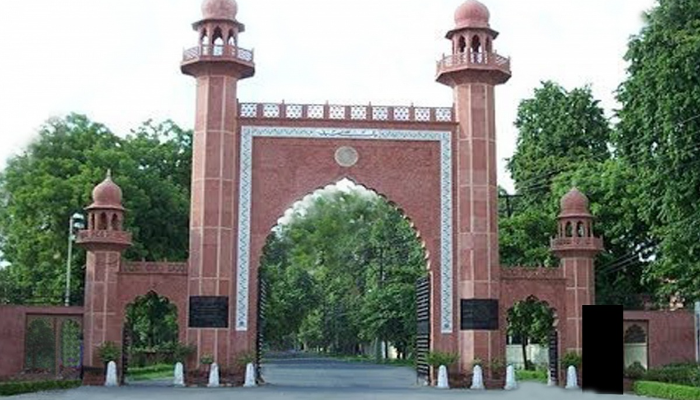
Uttar Pradesh: Blasphemy case filed against a Muslim student of AMU-run school for allegedly insulting Prophet Muhammad

0

An 18-year-old Muslim student in class 12 from Bijnor was assaulted by other Muslim residents of a hostel on the campus of Aligarh Muslim University in Uttar Pradesh after he was accused of uttering offensive remarks about the Prophet Muhammad as well as sharing the same on social media. The incident transpired on 12th December in Aligarh’s Civil Lines Police Station area.

A First Information Report was registered against him and cops have initiated a probe into the matter. Furthermore, he was suspended from the Senior Secondary School for Boys which is run by the university. According to the complainant who is of Kasgand and is a pupil in the varsity, the boy has a history of passing similar statements against Islam and is anti-Muslim. The complainant told OpIndia in an interview that the accused student has a habit of making comments against the Prophet.

The complaint stated that the former along with some of his acquaintances was present in the Allama Iqbal Hostel of AMU when the offender arrived there and began speaking disparaging and inappropriate things about Islam and its prophet. It is reported that he began using derogatory words after the complainant stopped him and announced, “Do whatever you can, I will continue to say all this.” The complainant claimed that the remarks had offended his religious sentiments.

Strict action has been demanded against the culprit after a case has been launched under sections 295A (deliberate and malicious acts, intended to outrage religious feelings of any class by insulting its religion or religious beliefs), 504 (intentional insult with intent to provoke breach of the peace) and 506 (punishment for criminal intimidation) based on the complaint. OpIndia has a copy of the FIR.

The complainant and his colleagues beat up the accused in the name of blasphemy, per several media accounts. However, the former countered that these charges were unfounded while talking to OpIndia. He alleged to have all of the hostel’s CCTV footage as evidence. He responded with a “No” when inquired whether there was any proof of insult to Prophet Muhammed by the student. 

Notably, AMU Deputy Proctor S Ali Nawaz Zaidi revealed that the pupil was attacked by the claimant and his aides. “The student was suspended with immediate effect and an inquiry has been ordered into his objectionable posts. Till the completion of the probe, he will remain suspended. Hostel inmates thrashed the student after locking him in a room last evening and forced him to delete the post. The student ran out of the hostel and was saved by security personnel,” he mentioned.

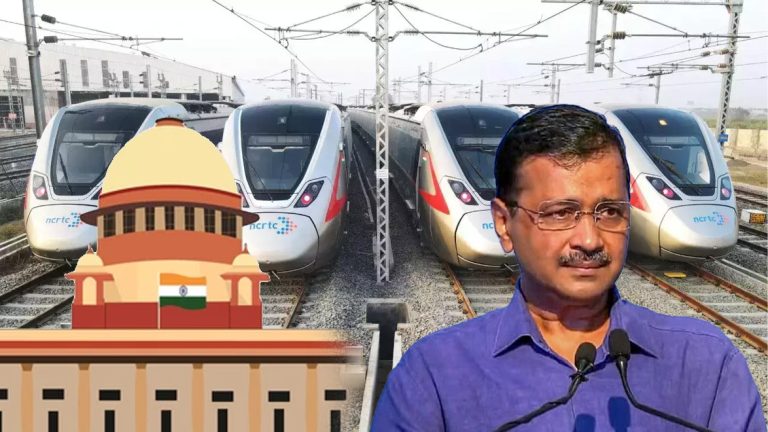
‘Don’t make us reactivate earlier order of attaching Delhi ad budget’: SC warns Kejriwal govt of tough action for not releasing funds for RRTS project

On 13th December (Wednesday), the Supreme Court issued a stern warning to Delhi’s Arvind Kejriwal government over the delay in providing funds for the Delhi-Meerut Regional Rapid Transit System (RRTS). The court observed that the Delhi government should refrain from compelling the court to pass ‘tough orders’. The bench noted that if the Delhi government doesn’t pay its share of dues for the project, it will be forced to reactivate the earlier order and attach the AAP government’s advertisement budget.  

Notably, in November this year, Justices Sanjay Kishan Kaul and Sudhanshu Dhulia directed that if the Delhi government fails to allocate funds for the Rapid Rail project, the amount will be redirected from the Arvind Kejriwal government’s advertisement budget for the current year.

During the previous hearing, the Supreme Court had observed that the problem was that the Delhi government could make a budgetary provision of Rs 580 crore for advertisements but it could not make a budgetary provision of Rs 400 crore as part of its share for the vital infrastructure project.

Justice Sanjay Kishan Kaul had said, “If such national projects are affected, and if money is being spent on advertising, we would be inclined to ask the money to be directed to the infrastructure”.

Pertinently, the Supreme Court was apprised today that the Delhi government has still not paid its share for the RRTS project during the ongoing hearing on pleas concerning air pollution in Delhi. 

Responding to the charges, the Delhi government’s counsel Senior Advocate S Muralidhar defended the delay in funding. Muralidhar argued that the Delhi government will release these funds when the government of India officially approves the project. He claimed that the NCRTC website says the Centre has not done it, adding that Delhi-Alwar and Delhi-Panipat Corridor projects are yet to be approved by the Centre. The advocate claimed that Delhi govt has made budgetary provisions for the projects, and the funds will be released after the projects are approved.

In reply, the bench warned, “These are new excuses (smiles). We are not afraid to pass tough orders. If you do not pay why will even other States pay.” The court also noted that other states have released their share of the funds, and therefore the Delhi govt also should do the same.

The opposing counsel pointed out that these projects are sanctioned through international plans and delays escalate the cost. 

The bench stated, “Mr Muralidhar you will make me reactivate my earlier order (of attaching Delhi ad budget).” 

The Supreme Court then gave 7 days to the Delhi government to release the funds for the project. The court strictly directed the state govt to abide by the schedule concerning the allocation of funds for this project.

Meanwhile, earlier on Monday (11th December), the Supreme Court had slammed the Delhi government over its ‘lackadaisical approach’ towards providing funds to the Delhi High Court and district judiciary for infrastructure development.

The bench was headed by Chief Justice of India DY Chandrachud and included Justices JB Pardiwala and Manoj Misra. The bench said, “What is happening? What is your government doing? You don’t want to give any funds to the Delhi High Court? We need approval by Thursday. It is a model High Court and look at the condition. Judges are undergoing training and there are no courtrooms.” 

Omidyar decides to shut shop in India after ‘achieving the goal of catalysing impact’: But here’s why its story might not be over

Omidyar Network India will exit the Indian market by the end of the year 2024 and will not make any new investments in the country, News website Yourstory first reported on 12th December (Tuesday). Omidyar Network is reportedly a self-styled “philanthropic investment firm” comprising a foundation and an impact investment firm.

It was established in 2004 by eBay founder Pierre Omidyar, a French-born Iranian-American and his wife Pam. In 2019, Omidyar Network India was carved out of its parent entity, the US-based Omidyar Network. 

The Omidyar Network India, however, will keep following up on deals it had committed earlier, as per sources familiar with the development. 

Omidyar Group has been active in India since 2010 and has made investments of over $500 million. Out of this nearly $150 million was directed to non-profit investments. It has invested in several startups in India like ZestMoney, DealShare, VerSe (Dailyhunt), Vedantu, 1mg, Bounce, Bijak, Doubtnut, Entri, HealthKart, Indifi, M2P, Pratilipi, and in several media organisations, particularly the leftist portals like Newslaundry. 

Confirming the development in an internal blog post which was reviewed by YourStory, the firm stated, “After several months of deliberation, it has been decided that Omidyar Network India will stop making new investments and will completely transition out of the market by the end of 2024. Over the next two months, the board and leadership team will assess how best to manage the organisation’s portfolio while recognising the long and trusted partnerships that the Omidyar Network India team has built.” 

In their statement, Omidyar Network India asserted that it has achieved its primary objective of “catalysing impact” and will not make any new investment. 

The statement read, “Over the last decade, Omidyar Network India has played a critical role in building the impact investment sector, especially focussed on the Next Half Billion. We are proud of our work in this space, which is now attracting larger pools of capital from local venture capital or impact investors and domestic philanthropists than ever before. Having achieved our primary objective of catalysing impact, Omidyar Network India will not be making any further investments in India.” 

Conspicuously, Omidyar Network is known for funding many publications, particularly the leftist portals across India including Scroll(dot)in and Newslaundry.

Omidyar Funded several leftist news portals

Leftist portals like Newslaundry which are under agencies’ scanner for alleged tax evasions and FCRA violations had been receiving funding from Omidyar Network. 

In September 2021, the Income Tax department carried out a “survey operation” at the office of the website Newslaundry as part of an investigation into the finances and funding of the organisation.

Back then, an IT official had said, “NewsClick and Newslaundry received Foreign Direct Investment (FDI) at a very high premium while their net worth was very low. There are also gaps in the financials of both the companies, which suggest tax evasion but we are verifying the same.”

Newslaundry received funding from the Odimyar Network in 2016, “to expand its reportage and content production teams, leverage its existing content by increasing its exposure to a larger audience, and experiment with new formats of content creation”.

Newslaundry’s Editor-in-Chief Madhu Trehan in an email response to The Print confirmed that Omidyar Network has been funding Newslaundry. The email read, “If you look at our website, you can see how much stake Omidyar Network owns in Newslaundry. It is up on our website. The amount raised and equity percentage is on what was then the FIPB website, and that is public information.” 

According to the Newslaundry website, the majority of the company’s equity is held by its three co-founders, Abhinandan Sekhri, Roopak Kapoor, and Prashant Sareen, and by an impact fund Omidyar Network.  

In 2016, the Omidyar Network issued a public statement on its website at the time of investing in Newslaundry. It read, “Our purpose in funding Newslaundry is to invest in a media organisation that is exploring innovative approaches to drive transparency and higher standards throughout the media landscape in India. We also hope that the learnings from Newslaundry’s journey to develop a new business model for independent news production will act as a blueprint for other organisations to follow, develop, and spread.”

Meanwhile, Newsclick founder Prabir Purkayastha has been addressing several events organised by organisations that receive funds from abroad, including from the Omidyar Network. 

As per an India Today report, in its initial years in India, Omidyar Network backed around 25 organisations that deal with news and government transparency. These organisations include News Trust, a news-discovery site run by the nonprofit journalism center, the Poynter Institute; the Sunlight Foundation, dedicated to government transparency; and Transparency & Accountability Initiative, an organisation based in London.

In July 2020, Omidyar Network India funded Rs. 10.75 crore for 67 projects under the rapid response funding initiative for COVID-19 across the country. The initiative was launched on 24th March 2020 and it funded organisations like change.org, Kailash Satyarthi Children’s Foundation, and crowdfunding platform Milaap. Another major beneficiary of Omidyar Network is ADR (Association for Democratic Reforms), which also has the Ford Foundation as one of its donors. 

In January 2019, Regional language news aggregator Dailyhunt raised Rs 24.61 crore in funding from Omidyar Network and Sequoia Capital among others. Additionally, Verse Innovation, the parent company of Dailyhunt and short video platform Josh, also counts Omidyar Network as its investor.

Apart from that, in 2019, it came to light that the Omidyar Group was one of the donors to Forbidden Stories (FS), a dubious organisation launched with the underlying aim of effectuating regime changes and installing pliant governments in countries across the world that align with the left-liberal ideology and reinforce the primacy of the Left’s narrative.

FS was launched by Reporters Without Borders (RSF) and Freedom Voices Network. RSF is the same organisation that came up with a dishonest ‘Press Freedom Index‘ to malign India internationally and portray it as a country where journalists are targeted and persecuted for pursuing truth.

The Omidyar Group donated to FS through a front organisation Luminate, whose Strategic Plan for 2018-2022 mentioned “Illiberal democracies’ are emerging,” “Civic space is shrinking, and civil society is under attack,” “Rising populism is creating ruptures in historical party politics,” “Insular, nationalist perspectives are resonating with more people,” and “Communities are becoming more polarized among other things.

While the strategic plan and its animosity towards nationalism made its ideological orientations abundantly clear, it is important to note that the Omidyar Group funded a host of media organisations worldwide, mostly leftist globalist portals such as Scroll.in. 

Scroll Media Inc., the operator of the news portal Scroll.in, secured funding from the Omidyar Network in 2014. However, the exact amount of the funding was not disclosed. During that period, Samir Patil, the CEO of Scroll, mentioned, “We cannot disclose the deal size.”

Omidyar and George Soros-linked organisations working in tandem

Additionally, in 2008, the Soros Economic Development Fund (SEDF) had joined hands with Omidyar Network, the Indian School of Business (ISB), and Google.org to launch their 17 million SONG fund to boost investment. 

Furthermore, Soros’ Foundation and Omidyar Network have also funded $1.3 million to Poynter’s International Fact-Checking Network (IFCN), with a long track record of attempts to thrust a biased fact-checking regime on India’s IFCN network.

In September 2023, a coalition of 22 groups, including prominent left-wing organisations pledged more than $500 million to fund local media publications in the next five years, according to an announcement.

The new coalition named “Press Forward” includes many groups that have left-wing bias based on their funding and initiatives. One of the groups in this alliance is Democracy Fund, an organisation run by left-wing billionaire Pierre Omidyar.

According to tax documents obtained by an independent journalist Lee Fang, Democracy Fund reportedly provided a $130,000 grant to the Center for Internet Security to fund a “portal” that was used to flag and censor social media content containing “misinformation” during the 2020 election.

Omidyar’s beneficiary Forbidden Story and its tentacles

It is pertinent to note that apart from Omidyar, other donors to Forbidden Story include George Soros’ Open Society Foundations (OSF), whose attitude towards the Indian Government is well documented, and Wellspring Philanthropic Fund, which is cloaked in a shroud of secrecy. 

FS also proudly displayed the endorsement by Mediapart’s Head of Investigations Fabrice Afri on its website until recently. Mediapart is the same leftist French organisation that has been peddling propaganda over the Rafale deal. FS has now removed the page “The support us” altogether from its website.

Incidentally, in July 2021, the leftist news portal Wire published what it called an ‘explosive story‘ involving allegations of spying with spyware Pegasus. The Wire and its partners were fed the information by two very dubious organisations. One was Amnesty International and the other was Forbidden Stories.

The questionable antecedents of the Omidyar Network

In May 2022, the Central Bureau of Investigation (CBI) named the promoters of NGO Omidyar Network and several others including government officials in an FCRA bribery scandal case. The development came after the CBI had filed an FIR regarding a national FCRA funding scam. According to reports, the promoters of NGO Omidyar Network have been under the scanner for allegedly bribing officials to receive FCRA licenses. Additionally, at least 6 to 8 more networks were also under the CBI scanner.

Before that, in September 2021, the Ministry of Home Affairs had put the Omidyar Network under the FCRA watchlist.

In a nutshell, Omidyar Group invested in organisations and efforts that were aimed to dislodge governments and regimes it thought did not align with the “liberal worldview” by bankrolling news organisations, entities, movies, etc that they thought would aid them in building an alternative narrative and challenging the legitimacy of the incumbent governments they did not like. It had been a “catalysing impact” through various organisations that have been cloaked as non-profit, ideologically independent entities but in reality, have been trying to achieve their vested agenda of pliant governments in the host country.


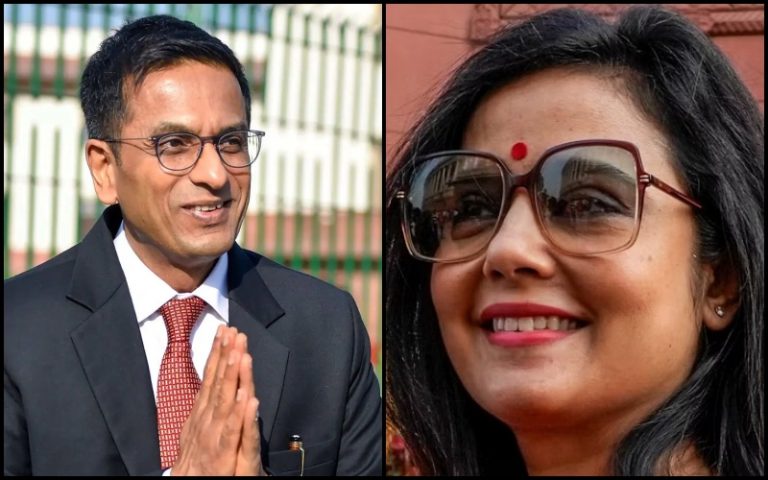
‘If an email was sent, I would have looked at it right away’, CJI tells Mahua Moitra, assures to look into the listing of her plea against expulsion quickly

0

Chief Justice of India DY Chandrachud on Wednesday assured Trinamool Congress Party (TMC) leader Mahua Moitra that he would look into the listing of her plea against her expulsion from Lok Sabha in a cash-for-query case. 

Senior advocate Abhishek Manu Singhvi, appearing for Moitra, mentioned before a bench headed by CJI the plea of Moitra for urgent listing. 

CJI assured the senior advocate that he would look into the listing aspect at lunch during the day. “The matter may not have been registered… If an email was sent, then I would look at it right away. Please send it,” the CJI said. 

Earlier in the day, Singhvi mentioned the plea before a bench headed by Justice Sanjay Kishan Kaul who asked him to mention it before the CJI. 

Justice Kaul said, “Let CJI decide.. I cannot decide it at this stage.” Justice Kaul is retiring on December 25. 

Moitra approached the top court, challenging her expulsion from the Lok Sabha. Moitra was on Friday expelled from the Lok Sabha after a discussion on the report of the Ethics Committee in the ‘cash for query’ that was tabled in the Lower House. 

Moitra, who was not allowed to speak during the discussion inside the House, said that the Ethics committee broke every rule. 

The expelled Lok Sabha MP alleged that she has been found guilty of breaching a code of ethics that ‘does not exist’. 

Moitra further alleged that the findings are solely based on the written testimonies of two private citizens whose versions contradict each other in material terms and her right to cross-examine them was snatched. 

“None of whom I was allowed to cross-examine. One of the two private citizens is my estranged partner, who with malafide intention, masqueraded as a common citizen in front of the committee. The two testimonies have been used to hang me there at polar opposites to each other,” she said. 

The Ethics Committee report probing ‘Unethical Conduct’ of the TMC MP had recommended that Moitra “may be expelled” from the Lok Sabha and called for an “intense, legal, institutional inquiry” by the central government in a “time-bound manner”. 

The report was adopted by a 6:4 majority in the panel last month. The report on Moitra’s cash-for-query case revealed that she visited the UAE four times from 2019 to 2023 while her login was accessed several times. 

(This news report is published from a syndicated feed. Except for the headline, the content has not been written or edited by OpIndia staff)

Mumbai-based real estate company to invest Rs 1,200 crores for projects in Ayodhya: How Ram Mandir is boosting economy in UP’s temple town

0

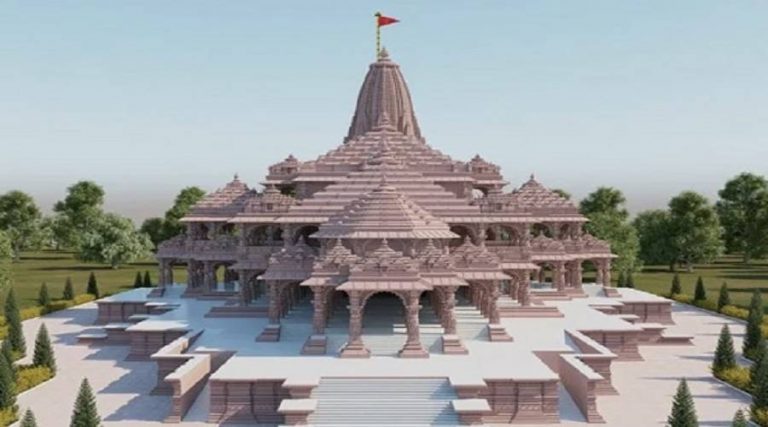
From resistance to reclamation, Ayodhya the holy city in Uttar Pradesh has witnessed numerous changes over the years. The city known for its narrow lanes has now emerged as a major destination for real-estate investors. This comes ahead of the consecration ceremony of the Shri Ram Mandir on January 22 next year. In this line, Mumbai-based real estate company The House of Abhinandan Lodha has invested nearly ₹300 crore in acquiring a 25-acre land parcel in Ayodhya and has laid out a plan to launch a plotted development project in January 2024.

The project is situated approximately 12 to 15 minutes from the Shri Ram Temple. According to Samujjwal Ghosh, Chief Executive Officer (CEO), HOABL, the company expects to invest roughly 1200 crore over three to four years that is by December 2026. 

Ghosh told HT that HOABL is planning to launch 200-250 plots in Ayodhya the next year. These plots are estimated to cost around Rs 1.8 crore plus taxes for a 1250 sq ft plot.

As the inauguration of the Ram Mandir in Ayodhya is nearing, the spiritual town is undergoing a real estate boom and transforming into a major centre of spiritual tourism. According to real estate agents, with multiple investors from around the country and even overseas vying for fewer land parcels, property values have skyrocketed, in some cases four to ten times what they were around four to five years back.

According to reports, the government has approved the development of various townships and private hotels in the city. These lots are near the Chaudah Kosi Parikrama, the Ring Road, and the Lucknow-Gorakhpur Highway. The Ayodhya Development Authority intends to present a plotted housing scheme spanning 80 acres of land by the end of 2023. 

Between April and November of this year, up to 29,325 sale deeds were registered in Ayodhya, with land transactions accounting for 80 per cent of the total,  as per Stamp and Registration department estimates. Local real estate dealers underscore that land costs were about one-fourth of how much they are now before the 2019 Supreme Court decision that paved the way for the construction of Ram Mandir in Ayodhya.

Parasuram Mishra, a broker at Shri Balaji Ayodhya Property told the Hindustan Times that prices of land within a radius of 5-10 km of the temple have increased much more. The rates range from Rs 2000 per sq ft to as high as Rs 18,000 per sq ft adding that commercial plots start at around ₹4000 per sq ft depending on the location.

Reports say that the state’s Stamp and Registration Department’s revenue has increased to Rs 15,631.33 lakh as of November this year, up from roughly Rs 10,000 lakh in 2018-19. The Department’s revenue receipts increased by 109% in November, making it the highest in the state.

With skyrocketing investments in the sacred land, the influx of tourists ahead of and after the consecration of Ram Mandir will surge. This would open doors for employment and business opportunities for the local people.

Travel and hospitality sector to benefit from tourism boom in Ayodhya

In addition to the real estate sector, the hotel chains rushing to Ayodhya are also hopeful of raking in huge profits with the tourism boom in the city. As the state government led by Chief Minister Yogi Adityanath and the Centre are undertaking around 264 projects worth about Rs 32,000 crore, including highways, roads, infrastructure, a green field township, an international airport, an international spiritual centre and whatnot, the travel and hospitality sector will flourish in the city. Reports say that there are five branded hotels with a total of 520 rooms in different stages of development in the city as of now.

Notably, Indian Hotels Company Limited (IHCL), Marriott International, Sarovar Hotels & Resorts, and Wyndham Hotels & Resorts have already signed deals to build hotels in Ayodhya. These hotels are expected to be operational by 2024.

Eight concepts of Ayodhya development

Chief Minister Yogi Adityanath has repeatedly ordered officials to focus their efforts on eight key concepts for restoring Ayodhya’s magnificence. Concrete progress is now noticeable as the state government remarkably boosts initiatives to bring Saketpuri, situated on Lord Vishnu’s wheel, to the forefront in the forms of Sanskritik (cultural) Ayodhya, Saksham (capable) Ayodhya, Adhunik (modern) Ayodhya, Sugmay (accessible) Ayodhya, Surmay (beautiful) Ayodhya, Bhawatmak (emotional) Ayodhya, Swacch (clean) Ayodhya, and Ayushman (healthy) Ayodhya.

Ram Mandir Consecration ceremony

The preparations for the Pran Pratishtha or the consecration ceremony of the Ram Temple in Ayodhya are going on in full swing. Champat Rai, General Secretary of the Ram Mandir Trust, said that the consecration ceremony will take place on January 21, 22, and 23 of the coming year. Prime Minister Narendra Modi will perform the pran-pratishtha for the deity. The event will also witness the presence of prominent saints and other noted figures. According to Champat Rai, the temple trust aims to invite more than 25,000 Hindu religious leaders from 136 Sanatan traditions for the ceremony.

Smoke canister attack inside Lok Sabha on the anniversary of 2001 Parliament Attack: Who handles the security of Sansad?

The Parliament Security Service manages the security of both houses of the Parliament, Rajya Sabha and Lok Sabha. It is situated within the Parliament House Complex. It operates under the administrative control of the Joint Secretary (Security) of the Lok Sabha Secretariat and oversees the security operations of both Secretariats.

In August 2020, “Unified Operational Command” was established under the Joint Secretary (Security) to enhance the efficiency and coordination among the security personnel. The unified command integrates the security services of both Lok Sabha and Rajya Sabha Secretariats. Establishing a Unified Operational Command was to ensure uniformity in decision-making processes related to security matters. Notably, the separate Security Services of both houses run simultaneously as their structures are different.

Following the tragic terrorist attack on the Parliament House in 2001, the government of India did a comprehensive review of the security arrangements. Subsequent measures were taken to streamline the access points, advanced security gadgets were deployed, and a high-tech access control system was implemented to ensure the safety and security of the MPs and VVIPs. Furthermore, Radio Frequency Tags were introduced to enhance the identification processes and regulate the vehicular movement inside the complex.

The Parliament Security Service plays different roles in the complex, including providing security cover to the VVIPs, Members of Parliament, and visitors and conducting anti-sabotage and anti-explosive checks. Other agencies, including Delhi Police, Intelligence Bureau, Parliament Duty Group, Special Protection Group and National Security Guard, coordinate with the Parliament Security Service to ensure smooth operations in the Parliament.

Apart from providing security, Parliament Security Service is also responsible for activities, including guiding visitors through the Parliament House Complex and providing informative sessions on the history of Parliament and its proceedings.

Parliament Security Service personnel are also deployed for national ceremonies, international conferences, and other events where security is paramount.

Smoke canister attack inside Parliament

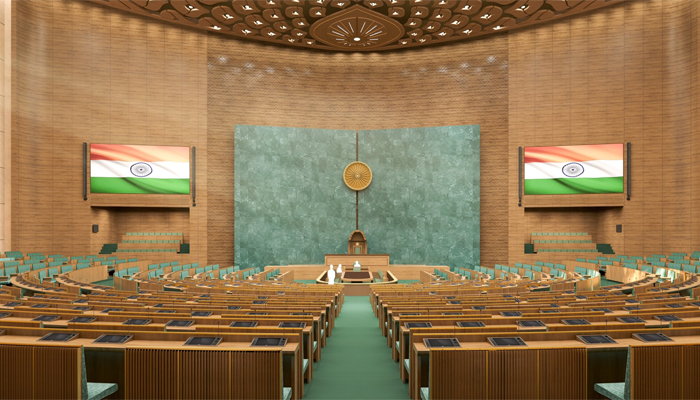
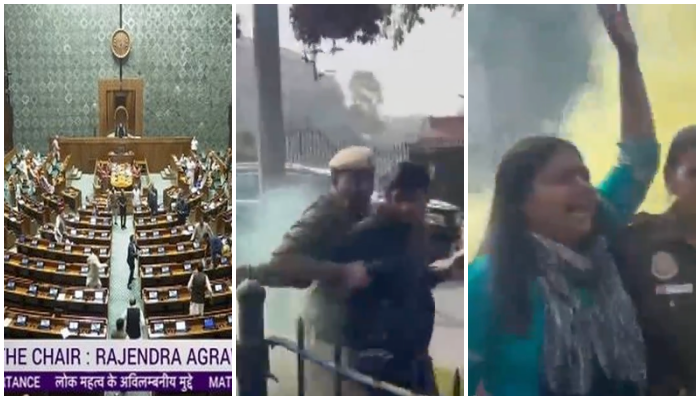
In a massive security breach in the Parliament, two men jumped into the Lok Sabha well from the visitors’ gallery while the proceedings were going on today, 13 December. After jumping into the well, the two men released some yellow-coloured smoke from canisters. The invasion of the parliament took place on the anniversary of the parliament attack in 2001.

Two more people carrying smoke cans were detained outside the parliament. The incident took place at 1 PM during the zero hour in the Lok Sabha, just before the lunch break. When Khagen Murmu, BJP MP from West Bengal, was raising some points regarding his constituency, a commotion was suddenly heard in the background. When the Sansad TV switched to the view of the entire hall, a man could be seen who had already jumped from the gallery and was on the benches. He then started to proceed towards the front of the hall, jumping from bench to bench. People in the Lok Sabah were heard shouting ‘pakdo, pakdo’ (catch him) before the speaker hurriedly adjourned the house. The livestream was cut immediately after that.

Watch: Journalists start fighting among themselves to get their hands on the colour canister thrown in parliament

0

The Delhi Police on Wednesday (13th December) detained two persons for protesting with colour smoke bombs outside the Parliament, in front of Transport Bhawan. Two other persons were also detained by the Police who jumped into the Lok Sabha well from the visitors’ gallery while the proceedings were going on and released some yellow-coloured smoke from canisters after jumping into the well. While the incidents highlighted massive security breaches in the Parliament, the media individuals created a separate fuss while reporting about the incident.

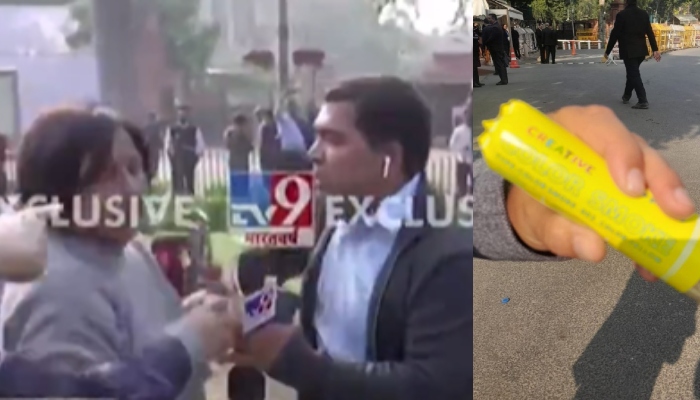
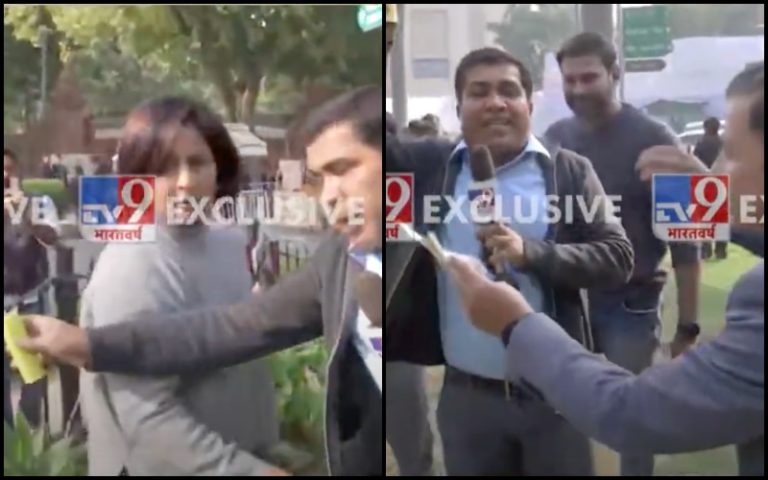
Several TV journalists gathered in the Parliament premises to report on the detention of the two persons who protested using the colour smoke bombs outside the Parliament. However, they engaged in a brawl as they intended to showcase the evidence, the remains of the colour bombs that the detainees used during the protest. The video of the on-camera fight among the TV journalists is making rounds over social media with netizens questioning the morals and values of the journalists.

In the video, journalist of TV9 Bharatvarsh could be seen showing the remains of the colour bomb on the media screen while other journalists including a senior editor of CNN News18, Pallavi Ghosh could be seen snatching the remains to showcase on their respective media screens. “Bahut dikha diye. 5 min ho gaye (you’ve shown this a lot. It’s been 5 mins. Now hand it over),” the other media journalists could be heard saying in the video.

The other journalists also displayed media unprofessionalism as they could also be seen blocking the exclusive live video streaming of TV9 Bharatvarsh for exclusively showing the remains of the color bomb. The video since then has been widely shared on social media with netizens calling media individuals ‘shameless’ and ‘clowns’.

“Indian Journalists are fighting for the smoke canisters that were used. Shameless!” said one of the netizens while sharing the video clip in which the media journalist could be seen fighting like naive.

“Security becomes secondary issue, Indian media is fighting for smoke canisters,” another one said sharing the video.

Meanwhile, one of the netizens also attacked the government over media coverage and said that those supporting PM Modi had shown the standard of journalism. “Pallavi ji, don’t do this! Godi Media showing to the world their standard of journalism- fighting over a piece of evidence on Live TV! Is there any depth of shamelessness that Godi media journalists still haven’t explored?” the user said.

The incident is said to have happened at 1 PM during the zero hour in the Lok Sabha, just before the lunch break. Two persons, a man and a woman used colour bombs to protest outside the Parliament. The duo were detained by the Delhi Police after the former raised the slogans of “Jai Bheem,” “Bharat Mata Ki Jay,” and “Manipur ko insaaf do.”

While at present it is not known who is behind this attack, it is notable that Khalistani separatist and Sikhs for Justice leader  Gurpatwant Singh Pannun had recently threatened to attack the Indian parliament on or before 13th December. In a message released last week, he alleged that an attempt by Indian authorities was made to assassinate him, however, the grand scheme fell through. He had warned that by no later than 13 December he would reply by launching an assault on the Indian Parliament and shake its foundation.

As TV reporters shamelessly fight for smoke canister thrown in Parliament, here are a few things we should all be worried about after witnessing the circus

On the 13th of December 2023, there was a serious security breach in the Parliament of India. Two individuals hurled a smoke canister from the viewer gallery. They then jumped to the floor of the house and were trying to make their way towards the speaker when were overpowered by parliamentarians. Thereafter they were detained by the police and taken for interrogation. Just as the security breach took place, there were two individuals outside the parliament protesting with similar colour smoke canisters.

According to preliminary information from the Delhi Police, there is no terror angle to the incidents, however, the police are taking the breach seriously. According to reports, the intruder inside the parliament was chanting slogans about “Kaala Kanoon” and the protestors outside the Parliament were chanting slogans like Jai Bhim, Tanashahi Nahi Chalegi, Manipur ko Insaf do, etc.

While the country was shocked by the serious security breach and the ramifications of the lapse, Indian media was conducting their very own circus. A video emerged where TV journalists were seen fighting like animals over the smoke canister that was hurled by the protestors. In the video put out by TV9, their journalist was showing the smoke canister on camera. While he was doing his segment, other journalists started trying to snatch the canister saying that he had used it enough and should hand over the canister to other journalists. When the other journalists started trying to snatch the canister, the TV9 journalist was seen almost sprinting with it, trying to get a few more seconds with the canister – for the sake of the hard-hitting coverage of the unfolding incident at the Parliament.

As the nation had important questions that the media should have been focussing on – like how this security breach took place, who were the intruders, what were they chanting, why they did what they did, what was the police doing and how visitors entered the parliament with canisters and why were the Delhi Police so lackadaisical in arrested the protestors outside the Parliament, almost looking like they were taking them for a walk, these elements in the media seemed far more interested in ridiculous sensationalism and showing visuals of the canister.

While we watched this circus unfold, there are several important aspects that people need to be extremely worried about.

First and foremost, one has to wonder about the priorities of the media and what they choose to cover when important events unfold. As mentioned, there are very important questions that need to be answered as this security breach unfolds. The Parliament is not just a building but a symbol of the democracy of India and the seat of power. Any attack on the Parliament is an attack on democracy and the sovereignty of India itself.

While these events unfolded, the journalists on the ground should have been far more focused on bringing crucial details to the people of the nation. And while several journalists were doing so, some were indulging in cheap sensationalism.

This, however, comes as no surprise. One is reminded of the time when Rajdeep Sardesai was talking about the 2001 Parliament Attack – the terrorist attack that incidentally took place on this day 22 years ago.

In 2018, a video had gone viral where Rajdeep Sardesai admitted that journalists were vultures. Sardesai in the video recounted the December 2001 attack on the Indian Parliament where he and his crew were preparing for a picnic owing to a slow news day. Preparing for a feast in the garden near the Parliament, he and his team entered the Parliament at around 11 am. Within minutes of the team entering the Parliament, he says they heard gunshots. The Parliament was attacked. He then recalled that when his colleague asked him to leave, he directed him to suggest the guard to close the gates. He explained with a wide grin that he did so so that no other channel crew could enter. Those days there were fewer channels and Sardesai was excited at the prospect of doing an exclusive story.

He then says how the exclusive story of the parliament attack made the team forget the wine and kababs they were planning to picnic on. “It was a great day. We are like vultures. We feed on these moments.” he added.

If one truly thinks about it, the current TV journalists are merely following the standards set by veteran vultures like Rajdeep Sardesai.

While the conduct of the media was abysmal, what is far more concerning is the conduct of the Delhi Police and security agencies. When a security breach like this has taken place, one would imagine that the police and law enforcement agencies would ask the media to stand back – after all, 26/11 was a classic case of how the media could potentially jeopardise any rescue operation and investigation when such incidents take place. During the Mumbai Attack, the police allowed unbridled access to the media, resulting in journalists like Barkha Dutt potentially giving away crucial information on hostages from ISI handlers who were closely monitoring the media.

Taking a lesson from the past, the police should have summarily kept the media away. That canister itself could be crucial evidence that the police need, instead, the media was yet again given unbridled access to play with the canister as if were some sort of a prop in a drama.

On the 22nd anniversary of the ghastly 2001 Parliament attack, the parliament was under severe threat. There were Khalistani and other terror organisations which had issued threats against the Parliament. While now the police are claiming that the smoke was not harmful, while the breach was ongoing, the police had to function under the assumption that it could be a deadly terror attack which could have dire ramifications. Despite that, the media was given unbridled access knowing fully well that such media has a history of creating a circus during serious incidents.

Several other questions are being raised against the police as the Parliament’s security was breached. Visitors to the Parliament are frisked at every stage and there are now questions being asked as to how the security could have been so wanting that two individuals with smoke canisters could enter the Parliament. Per protocol, those who have passes to view the Parliament proceedings are not allowed to carry a paper inside the Parliament. Legitimate concerns are now being raised as to how, amid such tight security, two individuals could enter with these canisters.

“Jai Bhim, Manipur ko Insaf do”: What were the slogans raised by protestors outside the Parliament as they hurled smoke canisters

At around 1 pm on Wednesday (13th December), two men jumped in to the Lok Sabha from the visitor’s gallery while proceedings were underway.

As per reports, the two accused jumped from the visitor’s gallery and one of them began to head towards the well by jumping over the benches.

The man was donning a blue jacket and was seen removing his shoes. He then starts to look around as if trying to find a way out when members of Parliament began to surround him.

Immediately, a yellow smoke began to emanate and fill in the hall. As per reports, the two accused who breached the Parliament security were chanting the slogans “Kala kanoon wapis lo”, “Tanashahi nahin chalegi”.

A similar scene was unfolding outside the Parliament premises at the same time. Two other protestors including a woman and man were staging a demonstration releasing yellow and pink smoke from cans. The entire incident invovles a total four accused at least.

The woman protester outside was heard raising slogans including, “Tanashahi nahin chalega,” “Manipur ko insaaf do, “Samvidhaan bachao”, “Mahilayon par atyachar nahin chalega,” “Bharat Mata Ki Jai,” “Tanashahi band karo,” “Jai Bheem Jai Bharat,” “Vande Mataram”.

Meanwhile the protesting man was heard chanting, “Bharat Mata ki Jai”. Several videos of the attack inside the Parliament and the demonstration outside are making rounds on social media.

The woman protester has been identified as a Neelam Kaur (42) and Amol Shinde (25). Meanwhile, one of the accused who jumped inside the Lok Sabha is reportedly being identified as a Sagar.

In another video, a journalist can be seen questioning Neelam while she is being taken by the police. In response, the woman accused can be heard saying, “Our Indian government and the atrocities being committed against us…when we talk about our rights…we are lathicharged and jailed and totured. So we did not have any other way.”

When asked which organisation they belong to, she said, “We are not from any organisation, we are common people. we are students, because we are employed, our parents work so hard, labourers, farmers, small businessmen but no one is heard. They try to supress our voice but this tyranny will not be tolerated. End the tanashahi (tyranny). Bharat Mata Ki Jai.”

What happened inside the Parliament

The incident took place at 1 PM during the zero hour in the Lok Sabha, just before the lunch break. When Khagen Murmu, BJP MP from West Bengal, was raising some points regarding his constituency, suddenly a commotion was heard in the background. When the Sansad TV switched to the view of the entire hall, a man could be seen who has already jumped from the gallery and was on the benches.

He then started to proceed towards the front of the hall, jumping from bench to bench. People were in the Lok Sabah were heard shouting ‘pakdo, pakdo’ (catch him), before the speaker hurriedly adjourned the house. The live stream was cut immediately after that.

However, media reports said that another man jumped into the Lok Sabha, and both of them were carrying canisters, from which they sprayed some yellow-coloured substance.

While some reports said it was gas, others said it was smoke. According to LS Speaker Om Birla, the smoke as per preliminary inquiry was not harmful.

The security breach in Lok Sabha happened on the anniversary 2001 Parliament attack during which armed terrorists stormed the Parliament building.

Is Farooq Abdullah angry because Kashmir is no longer violent and dangerous? How the calm after the SC verdict has rattled the Gupkar gang

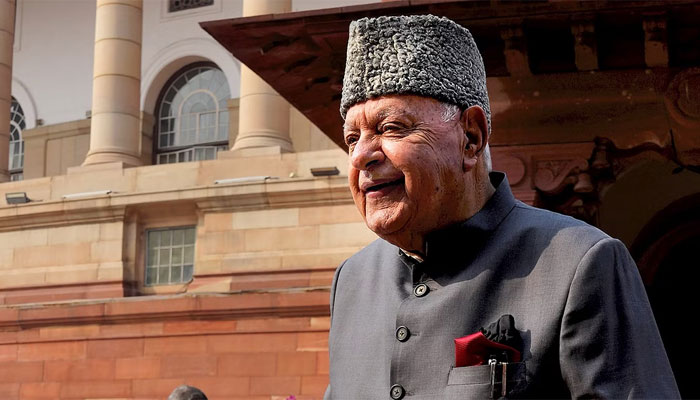
On 12th December, National Conference Chief Farooq Abdullah lashed out at the central government following the passage of the Jammu and Kashmir Reservation Bill and Reorganisation (Amendment) Bill. He was seemingly irked following the Supreme Court’s decision to uphold the abrogation of Article 370. Speaking to ANI, he asserted that tourism in the valley is possible because terrorists do not attack them. He said, “You should be thankful that they are not doing it”, asserting if terrorists start attacking tourists, the tourism in the valley will be finished.

Earlier, Abdullah had said in a furious tone that Jammu Kashmir could “go to hell”. When an ANI reporter questioned why he said so, Abdullah said, “You people are irritating me. No one is doing anything for the ‘heaven’ and taking it to ‘hell’.” He cited the famous quote about Kashmir, “If there is heaven on Earth, it is here, it is here, it is this.” and questioned what the government has done for the valley. “You are not conducting any elections happening in all other states. What crime have we committed? Now come to statehood. Tell me one state since independence that was converted to UT from a state. UTs become a state, not the other way around. You have made the state hell.”

He added, “You say that terrorism has ended. Has it ended? Are our soldiers and officers not dying? Are people not dying? You talk about tourism. They [terrorists] have not attacked tourists yet. If they attack only one tourist, tourism will come down to zero. You should be thankful that they are not doing it [attacking tourists]. Our everything depends on it. We do not have any factory. They said they would bring factories. Which factories have been established? Someone from UAE is building a mall here. A mall. We already have a mall. We are citizens of this country. This is our country. But there is no justice for us. What should I do?”

Borderline dog whistling

Abdullah’s remarks about terrorists not attacking tourists, leading to the possibility of having a tourism industry in the valley, are dangerously bordering on dog whistling. In a way, he hinted at a potential strategy for terrorists to target the flourishing tourism industry in Jammu and Kasmir.

Abdullah, who was irked by the Supreme Court’s decision on Article 370 and passage of bills in both houses, tried to oversimplify the complex situation in Kashmir. His statement should be condemned as it can potentially send a wrong message. By insinuating that the absence of terrorist attacks is the reason for flourishing tourism, he failed to acknowledge the collective efforts that the government of India and the UT government made to foster a peaceful environment in the valley.

It has to be noted that such statements by prominent leaders like Farooq Abdullah can be interpreted as an inadvertent signal to those who have vested interests in promoting terrorism in Jammu and Kashmir. Terrorist groups have a habit of exploiting any perceived weakness or opportunity, which the comments passed by Abdullah provided.

Leaders in the valley and the rest of the country need to promote a narrative highlighting Kashmir’s resilience. The people of Kashmir are working towards sustained peace, and statements like those Abdullah made have the potential to nullify such efforts. It is essential to focus on the positive aspects of the region, including rich culture, warm hospitality, and breathtaking landscapes, so that, for the time being, tourism can keep supporting the state’s economy. At the same time, other projects were established in Jammu and Kashmir.

What changed in the past ten years? They asked, and HM Shah replied

In both houses, the opposition asked Home Minister Amit Shah what changed in the valley. In his reply, HM Shah pointed out the number of tourists touched the 2 crore mark in 2023. Furthermore, over 100 films were shot in the valley. There has been no theatre operating in Jammu and Kashmir since 1991. The first theatre opened after a gap of three decades in 2021. Since then, more theatres have opened and over 100 applications are under review from banks to open and operate theatres in the valley.

The number of devotees visiting Mata Vaishno Devi Temple and devotees participating in Shri Amarnath Yatra has increased exponentially over the years. HM Shah added that nursing colleges, medical colleges, and other educational institutes have opened in the state after the abrogation of Article 370. Furthermore, the number of medical seats has increased, and a record number of athletes have registered in the state.

Speaking about terrorist activities, HM Shah said the total incidents of terrorist activities during UPA time were 7,217. However, since the BJP came to power, the number of such incidents reduced to 2,197. During UPA time, 2,829 security personnel and civilians lost their lives. Compared to that, such deaths were reduced to 891 civilians and security personnel. 2,654 incidents of organised stone pelting happened during UPA.

Furthermore, since the Abrogation of Article 370, zero stone-pelting incidents have been reported in the region. 112 civilians died during stone pelting during UPA, but zero such deaths have been reported since the abrogation of Article 370, as no incidents of stone pelting took place. 6,235 civilians were injured in such incidents during UPA, but zero such injuries have been reported since the abrogation of Article 370. In 2010, 70 ceasefire violations were reported, but in 2023, only six such incidents were reported. Similarly, incidents of infiltration attempts clocked to 479 compared to recent reports of 48. In 2010, 18 terrorists reportedly left Kashmir. However, in 2023, 281 terrorists reportedly left Kashmir.

HM Shah noted that the central government adopted a Zero Terrorism Plan in Jammu and Kashmir, which has been in action for the last three years. Furthermore, he said that by 2026, he hopes that the plan will achieve its aim to finish terrorism in the valley.

The Gupkar Gang

Not to forget, Abdullah is the chairperson of the People’s Alliance for Gupkar Declaration (PAGD), also known as the Gupkar Gang. It was formed to restore the erstwhile state’s special status or Article 370 in Jammu and Kashmir. Gupkar Gang was formed in October 2020 when six parties joined to restore Articles 370 and 35A and the statehood of Jammu and Kashmir. The National Conference (NC), Peoples Democratic Party (PDP), Peoples Conference (PC), Communist Party of India Marxist (CPI-M), Peoples Movement (PM) and Awami National Conference (ANC) were the first to ally. In November, Congress also joined the gang.

Gupkar Gang’s three leaders joined in January 2023 in a nationwide political rally. Farooq’s son and former Chief Minister of Jammu and Kashmir, Omar Abdullah, and PDP chief and former Chief Minister of Jammu and Kashmir Mehbooba Mufti joined Congress leader Rahul Gandhi‘s Bharat Jodo Yatra in January last week when the Yatra reached its destination in Kashmir.

Abdullah once batted for Chinese rule

One year after the abrogation of Article 370, Abdullah claimed that the people of Kashmir “do not feel or want to be Indian”. He added that they would prefer to be ruled by China instead of India. Interestingly, the same Abdullah is now crying that he is an Indian and India is his country. Abdullah stated during a talk show on The Wire’s YouTube channel. He called the abrogation of Article 370 the “last nail in the coffin of India”. The same Abdullah is now claiming tourism is possible in Kashmir because terrorists do not attack tourists. It is interesting to see how the language of these leaders changes with time and how they insert dog whistling while projecting themselves as Kashmir’s messiah.