Home Blog Page 1598

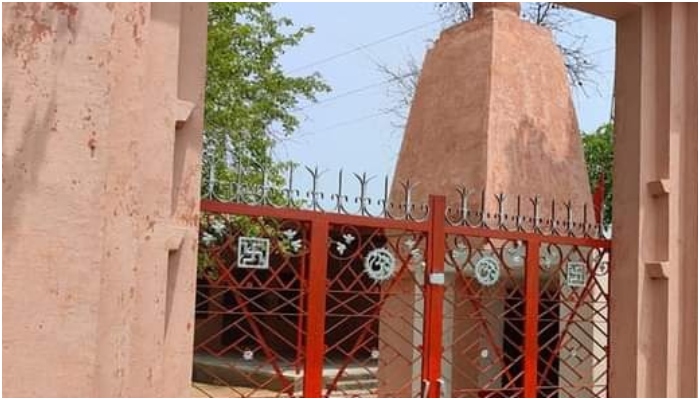
Uttar Pradesh: Hindu temple desecrated by unknown miscreants in Sambhal, Lord Shiva idol vandalised

0

In a dreadful incident that has been reported from the Sambhal city of Uttar Pradesh, a Hindu temple was vandalized by some miscreants on Sunday (26th November). Some unknown anti-social elements destroyed the Hindu idol of the Lord Shiva temple.

The incident is said to have happened on the 26th of November night. However, it came to the fore only after some devotees discovered the broken idols after they arrived at the temple post-Ganga snan. The devotees and the locals immediately informed the Police who reached the spot and began the investigation.

The police have also filed an FIR against unknown miscreants for vandalizing a Hindu temple. The FIR has been filed based on the complaint filed by a local Hindu identified as Pramod Kumar. Meanwhile, the authorities replaced the temple idol with a new one. The enraged devotees have demanded strict action against the accused for hurting the religious sentiments of Hindus.

According to a report by Live Hindustan, several BJP leaders have also taken cognizance of the event and have demanded strict action against the accused. BJP leaders Yogesh Tyagi, Amit Kumar, Sanjay Kumar, and several other leaders visited the temple on Monday (27th November) and demanded strict investigation and arrest of the accused.

Earlier in April this year, a similar incident was reported when an unidentified individual broke Lord Hanuman’s idol in Sambhal. The Police had arrested the accused after which the latter confessed that he broke the temple as God did not listen to his prayers.

Also, in January this year, a Shiv temple was vandalized in Sambhal after the enraged devotees had launched a massive protest in the city. The Police had filed an FIR in the case and had assured that strict action would be taken against the accused.

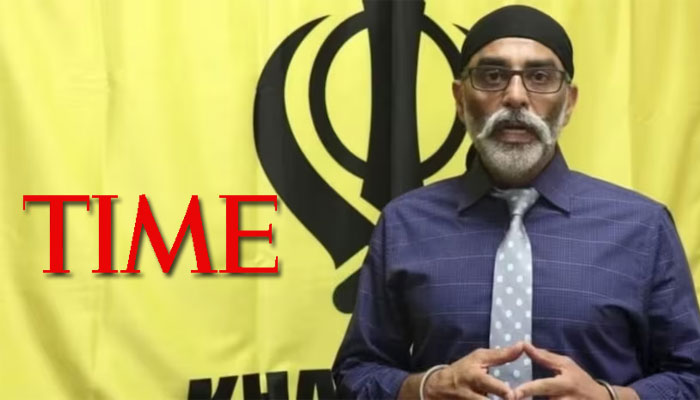
Why is Western media so intent on promoting terrorists? Gurpatwant Singh Pannun, who threatened Air India flights, gets flattering coverage in TIME after FT

On 27th November, TIME magazine published a lengthy interview of Khalistani terrorist Gurpatwant Singh Pannun. This was the second time in less than a week that Khalistani separatist movement got space in a leading international publication. Earlier on 22nd November, the Financial Times published a report claiming that US authorities thwarted a plan to assassinate Pannun.

Furthermore, the report claimed that the US warned India as its agents were allegedly involved in the plan to assassinate Pannun. The report claimed that President Joe Biden had raised the issue with Prime Minister of India Narendra Modi during his visit to India for the G20 Summit. Interestingly, the claims were in sync with the accusations against India for its alleged involvement in the murder of Khalistani terrorist Hardeep Singh Nijjar.

The space that terrorists and wanted criminals are getting in international media raises the question if the West is attempting to create another Osama Bin Laden. The question arose because just a few weeks ago, Pannun openly threatened to blow up Air India flights and warned Sikhs not to travel in the same.

In the TIME article, the author attempted to highlight the complex and contentious situation involving Pannun. However, those who are aware of the Khalistani movement, Sikh separatism and insurgency in Punjab from the 1980s to the end of the 1990s would see a clear bias in the report and blatant attempts to whitewash crimes.

Report’s reliance on Pannun’s selective viewpoint is problematic

Pannun, who is an American and Canadian citizen, founded Sikhs For Justice (SFJ) in 2007 to promote and propagate the Khalistani movement. The TIME’s article presented Pannun’s perspective over the allegedly foiled assassination plot, baseless allegations of India’s involvement in the plot and border issues surrounding the Khalistani movement. At first glance, if someone is unaware of the actuality behind Sikhs For Justice and Pannun’s anti-India actions, the reader would feel as if India is standing on the wrong side.

The selective presentation of the information in the TIME report needs to be called out. The report heavily relied on Pannun’s viewpoint and portrayed him as a “champion of human rights and self-determination for Sikhs”. Contrary to what was presented, it severely lacked a balanced presentation, as there were no counterarguments or perspectives from the Indian government’s point of view.

The Khalistani movement is a direct challenge to the sovereignty of the Indian state. The Khalistani elements like Pannun not only issued repeated threats to damage public and government properties but also instigated Sikhs worldwide to protest against the Indian government and desecrate the Indian flag. The increase in attacks on Hindu temples is the result of provocation by the likes of Pannun. Not to forget, it was only because of the pro-Khalistani elements that posters calling for the assassination of Indian diplomats and “Wanted” posters of PM Modi were raised in Canada.

TIME failed to address legal actions against Pannun

While portraying Pannun as a human rights advocate, the TIME report completely ignored the seriousness of the charges brought against him by the Government of India. Pannun has been actively calling for protests and instigating young Sikhs to desecrate government buildings and trigger violence in India on important events. From Republic Day Independence Day to even the final match of the ICC Cricket World Cup, Pannun has called for creating law and order problems in India.

Furthermore, he has announced cash rewards for anyone who follows his instructions. In the past few years, incidents of vandalising government buildings have increased exponentially in Punjab, Delhi, and elsewhere because of his provocations. Furthermore, when the so-called tractor rally during farmer protests turned violent on 26th January 2021, the “protesters” raised alien flags on Red Fort, where the Indian flag was hoisted on Independence Day. It was in sync with the demands raised by Pannun in exchange for cash rewards. He also announced that he would send the reward to the “protesters” involved in raising the alien flag at the Red Fort.

Apart from his consistent threats against India, he has also sought support from Pakistan. It is a well-known fact that Pakistan has been actively funding the Khalistani movement since the insurgency of the 1980s. Several wanted Khalistani terrorists have found haven in Pakistan and indulge in anti-India activities. Khalistani elements are often found indulged in Pakistan-backed narco-terrorism. While Pannun claimed he would not “take the path of violence”, it is essential to mention that he openly threatened terror attacks on Air India flights.

Insufficient Context on the Khalistan Movement

The TIME report touched on the historical context of the Khalistan movement but only in a way that would suit Pannun’s narrative. It talked about the anti-Sikh riots and Operation Blue Star but completely ignored the fact that Khalistani terrorists killed thousands of innocent Hindus in Punjab. The Khalistani attacks happened outside India as well when the terrorists blew up Air India’s Kanishka flight killing 329 people in 1989, most of them Canadian citizens.

There were countless terrorist attacks during the insurgency in Punjab. For example, on 7th March 1990, Khalistani terrorists killed 22 Hindus in a small town of Punjab, Abohar. The Khalistani terrorists opened fire in the busiest market leading to several deaths and injuries. While people tried to understand what happened and rushed the injured to hospital for medical care, multiple bombs went off in the market, leading to more deaths. Temples, busy markets, buses and trains were attacked during insurgency by Khalistani terrorists. Sadly, the coverage of such incidents is minimal and clouded with selective narratives.

The assassinations of former Prime Minister Indira Gandhi, then-Chief Minister of Punjab Beant Singh, former General of Indian Army Arun Vaidya, ex-minister and founder of Hind Samachar Group Lala Jagat Narain and others are black spots in the history of Punjab. By not providing the crucial historical facts about the Khalistani movement, the report deliberately indulged in propaganda, and highlighted a terrorist’s perspective.

Limited discussion on Sikh Diaspora motivations

The TIME report categorically said that the Sikh Diaspora shifted abroad due to so-called “persecution”. However, it ultimately failed to explore the multifaceted reasons for Sikhs to settle overseas. The economic opportunities, cultural integration, and the desire to settle abroad, which were widespread among Sikhs in Punjab, were ignored entirely. Not to forget, many pro-Khalistani elements and Khalistani terrorists fled India and took shelter in countries like Canada and Pakistan.

Hardeep Singh Nijjar, who was also a point of discussion in the report, was also a wanted Khalistani terrorist who fled India on a fake passport. While Canada accuses India of killing Nijjar, the Justin Trudeau-led government of Canada has failed to explain how someone who entered Canada with a false name and dubious background managed to get Canadian citizenship—that, too, after knowing the fact that he was a wanted criminal in India. Najjar was linked to Khalistani terrorist organisations like SFJ and Khalistan Tiger Force. He organised armed training camps and indulged in anti-India activities. Interestingly, he has now been portrayed as a “Sikh hero” and “Canadian citizen” while pointing fingers at India!

OpIndia’s detailed reports on Hardeep Singh Nijjar can be checked here.

India is heading towards Lok Sabha elections scheduled in the first half of 2024. The upcoming General Elections campaign will start unofficially very soon, and all political parties will begin propagating their agendas at the beginning of 2024.

At such a crucial political point, the individuals and organisations with vested interests who want to see a regime change in India are trying to portray the current government badly. While attempting to do so, they are knowingly or unknowingly feeding anti-India forces, including pro-Khalistani elements sitting in Western countries. Pannun is one such individual who wants to break India into several pieces, and India has the full right to defend its sovereignty against such elements.

UP: Afreen embraces Hindu Dharma, marries her Hindu lover Prince in Sitapur

0

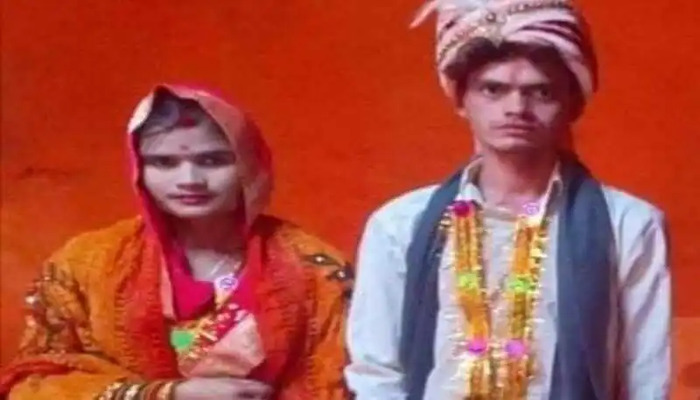
In the Sitapur district of Uttar Pradesh, a Muslim girl named Afreen embraced Hindu Dharma after marrying her Hindu lover Prince Gupta. After tying the knot with Prince as per Hindu traditions and amidst the chanting of Vedic mantras on Monday, November 27, Afreen changed her name to “Nisha”.

According to the media reports, the matter pertains to the Tambaur police station precinct in Sitapur. Originally from Tambaur’s Pachrukhu, Prince Gupta does works at a factory in Haridwar. Prince met Afreen, a resident of Shahjahanpur’s Katra some time back. The duo soon became friends and used to meet and interact often. Afreen and Prince grew closer and their friendship blossomed into love. Subsequently, the couple decided to get married.

While Prince Gupta managed to convince his family, Afreen’s family were opposed to this union. After learning about Afreen’s relationship with Prince, her father Sabir Hussain imposed numerous restrictions on Afreen. She was not allowed to step out of her home as well. However, Afreen managed to call Prince to Sitapur. After Afreen’s phone call, Prince arrived in Sitapur and sought help from Hindu rights groups to help the couple get married.

Subsequently, the Hindu activists made arrangements for Afreen’s ‘ghar wapsi’ and her marriage to Prince Gupta at a temple dedicated to Goddess Sonasar in the Seuta area. Before the wedding, Afreen performed the required rituals to become a Hindu.

Prince and Afreen (now Nisha) got married in the presence of the respected people of the village who blessed the newlyweds. The couple also received the blessings of Prince Gupta parents and relatives. Several Hindu leaders including Rashtriya Bajrang Dal District President Sandeep Awasthi Bajrangi, Dinesh Pandey, Raju Awasthi, and Vineet Raj were present. Following their wedding, Afreen alias Nisha is residing with her husband Prince.

‘Your courage and patience are inspiring everyone’: PM Modi speaks to workers rescued from Silkyara tunnel in Uttarkashi

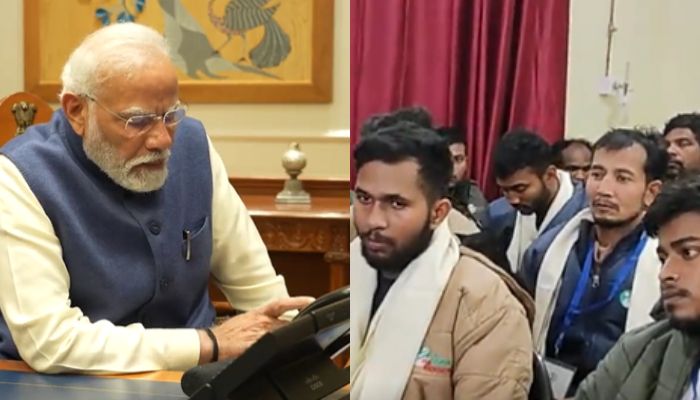
Hours after the safe evacuation of 41 trapped workers from the Silkyara tunnel on Tuesday, Prime Minister Narendra Modi spoke to the rescued men over the phone.

All 41 men, who were rescued from the collapsed tunnel after 17 days, have been brought to the Community Health Centre in Chinyalisaur for primary medical treatment.

Their names include Viswajit Kumar, Subodh Kumar, Rajendra Bedia, Sukram, Tinku Sardar, Gunodhar, Sameer, Ravindra, Ranjeet, Mahadev, Bhukttu Murmu, Jamra Oraon, Vijay Horo, Ganapati – all from Jharkhand, Gabbar Singh Negi, and Pushkar – both from Uttarakhand, Saba Ahmed, Sonu Sah, Virendra Kiskoo, and Sushil Kumar – all from Bihar, Manir Talukdar, Sevik Pakhera, and Jaydev Parmanik – all from West Bengal, Akhilesh Kumar, Ankit, Ram Milan, Satya Dev, Santosh, Jai Prakash, Ram Sundar, and Manjit – all from Uttar Pradesh, Tapan Mandal, Bhagwan Batra, Viseshar Naik, Raju Naik, and Dhiren – all from Odisha, Sanjay and Ram Prasad from Assam, and Vishal from Himachal Pradesh.

Earlier in the day, Prime Minister Modi had called Uttarakhand Chief Minister Pushkar Singh Dhami and gave his best wishes for the safe evacuation of 41 workers from the Silkyara tunnel.

During this, PM Modi took information from the Chief Minister about the workers.

Reacting to the safe rescue of the workers, PM Modi praised the bravery and determination of rescuers involved in the Silkyara tunnel operation, saying that they have given new life to the laborers who were trapped in the tunnel for the last 16 days, adding that the mission has set an “example of humanity and teamwork.”

“The success of the rescue operation of our laborer brothers in Uttarkashi is making everyone emotional. I want to say to the friends who were trapped in the tunnel that your courage and patience are inspiring everyone. I wish you all well and good health,” PM Modi said in a post on X.

“It is a matter of great satisfaction that after a long wait, these friends of ours will now meet their loved ones. The patience and courage that all these families have shown in this challenging time cannot be appreciated enough,” PM Modi added. (ANI)

(This news report is published from a syndicated feed. Except for the headline, the content has not been written or edited by OpIndia staff)

BCCI drags Byju’s to NCLT over pending dues of nearly Rs 160 crore, edtech firm says hope to settle matter soon

0

The Board of Control and Cricket in India (BCCI) has moved the National Company Law Tribunal (NCLT) against edtech major Byju’s over pending dues related to the sponsorship of the Indian cricket team.

A hearing was reportedly held between BCCI and Byju’s parent company, Think and Learn on Tuesday (28th November). The next hearing has been scheduled for 22nd December.

A Byju’s spokesperson was quoted as saying, “In discussions with BCCI to settle the matter and we hope to achieve that soon.”

The case was filed on 8th September and officially registered on 15th November over pending dues amounting to nearly Rs 160 crore pertaining to the dispute around sponsorship rights of the Indian cricket team’s jerseys.

Byju’s has been a partner of the Indian cricket team since 2019 and its branding has been featured on the team’s jersey.

Byju’s sponsorship rights with BCCI were extended in June 2022 and ended this month. The company had reportedly asked the board to encash Rs 140 crore bank guarantee and the remaining Rs 160 crore was to be paid in installments.

Reports quoting sources in the BCCI cited that the board confirmed the development but added that they have not arrived at any solution.

Along with BCCI, Byju’s also had branding partnerships with International Cricket Council (ICC) and FIFA. All three were up for renewal this year but the company confirmed that it would not renew any partnership.

Recently, reports claimed that the Enforcement Directorate (ED) has issued a notice to the firm asking it to pay Rs 9,000 crore for allegedly violating foreign funding laws.

The company has also failed to clear the dues of its employees who were laid off.

Meanwhile, Byju’s Chief Technology Officer (CTO) Anil Goel is staging an exit after three years with the firm and will be replaced by Jiny Thattil.

Support for blasphemy killers, dehumanisation of non-Muslims and more: Meet Khadim Rizvi, the Pakistani Islamist cleric who inspired Prayagraj attacker

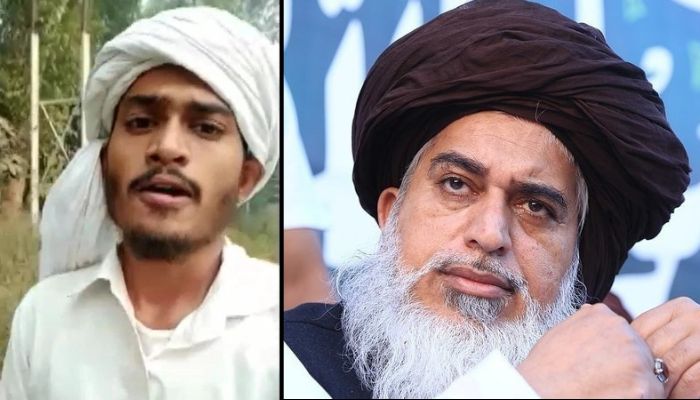
On Friday (25th November) morning, a man named Lareb Hashmi attacked a 24-year-old Hindu bus conductor with a cleaver after accusing the latter of committing ‘blasphemy’. He was inspired by the teachings of a Pakistani Islamic preacher named Khadim Hussain Rizvi

As per reports, the victim was identified as Harikesh Vishwakarma. He suffered grievous injuries to his neck and body after Hashmi hacked him with the sharp weapon over a ticket fare dispute. The incident took place in the Prayagraj city of Uttar Pradesh.

Following the brutal attack, the Islamist jumped out of the bus and sought refuge in a nearby college campus. He recorded a video, justifying the attack on the bus conductor.

“(The bus conductor) was abusing Muslims. So I attacked him with a cleaver. He will not survive. He will be dead soon. From India to France, whoever insults our Prophet will be exterminated,” the Islamist was heard saying.

“We are ready to die for you and go to jail, O Prophet Muhammad. Dear Muslims, rise about this world’s materialism and be ready to sacrifice your life for the Prophet,” Lareb Hashmi went on to abuse the victim with the choicest of expletives.

He chanted ‘Allah hu Akbar, and ‘La ilaha illallah muhammadur rasulullah” as he went about justifying the brutal attack on the Hindu bus conductor.

Prayagraj attacker inspired by Khadim Hussain Rizvi

In his video, Lareb Hashmi also made references to ‘Tehreek-e-Labbaik Pakistan (TLP)’ and its founder Khadim Hussain Rizvi. “You (Rizvi) had told us that angels would come if we tread the path of Allah. You have said to not just kill 1 individual but make a pile of dead bodies of the enemies of Islam,” he sought inspiration from Rizvi.

It must be mentioned that Khadim Hussain Rizvi (1955-2020) was a notorious Islamic cleric, who launched a campaign to preserve the draconian blasphemy laws in Pakistan. He was popular across the country, especially in Pakistan’s most populous province of Punjab.

Khadim Hussain Rizvi was a follower of 19th-century Islamic preacher, Imam Ahmed Raza Khan Barelvi – the founder of the Barelvi sect.

Pakistani preacher led several violent protests in the name of ‘blasphemy’

Rizvi was the founder of ‘Tehreek-e-Labbaik Pakistan (TLP)’, known for its role in violent protests in Pakistan. In 2017, he organised widespread demonstrations that led to the death of at least six people and injured 200 others.

They were organised in response to a minor change to the oath taken by candidates in elections involving a declaration that revolved around Prophet Muhammad. This change was interpreted as benefiting the Ahmadi sect.

Sensing public anger, the Pakistani government immediately rescinded its decision deeming it to be a ‘clerical error’. The protests continued and were called off only after the then Law Minister submitted his resignation.

Under Rizvi’s supervision in 2018, the TLP staged protests in response to the acquittal of Asia Bibi by the Supreme Court of Pakistan. She was falsely accused of blasphemy and spent 8 years on death row. Rizvi was thereafter taken into custody and booked for treason and sedition.

The Islamic cleric had held demonstrations against Dutch politician Geert Wilders for announcing a ‘Prophet Muhammad cartoon competition.’ He also demanded the expulsion of the Dutch ambassador from the country and the cessation of all diplomatic relations with the Netherlands.

In 2020, Rizvi was at the forefront of protests against France for the publication of cartoons of Prophet Mohammed by French satirical magazine Charlie Hebdo.

The Islamic cleric had also called for a boycott of French products and demanded Pakistan Prime Minister Imran Khan send back the French ambassador from Islamabad.

During these protests, Rizvi had called Pakistan to launch nuclear attacks against France for its alleged act of ‘Islamophobia’ after the European country had vowed to fight radical Islamic terrorism.

Even after his death, ‘Tehreek-e-Labbaik Pakistan (TLP)’ continued Khadim Rizvi’s legacy of violence in the name of blasphemy. His son, Saad Hussain Rizvi, is now leading the radical Islamist party and further plunging the country into the dark ages.

Khadim Hussain Rizvi and dehumanisation of non-Muslims

During his lifetime, the radical Islamic preacher was at the helm of vicious anti-Hindu and anti-Sikh rhetoric that led to the marginalisation and ostracism of these religious communities in Pakistan.

In an undated video, Khadim Hussain Rizvi was seen comparing Kafirs (a derogatory term for non-Muslims) to ‘faecal matter.’ He was heard saying, “The relation of a Muslim to a Kafir is an obligation just like going to the latrine…You go to the latrine because you need to…You do not go there to smell odour.

In another video, the Islamic preacher was seen eulogising Mahmud Ghaznavi, who plundered the sacred Somnath temple. He also claimed that Hindu women had miscarriages after hearing the hoofbeats of the horses of the Islamic invader

In a video posted on X (formerly Twitter) by Pakistan Untold, Khadim Hussain Rizvi was seen justifying attacks on Hindus and desecration of temples and idols.

“Mahmud Ghaznavi started breaking Somnath idol. Hindus went to him and begged – O Mahmud! Don’t break our god. We will give you more gold than weight of this idol. Mahmud told – My prophet taught me to break idols. He didn’t teach me to save them,” he was heard saying.

He was also seen dubbing the Sikh shrine of ‘Kartarpur Sahib’ in Pakistan as ‘dirty’ and delivering hate speech against the Sikh community.

As such, it comes as no wonder why the Prayagraj attacker Lareb Hashmi was inspired by Khadim Hussain Rizvi.

Khadim Rizvi justified blasphemy killings

It must be mentioned that Khadim Hussain Rizvi had rallied in support of the killer of Salman Taseer, a prominent Pakistani politician and the then Governor of Punjab. Taseer had publicly extended his support to Asia Bibi who was falsely framed in a blasphemy case.

He was declared as ‘murtad’ and gunned down by none other than his bodyguard, Mumtaz Qadri. Khadim Rizvi and his supporters threw their weight behind Qadri and hailed him as a ‘hero.’

Interestingly, it was only after the execution of Qadri that the Islamic preacher laid the foundation of ‘Tehreek-e-Labbaik Pakistan (TLP).’

Khadim Rizvi had also extended his support to a Pakistani man named Tanveer Ahmed, who murdered an Ahmadi shopkeeper on allegations of blasphemy in Glasgow city of Scotland.

“I’m proud of the fact that we are in contact – and this pride will remain until the day of judgement and beyond,” he said after Ahmed was handed a 27-year-long prison sentence.

In August 2022, Bangladeshi writer Taslima Nasreen recounted how Khadim Rizvi wanted her executed for committing blasphemy through her book ‘Lajja (Shame).’

“This religious leader wanted to kill me and he inspired millions of Pakistani extremists to kill me in the name of Islam. He claimed he read my book, but of course, he didn’t. He lied,” she said in a tweet.

Inspiration for blasphemy killers

Khadim Hussain Rizvi has been the inspiration for several criminals, who committed murders of alleged blasphemers. In March 2019, a Muslim student named Khateeb Hussain stabbed his English Professor in Bahawalpur City of Pakistan after falsely accusing the latter of blasphemy.

Hussain’s eagerness to take credit for the murder paints an alarming picture of a boy who was inspired by videos of preacher Khadim Hussain Rizvi and possibly radicalised through social media,” a report in Dawn stated.

In 2018, another student in Chārsadda town of Pakistan shot dead his school Principal after accusing him of committing blasphemy. “I committed this murder and I accepted it. It was ordered by God (Allah),” the unnamed student confessed. He had attended meetings conducted by TLP in 2017.

Blasphemy, STSJ sloganeering and Pakistani origins

Interestingly, the murderous chant of ‘Sar Tan se Juda (STSJ)’ which has been weaponised by Islamists in India against Hindus such as Kamlesh Tiwari, Yati Narsighanand Saraswati and Nupur Sharma, has been the gift of Khadim Hussain Rizvi.

After Salman Taseer was assassinated by Qadri in 2011, Rizvi took out a march to mobilise support for the assassin. Two slogans were chiefly chanted during the procession. One was “Rasool Allah, Rasool Allah” and the other, “Gustakh-e-Rasool Ki Ek Hi Zaza, Sar Tan Se Juda, Sar Tan Se Juda.”

Rizvi would ask the audience during the mass demonstrations, “Gustakh-e-Rasool ki Ek hi Saza?” The protestors would respond by chanting “Sar Tan Se Juda, Sar Tan Se Juda”.

While Rizvi died in 2020, his slogans have assumed a life of their own, living through murderous Islamists in Pakistan, India, and Bangladesh, who routinely invoke the call for the beheading of those perceived to have blasphemed against Prophet Muhammad.

In a sense, the Islamic cleric set a template for his radical co-religionists to follow, sanctioning the murder of those considered “guilty” of blaspheming against Prophet Muhammad. 

Greece wants its ‘stolen’ sculptures from the Parthenon back, Britain says no: Read why a diplomatic row started between Greek PM Mitsotakis and British PM Sunak

0

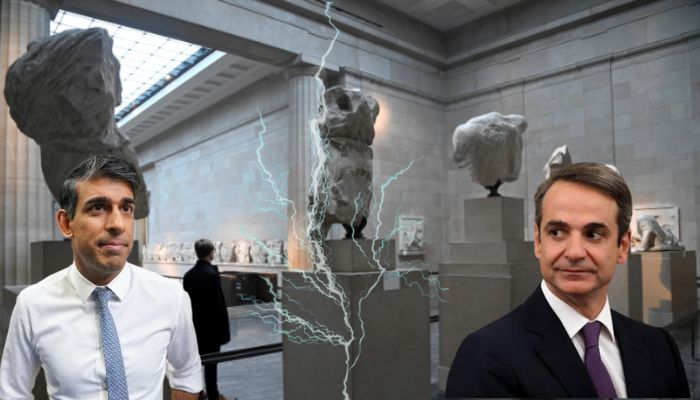
A diplomatic row is deepening between NATO allies United Kingdom and Greece over the possession or re-unification of the Parthenon Sculptures during the Greek Prime Minister’s visit to the UK. As per the scheduled visit, Greek Prime Minister Kyriakos Mitsotakis was slated to meet with UK PM Rishi Sunak on Tuesday afternoon (28th November).

However, Rishi Sunak cancelled his meeting at the eleventh hour after Mitsotakis raised the issue of the return of Parthenon sculptures to Athens while talking with the state-run British media house, BBC. 

The UK government believed that it had assurances from the Greek Prime Minister that he would not speak publicly about the Parthenon Sculptures on his UK visit, as reported by BBC. However, the Greek sources denied giving any such assurances to the UK side. 

They said discussions preparing for the meeting with the UK PM had been smooth until late afternoon on Monday. This happened long after Mitsotakis’s BBC interview with Laura Kuenssberg on Sunday (26th Sunday). In his BBC interview, the Greek Prime Minister said that he would push for the return of the Parthenon Marbles when he meets UK leader Rishi Sunak in Britain this week.

Official responses after the meeting got cancelled

On Monday evening, while speaking with reporters about the cancellation, Mitsotakis said that he was “deeply disappointed by the abrupt cancellation” of the meeting, which had been planned for Tuesday lunchtime. 

Taking a jibe at the UK government, he said, “Those who firmly believe in the correctness and justice of their positions are never hesitant to engage in constructive argumentation and debate.” 

Additionally, Greek government sources suggested that Mitsotakis was both “baffled” and “annoyed” after Rishi Sunak cancelled the meeting. 

Later on Tuesday morning (28th November), Greek government spokesperson Pavlos Marinakis told SKAI TV that “Britain’s attitude shows no respect for the prime minister and our country”, as reported by BBC.  

However, he hinted that the Greek government didn’t want to escalate the issue considering their good relations with the United Kingdom.

He added that although cancelling a meeting was not “common”, the Greek government did not want “to escalate the issue with a country with which we have good relations.”

Additionally, a former member of the advisory committee for the Greek Minister of Culture, Professor Irene Stamatoudi said that the row made “Rishi Sunak look no better than Lord Elgin”. The Greek official accused the (UK) diplomat of smuggling artifacts “to decorate his country house in Scotland”. 

Speaking with British media, she said that it was “not possible” for the Greek PM not to respond to questions about the Parthenon Sculptures.

Is the UK side acting ‘rude’?

On Tuesday (28th November), Speaking with BBC Breakfast, Transport Secretary Mark Harper said that it was a “matter of regret” that no meeting would take place between the two countries after Mitsotakis declined a secondary offer to meet Deputy Prime Minister Oliver Dowden instead. 

Responding to the query ‘whether the government’s treatment of the Greek leader was rude’, Harper said the Greeks had been offered a senior-level meeting but (the Greek side was) entitled to take their own view.

The chairperson of the advisory board of the Parthenon Project dedicated to returning the “Elgin Marbles” to Greece, Lord Vaizey told the Today programme that it was “odd” for the PM to cancel the meeting. 

The ex-culture minister said, “It is tied up to a certain extent in the traditional culture wars, where anyone who dares to say that British history wasn’t perfect is somehow unpatriotic. The trouble with that is that, from what I can gather, every opinion poll that surveys the British public says that they do think that the sculptures should be returned.”

The key Opposition party in the UK, Labour Party’s response over the issue

During his visit to the UK, Greek PM Mitsotakis met Labour leader Keir Starmer on Monday (27th November). UK’s Labour party tried to exploit the diplomatic row for political gains and called the ongoing development ‘pathetic’. 

However, it was caught in a fix after a Greek newspaper claimed that Labour was open to “a legal formula” for the return of the sculptures to Greece. Following the reports in Greek media, Labour distanced itself stating its position is that if the British Museum and the Greek government came to a loan agreement, a Labour government would not stand in the way. 

Meanwhile, the UK government’s spokesperson said that there were “no plans” to change the 1963 British Museum Act. The act prohibits the removal of objects from the institution’s collection. However, a loan could happen irrespective of the position the UK PM takes as it does not require a change in the law.

How Britain got the Parthenon temple sculptures from Athens

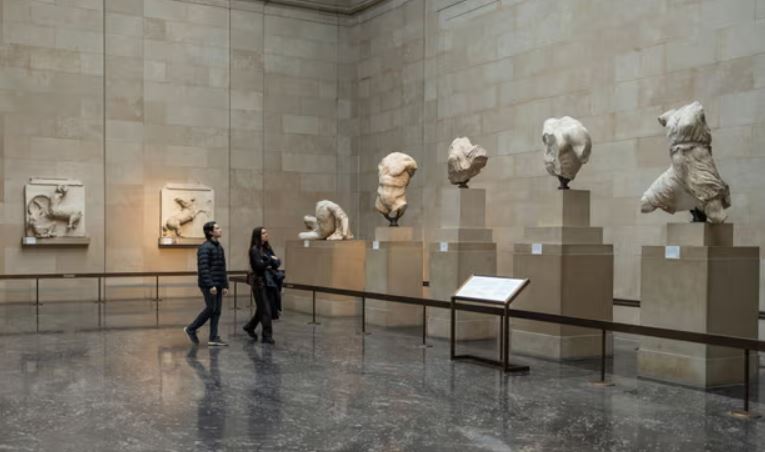
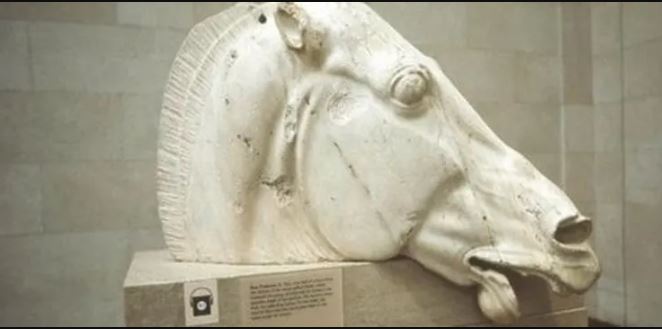
It is important to note that the sculptures were taken from the Parthenon temple (built 447-432 BC) at the Acropolis in Athens in the early 19th century by British diplomat Thomas Bruce who was the earl of Elgin. Elgin claimed that the sculptures were better off in Britain than the then-dilapidated Parthenon. As per British media, in 1801, he negotiated what he claimed was permission from the Ottoman Empire – which then controlled Athens. The so-called permission was to “remove” statues from the classical temple built by the Ancient Greeks. In doing so, it caused some damage to the sculptures as well. 

Notorious for its appropriation, the British side started referring to the Parthenon sculptures as “Elgin Marbles”. 

(Parthenon sculptures on display, Image Source – Reuters)

The sculptures include Friezes and pediment figures, about a half (some 75 metres) of the sculpted Frieze, and 17 life-sized marble figures. Reportedly, nearly half of the surviving sculptures are equally divided between London and Athens. Additionally, Fragments from the Parthenon alone ended up in around 10 European countries or were lost.

(Parthenon sculptures in ‘British museum’, Image Source – Daniel LEAL /France 24)

Since 1832, the Parthenon sculptures have been in the British Museum, barring a stint in Aldwych Tube station to prevent World War 2 damage. One sculpture was loaned to a Russian museum in 2014. Strikingly, three marble fragments of the Parthenon temple were returned to Greece earlier this year. They had been held by the Vatican for centuries. 

The issue of these Parthenon sculptures had been a long-standing issue between Greece and the UK as the former maintains that the Parthenon sculptures were “stolen”. 

(Athens’ artifacts on display in British museum, Image Source – BBC)

However, the latest row erupted when the Greek PM raised the issue while speaking with BBC. 

Speaking with Laura Kuenssberg the day before his meeting with UK PM Rishi Sunak which was cancelled, the Greek PM had called for the sculptures to be returned. 

(Video courtesy – BBC)

He said they were “essentially stolen”. He, however, called for a partnership with the British Museum so people could “appreciate” the works “in their original setting”, as reported by BBC.

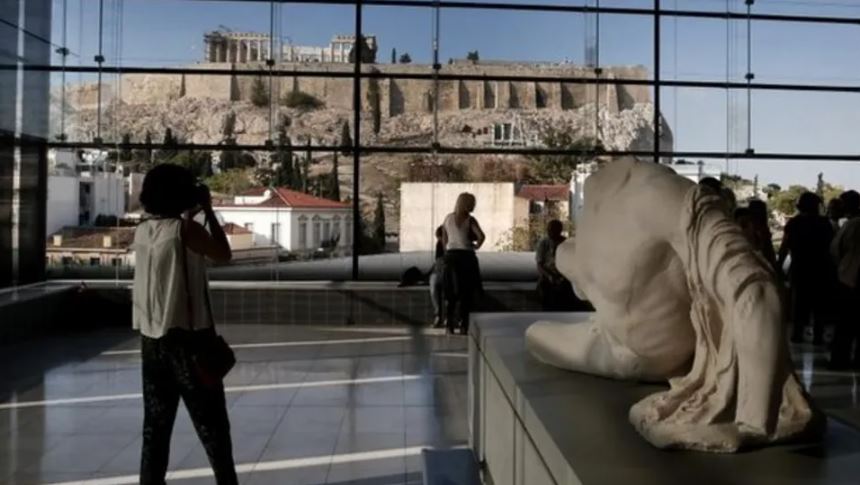
He said, “They do look better in the Acropolis Museum, a state-of-the-art museum that was built for that purpose.” 

Citing Mona Lisa, he noted, “It’s as if I told you that you would cut the Mona Lisa in half, and you will have half of it at the Louvre and half of it at the British Museum, do you think your viewers would appreciate the beauty of the painting in such a way? This is exactly what happened with the Parthenon sculptures”. 

However, his remarks didn’t go well with the UK government and Rishi Sunak cancelled the scheduled meeting with Greek PM Kyriakos Mitsotakis initiating the recent diplomatic row between the two nations. 

Bihar caste census and its aftermath: How RJD-JDU govt’s divisive politics is based on a sinister numbers game

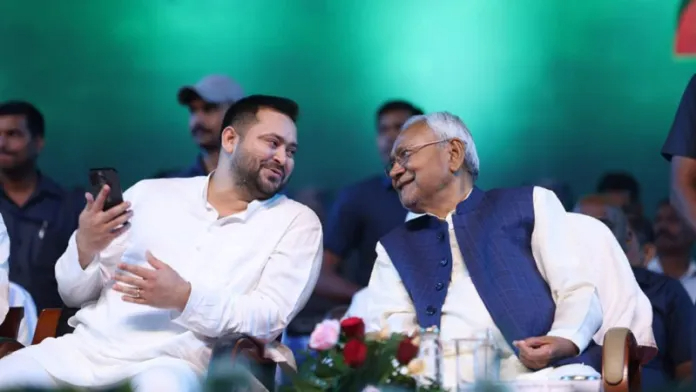
The RJD-JDU alliance government in Bihar on Tuesday (28th November) released the school holiday calendar for 2024 excluding several Hindu festivals like Makar Sankranti, Ram Navami, Janmashtami, Rakshabandhan, Shivaratri and more. At the same time, holidays for Islamic festivals have been increased and special provisions for Urdu language schools have been made wherein Friday will be the new Sunday.

This controversial move has come a day after Bihar Deputy Chief Minister Tejashwi Yadav, while addressing the extremely backward Nonia community mocked UP CM Yogi Adityanath’s Hindu attire, calling Hindu symbols and sentiments as “dikhawa” (show off).

The controversies clearly indicate how the Nitish Kumar-led Bihar government has used the caste census – released in October – to further its already casteist agenda. In an attempt to use the numbers to its advantage, appeasement politics is now at an all-time high and that too at the cost of the Hindu faith.

The contentious caste census data released

Caste-based census data was released in Bihar amid an atmosphere of celebration among the supporters of RJD and JDU, the two main ruling parties of Bihar. It was projected as if the state government had delivered some huge public welfare scheme.

According to the figures released by the Bihar government, 36.01% of the population in the state belongs to the extremely backward class. Whereas 27.12% population belongs to the backward class. The population of people belonging to unreserved or general category is stated to be 15.52%.

Keep in mind here that ‘Extremely Backward Class’ means the EBC community comprising 130 castes and sub-castes in Bihar, which has been on Nitish Kumar’s agenda for a long time. He had categorized it separately with the aim of mobilising non-Yadav backward castes.

It does not include OBC castes like Yadav and Kurmi. So now will two groups named EBC and OBC be formed and their mobilisation will be different? Only time will answer these questions but now joint fronts of different castes will start forming against the more influential castes in OBC as well. Such experiments have been done before, this may happen even faster now.

This way, if OBC and EBC are combined in Bihar, they comprise 63%. A total of 203 castes have been mentioned in this ‘Caste Census’ report. Of these, there are 196 castes which are getting reservations.

Till now, in the jobs of Bihar, EBC has got 18% reservation, SC has got 16%, BC has got 12% and EWS has got 10% reservation. Except for EWS, there is a 3% reservation for women in other reserved categories. Whereas 1% of seats are reserved for the ST community.

Another important point to note from the caste-based census of Bihar is that the Muslim community has also been divided into general, EBC and BC categories. For example, Syed, Shaikh and Pathan (Khan) have been kept in the general category.

Madaria, Nalband, Surjapuri and Malik Muslims have been placed in BC. There are about 31 Muslim castes in EBC. 10% of the total population of Muslims is EBC. Now it remains to be seen how these Muslims will benefit in the upcoming schemes ranging from reservation.

Bihar: What are the figures of caste-based census?

The Scheduled Caste (SC) population in Bihar is 19.65% and the Scheduled Tribe (ST) population is 01.68%. In this census, the total population of Bihar has been found to be 13.07 crores, out of which 6.41 crores are males.

Women are 30 lakh less than men. There are 953 females per 1000 males in the state. There are a total of 2.83 crore families, which are divided into 215 castes and sub-castes. If we look at the previous caste census conducted in 1971, the population of the upper castes has decreased.

Releasing the figures on behalf of the Bihar government, Development Commissioner Vivek Kumar Singh has said that these figures will be kept in mind in the future plans for ‘balanced development of all sections’.

It is also mentioned in these figures that 53.72% of people from other states are living temporarily in Bihar. There are some figures which the government has refused to publish, terming them confidential.

The big thing is that apart from the backward and extremely backward classes, the government has also included various groups of Muslims in the upper caste category.

While the population of Hindus in the state is 81.99%, the population of Muslims has reached 17.70%. The population of all other religions is not even 0.1%. Nothing has been said clearly regarding how the release of these data will help in policy-making, how the outline of the schemes will change and how the poor will benefit.

Let us also look at the population of castes in Bihar. Yadavs comprise 14.26%; Ravidas 5.2%; Koeri 4.2%; Brahmin 3.65%; Rajput 3.45%; Musahar 3.08%; Bhumihar 2.86%; Kurmi 2.80%; Mallah 2.60%; Bania 2.31% and Kayastha 0.60%.

The makers of the Constitution and the first cabinet of the country had decided not to conduct a caste-based census because it would create division in the society. Notably, this census has been conducted by those who cite the Constitution in every conversation.

Bihar’s ruling party RJD has also confirmed that this data includes general, backward and extremely backward classes of all religions. That is, not only Muslims but also Christians and Buddhists have been adjusted in General, BC and EBC.

The party said that 10.60% of the extremely backward class population are Muslims. It is not being made clear what was the criteria for assigning categories to these religions.

Caste census is a priority in a backward and poor state

It has definitely become clear that the data will be used politically in the time to come. The biggest thing is that the entire government machinery was put to work just for the sake of conducting a caste-based census in a backward state. Many officers were given different responsibilities. For this, 2.34 lakh census workers and 40,726 observers were appointed. If you are thinking that separate temporary recruitments were made for this, then you are wrong.

The responsibility was given to those teachers, whose job is to teach children and prepare a better future for the country and society. However, these teachers were assigned the work of asking people about their castes. District and sub-division level officers were given responsibilities. More than Rs 500 crore was spent on this. That too in a state that is at the bottom in terms of GST collection. Not only this, Bihar is the only state where GST collection is in negative in terms of growth.

Talking about the figures of GST collection for September 2023, it was Rs 1.62 lakh crore for the country. Most of the states saw a double-digit jump percentage compared to last year, while in Bihar it declined by -5%. This shows that the state is lagging behind in terms of development. Instead of working on this, the RJD-JDU coalition government gave priority to the caste census. The leaders of the state, who do not want development to take place, do not show any seriousness about development, now their priorities are also clearly visible.

The emergence of caste-based parties and casteist mentality

Now let’s talk about where this caste-based census mentality came from. In fact, it started when regional parties started forming in India on the basis of caste. RJD and SP – take these two parties. Both these parties, established in the nineties, made the Yadav caste their vote bank. Similarly, RLD, formed in the nineties, made the Jat community its vote bank. Today many such parties have been formed.

Take Bihar itself where Upendra Kushwaha has formed a new party several times to woo the Koeri voters. Mukesh Sahni takes a dig at the Nishad community by calling himself ‘Son of Mallah’. The big turning point in the politics of Nitish Kumar himself came when he reached ‘Kurmi Chetna Rally’.

Ram Vilas Paswan kept a large section of Paswan voters associated with his party LJP. If we talk about UP, while SVSP stakes claim on Rajbhar society, Apna Dal focuses on keeping Kurmi voters in its fold. It now has been divided into two parts.

Not to forget the BSP in UP, which made the Jatav community its main vote bank and later added other Dalits. Similarly, Sanjay Nishad keeps trying to improve the seafaring community through his ‘Nishad Party’. Dushyant Chautala’s JJP in Haryana also attracts Jat voters there.

Earlier, INLD founded by Devi Lal was considered to be the party of Jat voters in Haryana. In this way, there was a glut of caste-based parties in India and everyone started appeasing their respective castes.

Now since parties like RJD and JDU have progressed on the basis of caste, it is an impossible task to remove caste from their functioning. RJD enjoyed the cream of power by forming the Muslim+Yadav (MY) alliance for a long time. JDU continued doing politics through the ‘Luv-Kush’ (Kurmi-Koeri) pitch. In such a situation, they got a caste census conducted to understand and brainstorm their vote banks. Now they will play the game of appeasement accordingly and strengthen their vote bank.

Conspiracy of caste-based census to divide Hindus

Another reason for conducting a caste-based census is to divide Hindus. In the Modi wave, the air of casteism went away and in 2014 and 2019 it has been seen that people of all castes rose above caste and voted in the name of Narendra Modi. The same thing happened in Bihar, that’s why RJD-JDU lost in 2014 and RJD in 2019. These parties were looking for a way to deal with this and have used caste-based census as a weapon to divide Hindus.

It is not that there are no castes among Muslims, but the fight over caste in the Muslim community has not been the same as that within the Hindu community. Therefore, it is clear that a game of dividing Hindus has been played through caste census. The major castes of Muslims are Shaikh 3.82%, Ansari 3.54%, Surjapuri 1.87% and Duniya 1.43%. But, there is no possibility that Muslims will be divided on the basis of caste, especially in Bihar.

The question can also be asked that the state has been ruled by the same leaders for the last 33 years who are talking about caste census today, how did the state lag behind so much? Why were the castes left so far behind? What was the impact of ‘social justice’ in the last 33 years? 33 years is a long time.

If everything is not fine in this, then what is the guarantee that everything will be fine with the new manoeuvres of these ruling parties? Power has been in their hands for 3 and a half decades, do they have any positive results to show from what they have done so far?

If you see Rahul Gandhi’s tweet, everything becomes clear. He wrote that the population of ‘OBC + SC + ST’ in Bihar is 84%. He took special care that the population of Hindus should not be mentioned, nor should this word be used. Rahul Gandhi termed the pledge of Congress as ‘As many populations, as many rights’. Now many Muslims are asking that after their share in the population is 18%, why is no one talking about their share in resources and positions?

Politics of sowing poison in social media with the help of caste census

The leaders who are shouting ‘IT cell-IT cell’ for BJP should go on social media and see what IT cell is. As soon as the caste-based census data was made public, there was a barrage of tweets calling Nitish Kumar and Tejashwi Yadav as messiahs. Here let us look at some such handles that presented it as if a new ‘Silicon Valley’ has been created in Bihar, where lakhs of people have got jobs in big companies.

Alok Chikku, associated with RJD IT cell, started the trend with the hashtag ‘Jio Tejasvi’. He raised the question that despite such a small population, why are there upper castes everywhere? He announced that now ‘there will be social justice’, the classes that have been ruling for centuries have lost their senses.

However, Lalu Yadav and his supporters have also been saying that ‘social justice’ happened during his 15 years of tenure. Then was that a lie? Alok Chikku announced that everything would be snatched from the upper castes and distributed among the backward classes.

Similarly, see the tweets of Jackie Yadav, who calls himself a socialist, who counts the caste of the players after every match of the Indian cricket team. Describing these figures as historical, he enumerated its entire history. Giving the slogan ’15 vs 85′, he threatened that if you don’t give your rights then OBC will snatch them away.

He also gave a party to his friends. Also posted a tweet saying that the sales of Burnol have increased. He also complained about the presence of more people from the general category in the central government secretaries and judiciary.

Similarly, propaganda journalist turned RLD leader Prashant Kanojia, while talking about the removal of encroachment on resources and land, wrote that ‘war has been declared’. Another RJD activist Priyanshu Kushwaha called a special session of the Bihar government and demanded to increase the reservation limit. He gave the slogan ’15 is divided, 85 is our share’.

Casteist leader Dilip Mandal, while demanding immediate all-party consensus on increasing SC reservation, said in a threatening manner that neither any party will oppose it, nor will any court have the courage to get involved in it.

You can now see how the atmosphere for all this was created. RJD’s Manoj Jha, while reciting the poem ‘Thakur ka Kuan’ in Parliament, talked about killing the ‘Thakur within’. Chetan Anand of his own party opposed him. After this, a series of statements and reactions started.

RJD added fuel to the fire by calling Bhikhari Thakur and Karpoori Thakur as ‘real Thakur’. Caste census data was made public by creating an atmosphere of fighting between Brahmin vs Rajput.

Can the threats from the supporters of these parties be taken seriously? The question is – what do they mean by ‘every snatching’ or ‘removing control over resources’? Because, whatever society educated and rich people are in, they have resources.

Suppose, if someone is a golden person and he spent his entire life and bought land with his hard-earned money, will his land be snatched away in the name of ‘share’ and ‘removal of encroachment’? This will again be the Bihar of the nineties, where Naxalites used to openly commit massacres.


Uttarakhand tunnel rescue: Operation successful, all 41 trapped workers evacuated safely

0

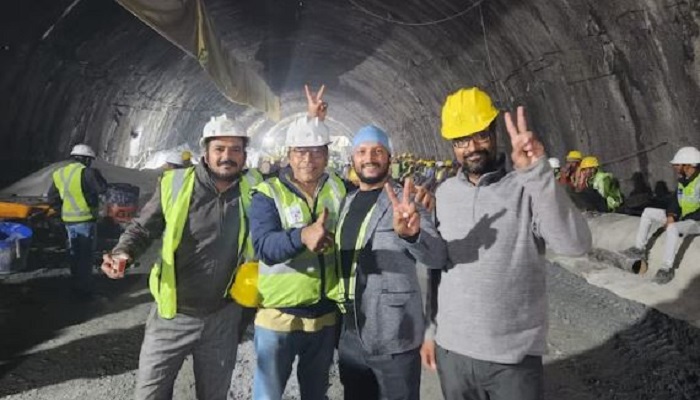
On the 17th day of the rescue operation, all the 41 trapped workers have been safely evacuated from the Silkyara tunnel. As per media reports, the workers were rescued from the tunnel, authorities at the spot said. Initially, there were reports that workers had started coming out of the tunnel, but it was later revealed that during mock drill, there had been a minor bend in some pipe which somewhat delayed their exit from the tunnel.

Moments before the successful evacuation, a team of health experts went inside the tunnel to check on the vital health parameters of the rescued workers. Additionally, Union Minister General VK Singh (Retd), former advisor of PMO Bhaskar Khulbe, and former Engineer-In-Chief and BRO DG Lieutenant General Harpal Singh (Retd) had also entered inside the tunnel to keep the morale of the trapped workers high and ensure that the rescue operation is in final leg. They had also brought 41 garlands to greet the rescued workers.

Earlier, the Uttarakhand Chief Minister delivered the much-awaited great news that all the 41 trapped workers would soon be safely evacuated. He noted that the work of laying pipes inside the tunnel to rescue workers has been completed and they could be evacuated anytime soon. 

He tweeted, “As a result of the immense grace of Baba Baukh Nag Ji, prayers of crores of countrymen and the tireless work of all the rescue teams engaged in the rescue operation, the work of laying pipes in the tunnel to take out the workers has been completed. Soon all the labor brothers will be taken out.”

The rescue operation had been ongoing since 12th November when the debris fell in the 60-metre stretch on the Silkyara side of the tunnel trapping 41 labourers inside the under-construction structure. To make the rescue operation a success, the officials had inserted pipes to provide essentials like food, water, medicine, and sufficient oxygen supply for the trapped workers. They had also sent communication devices and maintained regular communications with the trapped workers to keep their morale high. 

On a regular basis, their family members were allowed to talk with their trapped relative and communicate about the rescue efforts.

The operations saw a major breakthrough on the 16th day of the rescue mission hours after the rescue team had started rat hole mining. 

After many efforts and 25-tonne Auger machines repeatedly facing technical snags, the officials decided to deploy the rat hole mining technique. A team of 6 specialists reached the site to undertake the manual drilling work. They had to go inside the 800 mm pipe of the tunnel to remove the debris manually. The team included engineers from the Indian Army’s Madras Engineering Group as well as civilians.

In this, Rat-hole mining experts manually drilled through the remainder of a 10-12-metre stretch of debris and cleared it. 

Rat miners are specialists in digging and drilling manually in narrow passages, including tube mines, who mostly work in mines and have the experience of drilling for hours. The rat hole mining technique is generally used in coal mining, especially in regions that have difficult terrain.

In the final leg of the mission, the last pipe was pushed through and welded, before trapped workers were evacuated safely. 

During the last phase, a team of NDRF personnel could be seen at the entrance of the Slikyara tunnel while stretchers, ambulances, and mattresses were taken inside the tunnel, media reported. 

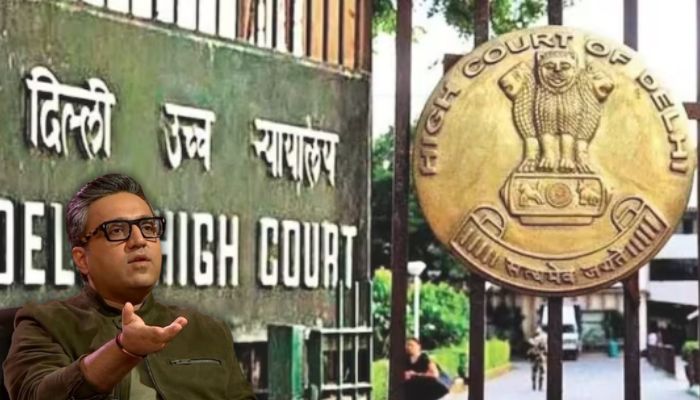
Ashneer Grover apologises in Delhi HC for defamatory posts against BharatPe; fined Rs 2 lakhs for violating an earlier court order 

0

On 28th November (Tuesday), BharatPe co-founder Ashneer Grover apologised before the Delhi High Court in connection with his social media posts against BharatPe. Appearing for Grover, Advocate Giriraj Subramanium told the High Court that Grover is tendering an apology. His counsel also gave an undertaking that he would not take any actions in violation of the Court’s orders. 

Subramanium also apprised the Court that Grover had taken down his tweets as well. Nonetheless, Justice Rekha Palli pulled him up stating that Grover’s conduct was ‘appalling’. Subsequently, the court also imposed a fine of ₹2 lakh on Ashneer Grover for violating an earlier court order.

Notably, in May 2023, the Delhi High Court passed an order in which it asked both Grover and BharatPe not to use ‘unparliamentary’ and ‘defamatory’ language against each other. 

However, BharatPe later submitted an application in its pending suit, highlighting that Grover had made some social media posts earlier this month in which he allegedly made ‘defamatory’ remarks against the company. It was submitted before the court that he was a habitual offender and had been violating the Court’s orders repeatedly.

BharatPe’s counsel, Senior Advocate Akhil Sibal argued that by the time he deleted his tweets, the posts had been picked up by the media and the damage was already done. 

After examining the application as well as the apology, Justice Palli observed that she was appalled to see Grover’s conduct. Resultantly, the High Court bound Grover to his undertaking and asked him to pay ₹2 lakh to the Delhi High Court Clerks Association.

During the conclusion of the hearing, Grover’s counsel said that there are nearly 15 proceedings pending between BharatPe and Grover. He urged the court to refer the court to mediation. However, opposing counsel Sibal rejected his suggestions.  

Meanwhile, on 16th November, Shark Tank India fame Ashneer Grover and his spouse Madhuri Jain were stopped at terminal 3 of the Indira Gandhi International Airport while they were travelling to New York. The action was taken based on a lookout circular (LOC) that the Delhi Police’s Economic Offenses Wing (EOW) issued against them earlier that week. An investigation is ongoing against the two for alleged fraud at BharatPe that had caused a loss of Rs 81 crore to the company.

Ashneer Grover and his wife were booked for fraud

In May this year, the Economic Offences Wing (EOW) of Delhi police registered a case against former BharatPe managing Director Ashneer Grover, his wife and others “for using company funds inappropriately based on various forged documents”. 

It was alleged that they had embezzled money and caused losses to Resilient Innovations Private Limited, the company that manages BharatPe, totalling Rs 81 crore.

The FIR had been registered under 20/406/408/409/467/468/471/120B sections of IPC.

Ashneer Grover sent an e-mail to the company board late on 28th February 2022, informing them about their resignation amid the ongoing investigation into the financial fraud at the company. 

Ashneer’s resignation had come a day after Ashneer Grover lost the arbitration in Singapore. He had filed the arbitration case against the fintech platform for launching a probe against him and almost a week after the firm sacked his wife, Madhuri Jain, who was the company’s head of controls, for alleged financial irregularities including creating bogus invoices and billing the company for personal beauty treatments and vacations overseas.