As the consecration ceremony of the Bhavya Ram Mandir in Ayodhya draws closer, videos insulting the temple and undermining the temple have started going viral on the internet. In one such video, former Pakistan cricket captain Javed Miandad is seen claiming that the new Ram Temple will turn Hindus into Muslims.
“Those Hindus visiting the Ram Mandir in Ayodhya will come out as Muslims. It is our firmly held belief that our faith (Islam) will shine its light on those who visit places that are connected to our roots. Modi may have done wrong by getting the Ram Mandir built in Ayodhya, but it will work as a blessing in disguise for us. I have full faith in Allah that this will be the place from where Muslims will once again rise,” Miandad says.
Former Captain of the Pakistan Cricket Team, Javed Miandad, claims all Hindus who visit the Bhavya Ram Mandir in Ayodhya will come out as Muslims pic.twitter.com/VtTY4TPyCs
Notably, Miandad released the video three years ago on August 8, 2020, three days after the Bhoomi Poojan of the historic Ram Mandir, which was performed by PM Modi. You can watch the entire video here:-
Strikingly, the video has gone viral on social media months ahead of the Pran Pratishtha ceremony planned at the newly constructed Ram Mandir in Ayodhya. According to the reports, the consecration (Pran Pratishtha) ceremony is expected to take place on January 22 next year.
The Ram Mandir construction committee chairperson Nripendra Mishra recently asserted that the construction of the ground floor of the three-story Ram Mandir in Ayodhya will be completed by the end of December this year.
In an interview with PTI, Mishra said that Prime Minister Narendra Modi is expected to take part in an event related to the “pran pratishtha” on any day between January 20 to 24 next year. However, he added that the Prime Minister’s Office has yet to communicate the final date.
According to the Chief Priest of Ram Mandir, Acharya Satyendra Das Ji Maharaj, the rituals will be held from January 15 to January 24. A letter was written to the PMO on their behalf, and a reply has also been received. Now, it has been decided that Prime Minister Modi will arrive in Ayodhya on the 22nd of January and will take part in the Pran Pratishtha ceremony. Prominent seers, eminent personalities, and scores of devotees have been invited to this consecration ceremony.
Pakistanis and ex-Pak cricketers resort to peddling conspiracy theories as India advances to World Cup 2023 finals
Being delusional is a hallmark of Pakistanis. Be it about their belief in the fictional supremacy of their official faith over others, their teetering economy being the best in the world or even their cricketing standards, Pakistanis often delude themselves into believing they are a cut above the rest in every department. These delusions, of late, have taken ominous proportions, notably after the exit of Pakistan from the ongoing World Cup 2023, especially among the former Pakistan players, who have resorted to peddling conspiracy theories and baseless speculations in their bid to undermine India’s performance and their team’s awful World Cup campaign.
In this context, old videos of Pakistani cricketers making bizarre claims are doing the rounds on the internet. Recently, a former Pakistan cricketer peddled conspiracy theories raising aspersions on the cricket ball being used in matches played by India. Two days ago, a prominent Pakistani cricket analyst and former cricketer went to the extent of sensing false play in the way Indian captain Rohit Sharma tossed the coin away from his body. There were also rumours among Pakistani social media that India had changed the pitch ahead of the semifinal against New Zealand, which was promptly rubbished by the ICC, the premier cricket governing body.
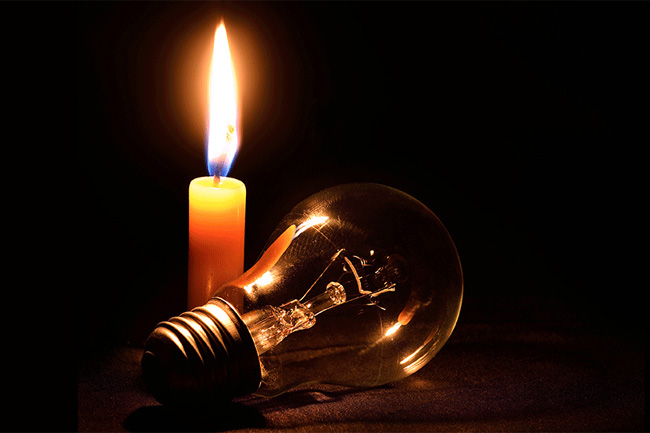
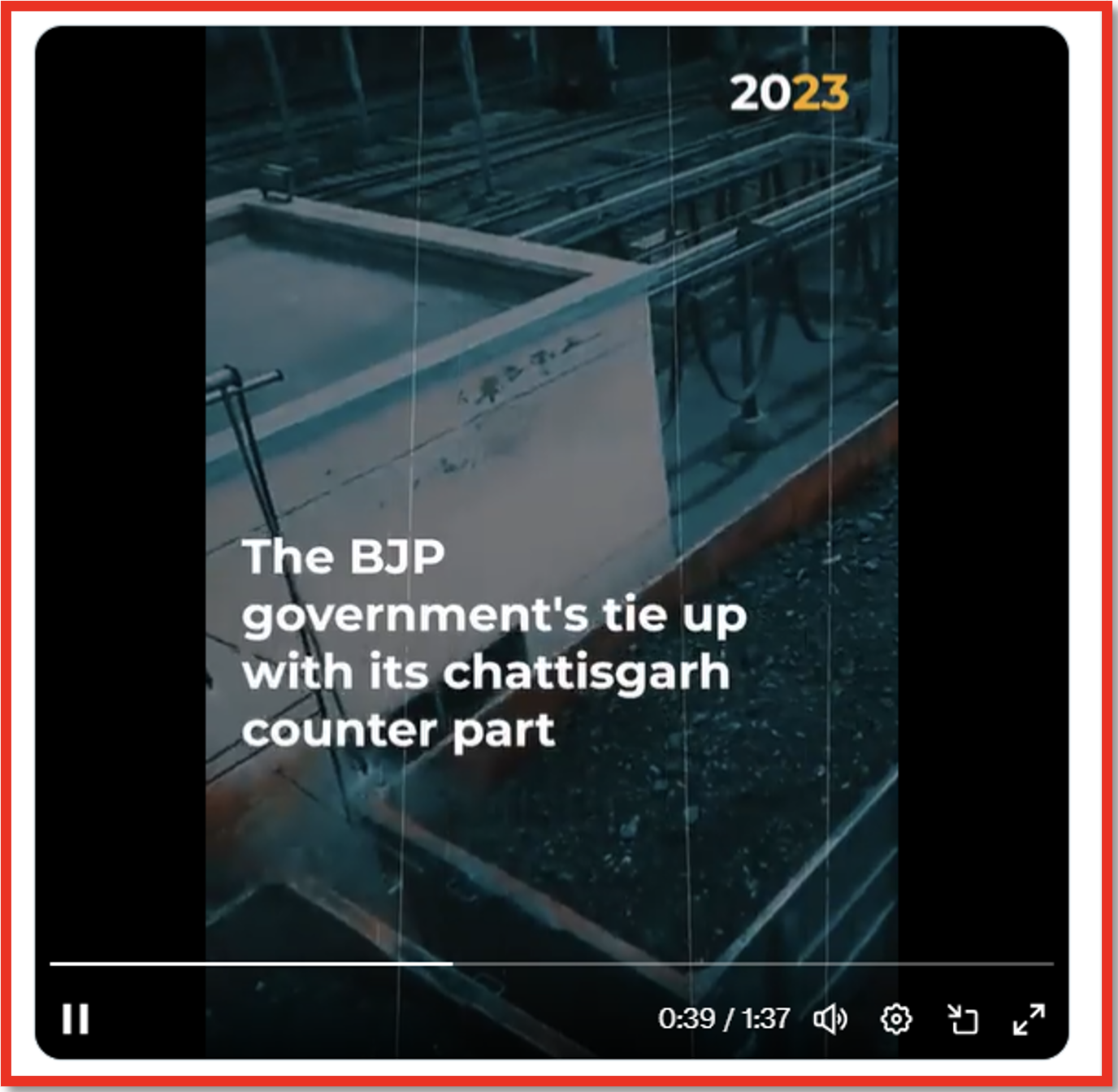
Ever since the Congress government came into power in Karnataka, we have been hearing news about power cuts making their way into the lives of residents of Karnataka. I dismissed this news as an exaggeration by the “godi media” that is sold out and unreliable and whatnot. Everything changed when the Chief Minister himself released a video blaming the BJP for the crisis that started after he became the CM.
In this video, he blames the BJP government in Karnataka and the BJP government in Chhattisgarh for not entering into the right deal, and therefore causing this severe crisis.
This made many citizens think – but there has been no BJP government in Chhattisgarh since 2018. So one wonders if he blaming the previous BJP government in Chhattisgarh for not working with the previous BJP government of Karnataka. But then a simultaneous BJP government was there in both states way back in 2008 to 2013 time only.
After watching this wonderful and thoughtful video, it became very clear that the electricity crisis in Karnataka was not a made-up story by the godi media but a real one that’s impacting the productivity of crores of citizens. A farmer was so angry, that he released a crocodile into the electricity office. We were told by a few Bangolereans how even on Diwali day they had to endure these power cuts.
We then saw stories on how the 6-lakh-strong MSME sector in Karnataka was complaining about the severe impact on their industries because of these power cuts. The Jeans factory workers of Bellary were driven to tears when they spoke about this crisis. This immediately reminded us of the many pompous statements that Rahul Gandhi made while in Bellary for the election campaign (and also during the BJ Yatra). There is a viral video of him changing the package details he wanted to offer to Bellary. He ended up promising them a 5000-crore worth package. They ended up perhaps losing 500 crores within 5 months of giving power to Rahul Gandhi’s Congress party.
Prolonged power cuts were supposed to be a thing of the past. Daily scheduled power cuts were also supposed to be a thing of the past. So, what happened? Well, Congress happened! Since the Karnataka CM made a reference to Chhattisgarh, it becomes very important to note how the current Congress government of Chhattisgarh is at loggerheads with the current Congress regime of Rajasthan with respect to the supply of coal. Rajasthan is facing a power crisis too, and both the veteran Congress leaders who are CMs, have not been able to resolve this amongst themselves. A cute video can easily be made on how Chhattisgarh is refusing to help Rajasthan (on similar lines to the Karnataka one).
The Congress has been in power in only a handful of states since 2014. And even in this handful of states that they were in power, they mismanaged the power situation. It sounds as if mismanaging of power is their USP! It’s one thing to be facing a crisis when many other states or the country as a whole are facing a crisis (like it happened for a brief while in mid-2022 or perhaps when there is a huge deficit in monsoon). But to be the only ones to face severe crises when others don’t, certainly points out to how you govern!
We all must recollect the long-scheduled power cuts in the pre-2014 days. News reports from that time even indicate how officials who used to say “If any village gets power for 1-2 hours during the day, it is by mistake”. Imagine when supplying power is actually classified as a mistake! Amidst the current power crisis in Karnataka, the Chief Minister was busy with another kind of power struggle – securing his position. He was busy holding meetings with his deputy CM and other cabinet colleagues to hold on to his chair. Like they say – if you give power to Congress, it will take away power from your homes.
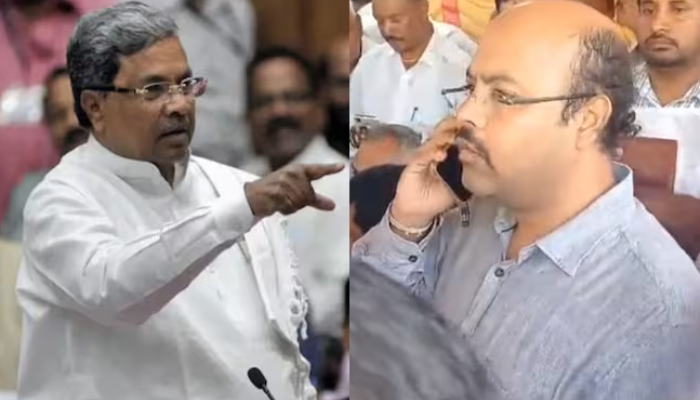
The son of the Karnataka chief minister Siddaramaiah and former Congress MLA Dr Yathindra Siddaramaiah is making waves online with a video that reportedly showed him discussing a certain list that opposition leaders like former state Chief Minister HD Kumaraswamy, are connecting to an alleged “cash for transfers” scam. The controversial development transpired on 16 November when he was observed giving specific instructions to a chief minister’s office (CMO) employee over the phone.
“Hello Appa (Father), Vivekananda! To where? No, I didn’t give that. Give it (phone) to Mahadeva. I had given only five,” stated Yathinder who then spoke to another person named Mahadeva and mentioned, “Mahadeva, why are you giving something? Who has given that? Nothing but whatever 4-5 I have given that alone should be done.”
The Janata Dal (Secular) leader Kumaraswamy demanded the resignation of the chief minister who categorically denied the accusations and claimed that he would step down from public office if it came to light that he partook in corruption while transferring officials.
The former took to Twitter and wrote, “This video clip is proof that the job posting for money ‘cash for posting’ scam has been going on in Karnataka uncontrollably, without standing up and shamelessly. Karnataka Congress Government recovery business has come to the fore.” He accused both father and son of “extorting the chief ministerial position” and referred to Yathindra as “Super Chief Minister of Karnataka.”
He highlighted, “The Karnataka collection king father and collection prince son have changed the Chief Minister’s Office into an extortion office. This has happened in the open, and one can guess what is happening behind closed doors.”
ಕಾಸಿಗಾಗಿ ಹುದ್ದೆ ಉರುಫ್ #CashForPosting ದಂಧೆ ಕರ್ನಾಟಕದಲ್ಲಿ ಅವ್ಯಾಹತವಾಗಿ, ಎಗ್ಗಿಲ್ಲದೆ, ಲಜ್ಜೆಗೆಟ್ಟು ನಡೆದಿದೆ ಎನ್ನುವುದಕ್ಕೆ ಈ ವಿಡಿಯೋ ತುಣುಕೇ ಸಾಕ್ಷಿ. @INCKarnataka ಸರಕಾರದ ವಸೂಲಿ ಬಿಸ್ನೆಸ್ ಹಾದಿಬೀದಿಗೆ ಬಂದಿದೆ. ನೈತಿಕತೆ, ಮೌಲ್ಯ, ಸಾಮಾಜಿಕ ನ್ಯಾಯದ ಡೋಂಗಿ ಹರಿಕಾರನ ಅಸಲಿ ಮುಖ ಅದೇ ಹಾದಿಬೀದಿಯಲ್ಲಿ ಮೂರು ಕಾಸಿಗೆ… pic.twitter.com/T1366ek2iS
— ಹೆಚ್.ಡಿ.ಕುಮಾರಸ್ವಾಮಿ | H.D.Kumaraswamy (@hd_kumaraswamy) November 16, 2023
Kumaraswamy claimed Yathindra was speaking to R Mahadeva, a sub-registrar at Ganganagar in Bengaluru, who has been appointed the CM’s Officer on Special Duty. He remarked, “Who is that powerful Assamese who was so influential that the Chief Minister himself gave him a phone? Who is that person called Mahadeva? I had said this in a media conference. 30 lakhs each for each transfer. I told him that he was a growing customer.”
He questioned, “Now tell me Siddaramaiah for what percentage did you and your son sell the positions? How much of that for you? How much for your son?” He asserted that the people of the country would decide the merit behind the footage and asked if the Congress veteran and no dignity. He pointed out, “Pay the price and resign. All that is left for you is to vacate the office of CM. Immediately resign as chief minister. This is my request.”
The Bharatiya Janata Party unit of Karnata also attacked the Congress party and dubbed Yathindra as the “shadow chief minister.” BJP called for an inquiry into the clip and remarked, “CM Siddaramaiah’s son Yathindra Siddaramaiah’s interference is going on everywhere in the state Congress government. In this way, the system has been witnessed in front of our eyes. Legal action should be taken regarding this. The viral video should be investigated and Siddaramaiah should resign as CM.”
ರಾಜ್ಯ ಕಾಂಗ್ರೆಸ್ ಸರ್ಕಾರದಲ್ಲಿ ಎಲ್ಲ ಕಡೆಯೂ ಸಿಎಂ ಸಿದ್ದರಾಮಯ್ಯ ಪುತ್ರ ಯತೀಂದ್ರ ಸಿದ್ದರಾಮಯ್ಯ ಅವರ ಹಸ್ತಕ್ಷೇಪ ನಡೆಯುತ್ತಿದೆ. ಈ ರೀತಿ ವ್ಯವಸ್ಥೆಗೆ ಕಣ್ಣ ಮುಂದೆಯೇ ಸಾಕ್ಷಿ ಸಿಕ್ಕಿದೆ. ಇದರ ಬಗ್ಗೆ ಕಾನೂನಿನ ಕ್ರಮ ಆಗಬೇಕು. ವೈರಲ್ ಆದ ವಿಡಿಯೋ ಬಗ್ಗೆ ತನಿಖೆಯಾಗಬೇಕು, ಸಿಎಂ ಸ್ಥಾನಕ್ಕೆ ಸಿದ್ದರಾಮಯ್ಯ ರಾಜೀನಾಮೆ ಕೊಡಬೇಕು.#ShadowCMpic.twitter.com/2WnKehJIad
Meanwhile, the chief minister shrugged off the criticism and argued that the topic of the phone call was the establishment of government schools funded by corporate social responsibility (CSR) initiatives. “The list mentioned in the video is a list of five schools under the Varuna constituency limits (in Mysuru) that need repair. The BEO sent a list to my joint secretary. We discussed in public repairing these schools under the CSR funds.”
He charged, “Unfortunately, former Chief Minister H.D. Kumaraswamy, who was involved in rampant corruption during his tenure, thinks all are like him. His pessimistic attitude does not allow him to think beyond corruption. His insecurity in politics often forces him to fabricate fake stories to paint a negative picture of his political opponents. The same has happened with respect to the recent public phone conversation between me and my son about the development of schools in the Varuna constituency.”
Unfortunately, former Chief Minister H.D. Kumaraswamy, who was involved in rampant corruption during his tenure, thinks all are like him. His pessimistic attitude does not allow him to think beyond corruption. His insecurity in politics often forces him to fabricate fake stories…
The Congress stalwart defended his son and argued, “Varuna Constituency Ashraya Committee Chairman and KDP (Karnataka Development Programme) member Dr Yatindra has been tirelessly working for the development of the region, including improving government schools using CSR funds. Yathindra was discussing the list of beneficiary schools for development. Kumaraswamy has twisted this phone conversation, which happened in front of the public, to falsely attribute it to corruption in transfers.”
The discussion, according to Deputy Chief Minister DK Shivakumar, was about school development using corporate social responsibility (CSR) monies. According to him, Yathindra who is the head of Ashraya Samiti and a member of the Karnataka Development Programme was discussing how the cash would be used in the schools he had selected. Ashraya is an impoverished person’s housing program.
In a significant development in the rescue operations in the collapsed tunnel in Uttarkashi on Thursday, a state-of-the-art performance auger drilling machine weighing 24 tonnes was deployed late at night. The machine, capable of cutting through the tunnel at a speed of 5 metres per hour, is expected to expedite the mission to save 40 workers stranded inside the under-construction tunnel for over 100 hours in Uttarakhand’s Uttarkashi district.
Uttarkashi tunnel rescue: A heavy-duty drilling machine bored through 12 metres of rubble of the collapsed tunnel on the Char Dham route in Uttarakhand on Thursday, raising hopes for the rescue of 40 workers trapped inside for over four days.
According to on-site officials, this operation is anticipated to take an additional 2 to 3 days to complete. As the rescue efforts intensify, it is crucial to understand the details of the situation in the Uttarkashi tunnel, the complexities involved in such operations, the challenges faced, and to reflect on past instances where Indian rescue forces successfully saved individuals from similar calamities.
What happened in the Uttarkashi Tunnel
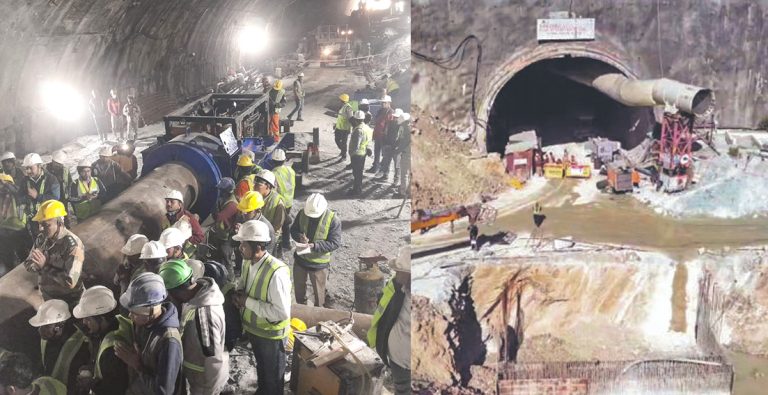
On the morning of 12th November 2023, around 5:30 AM, a devastating event transpired in the Himalayan region. A section of a tunnel under construction on the Yamunotri National Highway in Uttarkashi district, Uttarakhand, India, yielded to the formidable forces of nature, resulting in a substantial collapse of debris. As the roof of the under-construction tunnel collapsed, the debris blocked the tunnel and trapped a minimum of 40 workers within the tunnel, their lives now teetering on the brink.
#WATCH | Uttarakhand: A part of the tunnel under construction from Silkyara to Dandalgaon in Uttarkashi, collapsed. DM and SP of Uttarkashi district are present at the spot. SDRF, and Police Revenue teams are also present at the spot for relief work. Rescue operations underway. pic.twitter.com/hxrGqxWrsO
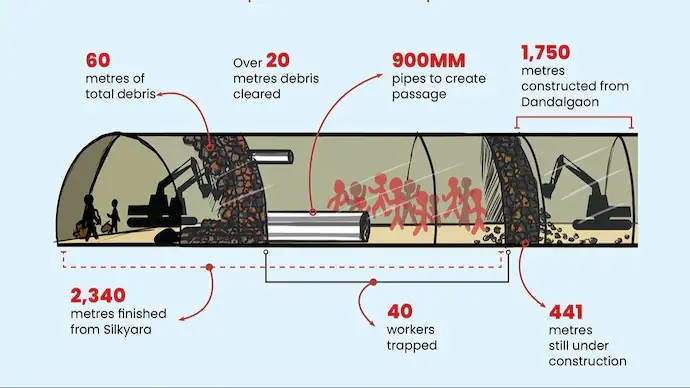
Designed as an integral component of the ambitious Char Dham all-weather road project, the tunnel aimed to establish uninterrupted connectivity to four sacred Hindu pilgrimage sites nestled in the Himalayas. Once finished, it is expected to cut down the distance by 26 km. Unfortunately, this noble initiative was overshadowed by tragedy as the 4.5-kilometre tunnel, at around 200 meters from its entrance, succumbed to the relentless pressures of challenging geological conditions, leading to its collapse.
Linking Silkyara to Dandalgaon, the tunnel suffered a rupture approximately 200 meters from its starting point on the Silkyara side of Brahmakhal-Polgaon. Fortunately, there were no casualties from the incident, but the workers working inside the tunnel were trapped. According to the officials of HIDCL, which is looking after the construction work of the tunnel, about 36 people are trapped in the tunnel.
Providing firsthand information to news agencies, a loader operator from the initial rescue team reported, “Mucking work is in progress, utilizing loaders and excavators. About 30-35 meters of the tunnel has collapsed. The incident occurred around 5:30 am. We are aware of approximately 40-45 people being trapped, but reassuringly, everyone is safe.” This marked the initial revelation of the gravity of this perilous incident to the nation.
Immediate kickstart of the rescue operations
The collapse news reverberated through the region, triggering an urgent response from authorities. Swiftly, rescue operations kicked into action, with teams from the National Disaster Response Force (NDRF), the State Disaster Response Force (SDRF), the National Highways and Infrastructure Development Corporation (NHIDCL) and the police converging at the site. The challenge ahead was formidable: extracting the trapped workers from the intricate maze of rubble and darkness within the collapsed tunnel.
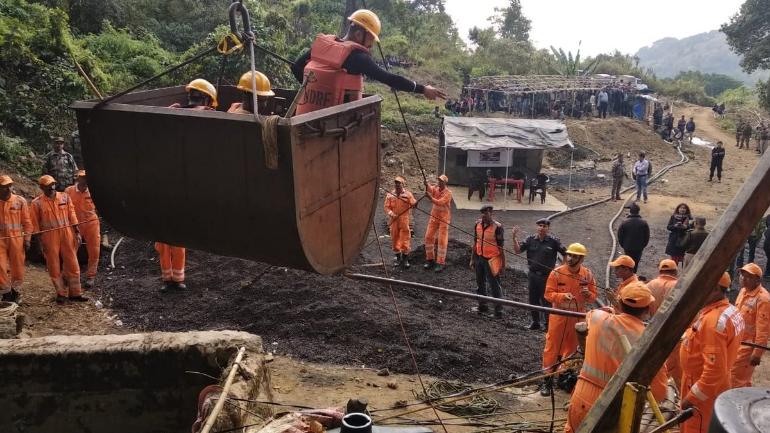
A representational image of the Uttarkashi Tunnel Collapse Rescue Operation. Image Source: India Today
Right from the start, rescue endeavours encountered substantial challenges. The precarious terrain, compounded by the persistent threat of additional collapses, posed a continuous risk, potentially impeding advancements and jeopardizing the safety of both rescuers and trapped workers. To mitigate these obstacles, heavy machinery was set in motion to clear the debris, to carve a passage for the rescue teams to access the trapped workers. The ongoing efforts continue. Around 20 meters of the 70-meter-thick debris is removed.
After the initial removal of heavy debris, the rescue operations reached the third day on 14th November 2023. The rescue teams initiated efforts to create a passage by installing a 900 mm pipe through the debris inside the tunnel to assist the trapped workers in coming out. Trucks loaded with pipe and drilling machines reached the tunnel site. A platform was prepared for the machines to operate horizontally, pushing the pipe through the debris to evacuate the workers. The 900 mm pipe is expected to prove wide enough for the workers to pass through.
Before starting drilling to rescue the workers, small pipes were inserted through the debris to supply air, water and food to the trapped workers. These pipes are working as lifelines for the workers.
However, the auger drilling machines being used were found not effective enough to drill through the rocky debris quickly. As a result, a more powerful state-of-the-art ‘American Auger’ drilling machine has been deployed at the site to drill the saviour hole. The 25-ton high-performance drilling machine was airlifted from New Delhi by Indian Airforce’s C1-30 Hercules transport aircraft to the Chinyalisaur airstrip, from where it was transported to the tunnel by road on Wednesday afternoon. The machine was then assembled at the site, and it started drilling on Thursday morning.
Explaining the challenges faced by the rescue team, Anshu Manish Khalkho, director (A&F) at NHIDCL, said, “The nature of the rocks here is quite fragile, posing a significant challenge to the operation.”
The newly brought machine can drill at the rate of 5-6 metres per hour, which means it can reach the trapped workers in 10-12 hours if run continuously. However, due to the nature of the location and obstacles within the debris, it can’t be run non-stop. A separate platform inside the tunnel has been prepared to accommodate the high-performance auger machine.
As per the latest reports, over 25 metres have been drilled through the debris blocking the tunnel by the advanced auger drilling machine, and steel pipes have been inserted in the hole. Uttarkashi SP Arpan Yaduvanshi said that four pipes, each with a diameter of 900 mm and a length of 6 meters, have been inserted and the fifth one was being welded. He said, “The American augur machine is a highly advanced machine. Its work is going on in full swing. As per the latest update, four pipes have been inserted and the welding of a fifth one is underway. We can say that the auger machine is going well. If there are no hindrances by the debris, we will be able to make the tunnel and rescue them at the earliest”.
#WATCH | Uttarkashi (Uttarakhand) tunnel incident | Uttarkashi SP Arpan Yaduvanshi says, "American augur machine is a highly advanced machine. Its work is going on in full swing. As per the latest update, four pipes have been inserted and the welding of a fifth one is underway.… pic.twitter.com/Yj8WeZGFlE
He said that as soon as the hole is drilled and steel pipes are inserted, the trapped workers will be rescued immediately. Further 30 to 40 meters needed to be drilled to reach the workers. The auger machine was working at its full capacity so the workers could be rescued at the earliest, officials working at the site said.
The machine had stopped at around 3 AM after it hit a metallic object. After a halt of a few hours, the matching started working in the morning. As per officials, there could be a JCB machine or other similar earth-moving equipment of large size under the debris. This is why it is taking so long to dig through it and make a way for a safe escape.
The officials added that another high-performance drilling machine will be airlifted from Indore, and it will reach by tomorrow morning. The second machine is being brought as a standby.
As almost half the distance has been already drilled, it is expected that the rescue operation will be completed by tonight or Saturday morning. As per officials, the workers may come out as early as midnight, if there are no obstacles.
Tunnel Project Director Anshu Manih Khalkho said that the distance to be drilled can be less, as the distance of the debris only has been estimated using the description of the location of the workers provided by them. He said that as the auger machine runs on diesel, ventilation measures are being taken to remove the toxic exhaust gases. He added that as the machine causes vibration, they have to be careful in drilling so that it does not cause further damage.
Uttarakhand’s chief minister Pushkar Singh Dhami said, “I have been told that the new drilling machine has already penetrated five to seven meters through the debris. We hope it would soon reach the trapped workers, drilling at the rate of five to 10 meters every hour.”
A Timeline of Rescue Efforts: A Chronicle of Resilience
Spanning several days, the rescue operation has been an unwavering quest for survival. Here’s a timeline highlighting key events:
12th November: Commencing at 5:30 AM IST, rescue operations kicked off, navigating challenging terrain and the constant threat of further collapses.
13th November: Intensified efforts utilised heavy machinery and specialised equipment to clear debris and locate survivors.
14th November: A ray of hope emerged as rescuers employed a specialised machine to insert large-diameter mild steel pipes into the rubble, to create an escape path for trapped workers.
Auger Machine brought in action Image Source: India Today
15th November: Tension heightened as a stampede occurred during rescue operations, caused by falling debris, resulting in minor injuries to two workers. Due to slow progress in drilling, a High-performance American Auger drilling machine was airlifted by the Indian Air Force and it was deployed to accelerate the digging task.
16th November: Drilling by the newly brought machine continued, amid protests by locals to expedite the rescue operations. Minister of State for Highways Development General VK Singh visited the accident site.
17th November: Around 25 meters were drilled by 6 AM in the morning and four 900 mm pipes were inserted. Officials said drilling is going on fast and smoothly using the high-performance drilling machine, and will be completed soon. Throughout, special efforts are underway to provide sustenance to the stranded workers inside the tunnel. Continuous contact ensures their safety is monitored diligently.
Technologies involved in the Uttarkashi Tunnel Collapse Rescue Operations
The rescue efforts following the Uttarkashi tunnel collapse on 12th November have employed a range of advanced technologies to locate, communicate with, and extract the trapped workers. These technologies are playing a crucial role in saving lives.
Thermal imaging cameras are used to detect the heat signatures of the trapped workers, allowing rescuers to identify their location even in the dark and debris-filled tunnel. A team of trained sniffer dogs will also be there in the last phase of the rescue operation.
Steel pipes are inserted into the tunnel to provide a lifeline to the trapped workers. These pipes allow for the delivery of food, water, and oxygen, ensuring that the workers can sustain themselves until they are rescued.
Communication devices, such as two-way radios, are used to establish contact with the trapped workers, allowing rescuers to assess their condition, provide reassurance, and gather information about their location.
Heavy machinery, including cranes and excavators, are employed to clear debris and create a stable working area for rescuers. These machines are essential in removing large chunks of debris and facilitating the rescue operation.
As mentioned above, a high-performance American Auger drilling machine has been used to drill a rescue hole, after the existing drilling machines were found ineffective. After the machine was airlifted by AIF transport plane on Wednesday, it was assembled at the site, and it started working on Thursday morning.
900 mm steel pipes are being inserted into the drilled hole, to prevent it from further collapsing. The pipes are 6 meters long, and after one piece is inserted, another piece is welded to it. While the pipe is being welded, the drilling machine gets time to cool down. After the rescue path is drilled and the pipes are welded and inserted, a trolley will be installed inside it, which will be used to bring out the trapped workers.
The combination of these advanced technologies, coupled with the unwavering dedication of the rescue teams, is playing a pivotal role in the rescue of the trapped workers. This incident highlights the importance of investing in cutting-edge technologies and training personnel in their use to respond to such emergencies effectively.
Experts from Norway and Thailand helping the rescue teams
As per reports, advice from experts from Norway and Thailand is taken into prime consideration during the ongoing rescue operations. Especially, inputs from Thai experts are especially crucial because similar incidents had taken place in Thailand twice in the past. In one such incident, 12 young boys and their football coach trapped in a cave were rescued after 15 days. However, Tunnel Project Director Anshu Manih Khalkho said that no international agency has been called to the project site.
Impact of the Uttarkashi Tunnel Collapse incident on Char Dham All-Weather Road Project
The collapse of the Uttarkashi tunnel has cast doubt on the Char Dham all-weather road project, prompting apprehensions regarding the safety and stability of infrastructure development in the rugged mountainous terrain. Critics are now scrutinising the project’s environmental implications and its susceptibility to landslides and avalanches.
This underscores the urgency for a thorough risk assessment and a robust mitigation strategy. As we march uphill in the Devbhoomi, the complexities involved in developing the infrastructure become a yet bigger challenge. Landslide incidents in Joshimath earlier in 2023 therefore appear like an alarm in hindsight.
Meghalaya Coal Mine Tragedy
13th December 2018, marked a tragic event in Meghalaya, India, as an illicit coal mine in Ksan village became flooded, leaving 15 miners trapped inside. Meghalaya has a notorious history of unauthorized coal mining, frequently employing dangerous “rat-hole” techniques. These mines, dug vertically into the ground at depths of hundreds of feet, pose significant hazards. Miners, often operating with minimal safety measures, are consistently exposed to risks such as collapse, gas poisoning, and flooding.
Rescue operation during the Meghalaya Coal Mine Tragedy. Image Source: India Today
On that fateful December day, the miners were engaged in activities within a rat-hole mine when, inadvertently, they breached into a neighbouring mine filled with water from the nearby Lytein river. The water swiftly inundated their mine, submerging it within minutes. While five miners successfully escaped, the remaining 15 found themselves trapped inside.
Despite exhaustive rescue endeavours, the operation faced challenges due to the mine’s depth, unstable terrain, and ongoing water influx. After two months of unwavering search efforts, only two bodies were discovered, leading to the presumptive conclusion that the remaining 13 miners had lost their lives.
Tham Luang Cave Rescue
In June 2018, the world witnessed with astonishment as a group of 12 boys and their soccer coach became ensnared inside a waterlogged cave in Thailand. Enduring 18 perilous days, they remained stranded, their destiny hanging in the balance. Yet, through the steadfast endeavours of international rescue teams, all 13 individuals were ultimately rescued.
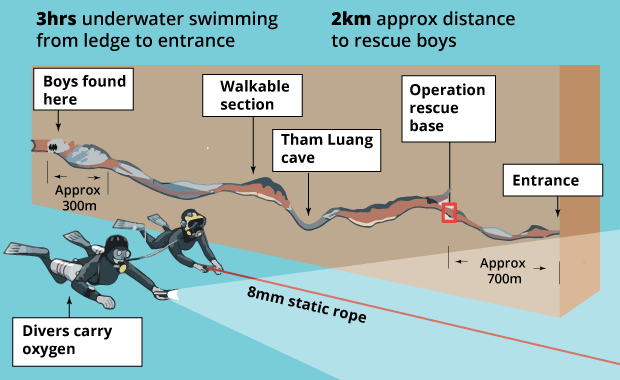
Thailand rescue operation concept diagram. Image Source: The Irish Times
On June 23, 2018, the Wild Boar football team, led by their coach Ekkarat “Eak” Saen, embarked on an exploration of Tham Luang Nang Non, a cave system in Chiang Rai Province, Thailand. Upon deciding to return to the cave entrance, heavy rains flooded the cave, trapping them deep inside. The news of their predicament spread rapidly, triggering a massive search and rescue operation that involved over 10,000 people, including cave diving experts, military personnel, and global volunteers.
The rescue operation was marked by numerous challenges. The cave’s length, darkness, and flooded conditions, along with narrow passages, posed difficulties for divers. The water level fluctuations added an unpredictable element. After meticulous planning, the rescue team formulated a strategy to extract each boy individually. Accompanied by two experienced divers, the boys navigated through the submerged cave passages. The rescue commenced on July 8, 2018, and over the subsequent five days, all 12 boys and their coach were successfully rescued and brought to safety.
Conclusion
In conclusion, the Uttarkashi Tunnel Collapse stands as a stark reminder of the formidable challenges faced in developing infrastructure in the Himalayan region. The deployment of advanced technologies and the collaborative efforts of both domestic and international rescue teams showcase resilience and determination in the face of adversity. The incident has sparked debates about the safety of such ambitious projects, emphasizing the critical need for meticulous risk assessments and mitigation strategies.
As the rescue operations continue, drawing insights from past incidents like the Tham Luang Cave Rescue, the focus remains on leveraging expertise and technology to navigate the complexities of mountainous terrains and ensure the safety of those affected. The Uttarkashi incident serves as a sombre reflection on the fragility of human endeavours amidst the unpredictable forces of nature.
Violence has been reported in some parts of Madhya Pradesh where voting for 230 Assembly seats is currently underway.
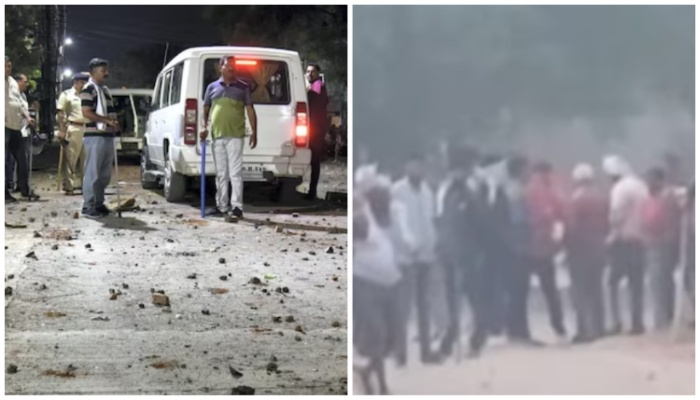
According to media reports, incidents of stone pelting and firing have taken place outside two polling booths of the Dimani Assembly constituency at Mirghan in the Morena district of Madhya Pradesh.
As per initial reports, clashes broke out between two groups of people after an alleged gunfire. One person who sustained injuries in the incident was shifted to a hospital for treatment.
“We haven’t been able to confirm reports of firing. There were incidents of stone-pelting and clashes between two groups of people. The police reached the spot and dispersed the crowd,” a senior police official told the media.
Dimani is a key Assembly constituency in the state. The BJP has fielded Union Minister Narendra Singh Tomar from the seat.
BJP candidate injured in an incident of stone pelting in Bhind, Madhya Pradesh
Another incident of violence was reported in the Manhad village of Mehgaon assembly constituency of Bhind. BJP candidate Rakesh Shukla sustained injuries after stones were pelted outside a polling station in the area.
Reportedly, some people threw stones at Shukla, one of which hit his leg. Seeing the attack, Rakesh Shukla’s security personnel fired two shots in the air, rescued Shukla safely, and returned from the spot.
Congress and BJP workers clash in Indore, Madhya Pradesh
Similarly, on Thursday night, a clash reportedly broke out between workers of the Congress and BJP in Indore’s Rau Assembly constituency. According to the police, the scuffle broke out between supporters of Congress candidate Jitu Patwari and BJP candidate Madhu Verma.
The police had to use force to disperse the crowd, it said.
Meanwhile, polling began for all 230 Assembly seats in Madhya Pradesh on Friday, November 17 at 7 am where 2,533 candidates, including state Chief Minister Shivraj Singh Chouhan and his predecessor Kamal Nath, are in the fray. In Madhya Pradesh, a voter turnout of almost 28% was recorded until 11 am, as per the Election Commission of India. The counting of votes in the state will take place on December 3.
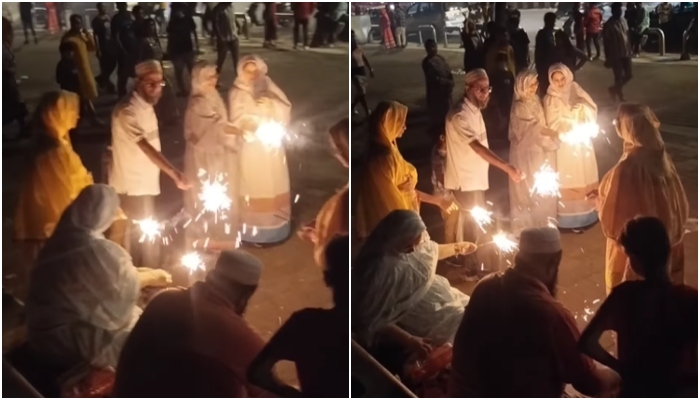
In a dreadful sequence of events, a Bohra Muslim family from the city of Mumbai, Maharashtra was mocked by Islamists on social media for celebrating Diwali and bursting firecrackers on the occasion of a Hindu festival. The video of the family was posted by one of the social media users who identified himself as Salman Khan on Instagram. He used an abusive emoji for the family and said that Muslim family celebrating Diwali is wrong.
“Muslim family Diwali manate huye. Wrong (Muslim family celebrating Diwali is wrong),” he wrote on Instagram. The video has so far been viewed by 2.5 million people and has garnered more than 1 lakh likes. However, the Islamists below the video made communal and threatening comments against the Bohra family indicating that they should be punished severely to death for celebrating a Hindu festival.
OpIndia could not independently verify if the video was recent or from previous years, however, the video exposed the hate harboured by Islamists as they started abusing not only the Muslim family but also Hindus.
The Islamist users spread hate messages against the Hindu community and also mocked the Muslim family for celebrating a Hindu festival. The video is believed to have been shot at the Marine Drive region of Maharashtra’s Mumbai which is one of the most crowded places of the city. One of the users in the comment section said that “Allah must punish these Muslims who ‘disrespect’ Islam instead of punishing ‘innocents’ in Gaza”. The user clearly indicated that the Family must be punished to death for celebrating a Hindu festival.
Screenshot was taken from the comment section of the post
Further, while many of the users lauded the family for celebrating and respecting the Hindu tradition and culture, several other Islamists mocked the Muslims for ‘disrespecting’ Islam. The Islamists refused to call the Bohri Muslims and termed them ‘Kafirs’ instead.
“Muslims in Palestine are being killed and here these people are celebrating Diwali with kafirs,” one of the users was quoted as saying. Meanwhile, the other one said, “Brother these are Bohras, not Muslims.”
One of the Islamist users meanwhile indicated that Muslims should not celebrate Hindu festivals when Hindus don’t celebrate Muslim festivals. “Do they celebrate Bakri Eid? Then why do we celebrate Hindu festivals? If this is the case then Hindus should also celebrate Bakri Eid,” the user was quoted as saying.
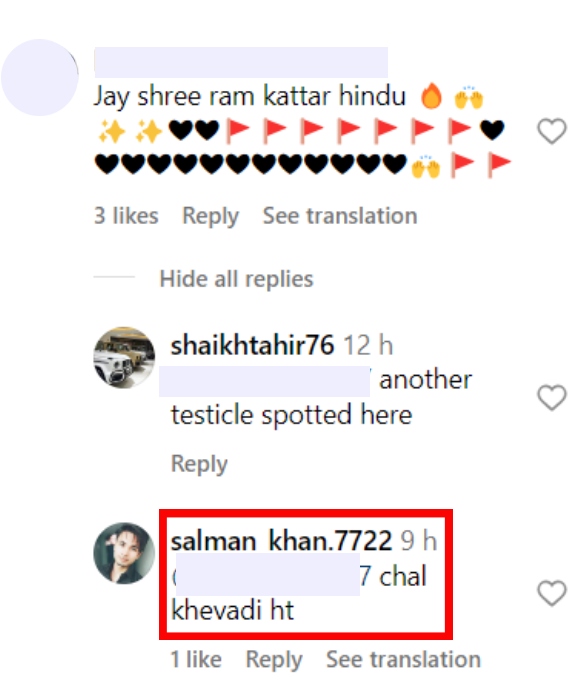
Not only this, the host of the said Instagram post also slammed and abused Hindus for lauding the Muslim family for celebrating the Hindu festival. “Go, get lost,” Khan said as one of the female Hindu users posted ‘Jai Shree Ram’ on the video.
Screenshot from the comment section of the video
Meanwhile, many of the users said that the family celebrating Diwali was Bohri and that it did not belong to the Muslim community. It is worth noting here that the Bohra community people are Muslims and that they form part of the Shia Islam sect. They believe in Allah and follow the tenets of Islam.
According to community members, there are approximately 1 million Dawoodi Bohras worldwide. The community’s leader has been based in India for over 400 years, including the current and 53rd leader, His Holiness Dr Syedna Mufaddal Saifuddin.
Promoting the offering of Namaz in public places
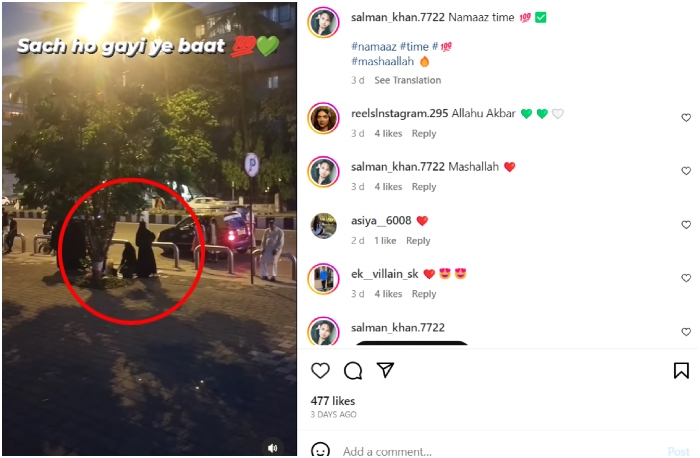
Notably, the person who posted the video on Instagram has also made several posts lauding Muslims offering Namaz in public areas and also mocking Hindu women. In one of the posts, he posted a video of two women in burqa offering Namaz on the Marine Drive sect of Mumbai and called them ‘Islam ki Sherni’.
In one of the similar videos he also could be heard saying, “Namaz is read with intentions. Place, people do not matter.” It becomes important to note that offering Namaz in public places is not allowed or tolerated in several states like Uttar Pradesh, Haryana, and Gujarat. The Islamists could also be seen commenting praises for the woman who was shot while offering Namaz in a crowded place in Mumbai.
The user further who identified himself as Salman Khan mocked Hindu women for wearing Saree and bindi. He meanwhile praised the Islamic women who prefer wearing the burqa or hijab. He also made derogatory comments about Hindu women.
How Islamists promote Love Jihad?
Interestingly, while the host mocked Hindu women for wearing Saree and bindi, he could be seen posting videos of Hindu brides saying, “One day I’ll also get married.” On one hand, the Islamist user mocks Hindu women for wearing a bindi, lauds other women for wearing a burqa, and on the other hand posts shots of Hindu brides willing marriage to them. However strange this sounds, the event here exposes the Islamist mindset of the extremes in the community.
Several refuse to believe the reality of Love jihad but it has been proven time and again that Hindu women are deliberately trapped by the Islamists and are forcefully converted to Islam. During the PFI raids, it was reported how the activists encouraged the Islamists to trap Hindu women in love affairs and produce more children ultimately expanding the Muslim community.
It was exposed that the PFI asked its cadres and other Muslims to force the Hindu women to convert their religion to Islam. At every PFI gathering, the activists would influence Muslims to run the agenda of love jihad and religious conversion. The organization had also declared a financial reward of Rs 2 lakh, a shop, and a house to anyone who would convert a Hindu girl to Islam.
Hate speech against Hindus should be verified and taken care of by Mumbai Police
In the given case, the Islamists mocking a Muslim family for celebrating Diwali also exposes the Islamist mindset. Netizens called them ‘kafirs’ and also failed to call them Muslims. Islamists also called for severe punishment to death to all those Muslims in India who allegedly disrespected Islam by celebrating Hindu festivals.
Through such videos, hate is being spread against Hindus and Hinduism on social media which is being viewed by millions on social media. A social approval theory of online hate proposes that individuals produce hate messages to gain honor for their opposition towards mutually disliked targets by providing social support that improves perpetrators’ well-being while deepening their prejudices. The police need to take cognizance of the said event and take appropriate action against the video.
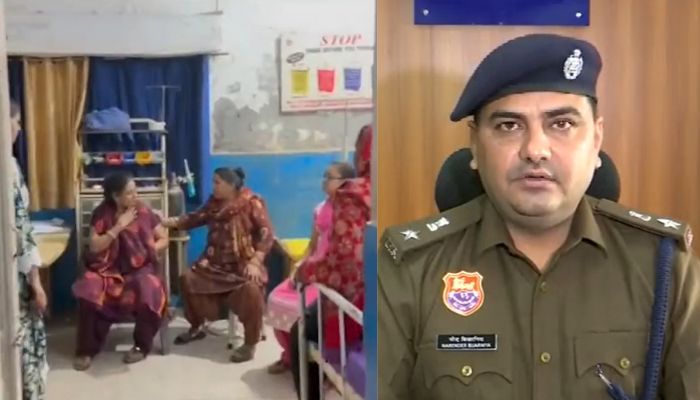
On Thursday (16th November), in Haryana’s Nuh district, a gathering of Hindu devotees, predominantly women, faced an assault from a nearby madrasa while participating in the ‘Kuan Pujan’ ritual. The Nuh police have confirmed that those involved in the stone pelting incident are ‘children’ from the madrasa. Nuh SP Narender Singh Bijarniya shared this information in an interaction with the media.
SP Narender Singh Bijarniya said, “On the complaint of women, an FIR has been registered under sections 354 and 323 of the IPC and the SC-ST act. From the Madarsa, footage had come where we could see three boys standing. On that basis, three boys have been identified. All three of them have been rounded up, and now they will be presented in the juvenile court.”
#WATCH | Nuh, Haryana: On the stone-pelting incident, Nuh SP Narender Singh Bijarniya says, "On the complaint of women, an FIR has been registered… From the Madarsa, footage had come where we could see three boys standing. On that basis, three boys have been identified. All… pic.twitter.com/dgXDtNN8aH
The police officer added, “Eight women have registered the FIR, and they have sustained minor injuries. We are interrogating all three boys to understand why this incident happened. So, further details can be ascertained only after their interrogation. All three children are minors.”
SP Narender Singh Bijarniya further said, “A short video clip of this incident has emerged. Based on this, we will establish the identities of all those who were standing there nearby. We will investigate all the allegations made by the women. The situation is in control. There is peace in the area. Leaders from both communities were called in the morning. A mutual understanding has been established between the leaders of both the communities so that such an incident does not take place again.”
The Kuan Pujan ritual was being observed by the local women for the son of one Ram Avatar, a resident of ward No 11 in Nuh. As per the reports, the women were heading to the Kailash Mandir at around 8.30 pm when stones were pelted at them. When the women were returning from the temple, the accused began to pelt stones at them for a second time. This led to tension in the area with members from both communities coming face to face.
The police arrived on the spot and prevented the situation from escalating. Angry residents raised slogans against the police administration. Meanwhile, three people were reportedly detained and some people were interrogated. Injured women were admitted to Nuh CHC for treatment.
Earlier, violence had broken out in Nuh during the Jalabhishek Yatra organised by the Vishwa Hindu Parishad on July 31 this year. Six people were killed and a cleric died in an attack on a mosque in adjoining Gurugram.
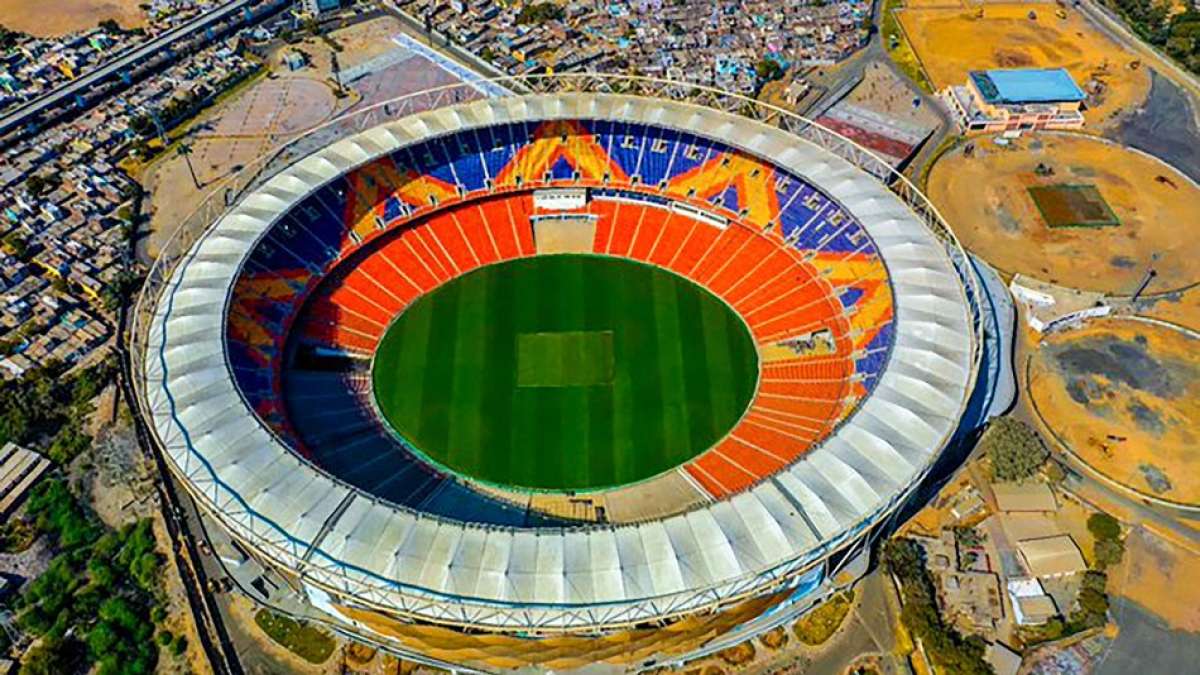
India and Australia are scheduled to face each other in the ODI (One Day International) World Cup 2023 final at the Narendra Modi Stadium in Motera, Ahmedabad. The largest cricket stadium in the world which is now popular as Narendra Modi Stadium was once known as Sardar Patel Stadium. It was also called Motera Stadium and Gujarat Stadium previously.
Narendra Modi Stadium (Source: myKhel)
The stadium’s construction was finished for the first time in 1982. The first ever one-day international match was held on this field in 1984, just two years after it was built and the crucial encounter took place between India and Australia. It was a 92-over match and each team batted for 46 overs respectively.
The Indian side had won the 1983 Cricket World Cup and was considered the favourite. Their spirits were high and had the advantage of the home ground as well as the support of a large Indian crowd, however, the Australians proved everyone wrong by securing a thumping victory in the match.
The Australian side was led by Kim Hughes, while Gavaskar headed Team India. The former had won the toss and invited India to bat first, but the decision taken by their captain didn’t fare well as the Indian opening pair put on a century partnership for the first wicket. Ravi Shastri and Roger Binny shared a strong partnership of 104 runs before the latter fell prey to Tom Hogan and returned to the pavilion after scoring 57 runs. After that first wicket, the Indian side just collapsed like a pack of cards.
Ravi Shastri also made his way back after scoring 45 runs after which Dilip Vengsarkar had to make the long walk back to the pavillion after scoring 14. Sandeep Patil and Suni Gavaskar scored in single digits of 3 and 4 runs respectively. India had lost five wickets on 145 runs. Kapil Dev was batting fast at one end but he also got out after scoring 28 runs. The Indians were six down at 161 runs. However, Kirti Azad then hit 39 runs and Madanlal added 6 more to share an unbeaten partnership of 45 runs to take their team to a respectable total of 206 runs at the loss of six wickets.
The Australian team responded with an equally impressive start. Graeme Wood was run out at the score of 32 after amassing 67 runs for the first wicket. His batting partner Kepler Wessels made 42 runs before making his route back to the pavilion on a total of 89. Allan Border then took charge and solidified his team’s position with a partnership of 73 runs with Kim Hughes who scored 29 runs.
Afterwards, he teamed up with Graham Yallop who put on 32 runs on the scoreboard and guided their team to a phenomenal victory. Allan Border played an unbeaten innings of 62 runs off 90 balls and the Australian team won by 7 wickets in the 44th over. Geoff Lawson who took three wickets for 25 runs was declared as the ‘player of the match.’
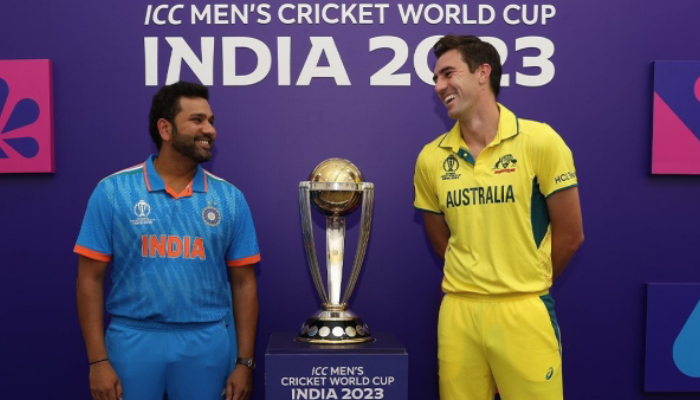
India would now want to rectify the history and triumph on the same pitch when they clash with Australia in the World Cup final on 19 November. India has played exceptionally well in the World Cup, winning every game in the group stage and putting an impressive all-round display to register an emphatic 70 runs victory against New Zealand in the first semi-final on 15 November. Despite some difficult times in the tournament, Australia made it to the second semi-final and defeated South Africa on 16 November by a margin of three wickets.
India and Australia had last clashed in the final of a World Cup back in 2003. The latter captured the World Cup trophy for the third time after winning that match by a margin of 125 runs. It also went on to win the following edition in 2007. India is aiming for its third World Cup title at the Narendra Modi Stadium. It last claimed the championship in 2011 after defeating Sri Lanka in the Wankhede Stadium in Mumbai. Team India won their first World Cup in 1983 under the captaincy of Kapil Dev.
India has not won an International Cricket Council (ICC) trophy since 2013 when the MS Dhoni-led Indian side lifted the Champions Trophy. The wait of a decade of 1.4 billion people would hopefully be over and India would emerge victorious in the final and lift the trophy to end the championship on a glorious note.
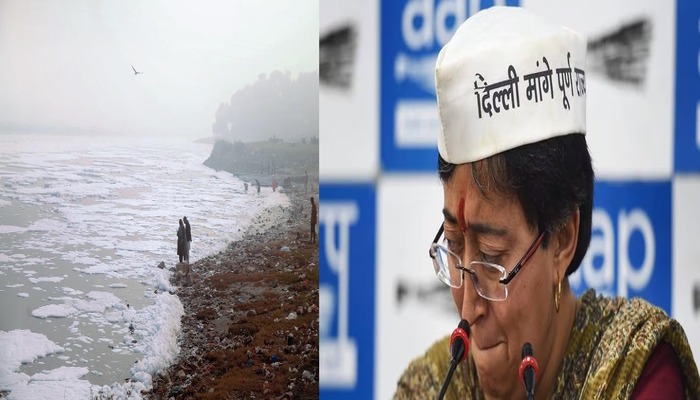
Blame is the weapon of the incompetent. A prime example of this is Delhi Education Minister Atishi’s statement blaming Uttar Pradesh for the alarming pollution in the Yamuna River. On Thursday, November 16, AAP leader Atishi claimed that the toxic foam of the Yamuna would be cleared in the next two days ahead of Chhath Pooja and asked the Uttar Pradesh government to stop the release of polluted water in the Yamuna River.
“To remove the toxic foam, Delhi Jal Board has begun sprinkling of food-grade chemicals and enzymes is being done there. The sprinkling team started the sprinkling work on 10 boats last night. In the next two days, the toxic foam will completely vanish…But I would like to urge the Uttar Pradesh government to not send its polluted water to Delhi.”
#WATCH | On cleaning of river Yamuna ahead of Chhath, Delhi Minister Atishi says, "To remove that (toxic foam), sprinkling of food-grade chemicals and enzymes is being done there. The sprinkling team started the sprinkling work on 10 boats last night. In the next two days, the… pic.twitter.com/uXD3cv8UnS
AAP has a habit of blaming UP, that is downstream, for pollution in Yamuna
This is, however, not the first time that an AAP leader has blamed neighbouring states like Uttar Pradesh for polluted Yamuna waters. In 2021, AAP MP Raghav Chadha had blamed Uttar Pradesh and Haryana for Yamuna pollution as he said “The foam in the Yamuna is at Okhla Barrage area, which comes under UP irrigation department, it’s UP Government’s responsibility. But like every year, they failed this year too…The polluted water is not Delhi’s, it’s a gift to Delhi by the UP and Haryana Governments.”
Over the years, domestic and industrial sewage generated within the National Capital Territory of Delhi (NCT) has been a major source of pollution in the Yamuna River. A 2005 Comptroller and Auditor General of India (CAG) report highlighted that even after spending over Rs 800 crore since 1994 for the setting up of sewage treatment infrastructure, the quality of water leaving Delhi continued to deteriorate with a significant amount of untreated sewage falling into the Yamuna river. The report also underscored the lack of common effluent treatment plants (CETPs) required for the treatment of industrial sewage waste.
Delhi Jal Board’s sewage problem
Years passed but the pollution persisted with the quality of Yamuna waters deteriorating. According to a 2013 CAG report, the Delhi Jal Board under the Delhi government added only 1 million gallons per day (MGD) capacity of Sewage Treatment Plant (STP) and laid only 900 kilometres of sewer line during 2007-12 even after spending Rs 1634.18 crore. It was reported that during the test check of records at 15 out of 32 STPs all were operating below their capacities as the DJB failed to set up a system to carry enough sewage to the STPs. While the erstwhile Congress governments failed to deliver their promises of cleaning the Yamuna River, the AAP government has not been any different from its predecessor.
SP govt in UP had earlier warned Delhi govt over pollution in Yamuna
Back in 2014, the Samajwadi Party-led Uttar Pradesh government had warned the Delhi government led by CM Arvind Kejriwal to cut its water supply demanding that the discharge of the drains should be first treated and only then, released in the Yamuna. The Uttar Pradesh government had alleged that Delhi empties its 18 drains into the Yamuna, which ultimately pollutes the Ganga river. The then state Irrigation Minister Shivpal Singh had warned that if the Delhi government failed to take appropriate measures, the daily quota of 400 cusecs of water allocated for Delhi would be diverted to Agra and Mathura.
The Yamuna River, the Ganga’s main tributary, flows through Delhi for 22 kilometres. This is the most contaminated stretch of the river’s extensive journey. The length of Yamuna’s stretch in Delhi is only 2% of the total length of the river basin, yet it accounts for more than 79% of the total pollution load in the river.
According to a Delhi Pollution Control Committee (DPCC) report released in May this year, out of the 35 operational STPs, 22 were not meeting the prescribed standards impacting the quality of Yamuna River’s water.
The data showed that metrics including total suspended solids (TSS), chemical oxygen demand (COD), biological oxygen demand (BOD), and dissolved phosphate levels were consistently breached at a number of the STPs, including some new STPs like the Keshopur or Kondli plants.
According to DPCC’s September report, 60% of the STPs in the national capital fall are not in compliance with the prescribed parameters including the biochemical oxygen demand (BOD), chemical oxygen demand (COD), and total suspended solids (TSS). The report noted that one of the 38 inspected STPs, Rithala, was undergoing rehabilitation, while 23 failed water quality standard tests.
According to the report, the city generates an estimated 792 million gallons per day (MGD) of sewage, with an installed capacity of 667MGD. However, only 550 MGD of the total installed capacity is being treated, leaving 242 MGD, or nearly 30% of total generated sewage, untreated. According to the report, the Delhi government increased the installed capacity of STPs by 35 MGD, from 632 MGD in August to 667 MGD in September. However, the amount of sewage processed increased by only 3MGD, from 245MGD in September to 242MGD in August.
The DPCC report further states the construction of a new 124 million gallons per day (MGD) STP in Okhla has been delayed by nine months and will now be completed by March of next year. The building of a 7 MGD STP in Sonia Vihar has also been delayed by four months, with a revised completion date set for the end of 2023.
Instead of shifting the blame on neighbouring BJP-ruled states, the Delhi AAP government should focus on curtailing the delays in the construction of new STPs in Okhla and Sonia Vihar.
According to the DPCC report, the construction of a new 124 million gallons per day (MGD) STP in Okhla has been delayed by nine months and will now be completed by March of next year. The building of a 7 MGD STP in Sonia Vihar has also been delayed by four months, with a revised completion date set for the end of 2023.
Atishi the education minister needs a geography class, UP is downstream of Delhi on Yamuna’s path
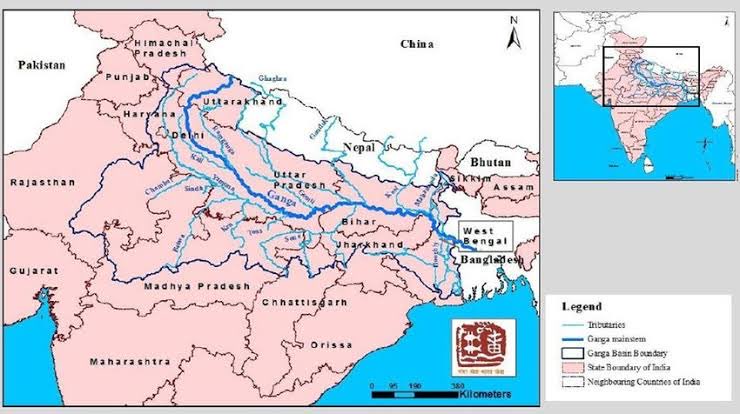
Ironically, the Education Minister of Delhi and probably the second best in the world after Manish Sisodia as per AAP’s ‘standard’ of best, skipped her geography classes to not know that Yamuna rises at 4,421 meters in the high Himalayas, from the Yamunotri Glacier. It rises in the high Himalayas and runs southward through the Himalayan foothills before exiting Uttarakhand and entering the Indo-Gangetic Plain near the border between Uttar Pradesh and Haryana to the west. The Yamuna then flows through Delhi. It curves south-eastward flowing entirely within Uttar Pradesh. The Yamuna River confluences with the Ganga River near Prayagraj after a journey of approximately 855 miles (1,376 kilometers).
Map showing Ganga mainstream and its tributaries including Yamuna (Image via ResearchGate)
As reported earlier, in the budget presented by the Delhi Government for the financial year 2023-24, around 1,028 crores were earmarked for cleaning River Yamuna. CM Kejriwal again promised that he would take a dip in the river in the next assembly elections, a promise that he made before but never fulfilled. In January 2020, just before the assembly elections, he had said, “The Yamuna will be cleaned and made pollution-free. We promise that after five years, anyone will be able to take a dip in the Yamuna without fear of diseases due to dirty water.” However, it has been three years and still, the Delhi Jal Board is required to sprinkle food-grade chemicals and enzymes to make the toxic foam in the Yamuna River “vanish”.
The Delhi lieutenant governor’s office was reported to have stated in January of this year that during the last eight years of the Arvind Kejriwal government, pollution in the Yamuna River in Delhi has increased by twofold.
It was reported in 2014 that the pollution in the river in terms of Biological Oxygen Demand (BOD) was within permissible levels at Palla, where the Yamuna enters Delhi, at a modest 2. In 2014, the river’s BOD load was 32 when it exited Delhi at Okhla Barrage. However, in 2023, although the BOD load at Palla stayed at 2, it rose to an astounding 56 at Okhla.
With 60% of STPs in the national capital not in compliance with prescribed parameters, as well as the toxic foam appearing on the Yamuna river much like every year and the AAP ministers continuing the blame game, CM Arvind Kejriwal’s promise of a clean and pollution free Yamuna remains a distant dream.
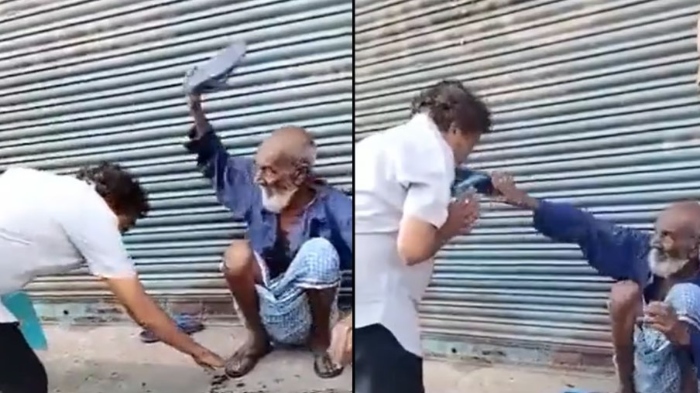
Desperate times call for desperate measures and a man is willing to do some of the most odd things in these desperate times. Paras Saklecha, the Congress candidate from Madhya Pradesh’s Ratlam constituency, is one such example. As Madhya Pradesh goes to the polls on Friday, November 17 for the crucial Assembly election, a video went viral today in which the Congress leader was seen willingly getting beaten up with chappals (slippers) by a Muslim fakir.
MP : कांग्रेस प्रत्याशी पारस सकलेचा ने फकीर बाबा से लिया चप्पलों का आशीर्वाद
According to reports, the Congress leader was happily taking the beating, that too with slippers, as part of a blessing before the state assembly elections.
In the video, the Congress candidate Paras Saklecha is seen taking out a pair of slippers from a plastic bag and offering it to the Muslim fakir, who in turn uses the slipper to beat up the Congress leader left, right and centre. Paras Saklecha is seen standing patiently in front of the fakir with his head bowed down and taking the beating with a smile on his face. Towards the end of the video, one can also see the Congress leader thanking the fakir for his ‘chappal slaps’ or ‘blessings’.
If media reports are to be believed this elderly man in the video, famously known as “Fakira Babaji”, is in demand by the people and politicians this polling season as he is believed to “have wish-fulfilling” powers.
Congress leader Paras Saklecha insults BJP leader Sadhvi Pragya
It might not be widely known that Paras Saklecha, the Congress representative for Madhya Pradesh’s Ratlam constituency, was once a math professor. Nevertheless, in 2019, the highly educated and well-read Congress lawmaker stoked controversy when he proceeded to disparage BJP leader Sadhvi Pragya, referring to her as a ‘Dayan’ (witch). He had said that Sadhvi Pragya is no less than a witch because Hemant Karkare died as a result of her “sharp” (curse).
Here it becomes important to mention how Sadhvi Pragya, now a BJP leader and Bhopal MP, is widely believed to be one of the victims of the Congress party’s attempt to invent Hindu Terror. Sadhvi Pragya, accused in the Malegaon Blast Case, was granted bail in April 2017, eight long years after she was jailed. The arrest of Sadhvi Pragya among others was used by the Congress party to fan the theory of “Hindu Terrorism”. Many had gone on to assert, including a senior official in the erstwhile UPA administration, that the entire charade was an elaborate ploy organized by senior members of the UPA administration for political gains.
MP assembly polls
Meanwhile, voting for the crucial Assembly elections is underway in Madhya Pradesh today (Friday, November 17). Congress and the BJP are the two main contenders for power in the state. Many prominent leaders of both parties, including Chief Minister Shivraj Singh Chouhan and State Congress Chief Kamal Nath, are in the fray. The counting of votes in the state will take place on December 3.











‘Hindus visiting Bhavya Ram Mandir in Ayodhya will come out as Muslims’: Old video of former Pakistan cricketer Javed Miandad goes viral
As the consecration ceremony of the Bhavya Ram Mandir in Ayodhya draws closer, videos insulting the temple and undermining the temple have started going viral on the internet. In one such video, former Pakistan cricket captain Javed Miandad is seen claiming that the new Ram Temple will turn Hindus into Muslims.
“Those Hindus visiting the Ram Mandir in Ayodhya will come out as Muslims. It is our firmly held belief that our faith (Islam) will shine its light on those who visit places that are connected to our roots. Modi may have done wrong by getting the Ram Mandir built in Ayodhya, but it will work as a blessing in disguise for us. I have full faith in Allah that this will be the place from where Muslims will once again rise,” Miandad says.
Notably, Miandad released the video three years ago on August 8, 2020, three days after the Bhoomi Poojan of the historic Ram Mandir, which was performed by PM Modi. You can watch the entire video here:-
Strikingly, the video has gone viral on social media months ahead of the Pran Pratishtha ceremony planned at the newly constructed Ram Mandir in Ayodhya. According to the reports, the consecration (Pran Pratishtha) ceremony is expected to take place on January 22 next year.
The Ram Mandir construction committee chairperson Nripendra Mishra recently asserted that the construction of the ground floor of the three-story Ram Mandir in Ayodhya will be completed by the end of December this year.
In an interview with PTI, Mishra said that Prime Minister Narendra Modi is expected to take part in an event related to the “pran pratishtha” on any day between January 20 to 24 next year. However, he added that the Prime Minister’s Office has yet to communicate the final date.
According to the Chief Priest of Ram Mandir, Acharya Satyendra Das Ji Maharaj, the rituals will be held from January 15 to January 24. A letter was written to the PMO on their behalf, and a reply has also been received. Now, it has been decided that Prime Minister Modi will arrive in Ayodhya on the 22nd of January and will take part in the Pran Pratishtha ceremony. Prominent seers, eminent personalities, and scores of devotees have been invited to this consecration ceremony.
Pakistanis and ex-Pak cricketers resort to peddling conspiracy theories as India advances to World Cup 2023 finals
Being delusional is a hallmark of Pakistanis. Be it about their belief in the fictional supremacy of their official faith over others, their teetering economy being the best in the world or even their cricketing standards, Pakistanis often delude themselves into believing they are a cut above the rest in every department. These delusions, of late, have taken ominous proportions, notably after the exit of Pakistan from the ongoing World Cup 2023, especially among the former Pakistan players, who have resorted to peddling conspiracy theories and baseless speculations in their bid to undermine India’s performance and their team’s awful World Cup campaign.
In this context, old videos of Pakistani cricketers making bizarre claims are doing the rounds on the internet. Recently, a former Pakistan cricketer peddled conspiracy theories raising aspersions on the cricket ball being used in matches played by India. Two days ago, a prominent Pakistani cricket analyst and former cricketer went to the extent of sensing false play in the way Indian captain Rohit Sharma tossed the coin away from his body. There were also rumours among Pakistani social media that India had changed the pitch ahead of the semifinal against New Zealand, which was promptly rubbished by the ICC, the premier cricket governing body.