On 11th November, the Amreli Sessions Court sentenced three individuals to life imprisonment in a 2023 cow slaughter case. The convicts have been identified as Kasim Haji Solanki, Sattar Ismail Solanki and Akram Haji Solanki. In the judgment, the court noted that despite being aware that the cow is a sacred animal for Hindus, all three committed cow slaughter and hurt the sentiments of the community.
What is the matter?
The incident occurred in November 2023 when Amreli City Police raided a house in the Motakhatkiwad area of Baharpara village following a tip-off. The police recovered 40 kg of animal meat during the raid. The house belonged to a man named Kasim Haji Solanki, who was present at the house. The meat was sent for forensic examination and the FSL report confirmed that it was cow meat. Along with this, weighing scales and other items were also found in Kasim’s possession, indicating that he was also selling cow meat.
During interrogation, he named two other associates who had managed to escape following the raid. They were later arrested by the police. Following the arrest, a case was registered against all three at the Amreli City Police Station. The first hearing of the case happened at Amreli Sessions Court in 2024. Following the trial in the Sessions Court, the court of Principal District Judge Rizwana Bukhari convicted all three accused and sentenced them to life imprisonment.
What did the court say?
In the judgment, the court held that the convicts knew that the cow is considered a sacred animal in the Hindu religion. Still, they slaughtered the cow and the meat was recovered from them. Therefore, offences under Sections 295 (destroying objects considered sacred by a community with the intention of insulting another religion) and 429 (animal killing) of the Indian Penal Code (IPC) were established.
Furthermore, the court also convicted all of them under Sections 5, 6(c), 8(2), 8(4) and 10 of the Gujarat Animal Preservation Act, 1954.
The court awarded all of them life imprisonment and a fine of five lakh rupees for violation of Sections 8(2) and 10 of the said Act. Apart from this, the sentence includes three years’ imprisonment and a fine of three thousand rupees for offences under IPC 295 and 114, five years’ imprisonment and a fine of five thousand rupees for violation of IPC 429, and seven years’ imprisonment and a fine of one lakh rupees for violation of Sections 5 and 8(4) of the Gujarat Animal Preservation Act, 1954. All sentences are to run concurrently. In addition, since all the accused were out on bail, an order has been issued to send them back to jail.
Court rejected the claims of police framing
During the trial, the accused claimed innocence and alleged that they had been falsely implicated by the police. It was argued that the police had not prepared the panchnama in the presence of any independent witness and that the witnesses were all police personnel. The defence also accused the police of conducting a one-sided investigation.
However, the court held in its judgment that, as per law, the testimony of police witnesses carries the same weight as that of other witnesses, and there is no rule requiring corroboration by independent witnesses. The court also noted that there was no reason to distrust the police in this case, and the accused failed to present any such evidence.
Additionally, the court considered reports from the veterinary doctor and FSL scientists, who clearly stated that the meat was cow meat. On the other hand, the accused could not satisfactorily explain how the cow meat came into their possession. Based on material available on record and statements of other witnesses, it was clear that all three had jointly slaughtered cattle and committed the act with the intention of selling cow meat.
‘If the court adopts a lenient approach, it will have adverse effects on society’
While pronouncing the sentence of life imprisonment, the court said that although the court should not adopt an excessively harsh approach when determining the quantum of punishment, the fact cannot be ignored that adopting a lenient approach may have adverse effects on society and on the criminal mindset of the accused. Subsequently, all three were sentenced to life imprisonment.
This report was first published in OpIndia Gujarati. Original report can be checked here.
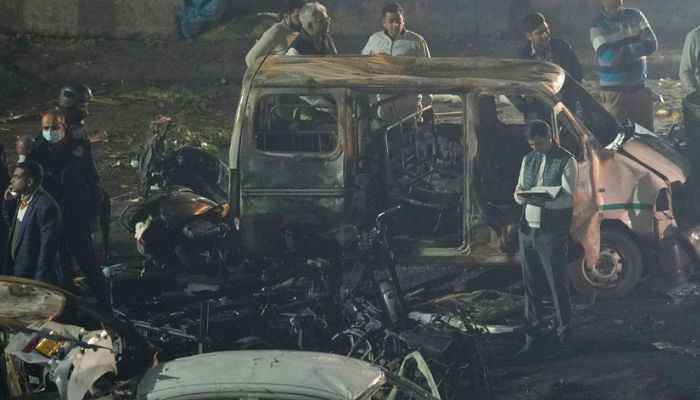
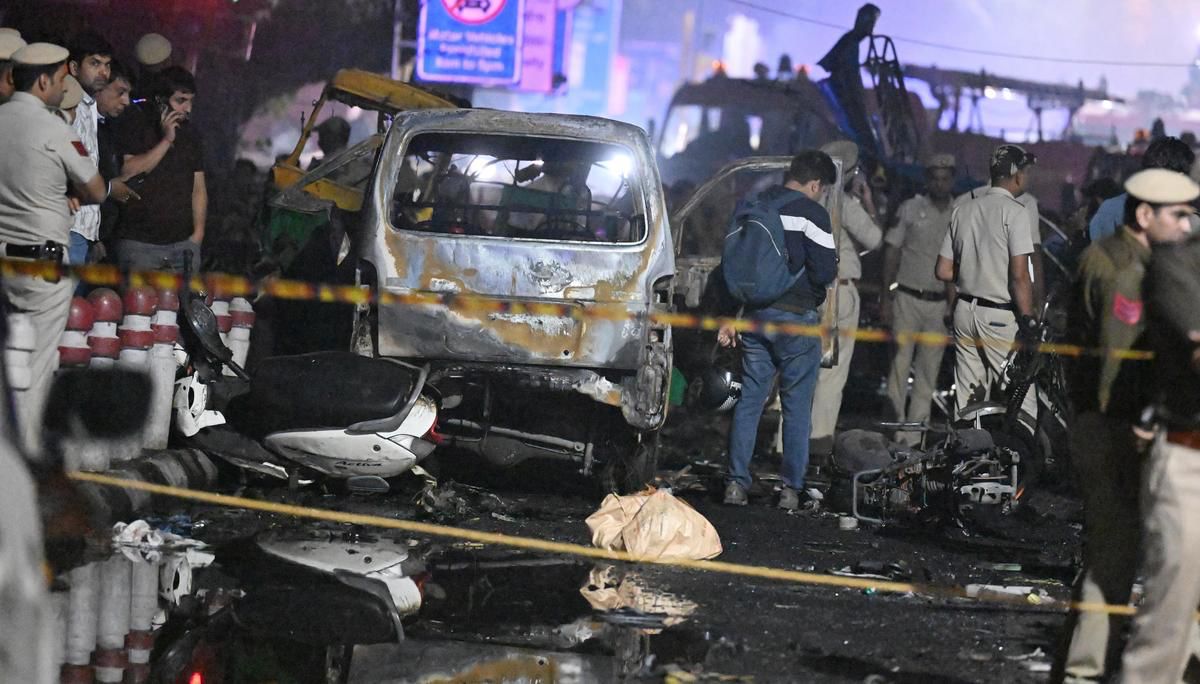
On 10th November, a massive explosion occurred in a moving car, leading to the deaths of 13 people and over two dozen were injured. The Government of India has declared the incident a terrorist act. The explosion took place near Delhi’s Red Fort, and it has once again highlighted an important but often-ignored issue, that is, not transferring the ownership of a vehicle after selling it immediately. Some people sell their cars and invariably think that the buyer will get the paperwork done, but if the transfer is not completed officially, the car still rightfully belongs to the seller. And that can lead to serious trouble later if the vehicle is used for any crime or accident.
In the ongoing investigation into the Red Fort blast, several people who had owned the white Hyundai i20 in the past were questioned by the police because their names were still on record. Officials say that this happens more often than people realise. When a car changes hands several times without proper documentation, it becomes difficult to trace its real owner.
An officer investigating the case explained, “The car had changed ownership multiple times. The last person linked to it was from a sensitive area. Because of incomplete paperwork, tracing the real chain of possession has become complicated, and sometimes, this delay is exactly what criminals count on.”
Why transfer of ownership so important
According to transport officials, until the car’s Registration Certificate (RC) is officially transferred to the RTO’s records, the seller remains the legal owner. That means if the car is caught violating traffic laws, involved in a crash, or used in a crime, all legal responsibility falls on the seller.
A retired RTO officer speaking to the media explained, “People think selling a car is just about money. But it’s a legal transaction that needs proper documentation. The law requires the seller to inform the RTO within 14 days using Form 29, stating that the vehicle has been sold. Only after this, and the buyer’s application on Form 30, can ownership be updated.”
He also advised sellers to get an acknowledged and stamped copy of the submission as proof, which can save them in case of any future disputes.
Documents required before selling a car
Registration Certificate (RC): The seller must have the original and valid RC of the vehicle.
Pollution Under Control (PUC) Certificate: An updated copy of the PUC certificate should be available.
No Objection Certificate (NOC): If the car is under a loan, the seller needs to obtain an NOC from the financer or the RTO.
Insurance Certificate: The vehicle’s insurance policy must be valid at the time of sale.
Address Proof: Any valid ID proof, such as Aadhaar Card, Passport, Voter ID, or Electricity Bill can be used.
Vehicle Chassis Imprint: A physical rubbing of the chassis number is required for verification.
Forms 29 and 30:
Form 29: Notice of Transfer of Ownership (two copies signed by both seller and buyer).
Form 30: Application for intimation and transfer of ownership.
What really happens in practice
While the process sounds straightforward, in reality, it’s often full of gaps. Many buyers or used-car dealers don’t complete the transfer immediately. Some wait until they find another buyer, while others just neglect it altogether. As a result, the original seller keeps getting SMS alerts or challan notices for a vehicle they no longer own.
Sometimes, informal agreements or handwritten sale papers are used instead of proper forms, which have no legal value. In other cases, the vehicle is resold multiple times through intermediaries, and the chain of ownership becomes unclear.
A senior traffic officer advised, “If the buyer delays the transfer or becomes unresponsive, file a written complaint with your local police. Provide all details, when you sold it, who bought it, and proof of your communication. It’s better to be proactive than end up in legal trouble later.”
Used-car dealers in Delhi admit that while they usually complete their paperwork, some buyers refuse to cooperate. “Many customers buy cars only to sell them again quickly, so they don’t bother transferring ownership to their name. When that happens, the original seller remains stuck,” said Lokesh Munjal, president of the Delhi Car Dealers Association.
Process of selling a car and transferring the ownership
First of all, all outstanding dues, including challans, fines and loans, must be cleared before initiating the ownership transfer. Both parties need to fill out Forms 29 and 30, as required. These forms can be downloaded from the Parivahan website. The buyer, within 14 days of purchasing the vehicle, needs to submit Form 29 at the RTO, intimating the authorities about the sale. Once the deal is initiated, it is the duty of the buyer to bring the vehicle for chassis verification at the RTO. The buyer needs to submit all necessary documents, including Form 30, to the RTO where the vehicle is registered. Once the verification is complete, the RTO will issue a new Registration Certificate for the vehicle in the buyer’s name. The seller must keep the stamped acknowledgment of the sale of the vehicle and submission of required documents to ensure he or she stays on the right side of the law.
A similar issue faced by Sadhvi Pragya in the Malegaon blast case
The dangers of incomplete vehicle transfers are not new. While there are several social media posts that speak volumes of the problems faced by the general public, there are cases where a delay in the transfer of the vehicle led to serious legal troubles. For example, a similar issue had surfaced in the infamous Malegaon blast case involving Sadhvi Pragya Singh Thakur.
The case revolved around a motorcycle used in the 2008 explosion that killed 6 and injured around 100 people. That bike, an LML Freedom, was registered in Sadhvi Pragya’s name. The prosecution argued that since the motorcycle belonged to her, she was linked to the blast. However, Pragya maintained that she had sold the bike years before the explosion and had completed all the required paperwork.
Despite her claim, the police continued to hold her responsible because the ownership transfer hadn’t been reflected in the official records. The registration details still showed her as the legal owner when the blast took place.
Later, investigators also found that the motorcycle’s engine and chassis numbers had been tampered with, and forensic tests couldn’t confirm whether it was indeed her bike. Several witnesses supported her claim that she had sold the bike earlier, but because her name remained on the registration, she became a key accused in the case.
Her defence also pointed out that she had renounced worldly possessions after becoming a sanyasi, including that bike. After a long legal battle lasting nearly 17 years, a special court acquitted her in July this year, saying the prosecution had failed to prove any solid link between her and the motorcycle used in the blast.
BREAKING NEWS ? All accused of Malegaon Blast Case acquitted.
DIGVIJAY SINGH : "I have never accused RSS of involvement in any terror attack in Mumbai"
Court stated that there was no evidence to prove that RDX was recovered from Col Purohit’s residence.
This case remains a strong reminder of how a simple delay or gap in ownership transfer can lead to years of legal and emotional struggle for someone who might have no real connection to a crime.
Social media users share their troubling experiences
Following the Red Fort blast, several people took to social media to share their own experiences with incomplete car ownership transfers. Many described how difficult it was to track the new owner or ensure that the car was officially transferred. Famous stand-up comedian Manish Tyagi, who goes by the stage name Knotty Commander, shared his ordeal on social media. He had sold his car to Car And Bike in November 2024, and the NOC was issued in February 2025 by the Ghaziabad RTO. However, he still received a challan in April 2025 in Uttarakhand, indicating that the car had been sold via a Saharanpur agent. He tried filing an FIR, but the police refused. After months of chasing and a legal notice, the car was finally transferred in October 2025.
System is flawed. Sold my car to @carandbike in Nov 24. NOC issued in Feb 25 by Ghaziabad RTO.
A challan issued in UK in Apr 25 indicated that car was sold via Saharanpur agent. Cops refused to file FIR.
In another case, among several, is that of Sumedha Sharma, who narrated her ordeal in a post on social media. She says that after selling off her 10-year-old diesel car in 2023, when the agency provided the blank transfer forms, she trusted them to handle the transfer and signed. But within days, she started getting strange calls from multiple men claiming to be from Gujarat, asking her to appear at the Gurugram RTO to give a No Objection Certificate.
The way car used in #RedFort blast changed hands gives goosebumps on the way old cars are sold in this country. Not just local agencies but even reputed ones like @cars24india leave you scared. As my diesel car clocked in 10 years I sold it off in 2023. The agency made me sign… pic.twitter.com/tiQ9qhoSCs
“They had copies of my Aadhaar and PAN card that I had given to the agency. Then came threats, arguments, and suddenly, one day, the calls stopped. I still don’t know who owns that car or what it’s being used for,” she wrote, adding that there should be a clear verification system for buying and selling used cars.
Her experience mirrors what many others have gone through: the fear and helplessness that come from not knowing where your old car has gone or who is using it.
The Red Fort blast has once again shown that a simple delay in transferring a vehicle can lead to years of unnecessary stress and legal complications for innocent sellers. Whether it is a routine challan, a criminal case or a terror investigation, outdated records can pull the wrong person into serious trouble. The law is clear, and the process is straightforward. Completing the transfer on time is the only way to stay protected.
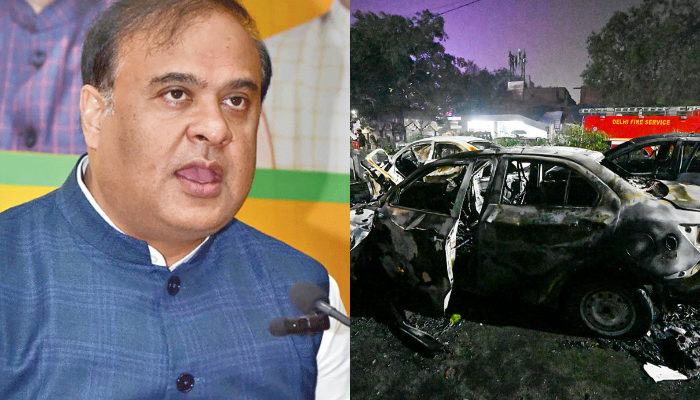
On 11th November, Assam Chief Minister Himanta Biswa Sarma expressed profound grief over the bomb balst near Red Fort in Delhi which transpired a day earlier.
He stated, “The incident is certainly condemnable. As you may know, a large amount of explosive materials was found with doctors and many other professionals. It had been seized by the police and central agencies. This undoubtedly points to a significant conspiracy. We are hopeful about more developments in the situation. It is essential for all citizens to unite so that terrorists do not succeed in such attacks.”
However, Sarma also declared that his government has tightened security measures and mandated close observation of social media sites where several posts endorsing the attack were found. “After the incident, some people in Assam reacted with joyful emojis on Facebook and celebrated the attack on online, indicating their support for terrorism,” he emphasised.
दिल्ली बम विस्फोट की खबर जब Social Media पर आई, तो एक विशेष समुदाय के कुछ लोग इस पर मज़ाक़ बनाने लगे और "ha ha" इमोजी डालने लगे।
ये लोग आतंकी समर्थक हैं, और हमारी पुलिस इन्हें हर हाल में पकड़ने में जुटी है। pic.twitter.com/DSMn7kmbb9
The chief minister reiterated, “We would not tolerate the rise and promotion of terrorism and would take strict action regarding this matter.” He told reporters that police have started looking into the backgrounds of these people and warned that such activity amounts to condoning terrorism which could end in stern legal punishment including arrests.
“It has come to our attention that certain individuals have been quite cheerful since yesterday following the horrific incident. If someone reacts joyfully and celebrates death, they are directly or indirectly aiding terrorism. I have instructed the DGP (Director General of Police) to probe their backgrounds. They are going to be arrested if they are residents of the state,” he declared.
People nabbed for “offensive and inflammatory” posts
On 12th November, Sarma informed that Mattiur Rahman from Darrang, Hassan Ali Mondal from Goalpara, Abdul Latif from Chirang, Wajhul Kamal from Kamrup and Nur Amin Ahmed from Bongaigaon have been apprehended for disseminating “offensive and inflammatory content online” concerning the incident. “Assam Police will continue to act swiftly and firmly against anyone misusing social media to spread hatred or glorify terror,” he mentioned.
In connection with the recent Delhi blast, Assam Police has arrested the following individuals for spreading offensive and inflammatory content online:
1.Mattiur Rahman (Darrang) 2. Hassan Ali Mondal (Goalpara) 3.Abdul Latif (Chirang) 4.Wajhul Kamal (Kamrup) 5. Nur Amin Ahmed…
According to reports, Nazrul Islam Barbhuiyan was detained for writing objectionable remarks on social media regarding the explosion, in the Cachar district of Assam. He is a former principal of Banskandi NMHS School in Cachar. Partha Protim Das, senior superintendent of police (SSP) of Cachar conveyed that the police took suo motu cognisance of the case and called him for interrogation on 12th November afternoon.
The accused had written “elections are coming ahead” in a post. Das pointed out, “The individual commented on the news of the Delhi blast, citing elections, and tried to politicise a sensitive national security issue. Whether the comment was made with any particular motive is under investigation.” He was summoned to confirm the purpose and potential implications of his post.
The officer added, “Given the nature of the incident in Delhi, such remarks can spread misinformation or provoke unnecessary speculation. We are taking this matter seriously.”
According to the authorities, they are keeping a close eye on social media for posts and responses pertaining to the occurrence. Furthermore, Das asked people to avoid sharing unreliable or politically motivated information that could obstruct the current inquiry.
Deadly blast in Delhi after exposure of JeM module
The Jammu and Kashmir Police along with the Haryana Police and central agencies, dismantled a significant inter-state terror module linked to Pakistan-based Jaish e Mohammed (JeM). It resulted in the arrest of several accused, including two Kashmiri doctors Adil Ahmed Rather and Muzammil Shakeel (Musaib Ganaie).
A women Dr Shaheen Saeed from Lucknow was also arrested for her part in the terror plot. Sadia Azhar who is the sister of JeM supremo Muhammad Masood Azhar Alvi popularly known as Masood Azhar had given her the task of setting up the outfit’s women wing, Jamaat ul-Mominaat’s base in India and finding new recruits.
Around 2900 kilograms of explosive materials were confiscated with assault rifles and other ammunition from them. They were employed at Al Falah University in Faridabad of Haryana which is also under inquiry. The bomb blast in Delhi, close to Chandni Chowk’s renowned Gauri Shankar Mandir and the Jain temple, occurred shortly after the terror network was busted. Dr Umar Mohammed, another Kashmiri member of their group, panicked after these events and triggered the explosion.
An official disclosed, “Dr Umar changed his location from Al Falah Medical College campus following the crackdown on other members of his module. He is the one who was driving the car used in the blast, as corroborated by CCTV footage. The blast was caused by the very same explosives that were found in Faridabad hideouts.” The source added, “Whether this blast was premeditated or accidental is a matter of investigation.”
Multiple sections of the Unlawful Activities Prevention Act (UAPA), Explosives Act and Bharatiya Nyay Samhita have been invoked as all angles are being explored and scrutinized by the authorities. Notably, the probe was sparked by a few provocative posters that had surfaced in Srinagar after which a case was submitted on 19th October.
Finding joy in the deaths of innocents
It is no longer a novel occurrence where certain demented individuals, particularly from the Islamo-Leftist lobby, are observed either celebrating terrorist attacks or politicising them, even going so far as to blame the government rather than the perpetrators for the death and destruction.
A glaring spectacle of this perversion was evident following the Hamas attack on Israel on 7th October 2023, where the screams and agony of the victims were overwhelmed by the collective cacophony celebrating the alleged resistance.
Every incident is either a cause for elation or a chance to accuse the other side for this cabal and its army of online trolls, thereby whitewashing the real culprits for the sake of their shared ideology, religion, or disdain for the the afflicted group.
India is likewise not free from the insidious claws of these deranged minds. They are ubiquitous, spanning media, medicine, education, the film industry and beyond. A striking illustration of this was when an NDTV editor was suspended after she tweeted, “Where a grisly 44 has been proven to be greater than the mythical 56,” and used the hashtag “HowstheJaish” which was a play on the hashtag “HowstheJosh” following the dreadful Pulwama attack in 2019.
This serves as just a brief insight into their terrifying psyche which surfaces after every tragedy, from landslides to bridge collapses, but especially during terror assaults. Therefore, India having endured this plague long before others, particularly in the West, has been a consistent witness to the hateful mindset and the repugnant display of happiness after the Delhi blast is an extension of the same.
Revelations of a malevolent mindset characterized by wicked intentions
Now, a grotesque demonstration of happiness or an effort to protect the terrorists while charging the government or others is indeed shocking and speaks volumes about the intentions of such persons. However, what is even more frightening is that it could serve as a catalyst for jihadis and other nefarious elements as these responses assure them that their actions not only have advocates in the community but would also be cheered and defended by this group.
The authorities indicated that the Delhi blast resulted from panic and the terrorists were unable to fully execute their agenda which saved numerous people and prevented extensive destruction. Nevertheless, the instance did pose a difficult situation, claimed almost a dozen lives, injured many others and placed the entire nation on high alert.
Should even a fraction of the malevolent persons or Islamists interpret this online jubilation as an endorsement of their ulterior motives, one can only envision the magnitude of devastation, fatalities as well as the law and order issues it would generate in the nation.
More importantly, the pleasure derived from terror acts is, in reality, terrorism itself. Their support is rooted in their agreement to engage in such violence for jihad. Thus, what is stopping them from being the next ones to commit such an attack since they evidently relish it? The only reason seems to be the lack of an opportunity as they are clearly not constrained by any moral principles or empathy.
They might indeed embark on an identical suicide mission targeting Hindus and India if the chance presents itself or maybe they only want to back terrorists or provide “intellectual” support while refraining from active action. However, those who are willing to get involved directly would easily take inspiration from their posts and decide to inflict chaos upon the nation.
Isn’t this how anti-Hindu violence has historically been propagated in the country from both inside and outside including the widespread unrest in Nagpur with the help of incendiary social media messages? Therefore, it is irrelevant whether these individuals wish to participate in a jihadi mission or support it online, as they are radicals who cultivate this toxic tree of terrorism and hiding behind a keyboard does not absolve them of their abhorrent crimes.
Supporting terrorism not free specch, action must against such people
This cabal regularly tries to mask its goals with the cloak of “free speech” as if terrorism promotion is just another part of it. Interestingly, the same privilege is not granted to Hindus or those who hold opposing views, as even a trivial matter is blown out of proportion, leading to allegations of fascism. However, this does not apply to the shocking encourgement of religiously motivated terrorism, which inherently aims for the destruction of the entire Hindu community and has initiated a diabolical war against the nation.
Hence, it becomes increasingly crucial to not only identify and condemn such individuals who take part in such celebrations or politicisation to distract attention from the actual culprits but also to subject them to legal consequences for their actions which legitamise jihadi terrorism. They must not be permitted to continue their lives while others bear the repercussions of their vile conduct.
They are a serious threat to our national security as well as law and order as they could likely be the next to carry out a terrorist attack or push an Islamic fundamentalist to do the same.
Furthermore, not every terrorist is found in jungles, caves or neighbouring nations, armed with guns and bombs waiting to execute their plan. Some exploit social media from the safety of their homes and offices to glorify jihad. Nevertheless, this does not mitigate their role as they share the similar violent ideology, bloodlust and desire to kill others.
Thus, the necessity to embrace the principle of “prevention is better than cure” becomes even more pronounced in a country such as India, which has faced significant susceptibility to terrorist attacks over the decades. Similarly, supporting terrorism is yet another manifestation of terrorism as aforementioned.
India cannot allow anyone to celebrate such occurrences when the entire nation should unite and raise a single voice against this menace. It would also affect the mindset of ordinary people who will be more worried about their lives and safety, knowing that such extremists and terror apologists are living in the country, in addition to emboldening terrorists. It is worth noting that they could be potential terrorists themselves.
The Chief Minister of Assam appears to be aware of the gravity of the situation. He therefore decided to take action in relation to the matter.
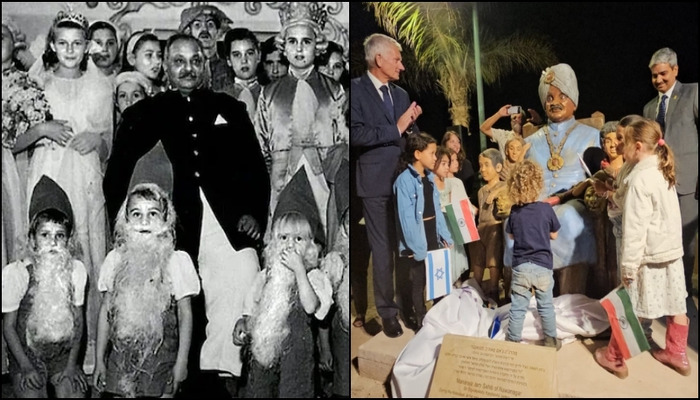
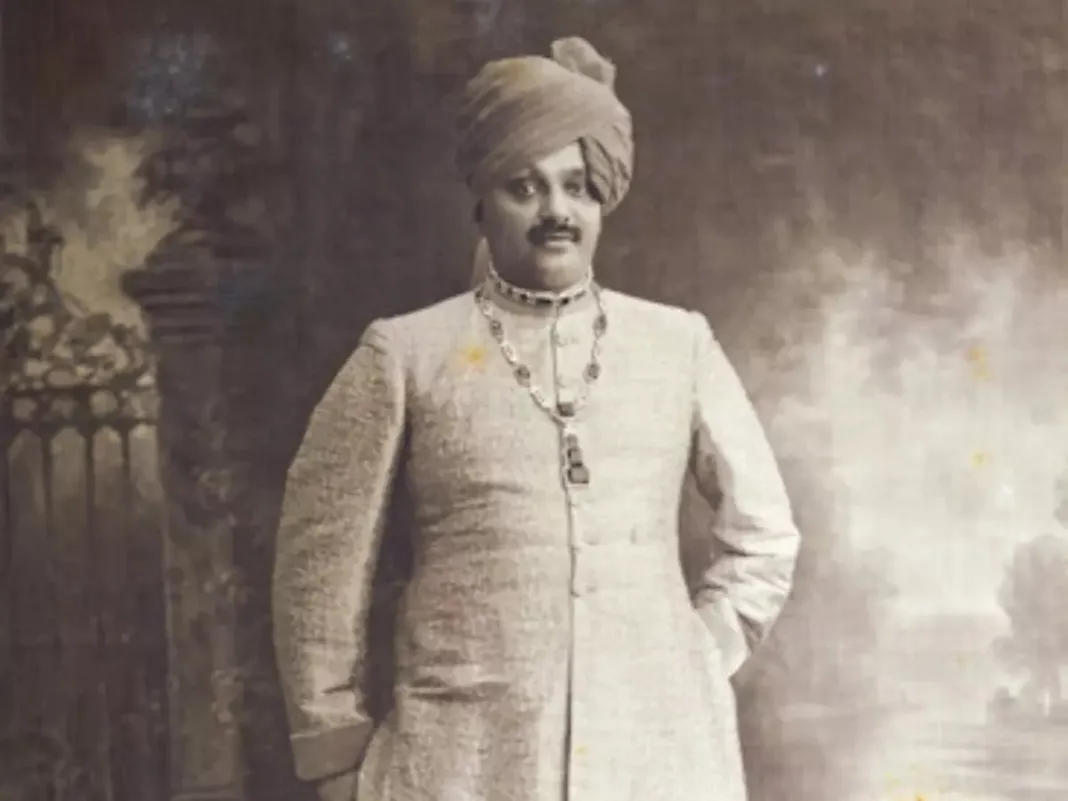
A statue of Jamsaheb Digvijaysinh Jadeja, the former Maharaja of Nawanagar (now Jamnagar), was recently unveiled in Nevatim, southern Israel. The statue honours the compassion and empathy Jamsaheb displayed in sheltering Polish children (including Jewish children) during World War II.
An inscription below the statue of Jamsaheb is reads:
During the Holocaust, he saved many Jewish children at HIs own expense and sheltered them in his home, providing them with care and love.
A sentence from the Jewish scriptures is also quoted there, which reads – ‘Those who save one life save the whole world.’
An event was organised by the Indian Jewish Heritage Centre (IJHC) and the Cochin Jewish Heritage Centre (CJHC) to commemorate the Maharaja and to unveil his statue. The statue was supposed to be completed in September 2024, but its unveiling was repeatedly delayed due to Israel’s prolonged military conflict with Hamas.
A moving tribute at Moshav Nevatim ?????
The statue of Maharaja Jam Saheb of Nawanagar (Gujarat) was unveiled in Nevatim honouring his exemplary compassion during World War-II. He adopted hundreds of Polish children including Jewish children and built a home for them in 1942… pic.twitter.com/MLKg9satnk
Indian Ambassador J.P. Singh, along with the Polish Ambassador and officials from the Israeli Foreign Ministry, was also present at the event.
Who was Jamsaheb Digvijay Singh Jadeja?
Maharaja Digvijaysinh Ranjitsinh Jadeja was the last ruler of Nawanagar state. He (like many rulers of that time) was known by the nickname “Bapusaheb.” The title reflected the people’s affection for the royal family. ‘May the people of my state prosper’– That alone was the jeevan mantra of such rulers.
Be it Bhavnagar’s King Krishnakumarsinhji or Jamsaheb Digvijaysinh Jadeja, they were truly “Bapusahebs,” as they protected their subjects like a father. This is the reason that even after so many years, their names are remembered with respect and honour. Digvijaysinh not only protected the people of his kingdom but, during tough times, gave refuge to the citizens of a distant country like Poland, located six and a half thousand kilometres away. He followed his dharma without any expectations. So many years have passed, but countries like Poland and Israel still remember this Maharaja.
Jamsaheb Digvijaysinh Jadeja was born in 1895. He went to Rajkumar College and then studied at University College, London. In 1919, he joined the British Army as a Second Lieutenant. After a military career spanning nearly two decades, he retired in 1931. However, he remained in the Indian Army in an honorary capacity until 1947. Two years after his retirement, in 1933, he was crowned as the Maharaja of Nawanagar, succeeding his uncle, Ranjitsinh Jadeja.
Digvijaysinh remained Maharaja of Nawanagar until he died in 1966. However, after India’s independence in 1947, he merged his state, along with other states, into the Indian Union. Thus, he was the last Maharaja of Jamnagar. His son, Shatrushalyasinh Jadeja, is the current King of Jamnagar. Though princely states have become past now, traditions such as coronation and other royal ceremonies continue as before and people still hold their kings in the same deep respect.
Polish children, many of whom were Jewish, were sheltered during World War II.
During World War II, the Soviet Union and Germany invaded Poland in 1939. As a result, the Polish government collapsed, and the Polish rulers fled to London. Meanwhile, thousands of Polish citizens, including a large number of women and children, were deported to the Soviet Union. Many of them were disabled, and some were orphans.
These people were kept in refugee camps and orphanages, where they died of disease and hunger. This continued for almost two years. These refugees lived in extremely difficult and miserable conditions. Finally, in 1941, they were all granted amnesty and ordered to leave the Soviet Union. Thus, thousands of citizens, especially children, were released, but they still had no place to go.
Some of them took refuge in Mexico, a few went to New Zealand, and some others fled to other countries as refugees. Maharaja Digvijaysinh Jadeja was the Hindu representative in the British War Cabinet at that time. He was well aware of these global events and resultant tragedies. As soon as he learned about the Polish refugees, he immediately extended help. Negotiations ensued, and an agreement was reached to bring them to India.
“Even though you have lost your parents, from today I am your father” said the ruler
In 1942, the first batch of Polish children arrived in Nawanagar. It is said that the Maharaja himself was present to welcome them. He told the children, “You are no longer orphans. Even though you have lost your parents, from today I am your father. Now you are residents of Nawanagar, and I am your father.”
Jam Sahib made arrangements, including housing and food, for all the children,. A camp was immediately established for these children near Balachadi, where they were well cared for. Adequate medical assistance was provided, and schools were opened. The Maharaja also established a special library of Polish language books to ensure that the children would not forget their mother tongue.
He not only arranged all the facilities but also personally supervised everything, visiting regularly to ensure that all arrangements were in place. The Maharaja personally took it upon himself to cater to these children’s smallest needs. Furthermore, when some Polish children complained about India’s spicy food, he hired seven Polish cooks to prepare food for them. Polish teachers were also appointed to educate them.
Later, another camp was opened, and more children were brought in. They were also provided with all possible care. Later, the kings of Patiala and Baroda also provided financial aid to the camp, and the industrial conglomerate Tata also contributed funds. Millions of rupees were, thus, collected for these Polish children to ensure that they did not face any difficulties.
The Polish children remained in Nawanagar until the end of World War II. Later, when Britain recognised the Polish government, these refugees returned. However, some later emigrated to Britain, Australia, the United States, and other countries. It is said that Jam Saheb himself was present to see the children off. This moment was emotional for both the Polish children and their Bapusaheb.
Jam Saheb is known in Poland as the “Good Maharaja”
Jam Saheb performed his Dharma without expecting anything in return, but the grateful nation of Poland has not forgotten this Indian Maharaja, who sheltered thousands of children in a time of adversity and became their ‘father’. He is still famous there as the “Good Maharaja”. Poland still remembers this late Maharaja with great respect and reverence. As a symbol of this honour, a monument has been erected in Warsaw, the capital of Poland, called the ‘Jam Saheb Memorial of Nawanagar’. The first sentence inscribed on the monument reads: “Tribute to the kind Maharaja, from the grateful nation of Poland.
In addition to that, a school in Warsaw, built in Indian style, has been named after Jam Saheb. There is also a square called ‘Maharaja Square’, where a memorial has been erected. In 2022, a train named after Jam Saheb was launched in Poland. Prime Minister Narendra Modi visited the Maharaja’s memorial during his visit to Poland in August 2024.
Israel honoured him for saving Jewish children
Not only Poland, but Israel also remembers Maharaja Digvijaysinh Jadeja with great respect. Among the children who were given refuge in Nawanagar were many Jewish children. Even today, Jews believe that when a Hindu king opened his treasury to foreign children, he didn’t discriminate whether they were Christian, Jewish, or belonged to any other religion. Everyone was treated equally irrespective of their religion.
Jerry Klinger, president of the Jewish American Historical Preservation Society, wrote in an article that while he was working on a different project, a colleague told him about Jamsaheb’s rescue of Jewish children. That colleague was also in contact with some of the people Jamsaheb had sheltered as children.
Klinger says, “There are probably many such people. Some may not even be alive now. But the important thing is that Jam Saheb gave refuge to Jewish children. He should be honored in Israel. Poland has honored Jam Saheb enough. The idea came that Jam Saheb should also be honored properly in Nevatim, and then the work of erecting his statue began.”
On 10th November, a massive blast near Red Fort terrorised Delhi and the rest of the country. Within minutes, investigation agencies rushed to the spot to probe the explosion that took the lives of at least 13 people. Soon, the link between the Delhi Red Fort blast and Al-Falah University emerged, as the terrorist who initiated the explosion was an associate of three medical doctors linked to the university, arrested in a joint operation by Haryana Police and Jammu and Kashmir Police. The police had recovered over 2,900 kg of explosives hours before the Delhi blast from the locations linked to the arrested doctors.
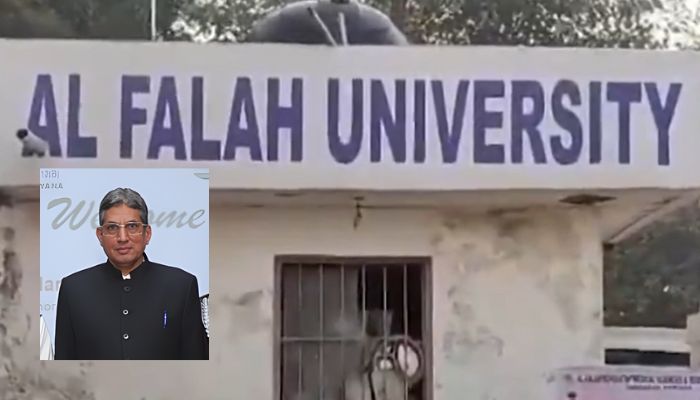
While the Vice Chancellor of the university, Prof (Dr) Bhupinder Kaur, finally issued a statement claiming the university had no links to the busted terror module, the Chancellor and founder of the university, Jawad Ahmad Siddiqui, remained silent. Interestingly, there is hardly any digital footprint of Siddiqui.
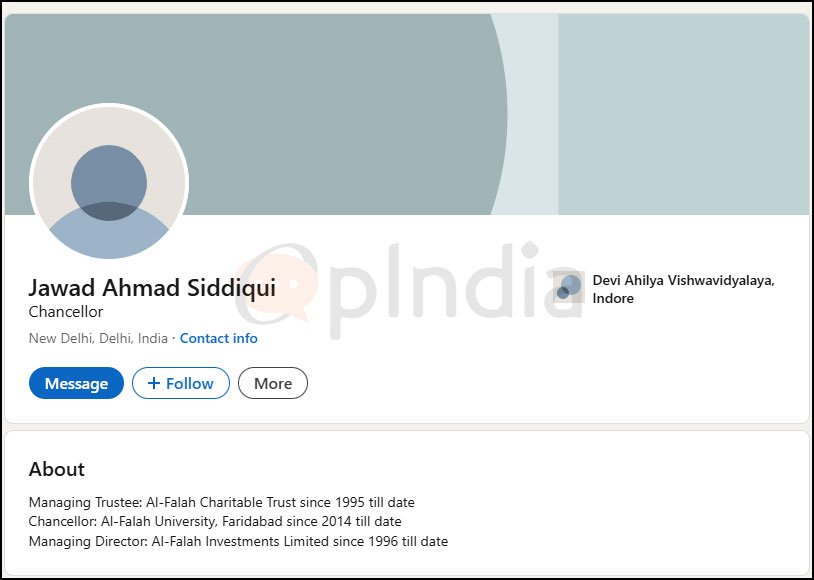
OpIndia dug into available information on Chancellor Jawad Ahmad Siddiqui and found some problematic history. His LinkedIn profile does not have much information. The “About” section reads, “Managing Trustee: Al-Falah Charitable Trust since 1995 till date, Chancellor: Al-Falah University, Faridabad since 2014 till date, Managing Director: Al-Falah Investments Limited since 1996 till date.”
Source: LinkedIn
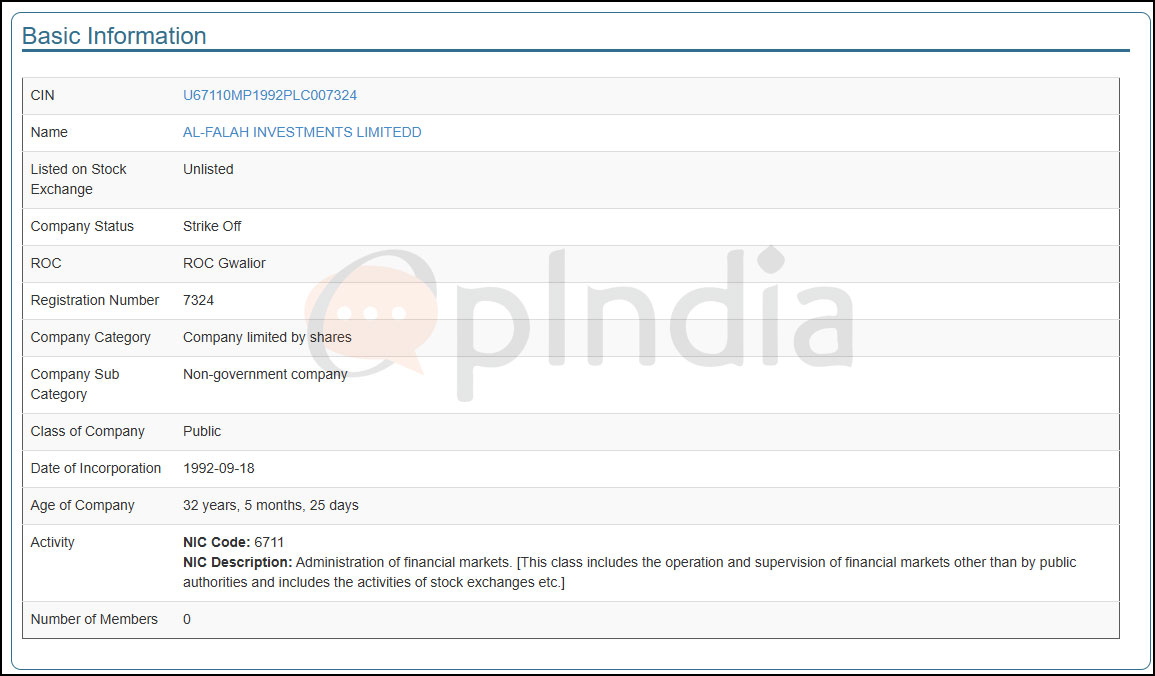
OpIndia found a report published by Milli Gazette in July 2000, which suggested that a person named Jawwad Ahmad Siddiqui was in Tihar Jail with his two brothers for defrauding investors in Al-Falah Investment Limited. When we looked into information about the company, we found that it was registered in 1992 and has the status “strike off,” which means the company has stopped functioning.
Source: Zaubacorp
From the information available on Zaubacorp, it was revealed that the company had only one director, Jawad Ahmad Siddiqui.
Source: Zaubacorp
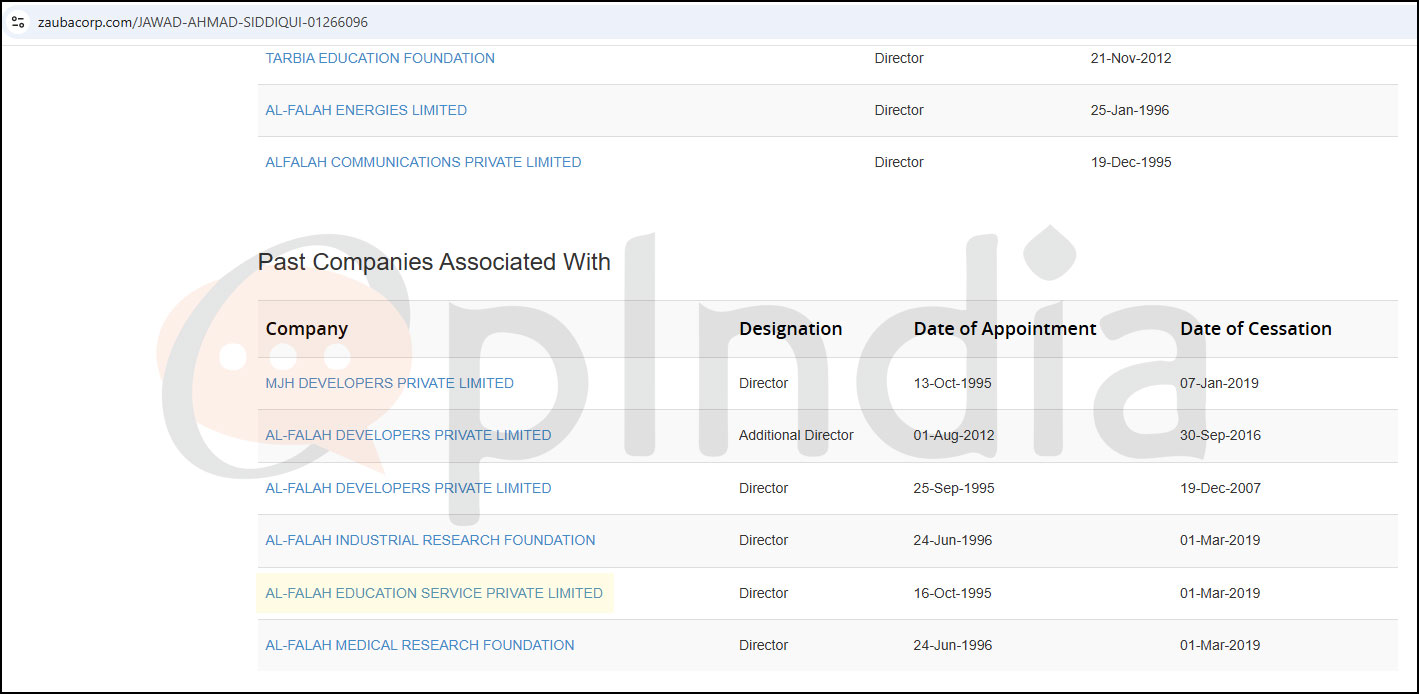
From Siddiqui’s past directorial associations, we found a link to Al-Falah Education Service Private Limited. Siddiqui was associated with this company as a director until March 2019.
Source: Zaubacorp
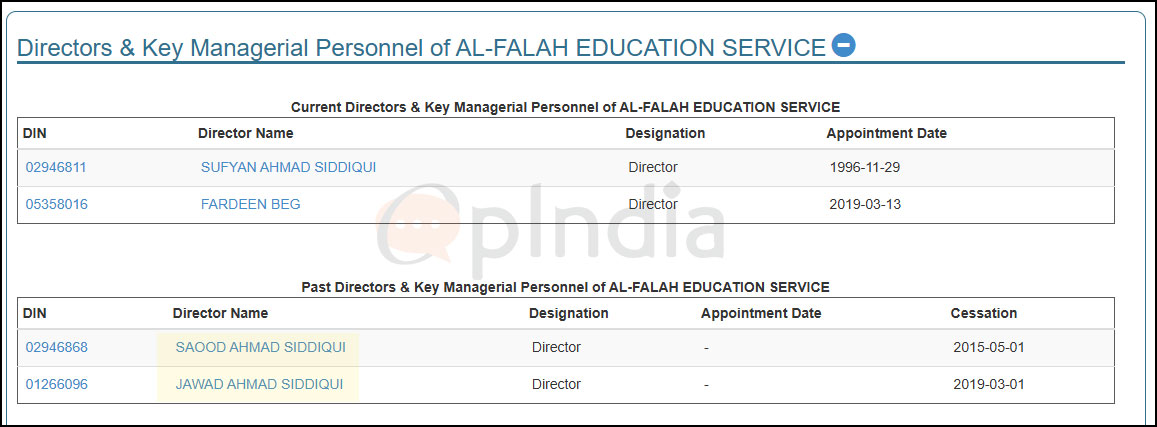
Upon further checking information about Al-Falah Education Service Private Limited, we found that it had two previous directors, Jawad Ahmad Siddiqui and Saood Ahmad Siddiqui.
Source: Zaubacorp
This information was crucial because when OpIndia looked into the case Milli Gazette had mentioned, there were two names cited, Jawad and Saood. We will come back to the case later.
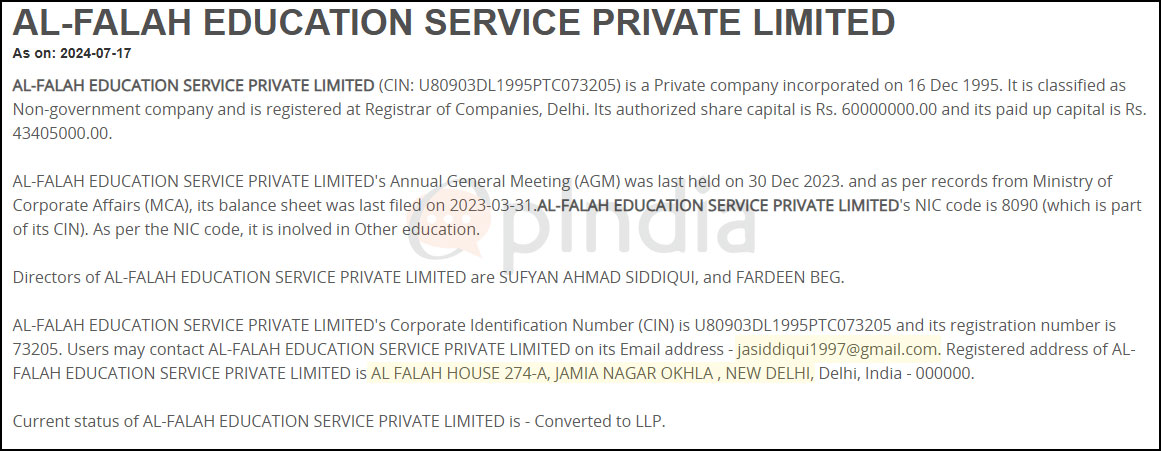
To establish a connection between Al-Falah Education Service Private Limited and Al-Falah University, we checked the address of the company. It was “Al-Falah House, 274-A, Jamia Nagar, Okhla, New Delhi.”
Source: Zaubacorp
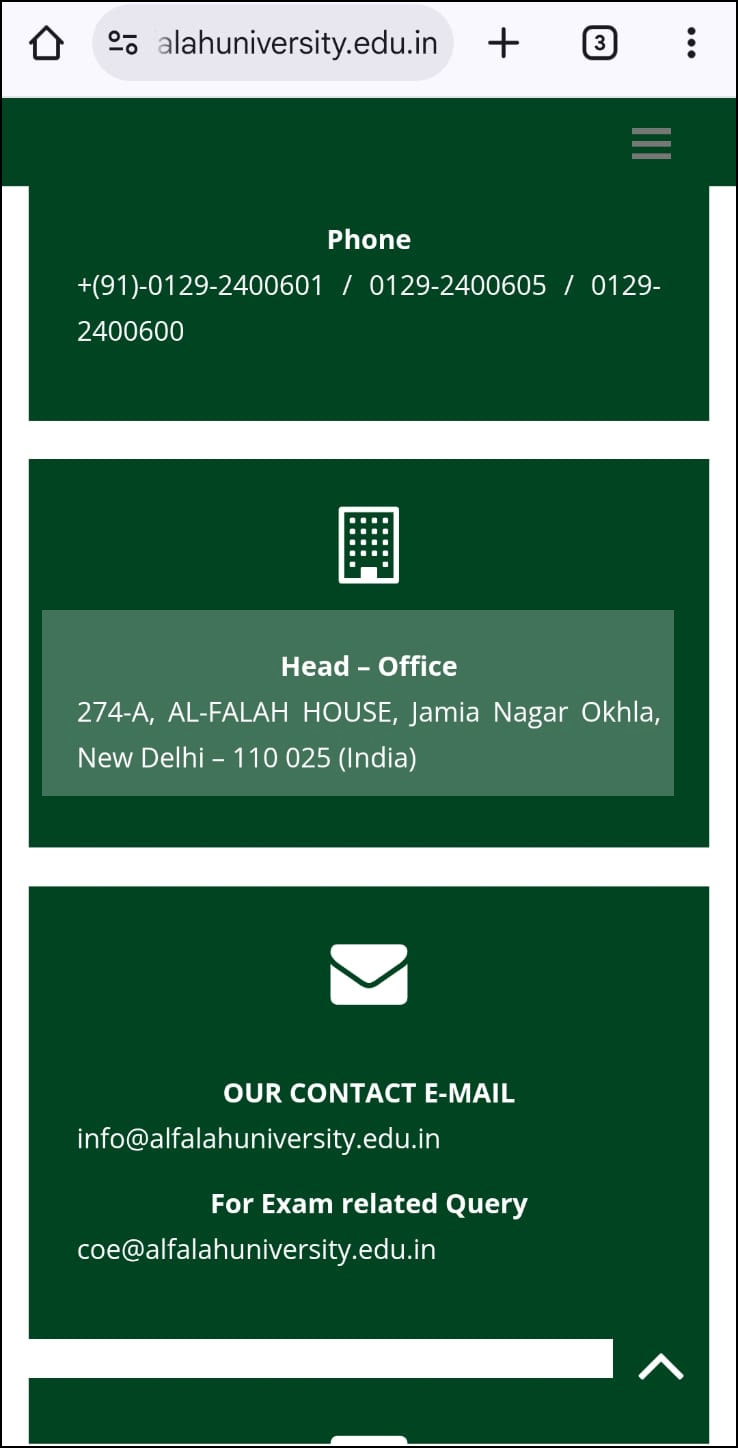
It is the same address that Al-Falah University has on its official website.
Source: Al Falah University
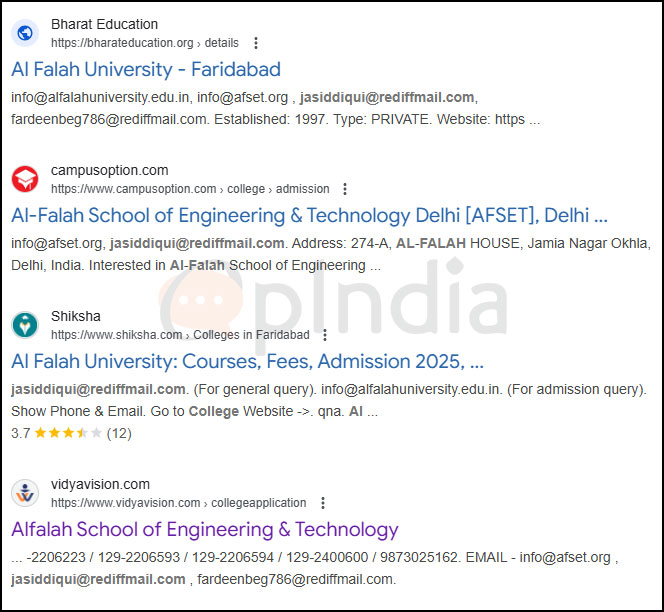
We were also able to establish the connection through the email address “[email protected],” which is listed as one of the official emails on several websites featuring the university’s profile.
Source: Google Search
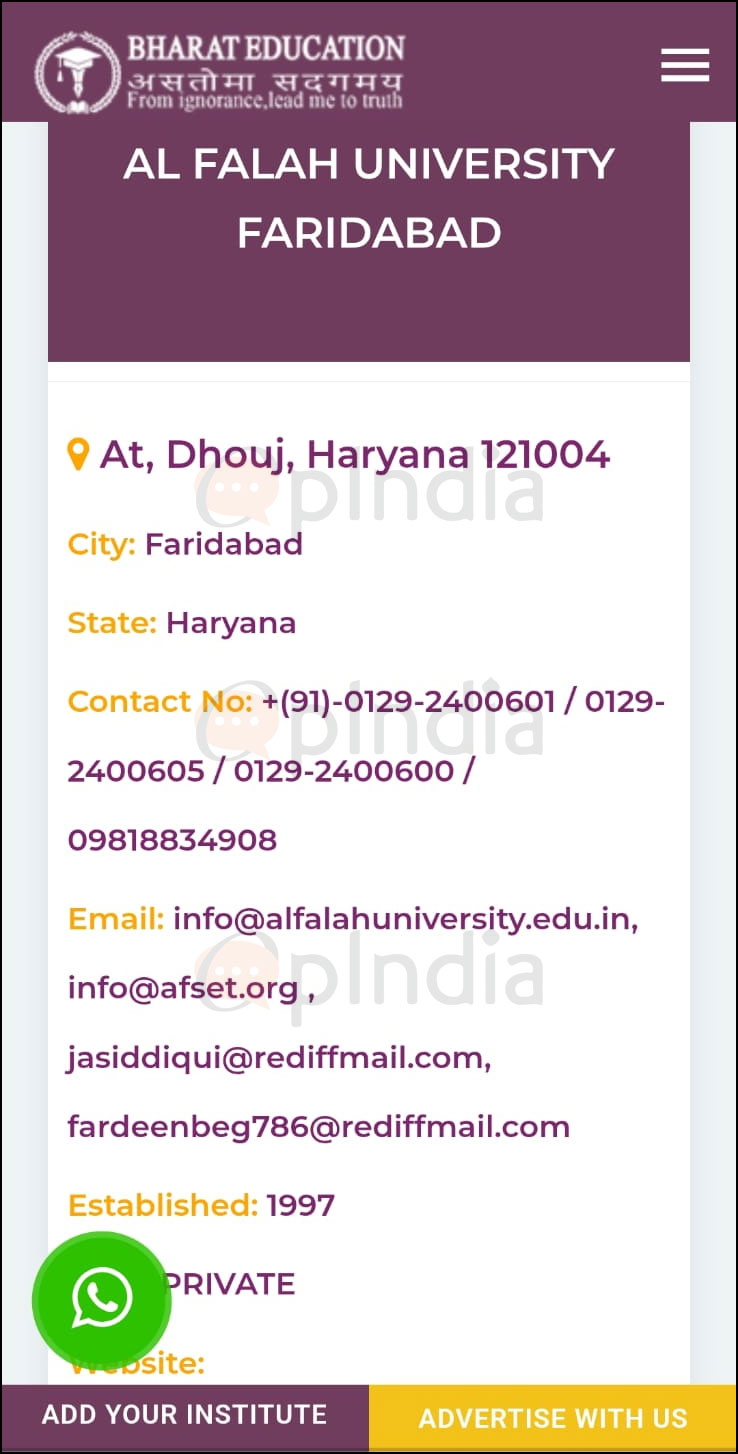
On the Bharat Education page of the university, the email addresses of both Siddiqui and Fardeen are listed.
Source: Bharat Education
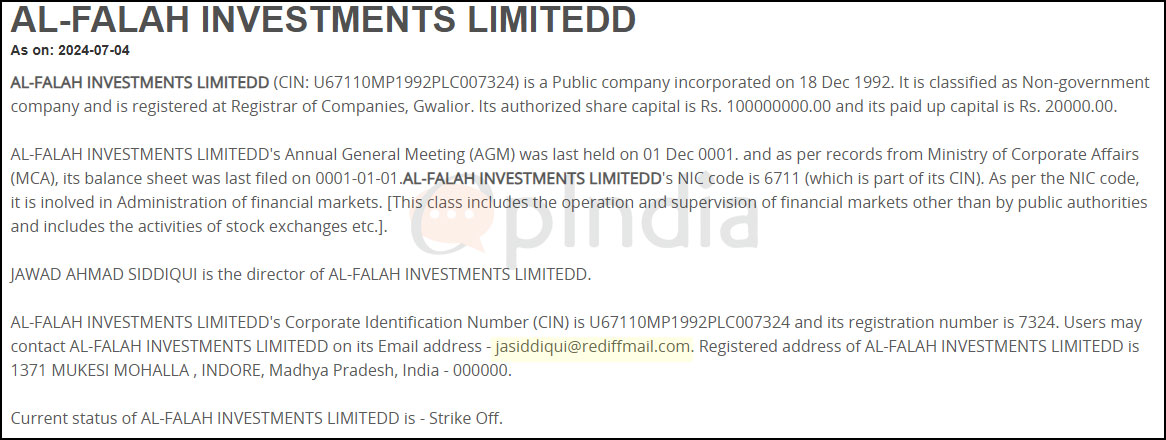
This email ID has been listed on Al-Falah Investments Limited’s Zaubacorp page, the same company that was involved in the fraud.
Source: Zaubacorp
It is evident that the person who was booked and remained in Tihar Jail for a long time was the same Jawad Ahmad Siddiqui who is running Al-Falah University.
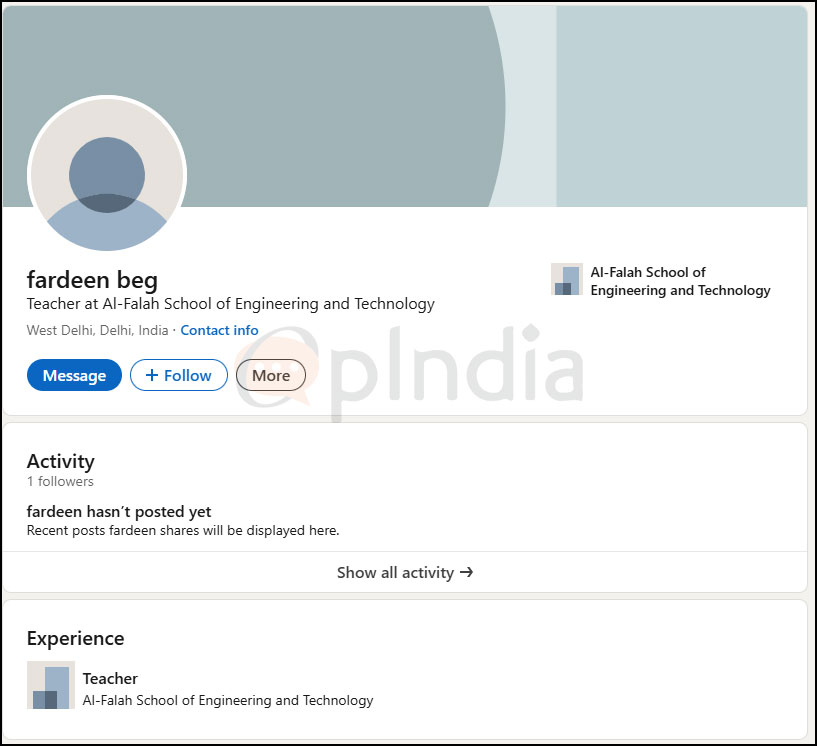
The current directors of the company are Sufyan Ahmad Siddiqui and Fardeen Beg. While there is not much information available about Sufyan Ahmad Siddiqui, Fardeen Beg is a teacher at Al-Falah University and also a part of the anti-ragging committee.
Source: LinkedIn
During our research, we found that Al-Falah University was established on 2nd May 2014 through the Haryana Private Universities (Amendment) Act, 2014, passed by the State Legislative Assembly of Haryana. It received recognition from the University Grants Commission (UGC) on 5th January 2015 under Sections 2(f) and 12(B) of the UGC Act. An expert committee was constituted, and the inspection visit took place on 29th-30th May 2015. The compliance of observations and deficiencies was later accepted by the UGC.
Jawad Ahmad Siddiqui was behind bars for over 2 years
Coming to the case for which he was sent to Tihar while the proceedings were ongoing, OpIndia found a judgment of the Delhi High Court dated 27th March 2003, pronounced by then-Justice RC Chopra. According to the court documents, an FIR was filed at New Friends Colony, New Delhi, in 2000 under Sections 420, 409, 406, 468, 471 and 120(B) of the Indian Penal Code (IPC). The case was then forwarded to the Economic Offences Wing, Crime Branch, New Delhi.
According to the case documents, Jawad Siddiqui was the Chairman-cum-Managing Director of Al-Falah Group of Companies, and Saood Siddiqui (one of the former directors of Al-Falah Education Services Private Limited) was one of its directors. The petitioners and their co-accused induced a large number of investors to make deposits in their companies. The court noted that they misappropriated funds worth Rs 7.5 crores. The complaint against them was filed by one KR Singh, who was cheated to the tune of Rs 95 lakhs.
The judgment read, “It is alleged that the petitioners induced a large number of persons to make deposits in their group of companies but later on, by forging their signatures and fabricating documents, converted those deposits into shares of their companies.” Investigation and FSL reports confirmed that the signatures of the investors were forged. The deposits were also received in the names of some companies that never existed. The funds were then transferred to the personal accounts of the accused. By the time the court passed this particular judgment, Jawad was in Tihar for about 37 months and Saood was in jail for 38 months.
Their counsel had argued that the maximum punishment for the listed offences was only three years and requested the court to grant them bail, but the court denied it. The duo then went to the Supreme Court, which also refused to intervene.
According to a Tribune report from June 2004, in 1995, Al-Falah Group of Companies had formed Al-Falah Sehkari Awas Samiti. The Greater Noida Authority had allotted 10,000 square metres to the Samiti in 1996, where they decided to build 100 flats for its members and shareholders. However, due to some financial constraints, the construction did not go through, and Jawad and others were arrested.
While Jawad was behind bars, some of his associates duped him and forged his signatures to fraudulently sell some flats for Rs 13 crores. The Tribune report was about their arrest, and the accused were identified as SP Yadav, Manzoor Hasan Zaidi, and Sanjeev Shrivastava.
The revelations surrounding Jawad Ahmad Siddiqui raise serious questions about the credibility and background of those running Al-Falah University. From past allegations of fraud and forgery to the present-day controversy linking the institution to a terror module, the pattern reflects a history that cannot be ignored. While the university administration has distanced itself from the ongoing investigation, the evidence connecting its leadership to questionable financial and criminal activities suggests a deeper scrutiny of Al-Falah University and its management is both necessary and urgent.
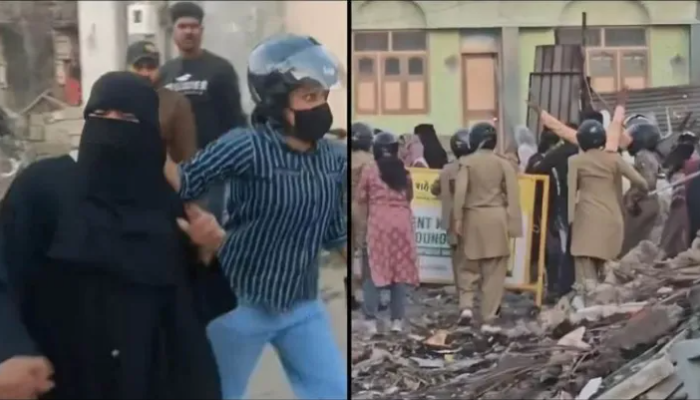
A challenging situation developed during a large-scale demolition operation organized by the administration in Prabhas Patan, Gir Somnath in Gujarat. Structures constructed on government land were taken down when a Muslim group, which included several women and children, gathered to protest the demolition of a dargah (Islamic shrine).
The group hurled stones at the police, injuring two cops after which a case had been lodged against 100 people in relation to the incident. According to reports, the administration has been engaged in a significant demolition drive targeting illegal constructions in Somnath for an extended time.
Several unauthorized residential and commercial structures have been targeted as part of this initiative. On 10th November, around 11 properties consisting of shops, houses and places of worship, were scheduled for removal in proximity to the Somnath Temple near Shankha Circle within the jurisdiction of the Prabhas Patan police station.
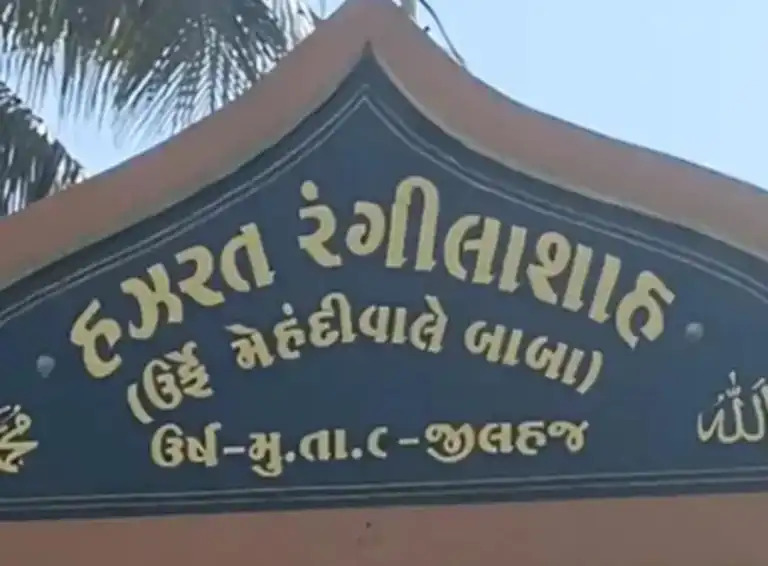
Police teams arrived in the evening to take action on the unauthorized Hazrat Rangeela Shah Dargah following the removal of most of the encroachment. A group of women dressed in burqas alongside children then entered the area, resulting in a confrontation with the police. The latter tried to calm the crowd several times but they surged forward and assaulted the officials by hurling stones.
Dargah (Source: Bhaskar)
The police employed a mild lathi charge and discharged three tear gas shells as the mob dispersed and order was restored. However, Inspector MV Patel from Prabhas Patan and Head Constable Kuldeep Singh Parmar of the Surveillance Squad sustained wounds. The police reported that a group of 80 to 100 individuals had thrown stones at them.
The police commenced an operation to locate the perpetrators and informed that the situation is presently under control. A case has been filed against the assailants as well as against the women who were part of the group.
Case against 17 identified individuals, mob of 100
The police have implemented strict measures in response to the incident. An offense had been recorded against a mob of 100 individuals which included 17 identified persons. The action transpired after the review of video evidence of the assault. The police have lodged an FIR (First Information Report) against the perpetrators, on a complaint filed by Deputy Mamlatdar Ranjit Singh Kher. OpIndia has a copy of the FIR.
A criminal case has been launched under sections 189(2), 189(3), 189(5), 190, 191(2), 195(1), 125 and 121(1) of the Bharatiya Nyaya Sanhita (BNS), along with section 135 of the Gujarat Police Act, at the Prabhas Patan police station. The primary suspects are Rafiq Gadhia, Shabana Haroon Motia, Razia Hussain Kalwat, Saqil alias Bhoro, Ghulam Sabir Doctor, Rajusha Hinfsha Banwa, Shakeel alias Gali Kalwat, Obama, Nadeem Kalwania, Ayub Badam, Rafiq alias Bodu, Sabbir Maulana, Sufian Kalwania, Mayuddin Hanif Amad Mahmad Mahida, Sabbir Iqbal and Sabbir Haroon.
OpIndia spoke with the complainant
The complainant in an interview with OpIndia disclosed that his team under police protection had arrived to take down the dargah, situated on government property. However, a throng of local women, children and men began to create a disturbance and obstruct the operation, despite police efforts to talk to them. Afterward, they started to pelt stones when the police made further attempts to pacify them.
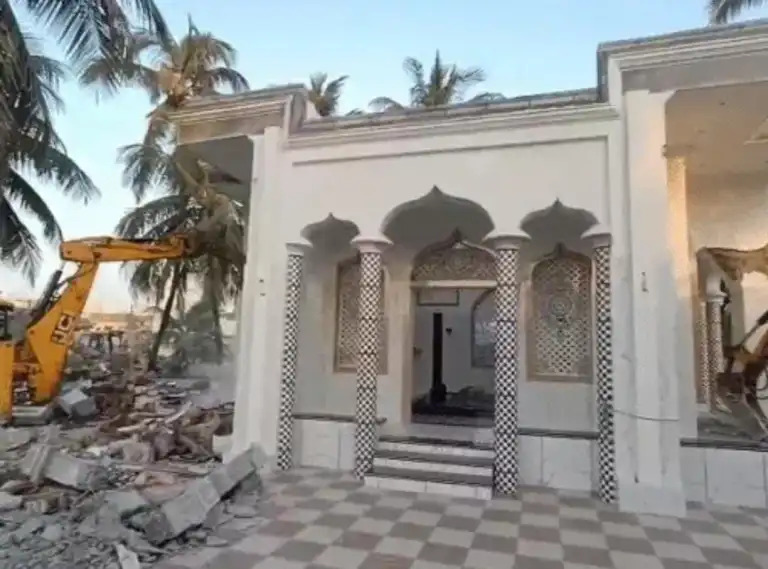
Kher detailed that the police resorted to a lathi charge and utilized tear gas shells after the attack escalated. He also noted that the authorities demolished the illegal dargah as the situation was stabilized. He confirmed that further action is underway and the demolition campaign will continue.
Bulldozer action (Source: Bhaskar)
The authorities promptly began a combing operation to capture the culprits. However, it has been reported that the majority of them have absconded and the police are actively pursuing them. The administration has unequivocally stated that the ongoing process of eliminating illegal encroachments from government property would proceed and strict steps are going to be enforced against people who take the law into their own hands and assault personnel.
Ever since the car explosion near Red Fort in Delhi, the Al Falah University in Haryana’s Faridabad has come under scanner. On 11th November, a search operation was conducted and three people were arrested by the police. More than 800 police officers were deployed since morning. It is reported that around 60 university staff members have been questioned so far.
Mosques and maulanas in nearby villages are also being investigated. So far, four Imams have also been questioned by the police.
#WATCH | Haryana: A team of Haryana Police leaves from Al-Falah University in Faridabad's Dhouj, where arrested Dr Muzammil used to teach.
360 kg of possible ammonium nitrate, assault rifle and other ammunition were recovered by J&K Police during an investigation in Faridabad… pic.twitter.com/P8wiCVX0X6
Two doctors linked to the Al Falah University arrested
The police have arrested two doctors linked to the Al Falah University over recovery of explosives and weapons from their possession. It is also suspected that the two doctors, Dr. Muzammil Shakeel Ganaie and his girlfriend Dr. Shaheen Shahid, are involved in the Delhi car blast. Notably, several doctors have been arrested in the last two weeks for running a Jaish-e-Mohammed (JeM) terror module.
It is reported that the university provided shelter to white-collar terrorists while one Dr Umar Nabi Bhatt led this module. This means that unsuspecting individuals were used as weapons.
At present, agencies are monitoring every activity. The WhatsApp messages of the four imams arrested have been deleted. This suggests that these doctors may have connections to those imams.
The Many Faces of Al Falah University: What OpIndia ground team found
When the OpIndia team arrived at Al Falah University, they were stopped at the gate. But somehow, concealing their identities, they managed to sneak inside. They saw that the campus was so large that no other private university in Delhi NCR had such a large campus. The campus was bustling with activity, with students thronging around, and teachers were seen moving about.
From a distance, it seemed as if these people were unaware of the incident involving Dr. Muzammil, who used to teach students there.
Some people were performing Namaz in an open space inside the campus. The security guard flatly stated that he did not know any Muzammil. He said, “People have been discussing it since morning, but we don’t know.”
As the OpIndia team moved forward, they saw a large hospital. Scores of medical college students, dressed in burqas, were coming and going. There was a constant chatter about Dr. Muzammil and Dr. Shaheen.
Our team tried to speak with some of them, but they refused to discuss anything about Dr. Muzammil and Dr. Shaheen. Some simply expressed their shock at the news, having seen Dr. Muzammil as a doctor and professor.
A medical student said, “It is a big surprise for us because Dr. Muzammil used to teach us.”
An assistant Hindu professor, speaking to OpIndia on condition of anonymity, said, “Most of the students here are from Jammu and Kashmir and western Uttar Pradesh. Muslims are in majority. There are also students from other religions. When I first started teaching at the university, I was concerned about my safety and found the atmosphere a bit strange. I noticed that many professors came to campus with long beards and dressed in Muslim attire. Dr. Muzammil was one of them, often arriving on campus on a yellow bike. Dr. Muzammil had been teaching there for many years.”
Meanwhile, a female professor also explained that everyone is shocked by Dr. Shaheen’s arrest, as she used to spend the most time with them. Students and professors are talking to their respective groups, but are not discussing the issue with strangers.
Notably, Dr. Shaheen is the woman whose car was found with illegal weapons. She was teaching at this university. According to the professor, Dr. Shaheen previously drove a Swift car, but recently purchased a new Brezza.
After visiting Al Falah University, the OpIndia team realized two important things: first, illegal activities are prevalent there, and second, the university is a hub frequented by outsiders.
A short distance to the left of the university is Muzammil’s hideout, where 360 kilograms of ammonium nitrate was recovered. About two kilometres to the right of the university is the village of Fatehpur Taga, where a small house stands. Dr. Muzammil didn’t live in this house, but rented it. He had stored approximately 2,500 kilograms of ammonium nitrate there.
Jihadi professor Dr. Muzammil had two hideouts on either side of the university. OpIndia’s team also visited and inspected the sites.
The Al Falah University in Faridabad, adjacent to Delhi, had become a safe haven for terrorists. Besides being safe, the teachers were also unable to spot the terrorists while they were busy working.
It was established in 2014 by the Al-Falah Charitable Trust. It was accredited through the Haryana Private Universities (Amendment) Act, 2014. The UGC granted its recognition in 2015. The university is spread over approximately 70 acres. The Al Falah Hospital, which provides free medical treatment, has 650 beds. The university also houses hostels, staff and doctor quarters, a library, and labs.
The Al Falah University is run by the Al Falah Charitable Trust. Its president is Jawad Ahmed Siddiqui. The current registrar is Professor Dr. Mohammad Parvez. The question now arises as to whether the university management was aware of the actions of its professors. The university management had deliberately kept these doctors here to ensure that no one could notice them or that these doctors used the university as a shelter.
Prime Minister Narendra Modi is on a 2-day state visit to Bhutan. During his historic visit, the Prime Minister inaugurated the Punatsangchhu-II Hydroelectric Project developed jointly by the Indian and the Bhutanese governments.
Taking to X, PM Modi shared some pictures from the inauguration ceremony and wrote, “Fuelling development, deepening friendship and driving sustainability! Energy cooperation remains a key pillar of the India-Bhutan partnership. Today, we inaugurated the Punatsangchhu-II Hydropower Project. This is an enduring symbol of friendship between our countries.”
Fuelling development, deepening friendship and driving sustainability!
Energy cooperation remains a key pillar of the India-Bhutan partnership. Today, we inaugurated the Punatsangchhu-II Hydropower Project. This is an enduring symbol of friendship between our countries. pic.twitter.com/amYDqzxD1Q
The 1,020 MW hydel project was inaugurated by PM Modi alongside Bhutan’s king Jigme Khesar Namgyal Wangchuk, marking a key milestone in India-Bhutan relations. The Punatsangchhu-II Hydroelectric Project was fully commissioned in August this year, with its final unit synchronised on 27th August 2025 in the presence of Bhutanese Prime Minister Tshering Tobgay and Indian Ambassador to Bhutan Sudhakar Dalela.
#WATCH | Bhutan | Prime Minister Narendra Modi and His Majesty the King of Bhutan Druk Gyalpo inaugurate the Punatsangchhu-II Hydroelectric Project, in the presence of the Sacred Buddha Relics
India-Bhutan cementing ties with cooperation in the energy sector: How India funded and built the Punatsangchhu-II Hydroelectric Project
Located on the Punatsangchhu River in western Bhutan, the Punatsangchhu-II Hydel project is a run-of-the-river facility designed to generate sustainable and clean hydropower without large-scale water storage. This venture was jointly initiated by the Government of India and the Government of Bhutan in December 2010. The Punatsangchhu-II Hydroelectric Project is a cornerstone of India-Bhutan ties since the 1960s.
India provided for the complete funding of this hydel project, totalling up to Rs 7,500 crore. This included a 30% grant or a non-repayable aid to cover the initial capital costs as well as a 70% concessional loan from the Government of India. The arrangement was such to ensure favourable repayment terms for the brotherly nation of Bhutan. This is intended to enhance Bhutan’s power capacity by 40% and bolster regional energy security.
Executed as a turnkey joint venture, India’s public sector undertaking (PSU) National Hydroelectric Power Corporation (NHPC) was the lead developer on the Indian side in this project. The Indian technical team and engineers collaborated with Bhutan’s Druk Green Power Corporation (DGPC) for design, construction and operations. The Indian team provided the DGPC with their expertise in geological surveys, dam construction and turbine installations in order to address the challenges of the Himalayan terrain, including seismic activity and landslides.
The project was backed by Indian engineering consultancies, Water and Power Consultancy Services for engineering and design and the National Institute of Rock Mechanics for modelling and geotechnical engineering services.
While the construction began in 2011, the project faced delays due to geological issues such as sinkholes and unstable foundations; the Indian and Bhutanese teams mitigated these challenges and delays by coming up with advanced engineering solutions. India also extended environmental safeguards to ensure minimal ecological disruption in the sensitive Punakha-Wangdue valley.
As per a Bhutanese media report published this September, the project has generated over 2,160 million units of clean energy to date, which is approximately Nu 6bn in revenue, sold domestically.
The Panatsangchhu-II HEP is not the only hydel project India has aided Bhutan in. India has financed and executed six major joint hydropower projects in Bhutan, contributing to more than 3,400 MW of Bhutan’s installed capacity. India is also the top importer of Bhutan’s power. India has, over the years, supported Bhutan in the Chhukha HEP, Kuricchu HEP, Tala HEP, Mangdecchu HEP, Panatsangchhu HEP and the planned Kholongchhu HEP through joint ventures. In 2021, the Mangdechhu HEP won the ‘Best International Dam’ award.
Historically, India has supported Bhutan’s development and been an inextricable contributor in the Himalayan kingdom’s growth story. For the 13th five-year plan of Bhutan, which runs from 2024 to 2029, the Government of India has committed a support of Rs. 10,000 crores. This covers project-tied assistance, high-impact community development projects, the economic stimulus program, and a program grant. This quantum constitutes a 100% increase over the 12th five-year plan figures, the Indian External Affairs Ministry said in September this year.
Notably, India and Bhutan have good trade relations as well. In 2024-25, India exported goods worth $1.3 billion to Bhutan. These included petroleum products, iron and steel, grains and smartphones. Meanwhile, Bhutan exported products totalling $513 million, including electricity and construction materials.
India is Bhutan's largest trade and development partner. The trade volume has tripled since 2014 to over $1.7 billion. Hydropower is a cornerstone of this partnership, with India funding and constructing mega hydropower projects in Bhutan, while Bhutan exports the electricity… pic.twitter.com/6q87B69aMO
In addition to hydroelectric projects, India has also helped Bhutan bolster its railway infrastructure. During his address at an event in Thimphu on 11th November, PM Modi highlighted his government’s decision taken in September this year to link the cities of Gelephu and Samtse in Bhutan to India’s Kokrajhar in Assam and Banarhat in West Bengal. The project is expected to be completed within three years.
The railway project, worth Rs 4,033, includes the construction of two lines totalling 89 km will slash travel time and boost the Gelephu Mindfulness City, being supported by the Indian government.
“Completion of this project will provide easier access for the industries here and Bhutanese farmers to India’s vast market,” PM Modi said.
India is also contributing to the ongoing enhancements to the Thimphu-Phuentsholing highway and border roads. Besides, New Delhi is aiding smart city initiatives in Thimphu and Paro. India has allocated Rs 1,113 crore for these and other projects pertaining to healthcare and urban infrastructure.
In addition, India also provides scholarships to over a thousand Bhutanese students in India via the Nehru-Wangchuk and Ambassador’s Scholarship. To further make the lives of Bhutanese people easier, India is expanding its game-changer Unified Payment Interface (UPI) facility in Bhutan.
They say lightning never strikes the same place twice. But terrorism, especially the Pakistani variety, has a knack for doing exactly that, and then blaming the weather.
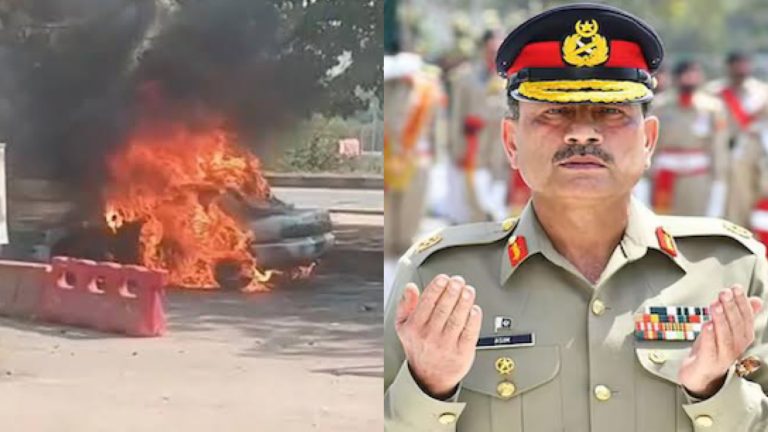
Just hours after the Delhi Red Fort car bombing that killed nine innocent people, a powerful explosion ripped through the Islamabad Judicial Complex, killing twelve. Two capitals, two blasts, two “coincidences” and one unmistakable puppeteer in Rawalpindi’s GHQ.
Field Marshal Asim Munir, the self-promoted Caesar of a collapsing state, seems to have pressed the panic button. Because if India’s Operation Sindoor 2.0 is indeed loading, then the Islamabad blast may well have been Pakistan’s version of “self-harm to gain sympathy.”
Too timed to be a coincidence
The timeline of events itself reads like a script, not chance. The Red Fort blast occurred on Monday evening around 6:45 pm. Barely 18 hours later, at 12:39 pm on Tuesday, the Islamabad court complex was rocked by a suicide explosion. Both attacks featured suicide bombers, both used ANFO-based explosives, and both unfolded precisely as India began dismantling a sprawling Jaish-e-Mohammad (JeM) doctor module spanning Faridabad, Kashmir, and Uttar Pradesh.
Security personnel near the site of blast in Delhi (Source: The Hindu)
This isn’t coincidence. This is choreography. For decades, Pakistan’s deep state has mastered the art of blowing up its own backyard whenever it needs to play the victim card. And right now, Asim Munir desperately needs to look like a victim. Because after the Delhi blast, every intelligence intercept, every seized device, every investigation trail and explosives point directly toward Pakistan-backed JeM, a terror outfit Munir has coddled for years as his personal proxy. In fact, JeM terrorists killed in Operation Sindoor were granted state funeral, attended by senior Pakistani Army officials.
And with Operation Sindoor 2.0 now a matter of when, not if, Islamabad needed a diversion, fast.
Munir’s nightmare: Operation Sindoor 2.0
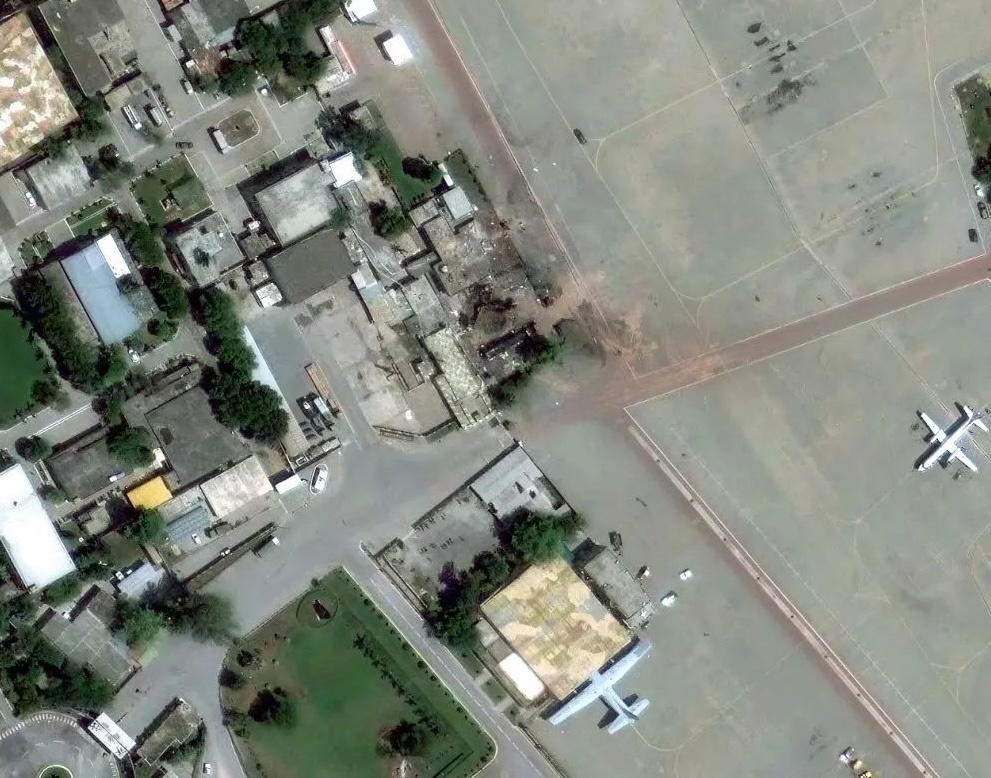
To understand Munir’s desperation, one must revisit May 2025, when India’s Operation Sindoor shredded Pakistan’s terror ecosystem in one precise, calculated stroke. The operation flattened nine terror camps, ten military bases, and multiple radar stations. It also humiliated the Pakistan Air Force when India’s BrahMos-A cruise missiles struck the Nur Khan airbase, just kilometres away from Pakistan’s nuclear command.
Indian missile damages Pakistan’s Nur Khan airbase (Source: Maxar)
That single strike did more than destroy infrastructure; it destroyed illusions. It told Pakistan, in no uncertain terms: Your nukes no longer shield your terror.
The fallout was catastrophic for Islamabad. The military establishment broke down under pressure and begged Washington for a ceasefire. India, confident and resolute, refused to even acknowledge Pakistan’s calls for “de-escalation.” This is why Pakistan has bent over itself to talk up US President Donald Trump. The inordinate charm offensive of the US President is an admission that Operation Sindoor was a roaring success that brought Pakistan on its knees.
Asim Munir, the man who presided over this disaster, survived politically only by promoting himself to Field Marshal, hoping a new rank could erase old failures. But now, after the Delhi Red Fort attack, clearly linked to JeM operatives under ISI supervision, Munir knows India’s response could be swift and unforgiving.
And this time, it won’t stop at Balakot or Bahawalpur.
From doctors to bombers: JeM link to Faridabad terror module and Delhi blast
The Delhi attack wasn’t random. It was the last convulsion of a dying network, triggered in panic after Indian agencies busted a major JeM-linked module in Faridabad. This wasn’t a ragtag group of radicals; it was an organised network of doctors, academics, and medical professionals radicalised into running a terror logistics chain.
At the heart of this network was Jamaat-ul-Mominaat, the newly launched women’s wing of JeM, headed by Masood Azhar’s sister, Sadia Azhar, from Bahawalpur. Her key India operative, Dr Shaheena Shahid from Lucknow, was arrested with arms and ammonium nitrate. Her handler, Dr Muzammil Shakeel, a Pulwama native teaching at Al Falah University, Faridabad, was caught with over 2,900 kg of explosive material.
When one of their top operatives, Umar Mohammad, realised the network had been compromised, he allegedly detonated the car bomb near Delhi’s Red Fort, killing nine people. It was a suicidal act of defiance, but it also exposed the depth of Pakistan’s reach inside India’s urban centres.
Umar Mohammad (L) responsible for Delhi blast
So much for the endlessly repeated myth that “terror has no religion.”
The Islamabad blast: A false flag in broad daylight
Now comes the twist that even Pakistani journalists are whispering about. Hours after the Red Fort explosion, a suicide bomber “mysteriously” appeared outside Islamabad’s judicial complex, lingered for nearly ten minutes, and then blew himself up near a police van. The explosion killed lawyers, policemen, and bystanders, the perfect optics to paint Pakistan as a “victim of terrorism.”
No terror group has claimed responsibility. Instead, Pakistan has rushed to blame India and Afghanistan for the attack, even before a preliminary investigation was ordered. How convenient.
Even Afghanistan’s media hinted that the Islamabad bombing could be “a calculated attempt by Pakistan’s establishment to deflect Indian retaliation under Operation Sindoor 2.0.” When Kabul calls you out for manufacturing terror, you know the credibility crisis has reached new depths.
BREAKING NEWS ? Asim Munir sacrificed Pakistanis in order to escape India’s reaction.
As a result of today’s explosion in Islamabad, at least 40 Pakistani citizens have been killed and injured so far.
Pakistan’s military has a long, bloody tradition of sacrificing its own citizens to shape international perception. From the Peshawar school massacre to the Quetta police academy bombing, the ISI has repeatedly looked away, or worse, looked within, when terror suited its strategic calculus.
The Islamabad court attack fits this pattern perfectly. It also offers Pakistan and Munir an opportunity to cast themselves as victims of terror, and fool the West like it has been for over three decades now.
Munir’s gamble at self-harm to buy time
At its core, the Islamabad blast appears to be a suicidal diversion, a way for Asim Munir to buy time. Having seen Pakistan’s air defences shredded and key bases reduced to rubble during Operation Sindoor, Munir knows another Indian strike could cripple what remains of his command. His economy is imploding, his army demoralised, and his Western patrons indifferent.
So he resorts to the old ISI playbook: stage a domestic tragedy, blame “non-state actors,” and rush to Western embassies claiming shared victimhood. The hope is that Washington, London, or Doha will once again pressure India to show restraint, giving Pakistan’s military just enough breathing room to rebuild its terror infrastructure.
But the world has changed. India has aptly demonstrated in the last few months that it will no longer allow western capitals to dictate its strategic decisions.
Meanwhile, the Afghan Taliban, once a junior partner in Pakistan’s jihad project, now openly accuse Islamabad of “state-manufactured chaos.”
When Afghanistan, of all countries, calls you out for exporting terror, you know the mask has slipped.
A country addicted to its own terror
Pakistan today resembles an arsonist trapped in his own burning house, still clutching the matchbox, still insisting someone else lit the fire. The Islamabad blast wasn’t a terror attack in the traditional sense; it was a political message, broadcast in blood.
By detonating a bomb in his own capital, Asim Munir sent a signal to India, the West, and his domestic rivals: “If I burn, you burn with me.” It’s the language of desperation, the same one spoken by dictators on their last night in power.
But this time, the smoke won’t confuse anyone. India has moved on from appeasement and ambiguity. Operation Sindoor wasn’t a one-time retaliation. It was a doctrine, a standing policy that every act of cross-border terror will be avenged, and every mastermind made to pay. PM Modi echoed similar sentiments a day after the Delhi blast that claimed 9 lives thus far. During his visit to neighboring Bhutan, PM Modi vowed that perpetrators of the ghastly attack will be brought to justice.
Munir’s flirtation with terror boomerangs
Asim Munir thought a suicide blast outside Islamabad’s court would win him sympathy and strategic pause. Instead, he has earned suspicion abroad and contempt at home. His attempt to fake victimhood has only confirmed the truth that Pakistan’s greatest terrorist doesn’t hide in caves; he wears stars on his shoulders.
If India does proceed with Operation Sindoor 2.0, it won’t merely be retaliation; it will be a reckoning. Because for too long, Pakistan has exported jihad and called it strategy. This time, like many times in the past, it has used terrorism to inflict self-harm and play victimhood, even if it meant bombing its own capital and killing its own citizens.
The Islamabad bombing is therefore not a terror attack, much less sponsored by India or Afghanistan, against Pakistan. It is Asim Munir engineering a false-flag operation to project victimhood and attempt to thwart India’s Operation Sindoor 2.0. But like India has demonstrated it writ large, it won’t allow, whether it is a megalomaniac narcissist or a tinpot military despot, can dictate the timing and terms of India’s response.
India has been stunned by the disclosure of extensive terror plots over the last few days. A significant explosion took place close to Lal Qila metro station and near the Red Fort in Delhi, triggered by a Hyundai i20 loaded with ammonium nitrate fuel oil alongside a detonator on the evening of 10th November. It led to the death of at least 13 people and injured 20 others.
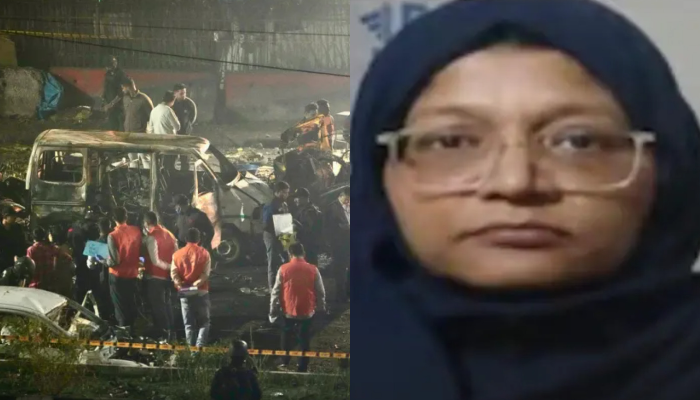
Meanwhile, three doctors have been arrested in connection with the large cache of explosives found in Faridabad, Haryana, busting a Pakistan-based Jaish-e-Mohammed terror module. Notably, one of the accused has been identified as Dr Shaheena Shahid from Lucknow’s Lal Bagh. She was taken into custody after an assault rifle was discovered in her vehicle.
According to Delhi Police sources, she was in charge of establishing Jamaat ul-Mominaat, which is the women’s wing of the terror group, in India and recruiting new members, according to NDTV. She received command from Sadia Azhar, who presides over this faction in the neighbouring country. The latter is the sister of the JeM founder Muhammad Masood Azhar Alvi, alias Masood Azhar.
Shaheena is a member of Al-Falah University and had a close relationship with Dr Muzammil Shakeel (Muzammil Ganaie), also known as Musaib, a Kashmiri doctor who was nabbed after nearly 3,000 kilograms of explosives and combustible materials were found in his two rented rooms in Faridabad. Her Maruti Suzuki Swift was used to hide an assault rifle, a handgun, and ammunition.
Another part of the module, named Dr Adil Ahmed Rather, from whose locker an AK-47 rifle and other ammunition had earlier been seized by authorities at the Government Medical College (GMC) in Anantnag, was also caught in Uttar Pradesh.
Importantly, the blast in Delhi transpired merely hours after the interstate anti-terrorism operation by Jammu and Kashmir Police, which resulted in the arrest of these alleged medical professionals. Sources disclosed that after Shakeel and Rather were captured, Dr Umar Mohammed, who was also a member of their terror team, became alarmed and set off the explosion. The car used in the blast was also registered in Haryana’s Gurugram North.
Thus, there appear to be two connections between JeM and the Delhi Red Fort car explosion. The doctors were associated with the terror outfit, and Shaheena not only collaborated closely with other perpetrators who were storing massive explosives for a nefarious terror conspiracy in the country, but she was also appointed as the India head of the women’s division of the dreaded outfit.
JeM tries to revive itself after serious blow during “Operation Sindoor”
JeM suffered a devastating blow during “Operation Sindoor” and increased its attempts to rebuild its presence, particularly in India, and announced the creation of Jamaat-ul-Mominaat, its first-ever women’s branch, which is an integral element of the revival plan. The new unit’s recruitment reportedly started on 8th October at Markaz Usman-o-Ali in Bahawalpur, Pakistan.
Sadia was handed over the reins of the women’s brigade. Her husband, Yusuf Azhar, was the terrorist behind the Kandahar hijacking and was neutralised by Indian forces during “Operation Sindoor” on 7th May. Masood Azhar faced the loss of at least 10 family members and close associates because of India’s aggressive military actions. The family was “torn into pieces” in the missile strikes on the group’s headquarters in Bahawalpur, according to JeM commander Ilyas Kashmiri.
The reports outlined that the group is now recruiting economically disadvantaged women who are enrolled in its centres in Bahawalpur, Karachi, Muzaffarabad, Kotli, Haripur, and Mansehra, as well as the wives of JeM commanders.
Unravelling of terror conspiracies
A huge explosion happened near Delhi’s Red Fort at 6:52 pm on 10th November, metres away from the prominent Gauri Shankar Mandir and the Jain temple in Chandni Chowk. Vehicles in the vicinity caught fire as a result of the explosion. Many people died, and the wounded were taken to Lok Nayak Jai Prakash Narayan Hospital. Investigation teams and the fire department rushed to the scene within minutes of the explosion.
Home Minister Amit Shah arrived at the site and the hospital. He also talked to Prime Minister Narendra Modi, who wanted to review the situation. Shah had a high-level meeting at midnight and declared that the issue is being probed from every angle.
Notably, an enormous explosives stash was recovered in Faridabad barely eight hours prior to the tragic event, including approximately 2,900 kilograms of explosives, detonators, assault guns, and communication equipment. A cleric from Mewat, Rather and Shakeel, who are two doctors from Al-Falah Hospital, and several individuals connected to JeM were among those arrested. Officials referred to the network as a “medical-terror nexus,” where skilled individuals offered safe havens and logistical assistance for the production of IEDs.
Rather and Shakeel were arrested, after which Umar panicked and executed the attack in Delhi, based on an unnamed officer. All three doctors are from Kashmir. Rather has even been charged with posting JeM posters. The Delhi Police have now launched a case under the Bharatiya Nyay Samhita, the Explosives Act, and the Unlawful Activities (Prevention) Act (UAPA), as raids are underway at multiple locations.
On the other hand, a larger investigation is also underway into a network of doctors in Jammu and Kashmir who might have connections to the terrorist organisations Jaish-e-Mohammed and Ghazwat-ul-Hind. Police sources stated that more recoveries and arrests are expected as security personnel locate the network that smuggles and stores explosives and weapons outside of the Union Territory.