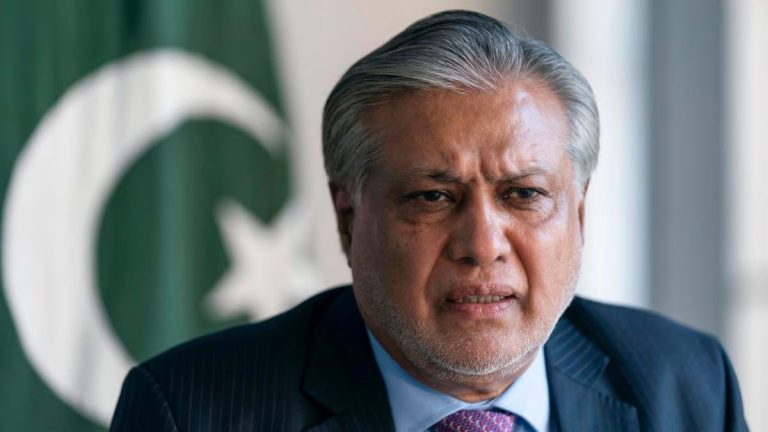
Pakistan’s foreign minister Mohammad Ishaq Dar has said that India once again rejected United States efforts at mediation in July this year, reiterating its consistent position that dialogue with Pakistan can only be bilateral.
In an interview with Al Jazeera, Dar disclosed details of conversations he had with US Secretary of State Marco Rubio in the context of Operation Sindoor, India’s retaliatory military action in May following the April 20 terror attack on tourists in Jammu and Kashmir’s Pahalgam.
?Big Confession By Pakistan!
Pakistan's Foreign Minister Ishaq Dar says India had denied any 3rd party mediation with Pakistan.
When Pak asked US Secretary of State Marco Rubio about 3rd party mediation with India as Trump claims, Rubio denied saying India says it's "Bilateral… pic.twitter.com/77PvyfbSK1
According to Dar, Washington conveyed a ceasefire proposal during the conflict. “When the ceasefire offer came to me through Secretary Rubio on May 11 at 8.17 am, I was told that ‘very soon, there will be dialogue between you and India at an independent place’,” Dar said.
He added that during his bilateral meeting with Rubio in Washington on July 25, the US official confirmed India’s refusal to accept any third-party involvement. “He said, ‘India says it is bilateral’,” Dar recalled, underlining that the American initiative did not succeed.
Dar’s comments follow earlier claims by US President Donald Trump that Washington had played a role in brokering peace between India and Pakistan in May. New Delhi has consistently denied those assertions, maintaining that talks with Pakistan will only be pursued directly and without third-party mediation.
The Pakistan foreign minister stated that while Islamabad was open to external mediation, India’s position remained unchanged. “We don’t mind bilateral but dialogues have to be comprehensive — terrorism, trade, economy and Jammu and Kashmir,” Dar said. He also admitted that Pakistan had reached out to several global capitals during Operation Sindoor to seek support.
“We must appreciate the very positive role US played during the India-Pakistan war. I talked almost 60 times to world global capitals before the 7th of May when we had the air battle and after 10th of May when we had the ground battle,” he told Al Jazeera.
Dar further said that the international community supported peace efforts. “I know that the overwhelming majority, whether they are Muslim countries or non-Muslim countries, they want to see peace, diplomacy and dialogue,” he added.
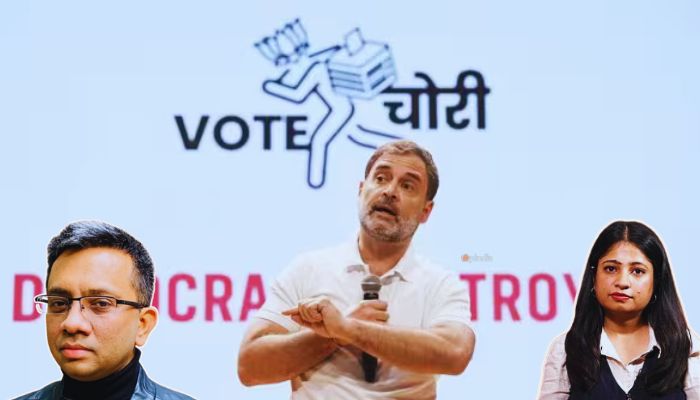
The Congress party have it in their SOP to level baseless ‘vote chori’ accusations against the Election Commission, outrage over it while its supportive media cabal concocts a web of lies packaged as facts to lend credence to the claims of their political masters.
But a recent thread on social media platform X by investigative reporter Vijay Patel exposes the dark underbelly of this nexus, highlighting how Rahul Gandhi and Congress’ ‘vote chori’ propaganda campaign rests on the shoulders of shady Hinduphobic characters bent on undermining India’s democratic institutions.
The biggest exposé on Rahul Gandhi’s 'Vote Chori' PPT.
The entire PPT is a hoax created from conspiracy theory and based on the articles and analysis of an extremist and mentaly ill person.
While Congress MP Rahul Gandhi’s ‘vote chori’ PowerPoint presentation showed during his infamous press conference on 7th August has already come under the scanner, the recent revelations further weaken his claims of electoral fraud. Gandhi is facing criticism not only due to the ‘vote chori’ presentation’s alleged foreign origins but also due to his reliance on hitjobs published in leftist propaganda outlet Newslaundry.
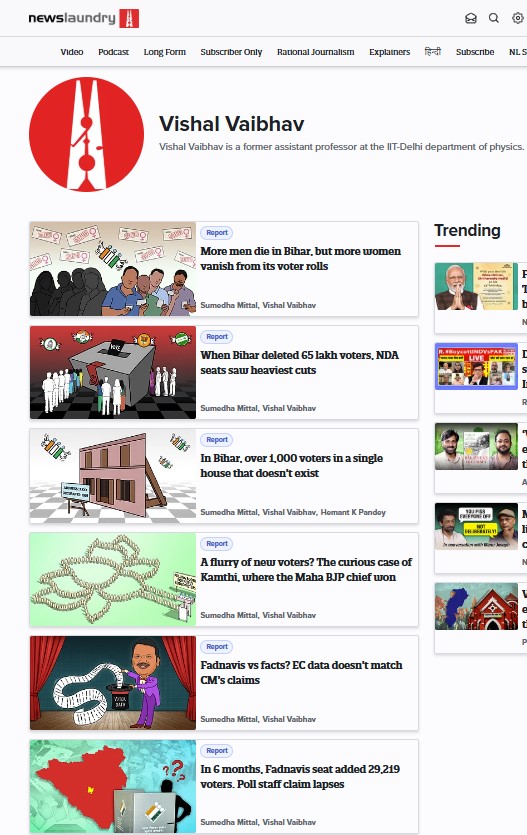
These propaganda pieces are written by rabid Hinduphobes — one whom has been identified as one Vishal Vaibhav — to peddle conspiracy theory against the ECI.
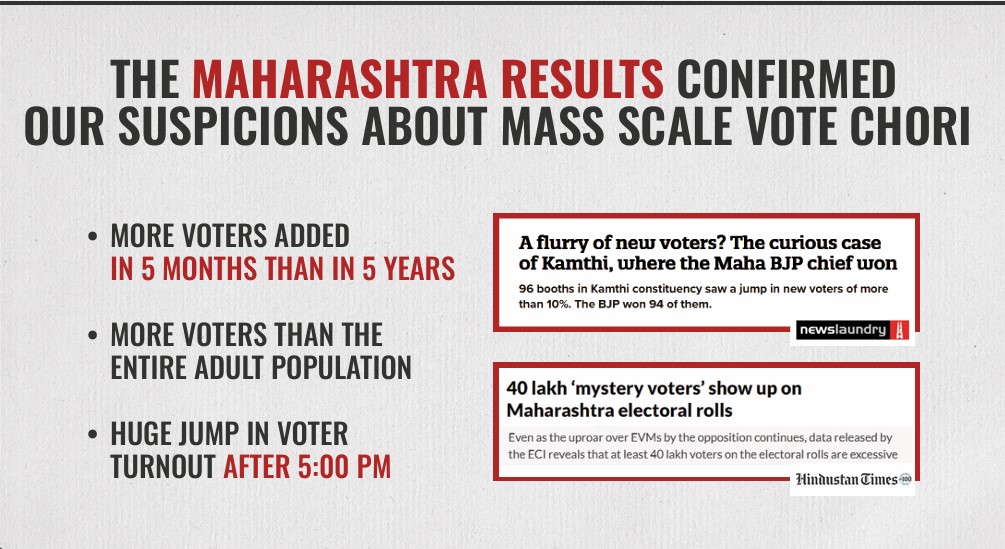
On the fourth page of the controversial PPT, Rahul Gandhi claimed that “The Maharashtra results confirmed our suspicions about Mass Scale Vote Chori’. To back the vote theft claims, the PPT cited a report by Newslaundry. The report headlined, “Aflurry of new voters? The curious case of Kamthi, where the Maha BJP chief won”, is written by Vishal Vaibhav and Sumedha Mittal.
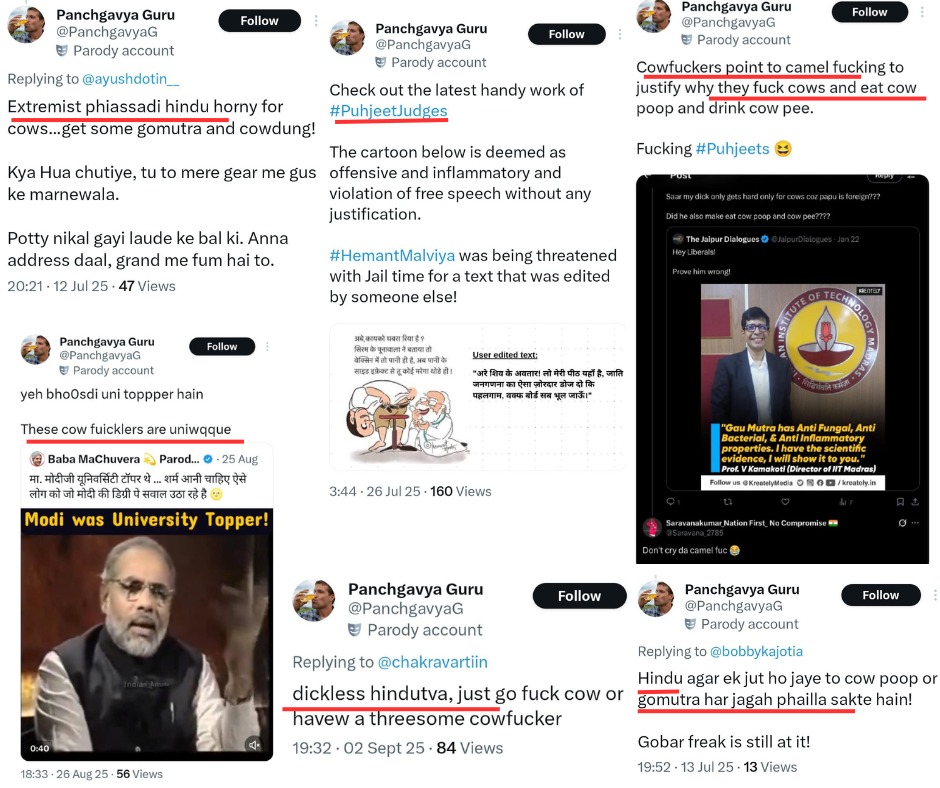
Congress relying on Newslaundry propaganda pieces to cast aspersions on the integrity of the Election Commission is in itself quite telling of the credibility of their ‘vote chori’ claims. However, it has emerged that Newslaundry’s author, Vishal Vaibhav, has been a rabid Hindu hater who casually throws ‘Gaumutra’, ‘cowf*&kers’, and ‘D*%kless Hindutva’ jibes at pro-Hindu social media users over ideological differences.
Source: X
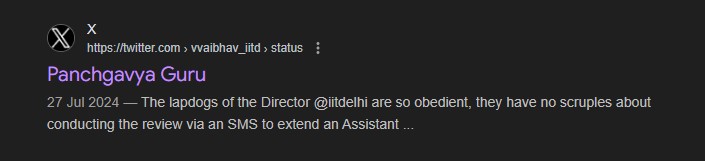
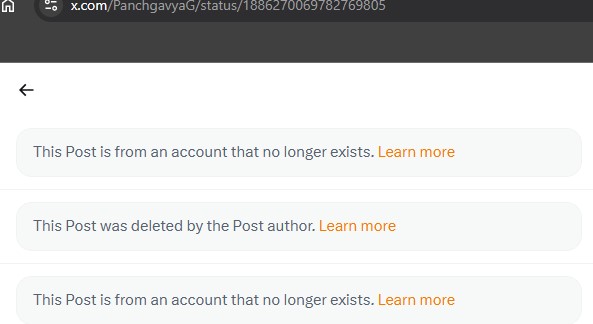
As per his author page on Newslaundry, Vishal Vaibhav is a former professor of physics at the IIT-Delhi. While X account ‘@panchagavyag’ which was formerly ‘@vvaibhav_iid’, “no longer exists”, screenshots of his deeply deranged and Hinduphobic posts have surfaced online.
Perhaps, Hindu-hate is a top eligibility criterion for being a part of Newslaundry’s propaganda factory.
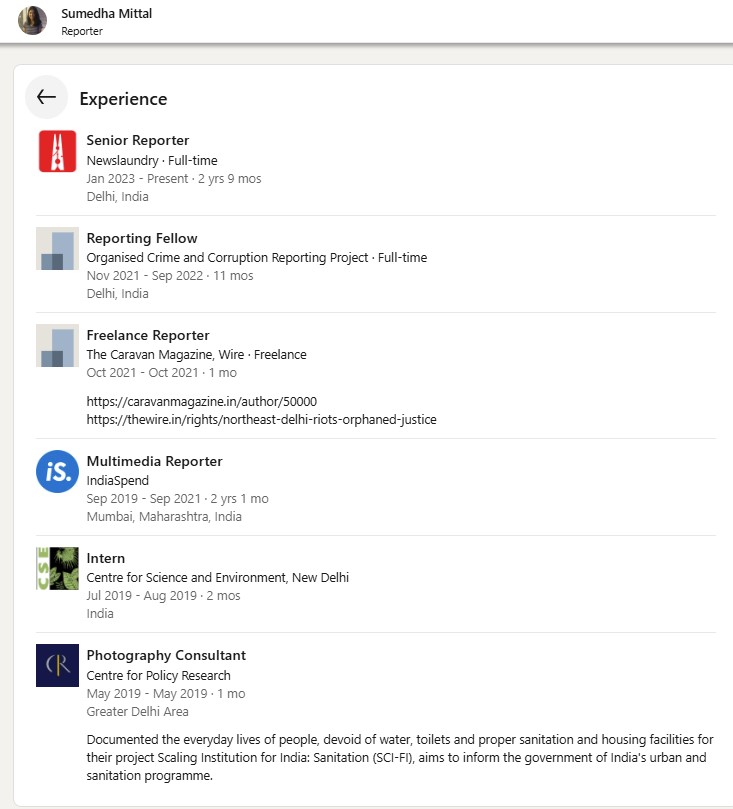
Coming to the co-author of Newslaundry reports cited by Rahul Gandhi in his vote chori PPT, Sumedha Mittal not only has an ideological bias but also a past link with the Congress party. As per Sumedha Mittal’s LinkedIn page, she worked at a think tank named the Centre for Policy Research (CPR) for a brief period of time. This think tank, is owned and run by controversial Congress leader Mani Shankar Aiyar’s daughter Yamini Aiyar.
OpIndia has earlier reported how CPR has been under scanner for violating foreign funding norms and had its license suspended by the central government. The Centre for Policy Research has been the subject of income tax raids in September 2022. The tax exemption status of Aiyar’s think tank was also revoked in July 2023.
Mittal has also worked with IndiaSpend portal in the past. IndiaSpend aligns with the ideological inclinations of the Congress party the most. In addition to that, Praveen Chakravarty, the head of Congress party’s data analytics department, is a founding trustee at IndiaSpend. The website of IndiaSpend, however, does not mention him as one. OpIndia has on multiple occasions exposedIndiaSpend’s anti-Hindu anti-India falsehoods. IndiaSpend has, in the past, misrepresented the facts of a case to boost the number of Muslim victims in its database.
Newslaundry’s senior reporter, Sumedha Mittal, has contributed to anti-BJP and pro-Islamist propaganda outlets like The Wire and The Caravan as well.
Interestingly, between November 2021 and September 2022, Sumedha Mittal worked as a research fellow at the Modi detractor and notorious regime change specialist, George Soros-funded Organised Crime and Corruption Reporting Project (OCCRP). OCCRP received a huge share of funding from the US Department of State and the now-disbanded US Agency for International Development (USAID). The OCCRP is funded by the likes of George Soros’ Open Society Foundations (OSF), the Ford Foundation and the Rockefeller Brothers Foundation.
Not to forget, OCCRP had published hitjobs against businessman Gautam Adani and SEBI. The OCCRP has also repeatedly been rolling out propaganda meant to undermine Indian democracy.
‘Vote Chori’ in India, data compilation in Myanmar, lies and disinformation packaged as ‘earth-shattering’ exposé
While the Congress party intended to stir a massive political storm with Rahul Gandhi’s ‘vote chori’ PPT, it emerged that he documents, which Gandhi presented during his infamous press conference on 7th August this year, was prepared in the country of Myanmar. A metadata analysis of the PDF files uploaded on ‘vote chori’ website, revealed that all three versions of Rahul Gandhi’s presentation have been created in the Myanmar Standard Time (MMT). Congress leaders and IT cell rushed to counter these allegations; however, they failed to give a satisfactory rebuttal.
The foreign origins of Rahul Gandhi’s vote chori presentation is not entirely shocking given his career has been mired in controversies surrounding involvement of foreign powers. From signing MoU with the Chinese Communist Party, mysterious foreign trips, secret meetings with foreign officials, social media influence campaigns managed by bots from Kazakhstan, Russia and Indonesia, to giving calls for foreign intervention in India’s internal affairs
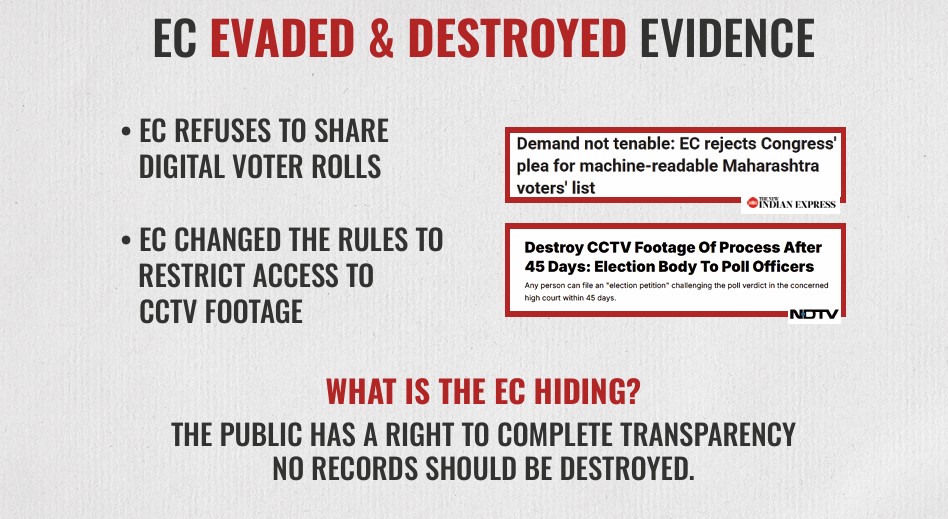
Not only the origins but also the content of Rahul Gandhi’s vote chori presentation are problematic. In fact, the 22-page presentation comes across as Congress party’s desperate attempt at lending empirical credence to the rhetoric and theatrics it has been employing to push its “Hum hare nahi hain, hamein haraya gaya hai (we didn’t lose, we were deceitfully defeated)” narrative. OpIndia, however, reported how the ECI rebutted each and every allegation, be it inflated voter registration and turnout, foul play in appointment of election commissioners, destruction of CCTV footage of voting process or ECI’s outright refusal to share digital voter rolls, levelled by Rahul Gandhi.
On page 8 of the said document, Gandhi insinuated that while the ECI is suppressing data of Karnataka’s Mahadevpura constituency to coverup ‘vote theft’, his team has painstakingly obtained checked “lakhs of paragraphs”. However, one page of ECI has 30 entries, and the total number of voters in Mahadevpura is approximately 6 lakhs. This essentially means that contrary to Gandhi’s claims, not lakhs but only 20,000 pages were required to be checked. Apparently, even in data-based propaganda, Congress did not forget to blend melodrama.
The document is replete with cherrypicked cases which involved management or technical issues and passed them off as proof of ‘vote chori’. While Congress has had a history of Muslim appeasement and neglect of Hindus, the grand old party is now relying on absolute lies, disinformation by Hinduphobic and ideologically biased propagandists, undermining India’s robust democracy in its quest for petty political gains.
The stray dog menace in India is much worse than officially acknowledged, with millions of bite cases every year exposing a public health and safety crisis of staggering proportions. In a reply to an RTI filed by OpIndia in connection with dog bite data across the country, the Union Government has informed that in 2025 alone, so far, there were over 26 lakh cases reported. In its reply, the Directorate General of Health Services, National Centre for Disease Control (NCDC), said that there were 26,71,732 cases of dog bites reported in India till 31st July.
Source: NCDC, Government of India.
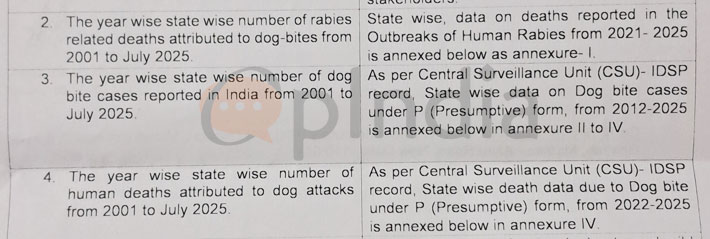
OpIndia had sought information on state-wise data from 2001, when ABC Rules first came into force till 31st July 2025. However, centralised state-wise data was first maintained in 2012. This is a problem in itself. Despite India recording the world’s highest number of rabies cases, there was no centralised state-wise data until 2012, even though the ABC Rules had come into effect in 2001.
Stray dog menace is worsening in the country
OpIndia received the data between 2012 and 31st July 2025. While there were several other questions included in the RTI, most of the answers were not provided as those were to be answered by other departments. In this report, we have concentrated on annual dog bite cases, state-wise dog bite load and rabies deaths officially recorded by the Government of India.
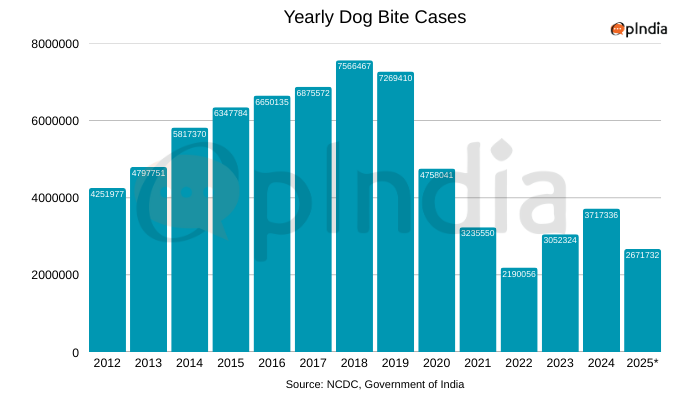
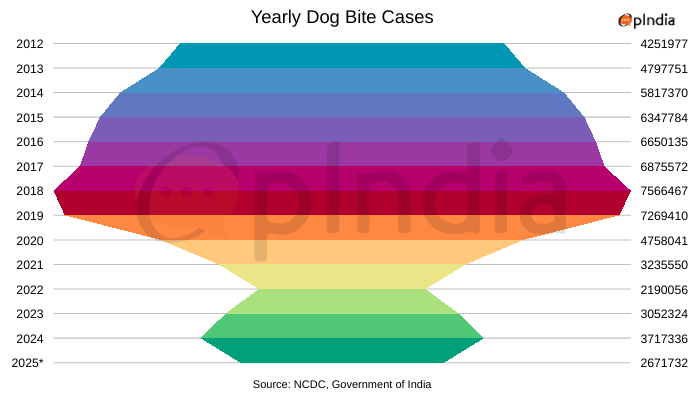
Yearly dog bite cases between 2012 and July 2025. Source: NCDC, Government of India
The data provided by NCDC has been retrieved from the Integrated Disease Surveillance Programme–Integrated Health Information Platform (IDSP-IHIP). What makes the data alarming is the fact that the monthly average for 2025 is already higher than the monthly average of 2024, which points towards the fact that the stray dog menace is worsening in the country.
According to the data, there were 3,81,676 cases of dog bites every month in this year till 31st July 2025. The number is significantly higher, as in 2024, the monthly average was 3,09,778 per month. It means India is reporting almost 80,000 more dog bite cases in 2025 compared to the previous year.
This RTI is part of OpIndia’s ongoing investigation into the stray dog menace that has engulfed the country. It has exposed not only the scale of the problem but also the failures of sterilisation and rabies control programmes. While activists and NGOs continue to claim that the problem is exaggerated, the government’s own numbers present an undeniable reality.
What the RTI reply says
The RTI reply provided year-wise figures of dog bite cases for every state and Union Territory from 2012 up to July 2025. For the period between 2012 and 2021, the data was retrieved from the IDSP portal under what is known as the P form. This reporting format, however, carried a critical gap. Notably, rabies deaths were not provided between 2012 and 2021.
That means, for almost a decade, the Government of India did not collect data on rabies deaths across India. Interestingly, the World Health Organisation claims that there are around 20,000 rabies deaths every year in India, which is based on a Parliamentary reply given by the Government of India a couple of decades back. Recent studies show that the rabies load in India could be over 5,000. However, the government data shows under 100 deaths every year since 2022.
From 2022 onwards, the government shifted to the IDSP-IHIP portal, where the information is logged under the Presumptive form. In practical terms, this means that the figures are provisional tallies collected at field level for immediate surveillance purposes, and while they may be revised later, they already reveal a staggering picture. Even as “presumptive” counts, the numbers cross into millions, highlighting the depth of the crisis.
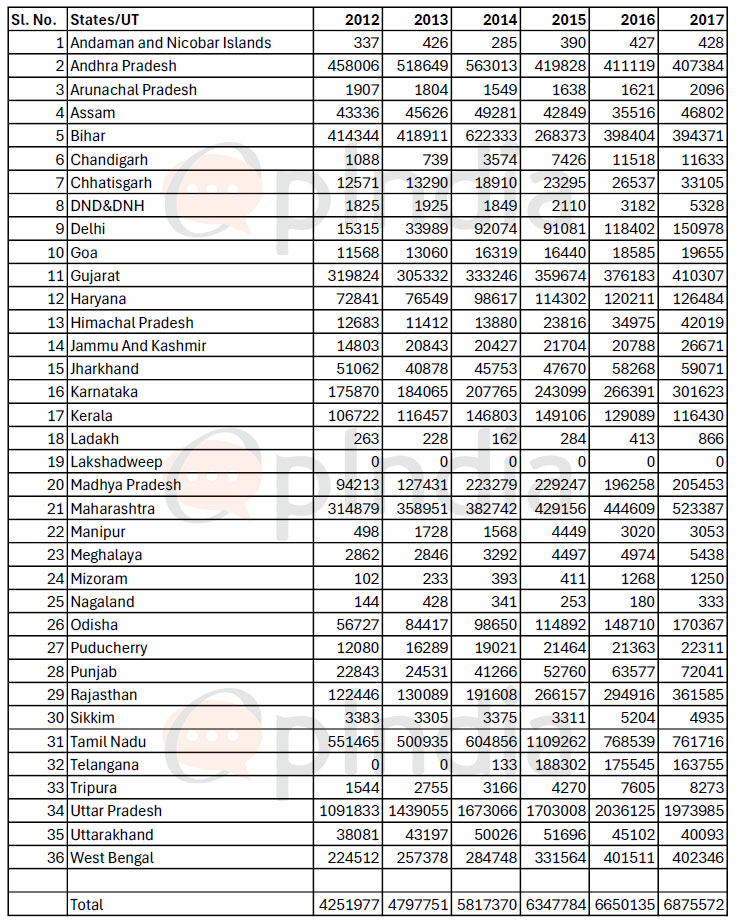
Interestingly, the national total saw a steady climb between 2012 and 2019, with 42,51,977 cases reported in 2012 and 72,69,410 cases reported in 2019.
Number of dog bite cases between 2012 and 2017. Source: NCDC, Government of India
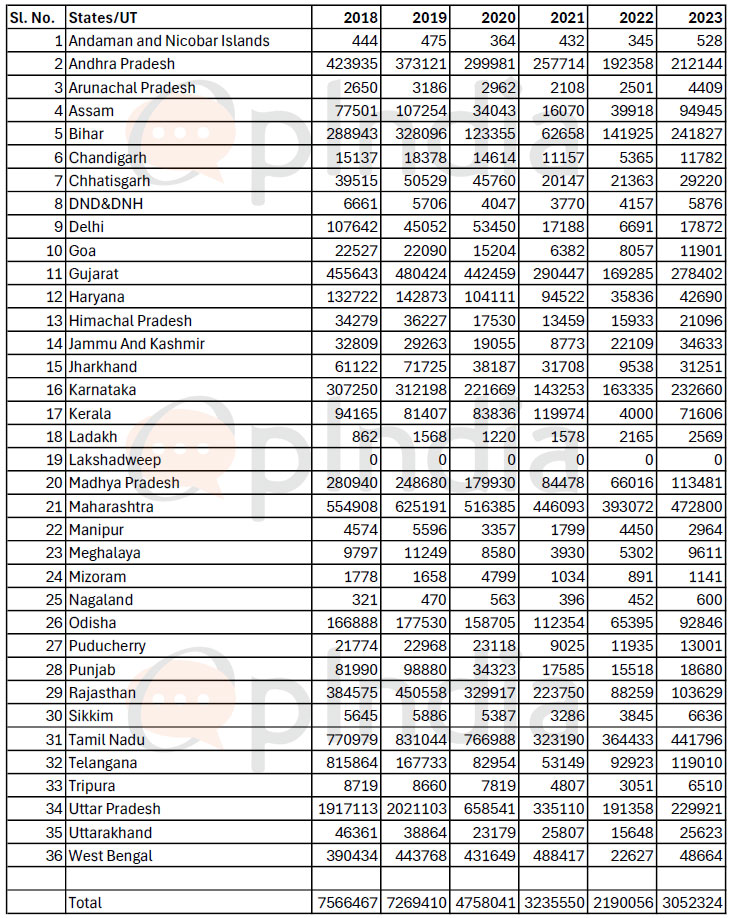
Then in 2020, there was a massive dip owing to the COVID years. In 2020, the number dropped to 47,58,041 and it kept dropping till 2022, when there were 21,90,056 dog bite cases reported.
Number of dog bite cases between 2018 and 2023. Source: NCDC, Government of India
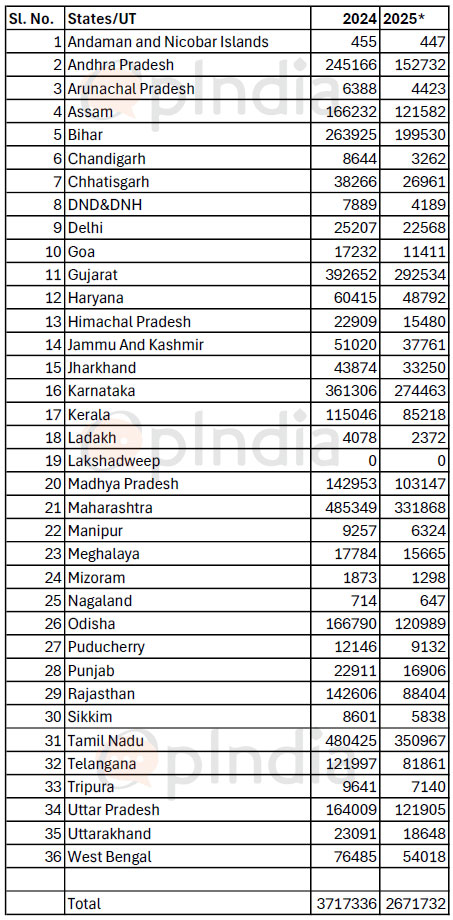
However, following that year, there was a steep jump in the numbers, with 30,52,324 dog bite cases in 2023 and 37,17,336 cases in 2024. By July 2025, India had already logged over 26 lakh cases, and if it keeps increasing at this pace, India may report well over 45 lakh dog bite cases in the current year.
Number of dog bite cases between 2024 and July 2025. Source: NCDC, Government of India
The data also throws up peculiarities that underline the diversity of India’s policies on animal control. Lakshadweep, for instance, has consistently reported zero cases. The reason is not statistical luck but policy clarity. The island territory does not allow dogs at all. Even tourists are prohibited from bringing pet dogs with them. In stark contrast, mainland states and other Union Territories continue to record hundreds of thousands of cases every year, showing just how wide the gulf is between firm preventive policies and ad hoc, ineffective approaches.
Year-wise national trend
The figures reveal a troubling national trajectory. In 2012, India reported just over 42.5 lakh dog bite cases. This number climbed steadily year after year and in 2018, it breached the 75 lakh mark, the highest in the dataset. The surge highlighted the failure of sterilisation drives and the unchecked expansion of stray dog populations across both urban and rural India.
Source: NCDC, Government of India
Then came the dramatic fall due to the COVID years. However, the downward trend did not last long. By 2023, the country breached the 30 lakh dog bite cases per year. There are a lot of questions regarding the data available for the years 2020, 2021 and 2022. In 2020, for most of the months, India was locked inside due to the nationwide lockdown. Still, there were well above 47 lakh dog bite cases. However, in the coming two years, when lockdown was over, the number of dog bites kept falling. There is a possibility that for those years, as the country was struggling with wave after wave of the COVID-19 virus, the dog bite cases were not reported properly.
In case of rabies deaths, the data has been provided only for 2022 (21), 2023 (50), 2024 (52) and 2025 (23 till 31st July).
Don’t get misled by post-pandemic fall in dog bite cases
The self-styled dog lovers may argue that between 2020 and 2022, the stray dog menace was brought under control. In reality, however, it is far more sobering. These were the years when COVID-19 brought the country to a standstill. As people were locked inside, and even after the lockdown was lifted, people preferred to go out only if necessary to avoid infection, which reduced dog–human contact.
Furthermore, as the hospitals were overwhelmed by COVID-19 cases, there is a chance people did not go to hospital to get treatment for dog bites, fearing COVID infection. Under-reporting, rather than actual reduction, drove the numbers down. Equally, data collection suffered as government machinery was diverted almost entirely to pandemic duties.
Surveillance officers, health workers, and municipal authorities had limited capacity to log or verify dog bite incidents. For this reason, the decline seen in those years cannot be read as evidence of effective sterilisation or management. It was a statistical distortion born out of extraordinary circumstances. The rebound after 2022 confirms that the menace never went away; it was only masked temporarily by the disruptions of COVID.
State-wise picture
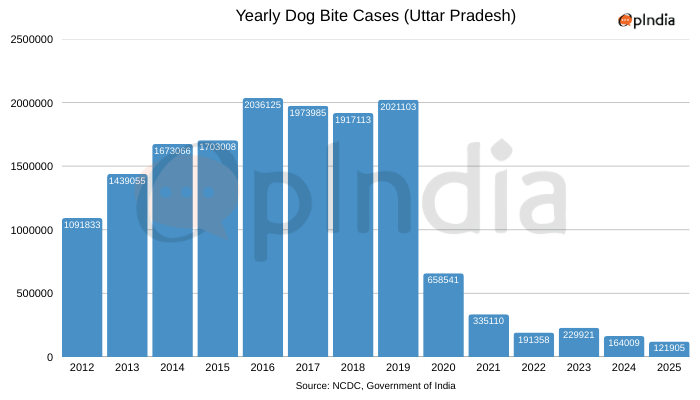
A closer look at the state-level data shows how deeply entrenched the problem is across the country. The state of Uttar Pradesh has consistently topped the chart. The annual figures in UP often cross the 10 lakh mark and peaked at more than 20 lakh during the pre-pandemic years. Post COVID years, the dog bite cases have, however, remained under 5,00,000 per year.
Source: NCDC, Government of India
Bihar, Andhra Pradesh and Madhya Pradesh are among the states that bore the most load of dog bite cases and contributed heavily to the national totals. Each of these states has recorded hundreds of thousands of cases every year. States such as Maharashtra, West Bengal and Rajasthan, while slightly lower in comparison, still show six-figure counts, making clear that no part of India has escaped the menace.
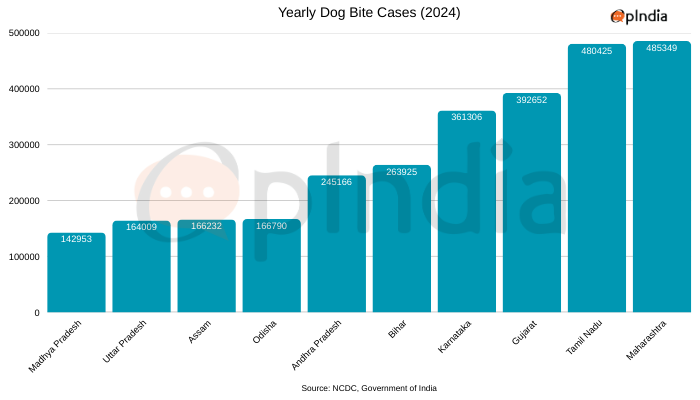
In 2024, states with maximum dog bite cases were Madhya Pradesh (1,42,953), Uttar Pradesh (1,64,009), Assam (1,66,232), Odisha (1,66,790), Andhra Pradesh (2,45,166), Bihar (2,63,925), Karnataka (3,61,306), Gujarat (3,92,652), Tamil Nadu (4,80,425) and Maharashtra (4,85,349).
Source: NCDC, Government of India
Even smaller states and Union Territories paint a grim picture of the problem. Assam, for instance, registered over 1,66,000 cases in 2024. On the other hand, Kerala has seen yearly figures that touched or crossed the 1,00,000 mark in the past decade. The only exception is Lakshadweep, which reports no dog bite cases at all, owing to its unique policy of prohibiting dogs on the islands. This sharp contrast between zero cases in one Union Territory and millions elsewhere illustrates how decisive governance measures can completely change the public health outcome.
The problem of presumptive reporting
The RTI reply makes it clear that the data since 2022 is drawn from the Presumptive form under the IHIP portal. This distinction matters. Presumptive data is provisional. It is collected at the field level by a medical officer for immediate surveillance, often without medical verification or laboratory confirmation. While such reporting ensures rapid availability of information, it also raises questions about accuracy and completeness. The fact that even these provisional tallies run into millions underscores how dire the actual situation must be.
Another equally problematic issue is the gap in earlier years. Between 2012 and 2021, rabies deaths were not recorded, which means India’s surveillance system essentially ignored the fatal dimension of the crisis for nearly a decade. Not to forget, rabies is not a notified disease. That means there is no compulsion on hospitals and labs to report rabies.
Together, these limitations suggest that the problem may be worse than what the RTI figures themselves show. Far from minimising the menace, the “presumptive” nature of the data should ring alarm bells, because if provisional counts are this high, the confirmed burden must be more staggering.
Accountability of government and NGOs
Over the years, Central and State governments have poured crores of rupees into sterilisation and vaccination drives with negligible success. Instead of a sustained decline in dog bite cases, India witnessed a rise up to 2018, followed by a pandemic-induced dip, and now a return to alarming numbers. This clearly suggests that sterilisation programmes under the Animal Birth Control (ABC) framework have failed to deliver meaningful results.
There are hundreds, if not thousands, of NGOs and individuals working specifically for “dog welfare”. They claim to carry out regular sterilisation and vaccination of stray dogs. Many of these organisations have been roped in by the Animal Welfare Board of India and state-level animal welfare boards to run sterilisation drives. However, as mentioned in previous articles, many of them have been found to be submitting forged data.
Another problem is that most of these NGOs and individuals do not publish audit data that can be cross-checked. Furthermore, neither states nor the central government has any specific portal where such data can be found and checked. Everything is opaque in the world of “dog welfare”. Deeper investigation is required by central agencies to find out where the money is going that is being given to these NGOs and what is happening to the money collected through fundraisers by these NGOs and individuals. Accountability, both of state authorities and self-proclaimed animal welfare organisations, is glaringly absent, which needs to be rectified immediately.
The victims: Ordinary Indians
Behind these millions of reported cases are ordinary Indians. Children walking to school, elderly people stepping out for a morning walk, families in rural areas with little access to immediate medical care, disabled persons, delivery partners, house helps and other vulnerable people. Each figure in the RTI reply represents a person forced to undergo the painful and costly rabies vaccination process and post-incident care. These people have often been attacked by the dogs without provocation. In some extreme cases, plastic surgery and months-long medical care are needed, which is impossible for poor households to manage.
Hospitals, especially in smaller towns, are overburdened with cases of dog bites, diverting resources from other health priorities. In villages, where vaccine availability is inconsistent, victims may have to travel miles or even go without treatment, exposing them to the fatal risk of rabies. The menace is not only a health crisis but also a social and economic burden borne disproportionately by the most vulnerable. While NGOs and activists debate the “rights” of stray dogs, it is citizens who pay the price, both financially and with their safety.
Conclusion: The ABC Rules are ineffective and largely removed from reality
The RTI reply demolished any lingering illusion that India’s stray dog menace can be brought under control with ABC programmes under ABC Rules 2023. With over 26 lakh cases already reported by July 2025, the crisis has returned to pre-pandemic levels. The trajectory points towards another year of staggering totals. Years of sterilisation drives, crores of rupees in funding, and repeated court interventions have failed to prevent millions of Indians from falling victim to dog bites.
It is a gross institutional failure that hides behind “animal welfare”. Meanwhile, ordinary citizens continue to face the danger every day, with children and the poor paying the heaviest price.
The RTI reply is more than just numbers. It is proof, on official government letterhead, that India’s stray dog policies are failing. The question is whether the Supreme Court, the central government and the state governments are going to consider unconventional steps by dropping the capture-sterilise-vaccinate-release methodology, or whether 2026 is going to get even worse.
This is the first RTI-based article in OpIndia’s Stray Dog Menace series. Additional data on several parameters is awaited and will be examined in detail in forthcoming articles.
OpIndia is doing a series on Stray Dog Menace that can be checked here.
Prime Minister Modi will launch ‘Swasth Nari, Sashakt Parivar Abhiyaan’ and the 8th edition of the Poshan Maah scheme on the occasion of his birthday on Wednesday (17th September), in a step towards strengthening healthcare and nutrition services for women, adolescent girls, and children across the country.
The Ministries of Health and Family Welfare (MoHFW) and Women and Child Development (MoWCD) will be jointly leading the initiative, described by the government as India’s largest-ever women and child health mobilisation drive. Ministry of Ayush will also be participating in the ‘Swasth Nari, Sashakt Parivar Abhiyaan’, which will witness collaborative efforts of State and Union Territory (UT) administrations, Ayush research institutions, educational institutions, industries and private sector, associations, NGOs, and cooperative societies.
Under the initiative, MoHFW will ensure the delivery of preventive, promotive, and curative health services through health camps and facilities across the country. At the same time, MoWCD will incorporate Poshan Maah activities with the campaign, mobilise women and adolescent girls through Anganwadi centres, and lead large-scale nutrition counselling and recipe demonstrations.
As part of the initiative, the two Ministries will be organising a series of activities focusing on women’s health, including awareness campaigns on anaemia prevention, balanced diets, and menstrual hygiene, to make sure that the health and nutrition needs of women and adolescent girls are taken care of.
On 17th September 2025, Hon’ble Prime Minister Shri @narendramodi Ji will launch the Swasth Nari Sashakt Parivar Abhiyaan – a month-long campaign (17th September, 2025 – 2nd October, 2025) dedicated to the health and well-being of women and children.
The Swasth Nari, Sashakt Parivar Abhiyaan aims to advance the Hon’ble Prime Minister’s vision of Health, Poshan (Nutrition), Fitness, and a Viksit Bharat by 2047. This nationwide intensified campaign seeks to provide women-centric preventive, promotive, and curative health services at the community level. It will strengthen screening, early detection, and treatment linkages for non-communicable diseases, anaemia, tuberculosis, and sickle cell disease, while also promoting maternal, child, and adolescent health through antenatal care, immunisation, nutrition, menstrual hygiene, lifestyle and mental health awareness activities. At the same time, the campaign will mobilise communities towards healthy lifestyle practices with a special emphasis on obesity prevention, improved nutrition, and voluntary blood donation.
Here are the highlights of the initiative:
Nationwide Health Camps: A nationwide campaign will be organised from 17th September to 2nd October 2025 at Community Health Centres (CHCs), Ayushman Arogya Mandirs, District Hospitals and other government health facilities. Over 1 lakh health camps to be organised across the country, making it the largest ever health outreach initiative for women and children.
Participation of public representatives: To ensure greater penetration of the initiative till the grassroots level, public representatives, including Central and State Ministers, MPs, will join the campaign. ASHAs, ANMs, Anganwadi workers, SHGs, PRIs, urban local bodies, MY Bharat volunteers, and youth groups will also be contributing to the initiative at the community level.
Specialist Services: Medical Colleges, District Hospitals, Central Government institutions, private hospitals, as well as central government institutions like IIMS, Defence and Railway hospitals, ESIC hospitals, CGHS centres and Institutes of National Importance (INIs), will offer specialist services, including Gynaecology, Paediatrics, Eye, ENT, Dental, Dermatology, and Psychiatry. Many private sector health facilities have also come forward to support the initiative. This will help in enhancing the outreach and the quality of the initiative.
Screening of diseases at health camps: During the 16-day campaign, the health camps will offer facilities, including screening for non-communicable diseases such as hypertension, diabetes, and obesity through BP, blood sugar, and BMI checks.
Women-centric services: Women will be able to avail services like oral cavity checks, clinical breast examinations, demonstrations of breast self-examination, and cervical cancer screening at the camps. Referral services for mammography and oncology care will also be available, alongside awareness sessions on oral, breast, and cervical cancers. Screening, medical advice and referrals for diseases like Tuberculosis and Sickle Cell disease will also be offered.
Antenatal care: The health camps will also provide comprehensive antenatal care, including haemoglobin testing, blood pressure monitoring, weight checks, and foetal growth tracking. In addition to that, Mother and Child Protection (MCP) card distribution, counselling on safe pregnancy and institutional deliveries, growth monitoring of children, Infant and Young Child Feeding counselling, and immunisation services will be offered.
Blood donation: To strengthen trauma care, surgeries, and treatment of blood disorders, blood donation drives will be organised in the camps across the country. Besides, enrolment of beneficiaries under PM-JAY, Ayushman Vaya Vandana, and ABHA schemes will be done. Helpdesks will be set up at the health camps for card verification and grievance redressal.
AYUSH Services: Ayush services, including Yoga sessions and Ayurveda consultations, will be organised to promote holistic health and wellness practices for women and families.
Several other Ministries, including the Ministry of Rural Development, the Ministry of Panchayati Raj, the Ministry of Education, the Ministry of Youth Affairs & Sports, the Department of Empowerment of Persons with Disabilities (DEPwD), the Ministry of Social Justice & Empowerment, the Ministry of Defence, the Ministry of Railways, the Ministry of Labour & Employment, the Ministry of Heavy Industries, and the Ministry of Home Affairs will also be facilitating and participating in the initiative.
A chilling case of child sexual abuse has come to light in north Kerala, where a 16-year-old boy was allegedly exploited by multiple men, including an RPF official, a local politician, and a senior Education Department official, over a period of two years. Police have so far arrested nine accused, while efforts are on to trace others still on the run.
According to investigators, the boy came into contact with the accused through a dating app. Several men befriended him online and gradually won his trust.
After establishing contact, the accused allegedly took the boy to various locations in Kasaragod, Kannur, and Kozhikode districts. There, he was repeatedly subjected to sexual assault. Police said the abuse was not a one-off incident but continued over time, with the boy being paid money after the assaults, pointing to deliberate and systematic exploitation.
The case came to light when the boy’s mother noticed a stranger inside her house. The man fled on being spotted, prompting her to grow suspicious. Without delay, she approached the Chandera police with a complaint.
Following the complaint, the boy was produced before Childline officials for counselling and questioning.
His account confirmed the abuse, and based on their report, a formal police investigation was launched.
So far, 14 people have been booked under the Prevention of Children from Sexual Offences (POCSO) Act. Shockingly, the list also includes a senior Education Department Officer, a Railway Protection Force official, and a local political leader.
Nine accused are now in custody. Five others, believed to be outside Kasaragod district, are still at large. Their details have been circulated to other jurisdictions to facilitate arrests. Most of the accused hail from Kasaragod and Kannur.
A Special Investigation Team (SIT) led by a DySP and four Inspectors has been formed to probe the case. The SIT will investigate eight incidents reported in Kasaragod, while the remaining six have been handed over to police units in Kannur and Kozhikode.
While the investigation continues, the case has already sparked deeper questions. How safe are minors in the age of unmonitored dating apps? Why did powerful men feel confident they could exploit a child without consequence? And does this case represent only the visible tip of a larger problem – male child abuse often hidden in silence?
Police have assured that the case will be taken to its “logical conclusion.” But for Kerala, the Kasaragod case is more than a criminal investigation. It is a grim reminder that predators can operate across districts shielded by power, technology, and social stigma. The alleged involvement of an RPF official, a senior Education Department member, and a local politician reveals the rot that has pervaded every corner of Kerala’s social and institutional fabric, eroding public trust in the very pillars meant to safeguard society.
It also underscores the state’s steady decline into lawlessness, whether it is the sinister Islamism that keeps cropping up far too frequently, widespread political violence, rampant cases of gold smuggling, or the child abuse case reported in Kasaragod now, Kerala, once celebrated for its literacy, can no longer take pride in that alone while its social order unravels.
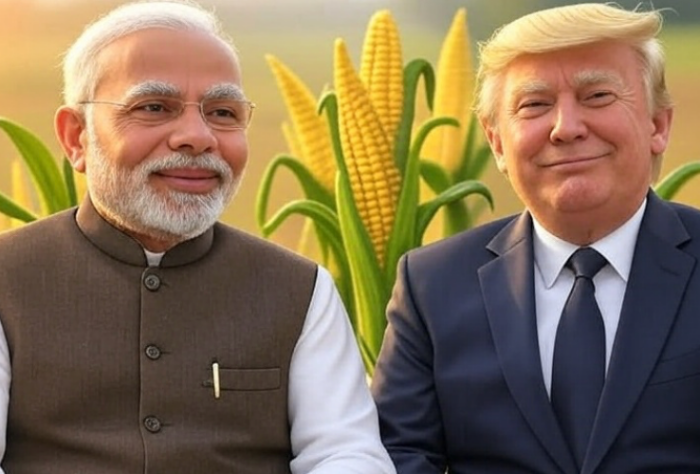
“India brags that they have 1.4 Billion people, then why wouldn’t they buy one Bushel of corn from us? Doesn’t that rub you the wrong way, that they sell everything to us, and they don’t buy our corn? They put tariffs on everything. The President (Trump) says, ‘treat us the way we treat you. We got to right years of wrong. So we want the tariff going the other way. We fix this. That’s the President’s motto, and you either accept it, or you are going to have a tough time doing business with the world’s greatest consumer, ” Lutnick was seen saying to Axios.
.@mikeallen asks on The Axios Show if the U.S. is “pissing away valuable relationships” with steep tariffs against allies.@howardlutnick: “India brags that they have 1.4 billion people. Why won’t their 1.4 billion people buy one bushel of U.S. corn?” pic.twitter.com/SPZUJLzWEM
Well, Lutnick is partially wrong here, because India did buy some US corn in 2024-25. India imported 1100 tonnes of US corn, as per reports. The 1100 tonnes were a minor part of India’s total corn imports of 0.97 million tonnes in 2024-25, the majority of which comes from Myanmar and Ukraine.
India imported 0.53 million tonnes of corn from Myanmar and 0.39 million tonnes of corn from Ukraine in 2024-25, the Indian Express stated.
Why doesn’t India import more corn from the USA?
India’s domestic demand for corn is steadily rising keeping track with its rapid economic growth. India imports corn mainly for the purposes of feeds in the livestock and poultry industry, and as a feedstock for the ethanol production industry. Historically Myanmar and Ukraine have been the biggest exporters of corn to India.
India doesn’t buy more US corn for the following reasons:
Almost all US corn is from genetically modified crops. India does not allow the import of GM crops unless specifically approved by the relevant authorities. This makes a large volume of US corn restricted for Indian import.
India operates a Tariff Rate Quota (TRQ) for corn imports. Limited quantities can enter at a lower duty, but volumes beyond that face 50% duty, making US corn uncompetitive.
Pre-war Ukraine and primarily Myanmar sell corn to India at a cheaper price and importing from Myanmar costs less in terms of freight charges. Also Indian government has been traditionally favouring imports from Myanmar as per its neighbourhood first policy.
In the past years, there has been a push for self-sufficiency. The Indian government tries to avoid expensive agricultural imports from faraway nations.
Even when small consignments of US non-GM corn are available, certifying their non-GM status and meeting India’s strict phytosanitary requirements is a cumbersome process for indian importers.
Why is the US so keen to sell corn to India?
USA is the world’s biggest producer of corn. On average, the USA grows around one-third of the world’s corn. In good harvest years, output far exceeds what domestic livestock, ethanol, and food industries can absorb. Not having enough exports means surplus corn in their domestic market that will crash corn prices and cause losses to corn farmers.
The sheer volume of corn production in the US is the reason corn exports often feature as a part of trade negotiations and deals of the US done with several countries, like Japan, Mexico and South Korea.
Farm lobbies and commodity groups like the US Grains Council and National Corn Growers Association push the US government hard to open new export markets, to keep domestic farmers happy and land prices high. The trend for EVs in the US means that there is a reduce in demand and consumption of corn for ethanol production domestically.
From National Corn Growers Association, USA
Apart from the above, the US has been in sharp competition from nations like Brazil, Argentina, etc for corn exports into large Asian markets.
For the past several years, China has been the largest importer of US corn. In 2022, China imported $5.21 billion worth of corn from the USA. In 2024, the corn import by China from the USA was reduced to a mere $331 million. Following Donald Trump’s trade war with China, there has been a sharp decline in China’s imports and in the first 7 months of 2025, China has imported only a tiny amount of US corn, worth a minuscule $2.4 million, as per reports.
Hence, the US is in desperate need of a new and sufficiently large market to export its corn.
Commerce Secretary Howard Lutnick’s whining about India not buying enough US corn is more rooted in desperation to sell, rather than a trade balance, as he is trying to portray it as.
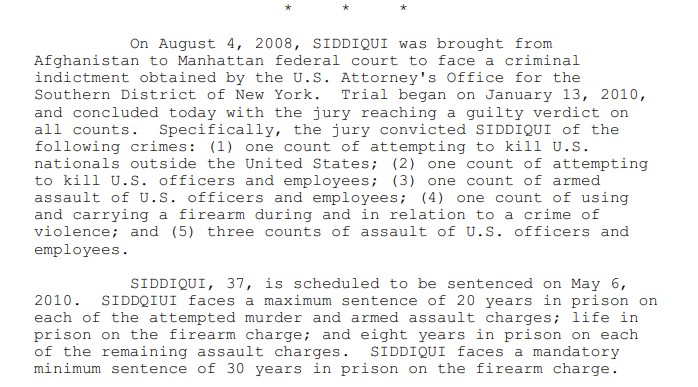
From a Pakistani neuroscientist to the infamous ‘Lady al-Qaeda’, Aafia Siddiqui, continues to garner support and sympathy from Pakistani politicians and ‘human rights’ activists despite her Jihadi terror linked past. Aafia Siddiqui is currently serving an 86-year prison sentence in a Texas jail in the United States. Siddiqui convicted in 2010 of attempted murder of US officials in Afghanistan.
The hopes for her repatriation to Pakistan rekindled when Field Marshal Asim Munir, visited the US for a White House dinner with President Donald Trump in April this year after days after India defeated Pakistan during Operation Sindoor. However, Munir did not raise the matter with Trump.
قوم کی عزت، فیلڈ مارشل جنرل عاصم منیر کے ہاتھ میں ہے۔
In January this year, the outgoing US President Joe Biden also refused to grant clemency to Aafia Siddiqui. The US government informed the Islamabad High Court that Siddiqui’s clemency petition, submitted with claims of new evidence and humanitarian concerns about her health, was rejected.
In September this year, the Islamabad High Court formed to hear the case of Aafia Siddiqui, was dissolved as Justice Inaam Ameen Minhas declined to hear the petition and urged the formation of a larger bench. The petition was filed by Aafia Siddiqui’s sister, Fauzia Siddique. Earlier, a contempt notice was issued to Prime Minister Shehbaz Sharif and his cabinet for failing to comply with previous court orders and filing their response in the case.
‘Lady al-Qaeda’ Aafia Siddiqui: Victim of human rights violation or Islamic terrorist?
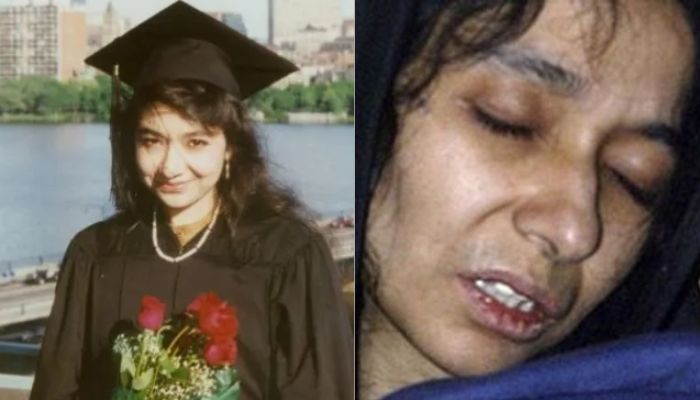
Aafia Siddiqui is a 52-years-old terrorist of Pakistani origin. Born in Karachi, Siddiqui moved to the US in 1990 on a student visa. She got her bachelor’s degree in biology from MIT and a PhD in neuroscience from Brandies University in 2001. Aafia’s mother worked as an Islamic educator and politician and her father a neurosurgeon. During her time in Boston, Aafia Siddiqui volunteered with Islamic ‘charities’ including the Al-Kifah Center which was found to be linked to the al-Qaeda. Siddiqui also expressed strong anti-American opinions after the 9/11 Islamic terror attack that killed numerous innocent people. She also expressed support for Jihad.
The FBI questioned Siddiqui and her then-husband, Amjad Khan, about their suspicious purchases like night-vision goggles, and manuals on explosives, body armour and 45-military-style books including The Anarchist’s Arsenal. During his FBI interview, Amjad Khan claimed that he brought these materials for camping and hunting. Amidst the FBI investigation, Aafia and her husband divorced and she returned to Pakistan with her three children.
In March 2023, Siddiqui and her children vanished in Karachi, Pakistan. Initially, Pakistani authorities acknowledged detaining her for questioning over her alleged al-Qaeda links, only to later deny involvement. In May 2004, the US FBI issued a worldwide alert, naming Aafia Siddiqui one of its first female “most-wanted” terrorists, alleging that she was an al-Qaeda terrorist and courier. Her whereabouts between 2003 and 2008 remain disputed. While a journalist who supported Siddiqui, Yvonne Ridley, claimed that Aafia was abducted and secretly tortured in places like Bagram Air Base, the US Department of Justice said that she hid in Afghanistan-Pakistan border areas with the family of al-Qaeda jihadi terrorist and 9/11 mastermind, Khalid Sheikh Mohammed.
Later, Siddiqui married Khalid Sheikh’s nephew, Ammar al-Baluchi. Although Aafia’s sister Fauzia Siddiqui denies the marriage ever took place, however, both Pakistani and US intelligence, al-Baluchi’s family, as well as Aafia herself confirmed that the marriage indeed happened. Siddiqui confirmed this later during her FBI interviews.
In 2008, she was detained by Afghan authorities. According to the Department of Justice, they had found a number of items in her possession, including handwritten notes that mentioned a mass-casualty attack. There was a list of various locations such as Plum Island, the Empire State Building, the Statue of Liberty, Wall Street, and the Brooklyn Bridge in the US, including in the items.
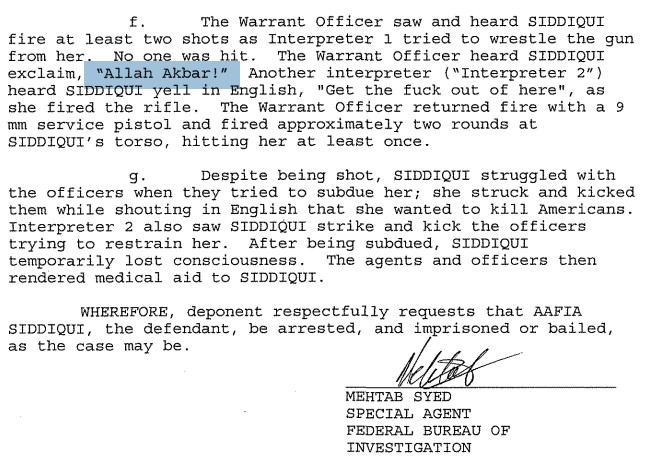
As per an official complaint signed by Mehtab Syed, Special Agent of the FBI in 2008, on the evening of 17th July 2008, officers of the Ghazni Province Afghanistan National Police (“ANP”) discovered Aafia Siddiqui along with a teenage boy, outside the Ghazni governor’s compound. ANP officers questioned Siddiqui in the local dialects of Dari and Pashtu. However, she did not respond. Since Siddiqui spoke in Urdu, the officials suspected that she was a foreigner.
The ANP officials searched her handbag and found numerous documents describing the creation of explosives, chemical weapons, and other weapons involving biological material and radiological agents. Aafia Siddiqui’s papers included “descriptions of various landmarks in the United States, including in New York City.
In addition, among Siddiqui’s personal effects were documents detailing United States military assets, excerpts from the Anarchist’s Arsenal, and a one gigabyte digital media storage device (thumb drive).” She also possessed numerous chemical substances in gel and liquid form that were sealed in bottles and glass jars.
On 18th July 2008, two FBI special agents, a US Army Warrant Officer (the “Warrant Officer”), a US Army Captain (the “Captain”), and US military interpreters, arrived at the Afghan facility where Siddiqui was held. The officers did not know that Aafia Siddiqui was held here “unsecured” and behind a curtain. The Warrant Officer sat and kept his loaded but safe US Army M-4 rifle on the floor. Soon after, Siddiqui appeared before the Captain with the Warrant Officer’s rile and pointed it towards the Captain. A struggle to snatch the rifle from her ensued. She allegedly yelled in English, “Get the f&*k out of here”, as she fired the rifle.
Siddiqui was shot at least once; however, she continued to kick and assault the officials while shouting “Allahu Akbar”. Aafia Siddiqui was also yelling in English that she wanted to kill Americans. “May the blood of [unintelligible] be directly on your [head/hands]” and “I am going to kill all you Americans,” she allegedly said.
It was only after Aafia Siddiqui lost consciousness, that the situation came in control and she was provided medical attention. Siddiqui was booked on two counts of attempted murder, assault, and weapons charges.
On 23rd September 2010, the United States Attorney for the Southern District of New York, Preet Bharara, announced that Aafia Siddiqui has been sentenced in Manhattan federal court to 86 years in prison for the attempted murder and assault of U.S. nationals and U.S. officers and employees in Afghanistan. Judge Richard Berman found guilty Aafia Siddiqui guilty of all charges brought up against her. Judge Berman cited Siddiqui’s ‘high intelligence’ and al-Qaeda links as aggravating factors.
She is currently serving an 86-year prison sentence for attacking US Army and FBI personnel in Afghanistan.
Interestingly, Aafia Siddiqui has been a deeply antisemitic person and even during her trial, she disrupted proceedings by claiming that there was a Jewish conspiracy at play against her. She even demanded DNA tests for jurors saying that if they were from Israel or ‘Zionists’, the trial won’t be fair.
“If they have a Zionist or Israeli background . . . they are all mad at me. I have a feeling everyone here is them [sic] — subject to genetic testing. They should be excluded if you want to be fair,” Siddiqui told the judge.
Synagogue attack, al-Qaeda’s prisoner exchange offer, demands by human rights groups and Islamist outfits and sister Fowzia Siddiqui’s legal battle: Islamists from all walks of life have been seeking Aafia Siddiqui’s release
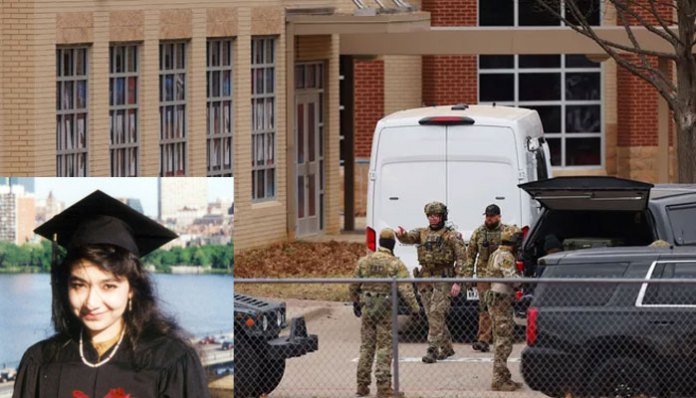
Many ‘human rights’ advocacy groups both in Pakistan and the US as well as Islamist outfits project Aafia Siddiqui as a ‘victim’, however, in 2022, a Jewish synagogue in Texas, was attacked by Islamic terrorists, including one Akram, who sought Siddiqui’s release. On 15th January 2022, Congregation Beth Israel in Colleyville, Texas was attacked by Islamic terrorists who took the Jewish people who came for there for a Sabbath morning service, as hostage and demanded Aafia Siddiqui’s release from prison as a condition for freeing the hostages, including one Jewish Rabbi.
Besides being a Jewish place-of-worship, the Colleyville synagogue was also in vicinity of the Federal Medical Center Carswell in Fort Worth, where Siddiqui was imprisoned. As the Jewish sabbath program was being live-streamed, when jihadi Akram took four people hostages, the authorities monitored his anti-America, antisemitic and Jihadist rants. The standoff persisted for 10 to 11 hours, during which Akram continuously demanded Aafia Siddiqui’s release. Eventually, jihadi Akram was fatally shot by FBI officers and hostages were rescued unharmed.
The FBI classified this incident as a “terrorism-related” and a hate crime, driven by antisemitism and Islamic jihadist ideology. Investigation into Akram’s internet history revealed interests in Aafia Siddiqui’s case, gun stores, information about Rabbis in Texas.
Before the Colleyville synagogue attacks, Islamic terrorist groups including al-Qaeda, ISIS and the Afghan Taliban have on many occasions offered to release American hostages in exchange for Aafia Siddiqui. In 2014, the Islamic State (ISIS) sought Siddiqui’s release in exchange for American hostages, journalist James Foley and human rights activist Kayla Mueller. However, the US always dismissed these offers and both Foley and Mueller were killed by ISIS jihadis in separate incidents.
Islamic terrorist groups who have vowed to kill Kafirs, have sought Siddiqui’s release and often cite her in their propaganda materials as a symbol of Muslim ‘victimhood’. International ‘human rights’ groups notorious for sympathising with Islamists, have advocated also for Siddiqui’s release.
Unsurprisingly, Pakistani governments and politicians have also advocated for Siddiqui’s release. Given Pakistani political and military establishment takes pride in harbouring Islamic terrorists, Pakistani senate in an 2018 resolution, hailed ‘Lady al-Qaeda’ Aafia Siddiqui as “Daughter of Pakistan”.
From then Prime Minister Yusuf Raza Gilani’s 2010 promises, PML(N) leader and former PM Nawaz Sharif’s pledges, Pakistani leaders have lobbied the US to seek Siddiqui’s release. Resolutions, rhetoric and requests have been Pakistan’s tactics over the years to secure the al-Qaeda terrorist’s release. Last year, a high-level delegation comprising senators from Pakistan visited the US to seek Siddiqui’s release.
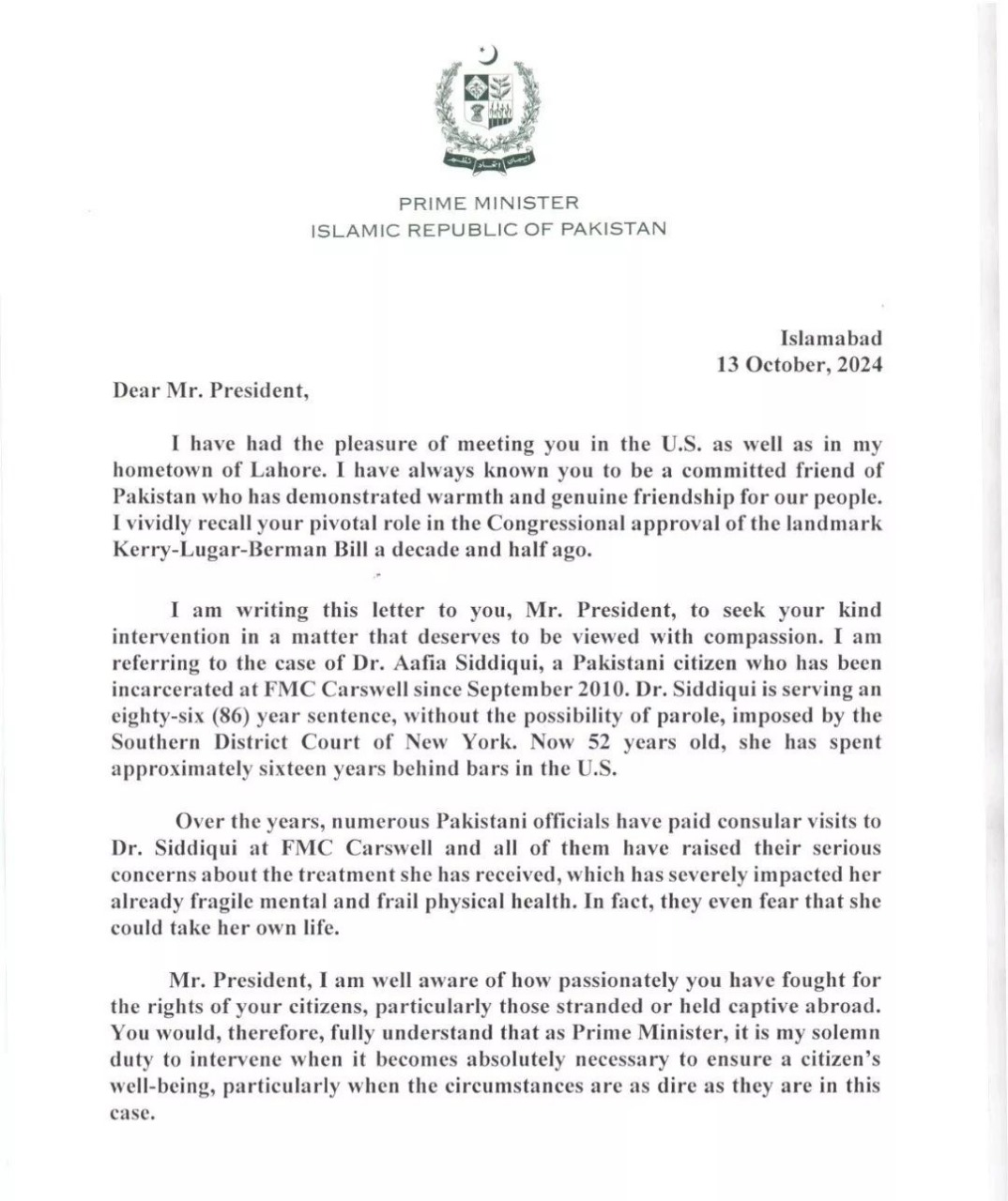
Last year, PM Shehbaz Sharif wrote a letter to then US President Biden for her release on humanitarian grounds. However, Biden denied Sharif’s request, dashing hopes to secure Siddiqui’s release for Trump’s inauguration.
In July this year, Pakistani foreign minister, Ishaq Dar, sparked controversy by comparing Aafia Siddiqui’s case with that of jailed former PM Imran Khan, calling it a matter of “due process”.
Recently, Aafia Siddiqui’s lawyer, Clive Stafford Smith, said that he plans to file a fresh appeal in New York, claiming that he has found video evidence of the incident which allegedly disapproves the prosecution’s accusations.
Clive Stafford Smith (L), Aafia Siddiqui (R)
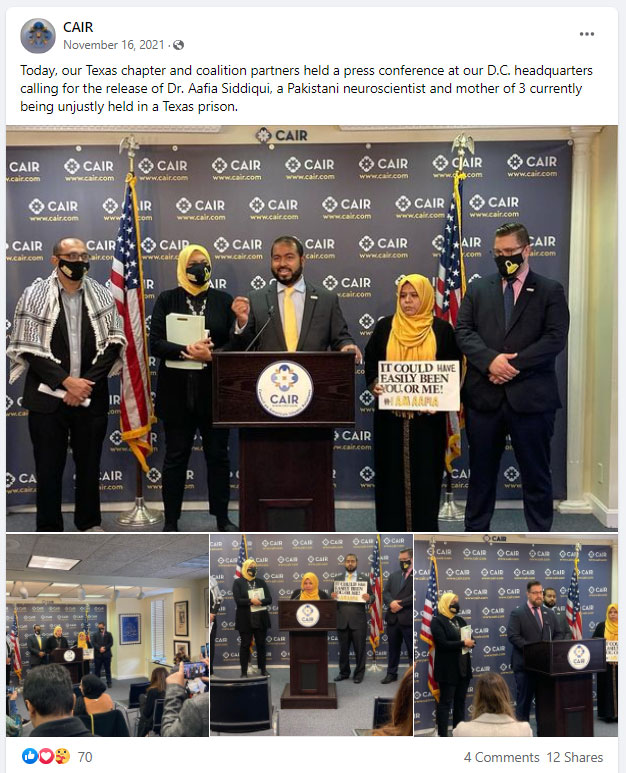
Besides, jihadi groups, and Pakistan government, US and UK-based ‘human rights’ and Islamist groups like CAIR, Amnesty International, CAGE International, Code Pink, among others have advocated for the release of ‘Lady al-Qaeda’.
Notably, just two months prior to the Texas synagogue attack, CAIR International (Council on American-Islamic Relations) had sought the release of Siddiqui and held events and rallies in her support. CAIR Texas DFW organize multiple online and offline campaigns to show support for Siddiqui and also raise funds for her legal battle against the conviction.
OpIndia earlier reported about the Hinduphobic proclivities of CAIR International, their support for crowdfunding scam accused ‘journalist’ Rana Ayyub, and their backing for the extremely Hinduphobic ‘Dismantling Global Hindutva‘ conference.
In 2022, Rutgers University and the Network Contagion Research Institute (NCRI) published a study which showed that there was a massive spike in Twitter activity for ‘Free Aafia Movement’ ahead of the attack on the Jewish synagogue in Texas.
Islamist propaganda outlets including Al Jazeera and Crescent International have also been pushing narratives favouring Aafia Siddiqui.
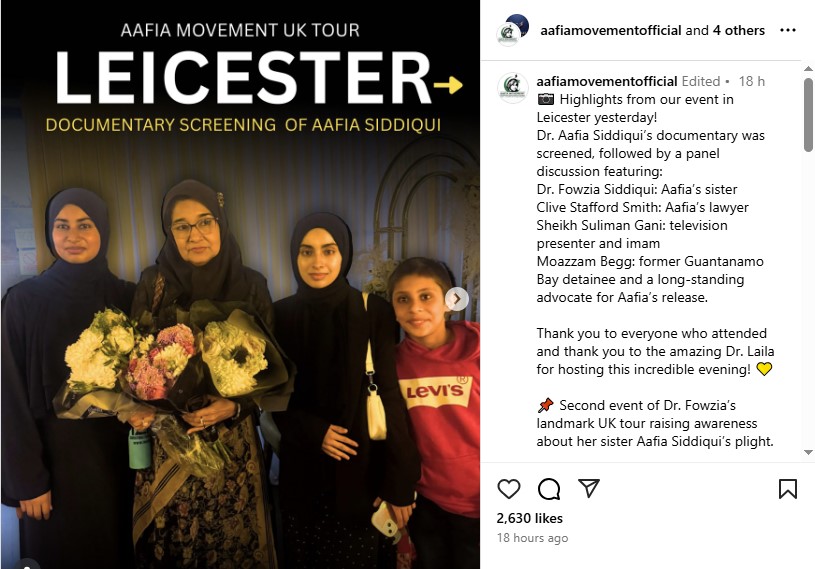
Dr Fowzia Siddiqui, the sister of convicted al-Qaeda terrorist Aafia Siddiqui, has been running the “Aafia Movement” to secure her release. As their website, “The Aafia Movement is an international initiative dedicated to securing justice and freedom for Dr. Aafia Siddiqui, a Pakistani-Muslim woman currently serving an unjust 86-year sentence in U.S. federal prison.”
Source: The Aafia Movement
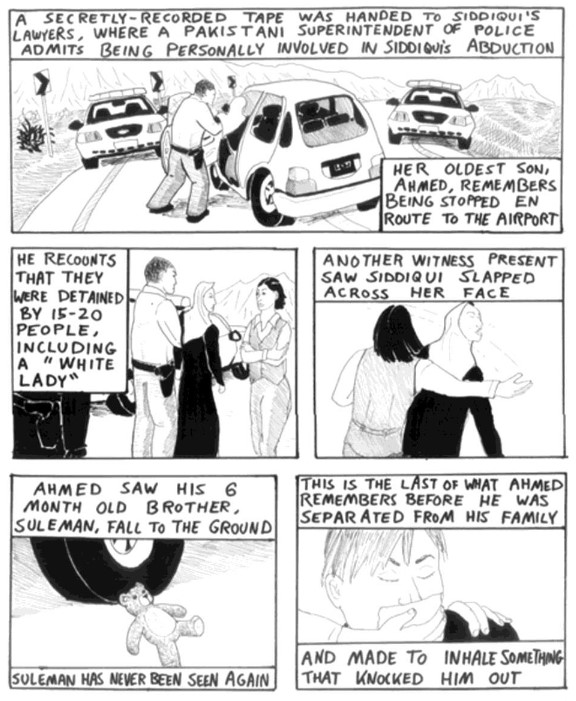
The website features, articles and illustrations telling Aafia Siddiqui’s supposed story of how an educated Pakistani-Muslim woman and a ‘Hafiza’, the woman who has memorised Quran and partook in Muslim rights activism, was ‘victimised, and subjected to ‘atrocities’ by the American authorities in the name of ‘war on terror’. There is another website, “The Aafia Foundation”, dedicated to the same purpose.
Back in 2023, Fowzia Siddiqui and lawyer Clive Stafford Smith alleged that Aafia “holds no special importance for the US” and it’s the government of Pakistan that didn’t do enough to bring her back. Smith even advocated for exchanging Aafia for Shakeel Afridi. Afridi has been jailed in Pakistan for many years over allegations of helping the US in tracing the Al-Qaeda chief Osama Bin Laden who was killed in Abbottabad in 2012. Predictably, Pakistani government, showed no interest in this prisoner swap proposal.
At present, Aafia Movement employs social media, interviews, seminars, documentary screenings, awareness campaigns and tours, fundraisers and other activities to advocate for Aafia Siddiqui’s release from prison. Amusingly, Islamic terror groups, Islamist advocacy groups, Islamist apologist ‘human rights’ groups and jihadi sympathisers in general, have been calling Aafia Siddiqui’s incarceration a ‘miscarriage’ and ‘travesty’ of justice, peddling Muslim victimhood and Islamophobia narratives while Aafia’s family denies her links to al-Qaeda or any Islamic terror group altogether.
The Jamaat-e-Islami’s stunning campus victory signals a deeper political shift that could reshape India’s eastern frontier. The news from our eastern neighbor, Bangladesh, barely registered as a blip in India’s busy news cycle. After all, it was “just” a student election.
But beneath this seemingly minor event lies a profound geopolitical tremor. The student wing of the Jamaat-e-Islami (JeI), the Islami Chhatra Shibir, swept the Dhaka University Central Students’ Union (DUCSU) elections a feat that marks the first time since Bangladesh’s birth in 1971 that an Islamist group has captured this prestigious and politically symbolic institution.
For many, this development may appear irrelevant a student body in a foreign country choosing its representatives. But for New Delhi, this is no ordinary development. It signals a dramatic shift in Bangladesh’s political mood, one that could have serious consequences for India’s national security, border stability, and regional diplomacy. In the past, Dhaka University elections have often served as a political barometer for the nation, foreshadowing major electoral trends.
To understand the magnitude of this victory, one must look at the broader context. Bangladesh has been politically unstable since the dramatic fall of Sheikh Hasina’s Awami League government earlier this year. Mass student-led protests toppled the regime, forcing Hasina into exile and leading to the formation of an interim administration under Nobel laureate Muhammad Yunus. The Awami League, which had ruled for over 15 years, has now been officially banned from participating in the general elections scheduled for February 2026.
The other traditional powerhouse, the Bangladesh Nationalist Party (BNP), is no better positioned. Its matriarch, Begum Khaleda Zia, is ailing and largely inactive. Much of its leadership has been based in London for years, creating a perception of detachment from grassroots realities. While the BNP retains some loyal voters, it is struggling to mobilize mass support in the current climate of upheaval.
With both the Awami League and BNP weakened or sidelined, a massive political vacuum has emerged. Into this void steps the Jamaat-e-Islami, a party with deep organizational roots, a robust welfare network, and a cadre-based system that has been quietly building strength during years of suppression under Awami League rule. Its student wing’s triumph at Dhaka University is not merely symbolic it represents the first tangible evidence of the Jamaat’s resurgence.
It is tempting to interpret this victory as a sudden surge of Islamist fervor among Bangladesh’s youth, but that would be an oversimplification. In reality, the electorate’s support for the Jamaat appears to be less about ideological alignment and more about frustration. After decades of governance marked by corruption, nepotism, and political violence, many young voters see the Jamaat as untainted by the rot of the traditional parties.
This is not unlike what we have witnessed in other parts of the world, where voters, disillusioned with mainstream politics, turn to groups that present themselves as “clean” outsiders, even if their ideology is extreme or exclusionary. For a generation born long after the 1971 Liberation War, the Jamaat’s collaborationist role during that conflict carries far less emotional weight than it does for their parents or grandparents. Instead, these voters are focused on the here and now jobs, governance, and accountability.
For India, this development could mark the beginning of a deeply challenging phase. The Awami League, under Sheikh Hasina, was New Delhi’s most dependable partner in the region. Hasina’s government worked closely with India on counter-terrorism, cross-border infrastructure, and connectivity initiatives. Under her leadership, India’s northeastern states experienced relative stability, as Dhaka cracked down on anti-India insurgent groups operating from Bangladeshi territory.
That era may be ending. With the Awami League out of the picture and the BNP weakened, the Jamaat now has a realistic shot at securing a powerful role in the next government possibly even leading a coalition. A Jamaat-led or Jamaat-influenced regime would fundamentally alter the dynamics of India-Bangladesh relations.
There are three primary concerns for New Delhi. First, border security could deteriorate. A Jamaat ascendance could embolden anti-India elements along the border. Historically, Islamist groups in Bangladesh have maintained close ties with the Pakistani ISI and have offered shelter to insurgent outfits operating in Assam, Tripura, and Meghalaya. A sympathetic government in Dhaka could undo years of counter-terrorism cooperation.
Second, there is the risk of rising religious persecution. Bangladesh’s Hindu minority has always been vulnerable during periods of political turmoil. Under regimes sympathetic to hardline Islamists, attacks on Hindu temples, businesses, and communities have historically spiked. India could face a humanitarian crisis along its borders if communal violence intensifies.
Third, there is the danger of strategic realignment. A Jamaat-led government may tilt Bangladesh away from India and towards China or even Turkey, both of which have cultivated ties with Islamist and conservative political movements across the Muslim world. This would threaten India’s strategic interests in the Bay of Bengal and undermine initiatives like BIMSTEC and the Act East policy.
The DUCSU election result is, therefore, not an isolated event but a warning sign. Bangladesh’s political tectonic plates are shifting. For too long, India has viewed Bangladeshi politics through the prism of the Awami League vs. BNP rivalry. That framework is now obsolete.
New Delhi must recalibrate quickly. This means intensifying diplomatic engagement not only with the interim government but also with emerging political forces, including moderate factions within the Jamaat. It must strengthen border management to preempt a surge in infiltration, arms smuggling, and cross-border militancy. Contingency plans must be built for a possible refugee influx in case of communal violence or political breakdown. India must also leverage regional partnerships, especially with Bhutan and Nepal, to present a united front on counter-terrorism and migration issues.
India’s traditional stance of “non-interference” may sound noble, but in practice, events in Dhaka directly affect security and stability in the Northeast. Ignoring them would be dangerously naïve. The DUCSU election was more than a campus poll; it was a political earthquake. The tremors may have started in Dhaka, but their aftershocks could soon be felt from Kolkata to Guwahati.
For India, the message is clear: a new chapter in Bangladesh’s history is unfolding, and we must be prepared to deal with its challenges head-on.
Karnataka Chief Minister Siddaramaiah has again sparked controversy with his recent comments equating religious conversions to ‘caste discrimination’ and ‘inequality’ in Hindu society.
While responding to media questions about caste census, the CM suggested that people convert to other religions not because of external influence but because they feel alienated by social structures in Hinduism.
Siddaramaiah’s statement on conversions
Siddaramaiah argued that conversions are often a response to inequality and discrimination within Hindu society. “Even if we say don’t convert, some of them do it as a result of the system.
In our Hindu community, if there was equality and equal opportunities, why would anyone convert? Did we bring untouchability,” Mr Siddaramaiah said on Saturday, 13th September, while answering media questions about caste census.
“There can be inequalities in Islam, Christianity or any religion. We or the BJP didn’t ask anyone to convert but people have… It is their right,” he added.
R Ashoka, Leader of the Opposition in Karnataka Assembly, hit back.
“If there is equality in Islam, why are women not allowed to enter mosques? If there is equality in Islam, why was there opposition to banning triple talaq? If there is equality in Islam, why are non-Muslims, including Hindus, referred to as kafirs in the Quran? Do you have the courage to ask this, Siddaramaiah?” he said in a post on X, formerly Twitter.
Chief Minister’s remark has attracted strong criticism
The Chief Minister’s remark has attracted strong criticism from those accusing him of singling out Hindu practice while ignoring corresponding problems in other religions. Siddaramaiah has easily said about conversions and the inequality in Hindu religion. Will he be able to question any other religion on this? Obviously, this will not happen. Because for him, questioning Hindus is an easy target.
History is a witness that whether it was the era of medieval invaders or the campaign of missionaries during the British rule, the conversions that happened during that period were due to political or economic pressure. The poor and the deprived were motivated to change their religion by luring them with education, health and money.
On the other hand, if we talk about equal opportunity, then it is constitutionally the government’s duty to provide equal opportunity to the people. If people are leaving their faith because of a lack of opportunity, then the responsibility also lies with the state to address these gaps.
“Clean chit” to missionaries and radical groups
The manner in which this statement has been made is very dangerous. This argument of Siddaramaiah is like giving an open license to those missionaries and fundamentalist organisations who have been engaged in dividing the poor, Dalits and the deprived from the Hindu society through greed and false promises for decades.
Is it not true that Christian missionaries first make the poor dependent in the name of education, health and help and then force them to convert? Is it not true that thousands of girls and families have been trapped by Islamic fundamentalist organizations through ‘love jihad‘ and the lure of money?
If there are some shortcomings as a society, have there been no attempts to correct them? Is becoming a Muslim or a Christian the only solution? No other religion has done as much work for reform as the Hindus have.
Today, crores of Dalits and people from backward classes reach heights in politics, education and other fields while living in Hindu society. This is clearly evident from the people occupying top positions in the country.
Today, there is a need to expose the statements of such leaders. If there are some shortcomings in Hindu society, then their solution is social reform and education, not conversion. Putting Hinduism in the dock every time and giving a clean chit to missionaries is actually a direct attack on the nation and culture.
Siddaramaiah’s recent decision in the favour of Christian communities
Siddaramaiah’s remarks are also tied to his political strategy of minority appeasement. His government has backed demands from Muslim reservations to the construction of exclusive colonies in the past. His recent decision to name an upcoming metro station in Bengaluru‘s Shivajinagar after St. Mary’s Basilica was also interpreted as a support to Christian communities.
A strong response came from Maharashtra on this decision, with Chief Minister Devendra Fadnavis saying it was an insult to Shivaji Maharaj.
With elections around the corner in Karnataka‘s politically charged atmosphere, such remarks are being interpreted as efforts to consolidate minority vote banks, even at the risk of alienating Hindu voters.
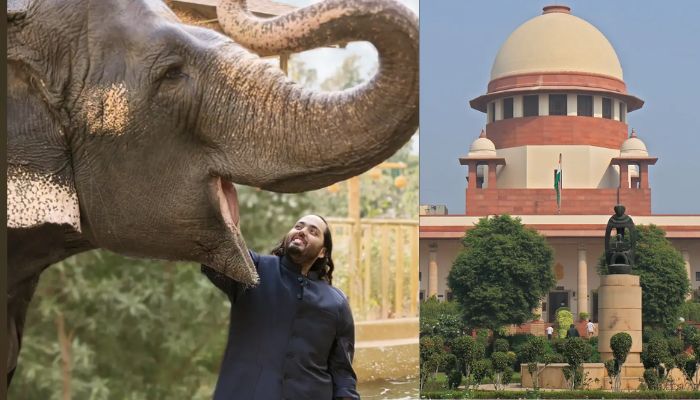
The Supreme Court on Monday, 15th September, said that the acquisition of animals by Vantara, the Greens Zoological Rescue and Rehabilitation Centre run by the Reliance Foundation in Jamnagar, Gujarat, was within the law.
The Court made this observation after going through the report of the Special Investigation Team (SIT) it had set up to look into allegations of irregularities.
A bench of Justice Pankaj Mithal and Justice P. B. Varale said the report showed that all acquisitions, including elephants, were carried out in compliance with the rules and regulations. “The acquisition of animals… has been carried out in regulatory compliance,” Justice Mithal remarked while reading from the report.
According to the media reports, the Court made it clear that the SIT had found no foul play in how the animals were brought into the facility, either from within India or from abroad.
The bench said they had not gone into the report in detail before the hearing because they wanted to examine it openly in court. During the session, Solicitor General Tushar Mehta, senior advocate Harish Salve who appeared for Vantara, and the petitioner’s lawyer were present.
Justice Mithal said “Acquisition of animals…carried out in regulatory compliance,” and added that the Court will make the report a part of the order. He also said that the matter would be closed after orders were passed in chambers.
Objections over making the report public
However, both Mehta and Salve requested the Court not to make the SIT report public. They said that a certain narrative is going on and publishing the report will allow more speculation than necessary. Salve added that there is some confidentiality attached to how the animals are taken care, etc. Justice Mithal then said that the Court will pass orders during lunch in chambers and will then close the matter.
“My only concern is, when the Committee came, whole staff of Vantara was made available, everything was shown. There are certain propriety concerns as to how the animals are being looked after, how do you keep these animals. Large moneys have been spent with experts to develop these, there is some degree of commercial confidentiality. Mylords may understand, this is something which is the rival of the world, this kind of facility. There is narrative which is trying to bring this down. If the whole record is put, we don’t want the rest of the world to know because if tomorrow, in New York Times there is another article or you will see in Times Magazine another article..” Salve told the bench.
Justice Mithal responded firmly, saying the Court would not allow unnecessary doubts to be raised now that an independent expert body had verified everything. “We are satisfied we the report of the Committee…Now, we have a report of an independent committee, they have gone through everything, they have taken help of experts. Whatever they have submitted, we will go by that. And all authorities will be free to take actions based on recommendations and suggestions. You are also bound, we will not permit anyone to raise questions again and again.”
Court urges end to unnecessary allegations
The bench also cautioned against spreading allegations for the sake of creating controversy. Justice Mithal said: “See, there are certain things we probably feel are the pride of this country. We should not unnecessarily rake up all these matters and raise hue and cry for the sake of that. Allow certain good things to happen to the country. We should be happy about all these good things…If the acquisition of an elephant is in accordance with the law, what is the difficulty?”
He pointed out that elephants in temples are also used for processions and festivals like Dussehra, and if those traditions are accepted, there should be no objection when elephants are legally acquired by a rescue and rehabilitation centre.
The Court further refused to take up a fresh plea regarding a temple elephant being shifted, saying the matter was already covered by the SIT’s findings.
The bench appreciated the promptness with which the SIT carried out its investigation and suggested that the members should be given an honorarium for their work.
With this, the Court indicated that the controversy surrounding Vantara’s acquisitions should now come to an end, making it clear that no foul play had been found.
Background: Why Vantara came under the scanner
The controversy around Vantara started earlier this year when concerns were raised regarding the acquisition of animals, particularly elephants, by the Reliance Foundation centre. Complaints and reports in the media and NGOs indicated that animals were being relocated without complying with the Wild Life (Protection) Act, 1972, and international conventions such as CITES.
Controversy were also erupted when an elephant called Mahadevi was transferred from a temple in Kolhapur to the Jamnagar centre in July, triggering a flurry of petitions. On 25th August, (2025), the Supreme Court ordered an inquiry by a Special Investigation Team (SIT) headed by its former judge, Justice J. Chelameswar.
The SIT also included former Chief Justice of Uttarakhand and Telangana High Court Justice Raghavendra Chauhan, former Mumbai Police Commissioner Hemant Nagrale, and senior customs officer Anish Gupta. The SIT has been directed to conduct its inquiry “forthwith” and submit its report by 12th September.
The SIT was asked to examine a wide range of allegations: from compliance with wildlife laws and import/export rules, to animal welfare standards, to even complaints of misuse of resources like water and carbon credits. Allegations of financial irregularities and wildlife smuggling were also listed in the petitions.
Significantly, the Court had then observed that the petitions were primarily based on media reports and complaints and lacked substantial evidence. Nevertheless, in view of the seriousness of the allegations, the Court directed a fact-finding inquiry to determine the truth.
Vantara, meanwhile, had welcomed the Court’s ruling and pledged to cooperate fully with the SIT. The foundation asserted that its priority was “rescue, rehabilitation and care of animals” and urged that speculation must not overshadow its activities.
Now, with the SIT finding no violations and the Supreme Court closing the matter, the spotlight shifts back to Vantara’s work as one of the largest animal rescue and rehabilitation centres in the world.