Home Blog Page 2074

As Railways confirms that Kavach system is not installed on the route in Odisha where the accident took place, could it have prevented it? What we know

Over 200 people have died and around 900 have been injured in one of the worst train accidents that took place in Balasore district in Odisha last evening. The accident involved three trains, Howrah-Chennai Coromandel Express, Yeswanthpur-Howrah Superfast Express, and a goods train.

As per initial reports, the Coromandel Express derailed at Bahanaga station after it entered the loop line and hit a goods train which was parked on that line. Several of the derailed coaches fell on the adjacent line, and the Yeswanthpur-Howrah Express that arrived on that line minutes later crashed into the derailed coaches. However, later some reports said that Coromandel Express derailed first and then crashed into the goods train, with no explanation of how the train derailed.

At present authorities are completely focused on rescue and restoration operations, and therefore information on how the accident took place is limited at present.

Following the accident, many people are asking why the Kavach system, designed to stop collision between two trains, didn’t stop the horrific accident. Many people are using the tragedy to blame the Modi govt, accusing it of running only PR and not actually implementing safety measures.

Social media users are also questioning whether the Kavach system, also known as Train Collision Avoidance System actually works in preventing collision between trains.

On the other hand, some people are saying that the Kavach system works only when two trains are moving on the same track, and it does not work when a train derails, falls in an adjacent track and gets hit by another train.

The Kavach system uses high-frequency radio signals to communicate with nearby trains and tracks. It is a set of electronic devices and Radio Frequency Identification (RFID) devices installed in locomotives, in the signalling system as well as the tracks. Apart from preventing head-on and rear-end collisions between trains on the same train, it can also slow down over-speeding trains, alert and apply brakes when a train crosses the signal, automatically whistle at level crossings etc.

The devices in the system connect to each other to control the brakes of the trains and alert the drivers, based on the logic programmed into the system.

Why Kavach didn’t work

Now coming to why the system failed to avert the crash, now it has been confirmed by the Railways that the system was not installed on the tracks where the accident took place. When asked why the system didn’t work, railways spokesperson Amitabh Sharma said that Kawach was not available on this route. He said that Kavach is route-specific, and the system is currently being installed on Delhi-Mumbai and Delhi-Howrah sections. The Kharagpur-Bhadrak-Cuttack route does have this system, he added.

While under development for over a decade, the indigenously developed system has been implemented in the railway network only recently. The trial of the Kavach system took place just a year ago, where two trains, one with Railway Minister Ashwini Vaishnaw, were driven towards each other on the same track, and the system successfully applied brakes to stop the trains. After that, the railways started installing the safety system in a phased manner. According to a statement by the ministry issued in December 2022, Kavach has been deployed for 1,455 Route Kms on South Central Railway with 77 locomotives, and is in progress on around 3000 km track on Delhi-Mumbai & Delhi –Howrah corridors.

With around 70,000 km of routes which have around 1,30,000 km of tracks, and over 20,000 trains, it will take a long time to install the system on the entire railway network, even if the task is fast-tracked.

Can Kavach prevent such accidents?

Now, while it has been confirmed that the Kavach system was not available on the track where the accident took place, the question arises, could it have prevented it?

According to many, as it was not a head-on collision, it is not clear whether the system can work in such a situation when where a train hits a derailed train which was running on the adjacent track. Many are saying it would not have been prevented because it was not a head-on collision between the two trains. But the fact is, the Kavach system does much more than only preventing head-on collisions. For one, it can also stop rear-end collisions.

In this regard, it is important to know what exactly happened. According to reports, the accident started with Coromandel Express hitting a parked goods train. While later some reports said that the train derailed on its own and then hit the goods train, some media houses now have cited a preliminary report prepared by officials, which indicates that the passenger train, which was supposed to pass the station through the up main line, entered the loop line instead due to a signalling error.

According to the report, at first, the signal was given for Coromandel Express to pass through the up main line, but then it was switched off. After that, the train entered the loop line and crashed into the parked goods train. The other passenger train arrived at that time and crashed into derailed coaches of the other train which fell on the down main line.

“After careful observation, (we) came to the conclusion that the signal was given and taken off for the main line for 12841 (Coromandel Express), but this train entered the loop line and dashed with the goods train which was on the loop line and derailed,” said the report signed by four senior railway officials, who inspected the accident site on Friday night, as reported by several media houses.

However, this report has not been published officially, and media houses reported it claiming that they saw the handwritten draft.

If this report is correct, this indicates that it was most likely a human error, which caused the passenger train to enter the wrong line and crash into the parked train. As there was no scheduled halt for both the trains at the station, they were travelling at high speeds, causing massive damage. Reportedly, Coromandel Express was at a speed of 128 kmph and Bengaluru-Howrah Superfast Express was running at a speed of 116 kmph.

The Kavach system would have been possibly activated and applied brakes, as it is designed to prevent trains from entering already occupied tracks due to human and signalling errors. If the Kavach system was there, it would have tried to prevent the Coromandel Express from crashing into the goods train by applying brakes. It was essentially a head-on (or rear-end) collision between Coromandel Express and the goods train, which led to the second crash.

The Kavach system is designed to prevent Signal Passing at Danger, which is when trains not stopping at a stop signal. The Kavach systems installed at stations continuously monitor the tracks and trains on them and act to prevent any collision.

According to specifications of the Kavach system, “In case two trains are detected by Stationary Kavach moving towards each other on same TIN (Track identification Number) in block section in communication mandatory zone, the SoS command would be generated by Stationary Kavach for both the trains. On reception of such Loco specific SoS from Stationary Kavach Unit, the trains would be stopped through automatic application of brakes.” This means, if the system detects two trains on the same track at a station where Stationary Kavach is installed, it will apply brakes.

The Kavach system uses RFID tags on tracks, and the locomotives have RFID readers. Therefore, the system knows the exact location of the trains on the tracks, and if another train approaches the same track on the same location, it sends alerts and applies brakes, preventing collisions. The onboard Kavach units can also detect possible collisions by communicating with the units on other trains in an area, without using track RFIDs.

However, the important fact is that Coromandel Express was running at 128 kmph. This means, even if the Kavach was activated after it entered the loop line, the speed would be very high to effectively stop the train in time to prevent the collision. Therefore, the train would still hit the goods train.

But the Kavach system has another feature, it can prevent train collisions with the help of SPAD (Signal passed at danger) and TIN (Track Identification Number) conflict. This means, it could have possibly detected that the main line was connected to the loop line which already has a train, and could have raised alarms and activated brakes well before the passenger train entered the loop line. In that case, there could be enough time to stop the train.

Now, what if there was no collision and the first passenger train derailed on its own and fell into the adjacent line? Many people are saying the system can’t prevent such accidents.

But it has been reported that the Kavach has another feature, under which, after the system is activated, all other trains within a range of 5 km are halted to prevent any cross-track collisions.

The Kavach system detects derailments and unusual halts of running trains, which results in halting all trains within 5 km. Therefore, the system could have possibly applied brakes on the Yeswanthpur-Howrah Express even if the Coromandel Express derailed on its own, after detecting the derailment.

Moreover, the specifications say that “Onboard KAVACH units either directly or through Stationary KAVACH unit shall be capable of detecting head on collisions, rear end collisions of trains/locos on single line, multiple lines in all possible scenarios based on the track identification, speed of the trains, train location, train length, train direction movement (Nominal/Reverse) etc.” It says that the system can detect collisions even on multiple lines.

However, according to railway sources, the Yeswanthpur-Howrah Express reached the spot almost immediately after Coromandel Express derailed. In fact, it is also being said that the second train was already passing the station when the derailment took place and derailed coaches hit the running train. Therefore, even if the Kavach system is activated in such a scenario, it is not sure if the second train could be stopped in time.

Therefore, in conclusion, if the accident took place after Coromandel Express hit the goods train, which is most likely what happened, the Kavach system would have activated, and the accident could have been prevented. It could be prevented if the system activates after the train entered the loop line, as there would not be enough time to stop it completely by applying the brakes. But if the system is activated earlier detecting the wrong track selection, it could work. Moreover, even if the train was slowed by automatic brakes, the result could have been different. And if the train derailed on its own and then the second train reached almost immediately, the system would most possibly not work. It could have been activated, but successfully applying brakes in time in such a scenario is another matter. Most probably, there would not be enough time to prevent the second collision of the running train with the derailed train.

The Kavach system could prevent both collisions, but in this case, there were not enough times for it to act effectively.

‘It’s a great tragedy, sabotage cannot be ruled out’, says former railway minister Dinesh Trivedi on the Odisha train accident

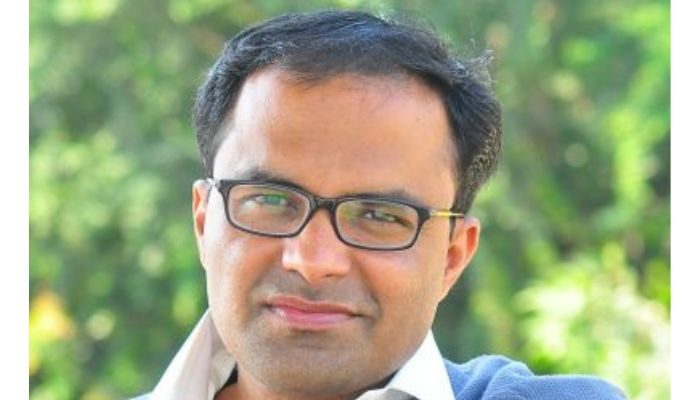
Former Railway Minister & BJP leader Dinesh Trivedi said on 3rd June 2023 that the accident of the trains at Balasore is a great tragedy and some conspiracy might be behind it which needs to be investigated properly. He also said that this is not the time to politicise this issue.

Dinesh Trivedi said, “This is a great tragedy. Our heart really goes out to the bereaved families. I think the priority has to be to save as many lives as possible. I think at this point in time, one needs a lot of doctors, and plenty of medicines and unless and until those things are there, it becomes a little difficult but it certainly is a great tragedy. Our heart really goes out to the bereaved families.”

He further said, “This is not the time for politics. Nobody can do politics over dead bodies. And please understand it could be you, it could be me, it could be anybody including our relationships. At the end of the day, these are human lives. Of course, one has to ensure such things don’t happen. I can tell you being a railway minister earlier, Indian Railways is one of the best organisations in the world. It is very efficient.”

Dinesh Trivedi added, “This was also one of the freaks in the sense that derailed coaches were rammed into by another passenger train. I recall if I am not mistaken sometime in 2010, in the month of May, near Kharagpur, I think it was the Geetanjali Express that got derailed and which was rammed into by a goods train where almost above 200 people died unfortunately. And that time it was sabotage.”

He said, “In such accidents, I would not rule out any sabotage. Anything is possible. And that only the high-level commission for inquiry which has been appointed by the government and the railways safety commission can look into it. And tell us what has happened to ensure that these kinds of things don’t happen. So don’t rule out anything. When I say anything, I mean anything.”

The former railway minister said, “The scene I’m watching, it’s like there’s an earthquake. Our goal should be to not have a single death, as in Japan. New technology is emerging and it is also being incorporated into the railway system.”

At least 261 people were killed in a train accident in Odisha’s Balasore district that took place on 2nd June 2023. Several teams, including the Army and the Air Force, are involved in rescue operations after the accident.

Today, Prime Minister Narendra Modi visited the train accident site in Balasore, Odisha. During his visit, he also met the injured individuals at hospitals in Cuttack. Accompanied by his cabinet colleagues, Union Railway Minister Ashwini Vaishnaw and Education Minister Dharmendra Pradhan, the Prime Minister inspected the site.

‘I trust the Indian government’: Mother of baby Ariha Shah says govt’s efforts have given a hope that her daughter will return to India from Germany

A day after the Ministry of External Affairs (MEA) issued a statement on the Ariha Shah case assuring the return of the baby girl to India, Ariha’s mother Dhara Shah has said that the government’s efforts have given them hope that their child will soon return to India. She also expressed her trust in the Narendra Modi government. 

Ariha Shah, the daughter of a Jain couple Bhavesh and Dhara Shah was 7 months old when she was separated from her parents by the authorities of the Germany Child Care Institute in 2020 after the baby was accidentally hurt by her grandmother. 20 months have passed since then but she has not been returned to her parents.

“The MEA has released a very strong statement, asking German authorities to send Ariha Shah back to India at the earliest. The Indian MEA has also shared the details of potential foster parents with the German authorities. They have said that the cultural and linguistic rights of the child should be resumed. This has given us a lot of hope that Ariha will soon be back in her country,” Ariha’s mother said on Friday.

Speaking to ANI, Dhara Shah said, “I trust the Indian government and I request that once there will be PM-level intervention in the case then my daughter will return soon.”

India has been persistently advocating for the return of Ariha Shah to India: MEA statement

It is notable that the MEA in a Friday statement said they are continually advocating for Ariha Shah’s return to India. 

MEA Spokesperson Arindam Bagchi said, “Our efforts have been guided by the best interests of the child, which we believe can be fully realised only when she is in her home country where her socio-cultural rights can be safeguarded. Accordingly, we have been requesting Germany to return the child to India. The Embassy has repeatedly requested German authorities to ensure that Ariha’s connection with her cultural, religious and linguistic background is not compromised and sought consular access to the child as well as cultural immersion at the Indian Cultural Centre in Berlin.”

The MEA Spokesperson also stated that the manner in which the baby girl Ariha Shah was shifted away from her parents to foster care is a matter of concern. He further informed that the German authorities have been apprised of India’s child protection system, and details about potential foster parents have also been shared.

“The German authorities have been made aware of India’s child protection system and the details of potential foster parents have also been shared with them. Ariha’s continued placement in German foster care and infringement of her social, cultural and linguistic rights is of deep concern to the Government of India and to the parents. We would like to reiterate that Ariha Shah is an Indian national and her nationality and socio-cultural background is the most important determinant of where her foster care is to be provided,” Bagchi said.

Moreover, the Indian authorities have urged the German authorities to allow Ariha’s return to India adding that it is her inalienable right as an Indian national.

“We urge the German authorities to do all that is necessary to send Ariha to India at the earliest, which is also her inalienable right as an Indian national. We remain committed to ensuring the return of Ariha Shah to India,” MEA’s statement added.

Indian MPs write a joint letter to German Ambassador Phillip Ackerman to bring back Ariha

Meanwhile, 59 MPs from 19 political parties have come together to ensure Ariha Shah’s repatriation to India. The MPs, both from the Lok Sabha and the Rajya Sabha wrote to Ambassador Philipp Ackerman on Friday in a joint letter, saying it was essential to return Ariha to India, “her own country, people, culture, and environment,” and that “any delay will cause irreparable harm to the baby.” 

“Shifting her around from one carer to another will cause deep and damaging trauma to the child. The parents are allowed only fortnightly visits. The videos of these meetings are heart-wrenching and they reveal the deep bonds the baby has with her parents and the pain of separation,”  the letter read.

The letter further stated that India can well look after her own child and that the baby girl Ariha Shah belongs to a strict vegetarian Jain family who is being raised in an alien culture.

“There is another aspect. We have our own cultural norms. The baby belongs to a Jain family who are strict vegetarians. The baby is being brought up in an alien culture, being fed non-vegetarian food. Being here in India, you can better appreciate how unacceptable this is to us,” the letter added.

Notably, Maharashtra CM Eknath Shinde on Thursday wrote a letter to External Affairs Minister S Jaishankar drawing his to the case of Baby Ariha Shah who is stranded in a foster home in Germany for the last twenty months. 

Allahabad HC asks Lucknow University to find out if an alleged rape victim is ‘Mangalik’ by studying her ‘Kundli’, Supreme Court stays the order

On Saturday, during a special session, the Supreme Court suspended an order issued by the Allahabad High Court instructing to find out whether a rape victim is ‘Mangalik’. The High Court had instructed the Head of the Astrology Department at Lucknow University on 23rd May 2023, to analyze the Kundli of the rape victim to determine her Mangalik status. A vacation bench consisting of Justice Sudhanshu Dhulia and Justice Pankaj Mithal took suo motu cognizance of the High Court’s order before issuing the stay.

In a bail application filed by the accused in a case involving an alleged rape based on the false promise of marriage, the order was issued by Justice Brij Raj Singh of the High Court. The accused claimed that the marriage could not take place because the woman was a ‘Mangalik’.

Solicitor General of India Tushar Mehta said, “I have seen the order and it is very disturbing. It may have stayed.” The complainant’s lawyer argued that the order was issued with the mutual agreement of the parties and emphasized that the Court possesses the authority to seek expert testimony. The lawyer further highlighted that Astrology is a subject taught at the university level.

Justice Dhulia said, “But this is totally out of context. The right to privacy is disturbed. We do not want to join facts on what astrology has to do with this. We respect your sentiments on that. We are only concerned with the subject matter linked to this.”

The Solicitor General further said, “Astrology is a science. We are not on that. We’re saying that while entertaining an application by a judicial forum, can this be a question.”

Justice Mithal remarked, “We don’t understand why the astrology aspect was considered.” The Supreme Court, while issuing a stay on the High Court order, provided clarification that the High Court is expected to assess the bail application based on its merits.

Background of the case

On 23rd May 2023, the Allahabad High Court instructed the Head of the Astrology Department at Lucknow University to assess a rape victim’s Mangalik status by examining her Kundali within a three-week timeframe. Justice Brij Raj Singh’s bench issued the order while considering the bail application of a rape accused. The accused allegedly declined to marry the victim, with whom he had engaged in sexual relations, citing the presence of Mangal Dosha in the girl’s Kundali.

The victim asserts that the accused engaged in sexual relations with her under the false pretence of marriage, with no genuine intention of fulfilling that promise.

During the proceedings in the High Court, the accused’s counsel argued that the marriage between the accused and the victim could not occur due to the victim being a Mangalik. In response to this claim, the victim’s counsel countered by asserting that she does not have Mangal Dosha.

Due to the contradictory assertions made by both parties involved, the Court instructed the Head of the Astrology Department at Lucknow University to determine the girl’s Mangalik status. The Court further directed the parties to submit their respective kundlis to the Head of the Department within a period of ten days.

In astrology, Mangal Dosha (also known as Manglik Dosha or Kuja Dosha) refers to a condition that occurs when the planet Mars (Mangal) is positioned in certain specific houses in a person’s birth chart (Kundli). A person with Mangal Dosha in his or her kundli is said to be a Mangalik person. It is believed to have potentially adverse effects on marriage and relationships. According to traditional beliefs, if a person has Mangal Dosha in their kundli, it is said to bring challenges, conflicts, or even potential harm to their marital life. It is often considered important to consider Mangal Dosha when matching horoscopes for marriage compatibility. However, it’s worth noting that not all astrologers or individuals believe in the significance of Mangal Dosha, and its interpretation may vary among different astrological traditions and practices.

‘Hope sex will eventually be acknowledged as a sport’: Group in Sweden to hold a sex championship, each ‘match’ to last for 45-60 mins

The first-ever sex tournament is set to take place early next week in Sweden, by an organisation named “Swedish Federation of Sex”. Named the European Sex Championship, the competition is scheduled to take place on June 8 under the supervision of the organisation.

Participants in the championship will compete for six hours each day over the course of many weeks with individual ‘matches’ reportedly lasting 45 to 60 minutes. The competition will last several weeks and the competitors from different European countries will face off in 16 different disciplines to showcase their talents and abilities.

Participants to earn 5 to 10 points for different sex acts

The championship features a wide range of disciplines, including seduction, body massages, exploring erotic zones, prelude, oral sex, penetration, endurance, physical appearance, pose execution, creativity in position changes and the number of orgasms within a given time, artistic performance and pose transitions, and the capacity to raise blood pressure and heart rate during the competition.

Additional categories consist of the most exquisite and complicated position, the most creative communication as determined by a panel and spectators, the pair who exhibits the most activity, artistry in the Kamasutra, and popularity among the judges and viewers.

The competition is separated into three stages, with each level requiring a certain number of points in order to advance. Participants can earn between 5 and 10 points in each discipline, which is decided by a mix of public votes and a panel of five judges. 

Competitors of any gender or sexual orientation welcomed

The European Sex Championship values diversity and accepts competitors of any gender or sexual orientation. The organisers emphasise the potential strategic value of sexual orientation in this sport, which they hope may eventually be adopted by other European nations.

The organiser stated, “The incorporation of sexual orientation as a part of sporting tactics will be a groundbreaking development among European countries.”

The president of the Swedish Federation of Sex, Dragan Bratych, remarked that he hoped that sex will eventually be acknowledged as a sport. He highlighted the likelihood of sexual engagement to promote both physical and mental well-being and the need for training. He voiced, “Just like any other sport, achieving desired results in sex requires training. Therefore, it is only logical for people to start competing in this domain as well.”

He stressed the distinctive features of this sport, where the goal is to give the opponent great pleasure. In contrast to traditional sports, when losing often results in disappointment, the competitor’s success in this game is determined by their capacity to satisfy their partner.

Other sports may demoralise rivals, but sex as a sport seeks to make everyone as happy as possible. According to Bratych, “The more pleasure your partner experiences, the more points you earn.”

As per the Swedish Sex Federation, sex as a sport is a challenging activity that calls for inventiveness, emotional intelligence, physical health, and work capacity. The federation’s president asserted that the competition regulations will change over time in response to developments and demands.

A similar bizarre incident had drawn huge ire in 2021 when students of a Roman Catholic college in Minnesota in the US were caught organising ‘sex competitions’ on the campuses. Reportedly, a group of students from St. John’s University, an all-male university, launched a competition to see who could lure the maximum number of female students from their sister school, the College of St. Benedict, an all-female college, and have the most sexual encounters with them. The competition was organised by students living in Saint Patrick Hall of St. John’s University.

Hundreds of students had then attended an outdoor demonstration and sit-in organized by the College of St. Benedict’s Institute for Women’s Leadership to protest against the alleged competition.

Hindu girl’s family alleges Muslim partner’s family forced daughter to convert to Islam: Delhi HC provides protection to an interfaith lesbian couple

The Delhi HC Friday ordered the Delhi Police to provide security to an inter-religious same-sex couple. The couple had sought protection amid threats from their families due to their personal relationship.

A single bench of Justice Rajneesh Bhatnagar, while hearing the petition, decided that they would be provided security. He ordered the local police to provide protection to the petitioners. In addition, he directed the concerned Station House Officer (SHO) and beat officer to give their respective numbers to the petitioner so that they can be contacted by the couple in case of any problem.

In the event that the couple makes a distress call, the court ordered the police to respond right away.

The High Court further ordered the SHO to notify the relevant police authorities if the couple moved into a rented residence in another country and to give the officer their addresses so that they might be protected.

Advocate Arundhati Katju, appearing before the bench on behalf of the couple, one of which is a Hindu female and another a Muslim of the same gender, informed the bench that they are receiving threats from their respective families because of their religion and sexual preferences. Katju further submitted that they are adults and wish to live together. 

The counsel further told the court that the family of the Hindu female has alleged that the family members of the Muslim female tried and forced their daughter to convert to Islam. The counsel added that the Hindu partner was threatened that her family will be killed or harmed if she continued the relationship. 

Advocate Arundhati Katju also added that the family of the Hindu girl is not in favour of the relationship. They have tried to marry the girl to a boy of their wishes. The girl was taken to Uttar Pradesh against her wishes and was recovered after the Delhi Woman Commission (DCW) intervened.

They are compelled to reside in a shelter home amidst the threats from family members, according to Arundhati Katju. She also added that Delhi High Court’s Legal Aid Committee has been contacted by the duo in order to assist them.

Justice Bhatnagar, after hearing the arguments of both sides, ordered the local Station House Officer (SHO) of Delhi Police to provide them with the numbers of personnel of that beat and give them proper security in case they need to report any problems in the ensuing days.

As per the court’s judgement, if the petitioner ever moves residences in the future, they must first notify the SHO and he will ensure that the SHO of the police station of the neighbourhood in which they are moving is aware of the situation so that he can implement the same system into place soon after.

Twitter officials censor ‘What is a Woman’ documentary over ‘transphobia’ & ‘misgendering’ charges, resign after Elon Musk overturns censorship and promotes it

Several top executives at Twitter have resigned after their decision to censor a documentary titled ‘What is a Woman’ was overturned by the owner of the micro-blogging site, Elon Musk.

The documentary featuring author Matt Walsh was released last year. It highlighted the ever-changing definitions of sex and gender, especially in the context of the transgender rights movement.

Walsh decided to stream the film for free on the official Twitter handle of The Daily Wire, where he works as a columnist, on the occasion of its first anniversary.

Screengrab of the tweet by The Daily Wire

Hours after it was made available on Twitter on Thursday (June 1), the documentary’s visibility was reduced significantly and was dubbed ‘hateful content’. “Visibility Limited: This tweet may violate Twitter’s rules against Hateful conduct. Learn More,” read a disclaimer at the bottom of the tweet.

Matt Walsh was accused of transphobia and violating Twitter’s rules on ‘misgendering’ (the act of identifying individuals by their biological gender instead of their self-proclaimed gender) through a scene in the documentary where a father refers to his daughter as her.’

He took to Twitter to inform, “Our film has been posted for a couple of hours. You cannot retweet it. It will not appear in anyone’s feed. It has been flagged as hate speech. It has been blacklisted from the trends list. It still has nearly 900 thousand views.”

Meanwhile, the co-founder of The Daily Wire, Jeremy Boreing pointed out that although Twitter removed ‘misgendering’ from its policy after Elon Musk’s takeover, the micro-blogging site still classifies such an action as ‘abuse’ and ‘harassment.’

He said that the Twitter moderation team asked them to edit some parts of the documentary, failing which the visibility of the film will be drastically declined.

Jeremy Boreing said, “Twitter replied that our own followers would not be able to see it in their feeds. This, they said, is part of their “speech not reach” policy.”

Intervention of Elon Musk

Following an outpour of support from conservative circles, Twitter owner Elon Musk intervened and said that the ‘hateful conduct labelling’ was a mistake on the part of the Twitter moderation team.

He stated, “This was a mistake by many people at Twitter. It is definitely allowed. Whether or not you agree with using someone’s preferred pronouns, not doing so is at most rude and certainly breaks no laws.”

“I should note that I do personally use someone’s preferred pronouns, just as I use someone’s preferred name, simply from the standpoint of good manners. However, for the same reason, I object to rude behaviour, ostracism or threats of violence if the wrong pronoun or name is used,” Musk further emphasised.

He also promised to fix the issue by June 3rd while responding to Matt Walsh.

Screengrab of the tweet by Elon Musk

Interestingly, the issue was fixed by the end of Friday. “Fixed,” Elon Musk responded to a tweet by Chloe Cole, a victim of woke culture. Cole underwent double mastectomies and took puberty blockers as a child to transition into a man.

Later, she de-transitioned to become a woman. Chloe Cole is now fighting to protect minor children from undergoing gender transition surgeries.

Screengrab of the tweet by Elon Musk

The Twitter owner later promoted the ‘What is a Woman’ documentary on Twitter. “Every parent should watch this,” he said.

Musk further added, “Consenting adults should do whatever makes them happy, provided it does not harm others, but a child is not capable of consent, which is why we have laws protecting minors.” At the time of writing, the documentary has been viewed over 100 million times.

Screengrab of the Twitter post of Elon Musk

Aftermath of the censorship

The decision to censor the documentary was reportedly taken by Ella Irwin, Twitter’s Head of Trust and Safety. After the warning label underneath the tweet of The Daily Wire was removed, she resigned from the job.

Ella Irwin’s team had allegedly been responsible for limiting the spread and visibility of the film. Similarly, Twitter’s head of brand safety and ad quality, A.J. Brown, also left the company.

Brown reportedly worked on preventing ads from appearing next to unsuitable content. On being asked about the matter and whether the resignations were related, Musk said, “Director related.”

Meanwhile, another top Twitter executive by the name of Maie Aiyed also resigned from Twitter. She worked as a program manager (brand safety partnerships) at the company.

Several Twitter users pointed out her casual racism and disdain for individuals belonging to the white race.

“There are so many people that don’t have people speaking for them’ ya like black people, trans people, Muslim people wouldn’t even GET the platform you had even if they worked twice as hard, so..rest assured, white men are represented in all,” she said in one of her tweets.

“[W]hite people act like flossing is a personality trait LMFAO…White guys think buying Elvis memorabilia is a suitable substitute for a personality lmao,” her other tweets read.

Bareilly: Abid posed as Bablu to trap and marry a Hindu woman, converted her to Islam, then forced her to perform Halala with his father

In the Bareilly district of Uttar Pradesh, a case of love jihad has come to the fore wherein a Hindu woman who runs a beauty parlour has alleged that a person named Abid posing as Bablu, lured her into marrying him and also converted her to Islam. The 30-year-old victim also alleged that accused Abid forced her to undergo Halala with his father. On the basis of the complaint lodged by the victim on May 20, 2023, the police have registered a case against the accused youth Abid, his father Raja Bhai Arif, mother Begum and sister-in-law Soni for forcibly converting the Hindu woman to Islam. 

According to the victim, a Bhuta police station precinct resident, she runs a beauty salon in the Karmchari Nagar area of Bareilly. She stated that the accused first met her in 2018. He introduced himself as Bablu and wore a kalava around his wrist and sported a Tilak on his forehead. He obtained the victim’s phone number and began calling her frequently. The two soon became closer and fell in ‘love’. Accused Abid established sexual relations with the victim under the pretext of marrying her soon.

Following their marriage at a temple in 2018, the accused established sexual relations with the victim and recorded the act. Later, he threatened and blackmailed the victim using the video recording. 

Reportedly, the victim learned that the man she mistook for a Hindu named Bablu was actually a Muslim named Abid. 

The victim further alleged that accused Abid took her to his house and forcibly fed her beef. Abid subsequently compelled her to convert to Islam and have a Nikah with him with the support of his family. Following the nikah, Abid imposed a condition on the victim in order for her to accept her as his wife. The horrible condition was that she would have to go through Halala with Abid’s father, a Malukpur resident.

The victim further claimed that the accused and his family held her hostage for four years, during this time Abid raped her several times. On May 20, however, the victim managed to escape the captivity and reached the Subhashnagar police station and lodged a complaint. 

Meanwhile, the City SP has stated that a case has been registered based on the victim’s complaint. The police are investigating the matter, and further action will be taken. The police are conducting searches to nab the accused. 

The victim, on the other hand, has stated that her life is in danger until the accused is apprehended. 

On Wednesday, OpIndia reported a similar case of love jihad in Bareilly wherein one Mohammad Alim posed as Anand and raped a girl multiple times, and forced her to undergo an abortion. The accused was arrested by the police on Thursday (1st June).

‘No difference between woman and meat’, Hindu refugees rendered homeless by Rajasthan Govt recount the atrocities which forced them to flee Pakistan

Hindus and other religious minorities have long been the target of atrocities and discrimination in Pakistan. Unlike Muslims – the so-called minorities – in India, these Hindus in Pakistan never enjoyed any normal life let alone special rights and privileges. According to research, over 14,000 cases of gang rape, kidnapping, and religious conversion of Hindu girls have surfaced in the last 12 years.

Tired of the atrocities, several Hindu refugees have, over the years, came to India after escaping the terror and repression of the government in Pakistan with the hope that they would be able to live respectable life here.

However, when they found themselves fighting for the most basic amenities and facing different types of discrimination in some places in India, their hopes were completely shattered. Last month, innumerable Pakistani Hindus were rendered homeless after the Rajasthan Government decided to raze their homes to the ground with bulldozers. The arbitrary action was taken first in Jodhpur and then in Jaisalmer, forcing many Hindu women and children migrants to come out on the road in the scorching heat. A video of the incident was shared on social media in which migrant Hindus could be heard expressing their anguish over the action taken by the authorities.

When news of the Rajasthan government’s actions against these Pakistani Hindus emerged, the plight of these Pakistani immigrants once again became a subject of discussion in the public discourse.

Following this bulldozing operation, numerous media outlets conducted on-the-ground reports at both locations. The hardships these migrant Hindus were facing in Pakistan and the hostility they encountered from Indian systems and people were extensively covered for the first time by mainstream media outlets. The depressing accounts of these Hindus showed not only how inhumanely religious minorities are treated in Islamic countries, but also serve as a sobering reminder of the amount of support that Hindus must provide to their fellow brothers and sisters who also call India their motherland.

While speaking with the media, many said that they had fled Pakistan after becoming victims of rape and kidnappings. They unanimously said that they felt their lives were in danger in the neighbouring country.

Aaj Tak journalist Mridulika Jha also travelled to Jodhpur to report from the ground. She spoke with a number of Hindu refugees who not only discussed the difficulties they had in Pakistan that compelled them to run to India but also the challenges they are currently experiencing in India that are unfortunately escalating their suffering.

Hindu families in Pakistan are under the regressive zamindari system, fleeing to India for their daughters

Mridulika Jha spoke to a Pakistani Hindu refugee named Vishnumal in the Chokhan area of Jodhpur. He had fled Pakistan on the pretext of coming for a pilgrimage to Haridwar and went to Jodhpur and settled there instead. He said while weeping profusely, “There we had to abandon our house, here our house has been destroyed. How much suffering do we have to endure in one life?”

Zamindari is a system of land ownership in which large landowners, known as zamindars, control large tracts of land and rent it out to smaller farmers. The system was introduced by the Mughal Empire in the 16th century and continued under British rule. After the independence of Pakistan in 1947, the Zamindari system was abolished, but, surprisingly, its legacy continues to shape the social and economic landscape of Pakistan.

Hindus in Pakistan continue to experience hardship as a result of the oppressive Feudal (Zamindari) system. According to Vishnumal, his family used to work in the fields for a month as slaves in Mirpur, Pakistan. However, they used to just receive daily pay for 15 days. “We resigned ourselves to our fate because the situation was so dire. We were aware that we would have to work the full month but receive payment for only 15 days,” Vishnumal recalled.

Another Hindu refugee Shivhari, who claimed to have owned a shop in Pakistan, said that it is only because of his daughter that he is currently wandering around India. Shivhari revealed that his daughter use to top her class but still, he was unable to send her to school. His son also used to get physically assaulted at school. He was mocked by being referred a Kafir, he lamented.

Hindu women left home with Tulsi leaves, smeared posters of Hindu God with cow dung to protect it from sacrilege

While recounting his story, Kishan said that they had arrived in India with bare minimum belongings. He recalled how they had plastered all the posters of Hindu gods and goddesses put up in their old house in Sindh, Pakistan, with cow dung to prevent sacrilege. According to Kishan, the situation of Hindus in Pakistan is comparable to that of a daughter-in-law who moved into a wealthy in-law’s home from a destitute home. The person is required to accomplish all the work alone before demanding everyone else’s cooperation.

According to Kishan, Hindus who have daughters are compelled to leave Pakistan. Revealing that he has three daughters. Kishan lamented, “How long can you keep your girls locked in the house?” I decided to come to India for this reason.” However, he noted that leaving Pakistan was not that simple. As soon as he began the passport registration process, the news spread like wildfire. He started receiving lesser wages. He did not even have money to provide his children with two square meals a day.

Over time, things got so dire that his wife was compelled to feed the kids a mixture of flour and water to keep them alive. He stated that his son had become as frail as a light ball. Everybody became incredibly hostile towards them. Even going to temples became a major challenge. His wife was stopped if she was seen with religious offerings. His kids also could not step out of the house. The situation became so unfavourable, that they decided to leave Pakistan, said Kishan, adding that his wife tied tulsi leaves in her saree as a good luck charm when he left for India.

16 year old Aastha married off to a 70-year-old man: Hindu refugees speak about the persecution at the hands of Islamists in Pakistan

Several Hindu refugees narrated their heart-wrenching tales of atrocities faced by them in Pakistan to reveal how unsafe girls are in Pakistan. A Hindu refugee who came from Sindh in Pakistan lamented how his 16-year-old daughter was forcefully married off to a 70-year-old man in Sindh. He said that his teenage daughter Aastha was converted and named Amina.

Further recalling the Pakistan authority’s apathy towards the Hindu minorities, he said that when his family members reported the incident to the authorities they said, “Be thankful that your daughter was not raped, killed and thrown in the river.”

The Hindu refugee lamented that one of the main reasons they restrict their girl children from attending school once they reach the ages of 8 to 10 is that they will undoubtedly be kidnapped, gang-raped, converted, and either killed or married off to older Pakistani men.

Aastha’s mother also told the journalist, “Unlike you, we cannot roam around freely in Pakistan without covering our face.”

‘In Pakistan, there is no difference between meat and women,’ Hindu refugees who were forced to flee abandoning their newborns lament

The Hindus who fled Pakistan and came to India are struggling to meet their basic needs every day. Most of these refugees have been living in India for quite some time but they said that the hardships they had to face in Pakistan have not yet been erased from their memories. Hindus stated that in Pakistan, there is no difference between meat and women. “Had we stayed back, our women would have been torn to shreds.”

Recalling their plight, Hindu refugees recalled how many women were forced to flee leaving their newborn children behind in Pakistan.

A Hindu refugee who identified herself as Poonam told the Aaj Tak journalist that she was forced to abandon her 4-day-old baby and flee to India. She implored the journalist, sobbing uncontrollably, to reunite her with her infant.

Poonam was, however, not the only Hindu refugee who was forced to abandon their children. Many such women who fled and came to Jodhpur in 2023 narrated their unfortunate plight. Some gave away their infant to their neighbours, while others left their newborns with their maternal uncle or kin, they bemoaned. These women, who looked extremely disoriented, said that they break down every time they hear their kids’ voices on the phone. One woman, who was suffering from similar pain, lamented that she wanted to end her life by jumping off a cliff.

Kafir in Pakistan, terrorist in India

Some Hindu refugees spoke about the different types of discrimination they face in Pakistan as well as in India. They said that they were discriminated against as Kafirs in Pakistan. Now, in India, they are discriminated against as Pakistanis. “Here, we are often referred to as terrorists, one Hindu refugee Shyama said.

Shyama added that those Hindus who were living comfortably in Pakistan are ready to give up all their comforts and come to India because even for them, the safety of their daughters is paramount.

Notably, a recent Human Rights Observer 2023 fact sheet revealed that in the year 2022, as many as 124 women belonging to minority communities were forcefully converted to Islam in the Islamic country. Out of this, 81 were Hindu, 42 were Christian and one was Sikh.

Further, the fact sheet revealed that 23 per cent of girls were below 14 years of age, 36 per cent of them were between the age of 14 and 18 years, and only 12 per cent of the victims were adults, while the age of 28 per cent of the victims was not reported.

In 2022, 65% of cases of forced religious conversion were reported in Sindh, 33% in Punjab, and 0.8% in Khyber Pakhtunkhwa and Balochistan, respectively.

Pakistan: Christian youth sentenced to death over alleged blasphemy charge, along with Rs 20,000 fine

Two days ago, a Christian youth was handed down a death sentence on a blasphemy charge by a district and sessions court of Bahawalpur in Pakistan. A fine of Rs 20,000 was also imposed. The accused is identified as a 19-year-old boy named Noman Masih, a resident of Islami Colony Bahawalpur, around 400 kilometres from Lahore.

A complaint was filed against Nauman Masih in 2019 under section 295-C of the Pakistan Penal Code (PPC), and he was taken into custody by the Baghdadul Jadeed police. He was charged with establishing a WhatsApp group and disseminating blasphemous content critical of religious figures. Additional District and Sessions Judge Hafeezur Rehman Khan heard the case. Witnesses and forensic evidence were reportedly provided in the court.

“The prosecutors presented the forensic record of Masih’s cellphone which proved that he shared the blasphemous content through WhatsApp. Besides some witnesses were also presented in the court,” a court official informed.

The mobile phone the offender used to manage the WhatsApp group and distribute the offensive content was also found by the police investigators. He will serve additional six months in prison if is unable to pay the fine of Rs 20,000. He has already spent four years behind bars after his arrest.

Noman Masih was accused of blasphemy for allegedly carrying blasphemous images in his mobile phone, and the First Information Report (FIR) was registered against him under Section 295-C, which has a mandatory death sentence.

Whoever defiles the sacred name of the Holy Prophet Muhammad (Peace Be Upon Him) through words, either spoken or written, or by visible representation, or by any imputation, innuendo, or insinuation, directly or indirectly, shall be punished with death or imprisonment for life, and shall also be liable to a fine, according to Section 295-C of the Islamic penal code in Pakistan.

Blasphemy is a crime that carries a death sentence in multiple Islamic countries, including Pakistan. Accusations of blasphemy are extremely sensitive in the country and even unverified claims incite crowds which result in severe violence and death. In many cases, those charged are murdered by throngs before the commencement of legal proceedings. The already marginalised minorities, particularly Hindus are the prime targets of such allegations.