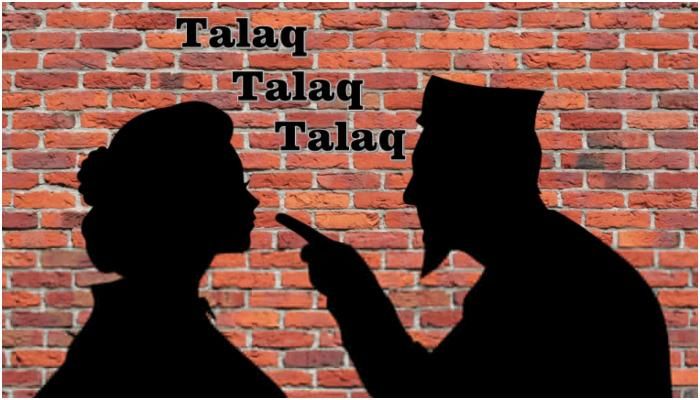
In a distressing incident from the Shyam Nagar (Salt Warehouse) area of Indore, a mechanical engineer identified as Amir Abbasi, along with his family members, has been booked under multiple charges, including triple talaq and physical assault on his pregnant wife. The victim, Sakina Abbasi, aged 25, lodged a complaint on Thursday 22nd June 2023 with the local police, after which the police initiated an investigation into the matter.
According to Sakina’s complaint, she endured persistent demands for dowry from her husband, Amir, despite having already brought the money from her mother on numerous occasions. The abuse allegedly escalated. Sakina further claimed that her mother-in-law, Imtiaz Bi, father-in-law, Azam Abbasi, and sister-in-law also participated in the torment. The key accused Amir is a mechanical engineer by profession and is posted in a company in Pithampur.
Sakina also mentioned in her complaint that her mother-in-law started insisting on the couple sleeping in separate rooms shortly after their marriage. When Sakina was pregnant, her husband Amir kicked her into the womb terminating the pregnancy. When she protested against his actions, Amir pronounced talaq (divorce) thrice and expelled her from their home. Outraged Sakina approached the local police station to file a complaint against her estranged husband and in-laws.
Additionally, Sakina disclosed in her complaint that she had been subjected to dowry-related harassment by her in-laws within a year of her marriage. The continuous demands for dowry exacerbated her plight. During the investigation, the police revealed that Amir claimed Sakina had been pressuring him to distance himself from his family, a claim he used to justify his actions. Consequently, the police have filed a case against Amir Abbasi.
Further details provided by Sakina indicate that she and Amir tied the knot in May 2022, and after two months, he sent her to her parental home in Khargone. Sakina, accompanied by her brother, returned to Indore to seek assistance. On Tuesday, 20th June 2023, a violent altercation ensued between Sakina, her mother-in-law, and her sister-in-law, during which they allegedly assaulted and attempted to strangle her. She managed to escape the dire situation and contacted her brother-in-law (sister’s husband) for help. Shockingly, instead of providing support to his wife, the accused Amir promptly pronounced triple talaq, demanding that Sakina leave their house permanently. Furthermore, the accused family members pressured her to sell her father’s land in Khargone for monetary gain.
The police authorities have taken the complaint seriously and initiated an investigation into the matter. The police ensured the safety and well-being of the victim. Additional DCP Abhinav Vishwakarma is leading the investigation in this case.
On Wednesday, June 21, the Delhi Police stated that a 10-year-old girl abducted from Nandnagari in northeast Delhi was rescued from her abductor and handed over to her family. The police said that the accused has been identified as Mohammad Iqbal, a resident of Nindru village in the Bijnor district of Uttar Pradesh. The police stated that the 28-year-old accused already has two rape cases filed against him at Dhampur police station and cases under Arms Act against him.
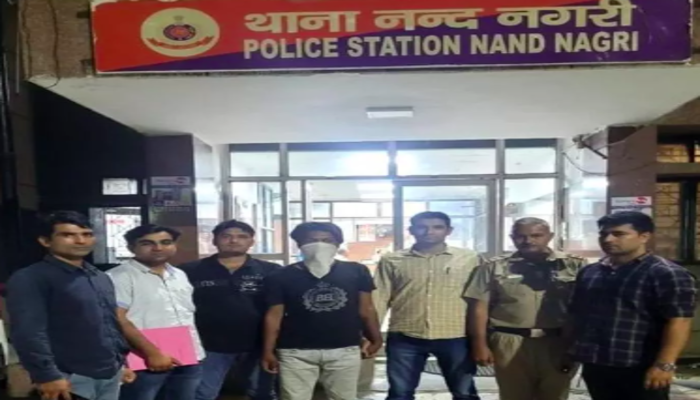
Delhi Police have arrested a kidnapper, identified as Mohd Ikbal, who abducted a ten-year-old girl in Nand Nagri on June 19. He is also found involved in two cases of alleged rape, say police.
On June 19, the girl was abducted while playing outside her sister’s house. Police stated she was rescued from the highly populated Mulla colony of Ghazipur in east Delhi, and that the accused abducted her with the intention of committing sexual assault.
According to officials, the girl went to her sister’s residence in Ghaziabad’s Loni for a short visit about two weeks ago. When she was playing outside her sister’s house on June 19, accused Mohammad Iqbal is said to be a relative of her sister’s neighbour, persuaded her and took her with him.
Deputy Commissioner of Police (Northeast) Joy Tirkey stated that at first, police had no idea who the suspect was because he was not carrying a cell phone and his relatives had gone out of town to attend a funeral. It turned out that the suspect had previously been involved in multiple criminal cases.
At 6.45 p.m. on June 19, according to CCTV footage, the suspect took the victim with him. The accused’s daughter was also seen in the video. According to the officer, Iqbal and the girls were seen heading towards the Wazirabad road from Sunder Nagri.
“A police team was dispatched to the suspect’s village in Bijnor immediately.” His relatives told police that he rarely stayed home and mostly kept bad company. In 2019, his wife left him. “One of his brothers, Azad, was imprisoned in Kasna under the NDPS (Narcotic Drugs and Psychotropic Substances Act),” DCP Tirkey stated.
The police stated that accused Mohammad Iqbal was planning to take the minor girl to his village in the Dhampur area of the Bijnor district.
A man from France has been accused of drugging his wife every night and getting her raped by several men for 10 years, between 2011 and 2020. He also recorded the abuse of the woman who was never aware of the exploitation she was experiencing as she was perpetually drugged up.
The accused, who has been identified as Dominique P was reportedly married to the victim for more than 50 years and the couple has three children.
The Telegraph reported that during the ten years that the horrifying practice with the unsuspecting wife persisted, the victim was raped 92 times. According to the report, 51 of these men, who range in age from 26 to 73, have been arrested and charged with rape, and authorities are still on the lookout for others.
The accused allegedly mixed the anti-anxiety drugs Lorazepam into his wife’s meal. He would then invite the so-called ‘guests’ into their home in Mazan, France, to carry out sexual acts, while his wife was sleeping. Dominique would then record the sexual acts and keep the footage on a USB drive in a file called “ABUSES”, which is now with the police.
According to the report, the accused met the men on a dark internet forum called “a son insu” (“without him/her knowing”) where members discussed having sex with their drugged, unknowing partners in a way that is non-consensual.
Investigators claimed that Dominique implemented strict measures like forbidding the use of tobacco and perfume in order to prevent his wife from being awakened by strong odours. He further instructed the men to park their cars next to a school and enter the house at night to avoid raising the suspicion of the neighbours. He also advised the men to wash their hands in hot water to prevent a sudden change in temperature and undress in the kitchen to avoid leaving clothes in the bathroom.
While the investigation was ongoing, some of the men said they were unaware that Dominique’s wife was not freely participating in the act. One of these men even denied that it was rape, saying, “It’s his wife, he does what he likes with her.”
Prosecutors told the French daily Le Monde that Dominique “never used violence or threats” to force the rapes to happen, contending that each victim had the choice to stop the act and leave.
According to reports, the police had stumbled upon the purported rape tapes when they were probing Dominique in 2020, after allegations that he had been involved in illegally filming women in changing rooms using hidden cameras.
Upon learning of the existence of the tapes, the victim experienced a devastating emotional breakdown and battled depression, the authorities said, adding that she subsequently filed for divorce, seeking to escape the traumatic ordeal inflicted upon her.
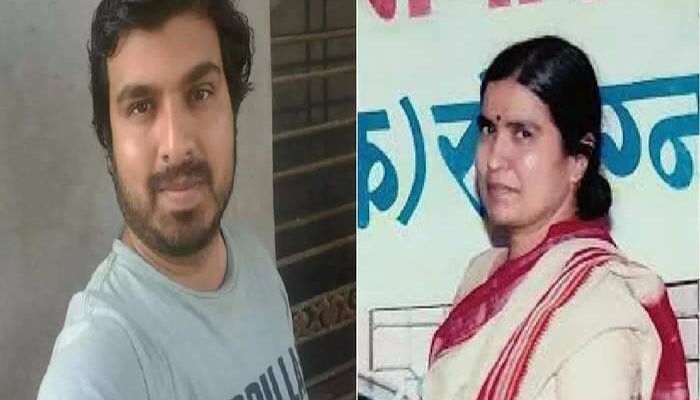
On 5th June 2023, Marxist leader Saroj Kamble, the wife of another Marxist leader Ranjit Pardeshi died at her residence in Dhule of Maharashtra. On 22nd June 2023, it was revealed that her son Inayat Ranjit Pardeshi had allegedly beaten her to death.
Notably, Inayat Ranjit Pardeshi is a communist writer who writes for various leftist propaganda portals including The Indie Journal and now dysfunctional The Wire Marathi.
Inayat Pardeshi, a young ‘thinker’ and communist writer for @thewire_in who used to write on topics like patriarchy, women’s rights etc etc, tortured and kiIIed his own mother for property! Irony just died and wrapped itself in a communist flag! https://t.co/DyArAHnTQA
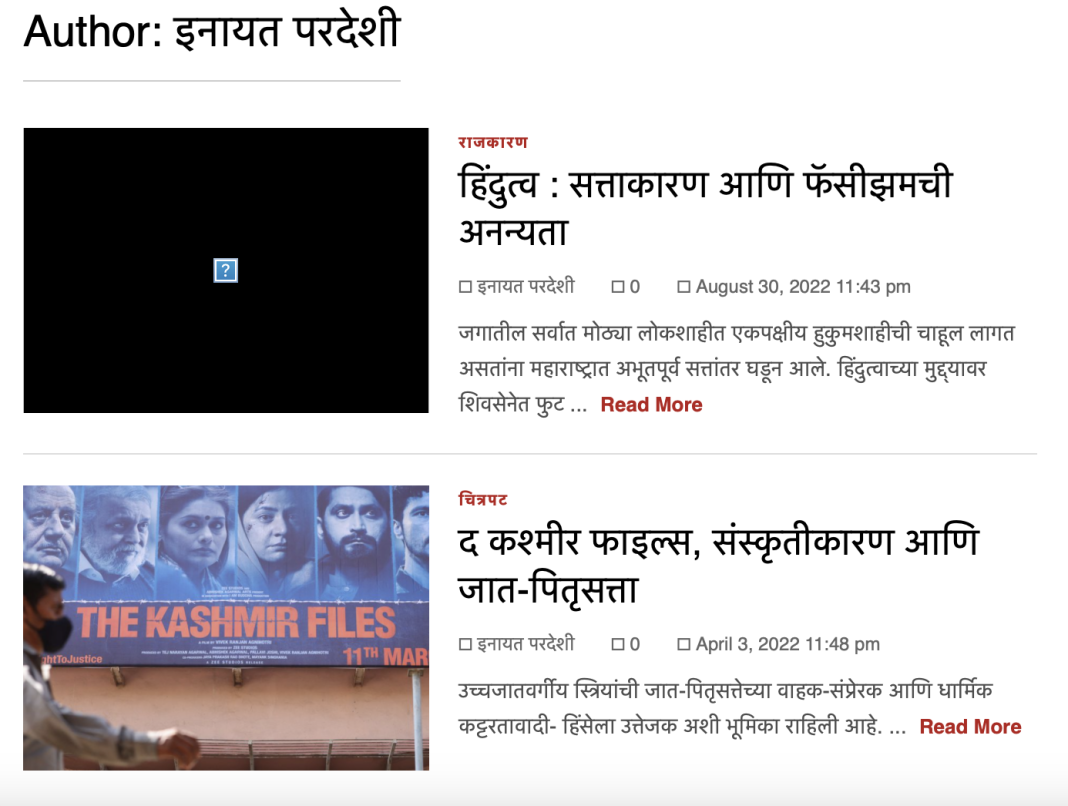
The web archive links of some of the articles written by Inayat Pardeshi can be found here.
Articles by Inayat Pardesh in Wire Marathi, archived version
Saroj Kamble, who resided in Dhule, passed away at her residence on June 5, 2023. She lived with her husband, Ranjit Pardeshi, and their son, Inayat, in the Kazi Plot area near Eighty Foot Road in Dhule. Saroj Kamble was working at Punjab National Bank, and her husband was a professor. Both she and her husband retired five years ago. Unfortunately, Ranjit Pardeshi had been bedridden due to various health issues.
During this time, Inayat, the son of the Marxist couple, discovered that his mother was planning to remarry. Inayat Pardeshi started to develop doubts about his mother’s character. Inayat Pardeshi began to harass his mother, thinking that he might not inherit the entirety of her property if she remarried. He reportedly harassed and assaulted her before she died on June 5, 2023.
After Saroj Kamble and Ranjit Pardeshi retired, Inayat Pardeshi took on the responsibility of caring for them, as the household expenses were sustained by the pensions received by the Marxist couple. However, Inayat Pardeshi became distressed when he realized that his parents’ property would not be passed down to him. Seeking ownership of the property, he approached his mother, but she refused to comply with his demands.
Hi @thewire_in, heard your writer Inayat Pardeshi who wrote such wonderful pieces on patriarchy murderer his own mother, some Sarojini Kamble because he was afraid she would remarry and disinherit him! You guys must be SO Proud!! pic.twitter.com/VWTyH1sS1u
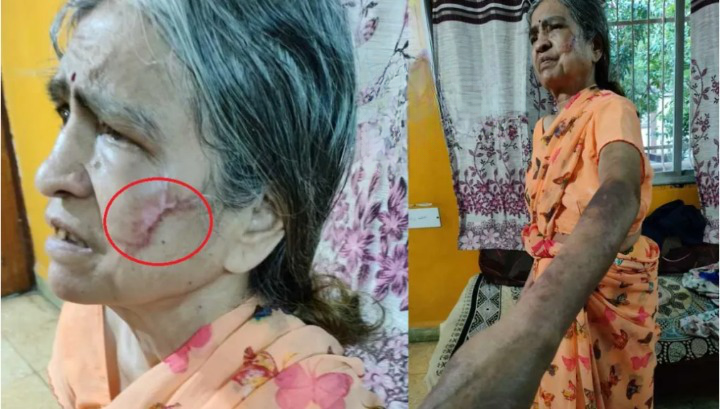
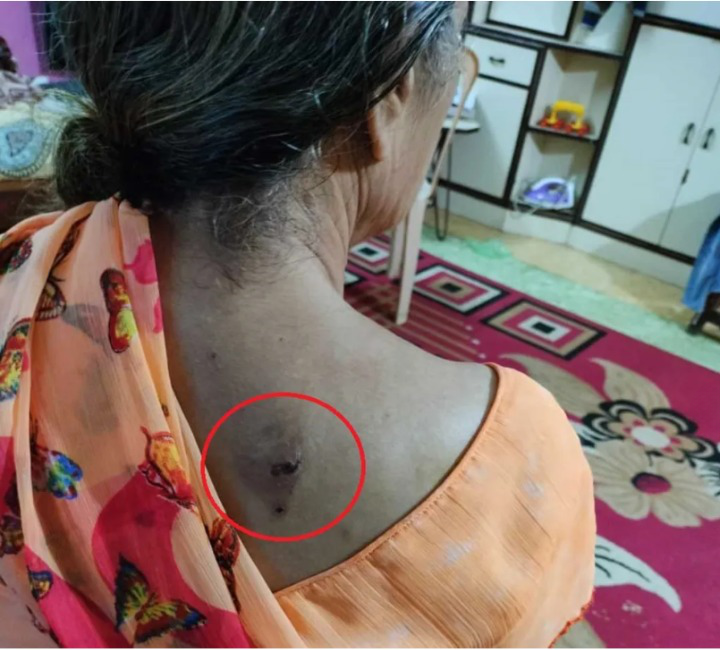
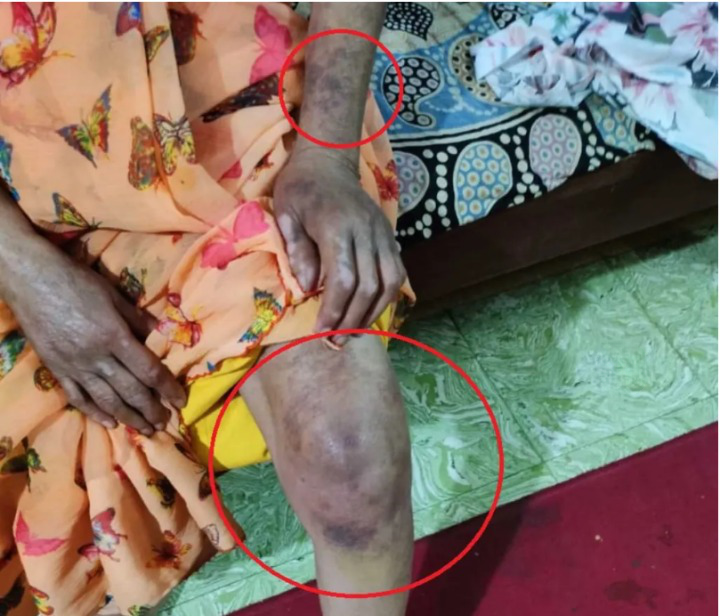
Frustrated by this refusal, Inayat Pardeshi began to harass his mother. This continued for three months until Saroj Kamble reached her breaking point. In April, she sought refuge with her sister, Sudha Katkar, who resides in Kalyan. Saroj spent the entire month there to escape the torment. Unfortunately, Inayat Pardeshi’s cruelty knew no bounds, and he visited Kalyan and continued to harass his mother. As a result, Saroj Kamble returned to her home in Dhule. In Dhule too, Inayat continued subjecting his mother to inhumane torture. He often resorted to physically assaulting her, slapping her, and causing horrible injuries.
Image of Inayat Pardeshi’s mother with her injuries, pictures via newstown.in
It was found that Saroj Kamble’s death was not natural and her son Inayat Ranjit Pardeshi tortured her to death. On 17th June 2023, the Azad Nagar police in Dhule City registered a case of culpable homicide not amounting to murder under Section 304 of the IPC against Inayat Pardeshi after 12 days. Saroj Kamble’s sister Sudha Katkar lodged a complaint at the Azadnagar police station. In her complaint, she mentioned that knowing that Saroj Kamble was an elderly woman and could die if she was beaten up, Inayat repeatedly beat his mother Saroj Kamble with kicks and punches. She added that Inayat Pardeshi is responsible for Saroj Kamble’s death.
Inayat Pardeshi had tried to pretend that the death of his mother was natural. He was also in a hurry to finish the funeral early. But some activists suspected Saroj Kamble’s unnatural death and informed the police. When Inayat Pardeshi was opposing the post-mortem of Saroj Kamble’s body, the police had taken Saroj Kamble’s body down from the mortuary and sent it for post-mortem. The result of the post-mortem was not made public.
According to reports, Inayat Pardeshi would heat the utensils in the kitchen and burned his mother’s skin. He would also force her to consume the urine of his bedridden father Ranjit Pardeshi.
Following the registration of a case, the Dhule police formed two teams with the objective of locating Inayat. These teams were dispatched to Nashik and Malegaon. However, despite their efforts, Inayat managed to evade capture, and the teams were unable to apprehend him.
On Wednesday afternoon (June 21), Inayat Pardeshi surrendered at Azadnagar police station in Dhule. He was then arrested by the police. After his arrest, the police completed his medical examination and other procedures by evening. He was produced before a Dhule court on Thursday.
When Saroj Kamble died under mysterious circumstances, only Prof Ranjit Pardeshi and Inayat Pardeshi were in the house located in front of Nataraj Talkies, Kazi Plot in Dhule. Inayat allegedly contacted many people on his mobile phone before and after Saroj Kamble’s death. Therefore, Inayat Pardeshi’s mobile CDR may turn out to be an important link in this overall case.
Meanwhile, Saroj Kamble’s husband Ranjit Pardeshi, who is in critical condition due to a serious illness, has been admitted to Nashik for treatment on 22nd June 2023. Inayat Pardeshi had left Dhule on June 14 with his father Ranjit Pardeshi after realizing that a case can be registered against him at any moment and he may be arrested. No one was told where he had gone. Later, he moved to Malegaon. It later became clear that Inayat Pardeshi had gone to his paternal uncle.
Inayat Pardeshi is a communist writer. He has written for leftist propaganda portals. He used to write for The Wire Marathi when it was working. The Wire Marathi shut down in October 2022. Inayat Pardeshi also writes for the Marathi leftist propaganda portal The Indie Journal. He was known for his views against the so-called Brahminical patriarchy. He had also posted many photographs on his Facebook account where he is seen with his mother. He wrote in the caption of one photograph – Maa is my Jannat which means my mother is my heaven.
On June 21 (local time), Prime Minister Narendra Modi gifted First Lady Jill Biden a 7.5-carat lab-grown green diamond with earth-mined diamonds’ chemical and optical attributes. The diamond is placed in a Papier mâché – the box known as kar-e-kalamdani. The laborious paper pulp preparation known as sakthsazi in Kashmir combines the intricate painting process known as naqqashi to create the magnificent papier mâché.
Lab Grown Diamonds, also known as green diamonds, caught the eye of the media on February 1, 2023, when Finance Minister Nirmala Sitharaman reduced basic customs duty on seeds used in their manufacturing. She said, “India is a global leader in cutting and polishing of natural diamonds, contributing about three-fourths of the global turnover by value. With the depletion in deposits of natural diamonds, the industry is moving towards Lab Grown Diamonds (LGDs), and it holds huge promise. To seize this opportunity, I propose to reduce basic customs duty on seeds used in their manufacture.”
Gujarat Government also has a series of initiatives for LGD manufacturers. For example, in November 2022, Gujarat Government waived off charges paid for high-tension electricity lines used by the LGD industry. A press release from November 2022 noted, “A basket of incentives has been offered, including concessions in power cost, interest cost and tax, R&D support to develop indigenous technologies for LGDs, skill development support to encourage skill upgradation for the existing workforce etc. In a bid to reduce electricity tariff, 35% of the charges paid to distribution licences for LT/HT service lines up to Rs. 5 Lakhs can also be availed by industrial units. Another incentive offered is the 100% reimbursement of employer contribution of EPF up to 12% of basic pay or up to Rs. 1800 per month, whichever is lesser, for a period of 10 years.”
India is known for its prominent presence in the diamond industry. Surat, known as the world’s diamond capital, is believed to be the place where nine out of ten diamonds are polished. The $22 billion worldwide diamond market is an opportunity for LGDs. In recent times, these diamonds are gaining popularity because of the technological advancements. The consumer is becoming aware of such diamonds, which has increased the demand. Above all, these diamonds are eco-friendly and fit well into the budget.
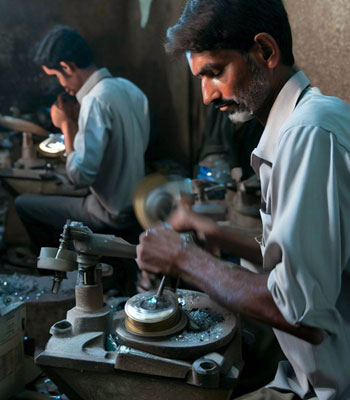
Diamond polishing in Surat. Bing AI-generated image.
As per reports, mining a single carat of diamond releases around 57 KG of carbon into the environment, making it a serious problem. In comparison, only a few grams of carbon are released per carat in the case of LGDs. In 2019, Duchess of Sussex Meghan Markle was seen wearing LGD earrings that were grown in just five days, as reported by BBC.
One of the major issues with these diamonds is that they are often marked as “fake”. In reality, they are 100 percent real diamonds that are not formed in nature over millions of years but grown in a lab using the latest technology. The produced product has the same chemical, thermal, optical and physical characteristics as mined diamonds. In simple terms, they can be compared to the concept of test-tube babies and naturally grown babies. The end result is the same, with different “processes” involved.
The best aspect of these diamonds is that as no mining is required, they do not cause any damage to the environment. There is no cost involved related to mining and distant transportation either. As a result, the customer ends up paying around 50 per cent of the cost of mined diamonds. Interestingly, the cost is expected to decrease as technology becomes more advanced and cheap.
The government’s initiative to push for lab-grown diamonds will also increase demand, bringing competition in the market and helping bring down the price. Antwerp-based World Diamond Centre told the Sunday Guardian that producing one carat of LGD required $4,000 of capital earlier. However, today it can be done between $300 and $500.
Indian bride wearing diamond jewellery. Bing AI-generated image.
There are two methods of creating LGDs. The first method is Chemical Vapour Deposition (CVD), and the second is High-Pressure High Temperature (HPHT). India is currently the largest producer of LGDs produced using the CVD method and covers around 25 percent of the market share. Diamonds produced using the CVD method are Type IIA quality certified by all leading diamond certifying bodies.
For those who are unaware, Type IIA quality diamonds are the rarest of mined diamonds. Only 2 per cent of all the mined diamonds fall under this category. China is the largest producer of LGDs produced using the HPHT method. Such diamonds are inferior in quality and do not have the same hardness as mined or CVD LGDs. Furthermore, HPHTs are known to contain metal impurities.
Though media has been catching up to the LGDs recently, it is interesting to note that LGD exports in Financial Year 2023 until February this year were 45 percent higher compared to last financial year. In FY’23, India exported LGDs worth Rs 12,000 crore, while it was Rs 8,719 crore in FY’22. Reportedly, there are around 8,000 polishing units in India. Out of these, one-fourth have already started polishing LGDs. Around 15 percent of diamond polishing units exclusively deal in LGDs.
As the technology is capital-intensive and time-consuming when it comes to producing high-quality diamonds, there are speculations that the price may rise for LGDs in the future. However, with growing demand and government initiatives in the field, production may steadily increase in the coming years. The LGD jewellery industry is estimated to be $10 billion, expected to grow to $50 billion by 2030.
The blood diamonds
The diamond mining industry is clouded by blood, greed and conflict. Mines worldwide, especially in Africa, see a lot of conflicts. A Time report suggested that Mwanza and Rodriguez are home to 65 percent of the world’s diamonds. Until 2003, it was surrounded by reports of conflicts and forced labour. The diamond industry established an international certification system known as Kimberley Process to reassure customers that the diamonds they bought were conflict-free.
However, the loopholes in the system let the region remain a war zone. Despite Kimberley Process in place, it has been reported that the diamond mines have funded a genocidal war that has killed thousands since 2013 in the Central African Republic (CAR). As per the UN Panel report, around 1,40,000 carats of diamonds worth $24 million were smuggled out of CAR despite being suspended in 2013. While companies like Tiffany have strict regulations to ensure no blood diamonds enter their stores and around 22 countries have signed Kimberley Process, it is not possible to stop blood diamonds from entering the market any time soon.
Five years ago on June 21, the infamous self-proclaimed environment activist Greta Thunberg made a strange and haunting prediction that humanity would go extinct by 2023. While nothing of that sort seems to have happened, Greta is being trolled on social media.
Yesterday, netizens marked a five-year anniversary of her statement making fun of her prediction which obviously has gone wrong. “A top climate scientist is warning that climate change will wipe out all of humanity unless we stop using fossil fuels over the next five years,” the tweet made by Thunberg in the year 2018 read.
Mocking the activist, one of the Twitter users said that it had already been 5 years and still everyone was alive. He also appealed the people to respond if they were alive too. “Today is the 5th anniversary of Greta’s “in 5 years all of humanity will be wiped out” prediction. Retweet if you are still alive,” one of the tweets read.
Today is the 5th anniversary of Greta's “in 5 years all of humanity will be wiped out” prediction.
The other one meanwhile stated that the statement was made by Thunberg 5 years ago and that now the tweet stands deleted. Five years ago Greta Thunberg tweeted that climate change will wipe out all of humanity unless we stop using fossil fuels over the next five years. The tweet is now deleted,” he said.
Five years ago Greta Thunberg tweeted that
“climate change will wipe out all of humanity unless we stop using fossil fuels over the next five years."
One handle mocked the ‘climate cult’ for getting all their predictions wrong. “I’m sorry to say – all humanity has been wiped out today according to Greta Weirdo. But at least the climate cult keeps their perfect record of ZERO predictions coming true ever,” he tweeted.
I'm sorry to say – all humanity has been wiped out today according to Greta Weirdo. ?
But at least the climate cult keeps their perfect record of ZERO predictions coming true ever. pic.twitter.com/WUOJaP5CoR
“Enjoy your final minutes, because, according to Greta Thunberg and her top climate scientist humanity will be wiped out at 11.18 am today, because we didn’t stop using fossil fuels five years ago,” another user commented.
Enjoy your final minutes, because, according to Greta Thunberg & her "top climate scientist" humanity will be "wiped out" at 11.18am today, because we didn't stop using fossil fuels five years ago… ?? pic.twitter.com/myVCLspQnr
However, one of the users happened to defend the activist and said that she did not mean what she actually tweeted. “Thunberg did not say the world was going to end in 5 years, she said that if we didn’t stop using fossil fuels in 5 years that world would become unlivable,” he said.
Did they not teach English grammar/reading comprehension at your graduate school?
Thunberg did not say the world was going to end in 5 years, she said that if we didn’t stop using fossil fuels in 5 years that world would become unlivable.
Earlier on March 12 this year Greta Thunberg deleted her old 2018 tweet where she had said humanity would go extinct by 2023 because of climate change. She failed to provide any explanation for deleting the tweet. As reported earlier, it was available at least till March 7, 2023, as captured by Archive.org but later the tweet went ‘extinct’ while humanity still seems to be thriving.
The activist who was propped by the media as some sort of ‘saint’ for climate activism cults, is best known for running wild with theories and pushing people, especially youngsters who admire her, to believe that they can bring change “by protesting and creating drama” rather than working on a solution. She has a history of running propaganda and joining hands with dubious organizations.
For example, Greta tried to meddle in India’s politics by supporting protests against now-repealed agriculture laws. She accidentally published a link to a toolkit that was developed to paint a bad picture of the Indian government on an international platform. Several arrests were made in the matter, and it is sub-judice.
Recently, Greta was caught filming a staged arrest during a protest. More details of the incident can be read here. OpIndia’s reports on Greta Thunberg can be seen here.
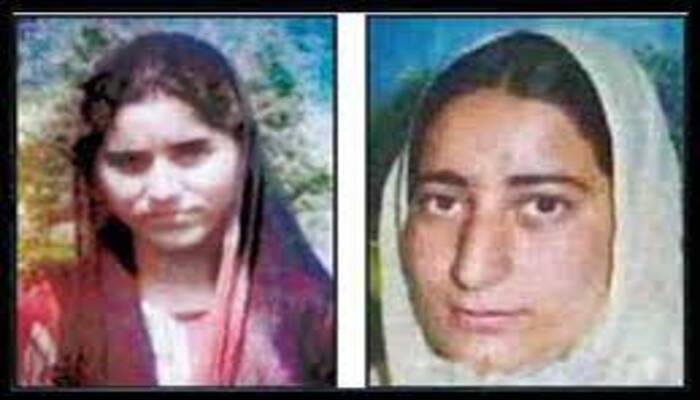
On Thursday, June 22, the Jammu and Kashmir government terminated the services of two doctors Bilal Ahmad Dalal and Nighat Shaheen Chilloo who collaborated with Pakistan to falsify the postmortem reports of Asiya and Neelofar who died in 2009 in the Shopian district. The two girls aged 17 and 22 respectively had reportedly died after accidental drowning on May 29th 2009. However, it was claimed back then that Asiya and Neelofar were raped and murdered by the Indian Army soldiers.
Reportedly, the doctor duo intended to falsely implicate the Indian army officials of murdering and raping the two girls. Dr Bilal Ahmad Dalal and Dr Nighat Shaheen Chilloo wanted to spread disaffection against the Indian armed forces. It has come to the fore that several people in the then Jammu and Kashmir government led by National Conference leader Omar Abdullah were aware of the accused doctor’s actions.
J&K govt has terminated Dr Bilal Ahmad Dalal and Dr Nighat Shaheen Chilloo from the service for actively working with Pakistan and hatching a conspiracy with its assets within Kashmir to falsify the post-mortem report of Asiya and Neelofar of Shopian, who had unfortunately died…
The death of Asiya and Neelofar back in 2009 had triggered violent protests led by Majlis-e-Mashwarrat. The situation could return to normal only after a Central Bureau of Investigation (CBI) probe found that the two sisters Asiya and Neelofar were neither raped nor murdered.
CBI back in 2009 had reportedly filed a chargesheet against six doctors, two civilians, five lawyers and the brother of the victim for fabricating evidence. It was alleged that the lawyers had coerced two civilians to turn witnesses. The CBI has also rejected the Majlis’s claim of rape and murder saying that the two women decided to cross the Rambiara river in Shopian as they were getting late. However, the two drowned in the river and died.
To back up its assertion, CBI produced statistics from the state irrigation department indicating that the Rambiara river recorded increased water discharge in that specific month in 2009.
Notably, the two teams of doctors which conducted the postmortem of the deceased girls had lied in their reports. The first team had claimed that Asiya died of cardio vascular arrest and Neelofar of neurogenic shock. The second team of doctors from Pulwama claimed sexual assault on both the girls.
The CBI investigation questioned the entire operation, claiming that doctors had assembled a piece of the heart and labelled it as lung components. Furthermore, the second team of doctors tampered with the vaginal swab samples. It didn’t belong to one of the women. Dr Nighat Shaheen failed to inform the CBI of where she obtained the samples. Moreover, the DNA tests on the 47 officials whose samples were gathered came up negative as well.
Back in 2010, India Today had published a report wherein they claimed to have accessed the call recordings of the doctors involved in the postmortem of Asiya and her sister-in-law Neelofar. According to the report, Dr Nighat Shaheen who was a part of the second team of doctors, “had concluded that the girls were raped without even examining their vaginas.”
Dr Nighat Shaheen and the other doctors had falsely stated in the report that Asiya’s hymen was ruptured. Later, when the doctors of AIIMS conducted the autopsy and concluded that Asiya’s hymen was intact.
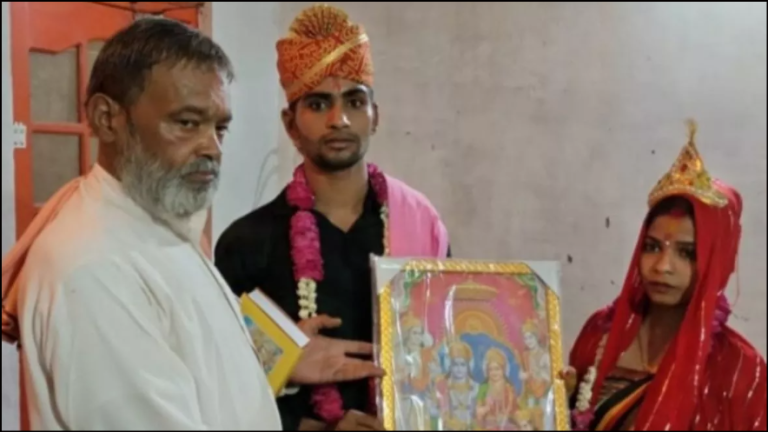
In Bareilly, Uttar Pradesh, a Muslim woman named Shehnaaz converted her religion from Islam to Hinduism and took the name ‘Arohi.’ She then married her Hindu friend Pawan at the Agastya Muni Ashram as per Hindu customs.
According to reports, Shehnaaz is a devout Krishna bhakt since childhood. Her previous husband had reportedly given her triple talaq due to her devotion towards the Hindu deity.
Shehnaaz and Pawan are both residents of Dhakni Rajpuri village in Faridpur. Pawan who claims to have known Shahnaz since childhood, said that Arohi aka Shehnaaz was a ardent devotee of Lord Krishna since she was a child. Her family members would often be at odds with her and even get angry when they saw her devotion to Lord Krishna, but they were unable to persuade her to stop worshipping the Hindu deity.
Shehnaaz’s family believed that getting her married would be the only way for them to stop her from doing this. So they arranged to get her married to a Muslim man in 2018. One day, her husband caught her worshipping the Hindu deity. Furious at this, he gave her triple talaq and threw her out of the house. Shehnaaz returned to her parent’s house in Dhakni Rajpuri village in Faridpur, but here too, she faced constant taunts and insults. Shehnaaz began staying very upset.
One day she met Pawan, her childhood acquaintance, and narrated her entire ordeal. From this point on, Pawan and Shehnaaz’s bond grew, and soon the two fell in love with each other and decided to get married as per Hindu customs.
The moment Shehnaaz’s family members learned of this, they expressed reservations. The duo, however, secretly left the house and went to the Agastya Muni Ashram in Madinath. When Pawan revealed everything to Pandit KK Shankhdhar and stated his desire to marry Shehnaaz, the Hindu saint first performed a purification ceremony. Subsequently, some rituals were performed to revert her to Hinduism. She changed her name to Arohi and after that, she married her Hindu partner Pawan as per Hindu customs and traditions.
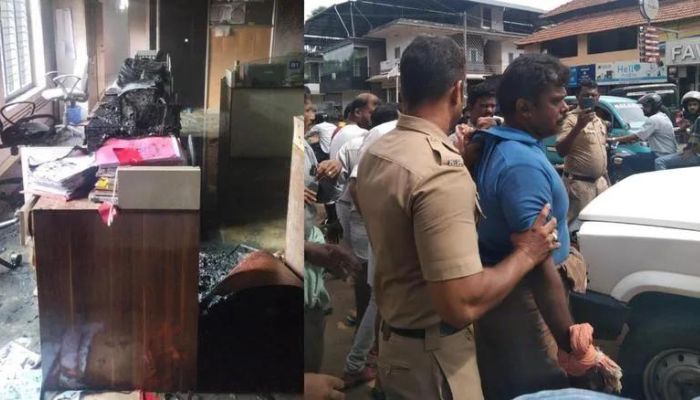
In a shocking incident that unfolded on Wednesday, June 21, 2023, a 46-year-old man identified as Mujeeb Rahman resorted to extreme measures after discovering that he had been excluded from the Kerala government’s free housing scheme, Life Mission, in the current quota. Frustrated by the news, Mujeeb Rahman took drastic action by setting the Keezhattur panchayat office on fire, causing significant damage to the premises. The entire incident was captured on camera, highlighting the severity of his actions.
The distressing video footage shows Mujeeb Rahman dousing the panchayat office with petrol, deliberately targeting the files, computers, and furniture within the premises. With a matchbox in hand, he proceeded to ignite the inflammable liquid, engulfing the office in flames. Seeking an escape from the dire consequences of his actions, Mujeeb Rahman locked himself in the bathroom and attempted to end his own life by slashing his wrist.
Upon receiving information about the incident, police promptly arrived at the scene, apprehending Mujeeb Rahman and subsequently transporting him to a nearby hospital for medical attention due to a minor injury. The Melattur Police Station has registered a case against him, holding him accountable for his destructive behaviour. Unfortunately, the fire caused irreparable damage, resulting in the loss of crucial documents and equipment estimated to be worth over 25 lakhs.
Expressing profound shock and dismay, Jameela Chaliyathodi, the president of Keezhattur Gram Panchayat, lamented the irreversible harm inflicted upon the Panchayat Office by Mujeeb Rahman.
“Our office, equipped with 22 computers, has suffered a significant loss. According to the fire services, at least 16 computers have been completely destroyed, along with invaluable documents,” stated a female representative from IUML, highlighting the severity of the damage caused. She further revealed that Mujeeb Rahman had been given a thorough explanation by the ward member of the panchayat regarding his exclusion from the Life Mission list.
Jameela explained, “In order to prepare the Life Mission project list, the panchayat must consider multiple factors and prioritize individuals such as widows, patients with incurable illnesses, and those with disabilities.” Consequently, Mujeeb Rahman’s name had been listed at number 104, rendering him ineligible for immediate assistance.
Disheartened by this revelation, Mujeeb Rahman reacted angrily, resorting to derogatory language against several panchayat members. Jameela added, “Mujeeb Rahman would have been included in the subsequent list set to be sanctioned in six months.”
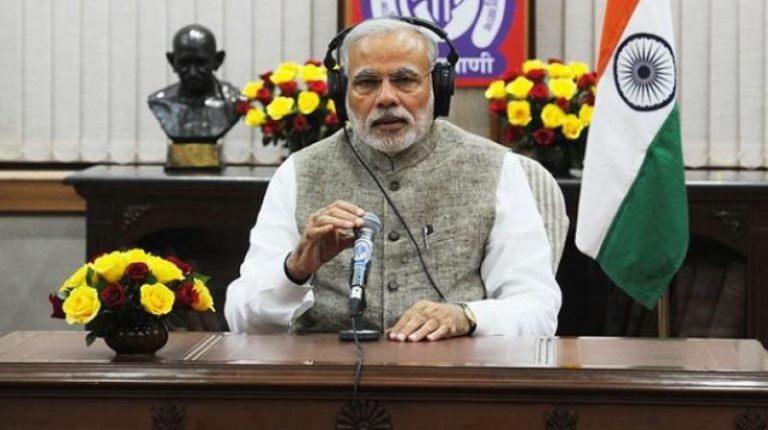
Prime Minister Narendra Modi is on a three-day state visit to the United States. PM Modi’s historic visit comes at a time when his flagship radio programme Mann Ki Baat recently completed its 100th episode. With Mann Ki Baat, Prime Minister Narendra Modi demonstrated the magic that can be done when the power of radio is amalgamated with the vision of a country’s leader. PM Modi through his monthly radio programme connects with the common people in India and listeners abroad. He shares his ideas, vision, and some interesting stories he comes across with the general masses. The Prime Minister often highlights the grassroots change-makers to inspire the citizens to become ambassadors of positive change and contribute to nation-building.
Mann Ki Baat is broadcast in 11 foreign languages, including French, Chinese, Indonesian, Tibetan, Burmese, Baluchi, Arabic, Pashtu, Persian, Dari, and Swahili, in addition to 22 Indian languages and 29 dialects. Mann Ki Baat is broadcast by over 500 broadcast centres of All India Radio.
According to a recent research performed by the Indian Institute of Mass Communication (IIMC), 76% of Indian media practitioners opine that PM Modi’s radio programme ‘Mann Ki Baat’ has played a vital role in introducing citizens to the “real Bharat”. The programme has started a trend in which people are becoming more aware of and appreciative of things in different parts of the country.
PM Modi breaking the stereotypes with his “Mann Ki Baat”
Breaking the prevalent stereotypes, one such being that the issue of climate change is the political left’s ‘thing’ especially in the West, PM Modi through his Mann Ki Baat programme has championed the cause of climate change and sustainable development.
For instance, in the 101st episode of Mann Ki Baat, PM Modi raised the issue of water conversation and management. He lauded several startups such as KumbhiKagaz and Fluxgen working in this area. He also talked about 50,000 Amrit Sarovars that have been constructed to preserve water. The interesting part about his “Mann Ki Baat” is that he not only talks but also interacts with his listeners bringing the leader and his people closer.
Back in 2018, PM Modi urged the people through his 44th Mann Ki baat, to avoid using low-grade polythenes and plastics in a bid to curb plastic pollution.
In his book Collective Spirit, Concrete Action: Mann Ki Baat and Its Influence on India, former Prasar Bharati CEO Shashi Shekhar Vempati chronicles how PM Modi used his Mann Ki Baat programme to connect with the citizens.
Speaking about the criticism of PM Modi’s Mann Ki Baat programme being called “one-way” show, Shekhar termed the criticism exaggerated. He asserted that PM Modi often interacts with the change-makers during his programme.
“In the fourth episode of the programme, he (PM Modi) did a joint podcast with Barack Obama. The ideas for the programme are crowd-sourced through digital platforms, social media and people writing in from across the country,” Shekhar said.
PM Modi connecting India and the world through the “Mann Ki Baat”
An interesting aspect of the Mann Ki Baat programme is that topics of discussion are not just India-centric rather it incorporates issues that matter to the world as well.
In the context of the Mann Ki Baat broadcast, Shashi Shekhar talked about India emerging as a global leader. “The subjects of the broadcast are not just about India but he (PM Modi) also involves the large Indian diaspora living in countries like the United States and other countries across the world. He also had global leaders like President Obama participating in it,” Shekhar adds.
The ex-Prasar Bharati CEO goes on to talk about one episode of the Mann Ki Baat broadcast wherein there was a discussion about former Kenyan Prime Minister Laila Odinga’s daughter Rosemary Odinga. It is pertinent to recall that Rosemary Odinga had lost eyesight after surgery for a brain tumour. It was the Ayurvedic treatment she had received in India that helped her regain her eyesight. After regaining her eyesight, Rosemary and her father returned to their homeland and spread awareness about Indian medical treatments, particularly Ayurveda.
The former Kenyan Prime Minister back then had discussed with PM Modi about bringing Ayurvedic treatment methods to Africa.
By using these traditional medicines, she finally has her eyesight back and this gave us a lot of confidence. I have discussed with PM Modi to bring this treatment method (Ayurveda) to Africa and use our indigenous plants for therapeutics: Former PM of Kenya, Raila Odinga (2/2) pic.twitter.com/dejkwkEQ3V
During one of the Mann Ki Baat episodes, PM Modi lauded the team at Sreedhareeyam Ayurvedic Eyecare Hospital in Ernakulam that treated the Kenyan leader’s daughter. To relieve pain in one’s life with our traditional system is something all Indians should be proud of. The utmost misery of losing eyesight had troubled my good friend Raila Odinga & his family, but the treatment in Ayurvedic Eye Hospital brought back light into their life. They went to several foreign countries and world-renowned hospitals, but her eyesight couldn’t be restored. Finally, they heard from a friend about Ayurvedic treatment. Initially, they were hesitant, but finally, they arrived in India and completed the treatment. Remarkably her eyesight was restored, and she could lead a normal life”. “Mr Odinga personally met me and told the story, he was particularly keen on opening a branch of this Ayurvedic treatment in Kenya to make it available for citizens of his country”, PM Modi had said in one of February last year’s Mann Ki Baat episode.
On the significance of Indo-US ties and the positive impact of PM Modi’s visit to the US, Shekhar opined that the convergence of two large democracies like India and the US is certainly good. He also highlighted the technological exchange between the two countries over the past few decades.
Furthermore, Shekhar pointed out that, unlike the Chinese authoritarian and dictatorial model of development, India is a vibrant democracy and that within such a democracy bringing developmental change requires “a lot of creativity, patience and persuasion so to be able to do that through this broadcast is an interesting story to look at because this could be an example to a lot of developing countries on how to go about developmental change.”