Home Blog Page 2405

Gujarat Samachar and distortion of Hindu culture: From insulting Holi fire to calling God a ‘spy’ and ‘bahurupi’, a new low

If you were to speak to a child about Holika Dahen, Prahlad or Harinyakashyapu, you would most likely tell how Prahlad was a big devotee of Lord Vishnu (and hence called Bhakt Prahlad) and how his father, demon king Hiranyakashyapu did not like it. How his wicked father then asked his sister, Holika, who was blessed that she could not be burnt with fire, to sit with Prahlad on a burning pyre. However, due to his own devotion, Prahlad was saved and Holika herself was burnt in the fire she wanted to kill Prahlad with. This, or variations of this story is what we have grown up hearing and which we will pass on to next generation.

Except, like every Hindu festival, Holi, too is being appropriated and changed into a ‘culture’ thing instead of religious festival and values distorted.

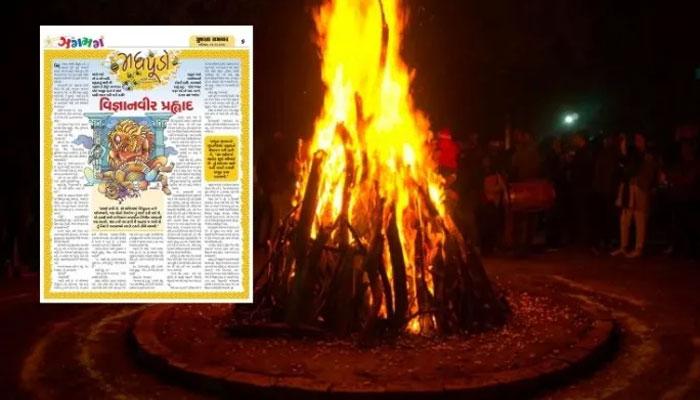
On March 4, 2023, Gujarat Samachar’s supplement ‘Jhagmag’ published a few stories on Holi. The supplement is meant for children and stories are narrated keeping children in mind. There were two different stories on Holi. However, while the essence of the stories was kept intact, the way of narrating the story was completely changed.
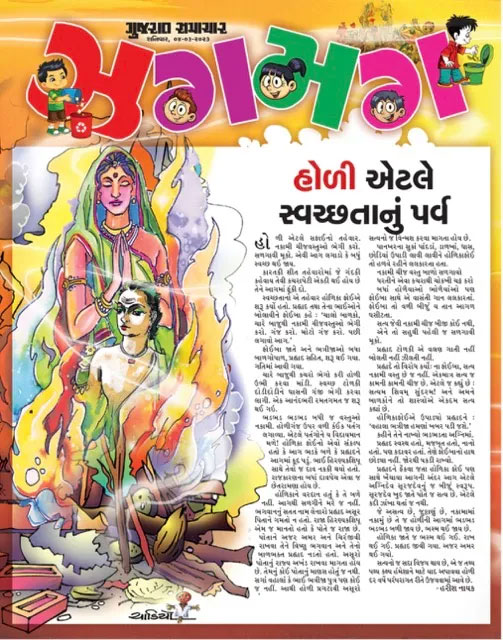
Jhagmag on Holi

The story depicts Holi as the festival of cleanliness. As per the story, Holika asked Prahlad and his friends to light up Holi to burn useless things. Later she asked them to burn “truth” as the most useless thing. When Prahlad protested, Holika threw him into the fire as per the plan she had hatched with Hiranyakashyapu. However, Prahlad was saved by Bhagwan’s boon, and Holika herself got burnt.

Gujarat Samachar claims that in the Holi fire that is lit, all ‘useless’ things are set on fire. However, that is not true. Holi fire is holy and people pray to it. Different cultures across India pray differently to the holy fire and make offerings. Water, Shrifal, raw mango – many things are thus offered to the Holi fire. Thus, to say ‘useless’ things are set on fire on Holy is insulting.

It further says that all the ‘garbage’ collected during the festivals in the preceding winter season, should be collected and set on fire. Gujarat Samachar claims the festival of Holi was started by Holika who asked her nephew to set all garbage on fire. In twisted perversion, after burning things like leaves, the writer, on Harish Nayak claimed that Holika asked Prahlad to set the most useless thing ‘truth’ on fire. When Prahlad refused to set throw ‘truth’ to fire, Holika decided to teach him a lesson and jumped into fire with him.

However, while Prahlad was younger than Holika, he was strong and when she pushed him into fire, he did not let go of her hand and since Lord Agni is also truth, he burnt the evil that Holika is. Gujarat Samachar then claims that because of this, every year Holi is celebrated.

While the Holi fire is lit every year and prayed to for this, the story of Prahlad and Holika was not the way Gujarat Samachar wants us to believe.

The second story was of ‘Vigyaanveer’ Prahlad. While the essence of the story remained that demon Harinyakashyapu wanted to kill his son Prahlad, however, Bhagwan saved him. Here, Bhagwan is presented as a spy and a magician. Only Prahlad can see or talk to Bhagwan.

In this story, when Harinyakashyapu throws Prahlad from the mountain, Bhagwan gives him a ‘flying umbrella’, and when Prahlad is thrown under the elephant’s feet, Bhagwan gives him a laser gun so that he can protect himself. While talking about the Holika story, the publication claimed Prahlad was given fire-resistant clothes that saved him from the fire.
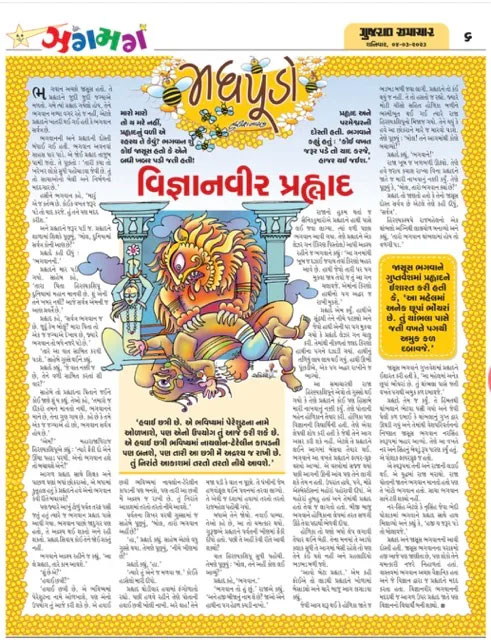
Madhpudo by Jhagmag, Gujarat Samachar

In this fictionalised and ‘sci-fi’ version of Prahlad, where God gives Prahlad objects to fight adversities which include modern science technology is too much of a stretch. What is worse is that it is not even well written. It is full of improper Gujarati and such terrible storytelling that it appeared like a bad Google translation from another badly written article.

It is abrupt, jarring and way too disturbing for children, who are the target audience. The story talks about how Hiranyakashyapu asked Prahlad’s teacher (because he goes to a school) to throw him off the cliff to prove that God exists. Teacher also carries out the order to ‘prove Prahlad wrong’. This, from a child’s perspective, is so wrong. This is how childhood trauma is inculcated. At impressionable age you are teaching young children how teachers could be manipulative, creating an element of distrust.

Instead of referring to God as he is – God, the almighty, Gujarat Samachar refers to him as a ‘spy’ and a ‘magician’ as if God were a conman. And also keeps on referring to God as ‘tu’ which many find disrespectful way of addressing someone revered. Turns out this ‘Bhagwan’ in times of dangers, like when Prahlad is pushed off cliff, also informs him how the ‘invisible umbrella’ is he giving to Prahlad will be known as ‘parachute’ in future and will be made of nylon-terylene material. That specific.

Later the God offers a ‘laser gun’ to Prahlad to save himself from an elephant. Angered, Hiranyakashyapu calls in his sister, Holika, who was also a ‘student of science’. No, she was was a demon, Gujarat Samachar, have some shame. Gujarat Samachar claims Holika had invented a fire-resistant cream and hence she got ready to sit in fire with Prahlad in her lap. Hence, this time, God gave Prahlad ‘fire-proof’ clothes. Here Gujarat Samachar also claims how God ‘sabotaged’ Holika’s fire-resistant cream and added materials which made it highly inflammable.

But because God had sabotaged Holika’s cream, she catches fire while Prahlad with fire-resistant invisible clothes, comes out alive. There is also conversation around secret chamber through which Prahlad escapes and ‘expert in changing forms (bahurupi)’ Bhagwan comes out of chamber dressed in Narsinh swaroop – which was a fire-proof outfit, to fight king Hiranyakashyapu. Gujarat Samachar then mentions how in the fight that ensued, the king (Hiranyakashyapu) is killed.

They fail to mention that the demon king Hiranyakashyapu had the blessing that neither man nor woman or animal can kill him and he could not be killed during the day or during the night. He also had the boon that no weapon could kill him and he would neither be killed inside the house nor outside, making him almost immortal. This boon was what had made him arrogant. Hence, Lord Vishnu took the Narasinh avatar, of half-man and half animal and at dusk, when it is neither day nor night, the God killed him with his bare hands. This important aspect of the story is skipped.

Throughout the article, God is referred to as ‘jasus bhagwan’. It concludes by claiming that God was actually a great scientist and a spy and all things he did were all science experiments. Why this distortion of our scriptures? No one will dare distorting scriptures of other faiths because everyone knows how that ends. But Hindu scriptures and their distortion is a freepass.

Gujarat Samachar has been a problematic publication for mainstream news too. But this bid to influence the impressionable young children by distorting our culture is a new low even for Gujarat Samachar that already has a very low bar.

(With inputs from Meghalsinh Parmar from OpIndia Gujarati)
RaGa, Cambridge, appeal for foreign intervention and Pakistan: What ties all these together

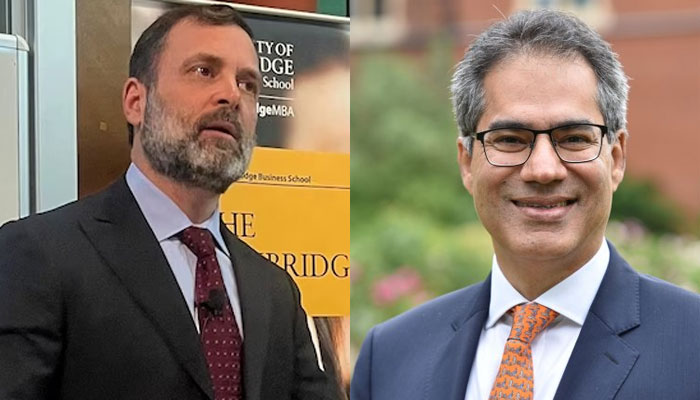
On March 2 (local time), Congress leader Rahul Gandhi talked to MBA students at Cambridge Judge Business School on the topic ‘Learning to Listen in the 21st Century”. Congress leader Sam Pitroda arranged it, and he was introduced to the students by a professor of Pakistan origin Kamal Munir.

BJP slammed Gandhi for sharing the stage with Munir. BJP spokesperson Shehzad Poonawalla said, “Not only was Rahul Gandhi demanding foreign intervention into India & attacking our sovereignty on foreign soil but look at this now! Apparently, he was sharing the stage with Kamal Munir a Pakistani while he was undermining India & Indian institutions.”

Gandhi spoke about ‘listening’ to the public, the political discourse and different cultures during his talk. Gandhi claimed that democracy in India was under attack. Interestingly, he completely missed the irony that an Opposition leader from India has come abroad to address the students of a prominent university, and no one has stopped him from doing so. It is unknown how he concluded that democracy was under attack.

Furthermore, he again propagated the idea that India is a ‘Union of States’. Despite being schooled by several on social media platforms, Gandhi has continued with the lie. Sadly, his followers also believe that same. He claimed that India is more like the European Union, a union of several nations.

He also peddled the lie that he was locked up in jail multiple times. The image he used, claiming to be from Parliament premises, was actually from Hathras. The photograph was clicked in 2020 when Gandhi and his sister Priyanka were stopped from going to a place under curfew due to the threat of caste-related violence over the strangulation of a girl.

Gandhi claimed he and other political leaders were being spied on using software like Pegasus. He called cases against him an “attack on democracy”. In a bizarre anecdote, Rahul Gandhi claimed that he was very happy and surprised to learn that nobody checked IDs in airports in the (pre-9/11) USA. He added that while his IDs were checked in his own country, he could just walk in and board a plane in the USA. He added that the idea of a ‘safe’ USA was sadly challenged by Bin Laden.

Cambridge and Soros connection

Coming to Cambridge University, the Open Society Foundations (OSF) of Hungarian-American billionaire George Soros has been a member of the University of Cambridge’s Guild of Benefactors since 2013. The same George Soros pledged USD 1 Billion to change the regime in India. His foundation provides post-graduate scholarships in “programmes that represent a long-term response to ongoing social and political transformations in the countries served.”

Soros has recently openly targeted Prime Minister Narendra Modi and the Adani Group. Congress is also playing up the Adani controversy and their leaders, making people wonder if Congress is working in tandem with foreigners interested in regime change, with the 2024 general elections right around the corner.

Gandhi’s appeal for foreign intervention in India’s affairs

During his London visit, Rahul Gandhi once again pitched for foreign intervention in India’s affairs. Gandhi repeatedly called for western nations to interfere in the country’s administration, which shows his desperation to become the PM by any means. BJP leaders, including its national spokesperson Shehzad Poonawalla, slammed Gandhi for the statement. “If there are issues, we solve our own matters internally, but how can Rahul seek the intervention of a foreign nation? What action is he seeking in India? Do we complain about our internal affairs to a neighbour? Today Rahul has emulated Mani Shankar Aiyyar, who sought Pakistan’s help to dislodge PM Modi from power once,” he said. In the past, Gandhi had made similar appeals.

Rahul Gandhi wants everything changed in his favour so he can win elections

Despite leading his party to repeated election debacles across India, Rahul Gandhi’s statements during his latest foreign holiday are all about projecting himself as the ideal West-backed candidate for a regime change in India. He has claimed that from the electoral process, to media and judiciary, everything is against him, and hinted that if all that can be changed, he can then win and “rescue” India.

Again he completely missed the irony that his party has won state elections in the same Indian system. It is just the Gandhi family that the people of India reject. Because there is deep dissatisfaction against the rampant corruption and entitlement identified with the Gandhi family, which held power for several decades in India.

Sharing the stage with a Pakistani professor

Twitter user JIX5A on March 5 pointed out that Kamal Munir, a professor of Pakistani origin, introduced Gandhi.

Munir is a Pro-Vice-Chancellor and Professor of Strategy and Policy at the University of Cambridge. He was part of the team that developed the 2010 Industrial Policy of Pakistan. Munir was awarded the Tamgha-e-Imtiaz, a state honour bestowed by the President of Pakistan. Munir has recently protected his Twitter account.

‘Behead me, but I can’t pay salaries like Central govt’: Mamata Banerjee tells protesting employees in Bengal

0

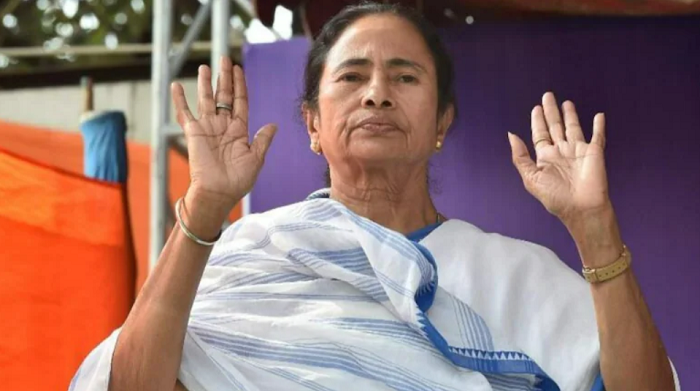
Amid the protest by the state government employees demanding an increase in dearness allowance (DA), West Bengal Chief Minister Mamata Banerjee on Monday said that Trinamool Congress (TMC) government will not be able to provide it on par with that of the Central government.

Speaking at the extended budget session in the Assembly, the Chief Minister further said the protesting Opposition that they can behead her but she can’t do anything to increase the dearness allowance. She explained the difference in the salary structures of the Central and state governments and claimed that the TMC government is already giving its employees DA of 105 per cent.

“I am giving 105 per cent DA. How much more do you want? State government employees have different pay scales from central employees. We don’t have so much capacity as they (the Centre) are not giving 100 days’ work money and others. Accept what we are giving (DA issue). If you don’t like me, behead me. But beyond this, I cannot do anything,” said Banerjee in the state assembly on protests over Dearness allowance and other demands.

Notably, in the 2023-24 budget, West Bengal Finance Minister Chandrima Bhattacharya announced a 3 per cent hike in the dearness allowance for state government employees and pensioners.

Several organisations of state government employees are protesting for increasing the dearness allowance on par with the central government employees.

(This news report is published from a syndicated feed. Except for the headline, the content has not been written or edited by OpIndia staff)

IIT-B suicide case: Internal panel rules out caste discrimination; earlier leftists had blamed casteism for his death

An internal committee commissioned by the Indian Institute of Bombay found “no specific evidence of direct caste-based discrimination” resulting in the death of Darshan Solanki, a student who allegedly committed suicide in February.

The panel also alluded to his “deteriorating academic performance” as a possible reason for taking his life.

Sources report that on February 24, the Maharashtra Home department issued an order to transfer the investigation from the local Powai police station to the Crime Branch, just prior to the beginning of the state’s Budget Session on Monday. The family of the student has claimed that Darshan Solanki was subjected to caste discrimination, which ultimately drove him to take his own life.

As per a senior officer of the Mumbai Police, the investigation has been moved to the Mumbai Crime Branch. An SIT has been created under the guidance of Joint Commissioner of Police (Crime) Lakhmi Gautam, with DCP (Detection) KK Upadhyay and ACP (Santacruz Division) Chandrakant Bhosle, while additional members may be included later.

As of now, an Accidental Death Report (ADR) has been filed at the Powai police station, and statements from the deceased’s family members have been documented.

However, soon after Darshan committed suicide, a raft of left-leaning ideologues and supporters had blamed caste discrimination as the reason for his decision to take the extreme step. They also abused Hindus, alleging that it was due to discrimination perpetuated by the higher caste Hindus that students are forced to the extreme step of ending their lives.

How the Leftists exploited the death of Darshan Solanki to promote their Hinduphobic propaganda

The Dalit Voice, a popular Twitter account that often peddles Hinduphobic content on the microblogging website, deemed Darshan’s suicide as “instituitional murder”, adding that Rohit Vemula, Payal Tadvi, and Darshan were all victims of “harassment, discrimination and casteism”.

Mission Ambedkar, another Twitter account with penchant for purveying fake anti-Hindu claims, called the suicide of Darshan Solanki as “caste-based institutional murder”.

Others too joined in to push the propaganda that Darshan Solanki was a victim of caste discrimination. Subhajit Naskar, an Assistant Professor with Jadavpur University, took to Twitter to make sweeping claims that higher caste students in elite colleges lack “social empathy” and “moral solidarities”, alleging that Darshan Solanki was a victim of “caste supremacist mechanism”.

Jignesh Mewani, who was arrested for spreading malicious fake news, also propagated the disinformation that Solanki ended his life due to alleged caste discrimination.

Another Twitter user Urban Shrink tweeted, “Despite multiple complaints IIT Mumbai paid no heed to systemic bullying and caste discrimination. This is institutional murder, Darshan Solanki’s death is on the institution. IITs are breeding ground for casteist monsters!”

Darshan jumped from the refuge area of the IIT-Bombay hostel building on February 12 at around 1 pm. He hailed from Ahmedabad and had joined the institute for a B-Tech course just three and a half months before the incident.

Previously, Rameshbhai Solanki (47), the father of Darshan, had alleged that Darshan had discussed the caste discrimination he was experiencing at the institute with his older sister Jahnvi and aunt Divyaben.

Temples and Murti Puja are frauds by Pandits to fool people, Jat villages don’t have temples – ‘Farmer leader’ Yudhvir Singh spews venom against idol worship

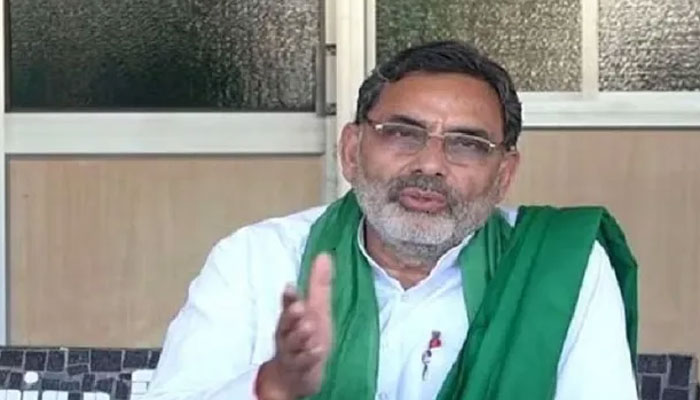
On March 5, the general secretary of Bhartiya Kisan Union and general secretary of All India Jat Mahasabha Yudhvir Singh spewed venom against idol worshipping. Speaking at Jat Mahasabha in Jaipur, Rajasthan, Yudhvir Singh said, “If you want to become Hindu, you have to become a member of a particular group. If you are not a member of that particular group, you cannot remain Hindu. Why? Why can’t you be Hindu? Who will give us a certificate of being Hindu or not? We were, are and will be Hindu. No one can snatch our rights from us.”

He added, “They talk about Ram. They argue with us. They question us. Our Ram is with us while sleeping, while being awake or in anything we do. When a farmer opens the ropes of his bulls to take them to the farm, he says, ‘take the name of Ram’. When he starts using his plough, he says, ‘take the name of Ram’. Whenever he performs an auspicious deed, he takes the name of Ram. But he does not go to a temple to offer water.”

Questioning the attendees if they remember seeing their ancestors going to temples, he said, “Have you seen any of your ancestors going to a temple? Jat of today has changed. Our ancestors had their Ram with them. Ram used to live with them in their pockets. They would take him out and meet him. But today, we are going to temples seeking Ram.”

Calling priests frauds, he added, “A priest asked to offer water to the idol. [I told him] It is a stone statue. A sculpturist in Makrana makes it. Pandit said he did pran pratishta in it. I asked why you did not do pran pratishtha of the dead body of your father, mother and relatives. He was making us fool.”

He further said, “50 years ago, there were no temples in Jat villages. There were Shivalayas, and women would offer milk there. There were no priests. There was no pretense or hypocrisy. But today, our children are unaware [of the history].”

Yudhvir is a close associate of the infamous farmer leader Rakesh Tikait. He was also present on the stage with Tikait during the protests against farm laws in 2021.

On January 9, 2023, Yudhvir was seen with Congress leader Rahul Gandhi during his Bharat Jodo Yatra along with Yogendra Yadav, Rakesh Tikait, and others.

‘He is Vijay how can he be a Muslim, do not know any Atiq Ahmed’: Wife of Usman who fired first shot during Umesh Pal’s murder

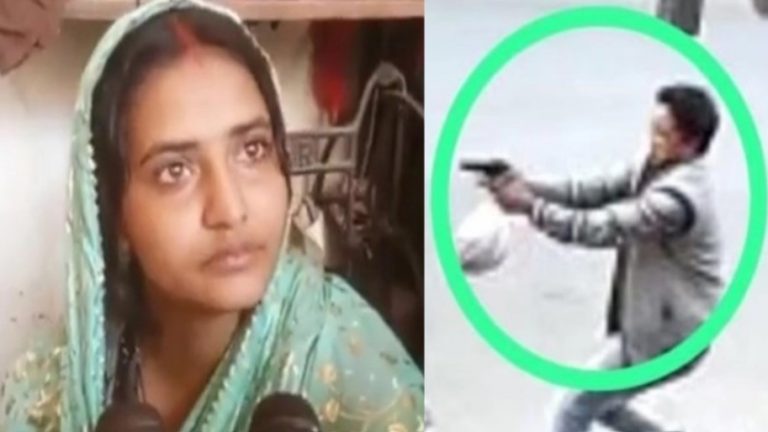
Hours after Umesh Pal’s killer Usman alias Vijay was killed in a police encounter, the deceased’s wife, Suhani, claimed that her husband was not a Muslim. Addressing the media, she claimed that she had no idea about her husband’s ‘Usman’ name.

Moreover, despite the fact that CCTV footage of Umesh Pal’s murder clearly showed Usman alias Vijay Kumar holding a polythene bag and taking the first shot at Umesh Pal, his wife has denied his involvement in the murder.

Usman’s wife reportedly told the media, “The police are fooling people by saying that they arrested my husband. He left the house yesterday and was missing since then. The police were patrolling outside our house the entire night and left only in the morning at around 7 am. The police have deliberately encountered him.”

“I was made a ch*t**a (fooled) and asked to call my husband. I was aware that they would kill my husband, but my husband was innocent,” she added.

In response to a question concerning the killing of Umesh Pal on February 24 and Usman’s alleged role in it, the latter’s wife added, “I do not know about that, but he (Usman) came home on February 24”.

When the journalist inquired whether Usman was in the house the whole day on February 24, his wife answered in the affirmative. “Yes, he was at home the whole day. Our brother is also incarcerated and his case has been transferred to Satna, so Usman went to Satna the next day. He returned on March 2,” Usman’s wife said. A voice from behind said “yes” when the media asked her if the police were lying.

Usman’s wife went on to say that they are Hindus but are being branded Muslims. “My husband’s name is Vijay Chowdhary but he is being called Usman Chowdhary,” she said, further adding that they do not even know Atiq Ahmed.

“The police should shoot me dead in the encounter as well as now I have no one to lean on for support,” the deceased Usman’s wife rued.

Who was Usman alias Vijay Chowdhary

It is pertinent to note here that Usman Chowdhary alias Vijay Kumar, who was gunned down in an encounter that took place in the Kaundhiyara area of Prayagraj, Uttar Pradesh on March 5, was a member of the Atiq Ahmed gang and was the first to fire a shot at Pal. Atiq Ahmed is the main accused in the 2005 Raju Pal murder case who is lodged in a Gujarat jail currently. A resident of Dhoomanganj in Prayagraj, Usman had several criminal cases registered against him and was carrying Rs 50,000 cash reward for his arrest.

Usman, who married a brahmin girl Suhani, started living with her in a rented room near the glass factory in the Ghurpur police station area. Two cases of abduction and assault were registered against him after he allegedly kidnapped the girl (now his wife) from Kaundhiyara.

Usman’s brother is also a history sheeter

Meanwhile, Usman Chowdhary alias Vijay Kumar’s elder brother Rakesh Chowdhary is also a history-sheeter who is lodged in Naini Central Jail under several cases. Many cases, including murder, have been registered against him.

According to reports, a total of 14 cases are registered against Rakesh in Kaundhiyara’s Shankargarh town alone. He has gone to jail many times. Implicated for the theft of bikes and four-wheelers, about 8 years back, he escaped by jumping from the van while being taken for hearing from Naini jail. 10 years ago, he had eloped and married a girl living in the Kaundhiyara area and has two children with her.

Rakesh’s case is currently being heard in a court in Satna, for which Usman use to frequent the place.

Usman Chowdury encounter

Usman sustained bullet injuries during the encounter. He was shifted to Swaroop Rani Nehru Hospital, where doctors declared him dead. Reportedly, UP Police had announced a bounty of Rs 2.5 lakh for each accused in the murder case. Usman and other accused had allegedly killed Umesh Pal on February 24 in broad daylight. Pal was the prime witness in the 2005 BSL MLA Raju Pal murder case in which Atiq Ahmed and his brother ex-MLA Ashraf were prime accused. The incident took place at his residence.

Pakistan: Nine security personnel killed, 13 injured after a suicide bomber attacked a police truck in Balochistan

0

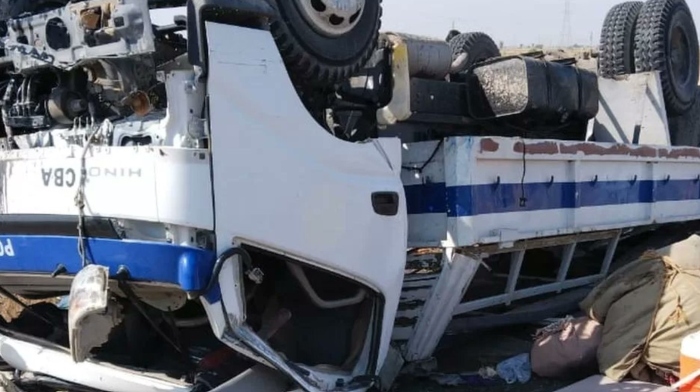
On Monday, March 6, nine security personnel were killed and at least thirteen others were wounded during a bomb blast in southwest Pakistan. According to reports, the incident took place in Balochistan province when the officers were returning to the provincial capital Quetta.

An alleged suicide bomber rammed a motorcycle into a police truck causing the blast. So far, no one has claimed responsibility for the attack.

Confirming the incident, Kachhi Senior Superintendent of Police (SSP) Mahmood Notezai said that those killed in the blast belonged to the Balochistan Constabulary (BC), a department of the provincial police force that provides security at important events and in sensitive areas, including jails.

“The constabulary van was on its way back to Quetta from Sibi when an explosion occurred on the Kambri bridge in the area bordering the Sibi and Kachhi districts,” Dawn quoted the official as saying.

Following the blast, Quetta and Sibi are on high alert. The area, meanwhile, has been cordoned off and a search operation is underway, officials said.

Regular suicide bomb attacks in Pakistan

Notably, the incident came a day after a security official was killed and eight others were injured after a vehicle was targeted in a bomb attack in Gwadar, a port city in the province. Balochistan Liberation Front, a group working for Balchistan’s independence from Pakistan’s occupation, had claimed responsibility for the attack.

Prior to this, on February 26, 2023, four people were killed and fourteen others were wounded in a blast in Barkhan district in Balochistan province. “The improvised explosive device was planted in a motorbike which exploded at around 10 am in the morning,” assistant commissioner Khadim Bhangar Barkhan had said.

The incident occurred a day after an improvised explosive device (IED) exploded in Balochistan’s Khuzdar district while police officers were patrolling the region, leaving two policemen dead and another injured.

Similarly, on January 30, 2023, a blast took place inside the Peshawar Police Lines mosque resulting in the death of at least 28 people. Around 150 were reportedly injured in the blast.

OpIndia had reported that a suicide bomber was present in the front row during the prayers. He detonated the device and as a result, the roof of the mosque collapsed. 

Shortly after the attack, the Islamist terror outfit Tehreek-e-Taliban Pakistan (TTP) claimed responsibility for the bombing.

12 Tamil Nadu cops detained by Rajasthan Police, accused of demanding bribe in Ajmer

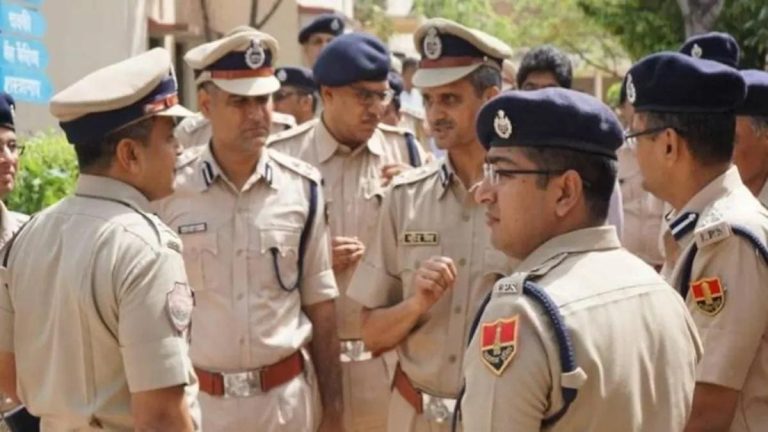
On Sunday (March 5) night, the Rajasthan Anti-Corruption Bureau (ACB) arrested 12 Tamil Nadu police personnel from the city of Ajmer.

As per reports, the cops are accused of soliciting a bribe to the tune of ₹25 lakhs from one Sonia and her husband Pannalal Soni, whom they were supposed to arrest in four cases of theft.

According to the DIG of the Anti-Corruption Bureau, Sameer Kumar Singh, the Tamil Nadu police had registered cases in connection with the theft of ₹52 lakhs worth of gold (~105 tolas) in Trichy.

The names of Sonia and Pannalal Soni surfaced during the investigation of these thefts. Since they were residents of Bhinay town in Ajmer, a team of 12 police personnel from Trichy in Tamil Nadu, led by one Inspector Mohan, went to Rajasthan to arrest them.

The cops reportedly took away Sonia and demanded ₹25 lakh bribe to allegedly let her off the hook. Pannalal Soni then approached the Rajasthan Anti-Corruption Bureau on Friday (March 4) and sought their help.

After verifying the details, the Rajasthan ACB laid a trap near the Ajmer Railway station and arrested the 12 accused Tamil Nadu police personnel red-handed. The accused cops are now being interrogated in connection to the bribery case.

The senior officials of Tamil Nadu police have also been notified. It is said that if the Rajasthan ACB would have delayed taking prompt action, the accused police personnel would have left for Tamil Nadu.

Understanding the anti-Hindi rhetoric of Tamil politics: how it started, and why it sells

The decades-old issue of anti-Hindi and anti-‘North Indian’ politics that dominates Tamil Nadu has been in the news again recently. Over the grievances raised by migrant Bihari labourers who say they have been facing harassment and constant misbehaviour at the hands of local Tamilians.

The anti-Hindi rhetoric has been looming over Tamil politics since pre-Indenpendece years. Fanned by ambitious politicians who were desperate for a foothold, and eventually mainstreamed into the public discourse by the DMK, the roots of this general aversion were sowed by the British when they introduced the Aryan Invasion Theory, now profoundly rescinded by modern science.

The Aryan Invasion Theory, which never had any factual basis, declared North Indians as ‘foreign settlers or invaders’ and South Indians as the Dravidians, the ‘original’ inhabitants of the Indian subcontinent. There is no surprise that the British used it as an assassin’s blade to divide India.

The AIT formed the ideological basis for the ‘Justice Party’ in Tamil Nadu back in 1916 which termed Tamil Brahmins as outsiders and asked ‘Dravidians’ (non-Brahmins) to abandon the “superstitious” Vedic culture practised by these “North Indian outsiders” and embrace the ‘rational’ Dravidian thought.

The Justice Party ideologues pretended to adopt atheism as their central theme. As happens with the politics of hate and negativity, this ideology started taking root fast. By 1937, when the Congress government tried to introduce the Hindi language, the Dravidian ideologues got the perfect political tool to gain power, by spreading hate against “Aryan colonialists”.

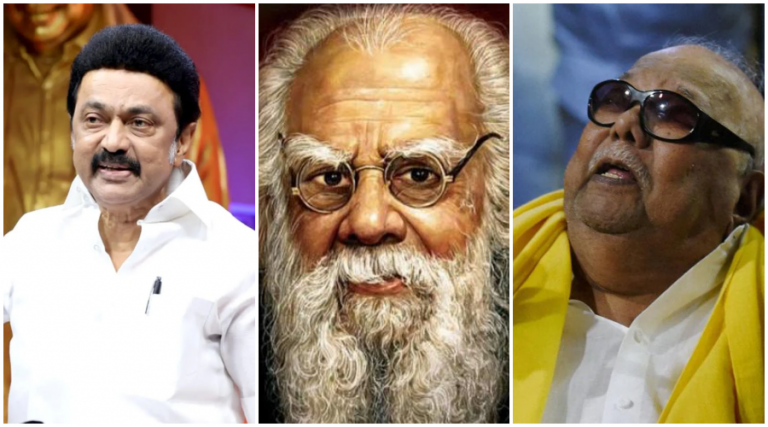
EV Ramaswamy or Periyar, the chief proponent of Dravidian identity politics even went so far as to seek help from Mohammad Ali Jinnah, to establish a separate Dravidian nation. Though Jinnah had little to give him other than supportive words.

In 1937, when the Justice Party lost power to Congress, the Dravidian politicians started courting chaos, desperate to snatch power, they harped upon the politics of hate and anti-Brahminism. In 1938, when the Rajagopalachari-led Congress government’s order to introduce the Hindi language in education, protests sparked across the state, led by Justice Party. Two backward caste brothers died in police custody, fuelling the violence and political unrest all across the Madras Presidency.

The initial anti-Hindi protests dwindled out by 1939 when World War II started. But after the Indian Independence in 1948-50, another attempt by the Congress government to introduce the Hindi language in schools sparked protests again.

All 5 of the violent anti-Hindi protests have happened in Tamil Nadu

As narrated by an earlier article by S Sudhir Kumar, it is only in Tamil Nadu that multiple riots against Hindi have happened. The point to be noted here is that no government ever has tried to “replace” Tamil, but attempts have been to introduce Hindi as an additional language. However, the Periyarists in earlier decades and the DMK in the later decades, have based their entire political relevance on the idea of vague Dravidian supremacy as opposed to the larger Indian identity and the hatred against the Hindi language, branded as the language of ‘Aryan north Indians’, has been the tool to propagate that supremacy.

Anti-Hindi protests catapulted DMK to power in the 1960s

It is notable here that the idea of a separate Dravidian identity, (as opposed to the larger Indian identity), the so-called victimhood carefully built upon decades of fanning of false claims of the Aryan Invasion Theory, a general hatred against the Hindi language and by extensions, North Indians, and Brahmins who are associated with that language (again falsely) provide the foundation on which the earlier Justice Party and the present DMK have built their political relevance.

The politics of hate has been propagated so widely and for so long that it has now become mainstream in Tamil political discourse. Regionalism as a political tool is not limited to Tamil Nadu alone and there have been many examples of similar politics of hate over the spectrum of Indian politics. But in Tamil Nadu, it just takes a whole different shape and texture.

No other Indian state has been so averse to the Hindi language, the propagation and adaptation of which is etched in our Constitution. Even in South India, other states have accepted Hindi as an additional language in schools. In Tamil Nadu, the aversion has been so vehement that there are no Navodaya Vidyalayas to date, because they mandate the study of the Hindi language.

DMK and its politics of Dravidian supremacy

As stated earlier, the vague and baseless ideas of the so-called Dravidian identity, as opposed to the larger Indian identity, has been the basis of the Periyarist movement and its offspring, the DMK. DMK’s brand of politics is based on the very same superfluous ideas.

1. The South Indian states are the ‘Dravidians’ the “original” inhabitants of India.

2. The Indian nation survives on the revenues generated and taxes paid by the South Indian states

No matter the sheer absurdity of these ideas, the politics of them somehow drives the discourse in Tamil Nadu and even provides relevance to the DMK.

In recent years, especially after Narendra Modi came to power in 2014, other parties, even the Congress has tried to lean on the same Dravidian political ideology to gain some foothold, and to paint the Modi government as ‘bad’.

Such is the extent of duplicity expressed by the Congress that they had contradicted the 2011 report by their own government, undersigned by their leader and then Home Minister P Chidambaram, to propagate the Hindi language all over India.

In June 2011, the ninth report of the Committee of Parliament on Official Language was forwarded to the President. Chidambaram, as the then Home Minister, had signed the report. The Committee was formed under the Official Language Act of 1963 in 1965, to realise Article 351 of the Indian Constitution, which calls for the promotion of Hindi.

But when the Modi government after 2014 worked on implementing the points recommended in the same report, Congress and its leaders were one of the loudest of detractors.

Such is the desperation of political relevance that the Congress and many other opposition parties have been turning a blind eye to the narrow, and unscientific idea of the DMK’s politics of hatred against Hindi and ‘North Indians’.

Regional conflict, chaos in the population and the act of pointing out an “enemy” community on a linguistic, cultural and geographical basis have been one of the oldest political tools to climb the ladder of power. When Mamata Banerjee tells the people of Bengal that “Gujaratis are trying to snatch power in Bengal by using goons from UP and Bihar”, she is using the same tool. When Rahul Gandhi screams that “non-locals are snatching businesses in Jammu and Kashmir”, When Priyanka Gandhi calls Modi an “outsider” in UP, it is the same politics in play, again and again.

When political leaders have no foundations to stand on and no work to show after years in power, they latch on to hatred and divisiveness, diverting attention from their failures and shedding accountability by giving the masses a common enemy to direct their frustrations at. This is the politics that drives the anti-Hindi political discourse in Tamil Nadu, the broad Khalistan ideology in Punjab and the Guajrati-Marwari hate in Bengal. The scale and penetration of the rhetoric may be different in each region, the tools may be language or religion or a narrow cultural identity, but the basic ideas are the same.

UP set to become the growth engine of the Indian economy: Yogi Adityanath government promises to create 2 Crore+ more jobs in next 3 to 4 years

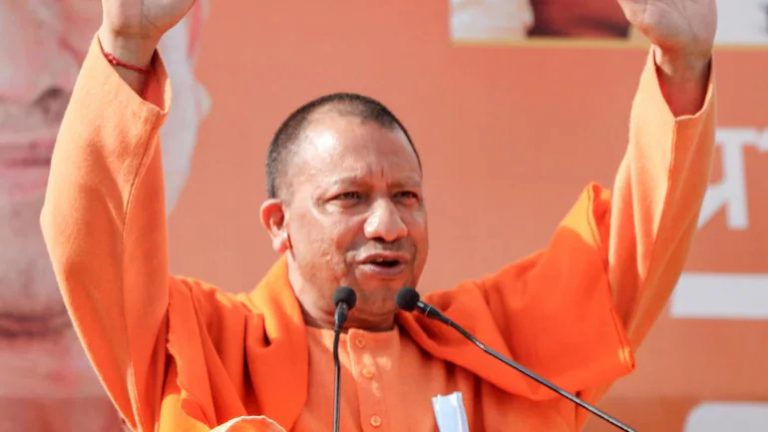
Uttar Pradesh, which was once known for poor law and order and ‘bahubali’ system is slowly and steadily seeing a turnaround under the administration of Yogi Adityanath government. While addressing the closing ceremony of the two-day “Lucknow Kaushal Mahotsav”, Yogi Adityanath said that the youth will be given on-the-job training and apprenticeship to enhance their chances of gainful employment.

Yogi Adityanath further asked the companies investing in UP to work on training the youth in such a way that they don’t have to migrate from the state in search of jobs.

He said that in the upcoming 3 to 4 years, Uttar Pradesh will generate more than 2 crore jobs under the ‘Mission Rozgar’. Uttar Pradesh, the most populous state in India, has a population above 23 crores as per the latest estimates and boasts of the largest workforce among states in India. 2 crore additional jobs within the state will enable the youth to seek and get employment in their home state instead of migrating elsewhere for jobs. This influx of jobs can be a game-changer for UP.

Earlier, while inaugurating the Paint Manufacturing Unit of Berger Paints in Hardoi, the CM said, “Companies investing in the state, along with starting their manufacturing units, should commence skill development centers for the local youth. We must work together to ensure skilled manpower for the future,”

In recent times, Uttar Pradesh has shed its ‘bimaru’ tag and now almost every week we hear about an MNC wanting to set up their business in UP boosting employment opportunities there.

In its hundredth year of operations in India, Berger Paints has invested over Rs 1000 crore in Uttar Pradesh and set up its most modern and completely automated paint manufacturing unit in Hardoi.

At the inauguration of the plant, Yogi Adityanath said, “Recently our government entered into an MoA (memorandum of association) with Tata Technologies to upgrade 150 ITIs in the state to take forward the skill development program for the youth with new age trades. At least one skill development center should be established in Hardoi, Sandila, for which full cooperation will be provided by UP State Industrial Development Authority.”

“We all know that with such a huge investment, the unit of Berger Paints began operation in the short span of just 30 months. This also reflects that the state is emerging as the most prominent destination for industrial investment in the country today,” the UP CM further added.