Home Blog Page 3191

Case of contempt of National Flag registered against ‘comedian’ Kunal Kamra for insulting the Indian Tricolor with a morphed image

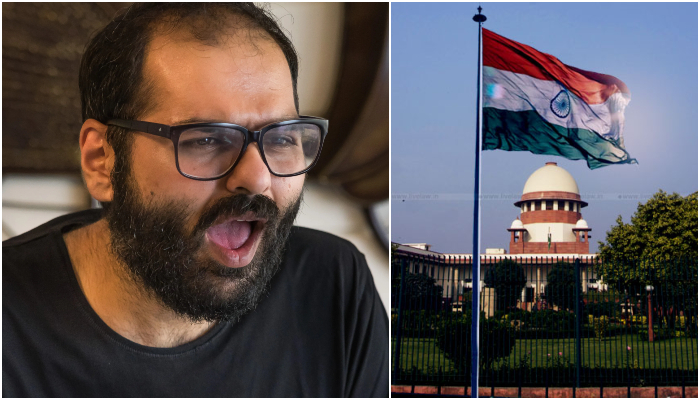
On Monday, the Allahabad High Court refused to interfere in a plea that challenged the magistrate’s order dismissing an application filed seeking FIR against alleged stand-up comedian Kunal Kamra for his tweet, which insulted the Indian National Flag. Kamra in November 2020 had tweeted a morphed picture of the Supreme Court and had replaced the Indian Tricolor atop the apex with the flag of a political party.

According to the reports, the petition that was filed by Advocate Saurabh Tiwari stated that Kamra’s actions had hurt the feeling of the people of this country and had caused contempt and disrepute to the Indian National Flag. The Varanasi Court on May 27 filed a case against Kamra for willfully and deliberately replacing the Tricolor hoisted atop the apex court with the flag of Bharatiya Janata Party (BJP) under section 2 of the Prevention of Insult to National Honour Act, 1971.
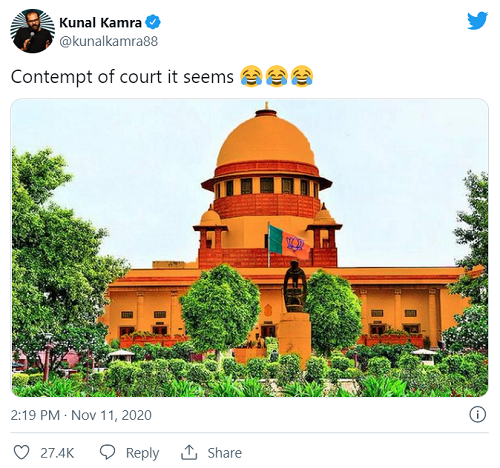
Screenshot from Twitter

The provisions that were prayed by the petitioner were under section 2 of the Prevention of Insult to National Honour Act, 1971, sections 153B (Imputations, assertions prejudicial to national integration) and 505 (Statements conducing to public mischief) of the India Penal Code. However, the criminal provisions were rejected by the CJM Court and the Additional District Judge (ADJ). The petitioner had then moved to the High Court who further refused to interfere in ADJ’s decision.

Judicial Magistrate Richa Sharma has registered the complaint case also under section 200 and has sought the complainant’s affidavit as to whether the Supreme Court has taken cognizance of the offence under the Prevention of Insult to National Honour Act,1971 or not.

Supreme Court initiated contempt of court proceedings against ‘comedian’ Kunal Kamra-

Supreme Court in December 2020 had issued a notice to Kunal Kamra seeking contempt proceedings after his contemptuous remarks against the Judiciary in his bid to become a liberal ‘hero’ or a ‘martyr’. In one of his tweets, he had shown CJI Arvind Bobde the middle finger and in another, he had painted the Supreme Court in saffron colour to allege that it had become a puppet of the NDA Government.

In the first tweet, Kamra compared the Supreme Court to a Supreme Joke. In the next tweet, he wrote, “The pace at which the Supreme Court operates in matters of “National Interests” it’s time we replace Mahatma Gandhi’s photo with Harish Salve’s photo.”
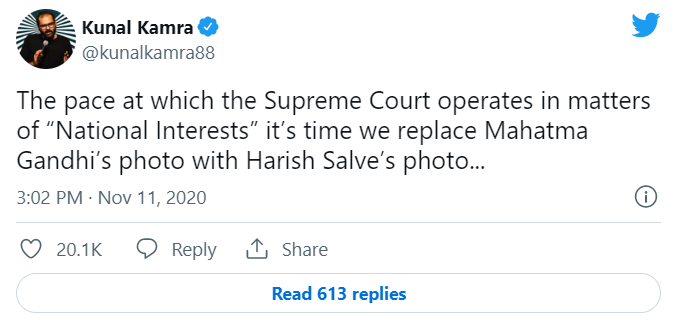
Screenshot from Twitter

In the third tweet, he compared DY Chandrachud to “flight attendant serving champagne to first-class passengers after they’re fast-tracked through, while commoners don’t know if they’ll ever be boarded or seated, let alone served.” In the last tweet, he provoked lawyers to stop using the prefix “Hon’ble” while referring to the Supreme Court or its judges. He said, “Honour has left the building long back.” Kamra had also posted a morphed image of the Supreme Court building giving it an Orange shade with the BJP flag hoisted in the Supreme Court’s entrance.
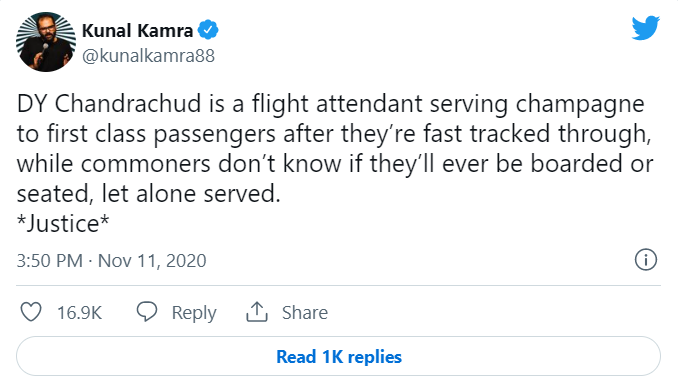
Screenshot from Twitter

On the issue of criminal contempt against the ‘comedian’, the Supreme Court issued a notice on January 29 last year. In his response, Kamra had stated that his tweets were not aimed to diminish people’s faith in the judiciary and that there is no defence for jokes and should not be treated as reality.

Other Court cases against Kamra-

Recently, in March this year, advocate Chandni Preeti Vijaykumar Shah had written to the Attorney General for India KK Venugopal seeking to initiate criminal proceedings against the ‘comedian’ under the State Emblem of India (prohibition of improper use) Act, 2005. Kamra had insulted India’s National Emblem by using it in a morphed certificate that shamed the agony of the Kashmiri Pandit genocide and blatantly mocked the film ‘The Kashmir Files’.

Two lawyers- Advocate Ashutosh Dubey and Advocate Vineet Jindal in the same month further had written to the Attorney General of India, KK Venugopal requesting permission to commence contempt proceedings against the stand-up comedian for vilifying and defaming the Indian judiciary in his recent ‘comedy’ video.

Kunal Kamra in one of his videos uploaded on his YouTube channel had made derogatory remarks against the SC. While speaking about the contempt of case filed against him in the top court, Kamra had said, “Dear SC, kal ki baat bhul ja, l**da pakad ke jhul ja (forget yesterday’s talk, come swing on p**is)”. Kamra in the video further had said that he had more respect for the food court in the shopping mall that the apex court and alleged that the SC is a ‘Brahmin Baniya’ affair and it did not represent different cultures.

Also, earlier this month, the National Commission for Protection of Child Rights had taken action against Kamra who had posted a doctored video of a minor boy singing an Indian patriotic song in Germany. The NCPCR had taken the cognizance of the video in which Kamra had edited a song sung by a 7-year-old boy amid his interaction with PM Modi. The boy had sung the song named ‘Hey Janmabhoomi Bharat’ which was replaced by Kamra with lyrics ‘Mehengayi daayan khaaye jaat hain’. The NCPCR had written to the social media company and had sought immediate removal of the video.

The NCPCR has demanded strict action against the ‘comedian’ who has violated the provisions of the Juvenile Justice Act, 2015, and the Information Technology (Intermediary Guidelines and Digital Media Ethics Code) Rules, 2021. The doctored video has, however, been deleted by Kamra.
From Pitchers to Panchayat, how ‘Jeetu Bhaiyya’ has become the most bankable star in the Indian web series industry

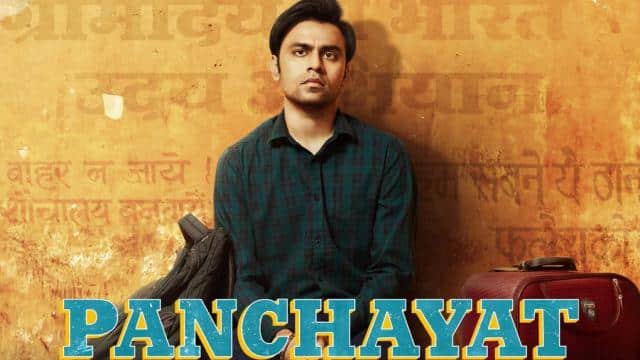
The Viral Fever (TVF) has done many good things for the world of Indian web series, maybe the best thing they did out of them all was to introduce Jitendra Kumar to the Indian audience. The undisputed king of the Indian web series industry has delivered another massive hit with the second season of the much-acclaimed show Panchayat which is currently streaming on Amazon Prime.

Jitendra Kumar, who is a Civil Engineer from IIT Kharagpur, did what most engineers do, stay away from their engineering major in their profession. Civil engineering’s loss was art’s gain as he rose to become a star on Indian television.

The 31 years old Jitendra joined TVF nearly a decade back and since then, he has been riding one wave of success after another as he has become a household name through TVF’s realistic shows about Indian youth and their struggles.

Even though regular followers of Jitendra were familiar with his work on various TVF sketches which were uploaded on YouTube, his big break came on TVF’s massive hit Pitchers where he played a frustrated techie brilliantly. The show about 4 friends trying to launch a start-up was a huge success and Jitendra’s performance was one of the main reasons behind it. Anyone who has ever been stuck in a dead-end corporate job could relate to Jitendra’s situation, and let’s face it, most of us are stuck in a dead-end corporate job.

After the massive success of Pitchers, Jitendra kept appearing in TVF sketches regularly during the next few years. However, it took 4 years for him to deliver his next memorable performance. The endearing ‘Jeetu Bhaiyya’ of Kota Factory, a series based on the struggles of engineering aspirants in the education hub of Kota. A series that was supposed to highlight the students in the show, became more popular due to Jitendra, who played a Physics teacher on the show.

‘Jeetu Bhaiyya’ became an internet sensation as TVF delivered yet another mega-hit show. However, all the success of Pitchers and Kota Factory was going to pale in front of what was coming next, Panchayat. One of the most successful web series of all time in India, Panchayat has now delivered 2 successful seasons back to back.

Centered around Jitendra Kumar’s character ‘Abhishek Tripathi’, Panchayat takes you to rural India and makes you fall in love with it, as Jitendra does in the show.

While biggies like Netflix are burning money all over the place and wondering how to crack the Indian market, TVF has already shown it multiple times how to get it done. Take a simple story about real India, tell it effectively, put Jitendra Kumar at the center of it and you have a big hit.

With several big hits behind him, Jitendra Kumar has proven that he is the most bankable star today in the world of Indian web series. The combination of TVF’s writing staff and Jitendra’s acting has proved to be unstoppable so far, and long may it continue.

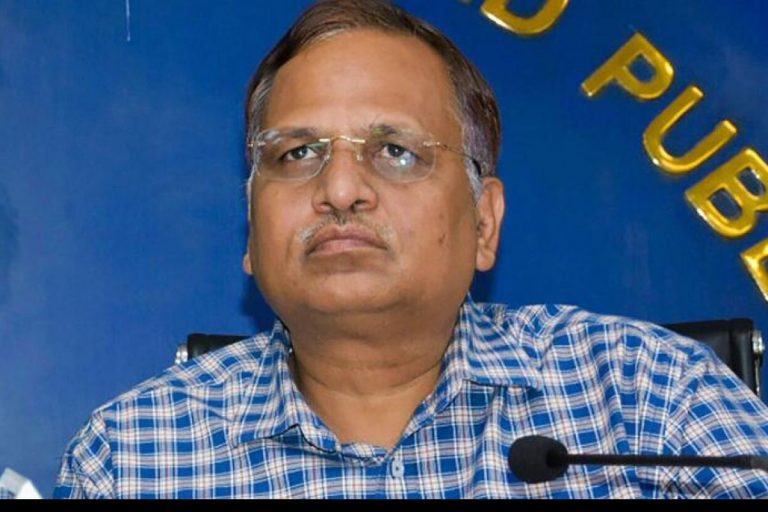
Delhi Health Minister Satyendar Jain sent to ED custody till June 9 in money laundering case

In an alleged money laundering case, a special Central Bureau of Investigation (CBI) court has ordered Delhi Minister Satyendar Jain to be held in the custody of the Enforcement Directorate (ED) till June 9th. Following his arrest on Monday, Satyendra Jain was brought before the court today.

Senior advocate N Hariharan appeared before the court representing Satyendar Jain whereas Solicitor General Tushar Mehta appeared for Enforcement Directorate.

Satyendar Jain, the Delhi Health Minister and a prominent Aam Aadmi Party leader, was arrested on Monday, May 30 in connection with a money laundering case involving a Kolkata-based firm and hawala transactions.

On August 25, 2017, the CBI filed an FIR against Satyendar Jain in a money laundering case. Based on this FIR filed by the Central Bureau of Investigation (CBI), the ED initiated a criminal case against the AAP leader, alleging that Jain could not clarify the source of cash received by four firms in which he was a stakeholder. From 2010 to 2014, the firms allegedly laundered Rs 16.39 crores in funds.

In April of this year, the Enforcement Directorate seized immovable properties worth Rs. 4.81 crore from Akinchan Developers Pvt. Ltd, Indo Metal Impex Pvt Ltd, and others under the PMLA, 2002. The action was undertaken in response to the lawsuit alleging disproportionate wealth and money laundering against AAP minister Satyendar Jain, his wife Poonam Jain, including others.

According to government sources, Jain surrendered black money in the form of cash worth Rs 16.39 crore, which was laundered through shell companies in Kolkata for the purchase of 200 bighas of land, under the Income Disclosure Scheme (IDS) 2016 on the Benami names of Vaibhav Jain and Ankush Jain, when questioned by the IT Department.

The prosecution of Delhi minister Satyendar Jain for disproportionate assets and money laundering was authorised by the Home Ministry in November 2019.

Times of India gives a platform to paedophilia-accused British journo Hasan Suroor to mouth platitudes on ‘secularism’ over Gyanvapi

On Sunday (May 29), the English daily ‘The Times of India (TOI)’ provided a platform to the Indian-origin British journalist Hasan Suroor to give sermons on secularism. Hasan Suroor was arrested for the sexual grooming of a minor in 2015 but was later acquitted by a UK court.

In an article titled, ‘RIP Secularism: Let’s try a Hindu democratic Republic of India (T&C apply)’, Hasan Suroor resorted to false equivalence to paint Hindus as the aggressors and the Muslims as the victims of ‘majoritarianism’.

At the very onset, Hasan Suroor misled his readers about the Places of Worship (Special Provisions) Act of 1991. He suggested that the reclamation of ‘Gyanvapi Mosque in Varanasi and Shahi Idqah in Mathura’ was not possible due to the existence of the contentious Parliamentary law.

Screengrab of the article in The Times of India

The columnist insinuated that Hindus must give up their claim on the destroyed Kashi Vishwanath temple complex by alleging “that no more historic disputes in relation to other religious structures would be entertained (by the Supreme court).”

Opindia had earlier reported how there are certain exemptions within the Places of Worship Act and how they can be used to reclaim the disputed structure.

If the Archaeological Survey of India (ASI) declares the Gyanvapi mosque as an ‘ancient monument’ under the Ancient Monuments and Archaeological Sites and Remains Act, 1958, given that the remnants of the temple are over 100 years old, the disputed structure will not fall under the ambit of the Places of Worship Act, 1991.

The usual false equivalence trope by Suroor

“For those of us who lived through the Babri Masjid-Ram Mandir nightmare, there’s a whiff of déjà vu about it with the usual suspects on both sides of the communal divide recycling familiar arguments and stoking passions,” Hasan Suroor claimed.

He tried to draw a false equivalence to trick the readers into a mirage of ‘neutrality.’ Given that one side (the Hindu community) has been the victim of cultural genocide and civilizational erosion, they cannot be blamed for staking a claim on what rightfully belongs to them.

The Gyanvapi mosque was destroyed by Mughal tyrant Aurangzeb in 1669 and there is ample evidence for the same. Despite being aware of the wrongdoings of the past, the Muslim community has not conceded the disputed structure to the Hindu side and instead been firm in their assertion of not losing ‘one more masjid.’

The perpetual victim card

Hasaan Suroor then tried to paint the Muslim community as ‘victims’ by suggesting that the odds are heavily stacked against them.

“The reality is that we are where we are, and the effort now should be to try and find a way out of the mess. And given how heavily the odds are stacked against Muslims and how much they have at stake in resolving the crisis, they must be prepared to make some hard choices,” he wrote.

By doing so, the columnist tactfully shifted the debate from the denial of historical wrongdoings by Islamic invaders to the State’s failure of secularism. Instead of acknowledging that it is wrong to idolise the invaders, he claimed that Muslims have no option but to accept the ‘majoritarian-isation of Hindu public opinion.’

“The idea that Hindus have the first claim over India has become deeply ingrained, even among many liberals,” Suroor asserted although former Prime Minister Manmohan Singh had suggested otherwise in 2006.

Pinning the blame on Hindu ‘majoritarianism’

“This is not a plea for abandoning secularism altogether or suddenly embracing a theocratic Hindu state but to look for a model in tune with contemporary political and social realities. A new deal underpinned by realism rather than idealism,” Hasan Suroor remarked.

He further claimed, “This would mean finding the right balance between minority rights and the majority community’s sensitivities. The Hindu sense of grievance, real or imaginary, will have to be addressed in the larger interest of India’s unity.”

The British columnist shrewdly cast aspersions on the genuine concerns of the Hindu community and tried to suggest that the grievance might have been ‘imaginary.’ Far from realism and idealism, Suroor insinuated how Muslims will have to give in the ‘majoritarianism’ based on ‘real or imaginary grievances of the Hindu side.’

With a clever choice of words, the columnist was able to brush aside the concerns of the Hindus. Thus, Hasan Suroor’s article is a subtle attempt at fear-mongering, coated with an ounce of victimhood and packaged as an ‘alternative solution’ to supposed Hindu ‘majoritarianism’.

Allegations of paedophilia against Hasan Suroor

In November 2015, it was reported that Hasan Suroor was apprehended by the British Transport Police after he allegedly tried to sexually groom a 14-year-old.

As per reports, the journalist was caught when he tried to meet the underage girl in person. He had allegedly sent sexually explicit messages to the girl during a sting operation set up by an anti-paedophile group called Unknown TV.

Hasan Suroor had reportedly told the girl that he would be ‘gentle’ when the conversation centred around having sexual intercourse. He admitted that he had ‘conversations of a sexual nature with a minor’ and that he offered to buy condoms for the girl.

When confronted by Unknown TV, he pleaded innocence and claimed, “I told her I don’t want to (have intercourse). She came on Facebook herself. I was just waiting to buy her some coffee. Can you let me go with a warning? I have a clean record.” A video of the confrontation is still available on Youtube.

However, a year later, Hasan Suroor was acquitted by the Blackfriars Crown Court due to a lack of evidence. In a written submission in June 2016, the Crown Prosecution Service (CPS) said, “Following a further review of the case there is now no longer a realistic prospect of conviction.”

Sidhu Moosewala’s father removes turban as a mark of respect for attendees at son’s funeral, seeks justice in murder case

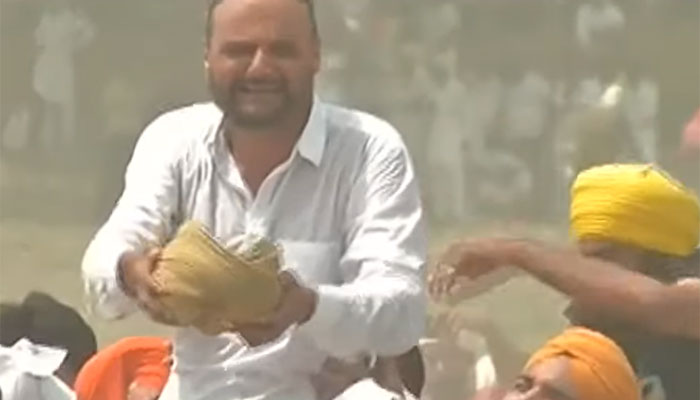
On May 31, controversial singer and Congress leader, Sidhu Moosewala’s cremation was held at his ancestral agricultural land in Mansa district’s Moosa village. Attended by lakhs, it was an emotionally overwhelming situation for his father, Balkaur Singh. As a mark of respect to the attendees, Moosewala’s father removed his turban and thanked the attendees with tear-filled eyes.

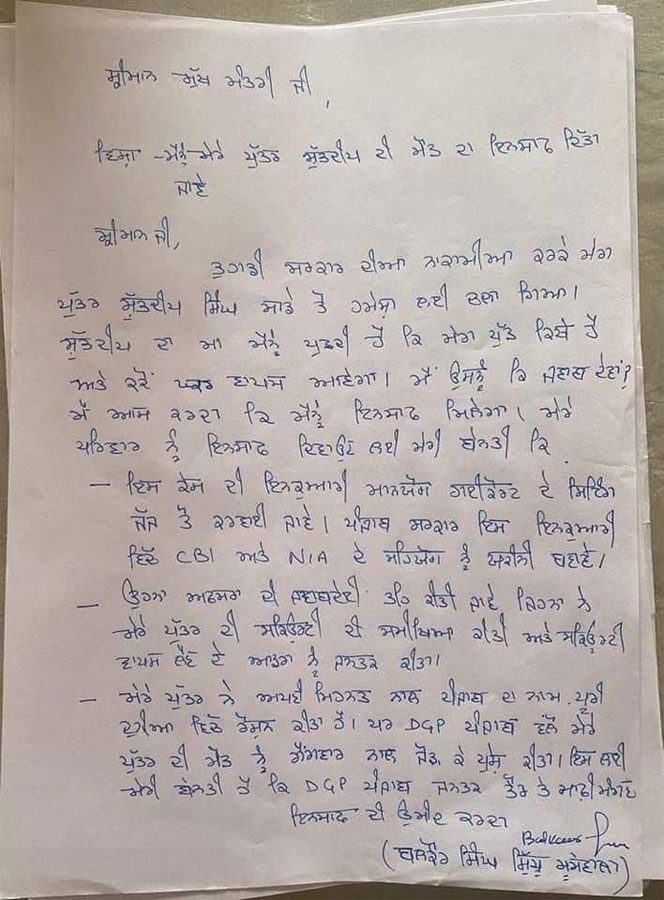
Earlier, his father had written to CM Bhagwant Mann demanding justice in the murder case. He blamed the government for his son’s death and demanded an inquiry done by a sitting judge of the High Court.

He said, “Because of the failures of your government, my son Shubhdeep Singh has left us forever. Shubhdeep’s mother keeps asking me where is her son and when will he be back home. What should I tell her? I request you to do justice to my family.

Source: punjabijagran

The inquiry, in this case, should be done under a sitting judge of the Honourable High Court. The Government of Punjab should get support from CBI and NIA in the inquiry.

Secondly, those officers should be held answerable who reviewed my son’s security and gave the order to withdraw it.

My son promoted Punjab across the world with his talent, but DGP connected his murder to a gang war. DGP Punjab should apologise for his statement.”

Sidhu Moosewala’s murder

Congress leader Sidhu Moosewala was shot dead on May 28 in district Mansa, Punjab. Multiple rounds were fired at his vehicle. He was rushed to the hospital, where he was declared brought dead. Lawrence Bishnoi gang took responsibility for the murder, alleging Moosewala was involved in the murder of one of their gang member, but Police did not take any action against him.

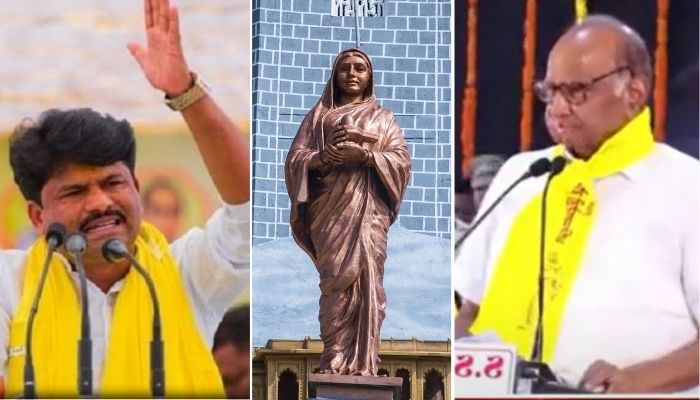
BJP leader Gopichand Padalkar barred from entering Ahilyabai Holkar’s birthplace to celebrate her birth anniversary, Fadnavis says it is an attempt by NCP to hijack her legacy

Maharashtra Leader of Opposition and BJP leader Devendra Fadnavis has lashed out at the Maha Vikas Agaadi (MVA) government after BJP MLA Gopichand Padalkar was barred from entering Choundi, the birthplace of Maratha Queen Ahilyabai Holkar on her birth anniversary. Fadnavis said that while the Nationalist Congress Party (NCP) is organizing a political event on her birth anniversary, it is a dire attempt to hijack her legacy through the institutions of the state.

On the occasion of the birth anniversary of 18th Century Maratha Queen Ahilyabai Holkar, it has been a tradition in Maharashtra that leaders from all political parties reach her birthplace in Choundi, a village in the Ahmednagar district of Maharashtra. There, they pay their respects to the legendary queen on her birth anniversary. This year, NCP leader Sharad Pawar organised a rally at Choundi to mark the ceremony.

Meanwhile, a convoy of BJP MLA Gopichand Padalkar, who was going to Choundi, was stopped by the police. He was accompanied by political leader Sadabhau Khot, President of the Rayat Kranti Sanghatana and other party activists. The resultant skirmish between Padalkar’s supporters and the police caused a traffic jam on the Ahmednagar-Solapur road. Reportedly, BJP MLA from the Karjat-Jamkhed area, Prof. Ram Shinde who belongs to the lineage of Ahilyabai’s family was also restricted from entering the event.

After the development, Maharashtra BJP leader Devendra Fadanvis was quick to lash out at the NCP for turning Ahilyabai’s Jayanti into a ‘political event’. “Ahilya Devi’s birth anniversary is always celebrated without any party affiliation. People from all parties come there, but this time using government machinery, an attempt was made to hijack the legacy of Rajmata Ahilya Devi Holkar. This is highly condemnable,” he said.

BJP MLA Gopichand Padalkar who has a history of speaking out against NCP Supremo Sharad Pawar has been adamant about reaching Choundi to pay his respects to Devi Ahilyabai. While talking to the media he asked, “If this is supposed to be a social function, what is Rohit Pawar (Pawar’s grandson) doing on the stage? Have you ever seen him earlier here? Sharad Pawar, who has completed 50-60 years in politics has never come here. What was the sudden need to appear at Choundi?”

Padalkar said that while (the NCP) is trying to whitewash Ahilyabai’s history, they’ve done nothing to conserve the ancestral fort of the Holkars at Wafgaon. “I’ve been coming at Choundi every year since I was 18. Pawar was the Chief Minister of Maharashtra four times, and yet he never felt the need to come here. They have descended here in 2022 and are accusing us of making it political,” he asserted.

Moreover, he alleged that leaders of the MVA government are trying to erase the real history of Ahilyabai Holkar. he said, “The pious works of Ahilyabai in Maharashtra and the whole of India to restore our temples are not being acknowledged. Ahilyabai resurrected the Hindu religion in a way. Subedar Malharrao Holkar went to Kashi in an attempt to restore the Gyanvapi. The whole of the politics of these people has been anti-Hindu, then what gives them the right to enter Ahilyabai’s birthplace?”

It should be noted that Gopichand Padalkar is a major political figure among the leaders of the Dhangar caste in Maharashtra, to which Ahilyabai Holkar also belonged. Since Padalkar’s elevation in the BJP, the Dhangars have also moved to the BJP in the recent elections.

AAP apes Congress in insulting PM Modi, calls him “chor” after ED arrested Satyendar Jain in money laundering case


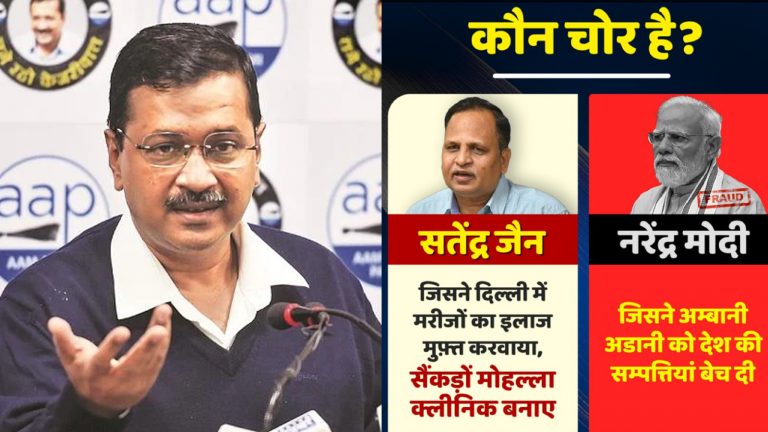
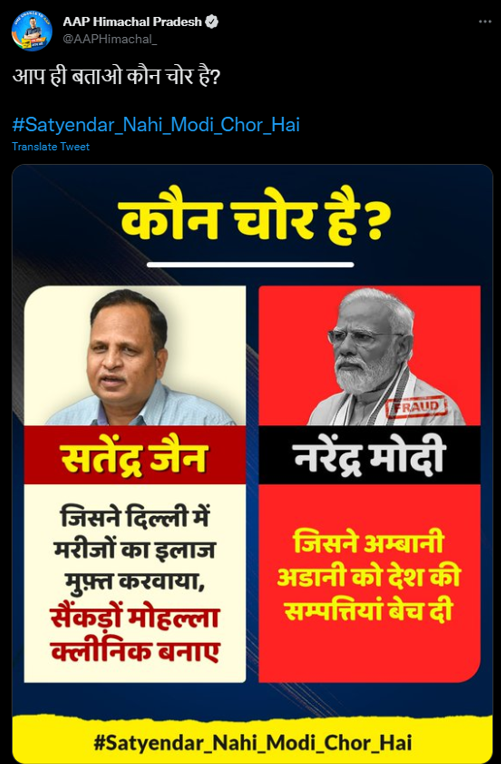
The Aam Aadmi Party (AAP) has resorted to the Congress’s style of insulting Prime Minister Modi after its leader, Satyendar Jain, was arrested in connection with a money laundering case. The Twitter handle of AAP Himachal Pradesh tweeted a derogatory poster demeaning PM Modi and referring to him as a ‘Chor.’

The text of the tweet reads, “Tell who is the thief? #Satyendar_Nahi_Modi_Chor_Hai.” In the image shared with the tweet, it is mentioned that Prime Minister Narendra Modi is a thief because he has sold the state’s properties to Adani and Ambani with an image of PM Modi watermarked ‘FRAUD.’

A screenshot of the tweet by AAP Himachal Pradesh

The tweet comes in the wake of the Enforcement Directorate arresting Delhi’s Health Minister in a money laundering case. Satyendra Jain, the Delhi Health Minister and a key Aam Aadmi Party leader, was arrested on Monday, May 30 in a money laundering case involving hawala transactions by a Kolkata-based business.

Under the PMLA, 2002, the Enforcement Directorate temporarily attached immovable assets worth Rs. 4.81 crore owned by Akinchan Developers Pvt Ltd, Indo Metal Impex Pvt Ltd, and others in April this year. The move was taken in conjunction with a complaint filed against AAP minister Satyendra Jain, his wife Poonam Jain, and others for disproportionate assets and money laundering.

It should be related that similar statements were made by Rahul Gandhi, a Wayanad MP and Congress politician, who twisted a Supreme Court judgement and made similar remarks. While campaigning at a rally in April 2019, Rahul Gandhi remarked that the Supreme Court judgement states, “Chowkidar Chor Hai.” This was in response to the Supreme Court overruling the Centre’s principal objections to the media reports produced by review petitions in the Rafale case.

The court, on the other hand, claimed that it had never said so. Rahul Gandhi tendered an unconditional apology after the court issued a notice in a contempt case filed by BJP spokeswoman Meenakshi Lekhi, mentioning that he made the comment in the heat of election campaigning.

Panchayat strikes a chord with the Indian audience because it shows India for what it is – flawed but fabulous

Standing under a starlit sky with the Old Rajinder Nagar air enveloping their frames, Sandeep Bhaiyya tells Abhilash in The Viral Fever’s (TVF) web series, Aspirants, “Power se bulb jal sakta hain aur power se log electrocute bhi ho sakte hain. You have to decide how you want to use power.” These telling words mouthed by the character played with dollops of restraint by Sunny Hinduja seem to form the backbone of all TVF productions. Especially in the way they have decided to showcase India, its people and their daily lives using scripts, narrative techniques, music, actors and cinematography that don’t alienate the audience even one bit.

While the stories and their execution could have been the usual diatribe against India and its culture that Left-oriented filmmakers and storytellers have been presenting for a while now, the success of works such as Panchayat, Kota Factory, Aspirants and Gullak testify how the audience is identifying with a changing, progressing India. In tandem with the political shift in the country’s ambience, the tone that is working for the mainstream OTT audience is a positive one, the language simple and the approach not dark or depressing. Which does not mean that Bharat’s flaws are not being talked about. But, there is no unnecessary magnification. There is ample usage of tongue-in-cheek humour without demonizing the system and most importantly India is depicted as is. That our country can be a happy place without the gloss of fake superficiality has been established.

it’s quite interesting how narratives have gradually shifted since the time the urban audience was regularly dished out a superfluity of sexual depravities, drug dosages and abusive parlance via web series such as Paatal Lok, Mirzapur, Rasbhari and the like. Scriptwriters fill every scene with excessive nudity, incestuous relationships in the garb of modernism and distasteful language that breached the very code of conduct and decorum that had become a norm on OTT platforms. Not to mention trigger happy rural civilians, corrupt law and order and machiavellian characters who stumped masses with their dissonance from the reality. This rabble-rousing about Bharat in the mind of urban Indians was earlier pushed by so-called ‘progressive arthouse cinema’. Since commercial cinema showed village life as vulgar and nonsense, arthouse cinema’s reply to it lay in grating reminders of casteism, sexual subjugation, exploitation by zamindars, oppression and an overall vocabulary of disgust and deplorable existence. This clearly was an agenda by the leftist minds to cut urban Indians from their roots, which has successfully happened, too. 

If we go back to the winter of 2003, the mainstream movie audience didn’t warm up to Mohan Bhargav trying to ‘rescue’ Charanpur from the clutches of rural underdevelopment, too, despite the project manager from NASA soldiering on to eradicate poverty, casteism, child labour and a host of other maladies from the fictitious village in Uttar Pradesh in Ashutosh Gowarikar’s Swades. Fabulous cinematography, great music by AR Rahman and liberal doses of ‘stark reality’ notwithstanding, Swades failed to do a Lagaan at the box office. Gowarikar’s take on the award-winning 2003 Kannada movie Chirugida Kanasu couldn’t connect with the masses. Perhaps, well into the 21st century while the Congress government had drained the country’s resources, the audience, too was fed up with soft powers using a derogatory brush to paint India as excessively downtrodden, backward and crippled with anarchy. This was not the mitti from the hinterlands they wanted a whiff of. Where a messiah of sorts was required to heal the village from social and economic malaise if not the Anurag Kashyapesque mafia raj! 

Maybe that is why the reception intended for the smart, uber-educated Bhargav was showered on an unassuming Abhishek Tripathi despite him being a disillusioned graduate, too, biding his time as the gram panchayat secretary of an Indian village who would love to flee Phulera once he pockets a secure management seat. Jitendra Kumar has done what King Khan couldn’t. Floor the audience. Maybe because he, rather Chandan Kumar, who scripted the extremely popular Amazon web series, didn’t paint him as a saviour. He made him one of us, real and grounded. Yes, there are teething problems in his wake as he tries to negotiate through the curious and whimsical actualities in the nondescript village the Indian government has sent him to but there is a sense of ‘I could be in his place’ plays in our mind as he takes it all in his stride. 

A sweeping sense of pragmatism hovers as Tripathi decides to assist the villagers as a government employee who is not even remotely interested in being a Godsent to deliver the downtrodden from penury. Hence, his character development is noteworthy, especially when he stands up to ‘banrakas’ Bhushan even as he learns to juggle Grameen politics the Phulera way. He gets angry and frustrated, too, but he comes around. It’s called dealing with life. As Sandeep Bhaiyya, Shwetketu and Abhilash in Aspirants prove that in the preparation of an important examination lies the very tenet of life. So, while Guri might believe, “you fake it till you make it” Tripathi’s experiences teach him that honesty and earnestness are the way forward, though a wee bit of diplomacy could come in handy. 

Fortunately, the Panchayat makers have sensed the pulse of today’s India, a country that is courting rapid change, finding a confident voice and moving ahead (an instance is the modern miracle of cell phone penetration and installation of CCTV cameras) even as they stick to a sustainable module of living. There are enough instances where while the villagers need government support, life isn’t about helplessness, drudgery, murders, rapes and violence. Like it wasn’t in Govind Moonis’s Nadiya Ke Paar, a delightful 1982 romance set in an eastern UP village, starring Sachin, Sadhana Singh and Inder Thakur. While most rural dramas in that era gratingly painted our villages as quicksand patches of cruelty meted by feudal lords (think Hum Paanch, Nishant) and evils committed against women (Mirch Masala was a visual delight, yes, but thoroughly projected rural India as a hub of monstrosity and patriarchy against women), here was a Rajshri production where a girl openly tells her father she won’t marry somebody because she loves his younger brother. It’s telling that the same sense of importance and freedom is given to Rinky in Deepak Kumar Mishra’s work. She is young, educated, drives a scooty and doesn’t hold back her opinions from her parents.

Phulera’s women seem pretty progressive as compared to the situation in Hum Aapke Hain Koun (remake of Nadiya ke Paar) where Tuffy, the pet dog communicates what a tongue-tied Nisha can’t! Twelve years after the original film was released, the Salman Khan Madhuri Dixit blockbuster seemed regressive that way. Maybe that’s why Manju Devi, the gram pradhan in Panchayat, is a welcome break. A grihalakshmi with better political instincts than her husband, she is an equal who is initially reluctant to take decisions as the elected village head but slowly gets out of her comfort zone to participate in important administrative matters when needed. With a feisty mind of her own, she doesn’t mince words while berating erring folks. She balances this toughness with a compassionate side, guarding her people when needed even as she puts elitist MLAs in their place.

Stories like Panchayat find favour because they glorify the power of a collective. Just like how Raghav Subbu and Saurabh Khanna’s Kota Factory (also by TVF) did. Here was a narration set in Kota, a small educational hub known for its coaching centres that were positive, fun and heartwarming. Tracing the journeys of youngsters like Vaibhav Pandey, Balmukund Meena and Vartika Ratawal aiming for the IITs guided by the practical but driven Jeetu Bhaiya, a cloak of familiarity ensconced the series. While the writing never evaded crucial issues of competition, parental pressure or coaching centre politics the genuineness in relating it stuck on. Biswa Kalyan Rath’s Lakhon Mein Ek though dealt with a similar topic, a negative, misleading and depressive cloud enveloped the tale. Kota Factory’s pull is its upbeat vibe, attention to technical detail and realistic characterisation. It doesn’t misguide or is not flaky (well, for that we have Zoya Akhtar’s upcoming The Archies) but the voice is inspiring, relatable and mirrors small-town dreams and aspirations perfectly. 

With viewers now eagerly waiting for the third season of Panchayat (Kota Factory, too), it’s evident that the ensemble cast of Kumar, Raghuvir Yadav, Chandan Roy and Neena Gupta has found their niche in the hearts of the audience as well as critics with their portrayal of characters who do not give up on basic decency and respect no matter how tough the going gets. The depiction of real rural Indian thoroughfare, emotions and politics, devoid of propaganda, has clearly struck a chord. Yes, some of Phulera’s roads still need mending, a handful of villagers are yet to get their personal toilets, a few still need to rid themselves of the urge to defecate in the open, the panchayat elections promise to be a crazy affair, but there is a curiosity to know how this place evolves under the aegis of Tripathi, his aide Vikas, Brij Bhushan Dubey and Prahlad Pandey. After years of being fed with distorted, demoralising narratives that showed humara desh in erroneous light, the audience is welcoming the wave of solution-based worldview taking over scripts in cinema. Aspirants, Kota Factory didn’t disappoint with their tangible, affirmative voices. So, why would Panchayat be any different! 

Karnataka: Video of youth performing ‘burqa dance’ at Kodagu cultural event goes viral, leaves Islamists fuming

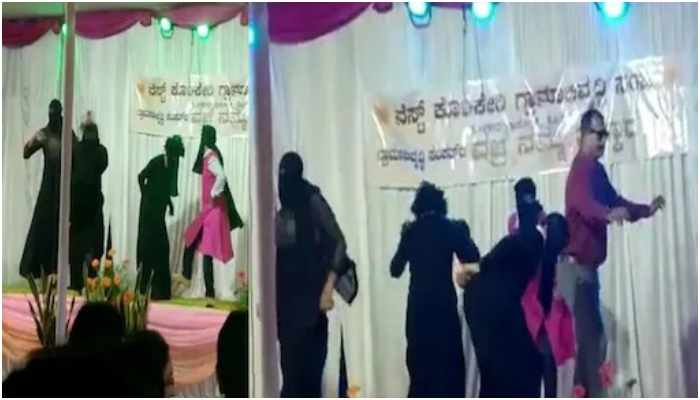
On Tuesday, an event organised by the West Kolakeri Village Development Committee in the Kodagu district of Karnataka received sharp criticism after a video of a ‘burqa dance’ by students went viral on social media. The event was hosted on the occasion of the completion of 75 years of the committee on May 28 and 29.

According to the local reports, some of the students wore burqas and performed an entertainer sequence on the Kodava Valaga music at the cultural event, the video of which went viral over social media. The video has however attracted sharp criticism from the community.

Islamists enraged over the viral video of the burqa dance

The Islamists, who were hurt by the performance, claimed that their religious sentiments were hurt and demanded an apology from the committee. Asfar Kodlipet, State General Secretary, SDPI Karnataka also called for legal action against the community. “I urge the prosecution to file a voluntary case against those who have committed an act of disrespect to the community by dressing shamefully at the diamond jubilee of the Rural Development Association in Kodagu district”, his tweet in Kannada roughly read.

Another Islamist stung by the burqa dance tweeted: “Sheer mockery of #Burkha in a stage program at #Kodagu dist’ arranged by ‘West Kolakeri Gramabhivriddhi Sangha’ presided by Katoleri Kuttappa on its diamond jubilee celebration on May 29. This program was supposed to be attended by BJP MLA K.G Bopayya, a BJP & Congress MLCs.”

Still another Islamist demanded strict legal action against the performers for “creating unrest in society by making a mockery of a society/community dress.”

Reportedly, MLC Veena Achaiah was also present at the event. The organizers called for a press meet on May 30 and apologized for the incident. “A few kids danced wearing burqa as part of the entertainment program. However, this was not hosted to hurt any religious sentiments,” said K Muddaiah, president of the committee.

The President further clarified that MLC Veena Achaiah was present for the inaugural ceremony but was not present during the burqa dance. The committee stated that there was communal harmony in the village and that the event or the dance was not organized with the intention of hurting the religious sentiments of the Muslims.

Xinjiang Police Files reveal Chinese govt’s involvement in unlawful activities against Muslim Uyghurs in prison-like ‘re-education centers’

0

The ‘Xinjiang police files’ that were leaked recently revealed that the Chinese Communist Party (CCP) led by Xi Jinping is involved in brazen human rights abuse against Muslims in Xinjiang. The communist leaders are involved in practicing human rights atrocities against thousands of Uyghurs through a network of detention centers and prisons in the Xinjiang region.

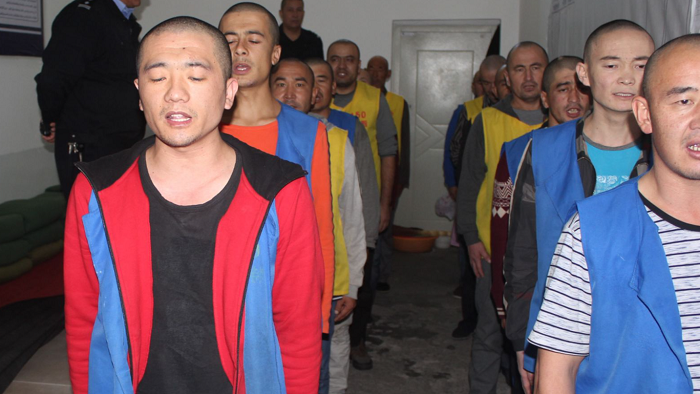
According to the reports, the Chinese government has detained Muslim Uyghurs in the concentration camps which China terms ‘vocational skills education and training centers’. At these centers, Uyghurs are brainwashed to be ‘trustworthy persons’ for the Communist government.

The matter came to light when the ‘Xinjiang police files’ were published last week by the Victims of Communism Memorial Foundation with cooperation from 14 media outlets from 11 countries. The files gave the world an inside view of China’s ‘re-education camps’ and the ‘prison-like’ conditions that Uyghurs are made to face.

Training is given to detainees in the ‘vocational skills education and training centres’ to make them more ‘trustworthy'(Image Source- BBC)

The files include leaked internal police documents and over 2,884 photographs of detained Uyghurs, including some as young as 17 released first as part of a research article authored by Dr. Adrian Zenz, Senior Fellow, China Studies, at the Victims of Communism Memorial Foundation in Washington, DC. The Files also include material such as police training presentations as well as sensitive files and speech transcripts. According to Dr. Zens, the entire material found was ‘unprecedented’ as the speech included in the files implicated China’s top leadership like Chen Quanguo, Minister Zhao Kezhi, and President Xi Jinping and contained blunt language.

Internal speech by Chen Quanguo, a former Communist Party secretary in Xinjiang, in 2017, had allegedly ordered the guards to shoot to kill anyone who tried to escape and had called for officials in the region to exercise firm control over religious believers. Also, a 2018 internal speech by public security minister Zhao Kezhi mentioned direct orders from Xi Jinping to increase the capacity of detention facilities. After initially denying their existence, the country claimed on May 25 that the facilities are vocational training schools, attended voluntarily, and aimed at stamping out religious extremism.

The Chinese government also said that the issue is about countering violent terrorism, radicalization, and separatism, not about human rights or religion. “The Chinese authorities are taking a host of decisive, robust, and effective deradicalization measures. The region of Xinjiang now enjoys social stability and harmony as well as economic development”, the statement from the Chinese government read in an attempt to counter ‘lies and disinformation on Xinjiang’.

Earlier last week, the consortium of 14 media outlets including the BBC and USA Today published the report as the UN high commissioner for human rights, Michelle Bachelet visited the region in Xinjiang. The data was hacked from the Public Security Bureau computers from Konasheher and Tekes in Xinjiang and then was provided to Dr. Zens who later researched and submitted it to the consortium of 14 media outlets. The consortium verified the data and found that the files containing more than 5,000 police photographs and the internment details for more than 20,000 Uyghurs are of real, existing people.

Uyghurs and other minorities in China

The Xinjiang region which is located in the northwest region of China is home to the Uyghur population which is ethnically different from the mainstream Han Chinese people. According to the reports, many Uyghurs consider their own culture distinct from that of the Han Chinese majority. The relationship between the community and the government has been under severe stress as the Chinese government has designated many Uyghurs groups and individuals as terrorists and extremists. The Chinese government has also made several attempts to resettle more Han Chinese people in the Xinjiang region for top jobs, leading to some resentment among Uyghurs.

Chinese Media reported several incidents of ethnic clashes between Uyghur Muslims and Hans dating from the year 2000 to 2016. In the year 2013, the BBC reported that nearly 21 people were killed in the ethnic clash incident between the Uyghur Muslims and Hans Chinese community including 15 police officers. Later 35 people were killed in clashes which Chinese official media reported as a result of the attack on a police station and government building by a group of 17 knife-wielding Uyghur men. The Chinese authorities pronounced the event a terrorist attack and prevented the foreign media outlets to investigate the matter. Meanwhile, the World Uyghur Congress blamed the event on ‘continued suppression and provocation’ by Chinese authorities in the region.

The incidents continued till the year 2016 resulting in over a hundred deaths and thousands of injuries in the Xijiang region. The Chinese government then began seeing the Uyghur Muslims as a problem and threat to the country. Since the year 2018, international organizations reported the detention of Uyghurs in large numbers in China. The country however kept on denying such reports. It said that the Uyghurs were being given vocational training. It maintained that some of the camps that have been constructed, as confirmed by satellite images, were ‘de-radicalization’ and ‘counter-terrorism’ centers. However, the Xinjiang police files leaked recently revealed that around 2 million Uyghurs are in these camps.

What more do the Xinjiang police files reveal?

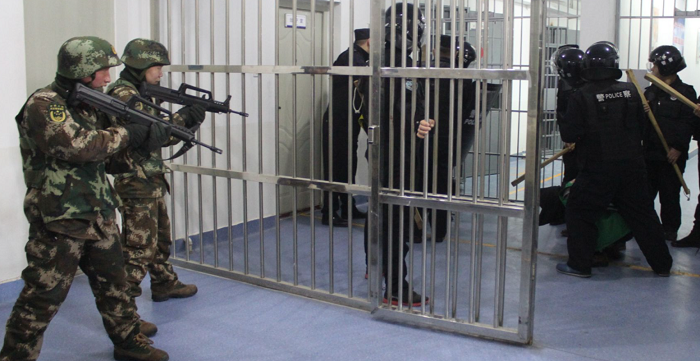
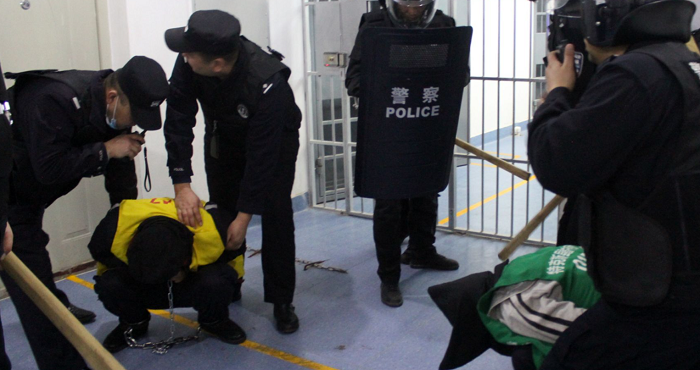
According to the report, some of the photographs of the 2884 detainees of the ‘re-education camp’ show guards standing by, armed with batons. It refutes Chinese claims that there is no coercion at these camps. The report also mentions that many of them have been detained for no reason or for unsound reasons. The Xinjiang Police Files further contain another set of documents that shows detainees photographed in the prison-like surroundings of these ‘re-education camps’ that China insists are ‘vocational schools’.

Image Source- BBC

Blindfolds, handcuffs, and shackles mandatory for ‘students’ being transferred between facilities or even to hospitals, backed with an extreme level of physical control are a common sight. The documents further show Chinese authorities treating the ‘students’ as they usually treat the detainees in the detention centers. They also run the indoctrination centers at these camps, again making no differentiation between the camps and the prison.

Global response to the report

As the UN high commissioner for human rights, Michelle Bachelet visited the region last week. The US and the UK have both expressed skepticism over what could be realistically achieved on Bachelet’s trip. Caroline Wilson, the British Ambassador to China said on May 23 that she had stressed the importance of unfettered access to Xinjiang to ensure private conversations with the people. “There is no excuse for preventing UN representatives from completing their investigations”, she tweeted.

Also, British Foreign Secretary Liz Truss said that the latest reports add to the already extensive body of evidence against China’s human rights violations. “We reiterate our longstanding expectation that China grants the UN high commissioner for human rights full and unfettered access to the region so that she can conduct a thorough assessment of the facts on the ground, and we are following her visit this week closely. If such access is not forthcoming, the visit will only serve to highlight China’s attempts to hide the truth of its actions in Xinjiang”, Truss was quoted as saying.

Further, German Foreign Minister Annalena Baerbock called for a transparent investigation into what he claimed was a ‘very serious human rights violation’. The US said that it was appalled by the findings and that the ‘ongoing genocide’ by China unfortunately continues. Expressing the concerns, the US ambassador to the United Nations, Linda Thomas-Greenfield tweeted, “Horrified by the Xinjiang Police Files, which spotlight China’s mass incarceration of Uyghurs and other ethnic and religious minorities.” She asked her office to take a hard look at the faces and press Chinese officials for full, unfettered access and answers.

The ‘re-education camps’ in Xinjiang

As per the satellite images accessed by the consortium of 14 media outlets, the camps are located in southern Xinjiang, Konasheher, or ‘Shufu’ as termed in Chinese. Also, there’s another such camp in the northern part of Xinjiang named ‘Tekes Detention Centre’. Dr. Zenz in his research report has revealed that a total of 22,762 residents of southern Xinjiang ie more than 12 percent of the adult population have been housed either in a camp or a prison in the years 2017 and 2018. If the data for the entire Xinjiang is considered, more than 1.2 million Uyghur and other Muslim minority adults have been in the camps, claims which China has always dismissed.