Home Blog Page 3257

‘Instigated mob to teach Kafirs a lesson’: What court said while framing charges of conspiracy, arson, rioting against Tahir Hussain in Delhi Riots case

In another major step towards delivering justice in the Delhi anti-Hindu riots case, a Delhi Court has framed charges against accused Tahir Hussain, who, by way of a conspiracy, targeted Hindus during the riots. The current case in which charges have been framed pertains to FIR 114/20 lodged in the Khajuri Khas police station.

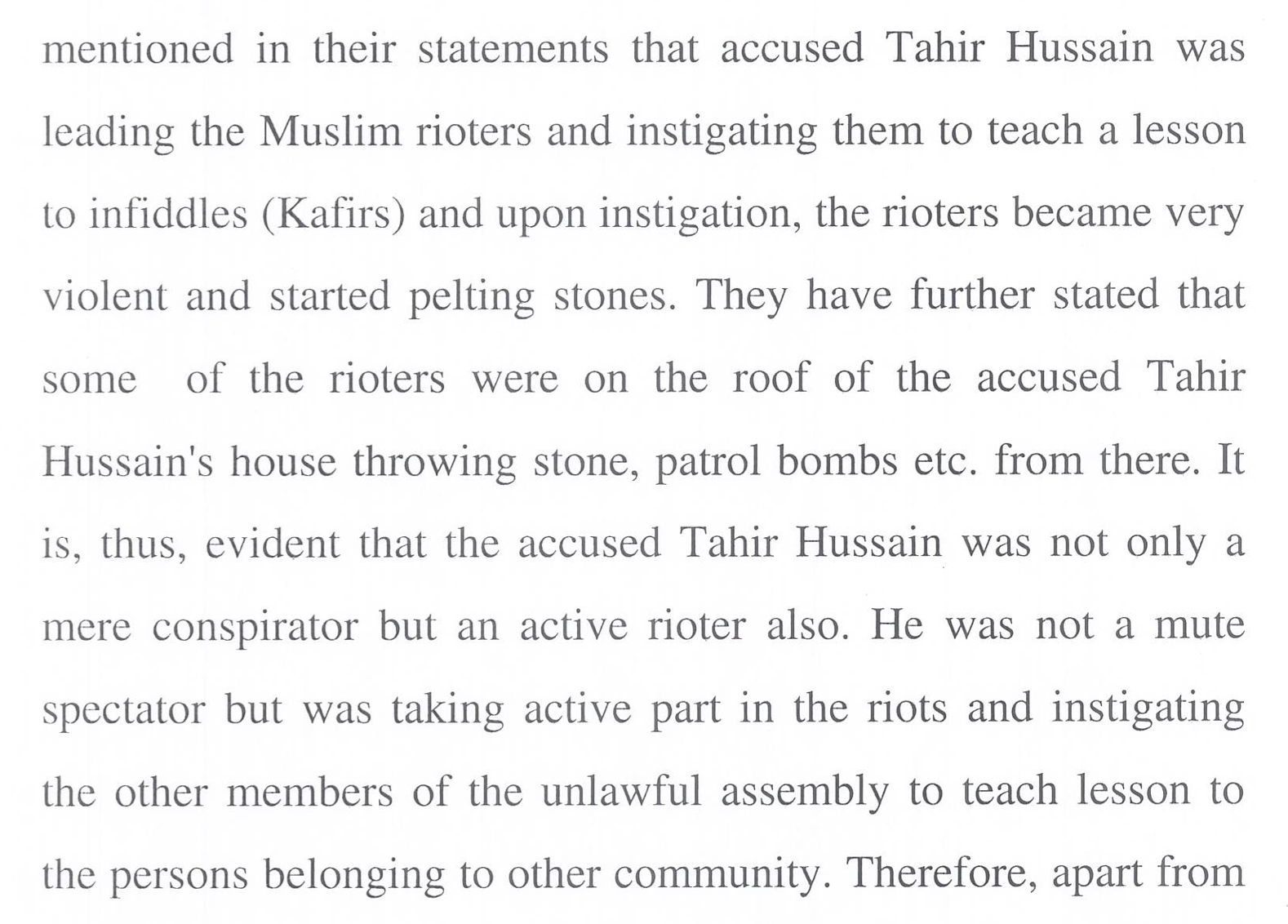
The Court Order in the case, where charges were being framed against Tahir Hussain categorically state that he was not a mute spectator but also an active rioter. He was also not just a conspirator but took an active part in the riots that targeted Hindus and their homes.

In this current case, according to the prosecutor, Tahir Hussain hatched a conspiracy where the main aim was to target the Hindu community of Khajuri Khas. An unlawful assembly, to meet the object of the conspiracy, was formed on the 25th of February 2020 and was led by Tahir Hussain himself. This unlawful assembly vandalised and set ablaze the godown of Harsh Trading Company owned by the complainant (Karan). During the vandalisation by the mob led by Tahir Hussain, some valuables were also stolen from the godown by the rioters.

What the complaint had said when the vandalisation and arson had taken place

The complaint was submitted at the police station on the 27th of February 2020 by the owner of the godown, Harsh Trading Company. On the basis of the complaint, an FIR was registered on the same day and the investigation was underway. The investigation was being led by SI Vipin Kumar, however, later the case was transferred to SIT Crime Branch. The harsh Trading company was only 50-60 meters away from the Khajuri Khas building that was owned and used by Tahir Hussain as his launchpad.

The investigation into the incident and the role of Tahir Hussain in the riots

On the main Karawal Nagar road, burnt articles, broken bottles, stones, bricks etc were found in the aftermath of the riots. During the investigation, it was found that the Khajuri Khas building, which was owned by Tahir Hussain, was used by Tahir Hussain and other rioters as a lunch pad to hurt stones, bricks, and acid pouches, petrol bombs etc. The building was 4 storeys, including the basement floor.

Tahir Hussain, it was found, run his office from this building. His company name was M/s Show Effect Advertisement Pvt Ltd. The office was limited to the first floor while the top 3 floors were under construction. On the 13th of March 2020, the Investigating Officer seized 5 burnt and broken E-Rickshaws from the spot, however, even though the FSL team was present, it was difficult to lift fingerprints.

It was later found by the Investigating Officer that the FSL team had already investigated Tahir Hussain’s building on the 28th of February 2020. During this investigation, large amounts of stones, bricks, catapults, acid bottles, petrol bombs etc were found lying on the 3rd floor of the building. That material and 4 DVRs were seized by the FSL team under FIR 101/2020.

The CCTV footage was also collected and it was found that the footage from some cameras around the area was already collected when FIR 65/20 was being investigated. BEL Company then provided the relevant footage of the incident that occurred on the 25th between 3 PM and 8 PM. When the CCTV footage was found, the investigators realised that the cameras had been turned down or covered so that the faces of the rioters could not be identified. There was other footage that was received by the IO that showed rioters throwing stones, petrol bombs etc from the roof of the Tahir Hussain building, specifically targeting the Hindu community.

During the investigation, the photographs of various accused were shown to eyewitnesses and the local people who were witnesses to the riots. The eyewitnesses specifically identified the 5 accused namely Anas, Firoz, Javed, Gulfam and Shoaibh Alam. One of the eyewitnesses also identified Tahir Hussain specifically.

What the prosecution said in the case against Tahir Hussain

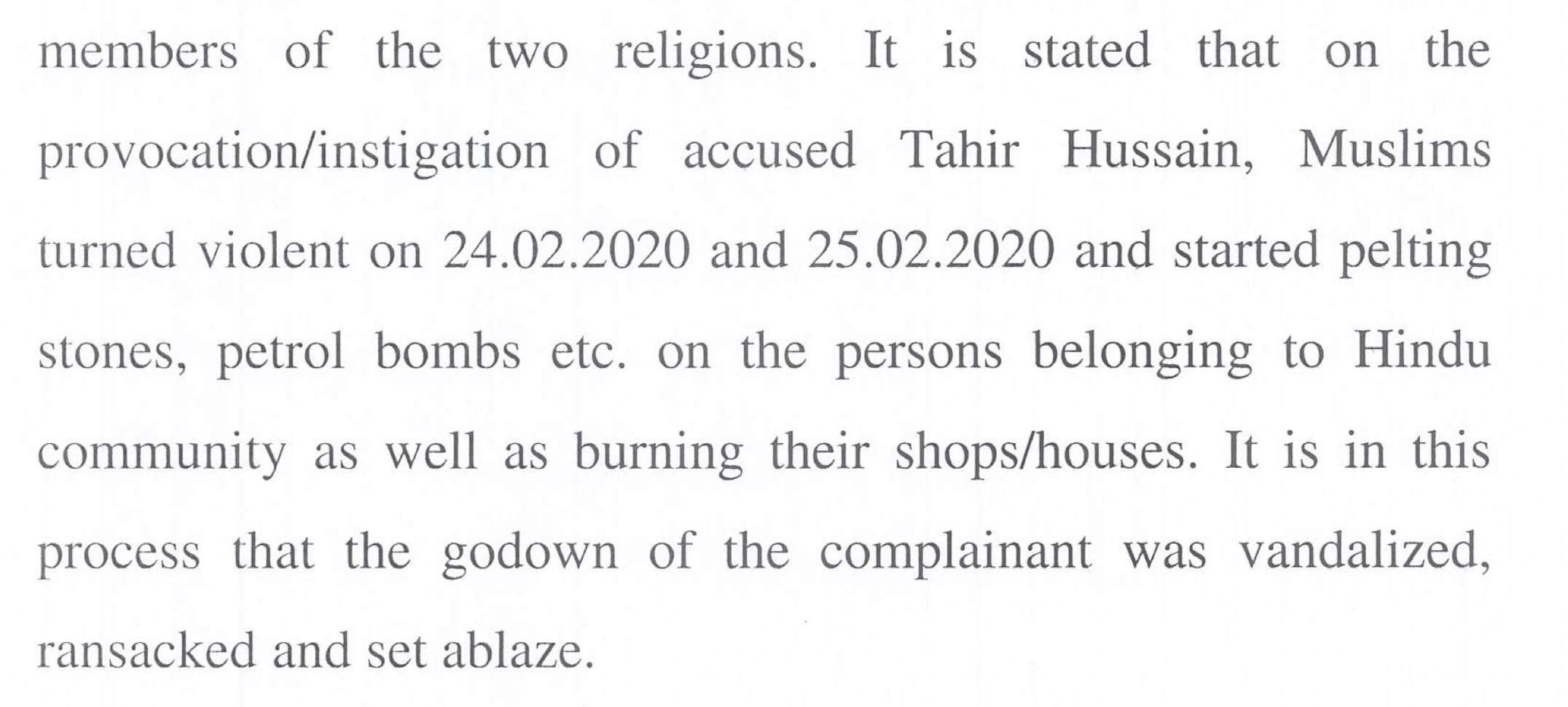
The prosecution had made a case arguing that Tahir Hussain was leading the riotous mob not only from his building but also from the Mosque near Chand Bagh pulia on the 24th and 25th of February. He had further provoked Muslims against the Hindus to create enmity between the two religions. It is on the provocation of Tahir Hussain that Muslims became violent against the Hindu community and it was in that process that the godown was burnt down.
Excerpt from the court document

The prosecution detailed several other facts to prove that Tahir Hussain was an active part of the conspiracy as well as the riots. For example, the prosecution mentioned that Tahir Hussain had gotten his pistol released from the police station on the 22nd of February and had been unable to provide a satisfactory explanation as to why he got it released right before the riots broke out. 64 live cartridges and 22 empty cartridges out of 100 were found by the police. Tahir Hussain could not account for the remaining 14 live and 22 empty cartridges. In fact, on the intervening night of the 24th and 25th, Tahir Hussain had shifted his family from the building used as a launchpad against Hindus to his parental home. However, he had remained in the Karawal Nagar house so he can “lead Muslim rioters against Hindus”.

It was further found that Muslim rioters, mainly Tanvir and Gulfam, had opened fire from the terrace of Tahir Hussain’s building on the 25th of February. The firing was done against Hindus and in the process, they caused a gunshot injury to Hindu man Ajay Goswami. In this case, a separate FIR was registered and is being investigated as well.

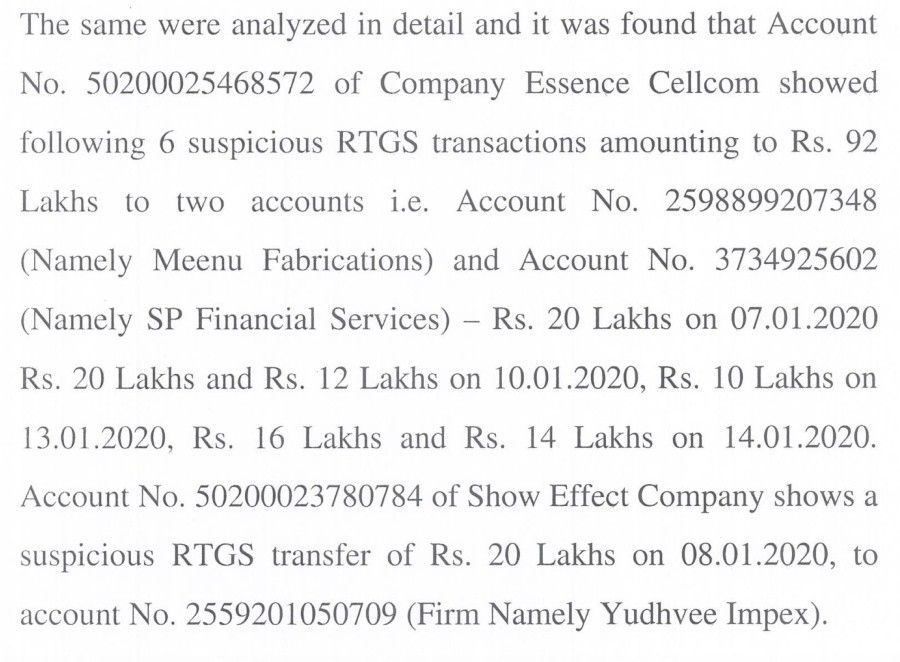
The prosecution also detailed the entire case of the conspiracy to cause violence while the then US President Donald Trump was visiting Delhi. It was detailed how Tahir Hussain was in touch with other conspirators like Umar Khalid and Khalid Saifi. Other than the meeting on the 8th of January between the three, where “big action” was decided upon, the bank account details of the two companies of Tahir Hussain were also analysed. In one of the accounts, there were 6 suspicious RTGS transfers which could involve the planning of the riots.
Excerpt from the court document

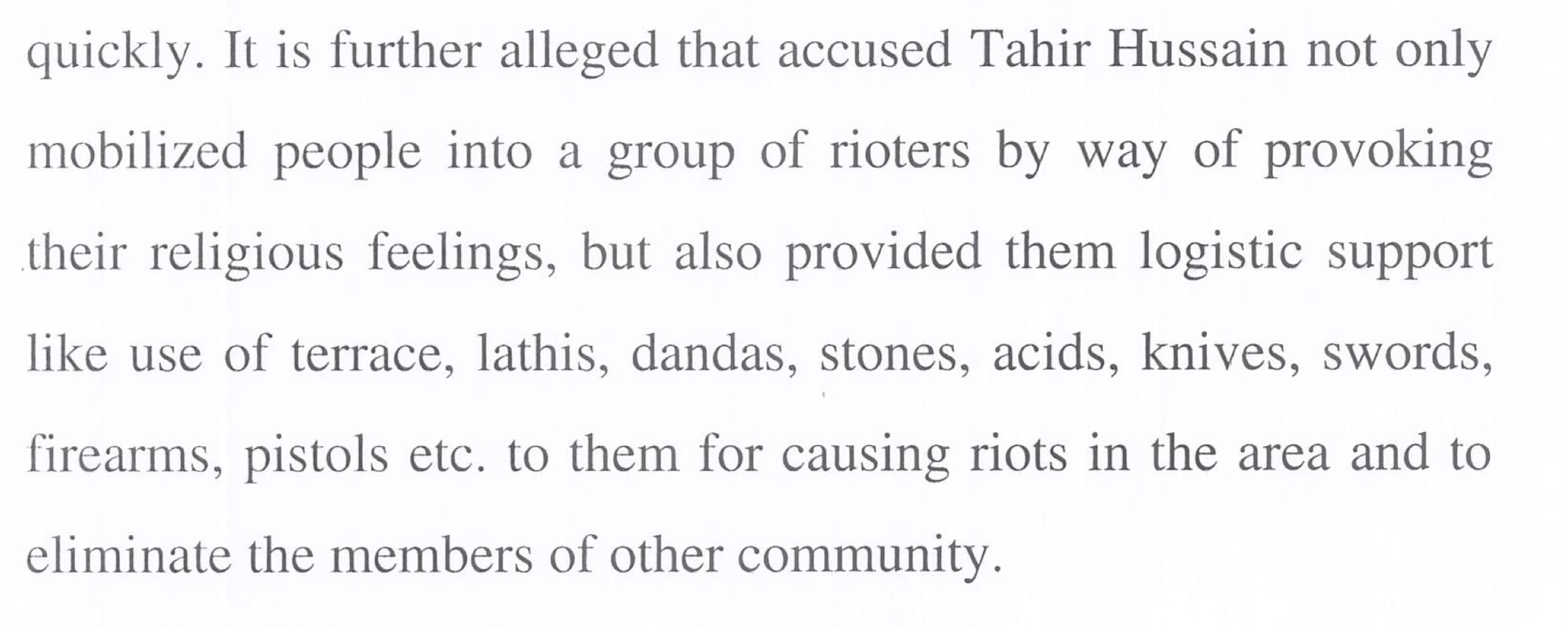
In essence, the prosecution has said that Tahir Hussain, in furtherance of the larger conspiracy, was a local key player in organising riots in Chand Bagh. It was further established that he did not just instigate Muslims but also gave them logistical support to eliminate Hindus.
Excerpt from the court document

The court and its observations while framing charges against Tahir Hussain

The court, while framing charges clearly said that the LPP (Lead Public Prosecutor) has clearly detailed how sticks, bricks, petrol bombs etc were collected over a period of time clearly indicating that the organisation of the riots was under process since much before the 24th of February. The prosecution also showed how Tahir Hussain was not just instigating Muslims but was leading the Muslim mob against Hindus from the front.

The court said that the defence counsel for Shoaib, Gulfam, Javed and Firoz had argued that the statement of witnesses had been recorded after considerable delay and the offence had not been made out against the accused. The defence also raised points to try and prove that the identification of the rioters is doubtful because due process was not followed. They also claimed that there was no incriminating material against the accused.

The council for accused Anas also submitted in similar lines, saying that only one witness had identified him and that the statement of two police witnesses had been recorded after a delay.

The council for Tahir Hussain had said that no incriminating evidence had been found from the building against him and that all seizures had been made in a separate case, based on which, the culpability of Hussain cannot be made out. The council also said that no case of conspiracy had been made out. That according to the prosecution itself, this is a case of a larger conspiracy and that in this case, he could not be implicated again since he was already chargesheeted in a separate FIR (59/2020).

After perusing the arguments put forth by all parties, the court said that it was clear that all the accused, including Tahir Hussain, were a part of the unlawful assembly on 25th February which set ablaze Harsh Trading and other properties belonging to the Hindu community.

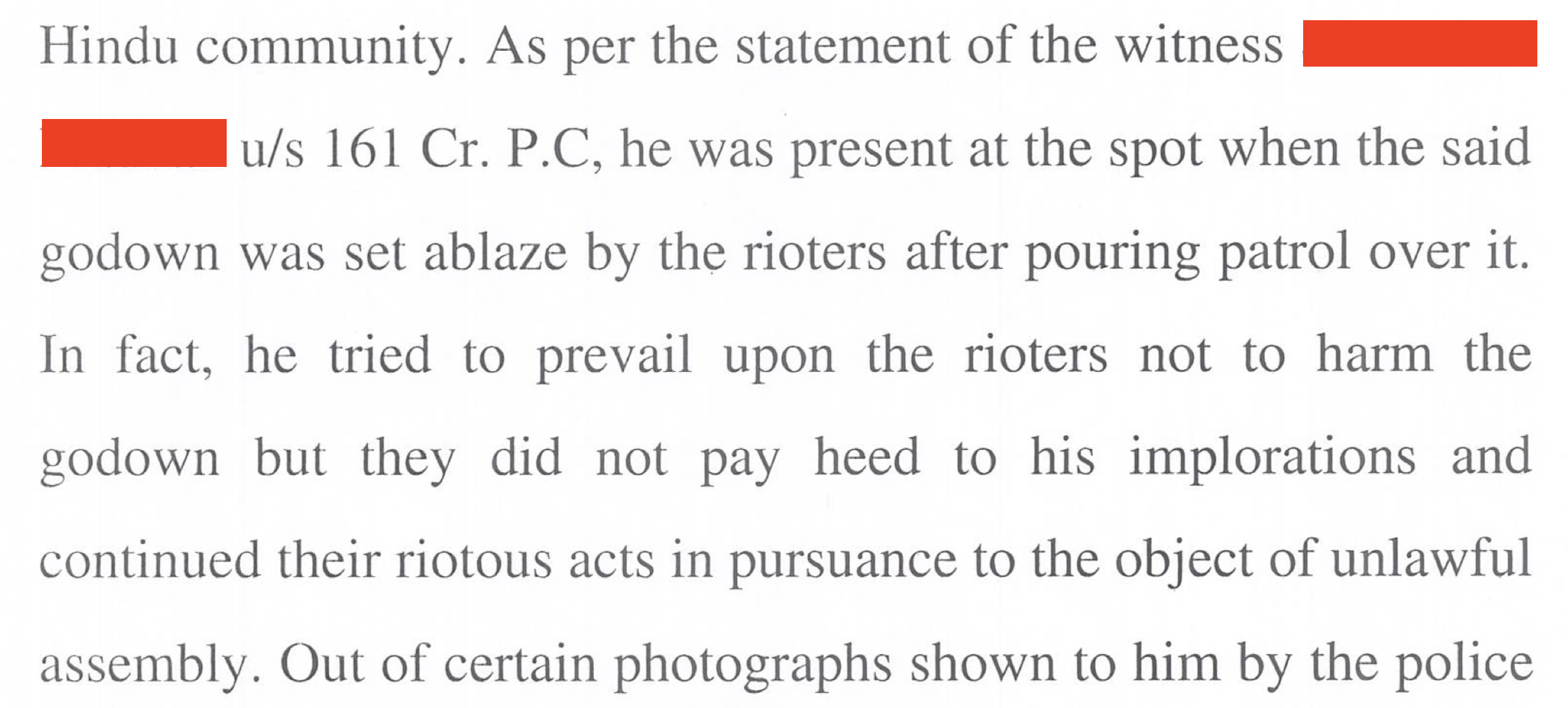
The court observed that the main witness was present when the rioting was taking place and though he had tried to stop the accused, they carried on pouring petrol and setting properties of Hindus ablaze. Further, he had identified the said accused.
Excerpt from the court document

The Court also observed that another witness had identified the rioters while they were setting the godown ablaze. The two police witnesses identified the accused as part of the unlawful assembly on the 25th of February and also said that they were a part of the riotous mob on the 24th that was stone-pelting at Bhajanpura chowk.

The court observed that apart from two police witnesses, there are two other witnesses and one of them actually belongs to the Muslim community. Even though the statements were recorded a month later, there is no reason to believe that these witnesses were planted or inauthentic and had not seen the rioters.
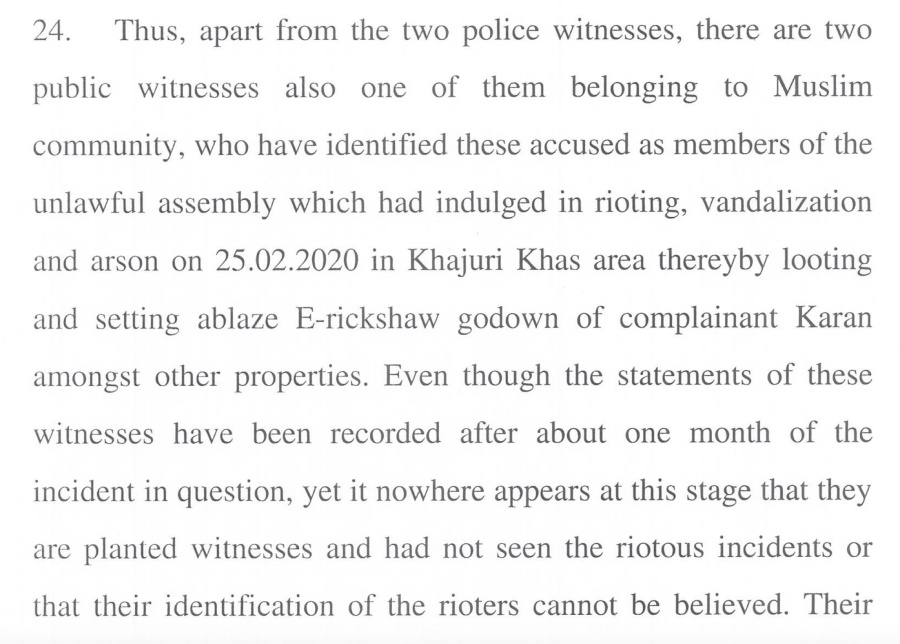
Excerpt from the court document

The court in detail went into the trouble that the Delhi Police may have faced. Though the areas of the riots come under the jurisdiction, the police were inundated with calls from witnesses and controlling the violence was a herculean task. Due to the atmosphere of fear created by the rioters, local witnesses were also not coming forward to aid in the investigation. The court further said that all of these details, including the lockdown that was imposed by the central government due to COVID, slowed down the pace of the investigation and therefore, the delay in the recording of the statement is explainable. Given that the witnesses had gone through cross-examination, it would be a “travesty of justice to disbelieve their version”.

The court also commented on the procedural question raised by the defence. It said that the police showed the witnesses multiple photographs from which the accused was identified and therefore, there is no procedural lapse as far as that is concerned.
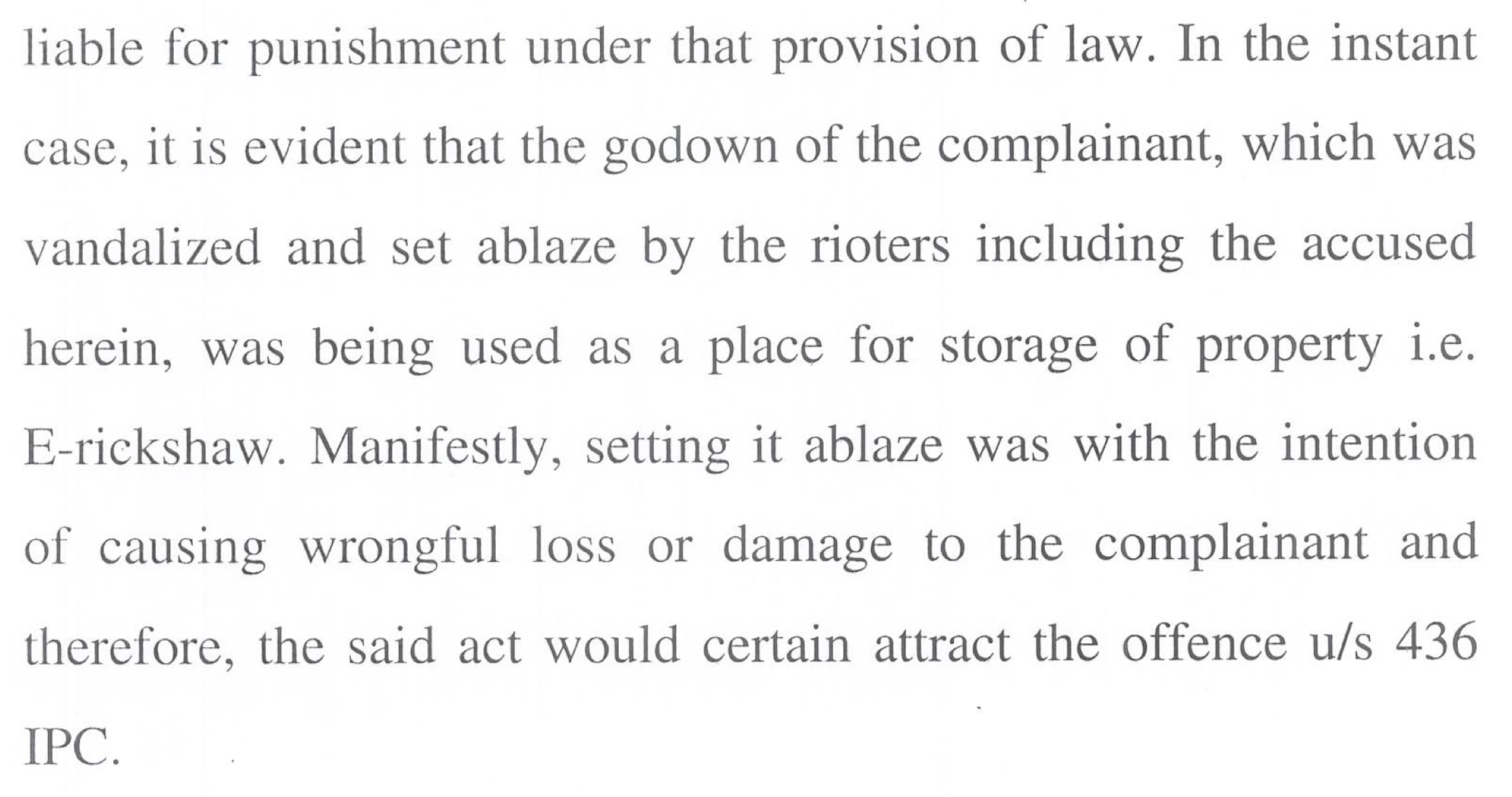
Excerpt from the court document

The court said that it is evident that the accused were present when the godown of the complainant was set ablaze and therefore, offence under section 436 is made out.

In the case of Tahir Hussain, the court threw out the contentions of the defence summarily.

One of the contentions of the defence was that according to the prosecution, the Delhi Riots were caused by furthering one single larger conspiracy (FIR 59/2020), therefore, there is no ground to prosecute Tahir Hussain in a separate case of conspiracy. The court said that FIR 59 deals with the top conspirators and has no specifics about local vandalisation, murder etc. The court observed that the contents of the larger conspiracy and the smaller, local conspiracy were not the same.
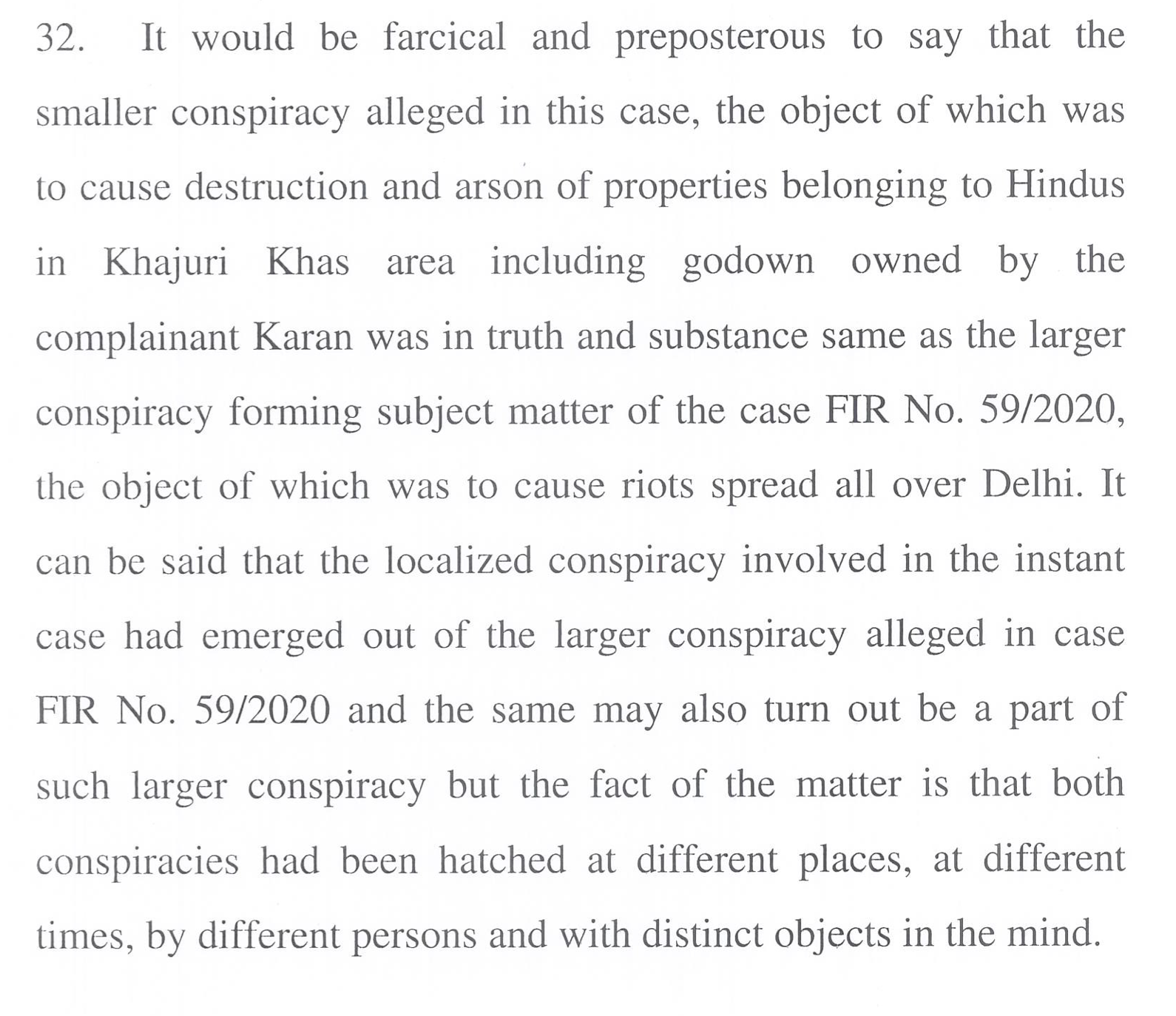
Excerpt from the court document

The court reiterated that the FIR 59/2020 deals with the larger conspiracy by the top conspirators including Tahir Hussain, however, it does not include the exact details of where the riots would be done, the logistics and mobilisation on the local level. The current chargesheet, however, deals with a local conspiracy where there was an agreement between local rioters and one of the main conspirators and it, therefore, be construed as a separate conspiracy.

After establishing that the main conspiracy and the local conspiracy are separate, the court proceeded to establish if a case of conspiracy has been made out against Tahir Hussain in the current case.

In this regard, the court relied on 7 points that had emerged from the investigation.

  1. Tahir Hussain got his gun released along with 100 cartridges on 22nd February 2022.
  2. He has failed to give a satisfactory response as to why he had got the gun released, right before the commencement of the Delhi riots.
  3. There is no account of 14 live cartridges and 22 fired cartridges.
  4. He had shifted his family to his parental house on the intervening night of 23rd and 24th while he himself stayed back to lead the riotous mob.
  5. There are video footages where it can be seen that a mob was pelting stones and petrol bombs from the roof of the Tahir Hussain building at the Hindu community.
  6. Bricks, petrol bombs etc were recovered from the roof of Tahir Hussain’s building.
  7. There were 6 suspicious RTGS transactions as detailed by the prosecution.

Based on these facts, the court categorically said that prima facie it seems that the riotous incident in question was committed in pursuance of a well-hatched conspiracy and after elaborate preparations. The facts nowhere indicate that it was a spontaneous act but clearly reveal that there was an agreement between the accused to commit vandalisation and arson of properties belonging to the Hindu community from the building of Tahir Hussain.
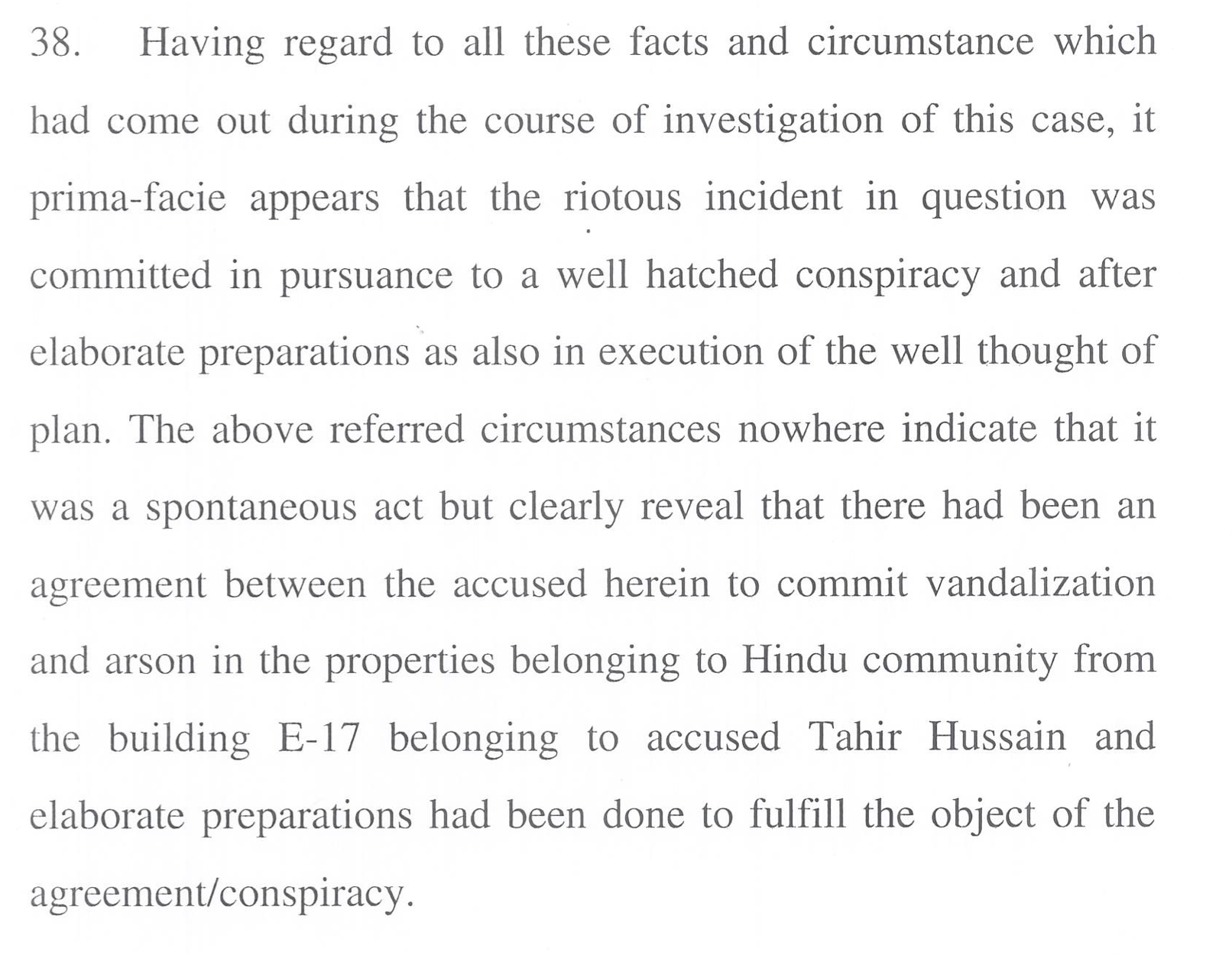
Excerpt from the court document

Tahir Hussain had also argued that since the material was seized in a separate case, the same cannot be used in the present case to incriminate Tahir Hussain. This argument was thrown out by the court saying that the material can obviously be seized only once but can be used in different cases.

The court further said that Tahir Hussain can, by no means, be called only a conspirator or mute spectator. He had taken an active part in the riots as the witness statements clearly indicate that he instigated the Muslim mob to “teach Kafirs a lesson”.
Excerpt from the court document

The court concluded its judgement saying, “Thus, in the light of the above discussion, charges for the offence of conspiracy u/s 1.20B IPC is liable to be framed against all the accused. Further charges u/s 147/148/427/435/436/395 IPC r/w Section 149 IPC also are liable to be framed against all the accused. Additional charges u/s 109/114 IPC are also liable to be framed against accused Tahir Hussain”.
Delhi: AAP MLA Mukesh Ahlawat detained for obstructing anti-encroachment drive in Mangolpuri

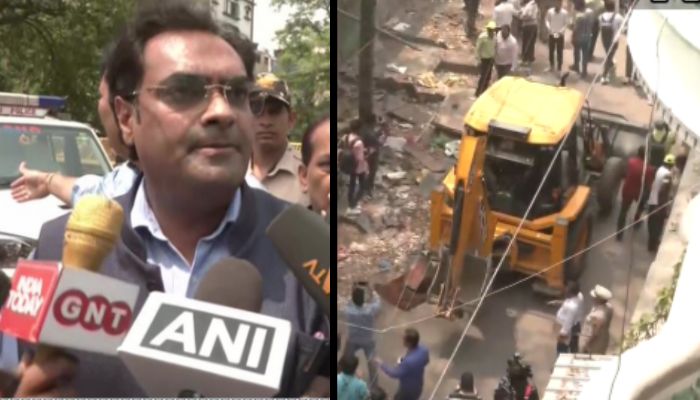
On Tuesday (May 10), the Delhi police detained Aam Aadmi Party (AAP) MLA Mukesh Ahlawat for obstructing the anti-encroachment drive in Mangolpuri in North-west Delhi. The development was confirmed to news agency ANI by DCP (Outer district) Sammer Sharma.

While speaking about the matter, he informed, “The anti-encroachment drive is going on, local MLA (AAP MLA Mukesh Ahlawat) came here & said what’s the need for using JCBs. To prevent the situation from getting jeopardised, we have detained the MLA.”

It must be mentioned that Mukesh Ahlawat is a legislator from the Sultanpur Majra constituency in North-west Delhi.

As per the schedule, the North Delhi Municipal Corporation conducted the demolition drive in the Mangolpuri area on Tuesday (May 10) to remove illegal constructions and encroachments. In a bid to thwart the drive, AAP MLA Mukesh Ahlawat had reached the spot.

While speaking to the media, he remarked, “When people have vacated the area, why are they (North MCD) creating inconvenience to them by using Bulldozers by surrounding them. We’re against it & it should be stopped. They need to prove first that there’s encroachment.”

After being detained by Delhi police, Ahlawat spoke to Times Now. He claimed, “The residents of the area (Mangolpuri) were notified about the anti-encroachment drive 4 days ago. They themselves had removed all illegal constructions. As such, there is no encroachment. Even then, they (BJP) took the bulldozers in the area to create panic. This is not the way to go about things.”

AAP had thwarted the anti-encroachment drive in Shaheen Bagh

Earlier on Monday (May 9), Aam Aadmi Party leader Majid Khan had reached Shaheen Bagh and demonstrated against the anti-encroachment drive. He was also joined by the party’s legislator from the Okhla constituency, Amanatullah Khan.

While speaking to Times Now, Majid Khan claimed that there was no encroachment in the neighbourhood. “There is no encroachment here. We are here to make sure injustice is not done to anyone,” he was heard as saying.

Owing to protests by unruly locals, AAP leaders and the Congress party, the demolition drive had to be aborted in the middle.

Santoor maestro Pandit Shiv Kumar Sharma passes away

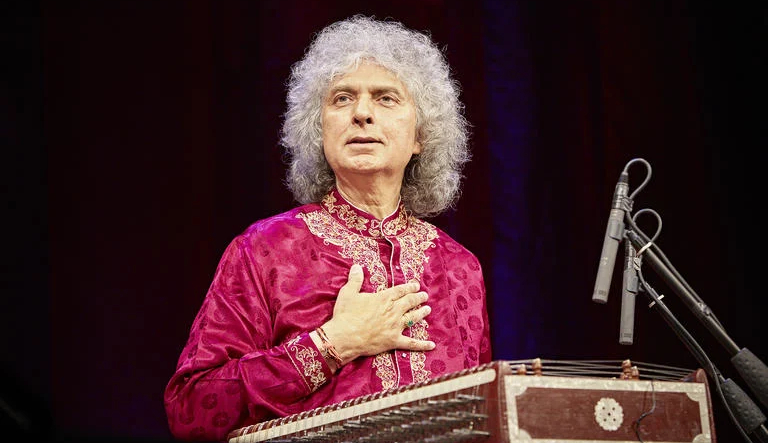
The legendary Santoor player, musician Pandit Shiv Kumar Sharma passed away earlier today at 84. Born on 13 January 1938 in Jammu & Kashmir, he started learning vocals and tabla at age 5. He started learning Santoor at age 13.

He was suffering from kidney related issues since past six months and was on dialysis. He passed away due to cardiac arrest.

Pandit Shiv Kumar Sharma was awarded Sangeet Natak Akademi Award in 1986, the Padma Shri in 1991 and the Padma Vibhushan in 2001.

He was scheduled to give a jugalbandi performance in Bhopal live concert on May 15, 2022 along with flute legend Hariprasad Chaurasia under ‘Mahima Samaroh’. Shiv-Hari duo have given soulful music to films like Silsila, Lamhe and Chandni amongst others.

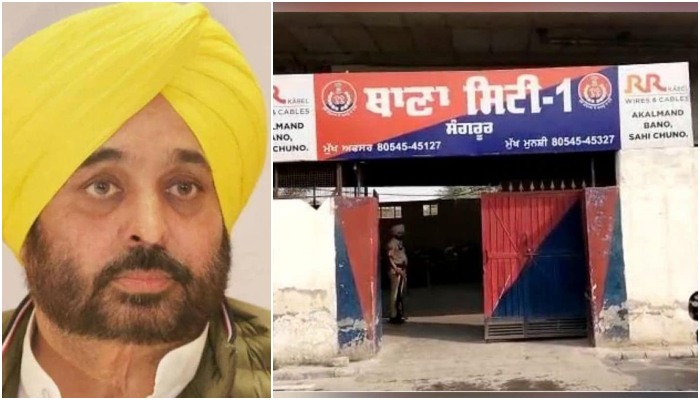
Punjab Police books SP Karanveer Singh, ASI Davinder Singh for taking a bribe of Rs 3 lakh in CM Mann’s Sangrur

0

On Tuesday, the Punjab Police registered an FIR against SP Sangrur Karanveer Singh for allegedly demanding and accepting a bribe of Rs 3 lakh in a case handled by the officer. The Police also arrested ASI Davinder Singh for transferring the bribe money from the complainant to the Punjab Police SP.

According to the reports, SP Singh was handling the case of Hasandeep Singh who was accused of a criminal case. The matter came to light when Hasandeep Singh complained to Sangrur SSP Mandeep Singh Sidhu that SP Singh had demanded a bribe of Rs 3.5 lakh on April 2 to settle the case. Later, ASI Davinder Singh, the reader in the SP office, settled the case for Rs 3 lakh.

Hasandeep Singh gave the bribe money to ASI Davinder Singh, who then passed it to the SP in his office, reports said. Sangrur SSP added that SP Karanveer Singh absconded after the arrest of his aide ASI Davinder Singh on May 10. While the Police have booked the duo for corruption under the relevant sections of the Prevention of Corruption Act, 2018, they have launched a massive manhunt to nab the accused SP in the case.

SP Karanveer Singh who has departed secretly is posted in the Sangrur district’s Bureau of Investigation. He leads the separate wing that has been created to investigate crimes. Interestingly, Singh is posted in Sangrur, the home district of Punjab CM Bhagwant Mann, who repeatedly asks people not to tolerate corruption. The CM also launched an anti-corruption helpline yesterday to curb the menace of corruption at the government offices. “Corruption is the biggest challenge in front of the country and Punjab. The AAP, after coming to power, started an anti-corruption helpline to curb the menace in government offices. It is turning into a success”, he said.

SSP Sidhu stated that the Chief Minister after the recent incident has reiterated his order not to tolerate corruption and has warned that whoever indulges in corruption will not be spared. Reportedly, the ASI who has been arrested by the Punjab Police is a controversial officer. Earlier, in May last year, he was arrested by the NIA for his alleged links to terrorist organizations. The Union government had also issued an order seeking his dismissal from the office.

Also, the NIA had confirmed that it had adequate evidence against the rogue cop and that he was on the payroll of the Islamic terror organization. Singh was involved in multiple operations of trapping and killing militants or forcing their arrest or surrender.

In the current case, the Sangrur Police has arrested ASI Singh and has launched a special investigation team to search and arrest accused SP Karanveer Singh. Investigations in the case are underway.

Mohali blast: RPG attack on Punjab Police Intelligence HQ, CM calls urgent meeting – What we know so far

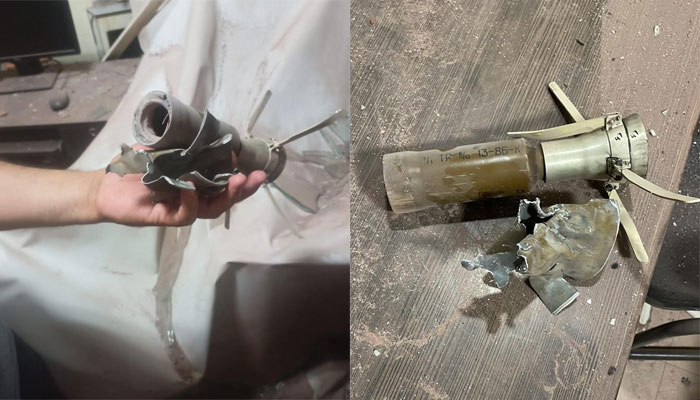
On May 9, Punjab Police Intelligence Headquarters located in Mohali was attacked using a Rocket Propelled Grenade (RPG). The warhead was launched at the HQ just before 8 PM by unidentified persons. The officials said that the projectile penetrated the windows but it did not explode.

Mohali Superintendent of Police (HQ) Ravinder Pal Singh called it a ‘minor blast’ and said, “The attack happened from outside the building. It has been done with rocket-type fire. No casualty or loss happened. Our senior officers and FSL team are investigating it.”

Notably, when asked if it was a terror attack, SP Singh said, “It can’t be ignored. We are investigating it.” As RPG was used in the attack, the possibility of a terror attack is higher as such ammunition is generally used in terror attacks.

The guards positioned at the gate of the HQ reportedly heard two noises. The first was of the firing, and the second was of the projectile hitting the building. Initial investigation revealed there might be two persons involved who came in a Swift car. The building does not have any CCTV cameras, and the Police are scanning the CCTV footage from nearby areas.

After assessing the ammunition head, it was reported to be the RPG-22 codenamed ‘Netto’. It is a one-shot disposable Soviet anti-tank rocket launcher. It propels a 72.5mm fin-stabilised projectile. When required, it can be prepared within 10 seconds. The ammunition is capable of penetrating 1.2 metres of brick, 400mm of armour or 1 metre of reinforced concrete.

It is notable that in the last few months, the Punjab Police and security agencies have recovered explosives in the state. The Khalistani elements are re-emerging in the state. Some experts believe this attack could be a test run for a more serious attack.

Punjab CM called for a meeting over Mohali blast

On May 10, Chief Minister of Punjab, Bhagwant Mann called for an urgent meeting to discuss the attack in Mohali. In a Tweet, he said, “Police are investigating the blast in Mohali. Whoever tried to spoil the atmosphere of our Punjab will not be spared.”

Leaders expressed concerns over Law and Order

Sukhbir Singh Badal, leader of Shiromani Akali Dal in Punjab, said in a Tweet, “Deeply shocked at the blast at Punjab Police’s Intelligence Bureau HQs, Mohali, exposing serious security lapses and highlighting once again the deteriorating law & order situation in Punjab. Thorough probe required to expose & punish those responsible.”

Former CM Amarinder Singh also shared his concern over the deteriorating law & order situation in Punjab. He said, “Shocked to hear about the blast at the @PunjabPoliceInd Intelligence headquarter in Mohali. Thankfully nobody was hurt. This brazen attack on our police force is deeply concerning, and I urge CM @BhagwantMann to ensure perpetrators are brought to justice at the earliest.”

The investigation into the case is underway.

Photos that dishonoured COVID deaths, shamed India, by photographer who was murdered by Taliban, win Pulitzer

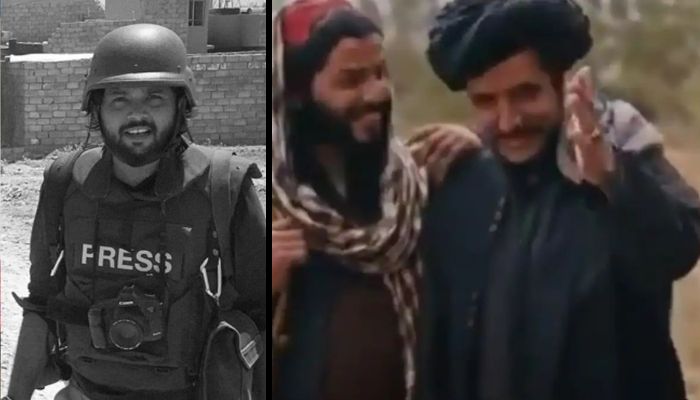
On Monday (April 9), deceased Reuters photojournalist Danish Siddiqui was awarded the Pulitzer Prize for the second time. He was posthumously felicitated with the award for ‘Feature Photography’ alongside 3 others, namely, Adnan Abidi, Sanna Irshad Mattoo, and Amit Dave.

Danish Siddiqui mocked India’s Covid-19 deaths through his pictures

During the second wave of the Covid-19 pandemic, Danish Siddiqui opportunistically minted the misery of people for his own benefit. He had posted multiple images of burning pyres of deceased Covid-19 patients without any regard for the privacy or sentiments of the family members of the deceased.

In a tweet on April 22 last year, the Reuters photojournalist wrote, “As India posted world record of COVID cases funeral pyres of people, who died due to the coronavirus disease were pictured at a crematorium ground in New Delhi, April 22, 2021.”

Siddiqui took pride in his insensitive coverage of the pandemic, which eventually won him the Pulitzer Prize. His pictures were weaponised to negate the all-out efforts made by the Indian government and countless frontline workers to contain the outbreak of the Wuhan Coronavirus.

How Reuters had cashed on burning Hindus, denying them dignity even in death

People all over the world died, and are still dying in large numbers since the COVID-19 pandemic began in 2020. But the vulturism and morbid obsession over their funeral pyres is somehow seen only in India, for Western publications that could not really care to accord dignity to Indians, especially, to Hindus.

While many complimented Danish for his heroism, Reuters milked the images of Hindus being cremated to the hilt. This morbid obsession that Reuters seems to harbour of watching Hindus burn was not related to telling people about the COVID-19 deluge.

To write about the COVID-19 deluge and tell people just how alarming the situation was, one did not need to splash images of burning Hindus on their front page, all over their website and in multiple articles published. But Reuters would rather splash images of crematoriums, denying Hindus dignity in death.

Danish Siddiqui was brutally killed by the Taliban

Danish Siddiqui was killed by the Taliban on July 16, 2021, during an assignment in the war-torn country of Afghanistan. He had travelled with the Afghan National Forces to the Spin Boldak region to cover the clashes between Afghan forces and the Islamists.

A report by PTI said that the Taliban attacked the Afghan forces when they reached a customs post. The Afghan forces split up, leaving Siddiqui with three other Afghan troops. During this attack, Siddiqui and Afghan forces were hit by shrapnel, who escaped to a local mosque where they received first aid.

Soon, the Taliban got to know that the Indian journalist was taking refuge inside the mosque. The local investigation suggested that the Taliban attacked the mosque only because of Siddiqui’s presence there.

“Siddiqui was alive when the Taliban captured him. The Taliban verified Siddiqui’s identity and then executed him, as well as those with him. The commander and the remainder of his team died as they tried to rescue him,” a report in the Washington Examiner said.

It was also reported that the Islamists had mutilated his body simply because he was an Indian. Afghan Army Commander Bilal Ahmed had disclosed that the Taliban first shot Danish and then ran a car over him.

The Taliban had mowed his lifeless body with the car, displaying their hatred for Indians. The revelations by the Afghan commander came to the fore when certain sections of the “liberal-secular” media in the country were absolving the crimes of the terrorist group by claiming that the Muslim photojournalist was killed during a crossfire.

Jammu & Kashmir Waqf board chairperson warns of ‘bulldozer action’ on ‘encroachers’

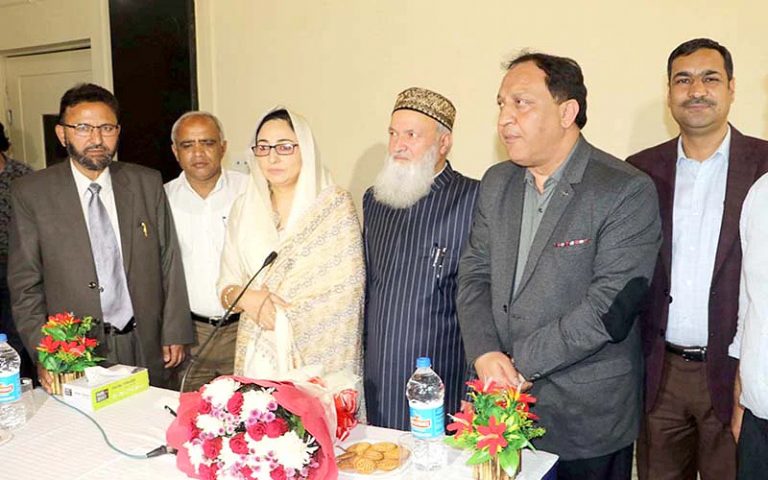
Dr Darakhshan Andrabi, Chairperson of the Jammu and Kashmir Waqf Board, cautioned threatened ‘encroachers’ of Waqf land and assets that a demolition campaign will be launched shortly across the Union Territory to restore the ownership of the so-called encroached properties to Waqf.

“The encroachers of Waqf land and assets will face bulldozers soon,” Dr Andrai stated during a one-day Waqf Convention in Kashmir. “This is a warning to all encroachers served through media that they should come to us and surrender their right of illegal occupation or otherwise they will have to face the wrath of bulldozers,” she further added.

Dr Andrabi claimed in her speech that serving in Waqf implies serving Allah, and that openness, devotion, and honesty must rule day-to-day operations.

What is Waqf?

It is notable that Waqf is the permanent donation of any movable or immovable property by a Muslim to any purpose recognised as pious, religious, or charitable under Muslim law. This means that any property possessed by a user can be registered with the Board and designated as a ‘waqf,’ which will continue to exist even if the original owner dies. ‘Once a waqf, always a waqf, the Supreme Court had ruled.

This essentially means that an owner of the property, who uses his property for religious practice of Islam, can get it registered with the waqf. Example, if your Muslim neighbour who offers namaz at his home, may get his house registered as masjid with the waqf and the property now becomes waqf property and you will be living next to a mosque.

After the Indian Armed Forces and Indian Railways, the Waqf is third largest owner of properties in India.

The Waqf Act

In India, the Waqf Act serves as required constitutional legislation that defines and governs Waqfs. The first of its sort was the Waqf Act of 1954. The Central Waqf Council was established by the Act, although it was amended several times (1959, 1964, 1969, and 1984) due to several complications.

Finally, on November 22, 1995, the Waqf Act of 1995 was adopted and implemented. The Central Waqf Council and the State Waqf Board were constituted by this Act. These two entities, together with the Chief Executive Officer, who reports to the board, are in charge of the administration and oversight of Auqaf (Plural of Waqf).

Dispute around the Waqf Act

On April 20, 2022, the Delhi High Court issued a notice in a case challenging the constitutional validity of the Waqf Act 1995. Ashwini Upadhyay, an advocate, filed the petition. In his petition, Ashwini Upadhyay said that the Waqf Act is antagonistic to secularism in India.

In his petition, Ashwini Kumar Upadhyay stated that if the disputed Act is to defend the rights granted in Articles 29-30, it must include all minorities, including followers of Jainism, Buddhism, Sikhism, Judaism, Bahaism, Zoroastrianism, Christianity, and not only Muslims.

Ashwini Kumar Upadhyay emphasised how the government pays the Waqf Board but does not collect any revenue, and how it gets money from Hindu temples but does not spend it on them.

The petition further requests that the Central Government or the Law Commission of India create a “Uniform Code for Trust-Trustees and Charities-Charitable Institutions” in the spirit of Articles 14 and 15 and make it available for public debate and discussion.

Previously, the Supreme Court refused to consider a petition seeking directives from the national government or the Indian Law Commission to create the aforementioned Uniform Code.

Tabrez Khan, the main accused of Jahangirpuri violence arrested: Here is how he was shown as the media-favourite, poster boy of communal harmony

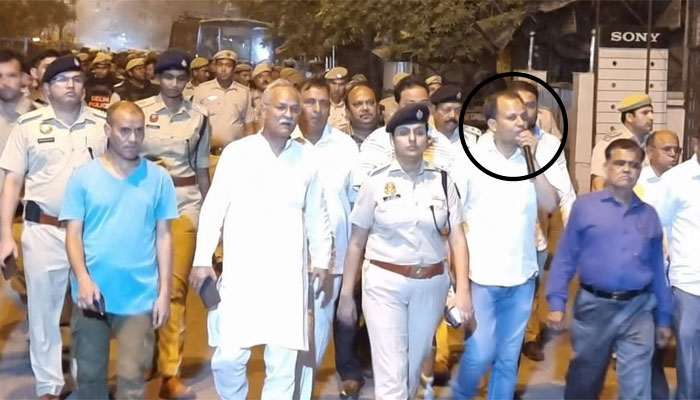
On May 7, Delhi Police arrested Tabrez Khan for instigating rioters to attack the Shobha Yatra on Hanuman Jayanti in Delhi’s Jahangirpuri area. The Police arrested three more accused on the day in the case, and Tabrez was one of them. The other two were Zaheer Khan and Anabul alias Sheikh. The arrest of Tabrez as an accused for instigating rioters serves as a wake-up call for the investigating agencies and media houses.

While Tabrez was busy organizing protests and communal violence in the background, he remained in the limelight as a ‘peace-loving’ person who was part of the Aman Committee formed after the Jahangirpuri violence. He was seen sitting next to Deputy Commissioner of Police (DCP) Usha Rangrani during the meeting of the peace committee. He also organized Tiranga Yatra to promote peace and harmony in Jahangirpuri after the riots that were not only attended by higher officials of the Delhi Police but were widely covered by the mainstream media.

Twitter user The Hawk Eye dug up how the media had made Tabrez a poster boy of communal harmony even during anti-CAA protests and the Covid pandemic. According to multiple reports, he was allegedly named in Delhi Riots as well. Tabrez had joined AIMIM a few years back but shifted to Congress later. Currently, he is preparing to contest Delhi Municipal Corporation Elections.

Hawk-Eye wrote, “Tabrez Khan, who was actively participating in DP’s Aman Committee sitting next to cops, was arrested in the Jahagirpuri riots case as one of the conspirators by Crime Branch. He was an organizer of ‘Tiranga harmony Yatra’ for peace calls. Interestingly he is the same guy who organized Shaheen Bagh protest by arranging logistics and assembling women at the protest site.”

Tabrez was made ‘local representative’ of the Muslim community

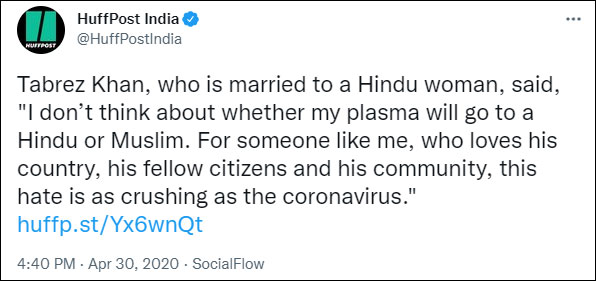
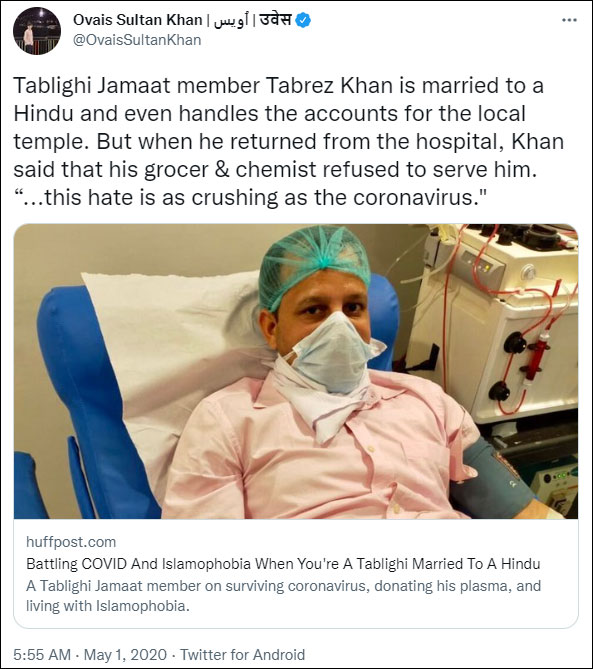
According to HuffPost, Tabrez Khan is a member of the ultra-orthodox Tablighi Jamaat sect. He was active during anti-CAA protests. During that time, India was looking at the first wave of the Covid-19 pandemic, and he became one of the victims of the virus at Shaheen Bagh. Media outlets had covered him contracting the disease.

The Print had reported that Tabrez Khan had allegedly organized anti-CAA protests. He had contracted the virus and was admitted to LNJP Hospital for treatment. His sister, who returned from Saudi Arabia and his mother were also tested positive for the virus. Tabrez had gone to the protest site after meeting his sister more than once. As a result, the protests were called off in light of him getting the infection.

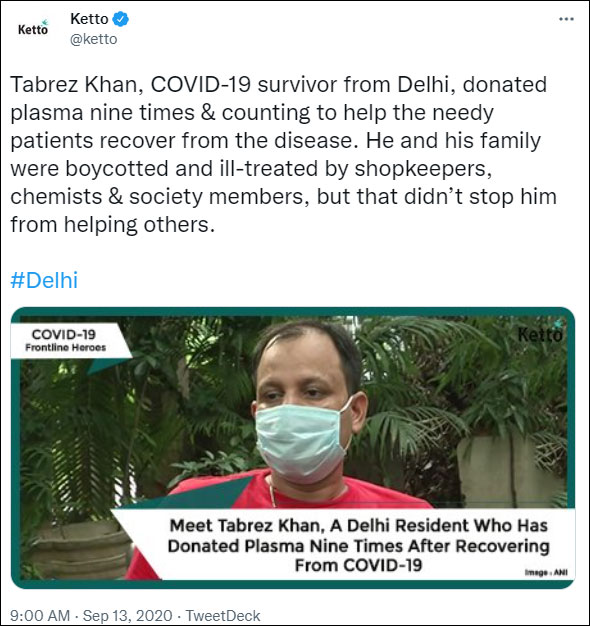
After contracting the virus, it looks like he took on the mission to prove himself a good samaritan. Of course, the intentions might have been linked to his desire to become a politician and representative of the community in the area. After contracting Covid-19, he got multiple chances to stay in the limelight. The easiest way was to donate plasma. Unlike blood donation, which requires at least an 8-weeks gap between two donations, plasma can be donated once every 15 days.

During Covid, the demand for plasma from a Covid patient who had recovered from the disease at least two weeks ago had increased as it was seen as a treatment for the critical patients. Tabrez took the chance and started donating plasma often. He was covered multiple times by media houses for the “good deed” he was doing.

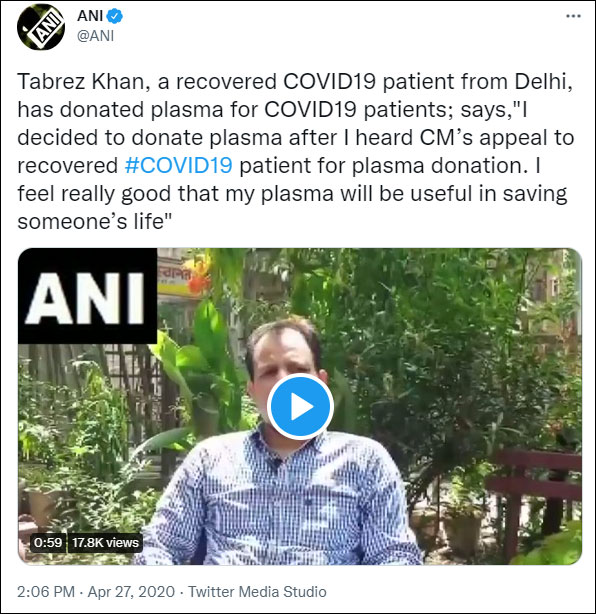
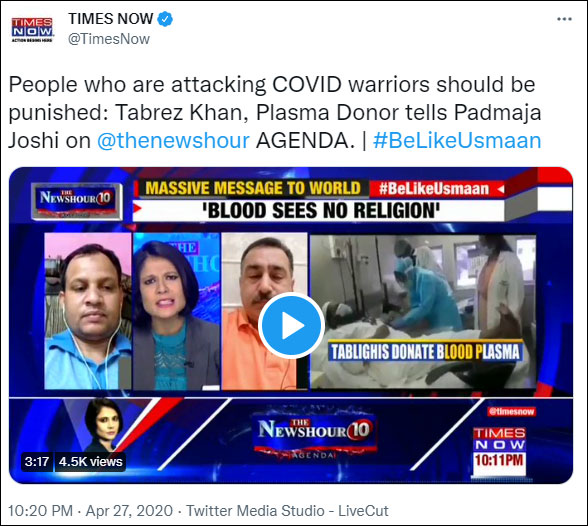
In April 2020, ANI quoted him saying, “I decided to donate plasma after I heard CM’s appeal to recovered #COVID19 patients for plasma donation. I feel really good that my plasma will be useful in saving someone’s life.”

Source: Twitter

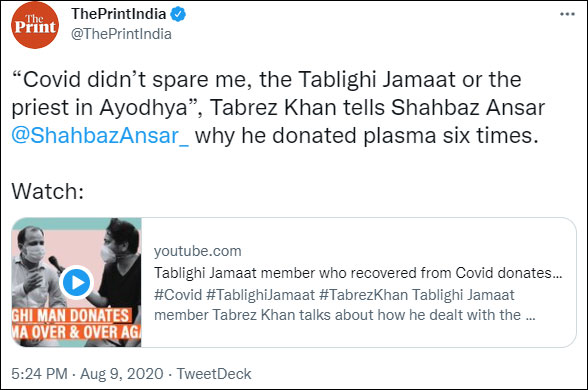
In a video interview with The Print, he said, “Covid didn’t spare me, the Tablighi Jamaat or the priest in Ayodhya.”

Source: Twitter

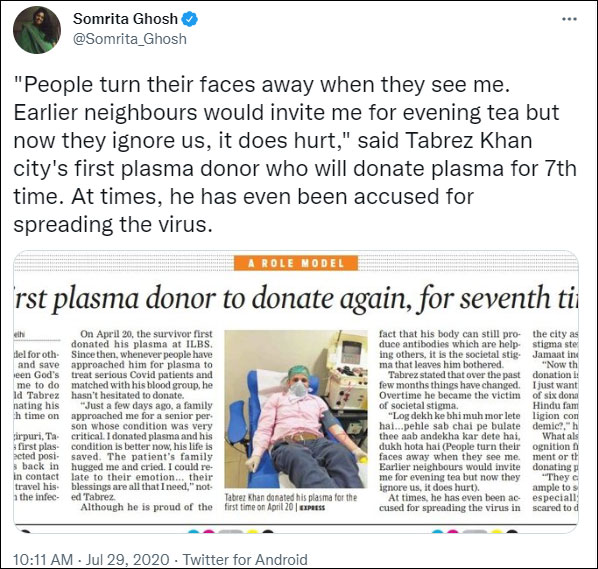
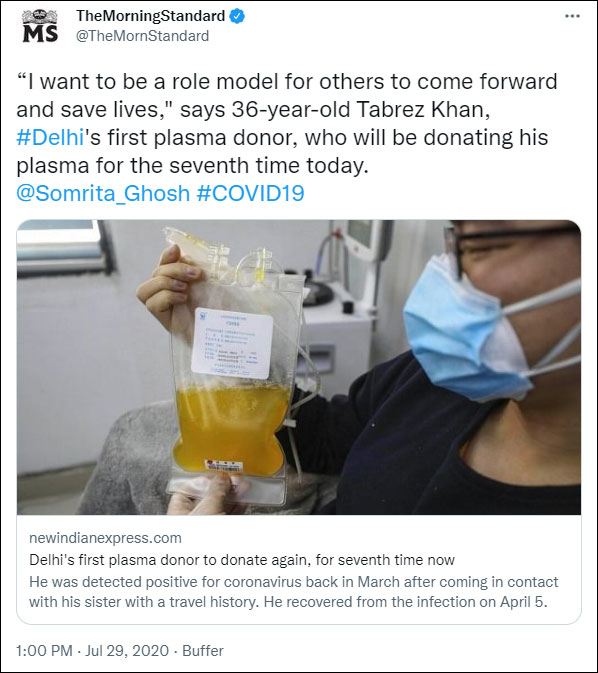
TOI journalist Somrita Ghosh quoted him saying, “People turn their faces away when they see me. Earlier neighbours would invite me for evening tea, but now they ignore us, it does hurt.” When she published the tweet, Tabrez had already donated plasma seven times.

Source: Twitter

There were many other tweets praising him for his deeds that can be seen here.

Source: Twitter
Source: Twitter
Source: Twitter
Source: Twitter
Source: Twitter
Source: Twitter

Tabrez had become a hero at that time. He became the representative of the Muslim community and was highlighted as one by many media outlets. His media prominence as a ‘good Muslim’ in numerous interviews is now looking suspicious as he is named as one of the instigators of violence in that area.

NDTV called him a representative of the Muslim community and quoted him saying, “We want to live in harmony. We will ensure such incidents are not repeated. We request the police to reduce force and barricading.”

Economic Times quoted him saying, “Last month was quite tough for the people of Jahangirpuri. Today, on the occasion of Eid, we gathered at Kushal Chowk. We exchanged sweets and hugged each other and sent a message of harmony and peace. This shows people in Jahangirpuri live in harmony and respect each other’s religions.”

However, his plans were busted by the Delhi Police, and he was arrested for his alleged involvement in Jahangirpuri violence. 33 persons have been arrested in the case so far.

Singapore to ban Kashmir Files citing ‘one-sided portrayal of Muslims’, Shashi Tharoor uses it to target Modi govt, Vivek Agnihotri responds

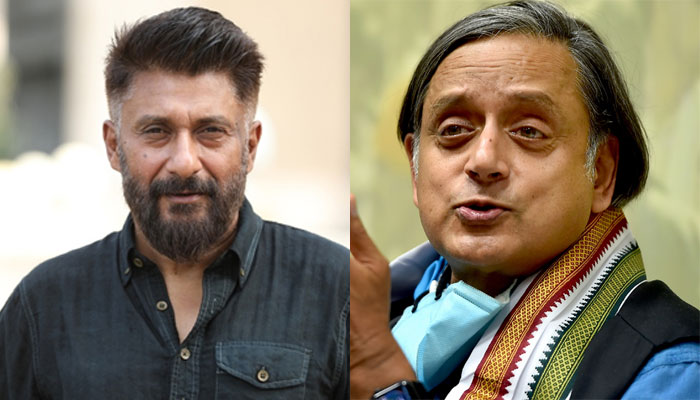
Filmmaker Vivek Agnihotri has responded to Congress leader Shashi Tharoor who had used Singapore’s ban on The Kashmir Files movie to target the Modi government. Tharoor had shared a media report that mentioned the film would not get classification in Singapore for ‘one-sided portrayal of Muslims’. He wrote, “Film promoted by India’s ruling party, #KashmirFiles, banned in Singapore.”

Quoting Tharoor, Agnihotri said, “Singapore is the most regressive censor in the world. It even banned The Last Temptations of Jesus Christ.” He also shared a long list of films that were banned by Singapore for one or the other reason.

Tharoor shared a report that called Kashmir a ‘disputed region’

The excerpt of the report that Tharoor shared in his tweet called Kashmir a ‘disputed region’ in the first line. It reads, “A movie on the exodus of Hindus from the disputed Muslim-majority Kashmir region will be banned in Singapore.” Interestingly, Tharoor had cropped the portion where the report mentioned Kashmir as a ‘disputed region’ and shared only the portion that suited his agenda.

IMDA refused classification for The Kashmir Files

The Infocomm Media Development Authority, which is a statutory board under the Singapore Ministry of Communications and Information, has refused classification for The Kashmir Files. In its statement, IMDA said, “The Kashmir Files” is a Hindi film that revolves around a university student who learns about the religiously charged political turmoil that led to the death of his parents in Kashmir in the 1990s. The film has been refused classification.”

It further said, “IMDA, in consultation with the Ministry of Culture, Community and Youth (MCCY) and the Ministry of Home Affairs (MHA), has assessed the film to have exceeded the Film Classification Guidelines for its provocative and one-sided portrayal of Muslims and the depictions of Hindus being persecuted in the on-going conflict in Kashmir. These representations have the potential to cause enmity between different communities and disrupt social cohesion and religious harmony in Singapore’s multi-racial and multi-religious society. Under the Film Classification Guidelines, “any material that is denigrating to racial or religious communities in Singapore” will be refused classification.”

‘My husband was asked to sambalo me’ – Agnihotri shared screenshots of late Sunanda Pushkar

In a follow-up Tweet, Agnihotri shared some screenshots of Late Sunanda Pushkar, where she had mentioned that she was asked by her husband (Shashi Tharoor) not to speak on Kashmir. Pushkar was a Kashmiri Hindu herself.

Speaking to OpIndia, Agnihotri said, “Singapore has one of the most regressive censor boards. They do not allow any film that even slightly talks about any issue. Singapore’s censor board also banned the movie Badhai Do which talked about the LGBTQ community. Only films made by Karan Johar and his likes are approved in Singapore. If Karan Johar makes ‘The Hotel Leela Files’, it will definitely get approval in Singapore.”

The continuous attack on ‘The Kashmir Files’

The Kashmir Files by Vivek Agnihotri is the top-rated Hindi film of 2022. Based on the exodus of the Kashmiri Pandits from the valley in the 1990s, the film has been under continuous attack from the left-liberal section of the media and society. This is the first movie that has portrayed the brutal atrocities on Kashmiri Hindus and their eventual exodus from the valley brought by Islamic jihadis in an honest manner, without trying to cover up facts to appease a political agenda. Agnihotri has stated time and again that every incident of brutality shown in the movie is based on hard facts and the actual testimony of victims.

Gujarat: Illegal property of Botad don Siraj demolished, had threatened businessman with ‘Kishan Bharwad style’ assassination over Hanuman Chalisa loudspeakers

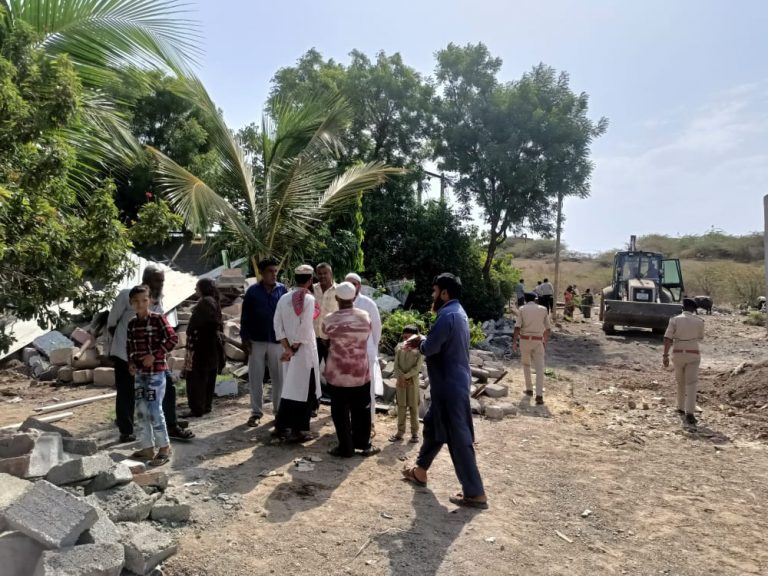
Gujarat state administration has demolished illegal property belonging to Botad don Siraj alias Shero. Here are the visuals of the bulldozer razing down the illegal property.

Siraj was earlier arrested by the police on May 8. Over 20 officials including the DSP and PI had reached Siraj’s place for razing down illegal construction at Mohammadpura.

On May 5, Siraj had allegedly threatened businessman and VHP leader Mahendrabhai Laljibhai Mali alias Munnabhai Mali. Threatening to kill Munnabhai, Siraj Don said, “You will face the same consequences as Kishan Bharwad.”

Speaking to OpIndia, the complainant Mali said that he is satisfied with the action taken by the administration on his complaint. The accused was immediately nabbed on his complaint. He added that for the further safety and security of his family he will apply for police protection.

A complaint in this regard was lodged by Munnabhai Mali at Botad police station on 7th May 2022. The accused Siro Don has a long criminal history and complaints have been registered against him for several offenses in the past.

The accused allegedly threatened Munnabhai Mali by saying “In the village, you have put loudspeakers on Hanumanji’s temple. Get it down or else you will face the same consequences as Kishan Bharwad. What will you do to us? If I get you in the car and kidnap you, you can’t do anything to me. We are watching all of you. Stay within your limits, or else I will kill you.” And further he spoke in a loud voice and again threatened to kill him (Munnabhai Mali).

Siraj Don has as many as 34 cases filed against him including ones for illegal gambling and attempt to murder.

On 25th January 2022, a 27-year-old youth, Kishan Bharwad, was shot dead in Dhandhuka taluka, which falls in Ahmedabad (Rural), over an allegedly blasphemous social media post. Kishan Bharwad’s murderers Shabbir and Imtiyaz Pathan were arrested by the police and further investigations also revealed the involvement of a Muslim cleric.

With inputs from Lincoln Sokhadia.