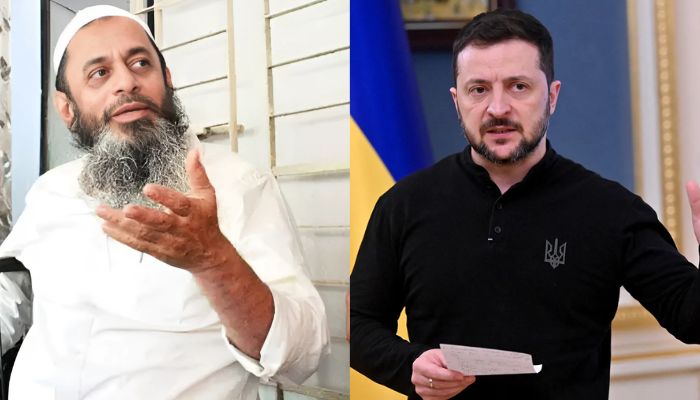
Errol Musk, father of Tesla and SpaceX CEO Elon Musk, is making headlines during his visit to India—not just for promoting green energy, but for his candid praise of India’s leadership, economic rise, spiritual depth, and global potential.
In an exclusive interaction with IANS, the 79-year-old South African engineer called Prime Minister Narendra Modi a “fantastic leader” and hailed India’s emergence as a global power.
“He is one of the best leaders in the world right now. It’s always a pleasure to see him on television,” Musk said, adding that Modi is steering India toward becoming a Vishwaguru—a teacher to the world.
Musk, who is in India as Global Advisor to Servotech Power Systems, also voiced support for India’s bold new electric vehicle (EV) import policy, which allows global manufacturers to bring in up to 8,000 electric four-wheelers annually at a reduced 15% duty—down from the current 70–100%—in exchange for a minimum investment of ₹4,150 crore in local manufacturing.
“It’s a very good idea. That’s the way to go—make things easier for people in the EV space to further improve the world,” he said, praising India’s efforts to become a global green-tech hub.
On geopolitics, Musk didn’t hold back, especially on the issue of terrorism in Kashmir.
“You cannot let people live like this. You’ve got to make a plan and put an end to it,” he said, expressing sympathy for civilians caught in conflict.
“If it’s Pakistan causing the trouble, something needs to be done about it,” he added bluntly.
His remarks come as India ramps up its global campaign against cross-border terrorism following Operation Sindoor, with diplomatic initiatives like a parliamentary delegation’s recent meeting with Spain’s Association of Victims of Terrorism.
Reflecting on India’s economic trajectory, Errol Musk said the nation has already earned its place on the world stage:
“India is a world power. When you have the fourth-largest GDP in the world, you’re a world power—whether you like it or not.”
What impresses him most, however, is India’s humility:
“India has a very humble approach to its success—nicer than other places that push themselves. India has a great deal to contribute to the world.”
Musk also expressed deep admiration for India’s ancient spiritual traditions, especially Hinduism and the figure of Lord Shiva.
“I think if the whole world followed Shiva, it would be all right,” he said. “It’s so old—the religion is so ancient that it boggles my mind. It just shows how little we actually know.”
From economic policy to spiritual philosophy, Errol Musk’s visit has revealed more than just business interest—it’s highlighted a rare and personal appreciation for India’s complex identity as a modern power rooted in ancient wisdom.
In Bihar’s Bettiah, pieces of the skeleton of an 18-year-old boy named Amit Kumar were recovered months after he went missing. Amit Kumar Mahato was allegedly kidnapped by the accused Raju Mian and his father Mohammad Phool Mian from Sansariya village in March this year. The motive of the brutal murder is reported to be pertaining to a love affair.
The deceased victim’s skeleton was only recovered on 31st May from the banks of Chandravat River, Bairia police station area, while he was missing since 27th March 2025. The victim’s family identified the mortal remains from the belt around his waist, and the clothes. The deceased victim worked at a hotel in Muzaffarpur and came to his native village seven days before his kidnapping.
The matter pertains to the Mufassil Police Station precinct. After the recovery of the skeleton, the deceased victim’s family made several serious allegations against the Mufassil police station in-charge Abhiram Singh and the investigating officer of the case Satish Kumar, including negligence. In this case, the SP has taken action against both the police officers.
Sadar SDPO Vivek Deep said that the inspector has been suspended, while the station in-charge has been called back to the police line. The entire saga starts on March 27, when Amit Kumar (18), son of Lalan Mahato, resident of Sansaraiya Ward 41 of Mufassil police station area, went missing.
On March 30, 2025, Amit Kumar’s family had lodged a missing person complaint at Mufassil Police Station. While investigation was launched in this case, however, the police failed to trace the victim and his abductors.
Meanwhile, the police have arrested Raju Mian, resident of Sun Saraiya and Raju’s father Phool Mohammad Mian. The police have sent the remains of the deceased victim for DNA testing.
The deceased victim’s mother Ramavati Devi and sister Anisha Devi have alleged that on the evening of 27th March, Raju Mian had called Amit from home. After that, the victim did not return. After the victim’s family raised suspicion that Amit might have been murdered, the police arrested both the suspects. Reports say that Raju Mian and Amit Kumar were friends. Amit’s mobile phone was switched off from the evening of that day.
The incident sparked outrage in Sansariya village, who staged a blockade at the Bettiah-Gopalganj road. The protest ended only after the SDPO Vivek Deep gave assurance. In addition to arresting Raju Mian and Mohammad Phool, the poice has taken two others in custody.
In the movie Top Gun: Maverick, Ed Harris’s gravel-toned character tells Tom Cruise, “These planes you have been testing, Captain, one day, sooner or later, they won’t need pilots at all, pilots that need to sleep, eat, take a p*ss, pilots who disobey orders. All you did was buy some time for those men out there.” It was not just a clever line written by Jim Cash and Jack Epps Jr. It was a prophecy.
In the movie Border, Wing Commander Andy Bajwa, played by Jackie Shroff, tells Major Kuldip Singh Chandpuri, played by Sunny Deol, that it is the Air Force that hits the enemy in its territory. There was a time when this was a reality. In the Kargil War, the Air Force played a vital role in demolishing the Pakistani posts and bunkers.
While war stories and movie screenplays draw from real-life experiences, things are changing fast, especially since affordable drones have become highly efficient weapons on the battlefield.
Today, the world’s battlefields are being rewritten, not in cockpit dogfights, but in silent strikes launched from container trucks, caves, and bunkers. Drones, loitering munitions, FPVs, machines that do not sleep, do not eat, do not question, and just obey, are now writing the war stories.
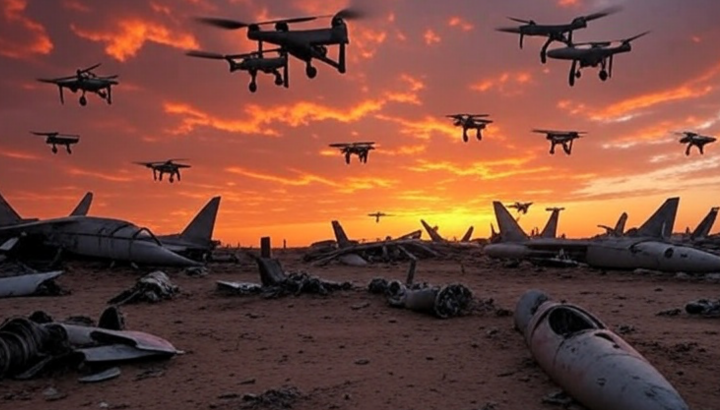
The swagger of the pilot flying a modern fighter jet may still echo in military hangars and even on the frontlines for the next few years. However, it is the cheap plastic propellers that are taking over the limelight, one drone at a time. The age of drone warfare has arrived. And the big question is: are fighter jets now on the path to becoming just museum pieces with afterburners?
Ukraine-Russia war – Where drones turned the tide
Forget the high-tech Rafales or F-35s, or the thunder of MiG engines or the Sukhois. The Russia-Ukraine war became history’s first large-scale conflict where drones, loitering munitions, and cheap FPV quadcopters did not just support operations, they defined them.
From the early days of the war, Turkish Bayraktar TB2s helped Ukraine decimate Russian armoured columns. Iranian Shahed-136 drones, packed with explosives, swarmed Ukrainian cities in retaliation. Then came the evolution: commercial racing drones retrofitted with grenades. Loitering munitions that hovered silently above soldiers, tracked movement, and exploded only when a confirmed kill was guaranteed. Hundreds of videos were shared by both sides since the war began to demonstrate how cheap drones successfully took out the enemy.
Above all, the recent Operation Spiderweb showed how far drone warfare has evolved right before our eyes. Around 1.5 years ago, Ukraine reportedly started preparing to hit airbases located deep inside Russia. Slowly, it smuggled the drones in wooden boxes and used local truckers to drive them to the locations. The trucks were parked near the airbases by unsuspecting drivers.
This will be in textbooks. Ukraine secretly delivered FPV drones and wooden mobile cabins into Russia. The drones were hidden under the roofs of the cabins, which were later mounted on trucks.
At the signal, the roofs opened remotely. Dozens of drones launched directly from the… pic.twitter.com/sJyG3WyYYI
When triggered remotely, these drones flew under radar detection, destroyed billion-dollar aircraft, and exposed the limits of Russia’s air defences. No jet needed to cross the border. Just planning, patience, and a laptop. This is not science fiction. It is the new normal of drone warfare.
Recently, India launched Operation Sindoor against Pakistan in retaliation to the Pahalgam terrorist attack that claimed the lives of 26 innocent Hindus. India struck terror camps inside Pakistan and in Pakistan occupied Jammu and Kashmir. In retaliation, Pakistan used swarm drones it received from its ally countries like Turkey to attack Indian civilian and military locations. The Indian air defence system neutralised the attack.
Then came the time for India to retaliate. The Indian armed forces relied heavily on Indian made FPV drones, Heron UAVs and tactical loitering munitions. India-built loitering munition JM-1 also proved its potential in the operation. Targets were mapped using high resolution drone surveillance, cross verified with intelligence inputs, and then marked for precision attacks. While Indian missiles devastated Pakistani air bases, Indian decoy drones also played a vital role, especially in creating heat signatures that matched Indian fighter jets, confusing the Pakistani air defence system. Use of drones by both sides wrote a new chapter in warfare.
A 100% Indian-designed suicide drone called the JM-1 made its combat debut in Operation Sindoor becoming the first ‘Atmanirbhar’ loitering munition to strike Pakistani targets. The Indian drone warfare story is probably this conflict’s biggest takeaway: pic.twitter.com/u6SUDjHqOD
The Azerbaijan Armenia war – Bayraktar’s coming out party
Before Ukraine turned drones into front page headlines, it was the 2020 Nagorno-Karabakh war that first announced the arrival of the unmanned predator. Azerbaijan, armed with Turkish Bayraktar TB2 drones, subdued the Armenian forces. Azerbaijan reportedly used bait drones to get information of the air defence system and then used modern drones to destroy them.
In just 44 days, Armenia lost hundreds of tanks, artillery pieces, and mobile air defence units, several of them destroyed in full HD footage recorded by drones and released online as psychological warfare. The problem with these drones is that the air defence systems cannot react in time. This is what benefitted Azerbaijan. Troops were slaughtered in convoys before they even knew what hit them.
Azerbaijan’s use of Turkish drones gave it a decisive edge and victory over Armenia in the Nagorno-Karabakh conflict in 2020.
Here’s a look at why the world is now taking notice of Turkish drone and defence technology pic.twitter.com/7P5EXhVoDm
Suddenly, countries across the globe began shopping for drones that could do what fighter jets and expensive missiles struggled with, cheap, accurate, risk-free elimination.
It is not that drones have never been part of warfare. The United States and other Western countries have been using them to strike locations in the Middle East including Syria. However, the drones they use are expensive and difficult to acquire. Most countries cannot even think of raising a squadron of such drones. The drones that are now being used are dirt cheap compared to fighter jets.
In the post Armenia world, drones were no longer support weapons. They were war winners.
Loitering munitions – The kamikaze bots with patience
Cruise missiles follow coordinates. Drones like the MQ 9 Reaper return home after striking the target. However, loitering munitions, or LMs, are built to wait. Think of them as flying snipers with the patience of a monk and the temperament of a suicide bomber. Once launched, they hover, sometimes for hours, circling above a battlefield, scanning for movement. The moment they lock on to a human heat signature, a tank, or a radar signal, they descend with clinical precision. There is no warning. There is no escape.
Russia turned Oekainian armoured vehicles into scrap metal. The footage shows several armoured vehicles destroyed by Russian UAVs and Lancet loitering munitions of the Sever Group of Forces in the border area of Kursk region. pic.twitter.com/u1Mob5T3zG
India’s Nagastra-1 costs only 5,500 dollars or approximately 4.69 lakh rupees. Compared to a Rafale, which costs around 242 million dollars per unit, India could add 44,000 Nagastra-1 drones to its armoury for the same amount.
In the Russia Ukraine war, videos surfaced from time to time showing loitering munitions tailing soldiers like persistent wasps. Some even paused mid-air, as if contemplating the target, before plunging straight into it. These drones are basically algorithms with a kill switch.
DPR quadcopter drone grenade strikes against Ukrainian soldiers near Pervomaisk pic.twitter.com/pWhXsxiFfQ
Countries like Israel pioneered the technology with systems like the Harop, but now even Iran’s Shahed 131 and 136 are giving competition. With loitering munitions, wars are no longer fought with fighter jets engaging in aerial combat. They are being fought, and will continue to be fought, with drones that watch from above and kill their targets with a single dive.
Who rules the sky now? A look at the top war drones
The new air force in the future may not require billions of dollars worth of jets, vast airstrips and pilots that take years to train in combat. It fits into shipping containers and launches on demand. Here is a look at the current kings of the unmanned skies:
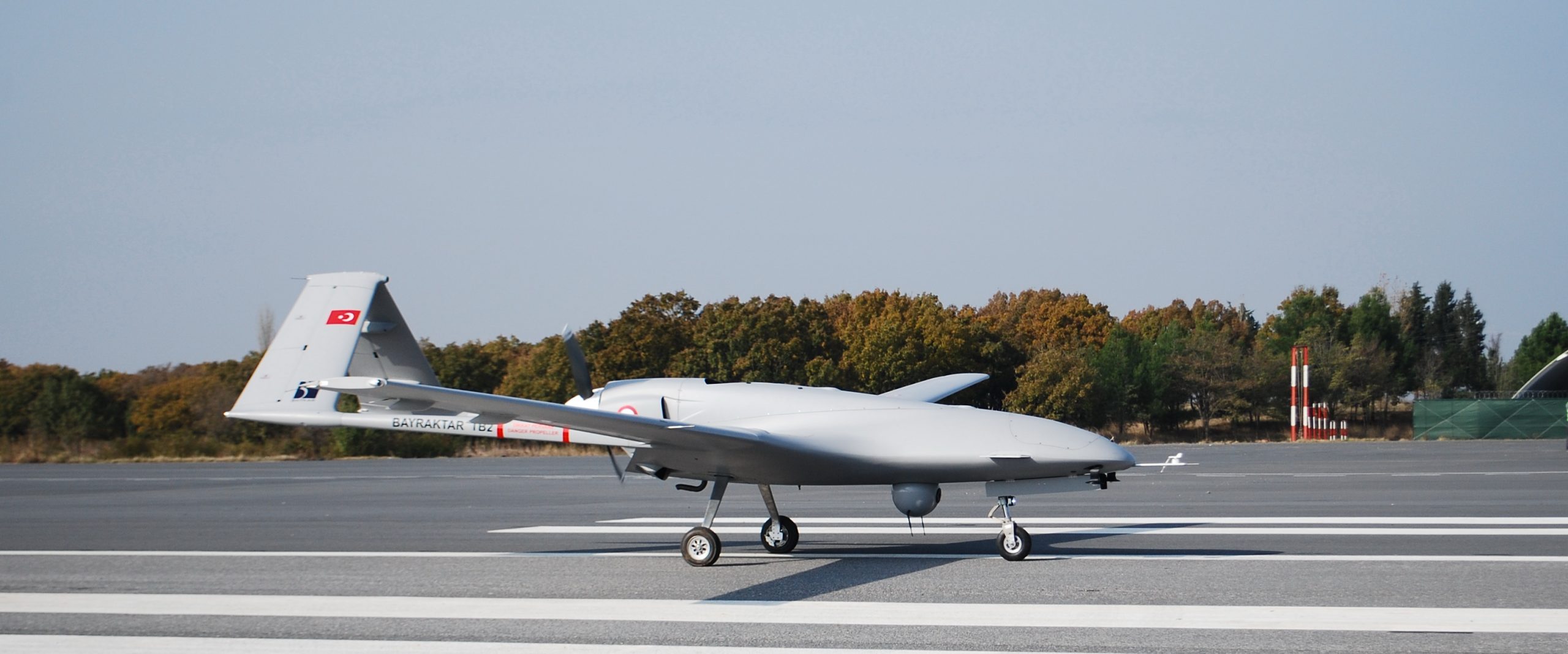
Bayraktar TB2 is a Turkey-made drone that is cheap, camera ready, and deadly. It has been used in Syria, Libya, Ukraine, and Azerbaijan.
Bayraktar TB2. Source: Wiki
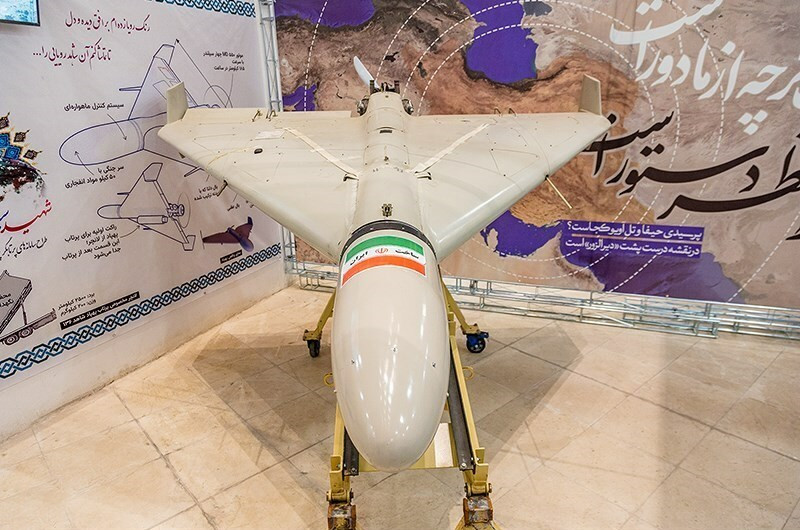
Shahed 136 and 131 are Iran-made kamikaze drones sold to proxies from Yemen to Russia. They are unreliable but dangerous when used in swarms.
Shahed 136. Source: Wiki
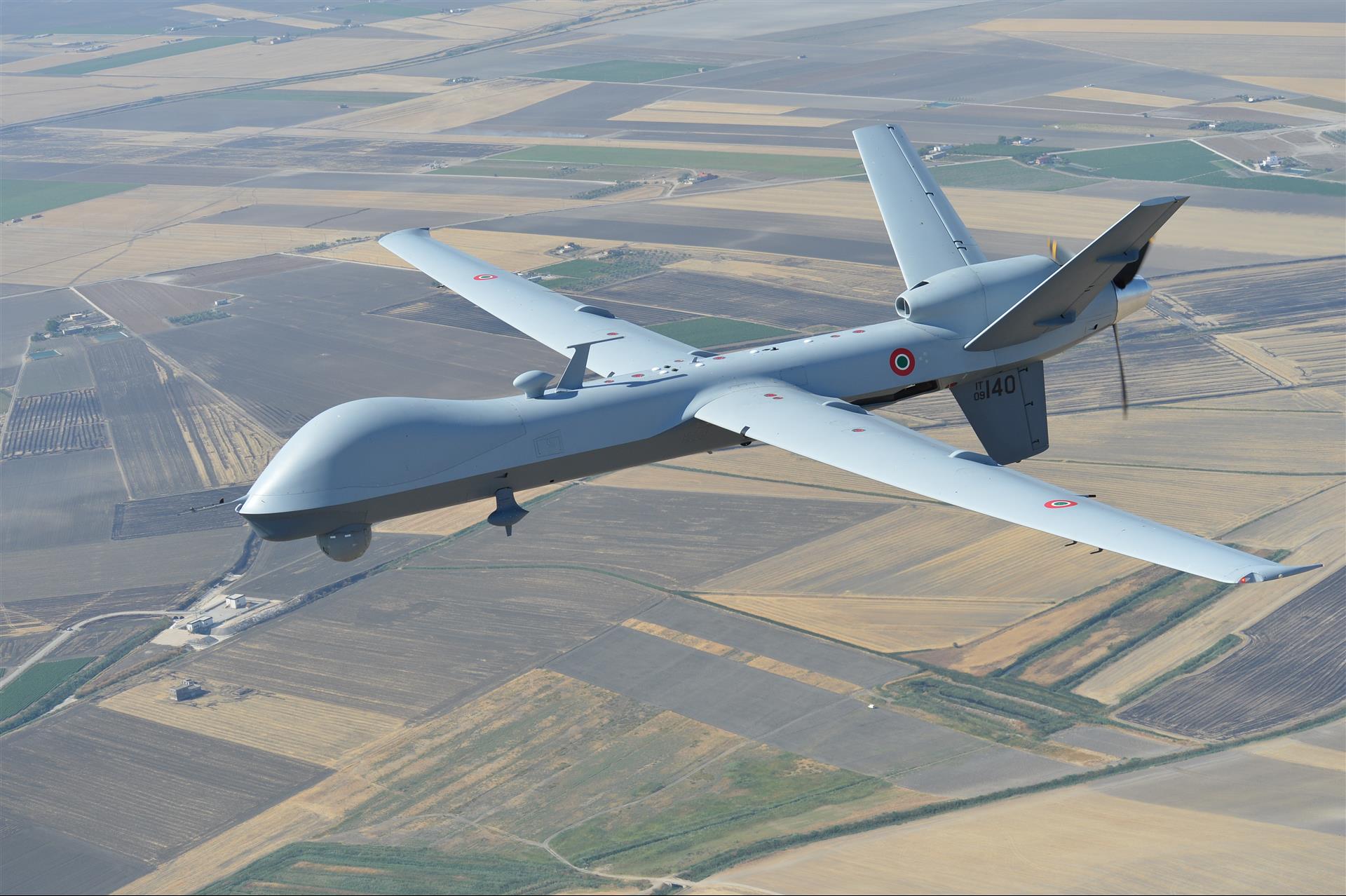
MQ 9 Reaper is a United States-made, long endurance, satellite linked hunter killer drone. These are expensive but unmatched in range and precision.
MQ 9 Reaper. Source: GAAS
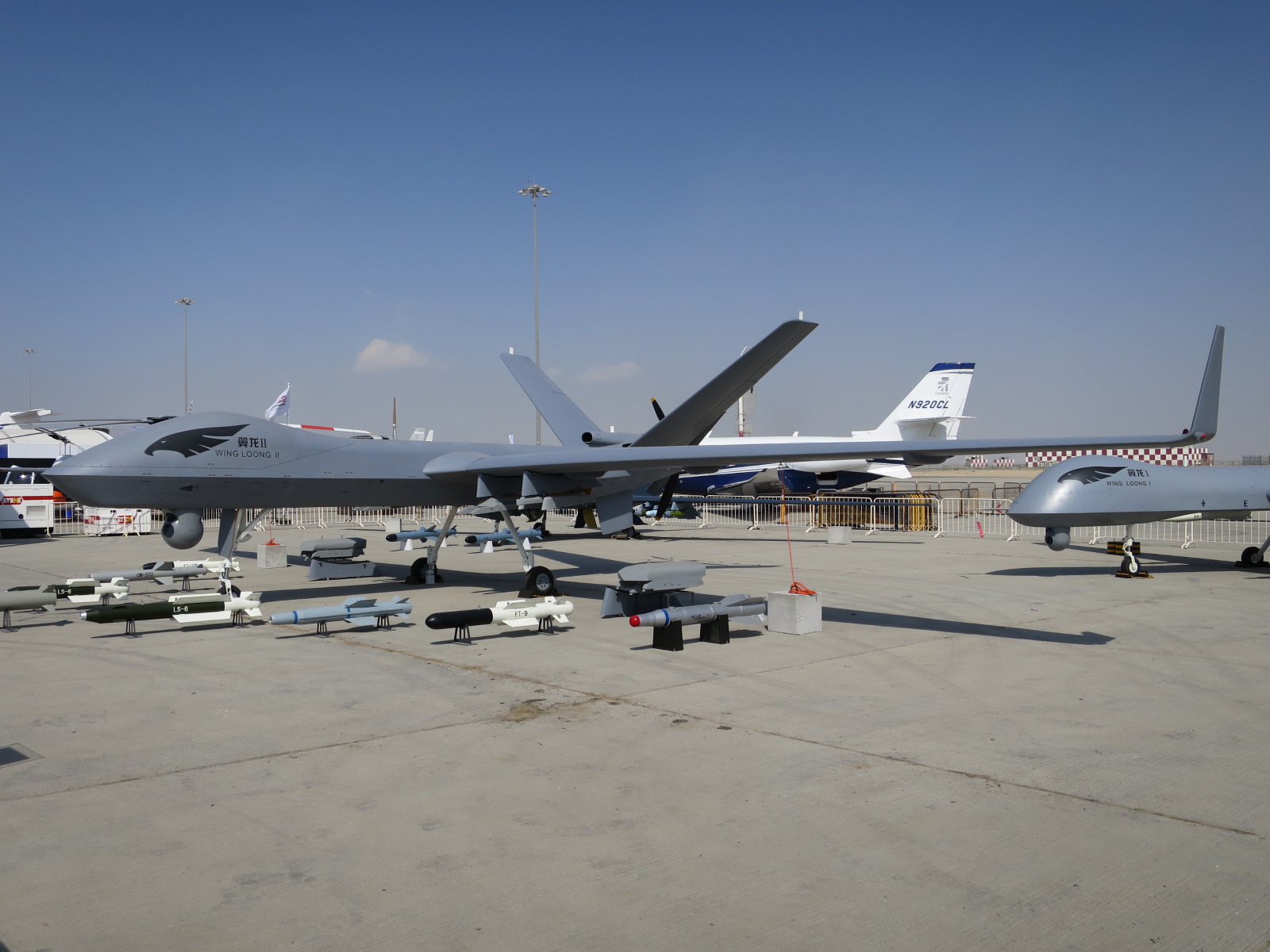
Wing Loong II and the CH series are China-made drones, seen as Beijing’s answer to the Reapers. These have been sold widely across Africa and the Middle East.
Wing Loong II. Source: Wiki
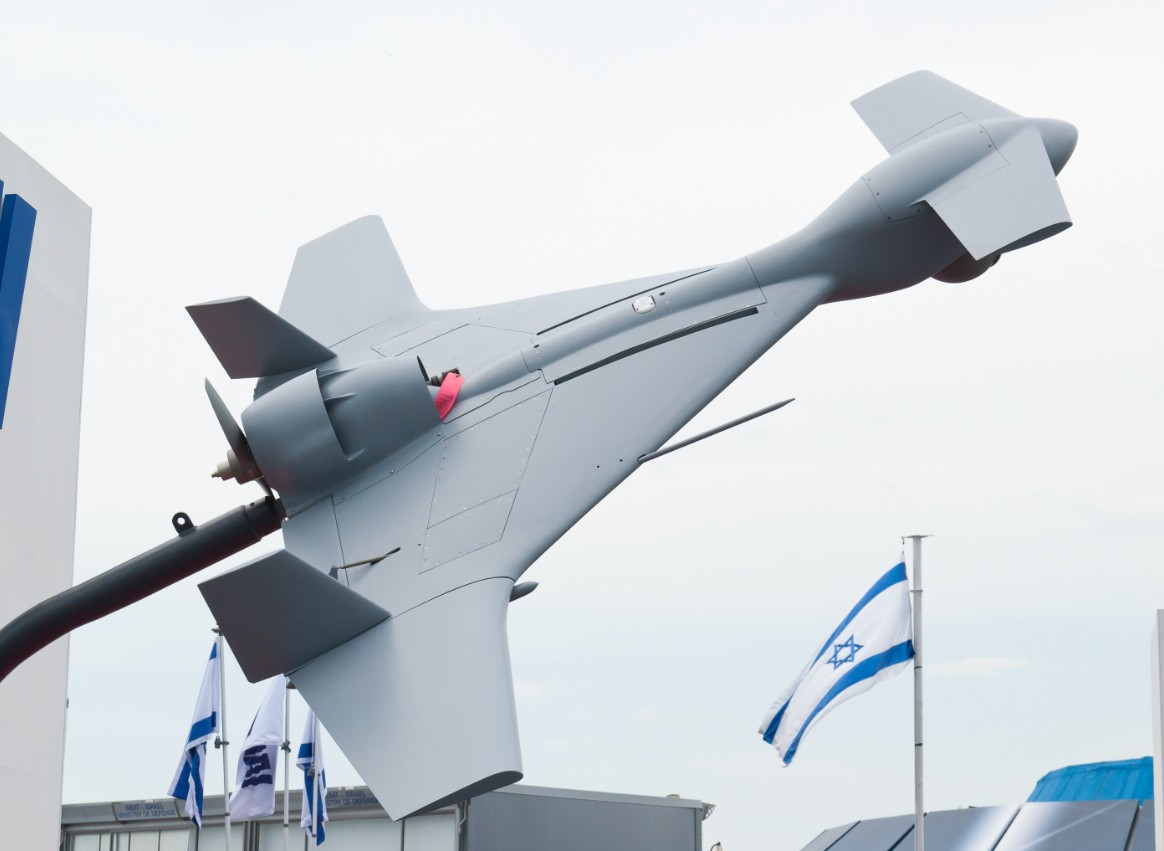
Israel-made IAI Harop and Heron drones are battle tested and versatile, with top class loitering capabilities.
IAI Harop. Source: Wiki
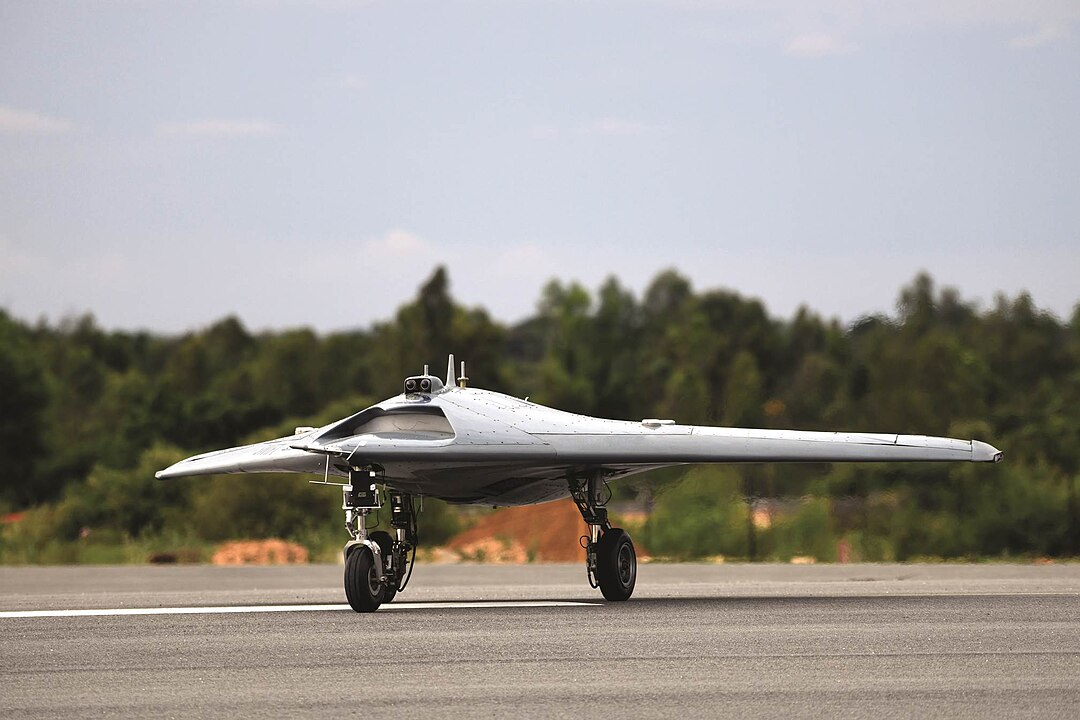
India is also developing world class drones including Ghatak and CATS Warrior. Furthermore, India’s Nagastra-1 has already been battle tested during the recent India Pakistan war.
Ghatak drone. Source: Wiki
The best part is that most of these drones are cost effective. Some of them even cost less than a missile. The battlefield no longer belongs to the biggest, but to the smartest, and often the cheapest.
Are fighter jets finished? Not so fast
It is tempting to declare that the time of the fighter jet is over. After all, if a drone worth a few thousand dollars can destroy an aircraft worth hundreds of millions from a hidden truck, why bother building airstrips? However, it is not yet time to write the obituary. The reality is not that binary.
Fighter aircraft still dominate when it comes to deep penetration strikes, air superiority, and electronic warfare. They break the morale of the enemy, conduct high speed evasive missions, and carry payloads that drones still cannot manage. The Sukhoi 30, Rafale, or even India’s upcoming AMCA are not going extinct. They are evolving.
What is changing is the role. Fighter jets are no longer the lone wolves of air combat. They are becoming commanders in the sky, directing swarms of unmanned companions. Think of it as the Loyal Wingman concept, where drones fly ahead, scout targets, absorb enemy fire, and even conduct suicide attacks. Meanwhile, the pilot sits far behind in a safe control zone.
The future is not about replacing the fighter jet. It is about unburdening it.
Strategic implications – Drone doctrine or dinosaur doctrine
The real question for militaries around the world is not whether drones work. It is whether they have adjusted fast enough to lead with them. For countries including India, the shift from muscle to microchip requires a complete rethinking at the doctrinal level.
Now the question arises whether India should invest one and a half lakh crore rupees into more Rafales or spend half that amount building indigenous drone swarms and artificial intelligence-based warfare systems. Is India training enough drone operators, coders, and electronic warfare tacticians, or just more fighter pilots? In the twentieth century, whoever controlled the skies controlled the war. In the twenty first century, that equation has gained a new variable, data.
Cybersecurity, electronic warfare countermeasures, drone defence grids, and autonomous kill authorisations are now military necessities, not luxuries. Drone warfare is not just about hardware. It is about signal, software, and silence.
Conclusion – The sky no longer roars, it hums
There was a time when victory in war echoed through the sky in the form of sonic booms and roaring jet engines. They instilled fear in the hearts of the enemy. However, it is the whispers that now stop the heartbeat. The battlefield no longer roars. It hums. The mosquito like buzz of propellers, when heard by soldiers on the battlefield, makes them sit down and wait for their fate. It is exactly what has been witnessed in the Russia Ukraine war.
Fighter jets are not gone, and they are here to stay for a long time. However, their supremacy has been challenged in style. They now share the air with machines that do not breathe, do not blink, and do not hesitate. Drones do not break the sound barrier. They break the rules of traditional warfare.
The age of drone warfare is here. Countries that adapt will lead. Those that do not will be watching replays of their destruction in full high definition, filmed by the very drone that killed their comrades on the battlefield.
On the 1st of June 2025, Ukraine executed a massive attack on several airbases of Russia destroying around 40 fighter jets. This attack using FPV drones not only destroyed Russian military assets but also inflicted a deep wound on Russian President Vladimir Putin’s pride. While a strong response from Russia to the Ukrainian offensive is almost certain, what is even more certain is the end of hopes of any ceasefire between Russian and a NATO-backed Ukraine in the near future.
Ukraine’s Operation Spiderweb and how it will keep Russia-Ukraine entangled in a prolonged war
Under the operation code-named Pavutyna or Spiderweb, Ukraine used First-person view (FPV) drones, where an operator can view what’s in front of the drone using its cameras. When aircraft were spotted, they were targeted from weapons carried on the drones, ensuring very close-range precise strikes. The drones were smuggled into Russia much earlier, and were hidden inside mobile wooden cabins loaded onto trucks. The drones were hidden on the roof of the cabins, with a lid on the roof that could be opened remotely. When all the trucks were placed at the desired locations near the airbases in Belaya, Diaghilevo, Olenya and Ivanovo, the operation began.
The Ukrainian officials said that they have been planning this operation for 1.5 years. Reports say that around 40 to 41 Russian aircrafts, including nuclear capable TU-95 and Tu-22 strategic bombers were damaged in the attack. Ukraine also attacked a military unit in the village of Sridni, the first such attack in Siberia.
In a video message, Ukrainian President Volodymyr Zelenskyy lauded Operation Spiderweb and sheer brilliance with which it was executed, stunning Russia. Zelenskyy said that around 117 drones were used and about 34 per cent of Russia’s strategic cruise missile carriers stationed at targeted airbases were hit.
“Today, a brilliant operation was carried out. The preparation took over a year and a half. What’s most interesting, is that the “office” of our operation on Russian territory was located directly next to FSB headquarters in one of their regions. In total, 117 drones were used in the operation with a corresponding number of drone operators involved. 34% of the strategic cruise missile carriers stationed at air bases were hit. We will continue this work,” the Ukrainian President said.
Today, a brilliant operation was carried out. The preparation took over a year and a half. What’s most interesting, is that the “office” of our operation on Russian territory was located directly next to FSB headquarters in one of their regions.
— Volodymyr Zelenskyy / Володимир Зеленський (@ZelenskyyUa) June 1, 2025
In a subsequent thread posted on X, President Zelenskyy claimed that Russia has been intensifying its drone and missile attacks against Ukraine. He further asserted that Ukraine never wanted this war and even offered a ceasefire, however, it was “the Russians who chose to continue the war – even under conditions where the entire world is calling for an end to the killing.”
Not for a single second did we want this war. We offered the Russians a ceasefire. Since March 11, the U.S. proposal for a full and unconditional ceasefire has been on the table. It was the Russians who chose to continue the war – even under conditions where the entire world is…
— Volodymyr Zelenskyy / Володимир Зеленський (@ZelenskyyUa) June 1, 2025
Described as the biggest drone strike attack on Russia since the war erupted, Ukraine’s offensive comes across as a bold but reckless move. While executing such an attack deep inside Russia shows Ukraine’s military capabilities and willingness to take risks, however, the timing of the attack raises concerns. The timing of the Ukrainian drone attacks right ahead of the scheduled peace talks in Istanbul raises questions if it was Ukraine’s deliberate attempt to sabotage negotiations or a profound strategic error. This question becomes even more significant when the Ukrainian President says “we will continue to do so”.
While the first round of peace talks between Moscow and Kiev may have not been successful in securing a ceasefire commitment, the talks concluded with both agreeing to exchange around a thousand prisoners of war. Last month, both the warring nations implemented this agreement and PoWs were exchanged, hinting that, although gradually, things may take positive turn in this prolonged war. However, Russia’s missile and drone strikes and now Ukraine’s Operation Spiderweb has essentially crushed the hopes for even a short term ceasefire, let alone lasting peace.
Even as the Russian aircrafts destroyed by Ukrainian drones burn and Russian leadership fumes, the leaders of Russia and Ukraine will meet each other in Istanbul on 2nd June, for peace talks, ironically.
While the planned peace talks are not expected to yield any significantly positive outcomes, Russia would not sit silent after the Ukrainian attack or continue with the usual tactics, rather, sone fear that Russian forces might even start considering the Nuclear option against Ukraine.
For President Putin, the Ukrainian attack is both, a setback and an opportunity. The Ukrainian drone strikes deep inside Russia have not only inflicted damages to fighter jets, but Putin’s image of an untouchable strongman. Russian nationalists, who form Putin’s large support base, expect a robust response. Agreeing to ceasefire immediately after such an attack, would come across as a sign of weakness and Ukraine and its European allies would project this as Russia’s defeat. Besides, President Putin’s reputation as a defender of Russian sovereignty would also be undermined.
Putin has continuously said that Russia’s war against Ukraine is its defence against what Moscow calls Western encroachment and a fight against the root causes of the conflict. These include Ukraine’s desire to join NATO which would translate into bringing NATO forces to the doorstep of Russia, Kiev’s refusal to cede territories occupied by Russia, alongside Western sanctions. Since the Ukrainian attack came just ahead of peace talks, Kiev has essentially handed an opportunity to Moscow to go berserk in response to Ukraine’s “act of terror”.
So far, Ukraine’s Western backers have been accusing Russia of deliberately prolonging the conflict. Hoever, after Operation Spiderweb, Moscow will allege that it is Ukraine and its Western allies who are escalating the war, making it untenable for Putin to accept ceasefire without desired concessions.
Notably, Ukraine has submitted its draft memorandum outlining a peaceful resolution and President Putin’s advisor Vladimir Medinsky, who would lead the Russian delegation at peace talks has confirmed receiving the document. Russia, however, has not submitted its memorandum to Ukraine, Turkey or the US, so far. Moscow is anticipated to reveal its stance during the meeting in Istanbul.
It is, however, expected that Russia would demand Ukraine to recognise Russian control over annexed Ukrainian territories, relinquish NATO dream, and demilitarise. The Ukrainian attack has allowed Moscow to stiffen its demands, and the Russian delegation might argue that Ukraine’s attack proved the need for stricter conditions to ensure Russia’s security and integrity.
Speculations are rife that Putin might opt for immediate escalation by using advanced weaponry including Orshenik missiles, Kalibr, and other warheads. However, Moscow might also pick a gradual, more methodical approach and continue to grind Ukraine’s defences while avoiding the adverse economic impacts a dramatic escalation would trigger including fresh wave of sanctions.
Reports say that the Russian forces are advancing in eastern Ukraine, with intent of creating buffer zones along the border, and have almost expelled Ukrainian forces from Russia’s Kursk region. These developments suggest that although time taking, Putin’s strategy of outlasting Ukraine and its Western allies has worked arguably well. Prolonging the conflict would help Russia erode Ukraine’s manpower and EU’s resolve.
In either case, the war will persist and yield devastating consequences for both the warring nations. The continued attacks and counterattacks by Russia and a NATO-backed Ukraine ensures the creation of a cycle of destruction and devastation where peace is the ultimate casualty.
Donald Trump’s dream of playing ‘peacemaker’ now lies in tatters
Ukraine and Russia have been accusing each other of delaying negotiations and having no intentions to end the war. Meanwhile, US President Donald Trump, who promised to bring an end to this war, is left clueless and frustrated as things fall apart despite his tall promises of peace.
The 1st June attack has shattered Donald Trump’s ambitions of being hailed as a messiah by brokering peace between Russia and Ukraine. During his election campaign last year, Donald Trump had famously claimed that if voted to power, he would end the Russia-Ukraine conflict within 24 hours, however, it’s been nearly five months already and Trump’s efforts to end the Russia-Ukraine war embarrassingly faltered.
Earlier, Trump’s decision not to impose fresh sanctions against Moscow had rattled Kiev as he was seen inching closer to Putin. However, Trump’s more recent remarks directly accusing President Putin of taking measures counterproductive to peace efforts as well as calling Putin “absolutely crazy” indicate that evolving situation has left Trump clueless.
Last month, Ukraine and the United States signed the minerals deal under which the US will gain access to the war-torn nation’s rare earth deposits, including oil and gas. It must be noted that Trump has significantly reduced aid to Ukraine, thus compelling the war-torn country to ink a deal to secure long-term US investment. Trump has also been willing to make Ukraine give up its NATO aspirations, held telephonic conversations with Putin, however, none of his efforts have yielded results that could make Kiev and Moscow to agree to a ceasefire, forget lasting peace.
President Trump has tried all this conventional US tactics of talks, trade and threats, however, neither Russia nor Ukraine have stopped fighting. Neither President Putin will easily commit to a ceasefire, especially after the June 1 attack, nor President Zelenskyy would relent on his NATO dream, particularly without ironclad security guarantees, which the US is not in a position anymore to ensure. With both the warring nations prioritising military posturing over diplomacy and mediation efforts going futile, neither a ceasefire nor lasting peace are on the horizon. For Trump, after India’s outright denial of Trump’s trade-backed mediation stopping India-Pakistan clashes, the escalation of Russia-Ukraine war suggests that Trump’s peacemaker dream was just a naïve dream never meant to translate into reality.
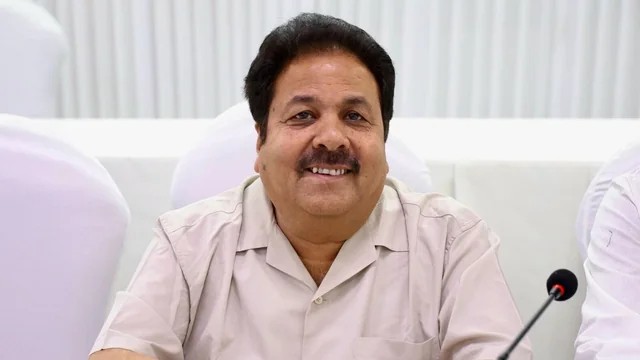
The Board of Control for Cricket in India vice president Rajeev Shukla believes there is no need to emphasise his potential takeover as the interim president of the BCCI after Roger Binny’s tenure ends, considering it is a “procedural” matter.
On Monday morning, reports stormed social media about Shukla replacing the current BCCI president, Binny, who will turn 70 on July 19 this year. Shukla, 65, is expected to take over the position on an interim basis for three months.
According to sources, with the Annual General Meeting (AGM) in September, the month he would turn 66, he could stand for the post of full-time president in the elections.
Shukla addressed the ongoing speculations and classified them as “useless talks.” For Shukla, taking over the position on an interim basis is a procedural matter; there is nothing more to it.
“These are useless talks. When one spot is about to get vacant, the person next in line gets the interim charge before the election. It is a procedural thing,” Shukla told ANI.
Roger was elected as the 36th president of BCCI in October 2022, replacing ex-Indian skipper Sourav Ganguly, who completed his three-year tenure. Notably, Binny was the only candidate to have filed a nomination for the top post.
During his presidency, India won two white-ball titles: the ICC T20 World Cup 2024 and the ICC Champions Trophy 2025. He also introduced the Women’s Premier League (WPL), a women’s franchise cricket league modelled after the highly successful cash-rich IPL.
During his presidency, several steps related to properly strengthening and prioritising domestic cricket, including better incentives, pay, and senior participation in domestic tournaments, took place.
As a bowling all-rounder, Binny has represented India in 27 Test matches and 72 ODIs during his playing days. He took 47 wickets in Tests and scored 830 runs with five half-centuries. In 72 ODIs, he took 77 wickets and scored 629 runs with a half-century. The right-arm pacer bagged 47 wickets in tests while also picking 77 in ODIs.
He was a crucial contributor to India’s first-ever World Cup victory, taking 18 wickets, the highest number for India in the 1983 World Cup. Binny has previously served as a member of the BCCI selection committee.
(This news report is published from a syndicated feed. Except for the headline, the content has not been written or edited by OpIndia staff)
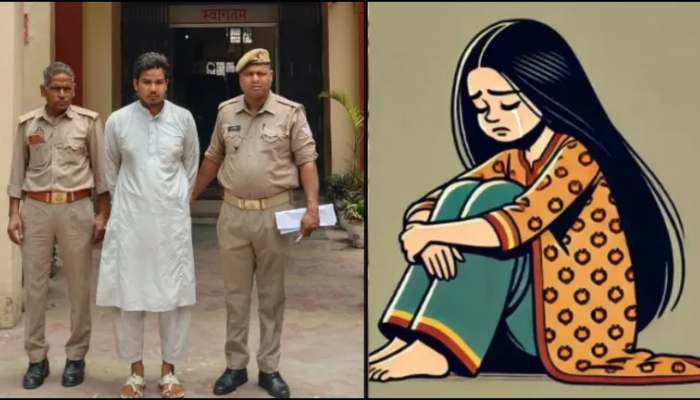
Zubair, a madrasa manager in Uttar Pradesh’s Bareilly district, called a teacher to the institution on 30th May and sexually assaulted her. The accused has been apprehended by the authorities. A similar incident has also come to light from Muzaffarnagar where a cleric raped a 15-year-old student.
Zubair summoned the victim on Friday, when the madrasa was closed. She reached there with her brother who left after dropping her outside the gate. She went inside the institution but noticed that there was no student present which made her a little suspicious. Out of nowhere, Zubair appeared from within and led her to a classroom.
He claimed that he wanted to see her and then raped her. When the teacher’s condition worsened, he fled the scene. Meanwhile, when she did not return home for an extended period, her family went to the madrasa where they found her unconscious and her clothes were also disheveled. They promptly transported her to the hospital and she regained consciousness in the evening and recounted the entire ordeal in front of them.
Subsequently, the family filed a complaint with the police. On 1st June, the police arrested the perpetrator. According to Pradeep Chaturvedi, the officer in charge of the police station, the medical examination of the teacher has been completed and the offender is undergoing interrogation.
Minor raped in Muzaffarnagar
A similar case transpired in Muzaffarnagar district on 1st June where a minor girl was summoned to the madrasa under the guise of addressing her questions and teaching her. Afterward, Maulvi Saddam Hussain raped the student as she kept screaming and shouting. She then arrived home and notified her family regarding the incident after which she took her to the police station to file a report.
Circle Officer (CO) Rupali Rao stated that the police have lodged a case against the culprit under the applicable sections of the Bharatiya Nyaya Sanhita (BNS) and the Protection of Children from Sexual Offenses (POCSO) Act. He has been taken into custody at the Nai Mandi police station.
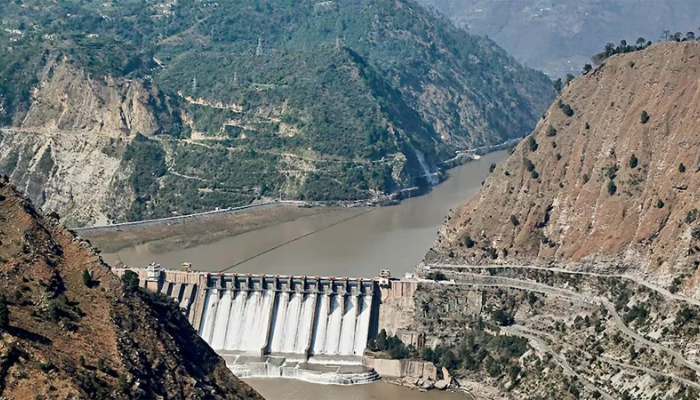
Pakistan faces a dismal kharif (summer crop) sowing season due to a significant decline in live storage at its two main dams, Tarbela on the Indus and Mangla on the Jhelum. Moreover, India’s decision to suspend the Indus Waters Treaty (IWT) in the wake of the recent Pahalgam terror assault and regulate the flow of the Chenab River have only exacerbated the issue.
Pakistani Prime Minister Shehbaz Sharif expressed alarm during an international conference on glacier preservation last week in Dushanbe in Tajikistan that the impending shortfall would get more dire in the coming weeks, especially during the early part of the kharif sowing season. Prime Minister Sharif also ranted about India suspended the water treaty.
The recent estimates from Pakistan’s Indus River System Authority (IRSA) outlined that the nation is already experiencing a 21% overall water flow shortage and roughly 50% live storage shortage in the two major dams that are essential for producing hydropower and supplying water for irrigation in the provinces of Punjab and Sindh.
According to the IRSA’s review of water availability for summer sowing operations from May to September, the agency “noted with concern” that the “sudden decrease in river Chenab inflows at Marala due to short supply by India would result in more shortage in early kharif season.”
The agency instructed dam officials and irrigation supply monitoring organizations to utilize water from reservoirs sparingly, “keeping in view the crisis created by Indian short supplies in Chenab river,” as it announced a 21% overall scarcity. Pakistan’s farming activities will be increasingly dependent on how India controls the flow through its two reservoirs, Baglihar and Salal, on the Chenab in Jammu and Kashmir, even if the situation might improve with monsoon rainfall in the catchment area.
Thus far, India has simply removed sediments from these reservoirs to cleanse them and make more water storage available. Furthermore, it put the 1960 agreement on hold and ceased exchanging water flow statistics with Pakistan after the Pahalgam tragedy. According to publicly available data on the live storage of Pakistan’s key reservoirs, Tarbela dam’s live storage is just over 50% (6 MFA) of its total capacity of 11.6 MFA, while Mangla dam is currently left with less than 50% of its fill level (2.7 MAF out of 5.9 MAF).
The officials mentioned that it would be challenging for the neighboring nation to even control floods during the peak flow season once the monsoon strikes the catchment areas of the Indus river system, as a significant portion of it falls within India, since India is not required to share water flow data with Pakistan after suspending the IWT.
Punjab and Sindh, two Pakistani provinces, rely entirely on irrigation canals connected to the Indus river system, which receives nearly all of its water from the western rivers, the Indus, Jhelum and Chenab. Under the IWT, India has complete rights over the waters of the eastern rivers (the Ravi, Sutlej, and Beas), yet, Pakistan benefits from India’s lack of infrastructure. Pakistan gains by default since India is allowed to build water storage facilities on western rivers up to 3.6 MAF but has not been able to fully utilize the same.
India hits back at Pakistan
“India’s unilateral and illegal decision to hold in abeyance the Indus Waters Treaty, which governs the sharing of the Indus Basin’s water, is deeply regrettable,” Shehbaz Sharif stated on 30th May in Dushanbe. However, India told Pakistan to stop holding it responsible for the Indus Water Treaty violation.
“We are appalled at the attempt by Pakistan to misuse the forum and to bring in unwarranted references to issues which do not fall within the purview of the forum. We strongly condemned such an attempt,” Minister of State for Environment Kirti Vardhan Singh conveyed.
He stated that it is an indisputable reality that since the signing of the Indus Waters Treaty, fundamental circumstances have changed, necessitating a reevaluation of the treaty’s regulations. According to Kirti Vardhan Singh, these developments include the continuous threat of cross-border terrorism, demographic shifts, climate change and technology advancements. He mentioned that it is crucial to honor the treaty in good faith because its preamble declares that it was signed in the spirit of friendship and goodwill.
“However, the unrelenting cross border terrorism from Pakistan interferes with an ability to exploit the treaty as per its provisions. Pakistan, which itself is in violation of the treaty, should desist from putting the blame of the breach of the treaty on India,” the minister highlighted.
India declared the suspension of the treaty as part of a number of retaliatory steps against Pakistan after the terrorist attack in the Baisaran Valley of Pahalgam on 22nd April.
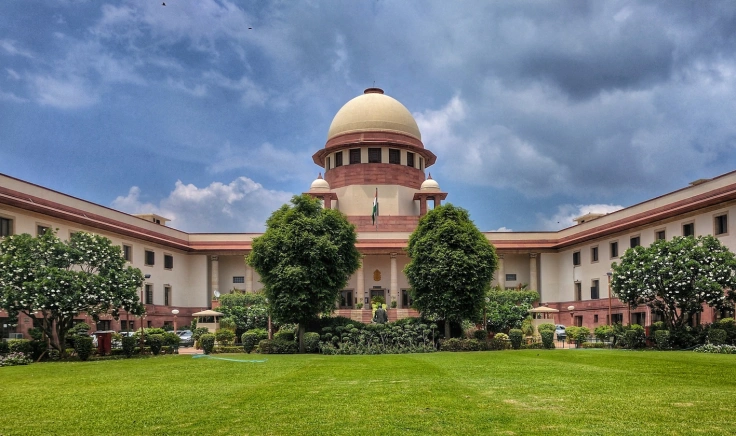
The Supreme Court on Monday declined to entertain a petition alleging that the Assam government has reportedly launched a “sweeping and indiscriminate drive” to deport persons suspected to be foreigners to Bangladesh.
A vacation bench of Justices Sanjay Karol and Satish Chandra Sharma asked the All BTC Minority Students Union (ABMSU) to approach the Gauhati High Court for appropriate relief.
The petitioner said that the state of Assam has reportedly launched a sweeping and indiscriminate drive to detain and deport individuals suspected to be foreigners, even in the absence of Foreigners Tribunal declarations, nationality verification, or exhaustion of legal remedies.
The petition filed through advocate Adeel Ahmed said there is a growing pattern of indiscriminate detentions and extrajudicial “push backs” of individuals, many of whom are from marginalised communities, by Assam authorities in border districts such as Dhubri, South Salmara, and Goalpara.
By its February 4 order, the apex court had directed the deportation of 63 identified “declared foreigners” whose Bangladeshi nationality was confirmed by the Ministry of External Affairs (MEA) and the government of Bangladesh.
The petition said that the Assam government has gone far beyond the mandate of that order by launching a sweeping deportation drive without any judicial oversight.
The petition alleged a violation of fundamental rights arising out of the ongoing deportation of Indian citizens under the guise of implementing the top court’s order.
“This policy of ‘push back’– being executed in border districts like Dhubri, South Salmara, and Goalpara–is not only legally indefensible, but also threatens to render stateless numerous Indian citizens stateless, especially those from poor and marginalised communities who were either declared foreigners exparte or have no access to legal aid to challenge their status,” the petition stated.
It sought direction that deportation without due process, including judicial declaration, MEA verification, and exhaustion of remedies, is unconstitutional.
It further sought a stay on all deportation proceedings carried out against individuals.
(This news report is published from a syndicated feed. Except for the headline, the content has not been written or edited by OpIndia staff)
On 24th May 2025, in Buxar, Bihar, five members of a family were shot due to personal enmity, three out of them lost their lives in this incident. 8 days after this entire incident, local RJD MP Sudhakar Singh and MLA Vijendra Yadav reached the house of the victims to meet them.
During this visit, the victims and villagers expressed their anger against them. The RJD leaders were asked that when leaders of every party had been visiting during the past 8 days, why did the local MP and MLA not bother to pay them a visit? RJD MP Sudhakar Singh started making excuses of pressure from the administration and limited resources when directly questioned.
According to the Dainik Bhaskar report, MP Sudhakar Singh said that first the administration did not allow him to come and after that he went to Tamil Nadu. That is why he was late in visiting the bereaved family.
When the angry people questioned him for not providing any update on the entire matter till now, he said that due to lack of resources, he is not able to remain active on social media.
MLA Vijendra Yadav said the accused is crazy
Apart from this, MLA Vijendra Yadav called the accused a crazy person. Vijendra Yadav said that Manoj, who is a named accused in the murder case, is a ‘crazy’ man.
Apart from this, the MLA started uttering all sorts of things about the army as well. He said, “The army also teaches us that when bullets start firing and you are weak, then run away from there. Even if you come back stronger later.”
Villagers were furious at his statements. The victim’s family told MP Sudhakar Singh that they have lost their family, and just want justice.
What is the entire matter
Three members of the same family were shot dead over a sand dispute in Ahiyapur, Buxar, Bihar. There was a dispute going on between the two families involved for past several days.
On Saturday (May 24, 2025), the family had gone out for a walk in the morning, when they were shot by people who came in two Scorpios near the canal. Vinod, Sunil and Virendra Singh of the family died on the spot and two others were seriously injured. One of the injured had to have his leg amputated due to serious injuries.
On the complaint of the victim’s side, the police have named 19 people. Out of these, the political connections of two people Santosh Yadav and Manoj Yadav have come to the fore.
JDU leaders are calling the murders ‘violence done by the opposition’. Party spokesperson Neeraj Kumar shared pictures of Santosh Yadav, the accused in the murder case, with RJD leader Tejashwi Yadav and MP Sudhakar Singh, and said that this is organised violence with political support.
On 1st June, Ukraine launched Operation Spiderweb deep inside Russia, showcasing a shocking display of asymmetric warfare. President Zelenskyy later confirmed it was in planning for nearly 1.5 years. Notably, the attack happened just a day before Russia and Ukraine were supposed to start peace talks in Istanbul. Ukraine used FPV (first-person view) drones to attack multiple high-security Russian airbases, resulting in the loss of billions of dollars’ worth of military equipment, including nuclear-capable warplanes.
Today, a brilliant operation was carried out. The preparation took over a year and a half. What’s most interesting, is that the “office” of our operation on Russian territory was located directly next to FSB headquarters in one of their regions.
— Volodymyr Zelenskyy / Володимир Зеленський (@ZelenskyyUa) June 1, 2025
Interestingly, these drones were not launched from the Ukrainian border. Instead, they were smuggled into Russia well in advance, hidden in mobile wooden cabins loaded onto trucks. The trucks were driven by unsuspecting locals. They were parked near airbases in Belaya, Diaghilevo, Olenya and Ivanovo. Once the trucks were in place, the SBU, Ukraine’s intelligence agency, remotely opened the truck roofs and launched the drones.
This will be in textbooks. Ukraine secretly delivered FPV drones and wooden mobile cabins into Russia. The drones were hidden under the roofs of the cabins, which were later mounted on trucks.
At the signal, the roofs opened remotely. Dozens of drones launched directly from the… pic.twitter.com/sJyG3WyYYI
The drones flew just a few feet above the ground and provided crystal-clear visuals of Russian bombers and early warning aircraft, including Tu-95s and the A-50. Each drone, carrying precision munitions, struck the targets with remarkable accuracy. Russia’s loss was not just strategic but irreversible. The Tu-95 and Tu-22M3 bombers destroyed in the operation are no longer in production. Over 40 aircraft were hit, with the total estimated damage crossing $2 billion.
Ukrainian Security Service has been preparing operation "Spiderweb" for 1,5 years. Drones were smuggled into Russia and prepared to be launched from wooden mobile homes placed on civilian trucks. Drones were launched from distance and made real time video of hits #SBU#Ukrainepic.twitter.com/jpsj5E57iK
— Бойові Бджоли / The Battle Bees (@battle_bees) June 1, 2025
Following the attack, the same trucks exploded in coordinated blasts, eliminating all evidence and wounding or killing those who went near them. It was meticulously planned, ruthlessly executed, and surprisingly cost-effective. Russia, the wounded bear, is expected to retaliate strongly.
BREAKING ??vs??: This might be one of the most badass moments of this whole war. Ukraine tricked random Russian truck drivers into hauling their FPV drones deep into Russia, right near nuclear bomber airfields. No clue what they were moving.
And just last year, India came dangerously close to a similar plot
In May 2024, OpIndia had reported how the National Investigation Agency (NIA) revealed one of the darkest secrets of terrorists living inside the country. In the sleepy town of Padgha, just 50 KM from Mumbai, investigations led by journalist Pankaj Prasoon and actions by the NIA exposed that the village had become a base of ISIS operations in India. The village was renamed Al Sham by its self-declared ruler, terrorist Saqib Nachan.
In 2023, a massive NIA raid in Padgha unearthed a stash of 44 drones, clearly being prepared for a coordinated attack on Mumbai. Those were not toy drones but were rigged for combat. The NIA found explosives, extremist literature and even Israeli flags, indicating a twisted attempt at false-flag operations or to incite communal tensions.
Saqib Nachan is a known terrorist linked to the 2002–2003 Mumbai bomb blasts. He had not just resurfaced but gone further. He was backed by foreign handlers, organised funding and digital networks to plan to turn Padgha into India’s version of Spiderweb. He was radicalising youth under the pretext of religious gatherings. They were getting trained in IEDs and given bayʿah, an oath of allegiance, to ISIS.
Thankfully, the NIA acted before the attack could have been executed and arrested 15, including Nachan, in December 2023. Had they delayed, India might have been writing obituaries, not reports. The world marvelled at Ukraine’s ingenuity on 1st June, but similar tactics, when used by terrorists, can lead to devastating results. It is not hard to imagine what could have happened had Al Sham succeeded.
Constant upgradation is a necessity
Operation Spiderweb is a chilling reminder of how modern warfare no longer relies on missiles, fighter jets and expensive equipment. It has turned towards low-cost, high-precision tools like FPV drones and covert logistics. The fact that such an operation could be planned, drones smuggled and an attack executed in just 1.5 years without detection should set alarm bells ringing across the world, especially for India.
There are hostile actors not only in Pakistan but inside India itself. These actors, backed by Pakistan and ISIS-linked operatives, actively seek to replicate such tactics. The threat is neither distant nor hypothetical. The foiled Padgha plot showed how dangerously close India came to witnessing a Spiderweb-style drone attack on Indian soil, much before Ukraine executed it in Russia.
Under the leadership of Prime Minister Narendra Modi, agencies like the NIA, supported by state police and central intelligence units, have cracked down hard on such sleeper cells and terror modules. The recent arrests of tens of spies working for Pakistan is another wake-up call that the enemy lives within.
The battle is far from over. Terrorism today wears many faces, from lone wolves to coordinated drone warfare. Defeating such sophisticated attacks requires a combination of proactive intelligence, strong political will, and public vigilance. The Modi government has taken significant steps to modernise internal security, but in an age where a Rs 30,000 drone can destroy a Rs 300 crore aircraft, constant upgradation of both technology and strategy is not a choice, but a necessity.