Home Blog Page 423

From defaced temples to Khalistanis demanding removal of all Hindus from Canada, how change from Trudeau to Carney as PM hasn’t seen any change in Anti-Hindu rhetoric in Canada

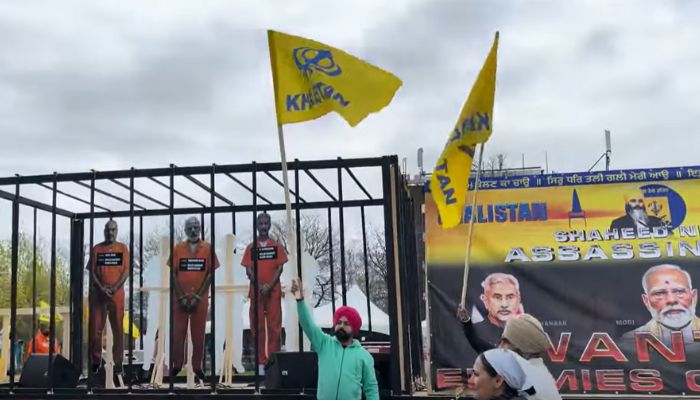
On 4th May, pro-Khalistani elements living in Canada organised an anti-Hindu parade in Toronto. The Khalistanis openly called for the deportation of 8 lakh Hindus residing in Canada. The anti-Hindu parade took place outside the Malton Gurdwara and drew sharp criticism online. The parade was organised at a time when Canada had just elected Mark Carney as the Prime Minister in recently held elections.

Carney had replaced Justin Trudeau as the leader of the Liberal Party following infighting within the party, and waning public trust in Trudeau’s leadership. However, it seems that the Carney administration’s stance on pro-Khalistani elements is unlikely to change significantly from that during Trudeau’s tenure.

Khalistani parade featured Modi, Shah, Jaishankar’s effigies in cages

Notably, the parade featured effigies of Indian Prime Minister Narendra Modi, Home Minister Amit Shah, and External Affairs Minister S. Jaishankar, handcuffed and caged. The aim appeared to be to mock Indian leadership while accusing them of attacks on pro-Khalistani Sikhs in Canada. Such attacks on Indian leadership have increased exponentially since the murder of Khalistani terrorist Hardeep Singh Nijjar, who was killed in a gang-related incident outside his Gurdwara in Surrey in June 2023. Following his murder, then Prime Minister of Canada, Justin Trudeau, accused Indian agents of killing Nijjar, an accusation for which Canada failed to provide any evidence.

Returning to the parade, the attendees chanted slogans calling for Punjab’s liberation from India to form Khalistan, a country for Sikhs. While these parades are not new to Canada, the timing of this latest rally has sparked outrage, given Carney’s recent assumption of office. It has raised concerns over whether he intends to follow Trudeau’s appeasement playbook or introduce stricter enforcement against separatist hate groups operating from within Canada.

Recently, during the Khalsa Parade in Canada, operatives and the Jathedar of the Khalistani terrorist organisation Babbar Khalsa, along with members of Amritpal Singh’s militia group Anandpur Khalsa Force (AKF), were seen in videos. Babbar Khalsa-linked terrorist Santokh Singh Khalsa, who was convicted for plotting the bombing of AI Flight AI-112, was also seen giving speeches at the parade. The Khalsa Parade occurred just days before the elections in Canada.

Journalists and citizens question Carney’s silence

Videos of the parade were shared by Canadian journalist Daniel Bordman. He called it a glaring display of “anti-Hindu hatred”. In a post on X, he wrote, “The Jihadis rampaging through our streets have done significant damage to the social fabric, running around threatening any Jews they can find. But the Khalistanis are giving them a good run for their money on most hateful foreign-funded menace to society. Will Mark Carney’s Canada be any different from Justin Trudeau’s?”

The post came in response to Shawn Binda’s alarming message, where he stated that Khalistani gangs at Malton Gurdwara demanded the deportation of Hindus. He wrote, “K-Gang at Malton Gurdwara (Toronto) shamelessly demands 800,000 Hindus—whose vibrant communities span Trinidad, Guyana, Suriname, Jamaica, South Africa, Netherlands, Malaysia, Sri Lanka, Singapore, Kenya, and beyond—be deported to ‘Hindustan’. This isn’t a protest against India’s government; it’s blatant anti-Hindu hatred from a Khalistani terrorist group, notorious for Canada’s deadliest attack, yet arrogantly claiming the right to stay.”

In the video shared by Binda, a man is heard saying, “India says there is nothing left for it in Canada. This is a message to the 8 lakh Indians living here, take them back to Hindustan.”

A dangerous precedent – Not a protest against India, but Hindus

It must be noted that this was not a regular protest against the Indian government. It was a hate-filled parade targeting Hindus. The Khalistani elements in Canada have shown that a change in leadership will not deter them from targeting Hindus and India. They continue to spew venom just as they did during Trudeau’s tenure. Canada’s political chapter may have changed, but the content of the book remains the same.

Notably, Khalistani terrorist Gurpatwant Singh Pannun, one of the leading torchbearers of the Khalistani movement worldwide, has recently launched an attack against India while siding with Pakistan after the deadly Pahalgam terrorist attack. Notably, the Pakistan-sponsored terrorist outfit Lashkar-e-Taiba’s offshoot, The Resistance Force, killed 26 innocent Hindus in Pahalgam.

Following the attack, India launched a diplomatic and strategic counterattack on Pakistan. Irked by India’s actions and the rising possibility of war between India and Pakistan, Pannun claimed on a Pakistani channel that Sikhs in Punjab would not allow the Indian Army to launch an attack on Pakistan from Punjab if Pakistan openly supports Khalistan, a separate Sikh nation.

Khalistani elements have also often attacked Hindu temples in Canada on multiple locations. They often deface walls of the temples with anti-India and pro-Khalistan slogans. In November 2024, Khalistani goons attacked Hindu temple in Canada’s Brampton leading to severe criticism of the Trudeau-led government.

Keeping such rhetoric in mind, it is essential for the Indian government to take a strong stance against Khalistani elements in Canada and to pressurise the Canadian government to curb these forces. Trudeau miserably failed to do so despite India’s repeated requests, merely for the sake of vote bank politics. Now that the leadership has changed, India may choose to put pressure on Prime Minister Carney to take concrete action against anti-India and anti-Hindu elements. However, the recent parade has cast serious doubt on Canada’s willingness to act.
Kashi draws 11.46 crore visitors in first quarter of 2025, number of people coming to the holy city booms after Kashi Vishwanath Corridor

The Kashi Vishwanath Dham in Uttar Pradesh’s Varanasi is attracting record-breaking number of people, not only from eithin India, but also from around the world. In just the first quarter of 2025, after the launch of the Kashi Vishwanath Corridor, the domestic footfall in Kashi surged by 77.59%, with the number of foreign visitors rising by 34.21%.

The holy city of Mahadev attracted over 11.46 crore visitors in Q1 2025 (January to March), significantly higher than the footfall recorded in 2024.

As per the government data, in the first quarter of 2024, Kashi was visited by 2.56 crore people. This translates into an increase of around 8.89 crore domestic visitors in Q1 2025.

Similarly, foreign visitors also surged from 98,961 in 2024 to 1,50,425 in 2025, recording an increase of 51,464 visitors in first three months of the year.

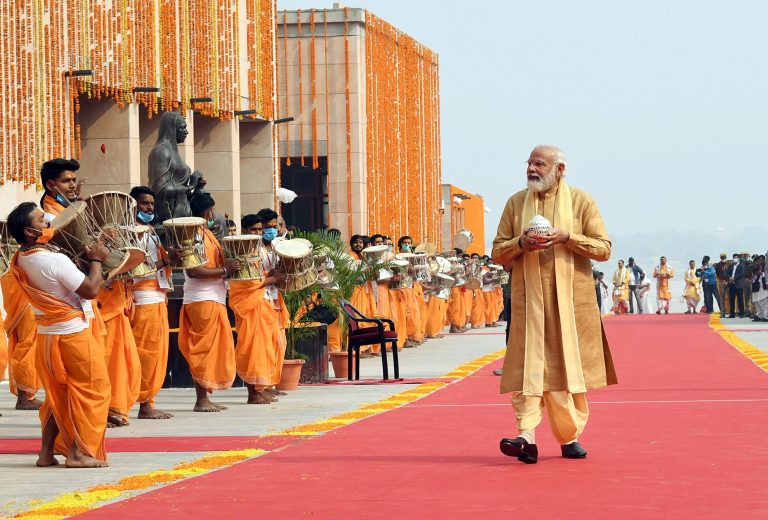
Notably, the increase in footfall can be attributed to many factors, especially the Kashi Vishwanath Dham Corridor, which was inaugurated by Prime Minister Narendra Modi in December 2021, rejuvenation of Ganga Ghats, beautiful roads, cleanliness, new ropeway project, cruise service, and the divine Ganga Aarti.

Back in 2021, the Kashi Vishwanath Temple area was from 2,700 sq ft to 5 lakh sq ft under the Kashi Vishwanath Dham Corridor project worth Rs 900 crores which was launched by PM Narendra Modi. The BJP-led government established direct connectivity between the Kashi Vishwanath Temple and the river Ganga through Jalasen, Manikarnika, and Lalita ghats. This project has significantly contributed to increased connectivity, beautification of the sacred city and attracting domestic and foreign visitors.

According to Rajendra Rawat, Deputy Director of the Tourism Department, the development that has taken place in Banaras in the last eight years is showing results today. Earlier, where the number of visitors coming here was in lakhs, now this figure has reached crores.

Trump imposes 100% tariff on movies made outside USA, calls them ‘national security’ threat, may impact Bollywood, Tollywood movie makers

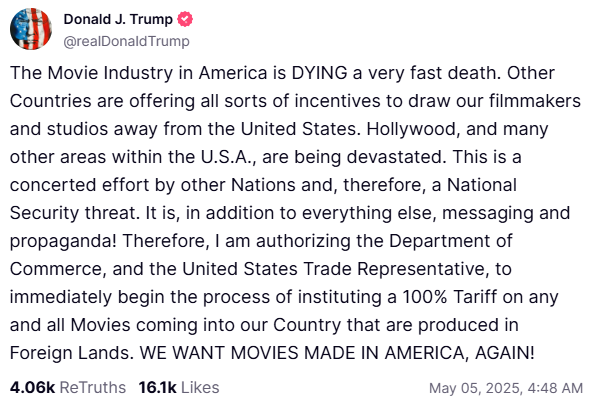
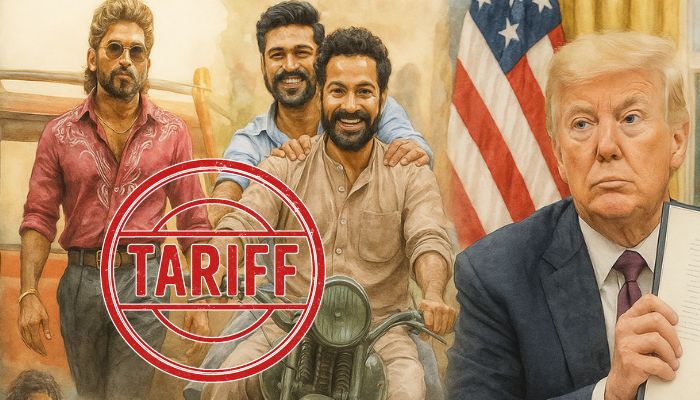
On 5th May (local time), the President of the United States, Donald Trump, imposed a 100% tariff on any and all movies produced in foreign lands and released in the US. In a post on the social media platform Truth Social, Trump called such movies a “threat to national security” and claimed that, because of the incentives provided by foreign countries, filmmakers and studios have shifted outside the US.

In his post, Trump said, “The Movie Industry in America is DYING a very fast death. Other Countries are offering all sorts of incentives to draw our filmmakers and studios away from the United States. Hollywood, and many other areas within the U.S.A., are being devastated. This is a concerted effort by other Nations and, therefore, a National Security threat. It is, in addition to everything else, messaging and propaganda! Therefore, I am authorizing the Department of Commerce, and the United States Trade Representative, to immediately begin the process of instituting a 100% Tariff on any and all Movies coming into our Country that are produced in Foreign Lands. WE WANT MOVIES MADE IN AMERICA, AGAIN!”

Source: Truth Social

According to ProdPro, production spending in the US stood at $14.54 billion in 2023, which was down by 26% compared to 2022. However, countries such as Australia, New Zealand, Canada, and the UK saw an increase in spending over the same period.

According to a report on CNN, it is unclear how the US administration intends to impose a 100% tariff on films made outside the US and released in the country. Films are essentially intellectual property and not goods. They can be described as services, which are not currently subject to tariffs. However, the United States Trade Representative (USTR) states that some services can still face other trade restrictions, such as special regulations or tax benefits granted to local companies.

If imposed, it could make things difficult for American filmmakers, as other countries might retaliate. They may stop offering incentives and could impose additional taxes on films made in the US, making it harder for American filmmakers to attract viewers to cinemas.

Furthermore, certain stories require filming in real locations outside the US. If tariffs or penalties are introduced, it would discourage filmmakers from shooting abroad, which would undoubtedly compromise quality and authenticity.

Such tariffs could also reduce global collaboration. Modern films often involve international talent, including actors, crews, and editors. Many films in the US are edited in foreign countries such as India, where studios offer VFX editing for major productions.

For example, according to Filmfare, VFX elements for films such as The Jungle Book, Life of Pi, Avengers: Endgame, Thor: The Dark World, Gravity, and many others were completed in India. If tariffs are imposed, the cost of hiring Indian VFX companies would increase severalfold.

Not to forget, it will also make it significantly more expensive for streaming services to release foreign films and shows on their platforms in the US, which may further lead to an increase in monthly subscription fees. For instance, Korean TV series are highly popular in the US. According to Polygon, viewership numbers for TV series produced in South Korea rose by 200% in the US between 2019 and 2021 and have continued to increase steadily since then. For streaming platforms like Netflix, releasing such content will become costlier due to the tariff.

How tariffs will affect Indian filmmakers

As the US administration has received the green light to impose a 100% tariff on foreign films, it will become expensive for Indian filmmakers to release their films in the US. It is notable that Indian films have performed exceptionally well in the US over the past decade.

According to IMDb, the highest-grossing Indian movies in the US include Baahubali 2: The Conclusion ($21.3M / ₹1,767 crore), Kalki 2898 AD ($15M / ₹1,245 crore), RRR ($13.9M / ₹1,154 crore), Pathaan ($11.4M / ₹946 crore), Pushpa: The Rule – Part 2 ($11M / ₹913 crore), Jawan ($9.95M / ₹826 crore), Baahubali: The Beginning ($8.46M / ₹703 crore), Animal ($7.90M / ₹656 crore), Jailer ($7.70M / ₹639 crore), and Salaar ($7.29M / ₹605 crore). Interestingly, seven out of the top ten highest-grossing Indian films in the US are from the South.

It is evident that Indian films, particularly from the South Indian film industry (Tollywood), perform well in the US. However, the tariff proposed by the US President will make it more expensive and difficult for Indian filmmakers to release films in the US. Ticket prices will rise, which could further deter audiences from visiting cinemas.

Notably, in 2018, the US box office reached $12 billion. After the pandemic hit, it plunged to $2 billion. In the aftermath, several theatres shut down, and a significant portion of the audience shifted to streaming platforms such as Netflix and others, particularly those run by the studios themselves. Indian films account for only a small share of the US box office, and higher ticket prices would mean even lower collections in an already inflation-hit economy like that of the US.

US–China trade war now includes the film industry

China is the world’s second-largest film producer. In April 2025, Beijing announced that it planned to “moderately reduce” the number of US films released and viewed in China. The decision came against the backdrop of the US–China trade war.

In a statement, the China Film Administration said, “The US government’s erroneous practice of imposing excessive tariffs on China is likely to further diminish the Chinese audience’s favourable perception of American films.”

Notably, although China is a huge market for US films, the Asian giant has capped the number of foreign films for decades. Reportedly, in the early 1990s, it formalised an agreement limiting imports to 10 per year. This did not initially affect the US market, but when Titanic grossed $44 million in China in 1998, it prompted Hollywood to recognise China as a potential market.

In 1999, negotiations led China to double the number of foreign films to 20, which was further increased to 34 in 2012. In 2024, 33 US films were released in China, generating total box office receipts of $722 million.

Similarly, several Chinese films have earned substantial amounts in the US. The Great Wall made around $35 million, while Ne Zha 2, released in 2025, earned approximately $20 million in the US, making it the highest-grossing non-English-dubbed international animated film in North America.

In conclusion, the imposition of 100% tariff on foreign films by the US could result in a significant blow to the Indian film industry, specifically at the time when its global footprint is expanding. South Indian cinema has consistently delivered high-grossing hits in the US. It may face severe barriers in accessing one of its most lucrative overseas markets. Rising ticket prices, reduced incentives, and shrinking international collaborations could make it financially unviable for many Indian filmmakers to release their films in the US which will lead to devastating effects on cultural exchange and commercial growth that Indian cinema has steadily built over the past decade.

NBDA asks news channels not to invite hate mongering anti-India Pakistani commentators for TV debates and panel discussions

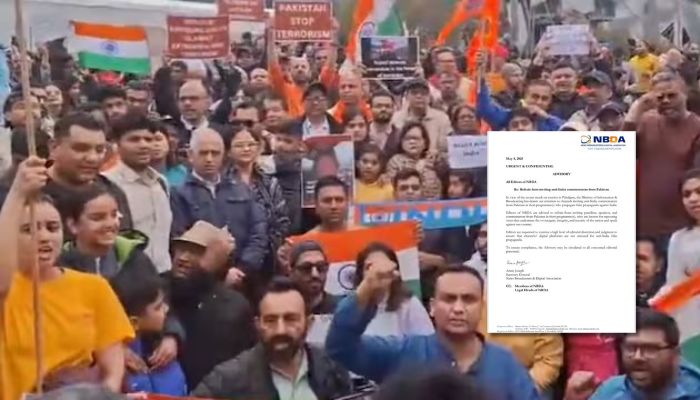
In the aftermath of the Pakistan-sponsored Islamic terror attack in Pahalgam, which claimed 26 lives, the National Broadcasters and Digital Association (NBDA) has issued an advisory asking media to refrain from inviting anti-India commentators from Pakistan for discussions.

On Sunday, May 4, NBDA issued the advisory to all editors associated with the association. The NBDA emphasised that the Ministry of Information and Broadcasting has raised concerns over news channels inviting anti-India commentators from Pakistan in their programs who “propagate false propaganda against India.”

“In view of the recent attack on tourists in Pahalgam, the Ministry of Information & Broadcasting has drawn our attention to channels inviting anti-India commentators from Pakistan in their programs who propagate false propaganda against India,” the advisory reads.

The NBDA, which is a top body representing private news broadcasters, advised the editors to “refrain from inviting panelists, speakers, and commentators from Pakistan in their programs, who are known for espousing views that undermine the sovereignty, integrity, and security of the nation and speak against our country.”

It further asked editors to exercise a “high level of editorial discretion and judgment to ensure that channels/ digital platforms are not misused for anti-India false propaganda. To ensure compliance, the Advisory may be circulated to all concerned editorial personnel.”

Meanwhile, the National Broadcasters Federation (NBF) has also issued a similar advisory cautioning its member news channels against inviting Pakistani propagandists on their news panel discussions or debate programs.

In its advisory issued on Sunday (May 4), the NBF urged news channels to uphold the “highest standards of journalistic integrity” while remaining “mindful of the public sentiment during these sensitive times”.

“As a precautionary measure, NBF strongly requests that media channels refrain from inviting guests or panelists from Pakistan to participate in any news debates, panel discussions, or programming content until further notice,” the NBF’s advisory states emphasising that this suggestion made in national interest comes “considering the current political and security context”.

Dehradun: Muslim man thrashed by mob after asking his name? Read the truth behind the viral fake news, designed to peddle ‘Muslim victimhood’ narrative

On Sunday (4th May), a piece of fake news went viral on social media, wherein it was claimed that a Muslim family was attacked with a knife and an iron rod in Dehradun by a mob after asking their name and religion.

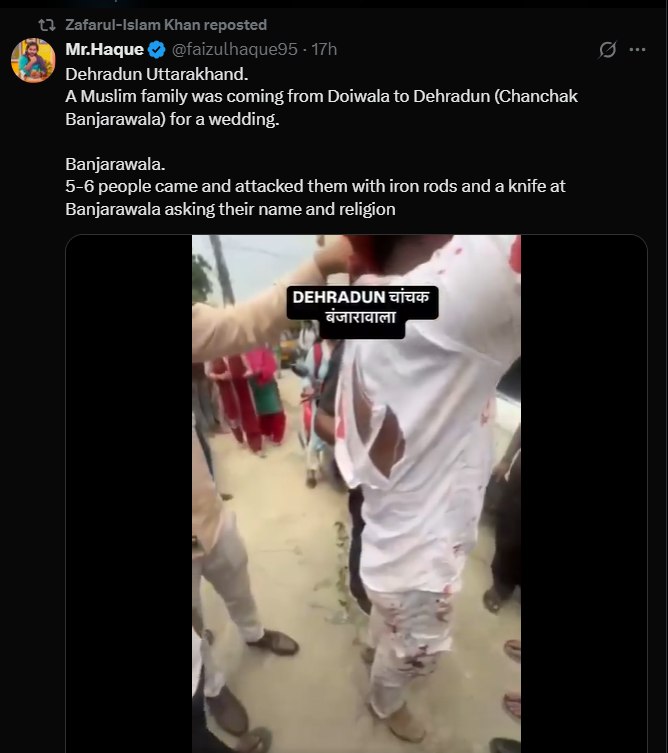
An X user named ‘Mr Haque’ tweeted, “Dehradun, Uttarakhand. A Muslim family was coming from Doiwala to Dehradun (Chanchak Banjarawala) for a wedding. Banjarawala. 5-6 people came and attacked them with iron rods and a knife at Banjarawala asking their name and religion.”

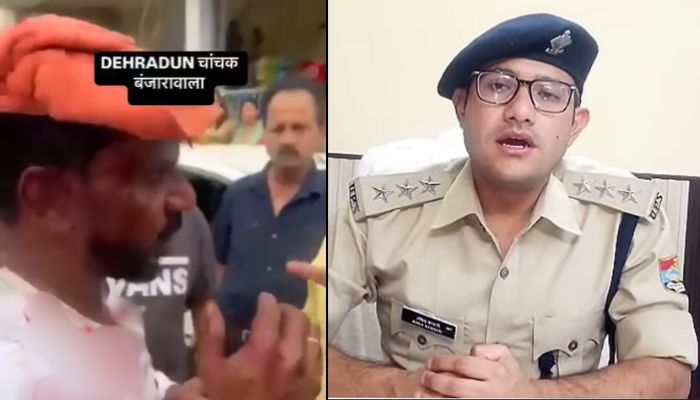
The tweet was accompanied by a video of a visibly injured and bloodied man. The fake news was amplified and retweeted by Zafarul Islam Khan, who had previously threatened the Hindu community.

Screengrab of the Twitter post

The fake news also went viral on X, with the usual suspects using the alleged incident to propagate the ‘Muslim victimhood’ angle.

The Truth behind the incident

The Dehradun Police have rubbished the claim made by ‘Mr Haque’ and others that the Muslim man was thrashed because of his religious identity. In reality, it was a case of road rage.

In a statement, the police clarified that the incident occurred on 1st May and the bloodied man was identified as Anish Ali. He and his family were en route to a wedding ceremony when his car broke down in the middle of the road.

This led to a traffic jam. A heated confrontation ensued between Ali and another man named Sanjay Rawat over the issue. They threw blows at each other, resulting in injuries on both sides.


On learning about the matter, the police reached the spot and sent the injured people to the hospital for immediate medical attention.

A large team of police was deployed in the area soon after to prevent any untoward incident. The cops also seized the CCTV footage from the site of the incident and registered multiple FIRs.

“The incident occurred due to a dispute caused by a car breaking down and causing a traffic jam. However, through social media, some people are trying to give a communal colour to the incident. The police are constantly keeping a vigilant eye on social media and identifying such people against whom strict legal action will be taken,” it cautioned.

Not the first attempt to defame Hindus

Social media is rife with fake stories of ‘Muslim victimhood’ ever since the Pahalgam terror attack, where Islamic terrorists massacred Hindus.

The make-believe stories are designed in such a way as to demonise Hindus and shift public debate from the religious profiling of victims during the Pahalgam terror attack.

This ‘Muslim victimhood’ card is employed to divert public debate from the religious hate-fueled nature of the terror attack.

OpIndia had recently debunked the fake news about the death of a Muslim corporate employee in Bengaluru at the hands of his Hindu colleagues for not chanting ‘Gayatri Mantra’ and not commenting on the Pahalgam terror attack.

The fake news was amplified by the leftist propaganda outlet, The Quint, which later deleted the story without citing any apology.

The story was covered by ‘journalist’ Aliza Noor based on a fake story by a LinkedIn user named Ishan Saxena, and she did not bother to verify the facts of the matter. It was gutted after it failed to fit the ‘Muslim victimhood’ story.

Noor (who had also written the Kolkata doctor story) has now deleted her X, LinkedIn and Instagram accounts after the exposé. She had also peddled the fake news about a Kolkata doctor ‘denying’ treatment to a Muslim patient.

The vicious ecosystem had also amplified the story of the molestation of a Kashmiri student at Jamia Millia Islamia. It later went silent when the perpetrator turned out to be Mohammed Abid from Mewat.

Brazil: Lady Gaga concert attack was planned to gain ‘notoriety on social media’

0

Police have said that two persons arrested on suspicion of planning an attack at singer Lady Gaga’s concert in Rio de Janeiro were targeting LGBTQ+ people, CNN reported.

According to the Civil Police of Rio de Janeiro, the two persons had tried to “recruit” people, including teenagers, to conduct coordinated attacks at a concert on Saturday, using improvised explosives and Molotov cocktails. According to police, the attack was planned to gain “notoriety on social media.”

In a separate development, a third person who allegedly planned to conduct a “satanist ritual by killing a child or a baby” during the concert was charged with terrorism offences, according to Brazilian police. The arrests were made following police searches at nine addresses across Brazil, CNN reported.

Around 2.1 million people attended the pop icon’s free performance at Rio’s Copacabana beach, which was Gaga’s first show in Brazil since 2012. Police said the suspects mainly wanted to target LGBTQ+ people attending the concert. Lady Gaga is a staunch supporter of the LGBTQ+ people and has previously said in a rally at World Pride NYC that she would “take a bullet” for them.

She said that people “filled with hatred and ignorance… should be looking up to the queer community and following and learning about love, and learning about grace, learning about kindness.”

According to police, the suspects were part of an online hate group that worked to radicalise young people. Police said they promoted “the dissemination of hate crimes, self-harm, pedophilia and violent content.”

According to Brazil’s Ministry of Justice and Public Security, those who have been arrested by police posed as “Little Monsters,” the name given to fans of Lady Gaga, to try and recruit people online to conduct the coordinated attacks. In response to this, police named their plan to thwart the plot “Operation Fake Monster.”

the police named their plan to thwart the bomb plot “Operation Fake Monster.” The group’s alleged leader was arrested for illegal possession of a firearm while a teenager linked to the thwarted attack was arrested for possession of child pornography, CNN reported.

According to police, 15 search and seizure warrants were served against nine targets in Brazil. One of those searched was the man who allegedly planned to kill a child or baby during the concert, as he claimed that Gaga was a satanist and he intended to “respond in the same way,” according to police officer Maria Luiza Machado. Police said he was charged with terrorism and inducing crime.

According to the Rio de Janeiro Civil Police, two of the search warrants were conducted in coordination with the US Consulate, which warned Brazilian authorities regarding potential threats. Before the singer’s concert on Sunday, a spokesperson for Lady Gaga told CNN that there were “no known safety concerns.”

In a statement to CNN, the spokesperson said, “We learned about this alleged threat via media reports this morning.” The statement read, “Prior to and during the show, there were no known safety concerns, nor any communication from the police or authorities to Lady Gaga regarding any potential risks. Her team worked closely with law enforcement throughout the planning and execution of the concert and all parties were confident in the safety measures in place.” 

(This news report is published from a syndicated feed. Except for the headline, the content has not been written or edited by OpIndia staff)

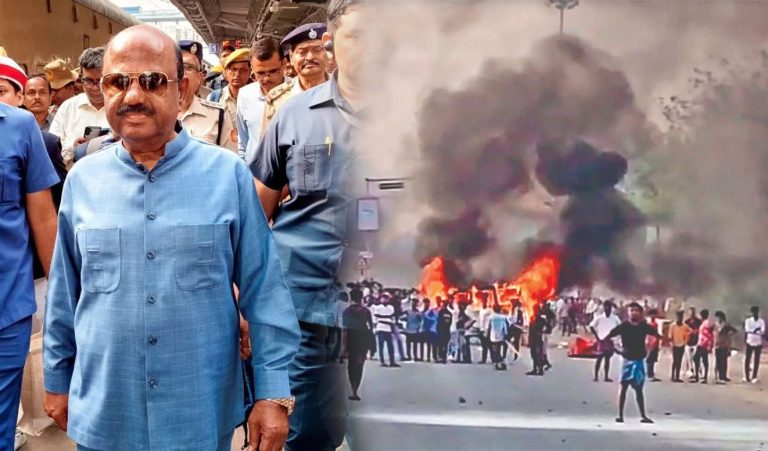
Bengal governor sends report on Murshidabad violence, recommends new law for centre to take over law and order, says Article 356 may be considered if situation collapses

West Bengal Governor CV Ananda Bose has sent a report to the central government after visiting Murshidabad and Malda, areas that witnessed large-scale violence against Hindus during recent protests against Waqf Amendment Act. In that report, the governor talked about imposing President’s rule in the state if law and order collapses.

In the report, the governor wrote that if the situation continues to deteriorate, then Article 356 of the Constitution should be invoked. Notably, Article 356 of the Constitution contains the provision to impose President’s rule in a state.

According to reports, in the letter sent to the Centre, Governor Bose has mainly asked for three things to be considered. First, if the state administration fails to function properly, a law can be made to hand over the responsibility of maintaining law and order to the central government.

Second, the Governor believes that the appointment of an inquiry commission under the Commission of Inquiry Act, 1952, can also be considered. The job of the commission will be to look into all aspects and give necessary suggestions to prevent such incidents in the future.

Third, in the districts along the international border where there is concern, he believes that the central forces or the Border Security Force (BSF) can be ordered to set up more border posts in the areas under their jurisdiction. The Governor said this is very necessary after visiting the unrest-hit areas and talking to the affected families there.

He has recommended setting up permanent camps for BSF and CAPF in the border areas of Murshidabad and Malda. 

The governor reportedly wrote that he feels that this violence was pre-planned. In the report sent to the Home Ministry, he said that the local administration failed to handle the situation, and the police didn’t act properly.

The report adds that the atmosphere of fear still prevails in various parts of Murshidabad. The governor wrote that steps should be taken as per the Constitution to increase people’s confidence. 

Last month, unrest spread to several areas of Murshidabad over the amended Waqf Act. Initially, the state police, with the help of the BSF, were trying to control the situation there. Later, central forces were also deployed there on the orders of the High Court. 3 people, including a father-son duo, died in the violence by Muslim protestors.

 Chief Minister Mamata Banerjee is scheduled to visit Murshidabad on Monday. 

West Bengal: BJP worker in critical condition after his neck was slashed with razor in Nadia district, BJP alleges TMC worker attempted to kill him

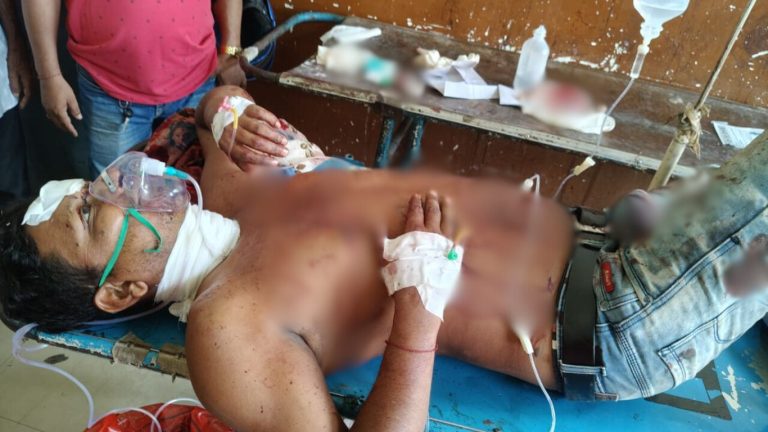
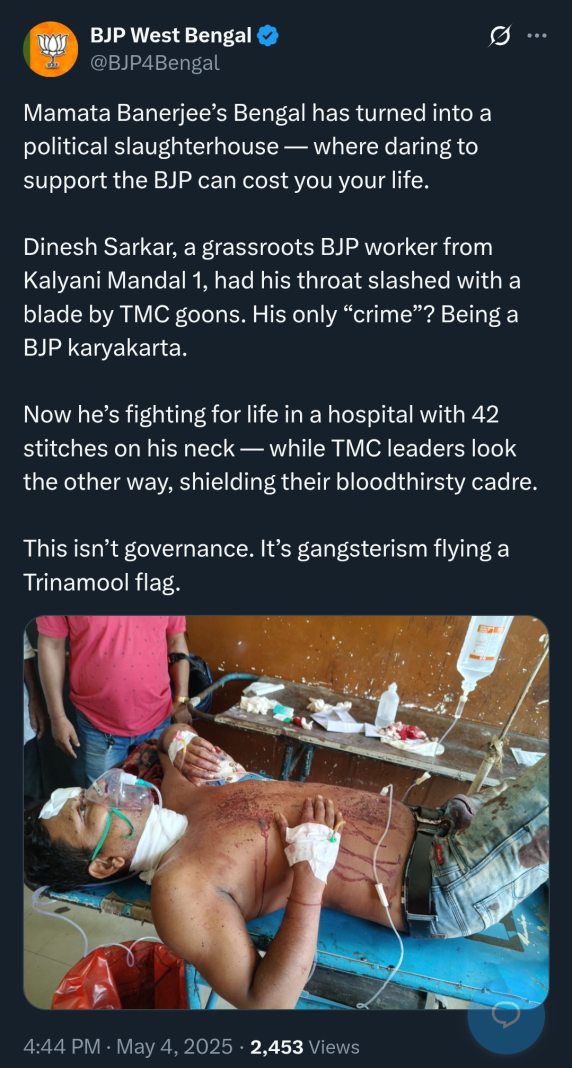
In a horrifying incident that happened in Jangalgram, Madanpur in the Nadia district of West Bengal, a BJP worker was allegedly attacked by a TMC worker with a razor on Saturday (3rd May). As per reports, the incident took place when the BJP worker named Dinesh Sarkar was sitting in front of a salon in the Kajirbagan area. Suddenly, the culprit named Sanjay Sikdar arrived there, picked up a razor from the salon, slashed Sarkar’s throat and fled.

Bleeding profusely, Sarkar held his neck with his hands and started to run. Sikdar picked up an iron rod from a nearby bicycle shop and chased him. However, Dinesh Sarkar managed to jump into a running autorickshaw and went to Jawaharlal Nehru Memorial Hospital, where he was admitted. According to the West Bengal BJP, Dinesh Sarkar got 42 stitches on his neck during the treatment. BJP has alleged that the attacker, Sanjay Sikdar, is a member of the ruling TMC.

The auto driver said that when he was driving on the road, he saw the victim running towards him, holding his neck with his hands. Sanjay Sikdar was chasing him with a rod in his hand. He let Dinesh Sarkar in and reached the Jawaharlal Nehru Memorial Hospital.

Jangalgram MLA Ambika Roy visited Sarkar in the hospital, where he is currently undergoing treatment. Speaking to the media, Roy accused the TMC of spreading terror in the area by targeting BJP workers. He said that the TMC worker attacked Sarkar only because he is a member of the BJP.

Roy added that the TMC worker had left the area a few years ago and returned recently. BJP West Bengal condemned the incident and wrote a post on X, accusing the West Bengal CM, Mamata Banerjee, of turning the state into a “slaughterhouse”.

Screenshot

BJP MP Shantanu Thakur also came to visit Dinesh Sarkar at the hospital.

The police also arrived at the hospital after receiving information about the incident. The culprit is absconding, and the police are searching for him.

UP: Tension erupts in Bulandsheher after 12th student killed with cricket bat by a youth over argument

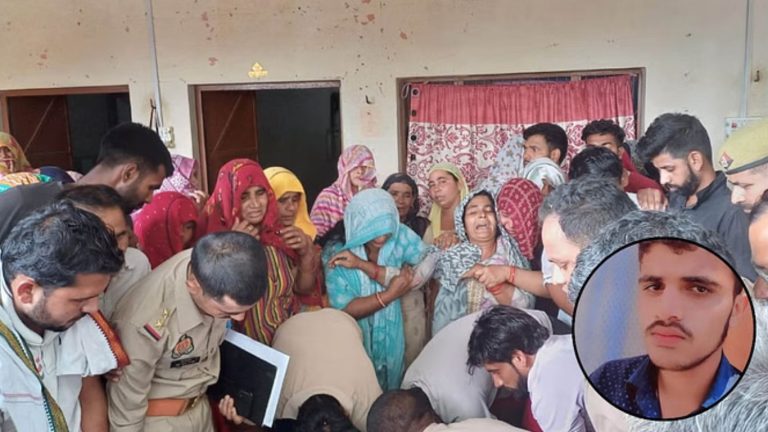
In a tragic incident in Rasulpur village in the Ahar police station area of Bulandshahar, Uttar Pradesh, a 19-year-old boy named Shakti Singh lost his life after another boy named Vishesh reportedly hit him with a cricket bat. The victim was taken to a private hospital for treatment, where he was declared dead. Tensions flared up in the village due to the horrific nature of the incident.

As per reports, the victim, who was studying in the 12th standard, left around 10 am on Sunday (4th May) to play cricket. During the game, he got into an argument with Vishesh. Soon, the argument escalated into a physical fight, and Vishesh allegedly hit Shakti with his cricket bat. Shakti lost consciousness and fell on the ground. Other boys who were playing cricket with him informed his family about the incident, who took him for treatment, but he could not be saved.

The victim’s uncle, who was working near the ground where he was playing cricket, said that Shakti’s friends came running and told him that Shakti got into a fight. He immediately rushed and reached the spot where he saw Shakti lying on the ground unconscious. He took him to the doctor, where he was declared dead.

On receiving the information about the incident, police forces from nearby police stations reached the village. The victim’s body was sent for postmortem.

As the victim and the attacker belonged to different castes, the incident led to tension between the people of the two castes in the village. In view of this, teams of police have been deployed in the village to maintain law and order. The culprit is on the run, and the police are looking for him.

Late actor Irrfan Khan’s son Babil Khan posts disturbing videos alleging bullying in Bollywood, family releases statement saying they were misinterpreted

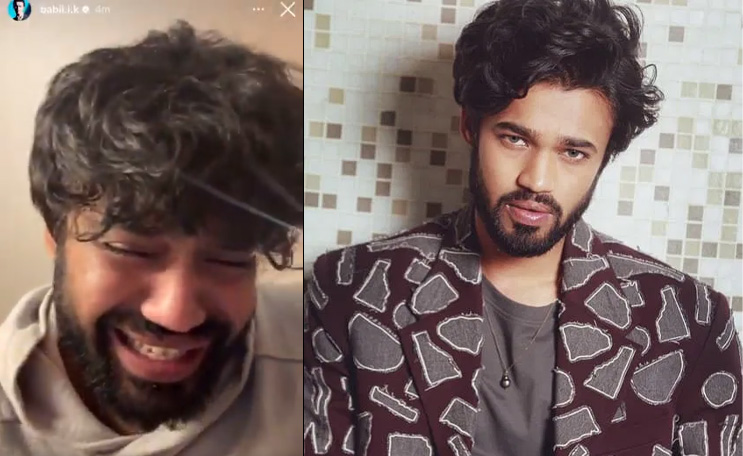
After actor and son of late actor Irrfan Khan, Babil Khan’s videos from his now deleted Instagram account were shared widely on social media, his family and team on Sunday released a clarification statement.

“Over the past few years, Babil Khan has earned immense love and appreciation for his work, as well as for his openness about his mental health journey. Like anyone else, Babil is allowed to have difficult days — and this was one of them. We want to reassure all his well-wishers that he is safe and will be feeling better soon,” the statement shared by his family and team read.

“Babil has been widely misinterpreted,” it said.

“That said, a video of Babil has been widely misinterpreted and taken out of context. In the clip, Babil was sincerely acknowledging a few of his peers whom he believes are making meaningful contributions to the evolving landscape of Indian cinema,” the statement read.

“His mention of artists like Ananya Panday, Shanaya Kapoor, Siddhant Chaturvedi, Raghav Juyal, Adarsh Gourav, Arjun Kapoor, and Arijit Singh came from a place of genuine admiration — for their authenticity, passion, and efforts to restore credibility and heart in the industry,” the statement further read.

The family asked mediapersons and public to “consider the full context of his words”, “We respectfully urge media publications and the public to consider the full context of his words rather than drawing conclusions from fragmented video clips.

Babil Khan, was seen on Sunday breaking down in several stories on his Instagram account, lashing out at several actors and talking about the pressures and challenges of being part of Bollywood. Babil later deleted his Instagram account.

Videos from his Instagram posts was shared widely on social media shedding light on the bullying he allegedly faced in Bollywood.

Following the video’s release, Babil’s Instagram account became inaccessible, and users who attempted to visit the profile were met with a message indicating that the account had been removed.

In the now-deleted video, Babil appeared visibly emotional and fought back tears as he opened up about the pressures and challenges of being in the Hindi film industry.

He spoke candidly about the difficulties he had allegedly encountered within Bollywood, which had caused him emotional distress.

Babil, who made his acting debut with the critically acclaimed film ‘Qala’ and was recently seen in ‘Logout’, has always been open about his struggles following the tragic loss of his father, Irrfan Khan.

The young actor has been vocal about the emotional toll of losing his father and has often shared heartfelt tributes to him on social media.

On the recent anniversary of Irrfan Khan’s passing, Babil shared a poignant post that read, “With you, without you. Life goes on. With me, without me. Soon I’ll be there. With you, not without you. And we will run together, and fly. Drink from waterfalls, pink not blue. I will hug you so tight, and I will cry. Then we’ll laugh, just like we used to. I miss you.”


(This news report is published from a syndicated feed. Except for the headline, the content has not been written or edited by OpIndia staff)