Home Blog Page 435

Congress leader Sachin Pilot calls for special parliament session to pass resolution reclaiming PoK

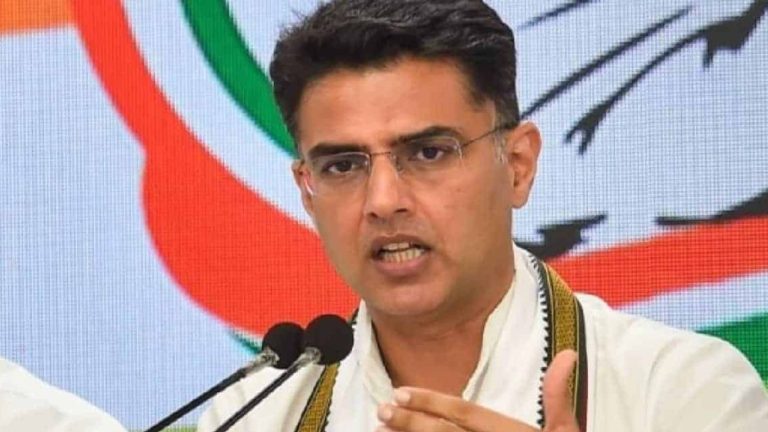
Congress leader Sachin Pilot today (11th May) addressed the media about the ongoing hostilities between India and Pakistan, and the recent ceasefire understanding between the two countries. Pilot demanded that a special session of the Parliament should be called and a resolution, like the 1994 resolution, should be passed in which all the political parties should unanimously declare that the Pakistan-occupied Kashmir is an integral part of India and we will take it back. “Congress party has been demanding it for long that a special parliament session be called and we should repeat the resolution of 1994 when all the parties unanimously agreed and passed the resolution that PoJK is an integral part of India and we will take it back,” Pilot said.

Pilot also paid tribute to the civilians and the security personnel who lost their lives in the military escalations between the two countries and praised the Indian Armed Forces for their valour and bravery.

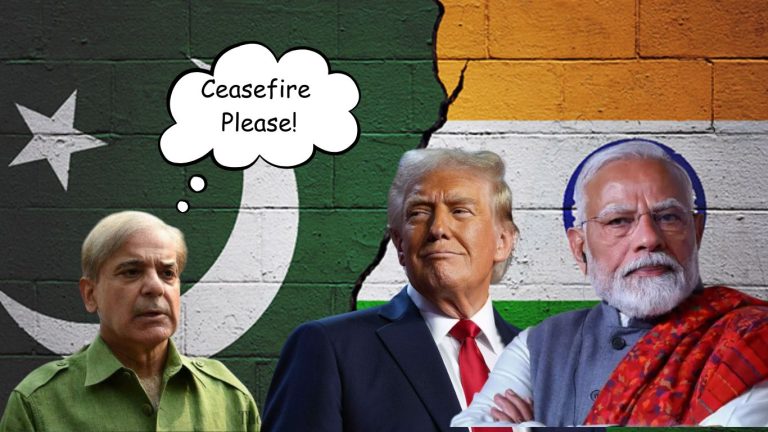
He expressed surprise over the announcement of the ceasefire ‘understanding’ reached between India and Pakistan, coming through the US President Donald Trump. “We were surprised by the fact that US President Donald Trump announced the ceasefire, which has happened for the first time,” said Pilot. He called out Pakistan for attempting to internationalise the Kashmir issue through the intervention of the US.

What was the 1994 resolution on the PoK

On February 22, 1994, the Parliament unanimously passed a resolution declaring the entire Jammu and Kashmir as an integral part of India. It added that any attempts to separate it from the rest of the country will be resisted by all necessary means. The resolution demanded that Pakistan vacate the parts of J&K that it controlled through aggression. “Pakistan must vacate the areas of the Indian State of Jammu and Kashmir, which they have occupied through aggression,” the resolution read.

PM Modi tells defence forces, ‘Wahan Se Goli Chalegi, Yahan Se Gola Chalega’, govt says nothing else to talk with Pakistan except return of PoK

Even though India and Pakistan have agreed to stop military action after India destroyed several air bases in Pakistan, the government of India has made it clear that this only a pause and the war is ot over. As per reports, Prime Minister Narendra Modi has given a clear instruction to defence forces, to retaliate with any Pakistani attack with equal and more force.

PM Modi reportedly said, ‘Agar Wahan Se Goli Chalegi, Toh Yahan Se Gola Chalega’ (if they fire bullets, we will fire cannon shells). He said that operation Sindoor is not over, adding that if they fire, we will fire, and if they attack, we will attack.

As per reports, govt of India has said that it has a clear position on Kashmir, saying that only one matter is left in this regard, the return of Pakistan-Occupied Kashmir (PoK). There is nothing else to talk.

‘If they talk about handing over terrorists, we can talk. We don’t have any intention of any other topic. We don’t want anyone to mediate. We don’t need anyone to mediate,’ the govt sources reportedly said.

Govt officials have said that the terror camps in Muridke, Muzaffarabad and Bahawalpur were destroyed in just 25 minutes. Moreover, India has raised the political cost for Pakistan by suspending the Indus Water Treaty.

‘The message India conveyed after hitting terror camps that are closely tied with ISI is that we have not lost sight and we will hit you at the headquarters. We will not go after small camps,’ the govt sources added.

Govt officials have said that India achieved all three objectives by conducting Operation Sindoor. This includes the military objective of destroying terror camps, Political objective of linking Indus Water Treaty to cross-border terrorism and suspending the treaty, and Psychological objective by destroying terror camps and military bases inside Pakistan.

As per India’s assessment, the situation worsened for Pakistan in every round, they lost to India in every round of the battle. After India’s strikes on Pakistan air bases, Pakistan has realised they are not in this league. A clear message was given by India, no one is safe, it is the new normal.

India has now made it clear to the world that we cannot equate victims and perpetrators

Punjab: Two individuals arrested for leaking information on Indian army movement to Pakistani handler linked to Pakistan High commission official

In a significant breakthrough, the Malerkotla Police apprehended two individuals for alleged involvement in espionage activities linked to a Pakistani official posted at the High Commission in New Delhi, said Punjab Director General of Police (DGP) on Sunday.

Acting on the credible intelligence, one of the suspects was arrested for leaking sensitive information regarding the movements of the Indian Army to a Pakistan handler.

The second conduit was identified and taken into custody.

Preliminary investigation revealed that the accused had been receiving payments through online transactions in exchange for classified information, the DGP further stated.

Both the accused were in frequent contact with the handler and were involved in channelling funds to other local operatives as per his instructions.

Two mobile phones have been recovered, and an FIR has been registered.

This operation marks a significant step in dismantling cross-border espionage networks and reinforces our commitment to national security.

Further investigation will be undertaken as per established protocol, with a focus on tracing the financial trail and identifying additional operatives and linkages within the network.

Earlier on April 27, amid the ongoing ‘war against drugs’ in Punjab, the DGP instructed police officials to follow the issued deadline to conclude the ‘Nasha Mukt Punjab’ campaign by May 31 this year.

The DGP said that senior police officials, including the Senior Superintendent of Police (SSP) and Commissioner of Police (CP), will have to ensure and take responsibility for a drug-free Punjab.

The instructions were issued to SSPs to make a concrete plan to ensure that every area in the state becomes drug-free. The officials are expected to lay down their plan of action along with the deadline to eliminate drug abuse in Punjab.

If any discrepancy is found in the action plan after the deadline and drugs are discovered, the responsible officer would be punished, the DGP further said.


(This news report is published from a syndicated feed. Except for the headline, the content has not been written or edited by OpIndia staff)

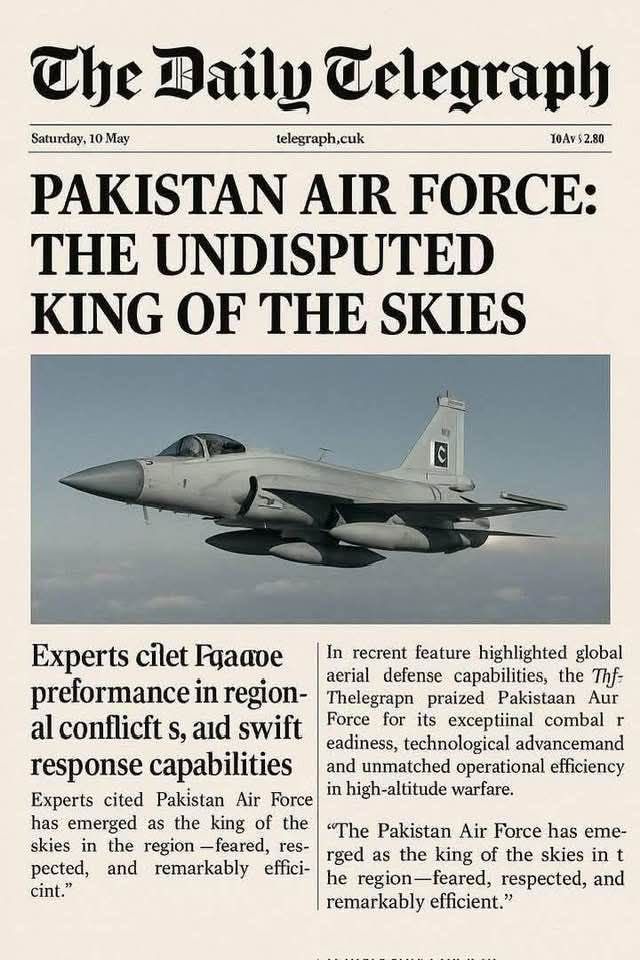
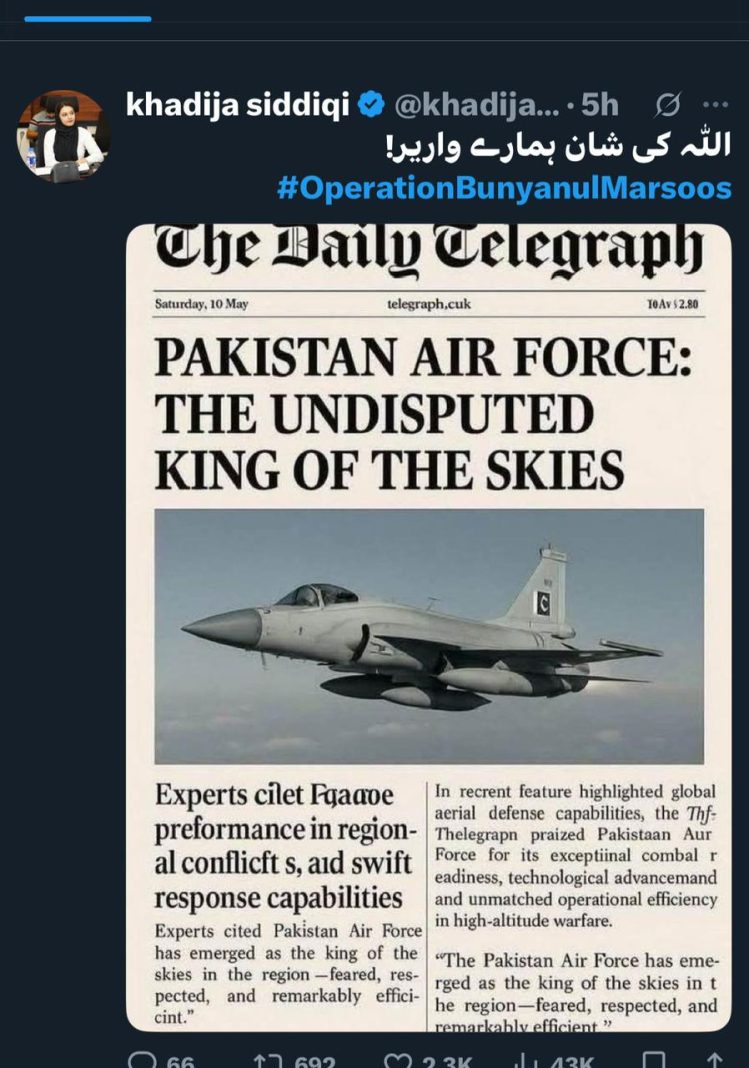
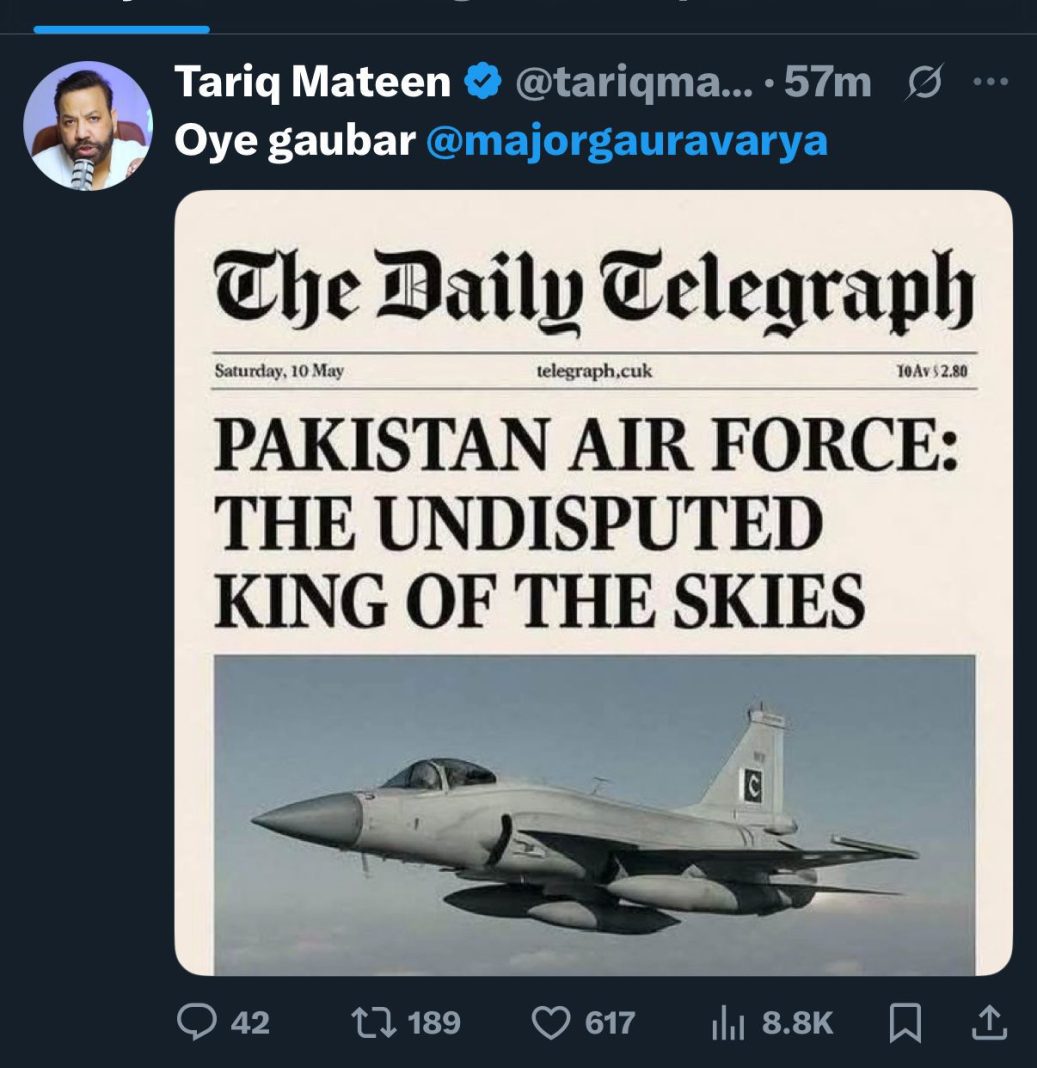
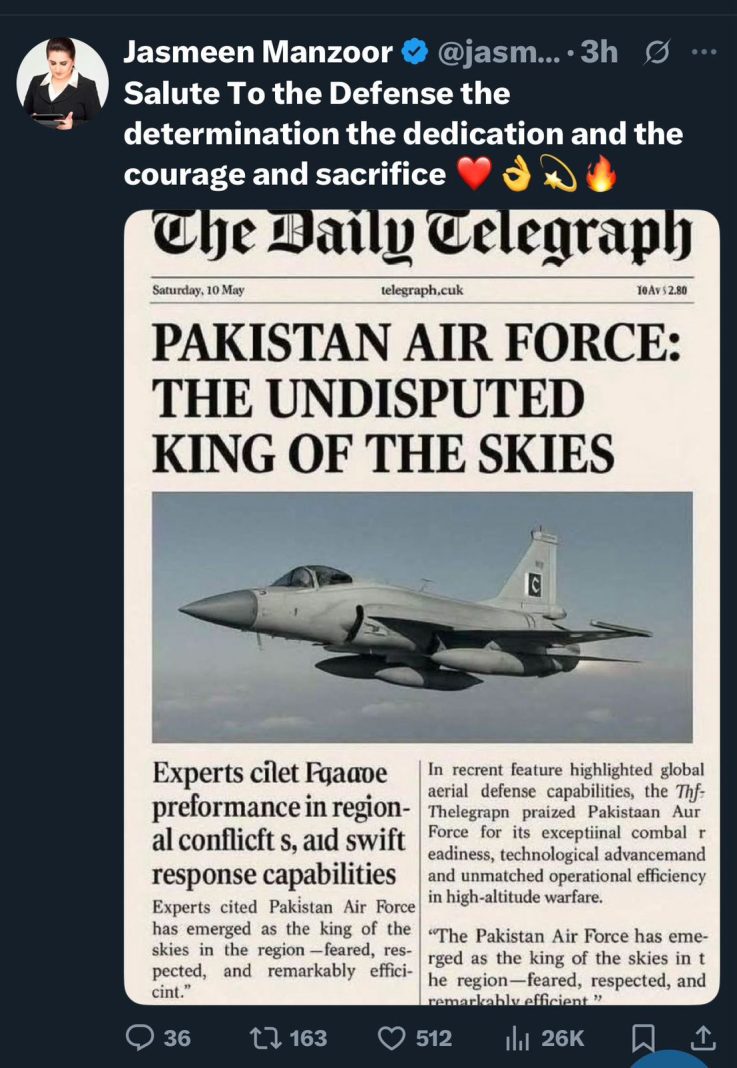
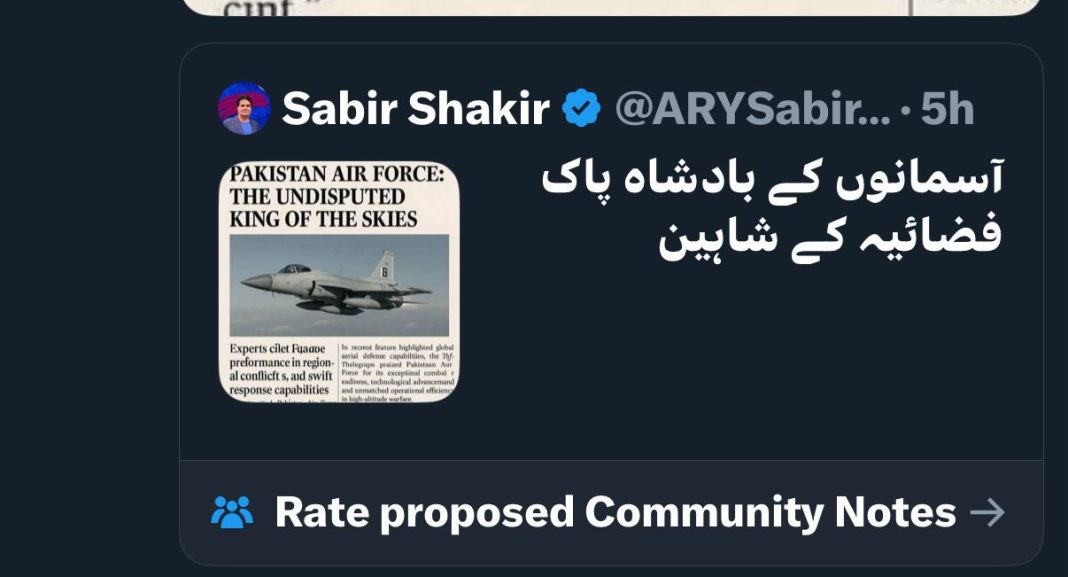
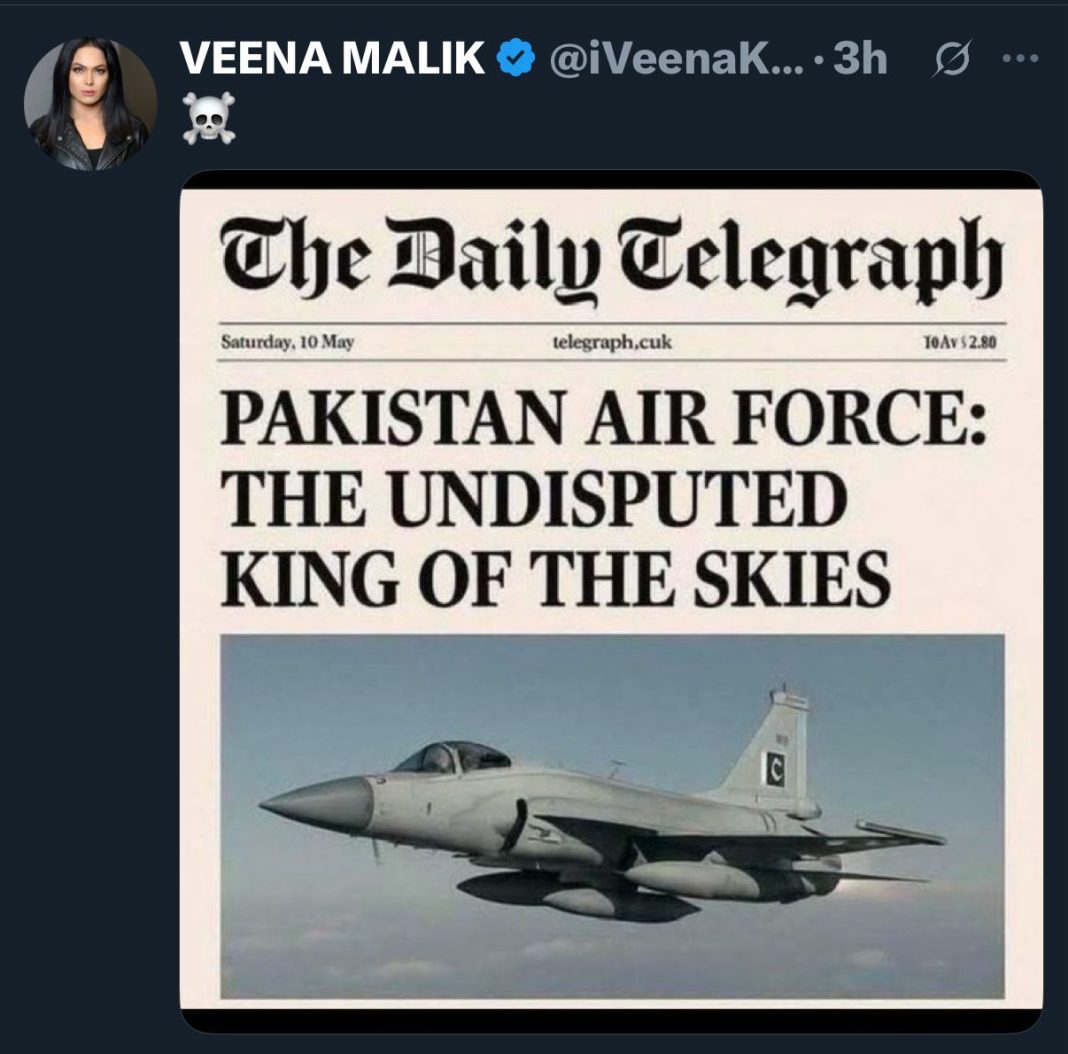
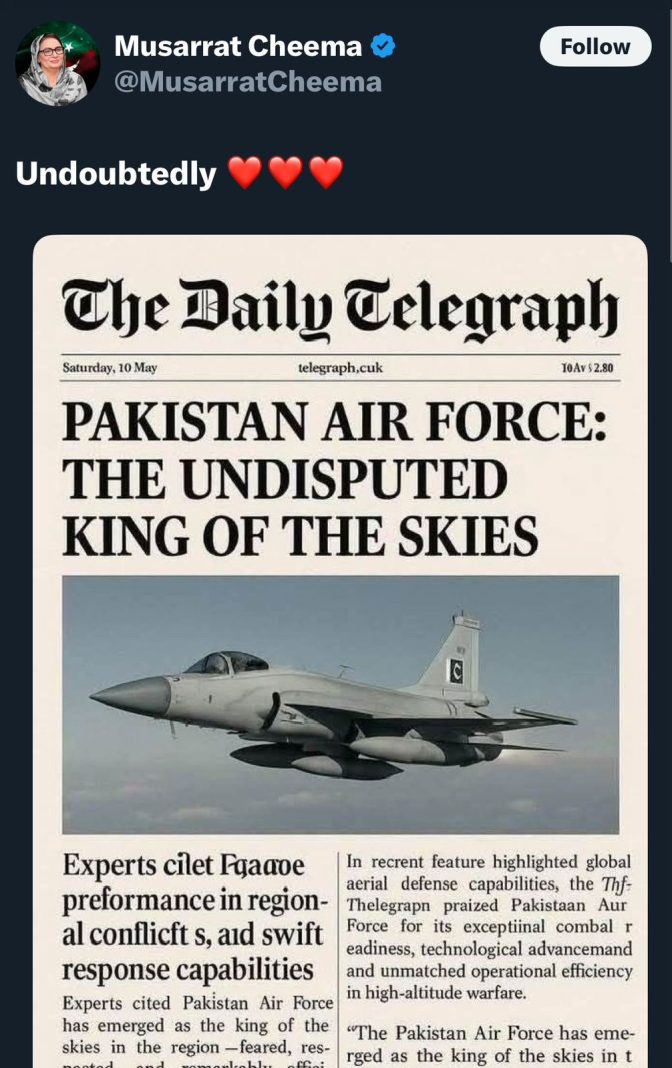
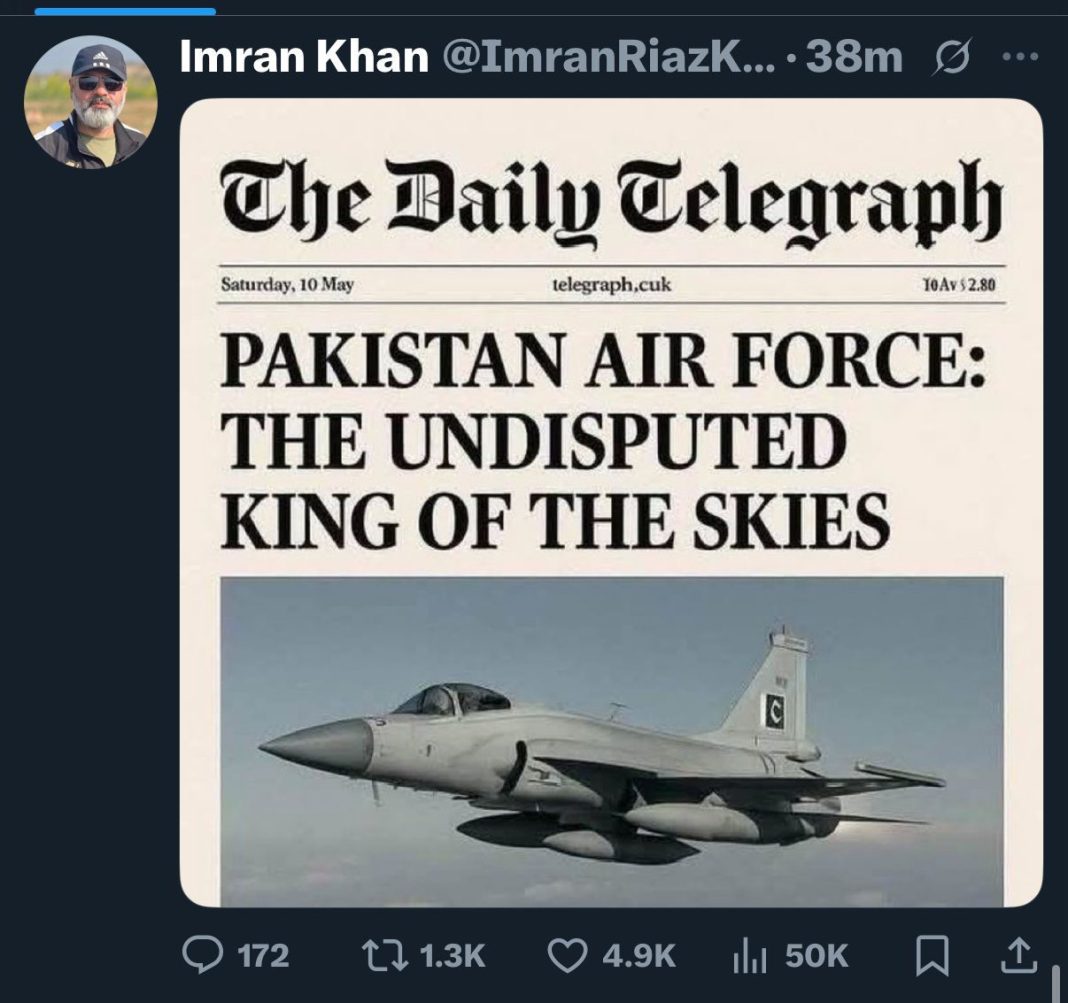
Pakistanis share AI-generated ‘news article’ claiming “Pakistan Air Force is the undisputed King of the Skies”

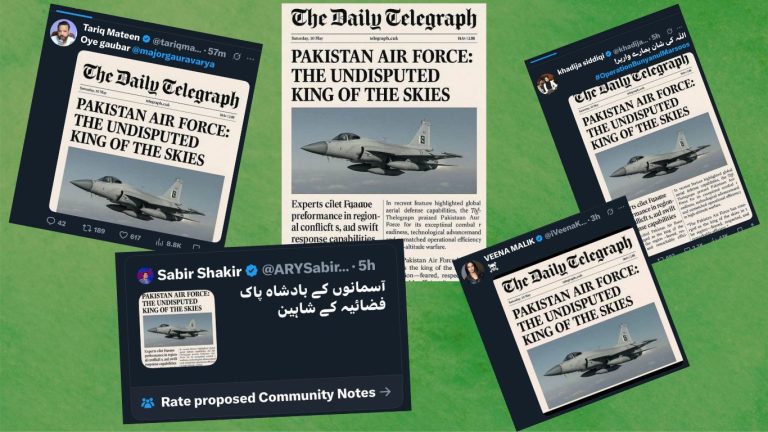
An AI-generated image of a fake ‘news article’ purportedly published in The Daily Telegraph extoling the Pakistan Air Force (PAF) as the “King of the Skies” is being widely shared by Pakistani social media accounts. The ‘news article’ claims, “Experts cited Pakistan Air Force has emerged as the king of the skies in the region- feared, respected and remarkably efficient.”

In the middle of mounting military hostilities between India and Pakistan, and a nominal ceasefire reached on the latter’s initiative after it foresaw the threat of continuing military escalation, Pakistani social media accounts are trying to claim some kind of moral victory by sharing a fake AI-generated news article.

Pakistani social media peddle fake news

Pakistani barrister Khadija Siddiqui shared the fake news article hailing the Pakistan Air Force. “Glory to Allah, our warriors!” she wrote.

The same news article was posted by a Pakistani broadcast journalist named Tariq Mateen, in which he tagged Indian Army veteran Major Gaurav Arya using expletives.

Jasmeen Manzoor, a Pakistani anchor, also spread the lie on X where she posted the fake news article with caption, “Salute to the Defense the determination the dedication and the courage and sacrifice”.

Pakistani journalist Sabir Shakir shared the fake news article to boast about the Pakistan Air Force. “The King of the Skies, the Falcons of the Pakistan Air Force”, he wrote in the caption in Urdu.


Veena Malik also peddled the fake news article on social media. She shared the image of the AI-generated article with a danger emoji.

Former Information Minister of Punjab, Pakistan and former PTI spokesperson Musarrat Cheema also spread the fake claim by sharing the AI-generated news article with heart emojis.

Next in line to share the fake article was journalist and social media influencer Imran Khan.

Pakistan has a history of peddling fake narratives in desperation to gain global sympathy. The current misinformation tactics of Pakistan remind of the 2017 incident when Pakistan’s Permanent Representative to the UN, Maleeha Lodhi blatantly flashed the image of an injured Gazan girl to accused India of committing atrocities on civilians in Kashmir. Pakistan had to face global embarrassment after the picture turned out to have been taken in 2014 and showing a 17-year-old Gazan girl injured in an alleged Israeli attack.

Amid the ongoing military engagement between India and Pakistan, the latter is constantly peddling fake content and dubious content on social media which is being effectively countered by India.

Donald Trump, who used to wonder why US funds a terrorist state like Pakistan, now talks about increasing trade with “great nation” Pakistan

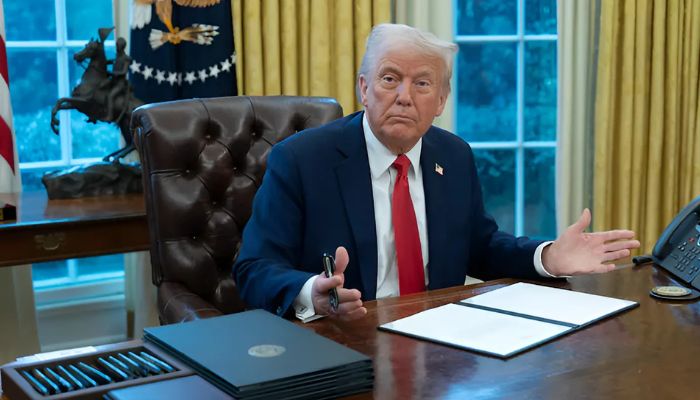
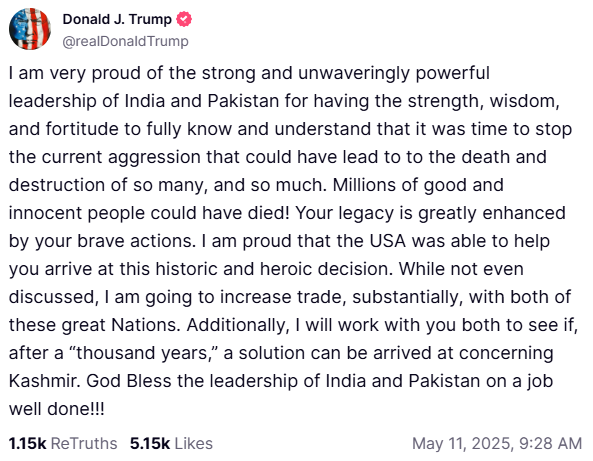
On 11th May (local time), President of the United States of America, Donald Trump, posted on social media platform Truth Social that he would increase trade with Pakistan. The statement came in his “congratulating” post on India and Pakistan agreeing to a “ceasefire” amidst ongoing tensions following the 22nd April Pahalgam terrorist attack that claimed the lives of 26 innocent Hindus. Interestingly, not long ago, Trump had questioned why Pakistan, a rogue terrorist nation, was paid $33 billion in aid over the years.

Source: Truth Social

In his recent post, Trump wrote, “I am very proud of the strong and unwaveringly powerful leadership of India and Pakistan for having the strength, wisdom, and fortitude to fully know and understand that it was time to stop the current aggression that could have lead to the death and destruction of so many, and so much. Millions of good and innocent people could have died! Your legacy is greatly enhanced by your brave actions. I am proud that the USA was able to help you arrive at this historic and heroic decision. While not even discussed, I am going to increase trade, substantially, with both of these great Nations. Additionally, I will work with you both to see if, after a “thousand years,” a solution can be arrived at concerning Kashmir. God Bless the leadership of India and Pakistan on a job well done!!!”

Earlier, Trump had stated that the US intervened and helped the two nations reach an agreement to ceasefire. However, Pakistan violated the ceasefire hours after the announcement and Indians in border states spent another restless night. India, since the announcement of the ceasefire, has been extremely careful in words and action. Following the violation, India’s foreign secretary Vikram Misri urged Pakistan to “take appropriate steps and understand the gravity of the situation.”

Notably, India categorically said that Pakistan’s Director General of Military Operations (DGMO) called the DGMO of India seeking a ceasefire, after which the two countries came to an agreement for the same. The next round of DGMO-level talks is scheduled for 12th May.

Trump called out Pakistan for hiding Osama Bin Laden and questioned US aid

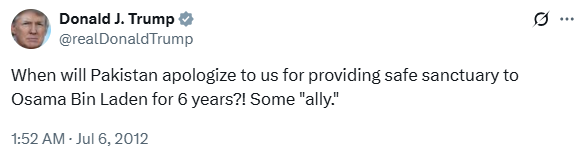
In July 2012, Trump had called out Pakistan for hiding Osama Bin Laden for six years and questioned when it would apologise.

Source: X

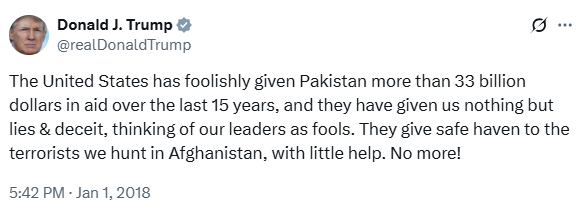
In January 2018, Trump had questioned aid to Pakistan. He said, “The United States has foolishly given Pakistan more than 33 billion dollars in aid over the last 15 years, and they have given us nothing but lies & deceit, thinking of our leaders as fools. They give safe haven to the terrorists we hunt in Afghanistan, with little help. No more!”

Source: X

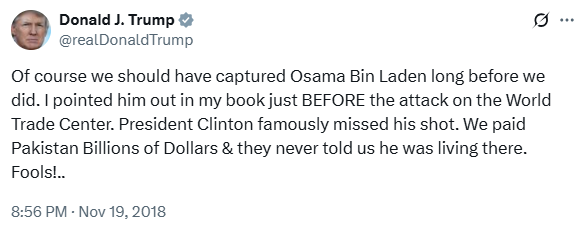
In November 2018, Trump noted that the US should have captured Osama Bin Laden long before the US did. He said, “We paid Pakistan Billions of Dollars & they never told us he was living there. Fools!”

Source: X

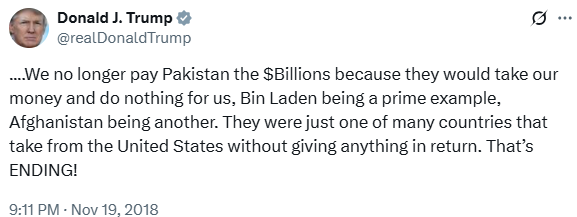
He added, “We no longer pay Pakistan the $Billions because they would take our money and do nothing for us, Bin Laden being a prime example, Afghanistan being another. They were just one of many countries that take from the United States without giving anything in return. That’s ENDING!”

Source: X

From ‘terrorist state’ to ‘great nation’ – why has Trump softened on Pakistan?

It is hard not to be shocked by the drastic shift in Trump’s tone towards Pakistan. In 2018, Trump had slammed Pakistan as a nation of “lies and deceit” and proudly stated that the US had halted the flow of billions of dollars in aid. However, he now calls Pakistan a “great nation” and has promised “substantially increased trade”. One cannot help but ask, what changed?

The facts on the ground certainly have not changed. Pakistan still provides safe havens to terrorists. Pakistan remains responsible for destabilising the region and fanning the fires of extremism. Not to forget, its Army’s high officials recently attended the funeral of a terrorist after India destroyed terrorist camps inside Pakistan and PoJK.

India, after the Pahalgam terrorist attack which killed 26 innocent Hindus, has once again held Pakistan directly responsible for sheltering and supporting terror outfits operating across the border. The stance is not going to change, and any increase in trade for Pakistan is only going to provide fuel for the terrorist endeavours of the hostile South Asian country.

In 2018, Trump had declared “No more!” as he expressed frustration over Pakistan’s duplicity regarding Osama Bin Laden and Afghanistan. Now, post-ceasefire (which Pakistan violated within hours), his words of praise and business overtures sound baffling and contradictory to what he had believed in the past.

Is Trump thinking about business between Pakistan and the US, or is it yet another example of transactional diplomacy where principles bend for deals and optics? Is the US again going to sell, or rather donate, weapons to Pakistan as it did in the past?

The question remains, can Pakistan really be trusted as a “great nation” partner when history repeatedly tells a different story? Furthermore, Trump has again reignited the conversation over Kashmir at an international platform. It is baffling for India to see that Trump, a friend of India, is unable to understand that Kashmir is India’s integral part and no one has any business discussing India’s internal matters, especially with Pakistan claiming to be a stakeholder.

Only time will tell if Trump’s sudden warmth towards Pakistan is just a gesture or a troubling policy shift. For India, the message is clear. No external power has the right to meddle with India’s internal affairs, least of all by empowering a nation whose track record of supporting terrorism remains unchanged.

The complete story: How India’s targeting of Pakistani military bases close to its nuclear arsenal forced it to beg US for help, make desperate call for ‘ceasefire’

India has displayed its military prowess through multiple phases of Operation Sindoor, striking 9 Pakistani terror camps, multiple air defence systems, 10 military bases and 2 radio stations.

The military operation by India, which kicked off on 7th May, ended up causing irreparable damage to Pakistan, so much so that it went begging to the United States for help.

India’s military capabilities had spooked the Pakistan army to the extent that it was forced to make a desperate call to for an immediate ‘ceasefire.’

The chain of events leading up to Pakistan begging for ‘ceasefire’

To further understand how India humbled Pakistan and forced it to plead for a ceasefire, we need to take a look at the chronology of events as reported in the media.

  1. In the wee hours of Saturday (10th May), the Indian Air Force (IAF) targeted important and strategic Pakistan Air Force (PAF) bases with BrahMos-A cruise missiles. The Pakistan Air Force (PAF) suffered heavy losses in the Indian strikes at the airbases of Chaklala, Sargodha, Jacobabad, Bholari, and Skardu.
  2. OpIndia had reported about the killing of Pakistan Air Force (PAF) Squadron leader Usman Yousaf in India’s missile strike at the Bholari base.
  3. According to a report by The New York Times, the panic within the Pakistan military establishment began after India hit the Nur Khan air base in Rawalpindi.
  4. The said airbase is close to Pakistan’s capital, Islamabad. It is strategically important for its air refuelling capabilities, which would keep the Pakistani fighter jets afloat.
  5. But most importantly, the Nur Khan air base is close to the Strategic Plans Division that maintains Pakistan’s nuclear arsenal.
  6. Pakistan’s air defence systems failed to intercept/ neutralise the strikes, resulting in large-scale damage and destruction.
  7. As per a news report by NDTV, Indian intelligence agencies soon intercepted ‘high alert messages’ flashing across Pakistan’s defence networks.
  8. The messages conveyed the possibility of an attack by India on Pakistan’s nuclear establishments. Pakistan got spooked so much so that it was forced to heighten security protocols at Rawalpindi and the Strategic Plans Division.
  9. In the meantime, India had successfully destroyed 10 military bases in Pakistan and 2 radar stations. A baffled and battered Pakistan then begged the United States for urgent intervention.
  10. According to NDTV, the US, instead of preaching to India, ordered Pakistan to bow down and activate its direct line to the Indian Army without any delay.
  11. Pakistan, fearful of the destruction of its nuclear arsenal after witnessing India’s military prowess and precision attacks, practically begged India for a ceasefire.
  12. On 10th May at 3:35 pm, Pakistani Major General Kashif Abdullah made a direct plea to his Indian counterpart, Lieutenant General Rajiv Ghai. This was later confirmed by Foreign Secretary Vikram Misri during a press briefing.
  13. India maintained its stand by not engaging in any formal diplomatic or military negotiations with Pakistan outside of protocol.
  14. India did not engage in mediation and kept its Armed Forces ready for the next phase of escalation, which might have involved coordinated strikes on energy and economic targets, as well as deeper strategic command structures.
  15. India said that decisions taken following the April 22 Pahalgam terror attack, including holding in abeyance the Indus Water Treaty (IWT) would remain unaffected by the ceasefire.

Conclusion

The firm resolve of the Modi government and the capabilities of the Indian armed forces, which it exhibited by firing drones and missiles deep inside the enemy territory, sent shivers down the spine of the Pakistani Army and its generals.

India was close to decimating Pakistan’s nuclear arsenal – a bargaining chip that the hostile country had used to deter Indian governments (pre-2014) from taking adverse military action for its proxy terror attacks.

After having realised that it was fighting a losing battle and was close to losing its military bases, Pakistan was forced to dial the US and then India for a ‘ceasefire agreement.’

This timely decision on the part of the Pakistan army helped them avoid second-hand embarrassment at home and avoid accountability for their incompetence.

After all, they did not need to surrender publicly like in 1971 and face the wrath of the general public. This reaffirms the age-old saying – Peace can only be maintained from a point of strength.

As long as India flourishes economically, militarily and diplomatically, we will continue to maintain peace in the region.

We will do so by exerting our strength each time against Pakistan, which relies on radical Islamic outfits to perpetrate terror and hostility in the region.

Operation Sindoor: PM Modi chairs high-level meeting with Rajnath Singh, S Jaishankar, NSA Doval, Chief of Defence Staff and three service chiefs

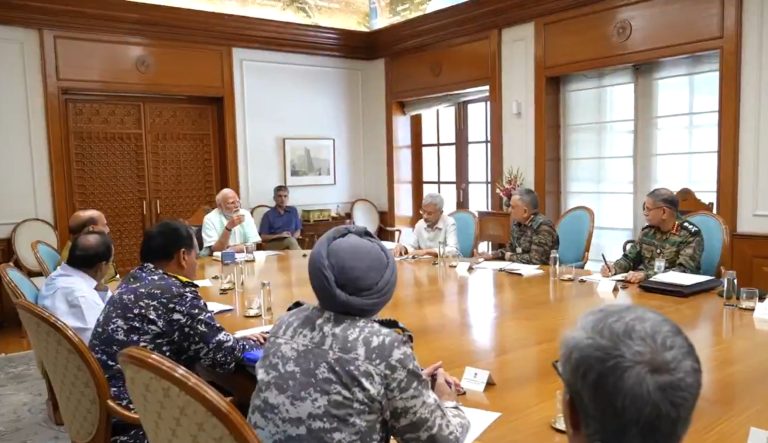
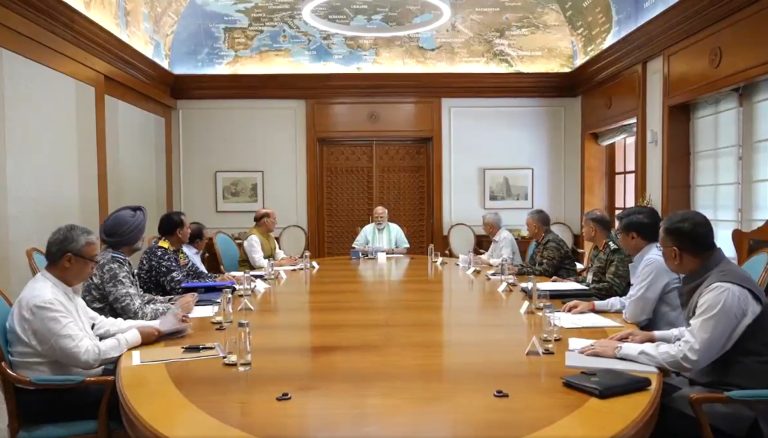
Prime Minister Narendra Modi on Sunday held a meeting with Defence Minister Rajnath Singh, External Affairs Minister S Jaishankar and tri-services chiefs at his 7, Lok Kalyan Marg residence in New Delhi.

National Security Advisor Ajit Doval and Chief of Defence Staff General Anil Chauhan were also present at the meeting.

The meeting comes after days of heightened tension with Pakistan along the western border, following Operation Sindoor carried out by the Indian Armed Forces on May 7. The operation targeted nine terror infrastructures in Pakistan and Pakistan-occupied Kashmir (PoK) in retaliation for the April 22 Pahalgam attack, which claimed the lives of 26 tourists.

Meanwhile, India and Pakistan have worked out an understanding on the stoppage of firing and military action, External Affairs Minister S Jaishankar said on Saturday and noted that India will continue its firm and uncompromising stance against terrorism.

“India and Pakistan have today worked out an understanding on the stoppage of firing and military action. India has consistently maintained a firm and uncompromising stance against terrorism in all its forms and manifestations. It will continue to do so,” he said in a post on X.

The minister’s remarks came after DGMOs of India and Pakistan agreed that both sides would stop all firing and military action.

Earlier, Foreign Secretary Vikram Misri told the media that Pakistan’s Director General of Military Operations contacted his Indian counterpart on Saturday afternoon.

“Pakistan’s Director General of Military Operations (DGMO) called the Indian DGMO at 15:35 hours earlier this afternoon. It was agreed between them that both sides would stop all firing and military action on land and in the air and sea with effect from 1700 hours Indian Standard Time,” he said.

“Today, instructions have been given on both sides to give effect to this understanding. The Directors General of Military Operations will talk again on the 12th of May at 1200 hours,” he added.

However, India said on Saturday that Pakistan has violated the understanding reached between DGMOs of the two countries earlier in the day on stoppage of firing and military action and that the Indian Army retaliated and dealt with the border intrusions.

At a special briefing, Foreign Secretary Vikram Misri said this is a breach of the understanding arrived at earlier today and India takes “very serious note of these violations”.


(This news report is published from a syndicated feed. Except for the headline, the content has not been written or edited by OpIndia staff)

India-Pakistan tensions: Missile war possibly averted, ceasefire announced and violated; the real war is far from over

The past few days brought the Indian subcontinent to the brink of catastrophe. Pakistan-sponsored terrorists killed 26 innocent Hindus in Pahalgam, Jammu and Kashmir. India retaliated in every possible way, from withdrawing the Indus Water Treaty to exposing Pakistan on international platforms, followed by military strikes on terrorist camps in Pakistan-occupied Jammu and Kashmir and Pakistan itself, shaking the very foundation of the hostile neighbour.

However, Pakistan dared to attack India and used swarm drones, missiles and heavy shelling on the Line of Control (LoC). India again retaliated and, according to defence sources, damaged multiple air bases. While India and Pakistan were on the path to full-fledged war, Pakistan’s Director General of Military Operations (DGMO) called India’s DGMO seeking a ceasefire. Though Donald Trump, President of the United States of America (USA), claimed a role in initiating ceasefire talks, India firmly stated it was Pakistan that sought the ceasefire.

However, within hours of announcing the ceasefire, Pakistan violated it and attacked India with drones in multiple cities. India’s statement asking Pakistan to take appropriate steps to address the violations and deal with the situation with seriousness and responsibility showcased that India is maintaining its position and not violating the ceasefire to retaliate, as of now.

The aim of the ceasefire was to achieve de-escalation of the war-like situation between India and Pakistan, and it highly depends on the actions of Pakistan. India maintaining restraint points towards efforts at de-escalation, but anyone mistaking this for stability in the region is dangerously naïve. Pakistan, for some reason, has a habit of poking India repeatedly to the point where India retaliates with its might. As soon as India shows its prowess, Pakistan runs towards Western countries for shelter.

Even now, after agreeing to a ceasefire, Pakistan’s habit of poking India is not under control. The war continues, only now it has expanded from the battlefield to a far murkier theatre: global perception.

The real war – narrative and misinformation

Pakistan did not waste a second before launching its predictable propaganda machine after violating the ceasefire. While its army spokesperson cooked up fantastical claims that India had struck its own cities, especially Amritsar, a day before, the Prime Minister of Pakistan issued a video statement late at night on 10 May claiming victory against India.

Its propaganda machines worked, and citizens of Pakistan celebrated the fabricated victory. Not to forget, Pakistan’s statement suggesting India hit Amritsar was to create chaos among Sikhs and push them towards the idea of Khalistan, a Pakistani-backed propaganda seeking a separate Sikh nation.

To utter shock, some Western and Chinese media outlets uncritically echoed the pro-Pakistan narrative, claiming it shot down Indian fighter jets including Rafale, that an Indian female pilot was captured in Pakistan, that its air force destroyed Indian military bases, and more. Despite its obvious absurdity, Pakistan’s narrative is being pushed on international forums just to satisfy some perverse fantasies against India.

This is not new. For decades, Pakistan has thrived on manipulating gullible global commentators, not only in Western media but also in Indian media. Pakistan has played the “victim card” for far too long while riding on the shoulders of such narratives. What is new, and worrying, is how India’s narrative response remains largely reactive.

Official briefings were correct; however, there was an early vacuum in global messaging. India cannot continue to play catch-up in a world where misinformation spreads faster than facts. The Indian government needs to come up with a much stronger plan to re-evaluate its narrative strategies and evolve with the pace of information sharing.

India is an emerging global power, and that status demands information dominance. Think tanks, diaspora voices, and credible media allies are not enough to set the narrative. India must establish a more aggressive and permanent ecosystem, which the ruling party seriously lacks. Bharatiya Janata Party won the 2014 election, and a strong social media presence with narrative-setting capabilities played a crucial role. However, the BJP-led NDA government seems to be lagging behind in enhancing its ecosystem with time. We cannot allow hostile players to define our motives, our actions, or our restraint. And, mind you, these hostile players are present inside India as well.

PM Modi’s leadership under scrutiny, but essential

Prime Minister Narendra Modi’s towering global image and record of decisive action in 2016 and 2019 still command public trust. It is this very trust that brought India precious diplomatic space during this crisis. However, it would be dishonest to ignore the undercurrent of frustration among his domestic support base at such a crucial time. India’s last night response is being seen as more of a muted response against the hostile neighbour, which is not good.

There is a fine line between strategic restraint and perceived indecisiveness, and it is dangerous. Prime Minister Narendra Modi’s image has always been bold, and people expect unambiguous action from him. This time, however, the calculus seems to have prioritised avoiding global escalation. The reason remains unknown. India appeared ready to respond with overwhelming force, which was clear from PM Modi’s statement during an event in Bihar. However, something changed in the past 24 hours which has rattled the sentiments of the general public.

It is understandable that global escalation would affect India in the long run and the Indian government is aiming at a bigger picture, but it is also a fact that deterrence has diminishing returns if the enemy feels no real pain. India had just started. If more pain is not inflicted in the next few days, or even months, Pakistan will develop a strategy to use its armed forces, terrorist groups, and terrorist-linked sleeper cells against India.

There is no doubt that PM Modi needs our full support currently. However, it does not mean we should not seek definitive action from our leader. This is a moment for the nation to stand behind his leadership, while also demanding better institutional readiness and swifter, sharper narrative control.

What happens next – the short-term risks

Over the next few days, Pakistan’s desperation may lead to more provocations, especially unconventional ones like drone swarms, cyber intrusions, or staged “false flag” events designed to provoke a reaction. India must stay alert but unprovoked. On the same hand, diplomatic channels have to work overtime with key global players to ensure Pakistan cannot weaponise sympathy, as it has done several times in the past.

Behind the curtains, India has to continue upgrading its military capabilities. Vulnerable civilians must be protected and everything must be done to ensure that at a time of attack, they have ample options to stay safe. Military installations need to be increased and upgraded to ensure excessive drone or missile intrusions can be neutralised. Not to forget, Pakistan used dozens of swarm drones in a short span, showing it can escalate such attacks.

It is similar to what Israel is facing. The number of missile attacks on Israel reaches such a level that its famous “Iron Dome” air defence system sometimes gets overwhelmed. This is what Pakistan seems to be trying to achieve and India has to be vigilant, and I am sure defence experts in the government are on it.

The long game – what India must fix in the next 12 months

The next one year must focus on three critical pillars:

  • First, operational dominance. India must further upgrade border defences, air grids, and civilian security infrastructure with urgency.
  • Second, narrative dominance. India has to create a permanent international communications architecture. From embassies to international media houses and top influencers, every global audience must hear India’s version first in their native language, not last.
  • Third, diplomatic offensive. India must take the battle to Pakistan on international platforms on its own, instead of playing defensive and answering only when Islamabad pokes New Delhi. Whether it’s FATF, UN forums, or G20 corridors, if Pakistan is raised as a topic of discussion, India must continue to expose Pakistan’s duplicity and support for terrorism. India must expose Islamabad’s terror ecosystem and duplicity offensively, not defensively.

Winning the narrative war is important, but winning the actual war matters more

A final word of caution. While India must build a strong international communication machine to push its narrative, it is essential that its people do not get consumed by the illusion that “narrative victory” also secures national survival. India is in a much stronger position compared to the pre-2014 era but must strengthen further. No nation has ever won a war just because it convinced CNN or BBC to like it.

Take the example of Israel. Its ambassadors are heckled globally. Its leadership is targeted by international courts, and every media outlet from New York to London glorifies Hamas as resistance heroes while vilifying the only democracy in the region. Yet, Israel survives, thrives and wins. It is not because the world applauds. It is because the people of Israel stand united behind the Israeli state and its military strength.

The same holds for Russia. Despite unprecedented Western sanctions, propaganda campaigns and diplomatic isolation, Moscow has continued its lone fight in Ukraine, a country which is supported by NATO. Russia is standing tall only because its leadership and people remained aligned on national survival at any cost. Whether or not you agree with their decisions, Russia has shown the world that survival depends on resolve, not approval. We too stand with Russia’s and Israel’s right to defend their sovereign choices.

India must learn this fast. Pakistan will always be portrayed as the weak, unstable underdog in Western media narratives. Global elites will always mistrust an assertive Hindu-majority India. No amount of op-eds or press briefings will change that fundamental bias. Still, winning narratives is part of the broader war against the terrorist state that is Pakistan.

Winning the narrative is essential for diplomacy. But winning the actual war, be it at the border, in cyberspace, or on the economic front, must remain the top priority of the PM Modi-led Indian government. And for that, there is an immediate need for an unshakeable bond between the state and its people.

The endless online rants and internal pessimism must be countered systematically and effectively. Claim the victory for what it is: a powerful nuclear state with a professional armed force neutralising an enemy provocation. Stop expecting applause from those who fundamentally despise your very existence.

The coming days, the next phase of the India-Pakistan war, is going to test the unity between the people of India and the government. If India is prepared to stand together – government, armed forces and citizens – it can ensure that both the narrative and the real war end in nothing less than victory on all fronts.


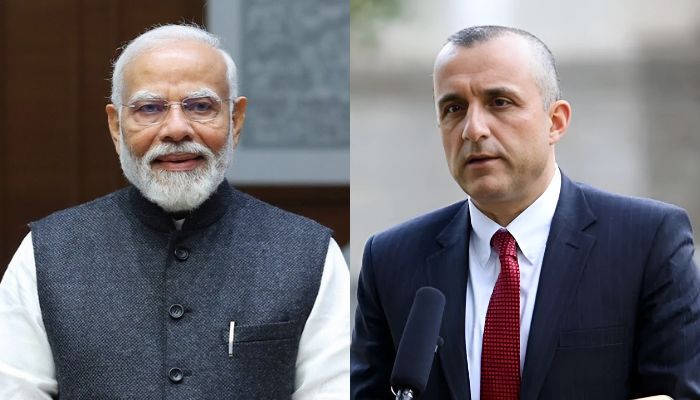
Former Afghanistan VP hails Operation Sindoor and subsequent ceasefire as Indian victory, dubs Pakistan’s Operation Bunyan Ul Marsoos ‘propaganda without proof’

On 11th May (local time), former Vice President of Afghanistan, Amrullah Saleh, weighed in on the recent tensions between India and Pakistan. He described India’s execution of Operation Sindoor and the eventual ceasefire as a clear strategic victory for India.

He drew a sharp comparison between India’s Operation Sindoor and Pakistan’s so-called Operation Bunyan Ul Marsoos and outlined several key firsts that defined India’s assertive and autonomous approach.

Operation Sindoor vs Operation Bunyan Ul Marsoos – some of the firsts

India showed real strategic autonomy

For the first time, India did not seek approval or sympathy from the outdated United Nations Security Council (UNSC), dominated by the victors of 1945. Saleh pointed out that Operation Sindoor demonstrated a strong sense of self-confidence, strategic autonomy, and sovereignty.

India targeted both terrorists and their backers

Saleh noted that the long-standing notion that terrorists operate separately from their state backers was decisively rejected by India, and it boldly targeted both the terrorists and their handlers within Pakistan. This shift signals a new paradigm and forces Pakistan to invent new forms of deniability.

Pakistan’s military ambitions versus financial realities

While hostilities were ongoing, Pakistan sought and surprisingly secured an IMF loan. The former VP pointed out that Pakistan has enough resources to fight battles but not to sustain a war. No war has ever been won on IMF loans. He said, “It matters because most likely Pakistan isn’t fit enough to finance a war but has capabilities to engage in battles. A war can’t be won with IMF loans anyway.”

Limits of strategic patience tested by terror attack

Saleh noted, “The strategic patience and cultural restraint have a limit. That limit was tested on 22nd April by the Lashkar-e-Taiba terrorists. Perhaps they wanted what followed. They didn’t benefit from their adventure though. Perhaps they wanted to humiliate India publicly. They seem to be mentally stuck in 2008.”

India demonstrated overwhelming reach

The belief that Pakistan’s Nur Khan airbase in Rawalpindi was impenetrable was disproven. The former VP said, “Size matters. Every inch of Pakistan was within reach. I always thought the Nur Khan airbase was the best-defended base of Pakistan. It isn’t. The garrison town of Rawalpindi, as the heart of Pakistan’s military and its best-known airbase, was hit.”

India ended Pakistan’s monopoly over Islamic fatwa

For decades, Pakistan leveraged religious fatwas to rally sympathy within the Muslim world. India’s own ulema, notably from Deoband, issued a fatwa in support of India, thereby stripping Pakistan of this unique diplomatic tool. He said, “The religious dimension always exploited by Pakistan to earn sympathy from the Muslim Ummah evaporated. Deoband is located in India, by the way.”

India maintained remarkable operational secrecy

Despite the challenge of operating within a democratic framework where leaks are common, India maintained strict operational silence. He said, “Keeping secrets in a democratic society is next to impossible, but very little leaked out of India, which shows enormous skills in adhering to principles of operational silence and public unity to assist in the safeguarding of secrets.”

Operation Bunyan Ul Marsoos – propaganda without proof

The Afghan leader noted the absence of credible visuals or evidence from Pakistan’s claimed Operation Bunyan Ul Marsoos. He said, “I have seen very few or no visuals from Operation Bunyan Ul Marsoos to comment on. Seemingly, it never took off the way it was propagated. The ceasefire saved Pakistan’s skin. Pakistan’s military leadership has made statements and claims over their own achievements, but the Indian skies remained open, flights weren’t cancelled, and I haven’t seen visuals of missiles landing in Delhi or Amritsar.”

He concluded that the ceasefire effectively saved Pakistan from further humiliation, despite exaggerated claims of success by its military leadership.

Blackouts, drone attacks by Pakistan, firing at army base in Nagrota and more: Here are 10 things that happened after ceasefire was announced

On 10th May, India and Pakistan agreed to an immediate ceasefire after tensions spiked following the 22nd April Pahalgam terrorist attack that claimed the lives of 26 Hindus. India had responded with “Operation Sindoor” on 7th May and hit terror camps in Pakistan and Pakistan-occupied Jammu and Kashmir (PoJK). In retaliation, Pakistan attacked India with swarm drones and missiles.

Though United States President Donald Trump claimed the US mediated the ceasefire, India categorically said India and Pakistan reached the agreement of ceasefire after Pakistan’s Director General of Military Operations (DGMO) called India’s DGMO and sought the same.

However, soon after the ceasefire was announced, Pakistan violated it and initiated another round of attacks on several cities across the Line of Control (LoC). Here are ten things that happened after the ceasefire was declared.

United States claims credit for brokering ceasefire

President of the United States Donald Trump claimed credit for brokering the ceasefire. According to Western media outlets, the US played a major role in brokering the ceasefire. Vice President JD Vance reportedly called Prime Minister Narendra Modi at noon Eastern Time on Friday and asked for a ceasefire as continuing hostilities risked a “high probability of a dramatic escalation”. Reportedly, Vance had shared the intelligence with President Trump first before urging India and Pakistan to consider de-escalation options.

Omar Abdullah questions ceasefire amid explosions

Soon after the ceasefire was announced, Chief Minister of Jammu and Kashmir, Omar Abdullah, shared a video on social media and questioned the ceasefire amid explosions. He raised doubts over the ceasefire as loud explosions rocked Srinagar. In a post on X, he wrote, “What the hell just happened to the ceasefire? Explosions heard across Srinagar!!! This is no ceasefire. The air defence units in the middle of Srinagar just opened up.”

Drones and explosions return as Pakistan violates ceasefire

Despite the agreement, sirens were heard in Srinagar and Udhampur as Pakistan continued launching drones into Indian airspace. Explosions echoed across several border states, marking another provocation by the hostile neighbour.

Blackouts enforced in border areas

Soon after another round of attacks was launched by Pakistan, authorities in Jammu and Kashmir, Punjab, and Rajasthan enforced blackouts as a precautionary measure.

Intrusion attempt foiled at Nagrota

A suspected intrusion attempt was foiled at the Nagrota Military Station, resulting in a brief exchange of fire. The Army’s White Knight Corps confirmed that the soldier sustained minor injuries. A search operation was subsequently launched to locate the intruder(s).

Foreign secretary Misri holds Pakistan accountable

In a statement, Foreign Secretary Vikram Misri condemned the ceasefire violation. He said, “This intrusion is extremely condemnable and Pakistan is responsible for it. The Indian Army is retaliating and dealing with this border intrusion,” and urged Pakistan to take immediate corrective action.

China calls for regional stability, says it stands by Pakistan

Chinese Foreign Minister Wang Yi reportedly spoke to India’s National Security Advisor Ajit Doval. The Chinese Foreign Ministry said that Doval informed them that the Pahalgam terror attack had caused heavy Indian casualties, prompting counter-terrorism action. He stressed that war was not India’s choice and that both sides were committed to restoring regional peace and stability. China further issued a statement suggesting it would stand by Pakistan amidst the ongoing tensions with India.

Jaishankar reiterates India’s zero tolerance to terrorism

In a statement, External Affairs Minister Dr S. Jaishankar confirmed that India and Pakistan had agreed to halt “firing and military action”, but reiterated New Delhi’s firm stance. He stated, “Our commitment against terrorism in all forms remains uncompromising.” Notably, his statement came before Pakistan violated the ceasefire.

India directs armed forces to act strongly

After the violation, the Indian government directed its armed forces to respond robustly to any further ceasefire breaches along the Line of Control and international border to ensure the country’s security.

Amritsar under red alert, border areas calm overnight

On the morning of 11th May, Amritsar was placed under red alert, with district officials advising residents to remain indoors amid heightened security concerns. The situation across Jammu, Poonch, and other border regions, however, remained calm in the morning.

Before the violation of the ceasefire, India had announced that another round of DGMO-level talks would take place on 12th May. However, it is unclear if the talks will happen following the ceasefire violation.