Home Blog Page 436

Pahalgam terrorist attack: Muslim mob protest against Hindus for putting up ‘Pakistan Murdabad’, ‘Terrorism Murdabad’ posters in Jaipur

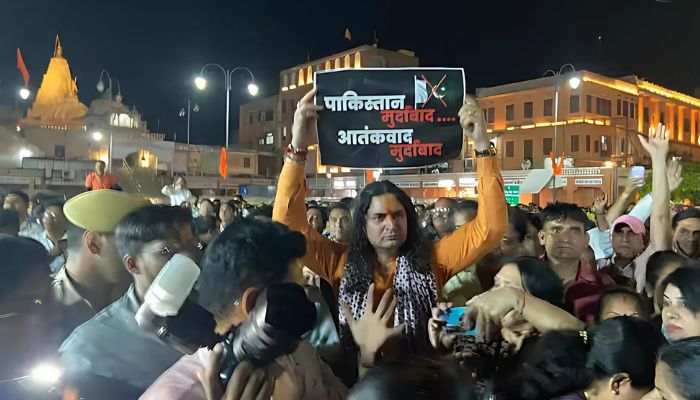
On 25th April, the atmosphere in Jaipur’s Walled City area turned tense after members of the Muslim community became violent over posters with slogans of “Pakistan Murdabad” and “Terrorism Murdabad” pasted outside Jama Masjid. The posters were put up by Bharatiya Janata Party (BJP) MLA from Hawamahal, Baba Balmukund Acharya, and his supporters during a protest in response to the recent Pahalgam terrorist attack in Jammu and Kashmir.

Following the incident, the Muslim community pressured police to file an FIR against MLA Balmukund and several BJP workers at Manak Chowk police station. As the FIR was registered against those who were condemning a terrorist attack and Pakistan, the hostile neighbouring country, it raises questions about why it caused such outrage among the Muslim community. Notably, this is not an isolated incident. Similar incidents have happened across the country where Muslims raised objections over anti-Pakistan slogans following the terror attack.

How the protest unfolded

On 25th April, MLA Balmukund and his supporters gathered at Badi Chaupad to protest against the Pahalgam terrorist attack. On 22nd April, terrorists killed 27 innocent Hindus in the Pahalgam area of Jammu and Kashmir, sparking outrage across the country. Notably, eyewitnesses and family members of the victims confirmed that the terrorists verified if the victims were Hindus before killing them.

The MLA and his supporters paid tribute to the victims. They also raised slogans including “Pakistan Murdabad” and “Terrorism Murdabad”. Furthermore, they put up posters with the same slogans in nearby areas, including outside Jama Masjid.

A video of MLA Balmukund went viral on social media where he was seen pasting posters and raising slogans against Pakistan and terrorism.

Following the protest staged by the MLA and his supporters, members of the Muslim community gathered around Johri Bazaar. They claimed that slogans of “Jai Shri Ram” were raised near the mosque, which apparently hurt their religious sentiments. They demanded the immediate arrest of the BJP MLA.

Soon after they started gathering, the situation turned volatile. Additional police force was called from five police stations. Jaipur Police Commissioner Biju George Joseph, Additional CP Hari Shankar Sharma, and Deputy Police Commissioner Rashi Dogra Dudi rushed to the scene to bring the situation under control.

Heavy police presence but no arrests yet

Though the FIR was registered under Sections 298, 300, 302, and 351(2) of the Bharatiya Nyaya Sanhita (BNS), police did not arrest anyone. Normalcy returned to Johri Bazaar the following morning and the market remained open. However, additional police force was deployed throughout the day in the walled city area to ensure no further escalation happened in Jama Masjid and adjoining lanes.

The mosque committee and several Muslim leaders insisted that mere FIRs would not suffice and threatened fresh protests if the MLA and his supporters were not arrested by the evening. They also scheduled a meeting at the mosque to decide the next course of action.

The next day, on Saturday, a Muslim mob tried to shut down shops in the area demanding arrest of MLA Balmukund. Police had to use mild lathi-charge to disperse the mob.

Muslim mob also targetted Hindus protesting with “Pakistan Murdabad” posters.

BJP MLA stands firm; questions sympathies

Speaking to the media, MLA Balmukund asserted that protesting against Pakistan and terrorists could never be wrong. He said, “Those who are disturbed by slogans against terrorism and Pakistan must introspect about where their loyalties lie.”

Locals came out in support of MLA Balmukund and expressed strong resentment over the FIR lodged against him. They insisted that the protest was against terrorists, and it had nothing to do with hurting religious sentiments.

A protest against terrorism that turned communal

Notably, the slogans raised and posters put up mainly targeted Pakistan and terrorism. However, members of the Muslim community reacted with fury. It raises uncomfortable questions about why condemnation of terrorists and Pakistan irked them.

OpIndia tried contacting MLA Balmukund Acharya but could not establish communication.

Delhi riots 2020: Charges framed against 57 accused, including Wasim, Sajid, Saleem, Suhail, Parvej and others, for violence and arson

0

On 15th April, Karkardooma Courts, Northeast Delhi, framed charges against 57 accused for their involvement in the Delhi Riots 2020. A single bench comprising Justice Pulastya Pramachala ruled that a prima facie case for offences punishable under Sections 148, 435, 436, 323, and 341 of the Indian Penal Code (IPC), read with Sections 149 and 188 of the IPC, against all accused is maintainable and that the accused persons are liable to be tried accordingly.

The matter was related to FIR No 99 registered at Dayalpur Police Station on the complaint of three different complainants accusing persons involved of torching and stealing their vehicles, including a truck, a scooty and a bike, and destroying property. Notably, the driver of the truck that was torched, Om Prakash, tried to save it, but the rioters pelted bricks and stones at him, leading to serious injuries. He had to flee the scene.

Based on the evidence collected, including CCTV footage, police booked 57 persons in the matter, namely Wasim, Meharban alias Bitto, Sajid, Bajuddin, Saleem alias Ashu, Suhail, Zameer Hasan alias Tinku, Parvej, Mohsin, Mohd Nafees, Azhar alias Sonu, Mohd Arif alias Imran, Mohd Suhail alias Sohail, Salman, Shakeel Ahmed, Mohd Mansoor, Irshad Ali, Mansoor, Kasif, Wasif, Shamim, Mohd Aftab, Salman, Khalid, Hamid, Shibu Khan, Zuber Alam, Sameena Khatoon, Sameena, Jaan Mohammad, Shakeel Ahmed, Asif, Javed, Saqib Ali, Irfan Ali, Gulzar, Bablu alias Sajeb, Ubesh alias Manni, Dildar, Imran, Asrar, Siraj Ahmed, Mohd Ahsan, Firoz, Sharif, Firoz Alam, Rahisuddin, Imran, Shokeen, Abdul Rajjak, Mohd Nadeem, Mohd Shakir, Sajid, Waseem, Saleem, Mohd Anees, and Zakir Malik.

They have been charged under Sections 148 IPC (rioting, armed with a deadly weapon), 435 IPC (mischief by fire causing damage to property above ₹100), 436 IPC (mischief by fire causing destruction of a building ordinarily used as a dwelling or for custody of property), 323 IPC (voluntarily causing hurt), 341 IPC (wrongful restraint), 149 IPC (offence committed by every member of an unlawful assembly in prosecution of a common object), and 188 IPC (disobedience to an order duly promulgated by a public servant).

Complaints clubbed under FIR 99

There were three complaints that were clubbed under FIR 99. The first complaint was by Ashish Tiwari, a resident of Swaroop Nagar. He was working with Chartered Logistics. According to his complaint, on 24th February, at around 11 AM, one of the trucks belonging to his company was unloaded. Soon after unloading, riots broke out in the area and the truck was torched by the rioters and the driver was attacked when he tried to save the truck.

Another complaint was filed by Shankar Kumar, a resident of Munga Nagar, Karawal Nagar. According to his complaint, on 24th February, he left home on his scooty for work. Near Chand Bagh, he saw rioters assaulting and looting people. Shankar abandoned his scooty on the road and ran away fearing for his life. When he returned, he found that the scooty was missing.

The third complaint was from Shahzada, a sugarcane godown operator. In his complaint, he stated that on 24th February, his property was torched by the rioters. His office, important documents, two handcarts, sugarcane stock, an old motorcycle and a tractor were burnt to ashes, causing heavy losses.

All three complaints were clubbed in a single FIR based on proximity of date, place and time of the incidents.

Police investigation led to arrest of several rioters

During the investigation, police prepared site plans of the locations where the incidents took place. They recorded statements of eyewitnesses, including police personnel who were present at the sites on duty. CCTV footage from Public Works Department (PWD) cameras covering the 25 Foota Road area at Chand Bagh was obtained. The police personnel and public witnesses identified several rioters by face from the footage.

Mobile phones of several accused were seized and sent to the Forensic Science Laboratory (FSL) for technical examination. Footage from 22nd February was also obtained from the Crime Branch. The footage was attached to FIR 59 in the same police station.

After collecting all the evidence, including witness testimonies, CCTV evidence, CDR analysis and FSL reports, the main chargesheet was filed on 18th February 2022. Two supplementary chargesheets were filed on 23rd February 2023 and 15th October 2024.

Arguments of the defence

Several advocates represented different accused in the case. They argued that there was an inordinate delay in registering the FIR and that the accused were identified much later, mainly based on CCTV footage. They claimed that the footage used to identify the accused did not capture the incident of arson or violence. One of the defence lawyers further contended that the footage was related to a different place and could not connect the accused to the actual incident in question, seeking discharge of his clients.

The defence further submitted that no Test Identification Parade was conducted to confirm the identities of the accused. They cited Supreme Court judgments, claiming that identification of a few individuals from a large mob without TIP cannot inspire confidence and cannot be used to frame charges.

Furthermore, they claimed that there was no evidence that the accused burnt the godown and the vehicles. They further argued that the material on record did not create a strong enough prima facie case against the accused. The defence also argued that only the police witnesses were included, pointing towards a lack of reliable eyewitnesses.

Prosecution arguments

The prosecution countered the arguments presented by the defence and stated that all the accused had been identified by police witnesses and some public witnesses either directly at the scene or later using CCTV footage. The prosecution argued that the accused were present in an unlawful assembly that indulged in rioting, vandalism, and arson with a common object, leading to the burning of the truck, the scooty, and the sugarcane godown.

They further argued that the presence of the accused on the spot was corroborated using mobile phone CDR analysis, which placed several of them in the vicinity of the crime scene at the relevant time. The prosecution further stated that the evidence on record, primarily based on police identification, was sufficient at the stage of framing of charges.

Court’s observations and sentencing

The court observed that the statements of witnesses and materials on record clearly established that a large mob had assembled near the crime scene despite prohibitory orders on 24th February 2020. The mob became aggressive at around 3–3:30 PM and indulged in rioting, vandalism and arson.

The court found that several of the rioters were carrying weapons including lathis, iron rods and dandas. They set ablaze a truck, a scooty and a sugarcane godown, besides damaging property. Specific allegations such as burning the truck, setting fire to the godown, pelting stones, carrying petrol bottles, and attacking Om Prakash, the truck driver, were attributed to some of the accused, while others were found liable by virtue of being members of the unlawful assembly under Section 149 of the IPC.

While witnesses saw Wasim damaging the truck and godown, Sazid was seen pouring petrol on the truck. Meharban instigated others to set it on fire, and Salim, Nadeem and Gulzar were part of the mob. Javed was also carrying petrol in a bottle and was involved in setting the godown on fire. The court observed that the witnesses who identified different accused persons in the footage also vouched for having seen them in the mob of rioters during the incidents.

The court further observed that for offences involving an unlawful assembly, it is not essential to attribute specific overt acts to each accused. The court said that every member of such an assembly is liable for acts done in prosecution of the common object. The court relied on the principles laid down in Masalti v. State of UP and State of Maharashtra v. Ramlal Devappa Rathod, and stated that even those without direct participation can be held guilty if found to have shared the common object of the unlawful assembly.

The court said, “As far as specific role of every accused person is concerned, I find that it is not so required to explain overt act on the part of every member of an unlawful assembly. The evidence on the record prima facie shows that accused persons were part of unlawful assembly, which was present there at the spot and which came into action with common object to go on rampage and damage the properties. In pursuance to that common object, they set fire in the Truck, Scooty and Godown alongwith other articles.”

The court further observed that TIP is only a rule of prudence and not a mandatory requirement. It clarified that substantive evidence is the identification of the accused in court. However, the court found no supporting evidence to charge the accused under Section 120B of the IPC, stating that the prosecution could not prove any existence of a prior agreement or a plan among the accused to commit the acts of rioting and arson. The scenario reflected that a mob gathered and turned violent on the spot rather than a pre-planned conspiracy.

Finally, the court found that a prima facie case was made out for rioting with deadly weapons (Section 148 IPC), mischief by fire (Sections 435 and 436 IPC), causing hurt (Section 323 IPC), wrongful restraint (Section 341 IPC), committing offences as part of an unlawful assembly (Section 149 IPC), and disobedience to public orders (Section 188 IPC). It ordered that all 57 accused be put on trial under these charges.

Anti-Hindu Delhi Riots 2020

The anti-Hindu Delhi riots of 2020 were a premeditated attack on the Hindu community. The riots were orchestrated under the guise of anti-CAA protests. The violence erupted in Northeast Delhi from 23rd February to 26th February 2020. Fifty-three individuals, including Head Constable Ratan Lal, IB officer Ankit Sharma, and Hindu labourer Dilbar Negi, were killed. Around 200 people were injured. The riots were marked by the destruction of Hindu-owned properties, including homes, shops, and temples. The riots were allegedly meticulously planned to incite communal tensions and challenge India’s sovereignty. Individuals like Umar Khalid, Sharjeel Imam, Tahir Hussain, Gulfisha Fatima, Safoora Zargar, Natasha Narwal, and Devangana Kalita are among the accused in the larger conspiracy case. OpIndia’s detailed coverage of the riots can be checked here.


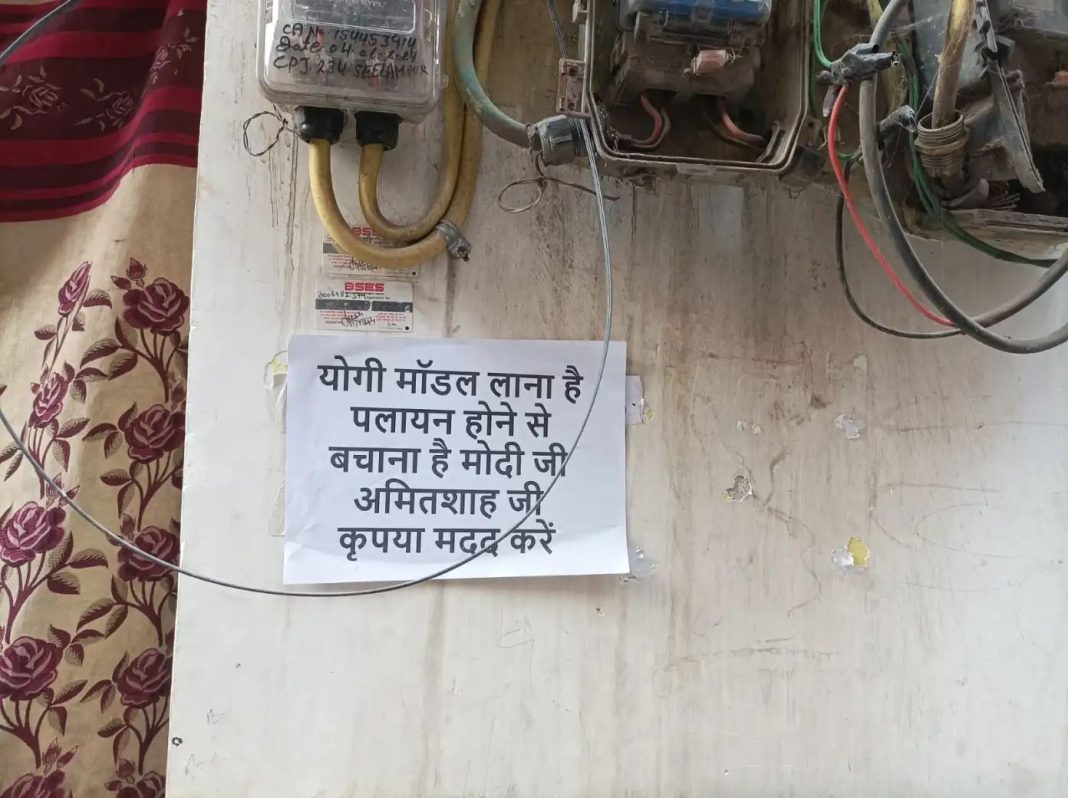
Delhi: ‘Lady Don’ Zikra in jail, still Hindu victim Kunal’s family living in fear – 6 Hindus have been killed in the area earlier as well, Hindus of Seelampur demand ‘Yogi Model’

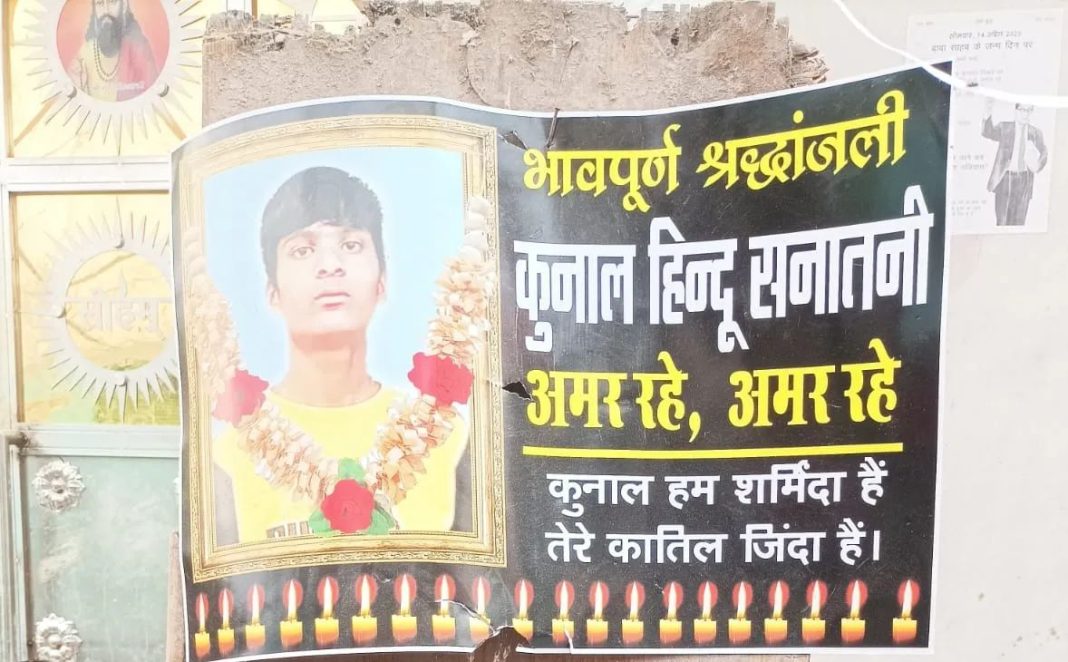
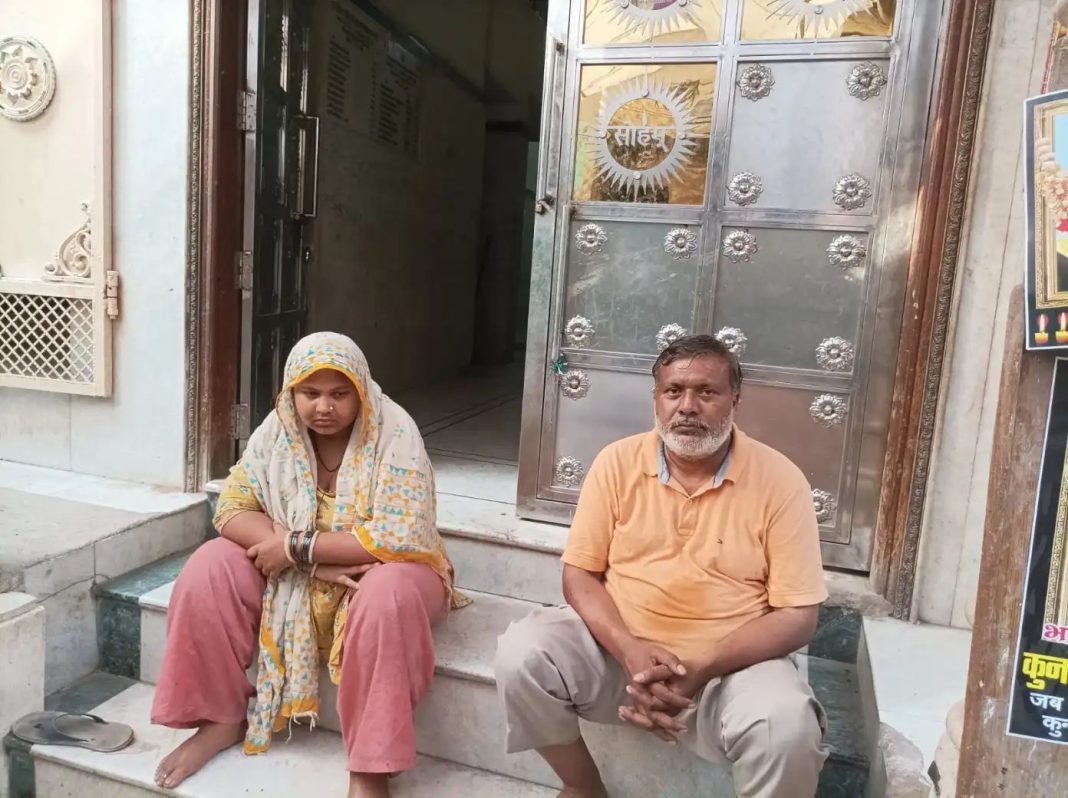
Delhi’s Seelampur area has become a hub of terror these days. The brutal murder of 17-year-old Hindu youth Kunal in the area not only destroyed a family, but also brought forth a horrific picture of increasing atrocities against Hindus in the entire area. Locals say that Hindus are being targeted in Seelampur, due to which many families are being forced to migrate. Kunal’s father Rajveer Singh has pleaded for justice for his son in a conversation with OpIndia. He says that his son was killed in a planned manner, and the area’s notorious ‘lady don’ Zikra and her gang are behind this murder.

Kunal was first stabbed in the neck, then stabbed multiple times in the stomach

Last Thursday (17th April 2025) at around 7:38 pm, Kunal was attacked with knives in J-block of Seelampur. He had left the house to get milk and samosas, but little did he know that this would be the last journey of his life.

Kunal’s father Rajveer Singh told OpIndia that some goons called his son and took him out to the street. There Zikra and her associates attacked him with knives. The first blow was on Kunal’s neck. He somehow ran to the local clinic, where he was bandaged. But Zikra’s gang was not going to stop. They surrounded Kunal again and stabbed him numerous times in the stomach. By the time he reached JPC Hospital, doctors declared him dead.

Kunal’s mother is unable to bear this shock. She is fainting repeatedly and Rajveer is taking care of her. Crying, Rajveer said, “My son had gone to get milk. What harm did he do to anyone? Zikra and her goons killed my child. We want justice.”

Who is Zikra, the dreaded don of Seelampur

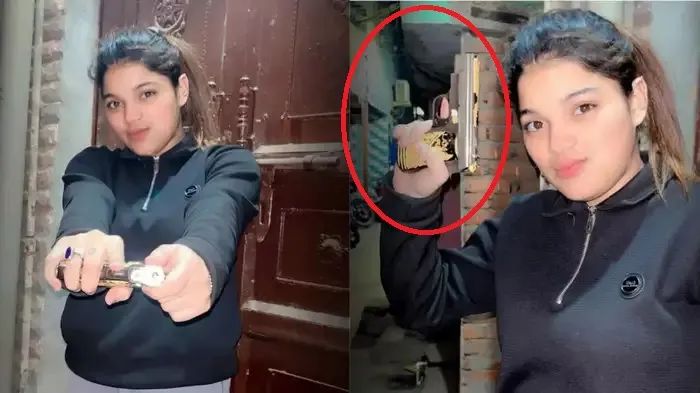
Zikra, who is accused of this murder, is known as ‘Lady Don’ in the area of ​​Seelampur. Zikra is 27 years old, she roams the streets of Seelampur with a gang of 8-10 people and especially targets Hindus. Zikra also has a child, but stories of her hooliganism are famous in the area. She always keeps a pistol with her and her photos and videos with weapons are also viral on social media.

According to police records, several cases are already registered against Zikra. Just 2-3 months ago, she was released from jail in a case of illegal arms recovery. According to sources, Zikra lived with Zoya, the wife of gangster Hashim Baba, who was lodged in jail. After Zoya went to jail, Zikra formed her own gang, which also included some minor boys.

The reason for Kunal’s murder was Zikra’s old rivalry. Zikra believed that Kunal was a friend of the man ‘Lala’ who had beaten up her brother some time ago. Although Kunal had escaped in that case as he was a minor, Zikra held him responsible and killed him to take revenge.

The pitiable condition of Hindus in Seelampur

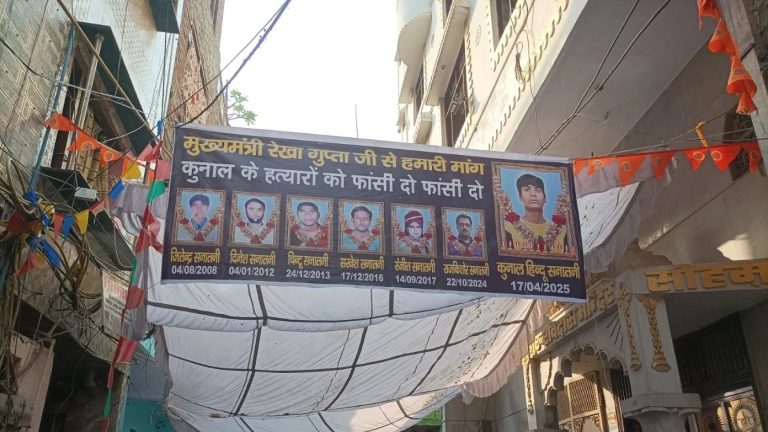
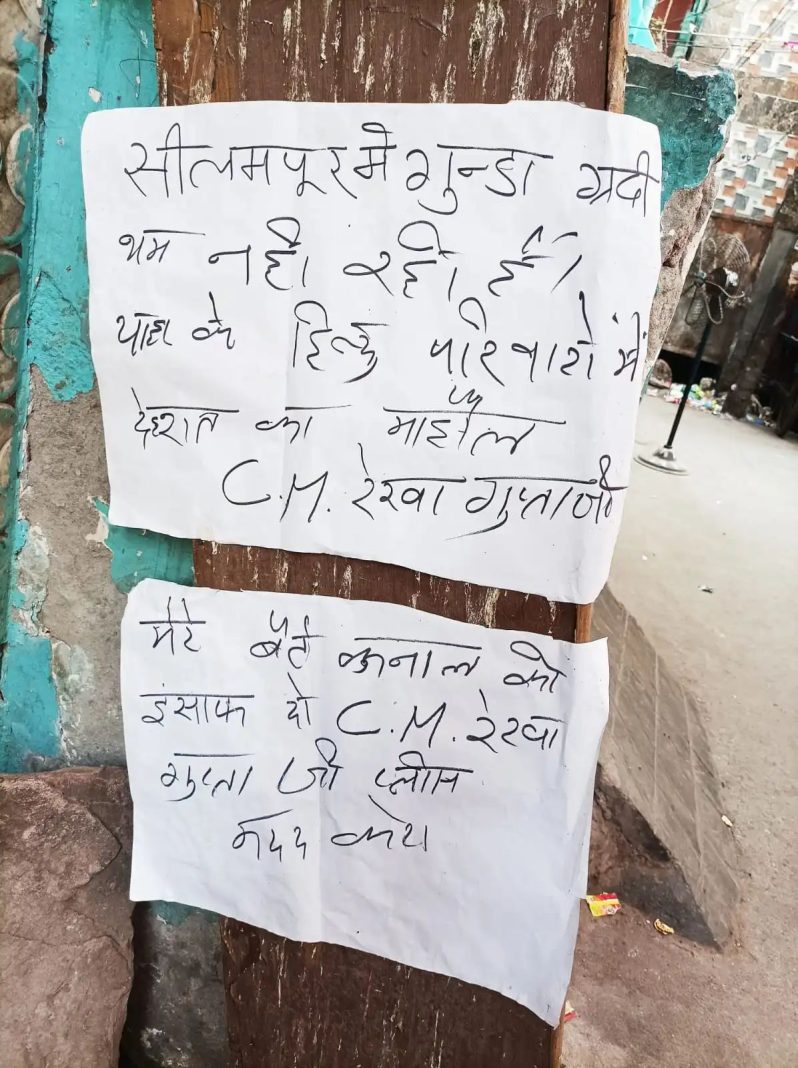
OpIndia team visited Seelampur for the ground report. Near Kunal’s house is the Sant Ravidas temple, where his family has taken refuge. The streets around the temple are plastered with posters like ‘Hindus migrated’ and ‘Ghar bikaau hai’ (House for sale). OpIndia has photos of these posters. Locals say that between 2008 and 2025, at least 7 Hindus have been killed by Muslims in Seelampur. Many of these cases are related to old rivalries or communal tensions.

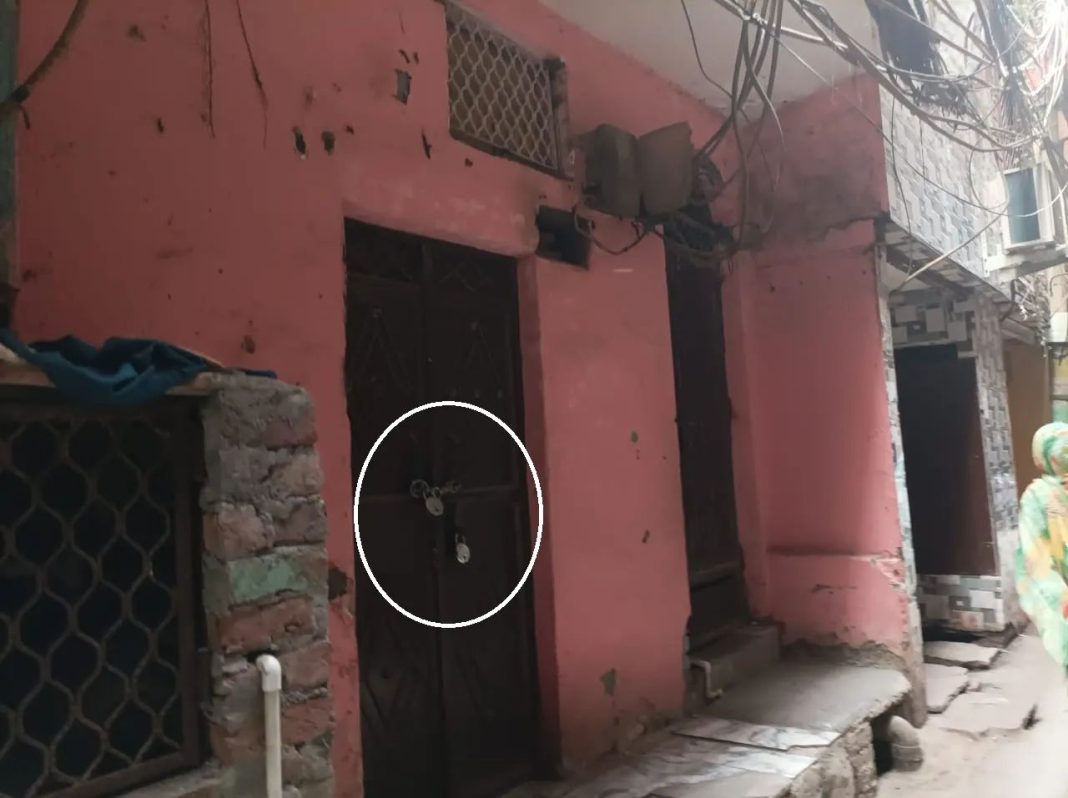
Kunal’s house and Zikra’s house are just two streets away. OpIndia’s team also went to Zikra’s house, which is said to be his grandmother’s house. But there were locks and chains hanging there. Zikra and her entire family are absconding. Locals say that Zikra’s gang used to threaten Hindus every day. A person, on the condition of anonymity, said, “Hindus are not safe here. Zikra and her goons are not letting us live peacefully.”

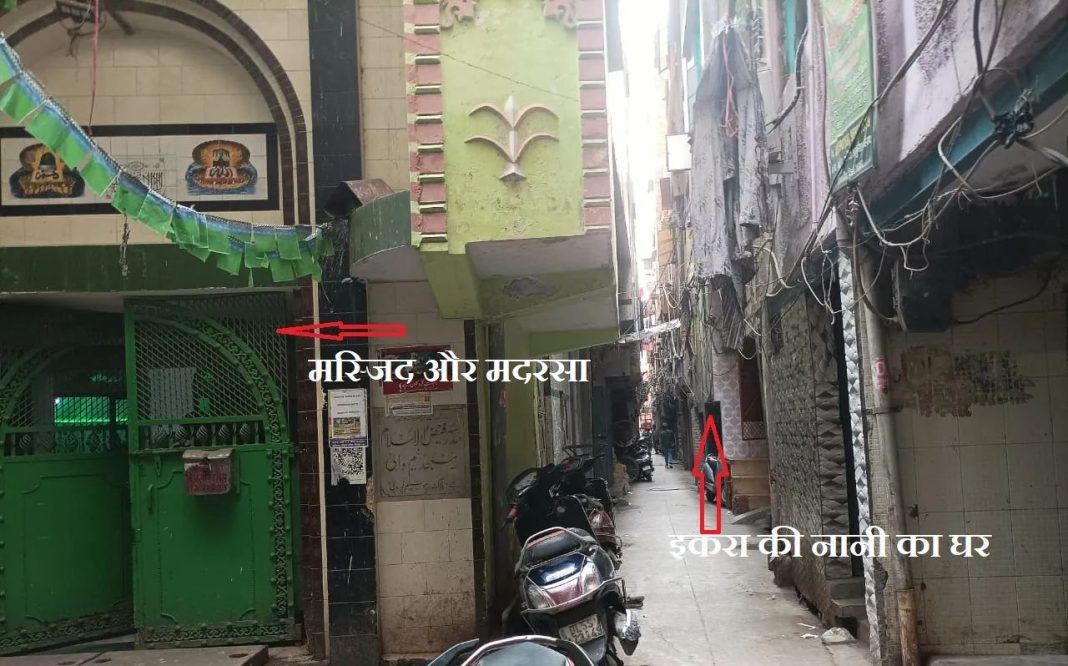
Many people around Zikra’s grandmother’s house refused to mention Zikra. Even when OpIndia’s ground reporting team reached the spot, people refused to even identify Zikra’s house. There is a mosque in front of the street where Zikra’s grandmother’s house is located and a madrasa also runs in it. People who studied here are Zikra’s strength today. The extent of Zikra’s fear is such that even people standing in her street were seen avoiding pointing out her house.

Hindu families are being forced to migrate from the area, posters put up for sale of houses

Talking to the locals, it was found that Seelampur was once a Hindu majority area, but now the Muslim population is dominating there. According to the locals, many Hindu families are selling their houses and migrating, fed up with the hooliganism of goons like Zikra. At least 3 Hindu families have sold their houses to Muslims in the lane of Sant Ravidas Mandir. Muslim families are rapidly changing the demography of the area by buying houses in the area.

The locals also staged protests against this forced demography change in the area. They expressed their pain by putting up posters like ‘Hindus forced to migrate’. An elderly man told OpIndia, “Our children are not safe here. We live in fear every day. The government and the police do nothing. We are forced to sell our houses and leave.”

If action had been taken against Zikra earlier, Kunal could have been alive

The police acted swiftly after the Kunal murder case. Zikra was arrested on April 18, and by April 20, a total of nine accused were detained. These include two women (Zikra and Zahida) and two minors. The other accused arrested include Sahil (18), Shoaib (35), Nafees (32), Aneesh (19), and Vikas (29). The police conducted raids in Delhi-NCR, Ghaziabad, Meerut, Moradabad, and Amroha to arrest them.

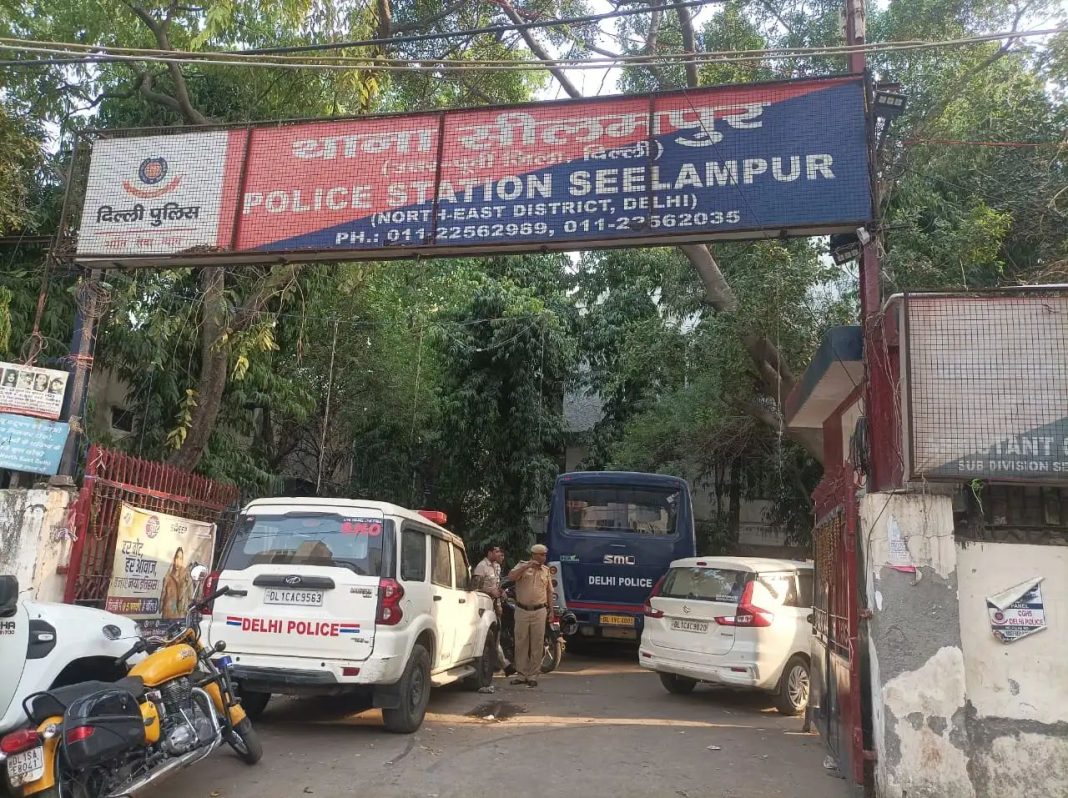
According to the police, there was an old rivalry between Kunal and Sahil, due to which Zikra, Sahil, and two minors hatched a conspiracy to murder Kunal. The rest of the accused helped the main accused to escape and hide. The police are currently searching for the weapons used in the murder. As part of ground report, the OpIndia team also visited the Seelampur police station. The SHO was not present at the spot at that time. A policeman there said, “Now everything is over, then you have come. Zikra and her gang have been sent to jail.”

However, the locals are not satisfied with the police action. They say that criminals like Zikra keep getting out of jail and committing bigger crimes. One person said angrily, “Zikra was caught earlier too, but she was released again. If the police had acted strictly earlier, perhaps our Kunal would have been alive today.”

Delhi CM gave a statement, but people want action

After the Kunal murder, Seelampur was tense for several days. Reports of protests and migration of locals even forced Delhi Chief Minister Rekha Gupta to issue a statement, but the local Hindu community believes that the government and mainstream media are trying to suppress the issue. After covering the case once, the mainstream media has ignored the story. No one from the government and administration has reached out to the victim’s family. BJP leaders reached the spot and were also talking about helping the victim’s family, but no special action has been taken by the government. Except for arresting the 9 accused. If the government wanted, it could have also helped the victim’s family financially.

Kunal’s father Rajveer Singh told OpIndia, “Those who killed my son should be punished. Zikra and her gang destroyed our family. We want the government to do something for the safety of Hindus, so that no other family is broken like ours.”

This incidents of atrocities and exodus of Hindus in Seelampur is not just the story of violence against Hindus. It is the story of the fear and insecurity that is making a community homeless from its own homes. The question is, how long will Hindu families be forced to live in this shadow of fear? And how long will criminals like Zikra continue to commit hooliganism in the streets without any fear?

Pope Francis buried outside Vatican, breaking century-old tradition: Here is why

0

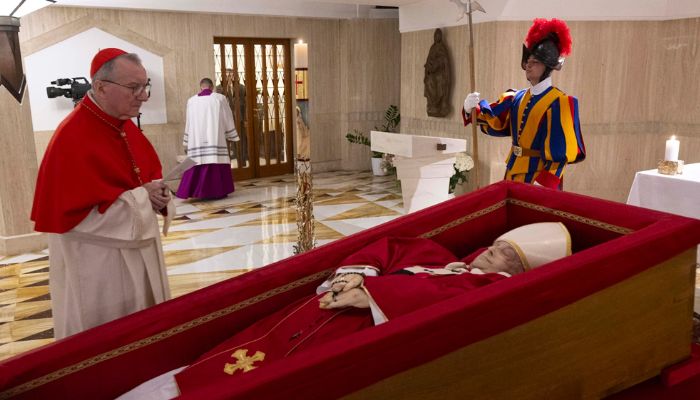
Pope Francis passed away on Easter Monday. He was not buried inside Vatican City like most of his predecessors. He had chosen the Basilica di Santa Maria Maggiore in his will for his final resting place. The Maggiore is located a few miles away from the Vatican.

According to tradition, popes are buried at St Peter’s Basilica. However, Francis made his wishes clear in his will. He had requested a plain tomb “in the earth, simple, without particular decoration” with only the inscription “Franciscus.” His funeral was held at St Peter’s Square. His body was then taken to the basilica.

According to his will, his burial cost was covered by a benefactor.

The basilica’s historic and personal significance

Santa Maria Maggiore is one of four papal basilicas in Rome. It holds historic as well as personal significance. It was commissioned in 431 AD by Pope Sixtus III. Santa Maria Maggiore is known for its mosaics, gilded ceilings, and Classical columns. It is located on Esquiline Hill, which is the highest point in Rome. The Maggiore is linked to the legend of the “Miracle of the Snow”. According to the legend, the Virgin Mary allegedly indicated the site through a snowfall in August 358 AD.

During his tenure as the pope, Francis often visited Santa Maria Maggiore to pray before and after foreign trips and hospital stays. The Salus Populi Romani icon housed in the Maggiore was special to him. In December 2023, he had wished to be buried at the basilica.

Departure from tradition

Seven popes before him were buried at Santa Maria Maggiore. He is also the first pontiff since Leo XIII, who died in 1903, not to be buried at St Peter’s Basilica.

Francis also refused to live in the Apostolic Palace. He stayed instead in a modest guesthouse within the Vatican. In Argentina, he used public transport as a cardinal and preferred a simple Ford Focus even after becoming pope. He also introduced several changes in papal funerals, which made the process simpler. His own burial followed the streamlined rituals that were approved by him during his time as the pope.

Drugged, forced to watch porn, and raped at knifepoint: Bhopal’s ‘Muslim gang’ preyed on Hindu girls, shot videos to further exploit them

Disturbing details have emerged during the investigation of the Bhopal Muslim Gang accused of trapping Hindu girls, raping them and forcing to convert them. As per reports, police found that the members of the Muslim gang forced the victims to smoke ganja (marijuana), showed them porn and raped them at knife point. They also recorded obscene videos of the victims to blackmail and sexually exploit them later.

An FIR was filed by the police on 18th April in the case, and eight accused, including the main accused Farhan Khan, have been arrested. The remaining accused are Mohammad Saad, Arbaaz, Ayan, Shahrukh, Javed alias Bhaiyyu, Zoya, and Faizan. The police are looking for Mohammad Ali, Abrar Khan, Hamid, Arshad and Siraj, whose names have surfaced in the case.

Investigation has revealed that Farhan and his associates shared obscene videos of the victims among themselves. They used to force the victims to introduce them to other girls. Evidence of threats sent to the girls has also been found on their mobile phones.

Among the victims are two sisters

The police have been able to identify some of the victims after examining the mobile phones of the accused, whose statements are being recorded. Two of the victims are real sisters. According to Dainik Bhaskar, the sisters told the police that they were pursuing B.Tech. at the same college as Farhan, and they met him through a friend. One day, Farhan took them to Hamid’s house where he raped one of them and recorded her obscene video. When she resisted, she was threatened and fed non-veg. Farhan also allegedly forced her to convert and marry him.

The other sister said that Farhan introduced her to Ali, who took her to his house and misbehaved with her. When she resisted, he raped her and discreetly recorded her obscene video. She alleged that Ali shared her obscene video with Farhan, who started blackmailing her. Farhan forced her to have sexual relations with his friends. When she refused, Farhan invited her to Abrar’s house on the pretext of talking. There he drugged her and raped her.

Farhan raped her at knife point and recorded video

Another victim also revealed some chilling details of abuse. She, who is from Indore, told the police that she came to Bhopal to study. She met Farhan in the first year of college and became friends with him. One day, he alleged took the 23-year-old victim to a hotel and raped her. He recorded her obscene video and raped her on multiple occasion by blackmailing her using the video. The victim alleged that when she resisted Farhan’s attempts to rape her, he put a knife on her throat and threatened to kill her. Farhan forced her to introduce him to her friends. Fearing that he would leak her videos, the victim obliged and introduced a friend to Farhan’s friend, Sahil. Sahil allegedly raped the victim’s friend. Similarly, Ali also allegedly raped another friend of the victim in a hotel in Ashoka Garden and recorded her videos. The victim also accused Farhan of extorting money from her.

According to the victim, she was forced to watch porn. If she did not obey, Farhan used to beat her in his car. He kept a knife in his car, using which he used to threaten to kill her. She was pressured to convert to Islam and marry.

Shahrukh raped a minor friend of a victim

Another victim of the Muslim gang named Shahrukh, Ayana and Zoya in her statement. As per reports, the victim alleged that Shahrukh of Bairagarh, Bhopal, lured her into a relationship and raped her. He later forced her minor friend to befriend his friend Ayan. After becoming friends, Ayan raped the minor. He also recorded a video of it. Shahrukh allegedly used the videos to blackmail the victim and forced her to meet his friend Arbaaz who also raped her.

SIT is investigating the case

A Special Investigation Team (SIT) of the police has been investigating the case. Speaking to the media, Bhopal Police Commissioner Harinarayanachari Mishra pointed at a well-thought-out pattern in the case. He said that he police are trying to contact other victims. Obscene videos of many girls have also been found on the mobile phones of the arrested accused.

Earlier, similar cases of sexual exploitation of Hindu girls by organised gangs of Muslims had come to light from Ajmer and Beawar. All these cases have the same underlying pattern, luring victims into relationships by winning their trust and then sexually exploiting them and recording their videos.

Has India unleashed a water war on Pakistan? Flood alert issued in PoK’s Muzaffarabad as Jhelum swells—Here’s what we know so far

Tension gripped Pakistan-occupied Kashmir (PoK) on Saturday afternoon after a sudden, alarming rise in the River Jhelum’s water levels triggered emergency alerts across Muzaffarabad. Residents, already on edge after a week of heightened India-Pakistan tensions, allege that India released the water without any prior warning to Pakistani authorities.

From the Chakothi border to Muzaffarabad city, locals watched in growing horror as the river swelled rapidly, forcing emergency sirens to blare and mosques to broadcast urgent warnings. Entire villages along the riverbanks — Hattian Bala, Ghari Dupatta, Majhoi — were thrown into chaos, with families scrambling to evacuate to safer ground.

“This was completely unexpected,” said a resident of Ghari Dupatta, describing how mosque loudspeakers urged residents to flee immediately. “The panic is real. No one knows how bad it could get.”

Pakistan claims the sudden surge is no accident but a deliberate tactic by India — part of a broader strategy to weaponize water flows following the Pahalgam terror attack earlier this week. Political analyst Javed Siddique didn’t mince words: “India’s threat to put the Indus Waters Treaty (IWT) in abeyance was not idle talk. Today’s water release was a message — loud and clear.”

The Muzaffarabad administration confirmed the unusual spike in water levels, officially declaring a water emergency in parts of PoK. Reports suggest the sudden torrent flowed from India’s Anantnag district through Chakothi — a stark reminder of how geography and geopolitics are deeply intertwined in this volatile region.

Social media was awash with videos from PoK, showing the river Jhelum raging in full spate.

“India’s reckless release of excess water into the Jhelum River from Anantnag has dangerously raised water levels, threatening lives and livelihoods downstream. India should be dealt with accordingly and stop this water terrorism,” another Pakistani bewailed.

Experts warn that India’s move — if proven intentional — could further erode the fragile peace the Indus Waters Treaty has sustained for over six decades, even through three wars.

Earlier this week, India took a decisive move as it suspended the Indus Water Treaty following the ghastly Pahalgam terror attack, which led to the deaths of 27 tourists and left several injured as Islamic terrorists opened fire on them after confirming their Hindu identities.

In its wake, PM Modi convened a CCS meeting that decided to suspend 1960’s IWT water-sharing treaty between India and Pakistan. Besides IWT suspension, the Indian government has also tightened the noose around terror sponsor from Pakistan as it closed the Attari-Wagah border and asked Pakistanis, including those on medical grounds, to leave India before April 29.

Meanwhile, Pakistani Prime Minister Shehbaz Sharif has called for a “neutral and transparent” investigation into the Pahalgam incident. In a sign of deepening regional concern, Iran and Saudi Arabia have reportedly offered to mediate between the two nuclear-armed neighbors.

As the waters rise, so too do fears — not just of floods, but of a larger political storm that could sweep the subcontinent.

Delhi: Al Mateen Mosque in Brahmpuri being expanded illegally, Delhi Police or MCD not taking any action, Hindus forced to put up posters of ‘House for sale’: Exclusive Ground Report

In North-East Delhi, there is the area called Seelampur which has been in the news once again recently due to the murder of a Hindu youth there. In Seelampur is an area called Brahmpuri, where the Al-Mateen Mosque built in lane number 12 has been in controversy for a long time. Hindus are opposing the expansion of this mosque. The local Hindu community says that the mosque was built fraudulently and now the attempt to expand it further is part of a well-planned conspiracy. There is a plan to open a new gate of the mosque in lane number 12, which is right in front of the Shiva temple built in 1984.

This issue has increased tension between Hindu-Muslim communities in the area. OpIndia had covered in its ground reports how fear is being spread among the local Hindu people in the name of Al-Mateen Mosque. OpIndia had also revealed in its report how black money and foreign funding is being used in the expansion of this mosque.

Meanwhile, an attempt was made to restart the work of expansion of this mosque. Local people protested when the construction work of the mosque started again. They said that when they asked the police administration to stop the construction of the mosque, Additional DCP Sandeep Lamba told them that the people associated with the mosque have spent Rs 2 crore, so the construction work will continue. The police clearly said that the construction work will not be stopped.

Allegations of collusion between MCD, Delhi Police and administration

The controversy around the expansion of the mosque is going on since 2023. When the work started earlier, people complained to the police and the construction stopped. Then the mosque committee took permission from MCD on 23rd November 2024. Work started again in February 2025, but on 13th February 2025, the North-East District Police received another complaint. Investigation revealed that the map of the mosque was passed in an incorrect manner. MCD stopped the work and sent a notice to the mosque committee.

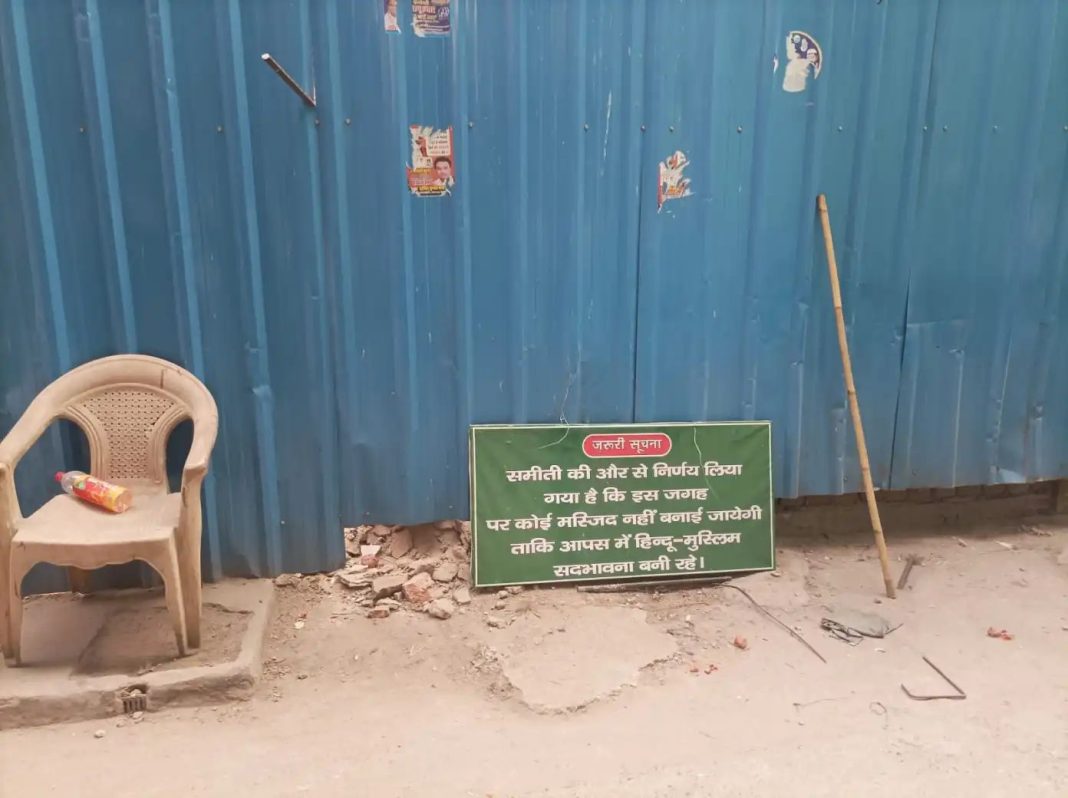
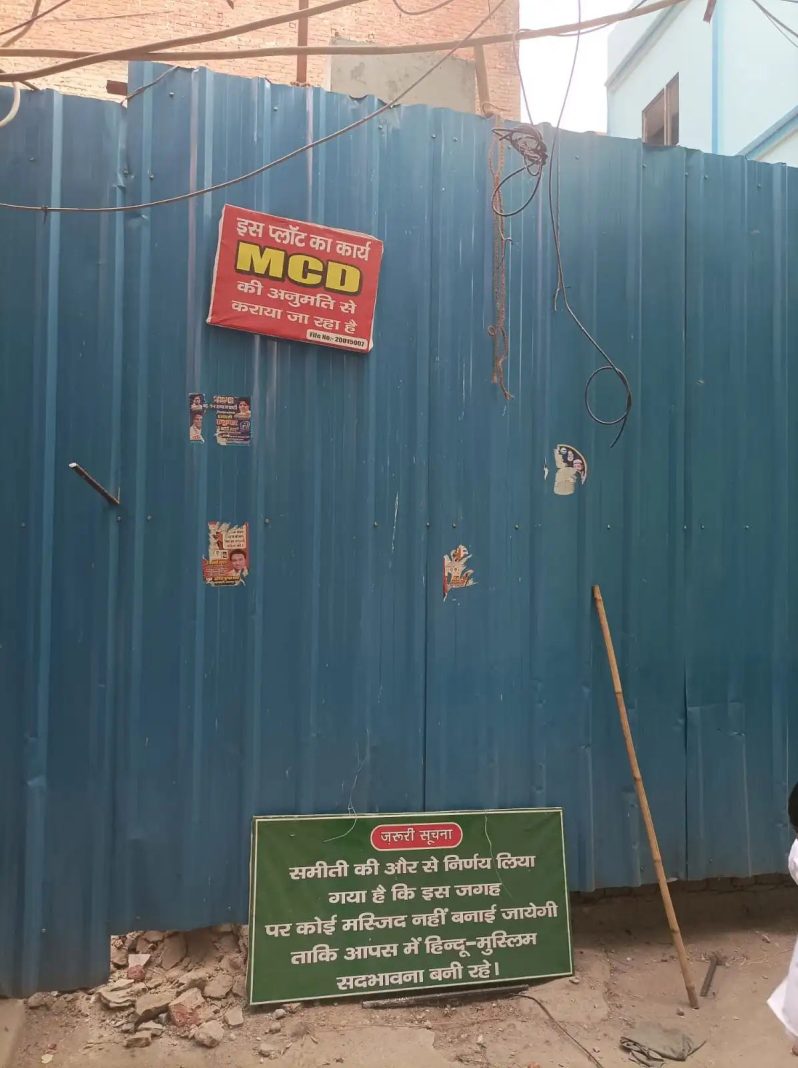
However, in OpIndia’s follow-up report dated 25th April 2025, the situation looked more serious. Locals were angry because the construction of the mosque was going on despite the ban. A board was put up which read, “No mosque will be built on any land taken privately by the committee. But there should be no conflict between Hindus and Muslims!” However, despite this, people were found working on the construction site. When Hindus protested, the police arrested two people from the Hindu side and took them to the police station, although they were released the next day.

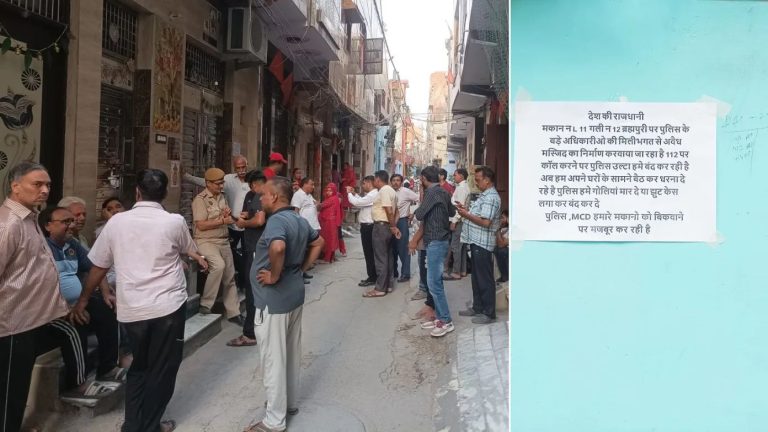
In protest against this attitude of the police and administration, Hindus in lane number-13 of the area put up posters outside their houses, which read, “An illegal mosque is being constructed at house number L-11, lane number 12, Brahmpuri, with the collusion of senior police officers. Upon calling helpline number 112, the police are instead arresting us. Now we are sitting in front of our houses and protesting. The police may shoot us or arrest us by filing false cases. The police and the MCD are forcing us to sell our houses.”

Hindus say that the administration is in cahoots with the mosque committee. A local resident Gautam says, “MCD first passed the wrong map, now it is trying to suppress the matter by putting up a board. All this is happening due to pressure from above.”

The administration is catering to the Muslims side

The mosque committee and local Muslims had earlier also expressed confidence that they would complete their work (construction of the mosque). In OpIndia’s report of March 7, 2025, it was reported that the mosque’s deputy imam Saddam Hussain had said, “After the dispute cools down, the administration itself will help in building the mosque.” This was also confirmed in conversations with local people. When OpIndia again reached Brahmpuri on April 25, 2025, the anger of the Hindus was clearly visible because the administration was actually helping in the construction.

By the way, the Naib Imam of the mosque Saddam Hussain had also said, “We are confident that the construction work will definitely be completed after the matter cools down. Right now there is pressure from the police and MCD, but this will not last long.” Some Muslims say that they are waiting for the opportunity. A shopkeeper said, “Right now everyone is quiet, but as soon as we get the opportunity, the work will start. We want our mosque.” The fear of Hindus is proving to be true, because the work of the mosque is being carried out secretly.

Root of the dispute around Al-Mateen mosque

The story of Al-Mateen Mosque of Brahmpuri begins in 2013. Local resident Pandit Shankar Lal Gautam says, “In 2013, some Muslim people bought a flat in Gali No. 13. Initially, Namaaz started being offered there, which no one objected to. But gradually that flat was converted into a mosque.” According to Gautam, it was a common house, but later it was turned into a four-storey mosque. He believes that all this was done thoughtfully so that the hold of Muslims in the area is strengthened. Initially no one suspected anything, but after the 2020 Delhi riots, people got wary of the place.

Bullets were fired on Hindus from Al-Mateen Mosque during Anti-Hindu riots of 2020

The riots that took place in North-East Delhi in February 2020 are still a nightmare for the people of Brahmpuri. Violence in areas like Seelampur, Jafrabad and Brahmpuri took the lives of 53 people and hundreds were injured. During this time, the name of Al-Mateen Mosque came to the fore. Gautam says, “On February 25, bullets were fired from the mosque. Suddenly thousands of people gathered there. A lie was spread that the mosque was set on fire. After this, firing took place in Gali No. 13, in which three Hindu boys were injured.” After this incident, fear gripped the Hindus. Many families left the area and sold their houses.

Hindus consider the expansion of the mosque a conspiracy

After 2020 riots, efforts to expand the mosque started. In 2023, the mosque committee bought a plot next to existing structure in lane number-12, which earlier belonged to a Hindu family. Gautam says, “First they bought that house, then demolished it and started building a part of the mosque there. All this was done very thoughtfully.” The plan was to open the new gate of the mosque in lane number-12, which is right next to the Shiva temple in front. Worship is done in this temple since 1984, devotees gather every Monday, and Holika Dahan takes place on Holi. Hindus fear that opening the gate of the mosque in front of the temple will lead to a fight every day and an incident like 2020 riots can be repeated.

Meanwhile, the Naib Imam of the mosque, Saddam Hussain, says, “Our population is increasing. The mosque has become too small. What is wrong in this? We want to live in peace.” However, Hindus think this is a conspiracy. Sonu (name changed), who lives in Gali No. 12, says, “If the mosque becomes twice as big, then imagine how many people will gather here. This is a warning bell for us.”

Posters of ‘House for sale’ and fear of demographic change

In protest against the expansion of the mosque, 25-30 of the 60 Hindu families in lane number 12 put up posters of ‘houses for sale’ outside their homes. Local resident Dinesh Sharma (name changed) says, “The atmosphere here changed after 2020. We lost our people in the riots, houses were burnt, and the fear was such that many people left from here. Now seeing the expansion of the mosque, it seems that the same thing will happen again.” Hindus say that this is a conspiracy to change the demography of the area. They say that first the mosque is built, then the atmosphere changes, and Hindus are forced to migrate.

The Muslim side says that people are selling their houses on their own will. Saddam Hussain says, “We are paying good money, so people are selling. There is no compulsion.” But Hindus believe that this is happening due to fear. An elderly resident says, “Earlier Hindus and Muslims used to live together here. Everything changed after the riots. Now seeing the expansion of the mosque, it seems that there is a preparation to drive us away from here.”

The committee is spreading lies about the community center, local people are telling the truth

However, the mosque committee is now claiming that a community center was being built in Gali No. 12, not a mosque. Saddam Hussain says, “We wanted to build a place for children’s education and health. This is not a conspiracy.” But Hindus are dismissing this claim. Gautam says, “This is all an excuse. Earlier there was talk of building a mosque, now when there was opposition, the story was changed.”

Some local Muslims also believe that in fact a mosque was being built. One person said, “The talk of community center is just to silence people.” This dispute of Brahmpuri is not limited to the construction of the mosque. It is a story of the wounds of the 2020 riots, fear of demographic change, clash of religious festivals and distrust in the administration.

Other ground reports related to Al Mateen Mosque

  • Al Mateen Mosque in Brahmpuri- Where is the money coming from for the expansion, person who donated land worth ₹40 lakhs runs a slipper shop
  • Attempts to build a new gate in front of Shiv Temple underway for fraudulently built Al Mateen Mosque of Brahmapuri: Suppression by putting MCD posters and more
  • Why are Hindus in Delhi’s Seelampur (Brahmpuri) putting up ‘house for sale’ posters? The Al-Mateen Masjid, 2020 riots, firing and more: Exclusive ground report

India asks Pakistani visa holders to return by April 29: How India has been medically helping Pakistani citizens for years and still getting backstabbed

0

On 22nd April, Islamic terrorists unleashed horror in Pahalgam, Jammu and Kashmir. They targeted Hindu tourists in a brutal ambush, leaving 26 dead and over a dozen injured. Lashkar-e-Taiba’s offshoot, The Resistance Front (TRF), took responsibility for the attack. The Pakistan-sponsored attack showed the ceaseless hostility of the neighbouring nation. In its aftermath, India started taking strict actions on all possible fronts.

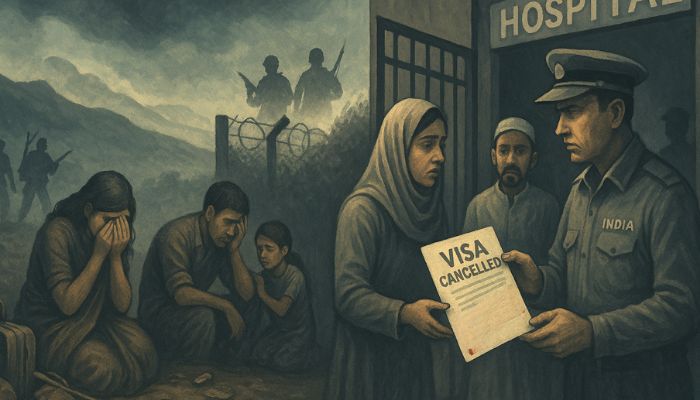
The Government of India has ordered all Pakistani nationals to leave India by 27th April, except Pakistani Hindus who have already been granted Long Term Visas (LTVs). Also, Pakistani nationals who are in India for medical treatment have time till 29th April to leave. India has extended compassion even to its enemy nations like Pakistan for years. However, the message is now clear: betrayal will not be rewarded with kindness.

India’s decisive response – pack up and leave

India has had enough of the backstabbing by the hostile neighbour. In a move that signals zero tolerance, the Ministry of External Affairs (MEA) has instructed all Pakistani nationals holding medical visas to pack their bags and leave by 29th April. According to the fresh directive issued by the ministry, no extensions will be entertained. Also, existing permissions have been revoked with immediate effect. This includes patients undergoing treatment for life-threatening conditions, which reflects just how severely Pakistan’s duplicity has tested the patience of India.

The instructions, issued through formal communications and annexures, leave no room for doubt: hospitality extended out of humanity cannot be a free pass for those whose nation exports terror.

A history of undeserved compassion

For decades, India has opened its doors to Pakistani citizens who needed urgent medical care. India often fast-tracked visas for treatments that could not be delayed. From transplants to cancer treatments and open-heart surgeries, thousands were granted entry purely on humanitarian grounds.

In fact, India often relaxed visa norms, eased documentation hurdles and many times looked the other way even during heightened tensions, which is very common in the case of Pakistan. While hospitals in India healed their bodies, many times for free, Pakistan’s terror factories continued bleeding India. Compassion was offered without expectation, but there is a limit to betrayal.

India had already laid down clear procedures for Pakistani nationals

Long before the latest fallout, India had established a clear, cautious framework that governed visas to Pakistani citizens, especially medical visas. According to documentation issued by the Government of India, all Pakistani nationals seeking visas, particularly for medical treatment, were required to apply through proper diplomatic channels. The visa was granted for a maximum period of three months to those who had obtained a prior appointment for treatment. If recommended by state governments or the FRRO, the visa could be extended based on appropriate medical documents. One attendant was permitted.

A security clearance from Indian agencies was mandatory, irrespective of urgency. However, in most cases, India often sped up the process on humanitarian grounds. Applicants were required to provide detailed personal information, proof of medical necessity, and undergo background verification before any visa could be issued.

Notably, only selected designated hospitals are allowed to offer medical treatment to Pakistani patients to ensure treatments are conducted at institutions recognised and monitored by the Government of India. Patients’ family members who want to visit as attendants too needed separate security clearance.

Despite these safeguards in place, India often showcased extraordinary flexibility on humanitarian grounds. Special considerations were often given to urgent cases, including those where extensions of visas and permissions for second opinions or follow-up surgeries were required.

The recent order asking Pakistani nationals holding medical visas to leave is thus not a knee-jerk reaction. It stemmed from a system that was built carefully but has been consistently undermined by the support of terror activities by the Pakistani government and Army.

Notable cases that made headlines

Though thousands of Pakistanis get life-saving treatment in India, there have been several cases that made headlines.

Heart transplant for Pakistani teenager Ayesha Rashan

In April 2024, 19-year-old Ayesha Rashan from Pakistan underwent a life-saving heart transplant surgery at MGM Healthcare in Chennai. The surgery, which would have cost ₹35 lakh, was performed free of cost. Financial assistance was provided by the Aishwaryam Trust.

Corrective spinal surgery for Pakistani girl Afsheen Gul

In 2022, 13-year-old Afsheen Gul from Sindh, Pakistan, was brought to India for corrective spinal surgery at Apollo Hospital in Delhi. She was suffering from a severe neck deformity due to a fall in infancy. Dr Rajagopalan Krishnan performed the complex surgery free of cost. After surgery, Afsheen could walk, talk and eat independently for the first time in her life.

Then-MEA late Sushma Swaraj intervention for medical visa

In 2017, then-External Affairs Minister Sushma Swaraj had granted visa on urgent basis to a 3-year-old Pakistani girl for open heart surgery and to a Pakistani man for liver transplant.

High-risk heart surgery for Pakistani man Zafar Ahmed Lali

In 2015, 57-year-old Zafar Ahmed Lali was brought to India for a high-risk heart surgery at the Asian Heart Institute in Mumbai. Despite the complexity due to multiple blockages and a defective valve, the doctors in India successfully performed the surgery and gave him a new lease of life.

Heart surgery of Pakistani child Noor Fatima

In 2003, Pakistani child Noor Fatima underwent heart surgery free of cost in India, giving her a new lease of life. Such free treatments were a gesture of goodwill and intended to strengthen Indo-Pak relations.

Pakistan’s endless cycle of backstabbing

India has extended a hand of friendship several times to Pakistan only to be met with a dagger. Even as Indian hospitals saved countless Pakistani lives, their army and terror outfits sent death across the borders. From the Kargil war just after the Lahore talks to countless terror strikes including the Mumbai attack of 26/11 and now the Pahalgam terrorist attack, Pakistani terrorists have hit India during peace overtures.

The message from Pakistan has remained unchanged over decades—it wants animosity over amity. No amount of goodwill, visas, or life-saving surgeries could ever awaken a conscience buried under decades of hate.

Why enough is enough

For every nation, a time comes when it must choose self-respect over sentimentality. India’s decision to send back Pakistani nationals holding medical visas cannot be deemed an act of cruelty. It is an act of survival. Time and again, misplaced kindness has been repaid with backstabbing and deaths of innocents. India has finally decided to tighten the doors. India will no longer compromise national security to maintain a façade of goodwill.

The Pakistani public must understand that compassion cannot be infinite when one side thrives on violence. Finally, enough is enough.

Conclusion

The goodwill of India was never owed. It was given to a hostile terror nation for free, especially when its leaders waged war in every form imaginable. Trust has been shattered, and the possibility of rebuilding it grows dimmer every minute.

The return directive given by the Government of India is not just an administrative move; it is a symbolic one, showing Pakistan that the time has come when India’s open-heartedness cannot be mistaken for weakness. Until Pakistan dismantles the terror networks that thrive under its watch, there will be no favours, no healing hands, and no open doors from the very nation it seeks to bleed with a thousand cuts.

Visa suspension after Pahalgam terror attack: Read how measures to hold Pakistan accountable are turned into sob stories of Pakistani nationals

As the Indian government suspended visas of Pakistani nationals in retaliation for the ghastly Pahalgam terror attack, the Indian media have taken it upon themselves to bring out the sob stories of Pakistani nationals who will have to go back to their country before the deadline.

The Ministry of Home Affairs, on Friday (25th April), announced the suspension of visa services to Pakistani nationals with immediate effect. The Ministry said that no new visas will be issued to Pakistani nationals across 14 categories, namely- SAARC Visa, visa on arrival, business visa, film visa, journalist visa, transit visa, medical visa, conference visa, mountaineering visa, student visa, visitor visa, group tourist visa, pilgrim visa and group pilgrim issued to Pakistan minorities. Pakistani nationals holding SAARC and medical visas were directed to leave India by 22nd April and 26th April, respectively, while those holding Visas of all other categories are required to go back by 29th April. Those who will be found overstaying their visa limits will face action under the Immigration and Foreign Nationals Act, 2025.

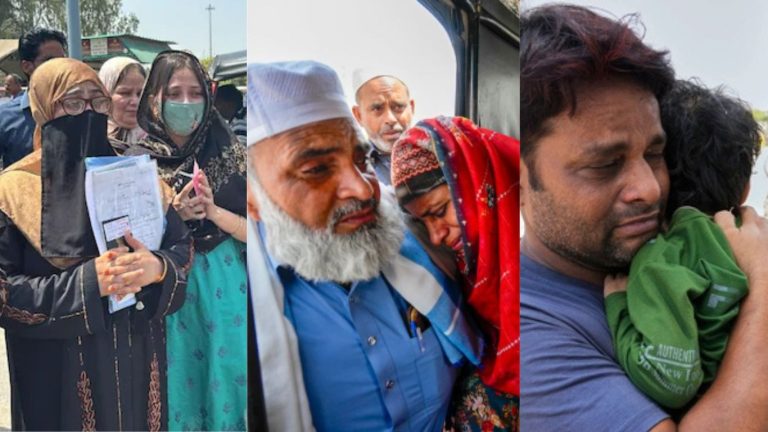
Soon after the government issued a 48-hour ultimatum to Pakistani nationals to leave the country, hundreds of Pakistani nationals left India through the Attari-Wagah border. However, many Indian women married to Pakistani nationals were left stranded at the border after the BSF officials barred them. In no time, the Indian news space was flooded with stories of the struggle of these stranded Indian Muslim women wanting to go back to their husbands’ houses and Pakistani nationals who came to India seeking medical care or to visit their relatives, but now have to return abruptly.

Indian Muslim women married to Pakistani nationals

Visa suspension has highlighted several cases of Indian Muslim women married to Pakistani nationals for decades, and yet retaining their Indian citizenship to avail the benefits of various welfare schemes in India.

The New Indian Express reported how Indian citizens Sadvi Ali and Majida Khan, both married to Pakistan nationals, have been struggling to go back to their husbands’ houses. Sadvi Ali, from Delhi, was married to a resident of Karachi. She was leaving for Pakistan with her son, but was stopped. “My five-year-old son is a Pakistani national; thus, he has to go back as the Indian government said that all Pakistanis have to leave the country in 48 hours. But he cannot travel alone,” Sadvi Ali was quoted as saying.

Similarly, Majida Khan, who married a Pakistani national 10 years ago, came to India with her two children. Despite being married for a decade, Majida Khan holds an Indian passport, and her two children, though born in India, hold Pakistani passports. “I came here in February to visit my family, and now, due to this development, we have to leave within 48 hours.” Regarding the Pahalgam attack, she said that those who killed innocents should be punished, but ordinary people should not be harassed.

The Tribune also reported the plight of Irshad and Sabina, who hold Indian passports despite being married to Pakistani nationals for years. Irshad from Bulandshahr, Uttar Pradesh, is reportedly married to a Pakistani national living in Karachi for two decades. Her two daughters, holding Pakistani passports, were allowed to go to Pakistan, but she was not allowed.

Irshad from Bulandshahr (UP), married to a Karachi resident for two decades. Though her daughters, holding Pakistani nationality, were permitted to cross, she was denied passage despite claiming to have applied for Pakistani citizenship, a process still incomplete. Similarly, Sabina, from Rajasthan, who married in Pakistan in 2018, was also stranded with her minor son, who is a Pakistani national. Another Indian Muslim woman, Wazida, who has two Pakistani children and was not allowed to cross the border, claimed that her citizenship application in Pakistan has been pending for 10 years since her marriage.

Pakistan nationals on a medical visa

Large numbers of Pakistani nationals visit India seeking medical facilities at affordable prices, which they fail to get in their own country. However, after the revocation of visas, they will have to return to their country. Several media outlets reported the sob stories of such Pakistani nationals.

Hindustan Times reported how Fida Hussain, a Pakistani national who came to India on 22nd April for a liver transplant in Delhi, is disappointed over the suspension of her visa. “I got my visa after a lot of struggles. The sudden turn of events has spoiled all my plans. I had spent a lot of money to come here for treatment. All of it has been wasted,” Hussain was quoted as saying.

Washin Jahangir, who claimed that she has ‘half-nationality’ of Pakistan, was also equally disappointed by the development. Jahangir and her sister’s in-laws live in Karachi. Both the sisters, along with Jahangir’s two nieces, came to India a month ago for asthma treatment. Jahangir’s two nieces were able to return to Pakistan as they were Pakistani nationals, but she and her sister got stranded. “My husbands and two sons are waiting for me across the border. I have been granted half-nationality by Pakistan. I have all the documents, still, I have been stopped,” Jahangir was quoted as saying by Hindustan Times

The story of another Pakistani man who came for medical treatment of his two children to India is also making headlines. His two children, aged 9 and 7, are reportedly suffering from a congenital heart condition. He reportedly appealed to the government of India to allow him to stay for the medical treatment of his children, citing that he spent ₹10 million on this.

Pakistani nationals who came to visit relatives

The Tribune presented the emotional tales of Pakistani nationals who came to visit India to meet their relatives, but their visit was cut short abruptly due to visa suspension. The media outlet reported how Asgar Ali, who termed the Indian government’s response to Pahalgam terror attack as ‘politics of hatred’, ” struggled to explain to the children why he couldn’t keep his promises — to show them their parents’ ancestral village and the historic sites they had dreamed of visiting during their 45-day stay”. Ali was hosting eight Pakistani guests.

Mohammad Hanif, a Pakistani wrestler, also faced a similar predicament as he had to leave without meeting friends and relatives in Punjab, including fellow wrestlers at local akharas.

‘Trying to grope victim’s breast does not amount to attempted rape’: Calcutta HC

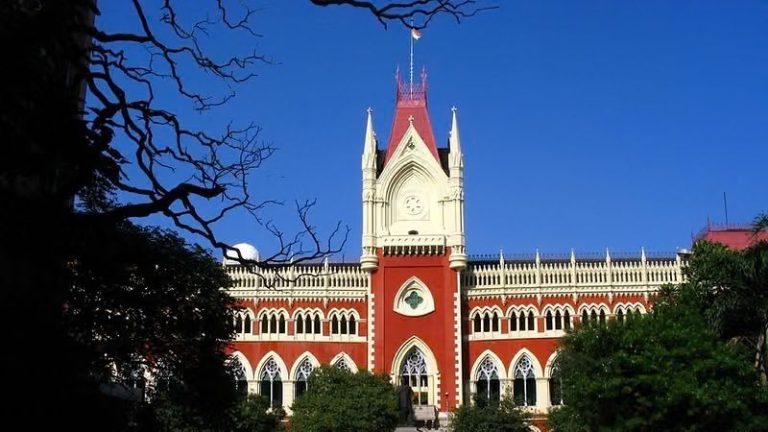
In its recent ruling, the Calcutta High Court stated that a man’s drunken attempt to grope a minor girl does not amount to attempted rape under the POCSO Act, but rather qualifies as aggravated sexual assault, given the absence of any penetrative act.

A Division Bench comprising Justices Arijit Banerjee and Biswaroop Chowdhury made the observation while hearing an appeal. They noted that the victim’s testimony, along with her medical examination, showed no signs of penetration, nor any attempt to penetrate. Instead, the minor stated that the man, clearly under the influence of alcohol, had tried to grope her breasts — a serious act no doubt, but legally distinct from attempted rape.

“Such evidence may support a charge of aggravated sexual assault under Section 10 of the POCSO Act, but does not prima facie indicate an offence of attempted rape,” the Court remarked.

The petitioner had been convicted by a trial court under multiple sections, including Sections 448, 376(2)(c), and 511 of the IPC, and Section 10 of the POCSO Act. He was sentenced to 12 years of rigorous imprisonment along with a fine of ₹50,000. Challenging this, he approached the High Court, arguing that the evidence simply didn’t back an attempted rape charge — and even if all witness testimonies were taken at face value, the conviction could not stand.

His counsel also pointed out that the petitioner had already spent over two years behind bars, and there was little hope of the appeal being heard anytime soon. Without proof of penetration, they argued, Section 376 IPC (rape) wouldn’t apply, and at most, the case would fall under aggravated sexual assault, which carries a lighter sentence of 5–7 years.

The Court agreed. It noted that given the nature of the evidence, the petitioner’s actions amounted to aggravated sexual assault, not attempted rape. Considering he had already served a substantial portion of the maximum sentence for that lesser offence, the Court granted him bail.