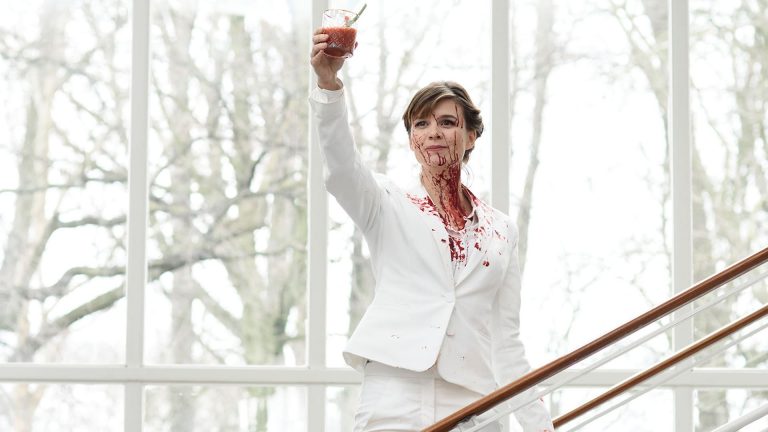
A Dutch movie titled “The Columnist”, or “The Pussy Whore” in its original Dutch, has become the subject of internet mockery after its trailer went viral on the social media platform Twitter. The movie follows Westworld-fame Katja Herbers playing the role of Femke Boot, a newspaper columnist facing pressure from her publisher to complete her book and a seemingly endless stream of online harassers.
In order to deal with this endless online harassment, the journalist character decides to hunt down and murder people who write mean or rude stuff about her online.
To the surprise of no one, the movie has garnered immense praise from fellow journalist movie critics. The Columnist currently holds an 82% “Fresh” rating on the review-aggregation site Rotten Tomatoes. Fellow journalist movie critics have described the film as “smart, stylish, subversive”, “a gleeful joy” and “an excellent black comedy thriller about the price of free speech and its problematic consequences.”
However, internet users have not taken kindly to the premise of the movie, describing the concept of the film as a “power trip” for journalists. Twitter users were quick to pounce on the absurdity of the movie’s concept, mocking the movie and journalists wholesale.
Is it going to try and take itself seriously and think everyone would be on the journalist’s side or is it going to be absurd satirical comedy? ?
According to a 2017 study reported in Business Insider, the brains of journalists show a “lower-than-average” level of executive functioning, which results in them having a “below-average ability to regulate their emotions, suppress biases, solve complex problems, switch between tasks, and show creative and flexible thinking.” The study blames this on the tendency of journalists to self-medicate with alcohol, caffeine, and high-sugar foods.
For more than a week, Muslim hardliners in various cities have been protesting against Dasna Devi Temple’s head priest Yati Narsinghanand Saraswati for his statements against Muhammad. Endless calls for the beheading of the priest have been made by several Muslim groups and even mainstream political parties for his alleged ‘blasphemy’.
Yesterday, the Kanpur unit of All India Majlis-e-Ittehad-ul-Muslimeen (AIMIM) had put up incendiary ‘sar tan se juda’ posters with gory images, calling for the beheading of Narsinghanand Saraswati and Wasim Rizvi. Another despicable poster had a dog and a child urinating on Narsinghanand Saraswati. Similarly, videos surfaced where young Muslim children could be seen calling for the beheading of the priest on open streets.
Enraged by the Islamic fanatics openly calling for murder under religious and political sanction, Hindus from various corners of the country are now coming together in large numbers to voice their support for Yati Narsinghanand Saraswati.
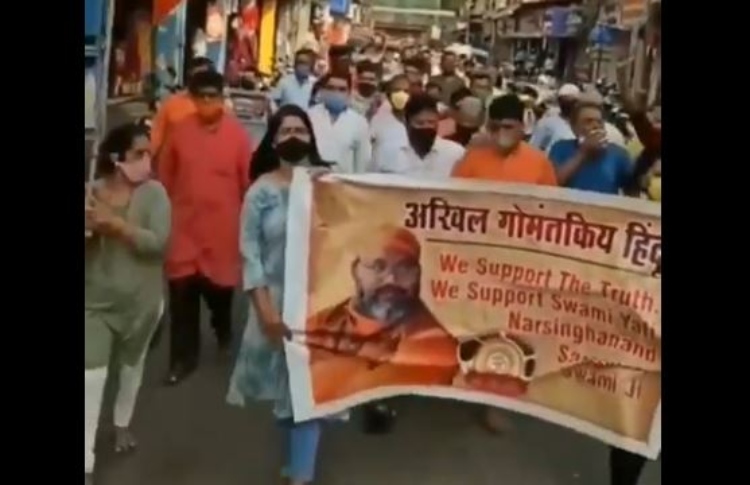
Hindus organise processions in support of Yati Narsinghanand Saraswati
In a video shared on Twitter, Hindus are seen carrying out a huge procession in support of the Hindu priest. Swami Yati’s supporters are seen crying a poster that reads: “We support the truth, we support Yati Narsinghanand Saraswati”. They raised slogans in support of the Hindu priest.
Hindus demand ‘Z’ category security for the Hindu priest
Additionally, members of the Hindu outfits like the Shakti Dal, International Hindu Council and many Bajrang Dal activists gathered at the Collectorate campus in Shahjahanpur, Uttar Pradesh on Monday to protest against the violent threats being issued against Narsinghanand Saraswati.
According to a report by Hindi Daily Amar Ujala, the Hindu leaders handed over a memorandum to the UP Chief Minister demanding ‘Z’ category security for the Hindu priest whose life has been under threat ever since Muslims across the country have been calling for his beheading.
Speaking on this occasion, the National Senior Vice President of Hindu Shakti Dal, Puneet Hindu said that Swami Yeti Narasimhanand has been opposing issues like Love Jihad, Muslim fundamentalism and terrorism from time to time. For this reason, he has been on the hit list of the Islamic fundamentalists many times in the past too. Puneet said that since Yati Narasimhanand lives in Muslim-majority Dasna town there is a constant threat to his life, which is a matter of grave concern. The Hindu leader feared that if not stopped here, this episode might be a rerun of the Kamlesh Tiwari episode. He added that Hindus need to come out on streets to stand in solidarity with Yati Narsinghanand Saraswati.
In a separate incident, members of Hindu Sangharsh Samiti gathered in front of the secretariat in Haryana’s Yamunanagar demanding ‘Z’ category security for Narsinghanand Saraswati and Wasim Rizvi, the former chairman of the Shia Central Board of Waqf in Uttar Pradesh. According to a report by Jagran, the members of the Hindu outfit raised ‘Jai Shree Ram’ slogans while holding counter-protest against mobs calling for beheading of Narsimhanand Saraswati.
This demonstration by the Hindus saw resentment from the people of the Muslim community, who also gathered and raised slogan against Dasna Devi Temple head priest in front of the Secretariat, forcing Yamunanagar police to intervene.
To avoid any untoward incident, added police force was immediately called for. While the Muslims were restricted in front of the Secretariat, the police convinced the Hindu outfit members to shift towards the Anaj Mandi gate, where they continued the protest.
In what culminated into a brawl, police barred both sides from using loudspeakers or mics while demonstrating. The Muslims, however, did not pay heed to the request and began using mics to raise slogans against the Hindu priest. This enraged the Hindus, who in turn asked the Muslims to stop using microphones and loudspeakers. This led to a confrontation between the members of both communities. The police, however, intervened and brought the situation under control.
Remarks by Yati Narsinghanand Saraswati on Islam
On April 1, Yati Narsinghanand Saraswati, head priest of Dasna Devi Temple in Ghaziabad, Uttar Pradesh, had spoken at an event held at the Press Club of India when he urged Hindus to be fearless in highlighting the characteristics of Prophet Muhammad.
Following Swami Yati’s remark, Aam Aadmi Party MLA Amanatullah Khan had last week called for the beheading of the Hindu priest through his verified Twitter account. Amanatullah Khan’s tweet calling for the beheading of Yati Narsinghanand Saraswati was taken down by Twitter and subsequently, a first information report (FIR) was filed against Khan for fostering enmity and criminal intimidation by the Delhi police. Despite these actions, Amanatullah Khan’s post has put the Hindu priest’s life at a huge risk. Ever since, Khan’s viral tweet, thousands of Muslims have been advocating his call.
It must be remembered that Kamlesh Tiwari, the former Hindu Mahasabha leader was brutally murdered in 2019 in his own house by a group of radical Islamists for his 2015 statements criticising Muhammad. Back in 2015 and early 2016, lakhs of Muslims had taken to streets in several cities of India, openly calling for the public beheading and murder of Kamlesh Tiwari. The slogans calling for murder were actively encouraged by Islamic leaders, politicians and Imams.
In 2020, French schoolteacher Samuel Paty was beheaded by a Muslim man for sharing the Charlie Hebdo cartoons that had mocked Muhammad.
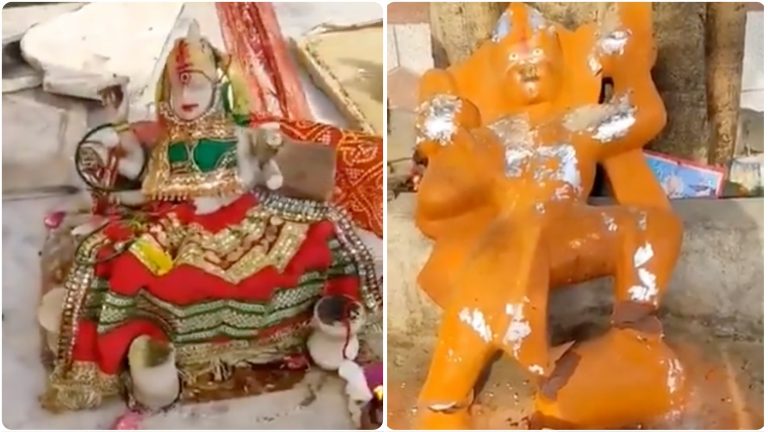
Protests swept western Delhi’s Dwarka neighbourhood this morning after devotees reportedly discovered idols of Hindu Gods and Goddesses at the Mata Sahaj Kaur Kuldevi – Hanuman temple desecrated, says VHP.
Hundred of demonstrators, along with VHP and Bajrang Dal members, staged a protest against the egregious defilement of idols by unknown miscreants. The protesters took to the streets in Dwarka, demanding the police to arrest the culprits responsible for the idol vandalism at the Hindu temple that is located in Kakrola village in Dwarka.
Vinod Bansal, the National Spokesperson for the Vishwa Hindu Parishad, took to Twitter to share the video of vandalised idols of Hindu Gods and Goddesses. Bansal added that the growing number of attacks on Hindu places of worship in Delhi and the apathy of the police administration in this regard have further raised concerns among Hindus.
राजधानी दिल्ली में हिंदूओं व मंदिरों पर बढ़ती हमलों की घटनाओं व पुलिस-प्रशासन की उदासीनता ने हिन्दू समाज की चिंताओं को और बढ़ा दिया है। दोषियों के विरुद्ध @DelhiPolice द्वारा कठोर कार्यवाही जरूरी है। pic.twitter.com/TtkkpuPNTe
The VHP functionary has asked Delhi Police to find out the culprits responsible for the temple vandalism and take strict action against them. The video shared by Mr Bansal shows visuals from the temple where idols of Hindu Gods and Goddesses were vandalised.
A protest was also launched demanding justice.
मंदिरों में देवी-देवताओं की मूर्ति विध्वंस से आक्रोशित हिन्दू समाज पश्चिमी दिल्ली में सड़कों पर उतर आया है। देखना यह है कि यहां की सरकार हिन्दू रक्षार्थ कब अपनी तन्द्रा से जागेगी..!! pic.twitter.com/FkFDTItSFO
Growing number of idol vandalism incidents in Delhi
This incident s not the first time that Hindu temples in Delhi have come under attack. There have been several cases in the past when places of Hindu worship had been targeted and vandalised. In February last year, during the anti-Hindu riots in Delhi’s northeast, rioters and vandals had attacked the Shiv Mandir in Chand Bagh.
In November 2020, dozens of Hindu god and goddesses idols were found desecrated in a temple at Kailash Vihar Pansari in Begumpur, Delhi. The incident happened on the night of November 24 at the Shiv Shakti temple in Begumpur. The antisocial elements mainly separated the head from the torso of all the Murtis installed in the temple, left it behind and fled.
Back in 2019, the desecration of the Durga Temple in Delhi’s Hauz Qazi brought under the spotlight the rampant vandalism of Hindu temples in the national capital. A mob of over 300-400 people vandalised a temple in Chandni Chowk in Old Delhi on the night of June 30, 2019. According to locals who posted videos of the temple on social media, the Durga Mandir came under attack by 300-400 people belonging to the Muslim community at around midnight. Not just the temple, but the mob also attacked the Hindu residences in the neighbourhood, the locals claimed.
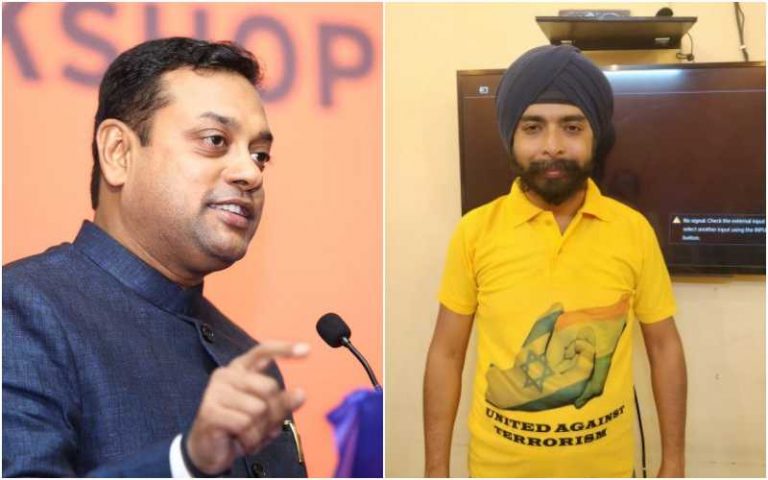
Yesterday, the Chhattisgarh High Court struck down various First Information Reports (FIRs) filed against BJP National Spokesperson Dr Sambit Patra and BJP Delhi Spokesperson Tajinder Pal Singh Bagga which were lodged in May 2020. Two FIRs were lodged against Dr Patra in Raipur and Durg, while one case was filed in Kanker against Tajinder Pal Singh Bagga, Dr Patra’s lawyer Sharad Mishra said.
Two FIRs lodged against Dr Patra were quashed, one under Sections 499, 500, 501 & 505(1) of the Indian Penal Code (IPC) and another under Sections 298, 153A & 505(2) of the IPC. These FIRs were lodged against Dr Patra for making allegedly defamatory remarks against the Congress party and its leadership, including former PMs Jawaharlal Nehru and Rajiv Gandhi.
Similarly, an FIR filed against Tajinder Bagga under Sections 153A, 505 of the IPC and Section 66 of the Information Technology Act, 2000 was disallowed by the Hon’ble High Court. The FIR against Tajindar Bagga was filed in relation to a complaint about Bagga for merely retweeting Dr. Patra’s Twitter post about former PMs Jawaharlal Nehru and Rajiv Gandhi.
Non-cognizable offence
In the judgement, Justice Sanjay K. Agrawal observed that as far sections relating to defamation are concerned, the police do not have the power to investigate non-cognizable offences without the permission of a competent Magistrate. A non-cognizable offence is usually a minor offence, mentioned in the First Schedule of the IPC, for which the accused cannot be arrested without a warrant.
The judgment further elucidated upon the illegality of a police investigation into a non-cognizable offense without the competent Magistrate’s permission. It states that any subsequent permission granted at a later date cannot fix the illegality of the police officer initiating the investigation without permission of the Magistrate with jurisdiction.
About Section 505 of the IPC which deals with statements conducive to public mischief, the Hon’ble Court observed that making allegations against leaders of political parties, even if they turn out to be incorrect or untrue, does not constitute an offence under Section 505(1).
The Hon’ble Court also refused to consider the complainant, who is neither a family member nor near relative of either PM Nehru or Rajiv Gandhi, as an “aggrieved person” under Section 199(1) of the Criminal Code of Procedure.
The Court also observed that Section 298 of the IPC applies only in cases where oral words are uttered in presence of the person, and not in cases of written articles or social media posts.
“There is also no allegation that the petitioner wounded the religious feelings of any person including respondent No.4. As such, none of the ingredients for constituting the offence under Section 298 of the IPC is available against the petitioner. Therefore, taking the contents of the FIR as it is so far as the offence under Section 298 of the IPC is concerned, offence under Section 298 is not made out against the petitioner.”, the Chattisgarh HC said.
The Court also quashed the FIR filed under Sections 153A & 505(2) of the IPC, stating, “it is not the allegation that in the said tweet, two different religious, racial, language or regional groups or castes or communities are involved and as such there is no two different religious groups which is sine qua non for attracting offences under Sections 153A & 505(2) of the IPC and one of the essential and basic ingredients of the above-stated offences of involvement of two different groups is totally missing.”
The quashed complaints
On May 11, 2020, the Chhattisgarh Police had registered a case against Dr. Sambit Patra for supposedly promoting animosity between different groups and hurting ‘religious sentiments’ for his tweets against Jawaharlal Nehru and Rajiv Gandhi. The FIR was lodged against Patra on the complaint of Chattisgarh Youth Congress President, Purna Chandra Padhi at the Civil Lines Police Station of Raipur under Indian Penal Code (IPC) Sections 153A (promoting enmity between different groups), 505(2) (public mischief) and 298 (uttering words to wound religious feelings).
According to the complainant, the tweets by Dr Patra could scare and provoke members of the Sikh community which may, in turn, disturb public tranquillity. He had also argued that tweeting such things was “prejudicial to the maintenance of peace and harmony between religious groups”. Refuting claims of the complicity of the two former Prime Ministers in either riots or corruption, Padhi had said that they were not convicted by any Court of law and as such the allegations levelled against them by Dr Patra were baseless.
On Tuesday (April 13), Fox News anchor Tucker Carlson slammed ADL (Anti-Defamation League) for making outrageous claims against the former about allegedly supporting white-supremacist ‘great replacement’ theory. His strong remarks against the ADL, which seeks to stop the defamation of the Jewish people, comes at the backdrop of a debate on population demography change.
In a Fox News segment on Friday (April 9), Tucker Carlson remarked, “The government has shown preference to people who have absolute contempt for our customs, laws and system itself. And they are being treated better than American citizens. I know that the Left and the gatekeepers on Twitter become literally hysterical if you use the term ‘replacement.’ If you try to suggest that the Democratic party is trying to replace the current electorates casting ballots with new obedient people from the third world, then, they become hysterical. This is what is happening actually.”
“This matters on a bunch of different levels but on the basic level, it is a voting rights question. In a democracy, one person equals one vote. If you change the population, then, you dilute the power of the people who live there. Every time you import a new voter, I become disenfranchised as a current voter… Everyone wants to make a racial issue or white replacement theory. This is a voting rights question. I have less political power because they are importing a brand new electorate…They are not allowed to do that? Why are we putting up with this,” he inquired.
(Video Courtesy: Youtube/Fox News)
His comments were directed at the Chief Executive of Delta Airlines named Ed Bastian, who had recently criticised the newly enacted Georgia voting law that called for voter identification for absentee balloting to ensure free and fair elections. Earlier, Bastian said, “I need to make it crystal clear that the final bill is unacceptable and does not match Delta’s values.” Tucker had then pointed out his hypocrisy by emphasising that an ID was required to board a Delta flight and how Ed Bastian did not want this to be the case for elections.
ADL harps tries to get the Fox News anchor fired
Tucker Carlson’s fear of demography change through illegal immigration of foreign nationals by the Joe Biden administration drew the ire of the CEO of Anti-Defamation League Jonathan Greenblatt. In a tweet on Friday (April 9), he said, “”Replacement theory” is a white supremacist tenet that the white race is in danger by a rising tide of non-whites. It is antisemitic, racist and toxic. It has informed the ideology of mass shooters in El Paso, Christchurch and Pittsburgh. Tucker must go.”
.@TuckerCarlson: “replacement theory” is a white supremacist tenet that the white race is in danger by a rising tide of non-whites.
It is antisemitic, racist and toxic. It has informed the ideology of mass shooters in El Paso, Christchurch and Pittsburgh.
— Jonathan Greenblatt (@JGreenblattADL) April 9, 2021
It must be pointed out that the Fox News host had specified in the Friday segment that his ‘replacement theory’ was not based on race and instead on voting rights. Given the toxic ‘cancel culture’ rampant in the United States, Jonathan Greenblatt seized the opportunity to get Tucker Carlson fired from his job. He had called upon Fox News CEO Lachlan Murdoch to sack Carlson over his alleged defense of white-supremacist replacement theory.
On Sunday (April 11), Lachlan Murdoch in a letter to ADL CEO responded, “A full review of the guest interview indicates that Mr. Carlson decried and rejected replacement theory. As Mr. Carlson himself stated during the guest interview: ‘White replacement theory? No, no, this is a voting rights question’…Fox Corporation shares your values and abhors anti-semitism, white supremacy and racism of any kind. In fact, I remember fondly the ADL honoring my father with your International Leadership Award, and we continue to support your mission.”
Yesterday, @FoxNews‘ Lachlan Murdoch responded to my letter on @TuckerCarlson‘s embrace of white supremacist theories. Unfortunately, it missed the mark. The message is simple: it’s a moral failure to not take action against this hate. My letter explains: https://t.co/aoWiChS0i5https://t.co/AF2qSxryfA
However, Jonathan Greenblatt was not impressed with the response of the Fox News CEO after his plans to get Tucker Carlson sacked, failed miserably. In a tweet, he lamented, “Yesterday, Fox News’ Lachlan Murdoch responded to my letter on Tucker Carlson’s embrace of white supremacist theories. Unfortunately, it missed the mark. The message is simple: it’s a moral failure to not take action against this hate.”
Tucker Carlson exposes the hypocrisy of Anti-Defamation League
On Tuesday (April 13), Tucker Carlson reiterated the nefarious plans of the Democratic party in undermining the US election process. “Demographic change is the key to the Democratic party’s political ambitions. Let’s say that again for emphasis because it is the secret to the entire immigration debate. In order to win and maintain power, Democrats plan to change the population of the country… Their goal is to make you irrelevant,” he said.
The Fox News host added, “It is immigration from other nations, more than anything else, that has driven political transformation,” he said. “Our leaders have no right to encourage foreigners to move to this country in order to change election results. Doing that is an attack on our democracy.”
(Video Courtesy: Youtube/Fox News)
Tucker Carlson was quick to point out the doublespeak of the Anti-Defamation League. He highlighted how in 2010, ADL had objected to the influx of Palestinian refugees in Jewish-dominated Israel, to avert potential demographic change and undermining of political representation and protection of Jewish community.
Quoting the statement by ADL, Carlson read, “With historically high birth rates among the Palestinians, and a possible influx of Palestinian refugees and their descendants now living around the world, Jews would quickly be a minority within a bi-national state, thus likely ending any semblance of equal representation and protection.”
He further read out the ADL’s statement, “In this situation, the Jewish population would be increasingly politically – and potentially physically – vulnerable. It is unrealistic and unacceptable to expect the State of Israel to voluntarily subvert its own sovereign existence and nationalist identity and become a vulnerable minority within what was once its own territory.” Tucker Carlson thus exposed the hypocrisy of ADL by pointing out its dual standards on external population influx in the US and Israel.
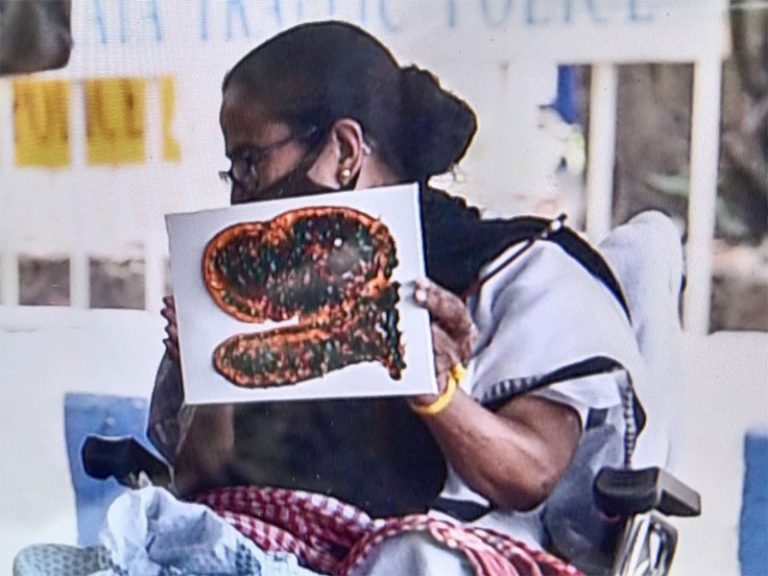
On April 13, Mamata Banerjee did not appear in any election rallies or gave any statement regarding the ongoing Assembly elections in West Bengal after Election Commission banned her from campaigning for 24 hours on April 12. West Bengal CM spent her day binge-painting some ‘masterpieces’ out of which one in particular left netizens scratching their heads.
#WATCH | West Bengal CM Mamata Banerjee paints & shows paintings as she sits on dharna at Gandhi Murti in Kolkata, to protest against a 24-hour ban imposed by ECI on her from campaigning from 8 pm of April 12 till 8 pm of April 13 pic.twitter.com/CvKHxTB53d
The miniature painting in question looked like an ‘abstract art’ at first glance, but the more people talked about it, the more speculations raised about the idea behind that painting. Netizen Payal Mehta posted the painting on Twitter and asked if someone can explain what she had drawn.
Here are some of the most interesting replies. Some users compared it with the painting by ‘Majnu Bhai’, a character played by Anil Kapoor in the movie Welcome.
The second wave of the Coronavirus pandemic has hit India pretty hard. While a significant share of the cases still continue to be from one single state, Maharashtra, cases are rising fast in other states and Union Territories such as Gujarat, Uttar Pradesh, Bihar, Delhi and Chhattsgarh as well. With rising cases, calls for a lockdown have suddenly become fashionable again.
‘Journalists’ and intellectuals are again piling up demanding a lockdown as India continues to record well over 150,000 new cases every day. The central government, on the other hand, has made it clear that lockdowns and night curfews have limited impact on slowing the transmission of the virus.
Even so, confronted with rising cases, demanding lockdowns appear to have become the go-to response for many in the media and others. This is not to say that the first lockdown was not useful or was altogether pointless. It did have its necessity and utility, which we shall elaborate on later in the article.
Before going into the human cost of the lockdowns, it needs to be made clear that there is very little evidence to suggest that lockdowns are especially effective in eliminating the spread of the virus.
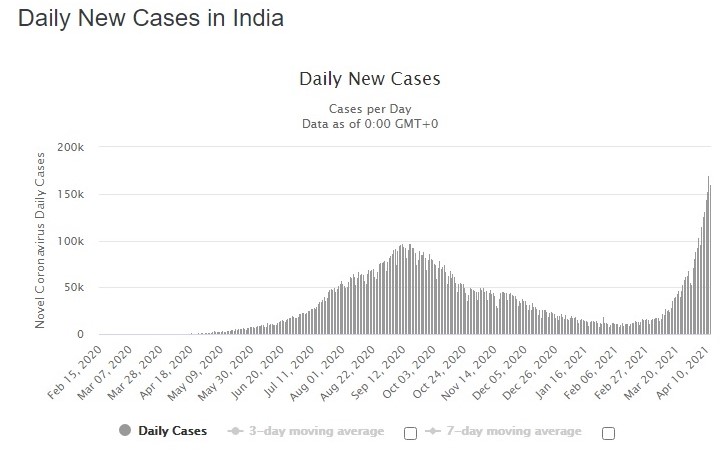
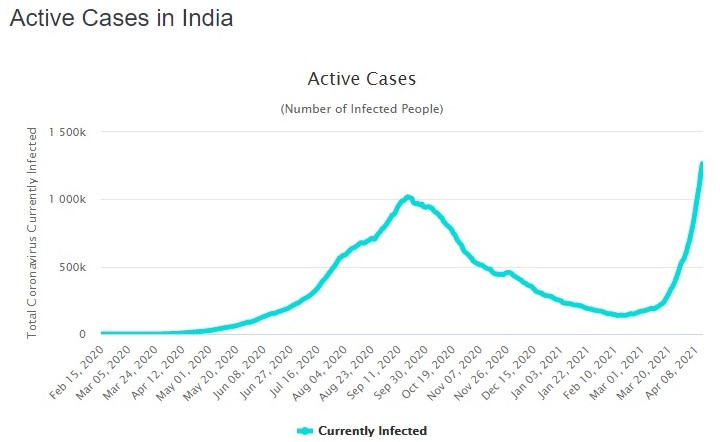
Trends since the advent of the Coronavirus pandemic make the futility of lockdowns in this respect further evident. The first lockdown was imposed in India on the 24th of March, 2020 and lasted three weeks. Three weeks later, it was extended till the 3rd of May. Thereafter, the unlock was on in phases and from June, all spaces apart from containment zones and few other places, restrictions had largely been lifted.
Source: Worldometers
The data from that specific period is noteworthy. From March till June, cases were on the rise all the time despite the fact that the lockdown was in place and numerous restrictions were in order. From June till September, despite the fact that restrictions had largely been lifted, the cases do not show a disproportionate increase or a sudden spike.
What is really interesting, however, is what happens after September. After a peak, cases begin to drop precipitously despite the fact that no lockdown was in place and there wasn’t any strict enforcement of restrictions either. The drop from September 2020 continued well and truly into this year when cases suddenly started increasing in the middle of March.
Source: Worldometers
Even then, the overwhelming share of cases even until a couple of weeks ago were from Maharashtra and Kerala. The sudden uptick could be due to a new variant of the virus, seasonal factors or some other factors, we cannot say for sure and that is for the experts to determine.
Why Lockdown 2020 was justifiable
When the novel Coronavirus surfaced all over the world early 2020, there was very little that any government knew about the virus. What we did know was that the virus was extremely contagious and could be fatal. Therefore, governments worldwide were caught in a situation where there was fire at one end and a frying pan on the other.
Therefore, governments across the world took the tough decision to impose lockdowns in their respective countries. The purpose of the lockdowns was never to eliminate the threat completely. It was to ‘flatten the curve’ of the spread of the virus so that countries had more time to expand their medical infrastructure. The logic was to buy time so that the medical infrastructure could be equipped to handle the growing number of cases.
And India utilized the lockdown period extremely well. Beds were increased, isolation centers were set up, ventilators were procured and more Covid-19 relief centers were established in order to shore up our resources. Meanwhile, the Indian government knew that it could afford to feed the poor until the end of the year.
Thus, while the lockdown would lead to job losses, anarchy and deaths due to starvation could be avoided easily. The lockdown measure was effectively a ‘better-safe-than-sorry’ maneuver and it worked in achieving the desired objective. What it did not succeed in, however, was eliminating the spread of the virus, an objective that was never on the plate to begin with.
Hence, while the lockdown was in place, cases continued to rise and after they were largely lifted in June, cases continued to rise without showing any sudden hike until daily new cases peaked in September at just under a 100,000. Since then, nevertheless, there has been a sharp decline in both new and active cases until March this year.
Thus, enforcing a lockdown now would be pointless because cases would continue to rise just as it did between March and June 2020. Since lockdown did not lead to eliminating the spread of the virus the first time around, it is bizarre to expect that one will now. Furthermore, we can say with some degree of certainty that at some point in the near future, the cases will peak and then start going down again.
In addition, we have a new weapon in our hands this time around against Covid-19. Vaccines. India has focused on inoculating the old and those over 45 years of age and the medical staff first. While there has been criticism of the same in certain circles, trends again demonstrate that the criticism is misguided.
Covid-19 is shown to be disproportionately more of a threat for senior citizens and those with comorbidities such as obesity and the young are relatively much safer from fatal infection from the virus. Therefore, to reduce deaths from Covid-19, it only makes sense that the old are inoculated against the virus on priority.
The human cost of lockdowns
The fundamental reason why further lockdowns should not be imposed, however, is the human cost of it. The economy suffers greatly and India is still recovering from the economic cost of the first lockdown that was imposed. The economic cost is not merely a number on the GDP or the stock market, there are actual jobs that are lost and actual human beings who suffer when they lose those jobs.
And there is sufficient indication that citizens, at this point, will not accept lockdowns as readily as they did the last time around. For instance, after a new lockdown was imposed in Maharashtra, against the recommendation of the Union Government, one fast food seller posted a video online asking the state government to give him poison instead.
In another instance, a video had gone viral from Gujarat where a woman had lost her temper completely after law enforcement officials had reached the spot to shut her shop as per restrictions. In Bihar, students resorted to violence and attacked police officials after attempts were made to shut down private coaching centers as per the orders of the state government.
All of this indicates that patience is wearing thin. While anarchy ought to be condemned, when governments make it illegal for people to earn their livelihoods through ventures which are perfectly ethical and legal right until the moment lockdowns are imposed, there will be pushback. It is not justification for lawlessness but merely a word of caution of what awaits us if lockdowns are imposed against the will of the people.
Small businesses have suffered immensely due to the lockdown and are yet to recover fully. While entire sectors such as tourism and hospitality have been torched, delivery services such as Amazon and Swiggy and Zomato and other avenues where employees can work from home have continued to prosper. Such disparities perhaps explain why lockdowns have support from certain sectors and complete opposition from others because they do not impact everyone equally.
We also have students in Universities who are now looking at an extremely uncertain future ahead and their futures will be further jeopardized if another lockdown is imposed. Schools have either been shut or opening at partial capacity.
Children who are fortunate enough to still be able to enjoy the company of those their age will perhaps be able to avoid any adverse long term impact. But those who do not have company their age at home or in the immediate neighbourhood, it could have consequences that show up in the future.
Thus, we need to expedite our efforts to open up schools and universities at full capacity, not impede the process with further lockdowns.
The Mental Health effects
Then, there is the mental health effects of lockdowns. It is undeniable that human beings do not fare well when forced to live in isolation. It is with good reason that forced isolation for extended periods is one of the most debilitating forms of torture.
While lockdowns do not take away the ability of people to communicate with each other, it does rob people of physical proximity and contact which are essential requirements for the mental health of individuals. Communicating with other humans only digitally, locked away from society, is bound to have debilitating impact on one’s sanity.
Humans are social animals at the end of the day. A lot is said about people not observing Covid-19 restrictions and there is considerable moral shaming that is being dished out. But we have to take into account that the lifestyle that Covid-19 restrictions mandate is fundamentally at odds with human nature.
Human beings are not psychologically equipped to live under such conditions for extended periods. Some obviously can but most cannot and it is unfair to blame them a year after of living through constant Covid-19 induced psychological pressure.
Covid-19 is a threat for sure but it is not the only threat that exists. Policymakers will have to take into account other threats that exist in society and respond accordingly. Poicymakers cannot afford a tunnel vision where they focus excessively on the threat of Covid-19 to the point of denial of all else.
Life often involves making a choice between two bad options. Not imposing a lockdown may be a bad choice but imposing it will prove to be infinitely worse.
A young team of Bhartiya Janta Party workers has devised a unique method for staying and election campaigning work in Telangana’s Nagarjunasagar. The assembly constituency is going for a bypoll on April 17 and as per a Deccan Chronicle report, the ruling TRS has used every trick to deny the BJP cadre places to stay.
As per the report, the ruling TRS workers in the area had booked all the resorts and hotels available, in order to prevent the BJP cadre from staying. The TRS also threatened the locals who offered accommodation to the BJP workers.
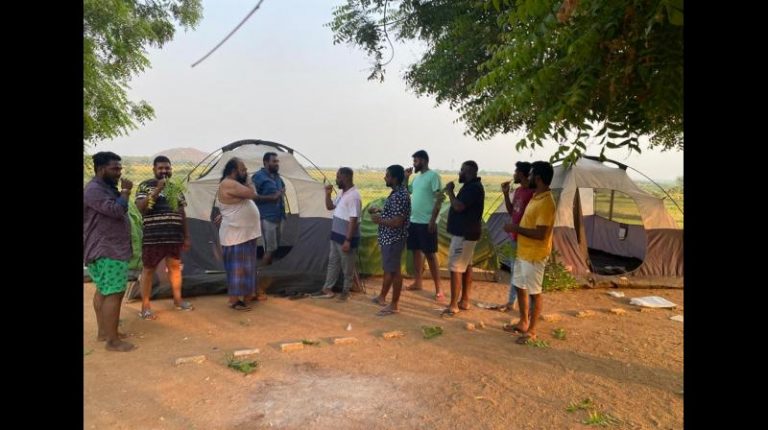
However, the team of young BJP workers, led by former BJYM leader PM Sai Prasad, devised a unique plan. They brought trekking tents and turned their campaign into an adventure trip. During the day the party workers interacted with locals, shared the BJP’s message and stayed in the night in their trekking tents.
PM Sai Prasad was quoted by Deccan Chronicle as saying, “This gave us a great opportunity to develop a bond with the locals. We are cooking our food and sometimes the locals are sharing their food with us.” The campaign team stays in tents for the night and then moves on to the next Tanda (tribal hamlet) in the morning.
Prasad took to Twitter to share his team’s resolve, energy and experience through a video.
Smiles, Joy & Love that’s what our campaign is all about…
Few glimpses of lighter moments from our camp ? ⛺️ at Dokkalvai Thanda, Nagarjuna Sagar.
PM Sai Prasad and his team have been campaigning for BJP candidate Dr P. Ravi Kumar for the last six days. They only have the tents, and even struggle to find toilets, but the team has been resolute in its efforts, as per the DC report.
Touring one hamlet to the other while chanting ‘Vande Mataram’, ‘Bharat Mata ki Jai” and singing patriotic songs, the yuva brigade’s resolve has just strengthened to face the assault by the ruling party.
The BJP workers have visited Seethal tanda, Dokkalavai tanda and Rajavaram until now and propagated the need to support a strong political force as an alternative to the TRS and the Congress.
Talking about the hardships faced, “Of course, we are trained to face harsh conditions since our Rashtriya Swayamsevak Sangh and BJYM days,” Prasad said proudly.
After losing its sitting seat in the recently concluded Biennial Graduates’ MLC elections, the party is leaving no stone unturned for the Nagarjunasagar bypoll. The party conducted several surveys, checked the track record of the previous elections and popularity among the people of all the aspirants before declaring the candidate.
After mulling for years, Japan has finally given a go-ahead to disposing wastewater from the ruined Fukushima Daiichi nuclear plant into the Pacific ocean. During a cabinet meeting on April 13 (Tuesday), Japan decided that it will begin releasing more than a million cubic meters of ‘treated’ water from the crippled nuclear power plant into the ocean. The process will be gradual and is expected to begin in two years.
‘Most realistic’ and ‘unavoidable’ option says Japanese Prime Minister
Japan has long delayed the decision to dispose of the wastewater from the Fukushima Daiichi nuclear plant over criticisms and safety concerns. However, while announcing his government’s decision, Japanese Prime Minister Yoshihide Suga said on Tuesday that dumping treated water containing radioactive substances into the ocean is ‘unavoidable’ and there is no time to delay the reconstruction of Fukushima.
Calling it the ‘most realistic’ option, Suga opined that this was “unavoidable in order to achieve Fukushima’s recovery”.
Suga made the announcement after convening a meeting to formalise plans to release the radioactive water accumulated at the nuclear plant.
IAEA supports Japan’s decision, says it will help
The International Atomic Energy Agency has stated that it will support Japan in carrying out the disposal. Rafael MarianoGrossi, the director of the IAEA has stated in a video message that the organisation welcomes Japan’s decision. He added that the IAEA will provide full technical support for the safe implementation of the plans. He also added that the IAEA will work closely with the Japanese government before, during and after the discharge of the water. Safety review missions will be dispatched and environmental monitoring will be supervised.
I welcome Japan’s announcement on how it will dispose of the treated water stored at #Fukushima nuclear power plant. @IAEAorg will work w/ ?? before, during & after the discharge of the water to help ensure this is carried out without an adverse impact on health & environment.1/2 pic.twitter.com/qLJxrPXCje
The IAEA director assured that the water discharge will be carried out without any adverse impact on human health and the environment. He also added that controlled water discharges into the ocean are routinely used by operational nuclear plants around the world under strict safety and environmental standards.
1.25 million tonnes of water accumulated in the Fukushima Daiichi nuclear plant
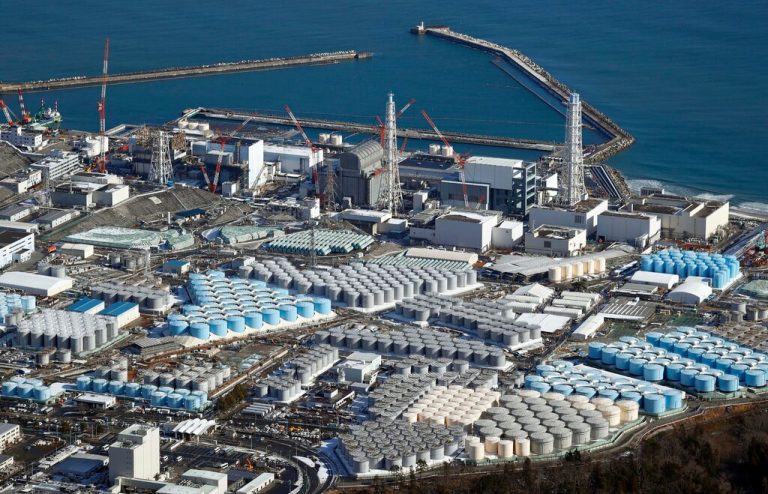
For the uninitiated, the Fukushima Daiichi nuclear plant has been generating a massive amount of radiation-tainted water after being battered by the massive earthquake-triggered tsunami in 2011. It includes water used to cool the plant, as well as rain and groundwater that seeps in daily.
Over the years, around 1.25 million tonnes of water have accumulated in tanks at the nuclear plant, but, now the space used to store the water is expected to run out by next year.
Owing to this, the Japanese government has decided to gradually release the radioactive water into the Pacific ocean.
The plant’s operator Tokyo Electric Power Company Holdings Inc. and government officials have confirmed that the water has been treated using an advanced liquid processing system, or ALPS, to remove most contaminants but radioactive materials like tritium cannot be removed from the water. Japanese experts are, however, of the opinion that tritium in small quantities is not harmful.
“The Japanese government has compiled basic policies to release the processed water into the ocean, after ensuring the safety levels of the water … and while the government takes measures to prevent reputational damage,” Suga told reporters.
China warns of action over Japan’s decision to dump radioactive Fukushima water into the sea
Though the Japanese authorities have confirmed that the water is “treated”, the decision is facing fierce criticism from various quarters.
Japan’s Fisheries Industry has vociferously opposed the plan amidst fear that releasing the water will undermine years of work to restore confidence in seafood from the region. Greenpeace Japan denounced the decision, saying in a statement that it “ignores human rights and international maritime law.”
Not happy with Tokyo’s decision to dump wastewater water from the wrecked Fukushima nuclear plant into the sea, China has also warned action if Japan does not retract from its decision. China’s foreign ministry on Tuesday blasted the Japanese government for being “extremely irresponsible” in its decision. Moreover, China has found support in South Korea, which also expressed its displeasure over Japan’s decision to discharge radioactive wastewater into the Pacific.
The United States has, however, accepted Japan’s approach to clean up the disabled Fukushima nuclear plant, which is operated by the Tokyo Electric Power Company. Secretary of State Anthony Blinken hailed Japan’s efforts as transparent and praised the coordination with IAEA.
We thank Japan for its transparent efforts in its decision to dispose of the treated water from the Fukushima Daiichi site. We look forward to the Government of Japan’s continued coordination with the @iaeaorg.
The Fukushima crisis had begun in March 2011, after a huge earthquake and tsunami ripped through northeastern Japan leaving more than 19,000 people dead. The subsequent meltdown of three of the plant’s six reactors resulted in the country’s worst nuclear disaster since the 1986 Chernobyl crisis. Tens of thousands of people had to be evacuated from the area, in many cases never to return.
Almost a decade has passed ever since but the clean-up at the crippled plant is far from completed. To keep the three damaged reactor cores from melting, cooling water is pumped through them continuously. The water is then sent through a powerful filtration system that is able to remove all of the radioactive material except for tritium.
There are now about 1.25 million tons of wastewater stored in more than 1,000 tanks at the plant site. The water continues to accumulate at a rate of about 170 tons a day, and releasing all of it is expected to take decades.
On April 10, Punjab had agreed to pay the MSP payments directly into farmers’ accounts via Direct Benefit Transfer. The Centre has been trying to implement the system across India for a long time, but Punjab was adamant about not implementing the same. Earlier, Haryana also came on board and agreed to use EAT (Expenditure Advance Transfer) to pay the farmers leaving only Punjab who wanted to pay the farmers via Arhtiyas (middlemen).
Essentially, Punjab government had held up the implementation of the DBT for farmers several times since 2018. With the Punjab government finally implementing the directions of the central government, India has managed to enforce ‘One Nation, One MSP, One DBT’.
All farmers to now get MSP payment through DBT: Piyush Goyal
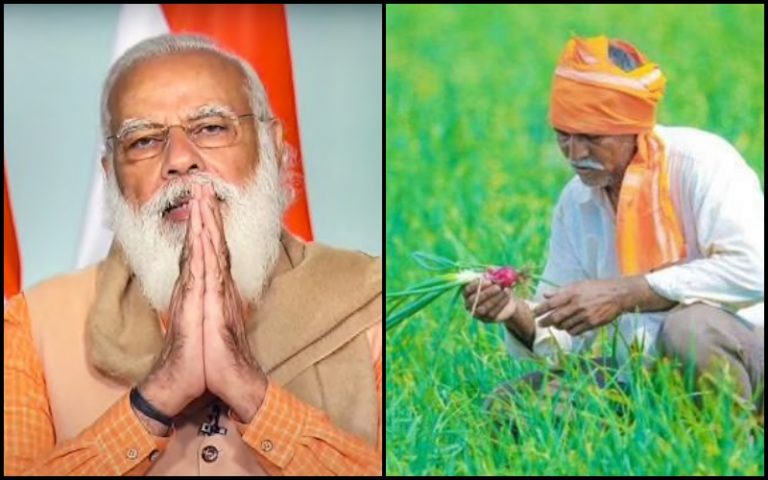
On April 12, Union Minister Piyush Goyal took social media to announce that the farmers in Punjab will get MSP payments directly in their accounts like other farmers across the country. He said, “In Punjab, now farmers will get the price of their produce sold on MSP directly in their bank accounts. Like other initiatives by PM Modi for the benefit of the farmers, this step will also benefit small and marginalized farmers.”
पंजाब में अब किसानों को MSP पर बेची गयी उनकी उपज का दाम सीधा उनके बैंक खातों में दिया जायेगा।
किसान हितों के लिये प्रधानमंत्री @NarendraModi जी द्वारा उठाये गये अनेकों कदमों की तरह, इस निर्णय से छोटे और सीमांत किसान लाभान्वित होंगे।
He further added that those farmers who cultivate the land on rent would also get payments directly in their bank accounts under the DBT system. “The system is transparent, and farmers should not be misled by anyone. The farmers will get the full price of the produce,” he added.
पंजाब में किसानों को उपज का दाम सीधा उनके बैंक एकाउंट में मिलने के साथ ही पूरे देश में यह व्यवस्था लागू हो गयी है।
अब देश भर के किसान, उपज को MSP पर बेचने के बाद पैसा सीधा अपने खातों में पायेंगे। आजादी के बाद से किसान हित में लाया गया यह एक बहुत बड़ा परिवर्तन है।
Now farmers across the country, after selling the produce on MSP, will get money directly in their account. “This is a major change in the interest of the farmers since independence,” he added.
With this announcement, Minister Piyush Goyal confirmed that all farmers in the entire country are now under the umbrella of DBT and hence, every farmer will now get their MSP payment directly in their bank account, without the involvement of middlemen.
Punjab has delayed the implementation several times since 2018
As per the directions of the Ministry of Finance, all registered agencies were asked to implement EAT (Expenditure Advance Transfer) module of PFMS (Public Financial Management System) by June 15, 2018. At that time, the ministry said that in case anyone failed to implement the system, the government will not release the funds to the agency to procure the produce.
Punjab did not comply with the orders and kept on asking for an extension. The state insisted on making payments of farmers’ Minimum Support Price (MSP) through intermediaries or Arhtiyas. The ministry extended the date of implementation of the system for Punjab several times. The last extension was till March 31, 2021, for KMS 2020-21 season.
According to the sources in the ministry, the Department of Food and Public Distribution (DFPD) has repeatedly pursued the Punjab government to implement the guidelines of the Government of India since 2018. During a meeting that was held on February 23, 2021, the state government agreed to implement online payment to farmers directly through e-mode from RMS 2021-22, and the Punjab government also confirmed that they would integrate their online payment system with PFMS to track the flow of the funds to the farmers.
Though the government of Punjab failed to implement a direct payment system, DPFC has released full payments for Admins and Arhtiyas for KMS 2019-20 and 90% of the payment for RMS 2020-21 and KMS 2020-21. The remaining 10% will be released once the state fully implements DBT for MSP payments in the state.