Home Blog Page 463

US House Committee report says Chinese govt gives subsidies and grants for production and export of Fentanyl precursors, calls for urgent action

0

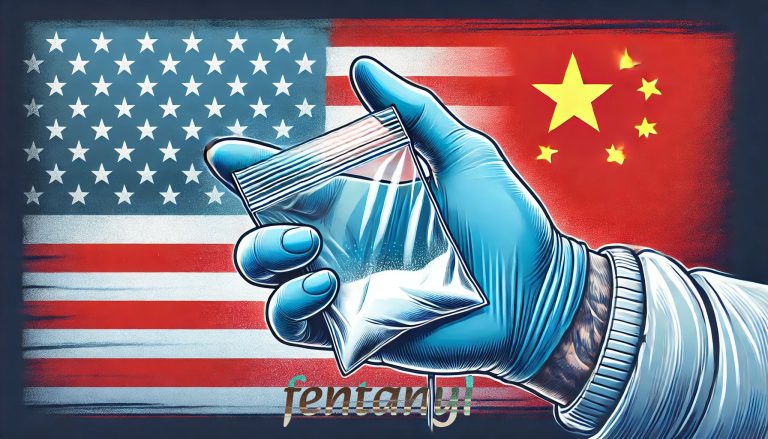
A recent inquiry by the House Select Committee focused on the Strategic Competition between the United States and the Chinese Communist Party has brought to light troubling information regarding the CCP’s role in exacerbating the fentanyl epidemic in the United States.

The report indicates that nearly all illicit fentanyl precursors are produced by Chinese companies, which are then trafficked internationally, especially to Mexican cartels responsible for the manufacturing and distribution of fentanyl within the US.

According to the findings, the Chinese government provides subsidies for the production and export of fentanyl precursors through tax incentives, even though these substances are prohibited under both US and Chinese law.

Some of these businesses have also received financial grants and recognition from the Chinese government, supporting their involvement in the global fentanyl market. The investigation further revealed that state-owned companies, including a government-operated prison, possess ownership interests in firms involved in drug trafficking.

The report additionally accused Chinese officials of intentionally hindering US law enforcement initiatives. In several instances, Chinese authorities purportedly informed fentanyl manufacturers about American investigations, enabling them to escape prosecution.

Moreover, while China is aggressive in prosecuting domestic drug trafficking, it is said to overlook companies that are exporting illegal drugs to other countries.

In addition to the devastating impact on American lives, where fentanyl has become the leading cause of death for those aged 18-45, the report implies that the crisis serves as both a strategic and economic advantage for the CCP. It increases the wealth of Chinese criminal organizations and fits into broader geopolitical strategies aimed at undermining the US.

The Select Committee has urged for immediate measures, including the formation of a Joint Task Force to combat illicit fentanyl activities, enhanced sanctions, and more rigorous trade enforcement protocols. Despite recent diplomatic discussions, the report stresses the necessity for more robust, coordinated efforts to tackle what has evolved into one of the most lethal drug crises in US history.


(This news report is published from a syndicated feed. Except for the headline, the content has not been written or edited by OpIndia staff)


US announces reciprocal tariffs against India, China to be effective from April 2

After announcing hiked tariffs for Canada, China, and Mexico at the beginning of the month, the US has now announced fresh tariffs for India and China, effective on 2nd April. In his speech during the joint session of Congress on 4th March, US President Trump confirmed that reciprocal tariffs will take effect from next month.

Trump accuses other countries of unfair taxes on US products

Justifying reciprocal tariffs, the US President said that other countries have been unfairly taxing the US and therefore now it is the turn of the US to tax them. “Other countries have used tariffs against us for decades and now it is our turn to start using them against those other countries. On average, the European Union, China, Brazil, India…and countless other nations charge us tremendously higher tariffs than we charge them,” said Trump.

Trump accused India of imposing unfair tariffs on the US automobile by over 100%. “It is very unfair. India charges us auto tariffs higher than 100%,” he said. He added that China imposes tariffs on US products twice the US tariffs on Chinese products. He expressed disappointment over South Korea imposing tariffs on US products four times higher despite receiving military aid from the US.

“China’s average tariff on our products is twice what we charge them. And South Korea’s average tariff is four times higher. Think of that. Four times higher! And we give so much help militarily and in so many other ways to South Korea but that’s what happens. This is happening by friend and foe. The system is not fair to the US, it never was. And so, on April 2nd… I wanted to make it April 1st but I didn’t want to be accused of April Fool’s Day…This one day cost us a lot of money. So we’re going to do it on April…I am a very superstitious person…April 2nd. Reciprocal tariffs kick in and whatever they tariff us, other countries, we will tariff them. That’s very simple, no back and forth,” Trump said.

Counter-tariffs by Canada, China and Mexico

On 1st February, the President of the United States, Donald Trump, imposed new tariffs on imports from Canada, Mexico, and China. He cited national security concerns stemming from illegal immigration and drug trafficking, particularly fentanyl, as the reason. The executive order signed by President Trump in this regard enforced a 25% tariff on imports from Canada and Mexico, while Chinese goods will face a 10% tariff. Canadian energy imports, including oil, natural gas, and electricity, will be subjected to a 10% tariff.

Following the confrmation by the United States about imposing tariffs on exports from Canada, China and Mexico, the three countries also announced retaliatory measures against the US. US President Trump’s decision to impose reciprocal tariffs on countries has attracted widespread criticism along with concerns about inflation and rising trade tensions globally.

Canada plans to impose levies on US imports worth $155 billion over 21 days. In the first stage, American goods worth $20.6 billion will be taxed. China has also countered the US tariffs by announcing a 10-15 per cent hike in import taxes on a range of US goods including agricultural and food products to come into effect on 10th March. Mexican President Claudia Sheinbaum Pardo said that the country is prepared for all possibilities if the US tariffs take effect.

Trump’s policy of imposing reciprocal tariffs on other countries has attracted widespread criticism. Experts around the world have expressed concerns that Trump’s policy might start a global trade war with the consumer suffering ultimately. Billionaire investor Warren Buffet has described Trump’s tariffs as ‘an act of war’.

Uttar Pradesh: Man booked under anti-conversion law in Shravasti for running conversion racket in the guise of prayer meetings

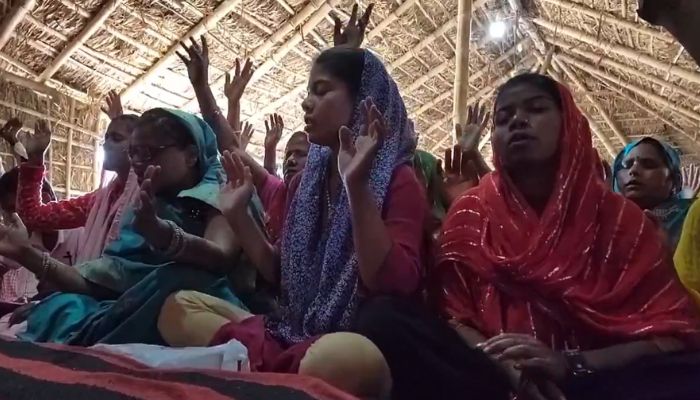
On 3rd March, a man named Harish Singh was booked by Ikona Police, Shravasti district in Uttar Pradesh, under Sections 3 and 5(1) of the Uttar Pradesh Prohibition of Unlawful Conversion of Religion Act for forcefully converting Hindus under the guise of prayer meetings. According to media reports, a prayer meeting was held on 2nd March where socially and economically vulnerable individuals were being converted to Christianity.

Hindu organisations, including Vishva Hindu Mahasangh and Vishwa Hindu Parishad, informed the police about the prayer meetings being held in Bhagwanpur Bankat village, after which an FIR was registered against the organiser, Harish Singh. An investigation into the matter was initiated by the police. The accused, Singh, is currently absconding.

Weekly prayer meetings under scrutiny

Residents of Bhagwanpur Bankat village said in a statement that every Sunday, people gathered in a makeshift hut in a secluded area to participate in Christian prayer meetings. Individuals from neighbouring districts like Balrampur, Bahraich, and Gonda used to attend these prayer meetings.

The villagers told the police that the attendees of the meetings were mostly from non-Christian backgrounds. They were encouraged to bring a Bible and participate in prayers. The sessions, which began in the morning, often extended into the evening as more people arrived. Some participants claimed that joining the prayer meetings had helped them overcome physical and mental ailments. Many of them admitted to buying a Bible online to read at home.

The majority of the attendees were from financially and socially disadvantaged backgrounds. Hindu activists accused the organiser of making false promises that having faith in Jesus Christ would provide relief from their struggles.

Content of the FIR

The FIR in the matter was registered based on a complaint by Sub-Inspector Afzal Salim, who visited the makeshift hut and investigated the matter. The FIR stated that Singh convinced attendees that reading the Bible and invoking Jesus Christ’s name could miraculously cure diseases and resolve life problems.

During the investigation, the police found Singh’s house locked. Neighbours informed the police that Singh’s family is from Punjab and that he frequently travelled between Punjab and the village. The complainant mentioned that the attendees of these gatherings were primarily from outside the village. Local residents reported that Singh used deceptive preaching to push attendees to convert to Christianity.

Police statements

Superintendent of Police (SP) Ghanshyam Chaurasia confirmed that a case had been registered based on credible evidence, including video footage provided by Vishwa Hindu Parishad (VHP) activists. He said, “We are investigating allegations that Singh was using faith healing as a pretext to convert people. A team led by the Additional SP has been constituted to probe the matter.”

The police suspect that Singh might have fled to Punjab. A team has been dispatched to locate him. Given Shravasti’s proximity to the Nepal border, authorities are monitoring the area to prevent any possible cross-border escape.

Further investigation into the matter is underway.

Madhya Pradesh: Hindu infant girl child abducted from hospital after mother’s death, converted to Islam

A shocking case of conversion has come to light from Sagar district in Madhya Pradesh, where a two-and-a-half-month-old infant was abducted from a hospital following her mother’s death and converted to Islam. Reportedly, a woman from the Muslim community identified as Shabana, accused of abducting the baby attempted to alter her identity through official documents. The infant has been rescued by the State Commission for Protection of Child Rights and placed in a shelter home.

Infant stolen and admitted under a different identity

The matter came to light when a poverty-stricken woman identified as Vimla Dhakad collapsed at the railway station in Sagar. Two children, a five-year-old son and an infant daughter, were with her. Bystanders rushed her to Bundelkhand Medical College for treatment. However, she succumbed during treatment. Following her death, Shabana, who was admitted to the same hospital, took the infant girl with her.

Reports suggest that when the woman was admitted to the hospital, the children were also admitted for a check-up. On 17th February, when their mother passed away, the five-year-old child was sent to the Ashram by the Child Welfare Committee. The Committee later discovered that there was an infant with the woman. When the Committee checked the documents, it came to light that the child had been marked as adopted, and her name had been changed to “Fatima”. Following this, the police were called for an investigation. During the inquiry, the police found that the infant had been admitted to the same hospital under the changed identity.

Infant placed in shelter home, accused claim innocence

Further investigation revealed that the accused couple had listed themselves as the infant’s parents in official documents. The child was handed over to the State Commission for Protection of Child Rights, which placed her in Matrichhaya Ashram. Meanwhile, the woman and her husband, who abducted the child, claimed that they had taken the orphaned infant out of compassion. They further asserted that they had even applied for legal adoption at the Collector’s office in Sagar.

Further investigation into the matter is underway, as it has raised serious concerns over illegal conversions under the guise of humanitarian aid.

CBI busts East Central Railway paper leak scam, 26 railway officials arrested

The Central Bureau of Investigation (CBI) busted a Departmental Examination Paper leak scam under the East Central Railway at Mughalsarai during an operation launched on the intervening night of 3rd and 4th March 2025, the CBI said in a statement on Tuesday.

East Central Railway had scheduled a Departmental Examination for the posts of Chief Loco Inspectors on 4th March 2025. During the checks conducted by CBI at three spots on the intervening night at Mughalsarai, 17 candidates were found with photocopies of handwritten question papers.

“In this regard, a case has been registered against a Senior Divisional Electrical Engineer (Ops) and eight other Railway officials and unknown candidate and unknown others,” the agency said in its statement.

According to CBI’s investigation conducted so far, the accused senior DEE (Ops) person was given the responsibility for setting and preparing the question paper for the said examination. He wrote down the questions in English and allegedly gave them to one Loco Pilot who, in turn, translated them into Hindi and gave them to an Office Superintendent. The said OS allegedly, in turn, gave it to the candidates through a few other Railway Employees.

CBI has arrested the senior DEE (Ops) and other Railway employees on allegations of collecting money and distributing question papers. As many as 17 Departmental candidates who are presently working as Loco Pilots allegedly paid money for the question paper and were caught red-handed with the copies of the question papers during the night of 3rd- 4th March 2025. All of them have been arrested, read the agency’s statement.

Overall, 26 Railway officials have been arrested in this case so far, CBI said. Searches were conducted at 8 locations, which resulted in the recovery of Rs. 1.17 crore in cash. These amounts were reportedly collected from the candidates for leaking the question papers. The handwritten question papers, along with their photocopies, were seized. The probe agency added that these question papers were tallied with the original/ actual question paper and found to have matched.

The CBI has booked Sushant Parashar, Indu Prakash, and other implicated officials under sections 61(2) (criminal conspiracy), 316(5) (criminal breach of trust), and 318(3) (cheating) of the Bharatiya Nyay Sanhita (BNS), 2023, along with sections 7, 7A, and 8 of the prevention of corruption act, 1988 (as amended in 2018).

After targeting vulnerable Hindus, Christian missionaries embark on “Mission Muslim”: Evangelicals in UP intensify efforts to convert Muslims to Christianity

Christian missionaries and fraudulent Pentecostal pastors have long been targeting poor and scheduled caste Hindus for conversion to Christianity. However, in Uttar Pradesh, it has emerged that several Christian conversion gangs are harvesting the souls of poor Muslim families for Christianity.

The infamous ‘Punjab model’ of Christian conversion with offers of money, education, healthcare, and jobs is being replicated in Uttar Pradesh. While poor and vulnerable Dalit and tribal Hindus have been usual targets of Christian missionaries, these missionaries are running district-level gangs to convert Muslim families.

Christian missionaries running “Mission Muslim” to lure Muslims to Christianity

In February 2025, six families in Hargaon of Sitapur, Katsaria and Kamalapur of Sidhauli have converted to Christianity. Similarly, in Ambedkarnagar and Sultanpur, 10 Muslim families have converted to Christianity and abandoned their Islamic attire, rituals and symbols. These converted families have put up pictures of Jesus Christ in their homes.

This “Mission Muslim” of Christian missionaries emanated from Shravasti and reached Ambedkarnagar, Sultanpur via Bahraich, Sitapur, Raebareli, Amethi, Fatehpur, Maharajganj, and Basti.

After interrogating several individuals affiliated with Christian missionaries in February this year, the security agencies have submitted a report to the Union Home Ministry. According to this, some Muslim families in the border areas of Ayodhya adjoining Basti Mandal have converted to Christianity and stopped performing Namaz and other Islamic rituals. Their children are studying in the prestigious convent schools of Lucknow and Barabanki instead of madrasas. Moreover, the women of the erstwhile family are doing self-employment by joining the Christian fundamentalist outfit World Vision organisation. The sudden improvement in the economic status of these neo-converts makes it evident that they have received financial inducements for converting to Christianity.

USAID-funded World Vision converting Hindus and other communities to Christianity

OpIndia earlier published an investigative piece on World Vision organisation which was receiving massive funding from the now-defunct USAID. World Vision International – one of the top recipients of USAID funds – to the tune of over $2 billion. World Vision India, in turn, received hundreds of crores every single year from the USAID-funded entity. While it pretends to be a humanitarian organisation, in reality, it is a Christian fundamentalist organisation that allies with other Christian fundamentalists, to convert unsuspecting Hindus, especially children and women. World Vision has been indulging in conversion activity in India for many years. It was first established in India in 1951. For over 70 years, World Vision received crores to convert Hindus and subvert Hinduism. It was only in 2024 that the Modi government revoked its FCRA license, denting its conversion activity in India.

The modus operandi

Notably, the Christian missionaries operating conversion nexus in Uttar Pradesh have a fixed amount of money for every work. For example, Rs. 20,000 is given to the person who converts the whole family and Rs. 15,000 is given to the person who gets the girl married to the youth who has converted. It has been found that some famous schools and reputed institutions are working as hawala agents and sending huge amounts of money to the missionaries, which is being used for conversion activities carried out on the ground by preachers appointed on the village level.

The work of a preacher is to lure poor and sick people to prayer meetings by promising relief from financial problems and illness. Missionaries have appointed preachers for each class, making it easier for them to proselytise their targets. Due to the persistent conversion activities of Christian missionaries, the Nat community who are primarily Hindu with a significant number of them being Muslims living in the border areas of Balrampur, Shravasti, have converted to Christianity by these missionaries. Those who convert to Christianity are provided a fixed amount per month alongside provisions for education and healthcare for their children.

Security agencies have also reportedly found that these conversion gangs are receiving funding from several churches.

A former Intelligence Bureau officer Santosh Singh has reportedly said that Maharajganj, adjacent to the Nepal border in Gorakhpur division, is in a bad condition in terms of religious conversion. Hundreds of Karawal (Scheduled Caste) families have converted to Christianity in Jungle Jogiyabari of Farenda tehsil here. Moreover, the entire Karwal Tola in Mathura Nagar has converted to Christianity under the influence of Christian missionaries who provide them with monthly financial aid alongside providing education for their children in convent schools.

Notably, the Christian missionaries are strictly instructing neo-converts to practice Christianity but not to change their names. This is done to avoid any legal challenges while also ensuring that the converted individuals remain integrated within their communities.

The former IB officer also said that the first case of conversion of Muslim families came to light in Pilibhit in the year 2020. After this, five Muslim families converted to Christianity in Maharajganj of Gorakhpur division adjoining Nepal and then in Siddharthnagar district of Basti division. However, the members of these families did not change their names.

Joshua Project

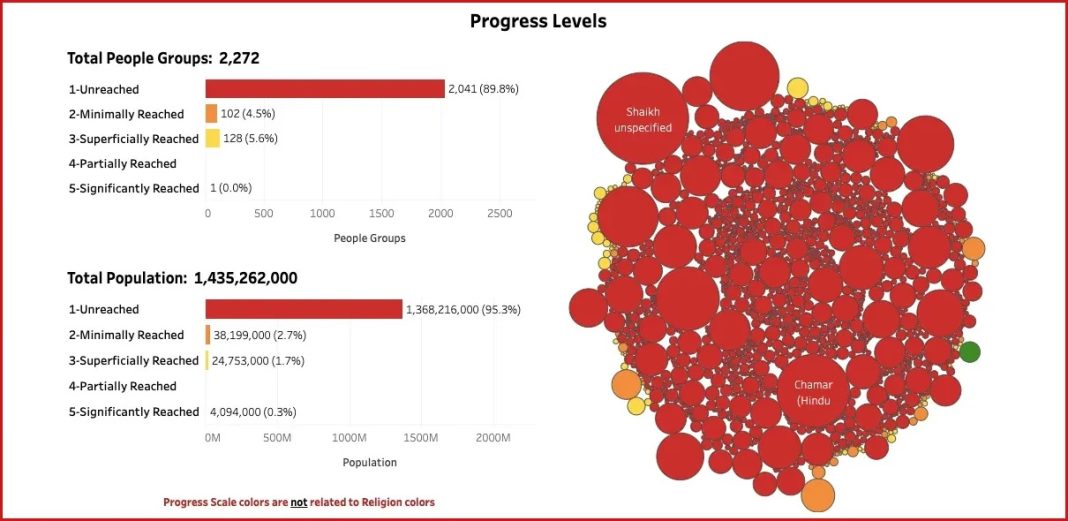
The former IB officer further pointed out that to understand the scale at which Christian missionaries are undertaking conversion activities one needs to check the data available on the website of Joshua Project. According to the information on the website of the US-based Christian conversion ‘research’ initiative Joshua Project, 24 lakh people are being converted to Christianity in India every year.

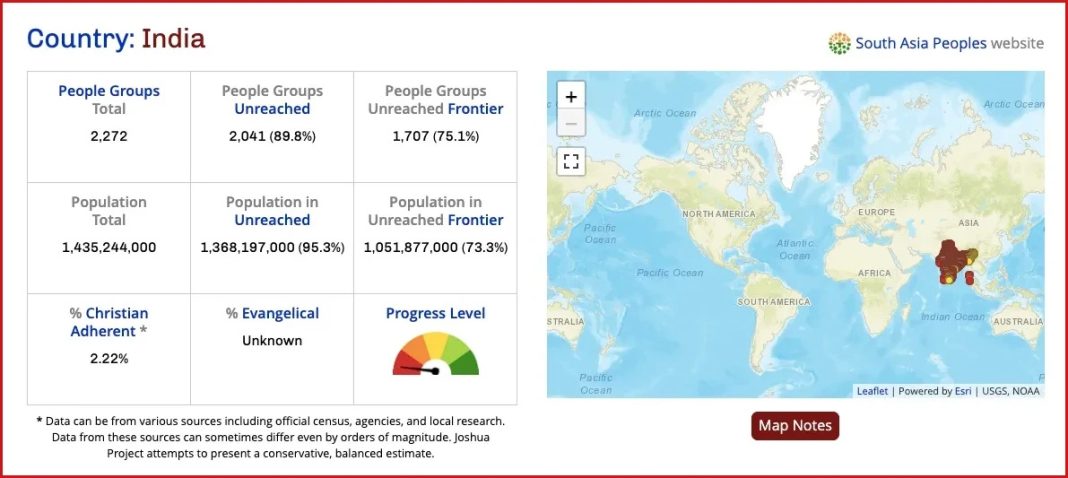
This initiative has classified Hindus, Muslims, Sikhs and other religious groups into specific caste groups to make it easier to target them by appointing caste-specific “agents” and maintain a concise record of caste groups reached, unreached or minimally reached. There are a total of 2,272 caste groups of which 2,041 are ‘unreached’ as per their website.

Out of these, 4.5% are “minimally reached” and 5.6% are superficially reached. Of the total population of India, 95.5% of the population remains ‘unreached’ with 2.9% minimally reached and 1.7% superficially reached, as per The Joshua Project. Shockingly, the conversion rate in India is 3.9% while the global average is 2.6%. So far, The Joshua Project has reached 6 crore people, with 4 out of 100 people converting to Christianity.

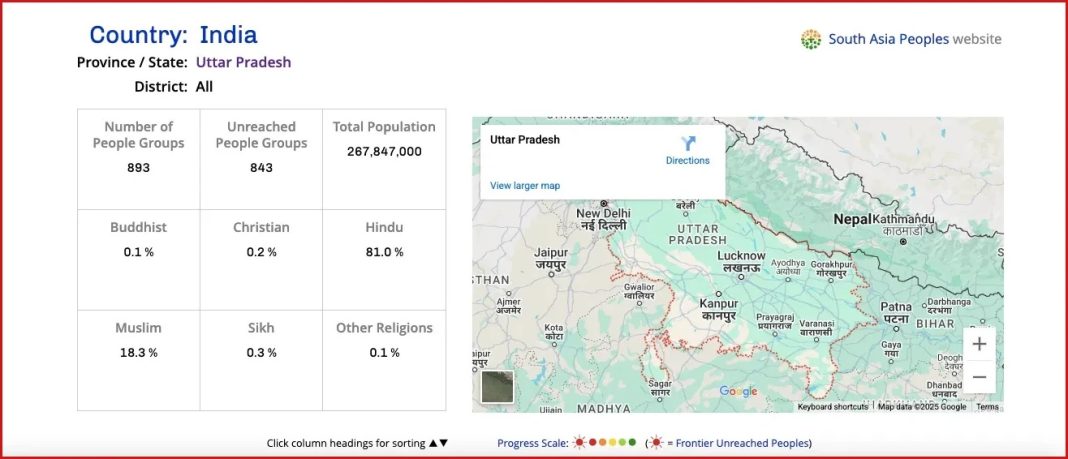
In Uttar Pradesh, the Joshua Project has listed 893 groups of which 843 remain unreached.  

Source: Joshua Project

The Punjab connection of Christian conversion ring in UP

 The police recently nabbed one Harish Singh who was involved in a conversion attempt on 2nd March in the Ikouna area of Uttar Pradesh’s Shravasti district. Singh, a native of Uttar Pradesh had converted to Christianity five years ago in Punjab. After his conversion, Harish Singh began conducting Sunday prayer meetings, however, when security agencies tightened the noose, Singh escaped. 

UP Police in action mode to tackle Christian conversion menace

According to SP Ghanshyam Chaurasia, a special team has been formed under the leadership of CO to investigate the matter. The police are investigating conversion activities in the sensitive Shravasti, Bahraich, Balrampur and Gonda districts of the Devipatan division bordering Nepal. In Shravasti around 340 teams are actively converting Muslims and other community members to Christianity. Similarly, in Baharaich 374 teams of Christian preachers are active, in Balrampur 330, in Gonda 340, in Ambedkar Nagar 347, Sitapur 326, in Ayodhya 333, in Maharajganj 398, in Siddharthnagar 345, in Amethi 317, in Rae Bareilly 323, in Pilibhit 346, and in Prayagraj 443.

Informing about the measures being taken by the police to tackle the Christian conversion menace, Inspector General of Police Amit Pathak said that the SPs of the four districts have been asked to closely monitor these cases and take immediate action. In addition, officers have been directed to prepare details of suspicious people alongside increasing surveillance in sensitive areas.

UP becoming a hotbed of Christian conversion activities

While Christian missionaries have spread their tentacles across the nation, their increased illegal activities in Uttar Pradesh have raised eyebrows. Last month, a huge uproar erupted in Lucknow’s Chota Bharwara over Christian missionaries holding Sunday prayer meetings and converting locals to Christianity. The local Hindus alleged that Christian proselytisers tempt them to change their religion. They lure them with a job and lakhs of rupees if they change their religion. On refusing to change their religion, they pressured them to sell their house and leave the area. The local Hindus said that these Christian missionaries were buying land and houses in the area at double the price.

In December last year, OpIndia reported that the Christian missionaries in the Awadh region are making efforts to promote religious conversions and influence voting patterns by adopting the Madhesi conversion model from Nepal. It was reported back then that districts like Sitapur, Barabanki, Bahraich, Shravasti, Ayodhya, Sultanpur, and Ambedkar Nagar are witnessing escalated missionary activity, with Balrampur, Shravasti, and Bahraich experiencing significant impacts due to forceful conversion. The involvement of Korean pastors with links to networks in Bangalore, Punjab’s Jalandhar, and Kerala funded by by donations from Brazil, the United States, and South Korea were involved in these illegal activities.

In similar Christian conversion racket was exposed in Uttar Pradesh’s Ghaziabad wherein five people were arrested from Sewa Nagar in Ghaziabad for converting Hindus to Christianity under the lure of providing jobs, money, education, marriage etc. Before this, the Uttar Pradesh police uncovered two separate conversion rackets in Amethi and Meerut

Mahakumbh: Uttar Pradesh CM Yogi shares story of boatman earning Rs 30 crores during the historic event

0

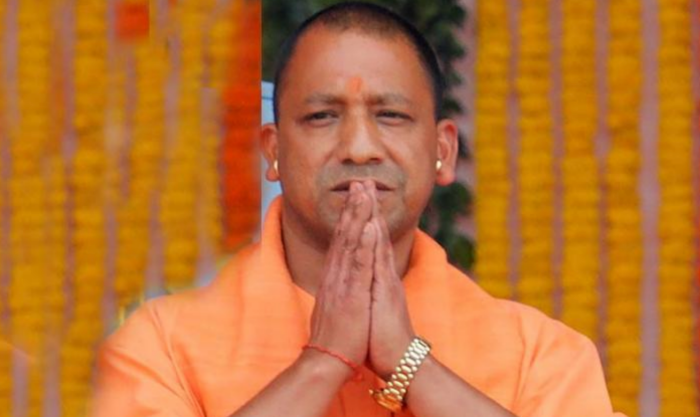
Refuting the Samajwadi Party’s claims of boatmen being exploited during Mahakumbh Mela, Uttar Pradesh Chief Minister Yogi Adityanath shared a success story of a boatman’s family who earned Rs 30 crore in 45 days during the congregation in Prayagraj from January 13 to February 26.

Addressing the UP State Legislative Assembly, CM Yogi said, “A boatman’s family, who owned 130 boats, earned a total of Rs 30 crore in just 45 days during the Mahakumbh. This means each boat earned Rs 23 lakh over the 45 days, which translates to about Rs 50,000-52,000 per day,” said CM Yogi.

CM Yogi said that during his visit to Prayagraj on February 27, he took part in the religious rituals, offering prayers and expressing his appreciation for the efforts made by all those involved in the Mahakumbh. He further engaged in cleaning of River Ganga.

The Chief Minister said that the invaluable contributions of various workers during the Mahakumbh was also recognised.

“We felicitated the health and cleanliness workers who played a pivotal role in maintaining the event’s smooth conduct. Additionally, I interacted with the boatmen, police personnel, and security staff, all of whom worked tirelessly to ensure the success of the Mahakumbh,” he said.

CM Yogi said he participated in religious rituals, praised workers, and interacted with the boatmen, security, and health personnel who contributed to the success of the event.

Uttar Pradesh Chief Minister Yogi Adityanath also presented the 2025-26 state budget, reflecting a commitment to farmers, youth, women, and the poor, marking the ninth general budget under his government.

In his address, CM Yogi highlighted the state’s consistent focus on inclusive development and growth since 2017, while accusing the opposition of using vote bank politics to deceive the public.

“This government has always prioritised the welfare of the people, especially those who have been deprived. For us, the vote bank is not just a tool; it is a legacy,” said CM Yogi, taking a clear shot at the opposition for focusing solely on vote bank politics.

The 2025-26 budget, according to CM Yogi, continues the theme of supporting the most vulnerable sections of society.

“In 2017-18, our first budget focused on farmers, and today, the farmers are content, with suicides coming to a halt. We dedicated the 2018-19 budget to infrastructure, the 2019-20 budget to empowering women, and the 2020-21 budget to the youth. The 2021-22 budget focused on self-reliance, the 2023-24 budget aimed for overall development, and the 2024-25 budget embraced the concept of Lokmangal and Ramrajya,” he explained.

For the 2025-26 budget, the focus was again on farmers, youth, women, and the poor, with the theme prioritising the needs of the deprived sections of society.

CM Yogi pointed out the state’s remarkable growth in revenue over the years, noting that in 2016-17, total revenue receipts were Rs 2.56 lakh crore, and by January of the current financial year, the revenue had exceeded Rs 4.10 lakh crore.

Capital expenditure was another key highlight, with the 2025-26 budget allocating Rs 2.25 lakh crore (approximately 20.5% of the total budget). This expenditure aims to fuel industrial growth, improve the supply chain, and attract private investment, thereby creating more employment opportunities in the state.

CM Yogi also showcased the state’s improvement in per capita income, which had risen from Rs 52,671 in 2016-17 to Rs 93,514 in 2023-24, a testament to the economic progress achieved under his government. “Our focus remains on sustainable growth, ensuring prosperity reaches every corner of Uttar Pradesh,” he stated.

Uttar Pradesh has been ranked as a “front-runner” in fiscal health by NITI Aayog, with a significant improvement in its financial indicators, according to a recent report. CM Yogi Adityanath highlighted the state’s impressive growth, noting a remarkable increase in the Gross State Domestic Product (GSDP) and improvements in fiscal management, including capital expenditure and tax receipts.

CM Yogi said that Uttar Pradesh has earned a spot as a “front-runner” in fiscal health, according to a recent report published by NITI Aayog.

“The state’s consolidated ‘Fiscal Health Index’ has improved by 8.9 points between the years 2018-19 and 2022-23, reflecting strong fiscal management and growth under the current government,” he said.

CM Yogi said that the NITI Ayog report highlights a significant improvement in the quality of expenditure, with capital expenditure as a percentage of total expenditure ranging from 14.8 per cent to 19.3 per cent from 2018 to 2023. During this period, the state’s capital expenditure ratio was higher than the average of major states in the country.

He further said that a study by the Reserve Bank of India (RBI) regarding the 2024-25 budgets of states revealed Uttar Pradesh’s strong fiscal position. The state’s share in the total own tax receipts of all states has been consistently high, accounting for 9.9 per cent, 10.5 per cent, and 11.6 per cent in 2022-2023, 2023-2024, and 2024-2025, respectively, second only to Maharashtra.

CM Yogi Adityanath emphasized that despite these achievements, the state has not introduced any new taxes. “We have not increased any new tax,” he said, highlighting the efficient fiscal management that has led to the state’s financial progress without burdening the public.
The state’s expenditure on interest as a percentage of revenue receipts has also significantly decreased, from 12.6 per cent in 2022-23 to 8.9 per cent in 2024-25, indicating improved financial discipline.

Additionally, Uttar Pradesh’s own tax receipts as a percentage of Gross State Domestic Product (GSDP) have been consistently higher than the national average, rising from 7.6 per cent in 2022-23 to 10 per cent in 2024-25.

CM Yogi also reflected on the state’s impressive economic growth. “Despite being the largest state in the country with the most resources, Uttar Pradesh’s GSDP reached only Rs 12.75 lakh crore from 1950 to 2017,” he said.

“However, after the public expressed faith in the policies of Prime Minister Modi in 2017, in just eight years, the state’s GSDP is set to more than double, reaching Rs 27.51 lakh crore in 2024-25.”

The Chief Minister credited the robust policies of the state government and the leadership of Prime Minister Narendra Modi for transforming Uttar Pradesh into one of the leading economic powerhouses in India.

(This news report is published from a syndicated feed. Except for the headline, the content has not been written or edited by OpIndia staff)
‘Punjab can’t be a dharna state’: AAP, which supported farmers’ dharna at Delhi border, now hits out at farmers for organising a dharna in AAP-ruled-Punjab

In Punjab, the ruling Aam Aadmi Party government and protesting farmers appeared to be at odds, as the two sides locked horns during their heated meeting prior to the “Chandigarh Chalo” march which is scheduled to take place on Wednesday, March 5. The protest has been organised by the Sanyukt Kisan Morcha (SKM).

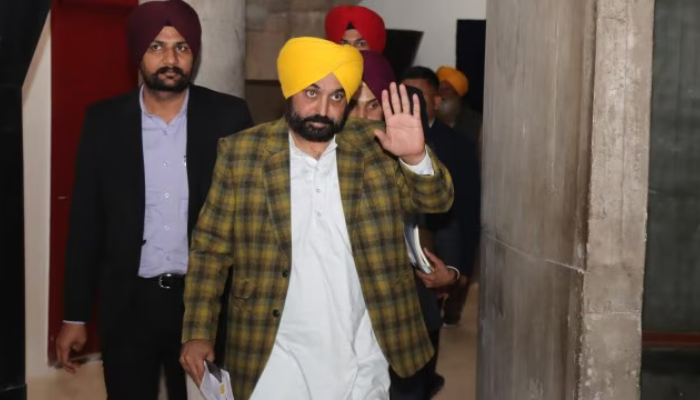
On 4th March, farmer leaders reported that the state police had arrested several demonstrators in a midnight raid ahead of their scheduled agitation in Chandigarh, one day after Punjab Chief Minister Bhagwant Mann abruptly left a meeting with SKM which is an umbrella organization of 37 unions of farmers. Mann confirmed the development and added that he did so when SKM leaders announced plans to protest starting 5th March. 

CM Mann conveyed, “Yes, I left the meeting and we will detain them as well. Won’t allow farmers to sit on tracks and roads.” He also disclosed that he had requested that farmers end the strikes, arguing that the state could not be held hostage. “I told farmers that every day you hold ‘rail roko’, ‘sadak roko’ protest. This is causing immense losses to Punjab. The state is facing economic losses. Punjab is becoming a state of ‘dharna.’ Don’t take my soft-heartedness into thinking that I do not take action,” Bhagwant Mann further warned.

Mann clarified that he had informed the farmers that ‘morcha’ and meetings couldn’t exist together which is why he rushed out “without provocation.” He expressed, “But if you tell me that morcha will continue along with the meeting, I cancel the meeting, and you can continue with the morcha,” and left the meeting, following which midnight raids transpired.

Gurmeet Singh Mehma, the state general secretary of the Krantikari Kisan Union, claimed that after Mann left the meeting, the authorities started searching the homes of farmer leaders. He added that he was taken under preventative detention by the cops after they picked him up from his home in Ferozepur. Many farmers went underground after the crackdown. Bharatiya Kisan Union (Rajewal) vice president Mukesh Chander Sharma condemned the police conduct, claiming that his residence was also raided at 4 am.

AAP spokesperson Malwinder Kang defended the move and stated that the chief minister listened patiently to the complaints of the farmers before exiting for a doctor’s visit that was prearranged. “We are the first to lead the talks positively. Our doors are open for talks,” he alleged. The Punjab Police, he added, made the decision to detain farmer leaders. The BKU launched the “Chandigarh Chalo” demonstration in an attempt to force the government to fulfil its commitments and the suggestions provided in the Swaminathan Commission report.

Interestingly, the then AAP-led Delhi government openly backed the farmer protest against the now-scrapped farm laws. “You people are struggling so much. I will help in every way through my party and my government,” former Delhi CM Arvind Kejriwal had responded when Naresh Tikait thanked him for “providing basic facilities to the farmers at the Ghazipur Protest site.”

After the demonstration descended into chaos in the national capital, AAP maintained its support for the agitation. Kejriwal sent Satyendar Jain, the minister of urban development and Manish Sisodia, the deputy chief minister, at the time, to visit the farmers near Delhi border and make sure they had access to water and sanitary services.

Sanjay Singh led a group of AAP MPs in a sit-in protest in the Parliament, calling for the repeal of the farm laws. AAP was one of the opposition parties that boycotted the President’s speech in the Parliament over the same matter. Singh also spoke on behalf of the AAP at the Kisan Mahapanchayat rally in the Muzaffarnagar region of Uttar Pradesh.

“The demands of the farmers are genuine. Secondly, it is the Constitutional right of every citizen to make a peaceful protest. It is, therefore, incorrect to arrest the farmers. The central government, in fact, should invite them over for talks and try to find a solution of their genuine problems. Farmers of the country are our ‘annadata’ and treating them in this way by arresting them would be like rubbing salt into their wounds. We cannot be a party to this decision of the central government,” then Delhi Home Minister Kailash Gehlot stated.

India’s historic breakthrough: Extreme poverty nearly eradicated, sharpest inequality decline in decades, reveals new study

India has managed to successfully eliminate extreme poverty—a development of historic and economic import—confirmed by recent household expenditure surveys for 2022-23 and 2023-24 released by the government of India. 

The significant milestone, highlighted in the paper Four Facts on Inclusive Growth in India by Surjit S. Bhalla and Karan Bhasin, underscores a progressive shift in India’s developmental trajectory. The data offers compelling evidence of a significant reduction in poverty levels and a sharp decline in inequality, defying conventional perceptions of the country’s economic disparities.

Declining Poverty: What the data says?

For a long time now, India has been involved in debating poverty estimation based on a range of methodologies producing varying results. However, the recent Household Consumption Expenditure Surveys (HCES) for 2022-23 and 2023-24 provide the most comprehensive and up-to-date insights.

The findings reveal extreme poverty, as measured by the $1.90 PPP international poverty line, has declined to below 1 per cent in 2023-24. At the $3.65 PPP poverty line, poverty has decreased from 52% in 2011-12 to just 15.1% in 2023-24. From 51.9 per cent in 2011-12 to 14.9 per cent in 2023-24 the poverty headcount ratio (HCR) at the lower middle-income benchmark of $3.20 PPP has dropped dramatically. 

These numbers reflect a remarkable enhancement in living standards over the past decade. The significant decline in poverty corresponds with overall economic progress, especially benefiting the lower-income groups.

Economic growth and welfare schemes: Two key drivers

Several factors have contributed to this historic achievement, with sustained economic growth and targeted social welfare programs playing crucial roles.

  1. High economic growth rates:
    • India has maintained an average GDP growth rate of 6-7% over the past decade. This growth has translated into increased income levels, higher employment opportunities, and enhanced consumption patterns, particularly among the lower deciles of the population.
  2. Welfare and social protection programs:
    • Food Assistance Programs: Initiatives like the Public Distribution System (PDS) and the Pradhan Mantri Garib Kalyan Anna Yojana (PMGKAY) have played a crucial role in ensuring food availability for millions.
    • Direct Benefit Transfers (DBT): The government’s adoption of direct benefit transfers has reduced inefficiencies and improved the effectiveness of social welfare programs.
    • Employment and Skill Development: Schemes such as the Mahatma Gandhi National Rural Employment Guarantee Act (MGNREGA) have provided consistent financial support to low-income individuals through job opportunities.
    • Housing and Sanitation Programs: Initiatives like the Pradhan Mantri Awas Yojana (PMAY) and Swachh Bharat Abhiyan have enhanced living conditions, fostering overall socio-economic upliftment for disadvantaged communities.

Sharp rise in consumption and drastic fall in economic inequality

The study also dispels the myth of widening economic inequality in India. A major takeaway from the report is the unprecedented increase in consumption for the bottom three deciles of the population. The monthly per capita expenditure (MPCE) of the poorest sections has risen at a significantly higher rate than that of the wealthier groups.

The Gini coefficient (a measure of inequality) has declined from 37.5 in 2011-12 to 29.1 in 2023-24. Consumption expenditure has increased across all categories, with the largest gains recorded among the bottom 30% of the population. The bottom three deciles have experienced double-digit growth in consumption across food, consumer goods, and durable items.

Such a decline in inequality, combined with poverty reduction, sets India apart as one of the few large economies to have achieved inclusive growth at this scale.

Rethinking the poverty line: A need for new benchmarks

The authors argue that India’s existing poverty lines are outdated given the significant economic progress the nation has made, which data confirms. Traditionally, poverty lines in India were set using calorie-based thresholds and have been periodically updated by expert committees such as the Tendulkar and Rangarajan Committees.

However, the report suggests a shift towards relative poverty measures, similar to those used in European countries. Two new poverty lines have been proposed:

  • One is based on the Mean Per Capita Expenditure (MPCE) of the 33rd percentile.
  • Another uses the European model, which defines poverty as 60% of the median income.

These benchmarks would provide a more accurate and dynamic understanding of deprivation in a rapidly growing economy, Bhasin and Bhalla argue in the paper.

The road ahead: Maintaining the gains

While the elimination of extreme poverty is a historic achievement, sustaining and expanding these gains requires continued policy focus and conscious efforts. The study contends the next steps in sustaining the gains should include:

  1. Enhancing human capital: Allocating resources to education and healthcare will help sustain economic progress and contribute to long-term development.
  2. Strengthening employment in urban and rural areas: As urbanization progresses, creating more job opportunities in manufacturing and services will be essential for economic stability.
  3. Expanding financial access and digital connectivity: Strengthening digital infrastructure and promoting financial inclusion will enable marginalized communities to participate more actively in the economy.
  4. Building Climate Resilience and Sustainable Development: Ensuring that economic advancements align with environmental sustainability will be vital for securing a prosperous future for upcoming generations.

Conclusion

India’s success in eliminating extreme poverty is a striking testament to its economic resilience, social policies, and inclusive growth strategies. The findings from the HCES 2023-24 report affirm that not only has poverty declined sharply, but inequality has also reduced—a rare feat among developing economies. As the nation moves forward, updating poverty benchmarks and sustaining economic inclusion will be key to building a truly equitable and prosperous society. This success story serves as a model for other developing nations striving for inclusive economic growth.

Serbian Parliament witnesses chaotic scenes as opposition politicians hurl smoke grenades and tear gas inside the house, several politicians injured

The Serbian Parliament witnessed major chaos on Tuesday, March 4, after opposition deputies threw smoke grenades and tear gas inside the Parliament during a legislative session. The ruckus that was captured on the live broadcast was created by the opposition after the ruling coalition, led by the Serbian Progressive Party (SNS), proceeded with its legislative agenda.

Live broadcast visuals captured some opposition politicians rising from their seats and storming towards the speaker Ana Barnabic, hustling the security guards. Some of the politicians tossed smoke grenades and tear gas as black and pink smoke was seen engulfing the chamber.

The session was supposed to address several important issues, including the adoption of legislation to increase the funding of universities for which students have been holding protests since December. The chaos inside the Parliament was reportedly because of an accident that took place four months ago in which the roof of a train station collapsed killing 15 people.

Speaker Barnabic confirmed that three politicians sustained injuries during the chaos. One Serbian Progressive Party politician, Jasmina Obradovic, reportedly suffered a stroke and is in a serious condition. However, Speaker Barnabic said that the Parliament will continue to work. The session was also scheduled to acknowledge the resignation of Prime Minister Milos Vucevic. Along with the train station accident and the students’s protests, the opposition’s reaction inside the Parliament was triggered by certain items on the agenda of the ruling party.