Home Blog Page 464

Bangladesh: Nephew of Hamid Mia attempts to encroach land of Hindu family, attacks with sharp weapon on resisting

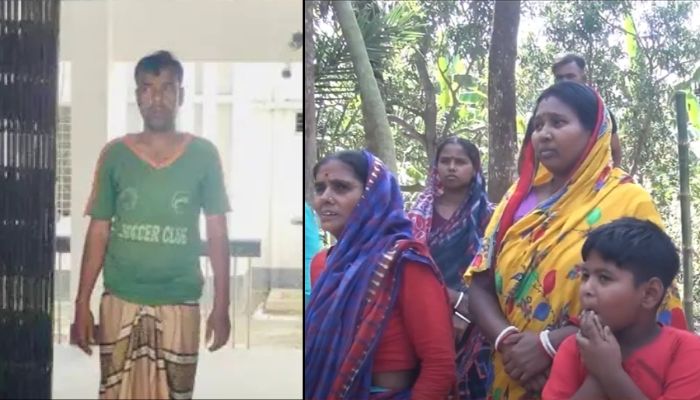
On Sunday (2nd March), a Hindu family came under attack for resisting attempts to encroach upon their land. The incident occurred in the Trimohani Bazar area in Singra Upazila in the Natore district of Bangladesh.

According to locals, a Hindu man named Pulak Kumar and his 2 brothers purchased 1.21 acres of land from one Hamid Mia about 40 years ago.

On Sunday, Hamid Mia’s nephew Bitan began fencing the land belonging to the family of Pulak Kumar. When a local Hindu youth named Sagar told him to stop the fencing work, Bitan attacked the former with a sharp weapon (dao/ saber in this case).

The victim had to be rushed to the Rajshahi Medical College Hospital in a serious condition. In the meantime, an army vehicle which was patrolling the area reached the crime scene and arrested a 28-year-old Shamim (an accomplice of Bitan).

They also recovered 4 country-made weapons. The development was confirmed by Singra Police Station Officer-in-Charge Asmaul Haque.

He stated that the Hindu family had filed a complaint in this regard and that the situation was under control. In the meantime, victim Pulak Kumar spoke to Somoyer Konthosor.

He informed, “I and my brothers had been living on this land, which was purchased about 40 years ago. We have all the documents. Bitan and his aides trespassed into our land, created chaos and began a fight. We want peace through the army and police.”

Attack on Hindus in Bangladesh since the ouster of Sheikh Hasina

OpIndia has been vetting and reporting cases of atrocities on Hindus since the ouster of Sheikh Hasina on 5th August 2024.

There have been at least 205 attacks on Hindu temples, shops and businesses within 3 days of the fall of Dhaka.

We previously exposed how Muslim students have forced as many as 60 Hindu teachers, professors and government officials to resign from their positions.

Human rights activist and exiled Bangladeshi blogger, Asad Noor, has recently revealed that the minority community is now being coerced into joining ‘Jamaat-e-Islami’.

On 6th September, a procession of Hindu devotees carrying the idol of Lord Ganesha came under attack in the Kadam Mubarak area in Chittagong city of Bangladesh.

Ahead of the Durga Puja celebrations, a radical Muslim man named Yasin Mia vandalised the idols of Goddess Durga and other Hindu deities in Gouripur town in the Mymensingh district of Bangladesh on 25th September.

In the latest series of attacks, idols of Goddess Durga and other Hindu deities were vandalised at the Rishipara Barwari Puja Mandap and the Manikadi Palpara Barwari Pujamandap on 28th September and 1st October respectively.

The attacks were carried out in Sujanagar upazila in Pabna district in Rajshahi Division of Bangladesh. While a total of 4 idols were defaced at the Rishipara Barwari Puja Mandap, another 5 Hindu idols were destroyed at the Manikadi Palpara Barwari Pujamandap.

On 3rd October, 7 idols of Hindu deities were destroyed at the Gopinath Jiur Akhara Durga Puja mandap in Kishoreganj, Dhaka Division, Bangladesh.

On 5th November, the Hindu community came under attack from police and law enforcement authorities in Hazari Goli in Chittagong city of Bangladesh.

On 29th November, a violent Muslim mob attacked Hindu minorities and vandalised 3 temples in Patharghata in  Chittagong district of Bangladesh.

The Hindu religious sites that the Muslims targeted included the Shantaneshwari Matri Temple, the Shoni Temple, and Shantaneshwari Kalibari Temple. The attack took place immediately after the conclusion of Jumma Namaz

On 30th November, a prominent Hindu journalist named Munni Saha was arrested by the police from Karwan Bazar in Dhaka city of Bangladesh.

A group of extremists attacked the Mahashmashan Kali Mata Mandir, vandalised 7 idols of deities and stole gold ornaments on 13th December 2024.

On 19th December, a Muslim man identified as Alal Uddin vandalised an idol at the Polashkanda Kali Temple and then attempted to create a fake alibi. The incident occurred in Haluaghat upazila in the Mymensingh district of Bangladesh.

Another 37-year-old Muslim man identified as Azharul vandalised several idols of deities in Haluaghat Upazila in the Mymensingh district of Bangladesh.

The recent arrest of Chinmoy Krishna Das Prabhu and his aides, attempts at banning Hindu organisation ISKCON and stiffling Hindu protests with cases of ‘sedition’ highlight systematic persecution under the interim government of Muhammad Yunus.

There have been multiple instances of attacks on Hindus under the pretext of ‘blasphemy.’ The recent cases of Hridoy PalUtsab MandalPartha Biswas PintuAkash DasPranta Talukder and Utsab Kumar Gian are shining examples of targeted persecution.

China, Canada retaliate to US tariffs by announcing counter-tariffs on US goods, Mexico prepares a backup plan

Following the confrmation by the United States about imposing tariffs on exports from Canada, China and Mexico, the three countries have also announced retaliatory measures against the US. US President Trump’s decision to impose reciprocal tariffs on countries has attracted widespread criticism along with concerns about inflation and rising trade tensions globally.

Canada imposes counter-tariffs on US goods

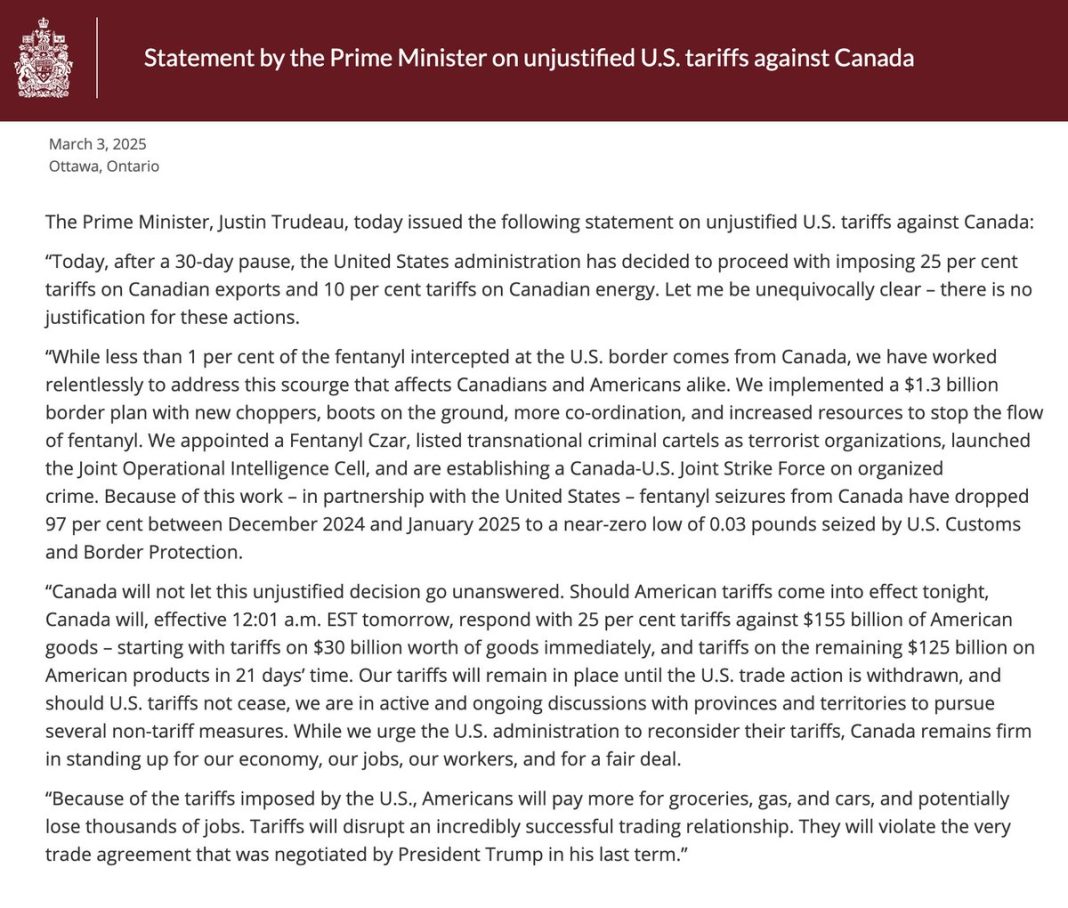
On Monday (3rd March), Canadian Prime Minister Justin Trudeau announced counter-tariffs on the US to begin on Tuesday. Condemning Trump’s decision said that there was no justification for the decision of the US. He said that Americans will now have to pay more for groceries and there will also be loss of jobs. “Because of the tariffs imposed by the US, Americans will pay more for groceries, gas and cars, and potentially lose thousands of jobs,” said Trudeau. “Tariffs will disrupt an incredibly successful relationship, They will violate the very trade agreement that was negotiated by President Trump in his last term,” he added.

Canada plans to impose levies on US imports worth $155 billion over 21 days starting on Tuesday. In the first stage, American goods worth $20.6 billion will be taxed. “The first stage will see 25 per cent tariffs placed on approximately Canadian USD 30 billion (USD 20.6 billion) worth of goods from the US exporters. These measures came into effect at 12:01 am New York time unless the US reverses its decision,” Trudeau announced. He said that Canadian tariffs will remain until the US withdraws its tariffs.

Mexico prepares backup plans

Responding to Trump’s threat of imposing tariffs, Mexican President Claudia Sheinbaum Pardo said that the country is prepared for all possibilities if the US tariffs take effect. Speaking to the media on Monday, Sheinbaum said that Mexico has backup plans.”It is a decision that depends on the United States government, on the United States President. So whatever his decision is, we will make our decisions and there is a plan, there is unity in Mexico,” said Sheinbaum.

“W have a plan B, C, D,” she said. As per reports, Mexican officials recently their American counterparts to negotiate trade and security policies and the impending tariffs. The country was able to avoid the first round of US tariffs by making a last-minute deal to send its troops to its northern border. Mexico has also taken stringent measures to boost its anti-drug actions.

China retaliates by imposing levies

China has also countered the US tariffs by announcing a 10-15 per cent hike in import taxes on a range of US goods including agricultural and food products to come into effect on 10th March. The decision is likely to affect 25 US exports. “Beijing will impose an additional 15 per cent tariff on US chicken, wheat, corn and cotton and an extra 10 per cent levy on US soybeans, sorghum, pork, beef, aquatic products, fruits and vegetables and dairy imports from March 10,” the Chinese finance ministry announced.

Warren Buffet calls US tariffs an act of war

Billionaire investor Warren Buffet has described Trump’s tariffs as ‘an act of war’. “Tariffs are actually-we’ve had a lot of experience with them-they’re an act of war, to some degree,” said Buffet. He said that tariffs are ultimately paid by consumers who purchase taxed goods. “The Tooth Fairy doesn’t pay’em, ” he added.

On Monday, the US President announced that 25 per cent tariffs on goods from Mexico and Canada will take effect from Tuesday. In a punitive measure for China’s alleged smuggling of synthetic drug fentanyl into the US, Trump said that he would raise taxes on all Chinese imports to 20 per cent from the earlier 10 per cent. “Tomorrow – tariffs 25 per cent on Canada and 25 per cent on Mexico. And that’ll start. They’re going to have to have a tariff,” said Trump. He justified the tariffs as a measure to enforce border security and boost anti-drug efforts. Stock markets across the globe took a hit after the US announced tariffs on Canada and Mexico.

During Prime Minister Modi’s recent visit to the US, Trump raised the issue of high tariffs on cars in India with him. “I told the Prime Minister Modi yesterday – he was here. I said, here is what you do. We’re going to do – be very fair with you. Whatever you charge, I’m charging”, said Trump.

Madhya Pradesh: Waqf Board lays claim to Hindu-majority village including Shivling; villagers outrage

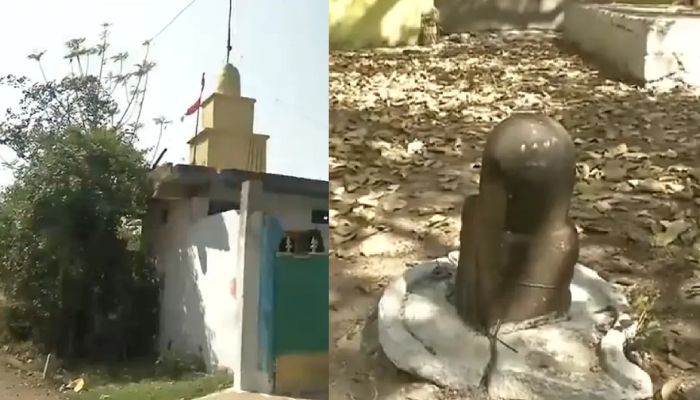
The villagers of Hindu-majority Makhni village in Raisen district have been left in shock as the Waqf Board has laid claim to residential houses, agricultural fields, and even a Shivling. The claim by the Waqf Board has sparked outrage in the area. Reportedly, the board has issued notices to the villagers, claiming that the land belongs to it and must be vacated.

Waqf Board claims 3 acres, offers no proof

According to media reports, the board has claimed that the land in Makhni village belongs to a graveyard. However, no substantial proof to support its claim has been provided by the board. Despite the lack of evidence, the notice lists villagers’ homes, farmlands, platforms, and even the village Shivling. The board has demanded that the villagers vacate the land with immediate effect, leaving the locals anxious and enraged.

Government land also under dispute

Apart from the villagers’ properties, the board has also laid claim to state-owned land in the region. Despite official government records stating that the land belongs to the government, the Waqf Board claims it is a waqf property. The board has claimed that the village was once owned by a man named Qadir Khan, who allegedly donated it to the Waqf. However, local residents have outright rejected the claim and asserted that no such person ever lived in the village.

There are families that have lived in Makhni for generations. They have made it clear that they will not give up their land and are prepared to fight against the Waqf Board’s actions. Notably, the claim over the Shivling has caused significant resentment among the locals, who have accused the board of overreach and wrongful encroachment.

Waqf Board’s growing controversies

The Raisen controversy has come at a time when the Government of India is working on a Waqf Amendment Bill to address issues related to the Waqf Board’s authority and property claims. The Joint Parliamentary Committee (JPC) on the bill was tabled in Rajya Sabha in February 2025. The unchecked influence of the board across the nation has caused significant uproar, as the board has laid claims to temples, lands owned by Hindus, government lands, and more in the past few years.

Muhammad Yunus lies through his teeth about ‘law and order’ situation in Bangladesh during BBC interview, human rights report exposes him

On Monday (3rd March) the Human Rights Support Society (HRSS) published its monthly report exposing the deteriorating law and order situation in Bangladesh even as ‘chief advisor’ Muhammad Yunus lies about ‘crime rate’ to the British Broadcasting Corporation (BBC).

The report for the month of February reveals the grim human rights situation in Bangladesh. Human rights violations highlighted by HRSS include mob lynching, extrajudicial killings, political violence, child abuse, harassment of women and journalists and attempts to suppress freedom of speech.

The report highlighted an atmosphere of anxiety and fear among the common people due to increase in crimes such as murders, rapes, extortion, theft, snatching, and robbery.

HRSS pointed out, “…Widespread protests by students, resulting in attacks, vandalism, and arson on Sheikh Mujibur Rahman’s residence in Dhanmondi, Sheikh Hasina’s residence Sudha Sadan, and various Awami League offices and leaders’ homes across the country from February 5 to 7.”

The human rights body reported that at least 9 people were killed and 755 others were injured in political violence in February. A total of 104 incidents were found by HRSS for the same period.

HRSS also reported 10 deaths and 13 injuries in 17 different incidents of mob violence. It also pointed out that at least 107 children and women were tortured. 53 (comprises of 38 children) of them were subjected to brutal rape.

Interview of Muhammad Yunus with BBC

On Monday (3rd March), BBC Bangla published a 17-minute interview of Muhammad Yunus wherein he claimed that the ‘crime rate’ in Bangladesh had not increased after his interim government came to power.

Yunus assumed the charge of the Chief Adviser of the interim government on 8th August 2024, following the undemocratic ouster of Sheikh Hasina as the Prime Minister of Bangladesh three days earlier.

The controversial ‘Nobel laureate‘ was seen badgering the interviewer about the ‘references’ behind accusations of an increase in crime rate under his watch. “What is your reference point for saying crime has increased? You need to clarify that,” he claimed.

Yunus, who came to usher Bangladesh into a new era of democracy, was however quick to concede, “Crime rates have not increased at all- they remain the same as before.”

The Daily Star, citing police reports, noted that there has been a 50% increase in cases of robbery across Bangladesh over the last 6 months.

As expected, Muhammad Yunus blamed the Awami League (AL) of Sheikh Hasina to shred off his accountability. He also claimed that the crime situation did not improve due to police living under ‘fear.’

“My first effort was to unearth the real picture from beneath the rubble and make people’s daily lives easier. That was my initial focus. Then gradually, I started thinking about the future-where we should be heading…From the ruins where we started, a new shape is emerging,” he brazened out.

Deteriorating law and order situation in Bangladesh

On 12th February this year, the Office of the United Nations High Commissioner for Human Rights (OHCHR) published a 104-page report detailing atrocities committed against vulnerable Hindu minorities in Bangladesh.

The report is titled ‘Human Rights Violations and Abuses related to the Protests of July and August 2024 in Bangladesh.’ Its publication becomes crucial since the interim government in Bangladesh, led by Muhammad Yunus, is pandering to Islamists.

The findings of the OHCHR expose the grim reality that Muhammad Yunus tried to brush under the carpet. He has largely remained a ‘mute spectator’ to targeted attacks, aimed at erasing the history of Awami League in the context of Bangladesh’s independence and politics.

The ‘student protestors’, who oversaw the ouster of Sheikh Hasina, had launched ‘Bulldozer procession’ outside the residence of Bangabandhu Sheikh Mujibur Rehman on 5th February this year. They carried out vandalism and set the building on fire.

The radical elements, who enjoy the backing of the Yunus regime, also damaged murals of the founding Father of the Nation. They also carried out destruction and arson attacks on the residences of Sheikh Hasina’s late husband and cousins.

The ‘student protestors’ also attacked the homes of ex-President Abdul Hamid and former Bangladeshi army chief Moeen U. Ahmed.

Far from condemning the vandalism, Yunus appeared to justify the actions. This explains why no ‘student protestor’ has been arrested.He has also remained tight-lipped on attacks on Awami League leaders and the destruction of the party office.

Bangladesh is witnessing a drastic rise in vigilante Muslim mobs, unleashing violence under the pretext of protecting the tenets of Islam. These mobs are largely unorganised but they call themselves ‘Tawhidi Janata (meaning Revolutionary People).’

They have come under the spotlight over recent acts of vandalism and harassment of people. Following the undemocratic ouster of former Prime Minister Sheikh Hasina in August 2024, violent Muslim mobs operating under the banner of ‘Tawhidi Janta’ have become bolstered.

Yunus’ regime has released Islamic hardliners and convicted terrorists and tried to downplay attacks on Hindu minorities as ‘fake‘, ‘exaggerated‘ or ‘politically motivated‘.

West Bengal: BJP challenges TMC’s Voter Roll purge claim, accuses it of removing names of Hindu refugees, linguistic minorities

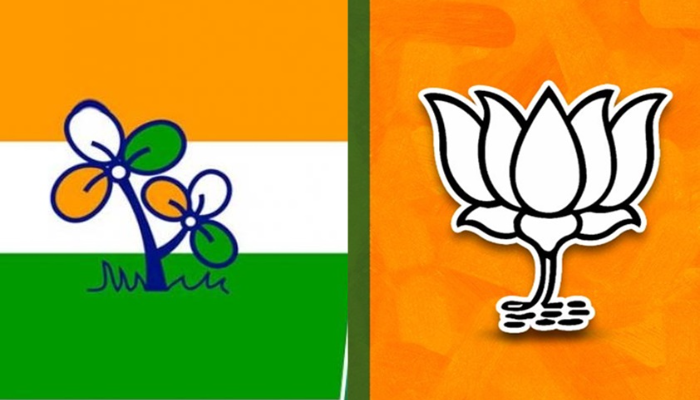
The Bharatiya Janata Party (BJP) has initiated a campaign in West Bengal aimed at opposing the ruling All India Trinamool Congress (AITC/TMC) efforts to identify alleged “ghost voters” within the state’s electoral rolls, before the 2026 state assembly polls. The saffron party stated that the drive to scrutinize the electoral records was started by Chief Minister Mamata Banerjee’s party with the covert goal of expunging the names of Hindu refugees and members of linguistic minorities.

The TMC was accused by the BJP of planning a plot to disenfranchise people who had been believed to be against its interests. To this end, the BJP has asked anyone who has been dropped from the electoral records to contact its leaders and activists. BJP leader Suvendu Adhikari urged the Election Commission (EC) to take action against the West Bengal government’s “biased” officers for supporting the political scheme.

He called for action in the state assembly against a Shantipur Block Development Officer in Nadia after the officer, acting in his capacity as the Assistant Returning Officer of two assembly constituencies, told local leaders of all political parties to discuss the electoral rolls. Meanwhile, the BJP has begun an exercise from the Bhabanipur assembly constituency to make sure that the names of its supporters stay on the voter list. On the other hand, party leader Indrajit Khatik stated that the party would extend the campaign to other parts of the state as well.

BJP leader Anupam Bhattacharya conveyed, “We have already begun the primary work before visiting the doorstep of voters in Bhabanipur with the electoral roll to determine whether TMC leaders are eliminating the names of Hindu or non-Bengali voters in the area. We are cautious about Bhabanipur where we received a significant lead in five out of eight Kolkata Municipal Corporation (KMC) wards against the TMC in the 2024 general election.”

“Apart from Bhabanipur, we will also conduct the same exercise in the Port area of the city,” he added. The BJP will carry out the campaign on the ground in urban areas, particularly in Lok Sabha seats with a higher concentration of Hindu and non-Bengali voters, such as Barrackpore in North 24-Parganas and Asansol in West Burdwan.

“The TMC plans to find out our voters and lodge a complaint with the Election Commission of India (ECI), claiming them as outsiders for the elimination of their names from the voter list. Even if anyone’s name is deleted from the voter list, we will ensure the reentry of the particular voter lodging a counter-complaint with the commission,” another party leader highlighted.

BJP Rajya Sabha MP Samik Bhattacharya further asserted, “We complain that the TMC has been winning elections with the help of duplicate and fake voters. We have a database to support our allegations. Now, the TMC has devised a plan to remove Hindu voters, particularly those from Bangladesh and linguistic minority communities.”

Firhad Hakim, a senior TMC politician and the mayor of Kolkata started the campaign in Bhabanipur, the party chief’s own assembly constituency. She recently charged that the BJP had manipulated the electoral records with the EC’s approval and had registered voters from Gujarat, Punjab and Haryana in West Bengal. She granted a 10-day deadline to the leaders and members of her party to launch an initiative to identify the “ghost voters” on the voter rolls.

Notably, duplication in the EPIC (Electors Photo Identification Card) number does not indicate duplicate or fraudulent voters, as the EC has previously explained.

Maharashtra: Dhananjay Munde resigns from CM Fadnavis cabinet amid row over aide’s involvement in Santosh Deshmukh murder case

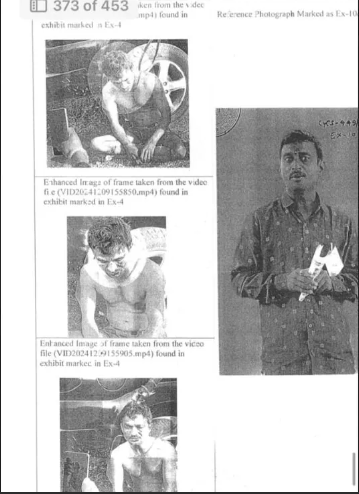
On 4th March, Maharashtra minister Dhananjay Munde quit from Chief Minister Devendra Fadnavis cabinet after the chief minister demanded his resignation over allegations linking his close associate, Walmik Karad, to the murder of sarpanch Santosh Deshmukh from Massajog village in the Beed district. According to police chargesheet, the Sapanch from Beed was tortured and murdered in December as the attackers took 8 pictures, shot 15 videos, and even made 2 video calls, recording the savagery.

The images and videos are included in the 1200-page charge sheet that the Crime Investigation Department (CID) filed with the Beed court on 27th February.

“It has been my firm demand since day one that the accused in the brutal murder of the late Santosh Deshmukh of Massajog in Beed district should be given the strictest punishment,” Dhananjay Munde wrote and said that he has resigned due to medical advice.

“Seeing the photos that surfaced yesterday, I was deeply saddened. The investigation into this matter has been completed and the charge sheet has been filed in the court. Also, a judicial inquiry is proposed”, Munde added.

Maharashtra CM Fadnavis also confirmed the development saying, “Maharashtra Minister Dhananjay Munde has tendered his resignation today. I have accepted the resignation and sent it to the Governor CP Radhakrishnan for further course of action,” while talking to reporters at Vidhan Bhawan.

According to media reports, the development was followed by his meeting with Deputy Chief Minister Ajit Pawar on previous day’s evening. The two Mahayuti leaders talked about the implications of the charge sheet in the murder case as well as two other incidents in which Karad has been implicated as the mastermind. Afterward, Munde was asked to step aside from his position due to his strong relationship with the accused.

The accused in the Sarpanch murder case, Karad, has already been booked under the Maharashtra Control of Organised Crime Act (MCOCA) in relation to the extortion of Rs 2 crore from Avaada Energy, the developer of a wind power project, and assaulting a security guard of the company. He was arrested on 31st December of last year. 

Munde, an NCP (Nationalist Congress Party-Ajit Pawar) MLA from the Parli constituency in Beed district, was the state minister of food and civil supplies and served as the guardian minister of Beed earlier. Now, Ajit Pawar is the guardian minister of Beed and Pune districts. Dhananjay Munde joined the party in 2013.

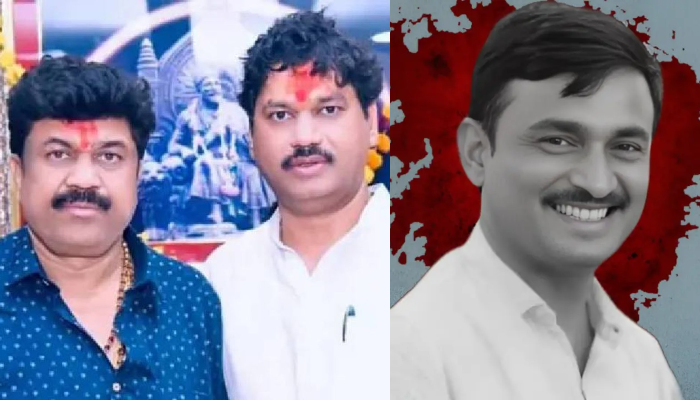
Dhananjay Munde is a relative of Maharashtra minister Pankaja Munde and the nephew of the late Bharatiya Janata Party stalwart Gopinath Munde. He supported Ajit Pawar when the original Sharad Pawar-led party split in 2023. He formerly held the positions of state minister in the Uddhav Thackeray administration and leader of the opposition in the legislative council.

Background of the chilling muder case

On 9th December 2024, 45-year-old Santosh Deshmukh, a three-time sarpanch of Massajog village in the Parli tehsil, was abducted, tortured and killed. According to the charge sheet, Karad directed the other perpetrator Sudarshan Ghule to eliminate everyone who stood in his path of extorting money from the wind energy company. Several threats were made against the victim which eventually resulted in his horrible fate.

According to the report, Karad and other individuals sought Rs 2 crore from the Avaada firm, which has invested over Rs 300 crore in a power generation project in Beed. It was reported that between 8th and 9th December, 2024, Karad, Vishnu Chate, Sudarshan Ghule, Pratik Ghule, Sudhir Sangle, Krushna Andhale, Jayram Chate and Mahesh Kedar reached an agreement to extort the amount from Avaada.

The report disclosed that they intended to spread their “terror” throughout the entire region and also made the decision to kill or exterminate everyone who stood in opposition to them. Karad had previously used Chate’s phone to extort Rs 2 crore from Avaada company officials on 29th November 2024.

Sudarshan Ghule arrived at Avaada Massajog village location that same day and insisted that its representatives meet Karad’s demand. The report added that on the same day, Karad met with Vishnu Chate, Sudarshan Ghule, Pratik Ghule, Sudhir Sangle and Krushna Andhale at Chate’s office in Kej to determine how to proceed with the extortion. Sudarshan Ghule, Pratik Ghule and Sudhir Sangle then visited the company’s site in Massajog village on 6th December, argued with its employees and ordered that they halt the operation.

Meanwhile, Santosh Deshmukh reached the scene and asked the accused to “let people get employment, don’t shut the company’s work.” According to the report, Sudarshan Ghule threatened him, “We will see you, we will not spare you.” On 8th December 2024, Shivaji Thopte, an official from the Avaada company, met Karad at his Parli office in front of Chate. Afterward, Karad asked for Rs 2 crore from him, failing which the business would have to stop its operations in the Beed area. Chate continuously threatened Deshmukh over the phone after the incident.

“If such hurdles come in our way, then no company will pay us extortion money. Whosoever comes in our way should be eliminated. Get going and talk to Vishnu Chate, he will help you,” Karad instructed Sudarshan Ghule on 7th December. According to the report, Chate destroyed his cell phone after the murder, which was a crucial piece of evidence in this case. Additionally, Sudarshan Ghule and the other offenders had been involved in the organized crime.

The charge sheets have been filed in eight of the eleven cases that have been recorded against them in the murder case of Santosh Deshmukh. Three cases, including the murder of the Sarpanch, the attempt to extort money from the Avaada company, and the assault on the company’s security guard, have been submitted. Eight defendants have been charged under the strict Maharashtra Control of Organised Crime Act (MCOCA). One accused is still at large, while seven have been taken into custody.

Santosh Deshmukh’s brutal killing

Santosh Deshmukh was kidnapped and slain for trying to stop the extortion bid. Six individuals kidnapped him near Dongaon toll plaza and drove him in an SUV toward Kej taluka, with a silver Swift car following the SUV. He was discovered unconscious that same evening near Daithna Shivar, which is close to Nandur Ghat Road. The search squad from the Beed Police took him to a hospital, where they pronounced him dead.

The culprits battered Deshmukh between 3:30 pm and 6 pm, using a 41-inch gas pipe with a black string handle, a white pipe, an iron rod, with five clutch wires, wooden sticks and a “fighter and dharkatti” (both sharp weapons). One of the videos featured five men, including Sudarshan Ghule, punching and kicking him in addition to lashing him with a wooden rod and a white pipe. The footage captured Deshmukh in a partially naked position and being forced to sit on the ground.

Deshmukh was shown being forced to chant, “Sudarshan Ghule is the father of all,” by the accused in a different video. According to the charge sheet, he was seen bleeding heavily as another assailant urinated on him. According to an official who cited the charge sheet, the recordings of the cruelty were recorded on Kedar’s smartphone and range in length from two seconds to two and a half minutes.

Images of a tortured Santosh Deshmukh in the police chargesheet. (Source: NDTV)

According to the charge sheet, wanted accused Krishna Andhale made two WhatsApp video calls from his cell phone while Deshmukh suffered from torture. The first call was made at 5:14 pm and the second at 5:26 pm but the caller was not identified in the report. Police have reportedly found 15 broken parts of a white pipe that was blunt and hard, at the location.

The CID discovered during the inquiry that Sudarshan Ghule is the head of a crime syndicate in the central Maharashtra region of Beed. His gang is active in the Beed district’s Kej, Ambajogai and Dharur districts, along with Kalamb in the nearby Dharashiv district, and has been involved in 11 major offenses. He was in regular contact with Karad and Chate before the murder. Sunil Shinde, an Avaada project officer, was abducted by him on 28th May of last year in order to extort money. The victim later filed a complaint against him at the Kej Police Station.

Police mentioned that the accused chose to kill Santosh Deshmukh because they believed he was interfering with their plans. Deshmukh received multiple threats and met the gruesome fate when he didn’t comply.

Dhananjay Munde is linked to Walmik Karad and the opposition began calling for action as the inquiry revealed the latter’s involvement in the horrifying murder. Furthermore, the opposition received more ammunition after filing of the charge sheet. However, Chief Minister Devendra Fadnavis swiftly took cognizance of the situation as shocking images of the abuse appeared on TV and social media and initiated action.

Pakistan’s Hindus under siege: HRCP report exposes alarming rise in violence, forced conversions, and systemic persecution of minorities in Pakistan

On 26th February, Pakistan’s Human Rights Commission of Pakistan (HRCP) released its new report on the human rights situation in the country. The report, “Under Siege: Freedom of Religion or Belief in 2023/24,” gave a dark account of increasing violence, forced conversions, and institutionalised discrimination against Pakistan’s Hindus, particularly in Sindh province.

Violence against Hindus in Pakistan includes mob violence, temple desecration, targeted kidnappings and forced conversion of Hindu girls. The report highlights how the judicial process in Pakistan, extremist elements, and inaction of government officials have placed Hindus in a seriously vulnerable position with little chance of justice.

Hindus of Sindh – A troubled community

Hindus today are merely 2% of the country’s population, most of whom live in rural Sindh. They are consistently in a state of perpetual fear of extremist elements. Sindh Hindus are mostly Scheduled Castes. They work as bonded labourers in shady conditions. The economic and social vulnerabilities of Hindus in such a situation make them easy targets for extremists.

Hindus in Sindh are also being subjected to increasing discrimination, intimidation, and day-to-day humiliation. Hindu families report incidents of public harassment, refusal of access to common facilities, and day-to-day intimidation. Reportedly, a Hindu bride was assaulted on her wedding day by the son of a Sindh tribal chief. The family for scared to the point that they fled over to India within months. Many such cases often do not find a place in mainstream media or get investigated by the authorities.

The forced conversion crisis

Forced conversion of Hindu girls continues to be one of the gravest problems in Pakistan. The HRCP report says that districts such as Ghotki, Umerkot, and Tharparkar are Hindu abduction hubs. Most of the victims are underage girls who are abducted, coerced into conversion to Islam, and wedded to Muslim men in the guise of “voluntary conversions.”.

Even the courts and police join extremists in their backing. They do not allow Hindu girls to go back to their families despite their repeated pleas.

Clerics like Mian Abdul Haq (Mian Mithu) play a crucial role in such forced conversions. The report indicated that his seminary, Dargah Bharchundi Sharif in Ghotki, is repeatedly used for the forced conversion of abducted Hindu girls. They are forcefully married off to Muslim men and coerced into signing affidavits of “voluntary conversion”.

One of the cases that were reported by international media included two Hindu sisters, Reena and Raveena, who were kidnapped in Sindh. Their parents begged the court to return them, but the judge legalised their forced marriage. Interestingly, the Sindh Child Marriage Restraint Act has 18 as the minimum age for marriage, but the judge categorically ignored the law. HRCP noted that now majority of the Hindu families have stopped sending their daughters to school out of fear of abduction.

Mob violence and Hindu attacks

The report pointed out that Hindu temples, shops, and homes have been repeatedly attacked by extremist mobs. In 2023, a Hindu temple in Soldier Bazaar, Karachi, was bulldozed by local authorities on a false pretext to accommodate commercial use.

Similarly, Hindu families in the Kashmore district were intimidated when extremists fired a rocket at a Hindu temple. Hindu homes were looted during riots that broke out over false accusations of blasphemy. HRCP observes that, in such cases, the police do not act or are not willing to act against extremists.

Hindus are also accused of false blasphemy, and it has led to catastrophic consequences. Nautan Lal, a Hindu head teacher of a school, was sentenced to life imprisonment in 2022. In 2019 a student falsely accused him of blasphemy. He was acquitted in March 2024 after a protracted court fight, but acquittal is not enough to guarantee his security in Pakistan. Nautan Lal will be living in fear for the rest of his life, always looking over his shoulders. HRCP warns that a Hindu in Pakistan is enough to invite a deadly accusation of blasphemy.

A Hindu legal system biased against Hindus

The HRCP condemned the justice system in Pakistan, which has failed to safeguard Hindus. Police authorities used to deny accepting FIRs in Hindu crimes. Even when the FIR is filed, the judiciary is influenced by religious pressure and tends to take sides with the criminals.

The report documents how Hindus are being denied justice. Abduction and forced conversion cases are normally pending in courts. Even if Hindu families manage to file cases, intimidation of witnesses, prejudiced judges, and extremist protests ensure that judgments never favour the victims.

Extremism and state collusion

The HRCP report highlighted extremists dominate the political and social life in Pakistan. Islamist parties like Tehreek-e-Labbaik Pakistan (TLP) openly incite violence against minorities. According to the report, mob violence against Hindus is typically planned by using mosque loudspeakers and social media, mobilising mobs within hours.

But the Pakistani state never acted against these attacks. Despite conclusive proof of abduction and conversion of Hindu girls, the state has not taken concrete legal measures to criminalise these attacks. Even the Supreme Court 2014 judgment regarding minority rights is not being followed. The security agencies and political leadership ignore anti-Hindu violence.

HRCP has urged the Pakistani state to initiate an immediate crackdown on Islamist forces, enact stricter legislation against child marriages, and create an independent commission to monitor minority rights. If not, Pakistan’s Hindus will be in a crisis of survival.

HRCP’s report testifies that Pakistan’s Hindus are under attack. Targeted killings, forced conversions, mob lynching, and institutionalised bias have caused some to cross the border and migrate to India, escaping a country that is no longer providing them with safety.

With the spread of extremist forces and blasphemy laws still being weaponised, Hindus are being left vulnerable at the hands of an increasingly militant system. Without drastic reforms happening in the not-too-distant future, Pakistan’s Hindu minority may become a thing of the past.

Delhi University proposes inclusion of Manusmriti in undergraduate History honours syllabus, faces opposition from sections of faculty members and students

Once again the decision to include Manusmriti in the History Honours syllabus has sparked a controversy within Delhi University. A similar proposal last year was reportedly met with strong opposition resulting in the Vice-Chancellor Yogesh Singh withdrawing the proposal the night before it was to be tabled for approval before the Executive Council of the University.

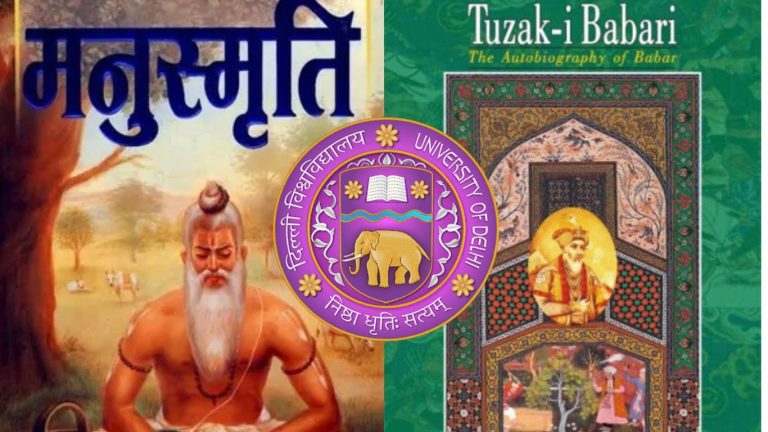
As per reports, the University has proposed to include the ancient Sanskrit text Manusmriti and Tuzuk-i-Baburi (the memoirs of Mughal Emperor Babur) in the syllabus of the undergraduate History Honours course for the fourth year students under the Four Year Undergraduate Programme (FYUP) in the University.

A 15-member committee has prepared the core paper of History Honours titled ‘Sources of Indian History’ in the History Department. The committee also proposed to include several ancient texts including Harsha Charit, Matsyapurana, Sangam Kavya and Sanskrit inscriptions of the Delhi Sultanate in the syllabus. However, the inclusion of Manusmriti is being opposed particularly. The proposal has already been approved by the Department’s Joint Committee of Courses. However, the proposal is yet to receive the nod of the University’s Academic and Executive Councils.

The proposal has evoked opposition from a section of professors and students who have written to the University administration to withdraw the proposal. Following the opposition, the committee has been instructed to review the syllabus. Justifying its proposal to include the ancient texts in the History syllabus, the committee said that the texts would offer different historical perspectives to the students.

Some faculty members oppose the proposal

The proposal has attracted mixed reactions from the faculty of the University, with some of the faculty members opposing the proposal, and the other supporting it. Surendra Kumar, an Associate Professor in the History Department, opposed the inclusion of both Manusmriti and Tuzuk-i-Baburi in the syllabus. He wrote to the Vice-Chancellor describing the texts as ‘glorifying exploitation and oppression’ and being in conflict with ‘the idea of India’. He urged the Vice-Chancellor to replace the texts with other historical texts that better reflect the country’s diverse history.

“The text Manusmriti is a document that conceptualises society in a caste-based and coercive manner, suggesting the exploitative treatment of people, particularly women, SC/ST/OBC and marginalised sections. The inclusion of this text is against both the Constitution of Bharat and the progressive ethos of our society,” Kumar wrote regarding Manusmriti.

“The text is written by Babur, whose invasion led to unprecedented destruction in Bharat. Guru Granth Sahib has stated about the destructive aspect of the invasion of Babur. Janam Sakhi and other sources of Bharat describe the brutality committed following the arrival of Babur, leading to the destruction of the people of Bharat,” he wrote regarding Tuzuk-i-Baburi.

Latika Gaur, another faculty member, also opposed the proposal to include Manusmriti. “Manusmriti is a text that reflected the web of Brahmanical patriarchy and the objectification of women. Historians consider it the most prominent ideological text of the Brahmanical system. If it is to be taught and treated as sacred literature, then there are serious problems. This is not a good step. This must be challenged,” she said.

Commenting on the proposal, Professor Pankaj Garg said that the texts are supposed to teach the students about society at that time and not to glorify any ideas. “If the History department has introduced the text to teach the students about how society used to be at that time and not as a text that tries to glorify ideas, there is nothing objectionable, “said Professor Garg.

“Yes, certain aspects of the text, like how it describes women and Dalits, are condemnable. But while teaching students about the sources of history, one must engage with texts during certain periods even if they contain problematic views. It is essential to understand the historical context in which these texts were produced,” he added.

Punjab police raids farmer leaders after CM Bhagwant Mann abruptly leaves meeting with Samyukta Kisan Morcha leaders

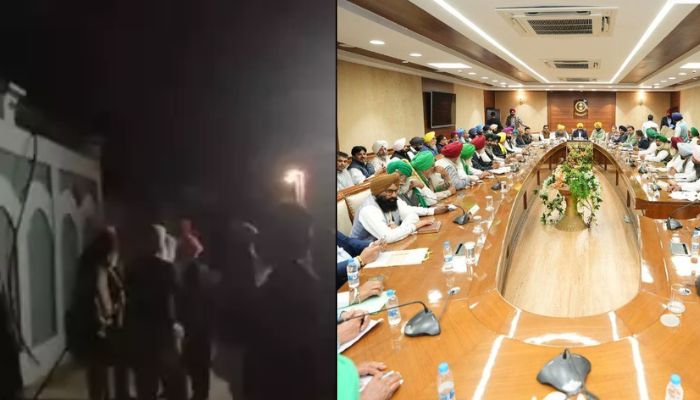
In a dramatic turn of events in Aam Aadmi Party (AAP) ruled Punjab, police conducted raids at the residences of farmer leaders just hours after talks between CM Bhagwant Mann and farm unions under the umbrella of Samyukta Kisan Morcha (SKM) failed. The police also raided the residence of Joginder Singh Ugrahan, the president of Bharti Kisan Union Ekta Ugrahan. The SKM leaders claimed that several farmers were also detained by the police.

The Samyukta Kisan Morcha has called for a week-long sit-in at the state capital Chandigarh. This sit-in protest in support of their various demands will start on Wednesday (5th March).

Meanwhile, Bhartiya Kisan Union (Lakhowal) General Secretary Harinder Singh Lakhowal said that the Punjab police conducted “raids” at the residences of SKM leaders. “With such actions, the government cannot stifle the voice of farmers. We are fighting in support of various farmers’ demands. It is our right to hold protests. We warn the state government not to indulge in such police actions,” Lakhowal said, adding that police officials have been deployed to his residence as well.

Similarly, BKU (Rajewal) vice president Mukesh Chander Sharma claimed that police raided the residences of farmer leaders in Punjab. “Police raided my residence at 4 am,” he said.

Notably, a group of farmer leaders had gone to meet Chief Minister Bhagwant Mann on Monday, March 3, however, the meeting reportedly broke down midway as an angry Bhagwant Mann left the meeting in a huff.

Speaking about what allegedly happened at the meeting, farmer leader Joginder Singh Ugrahan said, “After discussions on eight-nine out of our 18 demands, Mann said he had an infection in his eye for which he needed to go. The CM then asked us about our plans for the March 5 protest, to which we replied that the discussions were pending and we will take call on our plan to protest after that, ” said Ughrahan, adding the CM got upset and left the meeting asking the farmers “to resort to protest” and that if the sit-in protest is held, none of the demands raised by farmer leaders will be accepted.

Regarding the alleged police crackdown on farmers, Ugrahan said, “Massive raids are underway to scuttle our protests, and over a dozen buses are waiting to round me and my supporters up. Let the Punjab government do whatever it wants, but I warn them the protest will go ahead despite the police crackdown,” Ugrahan said.

Farmer leader Balbir Singh Rajewal described Chief Minister Bhagwant Mann as unusually angry, noting that he had never witnessed such an outburst, even in high-level negotiations.

“The meeting was going on well, and we were coming to agreements on several issues. After we came to an agreement on the eighth issue, the CM said he wanted to leave, owing to a doctor’s appointment. Then he asked about our plans for March 5. He said we are holding talks; why do you still want to proceed with the protest? He became very angry and left the meeting saying ‘Do whatever you want to do’… I have had negotiations at the Prime Minister level but have never seen a leader so angry. We will come to Chandigarh (on 5th March),” he said.

Meanwhile, PTV reported that the police have confirmed that several farmer leaders are being arrested following a failure of the talks between CM Mann and the farmer leaders.

The police also conducted raids in Muktsar district on early Tuesday morning before the farmers left for protest in Chandigarh. Kotbhai Police Station (Police Raid on Farmers) has taken Kirti Kisan Union leaders Jagmeet Singh, Jagroop Singh and Jaspreet Singh into custody. Many farmers had dispersed after getting information about the police raid.

Moreover, the police reached the houses of farmers to put them under house arrest before BKU Ugrahan district leader Bittu Mallan, Gurbhagat Bhalaiyana and other farmers could join the protest.

Bhilwara: Woman gangraped for a year, blackmailed through obscene photos and videos, police arrests 8 accused including Ashraf Ali, Shoaib Sheikh, Khalid and others

After the gruesome Beawar sexual exploitation case, another chilling case of gangrape and blackmail of a woman has come to light from Rajasthan. Police have arrested 8 accused in connection with the gangrape of a woman in the Bhilwara district of Rajasthan.

The accused have reportedly been identified as Ashraf Ali alias Ashraf Lala (2), Sanvir Mohammad Nilgar (23), Shahrukh Khan alias Bablu Rangrez (24), Khalid alias Dulha (25), Amir Khan Pathan (31), Soyabnoor Mohammad Mansuri alias Soyam (22) and Faizan Ghori Mansuri. Police are interrogating the arrested accused and are searching for others involved.

Accused raped the victim after sedating her

As per reports, a woman filed a complaint in the police station on 2nd March this year. According to SHO Gajendra Singh Naruka, in her complaint, the woman said that she visited a cafe located in Badla Chauraha in March last year to meet a friend Ashraf Ali. Ashraf Ali was already there along with his friend Bablu waiting for her when she reached the cafe. The woman said that Bablu brought her a coffee laced with sedatives, after drinking which she fell unconscious. Thereafter, Ashraf Ali allegedly took her to a room inside the cafe and raped her while his friend Bablu stood guard at the door. Ali also allegedly captured her photos and videos using which he blackmailed the victim and raped her on multiple occasions. As per the complaint, Ali shared her obscene photos and videos with his friends who blackmailed her and raped her many times.

The accused pressured her into giving him contact of other women

The victim reportedly said Ashraf Ali’s friends Amir and Shoaib threatened her and forced her to introduce them to other women. The accused forcibly gained access to her social media accounts. On 1st January 2025, the accused Sanvir allegedly called her to a cafe and had unnatural sexual intercourse with her.

On 1st March 2025, the accused Amir called the victim to meet him at Shivaji Park. When the victim reached there, he pressured her to introduce him to other women and misbehaved with her. The victim opposed Amir’s advances and started shouting, due to which people gathered there. She then fled from there are reached her home and narrated everything to her family.

SP Dharmendra Yadav assigned the investigation of the case to DSP City Manish Badgurjar.