Home Blog Page 4670

Explained – The political crisis over crop procurement in Chhattisgarh and why paddy procurement has been stopped in the state

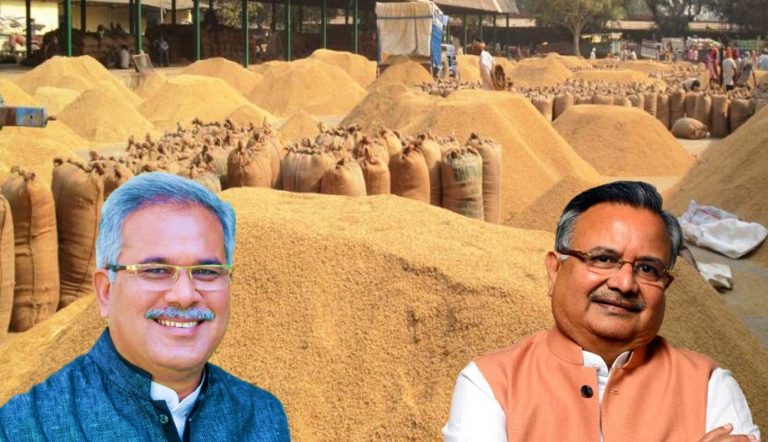
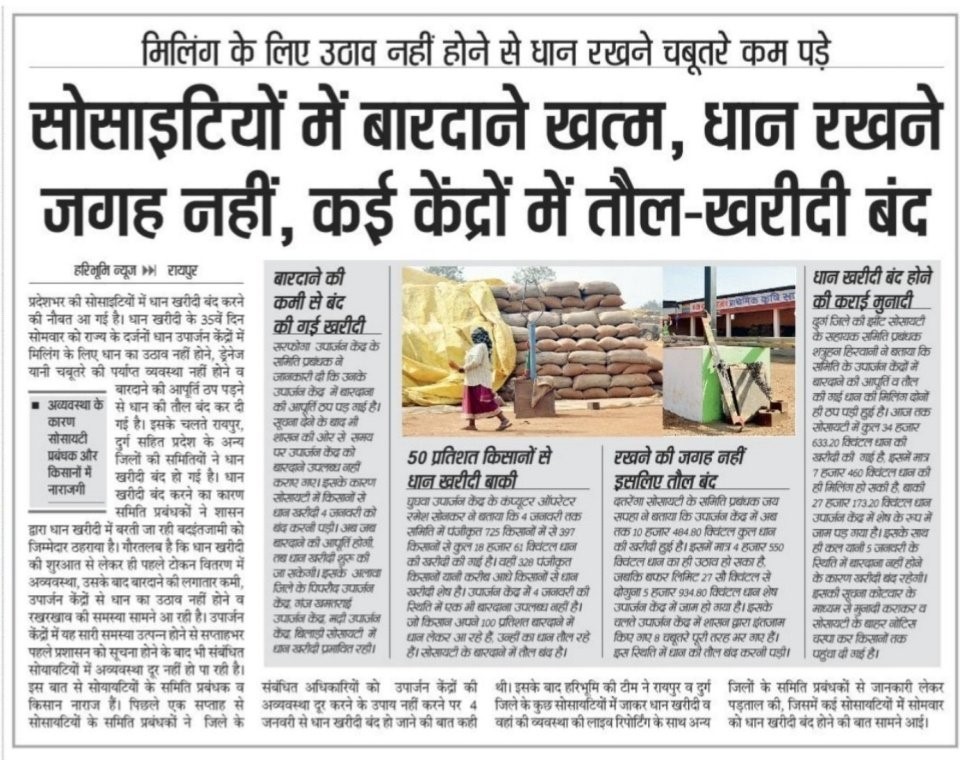
While farmer protests are not waning in Delhi, a political thunderstorm is taking place in the state of Chhattisgarh where CM Bhupesh Baghel and ex-CM Dr Raman Singh are at loggerheads on the question of mismanagement in paddy procurement. At many places, paddy procurement has been stopped due to allegedly shortage of tare and store capacities. BJP has alleged that Congress has failed to deliver its promise of buying farmers produce at Rs. 2500/- quintal MSP while Congress has blamed BJP for creating confusion.

How was management in BJP era?

When Dr. Raman Singh promised to provide rice at Rs. 3 per kilo (later Rs 1 per kilo) to lakhs of families, it was considered an extra-ordinary political stroke, likes of which later inspired the Food Security Bill in UPA era. It was a huge success only because of a robust PDS system which was developed over time. It also created debt. The Govt borrowed money from RBI at zero interest if it is repaid in four months, so to save interest, they developed a system where paddy was procured quickly within four months, thus saving money on interest.

They used to provide immediate supply to Food Corporation of India (FCI) in comparison to other states and the remaining was directly supplied to ration shops with three months surplus. Tax collection on excise duty also increased five times from 2004. With increased Computerization, payment to farmers was also swift and Chhattisgarh used to procure about 80% of grains produced in comparison to about 20% in other states.

What changed?

During election campaign of 2018, Congress promised to pay Rs. 2500 per quintal as MSP to farmers instead of Rs. 1825 as then declared by centre, which proved a key factor to win them elections.  Although Raman Singh in previous years had also offered to pay Rs. 300 as bonus increasing MSP to Rs. 2100, it was disallowed by Central Govt when Modi came in power.

Modi Govt has a policy of ‘no bonus’ but instead they increased the MSP over years. Hence, in order to meet the poll promise, CM Bhupesh Baghel offered to pay the difference of Rs. 675 per quintal out of state exchequer’s pocket. But this was again considered as bonus with a different avatar and FCI refused to lift grains from the state.

Last month, Bhupesh Baghel had written to the Prime Minister asking to pick up the paddy the state government has procured under the central pool. But the centre had clarified that FCI can’t pick up paddy beyond the limit of 24 lakh tonnes as the state has declared bonus above the MSP. According to MOU the centre has signed with states and UTs in regard of crop procurement, if the states and UTs announce bonus above MSP, FCI will not procure crop beyond a fixed quantity, and the rest has to be procured by the states/UTs themselves.

As a result, the mandis had an overflow of grains and officials were not able to accommodate the excess supply from farmers. At many places, the procurement was halted citing a shortage of tare and farmers were asked to bring their own sacks for storage or were simply returned.
Political War of Words

Bhupesh Baghel Govt declared that Congress Govt is giving more money to farmers under a different scheme called Rajiv Gandhi Kisan Nyay Yojana where they are giving Rs. 10000 per acre to sugarcane, maize and paddy farmers, thereby effectively increasing MSP but not technically so. After things reached crisis level, communication was established between centre and state and FCI promised to pick up 24 lakh MT for which CM thanked the PM and hoped they would take more (60 LMT) as assured earlier.

But the political storm had already taken place in Raipur where Congress has blamed BJP for acting against the interest of farmers and BJP has alleged mismanagement in the procurement process. Dr Raman Singh has questioned – why did Congress promise to buy every grain at Rs. 2500 on its own when it cannot fulfil its own promise and is now running to the centre for aid and making excuses. He also asked why has Congress Govt not been able to fulfil its pending quota of 24LMT of last year, and alleged a complete collapse of the system.
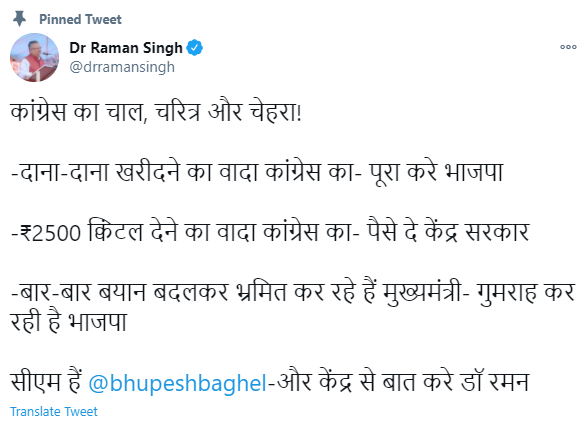
Whereas Congress has alleged that Centre is advised by state BJP Unit which is creating obstacles in procurement process. When BJP in-charge of Chhattisgarh D. Purandeshwari asked what happened to the Rs. 9000 crore facilitated by Centre for procurement process, the Congress leaders deflected it as loan by Markfed and not aid by the Centre. Bhupesh Baghel also dared BJP to stage a protest in Delhi, while Dr. Raman Singh pointed out a complete collapse of system.

Former Home Minister Brijmohan Agrawal also questioned that while Congress is busy in blame game, grains worth crores have been wasted because they were not procured. CM Bhupesh also lost his temper and said “Raman Singh ko murkho jaisi baatein nahi karni chaiye” (Raman Singh should not speak like idiots). But it appears that war of words between the two parties is not de-escalating.

Procurement economics

Any delay in procurement causes an increase interest which is ultimately borne by state exchequer. With a lucrative promised MSP by Congress before the election, the number of farmers registered to sell paddy has almost doubled form 15 lakh in BJP era to 31.5 lakhs now. This is likely to cause an extra burden on state and debt is likely to rise. Crop rotation has now stopped because farmers are incentivised to grow only paddy which gets a plum MSP. As a result, health of soil is believed to take a toll.

There are also cases of smuggling in border areas with UP and Jharkhand where farmers sell to middlemen in cheaper prices in order to obtain the MSP in Chhattisgarh. Reportedly, there are some fraudulent committees involved in Govt procurement process and they are continued to do so this year and questions are asked whether it reeks of a scam. Moreover, does it make sense to buy grains at a very high MSP and sell them in PDS for Rs. 1 per kilo? The difference to be paid by state tax is huge and is at the cost of many other development activities which could have otherwise propelled the state to a more progressive one.
Pakistan mirrors Congress, asks for a ban on RSS at UNSC, calls it a ‘violent extremist supremacist group’

0

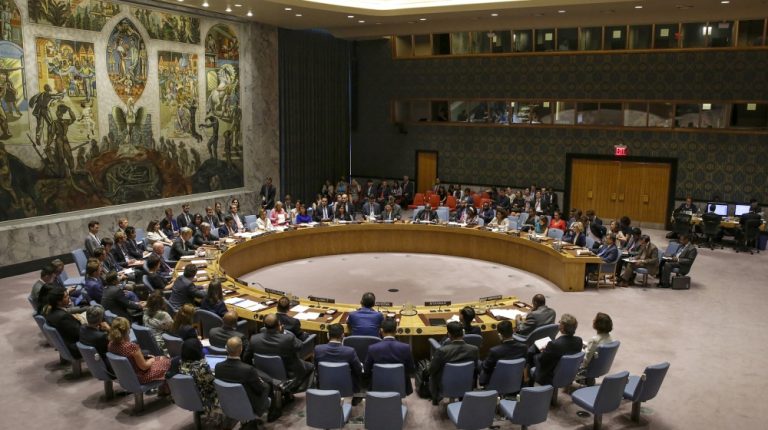
Despite itself being placed in the ‘grey list’ by the Paris-based international terror financing watchdog FATF for financing and providing a safe haven for terrorists, the terror-state Pakistan has amusing called the Rashtriya Swayamsevak Sangh (RSS) a “violent extremist group” during its address at the United Nations Security Council (UNSC) and has demanded a ban on it.

Continuing its habit of raving and ranting against India on every international platform, the Permanent Representative of Pakistan to the United Nations Munir Akram claimed on Tuesday that RSS poses a ‘clear danger to regional and international peace and security’. “Such violent racist and extremist terrorism will inevitably breed counter-violence and validate the dystopian narrative of terrorist organisations such as ISIS/Daesh and Al-Qaeda,” Akram reportedly said at the UNSC, asking the council to declare RSS as an extremist group just as the world has done in case of Al-Qaeda/ISIS and their affiliated groups.

Despite being repeatedly rebuked for its ridiculous assertions about internal affairs in India, Pakistan once again accused the ruling Bharatiya Janata Party (BJP) and ideological parent-body RSS of posing an ‘existential threat’ to Indian Muslims and sought initiation of “immediate domestic actions” to counter alleged propagation of Indian right-wing groups’ violent ideologies.

Pakistan parrots Congress’ views on RSS

It is important to note how Pakistan has often synchronised its views and spoken the language of the Congress Party when it comes to the BJP and the RSS. Congress has also, multiple times in the past made unsavoury remarks against the RSS and called for its ban. It may be recalled how Congress stalwart and a close aide of Rahul Gandhi Digvijaya Singh had exonerated Pakistan and pushed the blame of 26/11 attack in Mumbai on RSS and Hindu extremists. The Congress had then timidly “distanced” itself from Singh’s remarks. No top leader (read from Gandhi clan) had stepped out to condemn Singh. Though this particular comparison was highly condemnable, one could clearly not expect anything better from Congress Party whose chief Rahul Gandhi himself went on to compare RSS to the Islamic Brotherhood.

Those unaware, the Muslim Brotherhood is a global Islamist Sunni organization that was founded in Egypt. The group which has been labelled a terrorist organization in various countries managed to capture power in Egypt before it was removed from power through a coup and was subjected to a severe crackdown.

Congress shenanigans do not end here. In May 2018, Congress had demanded that the entry of RSS chief Mohan Bhagwat be banned in Bihar stating that he ‘represents hateful ideas’. When former President and Congress leader Pranab Mukherjee addressed RSS cadres at Nagpur, he received a lot of flak from his former colleagues. The party had also promised to ban RSS ‘shakhas’ from government buildings in its election manifesto ahead of the Madhya Pradesh assembly elections in 2018.

Once upon a time: How Congress leader Jairam Ramesh ended up admitting that his family contributes to global warming by eating beef

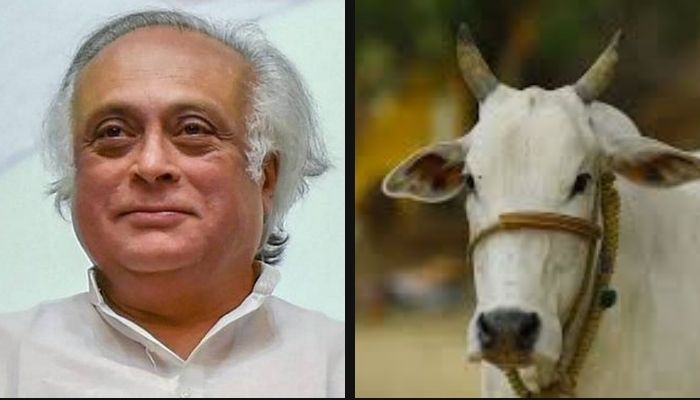
Ahead of the third phase of 2015 Bihar elections, Congress leader and former ‘Environment Minister’ Jairam Ramesh decided to milk the politically motivated ‘intolerance debate’ and ‘beef controversy’ to maintain the party’s stronghold over the Muslim vote bank.

Although Laws banning cow slaughter were implemented by various Congress governments in respective states even before BJP came into existence in 1980, Jairam Ramesh decided to put forth his ‘secular’ credentials by hailing it as a choice that cannot be stopped through legislation. Emphasising that ‘beef consumption’ was a matter of choice, he said, “Whether you eat beef or not, these are personal issues. There are people in my family who eat beef. I happen to be a vegetarian not because I am a Hindu (but) by choice.”

Jai Ram Ramesh further added, “I lived abroad for five years. I was a vegetarian not because I am a Hindu. But my children are not vegetarians. So, I don’t enforce my own eating values. It s their free choice. You can’t legislate. You can t say that you can t eat beef.” Hailing the controversy over beef consumption as ‘nonsensical’, the Congress leader blamed the RSS for exhibiting its ‘anti-democratic’ nature.

Screengrab of the India TV article

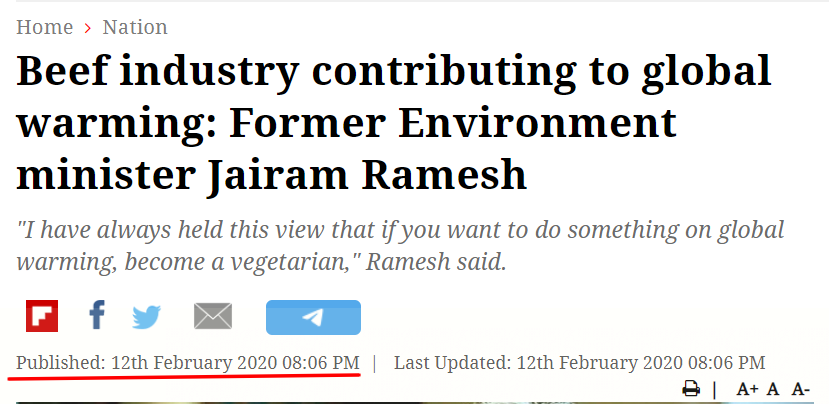
Although Jairam Ramesh made a case for ‘beef consumption’ by dubbing its as a matter of choice in 2015, the former ‘Environment Minister’ seemed to realise how harmful the beef industry could be for the climate. In February last year, the Congress leader discouraged ‘beef-eating’ due to its contribution to the menace of global warming. Of course, there is no guarantee that he was only concerned about the environment and was not setting the stage for Congress’ soft-Hindutva plank.

The advocate of ‘beef consumption’ conceded, “I know that the beef curry is a very important element in Kerala’s diet but there is no doubt in my mind that the carbon footprint of a non-vegetarian diet is greater than the carbon footprint of a vegetarian diet.” While answering a question about the significance of veganism in fighting climate change, the pro-choice leader emphasised, “I have always held this view that if you want to do something on global warming, become a vegetarian.”

Screengrab of the New Indian Express article

The former ‘Environment Minister’, whose environmental consciousness seemed to be missing for 5 years, reinstated the importance of curbing the beef industry. But by doing so, he essentially implied that his ‘beef-eating’ family members are harming the environment with their food choices. Although a glaring contradiction of past statements is not a new phenomenon for Congress leaders, electorates are now aware of the fact that the party, which cares for the environment at one instance, might go back to appeasing its minority vote bank at any instance.

Beef consumption and its effects on the environment

Globally, beef is responsible for 41 per cent of livestock greenhouse gas emissions, and livestock accounts for 14.5 per cent of total global emission. In fact, according to one expert, eating less red meat, particularly beef, would be a better way for people to cut carbon emissions than giving up their cars.

The production of beef requires 28 times more land than pork or chicken, 11 times more water and results in 5 times more climate-warming emissions. As compared to staples like potatoes, wheat, and rice, the impact of beef per calorie is far more extreme. It requires 160 times more land and produces 11 times more greenhouse gases.

As such, a university in London had planned to pull down beef from its canteen menu in September 2019 to fight against the global climate crisis. Goldsmiths, a constituent college of University in London, will be scrapping all beef products from its campus menu, the institution’s new chief has announced, as it seeks to become carbon neutral by 2025.

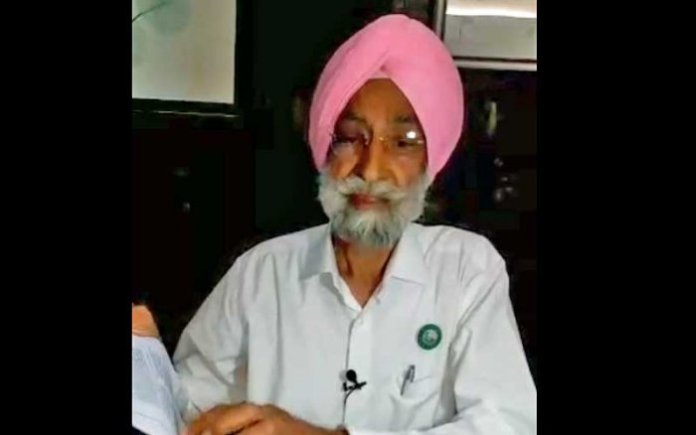
Congress supporter and BKU leader Bhupinder Singh Mann recuses himself from Supreme Court ordered committee on farm laws

National President of Bharatiya Kisan Union, Bhupinder Singh Mann has recused himself from the four-member committee formed by the Supreme Court. On January 12, the Supreme Court stayed the implementation of the Agriculture laws and named four committee members that will talk to all the stakeholders and submit a report in the apex court. The report will be considered part of the ongoing cases on recently enacted Agriculture Laws.

‘I am ready to sacrifice any position offered’ said Mann

In his statement, Mann said that he is recusing himself over “prevailing sentiments and apprehensions amongst the farm unions and public in general”. He further added that he is ready to sacrifice any position offered or given to him, so he does “not to compromise the interests of Punjab and farmers of the country.”

A three-judge Bench of Chief Justice of India (CJI), SA Bobde and Justices AS Bopanna and V Ramasubramanian, formed the said committee. The three other members named by the Supreme Court were Dr Pramod Kumar Joshi, Ashok Gulati (Agricultural Economist) and Anil Ghanwat (President of Shetkari Sanghatana).

Mann had supported Congress Party in the past

There were reports that the Supreme Court’s selected committee members had shown support for the reforms in the Agriculture laws. However, it has to be noted that Bhartiya Kisan Union leader Bhupinder Singh Mann and the BKU had supported Congress Party in the 2019 general elections. There is even a video of Bhupinder Singh Mann shared by Bharatiya Kisan Union where he announces his support for the Congress party.

TRP scam: ED in BARC office to question CEO Sunil Lulla’s team, including top officials, regarding inconsistencies in their version

0

In a big development in the fake TRP case, the Enforcement Directorate has summoned top BARC officials, part of BARC CEO Sunil Lulla’s team. The summons is in regard to inconsistencies in BARC versions on the TRP Scam.

The officials are facing interrogation right now. Dr Derrick Gray, who is the Chief of Measurement Science and part of the top management team at BARC, is being quizzed in Mumbai. Separately, ED officials are even at the BARC office at the moment questioning top officers about the TRP case.

The Enforcement Directorate had last month filed an enforcement case information report (ECIR) that is equivalent to a police FIR under the provisions of the Prevention of Money Laundering Act in the alleged TRP rigging scam that is being investigated by the Mumbai police. The ED complaint was filed after studying a Mumbai police FIR that was registered in October and it had named the Republic TV channel, two Marathi channels and few other individuals.

The ED is probing if fake TRPs were generated and if the money earned through this was used to generate illegal funds and create illegitimate assets.

Interestingly, while Republic TV has been in the fray and is being widely investigated for the fake TRP scam, the original Hansa Research Report and the subsequent FIR based on the report named India Today. Republic TV’s name was not mentioned by Hansa or BARC in the TRP scam.

OpIndia had, recently, received incriminating details which raised eyebrows on BARC’s veracity in presenting an accurate picture of TRP of channels. We reported how 2016 internal BARC emails clearly hinted that BARC might not be working to present an accurate picture of TRP in the first place and is deeply open to data being rigged and results being flawed.

The TRP scam seems to be far deeper than anyone had fathomed. While news channels are being spoken about widely by investigative agencies, genres that get extremely high revenue for their advertising slots are often those in the entertainment and sports category. BARC’s internal emails which recently came to the fore, shows how BARC might not be particularly forthcoming in the information they are providing to investigative agencies to ensure that their internal management stays away from the investigation. Therefore, it is important that for the truth to emerge, officials of all channels involved need to be questioned, especially, those from BARC.

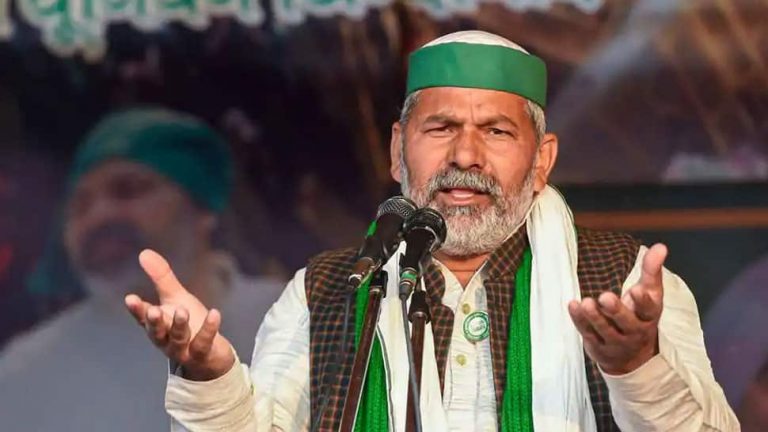
Rakesh Tikait gives another indication about how the farmer protests are completely political: Here is what he said

0

If there was any proof needed to understand how the ongoing so-called ‘farmers protest’ is entirely political and has nothing to do with the interest of farmers, Rakesh Tikait has provided one. After the Supreme Court put the implementation of farm laws on hold and ordered for a committee to be formed, Bharatiya Kisan Union (BKU) spokesperson Rakesh Tikait has issued a statement wondering if the democratically elected government had hold office for 5 years, then why the protests cannot last for 5 years too.

It is pertinent to note that the farmers’ groups had rejected the offer and said that they would not appear in the Supreme Court-appointed committee’s proceedings. They said that the Central government’s attitude in the court had made it clear they will not repeal the three laws.

When asked about the duration of the protest and how long he plans to keep this up, Tikait reportedly told IANS, “It the government can function for five years, why can’t the movement go on? We respect the Supreme Court’s decision but are not happy with the committee (set by the apex court). Our movement will continue till the government withdraws the farm laws”.

Further, Tikait said that farmers’ organisations, led by Samkyukta Kisan Morcha have planned to intensify their stir and are planning on their protests with an eye on Republic Day (26th January 2021).

He said that they had already started procuring several Indian flags and had planned to take out protest marches all over India on Republic Day. “Our preparations for January 26 event are complete. We will have a meeting to see where we can hold the parade in Delhi,” he said.

It is pertinent to note here that the farmers protest, mainly by Punjab farmers and a few clearly politically motivated organisations has lasted for over 50 days now. These so-called farmers are unrelenting and have said that their demand is the complete repeal of the three laws and that no other compromise can be reached with the government. This, while several other farmer organisations across the country have come out in support of the farm laws. In fact, it was also noted that Rakesh Tikait and his other friends had expressed displeasure at the government talking to farmer organisations from other states and demanding that the government limits its discussion to Punjab farmers and these specific organisations.

Even as the protests have now been hijacked by Khalistanis and separatist, banned organisation Sikhs For Justice is openly betting for it, as per reports, protestors from Haryana have announced a ‘tractor parade’ to Delhi from its borders on January 26. While speaking about the decision, Haryana BKU president Gurnam Singh Chaduni emphasised, “As per our strategy, all farmer brothers with their tractors should reach Delhi borders by January 24. We will enter Delhi on January 26, even if the police use lathis or bullets. ” He added, “We will break all their (police) barricades to enter Delhi.”

In anticipation of their planned parade, they have scheduled a rehearsal on January 17 on the Dadri-Bhiwani highway and on January 18 in Siwani. Chaduni has been at the forefront of leading protestors from Ambala to Delhi on November 25 by breaking through security barricades placed on Ambala-Delhi national highway to reach Delhi. He warned, “Our next programme will take place on January 26 but if Khattar sahab plans a rally even before it, we will oppose that event too.” 

While these so-called farmers are marching towards Delhi on Republic Day and setting the stage to foment trouble, elements like Yogendra Yadav, who is fondly called ‘icchadhari protester’ has issued tacit warnings to farmers from other states because they have refused to join these protests.

The motives of these protests came into further question after Naxal supporter Arundhati Roy joined the protests and compared them to Naxals fighting in Bastar.

These so-called farmers have already resorted to violence and vandalism. They had damaged and vandalised several Jio towers and only recently, vandalised a public rally by CM ML Khattar.

Recently, they ambushed the Kisan Mahapanchayat programme in Karnal, where Haryana CM Manohar Lal Khattar was supposed to address a large gathering of 2000 farmers. The protestors first gathered near Bastara toll plaza in Karnal on the Delhi-Chandigarh Highway before making their way to the village. They were successful in breaching 6 checkpoints and reaching the helipad in Kamila village where the CM was supposed to land.

The mob was seen digging up the interlocking tiles and vandalising the helipad, thereby forcing authorities to find an alternate site for the CM’s landing. In a bid to oppose the newly enacted farm laws, they vandalised the venue, tore down banners and flung the chairs. The anti-farm law protestors tore down the tents, forcing Haryana CM Manohar Lal Khattar to cancel the event.

With Khalistanis, Congress leaders and others fanning these protests, Rakesh Tikait’s recent statement only goes to show that these protests are not really being held for the interests of the farmers, rather, it is yet another attempt to unseat a democratically elected government. While the politics continue, several farmers have come out in support of the laws and described how the three farm laws have helped them procure a fair price for their produce.

With Rakesh Tikait’s rejection to participate in the committee constituted by the Supreme Court, his statements about continuing the protest till the Modi government is in power and his exception to the government talking to farmer organisations from the rest of the country, it becomes evident that these protests are merely politically motivated and have no substance other than embarrassing the government of the day.

World’s oldest known artwork is of a warty pig, found in Indonesia’s Sulawesi Islands

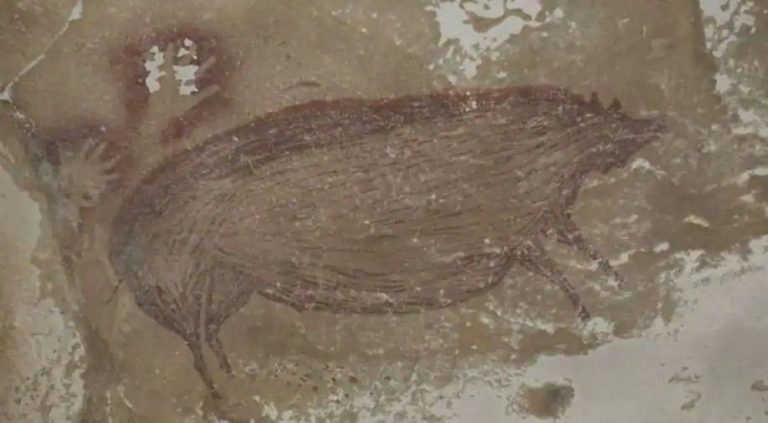
Archaeologists working on an ancient site on Sulawesi island, Indonesia have discovered the oldest known figurative artwork said to be at least 45,500 years old. As per reports, the artwork which is an image of a wild pig provides the earliest evidence of human settlement in the area. The cave painting is also said to be the oldest surviving image of an animal.

The painting is reportedly made using red ochre pigment. The animal in the painting appears to be observing a fight or social interaction between two other pigs. According to CNN, there are several other limestone caves in the region where other discoveries have been made. In 2014, a team of archaeologists had found human hand stencils in Sulawesi. These were dated 40,000 years old. In 2019, the same team of archaeologists had discovered cave art in the region depicting a hunting scenario dating to 43,900 years ago.

A doctoral student had found the painting in 2017

Wion reported that study co-author Maxime Aubert of Griffith University, Australia told that the warty pig painting was found in 2017 by a doctoral student named Basran Burhan as part of the surveys that his team was carrying out with Indonesian authorities. The Leang Tedongnge cave where the painting is found is located in a remote valley enclosed by sheer limestone cliffs. The cave is accessible during the dry season only as flooding makes it impossible to reach the cave during the rainy season. The painting measures 136 by 54 centimetres.

Prior to the discovery of the warty pig cave painting, the oldest known cave art was considered to have appeared in Europe 40,000 years ago showing abstract symbols. The art became more sophisticated showing animals like horses by 35,000 years ago. According to National Geographic, scientists have identified images in around 300 caves over the last 70 years in Sulawesi alone.

Dating of the cave painting

According to study co-author Aubert, a calcite deposit formed on the top of the painting was used to date it. He used Uranium-series isotope dating to reach the conclusion that the painting was at least 45,500 years old. This means that the painting could be older than that.

Ormanjhi beheading case: Ranchi Police arrests main accused Shaikh Bilal

0

Ranchi Police has arrested the main accused of Ormanjhi beheading case. Bilal had beheaded his second wife and buried her head in a pit in his field in Chandwey village. Naushad Alam, SP Ranchi Rural said that they are interrogating Bilal to discover the reason behind the killing.

“Ranchi Police arrested the main accused, Sheikh Bilal who allegedly beheaded a woman and dumped her body in Ormanjhi area. He is being interrogated to discover the reason behind this gruesome murder,” SP Alam said in his statement.

Ranchi beheading case

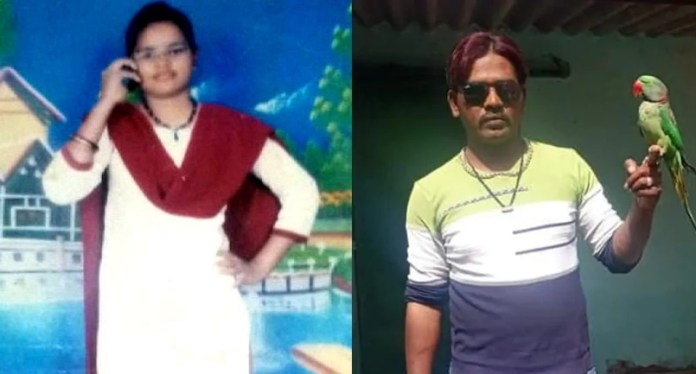
On January 3, Ranchi police recovered a headless body which was later identified as 22-year-old Sophia. During the investigation, Police found that her husband Sheikh Bilal had murdered her as Sophia informed Police about his whereabouts after which he was arrested. At that time a pistol was found in his possession.

Bilal came out of jail a few days back. He took Sophia on the pretext of spending some time together and killed her in the forest area. He brought her head back home and buried it with salt in his field. Police interrogated his first wife Shabbo Khatoon who told Police where the head was buried. Bilal was on the run, and Ranchi police had formed teams to find him. A poster was released with his information to seek help from the public.

This is an ongoing investigation. More details will follow.

Jammu and Kashmir: Cracks appear in Gupkar alliance after BJP wins big in DDC elections. Read details

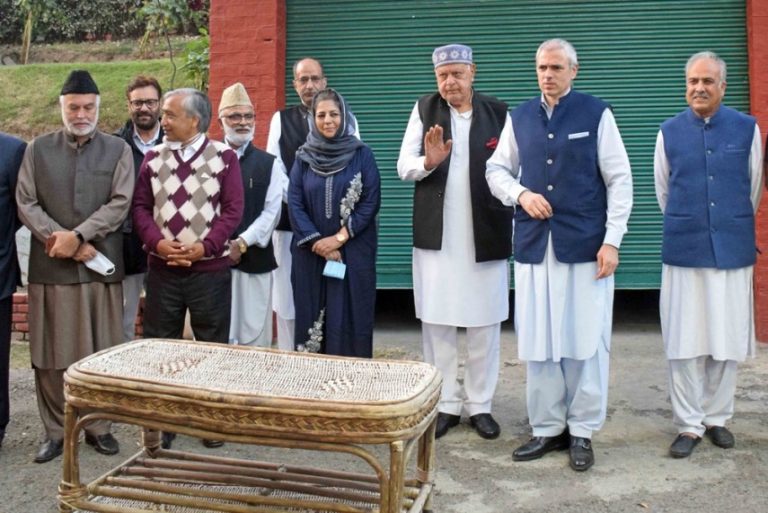
Following the success of the BJP in the District Development Council elections in the Union territory of Jammu and Kashmir, a much anticipated political turmoil has emerged within the Gupkar alliance. The political alliance is the grand coalition of National Conference (NC), People’s Democratic Party (PDP) and four other parties.

As per reports, after the Gupkar alliance only managed to win only 110 seats out of 280, they have begun blaming one of their key allies aka the National Conference. The infighting began after other coalition partners accused the NC of partiality in seat-sharing and fielding candidates against its own coalition party candidates. Reportedly, Ghulam Hasan Mir, Jammu and Kashmir Apni Party, has hinted that several disgruntled political leaders from the Gupkar alliance might defect to his party in the upcoming days.

Reportedly, the biggest bone of contention within the Gupkar alliance has been the seat-sharing for the District Development Council elections. The coalition partners have alleged that National Conference was given an unfair share of candidates and that the party ensured the defeat of coalition candidates by fielding its own proxy candidates. Imran Raza Ansari, the General Secretary of Peoples Conference (PC), said that the party fared better than other coalition partners. He claimed that proxy candidates had undermined PC’s performance in the elections and lamented that the party could only contest 10 seats out of 140 in the Valley.

National Conference cadre in dilemma after Omar Abdullah’s statement

NC scion Omar Abdullah had claimed that he has become demotivated and jaded, forcing him to wonder whether he should continue in politics. While talking about his political career, he said, “I find it very difficult to motivate myself, I have lost motivation. A certain light inside may not have been switched off but it’s a lot dimmer. I have never been like this.”

His statement has however increased the worries of an already demotivated party cadre. The party workers said that their ultimate fight is against the BJP and restoration of Article 370. They conceded that the morale of party cadre would fall, if leaders talk about being demotivated and withdrawal from electoral politics.

BJP emerges as the largest party in the recently conducted DDC polls

For the first time since the abolition of Article 370 and the transition of the erstwhile state of Jammu and Kashmir into Union territory, the elections for the local body were held in Jammu and Kashmir over a period of 25 days. Polls were held for 280 seats of the District Development Council (DDC) in 20 districts of the Union Territory. The polling was held in eight phases beginning on November 28 and concluding on December 19.

Six Kashmir-centric political parties including the National Conference (NC) and the Peoples Democratic Party (PDP) contested the election under the banner of an alliance named the Peoples Alliance for Gupkar Declaration (PAGD) which was formed for the restoration of Article 370. Initially, the Congress was part of the Gupkar alliance but later the grand old party distanced itself from the alliance. While the PAGD has won 110 seats, the BJP has emerged as the single largest party with 74 seats.

The Gupkar alliance and its anti-India leanings

In October this year, six political parties the National Conference (NC), Peoples Democratic Party (PDP), Peoples Conference (PC), Communist Party of India Marxist (CPI-M), Peoples Movement (PM) and Awami National Conference (ANC) had formed the Gupkar alliance demanding the restoration of Article 370. Gupkar alliance member PDP’s President Mehbooba Mufti had denounced the Indian national flag after being released from detention on October 13. She said that she would not raise the Indian flag until the flag of the erstwhile state of J&K gets restored. NC’s Farooq Abdullah had sought China’s help to revert the central government’s decisions.

After opposing the Jallikattu tooth and nail, Rahul Gandhi looks to salvage image by attending the festival

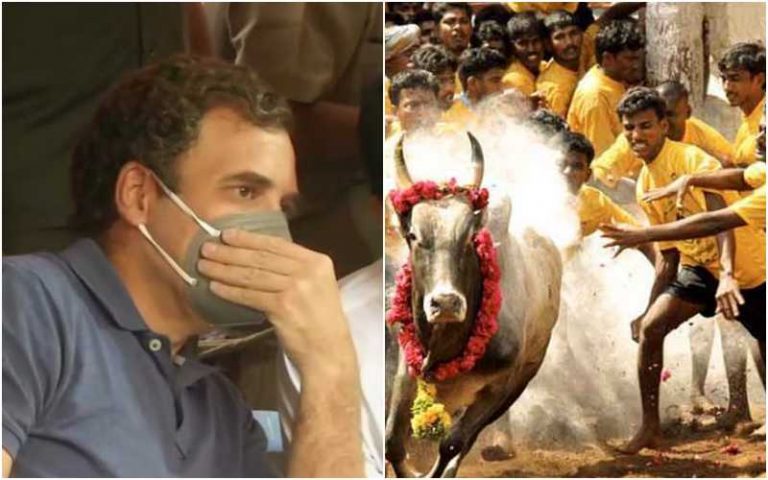
Congress leader Rahul Gandhi has again made an appearance after vanishing to some undisclosed location for New Year. Gandhi is going to Madurai and will mark his presence at the famous Jallikattu festival On January 14. Jallikattu bull race is a part of traditional Pongal celebrations in Tamil Nadu.

Gandhi shared a tweet in which he said, “Coming to celebrate Pongal with you in Madurai, Tamil Nadu. I am participating in the Jallikattu festival in Madurai.” Interestingly, Congress has been vehemently opposed to the festival just a few years back.

A brief history of Jallikattu ban and Congress’ opposition of the tradition

In 2011, the Ministry of Environment and Forest under the Congress-led UPA government had banned the use of bulls in the festivities. However, under the Tamil Nadu Regulation of Jallikattu Act No 27 of 2009 the festival continued. In 2014, the Supreme Court of India then struck down the state’s law and banned Jallikattu. Since then, the people of Tamil Nadu have been fighting for their traditional event. Between 2014 and 2017, Jallikattu was held but it was deemed against the orders of the apex court.

Notably, in 2017, the Tamil Nadu government passed a bill with the support of the Prime Minister of India that exempted Jallikattu from Prevention of Cruelty to Animals Act (1960). First legal Jallikattu celebration was held on February 1, 2017, in Madurai district.

‘Jallikattu is a cruel form of entertainment’: Former PM Dr Manmohan Singh

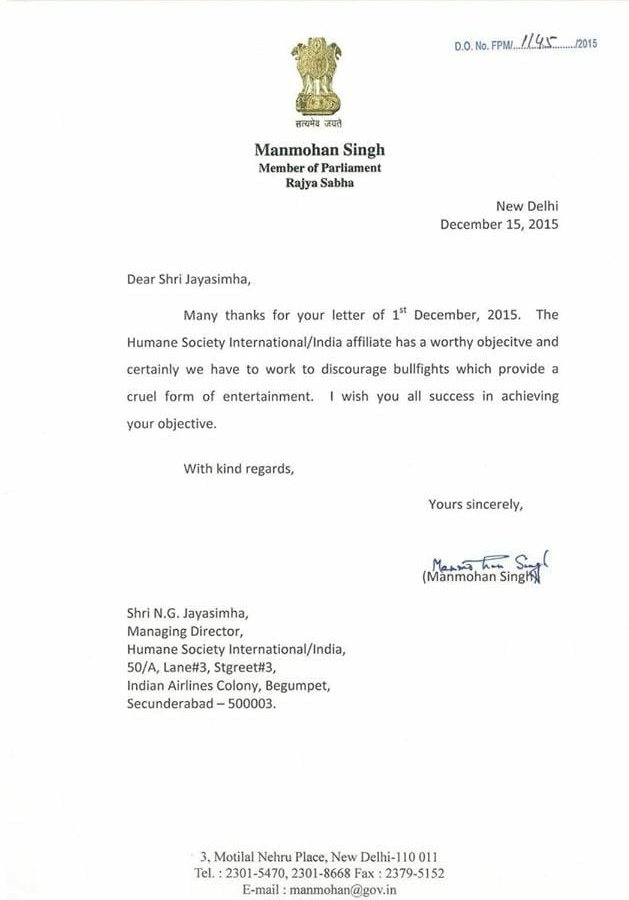
From former Prime Minister Dr Manmohan Singh to several Congress leaders, the party has always opposed Jallikattu. In a letter addressed to NG Jayasimha of Humane Society International, Dr Singh called the festival a cruel form of entertainment. He said, “We have to discourage bullfights that provide a cruel form of entertainment.”

Source: Twitter user @/smkamatchi

In 2014, Jairam Ramesh, then-Environment minister, had welcomed the ban on Jallikattu and said, “I welcome the Supreme Court judgement. It will put an end to a barbaric practice.” Speaking to media, Ramesh had later even criticised the BJP’s efforts to let the festivities continue. He had called it a ‘barbaric practice’ and had said the BJP was supporting some local leaders to appease them ahead of the elections.

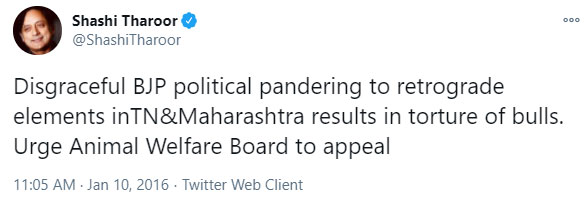
In 2016, Congress leader Shashi Tharoor claimed Jallikattu results in the torture of bulls. He said, “Disgraceful BJP political pandering to retrograde elements inTN&Maharashtra results in the torture of bulls. Urge Animal Welfare Board to appeal.”

Source: Official Twitter handle of Congress leader Shashi Tharoor

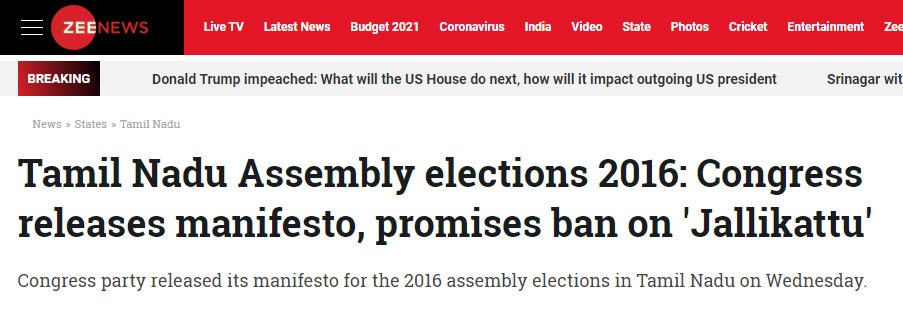
In 2016, Congress party released its manifesto for Tamil Nadu’s Assembly elections in which it promised ban on Jallikattu.

Screenshot of 2016 news report of Zee News in which it stated that Congress party had promised ban on the festival

In 2017, Congress leader Abhishek Manu Singhvi, who represented PETA against Jallikattu in the Supreme Court said, “Jallikattu is not a sport, it is a brutal and wanton torture of an animal.” Though he said that he was speaking as the counsel of PETA and not as Congress leader, his views were in sync with several other Congress leaders.

Congress’ U-turn

Congress and its supportive media ecosystem are highlighting Rahul Gandhi’s visit to Madurai to enjoy the Jallikattu celebrations. However, the social media is awash with old tweets, screenshots and videos of the Congress’ relentless battle to get the Hindu traditional event banned.