Home Blog Page 4755

‘Ganga-like purity in government’s intent, MSP here to stay’: PM Modi defends farm laws, asks opposition to take credit for reforms they had promised

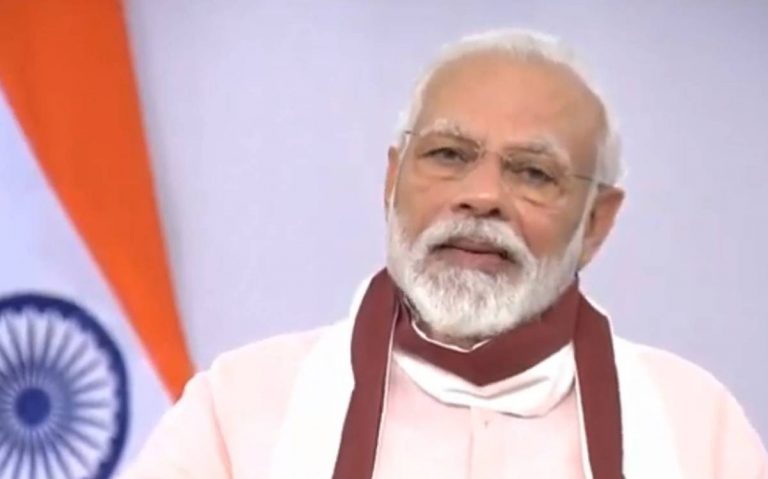
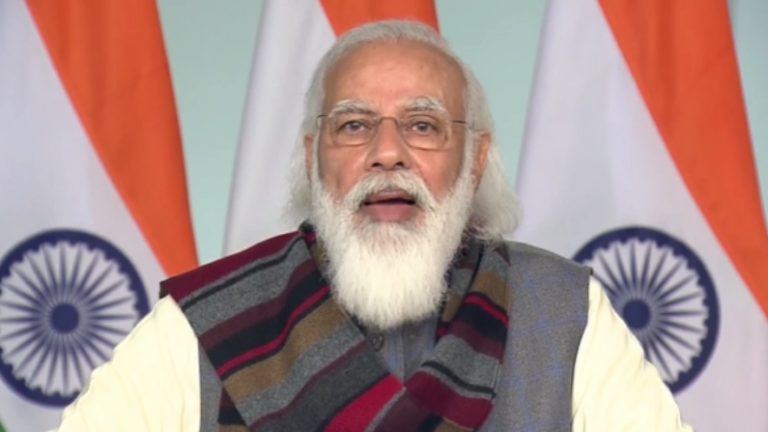
PM Modi on Friday addressed an event in Madhya Pradesh via video-conferencing, defending his government’s reforms in the agriculture sector and assuring the farmers that the government is committed to their welfare.

The outreach by PM Modi was a part of sustained efforts by the Centre to placate the farmers mainly from Punjab who have taken to streets along the Delhi border in protest against the newly introduced farm bills which they claim would hurt their livelihood.

Farmers to decide whether they want to sell their produce to APMCs or customers: PM Modi

Stating that the government’s intent in helping farmers is as pure as the river Ganga, the Prime Minister exhorted the protesters to see through the deceit that is being peddled under their name. He reiterated that, under the new laws, farmers will continue to have total freedom regarding the sale of their agricultural produce, adding that the system of APMC would continue to function. The new laws will only open avenues for farmers to sell their produce directly to the customers, he said.

PM Modi also drew attention towards the past when farmers were baton-charged by the police officials for demanding urea. He said that his govt has changed that and made life better for farmers. He said that the intention of his govt is absolutely clear.

MSP here to stay and central government committed to buying agricultural produce at the MSP rate: PM Modi

Talking about the Minimum Support Price(MSP) which has been a bone of contention for the protesters, PM Modi assured the farmers that the MSP is here to stay and his government will continue to buy agricultural produce from them at the pre-decided MSP.

PM Modi cited various crops and grains whose MSP were increased after his government came into power in 2014. He said MSP on Toor Dal was increased from Rs 4300 per quintal to Rs 6000, on Moong Dal it was increased to Rs 7200 per quintal from the previous price of Rs 4500. Similarly, the MSP on Masur Dal also saw a bump up from Rs 2,950 per quintal to Rs 5,100.

Even the MSP on paddy saw about 50 per cent hike from Rs 1310 per quintal to Rs 1,870. MSP on Jawar were raised from previous Rs 1,520 per quintal to Rs 2,640.

PM Modi said that his government not only raised the MSP but also increased the government purchase from farmers.

“The previous government, in their five years of governance bought 1,700 metric tonnes of paddy from farmers. Our government bought 3,000 metric tonnes of paddy from farmers in our first five years,” PM Modi said.

PM Modi takes on opposition, says various parties promised the same reform that his government has implemented

In a blistering attack against the opposition parties, PM Modi said that the Opposition is misleading the farmers. He stated that all old manifestos of other parties promised the same reforms which his government has dared to implement. Without explicitly referring any opposition leader, PM Modi said that these politicians were trying to extract political mileage on the back of farmers’ protest.

PM Modi also assailed the previous governments at the Centre, who remained a mute spectator to the problems faced by the farmers and showed no will to initiate reforms. He added that his government abolished the cut culture and implemented recommendations suggested by agriculture committees, including those by the Swaminathan report.

PM Modi further added that the farm laws were not brought overnight, but several political parties, experts, progressive farmers had long demanded the reforms. Adding that the detractors have a problem with Modi and not reforms, PM Modi said, “here were demands for the reforms from parties, experts, progressive farmers for many years. The previous governments had made promises to the farmers but never delivered. They are upset because what they had only talked about, Modi has done that.”

The PM said that opposition parties are opposing the farm laws because BJP will take credit of bringing such reforms. He offered the opposition to take credit for the laws, which were promised by the parties like Congress in their election manifestos, and requested not to oppose the laws.

PM Modi allays apprehensions of farmers regarding the farming agreement and contractual farming

In a bid to dispel the unfounded apprehensions that are taking root among the farmers in the wake of farmers’ protest, PM Modi said that a farming agreement involves only crops and agricultural produce and not the farming land of the farmers. He added that farmers are being deliberately misled on the concept of the farming agreement which is not a new phenomenon.

He cited an irony while speaking on the farming agreement. While the Congress government in Punjab has been vehemently protesting against the farm bills, PM Modi quoted a report from 8 March 2019 to allege that the Amarinder Singh government in Punjab was celebrating a Rs 800 crores deal between farmers and a multinational company.

While speaking on the contractual farming, PM Modi assured farmers that nobody can force the farmers to do anything against their wishes. He further cited instances when contractual farming had brought a dramatic rise in the farmers’ earnings.

PM Modi says the government still ready for talks if farmers are unconvinced

Towards the end of his speech, PM Modi said that despite his government’s repeated assurances that farmers’ interest will be taken care of, if the protesters are still unconvinced, the Centre is ready to have talks with them.

“Even after my assurances and the central government’s efforts, if anyone has any apprehensions with regard to the new laws, We humbly bow our heads and join our hands and are ready to talk on every issue for the welfare of the farmers,” PM Modi said.
‘India should learn from Israel’: Petition moved in SC for Sanskrit to be declared as ‘National Language’

0

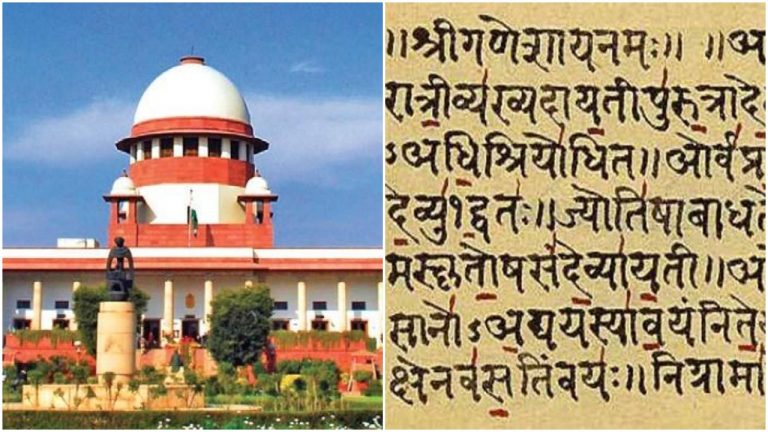
A petition has been filed in the Supreme Court asking to notify Sanskrit as the national language of the country.

According to the reports, the PIL has been filed by the former additional secretary to the Gujarat government, KG Vanzara, who is currently a lawyer in the Gujarat High Court. The petition seeks the Supreme Court to direct the Union Government to notify Sanskrit as India’s National language while keeping Hindi as its official language.

In his petition, Vanzara claimed that the national language status will be higher than the official language status accorded to Hindi. The petition said the notification can be done simply by an Act or an executive order, without disturbing the present Constitutional frame.

“Official Language cannot necessarily be equated with National Language. Both definitely can be separate,” the petition said.

India should learn from Israel, says petition

Further, the petition said that India should learn from Israel who in 1948, made Hebrew, considered to be a dead Language for the last 2000 years, along with English as the official/national language of Israel. Vanzara also added that the move would not face any opposition from any of the religions or castes.

The plea said Sanskrit has “the biological scientific phonetic structure of Sanskrit, which develops the brain, rhythmical pronouncing and memorising capacity in children”.

Even former PM had said “the greatest treasure that India possesses is and what is her finest heritage, I would answer unhesitatingly that it is the Sanskrit Language literature and all that it contains,” the plea read.

Presently, the Indian constitution does not recognise any language as the ‘National Language of the country’. However, there are 22 official languages in India and they are covered under the 8th schedule of the Indian Constitution.

Suvendu Adhikari tries to resign, but Bengal Assembly speaker rejects, asks him to meet on 21st December: Here is why

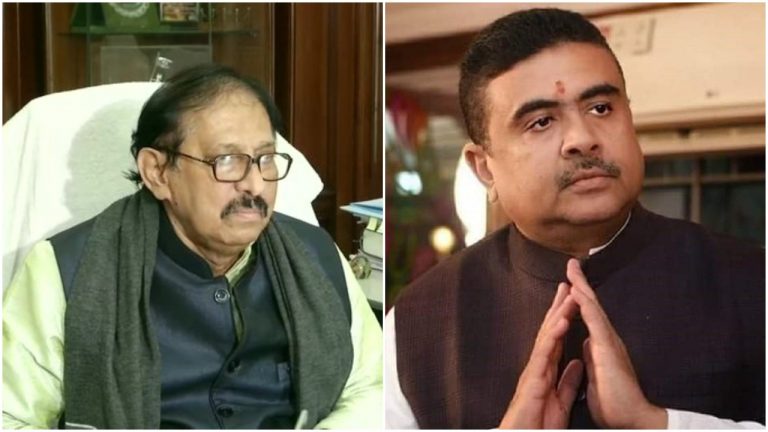
A day after rebel Trinamool Congress leader Suvendu Adhikari resigned from the post of MLA, the West Bengal Assembly Speaker on Friday rejected his resignation from the post claiming that it was not in a proper format.

According to the reports, West Bengal Speaker Biman Banerjee on Friday refused to accept the resignation of former TMC stalwart Suvendu Adhikari claiming that his resignation letter was not in proper format and also did not have a date on it.

The speaker also said that he has not been informed that Adhikari’s resignation is voluntary and genuine and asked him to meet him on Monday. He also said that it is not possible to accept the resignation letter in this format.

“I have examined the letter & found that the date isn’t specified in it. I hadn’t been informed that his (Suvendu Adhikari) resignation is voluntary & genuine. So it’s not possible to accept it. I’ve asked him to appear before me on 21st Dec,” said West Bengal Speaker Biman Banerjee.

This development comes hours after four big exits in the last 24 hours from TMC ruling party, deepening a crisis for the Mamata Banerjee-led party ahead of polls four months away.

Suvendu Adhikari resigns from MLA post, may join BJP

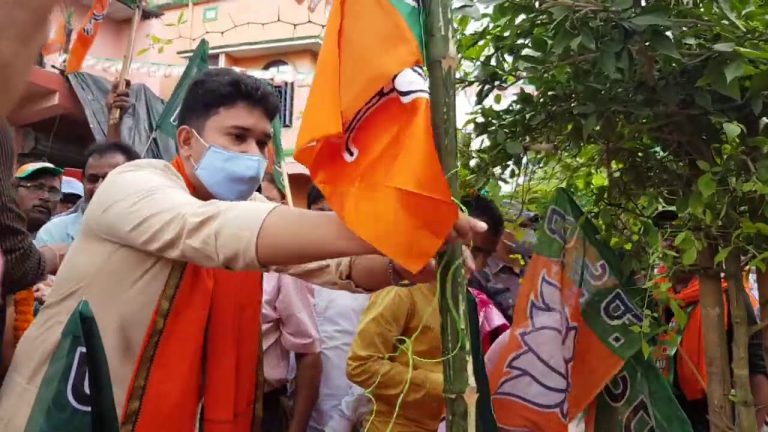
On Wednesday, Adhikari, who had recently quit Trinamool Congress, also resigned from the West Bengal Legislative Assembly amidst the speculations of him joining the BJP. In his resignation letter, addressed to the party chief and West Bengal Chief Minister Mamata Banerjee, Adhikari thanked the TMC for the opportunities given to him.

Former TMC stalwart Adhikari is expected to join the BJP during the Home Minister’s visit to the state. If he joins BJP, it will be a major setback for TMC ahead of Assembly elections in the state.

Adhikari’s resignation from the state Assembly is being seen in connection with the Home Minister Amit Shah’s visit to West Bengal on December 19-20. Recently, the party had expelled Kanishka Panda, who is perceived to a close aide of Adhikari.

On Friday, the centre also decided to provide ‘Z’ category security to rebel Trinamool Congress (TMC) stalwart Suvendu Adhikari in West Bengal amid the security threat to him.

Delhi Police busts fake call centre racket, arrests 54 people who duped around 4,500 foreign nationals of Rs 100 crores

0

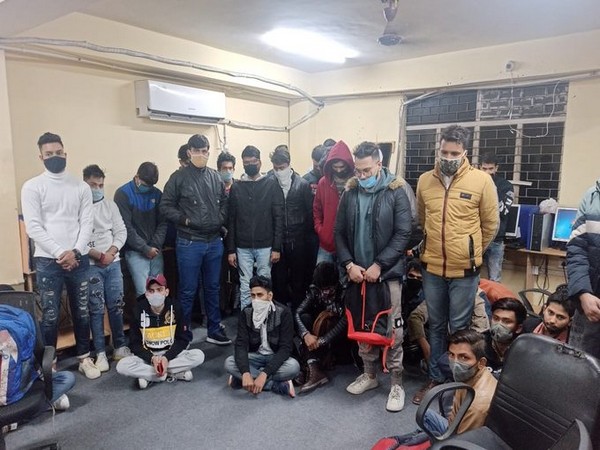
Delhi police have busted a massive syndicate running a fake call centre which has duped over 4500 foreign nationals of nearly Rs 100 crores. The cybercrime unit of the Delhi police arrested as many a 54 employees of this fake call centre on Friday, who posed as officials from various law enforcement agencies to dupe and extort money from foreign nationals. The call centre employees convinced the victims that they had to transfer money or risk going to jail.

The police also seized 90 desktops, more than 50 phones and a server from the illegal call centre being run from Moti Nagar area in the national capital. According to the information provided by a senior police official familiar with the case, the mastermind of this racket had been operating the fake call centre from Dubai. He has been identified only by his first name, Ashwani, and was known among his employees as Munshi. The accused allegedly targeted people living in the United States and other foreign countries. 

The modus operandi

Speaking of the modus operandi of this fake call centre, police informed that the employees posed as officials from Social Security Administration, the Drug Enforcement Administration, the US Marshals Service, etc, while targeting their prey. They would scare the victims that their bank details were found at a crime scene or have been found linked to drug cartels in Mexico and Colombia, and their accounts were likely to be seized. They also frightened them with immediate arrest or legal action.

Saying so they convinced their targets to go for an alternate dispute resolution (ADR) which would be faster and simpler. In the second option, which all the targets fell for, they were asked to share details of their assets, including bank accounts and the amount of money in those accounts. The accused then asked the victims to buy bitcoins or gift cards to keep money in a “safe government vault”. When the victims would succumb, the accused would transfer the money to their accounts.

DCP (Cyber Crime Unit) Anyesh Roy said: “We got inputs from sources about the fake call centre. When our team checked, they found the accused were making calls to foreign countries and cheating people. On Tuesday, we conducted a raid and arrested 54 persons from the centre.”

Police have also found that Ashwani has a criminal history of betting in Delhi and had long ago fled to Dubai. “Efforts are on to extradite him with the help of the ministry of external affairs,” Roy confirmed.

Scamsters put Varanasi office of PM Modi for sale on OLX for Rs 7.5 crore, 4 arrested

0

The Uttar Pradesh Police have arrested four persons for putting the Varanasi office of PM Narendra Modi ‘for sale’ on OLX India website. Uttar Pradesh Police said the accused, who were arrested from Jawahar Nagar Colony, had posted a picture of the Prime Minister’s Varanasi office on OLX, stating that the premise was up for sale and listed a price of Rs 7.5 crore for it.

“Accused who clicked picture of the office and three others have been arrested. A case has been filed and further probe is underway,” police said.

After the matter came to the fore, the add was removed from OLX and an FIR for registered against the 4 accused.

According to Varanasi police, the OLX advertisement stated that the PM’s parliamentary office in Ravindrapuri area of Varanasi was on sale. The ad, titled ‘PMO office Varanasi’, further mentioned details like “built-up area 6500 sq ft, two-storeyed building North-East facing with car parking”, as per the report. One Lakshmikant Ojha was listed as the seller in the advertisement.

The UP Police said that 4 people including the person who clicked the photo for the advertisement have been arrested.

Six firms that supply manpower to Wistron’s iPhone plant may be blacklisted for non-payment of wages that led to vandalism by workers

0

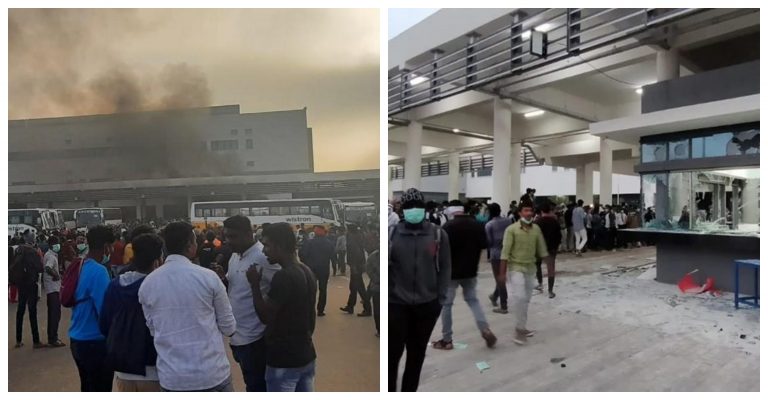
In the aftermath of the recent vandalism by employees in the Wistron’s Apple iPhone plant near Bengaluru in Karnataka, six staffing firms that supplied labour to the factory may be blacklisted for failing to pay wages to the workers. The protests by workers over non-payment of salaries had taken a violent last week, who had vandalised the factory, damaging factory equipment and vehicles. Now it has emerged that the workers who were not paid salaries are temporary workers hired by Wistron from several manpower companies, and those companies are responsible for payment of salaries to those employees. Wistron is also accused of not having a proper HR system.

According to a preliminary report of the State government’s Department of Factories, Boilers, Industrial Safety & Health, there were violations of labour laws at the Wistron Factory. As per reports, the preliminary report claims that 10,500 workers were employed at the factory but no adequate HR department was set up with members having sound of knowledge of labour laws. The working hours were reportedly increased from 8 to 12 without assessing the repercussions.

According to a Mint report, government officials have said that the violence at the factory was not pre-planned and it was a sudden outburst. “There are around 8,500 temporary workers at the Karnataka factory. The manpower was supplied by five-six staffing firms, and it was their fault to exploit the workers by not paying or defaulting on salary payments”, the reports quoted a government official.

Chief Labour Commissioner (Central) and Senior Labour and Employment Advisor, DPC Negi informed that the Union Labour Ministry is monitoring the situation. “The Union Labour Ministry is in touch with the State government and is monitoring the situation. The manpower suppliers seem to be at fault. We are evaluating the situation, and appropriate action will be taken”, said Negi. He expressed equal concern about the investor sentiment and the violation of laws and non-payment of wages and overtime to workers. Condemning violence, Negi said that the government has taken steps so that workers can get their dues on time.

Now, heavy penalty could be imposed on the staffing firms, and they may even be blacklisted. “The manpower suppliers will face action for violating rules and holding back wage dues”, the official said, without naming the companies.

The panel inquiring the incident said that the HR personnel did not address the workers’ concern regarding their wages and work hours inclusive of overtime. The overtime hours and the wages in respect of 12-hour shift were not explained to the workers. Besides, a fault in the attendance system to mark the attendance of the workers had also not been addressed despite having continued for the past two months. The practices in place regarding the payment of wages and overtime work were reportedly not in compliance with laws.

The Central government has asked the Karnataka government to complete the inquiry into the incident.

K.R. Shyam Sundar, a labour economist and professor at XLRI said that the violence by the aggrieved workers seems to be the result of failings of the staffing firms. He said that there should not be a liquidity issue as the firm is making high end phones. He said that the Wistron case is both an industrial relation and human resource crisis.

Attack by a mob of thousands on the factory

On December 12, hundreds of factory workers wreaked havoc on the factory damaging the facilities’ equipment and vehicles at the Narasupara situated factory of Wistron Infocomm India Pvt Ltd. Wistron, which is Taiwanese design manufacturer, has been making iPhones in India since 2017. In an FIR filed by Wistron against 7000 people including its 5000 contract workers, the company claimed that it suffered losses worth Rs 437 crore. However, it later revised the losses to Rs 50 crore. According to reports, thousands of iPhones were also looted from the factory during the vandalism.

The incident happened at a time when India is trying to attract investments from big companies across the world. Karnataka Chief Minister BS Yediyurappa said that Prime Minister Modi has expressed concern over the incident. Yediyurappa condemned the incident and that it was a very important company.

BJP leader claims threat to life from ex father-in-law TMC MP Kalyan Bannerji, locked in Covid isolation ward with patients

BJP leader in West Bengal, Kabir Shankar Bose, has filed a petition in the Supreme Court accusing Kalyan Bannerji, a Member of Parliament from the Trinamool Congress, and the state government of unleashing “political vengeance” against him. Kabir Shankar Bose is a spokesperson of the Bengal BJP.

The petition alleges “political vengeance and specific targeting of the Petitioner by the State Government of West Bengal, Trinamool Congress and Mr. Kalyan Bannerji, a sitting TMC MP due to the political and personal rivalry” and made an appeal to the Supreme Court to “safeguard the Petitioner from the threats to his life and liberty which he faces from the State Government of West Bengal; Trinamool Congress and Mr. Kalyan Bannerji.”

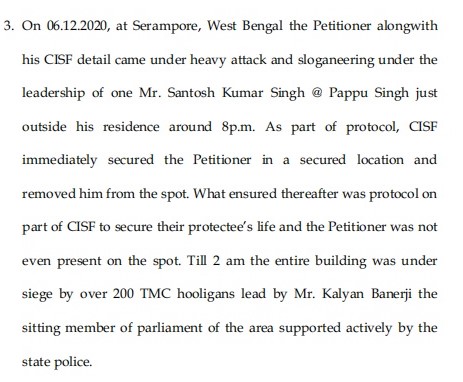
Bose said in the petition that on the 6th of December, he along with the CISF security detail he has been accorded came under “heavy attack and sloganeering” led by one Santosh Kumar Singh outside his residence at around 8 p.m. in the evening. The CISF then initiated the necessary security protocol to protect him.

Kabir Shankar Bose petition

The petition further alleges that until 2 a.m. into the night, his house was under siege from around 200 TMC “hooligans” led by Kalyan Bannerji with assistance from the state police. The next morning, Bose alleges, he was prevented from leaving his house by the state police citing law and order reasons. A request for food and medicine and required first aid for the injured CISF personnel was also denied, he claims.

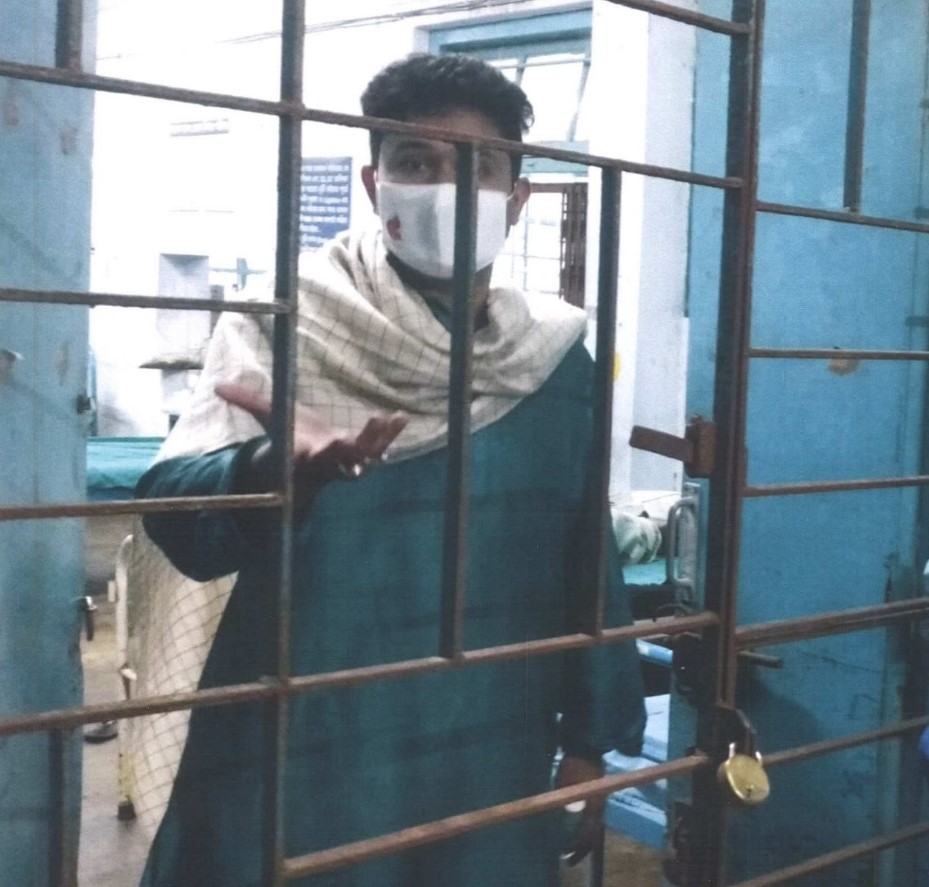
At around 1 p.m. on the 7th, the police requested Bose to visit the police station to prevent “law and order problems”. Furthermore, the police officials communicated to him that they were under immense pressure from the Trinamool Congress MP to arrest him. Then, he was confined to a Covid isolation ward with other patients, thereby, threatening his life.

Kabir Shankar Bose was locked in a Covid isolation ward

Bose claims to be a “victim of extreme torture, repression and political vendetta by the State Government of West Bengal and the Petitioner is presenting some glaring facts which will establish complete misuse of state power and use of the state investigating agency as a private army by the state administration and by the ruling party against the Petitioner.”

“The State investigating agency is acting at the behest of their political masters who are miffed with the Petitioner because of being an active member of the BJP and due to some personal disputes with some members of the ruling Trinamool Congress in West Bengal and is actively working at the grassroot level in Serampore district of West Bengal since May 2019,” he adds in the petition.

Personal issues between Kabir Shankar Bose and Kalyan Bannerji

The personal issues between the two pertain to the marriage between Bose and Bannerji’s daughter and their eventual divorce. The two married in 2010 and divorced five years later in 2015. It led to “registration of multiple FIRs and enmity between the Petitioner and the family of his ex-wife.” Bose also claims to have received threats from his ex-wife’s family his former father-in-law.

He also claims to have suffered attacks during the 2019 Lok Sabha Elections and apparently, Bannerji has “openly threatened” to ‘finish’ his life. The petition also claims that bombs were planted to kill Bose as well. “The Petitioner was granted a CISF security detail owing to the political vendetta and threat posed on Petitioner by the State Government of West Bengal and Mr. Kalyan Banerjee after the threat assessment was done by Intelligence Bureau, Ministry of Home affairs, Government of India,” it says.

It also mentions that on the basis of a complaint filed by Santosh Kumar Singh, an FIR was registered against Kabir Shankar Bose on the 7th of December under Sections 341/ 323/ 325/ 326/ 307/ 354/ 504/ 506/ 34 IPC “for the alleged action of the CISF Security detail of saving the life of the Petitioner from the TMC goons.”

Bengal: BJP writes to ECI seeking deployment of female CPF personnel to verify identity of Burkha-clad voters

In a letter to the Election Commission of India (ECI), the State unit of the BJP has expressed concerns over identity verification and vote fraud by ‘Burkha-clad voters’ ahead of upcoming elections in West Bengal.

“From the draft electoral list that was made public on 18 November, it was noticed that there has been a sharp rise in the numbers of electors, especially in many parts that are very close to the Bangladesh border and those that are predominantly minority voters,” the letter emphasised.

The BJP pointed out that there has been a 10% rise in the number of voters in the ward No. 66 of the Kasba Vidhan Sabha constituency, despite no ‘new township or settlement’. The party alleged that a similar increase in electorates has been observed in Metiabruz constituency and Sonarpur Uttar in South 24 Parganas district in West Bengal.

“Also, we find that dead voters and those who have changed their dwelling place are not struck out from the voter’s list. In the past elections, it has been seen these votes have also been cast,” the letter added.

Need female CPF forces to verify Burkha-clad voters, demands BJP

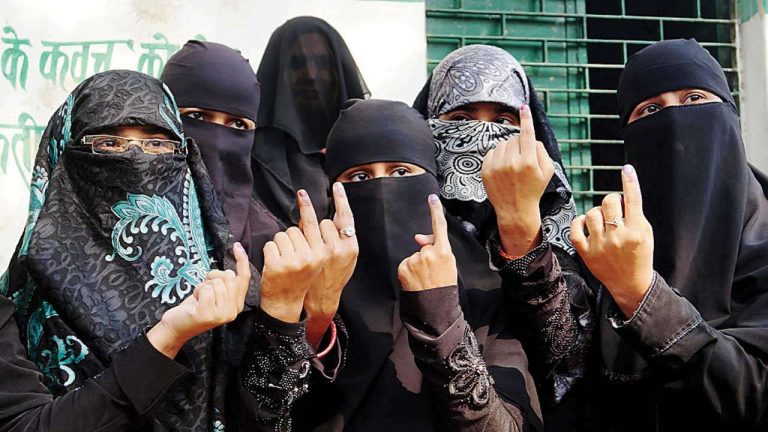
The BJP pointed out that female voters in Muslim-dominated constituencies, often come to polling stations wearing full Burkha. The party stated that as such, their identity cannot be verified by male CPF jawans, deployed to maintain law an order situation during elections.

While demanding the deployment of female CPF jawans, the BJP emphasised, “In minority (Muslims) areas female voters normally come clad in (a) burqa. It is not possible for the CPF jawans to establish their identity before permitting them entry in the booth. You are requested to ensure that these areas are mapped in advance and an adequate number of female CPF are deployed.”

BJP made several other demands to the ECI

In a letter dated December 17, the party has drawn the attention of the nodal election body to the declaration of Model Code of Conduct (MCC) as per the provisions in Section 15 of the Representatives of People Act. The party has also complained about the blatanat politicisation of the police force and the deteriorating state of law and order situation in West Bengal.

The BJP has also highlighted the ‘discrepancies’ in the draft voter list, and the State Employees Federation giving ‘assurance of victory’ to West Bengal Chief Minister Mamata Banerjee in the upcoming polls.

BJP had sought verification of Burkha-clad voters in UP in 2017

Earlier, the BJP has asked the Election Commission to deploy women cops, in order to check the identity of Burqa clad persons, in the last two rounds of the civic polls in UP in 2017. The letter in connection with this demand was sent to the State Election Commission in Lucknow by a BJP delegation which includes BJP state vice-president JPS Rathore and BJP’s election commission communication head Akhilesh Kumar Avasthi.

As per Rathore, such a demand was made to ensure a transparent election process and eliminate false voting. The party had also clarified that verification would only be required in those cases where the party cadre suspects foul play.

Trump administration set to add dozens of new Chinese companies to its trade blacklist, chipmaker SMIC to be one of the new entrants

0

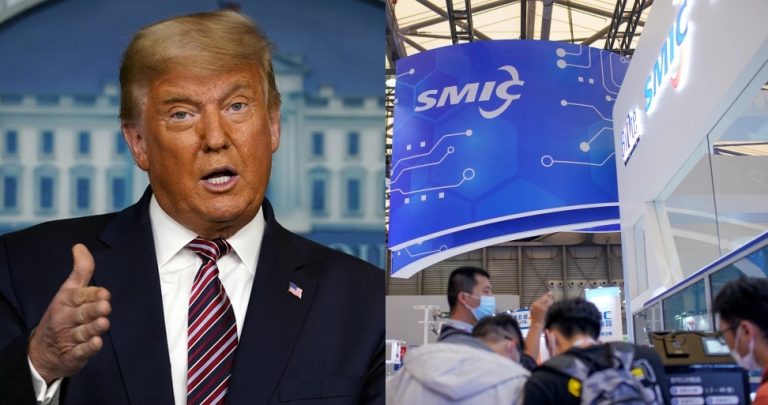
President Donald Trump is planning several new hard-line moves against China in the remaining weeks of his term. Weeks before Democratic President-elect Joe Biden is set to take office on January 20, the United States is set to blacklist dozens of more Chinese companies including the Chinese chipmaker company Semiconductor Manufacturing International Corp (SMIC). In total, the US is expected to add around 80 additional companies and affiliates to the list of blacklisted companies, nearly all of them Chinese, reports Reuters.

“The designations by the Commerce Department are expected to name some Chinese companies that Washington says have ties to the Chinese military, including some helping it construct and militarise artificial islands in the South China Sea, as well as some involved in alleged human rights violations,” the sources familiar with the matter was quoted by Reuters as saying.

The Trump administration’s entity list which includes more than 275 China-based firms and affiliates, comprises the names of Chinese companies like the telecoms equipment giants Huawei Technologies Co and 150 affiliates, and ZTE Corp over sanction violations, as well as surveillance camera maker Hikvision over suppression of China’s Uighur minority. And after today, the country’s top chipmaker company SMIC will be a new entrant in the list of these blacklisted Chinese companies.

Trump imposes fresh restrictions on Chinese diplomats, calls other nations to join ban on Chinese apps

In September, the US had called for a ban on Chinese apps and had urged other nations to join in. This move came a day after the Indian government banned 118 Chinese mobile apps including PUBG. US Under Secretary of State for Economic Growth, Energy, and the Environment Keith Krach had called on other nations to join its “clean network”.

The “Clean Network” program is a comprehensive approach of the Trump administration to guarding US citizens’ privacy and protecting most sensitive information from aggressive intrusions by malign actors, such as the Chinese Communist Party.

Moreover, the Trump administration, carrying on a tough line against Beijing had in September also imposed fresh restrictions on the Chinese diplomats. Secretary of State Mike Pompeo had then said that the US diplomats faced constant barriers to their work in China and hence the Trump administration was responding by imposing new guidelines on senior PRC diplomats in the US.

Reports contradicting earlier media reports emerge, farmer did not die due to biting cold and was not protesting for days: Details

0

A man named Bhim Singh, who had joined the farmers’ protest on Wednesday, was found dead under suspicious circumstances yesterday morning. Singh, 36, had died at the Kundli border on Wednesday night after he fell into a ditch, said Gurmeet Singh, a leader of the Bhartiya Kisan Union (Dakaunda) from Jhaneri.

According to the reports, on Thursday morning, a day after Singh joined the farmers’ protest at the Delhi border, when some protesters were passing along the Delhi-Haryana border, they saw a body of a young man lying motionless. They informed the police about the dead body after which they reached the spot and cordoned it off, reported Bhaskar.com.

Earlier, it was widely reported by mainstream media organisations that Singh had died because of biting cold which had enveloped large swathes of northern India, including the NCR region, where protesters are continuing their agitation against the central government over the newly introduced farm bills. Several media organisations such as India Today, NDTV, The Federal and many others had echoed the same claims that Singh had died due to “freezing cold” conditions. However, it was later found out that he had died after falling into a drain.

Before this incident, the farmers’ protest took a tragic turn when another protester, a Sikh priest, allegedly committed suicide near the Delhi-Haryana border against the new agriculture laws. However, a nurse working at his dispensary had alleged that Sant Baba Ram Singh was actually killed and could not have committed suicide by shooting himself.

With the talks between the squatting protesters, who have blocked the highways and roads into the national capital, and the Centre hitting a stalemate, an attempt is being made to hustle the government into acceding to the protesters’ demand of complete rollback of the farm bills. The central government has been blamed for the unfortunate deaths and maladies suffered by the protesters due to prolonged exposure to frigid temperatures while protesting at the Singhu border.

Notably, the protests which were apparently carried out for the welfare of the farmers have been hijacked by opportunist opposition politicians in cahoots with pro-Khalistani supporters. On several instances, the protests witnessed pro-Khalistani slogans being chanted and posters of Khalistani terrorist Jarnail Singh Bhindranwale were also found in the protests.

The dangerous resemblance to Shaheen Bagh protests where deaths of protesters were used to mount pressure against the Centre

This treacherous game of proxy-war against the Modi government reminds one of the diabolical Shaheen Bagh protests earlier this year when infants and children were used as a prop by the protesters to garner sympathy from the masses and pressurise the government into repealing the Citizenship Amendment Act.

The anti-CAA protests at Shaheen Bagh had witnessed the tragic death of a 4-month-old infant due to severe cold and congestion after being exposed to the bitter cold that swept the national capital region earlier in January. The infant, Mohammad Jahan, who died on January 30, was taken to protest site at Shaheen Bagh almost every day. The Supreme Court had fumed over the incident, questioning how can a 4-month-old baby participate in a protest.

If this wasn’t enough, a video of children holding posters of Mohammad Jahan had gone viral on the social media websites. In the video, while the gullible children were holding Jahan’s pictures, Shaheen Bagh protesters in the background could be heard rationalising Jahan’s death as a ‘Qurbani’ or sacrifice for the anti-CAA movement.

This sordid ploy of using minors to coerce the central government was also used in the ongoing farmers’ protests, where children of impressionable and tender age partook in the protests in inclement weather conditions holding banners and raising slogans against the government, asking the Centre to repeal the agriculture laws.

What are the farm laws? 

One of the biggest factors plaguing the growth of agriculture sector in the country is the inability of the farmer to find a market and to get a fair price to his produce. To address the issue, the erstwhile governments of different states enacted the Agricultural Produce Market Regulation Acts (APMC Acts), which authorised them to set up and regulate marketing practices in wholesale markets. 

The objective of these markets was to ensure that farmers get a fair price for their produce. However, with each passing year, the APMCs turned out to be inefficient with increasing cartelisation of middlemen, ban on private players to enter the trade, increasing corruption etc. 

The Modi government recently introduced three bills to promote much easier trade for the farm produce and to provide a competitive market for the producers outside the existing APMC system. The three laws were

  1. The Farming Produce Trade and Commerce (Promotion and Facilitation) Bill, 2020: This law aims at creating additional trading opportunities outside the APMC market yards to help farmers get remunerative prices due to additional competition
  2. The Farmers (Empowerment and Protection) Agreement on Price Assurance and Farm Services Bill, 2020: This law relates a framework for contract farming through an agreement between a farmer and a buyer prior to the production or rearing of any farm produce. 
  3. The Essential Commodities (Amendment) Bill, 2020: This law aims to regulate the supply of certain food items only under extraordinary circumstances.

It is pertinent to mention that the farm laws are set of three laws that allow farmers to sell their products outside APMC act (most states make it compulsory for the farmers to sell at APMC mandis). It also allows farmers to directly have a contract with corporate houses.

That farm laws don’t do away with APMC, and if someone is not willing to trust markets outside the current system, they are free to stick to the ongoing system. It doesn’t do away with MSPs either. However, the prevalent narrative that seems to be motivated by political concerns falsely claims that APMCs and MSP are being done away with. 

They also allege that due to these laws, big corporations would have the upper hand in a deal with farmers, however, that again is a lie. In fact, The Farmers (Empowerment and Protection) Agreement on Price Assurance and Farm Services Bill, 2020 ensures that a contract is agreed upon and gives the farmer the power to even cancel contracts.