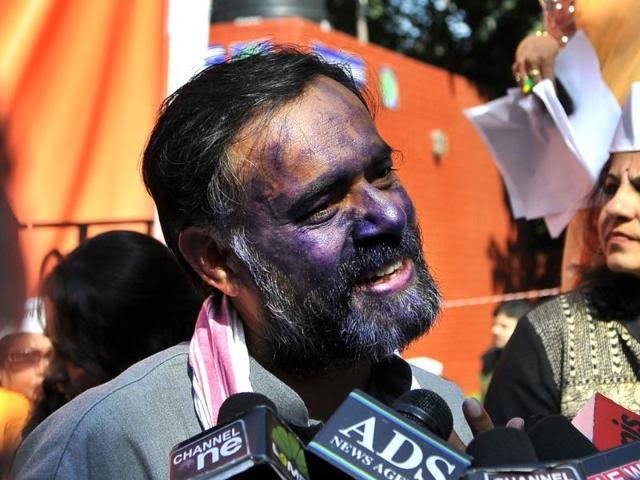
Failed politician and professional protester, Yogendra Yadav, appears to be leading the protests against the newly passed farm laws by Punjab farmers. Addressing a press conference on Sunday, he announced that not even the delivery of essential commodities will be permitted during the bandh. He said that Chakka Jam will remain in place till 3 p.m.
Yogendra Yadav, however, said that marriages and emergency services will be allowed. Delivery of milk, fruits, vegetables and other services will remain shut.
8 तारीख को सुबह से शाम तक भारत बंद रहेगा। चक्का जाम शाम तीन बजे तक रहेगा। दूध-फल-सब्ज़ी पर रोक रहेगी। शादियों और इमरजेंसी सर्विसेज़ पर किसी तरह की रोक नहीं होगी: सिंघु बॉर्डर पर जय किसान आंदोलन से योगेंद्र यादव pic.twitter.com/gvc14gxSLR
Yogendra Yadav is not a farmer himself. He was prevented recently from attending the discussions between farmers and the central government on the matter because he is a political activist and not a farmer. Yadav, who is also apparently a psephologist, claimed that Home Minister Amit Shah himself objected to his presence.
“Though the farmers union decided that the invitation to the meeting would be accepted only if the four representatives were also added to the delegation, I was informed that Amit Shah personally objected to me being a part of it. The government said that I was political. The farmers’ union were ready to boycott the meeting but they went ahead with it on my insistence,” Yogendra Yadav had said about his exclusion.
The involvement of elements such as the ‘Ichchhadhaari’ protester and others making communally charged comments in the protests has led many to question the motivations behind the protests.
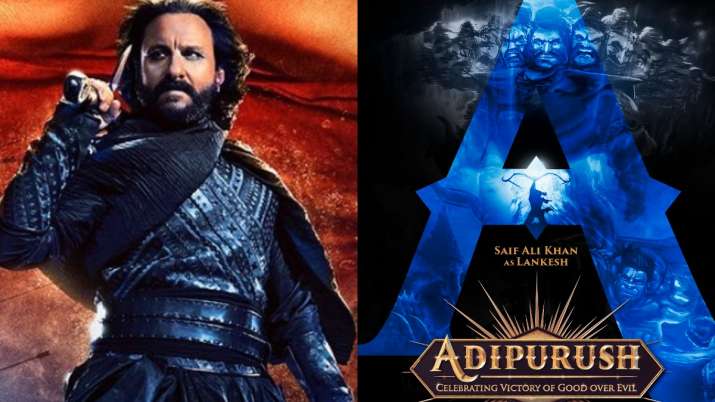
A day after facing social media backlash for cultural distortion in his upcoming movie ‘Adipurush’ actor, Saif Ali Khan has now retracted his statement. He had said that the movie, based on Hindu epic Ramayana, would show the ‘humane’ side of demon king Ravan and also justify the abduction of Goddess Sita.
In a statement issued to media, Khan has ‘apologised’ for hurting the sentiments of the Hindu community. He stated, “I’ve been made aware that one of my statements during an interview, has caused controversy and hurt people’s sentiments. This was never my intention or meant that way. I would like to sincerely apologise to everybody and withdraw my statement.”
Saif Ali Khan has now ‘hailed’ Lord Ram as the symbol of righteousness and heroism. “Adipurush is about celebrating the victory of good over evil and the entire team is working together to present the epic without any distortions,” the actor emphasised.
Saif Ali yet to apologise for justifying abduction of Goddess Sita
While speaking to Mumbai Mirror, Saif Ali Khan had earlier claimed, “It’s interesting to play a demon king, less strictures in that. But we will make him humane, up the entertainment quotient, justify his abduction of Sita and the war with Ram as revenge for what was done to his sister Surpanakha by Lakshman, who cut off his nose.” While the actor has apologised for his statement directed at ‘humanising’ Ravan by hailing Lord Ram, he is yet to withdraw his statement wherein he said that his role in the movie will justify the abduction of Goddess Sita.
Apart from Saif Ali Khan as Ravan, Adipurush stars Prabhas as Lord Ram, and reportedly Kirti Sanon will play the role of Sita. T Series is financing the movie directed by Om Raut. The mythological movie is being made on a whopping budget of Rs 400 crore, with a lot of it going to VFX for the special effects.
As Punjab farmers, backed by Congress and leftist parties threatens to being hijacked by separatist groups like Khalistanis, certain section of ‘liberals’ have rushed in to pitch the agitation as Hindus vs Sikhs.
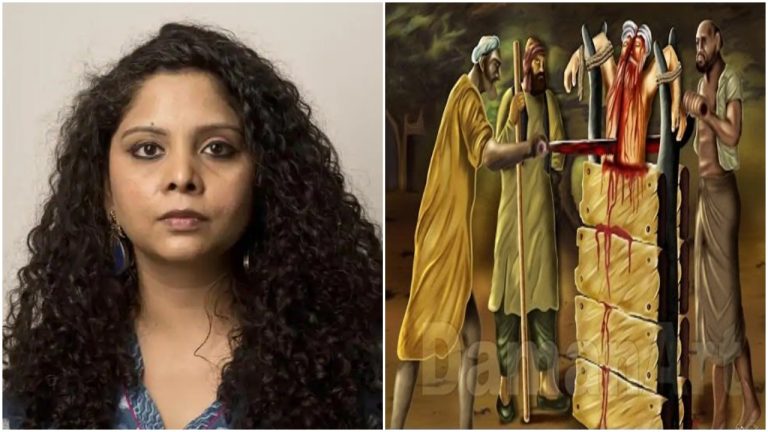
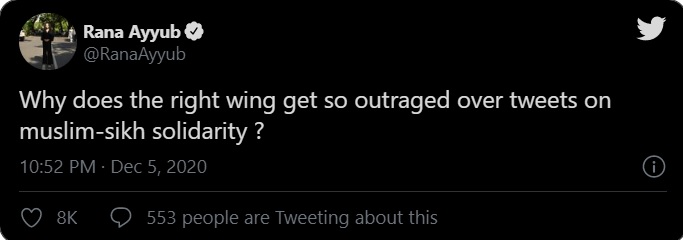
‘Journalist’ Rana Ayyub on Saturday took to Twitter to question the Right-wing nationalists of the country over why do they feel outraged over tweets that speak on ‘Muslim-Sikh solidarity’.
Rana Ayyub’s tweet on Muslim-Sikh ‘solidarity’
Rana Ayyub imagined a so-called ‘Sikh-Muslim’ unity to claim that the right-wing, which she essentially meant as Hindus, had a problem with such a union. Ayyub resorting to her usual dog-whistling about the mythical ‘Sikh-Muslim’ unity attempted to stitch and push a new narrative of a coalition of Sikhs and Muslims to take on the majority Hindus.
In reality, the tactical understanding between the Pakistan-sponsored Khalistani elements, who seem to have infiltrated the farmers’ protests, and Islamists is being falsely depicted as some sort of ‘Sikh-Muslim unity’ which according to the left-liberals existed for centuries now. The Islamists, who just months back burnt the national capital during the anti-Hindu Delhi riots, have declared their support to Khalistani elements, who have hijacked these farmers protests to further their anti-India agenda.
People like Rana Ayyub have now come up with ‘Sikh-Muslim’ bogey to not only try and dissociate Sikhs from India story but also create fault lines within the Indic communities. In the past, the Islamists have enjoyed a little bit of success in this endeavour with the active support from Pakistan establishment, who have lost no time to fund Sikh separatism movements from foreign soil.
Anyway, the newly cherished myth of ‘Sikh-Muslim’ unity pushed by the left-liberals and Islamists is far from reality. All you need to do is take a glimpse into the history of Sikhism. From persecution of Sikhs at the hands of Mughal invaders in the medieval era to the state-sponsored attacks against the Sikh community in Islamic nations such as Afghanistan and Pakistan only proves that Sikhs and Muslims have not enjoyed coherence at any point of time in any epoch.
Let us have a look at past incidents which not only breaks down the myths of ‘Sikh-Muslim’ unity being propagated by the left-liberal-secular establishment in the country but also elaborates on the Sikh-Muslim tensions that prevailed over centuries and the persecutions suffered by Sikh communities at the hands of Muslim invaders.
The propaganda of Sikh-Muslim unity is nothing but a ‘fairy tale’
The Sikh religion dates back to the end of the fifteenth century and was founded by Guru Nanak. Dissatisfied with both Hinduism and Islamic practises prevailing at that time, the founder of Sikhism – Guru Nanak formulated an egalitarian doctrine which transcended both religion and preached a message of love and harmony.
The advent of Sikhism in the country, however, was not viewed favourably by the prevailing political order of the country. At the end of the 15th century, Lodhi dynasty was at the helm of its powers and the conflict between two faiths began to emerge. For the next 250 years, the Sikhs remained involved in conflict first with Mughals, then with the Afghan tribes and other Islamic invaders in the north.
The persecution of Sikhs began with the emergence of the Mughal empire. Perceiving the growth of the Sikhs as a threat to not only their political ambitions but also Islam, the Mughal authorities began to persecute them.
In 1606, Sikh leader Guru Arjan was executed by Mughal emperor Jahangir and imprisoned Guru Hargobind for a long time. Aurangzeb also ordered Gurdwaras to be destroyed. Later during the reign of Aurangzeb, Guru Tegh Bahadur was executed in Delhi under Aurangzeb’s orders. Gurudwara Sis Ganj in Delhi is the place where the beheading of Sikh Guru took place.
The subsequent Sikh religious leaders, including Guru Gobind Singh, was forced to remain in a constant state of warfare owing to the intolerance of the Mughal Empire and other invading Muslim factions.
In the 1740s, Zakariya Khan, the Mughal governor of Lahore, offered lucrative rewards for the discovery and killing of Sikhs. During his rule, a substantial monetary reward was offered for persecuting and killing, including a larger sum for the delivery of a Sikh skull. The Mughal governor Zakariya Khan was also responsible for the ‘Chhota Ghallughara‘, a massacre unleashed against the Sikh population by the Mughal Empire.
During the raids, an estimated 7,000 Sikhs were killed and 3,000 were captured. Even women and children were not spared by the Mughal army, who murdered children and made into garlands and tied around necks of their mothers. The captives Sikhs were marched back to Lahore, paraded in the streets and publicly beheaded. As Sikhs were numerically small groups, the persecution resulted in a very substantial decrease in the Sikh population. The extent of hatred for Sikhs during the Mughal rule was such that the plunder of Sikh homes was made lawful and anyone giving shelter to Sikhs was executed.
In fact, the persecution of Sikhs by Mughals continued till the very end of their reign. It is interesting to know that the Muslims invaders and the indigenous Sikh have fought more than 130 wars in a span of two centuries from the 16th to 18th century. The decline of Mughals in the 18th century and the invasion of Afghan tribes under the leadership of Ahmed Shah Abdali also brought extreme misery to the Sikhs.
The Afghan–Sikh wars, the series of wars between the Islamic Durrani Empire and the Sikh Empire resulted in massive brutalities on the Sikhs. Known as the ‘Vadda Ghallughara’ (the great holocaust), this massacre of Sikhs at the hands of Afghan invader Ahmed Shah Abdali resulted in the killing of 10,000 to 20,000 Sikhs on a single day.
Abdali attacked the Sikhs’ revered place of worship, Harmandir Sahib (Golden Temple) in Amritsar. He filled the sacred pond with slaughtered cows. Historians believe that this carnage became a turning point, with Sikhs turning against the foreign invaders.
The persecution of Sikhs did not stop even after the advent of the British empire into India. The Mughals, though not mighty as they were earlier, continued to inflict terror on Sikh rulers in the North-West. With their ‘divide and rule’ policy in place, the British empire continued to pit Hindus against Muslims as well as Sikhs during their almost 200 year-rule.
However, the partition of Indian subcontinent following the withdrawal of British empire in 1947 acted as one of tipping point in Sikh-Muslim relations in the country. Before leaving India, the British drew up a line dividing India and Pakistan where one of the major casualties were the Sikhs who lived in Pakistan and India near the border areas, especially Punjab.
Punjab was home to the majority of Sikh population. The partition also brought massive terror for Sikhs as hundreds of thousands of Punjabis from Pakistan were killed and millions fled to India to save their lives. The horror unleashed against the Sikhs during the partition of India still haunts the collective memory of millions of people in the country.
Islamic countries continued persecution of Sikhs
Atrocities against non-Muslims continued post-independence too. On October 22, 1947, just weeks after Indian independence, Pakistan-backed tribal lashkars invaded Jammu & Kashmir and plundered and raped women. Raiders attacked Gurudwaras where Sikhs were taking refuge and as many as two hundred of them were killed in a day.
This was followed by Rajouri Massacre. Pakistan Army and Muslim tribesmen from Pakistan carried out targeted killing of thousands of Hindu and Sikh residents and refugees in the Rajouri tehsil in the erstwhile princely state of Jammu and Kashmir. The Pakistani tribal raiders, along with the rebels and deserters, massacred nearly 3,000 to 7,000 people Hindus and Sikhs every day for more than a week. More 30,000 Hindus and Sikhs living in Rajouri were reportedly killed, wounded or abducted.
Pakistan, which defined itself as an Islamic state and split itself from undivided India on the basis of state religion of Islam, resorted to mass killing, raping and abducting lakhs of Sikhs soon after partition. The massacre of the Sikhs took place in Jammu, Kashmir, Punjab, Baltistan regions. The Sikh women were abducted, raped and taken across to Pakistan. To save from the wrath, the Sikhs resorted to honour killings at many places to save their women from falling into the hands of Pakistanis.
Unlike the communal violence witnessed during Partition, killings of Hindus and Sikhs were state-sponsored ethnic cleansing. The objectives of Pakistan’s invasion was not just the conquest of the territory but also was aimed at destroying non-Muslim populations too.
Ethnic cleansing of Sikhs in Pakistan, Afghanistan in a post-colonial era
Unfortunately, the persecution of Sikhs by Muslims did not stop even after partition of Indian subcontinent. The newly created Islamic Republic of Pakistan continued its state-sponsored ethnic cleansing of Sikhs. The remaining Sikhs, who could not cross the Pakistan border due to various logistical issues, were systematically persecuted by the state.
Prior to partition, a significant Sikh population was found in Peshawar, Lahore, Muzaffarabad in Pakistan. The bloody partition and subsequent state-sponsored persecution, only a few Sikhs live in small pockets in Lahore and Nankana Sahib in Punjab.
The widespread discrimination and continuing attacks against religious minorities have resulted in dwindling non-Muslim population in Islamic societies such as Pakistan. There were about 2 million Sikhs living in Pakistan during the 1940s in Pakistan, but today there are just 6,000-odd Sikhs who live in Pakistan amidst the constant fear of abduction, rapes and forceful conversion by Islamists.
Here is a glimpse of atrocities carried out by Pakistanis on non-Muslims, especially Sikhs. In 2009, the Pakistani Taliban had imposed Jizya on Non-Muslims and had demolished houses of 11 Sikh families were demolished in Orakzai Agency for refusing to pay jizya ransom. Similarly, three Sikhs were beheaded in Khyber Agency in 2010 after they allegedly refused to convert to Islam and their family could not pay the big Jizya ransom.
Fearing persecution, thousands of Sikhs had to abandon their homes and flee from tribal areas to resettled in areas with larger Sikh populations, such as Peshawar, Hassanabdal and Nankana Sahib.
In May 2018, a prominent Sikh leader Charanjeet Singh was shot dead in Peshawar. The targeted killing of Sikhs in Pakistan has now stoked unprecedented fear among the community’s members. Just recently, in 2020, scores of protesters had surrounded the Gurdwara Nankana Sahib threatening to overrun the holy site if their demands for the release of suspects in an alleged forced conversion case were not met.
In July 2020, the Islamists had been forcibly taken over Gurdwara Shaheed Bhai Taru Singh and converted into a mosque to rename it.
Not just in Pakistan, the Jihadists sponsored by Pakistan have also unleashed similar terror against Sikhs in Jammu and Kashmir. The Islamic terrorists had massacred 35 Sikhs in the Chittisinghpora village in J&K on 20 March 2000. The terrorists had attacked two gurdwaras while the villagers had been celebrating the Hola Mahalla festival. They ordered Sikhs to line up in front of the gurdwaras and opened fire. Thirty-six people were killed.
The unending misery of Sikhs living outside continues even in Afghanistan. The Islamic terror groups such as the Taliban and Al-Qaeda have time-and-again targeted Sikhs living in Afghanistan. In 2018, a suicide bomber detonated in the centre of the eastern Afghan city of Jalalabad, killing 20 people, mainly Sikhs. In 2020, suicide bombers and assailants armed with guns attacked the Gurdwara Har Rai Sahib in Kabul, Afghanistan. The terror attack on Gurudwara had taken lives of at least 25 Sikh worshippers.
The United Kingdom has seen some instances of tension between Sikhs and Muslims on allegations that some Sikhs have been forced to convert to Islam. In Germany, two Muslim teens had bombed a gurdwara in the German city of Essen in 2016. The two terrorists had converted fire extinguishers into an explosive device.
Islamists turn blind eye to the atrocities against Sikhs, tries to weave a mythical bonding with Sikhs
The accounted history of over almost 500 years only validates that Sikhs and Muslims never co-existed peacefully together. The lies of so-called bonhomie between Sikhs and Muslims peddled by our historians, have been told and retold several times to absolve the atrocities inflicted by Muslims on Sikhs over centuries.
However, just like failed attempted in the past to weave another imaginary coalition of Muslims and Dalits, the ‘communal engineering’ being carried out by the liberal-secular’ establishment will eventually fail as there are inherent contradictions between these two communities, that has manifested over centuries through continued persecution of minority Sikhs.
The ‘liberal-secular’ ecosystem seems to have failed to understand the incoherence between the two faiths, one being extremely predatory, exclusivist and proselytising and on the other hand Sikhism is founded on the principles of equality, love and compassion.
The farmer protests emanating from Punjab have become the focal point for a varying strands of toxic politics. Khalistanis have been trying to hijack the same for quite some time and numerous incendiary comments have been made by some of the protesting ‘farmers’. And now, it is evident that opposition political parties are trying to play an extremely dangerous game.
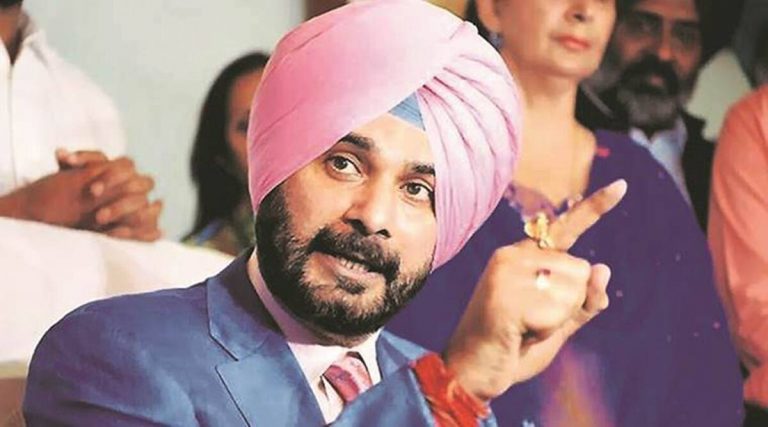
Navjot Singh Sidhu, senior leader of the Congress party, invoked the Islamist ‘Hum Dekhenge’ poem by Faiz Ahmad Faiz, the same that was raised so frequently by Islamist anti-CAA protesters. He posted a clip of himself reciting poetry with visuals of the protests. In the poem, he invoked the lines “Sab taj uchhaley jaayenge, Sab takht giraye jaayenge” from the poem by Faiz.
Today, India’s true majority is flexing its muscle. Kisan movement is building unity in diversity, it is the spark of dissent which ignites & unites the whole country in a Single Mass Movement above Caste, Colour & Creed. The “Farmer Roar”, has reverberated world-over … pic.twitter.com/lKtf7746BF
The Communist Party of India (Marxist-Leninist) also invoked the same language to affirm their support for the farmer protests. The words that follow these lines in the poem are, “Bas naam rahega Allah ka”.
Earlier, Shaheen Bagh ‘dadi’ Bilkis Bano was also spotted at these protests and she has been extremely vocal about these protests. There have been concerns from the very beginning that the farmer protests were heading the Shaheen Bagh way with attempts being made to block roads in the national capital. And now, it appears that slogans that were invoked during the anti-CAA protests are also being raised.
The poem was invoked extensively during the anti-CAA protests. It carries the message that “When All Idols Will Be Removed… Only Allah’s Name Will Remain”. The invocation of the poem in the anti-CAA protests attracted great criticism from people across the board. But it appears that the opposition parties are willing to offend Hindu sentiments again to score political points.
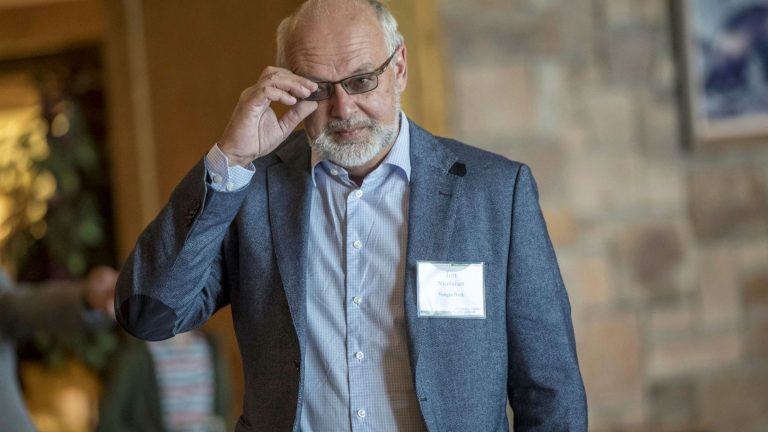
On Friday, the Deputy Governor of the central bank of Norway, Jon Nicolaisen, tendered his resignation after his application for security clearance was allegedly cancelled for having a Chinese wife. He has been overseeing Norway’s sovereign wealth fund of $1.2 trillion, in addition to taking part in setting monetary policy of the country.
Nicolaisen stated that the Norwegian Civil Security Clearance Authority refused him a renewed security clearance as his wife is Chinese. He added that he supports his wife financially, who stays in China. Informing about the development, he said, “the Norwegian Civil Security Clearance Authority informs me that the reason that I will not receive a renewed security clearance is that my wife is a Chinese citizen and resides in China, where I support her financially.
He further added, “At the same time, they have determined that there are no circumstances regarding me personally that give rise to doubt about my suitability for obtaining a security clearance, but that this does not carry sufficient weight. I have now had to take the consequences of this.”
Reportedly, his resignation will be effective immediately but it is not clear who would replace Jon Nicolaisen as the Deputy Governor of the Central Bank of Norway. Governor Oeystein Olsen said, “I will miss Jon Nicolaisen in his post as deputy governor, where he performed his duties superbly as a close colleague and competent professional.”
Norway has strict security clearance policies
The Chinese embassy in Oslo stated that it was unaware of the development. Norway has become stricter over the years in its security clearance policy and has made it difficult for individuals married to people of other nationalities that do not have security co-operation with Norway. As per reports, Nicolaisen was first appointed as deputy governor of the central bank in 2014, and later re-appointed in April 2020.
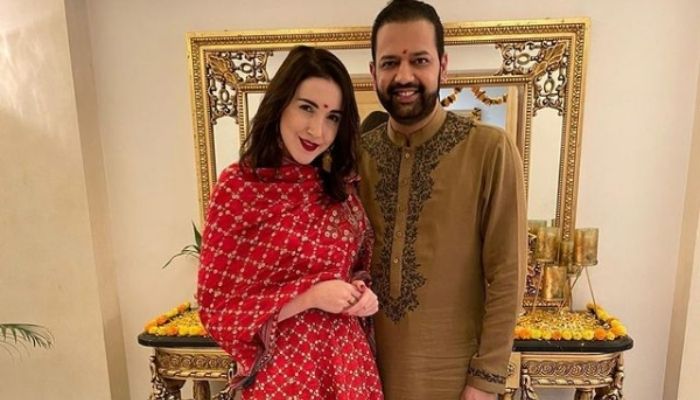
In an exclusive interview with The Economic Times, Big Boss star and entertainer Rahul Mahajan has revealed that his Russian wife Natalya Ilina had embraced Hinduism, following their marriage in 2018. Rahul Mahajan is the son of late BJP leader Pramod Mahajan.
While speaking about his marriage, Rahul Mahajan said, “We are like two tracks of railway. We do not interfere in each other’s matters too much and give each other space. We are not even too apart from each other. But we maintain the balance so that our marriage is on the right track.”
He added, “She is Russian and has converted to Hindu religion and I always give her the reference of Lord Shiva and Parvati. I always tell her that the husband and wife’s relationship should be like Shiv and Parvati. We keep them as our idols in our relationship. I teach her Geeta and we read a lot of mythological stuff together. I feel you really need a good destiny to find a perfect partner and family.”
Rahul Mahajan to participate in Big Boss Season 14
His third marriage with Natalya Ilina had captured the public attention in 2018 as she was 18 years younger than him. He was earlier married to Shweta Singh and Dimpy Ganguly. Rahul Mahajan rose to prominence as a participant in Big Boss Season 2 and is now set to enter the Season 14 of the reality show as a challenger. “It is a full circle because it was my first television show ever in 2008, on season two. Then I went in season eight as a challenger and this is the third time I am going in, so it is a full circle in a way – it started for me from Bigg Boss and again it is Bigg Boss now,” he stated. He had married Dimpy Ganguly in a reality TV show titled Rahul Dulhaniya Le Jayenge. The couple got divorced in 2015.
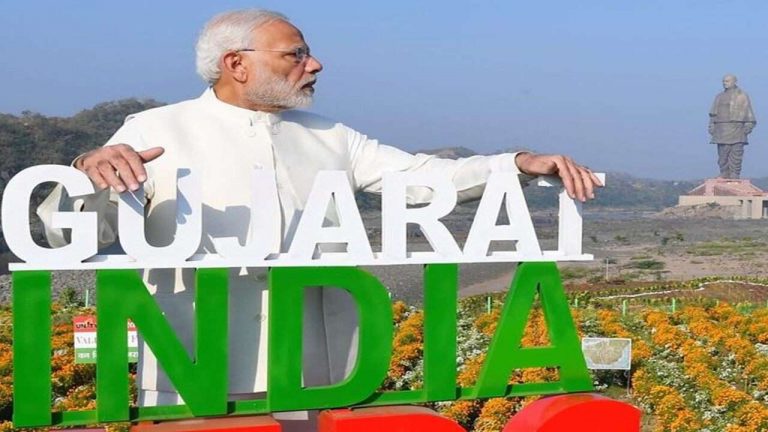
Gujarat government on Saturday informed the people on the preparedness of mass vaccination for Chinese coronavirus. Addressing a press conference, Gujarat Deputy Chief Minister and Health Minister Nitin Patel said that the cold chain infrastructure to store the vaccines is ready. He also added that as many as 4 lakh doctors, healthcare workers will be given vaccine on priority basis.
He said that as per the guidelines issued by the central government, the first priority for the vaccination would be healthcare workers including doctors and nurses. Over 3.96 lakh doctors and frontline health workers fighting Covid-19 on ground in the state will be given the first shots of vaccine whenever it is made available.
He added that 47,796 vaccination centres and 15,534 teams of vaccinators have been planned for this purpose. These details will be provided at a later point in time.
In second phase of vaccination, those who are indirectly engaged in providing help and support in Covid treatment like police personnel, home guards will be covered. Following that, citizens above age of 50 years and those under 50 years of age but with comorbidities like cancer, kidney disease and heart conditions will be given priorities.
The vaccines will be procured by the central government and the cost at which they will be made available to states will be discussed. Health being a state subject, the respective state governments can decide whether to charge for vaccination to people and at what rate.
The covid vaccine requires specific temperature for storage. Hence, bulk coolers belonging to health department of Gujarat will be used in Rajkot, Gandhinagar, Ahmedabad, Surat, Vadodara and Bhavnagar. Further, 2,500-odd primary and community health centres in Gujarat have small refrigeration facilities. He also added that over and above this, the state government will procure walk-in coolers for transporting vaccines. The Centre will be giving 169 ice-lined refrigerators and 30 deep freezers.
Covid-19 vaccines are expected to be made available by January 2021.
Coronavirus in Gujarat
Gujarat has recorded as many as 2,17,333 total coronavirus positive cases in the state. Of these, 1,98,627 have recovered. As of now, 14,642 active coronavirus cases are present in state.
The dissidence within the BJP is Tripura does not appear to be on the verge of a resolution. Vinod Kumar Sonkar, newly appointed national secretary of the BJP and the party’s Tripura observer, has reached Agartala on Saturday to resolve the matter. Sonkar is expected to meet BJP leaders, MLAs and Ministers individually in order to understand the reasons for the dissidence.
Now, reports suggest that the dissident MLAs boycotted the felicitation programme for Sonkar on Saturday organised at Rabindra Bhawan in Agartala. The dissident MLAs, however, suggest that they were not invited to the event. The dispute has been underway for the past couple of months and the MLAs have met senior party leaders in Delhi and Guwahati.
Sonkar told the BJP leaders who had gathered, “Despite all odds, especially the Covid pandemic, the country has progressed in the past one and a half years under the current government during which the party has worked for all sections of society. Hence, the party has to follow suit.”
Reports of dissidence within the party in Tripura have been coming since the second week of October when a team of MLAs reached Delhi to meet BJP national president J.P. Nadda. The team is reported to include former state health minister Sudip Roy Barman, Asish Saha, Sushanta Choudhury, Ramprasad Pal and Diba Chandra Hrankhawl.
“Twenty-five of the 36 BJP MLAs now want a change, and a proper reshuffling in the council of ministers headed by Biplab Kumar Deb so that good governance could be delivered to people,” a member was reported to have told the media on condition of anonymity. The member alleged that “poor leadership and misrule” by Biplab Deb have ruined the BJP in Tripura, which is now “alienated from people, but lost ground could be restored with the delivery of good governance”.
Sushanta Choudhury, the former youth Congress president who had quit the party to join the BJP before the Assembly Elections in 2018, said on October, “Neither the government nor the party is moving in the right direction. All the pre-poll promises, mentioned in the party’s Vision Document, were made to be fulfilled. These should be reflected in action, but we are far away from reality. We want to highlight what is happening in the state.”
“We will apprise the central leadership of what is happening in Tripura. They would decide if they want to intervene in the issue. Our fight is not against the BJP’s ideology. We have full faith in the dynamic leadership of the prime minister and the home minister,” he added. The most prominent leader part of the dissidence is Sudip Roy Barman, son of the last Congress leader to have served as the Chief Minister in the state before the Left front stormed to power in 1993.
It is not clear yet if the dissident MLAs want to jump ship or what their precise numbers are. Some of them have said that the BJP will continue to have 36 MLAs in the state. Sonkar, meanwhile, said at the programme organised for him, “I am a prabhari only and will not be a burden to anyone. I came here to help the karyakartas ensure that the BJP remains in power everywhere – from the panchayat to Parliament.” He will meet the dissident MLAs on Sunday.
Amid ongoing farmers’ protests in Delhi, opposition parties, including Congress, have supported the farmers. The primary demand of the farmers’ unions is to take back the three newly introduced laws that are Farmers’ Produce Trade and Commerce (Promotion and Facilitation) Act, the Farmers (Empowerment and Protection) Agreement on Price Assurance and Farm Services Act, and the Essential Commodities (Amendment) Act. According to the farmers, the government is trying to end the Agricultural Produce Market Committees (APMC) system where farmers can sell their produce at Minimum Selling Price (MSP) at Mandis.
Though the government has assured MSP is not going away and the Mandi system will continue, the unions are not ready to understand. The opposition parties, including Congress, are adding fuel to the agitation by calling these newly passed laws “the black laws” and demanding the central government should take back the laws.
Congress-led Committee found irregularities in APMC system
Interestingly, according to a report published in the Guardian, it was a Congress-ruled United Progressive Alliance government that came up with suggestions of similar agricultural reforms and also started looking into the functioning of the APMCs. The Ministry of Agriculture under Sharad Pawar formed a committee comprising of agriculture and marketing ministers from 11 states.
The aim was to bring reforms in the Agriculture sector and look into the complaints regarding APMCs. The Committee found out that the APMCs were making a mockery of the system. They were not only charging high commission from the farmers but also blocking much-needed investment from the private sector. The idea behind APMCs was to benefit the farmers, but in reality, they were benefiting a selected group of people.
Ministers from Maharashtra, Assam, Uttarakhand, Andhra Pradesh and Haryana (led by Congress), Gujarat and Madhya Pradesh (led by BJP), Bihar (led by JDU), Karnataka (led by JDS), Odisha (led by BJD), and Punjab (led by Shiromani Akali Dal were part of the Committee. Harshvardhan Patil, the Agriculture Minister from Maharashtra, was the head of the Committee. A total of nine meetings were held in two years with the stakeholders, including farmers, industrialists, retailers, and cold storage owners, to investigate the reasons that were causing a blockage in the progress of the agriculture sector while keeping the farmers poor.
Observations made by the Committee
The Committee had submitted a 98-page report on January 22, 2013, where it had shared many observations that were based on the conversations with several groups during the meetings. The main point that the Committee raised was that the APMCs and intermediaries were making a major part of the income that was supposed to go to farmers. They were not allowing private investment in the agriculture sector as well.
The Committee reported, In the current system, the inefficiencies in intermediary structure result in the producer (farmer) getting only 20-50% of the consumer’s purchase value. In the United States, the farmer gets roughly 60-65 % of the price paid by the end-user.”
Using different examples, including the milk trade and poultry business, the Committee said that the milk producers and farmers were getting more than 70% of the price paid by the end consumer. The well-organized structure and supply chain made it possible for better distribution of the funds among the farmers and milk producers. However, in the agriculture sector, the farmers were getting only 25% of the price the consumer was paying for the product. The remaining 75% was minted by the middlemen. As there were insufficient markets and inadequate marketing infrastructure combined with high charges at APMCs and lack of competition, the long chain of the intermediates kept the farmers poor.
The blockade created by commission agents/traders
The Committee found that the current commission agents and traders were barring entry of any new competition in the market. As it was mandatory to get a license to own a shop or godown in the APMC market, the already existing licensed traders were acting as a major hurdle in allowing any new person to enter the market. These markets were established decades ago, and no expansion plans were ever sought to increase the capacity that became another reason for the lack of new competition. The licensed traders formed associations, and they made it next to impossible for any new person to start working in the APMC markets. The Committee suggested, “There is a need for a transparent and simple system of registration of market functionaries to simplify and revitalize the present marketing system.”
Lack of facilities
The Committee noted that only two-thirds of the markets had open auction platforms. One-fourth of the markets had drying yards. One-tenth of the markets had cold storage facilities, and one-third of the markets had grading facilities. The electronic weigh-bridges were available in a handful of markets.
The high commission charged by APMCs
As per the law, the APMCs could only collect market fees ranging between 0.50% to 2.0% of the sale value of the produce. However, the Committee found out that they were charged 1% to 2.5% in food grains and 4% to 8% in fruits and vegetables. Other charges, including purchase tax, weighing charges, and porter charges, among many others, were to be paid by the farmers. In the end, the farmers had to pay 15% in the charges.
The problems with the supply mechanism
The Committee reported that due to the problems in the supply mechanism, various commodities faced post-harvest losses. In 2009, the total post-harvest losses clocked to Rs.44,000 crore. In cereals, such losses clock to 3.9% to 6%, in pulses 4.3% to 6.1%, in fruits 5.8% to 18% and in vegetables 6.8% to 12.4%, which was adding up to the financial pressure on the farmers.
As per the report, the supply chain in India was very long, with a large number of marketing channels. Between the producers and the consumers, there were many intermediaries causing a spike in the end-price without adding any value to the product. Hence, farmers became the biggest sufferers. The Committee said, “The share of farmers in consumer’s price is very low, particularly in perishables, due to a number of intermediaries, lack of infrastructure and poor holding capacity. In order to provide remunerative prices to the farmers, there is a need to reduce intermediation by providing alternative marketing channels like direct marketing, contract farming, etc. for which reforms in the agricultural marketing system are necessary.”
The importance of private investment
The Committee said that the current system was causing unnecessary delays in the transportation of the agricultural produce at the border checkpoints. It was creating artificial barriers making it harder to manage the movement and storage of the commodities. The government has to come up with a plan to provide a free hand to the private sector so that it can own, operate, and manage the market or create an alternate marketing system. The government should concentrate on formulating the rules and regulations for such markets rather than controlling them.
In the report of the Working Group on Agricultural Marketing Infrastructure for the XII Five Year Plan 2012-17, it was assessed that there was a requirement of more than Rs.14,56,000 crore for development in the agriculture sector. A major chunk of this investment was expected from the private sector. To ensure the investment was encouraged, the government was required to form a regulatory and policy environment. Also, the report suggested a need to encourage the procurement of agricultural commodities directly from the farmer’s field. The states have to amend their marketing laws to ensure the barriers caused by the APMC Act and other regulations are removed for storage and smooth supply of the commodities across the country.
Kisan Union asked to abolish APMC last year
In 2019, Bharatiya Kisan Union had repeatedly asked for the removal of intermediaries in Punjab to ensure direct payments to farmers. Their 2019 manifesto had asked for the abolition of APMCs and the Essential Commodities Act. They had supported the then Union Minister for Consumer Affairs, Food and Public Distribution, late Ram Vilas Paswan, after he demanded Punjab Chief Minister Captain Amarinder Singh to do away with the Arhitya system and ensure direct payment to farmers as is provided under the new farm laws. The same BKU has now been hailing Punjab CM Amarinder Singh for ‘rejecting’ the new farm laws that have provisions to free farmers from the clutches of middlemen.
It has been evident for quite some time that the concept of Khalistan, an ethnoreligious state for Sikhs, has more support in western countries than it seems to have in India itself. Naturally, there are attempts that have been made and are being made to sow the seeds of anarchy in our country from abroad. At the thick of it have been entertainers with significant following who have employed extremely disturbing rhetoric to hijack the ‘farmer protests’ to further the Khalistan agenda.
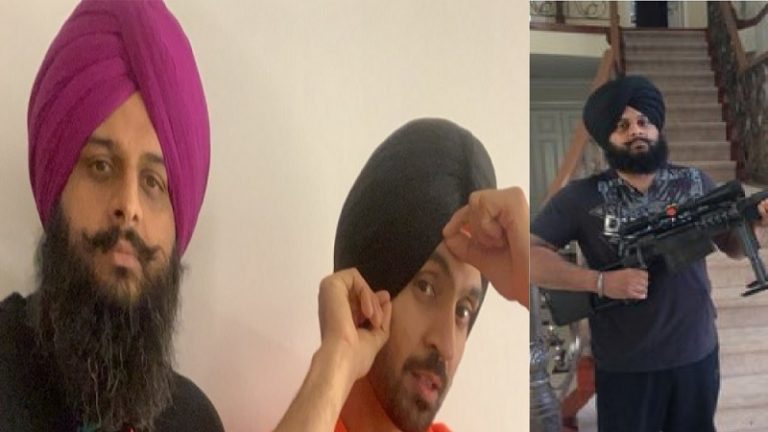
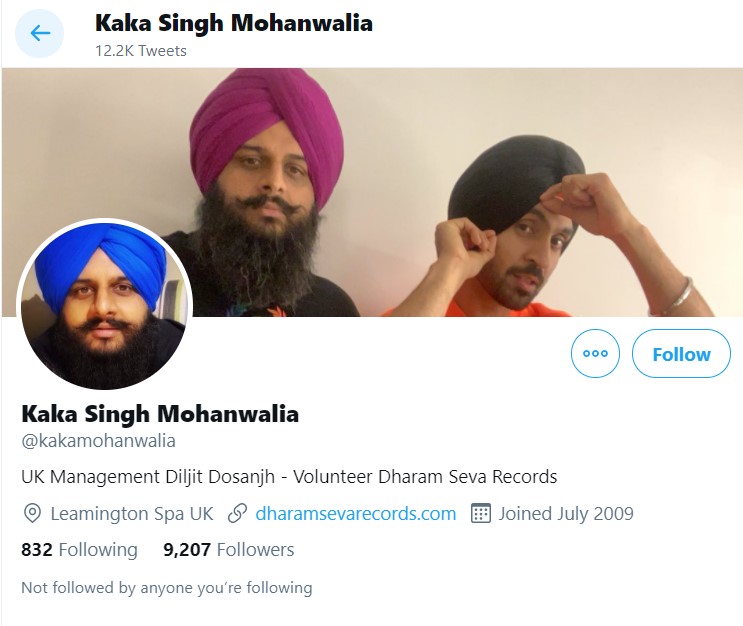
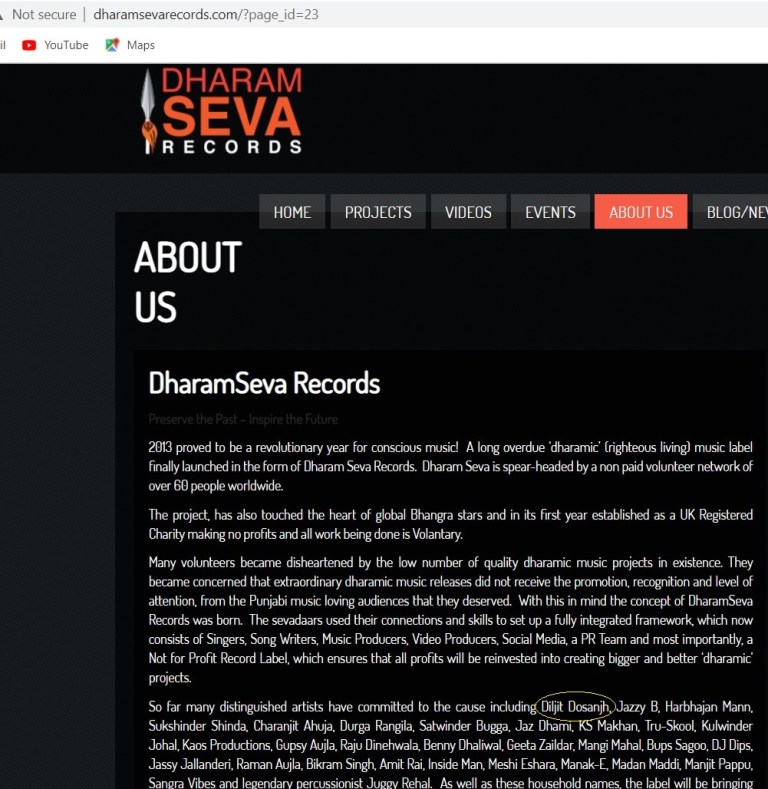
In this context, a Twitter user, Vijay Patel, made some interesting observations about one Kaka Singh Mohanwalia alias Sundip Singh Khakh, manager of popular entertainer Diljit Dosanjh and a volunteer at Dharma Seva Records (DSR). Additionally, the details of a series of companies have surfaced which appear rather intriguing on the face of it.
Twitter handle of Kaka Singh Mohanwalia
Dharma Seva Records is a registered charity at the United Kingdom for the promotion of “extraordinary dharamic music”. Its website states, “The sevadaars used their connections and skills to set up a fully integrated framework, which now consists of Singers, Song Writers, Music Producers, Video Producers, Social Media, a PR Team and most importantly, a Not for Profit Record Label, which ensures that all profits will be reinvested into creating bigger and better ‘dharamic’ projects.”
According to the website, entertainers such as Diljit Dosanjh, Jazzy B, Harbhajan Mann, Sukshinder Shinda, Charanjit Ahuja, Durga Rangila, Satwinder Bugga, Jaz Dhami, KS Makhan, Tru-Skool, Kulwinder Johal, Kaos Productions, Gupsy Aujla, Raju Dinehwala, Benny Dhaliwal, Geeta Zaildar, Mangi Mahal, Bups Sagoo, DJ Dips, Jassy Jallanderi, Raman Aujla, Bikram Singh, Amit Rai, Inside Man, Meshi Eshara, Manak-E, Madan Maddi, Manjit Pappu, Sangra Vibes and Juggy Rehal have “committed to the cause”.
DSR website
Twitter user Vijay Patel, who tweets under the username @vijaygajera, pointed out that there are a series of companies with names similar to DSR and the same individuals appear to be at important positions in these companies as well. Furthermore, in certain cases, they share the same address. Interestingly, however, these companies were often dormant and shut down within a few years.
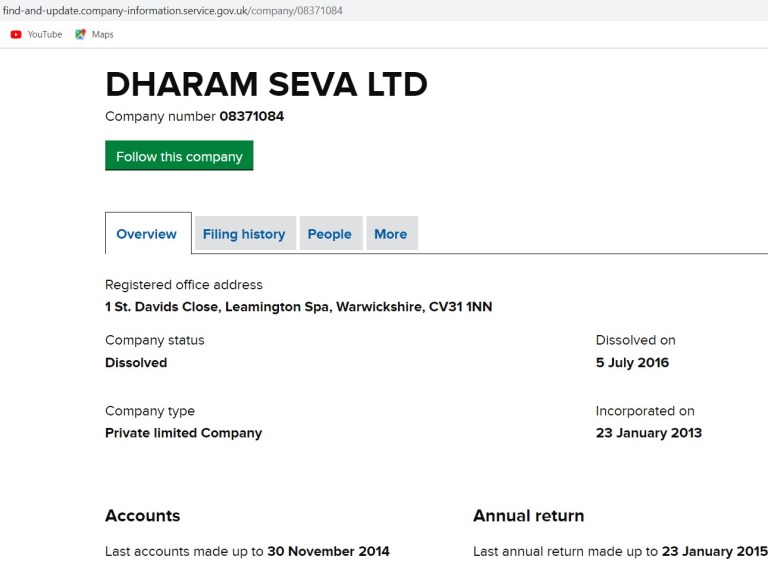
First, there is the Dharam Seva Limited (DSL) which was established in January 2013 and dissolved in July 2016. Its address is listed as ‘1 St. Davids Close, Leamington Spa, Warwickshire, CV31 1NN’. The officials at this company are listed as Sundip Singh Khakh and Gurmeet Singh.
Dharam Seva Ltd
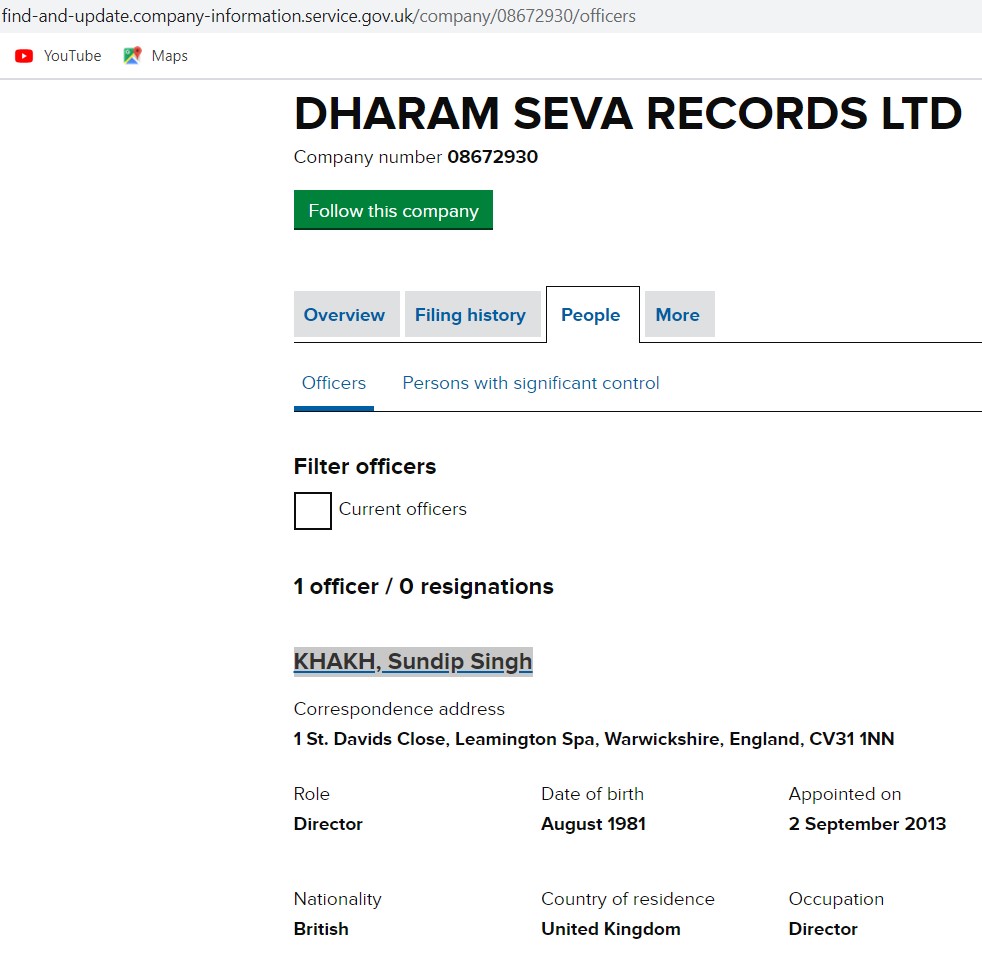
Then, there is Dharam Seva Records Limited (DSRL) which was established in September 2013 and dissolved in May 2016. The address is the same as tDSL and Sundip Singh Khakh is the director at this company.
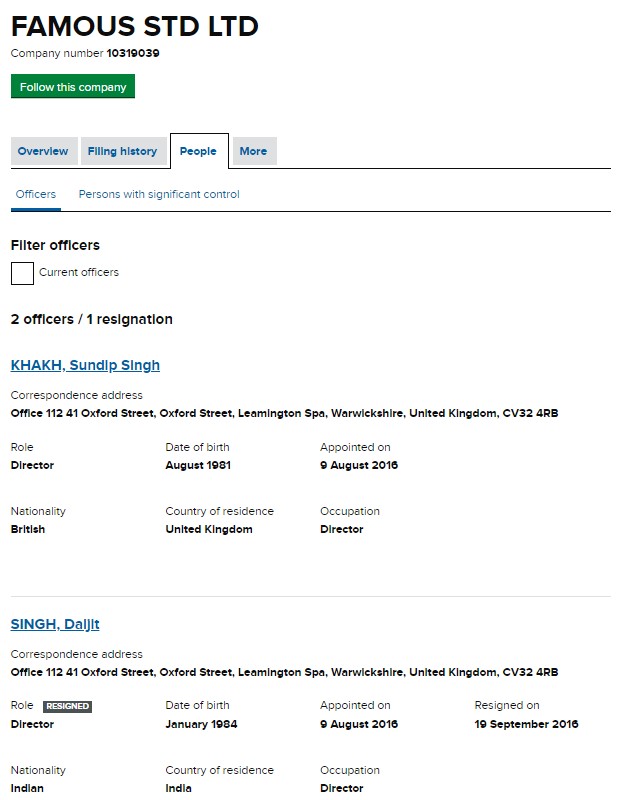
Sundip Singh Khakh is also an official at the Famous STD Ltd (FSL) along with one Daljit Singh. This company was established in August 2016 and dissolved in January 2018. An interesting to note here is that Daljit Singh was born in January 1984, the same month Diljit Dosanjh was born in. Daljit Singh resigned as the director from the company a month after it was established.
FSL
A fourth company is ‘Buildage Ltd’ where Sundip Singh Khakh is a registered official at the company along with Baljit Singh and Amrit Singh. This company had the lifespan of a little over a year. It was incorporated in April 2016 and dissolved in August the next year.
BL
The next is the Atma Teas Ltd (ATL) which was incorporated in May 2015 and dissolved in September two years later. It is registered at the address ‘112 Office 112 Oxford Street, Leamington Spa, Warwickshire, England, CV32 4RB’, the same address as the previous two companies, FSL and BL.
ATL
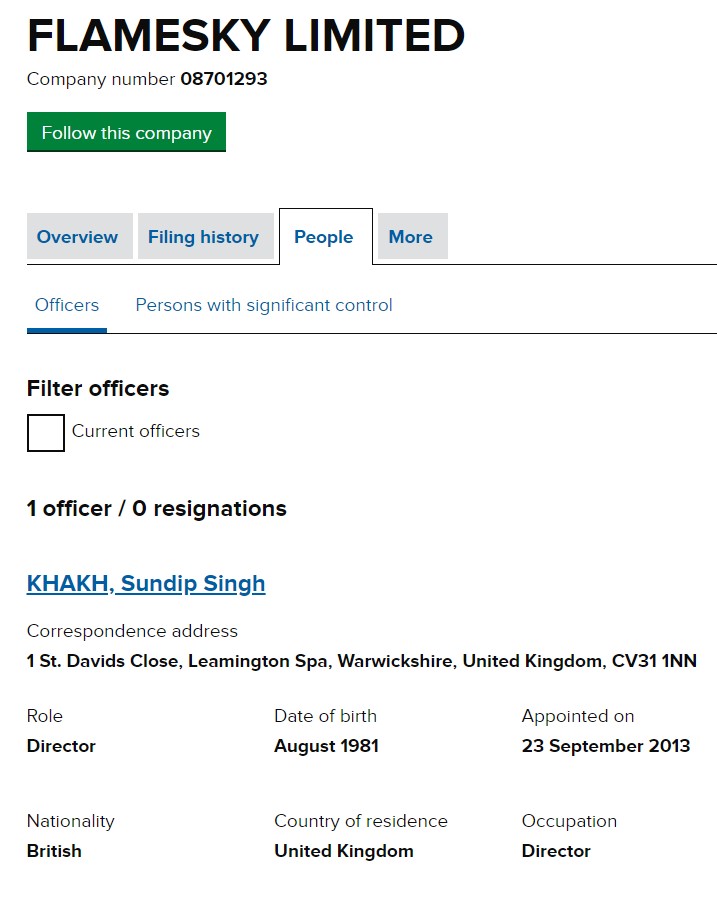
The sixth company is the Flamesky Limited (FL) which is registered at ‘1 St. Davids Close, Leamington Spa, Warwickshire, United Kingdom, CV31 1NN’, the same as DSL. It was established in September 2013 and dissolved in May 2015.
FL
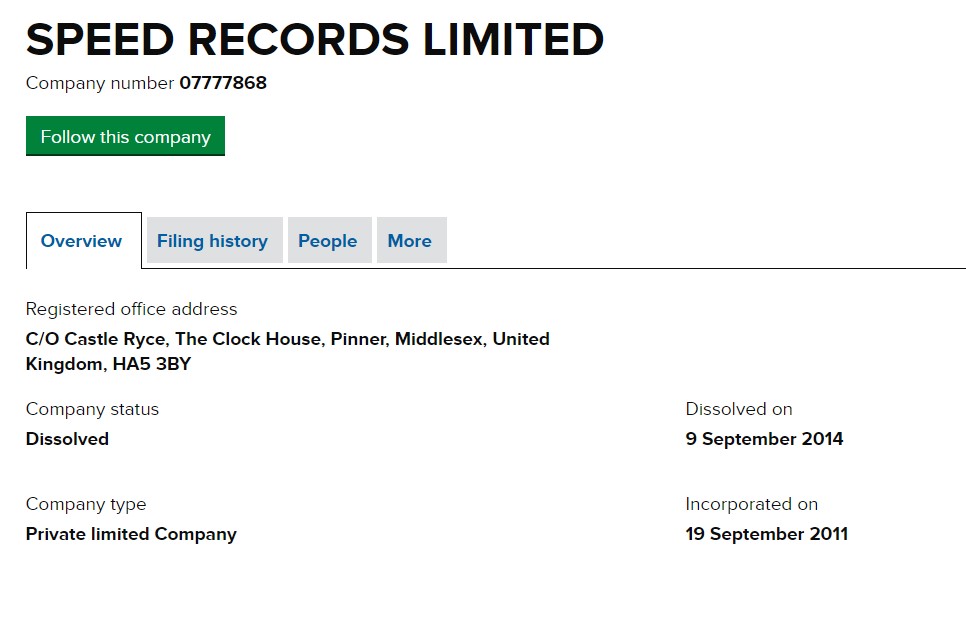
Sundip Singh Khakh is also an official at Speed Records Ltd (SRL) with two others. It was incorporated in September 2011 and dissolved the same month in 2014.
SRL
Apart from these companies, Vijay Patel spoke of two other companies ‘SPEED UK RECS LTD’ और ‘SPEED UK RECORDS LTD’ as well. Sundip Singh Khakh is associated with both these companies which were established in 2015 and dissolved in 2015. The Twitter user alleged that Kaka Singh Mohanwalia is Sundip Singh Khakh and is using his Trust to instigate farmers and youth.
But He actively uses his trusts official SM to instigate farmers and young people. He also created lots of twitter account to make impact on twitter. You will see lots of new twitter account now days with name of farmer. He is behind it.
It is pertinent to mention here that In June 2020, a demand for an FIR against Diljit Dosanjh was raised after he was seen supporting Gurpatwant Pannu’s and Sikhs for Justice (SFJ) demand for Khalistan. Ludhiana MP Ravneet Singh Bittu had urged Chief Minister Captain Amarinder Singh to order that FIR’s be filed in every police station of the state against singer Diljit Dosanjh and two others. Diljit Dosanjh has also been very vocal amidst the ongoing farmer protests.