Home Blog Page 4807

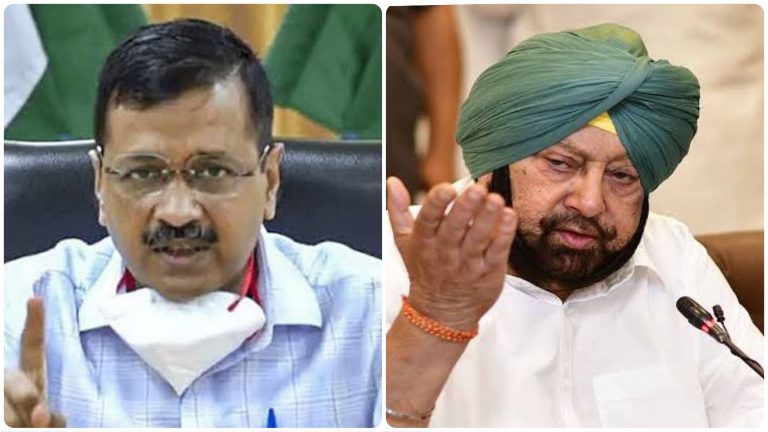
Captain Amarinder Singh hits out at Arvind Kejriwal, Kejriwal hits back but ends up making no sense: Read what happened

After Captain Amarinder Singh criticised Delhi CM Arvind Kejriwal of notifying one of the three farm laws in Delhi, the AAP party chief hit out at the Punjab CM today, claiming that Singh was indulging in low-level politics. Refuting the allegations levelled by Singh, the Delhi CM contended that it is not up to state government to implement the farm laws.

“How can he do such low-level politics in this fragile situation? It’s not up to the state govt to implement it. Had it been so why would farmers of the country hold talks with Centre,” the Delhi CM said.

Kejriwal had denied permission for 9 stadiums that the centre had sought from Delhi government to house the protesting farmers. Defending the move, Kejriwal said that the stadiums would have been converted into “jails” and therefore his government did not grant the permission. Kejriwal added that Singh was upset with him because he didn’t accord permission to turn the stadiums into “jails”.

Accusing Captain Amarinder Singh of colluding with the BJP, Kejriwal alleged that the Punjab chief minister has made wild allegations against him under the pressure of the Enforcement Directorate case against his family.

“So, is it the pressure of these people that you are putting allegations against me? Are you doing it for friendship with BJP or are you under pressure as Enforcement Directorate has filed a case against your family?” Kejriwal said while alleging that the pressure from the central government is what has led the Punjab chief minister to make allegations against him.

Punjab CM Amarinder Singh says AAP working behind farmers’ back to bring in farm laws

Earlier yesterday, Singh had blasted out at Delhi CM Arvind Kejriwal and AAP government, saying they had displayed “shocking double standards on the farmers’ protests” by “shamelessly implementing the draconian” farm law in the midst of the crisis while posturing to be in support of the farmers.

In a statement issued by Amarinder Singh on Tuesday, the Punjab CM said that though AAP was claiming to be supporting the protesting farmers, the AAP government in Delhi had brazenly passed the farm law through a gazette notification on November 23.

According to the officials, the Delhi government had notified one of the three central farm laws and was examining the remaining two. The Farmers’ Produce Trade and Commerce (Promotion and Facilitation) Ordinance, 2020 was notified on November 23, said a senior Delhi government official. This law allows farmers to sell their produce outside APMC markets, giving them more freedom and flexibility, while retaining the APMC system.

“Quite evidently, the AAP government had been working behind the farmers’ backs all these days,” Singh said, expressing shock that even before the farmers had started their ‘Delhi Chalo’ march, the Kejriwal-led government in Delhi had issued a notification for the law against which the agitation was to be launched.

“First they failed to pass any amendment laws in the Delhi Assembly to negate the central laws, as was done in Punjab. And now they have gone so far as to officially notify the agricultural legislation in Delhi, where AAP is in power. The party’s true intent and affiliation have been utterly exposed,” Amarinder noted.

Arvind Kejriwal’s comments do not make any sense

It may be noted that the arguments made by Arvind Kejriwal do not make much sense. While the Delhi CM says that his government has no power over the farm laws, it is a fact that his govt has notified one of the laws through a gazette notification on 23rd November. If Delhi’s AAP govt is fully supporting the protests by farmers from Punjab and Haryana, and opposes the farm laws, there was no reason for it to notify the law. This shows that Amarinder Singh is right in doubting the intention of the Delhi govt.

Kejriwal also alleged that Amarinder Singh criticised him for not allowing stadiums to converted into temporary jails to imprison the protesting farmers. This also does not make sense, as there is no reason why the Punjab CM would not be happy with the decision. The Punjab govt is fully supporting the protests by farmers mainly from its govt, and the Punjab CM has not made any public comment criticising the Delhi govt for not allowing to jail farmers in stadiums. If the Delhi police is not able to jail farmers due to lack of facilities, the Punjab govt should be happy with the Delhi govt for causing it. Therefore, this claim by Arvind Kejriwal does not make any sense.

The other allegation, that Captain Amarinder Singh was criticising the Delhi govt for his ‘friendship’ with BJP, seems completely baseless. The Punjab CM has become one of the most vocal critics of the laws after they were passed by the parliament, and the Punjab assembly had passed resolutions against the laws. The CM actively supported the protesting farmers, allowing them to block trains for weeks that had negative affects on the state. There is no evidence that there is any friendship between the Punjab CM and BJP, and the Captain is attacking the Delhi alleging hypocrisy over farm laws.

Amarinder Singh has slammed Arvind Kejriwal for not opposing the farm laws to the full extent, therefore, it is a far stretched to claim that he is doing this due to closeness to BJP, because BJP is fully supporting and defending the laws.

This shows that Delhi CM Arvind Kejriwal is trying to play the game from both sides. While he has realised that the laws are really beneficial for the farmers, and hence notified one of them, he is supporting the protesting farmers to be on the good book of left-liberals. The so-called farmer protests have been completely hijacked by leftists and Khalistanis, and the Delhi CM does not want to alienate them.

Politicians vying to pass the buck on one other

As the political storm kicked up by the ongoing farmers’ protest sweeps Delhi and the surrounding region, politicians who are in the eye of the storm, have resorted to making allegations and counter-allegations against each other, in a desperate bid to extricate themselves from the ensuing mess and pass the buck of the same on their rivals.

The war of words between Delhi CM Arvind Kejriwal and Punjab CM Amarinder Singh seems to be an exercise to that end. The two politicians, after enthusiastically supporting the farmers’ protests, do not want to end up shouldering the responsibility of the fallout, should the protests do not yield its intended result. It is for this reason that Punjab CM Captain Amarinder Singh and Delhi CM Arvind Kejriwal, after having spurred the farmers against the agriculture bills, are vying to push the blame of a possible failure on each other.
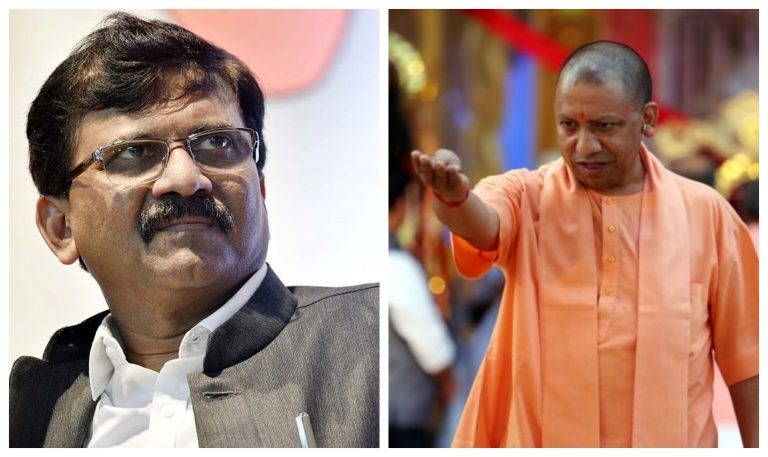
Yogi Adityanath responds to Shiv Sena’s Sanjay Raut, busts claim about UP wanting to take film city away from Maharashtra

Responding to Shiv Sena leader Sanjay Raut’s meltdown over his visit to Maharashtra, Uttar Pradesh Chief Minister Yogi Adityanath said that he was not taking anything away from the state of Maharashtra and that he was building a new Film City in Uttar Pradesh. “We’ve not come here to take anything away. We’re building a news Film City. Why one is getting worried about it? We’re giving something new to people in form of world-class infrastructure”, said CM Yogi when asked to comment on Raut’s remarks.

CM Yogi said that the Mumbai film industry would remain there and a new Film City would be developed in Uttar Pradesh in a new environment according to new requirements.

Sanjay Raut’s concern over CM Yogi’s visit

Rattled by CM Yogi’s visit to Mumbai, Raut had warned that it was not easy to shift Mumbai film city to another place. He said that there separate film industries in South India, West Bengal and Punjab that CM Yogi should visit and talk to directors and artists there.

Maharashtra CM Uddhav Thackeray had warned CM Yogi ahead of his visit to the state that he would not let anyone take away business from the state.

CM Yogi’s visit to Mumbai

CM Yogi reached Mumbai yesterday is expected to meet several industrialists, bankers and film personalities regarding the upcoming Film City in Noida, Uttar Pradesh. After reaching Mumbai, he first met actor Akshay Kumar and discussed the possibilities of film production in Uttar Pradesh. He also met singer Kailash Kher.

In September this year, the Uttar Pradesh Chief Minister had announced that Film City will be established in the state. CM Yogi had held a meeting with several film personalities to invite suggestions for the upcoming Film City.

Raut gives bizarre analogy trying to defend party after Azan row: Here are 4 things that he could have meant

Earlier this week, a video of a Shiv Sena leader promising to organise an Azaan recitation competition for Muslim children went viral on the internet. The proclamation drew severe flak from netizens on social media websites and invited criticism from the opposition parties like the BJP.

Several social media users criticised Shiv Sena for its brazen pandering to the minorities. The BJP, on the other hand, accused Shiv Sena of bartering Hindutva for minority votes. One of the BJP leaders slammed Shiv Sena for its decision to organise an azaan recitation competition and alleged that the only thing left for Shiv Sena now is to carry a “green flag” on its shoulders.

Unnerved by the criticism his announcement garnered, Shiv Sena leader Pandurang Sakpal, who had claimed that Shiv Sena would organise an azaan recitation competition on the lines of Bhagavad Gita recitation and even reward the winners, made an about-turn, stating he has no plans on conducting such an event.

However, it appears that the party is bent on tying itself in knots as it tries to defend the indefensible. Earlier today, an editorial was published in party mouthpiece Saamana, lambasting the critics for Sena’s contentious announcement of organising an azaan recitation competition.

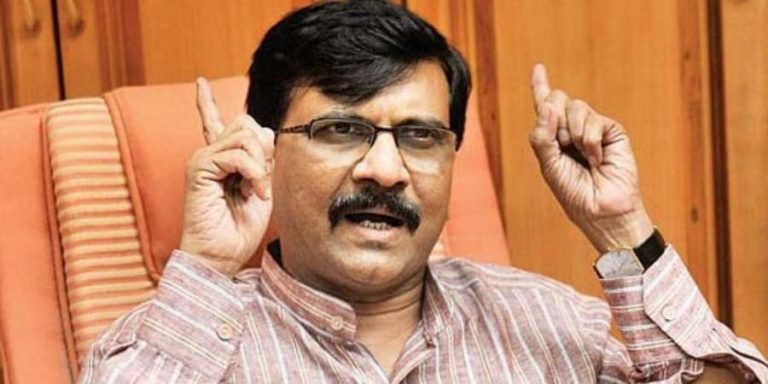
In its bid to criticise the detractors accusing the party of courting minorities, Shiv Sena leader and Rajya Sabha MP, Sanjay Raut, who is also the editor of Saamana, proffered a bizarre and ambiguous analogy in the editorial that lends itself to multiple interpretation.

“Dragging Shiv Sena through the mud on the issue of azaan recitation competition is akin to calling protesting farmers in Delhi Pakistani terrorists,” the editorial published in Saamana said. This ambivalent parallel drawn by Sanjay Raut in the Shiv Sena mouthpiece can mean a host of things. Here are the four things that Raut could have meant with this absurd comparison.

Did Sanjay Raut mean Farmers are Pakistani terrorists?

The most basic interpretation of the aforementioned analogy in Saamana could mean that Shiv Sena agrees that the protests carried out in Delhi are done by Pakistani terrorists. This assertion may not be far-fetched as the protests convulsing the national capital region and the Punjab-Haryana border has seen participation from pro-Khalistani elements.

At the very least, it would seem like political parties, Khalistani elements etc have come together to mislead farmers, spread misinformation, and ensure that the country burns.

Deep Sidhu, a Punjabi actor, became the face of the protests after his video threatening a security official manning a barricade went viral on the internet. Subsequently, Sidhu was offered a platform by Barkha Dutt and Shekhar Gupta to come clean on the allegations of him being a Khalistani supporter. However, Sidhu dug his heels in, hailing Khalistani terrorist Jarnail Singh Bhindranwale as a revolutionary fighter who fought for a strong federal structure and refusing to condemn him as a terrorist.

It is an established fact that Khalistanis, in their heydays during the 1980s, were morally and financially supported by Pakistan. The ulterior motive of Pakistanis then was to dismember India as a retributory action for the secession of Bangladesh back in 1971 by aiding the Khalistanis. In this context, Pakistan had waged a proxy war on India with the help of Khalistanis. The Khalistan supporters and sympathisers can therefore be effectively compared to Pakistani terrorists, who are trying to revive militancy and stoke unrest in India.

Did Shiv Sena imply Khalistanis are not terrorists?

If Sanjay Raut did not mean that the protesters thronging the national capital are terrorists, then the corollary that naturally follows it would imply that for Shiv Sena and Sanjay Raut, Khalistanis are not terrorists, since the protests were decidedly hijacked by Khalistani proponents.

The protests and blockades carried out by the so-called protesters saw posters of Jarnail Singh Bhindranwale being raised at various places. On other instances, protesters could not hide their Khalistani impulses. The demonstrators gloated on former PM Indira Gandhi’s assassination and threatened PM Modi with a similar fate. Pro-Khalistan slogans were also raised by the protesters who were apparently demonstrating against the three new agriculture laws.

Since Shiv Sena has a history of trading their ideology for petty political gains, it remains to be seen what is Sanjay Raut’s stand on Khalistanis who had taken over the farmers’ protests. Would Shiv Sena condemn the protests or will it, like its alliance partners—NCP and Congress—continue to turn a blind to the Khalistani presence in the ongoing protests?

Shiv Sena is being humanitarian in respecting azaan and hence, Shiv Sainiks were brutish thugs earlier?

Another interpretation that the ambivalent analogy lends itself to is that Shiv Sena is being humanitarian in respecting azaan and minority sentiments. However, admitting to this would effectively mean that Shiv Sainiks in the past were cruel ruffians who allegedly targeted and harassed the state’s Muslim populace.

Ironically, Sanjay Raut which claims Sena of being a ‘secular’ party, had in the past asked for disenfranchisement of Muslims. In an editorial published in Saamana in 2015, Raut had called for barring of Muslims from voting, stating that the masks of the secularists will come off if Muslims are disenfranchised. For a long time now, Shiv Sena had preened itself on being a party whose members played an instrumental role in levelling the controversial Babri structure in Ayodhya. Shiv Sena leaders have also been convicted of orchestrating the riots in 1992 in which several Muslims were killed.

The party’s past antecedents do not jibe with this interpretation of Shiv Sena being an inclusive and pluralistic party in organising the azaan recitation competition. Nonetheless, if Shiv Sena still persists with this outlook, it would mean denouncing its past and therefore implicitly admitting that it was a party of radical fundamentalists earlier.

Anyone who does not agree with Shiv Sena is a terrorist and must be treated so

The last interpretation that emerges from Raut’s absurd comparison is that whoever does not agree with Shiv Sena is a terrorist and must be treated as one. This appears to be the most likely case when Shiv Sena leader Sanjay Raut said that criticising Shiv Sena for keeping Azaan recitation competition is tantamount to calling protesters in Delhi terrorists.

This stance was evident in its full glory when the Uddhav Thackeray government relentlessly pursued Republic TV, just because it asked uncomfortable questions of the Uddhav Thackeray government.

Ever since Arnab Goswami criticised the state government on its handling of Palghar lynching of Hindu sadhus, the Maharashtra government, of which Shiv Sena is a part, carried out a relentless witch hunt against the journalist and his channel Republic TV. Multiple FIRs were lodged against him. Republic TV employees were routinely harassed. A Republic TV crew was unlawfully jailed when they were pursuing an investigative story in Navi Mumbai.

Mumbai Police commissioner called out a press conference to allege that Republic TV had indulged in manipulating TRPS. Later, it was found that the complaint had mentioned India Today and not Republic TV. The culmination of this witch hunt resulted in the arrest of Arnab Goswami, who was arrested by a phalanx of armed police officials and lodged in the Taloja jail. Mr Goswami had claimed that he was treated like a terrorist and not allowed to meet his lawyers.

Similarly, actor Kangana Ranaut was also attacked by Shiv Sena after she likened Mumbai to Pakistan occupied Kashmir after Azaadi graffiti had defiled the streets of the city. In response to her remarks, BMC demolished her office. The Bombay High Court recently slammed that BMC, stating that the demolition was carried out with malafide intent and directed the corporation to compensate the actor for her loss.

We really have no idea what Sanjay Raut really meant, but that is ok. We are used to it. Aren’t you yet?

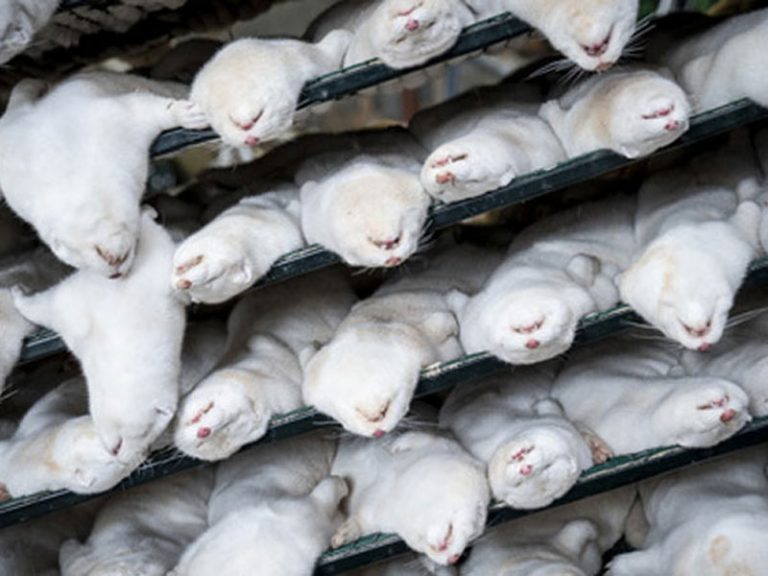
Zombie Mink: Hundreds of mink carcasses emerge from the burial trenches in Denmark after mass-culling exercise

0

Denmark authorities are planning to dig up thousands of buried dead mink that were killed to prevent the spread of novel coronavirus. Research had shown that the virus jumped from humans to mink and then back to humans. The mutated strain was found in 12 patients. The government had ordered to kill all the minks in fur farms to prevent the virus’s spread.

‘Zombie’ mink emerge from the graves

Reports have suggested that hundreds of dead mink emerged from their burial sites after the carcasses bloated. It is believed that the gas that was used to kill them caused the dead bodies to swell and resurface. The Danish media has named them “Zombie Mink”.

As per the CNN report, some 17 million mink had been killed by lethal gas and buried in a military zone in Western Denmark. However, after some days, the bodies began to rise to the surface. Denmark’s agriculture minister Rasmus Prehn has suggested that the mink can be exhumed and reburied, but such a move will need environmental clearance first.

Research found human to animal to human virus jump

A study done by the European Society of Clinical Microbiology and Infectious Diseases revealed that SARS-CoV-2 jumped between people and mink. It was dubbed as the evidence of zoonotic transmission. The study was carried out on 16 farms in the Netherlands. The result showed that it was likely the virus jumped from humans to mink and then back to humans.

Scientists are still trying to find the origin of the virus. Different studies have shown that non-human primates, hamsters, bats, and rabbits, along with cats, dogs, and tigers, can get SARS-CoV-2 infection. A recent outbreak in the mink farms added the animal to the list.

Orders to kill farm mink

In May, Netherlands mandated Covid-19 testing in farm animals as they believed mink might have infected humans. The testing led to the killing of 2.9 million mink. In July, Spain had ordered to kill around 100,000 farmed mink after animals on the farm were tested positive for the infection. Mink are widely bred in European countries for fur. In October, a series of Covid-19 outbreaks were reported in Danish farms. The government ordered to kill around a million mink to prevent further spread. In early October, the authorities found mink at 60 farms positive for Covid-19.

Earlier this month, Denmark had ordered all farmed mink to be culled, including the animals in uninfected farms, after finding that 12 people had been infected by a mutated strain of the virus that causes Covid-19, which reportedly passed from humans to mink and back to humans. However, the government has to take back the orders as it has no authority to give such an order. It could only recommend such a move.

Ethical and economic concerns over mink mass killing

A video had emerged that raised concerns over the method of killing the mink. A lone mink was seen wiggling among a box full of dead animals. Another issue with culling is the economic impact. Mink farming provides jobs to around 5,500 people. Mass killing the animals could lead to mass unemployment. The legal, ethical and economic concerns had triggered debates in Denmark over the culling orders.

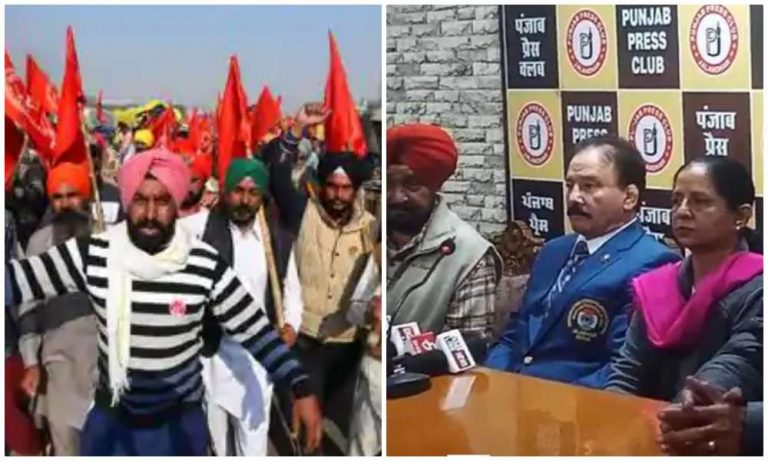
The return of ‘Award Wapsi’: As farmers protest continue, former Punjab sportspersons want to return awards

Arjuna and Padma award winners from Punjab have now expressed their desire to return their awards to show solidarity with the protesting farmers. Padma Shri and Arjuna awardee wrestler Kartar Singh, Arjuna awardee basketball player Sajjan Singh Cheema and Arjuna awardee hockey player Rajbir Kaur are amongst those who want to return their awards. They claim they will go to Rashtrapati Bhavan on 5th December and put their awards outside.

The sportspersons expressed displeasure over the use of water cannons and teargas on the protestors to stop them from going to Delhi. The agitating farmers have lodged themselves near the entry points at Delhi border and have not been allowed to enter. They are carrying four months’ worth of ration and are prepared to continue the protests. The government held talks with them on Tuesday but a resolution has not been reached yet.

One of the speakers at the press conference held on Tuesday claimed that as many as 150 awards will be returned from Punjab.

The ‘Award Wapsi’ form of protest

Many award winners in India believe that returning the award they have won from government is a form of protest against the government. It started few years back over alleged ‘rising intolerance’ when pro-Congress ‘liberals’ from various fields like films and literature decided to return their award to the central government led by PM Modi. Since then, the trend has quite picked up.

However, there is no data available on how many have actually returned their awards and prize money after having announced to do the same. Except for Hinduphobic poet Munawwar Rana and writer Kashinath Singh, who, after announcing they will return their Sahitya Akademi awards and prize money, did not stick to their word.

Punjab farmers’ agitation

Punjab farmers are agitating against the central government laws enacted in September this year wherein the government allowed farmers to sell their produce outside of the APMC (Agricultural Produce Market Committee), thereby eliminating middlemen.

The central government has continued the old provision of allowing sale of produce at mandis as per current system. However, the Punjab farmers want that the government should not shut town APMC and mandis. The central government has clarified time and again that these are not shutting down but it is still not clear why farmers are then agitating against something which is already there.

Moreover, the famers also now want a law that guarantees MSP (Minimum Sale Price). The MSP has always been an administrative decision, taking on case to case basis after every seasonal crop. However, the farmers now want a law for it including an MSP for outside the mandis like private players. That would be against the concept of free market.

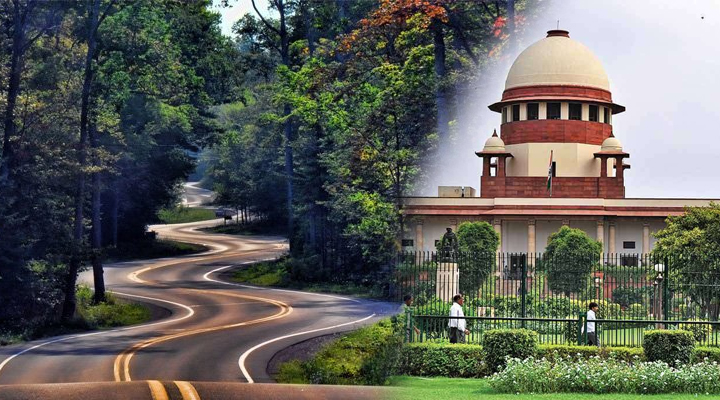
Supreme Court asks UP government to make zig-zag roads to avoid felling of trees for Krishna Govardhan Road Project

0

While hearing a plea by Uttar Pradesh government yesterday regarding felling of trees for the widening of Krishna Govardhan Road Project in Mathura, the Supreme Court questioned why trees needed to be cut for widening the roads. The Court said that if roads were built in zig-zag way, it would reduce the speed of vehicles and thereby it will reduce the number of accidents.

A Bench headed by CJI SA Bobde said, “Why do roads have to be laid in a straight line by cutting trees? Keep roads zigzag. It will reduce speed, lessen accidents on roads and save many lives”. The Court asked the state government to evaluate the value of trees based on the amount of oxygen that they would release in nature in their lifetime.

The Public Works Department of Uttar Pradesh government assured the court that they the government would compensate by planting the same number of tress in another area so that no loss was caused to the environment in general. To this the court responded that there could be no compensatory reforestation if a 100-year old tree was cut down. Pointing out that no information was available regarding the age of trees, the court said, “It is not possible for us to accept a compensation in merely arithmetical terms especially when there is no statement forthcoming from Uttar Pradesh or PWD as to nature of trees whether they are classified as shrubs or large trees”.

“Clearly they cannot do so in terms of timber but must adopt a method of evaluation which takes into account oxygen-producing capacity of the particular tree over the remaining life span, assuming it may be cut now”, the court said. Amicus Curiae advocate ADN Rao told the court that Net Present Value (NPV) method could be used for evaluation of trees. The court asked the government to consider the NPV method and respond within two weeks. “The UP government is to ascertain the total number of trees to be felled for building roads. It is clear that only effect, if trees are retained, would be roads may not be straight and therefore inapplicable of high speed traffic. Such an effect may bot be necessarily deleterious”, the court said.

The plea was filed by the Public Works Department of Uttar Pradesh in 2017 for felling 2,940 trees for the Krishna Govardhan Road Project. The Central Empowered Committee had clearance for the project.

The court fixed the next date of hearing after four weeks.

Read- Trees can and should be replaced, but what happens to the cost of stalled infrastructure projects?

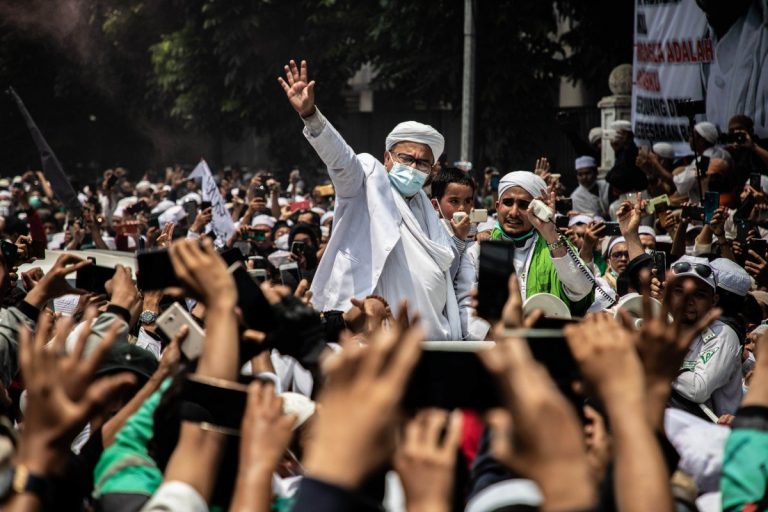
Indonesian radical Muslims change words of Azan from ‘hurry to the prayer’ to ‘rise up for Jihad’: Here is what happened

The radical Muslim supporters of Habib Rizieq Shihab, the leader of Indonesia’s biggest anti-vice organisation Islamic Defenders Front (FPI), have now posted four different versions of a video where they can be seen replacing some words of the Islamic call to prayer (Azan) to call for Jihad. According to scmp.com, a verse of the chant, which originally means “hurry to the prayer”, has been changed to “hayya alal jihad”, or “rise up for jihad”.

Reportedly, the videos replacing this verse called for Musims to ‘rise up for Jihad’ followed, by Allahu Akbar chants. Also, in one of the videos, radical Muslims were seen wielding swords.

These videos were posted on Twitter with the caption, “Calls to jihad will be heard from mosques, Islamic boarding schools, and other Muslim communities if Rizieq Shihab continues to be criminalised”.

The FPI has, however, denied their involvement in making these videos and claimed that it was made by some of their supporters since they are miffed over the treatment of their leader, radical cleric Habib Rizieq Shihab by the Indonesian government. “I think [the call for jihad] is normal because people see the unfair treatments on Muslim clerics who are opposing the government,” Aziz Yanuar, the FPI’s deputy general secretary, was quoted by local news portal Detik as saying on Monday.

Rizieq was in a ‘self-imposed’ exile in Saudi Arabia and has reportedly recently returned to Indonesia. He had recently staged massive gatherings in Jakarta to commemorate the birth of Prophet Mohammed and protest against the government and was going to be interrogated by the Jakarta police.

According to scmp.com, Rizieq did not appear for police questioning. Before the summoning, authorities had imposed a fine of $3,500, drawing public anger from citizens who viewed the move as being too lenient towards the Islamic cleric. The government had later decided to take a tough stand against those who break Coronavirus protocol, regardless of their position.

Reportedly, several Muslim groups of Indonesia have also demanded an investigation and action after the call to prayer was altered by the followers of Rizieq.

Rizieq returned to Indonesia after the National Police dropped a charge against him in connection with a pornography case in 2018, but Rizieq, who had originally travelled to Saudi Arabia for religious purposes, decided to stay.

The charge centred around a WhatsApp chat between Rizieq and a female supporter that include naked images of the woman – a crime under Indonesia’s anti-pornography law. Interestingly, while Rizieq was accused of sending lewd pictures, he campaigns for the implementation of Sharia law in Indonesia and his group has been accused in several cases of harassment of minorities in Indonesia.

China may have ‘planned’ the Galwan Valley faceoff, knowing there would be fatalities, says US security panel report

0

A top United States security panel has released a report [PDF] in which it has alleged that the Chinese government had planned the Galwan clash in June 2020. The report further added that the Chinese government was expecting fatalities on the Indian side. Titled “2020 REPORT TO CONGRESS of the U.S.-CHINA ECONOMIC AND SECURITY REVIEW COMMISSION,” the report mentioned that just before the June 15 India-China faceoff in the Galwan Valley, China signalled its intent to intensify the tension between the two countries along the Line of Actual Control.

Excerpt from the report submitted by top United States security panel

On the said night between June 15 and 16, the Indian Army and China’s People’s Liberation Army’s troops had a violent hand-to-hand clash. 20 Indian soldiers lost their lives, including a commanding officer. As per the reports, the Chinese side also suffered casualties anywhere between 35 to 40.

The US’s report noted that there was some evidence pointing out that the Chinese government planned the Galwan incident “potentially including the possibility for fatalities”. It said, “For instance, several weeks prior to the clash Defense Minister Wei made his statement encouraging Beijing to “use fighting to promote stability.”Just over two weeks before the incident, in another potential indication of Chinese leaders signaling their intent to escalate tensions, an editorial in China’s state-owned tabloid Global Times warned that India would suffer a “devastating blow” to its trade and economic ties with China if it got “involved in the U.S.-China rivalry.”

The satellite images showed considerable Chinese build-up

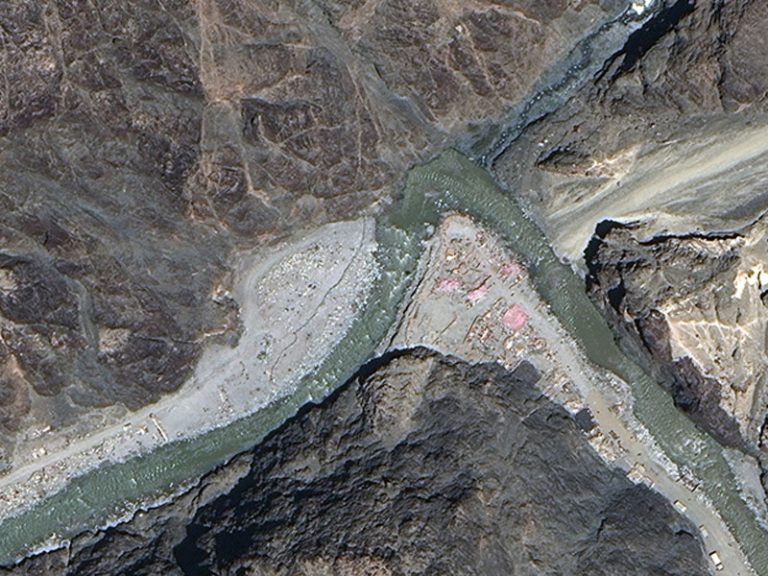
The US report highlighted the analysis of satellite images that were taken before the clash. The images pointed out to the considerable Chinese build-up in the Galwan Valley just a week before the clash. The report suggested that there were around 1,000 PLA soldiers at the site. It further pointed out that under the current regime of President Xi Jinping, such border invasive actions have increased from the Chinese side.

Excerpt from 2020 REPORT TO CONGRESS of the U.S.-CHINA ECONOMIC AND SECURITY REVIEW COMMISSION

It said, “China and India have engaged in multiple physical clashes along their border for decades, but since General Secretary Xi assumed power in 2012 the two countries have seen five major altercations along their border. The exact motivations behind the Chinese government’s provocative behavior on the LAC this year remain unclear.” The report further added that the cause of the clash might be “construction of a strategic access road to support troops stationed along the LAC.” 

The Galwan Valley faceoff

On the intervening night of June 15 and 16, troops of the Indian Army had a violent hand-to-hand clash with the Chinese counterparts. In the clash, 20 Indian soldiers lost their lives. Since then, the tension between the two nations has intensified, resulting in the cancellation of several projects allotted to Chinese companies. The call for Atmanirbhar Bharat has also put a dent in the market share of Chinese products. As per the reports, China has lost as much as Rs.40,000 crore during the Diwali season as the consumers preferred non-Chinese products.

Kangana Ranaut served legal notice for mistaking an elderly woman in farmer protests for Bilkis Bano of Shaheen Bagh

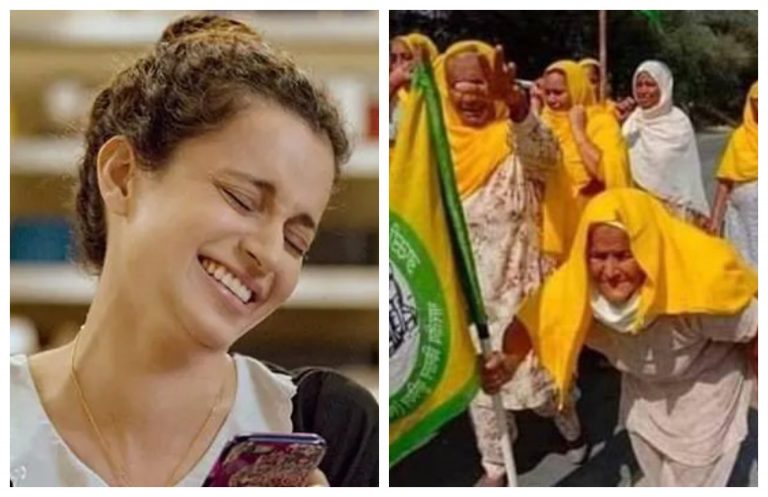
Controversy seems to follow actress Kangana Ranaut wherever she goes. Ranaut has once again landed in legal trouble over a Twitter post regarding farmer protests that she later deleted. Ranaut had mistaken an elderly woman who had participated in women’s march taken out as part of the farmer protests for the famous Bilkis Bano also known as ‘Dadi’ who had participated in Shaheen Bagh protests. Retweeting a post on Twitter that claimed that the woman in farmer protests was Bilkis Bano, Ranaut had said that Dadi was available for hire to appear in protests.

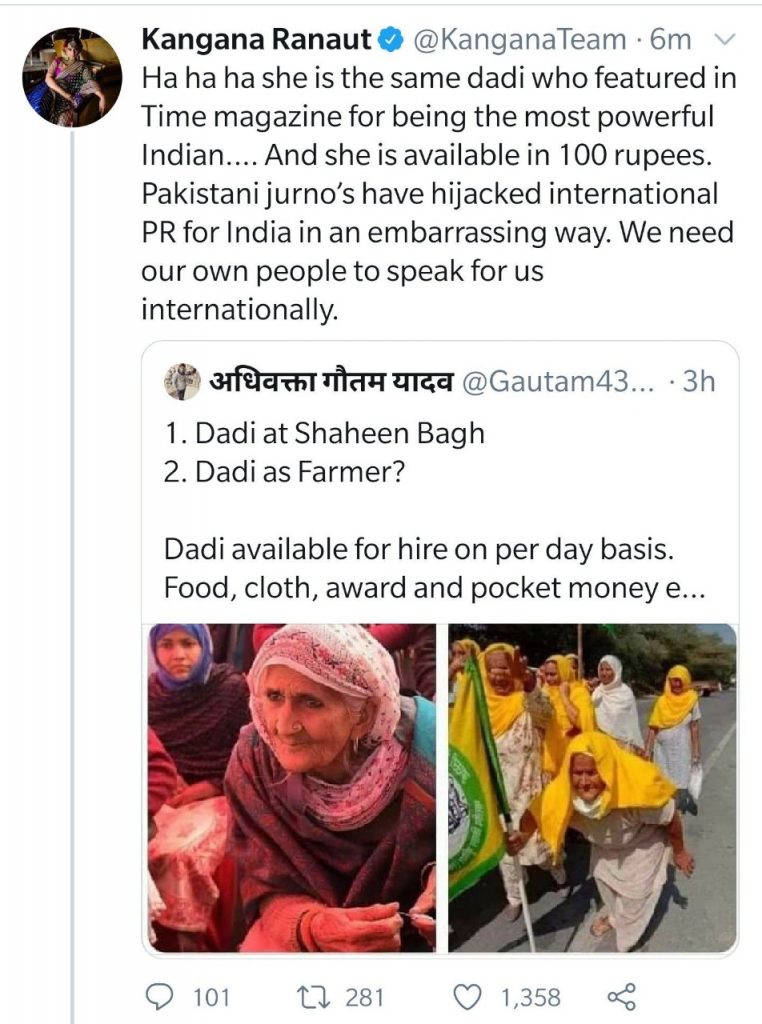
Screenshot of Kangana Ranaut’s tweet (Source: Republic)

“Ha ha ha she is the same dadi who featured in Time magazine for being the most powerful Indian….And she is available in 100 rupees. Pakistani journo’s have hijacked international PR for India in an embarrassing way. We need our own people to speak for us internationally”, she commented. However, she deleted the tweet later.

Legal notice sent by Chandigarh based advocate

A Chandigarh based advocate named Hakam Singh has sent a legal notice to Ranaut for mistaking the elderly woman for Bilkis Dadi and saying that the latter was available for money. In the notice, Singh said that the woman in farmer protests was Mahinder Kaur, the wife of a farmer.

Advocate expressed displeasure over her comments calling it a ‘mockery of an old female’ and sought a public apology from Ranaut within seven days. “That by using such lower remarks for the said lady, you have not only lowered down the prestige and image of the said lady, but you have also lowered down the image and prestige of each lady as well as of each person, who takes part in protests for noble cause and for fighting their rights”, Singh wrote in the notice.

The notice further read, “That by tweeting in such a manner, the same also points towards the fact that the protests which is being conducted by farmers, is being conducted by bringing persons on rent. Such a low thinking from you, who is herself is lady an celebrity, is not acceptable”. Advocate Singh said that Ranaut had mocked the farmers who put their lives at risk and were protesting for their rights.

‘Shaheen Bagh Dadi’ Bilkis Bano participated in farmer protests

The Shaheen Bag Dadi, who was featured in the list of top 100 influential people of 2020 in Time Magazine, joined the farmer protests yesterday. However, she was detained by police at Singhu Border. Police said that Dadi was stopped for her own safety amid the Covid-19 pandemic as she was a senior citizen.

Twitter refuses to delete fake image posted by Chinese official or tag it as ‘manipulated media’ despite official complaint by Australia

Social media giant Twitter is already known to have a left-liberal bias, but the same has intensified over the last one year, during the US presidential elections. The bias was most prominent in a new policy by Twitter to flag tweets spreading wrong information, apparently in an effort to prevent the spread of fake news.

While it is true that social media plays a big role in the wide distribution of fake news, and it is laudable that Social Media platforms have started pointing out fake news, what Twitter did was completely influenced by its bias. While flagging of contentious tweets by US Donald Trump by Twitter was regular news ahead of US elections, no such news was heard about any action taken on any controversial claim by the Joe Biden camp. In fact, even when counting for several states were not complete, Twitter had wrongly claimed that the official result of the US presidential election was out, fact-checking a claim by Trump that he has won.

Now, two incidents over the last few days reiterate the well-known bias of Twitter. On Tuesday, Twitter flagged a tweet by BJP IT cell head Amit Malviya as ‘manipulated media’. Malviya had posted a video to claim that an elderly farmer, who was allegedly beaten by a cop during the ongoing farmer protests, was not actually beaten. Referring to images circulating on social media, where a cop was seen raising his stick to hit the farmer. But the video posted by Malviya indicated that the cop may have missed the farmer, and he had flung the stick in the air.

Twitter cited fact-checks by Islamist site Alt News and Leftist site Boom Live to claim that Malviya had posted a short and edited video, and the farmer was actually hit by another cop. According to “Synthetic and manipulated media policy” of Twitter, manipulated media means media (videos, audio, and images) that have been deceptively altered or fabricated. But the fact is that, even in the longer video, it is not sure whether the other cop also managed to hit the farmer or not. While the farmer may have been hit by cops during the protests, the video is not conclusive proof of the same.

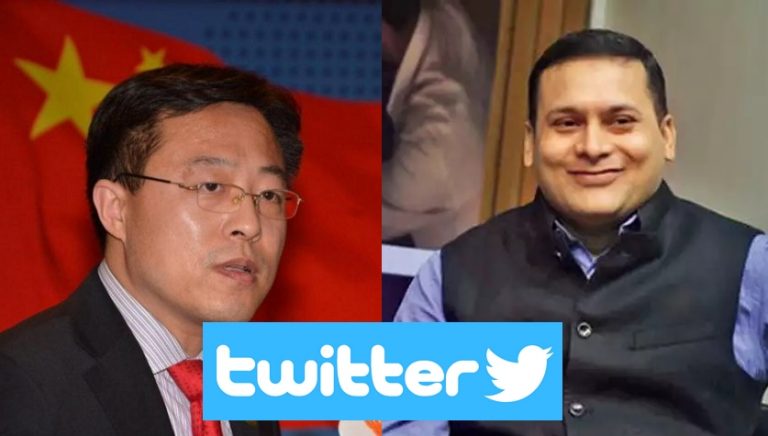
On the other hand, a clearly fake tweet by a prominent Chinese official remains untagged by Twitter as fake, underlying the bias in implementing the fake news and manipulated media policy of the microblogging platform.

On Monday, Lijian Zhao, the spokesperson of Foreign Ministry of the hHinese govt, had posted a digitally morphed image to claim that it showed an Australian soldier beheading a teen boy in Afghanistan.

Australian govt had strongly objected to the tweet, and PM Scott Morrison had demanded an apology from the Chinese govt for posting a fake image to defame Australia. Mr Morrison had also informed that the Australian government has formally requested the Chinese government to delete the post and contacted Twitter to have the post removed.

But despite the request by the Australian govt, Twitter has declined to remove the post, and remains on the platform. Moreover, despite it is known that it is a fake image, Twitter has not added any tag to it saying that it is fake or manipulated.

It may be noted that even the creator of the image has acknowledged that it is not a genuine photo. The image used by Lijian Zhao was originally posted on Chinese micro blogging site Weibo, where a user with the username Crowd Kylin had posted it.

After Australia objected to the image, he posted a message saying “I heard ScoMo had big problem with my work.” The fact that user referred to the image as “my work” proves that the image was created by the user, and it is not a photograph.

But despite such evidence, and an official request from the Australian government, Twitter refuses to delete the tweet containing the fake image, and also refuses to tag it as fake or manipulated. Thereby, Twitter is clearly legitimising a fake tweet because it was posted by an official from Communist China. This shows that Twitter’s decisions are based on its ideological stand, not on pure facts.