Home Blog Page 492

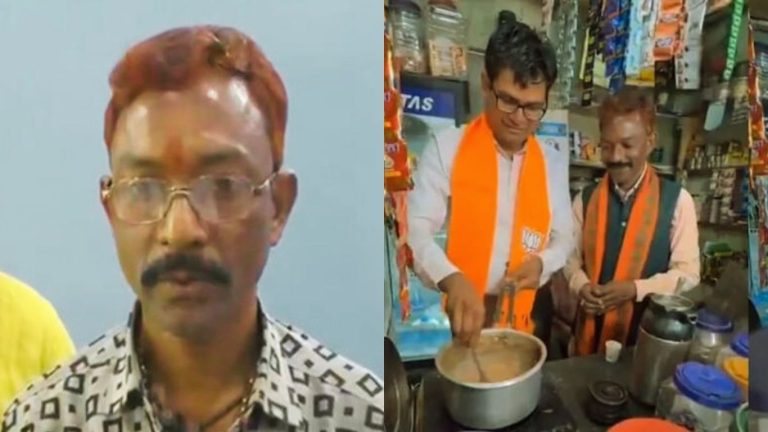
Chhattisgarh: Chaiwala fielded by BJP becomes mayor of Raigarh after a resounding victory in municipal elections

The results of the Raigarh Municipal Corporation in Chhattisgarh have been making headlines as the election for Raigarh mayor was swept by a local tea seller and BJP candidate named Jeevardhan Chauhan. As the counting of Municipal Corporation elections is underway, the result for Raigarh Municipal Coproration has been declared in which BJP candidate registered a resounding victory. He defeated the Congress party’s Janaki Katju.

Jeevardhan Chauhan defeated Congress candidate Janaki Katju by a huge margin of 34,000 votes.  BJP has won in 33 wards in the Raigarh Municipal Corporation elections. On the other hand, Congress has been confined to 12 wards.

Chauhan joined the BJP in 1996

The State Finance Minister OP Chaudhary hailed Chauhan’s victory in the elections as a historic win for the BJP. “I had full faith that the people of Raigarh will bless us. People have seen the politics of development over the past one year. Jeeverdhan, who runs tea stall, and other BJP councillors will work as per the expectations of the people,” Chaudhary said.

The BJP had announced Chauhan, who has been a member of the BJP since 1996, as its candidate for the post of Mayor in Raigarh Municipal Corporation election. Chauhan joined the BJP under the guidance of former BJP district President Umesh Aggarwal and has been an active worker of the party ever since.

Appointed as BJYM city President in 2011

In 1998, Chauhan became the ward President and subsequently joined the Bharatiya Janata Yuva Morcha (BJYM) in 2004 and became its vice-president in 2008. The same year he was appointed as the city General Secretary of the BJYM and later in 2011, he was appointed as its city President.

Jeevardhan Chauhan is said to have strengthened the BJP at the ground level in the jute mill areas. He played an active role as Shakti Kendra coordinator in the Lok Sabha, Assembly and Municipal Corporation elections from 2019 to 2024.

Chauhan was pleasantly surprised when the BJP announced his name as its Mayoral candidate for Raigarh Municipal Corporation elections last month. “I could not believe it when I got the information that a tea-seller was named as a candidate for Raigarh mayor. I have been associated with Sangh for a long time. I am unable to control my happiness. I express my gratitude towards Sangh, BJP and MLA OP Chaudhary who has given this chance to a poor person like me,” Chauhan said.

The polls for 10 Municipal Corporations, 49 Municipal Councils, and 114 Nagar Panchayats in Chhattisgarh were held on 11th February. The three-tier panchayat elections are set to take place in three phases on February 17, 20 and 23 and the results will be announced on February 18, 21 and 24 respectively.

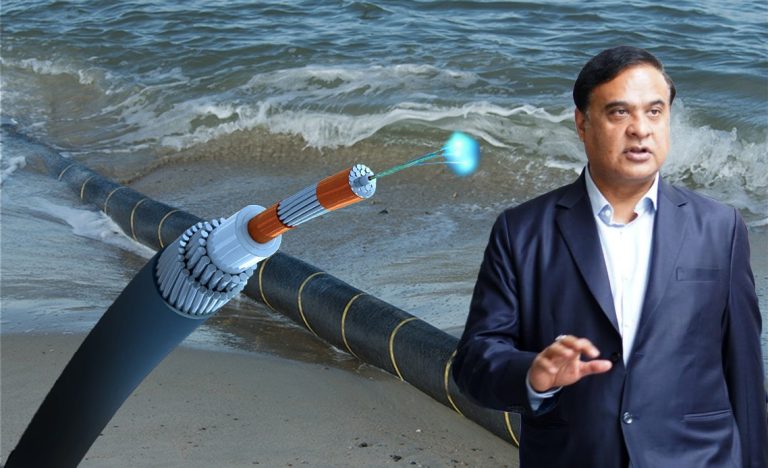
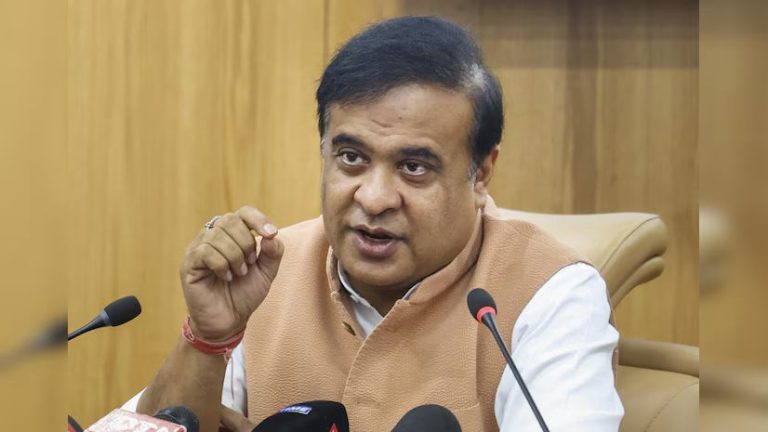
Assam CM proposes communication cable beneath Brahmaputra River to connect the state to global submarine cable network

In an effort to enhance the internet and telecommunication network in Assam and other northeastern states, the Assam govt has proposed an underwater communication cable on the bed of the Brahmaputra River. If becomes a reality, this cable will join with the global submarine cable network in Bay of Bengal.

Assam CM Himanta Biswa Sarma revealed the proposal during a media interaction ahead of the upcoming Advantage Assam 2.0 investment summit.

The CM said that one of the key themes for the Advantage Assam 2.0 summit is “I-way to Viksit Assam”. This session will focus on leveraging digital infrastructure for Assam’s development through discussions with key stakeholders. The telecommunication network is the backbone of the digital infrastructure, and currently, the communication in the region connects to the national network via land-based network through Siliguri.

The CM said that if there is an underwater cable connecting Assam to the submarine cable landing station in Kolkata, the network will improve to a great extent. It will also avoid disruptions caused by damages to the land-based cables, which are often damaged during construction etc. projects.

Giving the example of the recent incident of the state government’s e-office portal going down for 6 days due to such disruptions, he said that if the proposed cable becomes a reality, it will provide a highly reliable connection. This will provide data connectivity similar to what is available in Tamil Nadu, the CM said.

However, Himanta Biswa Sarma said that the cable under Brahmaputra is an idea of the state government, and now they have to convince the central govt to implement it.

Notably, global telecommunication networks, including internet connectivity, run on submarine cables. These are fibre-optic cables laid on the ocean beds that connect different countries and continents. These cables are the backbone of global communications, carrying over 95% of international data, including internet traffic, financial transactions, and military communications.

Their capacity far surpasses that of satellites, offering data transmission rates in terabits per second. Several major cities in India have landing stations for such submarine cables.

Notably, social media giant Meta yesterday announced a new project to lay 50,000 km of submarine cables, making it the world’s longest subsea cable project. The project titled Project Waterworth will reach five major continents bringing connectivity to the U.S., India, Brazil, South Africa, and other key regions. 

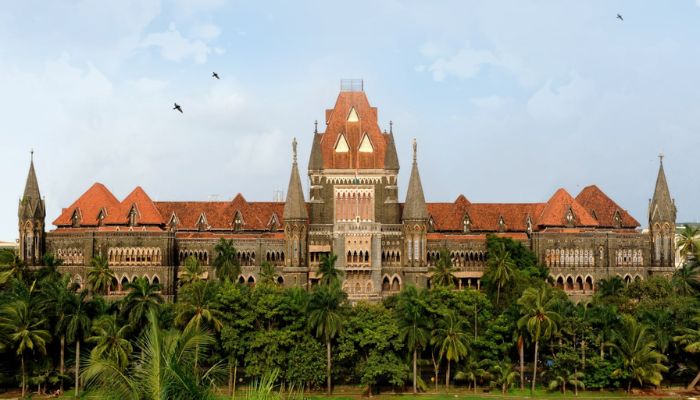
‘Not a sexual predator but young person in consensual relationship’: Read how Bombay HC granted bail to Mohammed Ajaan Khan, accused of raping and impregnating minor girl

On Thursday (13th February), the Bombay High Court granted bail [pdf] to a man named Mohammed Ajaan Khan, accused of raping a minor girl and impregnating her twice.

According to the judgment copy, the victim was only 16 years old at the time of the crime while Khan was a 22-year-old account. The ordeal lasted 15 months and went on between January 2023 to April 2024.

A First Information Report (FIR) was lodged against the accused based on a police complaint. Mohammed Ajaan Khan was booked under Indian Penal Code (IPC) Sections 376, 376 (3), 376(2)(n) and relevant sections of the Protection of Children from Sexual Offences Act.

He had filed a bail application before the Bombay High Court, which was heard by a single-judge Bench of Justice Milind N Jadhav.

The Background of the case

The minor victim knew the accused for 4 years and was in a ‘love relationship’ with him for about 2 years. In her police complaint, she informed that Khan called her to his house ‘under the guise of going on excursion’ but instead forced her to have sex.

The underage girl also stated that she remained silent initially but the cycle of abuse repeated multiple times, ultimately leading to her pregnancy. In November 2023, the victim learnt that she was 8 weeks pregnant. She ultimately had to undergo an abortion/ MTP.

The cycle of abuse continued and the victim became pregnant for the second time in April 2024, leading to another round of abortion.

The accused’s lawyer argued that it was a ‘consensual love relationship,’ which was being given a ‘criminal flavour’ in retrospect. He stated that there was ‘no evidence’ of force or coercion. He also pointed out a delay of 1 year and 3 months in filing FIR after the first pregnancy of the minor victim

The Assistant Public Prosecutor (APP) highlighted that the victim was a minor at the time of the incident and that she was lured into the relationship. He argued that the consent of the underage girl would be immaterial in the context of the case.

APP further pointed out that the victim did not file her complaint initially due to immense mental agony, caused by violence and two abortions.

Verdict in the case

Justice Milind N Jadhav, in his order on Thursday (13th February), noted that the victim was a minor while the accused Mohammed Ajaan Khan was an adult.

He observed, “They were known to each other and as per statement of prosecutrix in the FIR and statement recorded before the Medical Officer it is clearly borne out that they both were in a love relationship for the past two years and were in a physical relationship for 15 months prior to filing of FIR despite she being below 18 years of age. This fact gets reinforced due to her categorical admissions and her twin pregnancies and MTPs which followed subsequently.”

This prima facie shows and reflects that the acts between the parties were consensual in nature. From the record it is seen that she was in love with the Applicant and therefore developed physical relations with him as admitted by her,” Justice Milind N Jadhav further noted.

The Bombay Court granted bail to Mohammed Ajaan Khan, noting no criminal antecedents in the present case and the absence of violence between the parties. It ruled,

The material placed before me do not indicate towards any force being engaged by Applicant over the prosecutrix during their relationship. The case appears to be consensual in nature that had come to the knowledge of her mother upon prosecutrix becoming pregnant not once, but twice. Applicant has made out a strong case for grant of bail since a boy and girl of similar age group involved in a long standing love relationship by consensus does not make it an offense of a nature to justify his custody, the Applicant is not a sexual predator but a young person who was involved in a consensual relationship which is admitted by the prosecutrix.”

The court stated that both the victim and the accused were of the age to have a reasonable understanding of their conduct. It further pointed out the regressive impact of the jail environment and prior Supreme Court verdicts in the release of young offenders on bail.

While granting the accused bail, Justice Milind N Jadhav imposed several conditions including the deposit of a bond of ₹15000, cooperation during trial, prior permission before leaving Maharashtra and a few others.

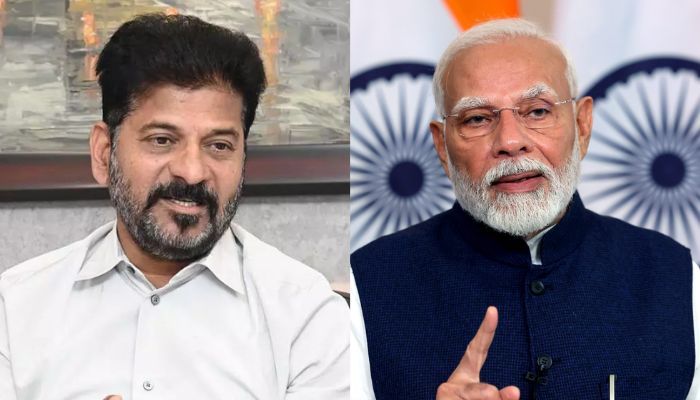
Telangana CM Revanth Reddy calls PM Modi a ‘legally converted Backward Class’, BJP hits back

On Friday, 14th February, Congress Chief Minister of Telangana, Revanth Reddy, triggered a political storm by claiming that Prime Minister Narendra Modi was not born into the backward class. Reddy claimed that PM Modi is a “legally converted BC (Backward Class).” Reddy made the remarks during a Congress event in Hyderabad. His comments drew sharp reactions from the Bharatiya Janata Party (BJP). Several BJP leaders slammed Reddy for his comments, especially considering that he holds the top office in Telangana.

‘PM Modi was born upper caste’, claims Revanth Reddy

During his address at the Congress event, Telangana CM Revanth Reddy claimed that PM Modi was originally from an upper caste. He further asserted that his caste was recognised as Backward Class because of reclassification in Gujarat in 2001. He said, “I want to tell you one thing. PM Modi says he belongs to BCs, but he is not BC. He is a legally converted BC. In 2001, before becoming the Chief Minister, his caste was among the upper classes in Gujarat. After becoming CM, he merged that caste into BC. He was not born as BC. His certificate may be BC, but his mentality is anti-BC.”

BJP challenges Revanth Reddy for a debate

The BJP hit out at Reddy for his comments. Union Minister, and Telangana BJP chief, G Kishan Reddy challenged the CM to a public debate on the issue. He said, “Revanth Reddy is making such comments out of impatience as Congress is losing public support in the state and across the country.”

Union Minister of State for Home, Bandi Sanjay Kumar, also criticised Reddy and questioned whether he knew the caste and religion of Congress leader Rahul Gandhi. He said, “He is talking about the PM’s caste as a desperate tactic to divert attention from Congress’ promise of 42% reservation to BCs.”

“Now, what caste is Rahul Gandhi? What’s his religion? Does he know, or do you? His grandfather was Feroze Jehangir Gandhi. In Hindu tradition, caste follows the father’s lineage. If anyone wants to debate legal conversion, maybe the Chief Minister should start from 10, Janpath,” he added in a post on X.

Kumar also pointed out that PM Modi’s OBC status was recognised in 1994 when Congress was in power in Gujarat.

‘Spitting at the sun’: BJP MP tells Revanth Reddy

BJP MP Etela Rajender told Revanth Reddy that attacking PM Modi would backfire. He said, “PM Modi transcends caste barriers. He is the pride of India on the global stage. Even the American President offers him a chair with great respect.”

Furthermore, he took a dig at former Telangana CM K Chandrasekhar Rao, and said that leaders who once insulted PM Modi later had to bow before him in Delhi. Rajender said, “Back then, KCR lost his composure and insulted Modi. But when he goes to Delhi, he calls him ‘our elder brother’ and seeks the Centre’s support. However, when he returns to Telangana, he speaks arrogantly.” He further accused CM Reddy of being “incapable” of managing his own party and said attacking Modi was akin to “spitting at the sun.”

The MP said, “PM Modi has no personal agenda. The people of this nation are his family. Those who criticised him in the past have faced consequences, and the same will happen to you.”

This is not the first time Revanth Reddy has courted controversy with his remarks about PM Modi. In January this year, he compared PM Modi to medieval Turkish invader Mahmud of Ghazni during a Congress rally in Madhya Pradesh’s Mhow. At that time, the BJP strongly condemned his statement and called it “shameful.”

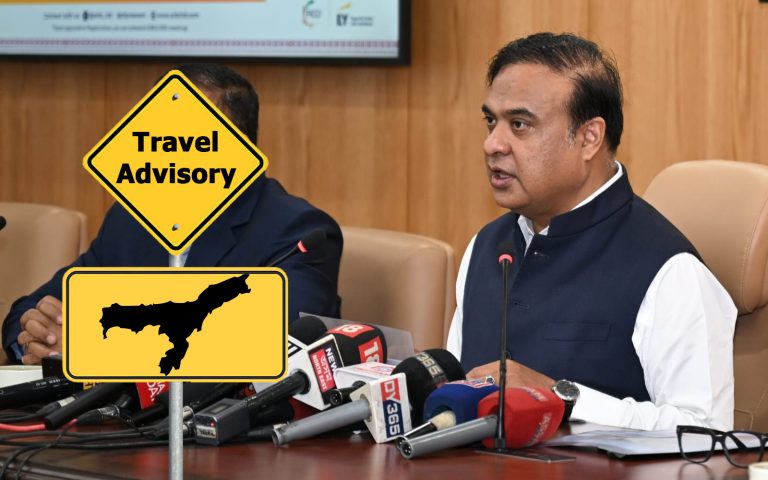
Travel advisories against Assam is the biggest hurdle in attracting foreign investment, some countries have initiated steps to lift it: Himanta Biswa Sarma

0

Ahead of the Advantage Assam 2 summit, Assam CM Himanta Biswa Sarma on Saturday said that the biggest hurdle in attracting foreign investment to the state is travel advisories issued by various countries. He said that most nations club Assam with other northeastern states, and advise their citizens to not visit the region including Assam due to the history of terrorism and unrest in the region. The CM added that withdrawal of the advisories is the first step in attracting foreign investment.

Although terrorism has almost ended in Assam, the travel advisory against the state by various nations continues. Several Western nations, including the UK and the US, have Assam in their travel advisories. For example, the US advises its citizens to not travel to Manipur, and reconsider travel to northeastern states due to terrorism and violence.

UK govt also issues similar advisories for Manipur and other states in the region. Similarly, the Canadian govt advises its citizens to not visit Assam and Manipur due to the risk of terrorism and insurgency.

Speaking to the media ahead of the upcoming Advantage Assam 2.0 investment summit, the Chief Minister said that the removal of these advisories is the top priority for facilitating international business engagement. He said that the state govt with the help of the external affairs ministry is talking with several nations to lift the advisories, and some countries are sending teams to the state to assess the situation before taking any decision in this direction.

“Without the withdrawal of the travel advisory, foreign investment is not possible. If someone cannot visit the state as a tourist for seven days, how can one invest in the state,” CM Sarma told the media. He further said that through the initiatives of External Affairs Minister Dr S. Jaishankar and the state govt, Japan and Australia have already taken steps.

The CM said that a Japanese delegation is currently in Assam, and an Australian team will be arriving in the coming days for the assessment. He added that apart from talking to local police and officials, the delegations may also talk to ordinary citizens including journalists, academicians etc, stressing that it is in the hand of such people who are contacted by the foreign govt representatives to ensure that Assam’s image is improved.

Himanta Biswa Sarma said that if a single journalist or any other such person says that there is no investment environment in Assam, the entire state will suffer. He also added that foreign missions follow regional media for updates on the local situation, therefore media plays a vital role in attracting foreign investment.

CM Sarma said that due to the advisories, Assam attracts far less tourists despite its vast potential in the tourism sector. However, the CM expressed hope that several countries will lift the travel advisory against Assam in the coming month, allowing their investors to visit the state.

Japan and Singapore to sign MoUs with Assam at Advantage Assam 2.0: CM Himanta Biswa Sarma

0

The Assam government will sign two Memorandums of Understanding (MoUs) with Japan and Singapore during the Advantage Assam 2.0 investors summit, Chief Minister Himanta Biswa Sarma said on Saturday.

Addressing a press conference in Guwahati, CM Sarma said that Japan is interested in recruiting manpower from Assam, initially around 50,000 workers, while Singapore seeks to hire nurses from the state.

Highlighting the progress made since Advantage Assam 1.0, the Chief Minister said, “We got two major infrastructure developments after Advantage Assam 1.0–the Paradeep to Numaligarh crude pipeline. The Union government gave us this massive infrastructure, and the Gas grid.”

He also mentioned Bhutan’s interest in developing Gelephu My Fullness City.

“Bhutan wants to set up Gelephu My Fullness City. I request that the Bhutan government make a special industrialization economic zone in Assam,” CM Sarma said.

“During my recent visit to Singapore, I met the President of Singapore, which is a recognition for Assam,” he added.

Prime Minister Narendra Modi will inaugurate and address the Advantage Assam 2.0 conclave on February 25, with External Affairs Minister S. Jaishankar also participating in a thematic session.

The Advantage Assam 2.0 will be held on February 25-26.

The Assam Chief Minister said that the state will focus on attracting investments in key areas such as tourism, renewable energy, semiconductors, aerospace and defence manufacturing, fragrances and flavours, bamboo and others in Advantage Assam 2.0.

He further said that ambassadors from 31 countries are expected to attend the event.

Assam CM has also invited Finance Minister Nirmala Sitharaman to the conclave’s closing ceremony.

According to Assam CM, the inaugural event will see the presence of Tata Sons Chairman N Chandrasekaran, Vedanta Chairman Anil Agarwal, JSW Chairman Sajjan Jindal, Mukesh Ambani, Gautam Adani, and other top industry leaders.

Additionally, global business councils such as the US-India Business Council, New Zealand-India Business Council, and UAE-India Business Council will participate, along with representatives from the European Union.

Ahead of the summit, the Assam government will celebrate 200 years of Assam tea and industrialization on February 24, featuring a Jhumur dance performance with 8,000 artists from across the state.

“On the occasion of 200 years of Assam tea and the tea industry, we will organise a Jhumur performance on February 24,” CM Sarma said, adding that a total of 8,000 artists from different parts of the state are preparing to show their Jhumur dance, synchronised to the rhythmic beats of the Madal.

With an estimated investment of nearly Rs 3 lakh crore, Advantage Assam 2.0 is set to transform Assam’s industrial landscape. The government has been actively working to attract investors through multiple roadshows and foreign visits by CM Sarma.

The initiative is expected to generate employment opportunities and position Assam as an investment hub in Southeast Asia.

(This news report is published from a syndicated feed. Except for the headline, the content has not been written or edited by OpIndia staff)

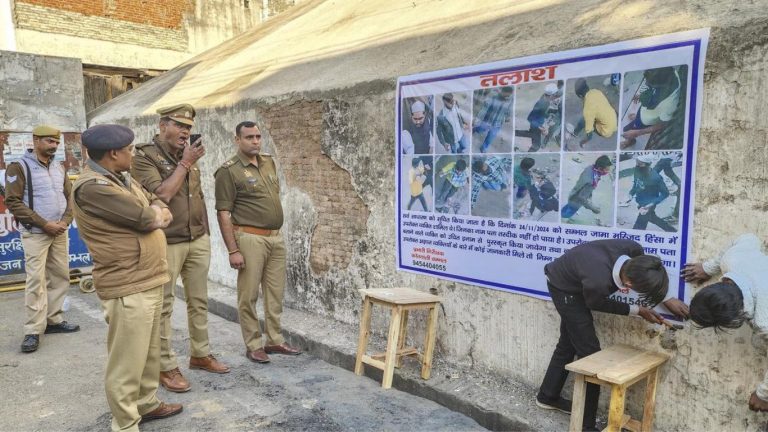
Sambhal violence: Police puts up posters of 74 suspects identified through CCTV footage

0

Hours after posters of one of the accused persons were allegedly removed by unknown persons, the police on Friday put up the posters of 74 suspects in the Sambhal violence in which around 20 police officers were injured in stone pelting by Islamists.

Sambhal Additional Superintendent of Police (ASP, North), Shrish Chandra said, “The posters contain photographs of suspects carrying stone in their hands. The suspects captured through CCTV footage from drone cameras, closed-circuit television (CCTV) and videos made on mobile phones were directly involved in the violence. Their identity is yet to be confirmed, so posters have been up up to seek public assistance in identifying them,” he said.

The posters have been out up at several places including the Sambhal Jama Masjid. Police personnel posted at the recently set up police post across the main gate of the mosque have entrusted with the responsibility to ensure that the posters are not torn again. The police have also announced rewards for anynone who assists in identifying the accused.

”We got information that some miscreants tried to remove the posters. We will identify these people and take action against them,” said Anuj Kumar Tomar, SHO Sambhal Kotwali.

The Sambhal violence

On 24th November last year, massive violence erupted in the Sambhal district of Uttar Pradesh after Islamists rioted and pelted stones against the police injuring more than 20 officers to stop a court-mandated survey of the Sambhal Jama Masjid, in Sambhal, Uttar Pradesh.

On 19th November, a court-mandated survey was conducted at Jama Masjid in Sambhal, Uttar Pradesh. The court ordered the survey in response to a petition filed by Supreme Court Advocate Vishnu Shankar Jain, and seven co-plaintiffs, asserting that the mosque occupies the site of a temple dedicated to Bhagwan Kalki. The site in question is a protected monument under the Ancient Monuments Preservation Act of 1904. A heavy police force was deployed in the area to ensure the survey proceeded peacefully.

However, on 24th November, during the second round of court-mandated survey at Jama Masjid, Islamist mobsters gathered outside the mosque and engaged in violence. They pelted stones at police, opened fire at police personnel, and set ablaze vehicles and shops. More than 20 policemen were injured.

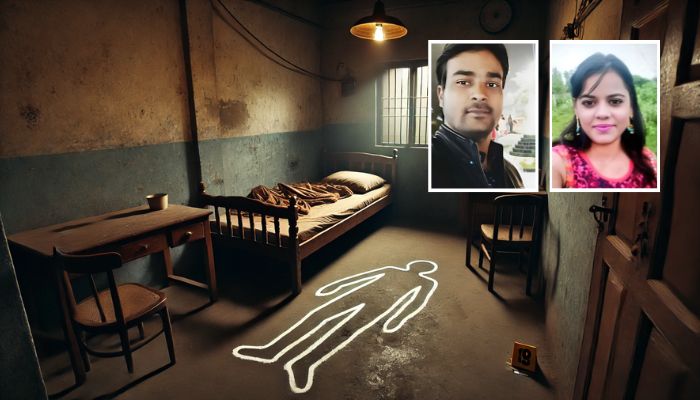
Assaulted, tortured, and forced to embrace Islam: Faeem Qureshi sentenced to 10 years in Varsha Raghuvanshi dowry death case. Read what the judgment said

0

On 6th February, the Additional District and Sessions Court, Agra, convicted Faeem Qureshi and sentenced him to 10 years of rigorous punishment for torturing and harassing his wife, Varsha Raghuvanshi, leading to her suicide in 2021. Faeem has been found guilty under Sections 304B and 498A of the Indian Penal Code (IPC) for dowry death and cruelty. OpIndia accessed a copy of the judgment in the case.

On the other hand, other accused in the case, including Faeem’s father, Qayoom Qureshi, mother, Firdaus Qureshi, brother, Naeem Qureshi, and sister, Tabassum Qureshi, were acquitted, citing a lack of sufficient evidence linking them directly to the crime. The prosecution argued that Varsha was not only harassed for dowry but also subjected to religious persecution. However, the court noted that the allegations of preventing her from practising her Hindu faith and forcing her to convert to Islam were not backed by substantial evidence.

What is the case?

The case dates back to 12th November 2021. Varsha was found dead in her marital house. Her family alleged that she endured months of severe abuse, both physical and psychological, over repeated demands for dowry. An FIR was lodged by Varsha’s brother, Dushyant Raghuvanshi, against her husband and in-laws. In the FIR, her brother alleged that they demanded ₹5 lakh and a car as a dowry. When the demands were not met, Varsha was subjected to physical and mental torture. He added that her in-laws told her that if she failed to bring a dowry and a car, she would be treated as a servant and would never get the status of a wife.

The complaint further stated that the victim was isolated. She was not provided with any financial support from her husband, and her in-laws forced her to renounce her Hindu faith and embrace Islam. The complainant also alleged that his sister was forced to cook and eat meat.

The complainant also alleged that four months before the incident, Faeem forcefully made Varsha sign blank stamp papers and told her that if she did not fulfil the demands, he would divorce her and kill her.

During the hearing, witnesses recounted that she was mocked for performing pooja and insulted for following Hindu traditions. She was allegedly warned that if she continued to refuse to embrace Islam, it would cost her life.

On the evening of 12th November, at around 6:30 PM, the victim’s family received a phone call informing them about her death. The in-laws claimed that Varsha died by suicide. Hearing about the incident, they rushed to Varsha’s marital house, where they found her lifeless body on the floor. Her husband and in-laws were nowhere to be found in the house. He added that neither he nor the police saw Varsha hanging.

Suspicion arose over the unnatural circumstances of her death, and a police case was registered, invoking stringent sections of the IPC and the Dowry Prohibition Act. In the complaint, her family contested the claims of the in-laws. They insisted that Varsha was murdered and then hanged to make it appear like a suicide.

Witness testimonies and medical findings

During the trial, multiple witnesses gave statements that painted a grim picture of the victim’s final months. Her brother, Dushyant, recounted that he had talked to the victim over the phone numerous times, in which she confided about the daily torture she faced. He testified that she had specifically mentioned that she was beaten up for not bringing dowry and for refusing to convert to Islam. He accused Faeem of Love Jihad and coercing his sister into an affair before running away to get married. He also informed the court that her in-laws used to call her “Kafir ki aulaad” (daughter of a Kafir).

Her mother, Manorama, and sister, Khushboo, informed the court that the victim’s in-laws humiliated her for following Hindu customs. She stated that Varsha was repeatedly insulted for performing pooja and was told that idol worshipping was forbidden. She further said in her statement that Varsha once told her over the phone that if she did not convert, she would not survive in the house.

The investigating officer supported the prosecution’s case. The police stated that the crime scene appeared manipulated. He noted that while the victim was found hanging, there were struggle marks on her body.

The forensic experts, however, presented a more complex analysis. The post-mortem confirmed that Varsha died due to asphyxia from hanging. The post-mortem report explicitly noted that no external injury marks were found on her body, apart from ligature marks around her neck.

The forensic expert testified that there were no visible signs of struggle or external trauma that could indicate homicide. The defence used this as a key argument, stating that the absence of bruises or wounds ruled out physical assault before death. The court considered this aspect but also acknowledged that psychological and emotional harassment could not be ruled out, especially in cases of dowry-related deaths.

The defence claimed Varsha’s family harassed them

During the argument, Faeem claimed that Varsha’s family used to harass them. They would call Varsha (who was named Zoya after conversion) and harass her for interfaith marriage. They would claim that as she had married a Muslim, it had become difficult for her younger sister to get married. Faeem claimed that Varsha knew he was a Muslim and argued that he had never harassed or assaulted her.

The judgment

The court ruled that the prosecution successfully established that Varsha was subjected to continuous dowry harassment and cruelty. The court directly held Faeem Qureshi responsible for her death. The court acknowledged that his actions, either through direct physical harm or relentless psychological abuse, were instrumental in causing Varsha’s death.

The court noted that Varsha repeatedly informed her family about the cruelty she faced. Thus, the court found that her death was not accidental but the result of sustained abuse. The verdict noted that the elements necessary for conviction under Section 304B of the IPC were met, as Varsha had suffered harassment related to dowry “soon before her death,” fulfilling the legal requirement for a dowry death case.

However, when it came to the other accused, the court found the evidence insufficient. The court noted that though the victim’s family insisted that her in-laws were equally responsible, mere familial relations do not automatically implicate someone in a crime. The court said that the prosecution failed to provide any direct evidence of the in-laws participating in or instigating the violence.

Referring to legal precedents, the court stated that in cases of dowry deaths, the burden of proof against in-laws must be beyond reasonable doubt. In this case, while suspicions were strong, material evidence was lacking, leading to their acquittal.

Furthermore, the aspect of religious coercion was also discussed in detail during the trial. The court acknowledged that witness testimonies pointed to instances where Varsha was discouraged from performing pooja and was pressured to change her faith. However, it stated that no independent witness, audio recording, video proof, or written communication substantiated these claims.

The court thus refrained from convicting the accused under Sections 295 and 298 of the IPC, which deal with religious persecution and insult to religious beliefs. The court, in its observations, noted that there was no physical evidence of Hindu religious idols or pooja-related materials found at Varsha’s marital home, contradicting claims that she actively practised Hindu rituals there.

It further remarked that Varsha had already converted to Islam before marriage, and therefore, the allegations that she was coerced into conversion after the wedding lacked substantiating evidence. While witness testimonies suggested she faced religious humiliation and pressure, the court held that in the absence of independent verification, digital proof, or written complaints from the victim, these claims could not be legally upheld beyond reasonable doubt.

Punishment for the convicted accused

The court sentenced Faeem Qureshi to ten years of rigorous imprisonment under Section 304B IPC for the dowry death of his wife, Varsha Raghuvanshi. Additionally, he was sentenced to two years of rigorous imprisonment under Section 498A IPC for cruelty, along with a fine of ₹20,000. In case of non-payment, he would have to serve three more months in prison.

Under Section 4 of the Dowry Prohibition Act, he was again sentenced to two years of rigorous imprisonment, with another ₹20,000 fine, and a similar provision of three months of additional imprisonment for non-payment.

The court ordered that all sentences run concurrently, ensuring that the convict served the longest of them—ten years of imprisonment. The time Faeem had already spent in jail during the trial was set to be adjusted against his sentence.


China takes a veiled dig at India-US partnership, says bilateral co-operation should not incite bloc rivalry as the US announces reciprocal tariffs

0

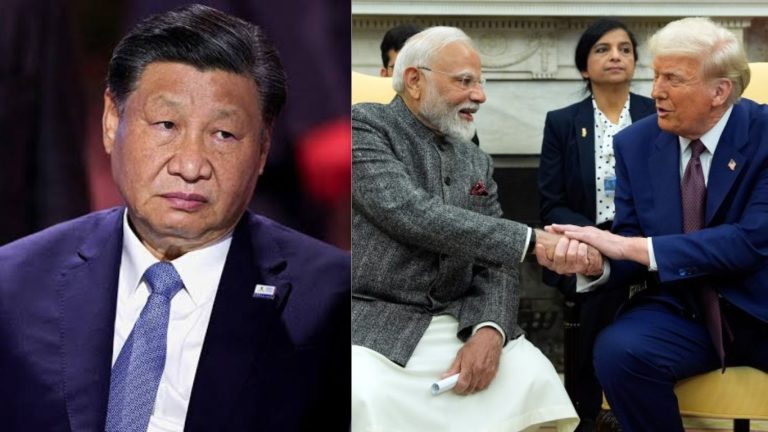
The meeting of Prime Minister Modi and US President Donald Trump in Washington on Thursday has apparently alarmed China as the country gave a veiled reaction to the meeting. PM Modi and President Trump met to discuss a range of issues including trade, investment, defence, and artificial intelligence to strengthen the ties between the two countries.

Unsurprisingly, the meeting has alerted China which issued a statement on Friday saying that it should not be made an issue in the meeting. Guon Jiakun, the spokesperson of the Foreign Ministry of China said that China should not be made an issue in cooperation between countries and that such cooperation should incite bloc rivalry. “No one should make China an issue in the relations and cooperation between countries or seek to instigate bloc politics and confrontation,” Jiakun said.

Trump offered to mediate India-China border tension

China’s reaction comes after President Trump offered to mediate the India-China border dispute which was subtly turned down by India. After meeting with PM Modi, President Trump offered support in resolving the long-standing border tensions between India and China. Reacting to President Trump’s statement, Indian Foreign Secretary Vikram Misri said that India would maintain a bilateral approach to the problem. “Whatever issues we have with any of our neighbours, we have always adopted a bilateral approach to deal with these issues. It’s no different between India and China. We have been discussing any issues that we have with them on a bilateral plane, and we will continue to do so,” Misri said.

Trump openly threatened BRICS countries

President Trump has been quite vocal in attacking the BRICS after assuming office in January. Hours before his meeting with PM Modi, Trump said, “BRICS is dead”. Trump also threatened to impose 100 per cent tariff on the BRICS countries which include Brazil, Russia, India, China and South Africa, if the group took any steps that undermined the Dollar like launching the bloc’s own currency. “BRICS was put there for a bad purpose…I told them if they want to play games with the Dollar, then they are going to be hit by a 100 per cent tariff. The day they mention that they want to do it, they will come back and say – we beg you, we beg you,” said Trump.

India-US Defence co-operation

China’s concern also stems from the growing India-US partnership which includes defence cooperation between the two countries. Some important decisions relating to strategic initiatives aimed at expanding technology exchanges and strengthening bilateral ties were taken during the meeting.

As per the statement of the Ministry of Foreign Affairs (MEA), India and the US will formalise a ten-year defence framework, expected to be signed later this year. The agreement is expected to lay down the foundation for deepening military partnerships focusing on technology, trade, and defence industrial cooperation. The outcomes of the meeting also included the announcement of the US-India COMPACT (Catalysing Opportunities for Military Partnership, Accelerated Commerce & Technology for the 21st Century) which aims to drive innovation and collaboration across various key sectors including defence.

India will be able to strengthen its military strength by procuring advanced defence systems from the Us including the Javelin missiles, Stryker vehicles and P-8I Poseidon aircraft. The US committed to review its policy on supplying fifth-generation fighters including the F-35 Lightening II which is one of the most advanced stealth fighters in the world, to India.

India and the US also discussed the International Traffic in Arms Regulations (ITAR) to ease the process of defence technology transfers between the two countries making way for spare part supplies and local maintenance of US-supplied defence systems. The two countries will also be discussing a Reciprocal Defence Procurement (RDP) agreement this year which will ease the process of purchasing defence goods and services ensuring a convenient procurement process between them.

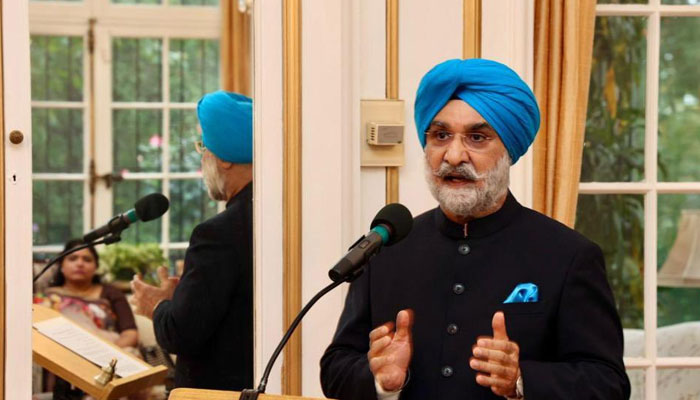
“People threatening Indian interests need to watch out”: Former Indian Ambassador to US Taranjit Sandhu on decision to extradite Tahawwur Rana

0

Former Ambassador of India to the US Taranji Singh Sandhu has said that US President Donald Trump’s announcement about the extradition of the 26/11 Mumbai terror attack accused Tahawwur Rana to India sends a clear message and people indulging in such activities or threatening US-India partnership and Indian interests, need to watch out.

In an interview with ANI, Sandhu, who is also a BJP leader, said that the joint statement issued after talks between Prime Minister Narendra Modi and President Trump also talks about decisive action against elements who threaten diplomatic safety and sovereignty of the two countries.

“It was in the works and it also sends a clear message as US President Trump has himself said in the press conference that there are other names also which are under consideration. So people who are indulging in this kind of a business and also threatening the US-India partnership and Indian interests need to watch out,” Sandhu said. He was answering a query on President Trump approving the extradition of Tahawwur Rana to India.

Asked if President Trump will take stricter actions against anti-India elements like Khalistani separatists, Sandhu said the joint statement talks of tackling different kinds of threats.

“If you look at the joint statement, it mentions about that. It speaks in the people’s section about unruly elements and different kinds of threats. It is expected that they will take stronger and stricter action and they will keep them under watch,” he said.

The joint statement said PM Modi and President Trump committed to strengthen law enforcement cooperation to take decisive action against illegal immigration networks, organised crime syndicates, including narco-terrorists human and arms traffickers, “as well as other elements who threaten public and diplomatic safety and security, and the sovereignty and territorial integrity of both nations.”

President Trump made the announcement concerning Tahawwur Rana in a joint press conference with PM Modi.

“I am pleased to announce that my administration has approved the extradition of one of the plotters (Tahawwur Rana) and one of the very evil people of the world, having to do with the horrific 2008 Mumbai terrorist attack to face justice in India. He is going back to India to face justice,” Trump said.

The US State Department had said last month that it is evaluating the next steps regarding Tahawwur Rana’s extradition to India.

A spokesperson from the State Department told ANI that the US has long supported India’s efforts to bring to justice the perpetrators of the 26/11 Mumbai attacks case.

“In view of the recent Supreme Court decision, and consistent with applicable US law, the Department of State is currently evaluating the next steps in this case, the statement said.”We have long supported India’s efforts to ensure the perpetrators of the Mumbai terrorist attacks face justice,” the statement added.

Answering queries at a press conference last week Foreign Secretary Vikram Misri had said that India is in touch with US authorities for Rana’s extradition.

“On the extradition of Tahawwur Rana, from recent developments, you would be aware that he has exhausted all legal avenues in the United States with the US Supreme Court also dismissing his appeal and therefore, we are now in touch with US authorities to work on the logistics of his surrender to Indian authorities,” Misri had said.

Pakistani-origin businessman Tahawwur Hussain Rana was convicted for his role in the 26/11 attacks on Mumbai.

Rana’s co-conspirators included David Headley, who pleaded guilty and cooperated against Rana.

On January 21, the US Supreme Court denied a petition for a writ of certiorari filed by Rana, seeking to prevent his extradition to India.

The petition, filed in November 2024, was against an earlier order of a lower court that had ruled in favour of his extradition. A writ of certiorari is a legal document that allows a higher court to review a case from a lower court.

The 26/11 terror attack in Mumbai resulted in the killing of 174 people, including 20 security personnel and 26 foreigners. Over 300 others were injured.

(This news report is published from a syndicated feed. Except for the headline, the content has not been written or edited by OpIndia staff)