Home Blog Page 4991

Hathras: First statement of the victim’s mother after the strangulation emerges, has no mention of rape

The Hathras incident has become a political slugfest where ruling and opposition parties are engaged in allegations and counter-allegations. After the young victim, a 19-year-old girl, succumbed to her injuries on 29 September, a lot of claims and misinformation have been doing rounds on the social and mainstream media.

Initially, many media reports had claimed that the victim had her tongue severed, eyes gouged out, spine broken and was brutally raped by a group of men in her village. However, the police later clarified that the claims of brutality were false.

The police had stated that the claims of eyes gouged out and tongue cut etc are false. They had stated that the girl was brutally strangulated, resulting in damage to her neck and spine. The victim had also bitten her tongue during the attack, due to which there was an injury on the tongue. The police statement had mentioned that the victim was able to speak and the injuries, (neck and tongue) were due to the strangulation. They have asserted that the victim had spoken to them and had recorded her spoken statement and had named the accused before police herself.

Videos shared on social media that showed the victim and her family in a hospital, much before the media hype over ‘gang rape’ claims, also show that the girl had injuries on her neck, and was speaking to people.

Discrepancies between media claims and details that emerged in the case later

Media reports have been claiming that the Hathras victim was gang-raped. Though the initial reports of brutalities like gouging eyes out and cutting tongue were proven false soon, reports persisted, however, that the victim was gang-raped.

Several videos have emerged on social media, claiming to be that of the initial statements of the victim and her mother, where there is no mention of gang rape or any kind of sexual assault. Speaking to apparent local media persons, the mother of the victim was seen stating that they were in the fields cutting the grass when a local boy Sandeep, from the ‘Thakur’ caste had attacked the girl and strangulated her.

In a video circulating on social media, the mother of the victim, reportedly in her first media statement after the incident, is seen saying that the accused Sandeep, son of Guddu in their village, had attacked the girl and strangulated her. There are several videos circulating, all have the similar statement from the mother, that they had a long dispute with Sandeep’s family, and Sandeep had attacked the girl and strangulated her, in an attempt to kill her. There have been no claims of rape or gang rape. She also mentions that it was Sandeep alone and no one else.

Video of Victim’s statement

In another video shared by Twitter user ‘Shash’, the victim’s statement can be heard. In this video, the victim is visibly in pain, and seems to have a neck injury with clear strangulation marks on her neck.

Wincing in pain, the victim says that she has been strangulated. She further states that the accused had strangulated her with hands. Some of her words are not clear in the video. Someone in the background asks why did the accused strangulate her, to which her answer is not clear. She further states that he strangulated her with his hands. On background, her mother says that they visit the fields every day for work.
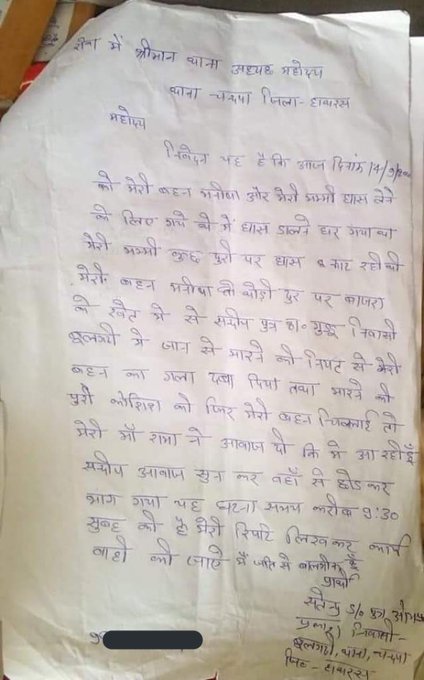
Police complaint filed by victim’s brother , image via @BefittingFacts on Twitter

The police complaint filed by the family also mentions that the girl was attacked by Sandeep (not a group of men) who had strangulated her in an attempt to kill her. The initial media reports of the incident also have the same version, that the accused Sandeep had strangulated the victim in an attempt to kill her.

Police say post-mortem, forensic examination found no evidence of rape

The UP Police had stated that the post mortem report did not mention any injuries that may have indicated rape or sexual assault. ADG Prashant Kumar had stated that the forensic lab report of the samples collected from the victim’s body have ruled out rape or sexual assault.

Incidents of gang rape spike a lot of public outrage and are often hyped by media, ignoring other crimes that are ‘less sensational’. The Hathras incident has been already used for political goal-scoring, media propaganda and allegations of police and government apathy.

A young victim had died after a brutal attack. A 19-year-old girl is physically no match for an adult male. The brutal way the girl has been strangulated, eventually leading to her death, is condemnable and certainly deserves the harshest punishment. The images, reports and videos of the incident also subtly lay down the stark public, media and administrative apathy to poor victims of crime. But it is not clear how, and why the allegations of gang rape and brutal assault (eyes gouged out, tongue cut) etc were incorporated into the case.

Allegations of police apathy towards the victim’s family, including negligence in filing initial complaint and the hurried way the police performed the last rites of the victim are also under scanner. A lot of things do not add up. When the family only accused one person, how and from where the allegations of gang rape were brought into the case? Only a detailed investigation will reveal the truth.
Naked corpse of a girl found in Rajasthan hospital, family alleges rape: Here is how Congress leader trivialised the case

A shocking incident has surfaced from the Congress-ruled State of Rajasthan. The naked corpse of a girl has been discovered at a hospital in the Banswara district, reported Times Now. The tribal-dominated area falls under the jurisdiction of the Khamera police station.

A case has been registered by the police under Indian Penal Code (IPC) Sections 302 (murder), 366 (abduction), and 372 (selling minor children for prostitution). Reportedly, the post-mortem of the victim has not been conducted, despite several requests by the family. As per Times Now, the accused had first dropped the victim at the hospital before fleeing the crime scene.

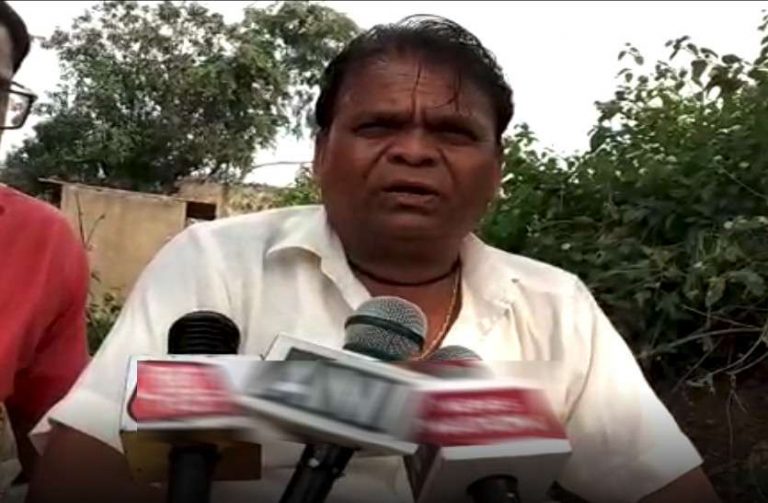
The family of the victim has also claimed that she was poisoned and raped. The cops, however, have not lodged a case for rape. Meanwhile, in a bizarre attempt at trivialising the atrocities on the girl, Congress MLA (Ghatol) Harendra Ninama claimed that the incident was that of a ‘love affair’ gone wrong.

Rajasthan CM Ashok Gehlot downplays Baran rape case

This is not the first time that Congress leaders had resorted to downplaying a rape case. Hours after it was reported that two minor girls, aged 13 and 15, from Baran, were taken to Kota, Jaipur and Ajmer and raped for three days, Rajasthan CM and senior Congress leader Ashok Gehlot took to Twitter to claim that the minor girls were not ‘forced’. He claimed that they went with the boys on their own free will.

The Rajasthan CM Tweeted that the girls had themselves admitted in front of the magistrate in their CrPC section 164 statement that they were not forced by the boys, who he claimed were also minors. This was despite the fact that the two sisters had reportedly admitted on camera that the two boys had abducted them, drugged them and raped for days.

Bathing with women, sleeping with naked girls: Read about Gandhi’s ‘experiments with celibacy’

While Mahatma Gandhi is known world-wide for his non-violence movement for independent of India, his simple lifestyle and other such aspects that make him a ‘Mahatma’, there are several other aspects in his that raise curiosity in the minds of people. Apart from the extreme pacifism that Gandhi practised which was questioned by many of his contemporaries, the one weird aspect, widely known but little discussed in public discourse, is his experiments with his celibacy.

Mohandas Karamchand Gandhi had strong views on sex, and he often gave detailed instructions to his followers on this subject. His views on sex were not very popular, which was described as “abnormal and unnatural” by India’s first Prime Minister Jawaharlal Nehru.

Gandhi was married with Kasturba at the age of 13, not unusual for his time. They led a normal married life, who had four sons. Later in life, Gandhi had written how he had lustful feelings for his wife. “Even at school I used to think of her, and the thought of nightfall and our subsequent meeting was ever haunting me,” he wrote in his autobiography. He had written that he always wanted to teach his illiterate wife, but he could not find time due to his lustful love. His thoughts on sex had completely changed later in his life, and he felt ashamed of his life with his wife before he started his public life.

Gandhi has also written about the time of his father’s death as his double shame. When his father was ill, Gandhi had regularly taken care of him, like dressing the wound, and massaging his legs at the night. His wife became pregnant at that time, which Gandhi later felt was a matter of double shame, as his father was ill, and he was still in school. “Every night whilst my hands were busy massaging my father’s legs, my mind was hovering about the bed-room – and that too at a time when religion, medical science and commonsense alike forbade sexual intercourse,” he wrote. Gandhi also recalled how he could not be with his father during his last moments as he went to his bedroom to have sex with his wife, a decision he regretted later.

Brahmacharya

Gandhi’s attitude towards sex changed in his late 30s, when he was in South Africa. He deliberated on how he can give his best service to humanity, and decided that it must be done by embracing poverty and chastity. At the age of 38, in the year 1906, he embraced Brahmacharya, which includes complete abstinence from sexual relationships. He talked about his decision to his wife, and he writes that she had no objection. He had already discussed with his cousins whether he should stop having sex with his wife, and he was deliberating on in since 1900. Brahmacharya meant a complete change in his lifestyle, not just celibacy, it also included strict control on diet and other aspects of daily life.

Very soon, Gandhi become a completely changed man on his opinion on sex. In 1907, he wrote in the Indian Opinion, “It is the duty of every thoughtful Indian not to marry. In case he is helpless in regard to marriage, he should abstain from sexual intercourse with his wife.” According to him, sexual intercourse was justified only to have children, and should be avoided in all other times.

The experiments

Gandhi’s Brahmacharya didn’t end in mere abstinence, it became weird when he started to challenge his resolve to test himself. And thus began a series of experiments that would not be acceptable in today’s era. He had set up ashrams where he conducted his experiments, where boys and girls were to bath together, sleep together. But they were to maintain chastity, they would be punished if there were any sexual talks. The rules of ashram had forbidden married couples living in the ashram to sleep together, and Gandhi had advised that the husbands should not be alone with their wives. When they felt passion, they should take a cold bath, he had further advised.

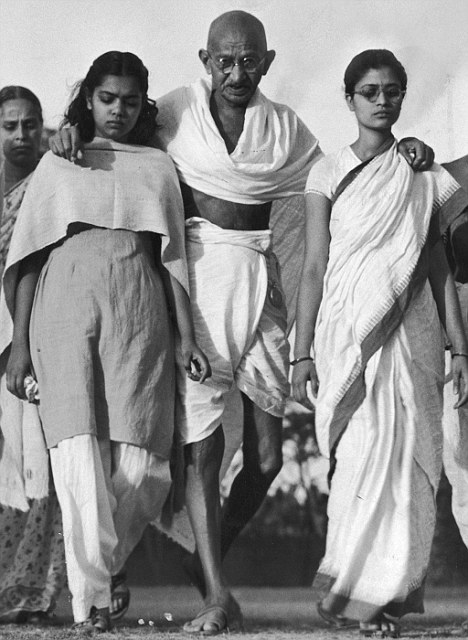
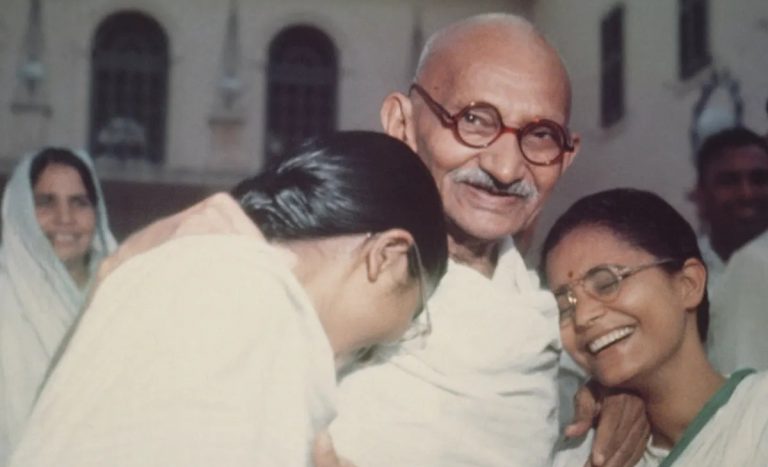
Gandhi with granddaughter Sita and his nephew’s wife Abha

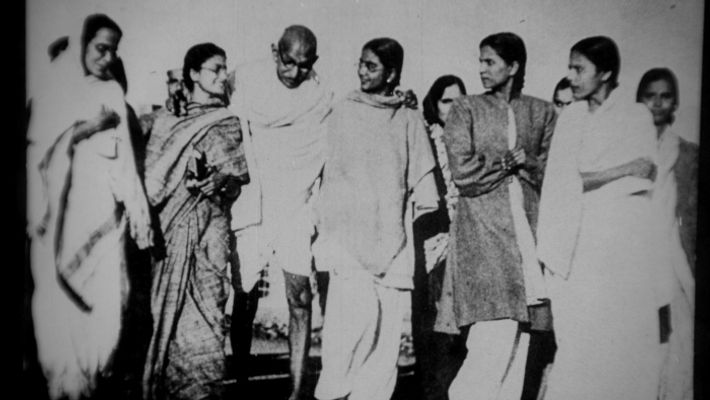
Rules were different for Gandhi himself, who had started to surround himself with women to challenge his resolve. In the 1920s, Gandhi had started resting his hand on the shoulders of young women during his morning and evening walks, whom he had jokingly referred to as his walking sticks. His grandnieces Abha and Manu were his regular ‘walking sticks’. After this started elaborate daily massage performed by young women in the ashram. The massage was followed by taking bath, helped and accompanied by his female attendants.

Sushila Nayar, sister of Gandhi’s personal secretary Pyarelal Nayyar, was his personal doctor, who took care of Gandhi since her teenage years. She was his regular companion in taking baths. He had claimed that he didn’t look at Sushila while taking bath together, saying he used to keep his eyes tightly shut.

As time progressed, Gandhi’s experiments also had progressed, which now involved young women sleeping with Gandhi, naked. Initially it was merely a sleeping arrangement, but soon became a part of his experiments. This was his method of attaining the nirvana state of perfect Brahamacharya, to maintain abstinence while sleeping next to attractive young women without cloths. Apart from Sushila, his grandnieces Abha and Manu were his regular sleeping companion, along with other women in his Ashram.

As Gandhi grew older, the number of women surrounding him in Ashram had increased, particularly after the death of his wife Kasturba, after Gandhi denied her treatment by western medicine. More number of women were obliged to sleep with him to test his control over libido, the women who were not allowed to sleep with their own husband in the Ashram.

Disclosures

Gandhi had never hidden his unusual experiments with women, he had disclosed the same to his close associates, many times through letters.

In a letter written to his Ashram manager Munnalal Shah, Gandhi had written, “Abha slept with me for hardly three nights. Kanchan slept one night only. Vinas sleeping with me might be called an accident. All that can be said is that she slept close to me.” It may be noted that Kanchan was Munnalal’s wife, while Abha was the wife of Gandhi’s grandnephew Kanu Gandhi.

He went on to write, “what Abha and Kanchan told me was this; that she had no intention whatever of observing brahmacharya, but wished to enjoy the pleasure of sex. She, therefore, stayed very reluctantly and undressed only for fear of hurting me. If I remembered rightly, she was not with me for even an hour. I then stopped both the women from sleeping with me, for I realised that Kanu and you were upset.” Gandhi than added that these three women were excluded from the experiment.

He then added, “I have deliberately included Pra. in the experiment. Maybe I should not. She often used to sleep with me to keep me warm even before I was conscious that I was making an experiment. I used to draw her to me when she lay on the floor, shivering, for my sake.”

While a large number of women slept naked with Gandhi, and some women were willing partner of his experiments, most of them did so at the insistence of Gandhi, and not out of free will. He had a strong personality, and it was very difficult to say no to him. It was revealed by Gandhi himself. In a letter to Krishnachandra he had wrote, “What I mean is that I have done naturally. Almost all of them would strip reluctantly. I have written— haven’t I?—that they did so at my prompting. If I wish to be a brahmachari under all circumstances and want the women also to be such, this is the one way. Now leave this matter alone and watch what happens.”

From the writings of Gandhi, especially letters, it can be seen he faced great criticism for his practice. But he remained adamant, claiming that it was necessary to maintain his Brahmacharya. He had written in once such letter to Krishnachandra, “If I stop sleeping together for all time it will mean that I have been mistaken. Otherwise why should I stop it? There is a limit to abstaining from it for the sake of friends. Sleeping together came with my taking up of brahmacharya or even before that.”

Therefore, Gandhi led a very unusual life which will not be acceptable in today’s era, and legal action will follow if someone tries such ‘experiments’ today. Actually, it was not acceptable in that era also, from his personal assistants to senior leaders like Jawaharlal Nehru, everyone had criticised it. Sardar Vallabhbhai Patel had called it a “terrible blunder”, and had asked him to stop it. But he was Bapuji, with a halo around him, so he was allowed to continue with the experiments.

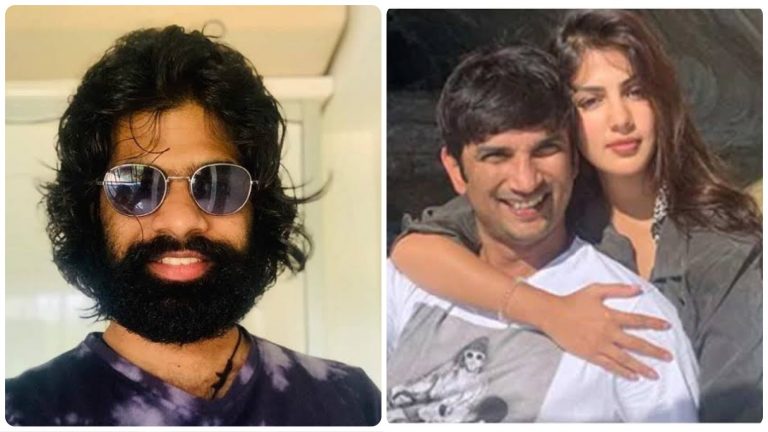
‘Rhea Chakraborty met Sushant Singh Rajput on June 13, a day before his death’: Karni Sena leader Surjeet Singh Rathore

Following BJP leader Vivekananda Gupta’s explosive testimony that Rhea Chakraborty met actor Sushant Singh Rajput a day before his death, Karni Sena leader Surjeet Singh Rathore has also attested to the claim, saying that Rhea Chakraborty was indeed at Sushant’s residence on June 13.

Speaking to Republic TV, Surjeet Singh Rathore said that he was told by filmmaker Suraj Singh that Rhea was at Rajput’s home on the night of June 13 but had left later. Suraj was also present at the hospital on June 15.

“When I went to Cooper Hospital on 15 June, Suraj Singh told me that Rhea Chakraborty was at Sushant’s residence on the night of 13 June and had probably left due to some fight. Suraj Singh was co-ordinating everything and he called Rhea and introduced me to her and Sandeep … I don’t know any of them,” Surjeet said.

On being asked why Surjeet had made such a startling revelation now and not to the investigating authorities, he stated that he was not approached by the CBI for his testimony. He also added that he made this disclosure earlier too but amidst the cacophony of Sushant Singh Rajput’s death, the media probably missed it.

Surjeet further noted that he did not know Sushant Singh Rajput personally and had not been in contact with Suraj Singh for months then.

Advocate Vivekananda Gupta claims Rhea Chakraborty met Sushant Singh Rajput on June 13

Contrary to actor Rhea Chakraborty’s assertions that she had not met Sushant Singh Rajput from almost a week before his death, Mumbai BJP leader Vivekananda Gupta on Thursday made a sensational disclosure that Rhea had allegedly met Sushant a day before his death, ie on June 13. Vivekananda said that “he was provided this information by an eyewitness”.

According to Gupta, an eyewitness had seen Sushant dropping off Rhea Chakraborty at her apartment late in the night on June 13. He also said that Mumbai Police was working under pressure due to which an investigation which should have been completed in 2-3 days was dragged to 55 days. Gupta alleged that Sushant Singh’s death is a murder case but police had hastily declared it as suicide.

Gupta argued that nobody has seen Sushant’s body hanging from the ceiling, which raises suspicion over the suicide angle being peddled in the media. He said that there could be a possibility that Sushant was killed before being hanged.

Woman constables injured as Congress workers got into a scuffle, FIR against Rahul, Priyanka and 200 others for their Hathras stunt

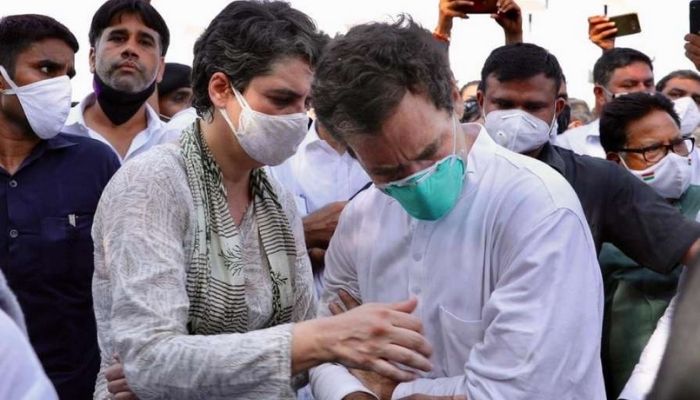
As the Hathras incident becomes fodder for political mud-slinging, many parties have tried to stir protests and caste-based violence in UP over the case. The Congress party had resorted to the politicisation of the sensitive case on Thursday with party leaders Rahul Gandhi, his sister Priyanka Gandhi and 200-odd party workers, leading a march on Greater Noida expressways en route the village of the victim’s family.

Rahul Gandhi, Priyanka Gandhi and their party supporters were stopped in the expressway, near Pari Chowk, leading to a brief confrontation with the police, following which they were detained and taken away in UP Police vehicles.

The Congress leaders had been proceeded to Hathras with a large group of supporters and media personnel, despite being aware that section 144 has been imposed in the area.

UP Police FIR

The Gautam Buddh Nagar police in Uttar Pradesh had registered a First Information Report (FIR) against Congress leaders Priyanka Gandhi, Rahul Gandhi and 200 party workers. In a statement, the Gautam Buddh Nagar police informed, “Some party members have also been booked for indulging in a scuffle during which some women constables were hurt while the uniform of a lady sub-inspector got torn”

The Congress leaders and workers were booked under Section 3 of the Epidemic Diseases Act and Indian Penal Code (IPC) Sections 188 (disobedience to order by a public servant), 269 (negligent spread of dangerous infection), and 270 (malignant spread of dangerous infection). Earlier, their convoy was stopped at Patel Chowk. The Congress leaders and their supporters were also detained by the police but eventually set free on a personal bond.

The Hathras incident

A 19-year-old girl had succumbed to her injuries on the morning of 29 September, two weeks after she was brutally attacked and strangulated by a group of men in Hathras. The police had stated that the victim had bitten her tongue, and had suffered injuries on her spine because of the brutal strangulation. The victim had later stated to the police that she was gang raped. However, the UP Police have stated that the post mortem report did not mention any injuries that may have indicated rape or sexual assault.

Yesterday, ADG Prashant Kumar had stated that the forensic lab report of the samples collected from the victim’s body have ruled out rape or sexual assault.

The UP government has constituted a 3-member SIT to look into the case. The government has also promised that action will be taken against police officials who were accused of negligence. The Yogi government has provided a monetary compensation of Rs 25 lakhs for the victim’s family.

Haryana: 35 members of 6 families do ‘Ghar Wapsi’, come back to Hindu fold

0

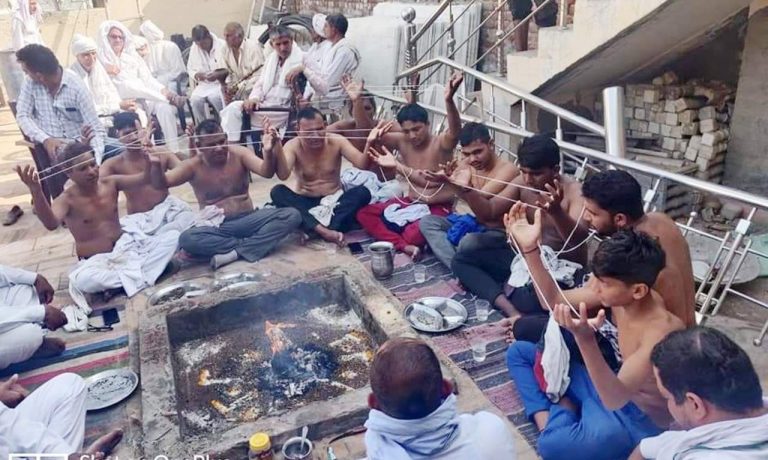
Members of 6 Muslim families in Haryana, 35 persons in total have decided to come back to the Hindu fold. In an act popularly called ‘Ghar Wapsi’, 35 persons in Haryana’s Dhamtan Shaib village participated in Hindu rituals and marked their return to the faith of their ancestors.

As per a report in Amar Ujala, these villagers have stated that their ancestors were Hindus. They were forced to convert into Islam before some generations due to various regions. However, their lifestyle, rituals and practices had been mostly Hindu. Finally, these families had decided to come back to the Hindu fold. Some months back, in a similar ‘Ghar Wapsi’, Muslim villagers in Dhanoda village in Haryana had also marked their return to the Hindu fold.

The existing Hindu families have welcomed the step and have supported the former Muslims in their ‘Ghar Wapsi’. To mark the Ghar Wapsi, a ‘Yagna’ and ‘Havan’ was organised in the village. In this Havan, five families of one Nazeer and another family belonging to Janga embraced the Hindu faith. All 35 villagers participated in the Yagna rituals and wore ‘Janeu’, the Hindu sacred thread.

Families were already following Hindu traditions and festivals

Daljeet, Rajesh, Sadik, Janga, Satveer and many others stated that they had decided to come back to the Hindu fold voluntarily and without any pressure. The villagers informed that their families had been following many Hindu traditions and festivals and even names of their children are Hindu names.

The families informed that since they were originally Hindus up to some generations ago, many family traditions are Hindu, with some Muslim lifestyle mix-up. They had been celebrating Hindu festivals like Holi, Diwali and Navaratra. The most significant ‘Muslim’ aspect of these families was that they used to bury their dead.

The families informed that from now onwards, the dead among them will be cremated, as per Hindu traditions. ADM Narvana Sanjay Bishnoi has stated to Amar Ujala that the incident had not been brought under his attention. However, he asserted that the families are free to choose any religion they want, provided they are doing it out of their own volition and not due to any pressure.

After top advisor Hope Hicks, US President Donald Trump and first lady Melania Trump test positive for Coronavirus

0

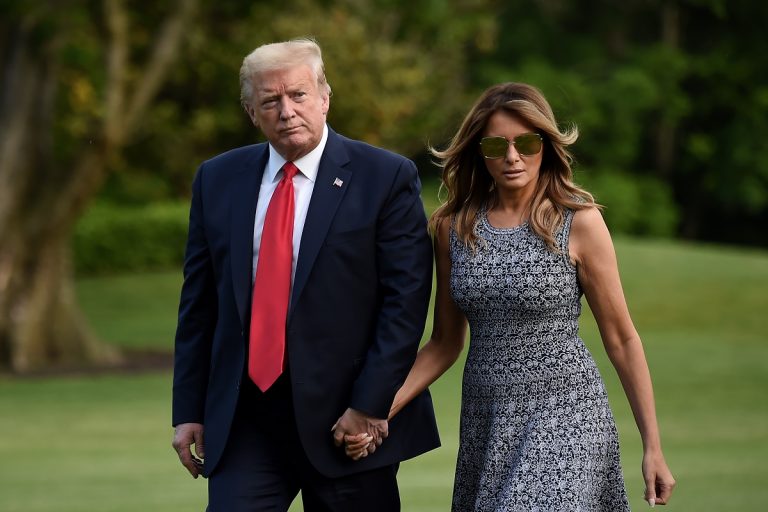
The President of the United States of America, Donald Trump, took to Twitter to announce that he and the First Lady of the USA Melania Trump have tested positive for the Wuhan Coronavirus.

“Tonight, @FLOTUS and I tested positive for COVID-19. We will begin our quarantine and recovery process immediately. We will get through this TOGETHER!”, he said.

Only a couple of hours ago, Trump had tweeted, “Hope Hicks, who has been working so hard without even taking a small break, has just tested positive for Covid 19. Terrible! The First Lady and I are waiting for our test results. In the meantime, we will begin our quarantine process!”.

Hope Hicks, a top adviser to President Donald Trump, has tested positive for the coronavirus and is experiencing symptoms, a source familiar with the matter said on Thursday.

Hicks travels regularly with the president on Air Force One and accompanied him to Cleveland for the presidential debate earlier this week along with other senior aides.

The White House said in a statement that Trump “takes the health and safety of himself and everyone who works in support of him and the American people very seriously” and that it followed guidelines for limiting COVID-19 exposure to the greatest extent possible.

Shekhar Gupta’s The Print pulls down article attacking journalist after being called out, then pulls down apology tweet, apologises again: Here is what happened

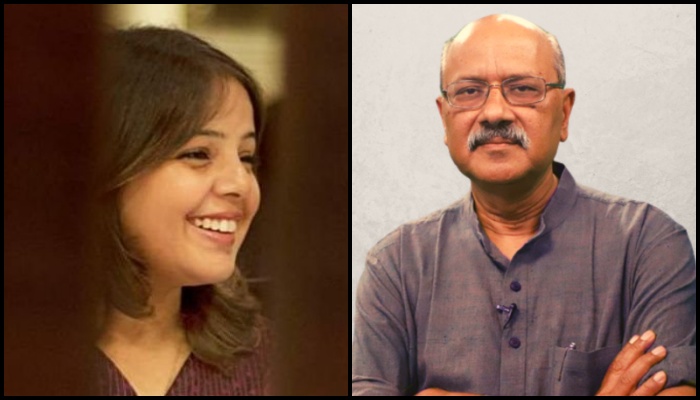
The Print, run by the Editors Guild chief Shekhar Gupta has often been caught spreading fake news and motivated, malicious propaganda. After they got caught in yet another lie by Swarajya Magazine journalist Swati Goel Sharma, The Print decided to pull down its article quietly, then, it decided to issue an apology, then, it deleted the apology and tweeted an apology again.

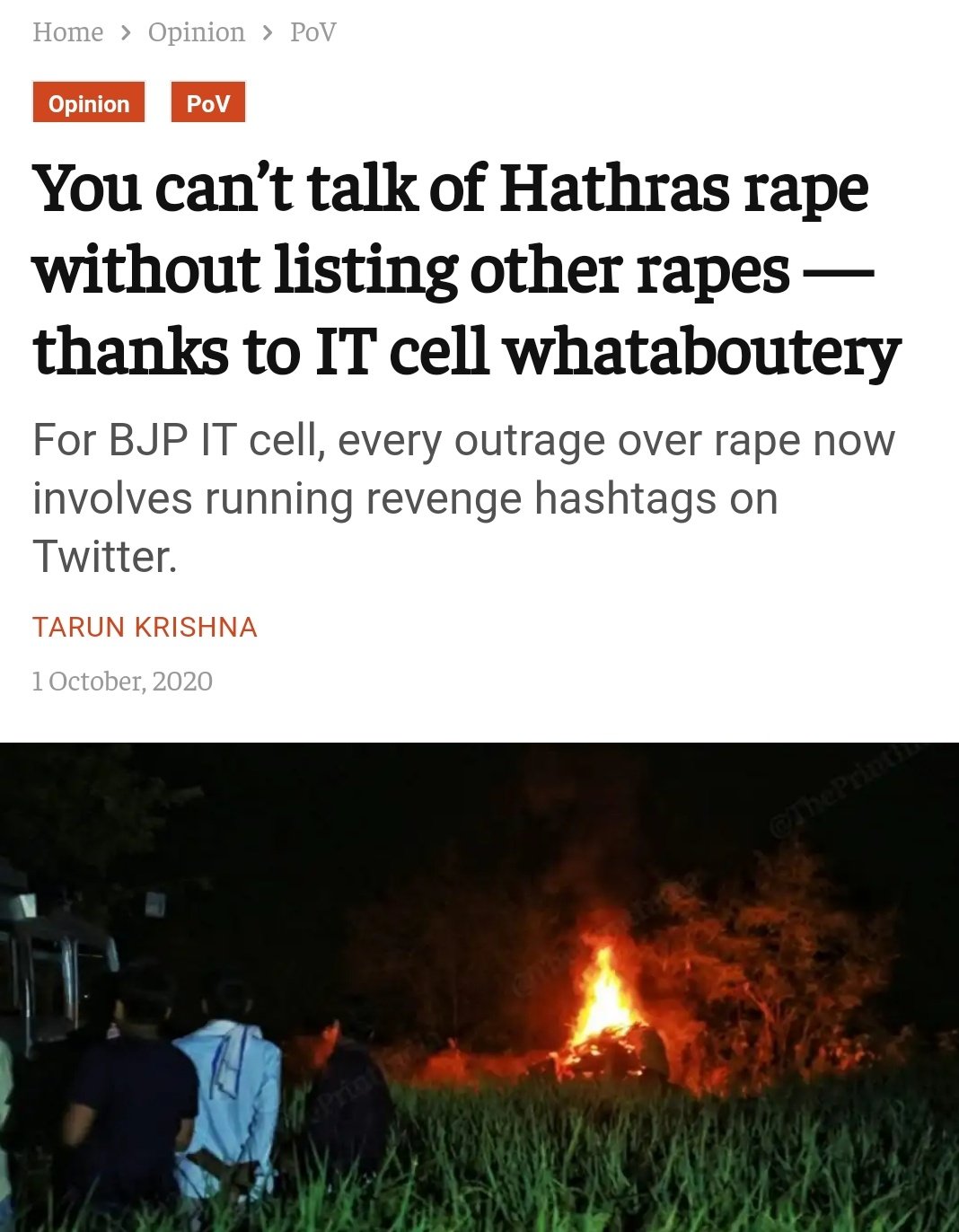
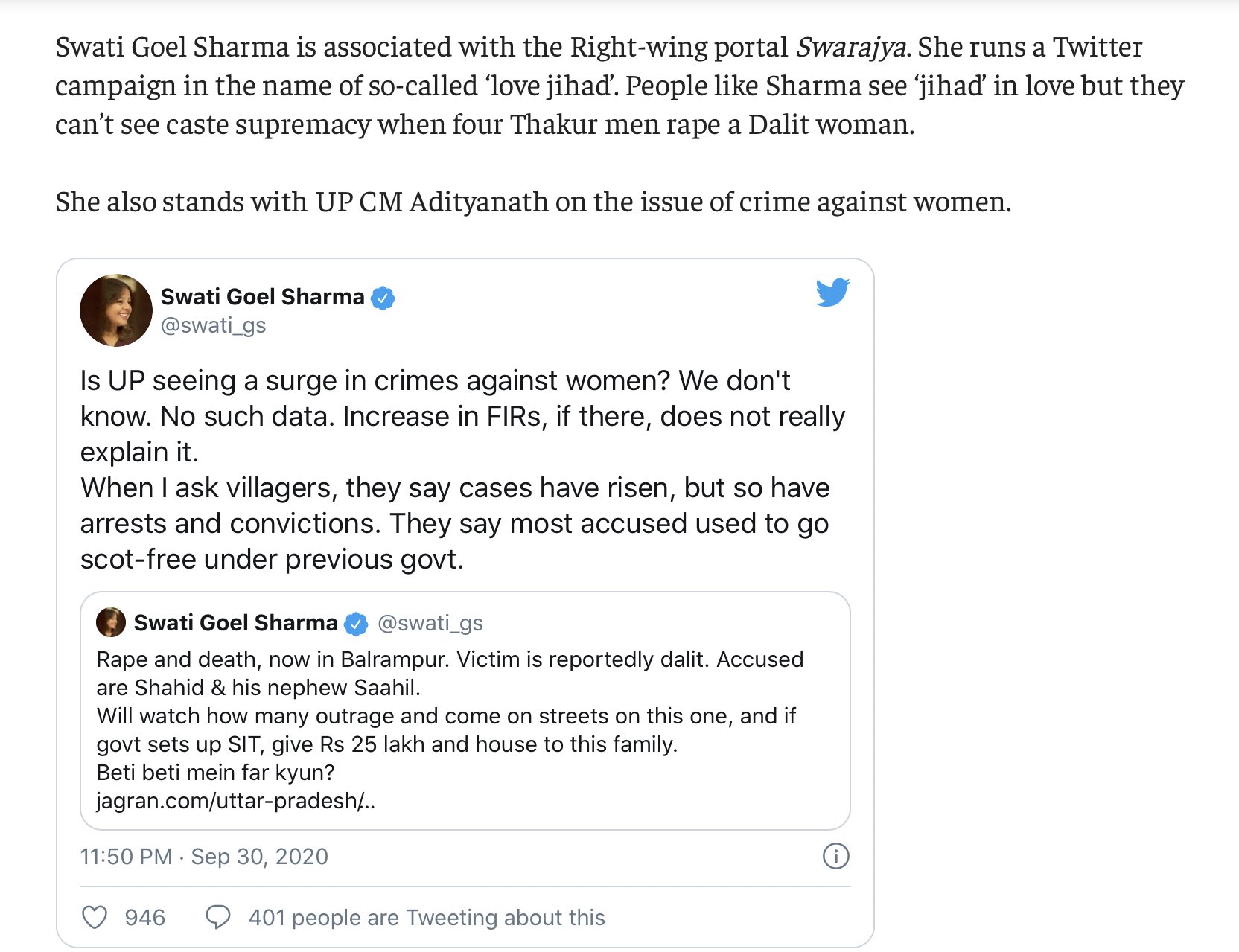
In a strange attack, on the 1st of October, Shekhar Gupta run The Print published an opinion piece in which, it berated Swati Goel Sharma for overlooking the caste angle in the Hathras murder case. They further attacked her for “running a campaign” about Love Jihad on Twitter where she saw “Jihad” in “love”.

A lot of debate and political mudslinging has been happening around the Hathras case since the victim succumbed to her injuries in Delhi’s Safdarjung hospital on Tuesday morning. She was allegedly raped two weeks ago. The case attracted nationwide outrage when some reports claimed Hathras Police forcefully cremated the girl on Tuesday night without consent of the family members. The police had later stated that the victim’s father was present during the cremation.

Speaking to ANI, ADG Prashant Kumar had informed that the forensic reports that were awaited have also been received. ADG stated that the FSL report found no evidence of ‘rape’. He asserted that it was concluded that there was no sexual assault, and the cause of death was strangulation and injury to the spine.

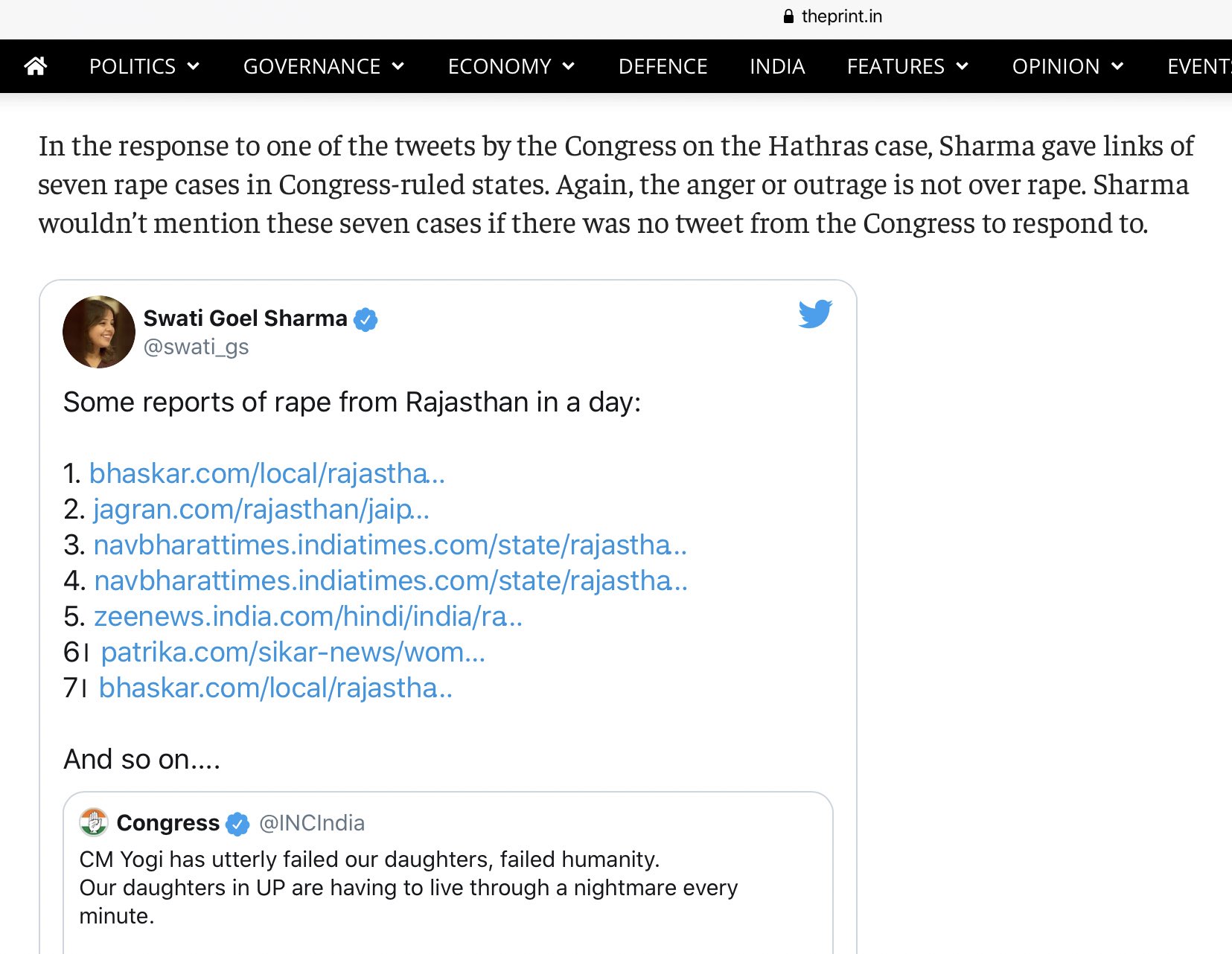
The Print article was headlined, “You can’t talk of Hathras rape without listing other rapes – thanks to IT cell whataboutery”.

The Print article

It went on to attack Sharma saying that while she could see “Jihad” in “love”, she could not see the “caste angle” after “4 upper caste men raped a Dalit woman”.

Here is what The Print wrote, based on the screenshots shared by the journalist on Twitter.

What The Print wrote about journalist Swati Goel Sharma

Swati Goel Sharma took to Twitter to call out the lies against her. She said, “Do your ill-informed writers have a habit of accusing people of denying caste and even being anti-dalit without checking their work? You did the same to Vashi Sharma of IIT-Kanpur and apologised for it when confronted. Your ill-read writer must provide proof of where I denied caste angle in Hathras or apologise, @ShekharGupta. Unless you approve of such hit-jobs yourself. I am not even going to other points yet”.

Interestingly, The Print failed to do its basic fact-check before publishing this article, which seems to be a recurring theme by the portal. Swati Goel Sharma is a ground reporter who has done several cases about the rights of Dalits and the crimes against them. She even runs an NGO alongside Dalit activist Sanjeev Newar or Agniveer.

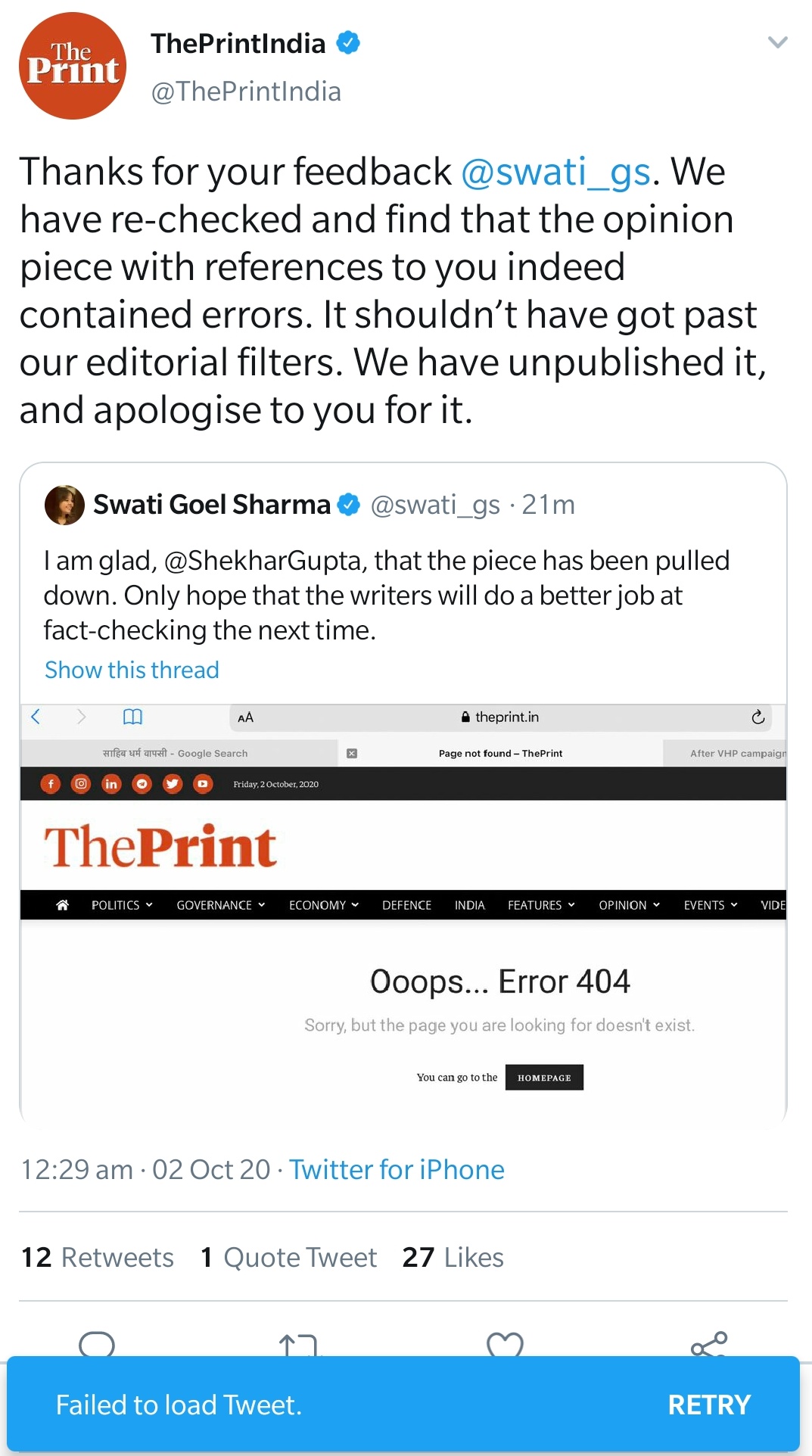
After Swati Goel Sharma called out the lies, The Print quietly pulled down their article. The screenshot of the article being pulled down was tweeted by Sharma.

Realising that the cat was out of the bag, The Print took to Twitter, quoting Swati Goel Sharma and apologising for their mistake.

However, just like their article, they pulled down this tweet as well.

After about 10 minutes or so, The Print posted the apology again, however, this time, they ensured they did not quote the thread by Swati Goel Sharma. They perhaps realised that in doing so, they were bringing attention to their own shenanigans which might make it difficult to claim moral victory later for showing the “courage” to pull down the article ridden with lies.

The Print has a habit of peddling falsehoods in their articles, though one would expect a basic level of fact-checking by a portal that is run by the chief of the Editors Guild of India. However, that should come as no surprise since only in May, The Print had published an article that urged opposition parties to spread fake news to defeat PM Modi.

Watch: Telangana Congress workers, led by Feroz Khan assault ANI journalist

In another despicable attack on journalists in India, Congress workers led by leader Feroz Khan brutally assaulted an ANI reporter, during a protest rally against Hathras rape case. The incident took place on Thursday at Tank Bund area in Hyderabad, Telangana.

Reportedly, several Congress workers and senior leaders had gathered near the Ambedkar statue. Telangana Pradesh Congress Committee chief, Uttam Kumar Reddy, was also present during the demonstration. The rally began from Gandhi Bhavan but was interrupted by the police due to absence of a pre-requisite permission.

When ANI journalist Abdul Basheer approached Congress leaders for a sound byte, it led to a heated argument with a prominent leader named Feroz Khan. He was then mercilessly thrashed by Khan and over a dozen of his supporters. The reporter was rescued by the police and other journalists, who were present at the spot.

The video of the incident has gone viral on social media. In the video clip, Feroz Khan could be seen throwing blows at the journalist. He was soon joined by other Congress workers, who then kicked, punched, shoved and manhandled the ANI reporter. When the police officials tried to protect the victim, they were pushed around by the Congress goons.

Congress workers thrash journalist in Chattisgarh

This is not the first time that Congress party workers had resorted to hooliganism on streets. Recently, Kamal Shukla, editor Bhoomkal Samachar, a regional newspaper, was dragged on the street by Congress goons, beaten and attacked with a sharp weapon in Congress-ruled Chhattisgarh. The incident took place around 100 meters from Kanker police station in Bastar division, Chattisgarh, on Saturday morning. In his statement, Shukla said that a group of men circled him and waved a pistol at him. When he came out of the Police Station, they beat him and attacked with a sharp weapon.

Sexual assault case: Filmmaker Anurag Kashyap questioned by Mumbai Police for 8 hours

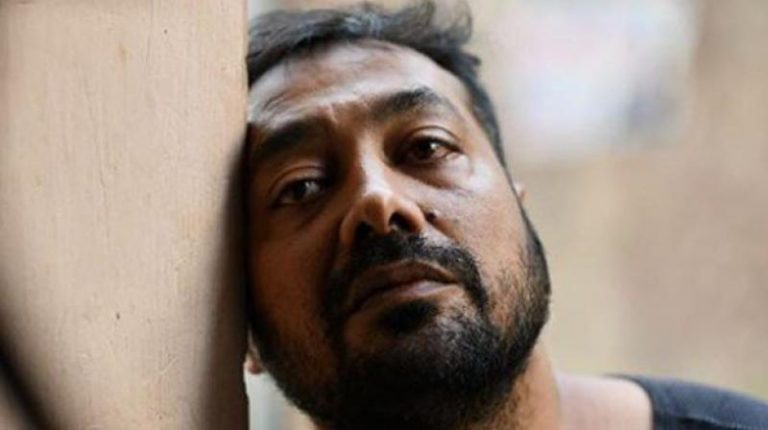
Filmmaker Anurag Kashyap who was accused by actress Payal Ghosh of sexual assault on her during a meeting at his house was issued a summon by the Mumbai police for questioning. He reached the Versova police station on October 1 and was questioned by the police for close to 8 hours.

As per reports, Kashyap reached the Versova police station at around 10 am and was allowed to go at around 6 pm. DCP Zone 9 Abhishek Trimukhe has been quoted in Hindustan Times as saying that Kashyap’s statement has been recorded and the investigation is on.

Payal Ghosh had accused Anurag Kashyap of rape

Ghosh has accused Kashyap of forcing himself on her in his house during a meeting. She said that she had met Kashyap on three occasions in 2013. It was during their third meeting that Kashyap allegedly raped her. “Around 7:30 pm I reached Anurag Kashyap’s house in my Honda city car. He was sitting inside and smoking. The house smelled really bad and when I asked him, he said he was smoking marijuana. He also offered me smoke but I refused. He took me to another room to show me his collection of films. While showing me the cassettes of his old films, he suddenly pushed me to the sofa, opened his pants and forced himself on me. I tried to shout a lot but he pressed my mouth and raped me”, she told the police in her statement.

According to Ghosh, Kashyap tried to play down his act by saying that physical relationships between filmmakers and actresses were common in the film industry. An FIR was filed by Ghosh against Kashyap. She said that she kept mum about the incident as she was advised by family and friends not to speak against such an influential director if she wanted to work in the industry.

Upon Ghosh’ complaint, an FIR has been registered against Anurag Kashyap under sections 376 (I) (rape), 354 (assault or criminal force to woman with an intent to outrage her modesty,), 341 (wrongful restraint) and 342 (wrongful confinement) of the IPC.