Home Blog Page 5033

Why you should support farm ordinances introduced by the Modi govt: The mother of all reforms

If you belong to my generation, you probably only have childhood memories of how hard it was to get a train reservation in India. If you are younger than that, ask your parents about the delays, the frustrations, the long lines at the ticket window, the black marketers and the touts. Ask them about the long lines for kerosene, the years spent waiting for a gas connection or a telephone connection. Ask them what it took to fill out an income tax form and how many years before the refund finally arrived. Or what it took to get a passport.

You probably already have the nightmarish 1980s image of a Sarkari office in your mind. You enter and you are mobbed by “agents” asking for bribes. Your life is at their mercy.

But that was a long time ago. We live in a better country now. But what if I told you that (more than) half of the population still lives like that? And that a group of people is straining every muscle to ensure that it stays that way?

If you are in urban India, you probably don’t think very much about farmers. You know that they are always angry about something or the other, usually loans, which politicians will waive every few years. You might be a suave liberal type who wants to impress friends in New York. So you share images of long columns of farmers marching for “justice,” without shoes till their feet are sore and bleeding. You might be a middle-class taxpayer who is mildly annoyed and grumbles often: where is my loan waiver?

But have you wondered: why are farmers always so angry and helpless? Did you know that agriculture employs over 50% of India’s workforce but only contributes 17% of GDP? How did so many Indians become so spectacularly unproductive? Are they lazy?

No, of course not. They are just stuck in the era before reforms in India.

In mid-June, the government brought three ordinances related to farming, which can forever change the agricultural landscape of India. Folks, this is the mother of all reforms.

To understand why, you must first understand the existing system. How do you think farming works in India? A farmer grows crops and then sells them to whoever is buying, right?

Wrong! A farmer cannot just sell anywhere. The villages in every state are divided into clusters of a few hundred villages each. Every such cluster has a single government-approved mandi, officially called an Agricultural Produce Marketing Committee (APMC). To sell their produce, the farmer must take their crop to the APMC in their area, link up with a licensed agent, pay a commission and conduct the transaction.

So the farmer can’t go anywhere else except the local APMC. They can’t sell through anyone except a licensed agent. And their entire life depends on this. Do I have to tell you the kind of mafia and corruption that would rule these markets?

Here’s what the farm sector ordinance does. It ends the monopoly of the local APMC. Earlier this year, some BJP ruled states such as Madhya Pradesh, Uttar Pradesh and Gujarat had passed laws allowing farmers to sell anywhere inside the state, instead of being stuck with the local APMC. The farm ordinance from the Central government now allows farmers to sell anywhere across India.

How will this be done? The farmers will sign up on a nationwide online platform where they can sell to anyone who registers with a PAN card. There is no commission. Sound better than the tyranny of the “licensed” commission agent at the local APMC?

You bet!

But this is not music to everyone’s ears. Who do you think had decades of stranglehold over these APMCs? Are they happy? Take a guess…

They are trying to stop this ordinance through fear-mongering. Like so much else in India’s old socialist architecture, these systems exist to “protect” farmers from “exploitation” by private players. Now it is going away. Private players will take over, they say. They are after profits, unlike the government babu who only cares about your welfare. When have private players ever made anything better?

Who talks like this any more? Have they learned nothing from the last 30 years of India’s economic history?

Government licensed markets, government licensed agents, even government licensed cold storages, all assigned monopoly areas of operation. What is the natural outcome of this? Zero investment, zero innovation, total decay.

Now you know the real reason why farmers are always unhappy. They have been trapped into dependency by government regulation. In the current model, the farming sector is unprofitable and always will be. And farmers are kept alive on a drip of loan waivers, free electricity, free water and all sorts of stuff designed to keep you surviving, but only barely. Until the free market comes in, nobody can save the Indian farmers.

There are powerful lobbies that don’t want this. Like I told you, who do you think had a stranglehold on these local monopolies in the rural hinterland? And they will try to win our support with the help of suave media lobbies who know how to tap into urban middle-class guilt and weaponize our emotions about farmers. Big corporations are coming, they say.

The crux of the problem is in how we think about farming. We tend to think of farming in a primitive way: sow a seed, cover it with dirt and wait for it to grow.

This is a bit like reducing the modern garment industry to the image of a solitary weaver sitting at a wooden loom. Or picturing a modern steel plant as a group of blacksmiths sitting together and hammering stuff out. Or for that matter, a hospital as some guy sitting with mortar and pestle, crushing leaves to make medicine. Could the auto industry or the pharma industry survive that way : leaving it all to micro level entrepreneurs each running a business worth only a few lakhs? Where would they find the business and technical expertise? Is each small farmer supposed to personally learn all cutting edge farming techniques to maximize produce or the business skills to market and expand? Is each small farmer supposed to hire their own team of experts and buy their own sophisticated equipment?

What we don’t realize is that farming is a modern industry. It needs mass production with cutting edge techniques like any other. Farming is a high skill occupation. It needs sophisticated technical knowhow, like that of a doctor. It needs massive capital investment and economies of scale. Yes, the big corporations are coming. There is no need to fear them.

Back in 2014, India lost out on the crucial Land Acquisition Bill due to similar fear mongering. Due to a paranoid fear of the free market and a media campaign playing on our emotions. Don’t let it happen again. Save our farmers. From socialism.
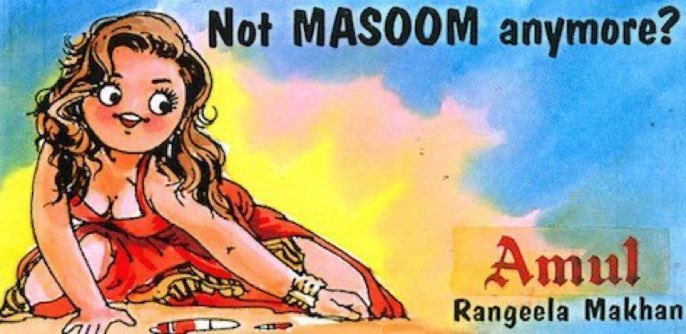
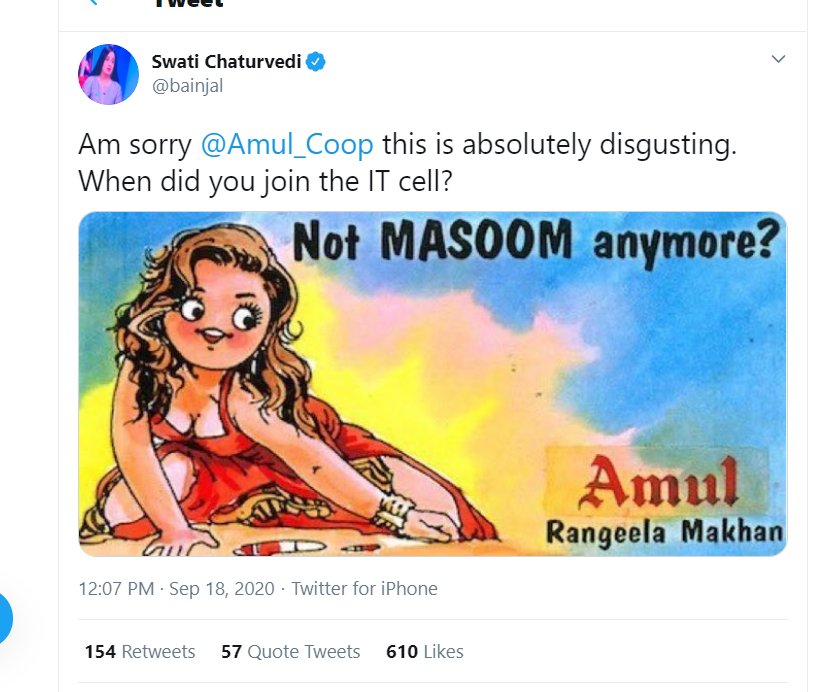
‘Liberals’ target Amul over 1995 poster on actress Urmila Matondkar released after ‘Rangeela’ movie

Days after the war of words between actress Urmila Matondkar and Kangana Ranaut took an ugly turn, some so-called ‘liberals’ took to Twitter on Friday to attack the Indian milk brand Amul over a 1995 advertisement.

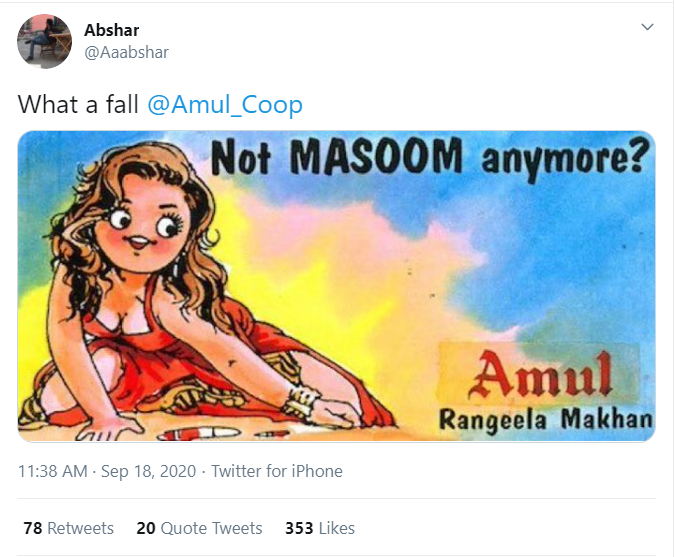
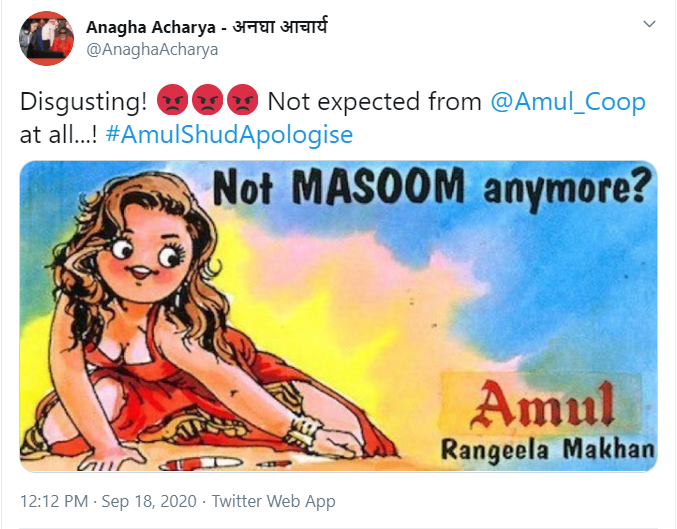
The ad, created 25 years ago, was dedicated to actress Urmila Matondkar for her performance in the movie ‘Rangeela’. The illustration depicted the actress in the iconic red dress and reminded the audience of her role as a child actress in the movie ‘Masoom’ (1983). As such, the ad was accompanied by the caption “Not Masoom Anymore? Rangeela Makkhan.”

It is notable here that Urmila, as a child artist, had played the endearing role of a little girl in the acclaimed movie ‘Masoom’ in 1983. After that, though she had appeared in a Hindi movie named Narasimha as an adult, the 1995 movie Rangeela by Ram Gopal Verma was a big success and Urmila had become a household name for the glamorous role.

The 1995 Amul poster was alluding to Urmila’s journey from ‘Masoom’ to ‘Rangeela’.

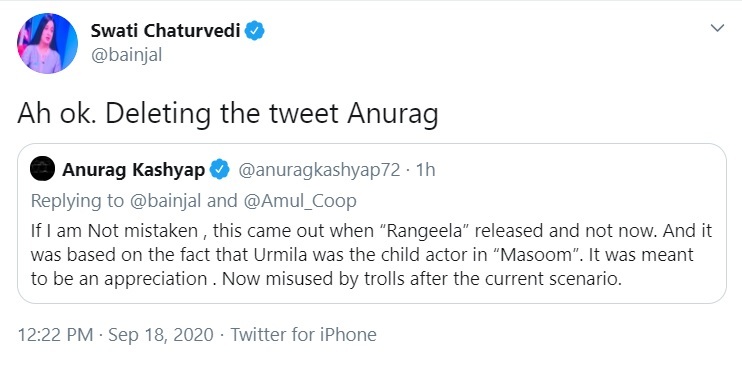
However, liberals jumped the gun, assuming the advertisement to be a recent ‘jibe’ on Urmila Matondkar based on the ‘soft-porn actress’ comment of Kangana Ranaut. ‘Journalist’ Swati Chaturvedi wrote, “Am sorry Amul, this is absolutely disgusting. When did you join the IT cell.” On being pointed out by director Anurag Kashyap that the illustration was old, she was quick to delete her tweet without tendering an apology.

Screengrab of the tweet by Swati Chaturvedi

Film maker Anurag Kashyap had pointed out to Swati that the image is old and not an insult against Urmila as being claimed by many.

Swati Chaturvedi’s response to Anurag Kashyap

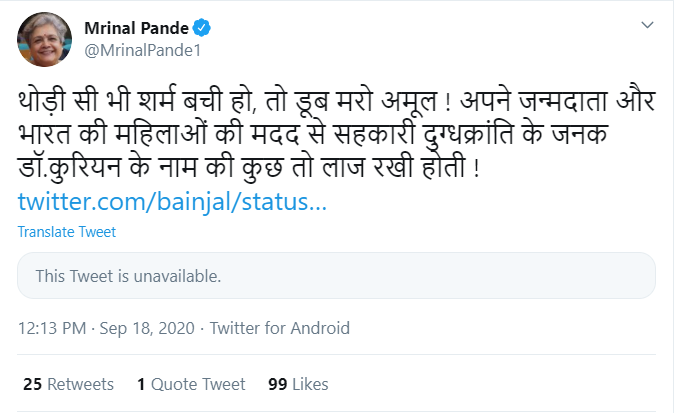
Accusing Amul of maligning the image of its founder Dr. Verghese Kurien, journalist Mrinal Pande tweeted, “Drown yourself if you have some same left in you, Amul. You should have thought before maligning the image of the father of the White Revolution – Dr Kurien.” On being informed by a Twitter that the Amul ad dated back to 1995, she justified, “Old or new, what’s disgusting remains disgusting!!”

Screengrab of the tweet by Mrinal Pande

Another twitter user named Abshar tweeted, “What a fall Amul.” In subsequent tweets, he reiterated that the illustration was ‘legit’ and not ‘photoshopped.’

Screengrab of the tweet by Abshar

Journalist with Hindustan Times, Deepanjana, too posted the advertisement with misleading claims. She was however quick to delete her tweet, on learning that the illustration was old. She emphasised, “Doesn’t really make the ad any better or more humorous but it is definitely not a response to the current ‘conversation’ around Urmila Matondkar.”

Shiv Sena sympathiser, Anagha Acharya, tweeted, “Disgusting! Not expected from Amul Corporation at all. Amul should apologise.”

Screengrab of the tweet by Anagha Acharya

Casting aspersions on the reputation of India’s largest milk brand, a popular Twitter user (@TheSocialDilema) made bizarre claims, “Probably Amul is promoting pedophilia, and this promotion may be the part of “Cutie” movie. A disgust level of capitalism.” Even after finding out the truth, he did not bother to tender apology or delete his misleading claims.

The Boycott Amul Campaign

This is not the first time that Amul had come under attack from liberals. Chief Editor of Sudarshan News, Suresh Chavhanke, had earlier announced about a programme on ‘bureaucracy jihad’ and ‘UPSC Jihad’. Sharing a snippet of his program, Suresh said, “Imagine jihadis from Jamia becoming your district commissioner and secretaries in every ministry.”

After the controversial video was posted, it attacked criticism from various sides, notably from left-liberals and Islamists. It was alleged that Suresh Chavhanke is spreading hate against Muslims, and leftist portals started publishing articles criticising him and his channel and started targeting the brand Amul, over the fact that it advertises on the channel.

However, despite the hate it got, Amul received overwhelming support from netizens who swear by the brand which is synonymous to quality and hard work of thousands of small and marginalised animal husbandry workers across the state. In fact, during the nationwide lockdown at the outbreak of Chinese coronavirus, Amul pumped in Rs 8,000 crore back into rural economy. 

When the government announced lockdown, Amul communicated with all the stakeholders. They managed to keep the supply chain up and running as the Ministry of Home Affairs and local administrations helped them in every possible way. There were some hiccups in the process that were dealt with by Amul and administration.

Disha Salian case: Her fiance Rohan Rai had to be called on intercom after she fell from 14th floor, took 25 mins to show-up: Report

0

With the investigation into the late Sushant Singh Rajput’s death case, the probe into the mysterious death of his manager Disha Salian is also gaining momentum. According to a sensational new revelation, Disha’s fiance Rohan Rai did not immediately rush downstairs after her fall and took almost 20 to 25 minutes to show up after Disha fell to death from the 14th-floor apartment in Malad on June 8. Rohan Rai, in fact, had to be called several times by neighbours on the building’s intercom before he came down to check on Disha Salian. According to a report by Republic TV, many eyewitnesses have attested the same.

BJP leader also questioned Rohan Rai’s delayed arrival at the spot

It is pertinent to note here, that earlier, terming Rohan Rai’s role in the entire death episode of Disha Salian as ‘suspicious’, BJP leader Nitesh Rane had also questioned Rohan Rai’s delayed arrival at the spot when he was in love with the celebrity manager. “Rohan Rai was present when people reached the Malad, Malvani house because after she was pushed from the window, when she fell on the floor, after 25 minutes, Rohan comes down and looks at her. If he was in love with her, he would have rushed down to see if she was alive and there were chances to save her. Any natural human being would have done that. That is why his role is very suspicious,” Rane had claimed. 

Rohan Rai tracked in Nagpur until Thursday 

The Republic TV report further states that Rohan Rai’s location has been tracked, He was in Nagpur till Thursday. Earlier, raising questions on Disha Salian’s fiance Rohan Rai disappearance since her death on June 8, the BJP MLA in an interview with Republic Bharat claimed that Disha’s fiance knows the ‘truth about June 8’ and is allegedly in hiding. The BJP MLA also indicated that there is a strong link between Disha and Sushant’s death and alleged that only Rohan has all the information but is currently in hiding in his native place in Mangalore.

As per sources, Rohan Rai is likely to be called for questioning by the CBI. 

After Sushant Singh’s death case, the recent revelations in the Disha Salian mysterious death case, which are in sharp contrast to the assertions made by the Mumbai police, has further added a blotch on the Maharashtra police’s already tarnished reputation.

Forensic expert confirms Disha Salian had both pre-fall and post-fall injuries

Earlier, it was reported how a forensic expert claimed that Disha had two sets of injuries—one before the fall and another one upon her fall—implying that Disha’s death might be a homicide. The expert also added that either Disha was assaulted or tortured, or that might have been the reason she had tried to escape the assault. They can be resistance injuries from the attack, he added.

BJP leader seeks protection for Rohan Rai

BJP leader Nitish Rane had written a letter to Union Home Minister Amit Shah, seeking security for Disha Salian’s fiance, Rohan Rai, claiming that his testimony might be vital in establishing the link between the deaths of Sushant Singh Rajput and Disha Salian. Rane had alleged that Rai had fled Mumbai and was wary of coming back, fearing pressure from “influential people”.

Earlier, the BJP MLA had demanded CBI to investigate the role of fiance Rohan Rai into the suicide case of celebrity manager Disha Salian, as he said: “Just like Rhea is the closest link to Sushant Singh Rajput’s death, the nearest to Disha Salian’s death is her fiance Rohan Rai”.

Of Macaulay and Nehru: A dilapidated education system and the need for the phoenix to rise from the ashes

A nation is all but a community. A community of people who have a commonality, it maybe is language, ethnicity, history, or a common culture. The most valuable or critical aspect of a nation is its human resource. For a nation to thrive, the well-being of its human resource or populace is of utmost importance, it directly affects both the social fabric as well as the economic strength of any nation. It has far-reaching implications to a nation’s economic and socio-political stability; a docile populace will be prone to making choices of short-term convenience while a populace with active thinkers will be able to reason and thereby make choices that can strike a balance between short term necessities and long term aspirations.

These factors are obviously more pronounced in democracies than authoritarian regimes as democracies rely on the wisdom of the crowds and therefore the Achilles’ heel of democracy would be a populace susceptible to groupthink. It is only fitting of a lazy administrator or a cunning one, like a colonial power (or someone corrupt) to subdue the power collective wisdom by limiting it’s people’s judgement, their ability to get information from various sources, and their ability to analyze it while making them prone to forming a collective rationalization with the aid of self-appointed mind guards. The above can be achieved through regressive education policies as was done in the 19th Century by Macaulay and continued by Nehru in my opinion.   

A plethora of research studies available today suggests that the role of instruction during formative years in the mother tongue is immense. A track record of innovation and success of nations with instruction in native languages versus that of the ones with foreign languages is also a testament to the fact that national identity and the language of instruction is strongly correlated to success in academic institutions and therefore the nations themselves (i). Early on under the British rule, there were efforts and “lakhs of rupees” allocated “for the revival and promotion of literature, and the encouragement of the learned natives of India, and for the introduction and promotion of a knowledge of the sciences among the inhabitants of the British territories.”  

But in 1835, Macaulay came in the picture, according to Macaulay promotion of science and literature was a lost cause in India and instead of spending that money on Sanskrit or Arabic, the British should use it for rewards for killing Tigers in Mysore and building Churches. As and I quote him verbatim – “a single shelf of a good European library was worth the whole native literature of India and Arabia. The intrinsic superiority of the Western literature is indeed fully admitted by those members of the committee who support the oriental plan of education.” Over the next couple of centuries, the existing educational institutions were dismantled, the medium of instruction was switched to English from Sanskrit and Arabic. The curriculum was stripped off of all things Indian and the education was a means to provide administrative bilinguals who don’t question authority and timidly follow orders.

What was taken by MACAULAY was history, context, and language from primary education, but Nehru took something far more important – the scientific temperament and method from the institutions of higher education

Now, one half of the problem is Macaulayism, but Nehruvianism was the last nail in the coffin. Instead of righting the wrongs of the past, Nehru went on with them and further degraded what was left of them. What was taken by Macaulay was history, context, and language from primary education, but Nehru took something far more important – the scientific temperament and method from the institutions of higher education.

By nationalizing autonomous institutions and effectively converting education into a hierarchy of babus with the top being secretaries trickling down to chancellors to then the professors for the students to bear the brunt of it all. India went from having people like Satyendra Bose, Jagdish Chandra Bose, and C.V. Raman, who were in their own right in the leagues of Einstein, Rayleigh, and Plank to none. Advanced research is all but extinct in India.

It is a missed opportunity for leveraging the rich culture and millennia of wisdom through ancient academic texts. The rich heritage of India, the concepts that encompass not just spiritualism but explore philosophy, metaphysics, biology, astrophysics, and mathematics are mostly omitted and not even introduced as a byline to an “educated Indian”. While Socrates, Plato, Aristotle, and Confucius are known; Kanada and Aryabhata are forgotten. While Machiavelli and Sun Tzu are known; Chanakya is forgotten. While empires of Rome, Alexander, and Qing are taught; Mauryas, Marathas, Cholas, and Chams are forgotten. While Louis de Broglie, Einstein, Heisenberg, and Max Plank have ample space in our books; Satyendra Bose, CV Raman, Ramanujan, and Jagdish Chandra Bose are forgotten.

The last and the only Indian to win a Nobel Prize in Natural Sciences was won by C. V. Raman (ii), Govt. of India honoured him with the first Bharat Ratna, but he smashed that medallion in protest against Nehru’s policies on scientific research. Raman was very much against Nehruvian socialism and believed that science could never be developed in closed rooms taking orders from government and working at the whims and wishes of bureaucracy. Raman was against government control of scientists and scientific enquiry and remained against it till the end of his life. His vision was to have and develop a scientific temperament and believed it was necessary for the scientists and the government in India to reach out to people if science had to grow and wanted Nehruvian Soviet-type hierarchies and politics out of research Institutes. But boy oh boy did we suffer because of it. Over the next few decades, bureaucracy and politics thrived while innovation and science got gutted.

Ironically, Nehru is heralded as a man of science and someone who leads the Indian scientific community. Yeah, right. He led the Indian scientific community into bureaucracy and babu raj. Nehru took away the scientific temperament and replaced it with a bureaucratic socialist hierarchy which forbade the very essence of science and innovation i.e. questioning the authority, for science cannot flourish without questions, and questioning the person who got us freedom was almost a sin, it still is. Not just C. V. Raman, another pioneer scientist that managed to get into the crosshairs of Nehruvian socialism was Homi Bhabha. Nehru delayed the and resisted the nuclear program, his misplaced idealism or (as I would put it) pro-soviet stance prevented technology transfer from the US (So much for Non-Alignment). Under Homi Bhabha, the scientific community started lobbying for the bomb and as is evident, it was Bhabha himself who was most vocal about nuclear aspirations.

However, Nehru’s ambivalence on nuclear decision making continued to be the brick wall against which the scientific community kept running into. As Former foreign secretary, Maharajkrishna Rasgotra reveals in his book, Nehru not only had turned down United States’ offer of a permanent seat in the UN but had also turned down an offer by US president of nuclear technology transfer to India. Had Nehru been more concerned about securing India’s strategic interests rather than pushing for his by then increasingly untenable idea of NAM, India could have become a nuclear power way earlier. (A. Kapur, “The Nehru-Bhabha Years, 1947-64,” in Pokhran and Beyond: India’s Nuclear Weapons Capability, Oxford University Press, 2003).

What followed next in the chain of events as India went through successive leaders from the Nehru-Gandhi dynasty, meritorious scientists were supplanted with sycophantic pseudo-intellectuals which formed an establishment and just as one would guess this establishment, a nexus of connected gatekeepers of truth and opportunity, the Orwellian Squealers if you will, hailed Nehru as a visionary while gutted initiatives of academicians. The result is that India lost the edge, from being at the forefront of scientific discovery we have become laggards. While the needs of the nation increased, these gatekeepers hailed exclusivity and shortage of supply as their way of limiting competition and thereby limiting opportunities for the students. Which was evident from the fierce protests by the chancellors of IITs and other institutions of higher education when the Govt. recently proposed new IITs.

The overall result is that institutions of higher education are grounds for political activism, case in point the DUs and JNUs and are not producing economists and scientists who can solve the problems of India. The IITs are gold-plating gold by taking in crème de la crème of India and sorting them into streams based on ranks and not aptitudes, they have become a steppingstone to foreign universities, the MITs and Harvards of the world. The fact that an average graduate from the best government institutes chooses to go abroad for honing or deep diving into high tech research is a testament to that.  

Textbooks were hijacked by leftists and communists who distorted facts and presented half-truths, over the years an attitude of self-deprecation was inculcated by eulogization of Nehru-Gandhi dynasty’s achievements, British rule, and highlighting achievements of Islamic invaders and subjugation in the mind of an average Indian. If that wasn’t enough, a sense of classism based on command of English language was also added to the mix (it already existed due to Macaulay but it was amplified by Nehru and his kin as they were a product of and sole beneficiaries of the prevalent system).

Science and education took a back seat in institutions and politics were at the forefront, merit gradually lost its sheen and became a casualty over the years. The primary education produced zombies who are good test takers but lack emotional intelligence, problem-solving skills, and critical thinking as Macaulay intended. Rote learning was and is a preferred criterion over the actual understanding of concepts and their applications when evaluating a student. As for higher education, I’ll rest my case with the following – India produces, about 2.6 million STEM graduates every year and that translates to roughly 16,000 patent applications, compared with China and US, which produces about 4.7 million and 600,000 STEM graduates respectively which translates to about 1,400,000 and 285,095 patent applications respectively for the two countries. [8] [9]

A major consequence of the dilapidated education system is that an average Indian graduate is a test taker and a job seeker, crucial parts of the value cycle – entrepreneurship and innovation are KIA. But it is not all doom and gloom, Indians are foremost, survivors. They have endured millennia on this Earth and have resilience entrenched in their DNA. Though they are victims of their own systems, over the years they have developed a sort of herd immunity and a self-defence mechanism, lacking infrastructure at home, they have flourished abroad.

Indians now make up about 20-30% of the graduate student population in top institutions across the globe, the tech giants of the world also have a similar trend among employees and companies like Google, Microsoft, IBM, and Pepsi (formerly) have CEOs of Indian origin. Also, in recent years, the Startup ecosystem has flourished in India and the number of Indian unicorns is surging. A new education policy (NEP 2020) has been introduced, which provides a glimmer of hope, though I wouldn’t count my chickens before they hatch, NEP 2020 seems to be a step in the right direction with supposed thrust on actual learning and not just rote memorization and getting a degree. As an optimistic sceptic, I hope there is a transformational change and a phoenix rises from the ashes.

[i] Correlation does not dictate causality, and obviously many other factors contribute to success in advanced technology development. Nonetheless, the instruction method does have a huge impact and therefore is one of the major factors.

[ii] Not to construe that winning a Noble prize is a sole indicator, but it is one such measure to gauge or quantify innovation

Congress government in Rajasthan fudges Coronavirus data, state health bulletin reports fewer cases and deaths

0

A Twitter user living in Jodhpur, Rajasthan, going by the handle @sanwat, has taken to Twitter to express his concern over the deepening coronavirus crisis in the state of Congress-ruled Rajasthan and draw attention towards the state government’s apathy in handling the crisis. He shares recent newspaper clipping to show, how despite cases mounting in the state, especially Jodhpur, the Congress led-state government has been doing nothing, instead, they have been fudging data to hide the number of cases as well as deaths due to coronavirus in the state.

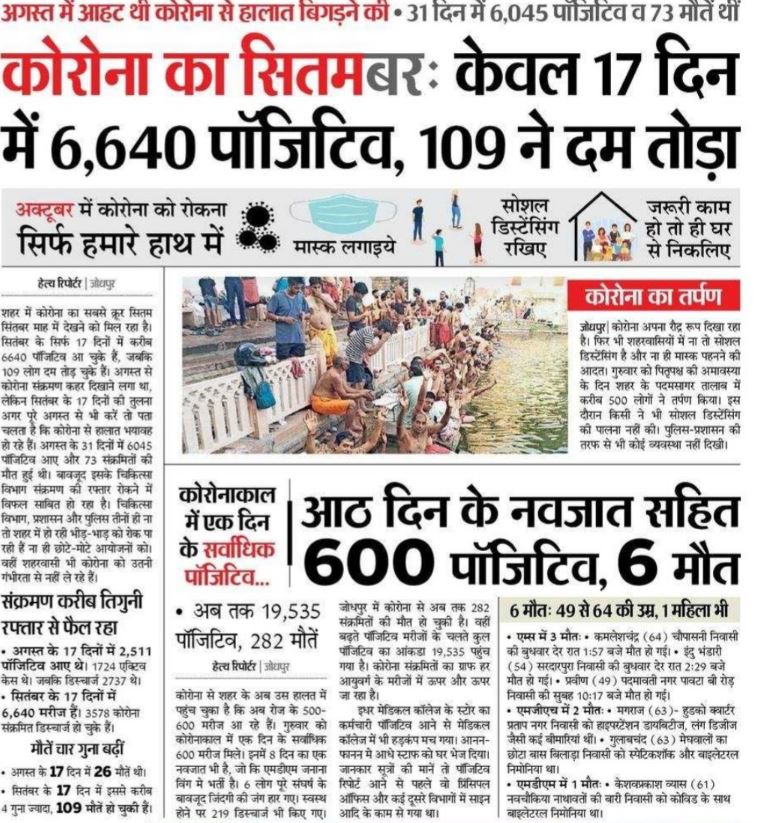
“The death count in #jodhpur is increasing day by day and there is no response from authorities. Like none at all. They have abandoned us. We are on god’s mercy”, wrote the social media user, sharing four newspaper clipping. The first clipping reveals how the scourge of the deadly pathogen in Rajasthan has unnumbered in the month of September.

According to the report, in comparison to last month, the Covid-19 positivity rate in the state has risen almost 3 times. In the entire month of August, the total number of Coronavirus positive cases in the state were 6045 with 73 people succumbing to the infection. In comparison, in just 17 days in September, the total number of positive cases had already reached 6640 with 109 deaths.

The report states that in the first 17 days in August the total number of active cases recorded were 2511, whereas in September this has risen to 6640, which is almost 3 times the number. Similarly, the total number of deaths recorded in the first 17 days in August was 17, in comparison to which September has already seen 109 deaths, which tantamounts to a 4 times rise in the numbers.

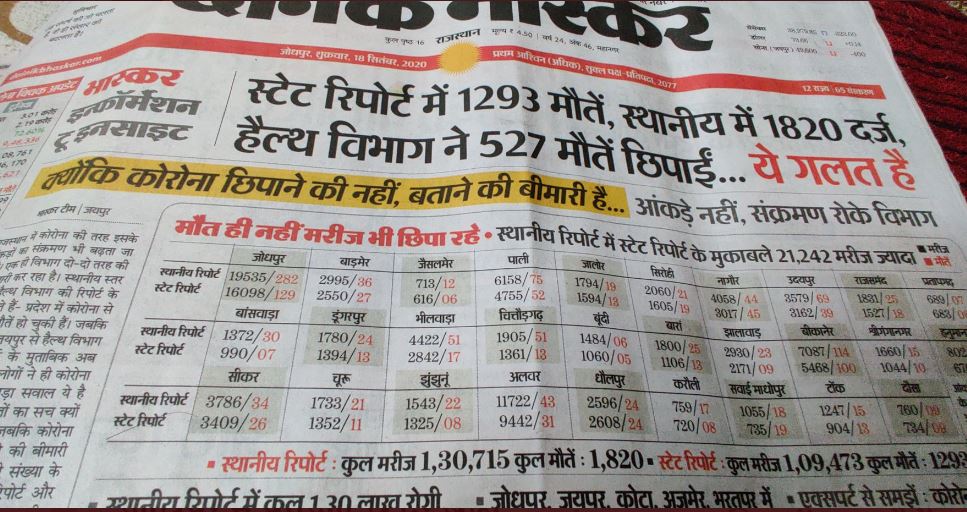
The second newspaper clip shared by the user is a Dainik Bhaskar clipping dated September 18, reveals how the Congress led-government in Rajasthan has been misleading the citizens by fudging the data to hide the total number of people infected as well as the deaths due to coronavirus in the state. As per the report, the data released by the state government shows that a total of 1,09,473, people have been infected so far and a total of 1293 people have succumbed to the infection. However, these numbers are untrue. According to the ground report, as many as 1,30,715 people have been infected by the pathogen in the state so far with 1820 deaths.

Dainik Bhaskar newspaper dated September 18, 2020

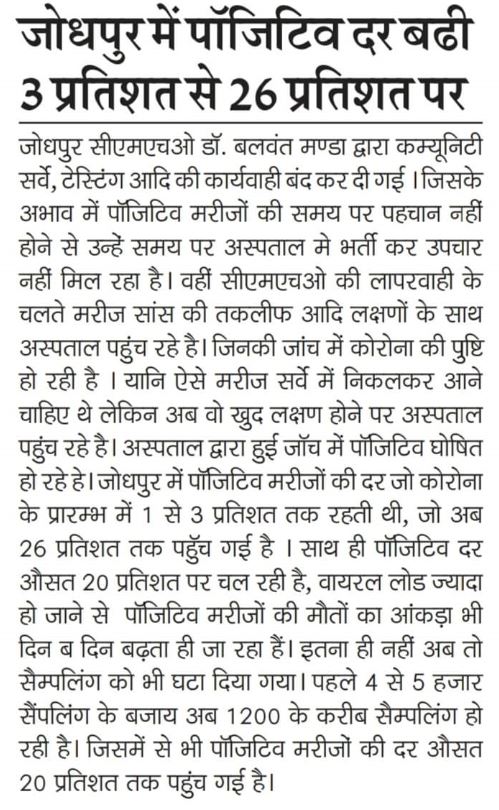
The subsequent newspaper cutting reveals the worsening conditions in Rajasthan’s Jodhpur city. It states that in Jodhpur, the jump in the total number of cases if from 3 per cent to a whopping 26 per cent. The report furthers that the community survey and testing etc which was being extensively carried out by CMHO Dr Balwant Manda has been stopped by the government. As a result, the infection is only being detected if a person is reaching the hospital on his own to get himself tested. Therefore fewer cases are being detected. Despite this, the total positive percentage which was hovering somewhere around 1 to 3 per cent in the city has now reached 26 per cent.

The report furthers that the state government has also reduced the number of samplings/testings in the city. The number of total samplings being conducted earlier stood somewhere around 4 to 5 thousand per day. In comparison, only around 1200 samplings per day are being conducted now. Despite all this, the average rise in the total number of positive cases in Jodhpur stood at 20 per cent, states the newspaper clipping.

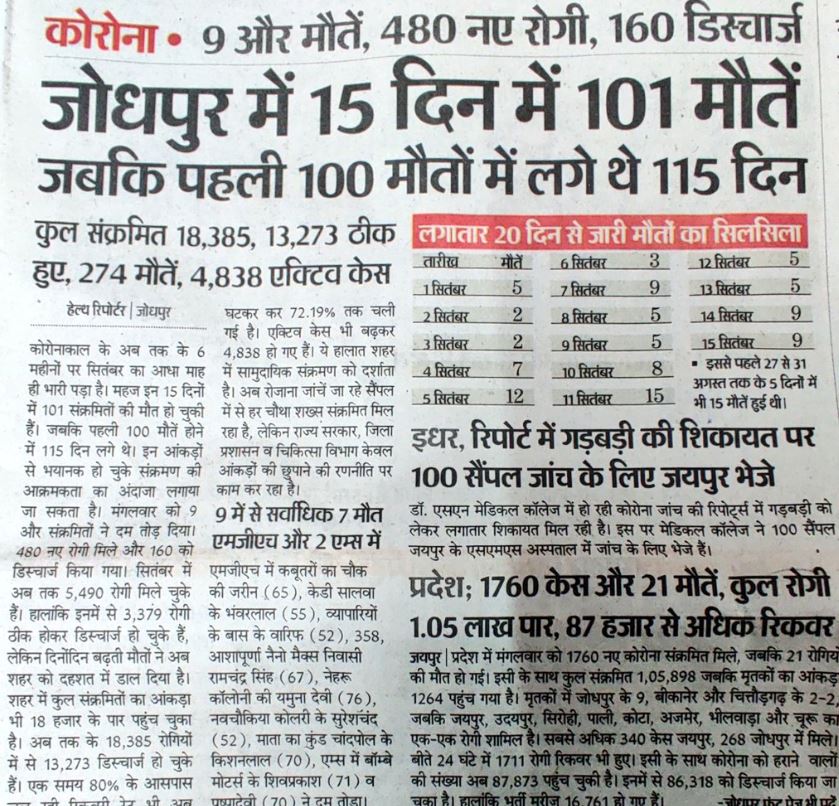
The fourth newspaper cutting shared by the Twitter user reveals how the coronavirus death rate in Jodhpur, Rajasthan is also rising at an alarming rate. Previously, it took 115 days for the death toll to breach the 100-mark, now, the same numbers have been recorded in just 15 days.

According to a health department bulletin, eight more people succumbed to COVID-19 in Rajasthan on Friday, taking the state’s death toll to 1,301, while 810 fresh cases pushed the infection tally to 1,10,283. So far, Jaipur remains the worst affected city in the state of Rajasthan, followed by Jodhpur.

Indian national Shaik Sadiq critical after being assaulted by a Pakistani in Saudi Arabia, mother requests govt to for help

0

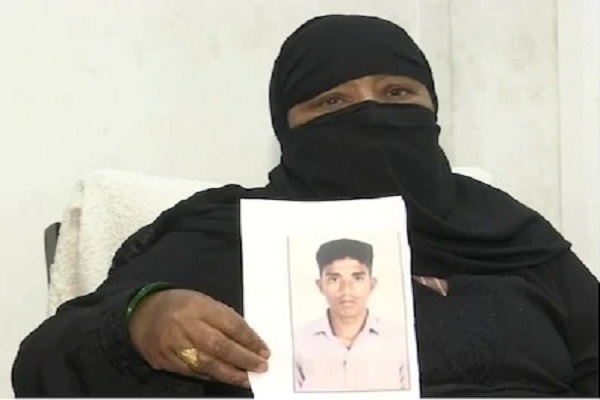
The mother of an Indian national who is admitted in a hospital in Saudi Arabia has requested the Central government to bring her son back to India, as reported by ANI. The victim named Shaik Sadiq was allegedly hospitalised in Jeddah after a Pakistani national attacked and assaulted him.

Shaik Sadiq’s mother Khatija Begum, who is from Hyderabad, has alleged that Sadiq was assaulted by a Pakistani national on July 15 is currently on a ventilator in the hospital in a critical condition. She told that her son has been working in a warehouse in Jeddah for the last three years.

“I am from Hyderabad and my son Shaik Sadiq has been working in a warehouse in Jeddah, Saudi Arabia since last three years as a labourer. On July 15th, he was attacked by a Pakistani national and admitted in King Fahad General Hospital, Jeddah for treatment” she said.

Khatija said that she was informed about her son’s condition by his company’s manager. “Sadiq’s kafeel (sponsor) and his company managers said that his condition is very serious, he was on a ventilator support for 23 days, since past 10 days he is not in touch with us. We do not know how my son is right now”, said the grieving mother.

Khatija has requested the Indian Embassy in Riyadh and the Indian Consulate in Jeddah to pay a visit to her son in the hospital where he is admitted and let her know about her son’s condition.

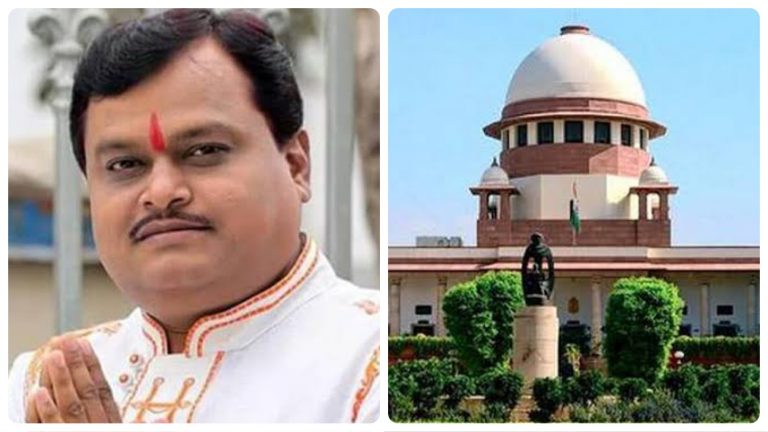
Sudarshan TV Vs Supreme Court: Justice Chandrachud objects to representation of Muslims with skull cap, beard, green colour with flames in the background

The Supreme Court of India today heard the petition filed by Sudarshan TV contesting the apex court’s decision against the telecast of channel’s ‘UPSC Jihad’ show.

Speaking on the Sudarshan TV’s plea challenging the court order that stalled the further broadcast of the remaining episodes in the ‘UPSC Jihad’ show, Justice Chandrachud remarked on the pictorial representation of ‘Muslims’ of the show, stating that the show depicted a graphical illustration of a ‘Muslim’ with a beard, skull cap and green face, with flames burning in the background, as per Live Law.

In response to senior advocate Shyam Divan’s defence that his client, Suresh Chavhanke of Sudarshan TV was presenting the issue of suspicious foreign funding to the Zakat Foundation that funds coaching of the Civil Services aspirants, Justice Chandrachud claimed that the allegations levelled by Suresh Chavhanke on his show were made and represented in an inciteful manner.

‘Every time you represent a Muslim, you put him in a green t-shirt’: Justice Chandrachud

Earlier today, senior advocate Shyam Divan, representing Sudarshan TV in the court, cited the affidavit by Editor-in-chief Suresh Chavhanke to demonstrate that the channel’s show ‘UPSC Jihad’, whose broadcast had been temporarily halted by the top court, has grave implications on public interest and national security of the country.

The channel had urged the court to pass the judgment after all the episodes are aired on television. 4 episodes have been already broadcasted in the serialised show after which the Supreme Court placed a ban on its telecast. Divan contended that the ban on the airing of the show would infringe upon the rights and freedom of Editor-in-Chief Suresh Chavhanke.

Justice Chandrachud also referred to the live chat between Suresh Chavhanke and others. He asked advocate Divan to note the tenor of the chat wherein Mr Chavhanke allegedly says, “Chor ki dadhi mein tinka. Yahaan pe chor bhi hain, dadhi bhi hain”.

During the hearing, Justice Indu Malhotra also remarked that the flame and the green t-shirt with a tag of Rs 500 crores, skull cap etc should be taken off the programme.

Justice Chandrachud further stated that the court understands the need for free speech but a message has to go to media that a particular community cannot be targeted like that. “We have to look after a nation of the future which is cohesive and diverse. We recognize national security but we need to respect individual respect too”.

Suresh Chavhanke has right and freedom to carry out investigative journalism and make inferences from his findings: Senior Advocate Shyam Divan

Arguing that the court’s intervention in the broadcast of the show might be an imbalance on the rights and freedom of the editor-in-chief of the channel, Suresh Chavhanke, advocate Divan said that his client believes that he has done an investigative story, backed by solid facts and therefore, should be allowed to air his inferences based on his findings.

Advocate Divan referred to the affidavit and raised questions over the funding secured by the Zakat Foundation to financially support students applying for the Civil Services examinations. Divan listed the groups (allegedly pro-Pak groups) which formed the source of exorbitant funding for the Foundation.

“Channel endeavoured to expose anti-national activities & how some persons are being recruited in All India Civil Service under design to induct persons with the financial support of international fundamentalists to achieve their oblique motives in India,” Advocate Diwan argued.

“We, as a citizen in a democracy, have a right to be informed. On that basis, the programme should be allowed to air till the last episode. There will be no breach of the Programme Code. And if there is, that can be rectified,” Diwan said.

Diwan requested that the court should allow the airing of the remaining episodes of the programme.

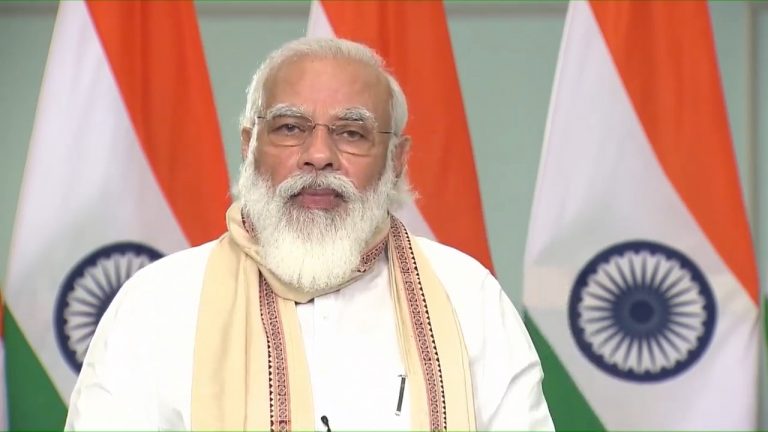
‘Those who had kept farmers tied to restrictions for decades now lying about agricultural reforms’, PM Modi on opposition to farm reform bills

After the opposition parties and an NDA ally Akali Dal raised objected to the farm sector reform bills passed by the Modi government, Prime minister Modi on Friday addressed the nation to clarify the matter.

In the ongoing parliament session, the Lok Sabha passed three agriculture-related bills. The bills on Agriculture market reforms and Contract farming provisions were passed on Thursday, while one bill amending the Essential Commodities Act was passed on Tuesday.

After the bill was passed, Akali Dal’s lone representative in the central govt, union agriculture minister Harsimrat Kaur Badal resigned from her post in protest. The Congress party, which itself had promised the reformed in its election manifesto, is also protesting against the bills.

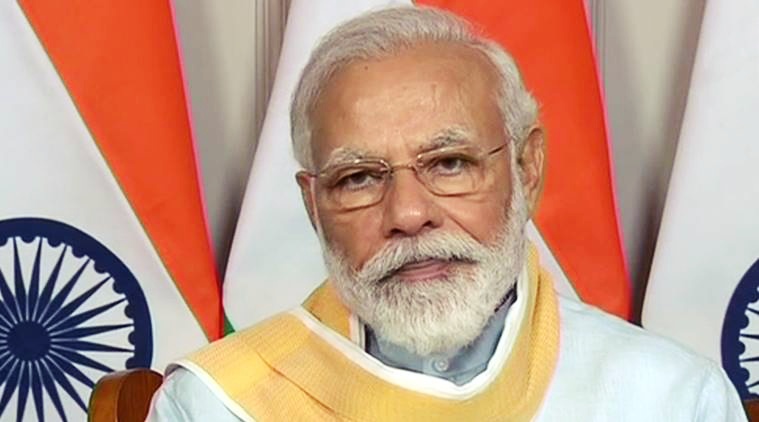
Prime minister Narendra Modi today launched several development projects in Bihar through video conferencing. During his address, he also elaborated on the reforms to the farm sector brought by the union govt through the 3 bills. He said that yesterday was a historic day for the nation, when the farm reform bills were passed on the day of Vishwakarma Puja.

“These bills have released our annadata farmers from many restrictions. Famers will have more options to sale their produce”, the PM said. He said that it was very important to bring these bills to remove the middlemen between the farmers and consumers, who take away a major portion of the income of farmers. The Acts have come as a protection shield for the farmers.

Referring to opposition to the reforms, the prime minister said that political parties are lying to the farmers to mislead. ‘Before elections they make big promises to farmers, put it in their manifestos, but they forget it after the elections. And when the same reforms, which were there in the manifestos of those who had ruled the country for decades, are brought by the NDA government, they are creating illusion about it’, the PM said.

PM Modi said that the now these people are doing politics on AMPC reforms, opposing the changes in agricultural marketing, but these same changes were promised by the same parties in their election manifestos. When the NDA government has implemented these reforms, these people are indulging in spreading lies and misinformation, Modi said slamming the opposition.

He said that it is another example of opposing for the sake opposing, but they are forgetting that the farmers can see that they are not agreeing to the new opportunities being made available to the farmers.

The PM said that claims that govt will not pay MSP (minimum support price) to farmers, and that govt will stop buying grains like rice and wheat from farmers after the reforms, is a blatant lie. “Our government is committed to pay the right price through MSP the farmers, we were committed earlier, now, and will remain in future too”, he said. The PM also assured that government purchase will continue as past.

Illustrating how restrictive the AMPC regime was, the PM said that while people engaged in other professions, like those make garments, utensils, shoes etc can sale them anywhere in the world as per their choice, only the farmers had not given this right under the previous laws, and they were forced. But now they will be able to sale their produce anywhere in the country at their chosen price.

PM Modi said that Bihar CM Nitish Kumar, who was present in the virtual meeting, knew how restrictive APMC was for farmers, and he had removed the law from Bihar when he had become CM many years ago. What Bihar had done earlier is now being followed by entire India, he added.

The prime minister appealed the farmers to not trust such people who had ruled the country for decades and are now telling lies to the farmers. They want to keep farmers tied to several restrictions, they are taking the side of middlemen, and the farmers should be aware of them, he said.

After the bills were passed in Lok Sabha yesterday, the PM had tweeted about them stressing on their importance. He had said that the bills will release farmers from middlemen, and will give them newer opportunities to sale their produce. He had also tweeted that the agriculture sector will be benefited by technology, and this will empower the farmers. Refuting the lies spread by the Congress party, he had tweeted saying that the MSP and govt procurement of grains will continue as earlier. This bill gives farmers several other options which will empower them in true sense, he had added.

Netizens question Netflix over fake anti-Brahmin quotes visible in the trailer of ‘Serious Men’ featuring Nawzuddin Siddiqui

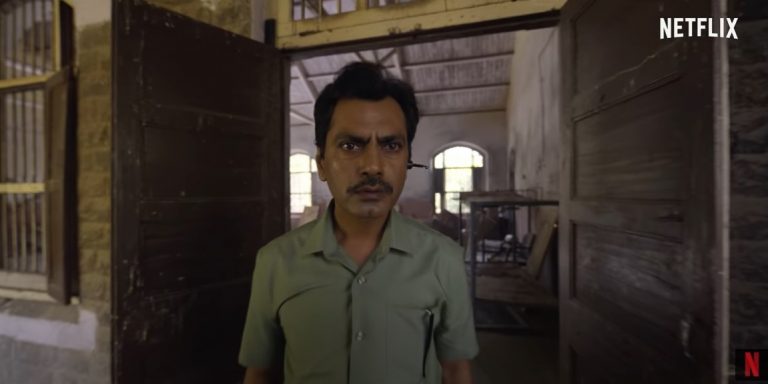
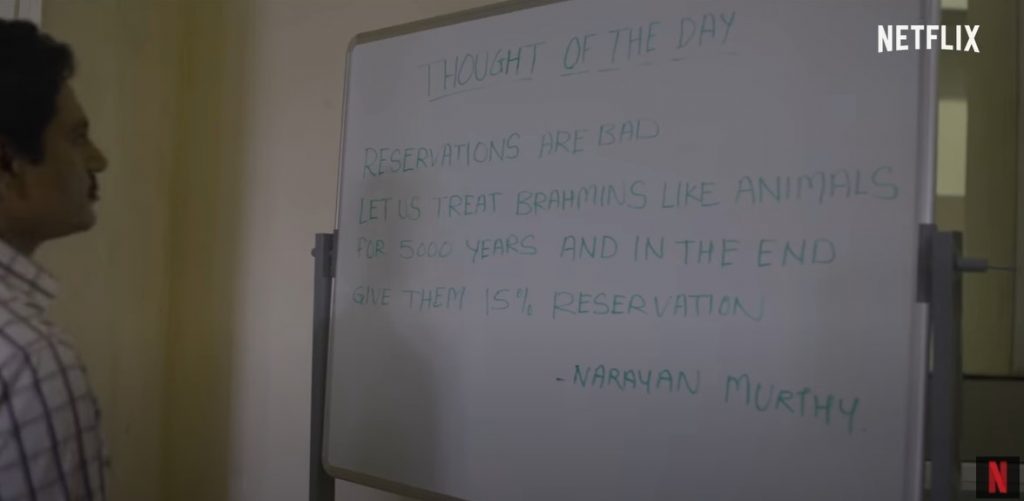
Following the paedophile movie ‘Cuties’ controversy, Netflix again finds itself in a spot of bother after inventing what appears to be a fake anti-Brahmin quote and attributing it to Infosys founder Narayan Murthy in a movie set to be released on the 2nd of October on its platform. The movie in question, ‘Serious Men’, features Nawazuddin Siddiqui in the lead and has been directed by popular filmmaker Sudhir Mishra.

A quote appears towards the beginning of the 2 minutes 39-second trailer, attributed to one ‘Narayan Murthy’, which says, “Reservations are bad. Let us treat Brahmins like animals for 5000 years and in the end, give them 15% reservation.”

Source: Trailer of the Netflix movie

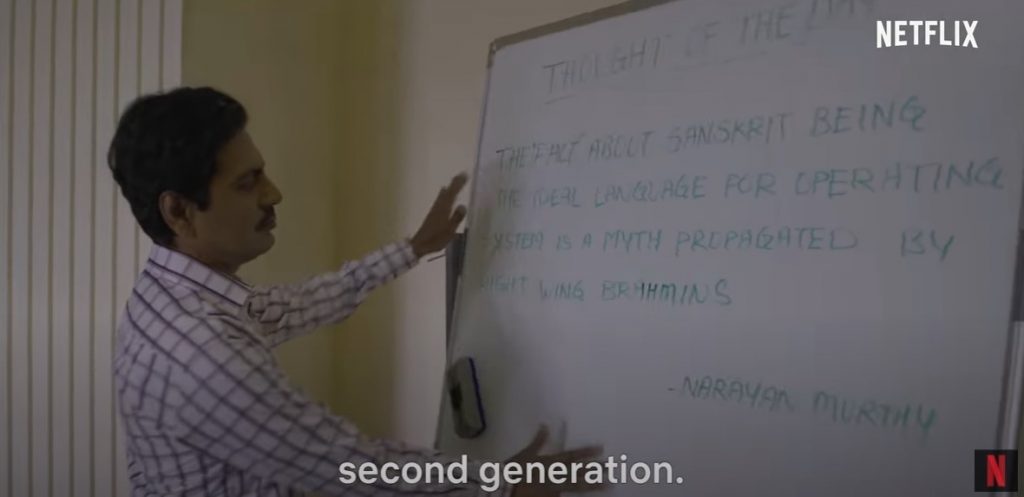
Similarly, another quote appears right after this, attributed to one ‘Narayan Murthy’ as well, that says, “The fact about Sanskrit being the ideal language for operating system is a myth propagated by right-wing Brahmins.”

Source: Netflix movie trailer

The trailer has attracted a lot of fury from people on social media who are accusing the platform of maliciously spreading anti-Brahmin propaganda. Till the full episode is out, we cannot confirm whether the intent was to attribute it to the founder of Infosys, Narayan Murthy, however, showing scant faith in Netflix, netizens questioned the anti-Brahmin propaganda allegedly being spread through the show.

It should be mentioned that if indeed the aim was to attribute the quote to the Infosys founder, then the quote is fake. However, we don’t know yet if the quote is being attributed to the founder of Infosys or some character with the same name.

The matter was first raised by a user who tweets under the username @golgoltimes. He accused Netflix of spreading propaganda against Hindus.

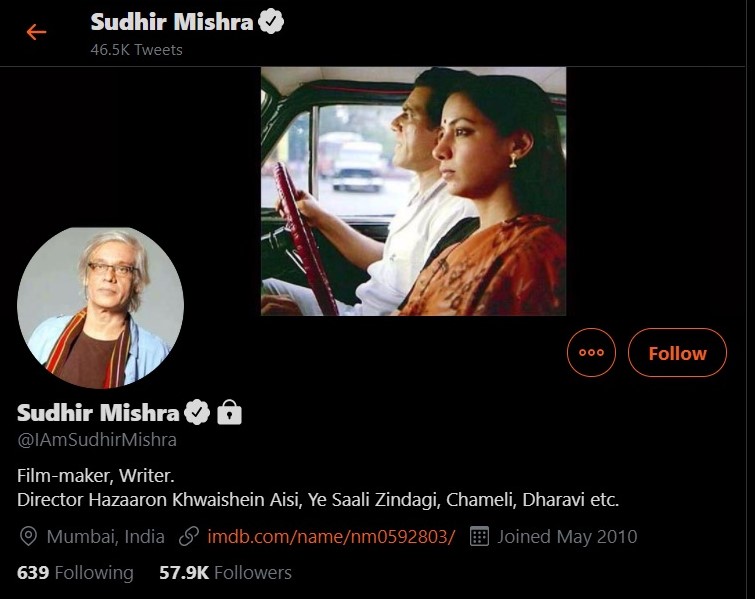
Filmmaker Sudhir Mishra has his account locked on Twitter. He presumably protected his account after the allegations started doing the rounds on social media. We cannot independently confirm this.

Twitter account of Sudhir Mishra is currently protected

Only recently, Netflix was slammed by people on social media for releasing a movie on its platform, ‘Cuties’, that sexualised children. US Congresswoman accused the movie of being child pornography. While the movie was staunchly defended by the mainstream media, there was bipartisan condemnation of the movie by politicians and people across the board.

The Goan Inquisition by the Portuguese: A forgotten holocaust of Hindus and Jews

The Portuguese inquisition of Goa is an often forgotten and unspoken event by the ‘secular’ circles of Indian historians, despite various historical records exposing the gross exodus of not just Hindus, but also Jews that had escaped Medieval Europe to take refuge in India.

The Portuguese inquisition of Goa started when Vasco Da Gama returned to Portugal after he discovered the route to India via Africa’s Cape of Good Hope. Upon his return to Portugal in 1510, Gama told the Portuguese royals about the undiscovered route to India, which gave the Portuguese an opportunity to colonise the Western coast of India and particularly Goa.

Pope Nicholas V soon issued a diktat which gave the kingdom of Portugal a monopoly on forcing Christianity upon the locals of the newly discovered areas (and mainly India), along with the monopoly to trade on behalf of the Roman Catholic Empire in Asia. Soon after, the Portuguese sent its troops to capture a portion of Goa and set up a colony in the coastal city.

Aghast by the local traditions followed by Hindus, the Portuguese were angered by the locals following a religion other than Christianity and ordered all temples within the colony to be shut; this marked the beginning of the bloody Goan inquisition that comprised of gross human right violations and mass executions of the local Hindu, Jew and Muslim populations.

In 1541, idol worship was forbidden in the Portuguese colony of Goa and over 350 temples were destroyed by the Portuguese soldiers. It had been officially declared that being a believer of any religion other than Roman Catholicism was forbidden for residents of Goa.

The infamous Francis Xaviers and Martin Alfonso were sent to Goa by King John III of Portugal in 1542 to initiate the process of converting Goan residents to Roman Catholicism. On their arrival in Goa, they were enraged by the New Christians of Goa secretly practising their previous religions (either Judaism, Hinduism or Islam), while also upholding their Hindu values and traditions. A disturbed Francis Xavier wrote to King John III of Portugal on 16th May 1546 to impose inquisition on Goa in an attempt to ‘discipline’ the residents and make them follow Catholicism.

The inquisition banned apostasy of Roman Catholics to Hinduism, Judaism or Islam, and banned the sale of books in the Konkani, Marathi, Sanskrit and Arabic languages. The use of Konkani was forbidden in the colony of Goa. 

The Inquisition particularly affected the New Christians of Europe from the Jewish community, who had fled to India during the Spanish Inquisition in an attempt to escape the imposition of Christianity and live amongst the Jewish community in India. They had come in search of a life of dignity where they could practise Judaism openly and not in hiding while pretending to be Christian. India was the only country in the world where Jews were given absolute freedom to practise their faith, especially under Hindu kingdoms.

Upon the imposition of the inquisition in Goa, life became comparable to hell for the local Hindu population, who were often on the receiving end of persecution and were targeted in particular by the sadistic Christian missionaries. The Christian missionaries called the Hindus ‘uncultured’ and ‘savages’, who worshipped black idols ‘resembling demons’; the Christians took it upon themselves to force Hindus into leaving their religion and succumbing to Christianity. An inquisition office was thereby set up which aimed to discriminate against Hindus on all matters possible.

Hindus were forbidden from holding any public office, inheriting their father’s property and testify as witnesses in courts. If a Hindu child was deemed to be an orphan by the colonialists, the child was ‘seized’ by the Society of Jesus (founded by the not-so-saintly Francis Xavier) and made to change his religion. Clear discrimination was seen in social life, where Hindus were forced to sign public documents only after Christians and couldn’t be clerks in village offices. In 1567, a law banning Christians from employing Hindus in the colony was introduced. (Ref: Teotonio R. De Souza, The Portuguese in Goa, pg 28-29). 

The inquisition office even questioned natives who were suspected of following their previous religions in private. Over a span of 214 years (1560-1774), 16,172 natives were questioned and often tortured for following a religion other than Roman Catholicism. To be questioned by the inquisition office, a mere rumour of practising idol worship in private or chanting a Hebrew prayer would suffice for the missionaries to drag the native to the office. 

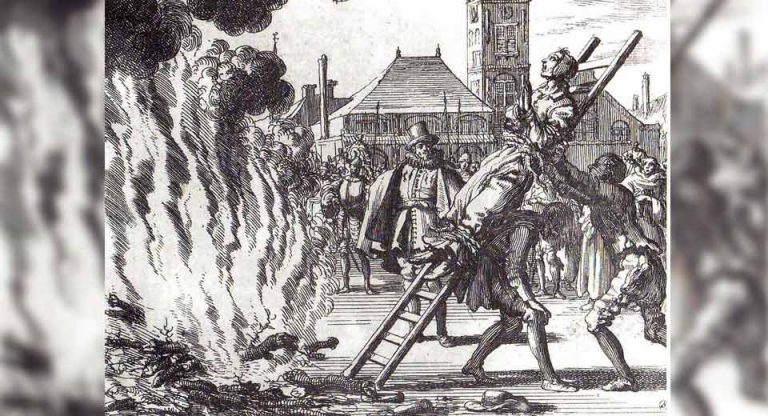
Those convicted of following another religion were subjected to heinous punishments, including public flogging, being ‘put on the rack’, burnt on stakes and having one’s nails and eyes crushed by bloodthirsty missionaries. In some cases, entire villages were burnt with the women and children taken as slaves. Large wheels were used for torture, with those convicted of following Hinduism or Judaism being tied to the wheel and then spun, with almost every bone of the innocent Hindu or Jew being crushed.

Hindu children were sometimes taken away from their parents and burnt in front of them, with the parent being tied and forced to witness his child being burnt alive until he accepts to convert to Christianity. Over 4,000 non-Christians were inflicted with such punishments during the course of the inquisition. In inspiration of the Muslim invaders, the missionaries imposed the Xenddi tax on the Hindu population, similar to the Jaziya tax. (Ref: Sarasvati’s Children: A History of the Mangalorean Christians, Alan Machado Prabhu, I.J.A. Publications, 1999, pg. 121)

Amidst the Portuguese inquisition, a small group of Saraswat Brahmins managed to hide from the invading Portuguese colonialists and smuggled the famous Mangeshi shiv linga of Lord Shiva out of its original site in the Kushasthali Cortalim village and built the renown Mangeshi temple in Goa’s Priol village which belonged to the Hindu Kingdom of Sonde.

The Portuguese ravaged homes destroyed the local culture and imposed a foreign religion on the local population. Hindus were deliberately targeted by the European invaders in an attempt to convert them to Christianity. Despite the barbarism used by the Europeans, Hinduism survived the attempts to erase it from Indian culture and continued to flourish after Goa was liberated by the Indian government in 1961.

The Goan Inquisition is a disturbing reminder to Goan Hindus about their history and signifies the struggles undertaken by our ancestors to preserve our cultural identity.