Home Blog Page 5131

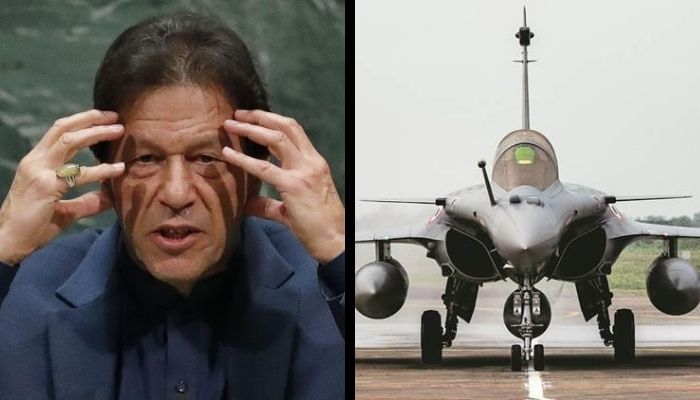
Burnt by Mirage and Sukhoi in Balakot, Pakistan hurries to declare it is not scared of Rafale jets, whines against BJP govt

Following the delivery of the first batch of fighter Rafale jets on Wednesday, a rattled Pakistan has now accused India of ‘nuclear proliferation’ and leading an arms race in the region.

Speaking to the media, Pakistan Foreign Office spokesperson Aisha Farooqui said that the country has taken note on India’s recent military acquisition. She stated, “According to some former Indian officials and several international publications, these Rafale jets are dual-capable systems that can also be modified as nuclear delivery systems. It is well-known that India continues to expand and modernise its nuclear arsenal, both in terms of type and number of the delivery system.”

Cries foul against BJP government

Pakistan has been more critical of the current government of India than even Indian opposition parties. While Imran Khan continues to complain about the BJP and Modi government, the Pakistani foreign ministry spokesperson also made their disdain for the BJP government clear.

The spokesperson stated, “The world is already a witness to the BJP government’s bellicose and irresponsible rhetorics in pursuit of a revisionist agenda in the neighbourhood. Pakistan is open to consideration of measures for crisis management, risk reductions and strategic restraint.” She also added a veiled threat that Pakistan cannot remain oblivious to threats and remains confident of its ability to thwart any ill-considered act.

The spokesperson further accused India of nuclearising the Indian ocean and for being the second-largest arms importer. “It is disturbing to note that India continues to amass military capabilities beyond its genuine security requirement. Transfer of advanced systems, where there is an open intention of conversion into nuclear delivery platforms, calls into question the commitment of international suppliers to non-proliferation commitments,” she continued.

Scared of Indian Air Force?

It is notable here that Pakistan has been in a whiny mode since the change of power in India in 2014. While the 26/11 Mumbai terrorist attacks went unavenged and did not get a strong response from India, the Modi government had retaliated decisively against Pakistan after the Uri attack in 2016 and Pulwama blast in 2019.

In February 2019, Indian Mirage and Sukhoi jets had entered deep into Pakistan’s airspace and had bombed the LeT terrorist camp in Balakot. With the new arsenal of Rafale added to the Indian Air Force, the concern from Pakistan is expected.

India receives first batch of 5 Rafale jets

On Wednesday, India received the first batch of five Rafale jets as a part of the inter-governmental agreement with France for the procurement of 36 ready-to-fly fighter jets. The jets flew from Merignac airbase in Bordeaux, France to India, flown over the Arabian Sea with a stopover in UAE, by Indian Air Force pilots.

The delivery of the first batch of Rafale jets was delayed due to Covid-19 pandemic. These five jets joined Indian Air Force fleet in Ambala in Haryana on Wednesday. According to Defence Minister Rajnath Singh, the acquisition of Rafale jets will make the Indian Air force stronger and deter security threats by those eyeing India’s territory.

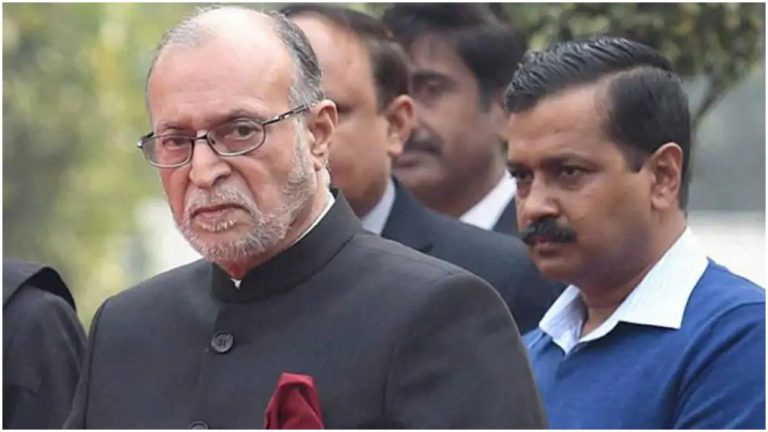
Setback to Arvind Kejriwal in his attempt to save rioters, LG vetoes AAP on lawyers’ panel to defend Delhi police in anti-Hindu riots

In a huge setback to Arvind Kejriwal-led Delhi government, Delhi Lieutenant Governor Anil Baijal overturned the decision of Arvind Kejriwal government to set up a panel of lawyers to represent the Delhi Police in cases linked to the Anti-Hindu riots and Anti-CAA violence in the capital.

According to reports, the Lieutenant Governor has vetoed Delhi government’s proposal on lawyers’ panel and instead constituted a six-member panel recommended by Delhi Police – which includes Solicitor General Tushar Mehta and Additional Solicitor General Aman Lekhi two days after the Aam Aadmi Party (AAP) government had rejected it.

Lt Gov Anil Baijal has reportedly invoked Article 239AA(4) of the Indian Constitution to refer the dispute to the President, citing “differences of opinion” with the elected government. The panel of lawyers chosen by the Delhi Police and approved by Lt Gov Baijal will now argue the cases before the Delhi High Court and the Supreme Court.

“The L-G invoked special powers granted to him under the Constitution. The Home Department has been ordered to approve the panel chosen by the Delhi Police. The Delhi government will now have to implement the order at any cost as it is mandated by the Constitution,” a CM office statement said.

Delhi government had rejected the lawyers’ panel

Earlier, the Delhi government had rejected the panel of six public prosecutors suggested by Delhi Police to defend itself in the Anti-Hindu riots as well as anti-CAA protests in the Delhi High Court and Supreme Court. 

The Arvind Kejriwal-led Delhi government had claimed that a ‘free and fair trial’ would not be possible if the Delhi Police itself selects a panel of lawyers to defend itself. Instead, Kejriwal government has asked state home department headed by Satyendra Jain to set up a panel of ‘impartial panel of best lawyers’ to fight the case.

The Delhi government had rejected the proposal of Delhi Police citing that the investigation was biased. The cabinet had claimed that the lawyers should be ‘independent’ of the police and the LG should not ‘interfere’ as the matter is not ‘rarest of the rare’ case.

It is important to note here that former AAP councillor Tahir Hussain is accused of being the mastermind behind the entire Anti-Hindu riots and Anti-CAA riots in the national capital. He has been charge-sheeted and accused of murder and orchestrating the riots. He has been accused of leading a mob to godown and setting it on fire.

The Delhi Police charge-sheet also states that the IB officer Ankit Sharma was specifically targeted by the mob led by AAP leader Tahir Hussain. He is also accused of masterminding the Delhi riots and funding the violence in Chand Bagh. AAP MLA Amanatullah Khan has consistently defended Hussain and alleged that he is being ‘targeted’’ for being a Muslim. Khan himself is also accused of inciting the violence in Delhi on 15th December 2019 amid the anti-CAA protests.

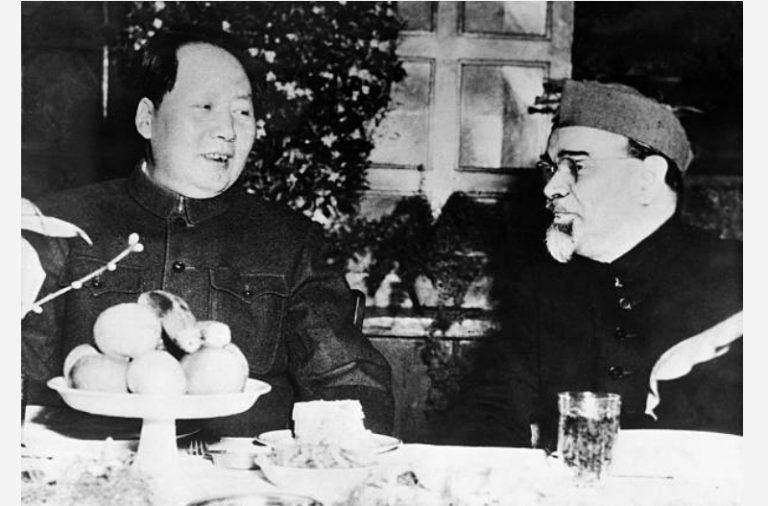
India’s first ambassador to China KM Panikkar had opposed the reconstruction of Somnath Temple in his letter to Nehru: Read details

While the Congress party has not issued any official statement on the Bhoomi Pujan for the Ram Mandir on 5th August, the party leaders have been giving issuing opposite reactions to the same. While some leaders went to the High Court to stop the ceremony, others are complaining of not being invited to the program. At this point, a letter has emerged which reminds of a similar situation 70 years ago, when the Congress party was similarly divided in two halves over attending the inauguration of Somnath Temple in Gujarat.

The ancient Somnath temple was destroyed and looted by several Muslim invaders, including Mahmud of Ghazni, Alauddin Khalji, Aurangzeb and others. The temple was rebuilt after India’s independence at the initiative of first union home minister Vallabhbhai Patel. It is known that PM Jawaharlal Nehru didn’t like the idea of reconstruction of the ancient temple, who had opposed it terming it as an act of Hindu revivalism.

When the temple committee invited India’s President Rajendra Prasad for inauguration of the temple, Nehru had advised him not to attend it. The PM had written to the President, “I confess that I do not like the idea of your associating yourself with a spectacular opening of the Somnath Temple. This is not merely visiting a temple, which can certainly be done by you or anyone else but rather participating in a significant function which unfortunately has a number of implications”. While Dr. Prasad still attended the inauguration because for him, the state should be neither religious or irreligious, his grand speech at the ceremony was blanked out by official channels on Nehru’s insistence.

Now a letter written by India’s first ambassador to China, K. M. Panikkar, to then PM Nehru shows that Nehru’s hatred for Hinduism was shared by his handpicked diplomate. In the letter dated 21st March 1951, Panikkar refers to an “amazing letter” he had received from the trustees of the Somnath Temple requesting him to send water of some Chinese rivers and twigs from Tibetan Shan mountains, to be used for the reconsecration of the Somnath Temple. He had also highlighted that the present has been invited to be the chief guest at the ceremony.

Narrating how he opposed the idea of rebuilding temples destroyed by Islamic invaders, Panikkar wrote, “if an unofficial Hindu organisation wanted to restore that temple, no one could have any objection. Even then, where is one to stop? Kutub Minar to be pulled down and the stones which came from temples used for restoring the shrines? Is Aurangzeb’s tomb in Banares to be pulled down and Kashi Viswanath restored to original glory? If we start on this Path, where are we to stop? This is the state of mind that leads straight to RSS and the desire to revive Hindupada padishahi in India. I was rather surprised to see that some members of the Government were associat­ed with it and the suggestion that the President of India should be the chief yajaman of this obscurantist reviva­lslism, I confess, was a little frightening”.

The Ambassador to China had also alleged that the “Somnathists” were trying to forget the period of Indian history after the Muslim invasion. “These are the real founders of the India of today and our “Somnathists” unfortunately desire to forget them. I am sorry to inflict this on you, but I think you should know how strongly some of us feel at all this dangerous “revivalism” which seems to have affected even those closely associated with Governments Ln the Provinces and even at the Centre”.

It is intriguing that in his letter to Nehru, Panikkar had labelled the effort to rebuild Somnath temple as Hindu reviva­lslism, Nehru had also made the same allegation to K M Munshi, the cabinet minister in Nehru govt who had led the task of the temple construction.

Before mentioning Somnath Temple, K M Panikkar had also expressed worry that his daughter Devaki Panikkar may become a communist, after she didn’t get any job despite having a degree from Oxford. He had suggested to Nehru that she may be given a job at National Herald, so that she can be weaned away from Communists. It may be noted that Devaki had later married Communist Party of India leader M. N. Govindan Nair.

K M Panikkar not only opposed the reconstruction of the Somnath Temple, he had also supported China in occupying Tibet. During a meeting with Chinese Foreign Minister Zhou Enlai after China had announced its intention to ‘liberate Tibet’, Panikkar had promised on his own that India would not move in case Tibet is forcefully liberated. He had also single headedly changed India’s position on Tibet, without consulting the Indian govt.  

During the British government, India’s Tibetan policy was China only had the “suzerainty” over Tibet, which means Tibet as an independent state and China had control only over its foreign policy. It meant that Tibet was a tributary state of China. After independence, India had continued the same policy. But it was short lived, as in a journal published in August 1950, Panikkar wrote that India’s policy towards Tibet was “autonomy within the framework of Chinese sovereignty”. This was complete opposite of the policy of the Indian govt.

In fact, Nehru govt didn’t agree with Panikkar’s statement, and Panikkar had tried to rectify his ‘mistake’. But his comments were taken as official position of India by China, and they believed that Indian govt wouldn’t mind if they invade Tibet.

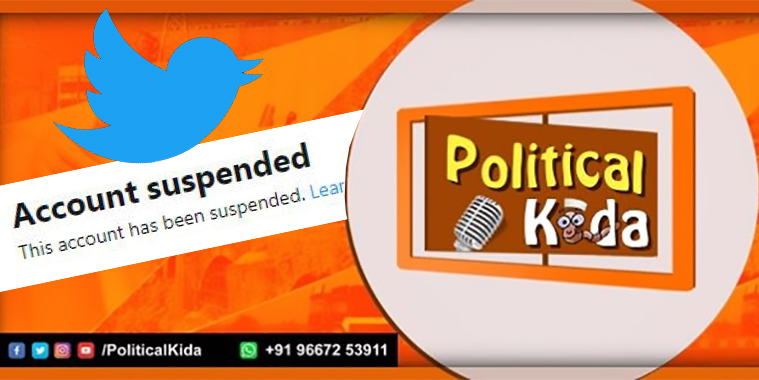
Twitter suspends account that exposes lies and hypocrisy of left-liberals, without giving any reason, restores 2 weeks later following outrage

In yet another incident arbitrary restriction on Twitter users by the social media company, the Twitter account PoliticalKida has been suspended without citing any reason. @PoliticalKida is known for posts exposing lies of politicians and media houses. Their side-by-side videos showing the hypocrisy of left-liberals are very popular among social media users.

Twitter use Ankur Singh, who is behind the team that runs the account, informed that initially, Twitter had restricted access to the @PoliticalKida. When they tried to log in to the account, they didn’t receive OTP from Twitter for doing the same, and now the account has been suspended.

The account was first restricted on 14th July, and Twitter had asked them to re-verify the account. But when they tried to re-verify it, they didn’t any receive any OTP from Twitter servers despite multiple attempts. Due to that, they could not re-activate the Twitter account. Following this, the Political Kida team sent complaints to Twitter, but they didn’t receive any reply or response.

After 15 days of the account remaining inaccessible, the account was suspended today. But the team didn’t receive any reason from Twitter for the same, which is the norm in such cases. When a Twitter account is suspended, Twitter sends an email to the user informing the same, the reason for the same, and a link is given when the user can contest the suspension and respond to the complaint. But as Political Kida has not received any communication from Twitter, they are unable to take steps in recovering it.

It may be noted that Political Kida was not able to tweet for the last 15 days as its access was restricted, the last tweet was posted on 14th July, so there is no question of posting anything recently that may have violated Twitter terms of use which could have led to the suspension.

Twitter is known for its self-admitted bias towards the left-wing, and as Political Kida is known for targeting the left-liberal ecosystem in India, it has been argued that the suspension of its account is motivated by political bias of the company.

Many Twitter users accused the micro blogging site of biased activities against Right wing handles.

After a large number of users slammed Twitter for suspending the account, it was restored, again without any intimation to the user. PoliticalKida is also present on other social media platforms like Facebook, YouTube and Instagram.

Faiz Khan and why there are so few ex-Muslims in India

In recent years the number of ex-Muslims has been rising all over the world. On Twitter, hashtags like “Awesome without Allah” or “Ex-Muslim because…” were trending. In the USA, according to a PEW Research Centre report, 23% of those born in the Muslim religion don’t identify with it any longer. Most of them keep it secret. Yet, several ex-Muslims speak up on YouTube, including women.

A Turk who grew up in Germany went back to Turkey at the age of 16 and now lives in the USA, has become popular as ‘Apostate Prophet’ on YouTube, so popular that his channel has been, typically for social media giants, demonetized.  Most of those ex-Muslims were at one point devout believers who never expected that they could lose faith. Apostate Prophet disclosed that he had sincerely asked Allah to never let him lose faith. Yet now he ends his videos with “Stay away from Islam”.

In Turkey, which turns politically more fundamentalist, many youngsters turn their back on Islam. The government is worried that their indoctrination policy in education doesn’t work as expected. In Saudi Arabia, too, Islam does not have a strong grip on its people which outsiders would expect from the cradle of Islam. In a Gallup poll in 2012, out of 502 Arabs surveyed, 19% considered themselves not as religious and 5% even were convinced atheists. This rate may be much higher now since Crown Prince Mohammad Bin Salman officially loosened the grip of the clergy. 

Naturally, there are no vocal ex-Muslims in countries which punish blasphemy with death, like Pakistan. But why are there hardly any ex-Muslims in India which is a vibrant democracy and nobody can be forced to believe anything against his or her will? Sofiya Rangwala is one of very few who declared on Twitter and Facebook, “I was born in a Muslim family, married to a Muslim, but I have embraced the absolute Truth, beautiful philosophy of Sanatan Dharma.” 

India is probably a special case, as the indoctrination into Islam is stronger than in Muslim majority countries because the clergy needs to make sure that Indian Muslims are not tempted to go back to the faith of their ancestors. So the vilification of the Hindu tradition is massive, which makes it difficult even for those Muslims who lost faith in Islam, to appreciate the wisdom of their ancestors and rather adopt the label “atheist”.

Yet there are surely several Muslims in India who lost faith and also can see the value of Hindu Dharma. But why do these Muslims continue to identify as Muslim? The reason may be simple: it has advantages to belong to the ‘minority community’, for example, special scholarships, reservations, etc. Further, one generally gets special treatment by media and in certain areas probably even by the police. If a Muslim returns a wallet, which he found, it may make the news. If a Hindu returns a wallet, it won’t make the news. If a Muslim commits a crime, it may be ignored by the media, or his name won’t be mentioned. If a Hindus commits the same crime, it is likely to be all over the news with his name, even if he is only a suspect.

But why do even eminent persons, like the former president Dr Abdul Kalam, who took inspiration from the Bhagavad Gita, and thereby became in the eyes of pious Muslims as bad as a Kafir, not officially come back to the tradition of their ancestors, even though they seem to have a great liking for it? 

The reason may be that Hindus keep pushing those Muslims-only-in-name back into their old identity, and it is difficult for them to break free without disappointing their Hindu admirers. If a Muslim makes sensible statements or appreciates Hindu Dharma, for example in the comment section of Islam critical videos, Hindus will not only praise him but will keep stressing that he is an ideal Muslim, which of course is based on ignorance. He is a good human being but not a good Muslim, because a good Muslim needs to look down on Kafirs and needs to do Jihad so that only Allah is finally worshipped on earth. 

It would be helpful if Hindus would learn not to push those, who want to get out, back into their identity. If someone lost faith in his religion, it’s not acceptable that others label her or him as belonging to that religion, and I speak here of myself. For example, if I am introduced as a Christian who loves Hindu Dharma, I naturally correct that I am not a Christian any longer but consider myself a Hindu. If I allowed myself to be addressed as ‘Christian’, I would not be sincere.

Or are there indeed very few “Muslims-only-in –name” in India? I started wondering yesterday when Breaking News reported about a Muslim who is a gau rakshak and has a YouTube channel where he presents his usually reasonable views. I saw some of his videos. His name is Faiz Khan. 

Media reported that he started from his home in Chattisgarh to reach Ayodhya for the Bhumi Pujan of the Ram Mandir with earth from his native village where Kausaliya, the mother of Sri Ram, is said to have been born and wants to be admitted at the function as it would be a statement of communal harmony.

At first, I didn’t believe it could be the same Faiz Khan whose videos I liked, but then I realized it was indeed him, and felt greatly disappointed that he doesn’t realize that he should never go there for Bhoomi Puja. Hindus are very good-natured and some even support his move, but this historic moment, when finally Sri Ram is getting back his palace which was destroyed by barbarians of the same religion which the forefathers of Faiz Khan have adopted and which he has not rejected, is not the time to flaunt communal harmony which anyway always rests completely on Hindu shoulders. Faiz Khan had enough time to come back to Hindu Dharma. Some Muslims have done so. But this action convinced me that he is not sincere, that he seems to believe that he has more rights in India than Hindus or he never got over the Islamic teaching that Muslims are superior.

In that spirit, while not doubting that Faiz is a good human being, I understand why Hindus want him to stay away from the Bhoomi Pujan of Ram Mandir, and perhaps, Faiz Khan should.

Political callisthenics in Didi’s Poschimbanga: A tale of hollow promises, corruption, misrule, unemployment and appeasement

The tragedy in West Bengal today is that the claims of the government and the reality on the ground are often miles apart. This is especially true when it comes to employment in the state. Mamata Banerjee and the TMC came to power on a strong anti-incumbency wave against the communists and her promises of changing the state, bringing in infrastructure, jobs and opportunities. Almost a decade after she came to power, while Didi lauds Bengal’s unemployment rate for being lower than the national average and attributes it to her government’s economic strategies, we hear stories such as the heartwrenching one wherein a daily labourer and his wife sold their two-and-a-half-month daughter for Rs. 3000 to face the financial burdens they faced with joblessness and labourers from the state have to risk their lives and work in far-flung states and union territories like Jammu and Kashmir to earn a living.

Why is there a gap between what is projected by Didi and what is the reality on the ground?

As per the Ministry of Statistics and Programme Implementation (MOSPI), West Bengal is India’s sixth-largest state in terms of economic size. As per the data compiled using information from Directorate of Economics & Statistics of the State Governments as reported to MOSPI, West Bengal had a Gross State Domestic Product (GSDP) of Rs. 11.78 trillion in 2018-2019 as on 15 March 2020. The West Bengal Industrial Development Corporation (WBIDC) has been developing WBIDC Parks (with such Parks existing in Raghunathpur – Purulia, Vidyasagar Industrial Park – Kharagpur, Poly Park and Food Park – Sankrail, Kandua, Paridhan Garments Park and Shilpangan Light Engineering Park in Kolkata, Manikanchan Gems and Jewellery Park in Kolkata, Naihati, Kalyani, Haldia Industrial Park, Barjora and Durgapur) and WBIDC Industrial Growth Centres (in Dabgram, Raninagar, Chakchaka, Bhabuk, Bolpur, Haringhata, Bishnupur, Uluberia, Falta, Haldia Growth Centre and Kharagpur Growth Centre) to encourage medium and large-scale industries. The primary functional SEZs in the state are Unitech Hi-tech Structures Ltd. Rajarhat in Kolkata – IT/ITES, DLF IT SEZ Rajarhat in Kolkata – IT/ITES, Bengal Gem And Jewellery Park (Salt Lake) in Kolkata – Jewellery manufacturing and studies, WIPRO SEZ (Salt Lake Sector V) in Kolkata – IT/ITES, Falta Special Economic Zone in Falta – Multi product, Kolkata IT park in Bantala – IT and TCS Gitanjali Park – IT/ITES.

These facts and figures may present a rosy picture but the reality on the ground is grim, when it comes to industries. Much like in the days of communist rule, when right from alley-way Dadas to local satraps with clout, the presence of muscle power was a major cause of concern for citizens, industries and society, the TMC rule has seen cases like when IFB Agro Industries Ltd, a listed company with a national presence and one of India’s biggest distiller and spirit-makers, saw its Noorpur facility in West Bengal’s South 24 Parganas district vandalized (besides its employees being attacked) by a group of 150 ‘armed’ goons, leading to the closure of the facility. The extortion culture that prevailed in the days of the CPI(M) government in West Bengal still continues to this day.

When I hear stories about my grandfather – Dhirendranath Guha Majumdar, who was a pioneer in the Durgapur Steel Plant Project as well as various other engineering projects in the early days of independent India, I wonder – where has that Bengal gone?  Until a few decades ago, West Bengal had a number of industries, be it textiles, chemicals or engineering parts. Over the 80s and 90s, Naxalism, industrial unrest and the Bandh culture have made major companies such as Shaw Wallace, ICI India, Philips India, Brooke Bond India and JK Tyres leave the state. The scourge of Dadagiri, the extortion culture and violence (West Bengal reported the maximum number of political murders in 2018 as per a report by the National Crime Records Bureau) has dissuaded prospective investors to steer clear from a state where the law and order situation has been dismal. In such a scenario, it is the informal sector as well as Micro, Small and Medium Enterprises (MSMEs) that have to accommodate a major section of the unemployed masses in the state, albeit at low wages and with job insecurity.

Not only have the efforts of the West Bengal government not matched the need for more investment into MSMEs, but Mamata Banerjee went on to criticize the central government’s Emergency Credit Line Guarantee Scheme (ECLGS) for MSMEs recently! In 2016, the state government had launched Startup Bengal to encourage the establishment of MSMEs. However, between 1st January 2016 and 30th April 2018, the state government had provided financial incentives to only 15 start-ups. The state government seems to be so aloof of the severity of the problem in various sectors that even during times of crisis, such as during the COVID lockdown, there have been violations of the directive by the Union Ministry of Labour and Employment to companies around wage cuts and job terminations, in banks, jute mills and tea gardens in West Bengal.

When Mamata Banerjee talks of unemployment in West Bengal being among the lowest in the country and job employment among the highest, I must highlight that West Bengal has always been on the upper end of the employment spectrum in recent decades. The World Bank highlighted that this has been the case since 2005, well before the CPI(M) was ousted from power. While the state has been doing well in job growth (thanks to manufacturing and construction), the state has only one in five workers in a salaried job. Moreover, female labour participation in the state is very low.

The government in West Bengal has not only attracted scrutiny from the enforcement directorate lately, but also sounds hypocritical when criticizing the central government for privatization of PSUs while it itself goes about undertaking questionable disinvestment pursuits, such as in the Metro Dairy sale where 4 top IAS officers of the Mamata government were summoned by the ED. Corruption and bribery make matters worse for the government in the state, with about 46% people in West Bengal admitting to have given bribes to get their work done in a nationwide survey last year.

Earlier in the year, several TMC Panchayat members and workers were held responsible for misappropriation of cyclone Amphan relief-funds in Nandigram in East Midnapore district. An interesting tid-bit here is that the violence in Nandigram in 2007 was a key development that sounded the death-knell of the CPI(M) government in the state and led to the rise of the TMC. Will this new incident of corruption in Nandigram sound the death-knell for the TMC in the state? This is not the first time when the TMC has found itself under intense scrutiny for allegations of corruption. Previously, Mathew Samuel bravely came out as the whistleblower in the Narada News sting operation, where members of the ruling party in the state were recorded accepting bribes in exchange for favors to a fictitious company.

In the Rose Valley Group and Saradha Group Ponzi schemes, around Rs 17,500 crore is estimated to have been duped from investors. In both the cases, the TMC has been accused of inaction. Moreover, the directors of both the money-pooling companies have ties to the Trinamool Congress. The erstwhile CEO of the group’s media wing Mr. Kunal Ghosh was himself a Rajya Sabha TMC Member of Parliament. However, the most serious matter of concern is the fact that Chief Minister Mamata Banerjee herself feigned ignorance about Saradha being a chit fund company even after the then-Union Minister of Company Affairs Sachin Pilot had placed a list of 73 companies from West Bengal who were running Ponzi schemes in the floor of the house in the Lok Sabha, earlier in the year, in March 2013.

These Ponzi schemes may however be only the tip of the iceberg. Data collated by the All-India Small Depositors’ Association (AISDA) from agents of 27 money pooling companies has shown that these companies collectively raised close to Rs 40,000 crore in the last four years West Bengal. The depositors in such funds included small-time depositors from rural and semi-urban areas. Apparently, self-help groups (SHGs) formed to secure microcredit from rural banks were also being used to spread such Ponzi schemes among the group members.

This is particularly worrying due to the limited purchasing power of citizens in rural and semi-urban pockets across the state today. As of 2017, West Bengal had 1.5 crore unorganized-sector workers, mainly in areas such as construction. With the housing market in Kolkata on the downslide and new state-based real-estate regulations (the West Bengal government bypassed the central government’s Real Estate (Regulation and Development) Act – RERA with its own Housing Industry Regulation Act – HIRA), the workers employed as daily wage laborers are finding it tough to earn a living. Without trade unions to intercede for such workers, to put pressure on the government to revise wage rates based on Consumer Price Index (CPI) and Wholesale Price Index (WPI) movements, the government does not bother to look more closely at ways to resolve this looming problem, and as a result, thousands employed in the unorganized sector (as well as the organized sector) are at the mercy of the market.

There is clearly a communication gap between the state government and various industrial units, as seen all too clearly in the non-payment of wages in the Jute industry. An interesting point here is that one of the most common reasons given by mainstream media for the industrial downslide in West Bengal is labor militancy. This is however no longer true. As per the Statistical Appendix of the Economic Review 2011-12 (Government of West Bengal),  while in 1980, the total number of industrial disputes involving strikes was 78, the total number of such disputes decreased to 15 in 2010. However, factors like low labor productivity in West Bengal, with respect to labor productivity in the rest of India, may be greater driving factors on this front.

Regardless, the efforts to survive without any meaningful direction to do so has historically resulted in some workers establishing contact with syndicates within cities. These syndicates are usually run by local strongmen who have connections with the ruling party, and keep a check on the supply of government contracts and construction-related work. These syndicates today are widespread from real-estate to Durga Pujas, and resort to arm-twisting if a customer does not acquiesce to their demands. Unlike cartels, these syndicates operate brazenly in the open and often with the collusion of the local administration. A recent expose by India Today showed how everyone, from a TMC councillor to the chairman of a Municipality, were embroiled in the tangle of syndicates.

If the scourge of syndicates was not enough, the investment proposals shared by the government that never get fructified make matters worse for a population struggling with unemployment. West Bengal apparently managed to garner investment proposals of Rs 2.84 lakh crore, with proposed plans and projects announced by major corporate such as Reliance, JSW Group, ITC, Flipkart, and Coca Cola, during 2019. Chief Minister Mamata Banerjee has also shared the plans for her ‘Silicon Valley’ in New Town, with companies such as Reliance Jio and TCS already having taken up land in the proposed hub.

At the end of each edition of the annual Bengal Global Business Summit (from 2015 to 2018), announcements of the scale of investment proposals and expressions of interest were announced: Rs 2.43 lakh crore in 2015, Rs 2.5 lakh crore in 2016, Rs 2.35 lakh crore in 2017 and 2.19 lakh crore in 2018. But, the latest conclave in December 2019 did not see such an announcement. This is not surprising since, between 2015 and 2018 several proposals, investment intentions, expressions of interests and specific announcements have been in the news, with a net amount of Rs 9.47 lakh crore being highlighted, albeit the state government’s response on how much of this amount and investment has actually fructified is not forthcoming. I believe this is because the state does not have much to report, with a dearth of foundation-laying or expansion-cum-diversification events.

The last major investment project in the state was of over Rs 16,000 crore in the modernization and expansion of the integrated steel plant of Steel Authority of India Limited (SAIL) in Burnpur, between 2006 and 2015. Some industrial bigwigs highlight how Mamata’s confused approach to land acquisition (understandably so, since here preceding Chief Minister lost his seat primarily due to forced land acquisition in Singur and Nandigram) may be playing a role in dissuading investors from walking the talk. Not only has she horribly failed in bringing new investments and projects, but has also not succeeded in reopening labour-intensive units of Jessop, Hindustan Motors and Dunlop, among others, which have been lying closed for a number of years now.

Not only has the TMC government proven to be inept in doing much on the economic front but they have also horrendously miscalculated on what I see as appeasement-based politics on the ground. Be it her over-the-top reactions on ‘Jai Shri Ram’ chants in May 2019, the rise of radical figures like the ‘Fatwa Man of Bengal’ Noor-ur-Rehman Barkati who famously promised to pay anyone who blackened PM Modi’s face and has graced Trinamool Congress rallies in the past, the state government curtailing the time traditionally permitted for the immersion of Durga idols to allow a break for Eid in 2016 and subsequently restricting idol immersion on Dashami day beyond 6 PM in 2017, militant outfits like Harkat-ul-Jehadi Islami (HUJI) spreading their tentacles deep into the countryside, frivolous tactics like the West Bengal Council of Higher Education (WBCHE) replacing the Bengali word for rainbow – Ramdhenu (Ram’s Bow) with Rongdhenu (bow of colours) and the persecution of patriotic citizens like Padma Shri Kazi Masum Akhtar by fundamentalists in the state when he asked his students to sing the national anthem, all point to a worrying descent of the state into a pit of appeasement-based politics, communalism and intolerance. The extent of appeasement was visible when even an assertive Muslim leader like Asaduddin Owaisi said,` […] she is looking down to Muslims of the state as human indicators of Muslims are very low in the state. Please stop appeasing Muslims for vote’, and when Bengal Governor Jagdeep Dhankhar accused Didi of “explicit appeasement” of minority community.

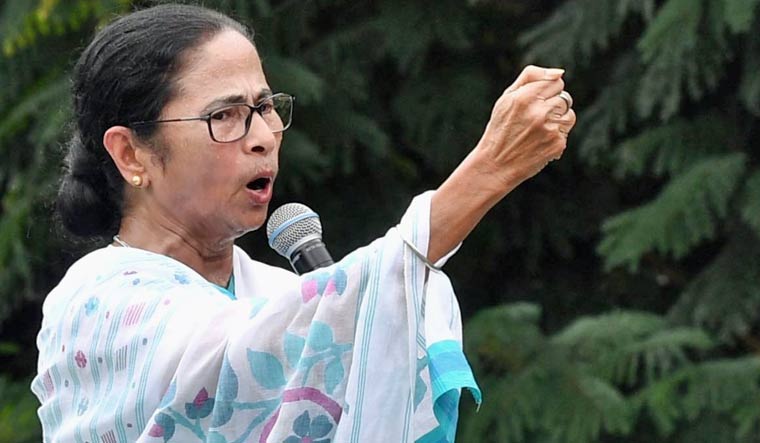
Mamata Banerjee’s has been a government of contradictions: she speaks of federalism but does not want to share COVID data with the Union government; she speaks of secularism but her pandering to Muslim orthodoxy has even made Muslim women turn away from the TMC; she used to speak against a ‘culture of violence’ propagated by CPI(M) in the state and yet her party is using the exact same tricks of the trade that the communists did before them. The aforementioned occurrences and realities in West Bengal make me feel that Didi may just have lost the plot, when it comes to administering the state. It may be time for Didi and TMC to pass the baton, for meaningful Poriborton (পরিবর্তন) – change, to initiate a new chapter in the journey of my Shonar Bangla (সোনার বাংলা) – my golden Bengal!

Formidable India over bellicose China: Why are India-China relations not really as they should be

Historically, man is believed to have first appeared on the face of the earth about 5.6 million years ago. It is the most interesting but intriguing fact and is based on assumptions and some scientific basis. Several forms of humans appeared on the earth thereafter and disappeared. This indeed was the inflexible law of creation and destruction to which the evolutionary milieu of this universe is imminently subject. In between this fateful play of creation, sustenance and annihilation, arose the need for solitude and poise.

Uninterrupted right to the enjoyment of the fruits of labour presupposed a fortified environment of affordable serenity which men of mettle could acquire and sustain. Some through the wages of war and some through negotiation – through an ephemeral illusion in the world of ‘might is right’. Still the primal need for tranquillity and order brought forth a strong State protected by an equally strong and sinewy defence force which comprised of different elements ably commanded and governed by a definite code, essentially uniform in its elements. This model is universal and has been mutatis mutandis adopted by all civilisations in the world and to this, neither China nor any other country is an exception.

Indian polity and military craft

Indian polity and military craft have centred around Dharma or the ordained duty performed as stipulated in the Dharma Shastra, earlier and by a code of conscience thereafter. Part of this was written and part thereof unwritten, but understood by everyone by usage. The texts on warcraft and rules of engagement in combat had their roots entrenched in law of war but originally viewed as part of religious texts. Dharma, however, was undoubtedly taken to be an ordained duty.

The related similes further strengthen the view that the exercise of all sorts of power, was definitely subject to superior logic. Unregulated and unprincipled marches undertaken by the Chinese forces at the border as witnessed in the recent past, being backed and justified by the State are a sure testimony of shortsighted thinking by those at the helm of affairs. Attempts to intimidate the largest democracy in the world is not a child’s play that should have been known to those in power in Beijing.

Belligerent China

Belligerence is a trait, prenatal in certain cases and acquired in many others. The nature and kind of this belligerence is dependent upon the aims and objectives with which the State is conceptualized. It also reflects how that State treats the rest of humanity. In many cases, countries resort to ruthlessness to the extent of being barbaric through repression and motivated indoctrinations. Unfortunately, the mind, the wonderful wizard, enables even the States to formulate and later pursue a policy of extreme intolerance and usurpation.

A bioscopial view of China from the time of its evolution traverses the author through a land of proud but myriad dynasties, simple and contended people and contemplative scholars in pursuit of their respective realms of knowledge. With time as the rest of the world moved ahead, China also saw a resurgence of new ideologies until it settled with the latest one.

The cultural revolution of Mao which lasted for ten years from 1966 to 1976 brought a new political, economic and eventually a social order in the country, in the wake of extreme repression which has been justified on grounds that novelty brings resistance and resistance needs to be curbed by the strong State machinery. This, in fact, was the execution of a strong proletarian thought. All the means adopted could thus not be peaceful. There was indeed avoidable bloodshed of its own nationals. The party in power appeared to be desperate to consolidate itself and emerge as the one heading a perfect regime – a piper’s dream in fact, as soon it bloated into a Capitalisticform.

It is almost unbelievable that a country such as China which gave to the world the way to the first printing methods, and history as proud as it could be, would advocate unrelenting bloodshed against a Nation like India that gave to the world the religion of peace and the idols of compassion and peaceful resolutions!

Indian benevolence

Applying this thought of geographical accessions to India, I do not find this innate desire of usurpation anywhere in its policy towards its neighbours. We are brought up that way! Love thyself, love thy neighbour! Just a few people in ivory towers do not decide here, what we think and propagate.

Having been brought up in the environment rich in benevolence, it actually puzzles the author to see how a country like China, with such profound history, could degenerate into a state of unremittable deception and treachery and adopt devouring trait as an integral part of its policy of expansionism! Definitely, there has to be a long consistent cause and a fixed but distorted mindset at legislative and executive levels, with a marked aversion to peaceful co-existence amidst the humanity at large, in which India has believed since ages. It is, in fact, a malaise in a democratic world!

The underlying cause

The underlying cause is an insatiable ambition of dominance that is inherently averse to the idea of the world being an enlarged family where the human race and its preservation on this planet is the central motto. Diplomatically, it will be contrary to the principle of peaceful co-existence as well. More importantly, why its polity is indulging into this kind of political and military behaviour, is difficult to understand, when this country has been one of the founding and permanent members of the United Nations. In fact, this conduct of China is portraying its ancestors and history in poor light, if that is of any concern to those in power in Beijing.

When we the people of India, i.e., Bharat, stand in comparison with China, doesn’t it project us as world leaders? Yes, it does. Everything of this country represents a high platform on which are seated the patient Indians who breathe in and out the popular adage, sarve bhavantu sukhina, sarve santu niramaya, or let everyone be happy, let everyone be free from disease.

How do we counter and neutralise these belligerent forces?

Let us be certain that the dragon respects power and exploits timidity. Whether it is against Taiwan or in Hong Kong against the will of the people or the Vietnamese, the Japanese or the great benevolent Indians! Let us also admit that it pursues a policy of flexing muscles and flashing incisors. Events of the recent past reveal that they can disregard respect for human life on planet Earth – In fact, world history would reveal that all enemies of mankind have had similar traits. And thus, co-exist in this world with an internecine agenda.

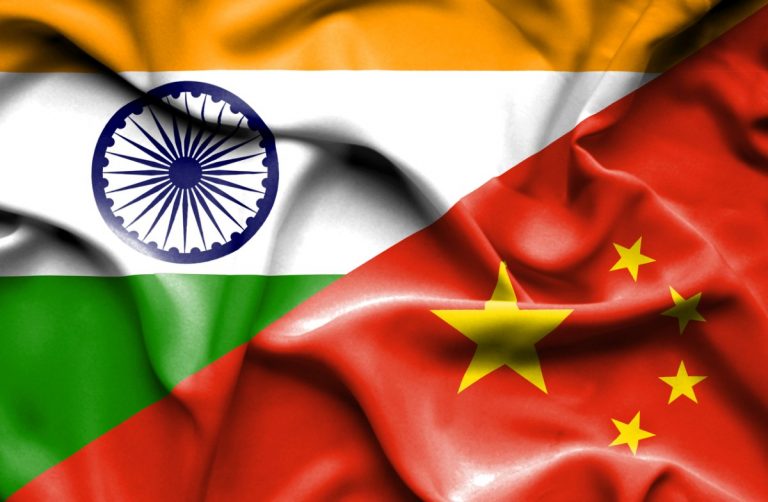
We must realise that we live in times when the walls are falling. Wars are fought for victory on mankind in pursuance of a definite political objective. In the wake of the recent development on the Sino-Indian border, it is not hard to visualize that India China relationship is not as simple as it appears. Going back to the times of Faxi-han who visited India during the fourth century and spent more than a decade learning Indian scriptures primarily Buddhist and later Huen-zang, who visited India during the seventh century A.D. carried out a comparative study of Buddhism in India and Buddhism in China. These Bhikkhus became the apostles of peace from and for the nation which is propagating war as a solution to all issues in the present times. The present-day state of affairs would belie any sensible belief in these backgrounds – Unfortunate for the people of the country of these Buddhist scholars!

The walls are falling

Talking about the recent so-called victories and defeats at the border and the Galwan Valley, in particular, to understand where we stand, it will be relevant to trace which way the rest of the world is heading. George Nolte who has discussed the Military systems of administration in various countries in Europe,3 has remarked that a number of multinational units with a higher level of integration, have come into being in the recent years. For instance, the Euro Corps, the first German Netherlands Corps and the Multinational Corps Northeast. The operational readiness of the militaries which was till recently confined to only the national forces has thus started influencing force readiness of other countries as well.

Belligerence in the neighbourhood is one major cause of such deep influence. We in India who moved on trust and great human values accepted China as a neighbour who too has the will to make amends for past mistakes. If it can happen in Europe, why can’t it happen in Asia? As an example, European forces that generally operate jointly in missions felt a necessity of a uniform code for the Euro forces4 and they could do it. This ranged from operational strategies to the disciplinary aspect during multinational operations. The same is, however, not true in respect of the countries outside the European continent.

With what China is practising with its military and politics with respect to its benevolent neighbour India, is eroding the mutual trust which nations can build amongst themselves and layout a better future for themselves. As for countries around China, at any stage, even if China attempts a truce with them, they shall all revert to their own national ethics and military traditions as the volatile nature of China’s priorities, is detrimental to any good relationship.

The good customs and usage – the roots in morality

History is based on customs. Defined as a rule of conduct, obligatory for those within its scope established by long usage5, customs were the most authentic source of law until the Parliaments in the world started enacting legislations. A reading of the historical texts relating to the defence forces, reveals that all over the world, it is in the customs and conventions that the ground, air and the marine forces of the nations groomed and nurtured themselves.

Whether it was their uniforms or their ranks and ratings or the rules of discipline or the conduct of the troops in combat, the necessity of operations coupled with war usage, decided what was right and what was wrong. The high proprieties of war were followed in battles. In civilised societies, in some cases, the customs took the shape of statues, a majority of them remained unwritten but were followed even in the most adverse situations. Our troops have shown this to the world while tackling the Chinese incursions in Ladakh recently. We can’t be faulted in chivalry.

About Indian sense and sensibility

We in India are inspired by our lofty past. We trust that man’s need for tranquillity and order has brought forth the creation of a strong State ably protected by an equally strong defence force which, though comprised of different elements; but governed by a definite and almost a uniform code. Anthropological records also reveal that though accepted reluctantly, desire for regulation is innate to a civilised society and the instances of such self- regulation are not rare.6 With an inimitable penchant for a well-defined rule of governance and an inflexible code of conduct which became essential to keep the national warp and woof together, keeping it from withering at the seams, we found a close semblance to order in the Western thought and thus hesitantly but scrupulously followed the British model in the defence forces including in it, its veritable hierarchy.

In the process of its evolution, the services witnessed and withstood a host of testing times exhibiting remarkable vision and fortitude. Overlooked by a profound thought, the services found themselves guided by the pristine adage,“Where there is no vision, the people perish.” Enamoured by the English thought and sentiment, for the past two and a half centuries, it was no surprise that the character and Military reputation of an Indian soldier came to be seen through the prism of the English sensibility.8 To the extent that fairness and justice too had to be tested on the altar of the proverbial Western Ground Norms which became evident from certain provisions of the Military, Navy and the Air Force laws and procedures.

In the words of Maria Misra, “India…was a living museum of Europe’s distant past, of great repository of verifiable phenomenon of ancient usage

The forces in combat

The forces in combat are required to be seen as a highly obedient well-groomed and loyal sinew committed to the defence of the nation. Thus, with its lofty ideals, in the body politique, the defence forces of the Union, assumed the covert role of the protector of the Nation and its boundaries from aggressors. It almost occupied the central role like the spinal column keeping the scaffold together with its organizational strength and its capability to protect the Nation from calamities.

The State, King, Defence and Statecraft – our teachings in morality.

In the Indian context, the first comprehensive accounts of State, King, Defence, Statecraft et al, are found in the Mahabharat –surprisingly, a story of a dynastic struggle for the throne of Hastinapur yet so terse in morality! Divided into eighteen Parvas, each dealing with a separate aspect of life. The epic theorises the just war and lays down rules of conduct. King’s authority arose from the various yajnas like the Rajasuya, Vajpeya and Ashwamedha performed by him and under his suzerainty, evolved the laws and procedures of services. Revealing episodes of Mahabharat like shifting of command of forces to Bheeshma then to Drona followed by Karna and then Duryodhana himself assuming the command during the battle of Kurukshetra, is the testimony of variation in command legally exercised.

The concept of inviolable rights available to all human beings is illustrated as Lord Krishna tells his childhood friend Uddhava, “Panchatma Keshu Bhuteshu Smaneshu cha Vastutah”, i.e., all beings are composed of five elements which are constant in all. Hence there is no distinction between one and another except that of responsibility.

Next is the Arthashastraor the ‘treatise on polity’ of Kautilya. Written in the period 322 and 300 BC and comprising 15 parts, the Arthashastra is considered as the masterly treatise on statecraft and a valuable source of information on state administration of which the governance of defence forces constituted an important part.

We have arrived

On the contrary, what philosophy the Chinese counterparts are following, is just anybody’s guess. With them losing ground rapidly on the moral plane, China needs to step back and make way for India as the leader in the world. It doesn’t need to be reiterated that we have proved our superiority all over again. God bless the world, we have arrived! This was noticed by the author in Somalia in September 1993, when the Indian forces as a part of the UN Peace Keeping Force, had descended on the Somali coast. We have done it again at the narrow ridge and while defending the Galwan valley! We could well make a difference on the world scene. We are ready! Peace and tranquillity will now follow as the sure concomitant

Agencies warn of terrorist attacks on 5th and 15th August, Ayodhya Ram Janmabhoomi also considered a possible target

Taliban terrorists had planned to target the public in Jammu and Kashmir in May, but the plans were thwarted. As per the latest reports, they are now planning attacks on the anniversary of abrogation of Article 370 on 5th August. The Ram Mandir Bhoomi Poojan is also taking place on the same day.

ANI has reported that Intelligence agencies have compiled multiple information received in the last few weeks and concluded that they are not only planning attacks on 5th August but also on the 15th August, Independence Day.

Pakistan trained terrorists may enter from J&K and Nepal

The intelligence agency has released a detailed advisory after which the security in Jammu and Kashmir, Delhi and Ayodhya has been increased. An advisory in May 2020 mentioned that around 20 Taliban terrorists, trained by Pakistan Army commandos in a location in Jalalabad, may undertake an attack in Jammu and Kashmir after Eid-ul-Fitr. However, they failed in their mission due to the alertness of the security forces. During that time, a major terror attack was also averted in Pulwama after police received credible information of explosive-laden car.

The input, as per the ANI report, said that Pakistan Army would help the around 25 terrorists to enter Indian territory through the International border (Line of Control) along with Jammu and Kashmir. There is a possibility that five or six terrorists may enter via Nepal border. The security agencies said that the attacks might take place on August 5th in the light of the anniversary of abrogation of Article 370 and on 15th August. The agencies added that an attack on the occasion of Ram Mandir Bhoomi Pujan could not be ruled out.

Keeping in mind the sensitivity of the dates, the security agencies are to remain on high alert to avoid any incident. The concerned departments and officials have been ordered to stay vigilant and coordinate with each other as per the standard operating procedures.

Abrogation of Article 370 and the formation of UTs

Security agencies are often on high alert of sensitive dates like Independence day and Republic Day. Last year, on 5th August, the Indian government revoked Article 370 and split the state of Jammu and Kashmir in two union territories named Jammu and Kashmir and Ladakh. Since then, both the UTs are on high alert to avoid any incidents. As per the reports, since the abrogation, there has been a fall of 40% in the number of youth picking up arms in the valley. This year, the government started to give domicile certificates to long-time residents of the valley. More than 25,000 beneficiaries got the domicile certificate in recent months that miffed many political parties in the country.

Ram Mandir Bhoomi Pujan

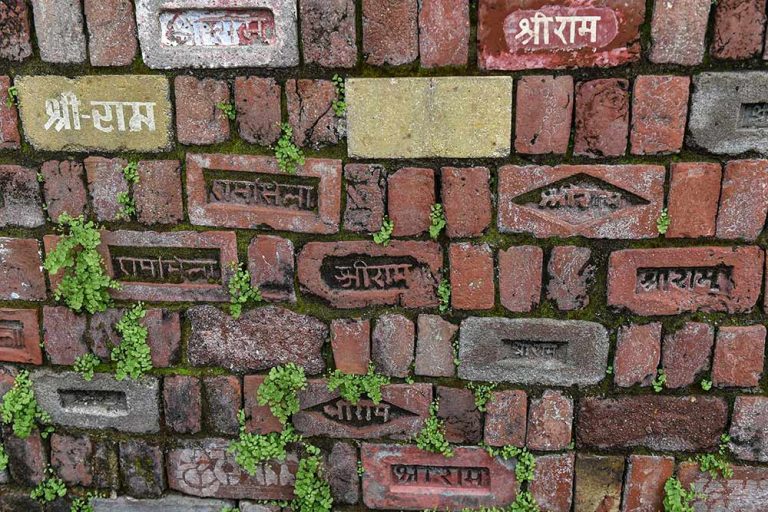
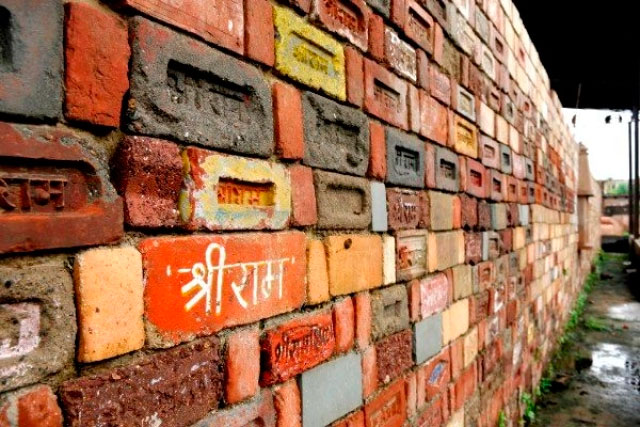
Ram Mandir Bhoomi Pujan is going to take place on 5th August in Ayodhya. Prime Minister Narendra Modi, prominent leaders from Ram Mandir movement and saints, will participate in the ceremony. The Supreme Court verdict on November 9 last year had ended a decades-old legal dispute over the structure, allowing the Hindus to finally claim the birthplace of Lord Ram and build a Mandir on one of Hinduism’s most sacred sites.

Congress leader who had once called Afzal Guru a martyr now calls 5th August a ‘black day’

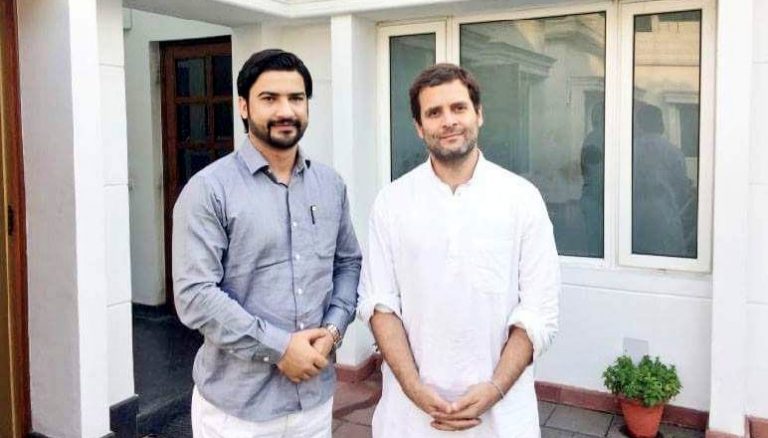
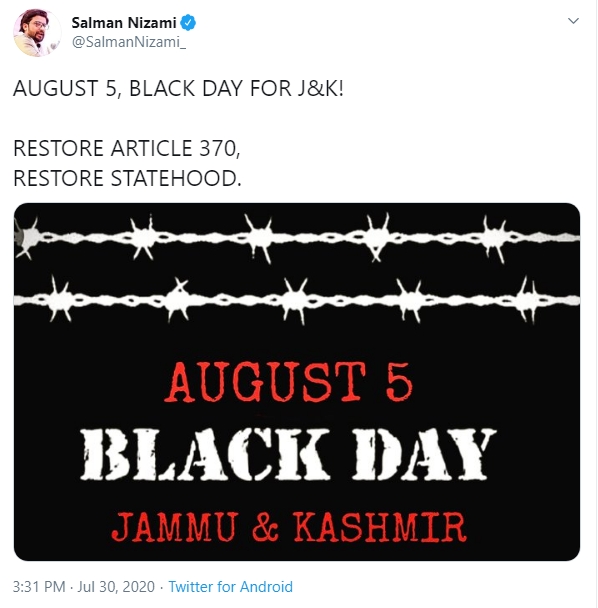
Controversial Congress leader Salman Nizami, who is known to express anti-India feelings regularly, has labelled the day of 5th August as the black day for Jammu and Kashmir. On this day last year, Article 370 and Article 35A of the Indian constitution was abrogated, which had granted a special status to Jammu and Kashmir. Along with that, the state was bifurcated into two union territories, Jammu and Kashmir, and Ladakh.

Salman Nizami posted a tweet saying that 5th August is the black day for Jammu and Kashmir. He also demanded that Article 370 should be brought back and statehood of J&K should be restored. The Congress leader is known for his anti-India views, who had publicly said that he wants an Independent Kashmir, thereby supporting the separatists and terrorists active in the state.

Salman Nizami also believes Afzal Guru was not a terrorist, but a martyr. He had once tweeted, “Tum Kitnay Afzal maro gay, har ghar say Afzal niklay ga”.

He had also threatened to hang BJP leaders if the party organises a rally in Kashmir. While openly advocating for a separate country for Indian Muslims, Nizami had also tweeted once, “I hate you India and I mean… Shaheed Afzal Guru”.

The Congress leader terming the 5th August as black day echoes how Pakistan is planning to remember the historic day. Pakistan has planned a host of propaganda programmes against India on this event. According to reports, Pakistan Army has set out a flow chart titled Black Day- August 5, scheduling the programs plans for the same.

Several political parties in Jammu and Kashmir have also labelled 5th August as black day for the former state. Peoples Democratic Party issued a statement yesterday saying, “August 5 marks a black day in the constitutional history of J&K, when the solemn commitments made by Parliament and in the Constitution were annulled for a majoritarian goal of bulldozing the country into one saffron colour.”

Similarly, separatist organisation All Parties Hurriyat Conference (APHC) has declared August 5 as a black day, and also called for a strike on that day. APHC has said that India is trying all means of oppression to suppress the Kashmir liberation movement.

It may be noted that 5th August this year will see another historic event, the Bhoomi Pujan for the Ram Mandir in Ayodhya. PM Modi will attend the event.

‘Hero’, ‘Ghazi’, Lion of Islam: Pakistani nationals hail man who murdered an elderly Ahmadiyya for committing ‘blasphemy’

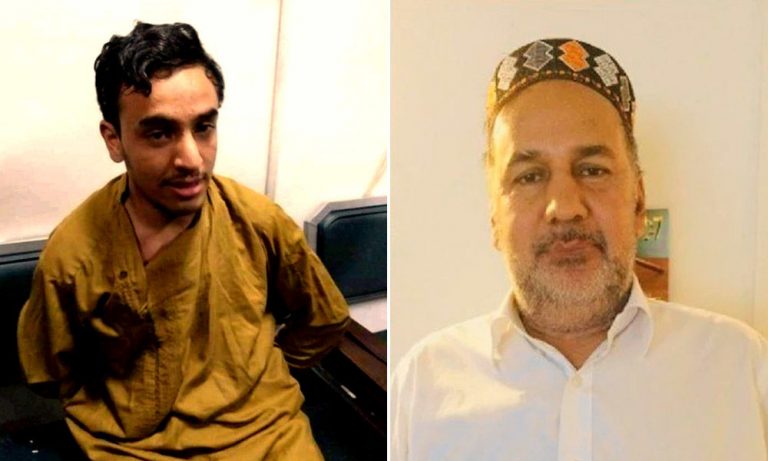
The Islamists in Pakistan have turned Khalid Khan—the man who shot dead Tahir Ahmed Naseem, an accused in a blasphemy case, in a Peshawar courtroom earlier this week into a ‘hero’ as people took to social media to hail him as the ‘Lion of Islam’ for killing the ‘blasphemer’.

We had earlier reported regarding the brutal killing of Tahir Ahmed Naseem, who belonged to the minority Islamic sect of Ahmadiyyas. Naseem, who was facing a trial for ‘blasphemy’, was shot dead in front of the judge in a local court situated in a high-security zone in Pakistan’s Peshawar city on Wednesday. Naseem was on trial for ‘insulting’ the Muslim Prophet Muhammad. He was in jail since 2018.

Following the incident, the police arrested the killer Khalid Khan. The killer had reportedly confessed to the police that he had been ordered to carry out the killing by Muhammad because the accused had belonged to the Ahmadiyya faith.

However, shockingly, hours after the killing of Naseem, the killer Khalid Khan is now hailed as a hero by Pakistanis, claiming that he saved ‘Islam’. Many in Pakistan have been justifying Khalid Khan’s heinous crime as an act of bravery and hailing him as some sort of a ‘hero’ for killing an unarmed elderly man inside a courtroom.

Hailed as a hero for killing an unarmed elderly man

One social media users even referred to the killer as ‘Lion of Islam’.

Another Islamist from Pakistan praised the confidence and courage of killer Khalid Khan and prayed to Allah to ‘boost his courage’.

Some also hailed Khalid as ‘Ghazi’ for severing the head of a Qadiani and ‘putting a brake on the activities of Qadianis’. Qadiani is a religious slang used by Pakistanis to insult Ahmadiyyas, as Mirza Ghulam Ahmad, the founder of Ahmadiyya sect was born in Qadian.

Compared with others like him who had killed blasphemers in past

A Pakistani social media user Naeem went to an extent to compare Khalid Khan to various Islamic terrorists, who had unleashed similar terror in the past against people who had disagreed with certain aspects of Islam. The social media user compared Khan to the likes of terrorists such as Amir Cheema, Ilm-ud-din, etc.

Amir Cheema was a Pakistani terrorist in Germany,  who had entered the offices of the German daily newspaper Die Welt in 2016 with a large knife and attempted to murder the editor of the newspaper – Roger Köppel after they had published cartoons of Muhammad in the newspaper.

Similarly, Ilm-ud-din was another Islamist, who had assassinated a book publisher named Mahashe Rajpal for publishing the book Rangila Rasul about Prophet Muhammad. Khalid Khan was also compared with Malik Mumtaz Hussain Qadri, the killer of former Punjab governor Salman Taseer.

Salman Taseer, the former Punjab governor, was killed for speaking against the death sentence awarded to a Pakistani Christian woman named Asia Bibi, for the charges of ‘blasphemy’. Taseer had appealed for mercy and a pardon for the woman who had already spent several years in jail.

The most shocking glorification of Khalid Khan came from a senior leader of the Imran Khan-led Pakistan Tehreek-e-Insaf party. Haleem Adil Sheikh, one of the country’s leading politicians and the leader of ruling PTI changed his social media profile picture to that of the killer Khalid Khan. after he had shot an alleged blasphemer in court in Peshawar.

However, after social media outrage against Sheikh, the PTI leader from Sindh later said on Twitter, “This is to clarify, I personally don’t manage my Facebook accounts. This was posted without my knowledge or consent.”