Home Blog Page 5482

Out of 106 million tonnes of wheat expected to be produced in 2020, India to export 90,000 tonnes to Afghanistan and Lebanon amidst Cornavirus crisis

0

On Friday, the Indian Agriculture Minister Narendra Singh Tomar informed that it will export 50,000 tonnes of wheat to Afghanistan and 40,000 tonnes of wheat to Lebanon as a part of its diplomatic deals. It is expected that India will produce 106 million tonnes of wheat in 2020 due to favourable weather conditions.

Since the production of wheat is higher than the domestic requirement, the government has decided to export surplus wheat after a request was made by Afghanistan and Lebanon. The National Agricultural Cooperative Marketing Federation of India Limited has been asked to supply wheat under a government-to-government deal.

Earlier, the Indian government informed that it will grant the license of export in appropriate quantities to all the neighbouring nations who are dependent on India’s capabilities for the production of hydroxychloroquine. It has been reported that India has allowed limited consignments of hydroxychloroquine to be exported to USA and Brazil after personal calls by US President Donald Trump and Brazil President Zair Bolsonaro to PM Narendra Modi.

The Indian MEA has stated that India will allow the export of hydroxychloroquine and paracetamol to some countries which are ‘badly affected’ with the coronavirus crisis. The MEA has also stated that no speculation and politicisation of the issue should be made.

US President Donald Trump on Wednesday thanked India and Prime Minister Narendra Modi for allowing the export of hydroxychloroquine (HCQ) to the United States. Donald Trump said in a tweet, “Extraordinary times require even closer cooperation between friends. Thank you, India and the Indian people for the decision on HCQ. Will not be forgotten! Thank you Prime Minister @NarendraModi for your strong leadership in helping not just India, but humanity, in this fight!”

Will lockdown be extended? In meeting with PM Modi, so far 3 opposition states vote for lockdown to be extended till 30th April

The Wuhan Coronavirus pandemic has gripped the country and while India is better off compared to most developed nations that have been an exponential growth in positive cases and deaths, the government is mulling whether the 21-day-lockdown, that was announced by Prime Minister Narendra Modi should be extended till the 30th of April.

Today, Prime Minister Narendra Modi is conducting meetings via video conferencing with all the Chief Minister of the states to decide the way forward in India’s fight to arrest the spread of Wuhan Coronavirus. In the meeting, it is likely to be decided what would the modalities of further action be.

Is it now being reported that during the meeting with the Prime Minister, 5 Chief Ministers have spoken up in the meeting that has been underway since 11 AM and 3 CMs of states have voted for the lockdown to be extended till the 30th of April. This would amount to a 2-week-extension to the 21-day-lockdown that was announced by the Prime Minister. Out of the 5 states that have spoken up so far, the three states that have voted for the lockdown to be extended are opposition ruled states.

According to journalist Akhilesh Sharma, the three opposition ruled states that have voted for the lockdown to be extended till the 30th of April are Maharashtra, Punjab and Delhi.

Read: Coordinated​ marketing cannot hide the Coronavirus mess being created in Maharashtra: Here are some facts

In India, Maharashtra has emerged as the state with the most number of Coronavirus positive cases and deaths being recorded. According to the Ministry website, till the time this report was written there were a total of 1574 cases of Coronavirus in Maharashtra and 110 deaths.

In Delhi, 903 total cases with 13 deaths and in Punjab, there were 132 cases with 11 deaths.

In Delhi especially, most of the 903 cases are linked to the Tablighi Jamaat even that was held in the Nizamuddin area of Delhi. Given the scale of the event, Delhi has substantially managed to arrest the number of cases that have been declared from the state. Maharashtra on the other hand has been spiralling out of control, being the state with the highest spread of Wuhan Coronavirus.

Read: The Life and Crimes of the Tablighi Jamaat amidst the Wuhan Coronavirus pandemic: All You Need To Know

In such circumstances, it remains to be seen whether the nationwide lockdown to arrest spread of Coronavirus would be extended till the 30th of April of would the decision to impose such lockdown would be left to individual states that would then seal the hotspots to arrest to pandemic.

WHO admits “error” after its situation report claimed that India has cases of “community transmission” of Coronavirus: Report

0

The World Health Organisation (WHO) has conceded the misleading nature of an “erroneous” situation report wherein it confused India’s “cluster of Coronavirus cases” with that of “community transmission.” Speaking to a news outlet, WHO informed that the error has been corrected.

Community transmission is defined as the spread of an infection where its source can’t be identified. It is the third stage of disease transmission, while India is currently at stage two or local transmission, where the Coronavirus is spreading among close contacts and the source of the infection can be identified. The organisation has told a news outlet that the error has now been fixed. When the WHO had alleged instances of “community transmission” of COVID-19 in the country, the government of India had denied all such claims.

Joint Secretary (Health Ministry) Lav Agarwal said, “If it happens, we will be the first to tell you. We will tell people to be especially alert…There is no community transmission.” The World Health Organisation has clarified that the transmission scenarios are “self-reported” by member states. The number of reported cases in the world stands at 17 lacs while around 1 lac people had lost their lives.

WHO has now clarified that India has cluster of Coronavirus cases, not community transmission. Most of these clusters are linked the Tablighi Jamaat congregation that took place in the first half of March in the Nizamuddin Markaz in Delhi. Several persons in that event, which included foreign nationals for various countries, were infected, and later they carried the virus to various places of the country. Many of them didn’t come forward despite repeated appeals by the govt, and kept hiding in mosques etc. This has resulted in the emergence of Coronavirus clusters across the country.

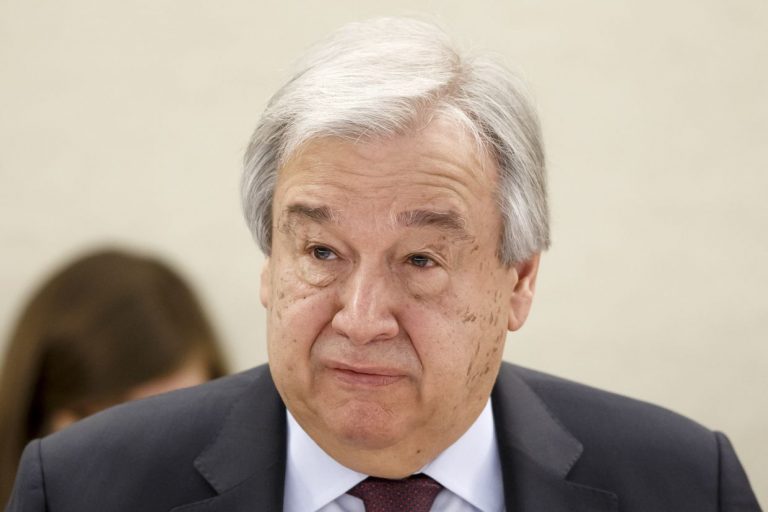
WHO and its director Tedros Adhanom Ghebreyesus have come under severe criticism for their conduct since the pandemic broke out in China. The organization took long enough in declaring it a pandemic, leading to countries not being vigilant enough on time. In January, WHO had endorsed the conclusion of Chinese authorities that the Novel Coronavirus does not spread from person to person, and stated that it does not recommend any specific health measures for travellers to and from Wuhan.

WHO also ignored Taiwan which had informed them that it has evidence of human-to-human transmission of the virus. Experts are of the view that this laxity and callousness is responsible for the catastrophe that has struck the world and that the organization’s director-general, Tedros Adhanom Ghebreyesus, like China’s Xi Jinping, should be held accountable for recklessly managing this deadly pandemic. Now, as it turns out, Tedros was accused of covering up epidemics in his home country Ethiopia even while he was the health minister in the government days before he became the director of the WHO

US President Donald Trump sharply criticized the World Health Organisation on Tuesday, accusing it of being too focused on China and issuing bad advice during the new coronavirus outbreak and saying he would put a hold on US funding for the agency.

“We pay for a majority or the biggest portion of their money. They actually criticized and disagreed with my travel ban at the time I did it. They were wrong. They’ve been wrong about a lot of things. They had a lot of information early and they didn’t want to – they’re very – they seem to be very China-centric,” Trump charged during his news conference on Tuesday.

Coronavirus pandemic: Former US Ambassador to UN Nikki Haley calls for investigation into the relationship between WHO and China

Former United States Ambassador to the United Nations Nikki Haley has said that the relationship between China and the World Health Organization needs to be investigated. She made the comments during her appearance on Sean Hannity’s talk show on Fox News on Wednesday. She said that the relationship between China and WHO was a threat to the sovereignty of the United States of America.

“The United States does fund 22% of the World Health Organization,” Nikki Haley said. “But this is even bigger than the World Health Organization, this is about China’s influence into these multilateral organizations.” “This is what China does, they try and leverage and get influence. And what we’re seeing is the World Health Organization, once again, has fallen for it. And I can’t believe they’re going to go so far as lecture the president. I mean, if anything, we deserve to hold them accountable. We have the rights to answers. They need to be investigated,” she said.

Nikki Haley also noted that Taiwan had warned the WHO of human-to-human transmission but it was summarily ignored due to China’s influence. “Why did it take a whole month for the World Health Organization to respond? You want to know why that is? Because China has kept Taiwan from being a member of the World Health Organization,” she said.

The USA has been aggressive against China and the WHO over the Wuhan Coronavirus pandemic. Before Nikki Haley, US President Donald Trump called the WHO ‘China-centric‘ and withheld funds that the USA contributes to it. At the United Nations Security Council meet, the USA had called for an analysis of the origins of the virus, in an obvious dig at China.

Will the nationwide lockdown be extended? PM Modi likely to decide after interacting with Chief Ministers today

At 11 AM on Saturday, the Prime Minister of India Narendra Modi has started his interaction with the Chief Ministers of all States through a video link and discuss whether or not the 21-day nationwide lockdown imposed in the country on March 24, in the wake of Wuhan Coronavirus outbreak, should be extended. According to the Ministry of Health, India has reported 6,565 live cases of the Chinese virus with 642 recoveries and 292 deaths as of 8 a.m. on April 11. The meeting between PM Modi and the CMs is likely to answer the burning question – will the Coronavirus lockdown in India be extended

The meeting between Prime Minister Modi and the Chief Ministers of the States is likely to go on for about 4 hours after which, a decision might be taken on the extension of lockdown in India to curb the spread of the Wuhan Coronavirus.

Earlier, the central government was contemplating the extension of the lockdown which was to end on 14th April 2020 after several state governments and experts put in the request, said government sources to public broadcaster Prasar Bharati. The Union Health Ministry in its press briefing today said that the central government was in constant touch with the State Governments and depending on the situation, the union will take a decision regarding the extension of the lockdown.

The religious congregation by the Tablighi Jamaat members in Delhi’s Nizamuddin area, followed by the exodus of migrant workers from various States to Uttar Pradesh and Bihar has endangered public health and safety. India’s attempt to contain the deadly pandemic suffered a huge blow due to these two incidents.

Hinting at the chances of a possible extension of the lockdown, HRD Minister Ramesh Pokhriyal had assured of no academic loss to students if schools, colleges remain shut beyond April 14. He informed that the Government will make a decision on April 14 whether to reopen schools, colleges after reviewing the Chinese virus outbreak. The Cabinet Minister said that the Department was reviewing the course of action that several educational institutions had taken, post the lockdown. He added that the safety of teachers, as well as that of students, was of primary importance to the Government.

On April 9, the Odisha government had decided to extend the lockdown until April 30, becoming the first state to extend it beyond April 14. Odisha CM Naveen Patnaik had requested the central government not to start train and air services till April 30. He had also said that all educational institutions would remain shut till June 17.

Odisha TV had quoted CM Naveen Patnaik as saying: “During the ongoing lockdown period amid Coronavirus crisis, your discipline and sacrifice have provided us the strength to fight coronavirus. We have decided to extend the lockdown period in Odisha till April 30, said CM Naveen Patnaik”.

Uttar Pradesh: More than 200 Tablighi Jamaatis disappear to avoid quarantine, switch off their phones: Reports

0

In a worrisome incident, more than 200 members of the Tablighi Jamaat, who were under quarantine in Lucknow till now, have suddenly disappeared and their mobile phones have been switched off, reports Live Hindustan.

According to the reports, the Tablighi Jamaatis were put under quarantine in and around Lucknow after it was found that they have attended the event in Nizamuddin Markaz in Delhi last month, which has emerged the largest single source of the Wuhan Coronavirus spread in the country. However, the Uttar Pradesh police have now found that the Jamaatis have disappeared and they have suspiciously turned off their phones leading to a new worry to Uttar Pradesh authorities. Moreover, around 300 people who were in contact with those Jamaatis have also switched off their phones.

The Crime Branch has now begun its investigation to trace the mobile numbers linked to Jamaatis. These members were residing in areas including Kaiserbagh, Sadar, Wazirganj, Madianav, Saadatganj, Gomtinagar.

Reportedly, 24 foreign nationals were found in the mosques of Kakori, Gomtinagar and Kaiserbagh. The detained Jamaatis were from various places outside Lucknow and had joined Delhi’s Jamaat. Following their arrests, the Uttar Pradesh police had put more than 700 mobile numbers under strict surveillance. Due to surveillance, the UP police tracked the location of these Jamaatis who had hidden inside mosques and madrasas.

Addition to the crime branch investigation, an STF surveillance team also started monitoring these Jamaatis. On the basis of their call records, the police have begun interrogating the attendees and their family members. Shockingly, many Jamaatis have deliberately lied to the police regarding their location.

Reportedly, the police have quarantined many of the family members of the Jamaat attendees following their return from Delhi. It is being reported that as police began inquiring into details of their visit to Markaz started increasing, more than 300 numbers have been switched off in last three days fearing that they would be quarantined.

Later, the police became aware that the Jamaatis have started using new SIM cards to avoid surveillance by the police. The police had in fact made contact with hundreds of Jamaatis after they began surveillance.

The Nizamuddin Markaz of the Tablighi Jamaat in Delhi has been the epicentre of the spread of Wuhan Coronavirus all across India. The role of the Tablighi Jamaat in the spreading of the Wuhan Coronavirus in India came to light when thousands of Jamaatis were found holed up in the Markaz Nizamuddin in violation of all guidelines and orders. Subsequently, numerous people across numerous states of India who had attended the Islamic event at the Markaz Nizamuddin tested positive for the virus.

West Bengal: Hundreds of people gather in a mosque in Murshidabad for Friday prayers defying lockdown orders

0

Hundreds of people gathered in a mosque of West Bengal’s Murshidabad for Friday prayers despite the nationwide lockdown in the wake of the Wuhan Coronavirus. Mass gatherings increase the risk of transmission of the deadly virus so social distancing is an important preventive measure but hundreds gathered at the Mosque risking their own lives and their contacts.

No complaint has been registered against the Imam of the mosque and anyone who attended the gathering. Young men and elderly people who are at the risk of contracting the deadly virus were seen inside the mosque despite the presence of the police. The cop said that it is not possible to keep an eye on every mosque of that area as it is a Muslim majority area and there are many mosques there.

Earlier, A large gathering of Muslims in Karnataka’s Hubbali district attacked police officials when they tried to stop them from offering namaaz en masse amidst the nationwide lockdown to blunt the spread of coronavirus. 4 police officials, including one woman constable, were injured by Muslim youths as they pelted stones at the police personnel for stopping them from congregating amidst the looming threat of the Wuhan Coronavirus.

In a similar incident, in UP’s Aligarh, a Muslim mob surrounded and pelted stones on when police tried to stop them to offer namaz in a group in a mosque. Around 25 to 30 people had arrived at the mosque in the Sarai Rahman area to offer prayers defying the nationwide lockdown. The Uttar Pradesh police have also registered an FIR against 25 people involved in the mob attack on UP Police during the nationwide lockdown.

Maharashtra cop, who nabbed 21 foreign Tablighi Jamaat members hiding in a mosque, tests positive for Coronavirus

On Friday, a senior police inspector working with the Maharashtra police who held 21 foreign nationals belonging to the Tablighi Jamaat had been diagnosed with the Wuhan Coronavirus. When Maharashtra cop began exhibiting symptoms of the Chinese virus after nabbing members of Tablighi Jamaat, he was tested for it. He is currently admitted to the Apollo Hospital in Nashik in Maharashtra.

The foreign Tablighi Jamaat members, 8 Malaysians, and 13 Bangladeshis had attended the Nizamuddin Markaz between March 13 and March 15. They were hiding in a mosque and a school in Mumbra in Maharashtra. The foreign nationals had travelled to Maharashtra via Tamil Nadu. 2 police cases were registered against the mosque and school authorities for withholding information about the foreign nationals by Maharashtra police.

It is important to mention that these foreigners refrained from coming forward and reporting to the government authorities, despite multiple appeals. The foreign nationals and the school trustees were then quarantined at a government facility.

Read: The Life and Crimes of the Tablighi Jamaat amidst the Wuhan Coronavirus pandemic: All You Need To Know

The Maharashtra cop who has been diagnosed with the Coronavirus had nabbed these Tablighi Jamaat members who had refused to come forward.

Earlier, the police in Ramgarh, Jharkhand had received information that some Tablighi Jamaatis were hiding in a camp deep inside the forest in Kuju. The cops raided the location and found a hideout in Orla, Telenia forest in Kuju under the Mundu police station of Ramgarh District.

Kuju OP in-charge of Bharat Paswan led a team for the search operation. They spotted a tent made up of bamboo in the dense forest with the help of villagers. No one was found inside the tent instead there were few blankets for sleeping. The police set ablaze the tent and destroyed it on the spot. As per reports, the police had received information from the locals that several people from Tablighi jamaat have been hiding in the forest of Orla Telenia. There were also reports that food and other provisions are being sent to them from Kuju every day. The Jamaatis had allegedly fled the place before the arrival of the police.

Singapore bans the use of Zoom app for online classes for students following ‘breaches involving obscene images’: Here is what happened

Singapore government has suspended the use of Zoom Video Communications Inc’s conferencing app for online education after hackers hijacked a lesson and showed obscene images to students. Singapore’s Ministry of Education (MOE) said on April 9 (Thursday) that it is currently investigating the breaches, which it described as “serious incidents”.

Singapore teachers are just the latest to be staggered by the act, in which strangers join conversations and shout offensive slogans, show obscene and distressing images or post objectionable messages.

In the latest incident which forced the Singapore government to impose the restriction, in what is known as “Zoombombing”, two hackers hindered a geography lesson just a day after Singapore shut schools as it re-introduced a partial lockdown to stop the spread of coronavirus. Lessons have instead gone online, with teachers using tools such as Zoom to speak with their students.

A parent, who introduced herself as Ms Loh, told CNA that her daughter, who is in Secondary 1, was in a home-based Geography lesson on Zoom when obscene images appeared on the screen. Two men asked female students who were participating in the online class to show themselves, she added.

Read: Taiwan government bans the use of Zoom software over ‘cybersecurity concerns’

Ms Loh said that her daughter, who studies in a school in the eastern part of Singapore, told her about the incident. “I am really glad she shared with me the incident. She seemed to try not to make a big deal of it, but I told her she should be afraid of such incidents, because this is not normal, and maybe even illegal,” she said.

Ms Loh said that the teacher immediately terminated the session, but “the damage was done. The class, or at least my daughter, saw the lewd photos and heard what the hackers asked,” she added.

“As a precautionary measure, our teachers will suspend their use of Zoom until these security issues are ironed out,” said Mr Aaron Loh, divisional director of the Educational Technology Division at MOE. 

Zoom’s popularity in educational institutions, government and private sectors surged during lockdowns in many countries. However, numerous security concerns related to the app have emerged. From “zoombombing” or hackers entering private chat rooms to selling of user data, the app has faced several criticisms.

A host of privacy concerns related to virtual meetings of top government officials during the coronavirus pandemic has compelled India also to turn to Vidyo, a video conferencing application vetted by the National Informatics Centre (NIC).

Prior to this, there were reports that Google has barred employees from using Zoom on company computers. The company had alerted employees last week that it would disable the service, citing security vulnerabilities.

Read: Is China using Zoom teleconferencing to spy on us?

The Taiwan cabinet had also asked its government agencies to stop using Zoom Video Communications Inc’s conferencing app and other video software “associated security or privacy concerns”. An advisory was issued by the Taiwan government on Tuesday proscribing the country’s government agencies from using Zoom while urging the usage of alternative apps from Google and Microsoft.

Besides, the governments of other countries have also forbidden their agencies from using Zoom. The New York City officials have restricted the usage of Zoom by schools for remote teaching and Australia’s Defence forces and its MPs are barred from using the services provided by Zoom.

Acknowledging the security concerns with his services, Zoom founder and CEO Eric Yuan has apologised for the company’s privacy and security flaws and assured that they are looking into each and every one of them and addressing them as expeditiously as they can.

Soon after the usage of Zoom increased multifold in the wake of coronavirus lockdown in most part of the world, “ZoomBombing” became an issue as people started using the software’s screen-sharing feature to interrupt meeting with inappropriate content, including violent images and pornography. According to The Intercept, Zoom video calls are not end-to-end encrypted as the company claimed and are linked to China. A few days ago, Citizen Lab researchers discovered that some of the calls through the service were routed through China.

No dearth of stocks of Hydroxychloroquine in Maharashtra: Press Information Bureau debunks fake news about the scarcity of HCQ

0

Days after India heeded to US President Donald Trump’s request and allowed the exports of Hydroxychloroquine, an anti-malaria drug touted to have salutary effects in treating the Wuhan Coronavirus, a news portal, Indiatimes, ran a story alleging that while India agreed to export the medicine, its own reserves of the said medical drug are depleting.

In an article, that has now been pulled down, Indiatimes had alleged that stocks of Hydroxychloroquine(HCQ) had run dry for Mumbai doctors who are battling the coronavirus on the frontlines. However, the fact check arm of the Press Information Bureau has rubbished the unsubstantiated claims made by Indiatimes. Taking to its official Twitter page, PIB fact-check posted a tweet stating that the Ministry of Health and Family Welfare(MoHFW) had allocated 34 lakh tablets of HCQ to Maharashtra up to 9 April, adding that the supply far exceeds the present requirement. It further added that it had made its own procurement as well.

Earlier today, Indiatimes had published an article which claimed that there is a paucity of HCQ stocks in Mumbai for the treatment of coronavirus patients even the country permitted the export of the crucial medical drug to the United States a few days ago. The article titled “After India Exports Hydroxychloroquine to the US, Stocks runs dry for Mumbai Doctors on Frontlines“(The article has been pulled down) cited a report by Times of India claiming that some patients who were prescribed HCQ drug for the treatment of coronavirus couldn’t procure it since the stocks of the drugs with the pharmacists in Mumbai had run dry.

The article further speculated that the scarcity of the coveted drug in India may have happened as the stockists would have hoarded the anti-malaria drug due to the US demand.

However, the Press Information Bureau busted the unfounded claims made in the article, asserting that the supply in Maharashtra is more than sufficient than the current requirement.

Read: Hydroxychloroquine helps coronavirus patients, but here is the list who should not use it

Earlier this week, India had formally announced that it was easing the blanket ban on exports and would consider its export on a case-by-case basis with approval from the ministry of external affairs. The exports were allowed after ensuring sufficient stock for domestic usage. The easing of exports of Hydroxychloroquine to the United States came after US President Donald Trump on Saturday had requested Prime Minister Narendra Modi to supply hydroxychloroquine tablets that are believed to be effective in treating coronavirus patients.

India Times has a history of publishing fake news. One of their ‘esteemed’ journalists Shweta Sengar has been at the forefront of peddling fake news. It is owned by the Times Group.