Home Blog Page 5734

Shaheen Bagh anti-CAA protests funded by Islamist PFI, chief Mohammad Parvez Ahmed’s links to AAP’s Sanjay Singh and Congress’ Udit Raj emerge

Merely two days ahead of Delhi polls, the Enforcement Directorate on Thursday has made an explosive revelation exposing the close nexus between PFI and the Aam Aadmi Party, Congress, Bhim Army and other groups.

According to documents accessed by OpIndia, the Shaheen Bagh anti-CAA protests was funded by Popular Front of India (PFI) and leaders of the Aam Aadmi Party and Congress were in constant touch with the PFI chief.

According to the details produced by ED, a hefty sum of Rs 120.5 crores was credited in 73 bank accounts maintained by the Popular Front of India in 17 different banks. Out of these 73 accounts- 27 were directly maintained by PFI, 9 accounts were in the name of PFI’s related entity- Rehab India Foundation and the other 37 were in the name of certain individuals or entities in 17 different banks.

Majority of the deposits in these bank accounts were through cash deposits, said the details presented by ED sources. In these past several months, out of the donations received by PFI, more than half was received in cash. Out of the cash donations almost two-third was deposited in banks and the rest one-third was stacked in the PFI’s National headquarter situated in G-78, Shaheen Bagh, Delhi.

The PFI activists and members allegedly collected cash from people across India and handed it over to their area-specific handlers, who, then travelled to Delhi to deposit the cash at the PFI National headquarters in Shaheen Bagh.

In the last 10 months, PFI received Rs 30 lakh as a donation in the form of cash, cheque, RTGS, NEFT, UPI, etc. Out of the large sum around 50 per cent was received in cash. Out of the cash donation, approximately 60-65 per cent was deposited in the bank and the rest was kept in PFIs national headquarters in Shaheen Bagh.

The ED documents accessed by OpIndia say that the PFI President of Delhi, Mohammad Parvez Ahmed and it’s other members have actively participated in the anti-CAA protest in Shaheen Bagh.

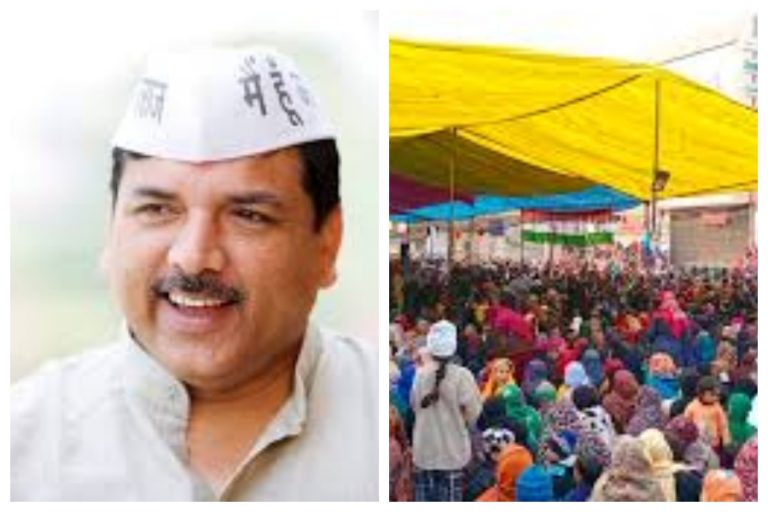
Most importantly, it divulged that Md Parvez, the PFI chief was regularly in touch with Aam Aadmi Party leader Sanjay Singh through Whatsapp chats, phone calls and also by way of direct meetings. Further, Parvez had also been in touch with many Congress leaders including Udit Raj.

The Enforcement Directorate documents also revealed that Parvez was a member of many Whatsapp groups such as ‘Bhim Army Top-100’, ‘Unification of Muslim Leadership’, etc.

Recently, the Delhi police had also exposed the nexus between the Aam Aadmi Party and the Shaheen Bagh shooter Kapil Gujjar. Pictures were released by the Delhi police which confirmed that Kapil Gujjar, who had fired bullets in Shaheen Bagh on Saturday and his father Gaje Singh were AAP leaders and were inducted into the party in 2019.

Additionally, the sources have revealed that in 10 accounts of PFI and 5 accounts of Rehab Foundation, over 1 crore rupees were deposited in small amounts, ranging from 5 thousand to 49 thousand. These deposits have been made after the Citizenship Amendment Bill was passed in the parliament, mostly through IMPS in mobile apps. The amounts were kept deliberately below the 50,000 limits to avoid detection.

Between 4 December 2019 and 6 January 2020, over 1.34 crores were allegedly withdrawn from these accounts, allegedly to be distributed among violent rioters to incite them to wreak havoc in the name of anti-CAA protests.

Ever since it came to light that the Shaheen Bagh attacker, Kapil Gujjar, who fired three shots in the air on February 1, is an AAP member, Aam Aadmi Party has been in a damage control mode, trying to delink themselves from the assaulter.

However, more and more pictures are emerging that links the shooter to the Aam Aadmi Party. A picture posted by prominent AAP leader Kuldeep Kumar, which was then deleted, had emerged in which it was seen that the party was welcoming Gujjar and his father Gaje Singh Chauhan along with party leaders Sanjay Singh and Atishi Marlena into AAP.

Later, it was found that the Aam Aadmi Party had itself posted images linking the shooter Kapil Gujjar to the party. The AAP had forgotten to remove from their official website an article that confirms that the Shaheen Bagh shooter was indeed an AAP member.  In case the article is pulled down, the archived version can be accessed here. Senior AAP leader Sanjay Singh, who had felicitated Kapil Gujjar, also tried to wash his hands off him stating that the shooting was a BJP ploy.

The radical Islamist outfit, PFI has not only played an instrumental role in the Shaheen Bagh protest but it was also involved in inciting violence during anti-CAA protests in Uttar Pradesh and the funding of the violent anti-CAA protests across several parts of the country that ensued following the passage of the Citizenship Amendment Act by both the houses of the parliament in December 2019.

Read: UP police arrest PFI’s Uttar Pradesh head Waseem for allegedly masterminding violence during anti-CAA protests

While the Uttar Pradesh police had in December, last year, exposed PFIs link to the violence during anti-CAA protest in the state, an explosive investigation by the Enforcement directorate had also exposed that PFI spent about 120 crores in a month to orchestrate the violent riots in the country, naming eminent lawyer and Congress member Kapil Sibal and lawyers Indira Jaising and Dushyant Dave also as the beneficiaries of PFI’s funding.
Lawyer seeks FIR against Manish Sisodia for maliciously blaming Delhi Police of setting fire to buses during anti-CAA riots: Here are full details

0

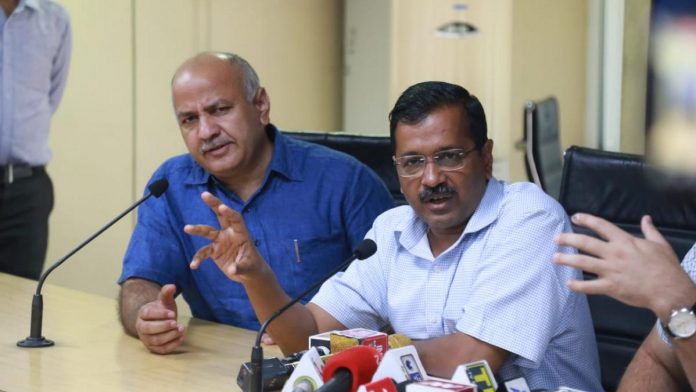
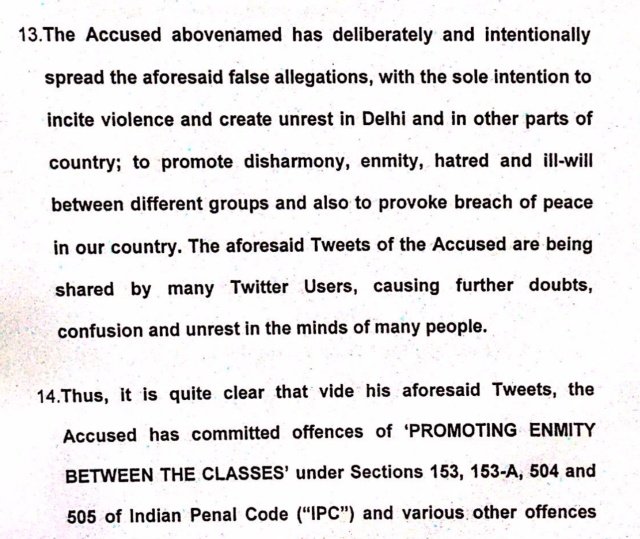
Delhi lawyer Alakh Alok Srivastava has approached the Delhi Metropolitan Magistrate seeking an FIR to be filed against Aam Admi Party senior leader and Delhi Deputy Chief Minister Manish Sisodia for tweeting malicious and false information during the anti-CAA riots that took place in Delhi by Muslim mobs in December 2019.

The charges against Manish Sisodia are under sections 153(A), 153, 504 and 505 of the Indian Penal Code.

The complaint says that on 15th December, Delhi witnessed unprecedented violence and arson in the aftermath of the passage of the Citizenship Amendment Act. The complaint said that certain people provoked students and the general population to create a ruckus in the name of protesting against the Act.

Following the riots, the complaint says that as the Deputy Chief Minister, Manish Sisodia was expected to not make irresponsible statements but he failed in the responsibility.

Read: Anti-CAB protests: Delhi Deputy CM and other AAP leaders accuse Delhi Police of setting buses on fire at behest of BJP

The complaint refers to two tweets by Manish Sisodia which were published on the 15th of December. In those tweets, Manish Sisodia had blamed the Delhi police of setting fire to DTC buses in Delhi.


In the tweets, Manish Sisodia blames BJP of playing politics and then goes on to say that in the video, it is evident that the Delhi police is setting fire to busses.

However, if one looks closely, the police are actually helping the firefighters trying to control the fire. He even shared images with red circles to prove a point that the firefighter was actually setting the bus ablaze.

Read: Anti-CAA riots: Police arrests one Furkan for violence in Jamia Millia, AAP’s Amanatullah Khan creates ruckus demanding release

Sisodia’s allegations had come minutes after it was reported that AAP MLA Amanatullah Khan was part of the mob that turned violent. Defying all logic, while Khan had denied leading the mob, he even blamed the BJP for accusing him of being part of violent protests where he is actually participating.

Complained against Manish Sisodia

The complaint says that Sisodia has deliberately spread false information with the sole intention to incite violence and create unrest in Delhi and in other parts of the country. The complaint also says that it is clear that his intention was to promote disharmony, enmity, hatred and ill-will between different groups and provoke breach of peace.

Read: Days before Delhi polls, AAP extends its support to anti-CAA Shaheen Bagh ‘protestors’

Based on this, the complainant has sought that the Court directs the authorities to file an FIR against Manish Sisodia for the tweets.

Incidentally, even after the details were proven fake and malicious, Manish Sisodia has refused to delete the tweets where he falsely accused the Delhi police.

While Clown Kamra got banned after heckling Arnab mid-flight, Uber Driver in Mumbai takes a communist straight to police station

An unusual incident has come to the fore that highlights the extent of polarization in society today and the extent to which communists and liberals are out of touch with the ordinary citizens of this country. Kavita Krishnan, a certified Communist and known Naxal-sympathizer narrated a story on Twitter about how one of her comrades, a poet Bappadittya Sarkar who goes by the Twitter handle @bappadittoh, got dragged to the Police Station by a Uber Driver.

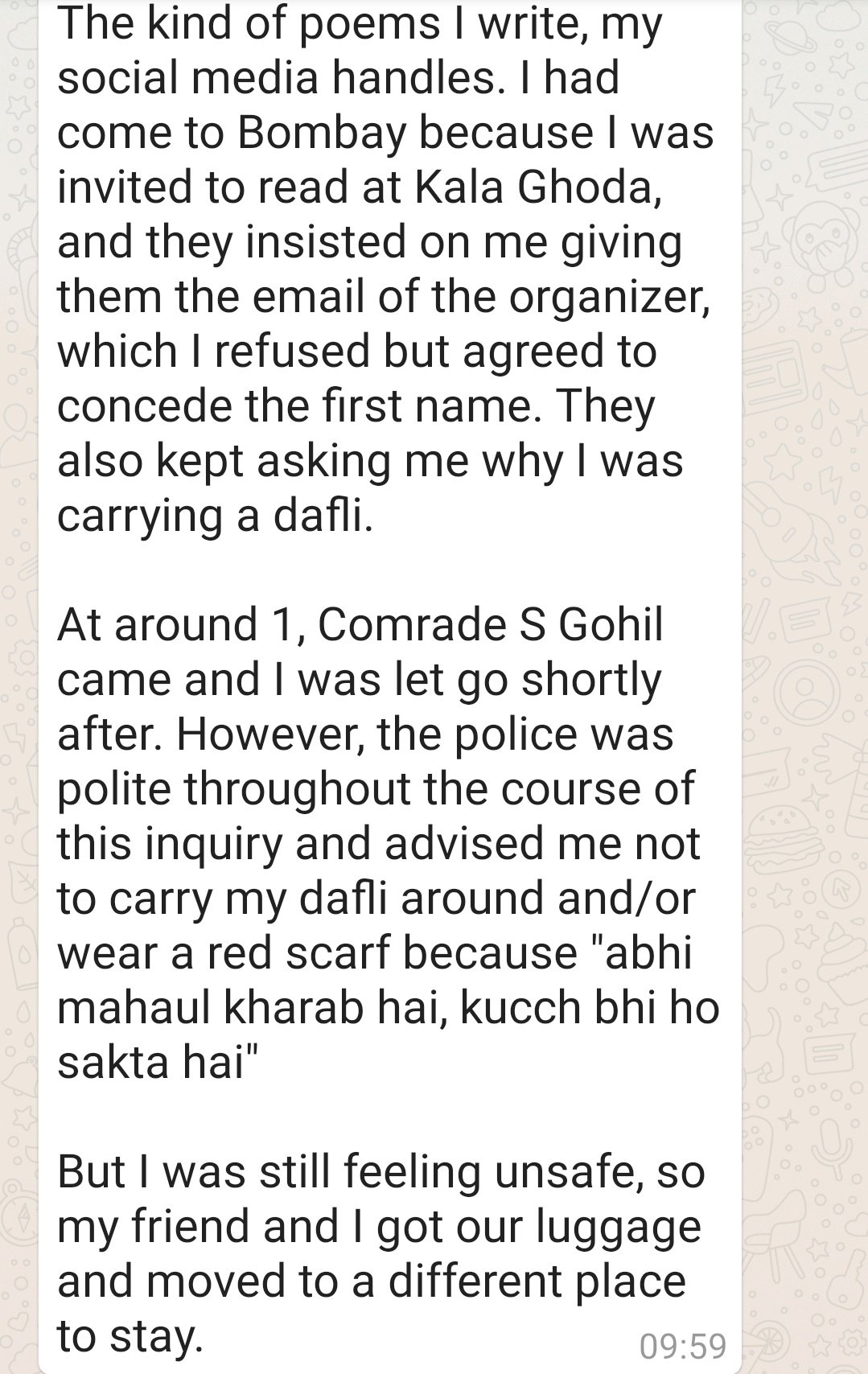
Kavita Krishnan said that Bappadittoh had a “scary episode” in Mumbai during a ride on Uber on Wednesday. She shared screenshots of texts, reportedly from the poet that told exactly what transpired that night. According to Krishnan, it is “a glimpse of scary India under NPR NRC CAA, where every person will be incentivised to suspect & turn in others & police can harass everyone.”

Source: Kavita Krishnan/Twitter

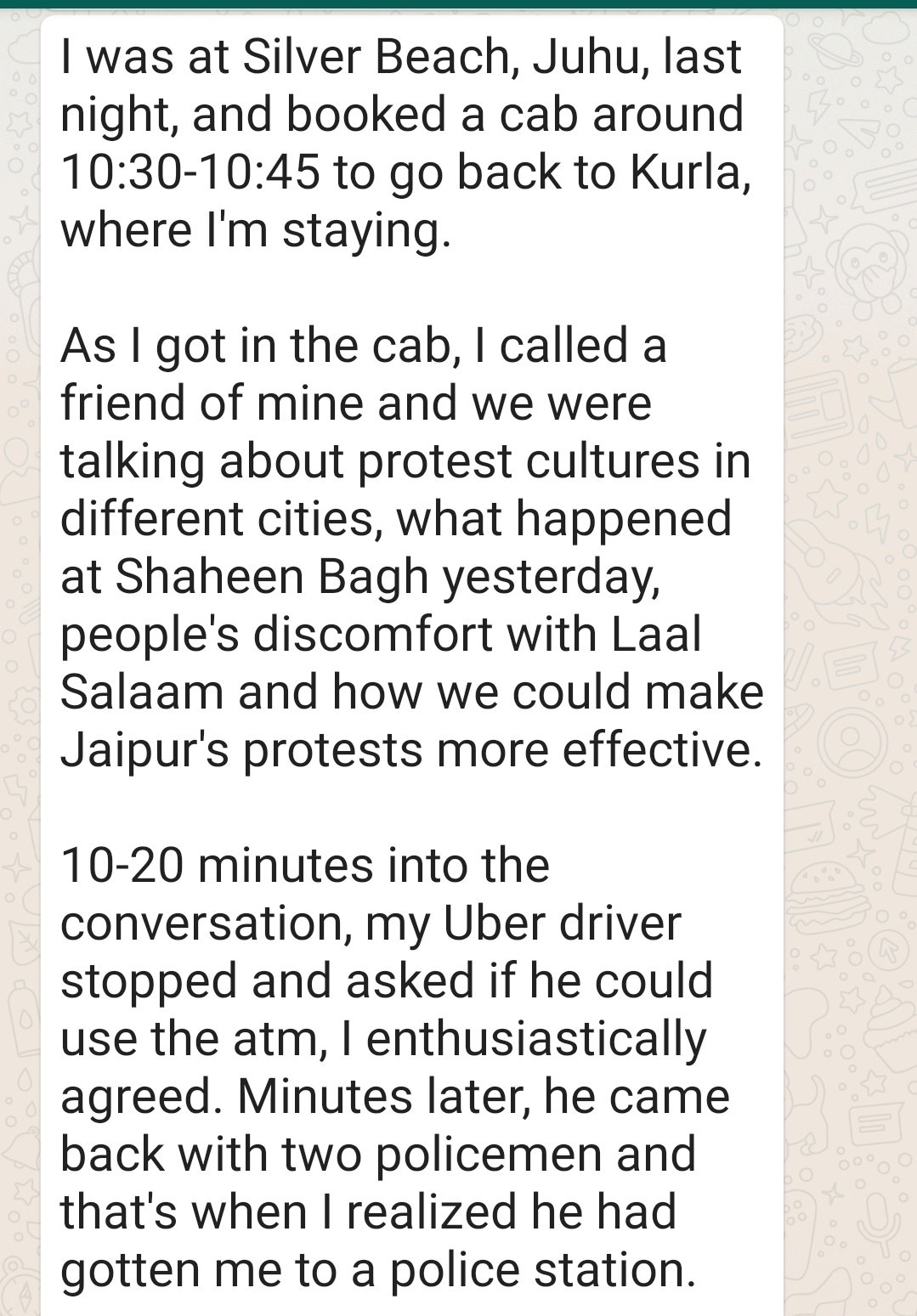
As per the screenshots, Bappadittoh booked a cab from Silver Beach, Juhu to Kurla. During the ride, he called one of his friends and they started talking about the protests in Shaheen Bagh, “people’s discomfort with Lal Salaam” and what they could do to make the protests in Jaipur ‘more effective’. Not too long after, the Uber driver allegedly asked him if he could go to an ATM, to which the poet readily agreed. However, the driver came back with two policemen and it was only then that Bappadittoh realized that the driver had taken him to a police station.

Source: Kavita Krishnan/ Twitter

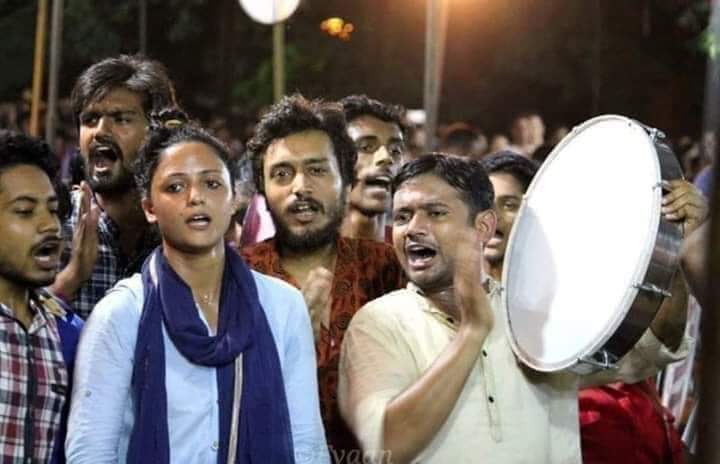
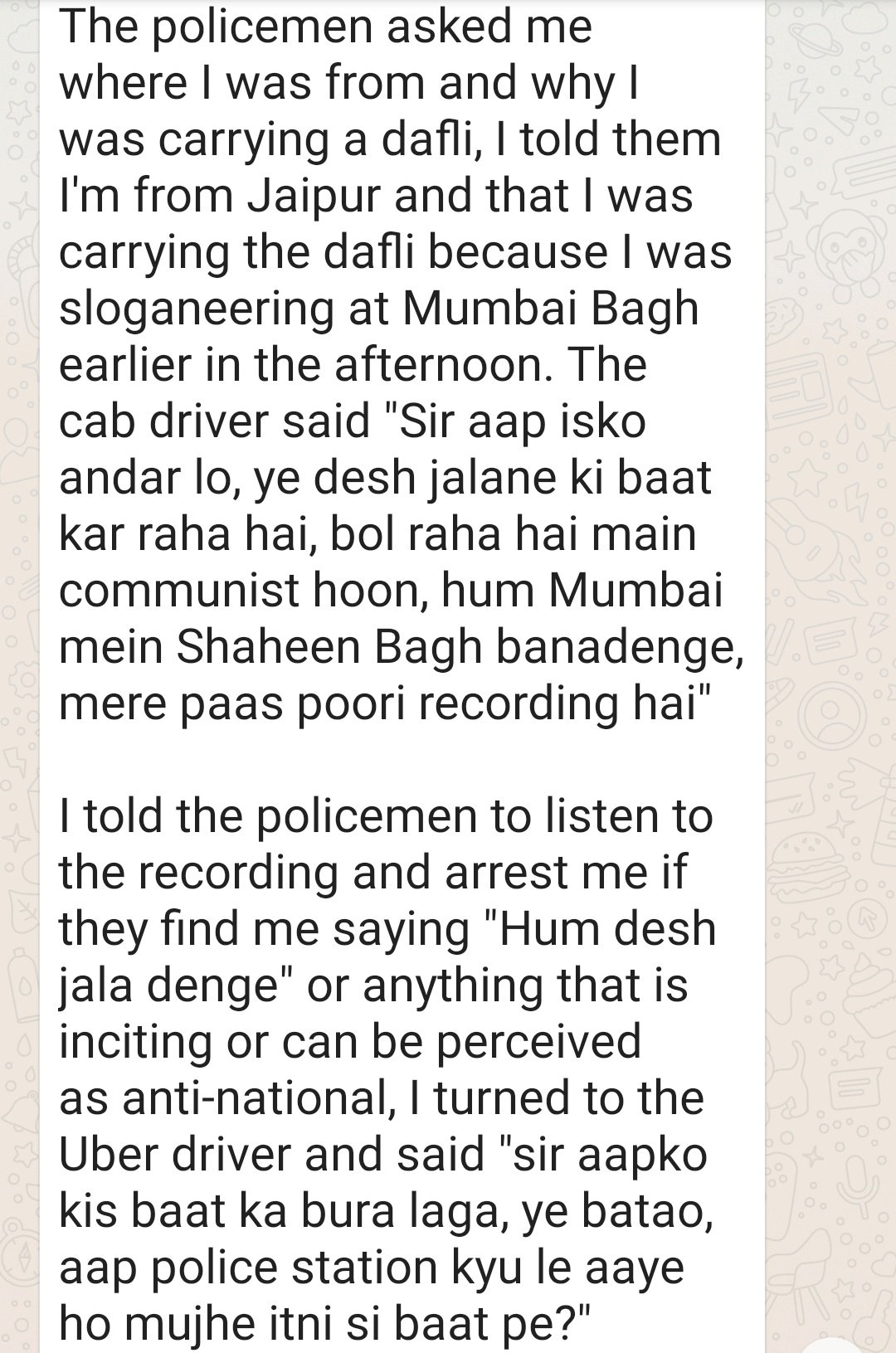
The policemen asked Bappadittoh where he was coming from and why was he carrying a Dafli. Dafli is the most popular musical instrument among Communists. He replied that he was carrying the Dafli because he was sloganeering at ‘Mumbai Bagh’ earlier in the afternoon. The driver then said, “Sir, arrest him. He was talking about burning the country, was saying that he is a communist and will turn Mumbai into Shaheen Bagh. I have the entire thing recorded.”

It is notable here that the so-called ‘Mumbai Bagh’ is a term used by so-called ‘left-liberals’ for a road in Mumbai’s Nagpada area that has been blocked by hundreds of Muslim women trying to mimic Delhi’s Shaheen Bagh in the name of protests against CAA.

Read: Slogans in support of Shaheen Bagh mastermind Sharjeel Imam, ‘Azaadi’ and against CAA raised in Queer Mumbai Pride march 2020

Bappadittoh further claimed that he asked the policemen to listen to the recording and arrest him if they found him saying “We will burn the country” or “anything that is inciting or can be perceived as anti-national”. He asked the Uber Driver why was he hurt and why had he dragged him to a Police station.

Source: Kavita Krishnan/Twitter

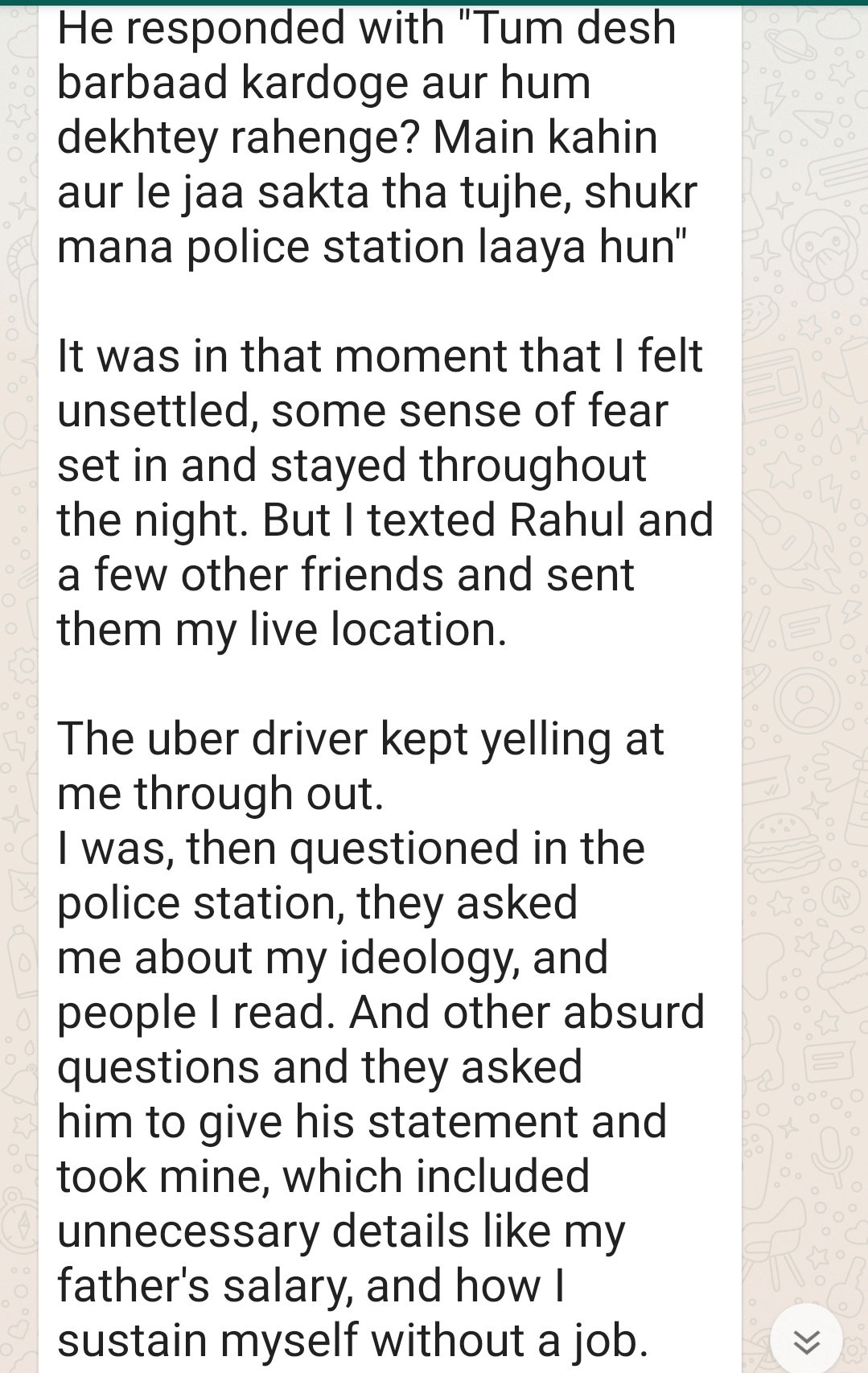
The Uber Driver responded, “You’ll speak of destroying the nation and we will remain silent? I could have taken you anywhere else, be grateful that I brought you to a police station.” Bappadittoh then texted a few of his friends and sent them his live location. According to the poet, the driver kept yelling at him throughout. The Police then questioned him about his ideology and the people he read. The policemen then proceeded to record the statements of both of them.

Source: Kavita Krishnan/Twitter

As per the screenshots, Bappadittoh told the Policemen that he had been invited to read at Kala Ghoda and he was asked to give them the email of his organizer but he refused even though he did give them the first name. ‘Comrade’ S Gohil arrived at around 1 a.m into the night and he was let go soon after. Bappadittoh said that the Police were polite throughout the inquiry and advised him to not carry a Dafli around as these are troubled times we are living in. However, still feeling unsettled, they moved to a different place to stay.

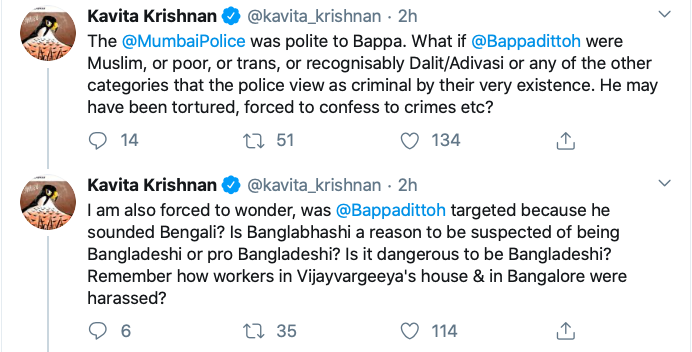
Krishnan, however, did not stop at just naming and shaming the Uber driver and Mumbai Police. She went on a full-blown fear-mongering rant, claiming that her friend was ‘targeted’ because he spoke Bengali. Despite the poet asserting that at no point he was threatened or in any way misbehaved by the police, Kavita had her communist narrative to peddle, so she wondered whether the police have treated him in the same manner if he had been a Muslim or ‘recognisably Dalit or Adivasi’.

Kavita Krishnan on Twitter

As expected, communists and liberals are screeching intolerance about what happened to Bappadittoh. However, they didn’t have any such problem with it when Arnab Goswami got heckled by alleged comedian Kunal Kamra mid-flight. In fact, they were cheering for Kunal Kamra. They had also cheered when journalist Mahesh Vikram Hegde was heckled at the airport and harassed by three women at the airport. They even support the heckling that certain journalists have faced at Shaheen Bagh. Liberals and Communists hadn’t found anything problematic with nationalists being abused and harassed for their ideology. It appears they have a problem only when they have to suffer the consequences of their own tactics.

Delhi Police suspects foreign funding links in Shaheen Bagh mastermind Sharjeel Imam’s bank accounts

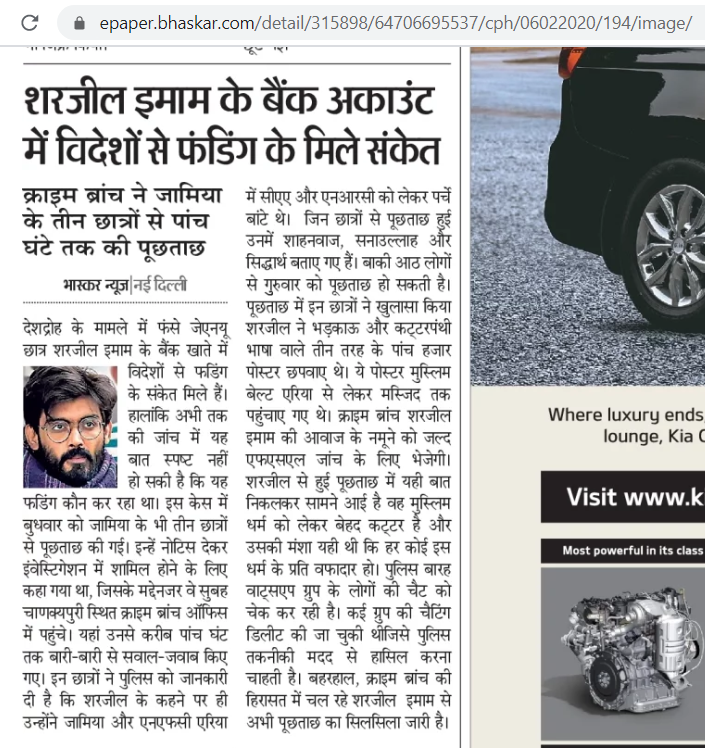
The Delhi Police has reportedly found foreign funding links in Sharjeel Imam’s banks. As reported by Haribhoomi, the police is still carrying out investigation. In the same matter, 3 students of Jamia Millia Islamia where anti-CAA protestors got violent many times in last two months, were also probed. They were probed by the Crime Branch at Chanakyapuri in Delhi for about five hours. They have revealed that on Sharjeel’s instructions, they distributed anti-CAA and anti-NRC pamphlets in New Friends Colony area in Delhi.

Bhaskar news

As per reports, the names of students interrogated are Shahnawaz, Sanaullah and Siddharth. Eight other students are expected to be interrogated on Thursday. The students have revealed that Imam got 5,000 posters with instigating material published. Moreover, as per reports, close links between Imam and PFI were also unearthed during the investigation. Police is currently trying to find where the foreign funding in his bank account came from.

Earlier, reports had emerged that the police are looking into ShaheenBagh mastermind Sharjeel Imam’s links with radical Islamist outfit PFI and the Islamic Youth Federation. The PFI is suspected of funding violence in the recent spate of violence during the ongoing protests against the Citizenship Amendment Act. The Enforcement Directorate has claimed that the PFI has spent around Rs. 120 crores to fuel riots across the country.

In another major revelation, the Delhi Police has said that they have found evidence of foreign funding in the bank account of Shaheen Bagh mastermind Sharjeel Imam. However, the Delhi police are yet not clear on who was funding it.

The crime branch has found several objectionable items in the laptop and mobile phone recovered from Sharjeel. Reportedly, his laptop had contained controversial posters pertaining to anti-CAA protests, written in Urdu and English. The same posters were distributed among students and mosques ahead of the anti-CAA riots that had occurred in Delhi in December.

Radical Islamist Sharjeel Imam – the brain behind the anti-India protests at Shaheen Bagh was caught making secessionist speeches at Shaheen Bagh. Urging Muslims at Shaheen Bagh, he had vowed to cut off North-east from the rest of the country. Imam had said, “If 5 lakhs Muslims are organised then we can cut the North-east from rest of India. If we cannot do permanently, at least we can cut North-east from India for months.”

Coronavirus hits Surat’s diamond business, likely to face a loss of Rs 8,000 crore

The Coronavirus outbreak in China has now created its first problem for India. Because of this virus, Hong Kong has declared a state of emergency and shut all routes to Mainland China and shut all schools and colleges till the first week of March, or until the virus is not tackled effectively.

The Surat diamond industry is likely to face a loss of Rs. 8,000 crore as Hong Kong is a major business hub for the Surat diamond industry. “Due to the month-long vacation declared by Hong Kong govt, Indian businessmen are returning. The exhibition, going to be held in March in Hong Kong, has been cancelled. It used to set our orders for the year,” news agency ANI quoted Dinesh Navadiya, Regional Chairman of Gems and Jewellery Export Promotion Council in Surat.

According to Navadiya, 37 per cent of the total export comes from here. Now Gujarati traders having offices in Hong Kong are coming back to India. Surat diamond industry polishes about 99% of all rough diamonds. If the situation does not change, it is likely to have a huge impact on the industry.

Another industry expert and diamond merchant Pravin Nanavati told news agency PTI, that there is a possibility of cancellation of an international jewellery exhibition in Hong Kong due to the Coronavirus. ” Polished diamonds and jewellery made in Surat reach across the world through Hong Kong. Now due to vacation there, our business is totally closed.”

Hong Kong is a major transit port for China and the Far east. Orders are placed at that event which sets the manufacturing target for an year. Now, that’s in jeopardy as Hong Kong tries to curtail the deadly virus. Around 18 people have tested positive for the disease, with one death reported so far.

As of now there have been three confirmed cases of coronavirus in India. All three have been in Kerala. India has temporarily suspended e-visa facility for Chinese and foreigners residing in China.

Scope of Article 226 and Article 227: That the same result can be achieved by 2 different processes, does not mean the processes are the same

The writ jurisdiction is a very potent and important tool given to the High Courts under the Constitution of India. The purpose of writ jurisdiction is to ensure that necessary directions in the form of writs can be issued both as administrative orders as well as on the judicial side. In this article, I will not go in detail as to the nature of the writs. As known, Constitution of India has given powers to the High Courts under Article 226 to issue directions or orders or writs in the nature of Habeas Corpus, Mandamus, Prohibition, Quo Warranto and Certiorari as per the respective requirement and the necessity. Under Article 227, the High Courts are vested with the powers of General Superintendence over all Courts and Tribunals. The powers vested to the High Courts under Article 227 are wider than the one conferred on the High Court by Article 226. This is because the power of Superintendence under Article 227 is not subject to the technicalities of the procedure or traditional fetters which are found in writ jurisdiction.

Difference between Article 226 and Article 227

The Hon’ble Supreme Court in a decision reported in (2017) 5 SCC 533 titled Ram Kishan Fauji vs State of Haryana has explained that under Article 226, the High Courts have the power to issue directions, orders and writs to any person or authority including any Government.  Under Article 227, every High Court has the power of Superintendence over all Courts and Tribunals throughout the territory in relation to which it exercises jurisdiction. However, the power to issue writs is not the same as the power of superintendence. There is a fine line of distinction between the two. Sometimes there has been confusion that while challenging a decision passed by an administrative authority, whether the petition is to be filed under Article 226 or under Article 227. There have been instances where a lawyer to avoid this objection from the Court, labels the petition both under Article 226 and 227 of the Constitution.

The said situation was comprehensively explained by the Hon’ble Supreme Court in the matter titled “Umaji Keshao Meshram vs Radhika Bai” reported in 1986 (Supp) SCC 401. The Hon’ble Supreme Court held that these two Articles stand on an entirely different foundation. It was explained that the fact that the same result can at times be achieved by two different processes does not mean that these two processes are the same. Their source and origin are different and models upon which they are patterned are also different. It was also held that the power to issue writs under Article 226 is not the same as the power of Superintendence under Article 227. The power of superintendence conferred upon every High Court by Article 227 is a supervisory jurisdiction and is in addition to that conferred upon the High Court by Article 226.

The basic difference which was drawn was that in Article 226, the person, authority or state against whom the direction, order or writ is sought is a necessary party. However, under Article 227, what comes up before the High Court is the order or judgment of a subordinate Court or Tribunal for the purpose of ascertaining whether in giving such judgment or order that subordinate Court or Tribunal has acted within its authority and according to law. Further, under Article 227, the High Court in addition to setting aside of the judgment or order of the Tribunal can further issue directions to such subordinate Court or Tribunal to act in a particular manner whereas no such power is conferred to the High Court under Article 226.

The proceeding under Article 226 is an original proceeding when it concerns civil rights of a person whereas a proceeding under Article 227 is not an original proceeding.

Therefore, if an order passed by a subordinate Court or a Tribunal is being challenged before the High Court where there is no remedy of filing an appeal, it has to be judged that whether it is seeking a simpliciter setting aside an order or that in addition to the setting aside / quashment of the order, certain directions are also prayed for. If along with the prayer of setting aside/quashment certain directions are prayed, a petition can only be filed under Article 227 of Constitution of India.

In the aforesaid circumstances, even if the petition is labelled under Article 226, then it is the duty of the High Court to consider the same under Article 227 and not under Article 226. Similar shall be the result if a petition is labelled both under Article 226 as well as 227 of the Constitution.  However, if any civil rights of a person have been infringed by any Government authority or state then the remedy lies only under Article 226 and certainly not under Article 227.

Provision of Writ Appeal

The High Courts by virtue of their own rules have provided a right of appeal against the order passed under Article 226. It has also been a matter of debate that whether an order passed by the High Court while deciding a petition under Article 227 can be challenged by way of appeal before the Division Bench of the concerned High Court.  The said situation was dealt with by the Hon’ble Supreme Court in (2008) 15 SCC 233 titled “State of Madhya Pradesh vs Visan Kumar Shiv Charan Lal”.  The Hon’ble Supreme Court while deciding the said issue held that the nomenclature is of no consequence and it is the nature of the relief sought for and the controversy involved which determines the Article which is applicable, i.e. whether a Petition is to be treated under Article 226 or Article 227.  As stated by above, if the nature of the prayer relates only to quashing or issuance of a specific writ against the state, the same shall be considered under Article 226 irrespective of its nomenclature.  Therefore, even if a petition was filed and labelled as Article 227 but the same after examining its contents comes out to be that of a petition under Article 226 certainly the litigant has a right for filing the appeal as provided under the rules of a respective High Court.

Conclusion

Therefore, it is the paradox that there is no difference between Article 226 and 227.  Rather this is no more res-integra that both Articles 226, as well as 227, operate under different situations and different areas. The jurisdiction of a Court under Article 226 as well as 227 are also different and the powers under both the Articles vary.  At the risk of repetition, it is stated that under Article 226, High Courts have powers to issue directions, orders and writs to any person or authority including any Govt whereas under Article 227, every High Court has a power of Superintendence offered to Courts and Tribunals throughout the territory in relation to which it exercises jurisdiction.

The power of superintendence conferred upon every High Court by Article 227 is a supervisory jurisdiction intended to ensure that subordinate Courts and Tribunals act within the limits of their authority and according to law.  The orders, directions and writs under Article 226 are not intended for the purpose and power of superintendence conferred upon the High Court by Article 227. Rather the powers given under Article 227 are in addition to the power conferred upon the High Court by Article 226. The fact that the same result can at times be achieved by two different processes does not mean that these two processes are the same.

(This article has been written by Sameer Vashisht who is a B.Com, LLB (Hons), LLM and Additional Standing Counsel (Civil), GNCTD) 

BJP MP Tejasvi Surya asks Hindus to stay vigilant against Islamists: Here are the 5 ways in which the media is expected to outrage

The left-liberal media and its leftist foot soldiers marching on social media platforms have been just been recovering from the shocking blows of Anurag Thakur’s slogans, BJP’s Delhi election campaign song and the sad incident of the Shaheen Bagh shooter turning put to be an AAP member when young MP Tejasvi Surya and his comments in Lok Sabha yesterday has riled them up again.

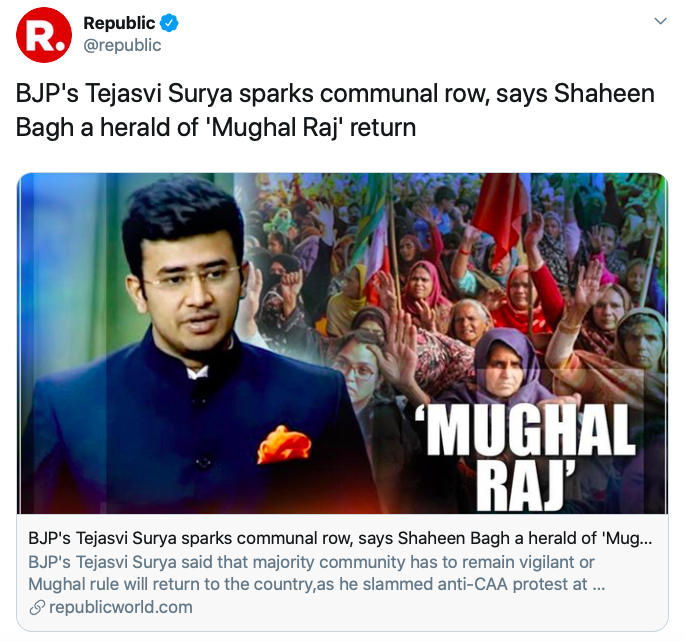
Speaking in the Lok Sabha yesterday, the 29-year-old Bengaluru(South) MP stated, “What is happening today in Delhi’s Shaheen Bagh is a stark reminder that if the majority of this country is not vigilant, the patriotic Indians do not stand up to this, the days of the Mughal Raj coming back to Delhi are not far away.”


Since the attempts by the left-liberals to hold the government by the collar and threaten it to take the CAA back did not work despite trying to incite violent protests, arson and stone peltings, they have been focussing all their energies in trying to cover up the blatantly anti-Hindu sloganeering, hate-mongering and misinformation campaign camouflaged as ‘Shaheen Bagh protests’ as an organic, peaceful protest ‘led by hijab-clad Muslim women’ to challenge the Modi government.

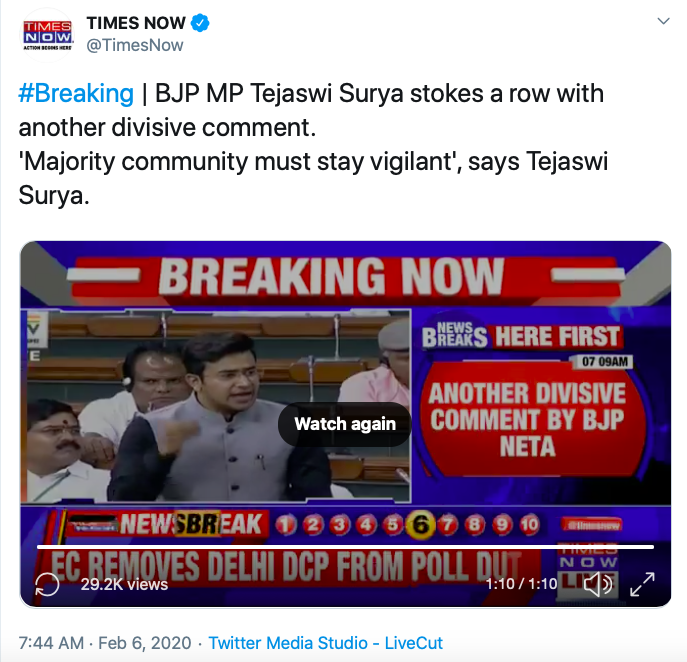
Comments by Tejasvi Surya have riled up left-liberals and the media, that is either leftist by design, or leftist by habit, again. Times Now declared that Surya has ‘stoked a row’ by his ‘divisive’ comment.

Times Now on Tejasvi Surya
Republic on Tejasvi Surya’s comment

Since the left-liberals in India think that the Mughal Raj in India was a heavenly period where everyone was so rich and so happy that they happily converted into Islam, vacated their forts and palaces out of happiness, surrendered their wives and daughters at the feet of Mughal kings out of happiness while everyone ate Biriyani and danced to Sufi music, Surya’s comments are bound to hurt them.


A look into how left-liberals on social media are reacting to Tejasvi’s comments and all one gets is how India was a thriving economy under the Mughal rule, how Mughals have made all tasty food possible, having brought rice recipes from the desert lands from where they had come, how Mughals had made all beautiful monuments in India out of their pocket money etc.

Since there is no point in fact-checking starry-eyed fans of Mughals, here are five ways one can see the reactions.

Mughal rule was awesome, they brought Biriyani, poetry, etc

Mughals were so awesome that they had discovered Biriyani. Since they were experts in the rice-cooking techniques in their desert lands, they had taught the unwashed Indians how to mix Indian grown chicken and mutton to Indian grown rice and make it flavour-rich by adding Indian grown spices to it.

Mughal rule would be better than Hindutva rule anyway

Left-liberals have us believe that all the evil in the world originates from Hindus and Hindu rituals, practices and anything related to Hindus. The way they worship Mughals they proclaim that they had come as saviours from beyond the Hindukush mountains to rid this land of greedy Brahmins and lustful kings who made the masses worship money and elephant gods.

Since the Mughals died away, and Hindutva goons conspired with the British to take Edwina Ji away from Nehru Ji, they have now again captured the Delhi throne after only a brief ‘secular’ rule. From 2014 onwards, India has been thrown again into an abyss of communalism, hatred and bigotry. Only, and only the Mughals or someone inspired by their great ideas can save India now.

BJP is dividing Hindus and Muslims, violent Muslim mobs and rioting Muslims are just fake news

Left-liberals spectacularly ignore the dozens of policemen who sustained bullet injuries in UP after Muslim mobs went on a rampage post the CAA. They had blissfully ignored Muslims torching trains, railway stations, buses and two-wheelers all over the country in the name of protests.

They have also ignored ‘Kafiron Se Azadi’ slogans and calls to establish ‘Allah’s Kingdom’ after destroying idols of Hindus. Only when a BJP MP raised a slogan asking traitors to be shot and a boy from UP waltzed into a road in Jamia with a country-made gun, liberals saw a bright red line connecting the two incidents.

They had also drawn a blazing red-line connecting the BJP MP’s slogan and the shooter that went into Shaheen Bagh with another country-made gun. However, due to an unfortunate Hindutva conspiracy involving time-travel, hypnotism and sorcery, the shooter turned out to be an AAP member. Hence, all discussions of that shooter were promptly stopped and the search was focused on the next ‘communal comment’ by the next BJP MP.

Expected better from a ‘young’ BJP MP Tejasvi Surya

Such comments are actually brilliant. They do not sound hateful, or negative. They just add the right amount of sanctimonious intellectualism to a mixture of hollow elitism and passive Hinduphobia. What they actually want to say is, “How can a ‘kal ka ladka’ BJP MP dare to speak his mind, express Mughal-phobic opinion?

They also are angered because the young MP punctures an Amethi-sized hole into their ‘youth icon’ balloon floated over Rahul Gandhi’s head. As per them, no youngster should dare to sound smarter than the Congress prince.

But what about ‘Hindu terrorist’ Kapil Gujjar, Tejasvi Surya?

The incident where an individual called Kapil Gujjar fired three shots in the air near Shaheen Bagh protests has become the favourite incident of the ‘liberals’ to shame Hindus. The shooter, Kapil Gujjar, after firing the shots in the air had hailed Hindu Rashtra and said that in India, only Hindus will prevail. The fact that a ‘shooter’ with a gun merely fired shots in the air should have raised suspicions. But if that wasn’t enough, the fact that he looked into the cameras and repeated the trope that the ‘liberals’ hope “Hindu terrorists” would be suspicious enough.

Read: AAP leader deletes tweet, but party forgets to delete their article confirming Shaheen Bagh shooter is AAP member

While the “liberals” blamed “Hindutva” for this incident, links of Kapil Gujjar with the Aam Admi Party emerged. Pictures where he was being felicitated by AAP leader Sanjay Singh. Kapil Gujjar has also admitted that he and his father were members of AAP and had political ambitions.

With the speech delivered by BJP MP Tejasvi Surya, it is expected that the ‘liberals’ will pull out this trope and say that while Surya fear-mongers about Islamists, there are “Hindu terrorists” shooting guns. The media and ‘liberals’ are expected to completely ignore that Gujjar is an AAP leader and the entire fiasco reeks of a conspiracy.

Barkha Dutt’s ‘Shero’ Ladeeda Farzana expresses her unconditional solidarity with Shaheen Bagh mastermind Sharjeel Imam, urges Muslims to express their Islamic identity

Ladeeda Sakaloon alias Ladeeda Farzana, one of the Jamia Millia Islamia ‘students’ who was hailed by controversial former anchor Barkha Dutt as a ‘shero’, has yet again come out in support of Shaheen Bagh mastermind Sharjeel Imam and has urged fellow Muslims of the country to openly express their Islamic identity.

Speaking at an event organised by JNU Defense Committee to express solidarity with radical Islamists Sharjeel Imam, she said that the state has historically targetted Muslims for their identity. “Whenever Muslims talks about his identity and political subjectivity, they have been haunted by Hindutva nationalists,” said Ladeeda Farzana who rose to fame during anti-CAA riots at Jamia Millia University. “I am here to extend my solidarity to my friend, leader Sharjeel Imam and to those who are targetted by Hindutva state. By hounding Sharjeel Imam, the state is trying to delegitimise CAA-NRC protests across the country,” Ladeeda said.

[youtube https://www.youtube.com/watch?v=Iq-4kHMbh18]

Indulging in fear-mongering and inciting Muslims, Farzana claimed that Muslims of the country are being targetted for their identity and their faith. She was targetted by both left-wing workers and nationalists for being a Muslim, claimed Farzana. “I am here to assert my identity. Even Sharjeel Imam was asserting his Islamic identity to criticise this Brahminic country,” said Ladeeda Farzana as she proudly proclaimed herself as a Hijabi Muslim woman.

Read: Jamia ‘shero’ hailed by Barkha Dutt celebrates Moplah massacre, when Muslims massacred thousands of Hindus in 1921 in the name of Islam

Blaming the media for exposing the sinister designs of Sharjeel Imam and fellow Islamists, Farzana went on to claim that media specifically targetted Sharjeel Imam as he was a Muslim. She further attacked media for publishing Imam’s secessionist speeches which had exposed the ultra-left wing Islamists who are at the forefront of the anti-CAA riots across the country. “This what happened in Sharjeel Imam’s case, Afreen Fathima, Ayesha Renna case,” said Jamia Islamia student as she blamed media for targetting radical Islamists.

Farzana also provoked ‘students’ at JNU while stating that ‘Chakka-Jam’ or blocking of public roads and infrastructure was not wrong. She urged people to resort to similar ‘Chakka-Jam’ to protest against the Citizenship Amendment Act as she expressed her solidarity Kashmir and Islamic fundamentalists.

In the past too, Ladeeda Sakaloon aka Ladeeda Farzana had expressed her unconditional support to Shaheen Bagh mastermind Sharjeel Imam. However, she had to delete her radical posts and pictures following social media users exposed her extremist tendencies.

Read: From The Wire to everything else, the Anatomy of an Islamist: Into the mind of Sharjeel Imam, mastermind of Shaheen Bagh

“This witch-hunting of Sharjeel Imam and Sharjeel Usmani need to be stopped. If you share this witch-hunting psyche are equally dangerous at this juncture. I unconditionally stand with both our brothers who are at lead against this fascist government,” Farzana had posted in support of Shaheen Bagh mastermind Sharjeel Imam.

Radical Islamist Sharjeel Imam – the brain behind the anti-India protests at Shaheen Bagh was caught making secessionist speeches at Shaheen Bagh. Urging Muslims at Shaheen Bagh, he had vowed to cut off North-east from the rest of the country. Imam had said, “If 5 lakhs Muslims are organised then we can cut the North-east from rest of India. If we cannot do permanently, at least we can cut North-east from India for months”.

“Our main aim is to permanently cut Assam and North-east India from rest of India,” he could be heard saying in the video.

Further, Sharjeel Imam who is also a columnist with The Wire and mastermind of Shaheen Bagh protests had said, “Our responsibility is to cut the Assam from India then Govt will hear our voice. If we have to help the Assam then we will have to cut the Assam from rest of India”.

Government’s persistent efforts have succeeded in securing release and repatriation of 2133 Indian prisoners, including fishermen from Pakistan’s custody since 2014

2,133 Indian prisoners, including fishermen have been repatriated to India from Pakistan’s custody since 2014. Responding to a question in the Lok Sabha by Congress MP Gurjeet Singh Aujla about Indians in Pakistani prisons, Minister of State in the Ministry of External Affairs V Muraleedharan [pdf] said that as per the information available 2,133 Indian prisoners have been repatriated back to India. This includes 20 Indian fishermen who were repatriated on 6th January 2020.

The government of India further stated that 275 Indians including fishermen are presently believed to be in Pakistan’s custody. However, as per a list shared by Pakistan as on 1st January 2020, it has acknowledged custody of only 262 Indians. In addition to this, there are about 83 Indian defence personnel including Prisoners of War (POW) whose custody Pakistan has not yet acknowledged.

Moreover, the Government of India has asked Pakistan to provide consular access and release remaining prisoners in its custody. This includes 110 Indian civilian prisoners and fishermen whose Indian nationality has been confirmed and have completed their sentences. The Indian government has also requested its Pakistani counterpart to facilitate the visit of a team of Indian medical experts to meet prisoners of unsound mind, who are believed to be Indian nationals, with a view to facilitate their nationality verification and subsequent repatriation. However, Pakistan has not yet responded.

Saudi Arabia, de-facto leader of ‘Ummah’ reluctant to support Pakistan’s Kashmir bogey at OIC meet: Here are the details

0

In a big setback to terror-state of Pakistan, Organisation of Islamic Cooperation (OIC) – the collective voice of the Muslim world, is reluctant about accepting Pakistan’s request for an immediate meeting on Kashmir. According to the reports in Pakistan newspaper Dawn, Saudi Arabia – the de-facto leader of the Ummah (community of Muslims across the globe) has shown reluctance to accept Pakistan’s request for an immediate meeting of the Council of Foreign Ministers (CFM) on the issue of Kashmir.

Pakistan is one of the 57 members of the Organisation of Islamic Cooperation which claims to represent a collective population of over 1.8 billion Muslims.

Pakistan has been pushing for the foreign ministers’ meeting of the 57-member bloc of Muslim countries on Kashmir. However, it is reported that Saudi Arabia is reluctant to support Pakistan on the Kashmir issue. The support from Riyadh is considered a must for any move at the OIC.

The kingdom has made several proposals to Pakistan to avoid the CFM including holding of a parliamentary forum or speakers’ conference from Muslim countries and also a joint meeting on Palestine and Kashmir issues. But, Pakistan has persisted with its proposal so far.

Read: Pakistan Magazine claims Saudi Crown Prince snubbed Imran Khan by calling back his private Jet which was to fly Khan back from USA

Pakistan feels that the speakers’ meeting is not commensurate with the seriousness of the situation in Kashmir. Secondly, some in Islamabad are also worried that the speakers’ forum will be used by Saudi Arabia to bash Iran, further sidelining Kashmir issue at the OIC meeting.

Moreover, there are also apprehensions that clubbing the Kashmir dispute with Palestine at a meeting would effectively put the Kashmir issue on the backburner.

Reportedly, the Indian diplomats have also achieved success in watering down OIC’s meet on Kashmir as the Ministry of External Affairs has managed to get OIC to downgrade the level of participation for the meeting that could take place to discuss the issue of Kashmir.

Due to hectic negotiations from India’s diplomats, it has been learnt that only parliamentarians of member nations will participate at the meeting and no high-level meetings would take place on the issue of Kashmir. Further, the lower level meeting could be held in Pakistan itself and not in Riyadh.

Read: 134 counties deported half a million illegal Pakistanis since 2014, Muslim countries Saudi Arabia, UAE, Turkey leading the charge

According to the senior officials in charge of the 47th CFM, it is expected that the usual resolutions on Kashmir may be included in the agenda of the foreign ministers’ meeting scheduled to be held in Niger in April. However, there will be no special focus on the Kashmir issue, especially on India’s decision to abrogate the special status of Jammu and Kashmir.

Pakistan has time-and-again attempted to internationalise the Kashmir issue to put pressure on the Indian government. However, apart from facing severe embarrassment, Pakistan has achieved nothing in its efforts to publicise the Kashmir issue. India, on the other hand, repeatedly reiterated that Kashmir is an internal issue and any discussions with Pakistan will only be bilateral.

Meanwhile, Pakistan Prime Imran Khan facing yet another humiliation has reacted to the OIC’s rejection to hold a high-level meeting on Kashmir. Pakistan PM Imran Khan has now criticised the OIC for failing to speak in one voice on the Kashmir issue, indirectly chiding its leader Saudi Arabia for diluting support toward the cause.

Read: After ignoring China on Uyghur issue, Organisation of Islamic Cooperation expresses ‘concern’ over CAA, SC judgement on Ram Mandir

Having failed to drum up support from Saudi Arabia and the UAE, Khan, in his address at a Malaysian think tank expressed his regret that the OIC wasn’t unified on the Kashmir issue. “The reason is that we have no voice and there is a total division amongst (us). We can’t even come together as a whole on the OIC summit meeting on Kashmir,” Khan said.

Pakistan had faced a similar embarrassment last year too as the Islamic organisation OIC had invited the then India’s External Affairs Minister Sushma Swaraj to be the guest of honour at the inaugural plenary of Organization of Islamic Cooperation (OIC) conference at Abu Dhabi, UAE. Pakistan, which had attempted to put pressure on the OIC to cancel the invitation was forced into not attending the OIC Council of Foreign Ministers.

Despite the objections raised by Pakistan, India did attend the conference today where External Affairs Minister Sushma Swaraj targeted Pakistan over its support to terrorists. She urged the OIC to urge states indulging in Terror activities to dismantle their networks, and stop financing and harbouring elements that pose a grave security threat for the region.