Home Blog Page 5795

Arvind Kejriwal led AAP joins hands with election strategist and JDU leader Prashant Kishor ahead of Delhi elections

Aam Aadmi Party (AAP) chief Arvind Kejriwal has roped in election strategist Prashant Kishor political consultancy firm I-PAC in his quest to return as Delhi CM for the second consecutive term next year.

On Saturday, Delhi Chief Minister Arvind Kejriwal announced that election strategist Prashant Kishor’s consultancy firm I-PAC has come on board with the Aam Aadmi Party (AAP).

“Happy to share that @indianpac is coming on-board with us. Welcome aboard!,” tweeted Mr Kejriwal.


Elections to 70-member Assembly are likely to be held early next year. The ruling Aam Aadmi Party will be facing a three-cornered battle against the BJP and Congress.

Prashant Kishor, who is currently the vice-president of Nitish Kumar’s JD(U), had shot into fame in 2014 after formulating a successful election strategy for Prime Minister Narendra Modi. He subsequently ran successful campaigns for JD(U) in 2015 Bihar elections, for Congress in 2017 Punjab polls.

Read: JDU to act against Prashant Kishor and Pavan Verma over their statements against Citizenship Amendment Bill: Reports

Earlier this year, Prashant Kishore’s Indian Political Action Committee had helped YSRCP chief Jagan Mohan Reddy ahead of the Andhra Pradesh assembly election campaign that held along with 2019 Lok Sabha elections. YSR Congress had swept both the state elections and Lok Sabha elections by winning 22 out of 24 seats from the state.

Alarmed by the rise of the BJP in the state, as evident in the number of Lok Sabha seats bagged by them, West Bengal chief minister and Trinamool Congress chief Mamata Banerjee has also hired the services of Prashant Kishor for the upcoming West Bengal assembly elections.

Read: Prashant Kishor’s team starts reaching out to media and influencers with ‘paid content’ offers ahead of West Bengal assembly elections

Interestingly, Prashant Kishor and his political clients – Mamata Banerjee and Arvind Kejriwal, have been strongly opposing the implementation of NRC and the Citizenship Amendment Act.

Prashant Kishor had come out in the open against JDU’s stand on the Citizenship Amendment Bill, stating that the bill was unconstitutional. Prashant Kishor had said that the Citizenship (Amendment) Bill discriminates against the right of citizenship on the basis of religion.

Prashant Kishor had further attacked Nitish Kumar for maintaining that his party’s move to support the Citizenship Amendment Bill was not in sync with the Constitution of JD(U). On Friday, he had even claimed that the onus of saving the soul of India lies with the 16 non-BJP chief ministers who have to operationalise the amended Citizenship Act.

However, unhappy over his comments, the JDU has reportedly sent notices to Prashant Kishor along with other leaders for opposing party’s decision to support the bill.

Times Now calls Yogi Adityanath’s call for contribution to Ram Mandir at Ayodhya ‘controversial’ and ‘bizarre’

In an election rally in Jharkhand, Uttar Pradesh Chief Minister Yogi Adityanath called upon Hindus to donate Rs 11 per family for the construction of Ram Temple at Ayodhya and also donate one brick per family for the construction of the temple at Ram Janmabhoomi. Considering the Ram Janmabhooomi movement has spanned centuries and has been the rallying point for Hindus, it is not surprising that Hindus would want to contribute to the building to a Grand Ram Temple at Ram Janmabhoomi. However, according to Times Now, this proposition was ‘bizarre and controversial’.


The headline of the Times Now article itself was heavily skewed for no apparent reason.

Times Now headline

The headline of the article screamed, “Yogi Adityanath stokes fresh controversy; asks families to donate Rs 11, stone for Ram Mandir’s construction”.

The very first sentence in the article too points to the same agenda. It says, “Uttar Pradesh Chief Minister Yogi Adityanath on Friday stoked a new controversy when he requested Rs 11 and a stone from each family for construction of Ram Temple in Ayodhya. He made the bizarre request during an election rally in Jharkhand”. 

Read: VHP scales up preparations for Ram Mandir, 70 trucks carrying stones to arrive at Ayodhya soon

The Ram Janmabhoomi conflict was ongoing for almost 500 years with generations after generations fighting for the Hindu’s right on the birthplace of Lord Ram. Right from the Marathas to the Nath sampradaya, to which Yogi Adityanath belongs to the Karsevaks who were brutally murdered, the fight has been to build a Ram Mandir at the Ram Janmabhoomi which was earlier desecrated and a Mosque was built in its place.

Read: Dharma, Deva, Desha: Three phases of Ram Janmabhoomi movement, who decided Babri Masjid had to go and day of reckoning

Recently, the Supreme Court accorded the entire 67 acres land to Hindus and had granted a 5 acre alternate land to Muslims to construct their Mosque. The SC had said that a trust will be formed by the government that will oversee the construction of the Ram Temple. Further, the review petitions that were filed by various Muslim parties were recently thrown out by the Supreme Court thereby removing any roadblocks in the way of constructing a grand Ram Temple.

Read: Three Generations, One Dream: Here’s why Yogi Adityanath considered the Ram Mandir his life’s mission

Since the Ram Temple is an emotive issue and one that strikes a chord with Hindus, one has to wonder what Times Now found controversial about Yogi Adityanath’s statement. In fact, several Hindus have been donating bricks with their names carved on it for the construction of the Ram Temple for decades as it is seen a religious belief among Hindus.

It has been the habit of mainstream media to create controversy where there exists none and this seems like just another attempt by Times Now.

Watch: Protests against CAB in Jamia Millia Islamia turn violent amidst chants of Allaho Akbar, Nara-e-Taqbeer and La ilahi illilah

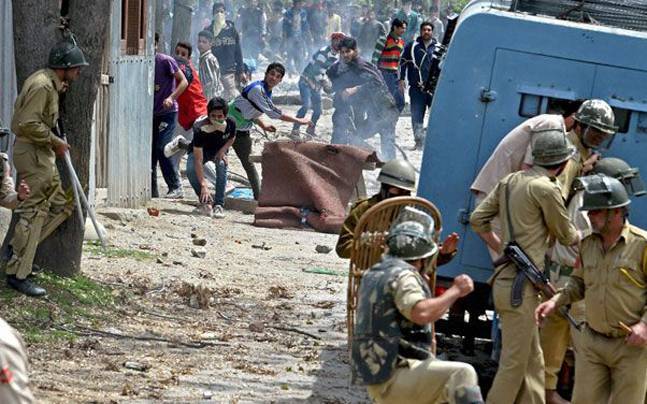
Following the historic passing of the Citizenship Amendment Act, there have been protests in some parts of the country, which are being now hijacked by the Muslim groups and are unleashing extreme violence across the country. On Friday, the protests against the Citizenship Amendment Act (CAB) took a communal turn in Delhi after ‘students’ of the controversial Jamia Millia Islamia (JMI) University resorted to mob violence against the police officials and shouted Islamic slogans “Allah-o-Akbar” during their protests.

Reportedly, as the protests turned violent, 50 students were also detained after the stone-pelting.


Another video has surfaced where Jamia Millia Islamia University students can be seen raising ‘Allaho Akbar’ and ‘Nara-e-Taqbeer’ slogans. They are also heard saying, “Ye shahar zagmagaega, nur-e-la-illaha se, Ye desh zagmagaega, nur-e-la-ilaha se.Nara-e-takbir, Allahu Akbar”.

[youtube https://www.youtube.com/watch?v=8R2oVTzsWOA]

The ‘students’ of the Jamia Millia Islamia University in Delhi were also seen abusing police with provocative words as they used tear gas to disperse the violent mob.

In a video shared by retired news anchor Barkha Dutt, it can be heard that abusive and sexual slurs are being shouted against police officers while one of the violent protestors is also heard asking a fellow protestor not to let go the policemen.


In another video shared by one of the radical Islamic groups known as Tehzeeb Committee of Jamia Millia Islamia college, a ‘student’ can be seen making communal and provocative statements by claiming that ‘those who want to protect Muslims will have to protect Islam’. There were also several provocative statements that demanded Muslims to take to the streets. The “speech” was followed by a worrying slogan, “tera mera rishta kya, La ilahi illilah”. Similar statements were heard in Kashmir with respect to Pakistan by terrorists where they chanted “Pakistan se rishta kya, La ilahi illilah”.

Around 2,000 Jamia ‘students’ in Delhi were protesting against the CAB. The Jamia protesters against CAB had called for a march to Parliament House from the university campus to express their opposition to the legislation. However, they resorted to violence and broke police barricades.

As the police began to lathi-charge the students to calm down the situation, the protestors resorted to stone-pelting against these police officials. Several policemen have been injured in the mob attack of the students and three policemen are in critical condition in the ICU.

The similar pattern of violent protests has also occurred, in fact in a much larger scale of violence, in the state of West Bengal. Many members belonging to various Muslim organisations in the state held violent protests following the passing of the historic Citizenship Amendment Act (CAB).

Read: Stone pelting on trains, ambulances and more: How Friday prayers at mosques turned into violent mobs protesting CAB in Bengal

Protests against the CAB were planned soon after Friday prayers across mosques in the State and other various parts of the country which has resulted in extreme violence in parts of West Bengal.

The Muslim mobs have resorted to stone-pelting against public properties and policemen along with burning of railway infrastructure in the state. Mobs pelted stones on ambulances and torched several vehicles, A cop was injured in the violent protests against Citizenship Amendment Act.

The Citizenship (Amendment) Bill was passed by Rajya Sabha on Wednesday and by Lok Sabha on Monday. On Thursday, the Citizenship (Amendment) Bill, 2019 became an act of law after President Ram Nath Kovind gave his assent to the historic legislation.

The Citizenship Amendment act seeks to give Indian citizenship to the members of Hindu, Sikh, Buddhist, Jain, Parsi and Christian communities who have come from three neighbouring Islamic countries – Pakistan, Afghanistan, and Bangladesh after facing religious persecution.

Mamata Banerjee announces mega protests marches opposing CAB even as mobs turn violent following Friday prayers in Mosques

The Citizenship Amendment Bill (CAB) has ruffled quite a few feathers. Trinamool Congress (TMC) supremo, Mamata Banerjee has announced that her party will be holding protests in December against CAB and NRC. In a tweet by the official Twitter handle of TMC, it was announced that protest marches will be held on December 16th and 17th.


As evident from the tweets, Mamata Banerjee is set to ‘walk in the rally’ to protest against the passage of Citizenship Amendment Bill in both houses of the parliament.

In no uncertain terms, Mamata Banerjee, the TMC supremo has announced that she will not allow the implementation of Citizenship Amendment Bill (CAB) and Registry for Citizens (NRC) in West Bengal.


The fear-mongering by Mamata Banerjee and TMC has come at a time when West Bengal has seen mobs turn violent protesting CAB right after the Friday prayers at Mosques.

The mobs were seen pelting stones on Ambulances and running trains in West Bengal. A cop was also injured in violent protests.

Read: Stone pelting on trains, ambulances and more: How Friday prayers at mosques turned into violent mobs protesting CAB in Bengal

On Friday, the protestors also went on a rampage in West Bengal’s Howrah district. They resorted to extreme violence by blocking tracks at the Uluberia railway station.

They vandalised the complex and some trains by resorting to stone pelting, injuring a driver, officials said. The violence affected train services in Sealdah division of the Eastern Railway.

Read: Citizenship Amendment Bill – Myths and lies propagated against it, and the facts

The Citizenship Amendment Bill aims to give Citizenship to the persecuted minorities like Hindus, Buddhists, Jains, Parsis and Christians from the neighbouring Islamic nations of Pakistan, Bangladesh and Afghanistan. The Bill has been passed in both Lok Sabha and Rajya Sabha and also got the assent of the President. However, it has seen widespread opposition from “secular” parties like the TMC, Congress and others.

Maldives Speaker Mohamed Nasheed cites his own example, says India is a safe haven for minorities, CAB internal matter: Read details

0

On Friday, Maldives’ Parliament Speaker Mohamed Nasheed said that India has always been a safe haven for persecuted minorities and the Citizenship Amendment Bill (CAB) was an internal matter of India.

According to the reports, Former Maldives President Mohamed Nasheed cited his own example of Indian high commission giving him refuge at a time when he was about to be arrested by then Maldives’ former president Abdulla Yameen.

“Religious persecution is wrong and India will always give refuge to those persecuted. When President Yameen wanted to arrest me and when I went to Indian High Commission they gave me refuge. They were quite willing to bring me to India too. Secularity of India, respecting minorities are founding ideas of India,” he said.

Read: Understanding Assam protests: Here is how it emphasizes the necessity of NRC, and CAB is not to be blamed for the mess

Mohamed Nasheed of Maldives also reiterated that the amended Citizenship Act (CAB) is an internal matter of India.

“I have complete trust in Indian democracy and whatever comes out from the process would be what the majority of people from India want. It is India’s internal matter. India is one of the safe havens for persecuted minority communities,” he said.

Read: Stone pelting on trains, ambulances and more: How Friday prayers at mosques turned into violent mobs protesting CAB in Bengal

The Citizenship Amendment act seeks to give Indian citizenship to the members of Hindu, Sikh, Buddhist, Jain, Parsi and Christian communities who have come from three neighbouring Islamic countries – Pakistan, Afghanistan, and Bangladesh after facing religious persecution.

Speaking on the issue controversial Islamic preacher Zakir Naik, Nasheed said that he recently tried to cross over to the Maldives from Malaysia but the island nation did not allow it

“He (Zakir Naik) was trying to come to the Maldives but we did not allow him to come,” former president of Maldives Nasheed, who is leading a parliamentary delegation to India, said.


Responding to issues regarding the discussion between Malaysia and Maldives on the extradition of Zakir Naik back, Nasheed said, “He was not allowed to come to the Maldives recently so there would have been discussions between Malaysia and Maldives”.

Read: Radical Islamist preacher Zakir Naik’s speeches inspired most of the 127 people arrested for ISIS links

Islamist Zakir Naik, a Mumbai-born 53-year-old who is the founder of the controversial ‘Peace TV’ has been living in Malaysia since 2017 after fleeing from India and the previous government there had granted permanent residency to him. India is seeking extradition of the radical Islamic scholar.

Zakir Naik is a fugitive in India, is wanted in India for serious charges related to terrorism after his name cropped in connection with a ghastly terror attack at Holey Artisan Bakery in Dhaka on July 2016.

Understanding Assam protests: Here is how it emphasizes the necessity of NRC, and CAB is not to be blamed for the mess

There are significant protests underway in Assam after the Citizenship Amendment Bill (CAB) was passed by the Rajya Sabha. As expected, people from other regions of the country have been indulging in a significant amount of fearmongering and have twisted the matter beyond all recognition. The protesters have received great support from the liberals in the country which only goes on to show that liberals will support just about anything as long as it’s against Narendra Modi and the BJP. They really have no ideological stand as such.

If one relied on social media lone, people would think that the world was coming to an end tomorrow but that’s certainly not the case. Having said that, the situation in Assam is serious and has the potential of escalating into something much worse. Therefore, the government will need to tread with caution and certain concerns of the Assamese community must be assuaged. Under such circumstances, there’s a need to clear the air about certain aspects of the issue, which is extremely complicated.

Decades of bad-blood

The conflict between Assamese and Bengali Hindus isn’t new. It has been happening for decades. There have been numerous agitations in the past and protests which consequently turned violent. The Assam Accord that was signed in 1985 between the Government of India and Assamese leaders marked the culmination of these protests. There have been numerous ethnic clashes in the past. In 1960, there was the infamous ‘Bongal Kheda’ campaign. Violence erupted sporadically over the years even after the signing of the Assam Accord where victims have been Bengalis, both Hindus and Muslims.

Read: Congress’ abhorrent treachery: It is time Congress answers for Assam and to Assam

Thus, there is historical bad-blood along linguistic lines that cannot be denied. However, it must be remembered that the blame for it does not lie in the Assamese people alone. Mistakes have been committed on both sides. And the state will move forward when genuine reconciliation has been achieved between the communities. It is not being overly optimistic when one says that despite the current scenario, the relationship between the two communities has been improving over the years.

Does the entire Assamese community oppose CAB?

We had said as far back as August 2018 that the North East was on the verge of imminent turmoil. I recommend that people read that article in its entirety as well, it can be read here. The violence that we are witnessing now was always fated to happen at some point. Liberals would like to blame the CAB for it but the CAB is not the main issue here. The main issue here is illegal immigration that has changed the demography of Assam so quickly that people haven’t had any time to adjust or cope with it. It did not happen with their consent either.

Another important thing to note here is the fact that not the entirety of Assamese society is opposed to the CAB. It is reflected by the fact that the BJP won 9 seats in the 2019 General Elections despite having the CAB on its core agenda. And not just in areas where Bengali Hindus are the majority. Dibrugarh, Jorhat, Lakhimpur, Tezpur, these are all seats where the Assamese Community is in the majority and yet, the BJP won comfortably in these seats. Therefore, the protests now are likely to confuse journalists in the mainstream media but not those who are aware of the actual situation.


Thus, it can be safely said that the CAB has significant support even among the Assamese community. Their voices may get drowned by the protesters, however, the results of the General Elections clearly show that the Assamese Community is not as averse to the CAB as liberals would like to believe. As we had said in August 2018, “there is another section of Assamese people, a much larger section presumably although not as loud as the other, who are of the opinion that Bengali Hindus do not pose a threat to their way of life contrary to Bengali Muslims and that those primarily responsible for the ongoing influx of illegal immigrants into Assam are Bengali Muslims.”

Read: Citizenship Amendment Bill – Myths and lies propagated against it, and the facts

Given the results of the General Elections, we will have to assume that this section is indeed much larger although their opinions aren’t being reflected in the ongoing protests. Because elections in a democracy are the truest measure of public opinion.

The CAB-NRC juggernaut

Liberals who are currently supporting the protesters in Assam do not realize that the protests only intensify the necessity of an NRC. Liberals oppose the CAB but they oppose the NRC as well. It’s contrary to the sentiments of the protesters who oppose the CAB but greatly support the NRC. In fact, we can safely say that those protesting today in Assam were deeply disappointed by the fact that only 19 lakh people were ultimately deemed to be illegal immigrants through the NRC process. They expected and wanted the number to be much higher.

The protesters will be abandoned entirely by liberals when they emphasize the need for an NRC. But an NRC is part of the solution here. The government must implement an NRC in a speedy manner, or as fast as such processes can be completed in a democracy. These protests only intensify the necessity of the NRC and a nationwide NRC at that. Because in the absence of an NRC, the fate of Assam will be shared by the entire country.

Read: Understanding the Assam conflict: The NRC final draft is out and the rhetoric is not helping

It is the CAB-NRC juggernaut that won BJP 9 seats in Assam. Of course, certain sections of the Assamese community do not want Bengali Hindus to be given citizenship rights as well but as we have said before, a significant chunk of them has made peace with it.

How bad can it really get?

With the violent protests that are underway, certain people who have no connection with the North East at all are certainly salivating at the prospects of social unrest in the state. But in Assam, the dominant feeling is that people are being reminded of what happened in Assam all those years ago and the kind of violence the state witnessed. An overwhelming majority of the people of Assam do not wish to go back to that period.

But there is significant danger here that the state could be dragged into a new cycle of violence. Of course, political players will be quick to blame the CAB for that but the reason is something much different. As we have said earlier, the fault for the violence that we witness in Assam today lies squarely at the feet of Nehruvian Secularism. They sacrificed the interests of the Assamese Community in order to build their minority vote-banks.

Most people who are aware of the violent history of Assam say that the current spate of violence is nowhere near as intense as the violence that was witnessed all those years ago. But they do fear that Assam can be pulled back to that phase if steps are not taken to address the concerns of people affected.

It cannot be denied that there’s a toxic mix of ethnic hatred that has been unleashed in the state. This ethnic hatred always existed in the hearts of people but was only waiting for the opportune moment to surface. And it has surfaced now. The genuine danger with such violent outbursts of ethnic hatred is that it could undo all the positive developments that have been made over all these years. A new generation of victims of ethnic violence could be created which, in turn, would perpetuate the divisions within the communities for years to come.

There are good reasons for optimism even in this critical time. Assam is far more integrated to other parts of the country than it was earlier. Cultural exchange between the communities is prominent. The Assamese Youth are far more invested in India as a whole than the youth of earlier years. Therefore, the integration that has occurred in all this time will likely knock some sense into people before things go out of hand.

Furthermore, the Assamese and Bengali Hindus of this generation do realize that their interests are far more aligned than they differ. Therefore, the possibility of a compromise and an end to a historic dispute could be reached if the government manages to control the spate of violence and bring the protesters to the negotiating table. Thus, even under current circumstances, it appears unlikely that the state will devolve into a period of anarchy like it did in previous years.

What is the solution?

First of all, it needs to be drilled into the heads of people that CAB is not the main cause of the violence. Assam would have witnessed violence at some point in time or the other even if the CAB was not implemented. Therefore, the liberals who are attempting to blame the CAB for it ought to rethink their position because the protests only strengthen the government’s position on the necessity of the NRC. Therefore, the NRC is a major part of the solution and this time, it needs to be more effective than the one monitored by the Judiciary.

The second part of the solution is the Assam Accord. A Committee was formed in January this year which was to submit its report on the effectiveness of the implementation of the Assam Accord within six months. The Committee was reconstituted in July after the NDA government was re-elected to power and it has been given another six months’ time to submit its report to the government.

One of the mandates of the Committee is to “assess the appropriate level of reservation of seats in Assam Legislative Assembly and local bodies for the Assamese people.” Another is to “suggest measures to be taken to protect Assamese and other indigenous languages of Assam.” The notification also says that “The Committee may suggest any other measures as may be necessary to protect, preserve and promote the cultural, social, linguistic identity and heritage of the Assamese people.” Therefore, if all these measures are taken, the concerns of the Assamese people are likely to be assuaged.

In addition to these, numerous other measures may likely be proposed by the Committee to address the cultural anxiety of the Assamese people. There will be compromises that will have to be made by people from both sides of the aisle but a reasonable one will hopefully be reached. Therefore, right now, the government needs to act quickly to prevent the situation from escalating and address the concerns of the Assamese people. Hopefully, Narendra Modi will be able to resolve another mess created and perpetuated by decades of Nehruvian Secularism.

Stone pelting on trains, ambulances and more: How Friday prayers at mosques turned into violent mobs protesting CAB in Bengal

Following the passing of historic Citizenship Amendment Act (CAB), many members belonging to various Muslim organisations have held protests that soon turned into violence, especially in West Bengal.

Reportedly, protests against the CAB were planned soon after Friday prayers across mosques in the State and other various parts of the country which has resulted in extreme violence in parts of West Bengal.

According to reports, a railway station complex in West Bengal’s Murshidabad district was set on fire on Friday evening by thousands of people, especially belonging to the Muslim community, as they protested against the Citizenship (Amendment) Act. The protesters also thrashed personnel of the Railway Police Force that was at the Beldanga railway station complex.


According to a report by Indrojit Kundu, the Associate Editor of India Today, mobs pelted stones on ambulances and vandalised the Beldanga railway station, which included flinging burning tires on the railway tracks.


The Muslim mob also torched several vehicles and pelted stones at an ambulance. A cop was injured in the violent protests.


On Friday, the protestors also went on a rampage in West Bengal’s Howrah district. They resorted to extreme violence by blocking tracks at the Uluberia railway station.

They vandalised the complex and some trains by resorting to stone pelting, injuring a driver, officials said. The violence affected train services in Sealdah division of the Eastern Railway.


The mob under the guise of anti-CAB protesters also pelted stones at running trains. Multiple long-distance and local trains in the Howrah section were stranded due to the violence.


In Kolkata, protesters also disrupted traffic for hours at Park Circus and also assembled in large numbers in the city to protest against the Citizenship Amendment Act. Thousands of people from the Muslim community also blocked the National Highway 6 in the area.


In the East Midnapore district, BJP General Secretary Sayantan Basu’s car was attacked by protesters and the police had to rescue him.


The violent protests, especially by Muslim mobs are not just limited to West Bengal. Even the national capital Delhi was hit by anti-CAB stirs as students of Jamia Milia Islamia University resorted to violent protests against the exclusion of Muslim immigrants from the provisions of new Citizenship Act.


Stone-pelting, lathicharge, tear-gas shelling and barricade charging were reported from the scene of the agitation as the student protest turned violent. At least three Delhi policemen were injured and 50 students were detained.

The Citizenship (Amendment) Bill was passed by Rajya Sabha on Wednesday and by Lok Sabha on Monday. On Thursday, the Citizenship (Amendment) Bill, 2019 became an act of law after President Ram Nath Kovind gave his assent to the historic legislation.

The Citizenship Amendment act seeks to give Indian citizenship to the members of Hindu, Sikh, Buddhist, Jain, Parsi and Christian communities who have come from three neighbouring Islamic countries – Pakistan, Afghanistan, and Bangladesh after facing religious persecution.

BHU panel recommends removing the name of Rajiv Gandhi from its south campus, Congress threatens to protest

0

The Banaras Hindu University just faced the ire of the “Liberals” when the students of Dharma Vigyan department protested against a Muslim professor teaching them about Dharma. It seems like BHU is all set to ruffle some feathers yet again with the BHU panel recommending that the name of former Prime Minister Rajiv Gandhi be removed from the south campus of the university.

The BHU panel has contended that former Prime Minister Rajiv Gandhi made no contribution to the educational institute, and this, his name should be removed.

The BHU court, which is an advisory body of the university, has sent its proposal to the the academic council, the university’s decision-making body.

Read: BHU: SVDV students finally vindicated, Dr Firoze Khan resigns, will join Arts faculty to teach Sanskrit

Chancellor Giridhar Malviya, a retired judge of the Allahabad High Court, chaired the meeting of the court held earlier this week.

He reportedly confirmed that Justice Malviya said, “The members of the court said that former Prime Minister Rajiv Gandhi never visited BHU. Former Human Resource Development Minister Arjun Singh had named the south campus of BHU after former Prime Minister Rajiv Gandhi.”

Read: BHU Dharma Vigyan students deserve an apology for being labelled as ‘bigots’

He also confirmed that the proposal has been sent to the academic council and has the assent of all the members of the court.

Congress has not taken kindly to the move. India Today reports that Congress leader Ajay Rai has asserted that his party would vehemently oppose any move to rename Banaras Hindu University (BHU)’s Rajiv Gandhi South campus in Mirzapur’s Barkachha.

Read: How the BHU students were demonised and the ones who refused to be ‘secularised’ unfairly called ‘bigots’

The Congress leader has said, “If any such effort is made, the Congress would take to streets and would not let the renaming take place”.

The campus is located in Mirzapur district is called ‘Rajiv Gandhi South Campus Barkachha’. It was established in 2006.

Creates caste divide, harasses upper caste students: Protest against The Print columnist Dilip Mandal erupt in Makhanlal University

The students of Makhanlal Chaturvedi National University of Journalism and Communication, in Bhopal, Madhya Pradesh have initiated a protest against two journalists teaching in the University as guest faculty, namely, Dilip Mandal and Mukesh Kr, alleging that they create caste divide among students.

The students alleged that the two journalists inquire about the castes of students studying in the university on social media and during class hours and then misbehave and harass those students belonging to the upper castes.

The students have submitted a memorandum to Vice-Chancellor, demanding their suspension. Confirming that a committee has been formed by the VC to look into the matter the students also alleged that false statements were being made about their protests. They have demanded an apology from the VC regarding the same.


The students had also submitted a written complaint to the University, however, till the time this report was written, no action was initiated against the casteist journalists.

Written complaint by students

One of the ex-student of the university, Rakesh Tripathi, who is also a BJP leader, while speaking to OpIndia said that it is a shame that teachers like Dilip Mandal are trying to fan caste divide amongst the students studying in a reputed organisation like this one. Extending his support to the protesting students, Tripathi said that they have maligned the reputation of the university.

He requests all the students to stand together by the cause and make sure that journalists like Dilip Mandal are dismissed from their position. Tripathi urges all the students to raise their voices against such casteist faculty members and boycott them as they who are poisoning the society with their vicious mindset.

Read: Accusing Twitter of being an agent of ‘Brahmanvad’ shows the hollowness of leftist Dalit activism

Tripathi said that students at the Makhanlal Chaturvedi National University of Journalism and Communication have always welcomed and accepted professors and students from various castes and religion, In fact, caste and religion have never mattered for us, said the BJP leader, asserting that we have always valued the professor for his knowledge, wisdom and accomplishments. He said that it is very unfortunate that professors like Dilip Mandal, are contaminating the university’s environment by spreading their prejudice.

[youtube https://www.youtube.com/watch?v=_BzfBteSiVU]

Interestingly, Dilip Mandal in the same journalist and a columnist associated with Shekhar Gupta’s The Print, who had last month, accused Twitter of being Brahmanvadi for not awarding him with a Blue Tick. Dilip Mandal had then urged people to trend ‘Brahmanvadi Twitter’ on the social media platform giving a sneak peek into his casteist mentality.

Read: After ‘Dalit’ journalist of ThePrint gets a blue tick, Muslim editor Shahid Siddiqui too complains to Twitter about religious bias

Dilip Mandal today took to Twitter to allege that students belonging to the Akhil Bharatiya Vidyarthi Parishad have been creating a ruckus and resorted to vandalism in the university campus while protesting against him and his Phule-Ambedkar ideologies.


In the latest, Makhanlal Chaturvedi National University of Journalism and Communication Registrar, Deependra Baghel has come up with a statement which said: “I’ve accepted their demand that they’ll also be a part of the committee. Dilip Mandal and Mukesh Kumar won’t enter the University until the probe is completed. But they’re demanding that the VC seek apology over his statement, a statement which they twisted”.

Congress emulates Pakistan, to ‘gherao’ Indian embassies across the globe ‘to show solidarity with AICC on national issues’

Taking a cue from Pakistani protestors gheraoing the Indian embassy in London, the Indian Overseas Congress, which was until now largely dormant, has announced that it will stage demonstrations outside the Indian embassies across the globe to protest against the Modi government’s handling of the Indian economy and “India’s deteriorating condition”.


The official Twitter handle of the Indian Overseas Congress posted a tweet announcing their support to the Congress party’s call for Bharat Bachao by claiming that it will swarm around the Indian embassies in Europe on December 14 to protest against the massive failures of the BJP in the country.

Even as the Congress party is accused of taking the same line as Pakistan, the Indian Overseas Congress appears to have drawn inspiration from Pakistan as they plan to organise a demonstration by surrounding the Indian embassies across Europe.

Read: Anti-India protesters fight amongst themselves: Violent protesters who damaged Indian Embassy hurl shoes and eggs at Pakistan-sent politicians

The Congress poster terms this act in the footsteps of Pakistan as Congress’ call to ‘Bharat Bachao’. According to Congress, by protesting in front of the Indian Embassy on foreign soil, they are protesting against “Economic crisis, High Unemployment, Divisive Politics and Farmer Distress”.

Poster by Congress Overseas

In the aftermath of the abrogation of Article 370, Pakistani hooligans swarmed the Indian High Commission in London and vandalised the property. Hundreds of British Pakistani demonstrators and sympathisers who gathered outside the Indian High Commission to protest against the abrogation of Article 370 in Jammu and Kashmir blatantly indulged in acts of vandalism damaging the Indian High Commission’s property.

It is noteworthy to mention that the Congress party has deferred its Bharat Bachao protest march on multiple occasions. In September, Congress had announced a country-wide agitation from 15th to 25th October on these issues. That, too, was announced a month in advance. Then, in October, before the last date of planned protests, i.e. 25th October, expired, Congress announced fresh dates of protests against ‘economic slowdown’.

Read” Days after Turkey supported Pakistan in the UN, Congress opens its overseas office in Turkey: Turkish media report

On 22nd October, Congress said they’d protest across the country in the first week of November. Congress had announced that starting from 5th to 15th November, the party will hold protests across the country and a rally in Delhi. These protests were also for ‘rising unemployment’, ‘sinking economy’ and ‘farmer distress’.

As 5th November flew by, Congress woke up and realised they missed yet another deadline. So on 6th November, they announced new dates of protests, this time, a combined protest with other parties. This time around, Congress announced that they will organise a rally at the Ramlila Maidan in Delhi on December 1.

In solidarity with Congress’s Bharat Bachao rally scheduled on December 1, the Indian Overseas Congress, that comprises ‘eminent’ Congress leaders such as Sam Pitroda, infamous for his callous remark- “Hua to Hua” condoning the Congress’ complicity in the 1984 Sikh genocide, will stage a protest on December 14 by gheraoing various Indian embassies in Europe.