Home Blog Page 6306

5 young batsmen to watch out for in the Cricket World Cup 2019

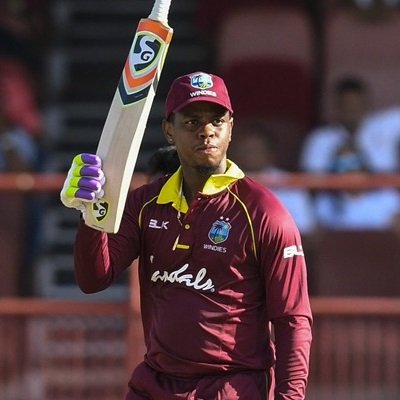
Shimron Hetmyer
Shimron Hetmyer

1. Shimron Hetmyer: Floppy hat, swagger in his stride, flamboyant follow through, Hetmyer is a throwback to the Caribbean batsmen from the era gone by.

Captain of the under-19 West Indies team that won the World Cup, Hetmyer has had an explosive start to his international career. An average of 40 in his first 25 games with a very impressive strike rate of 110, including 4 centuries, gives a good indication of his potential. His presence in the middle order means you won’t expect West Indies to slow down at any point during the innings.
Hazratullah Zazai
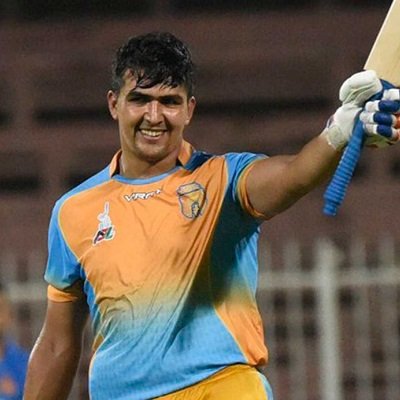
Hazratullah Zazai

2. Hazratullah Zazai: Another left hander, this time the opening batsman from Afghanistan. Zazai first grabbed attention when he smashed 6 sixes in 6 balls during the Afghanistan Premier League. Earlier this year, he smashed 162* off 62 balls against Ireland in a T20 international in a record-breaking team total of 278.

Partnered at the top by the explosive Shahzad, this opening partnership may hold the key to Afghanistan’s World Cup run. They have the bowlers to challenge any batsmen in the world, but it is their batting which generally falls short. If Zazai hits form, that may well change.
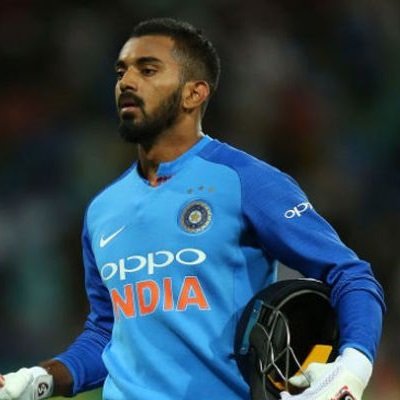
KL Rahul
KL Rahul

3. KL Rahul: Bit of a surprise to see him there? Well, while Rahul has been around the Test team for a long time, he has found opportunities in ODIs much harder to come by.

He has played only 14 ODIs till date, mainly due to the formidable combination of Rohit and Dhawan at the top. However, with the number 4 slot opening up for him, he will have the chance to add to his 14 ODI caps during this tournament. In good form after an excellent IPL and a 100 in the warm-up game against Bangladesh, Rahul will be looking to make that number 4 spot his own and bolster that Indian middle order.
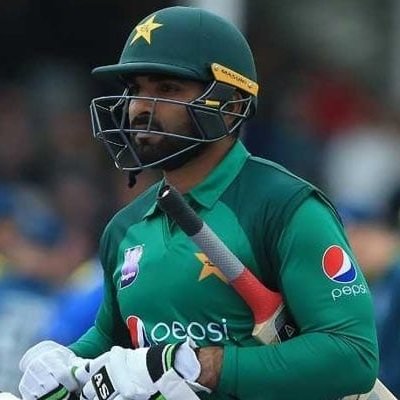
Asif Ali
Asif Ali

4. Asif Ali: One of the real finds of the PSL, Asif Ali is the big hitter Pakistan desperately needed lower down the order.

Having suffered huge personal tragedy earlier this month, Asif has re-joined the side in England this week. His form in the lower middle order will be crucial for Pakistan to provide the high tempo finish to their innings. With a strike rate of over 130, he has shown he is very capable of doing that, but needs to add a little more consistency to his game at that Number 6 spot. If he finds that consistency in this tournament, the bowling teams better watch out.
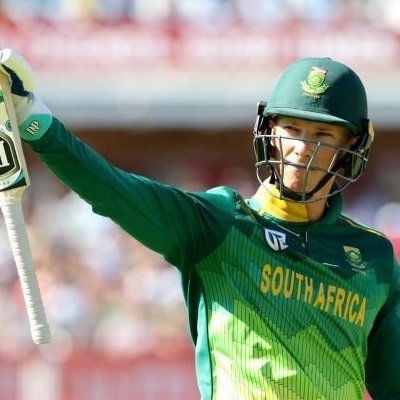
Rassie van der Dussen

5. Rassie van der Dussen: Filling the boots of AB de Villiers in the South African middle order is a near impossible task, and it may fall to a rookie batsman in his first year of international career.

At 30, he is not really young and has been around the cricketing world having played in Canada, the Caribbean, and of course South Africa. He had an excellent start to his international career against Pakistan and continued the good touch in Sri Lanka, and is currently averaging 88 in his short ODI career. South Africa have one of the most frightening bowling attack in the World Cup, and if their batsmen click to back them up, who knows, this may finally be their year.
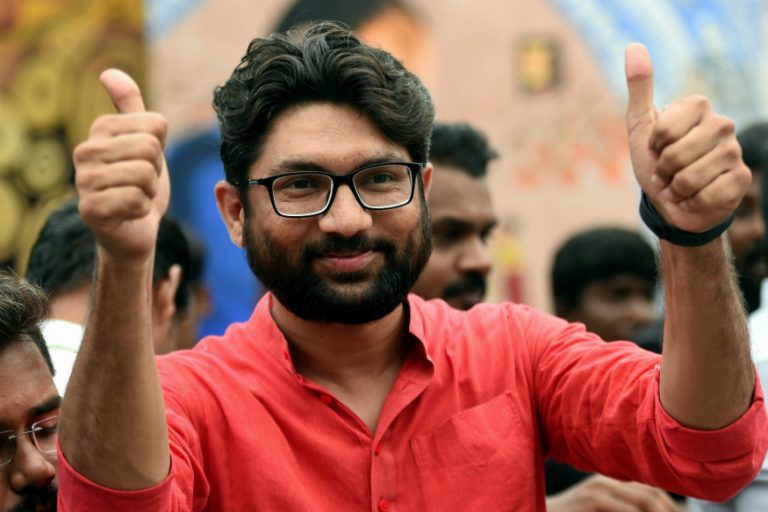
‘Culture of Hindutva prevailed, this is collective insanity’: Jignesh Mevani still shell shocked with the 2019 mandate

Controversial Dalit leader Jignesh Mevani is apparently dumbstruck by the results of the 2019 Lok Sabha elections. The leader, who is known for indulging in rage politics, was baffled that despite all his sermons and the efforts by other parties, Dalits voted for the BJP in large numbers.

“I can’t understand. Dalits had no reason to vote for BJP this time,” Mevani was quoted as saying by The Indian Express. “They didn’t get jobs, there is a terrible agrarian crisis, the price hike is there…The victory is baffling.”

Mevani said that he was under the impression that these issues would “create a lot of trouble for Modi”, but “the culture of Hindutva has prevailed”. He blamed Narendra Modi’s reelection as Prime Minister on “collective insanity” and maintained that “what Modi has done in the last five years was good enough to wipe him out”. “I have no option but to accept it (the result) even when I am not convinced at all,” he added in disbelief.

Kanhaiya Kumar’s huge defeat in Begusarai against Giriraj Singh appears to have had the most impact on him. “I can’t understand how come that happened. He was the one in whose favour there was a clear wave,” said Mevani. “And people were mad after him…His defeat is very unfortunate.” Going forward, his focus would be on his Assembly constituency, Vadgam, and “Dalit-Muslim unity and a nationwide campaign on public health, education and unemployment.”

Jignesh Mevani has been a virulent critic of Narendra Modi. In his attempt to dethrone the Prime Minister, he has peddled fake news about reservations, was caught on camera trying to stoke caste conflict and spoken about Narendra Modi in an extremely disdainful manner. On hindsight, it’s quite understandable why people have rejected his brand of hateful politics.

Mevani also appears to be unable to grasp the fact Kanhaiya Kumar does not quite have an exalted reputation outside the corridors of JNU. Therefore, his defeat should have surprised absolutely no one. That he is shocked by the result only reveals the extent to which he is out of touch with the mood of the people.

It also appears he will spend a significant amount of his resources in the future in trying to forge the mythical Dalit-Muslim unity. It’s quite clear that, on the ground, Dalits have to bear the brunt of Islamic intolerance. Therefore, such an alliance is doomed from the very outset. Even in Maharashtra, despite an alliance between Prakash Ambedkar’s Vanchit Bahujan Aghadi and AIMIM, it appears that Muslims voted for the Congress party en masse and not the Dalit leader’s candidates.

Thus, it appears, Mevani spends an exorbitant amount of time chasing unicorns and is left perplexed at the end of the day when his efforts don’t yield any results.

Daughter of Pulwama martyr invited for new Modi government’s swearing-in ceremony

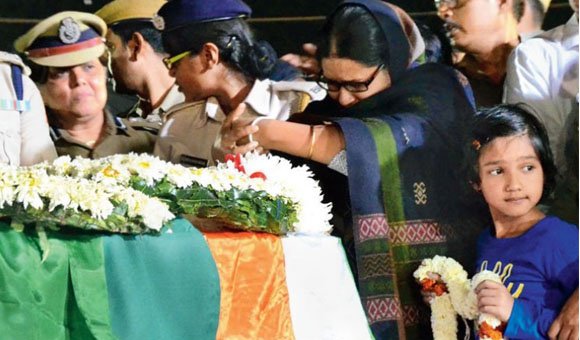
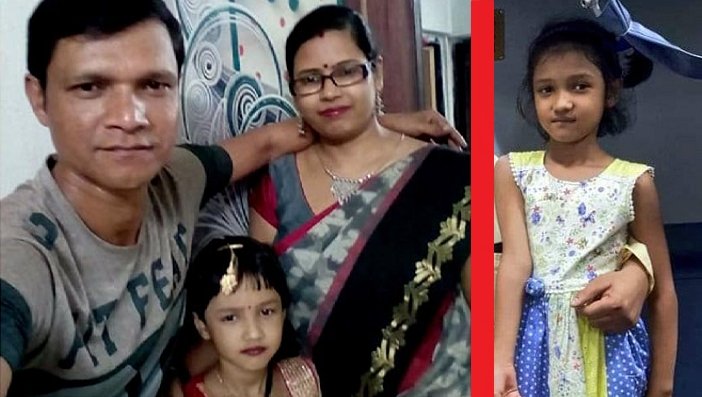
6-year-old Payal Santra, daughter of Pulwama Martyr Babul Santra, has been invited to attend the Prime Minister Modi’s swearing-in ceremony. On Wednesday she boarded a train headed towards Delhi from the Howrah station and she would be attending the ceremony at the Rashtrapati Bhavan today evening. A picture of her having boarded the train is being shared widely on social media.


Babul Santra was a CRPF jawan from the Howrah district in West Bengal. He was part of the CRPF convoy that was attacked in Pulwama of Jammu and Kashmir on the 14th of February by a Pakistan backed JeM terrorist.

The Prime Minister had also invited the kins of slain BJP workers in West Bengal for the swearing-in ceremony as a mark of respect. The kins of over 50 BJP workers who had lost their lives due to the political violence in the state over the last few years have been invited.

However, Mamata Banerjee has decided not to attend the swearing-in ceremony after having heard the kins of slain BJP workers were also invited for the ceremony. She denies that there were political murders in the state.

Meltdown continues: ‘Krantikari’ journalist suggests referendum idea to strengthen EVM hacking theory

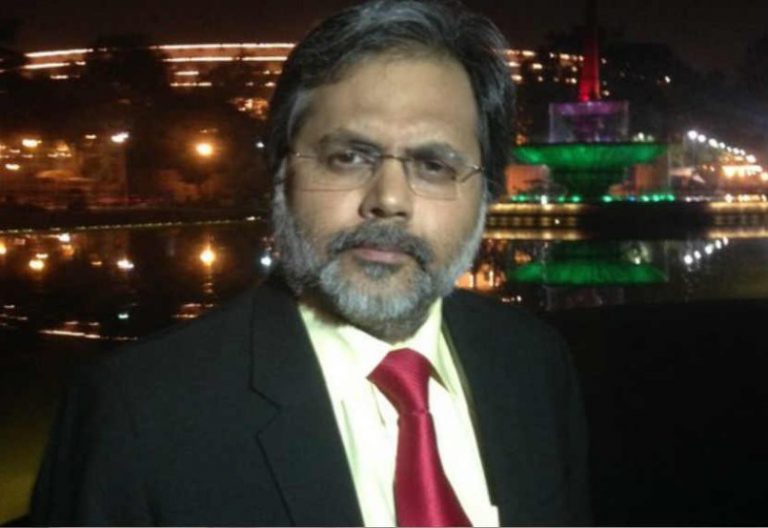
As Narendra Modi swears in as the Prime Minister for the second time, many people are yet to come to terms with the fact that he has indeed won again and won it even bigger than 2014. ‘Krantikari’ journalist Punya Prasun Bajpai who had predicted more seats for Congress ally DMK than it even contested on, wants to now hold a referendum for at least one Lok Sabha constituency where voters should sign next to their names and declare who they vote for.


Bajpai tweeted last night that there is disappointment everywhere and people are offering to resign. “Every politician and every party is silent. At least someone should wake up and speak up. Pick one Lok Sabha seat, hold a referendum. Write down the name of each voter, ask and put their signature next to it. Whom did the voter give the precious vote to?”

Bajpai needs to accept that official referendums cannot happen just because Bajpai wants it to. Because he is having a hard time accepting that the BJP won.

At best, a survey could happen, but it is also wouldn’t make sense to compare the survey result to a referendum. To begin with, the actual turnout on the day of voting would vary with the survey results. Secondly, whatever happened to the secrecy of ballot? You know, the one where the voter is assured that who they vote for will remain a secret?

During the run-up to the elections, there was a huge hue and cry regarding the EVMs and how reliable they are. Conspiracy theories were floated on how EVMs can be hacked. In fact, after the voting was over and when exit polls predicted a landslide victory for the BJP, theories were floated how the ‘exit polls’ are rigged so that the ‘EVMs can be ‘switched over’ before the counting. Following the elections, we saw a pattern emerge where those who were not too happy with the results were blaming the entire electorate for ‘choosing hate’ or ‘choosing Hindutva’ and how the ‘Hindu mind is corrupt’.

The ‘EVMs are hacked’ theory, however, died a sudden death as no one in the opposition questioned them anymore after the matching with VVPATs was carried out and there were no discrepancies. However, the fear psychosis had already been established.

A week after the election results were declared, the propaganda continues. Bajpai’s tweet asking for a referendum style survey or whatever that ridiculous idea his fertile imagination has cooked up shows how hell-bent they are to undermine the very basic institution – that of democracy. To seed the idea so that someone else, especially the ones who thrive on cooking up stories on based on a faulty database can execute this ‘krantikari idea’ to create mass hysteria.

Only recently we had shown how this propaganda website ‘NewsClick’ had alleged discrepancies in elections result based on fake data. In an attempt to discredit the BJP led NDA’s win and to suggest that the elections were somehow rigged, NewsClick floated a conspiracy theory to allege that in many places, the number of total votes counted was more than the total number of votes polled on election day.

The report even spoke of suspected ‘phantom’ votes in various Lok Sabha constituencies in UP, Bihar, MP. They had attached a table showing the numbers to prove that the actual votes counted during the counting was more than the total votes. But a cursory glance of the table will tell that they used some clever manipulations and selective inclusions and exclusions to arrive at the numbers they desired to obtain.

After being called out for the glaring discrepancies, NewsClick had deleted their article. However, the article had been widely circulated before that. Bajpai’s tweet can just trigger such ‘data analytics’ to get into the war mode to spread fear and distrust regarding democracy.

Bahut krantikari.

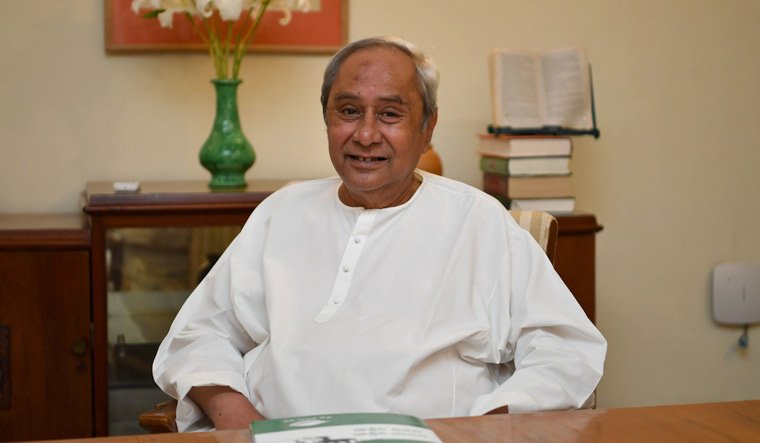
The Electoral Machine: Explaining Naveen Patnaik’s unparalleled electoral success in Odisha even in the face of TsuNaMo

In April 2014, I was driving my in-laws to their voting booth in BJB College Arts block, Bhubaneswar. Out of curiosity, I asked my mother-in-law whom she would be voting for. As Odisha conducts simultaneous elections, she said Conch for the state and Lotus for Delhi. As she went into the booth and came out, I asked her did she vote the way she told me? She replied in negative. She had pressed Conch in both EVMs. The reason, as she explained to me was, she was confused which EVM is for Lok Sabha and which one is for Vidhan Sabha. She was worried about “What if my vote would not have gone for Naveen Patnaik”. She wasn’t anti-BJP or anything. In fact, she supports Prime Minister Modi. But she by no means could have voted against Naveen Patnaik. She saw it as her duty to vote for Naveen Patnaik even if it means she misses out on voting for Modi.

As they say, it’s difficult to fight someone in politics, who has become an emotion. And Naveen Patnaik enjoys that status among Odisha electors. Yes, he has ruled for 2 decades now and Odisha is still not doing great on many parameters. But ask the voters, they will attribute this to the ill-performing BJD ministers. Anything against Naveen Patnaik is taken personally. This is almost like the Modi cult at a national level, which is why Rahul Gandhi paid a price by calling Modi “Chor“. 

On 29th May, for the 5th time, Naveen Patnaik took the oath of Chief Minister at the IDCO exhibition grounds at Bhubaneswar. By the time his 5th term ends in 2024, he would be surpassing the record of Pawan Kumar Chamling, the ex-CM of Sikkim, who has served the state for 24 years and 165 days, to become the longest-serving CM ever. He will also leave behind the other stalwart, late Jyoti Basu who served as CM of West Bengal for 23 years and 137 days. While Jyoti Basu’s regime was a vote for left, the party kept on winning Bengal even after Basu, in Odisha people have not voted BJD to power. They have voted Naveen Patnaik, with a thumping majority.

Right after 2014 general polls, BJP had chosen their next battlegrounds. Odisha and West Bengal. BJP for the first time held their national executive meeting in Odisha in 2014. Since then PM Modi, Shah and other cabinet ministers have paid countless visits to Odisha to attend party programme or for inaugural functions. BJP carried out a massive booth level programme, “Mo Booth Sabuthu Majboot” to mobilize booth level workers. The result showed in 2017 panchayat elections where the party won 306 out of 849 panchayats. This was 8.5 times their previous record. The party mood was jubilant and celebrations erupted at party HQ near Ram Mandir. Someone sitting 8 KMs away near Aerodrome area was taking note.

When the results were declared for 2019, Modi Tsunami swept the country. Regional and national parties, as well as coalitions, fell like a house of cards. But one man celebrated for his notable work in dealing with cyclones and calamities, not only withstood the Tsunami but completely destroyed it. At the face of Modi Tsunami and 20 years of anti-incumbency, Naveen won 12 out of 21 parliamentary constituencies and 112 out of 147 assembly constituencies, a loss of a meagre 5 seats from his 2014 tally. So what explains this unparalleled success of Naveen babu in Indian politics?

People say Naveen wins because of There-is-no-Alternative (TINA). Well TINA can’t describe this unprecedented electoral success. And even if it were to be TINA, this talks volumes about the quality of opposition than anything else. Indian elections are complex. Get 5 Modi fans and ask them why they have voted for Modi, highly likely that they will give you 5 different reasons. Attributing electoral wins to a single reason is lazy and oversimplification of things. 

In 2015, a huge chit fund scam was unearthed in Odisha. Many BJD leaders including some MLAs and MPs spent a long time in jail. Some of them were suspended from BJD to be re-inducted later. Some of them or their sons have been given BJD ticket in 2019 and won the election as well. However, Naveen remains unscathed. None of this has made any dent to his Mr. Clean image. People see this as a good man surrounded by thugs; however, the good man has ensured the thugs are punished.

What also helps Naveen is his non confrontational attitude. Post 2014, when BJP made Odisha their battle ground, state BJP leaders went berserk in their attack on Naveen. But he remained calm and almost never lost his cool. His responses were measured, dignified and concise. A departure in today’s confrontational politics which some of his rabble rousing contemporaries practice.

One of the most important aspect of Naveen’s unparalleled success is his resolved focus. He has no ambiguity in terms of his political ambition. His sole aim is to rule Odisha and that’s where he puts his energy in. The result is for everyone to see. Compare this with other regional stalwarts, their national ambition and their dwindling political fortunes. Everyone wants a bigger pie in Delhi. Everyone is an expansionist. And that’s where they lose focus.

People on Social Media say that they don’t even know what Naveen does and yet he wins elections after elections. But that’s exactly where the secret lies. He isn’t the one who blows his trumpet. He understands his voters, he knows his limitations, his ambitions and he concentrates his energies only where his strength lies. A cursory look at his pre electoral welfare schemes, his campaigns and strategies were a give away that his appeal for MP elections were always half hearted. His focus was steadily on where his heart lies and it was Odisha Vidhan Sabha.

There is no doubt that BJP has made tremendous gains in Odisha in 2019. An 8 fold increase in parliamentary seats and more than double in assembly elections. Vote share too has almost doubled in both the elections. But numbers are for political strategists and psephologists. After a 19 years incumbency, winning a mere 23 seats out of 147, in a state which BJP had made its battleground having declared mission 120, is an abject failure. There are reasons like lack of sangathan, internal sabotage, no popular face among state leaders. But if this has to be summarised, it won’t b wrong to say that the reason was they were up against Naveen Patnaik. State BJP simply doesn’t have the ammunition to deal with the man.

As Naveen gears up for the 5th term, there are many challenges that lies in front of him. A cyclone ravaged state needs to be revived and put back on the growth track. Odisha fares among the bottom is almost all HRD indicators. Healthcare, farming, education and employment needs immediate attention. Naveen Patnaik has got a massive mandate and he must deliver. Here is wishing Naveen 5.0 all the best for the next 5.

Here is why Mamata Banerjee’s criticism of BJP inviting the kins of killed BJP karyakartas reeks of hypocrisy

After a thumping victory in the Lok Sabha elections, Narendra Modi will be taking oath as Prime Minister of India for his second term at 7 pm on Thursday. Fifty-four special guests, besides leaders from BIMSTEC countries and a host of celebrities and politicians, would be attending the swearing-in ceremony.

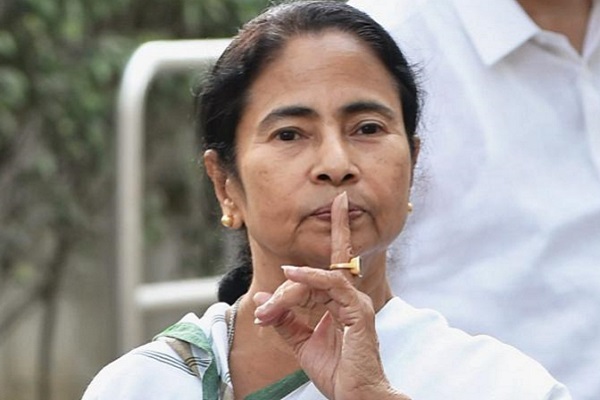
West Bengal Chief Minister Mamata Banerjee, who had also confirmed her presence in the swearing-in ceremony, evidently irked by PM Modi’s ‘special invitees‘ later took a complete U-turn. She took to Twitter to declare that her decision of not attending the swearing-in ceremony was prompted by the BJP’s decision to invite families of 54 victims of political violence in Bengal.


As a mark of respect, BJP had invited, kins of over 50 BJP workers who have lost their lives in West Bengal political violence over the months, to the swearing-in ceremony of the Prime Minister and his cabinet.

Mamata in her Tweet had completely disregarded BJP’ claims by saying, “This (political violence) is completely untrue. There have been no political murders in Bengal.” adding that “The (oath-taking) ceremony is an august occasion to celebrate democracy, not one that should be devalued by any political party which uses it as an opportunity to score political points”.

However, Mamata Banerjee forgets that unlike her citizens of India do not have such a short-lived memory. A glimpse at the past reveals that Banerjee had herself invited victims of violence in Singur and Nandigram during her oath-taking in 2011.

As per reports, among the 3,000 people in her swearing-in ceremony, were kins of victims of violence of Nandigram and Singur. She had alleged then, that CPI(M) cadres had murdered innocent land-losers in those two areas and had blamed the outgoing Chief Minister Buddhadeb Bhattacharjee for the violence.

The Nandigram violence was an incident in Nandigram in West Bengal, in the aftermath of a failed project by the Government of West-Bengal under the erstwhile Communist rule to acquire land for SEZ (Special Economic Zone).

Mamata Banerjee and her political party had widely used this issue along with the political war cry Ma Mati Manush in their election campaigns. In fact, she on the occasion of Nandigram Divas in 2017 had called the incident “violent politics of the CPI(M)”.

She was soon called out for her own hypocrisy. BJP IT cell in-charge, Amit Malviya took to Twitter to remind Mamata Banerjee of her double-standards. He wrote that her own oath-taking on May 20, 2011, was attended by the families of “victims of political violence in Nandigram and Singur”.


Mamata’s present statement that BJP’s move to invite the families of its party workers who were slain in the violence as ‘devaluing an august ceremony’ reeks of hypocrisy.

Mainstream media continues to whitewash terrorists, Zakir Musa is now ‘fashionable young boy’ who loved ‘cigarettes and sports bikes’

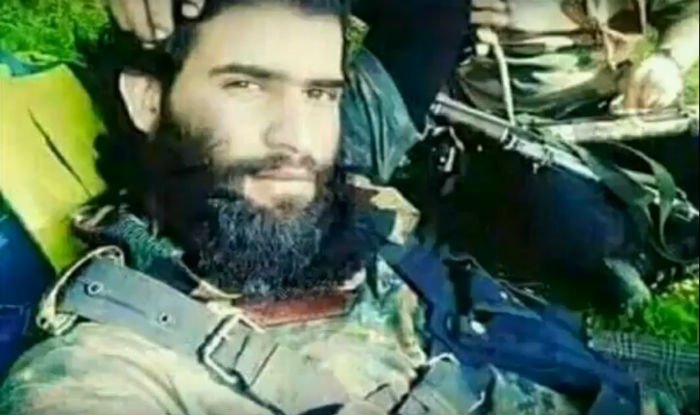
Zakir Musa, the jihadi terrorist head of Ansar Ghazwat-ul-Hind was killed by the security forces on 23 May. Musa’s terrorist organisation was supported by Al-Qaeda and he was being hunted by security forces for a long time.

However, Indian mainstream media and some so-called ‘secular-liberals’ never fail to mourn the slain terrorists and are often seen whitewashing their crimes, even giving them the ‘hero’ or martyr status.


News 18 has published a report on the slain terrorist Musa, sharing mundane information about him as if he was a rock star or movie actor. The report by News 18 attempts to highlight information like how Musa’s father Abdul Rasheed Bhat, an engineer by profession, had received a packet containing an iPhone, iPod, and three debit cards in 2013. Zakir Musa’s decision to become an armed terrorist has been represented in the report as a father’s sorrow of his son ‘sacrificing’ luxury.

The report goes on to quote the terrorist’s friends saying how Musa loved hair gels, expensive deodorants, new clothes and shoes.

The report also attempts to find the ‘trigger’ that ‘made’ the so-called “Young boy who loved sports bikes and cigarettes” join terrorists. In Musa’s case, the report says it was probably because of the incident when he was ‘slapped by a policeman’ and falsely accused of stone pelting.

This comes after videos surfaced on social media where Zakir Musa’s father is seen hailing the terrorists and claiming that they are fighting for ‘Allah’. The videos also show Musa’s father calling for ‘unity’ among all jihadis.

Earlier, Pratik Sinha, the founder of Alt News had attempted to whitewash the terrorist as a ‘separatist’.

Such excuses were drawn by Indian mainstream media and several journalists too to whitewash the crimes of Burhan Wani and the Pulwama attacker. The attempts to humanise dreaded terrorists and enemies of humanity as stylish, fashionable young men and ‘revolutionaries’ is something that is done by Pakistan to peddle their agenda in Kashmir too.

Zakir Musa was from a wealthy family. He was a student of civil engineering in a college in Punjab. The fact that he chose to be a terrorist despite all of it only punctures the false narratives of unemployment and poverty being the cause of Islamist radicalism.

Be it the Pulwama attacker or Zakir Musa, they had made it abundantly clear in their statements that it is the Islamic caliphate they want and not ‘Kashmir’s separation. While the Pulwama attacker had said that he wants to kill the ‘cow piss drinkers’, Musa had stated that he wants to rid India of Hindus. Media and so-called ‘seculars’ attempting to find ’causes and triggers’ behind such genocidal ideologies are only misleading the masses away from the real issues.

Without Modi-2, the real risk was going back to bad habits

This grand moment from May 26, 2014 is still etched in our memories.

Untitled.png
Narendra Modi taking oath as Prime Minister on 26 May 2014

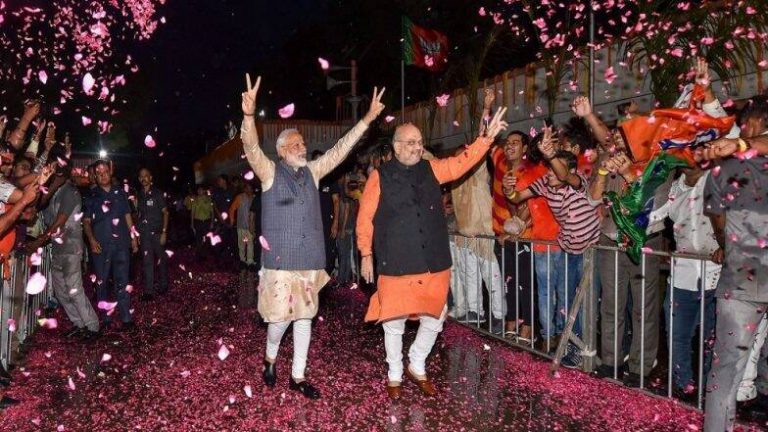
Today, in a few hours from now, this will be joined by another memorable image as Narendra Damodardas Modi is sworn into office for a second time. And yes, I will boldly predict, without any doubt whatsoever, that there is going to be a third time.

What if we take a moment to speak of that which now seems unthinkable? What if Modi had lost these elections? What if this was either Rahul Gandhi or someone else being sworn into office with his support, beginning the 59th year (yes 59th year!) of Congress rule in India? Beyond the partisan egos, what would we have lost as a nation?

The real loss is that we as a nation would have gone back to the bad habits of old. Those would be the bad habits that have kept us from achieving our potential even after 70 years of independence.

What makes a ‘first world country’? One of the most fundamental things is ‘rule based governance’. In other words, the rules are the same for everyone, whether you are a small shopkeeper or running a global multinational company. Money and prestige and power coziness will get you nowhere.

That’s not how things used to go in India. If a young student owes Rs 500 on her hostel mess bill, she doesn’t get her degree until she can settle the account and get a “No Dues Certificate”. But if you owe, say Rs 5,000 crores, you can get all the exceptions and extensions you want. Even more credit.

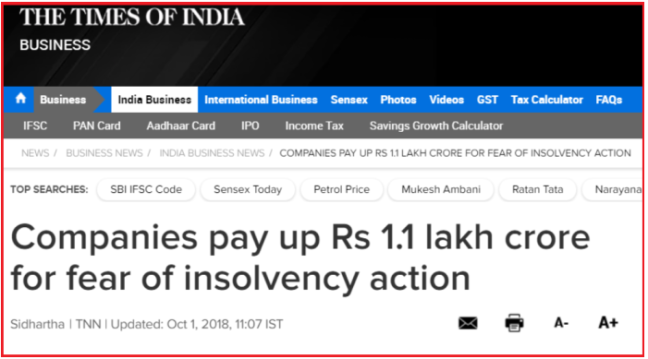
All that changed with Modi. He put Indian business houses on a “diet” of rule based governance for the first time in 70 years. The best example of this is the Insolvency and Bankruptcy Code (IBC).

Untitled.png
Companies now fear insolvency action

This is not anti-business, but pro-competition. It is the most pro-capitalist thing you can do. When big business cannot use its influence to shut out the competition, that’s when you unleash the true uplifting potential of capitalism.

Every child in India today knows the sequence : 0, 5, 12, 18, 28. These are the slabs for GST rates. Can you imagine a common person five years ago being able to remember the service tax rate, the sales tax rate, the VAT, the excise duty, the local body tax rate, etc on each item? No need today. This is the kind of transparency that is needed for business to flourish.

The other endemic problem in India is a culture of corruption. PM Modi ensured ZERO top level corruption in five years, possibly delivering the first “scam free government” since independence.

This should have been the norm. It is a pity that this is an exception. Unlike floods and cyclones, scams are not natural disasters. But we learned to take them for granted. Indeed, we learned to take scams as an integral part of politics.

To become a first world country, we had to stop this corruption some day. Somebody had to draw a line in the sand and say: thus far and no further.

But what about corruption at lower levels? Well, corruption is a culture and the cues come from the top. Once the tap is turned off upstairs, it will take some time for the stream to dry up below. For the new habits to be cast in stone.

In fact, some direct benefits have been clearly visible and have massively contributed to the BJP’s victory. Money from the government arrived directly in bank accounts of the poor, with no scope for middlemen to take a cut. Many of the benefits such as gas connections, electricity connections, toilets and pucca houses were obtained without paying bribes.

If the Indian electorate had gone the other way this time, the tap upstairs would have been turned on in no time. And the flow would have continued just as it has for decades.

There are other visible symptoms of this. The new Modi sarkar will be formed in just a few more hours. And yet, every anchor has shrugged miserably on every show and admitted that they have no clue who is getting what. Most have admitted openly that “sources” simply don’t work when it comes to Modi sarkar. What a sea change from just 10 years ago, when celebrity journalists would be on the phone with lobbyists fixing portfolios.

It takes time to build good habits, to build a routine with a healthy diet and regular exercise. We had five years and that was a good start. But India could not afford to go on a binge just yet. From the Insolvency Code to Swachch Bharat, we needed at least five more years of discipline.

A week after Samajwadi Party barred their spokespersons from participating in TV debates, Congress follows suit

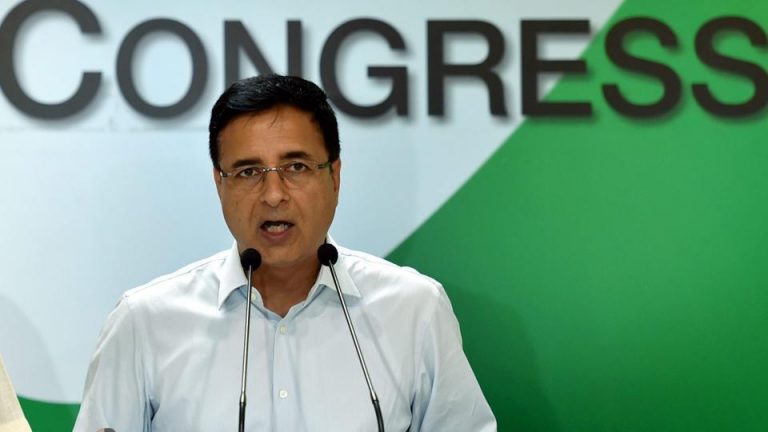
After the Lok Sabha debacle, Congress spokesperson Randeep Singh Surjewala took to Twitter to inform that Congress has decided to not send spokespersons on television debates for a month. All media channels and their editors have been requested not to place Congress representatives on their shows.


This decision comes a week after Congress suffered a humiliating loss in the recently concluded Lok Sabha elections. Shrinking to a tally of 52 seats out of a total of 542 in the Lok Sabha polls is in itself a huge embarrassment for the grand old national party, given the fact that it will now not even be able to elect a Leader of Opposition.

In first back-to-back majority in the Lok Sabha polls for a single party in over three decades, the Modi-led BJP won 303 seats out of 542 in the Lok Sabha polls, handing out a crushing defeat to the Congress and many other political opponents.

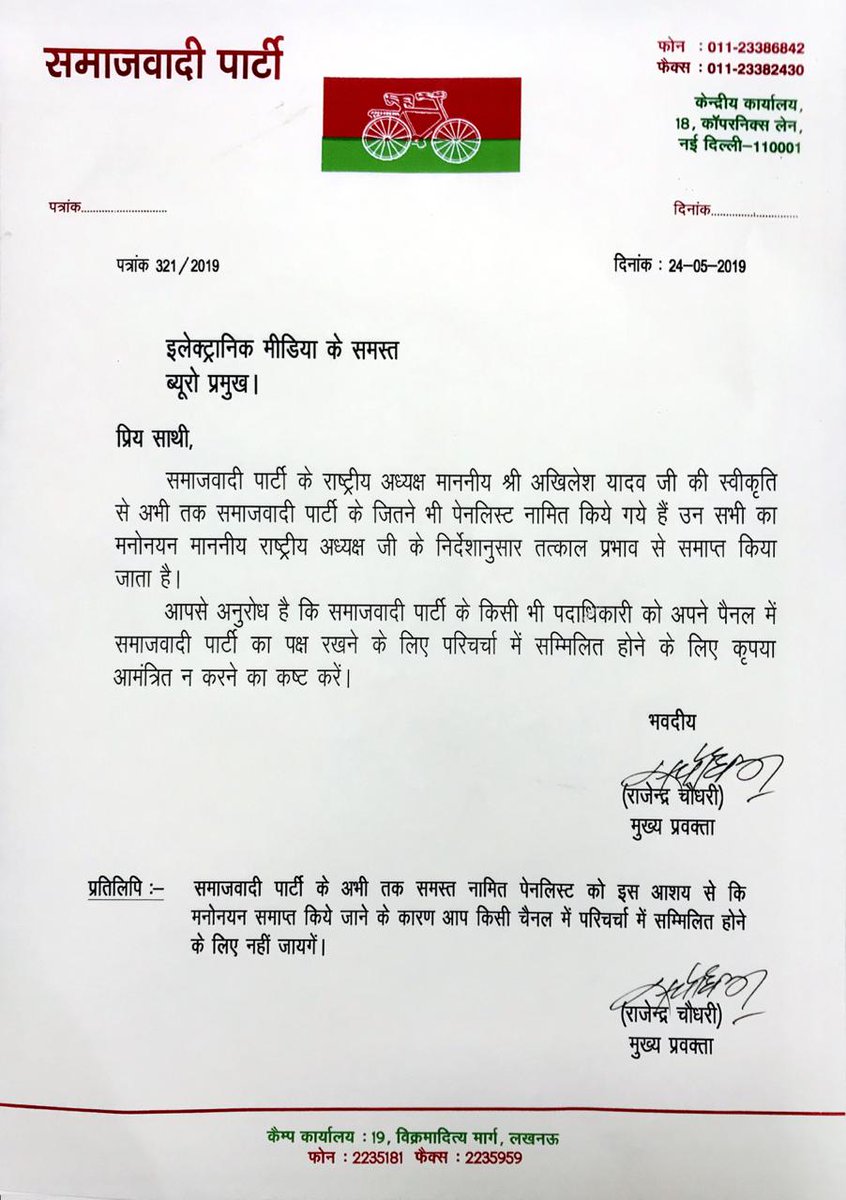
However, it seems that the Congress has followed the footsteps of the Samajwadi Party president Akhilesh Yadav, who too, after meeting the similar fate in the Lok Sabha elections, had, last week, dismissed the panel of spokespersons of his party.

SS of the letter signed by SP’ chief spokesperson, Rajendra Chowdhury cancelling the appointment of all party spokespersons with immediate effect.

The party had asked TV channels not to invite any of the party leaders who were acting as spokespersons for any debate or talk show. In a press release, party’s chief spokesperson Rajendra Chowdhury said that Samajwadi Party has cancelled the appointment of all spokespersons with immediate effect.

The Samajwadi Party had contested on 37 of the 80 Lok Sabha seats in Uttar Pradesh but got just five seats while its ally, the Bahujan Samaj Party, fielded candidates on 38 seats and won 10. Congress could win one seat.

Meanwhile, after the landslide victory, Narendra Modi is all set to take oath as Prime Minister of India for his second term at 7 pm on Thursday. President Ram Nath Kovind will administer the oath of office and secrecy to the Prime Minister and other members of the Union Council at Rashtrapati Bhavan in New Delhi. A record number of 8,000 guests are likely to attend the swearing-in ceremony.

Times Group’s Gujarati portal and Gujarati newspaper Sandesh spread fake news about ‘glitch’ in Ahmedabad metro

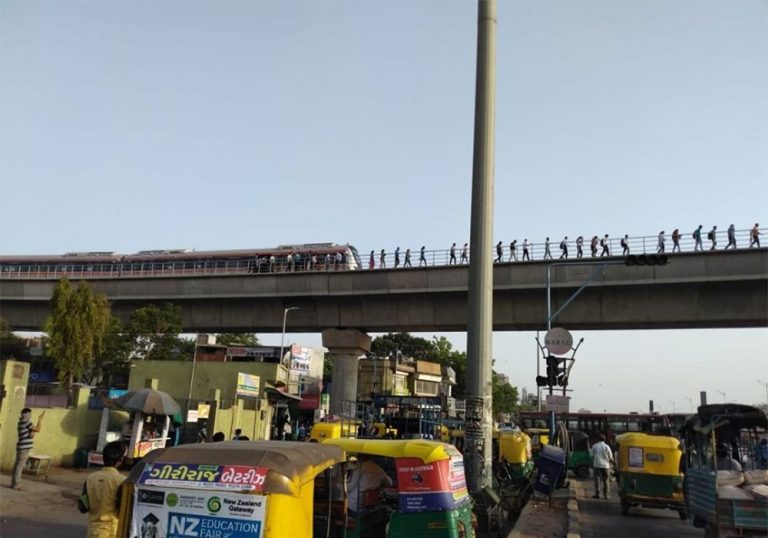
Times Groups’ Gujarati portal, “imgujarat” yesterday shared a video of the Gandhinagar-Ahmedabad metro train breaking down on the track. It said that the passengers reached the station after walking on the tracks.


Popular Gujarati newspaper Sandesh, too, published the news mocking the Ahmedabad-Gandhinagar metro that how the metro had a ‘glitch’ and passengers were forced to walk on the track.


The tweet, which is in Gujarati, reads, “Ahmedabad Metro fails, passengers left stranded on the bridge”. A video was also shared on social media trying to mock the Gujarat development model.


However, as reported online portal DeshGujarat.com, the video which is widely in circulation on social media is actually a mock drill carried out by Gujarat Metro Rail Corporation (GMRC) and that the ‘passengers’ were actually GMRC staffers. As per the report, the mock drill was held as per safety manual and was carried out to study possible evacuation in case the train faces such glitch. Gujarati magazine Chitralekha also confirmed that the same was a mock drill.