Home Blog Page 6327

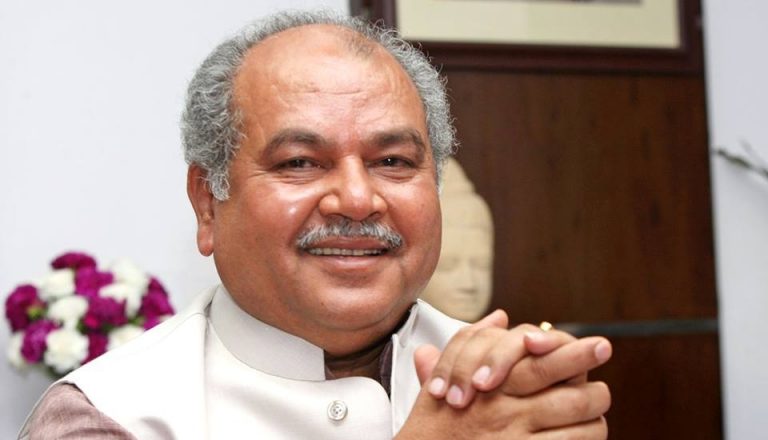
Modi ministers in five years – Narendra Singh Tomar, Minister of Rural Development and Panchayati Raj

In the series on the performance of various ministers in the Modi government, let’s take a look at Narendra Singh Tomar, Minister of Rural Development and Panchayati Raj

Narendra Singh Tomar comes from Madhya Pradesh, and like most other top BJP leaders and ministers currently, traces his rise from students and youth movement. He was student union leader in Murar College in Gwalior district of Madhya Pradesh. Later he was president of BJYM Gwalior in between 1980 – 1984, and was elected as councillor of Gwalior Municipal Corporation in 1983. He continued to hold various positions in BJYM Madhya Pradesh, rising to be its president in 1991 – 1996. He was elected as MLA in Madhya Pradesh assembly in 1998 and was reelected for the second term in 2003. From 2003 – 2007, he served as a cabinet minister in Madhya Pradesh Government. He was also appointed as state BJP president in 2006. He was first elected to Loksabha in 2009, and reelected in 2014. He joined Narendra Modi cabinet in 2014 and was first given charge of the Ministry of Steel, Mines, Labour and employment, however during the cabinet reshuffle in 2016, was given charge of Rural Development, Panchayati Raj and Drinking Water and Sanitation.

Pradhanmantri Awas Yojana (Gramin) – PMAY (G) is the revamped version of Indira Awas Yojna, under which houses are built for the poor. Prime Minister Narendra Modi has embarked on a vision that every poor should have a roof over his head by 2022, when India completes 75 years of independence and there shouldn’t be a single family without a pucca house of its own. Rural Development ministry under Narendra Singh Tomar is running this initiative in rural areas of the country. Under earlier Indira Awas Yojna, successive governments had built only 4.22 lakh houses, while Modi government till date has built nearly 75 lakh houses in rural area since 2017 when PMAY (G) was formally launched, achieving 19 times the number houses built till 2014, just in 4.5 years. In first three years before the revamp of the scheme, government had constructed nearly 36 lakh houses under Indira Awas Yojna thereby taking the number of total houses built by Modi government to 1.11 crore in last 5 years.  To stop leakage of funds and ensuring timely completion of houses, and weeding out ghost beneficiaries, government has relied on IT systems, where every constructed house is geotagged, funds are transferred through DBT, MIS reporting at every stage like sanction, allotment of land, construction has transformed this scheme into a game changer one. All the MIS reports of this scheme are publically accessible, and can be seen here. These homes are also immediately given electricity connection under Saubhagya Scheme, and LPG cylinders under Ujjwala Scheme.

Toilets – Prime Minister Narendra Modi in his victory speech itself had announced Swachch Bharat Campaign on May 16th, 2014. This campaign was launched formally on October 2nd, 2014. One of the main targets of this multipronged campaign was to construct household toilets. Rural Sanitation coverage before 2014 in India was abysmal at 38.7% before 2014, when the campaign was launched meaning only 4 of every 10 rural houses had its own individual toilet. According to Prime Minister Modi has aimed to achieve 100% rural sanitation by 150th birth anniversary of Mahatma Gandhi in 2019, who was one of the biggest proponents of cleanliness. According to latest data, India has achieved sanitation coverage of 99.1%, and will achieve the 100% sanitation target before the deadline. Till date 9.26 crore toilets have been built, 5.58 lakh villages are open defection free (ODF) compared to just 47,000 villages, 617 ODF districts compared to 5 districts before, and 30 states and union territories compared to none before. However as on date only two states, Goa and Odisha are substantially lacking behind in ODF with about 76 and 84% coverage respectively. Telangana has achieved sanitation coverage of 95 % while in other 6 states and UTs are almost ODF with sanitation coverage of over 99% but just below 100%. Again all data here is gathered through MIS and is publically accessible here and here. According to WHO report, India would avoid 3 lakh diarrheal deaths due to 100% sanitation coverage.

Funding details of Gram Pachayats made available online – Funds allocated to every gram panchayat in the country under 14th finance commission can be seen online on the website. It also shows every GP has got how much for which work to be undertaken. Corruption is a mainstay of Indian politics and people aren’t aware of how much money their panchayat has got from the government. With this date available publically, one can demand accountability from their village heads (Sarpanch). This data can be found here. Also all works undertaken in any panchayat of the country can be publicly accessed here. Various reports like execution status of action plan, fund monitoring report from village to block to district level is available here.

Rurban – Rurban is the combination of two words, rural and urban. As per Census 2011 almost 68% of the total population. Large parts of rural areas in the country are not stand-alone settlements but part of a cluster of settlements, which are relatively proximate to each other. These clusters typically illustrate potential for growth, have economic drivers and derive locational and competitive advantages. Hence, making a case for concerted policy directives for such clusters. These clusters once developed can then be classified as ‘Rurban’. Hence taking cognizance of this, the Government of India, has started Shyama Prasad Mukherji Rurban Mission (SPMRM), aimed at developing such rural areas by provisioning of economic, social and physical infrastructure facilities.

Taking also into view, the advantages of clusters, both from an economic view point as well as to optimize benefits of infrastructure provision, the Rurban scheme aims to develop around 300 Rurban clusters, in first phase. The National Rurban Mission (NRuM) follows the vision of “Development of a cluster of villages that preserve and nurture the essence of rural community life with focus on equity and inclusiveness without compromising with the facilities perceived to be essentially urban in nature, thus creating a cluster of “Rurban Villages”.

Gram Panchayat Development Plan Campaign – Holding gram sabha’s (meeting of all the adults in villages) is a mandatory requirement by law in India. In gram sabha, issues concerning the village are discussed and plans are decided. But as often it is seen, either plans remain on paper or there is a large scale corruption in the execution of the plan, which thereby hampers quality of the work and full benefit isn’t accrued to the villages and gram sabhas become a mere formality.  14th finance commission proposed to release the fund to the tune of Rs 2 lakh crore between 2015 – 2020 to all gram panchayats of the country. However such large fund had immense risk of corruption, as sarpanchs in rural area are often uneducated, or even if they are educated then they connive with local officials, to siphon off the fund taking benefit of unawareness in rural area. Therefore, Ministry of Panchayati Raj has come up with Gram Panchayat Development Plan Campaign (GPDP) where this procedure has been made more stringent and accountable. Though all the proposals were to be discussed in gramsabha even before this scheme, after this scheme is being implemented, every decision is monitored with the help of IT and MIS reporting. Data is publically available here where anyone can check the data. All the panchayats are ranked according to the work done. How this scheme is changing rural villages can be read here.

Saansad Aadarsh Gram Yojana – Saansad Aadarsh Gram Yojna (SAGY) was another unique scheme announced by Prime Minister Narendra Modi, and is being executed by Rural Development Ministry. There are total of 790 Members of Parliament in the country, which includes 545 of Loksabha and 245 of Rajyasabha. Under this scheme every MP had to adopt 3 villages in 5 years till 2019 (Scheme was launched in 2014) and another 5 villages in next 5 years (2019 – 2024) and develop them as model villages. Loksabha MP has to adopt villages from his constituency while Rajyasabha MPs can adopt any villages from the state they represent. Nominated MPs of RS can adopt any village across India. Guidelines of works to be done in model villages were given by MoRD. If every MP does his work sincerely in villages he adopted there would have been 2370 villages model villages across India by 2019 and 6320 model villages by 2024. However this scheme hasn’t met anticipated success. While few MPs have done excellent work in developing villages, others have proven to be laggards. PM Modi himself rued about this fact in the interview to Zee News, that this scheme could have been operationalized in better fashion.

Gram Swaraj Abhiyan – On the occasion of Ambedkar Jayanti in 2018, Prime Minister Narendra Modi launched Gram Swaraj Abhiyan (GSY). GSY focused on taking 7 schemes of government of India to specifically identified 21,058 backward villages in 20 days i.e. upto 5th May, 2018. These schemes included free LPG connections under Pradhan Mantri Ujjwala Yojana, free electricity connections to non-electrified houses under Pradhan Mantri Saubhagya Yojana, LED bulbs under Unnat Jyoti Yojana, Vaccination of children and pregnant women under Indradhanush Yojana, Bank accounts under Pradhan Mantri Jan Dhan Yojana, Life and Accident insurance under Pradhan Mantri Jeevan Jyoti Bima Yojana and Pradhan Mantri Suraksha Bima Yojana. Again by using MIS systems, what works have been done is open for all to see on the website www.gsa.nic.in, making it a very transparent scheme. This scheme was later extended to 117 aspirational districts identified by NITI Aayog.  Reports of works done in these villages can be seen here.

Deen Dayal Upadhyaya Grameen Kaushalya Yojana (DDUGKY) – Skill development is the subject which is very close to the heart of the Prime Minister Narendra Modi.  Accordingly The Ministry of Rural Development announced the DDUGKY on 25th September 2014 which is Pandit Deen Dayal Upadhyaya’s birth anniversary, and celebrated as Antyodaya Diwas. DDUGKY is tasked with the dual objectives of adding diversity to the incomes of rural poor families, and cater to the career aspirations of rural youth. DDUGKY is focused on rural youth between the ages of 15 and 35 years from poor families. As a part of the Skill India campaign, it plays an instrumental role in supporting the social and economic programs of the government like the Make in India, Digital India, Smart Cities and Start-Up India, Stand-Up India campaigns. Over 180 million or 69% of the country’s youth population between the ages of 18 and 34 years, live in its rural areas. Of these, the bottom of the pyramid youth from poor families with no or marginal employment number about 55 million. Again the activities of DDUGKY can be seen on its publically accessible dashboard at www.ddugky.gov.in.

Ministry of Rural Development has taken Prime Minister Modi’s digital India vision very seriously and online dashboard showing progress of its all schemes with MIS reports is available here further strengthening participative democracy. It is often seen that, there is a large scale corruption in rural areas due to unawareness about schemes. Gone are those days now due to public availability of data on the MoRD website.


The author is journalism pass out from Indian Institute of Mass Communication, New Delhi. After dangerously flirting with the idea of left during his IIMC days, due to the proximity of the IIMC with JNU, a den of radical leftists, he became firmly aligned to right after realizing the futility of the left. He tweets at @kpophale.
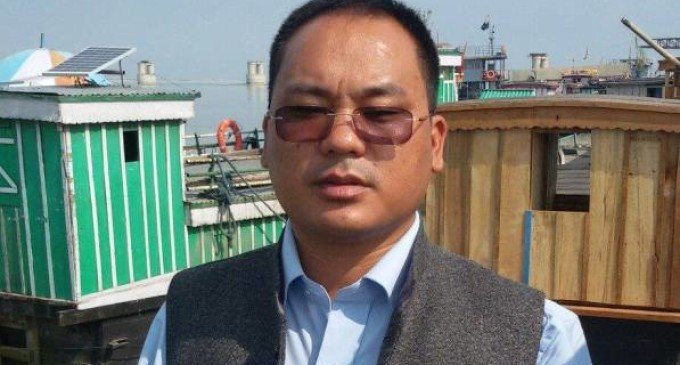
Arunachal Pradesh: Sitting NPP MLA Tirong Aboh and 10 others killed in terror attack suspected to be carried out by NSCN-IM

In a shocking incident, sitting National People’s Party (NPP) MLA from the Khonsa West Assembly constituency in Arunachal Pradesh, Tirong Aboh, and ten others were killed in a terror attack on Tuesday. They were shot dead by unknown assailants in the Bogapani area of Tirap district.

Aboh’s family members were also amongst the dead, including his son, while his personal security officer is in critical condition. According to preliminary reports, suspected NSCN (National Socialist Council of Nagaland) militants could be behind the terror attack, which took place at Bogapani village of Tirap district in Arunachal Pradesh.

According to Tirap deputy commissioner PN Thungon, Aboh was going to his constituency from Assam, along with civilians and police personnel, when the suspected militants opened fire at their vehicle at around 11.30 am.

Aboh was seeking re-election from Khonsa West Assembly seat in the assembly elections that took place along with the Lok Sabha elections. Voting for the assembly election has already taken place on 11th April and the results will be declared on May 23.

Union minister and Arunachal MP Kiren Rijiju said that strongest possible action will be taken against those responsible for such dastardly attack. He tweeted that he was shocked and saddened by the brutal attack.


Meanwhile, Meghalaya Chief Minister and NPP president Conrad K Sangma taking to Twitter strongly condemned the “brutal attack on Tirong Aboh and his family and his security personnel.”


Paying his condolences to the deceased MLA and his family, Sangma urged HM Rajnath Singh and PM Modi to take action against those responsible for such attack.

“The NPP is extremely shocked and saddened by the news of the death of its MLA Shri Tirong Aboh (Arunachal Pradesh) and his family. We condemn the brutal attack and urge @rajnathsingh and @PMOIndia to take action against those responsible for such attack,” he tweeted.

The attack comes days after another NPP worker and Tirong’s supporter were attacked by a suspected NSCN(IM) member at a village in Arunachal Pradesh. The suspected member of the Isak-Muivah faction of the National Socialist Council of Nagaland (NSCN-IM) assaulted Jaley Anna and his friend Kham Nai Abhi, both NPP workers, at Kheti village in Tirap district. Anna had succumbed to his injuries.

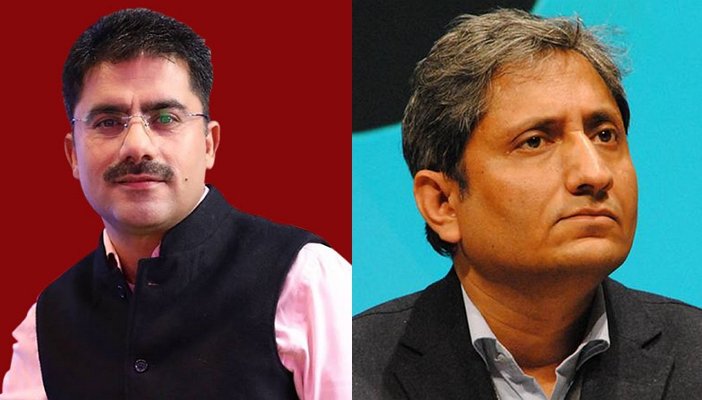
‘Journalist sitting in a political party’s lap is calling others godi media’, Aaj Tak’s Rohit Sardana hits out at NDTV’s Ravish Kumar

After two journalists at Aaj Tak, Anjana Om Kashyap and Shweta Singh, made sly comments rebutting their colleague and India Today anchor Rajdeep Sardesai without naming him, another Aaj Tak journalist has hit out at journalists that bat for opposition parties like Congress and AAP. In a live TV program answering questions asked by viewers, senior journalist and Aaj Tak anchor Rohit Sardana made several scathing remarks on such journalists, mostly on NDTV India’s Ravish Kumar as several people had asked about him.

Replying to a person who said that the ‘kala screen wala patrakar (black screen journalist, referring to Ravish Kumar)’ is very angry over ECI and exit polls, Rohit Sardana said he remains angry all the time. He said, ‘today he says that some media anchors should be made ministers, media owners should be made ministers, why? Didn’t media anchors become ministers when they were deciding the composition of ministry sitting in the news room. They used to tell over phone, make this person minister as someone has asked so, don’t make that person minister.’ Rohit says there are problems with some people, and it is waste of time to comment much on such people.

Another viewer commented that Ravish Kumar’s face was looking gloom after seeing the exit polls, Rohit answered that if any person does the campaigning for a specific party in the name of journalism, this is bound of happen with such people. He also said, ‘I am not alleging, I am saying with full certainty that he is running the agenda of a political party for last several years. And whenever that party losses elections, his face will become gloom’. He also said that if Aam Aadmi Party wins 5-7 seats then he will feel happy also and will smile a bit.

Another viewer asked Rohit to expose the journalist who is calling Aaj Tak as ‘godi media’ (laddog media). Last month the NDTV journalist had said that 99.999% media has become slave, godi media of PM Modi. To this Rohit told him to leave this and not spend time on that journalist. ‘Anyway nobody watches him, and he keeps on and on with his monologue, and says other channels are godi media to satisfy himself’, Rohit said. ‘If you look carefully you will see that he himself sitting in a lap, and he is transferring his own low feeling about himself to others by calling other media godi media’. He also added that Ravish Kumar is doing journalism from the lap of someone else for the last several years, but people didn’t realise it as people didn’t analyse him closely.

One viewer asked about Rajdeep Sardesai calling Anjana Om Kashyap a pliant journalist, to this Rohit said that this is a matter between two journalist and Anjana has already replied to the same in her tweet, so he would not comment on the same. But he added that he disagrees there is any pliant journalist in his team, and if anyone think so, that person is wrong.

In another interesting moment in the program when a viewer named Nagender Kumar said that he will watch the results on NDTV, as it will be fun to see sad faces, anguished Congress leaders, the disappointed eyes, Sardana said that it is called sadistic pleasure.

Spooked by Exit Polls revelations, a certain ‘R Gandhi’ cancels his London trip before the result day: Report

According to Republic TV, a certain ‘Mr R Gandhi’ was supposed to make a quick trip to London on May 20 and return to New Delhi within 3 days on May 23, on the day of the 2019 Lok Sabha Elections results. However, shortly after the Exit Poll numbers took the country by storm on May 19, forecasting a landslide victory for PM Narendra Modi, the ticket was mysteriously cancelled.


‘Mr R Gandhi’ was scheduled to travel from New Delhi to London. The flight was to take-off for London from New Delhi at 1:20 am on May 20, hours after the last phase of the Lok Sabha elections got over and various exit polls suggested PM Modi’s return to power.

The same person was slated to return to the national capital from London on May 22. As per the return ticket, ‘Mr R Gandhi’ was supposed to board a flight at 11:20 PM on May 22 and come back on the result day. The trip nicely dovetailed into the three-day window offered between the conclusion of the last phase of Lok Sabha polls and the result day.

However, the departure was cancelled at the last moment. The reason for the cancellation is unknown. The cancellation of the ticket happened amidst various exit polls projecting thumping majority for the BJP in the recently concluded elections. Though it is not conclusive whether Mr R Gandhi is the Congress president himself, the dates of the ticket and the past record of Rahul Gandhi vanishing after elections do raise suspicions.

Following the exit polls predictions, the opposition, which was upbeat about their performance had to recalibrate their strategy.

Former UPA chairperson Sonia Gandhi had initially invited a long list of Opposition leaders as well as major non-NDA and non-UPA politicians including Telangana CM and TRS chief KCR, BJD chief and Odisha CM Naveen Patnaik and YSRCP supremo Jagan Mohan Reddy to a meeting, allegedly to home in on a coalition Prime Ministerial candidate against Narendra Modi. However, that meeting has been called off indefinitely. Earlier, BSP supremo Mayawati had postponed her meeting with Sonia Gandhi after the unfavourable results from the exit polls dampened Congress’ stake at the centre.

IIT graduate and an IAS officer explains in detail why EVMs can’t be ‘hacked’ or ‘tampered’ with

Numerous political parties and journalists and activists with hidden political agendas have attempted to discredit EVMs after Exit Polls hinted at a clear NDA victory in the 2019 Lok Sabha elections. The Election Commission has issued several clarifications over the entire matter and assured that all protocols and guidelines are being followed. In spite of that, the ‘Compulsive Contrarians’ will choose to rather believe in their own versions of fantasy rather than objective reality.

Bhavesh Mishra, IAS 2015 batch, B.Tech IIT Delhi, on Quora gave a detailed explanation regarding why EVMs cannot be ‘hacked’ or ‘tampered’ with. His detailed explanation has been reproduced in its entirety below:

Elephant Passing Through The Hole Of A Needle.

The relevance of the above line would be clear after going through my answer.

I have recently conducted election in the state of Telangana the results of which were announced yesterday (11.12.2018). I worked as Returning Officer of Bhadrachalam (119) constituency (Returning Officer is overall incharge of conducting election in one constituency).

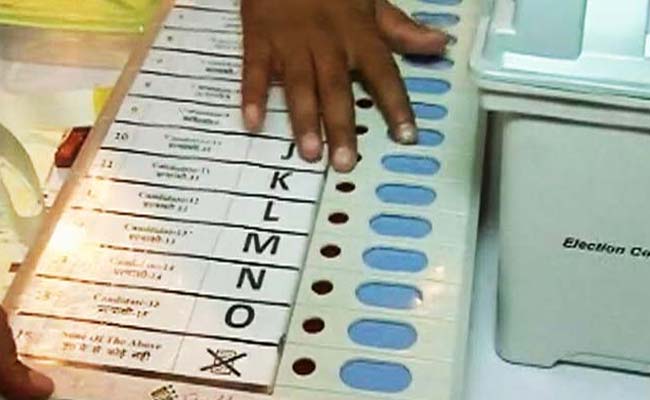
The whole process of voting through EVM has so many checks and balances that the chances of manipulating machine and influencing outcome is ZERO. If a machine is tampered at any stage of the election it would be known at the time of polling or counting very easily.

Before I go into the technicalities, let me first take you through the journey of EVM in my constituency (Bhadrachalam)

Arrival of machines at District Headquarter

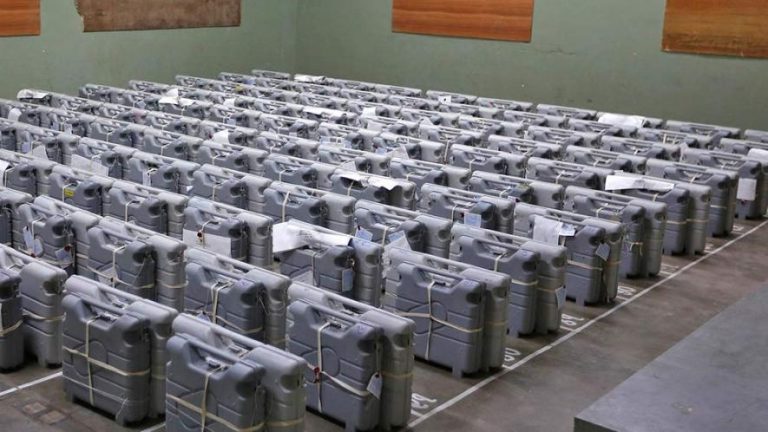
After the announcement of elections, the EVMs were received from BEL (Bharat Electronics Limited) and were kept in the District Headquarter. All EVMs are stored in Strong Rooms. Every time a strong room is opened or closed the political parties have to be informed first. The entire process has to be videographed and there is a 24×7 surveillance through CCTV and deployment of police force.

Arrival of machines in Assembly Constituency

Till 3 weeks before elections, I had no knowledge of which EVMs will come to Bhadrachalam constituency. The process of allotment of EVMs to a constituency is done through randomization in presence of political parties.

After receiving EVMs from the district, the machines were stored in Bhadrachalam EVM Strong Room. Again the entire process of CCTV, informing political party, videography was followed.

Just a week before the election, second randomization is done in presence of General Observer and Political Parties where we came to know which machine goes to which Polling Station. For example machine number BCUEH61401 was allotted PS No: 1-Krishnapuram in Wazedu Mandal of Bhadrachalam AC (Assembly Constituency). This list is shared with all political parties.

So the possibility that a different machine was used at a polling station is negated. On the day of polling or on the day of counting the political party can easily point out if there is any discrepancy in the ID of machines being used.

(The above photo is of the day of randomization where I am explaining the entire process of allotment of machines to the political parties)

Commissioning

Before sending machines to Polling Stations, all the machines are verified by casting one vote per candidate in all machines in presence of Political Parties. This is done to make sure that only one vote goes to one candidate.

Random Selection

On the day of commissioning, the political party can randomly select a machine and cast 1000 votes themselves and count the slips from VVPAT to make sure that all machines are correct.

Putting seal

All the critical sections of machines are sealed in a way that signatures of all political parties are present on every seal. Each seal has a unique number. If somebody breaks open the seal then it would be known immediately.

Day of Polling

Every candidate can appoint 1 Polling Agent Per Polling Station on the day of polling.

Polling Agents are given the updated list of Electoral Roll. If you go to a polling station then you will find at least 4–5 polling agents inside the booth along with election staff.

Every time a voter comes, the identification of voter is done by all polling agent. This makes sure that there is no impersonation or bogus voting.

Mock Poll

This is an important part of entire polling process. Before the start of polling the polling agents should cast minimum 50 votes. The results of the mock poll are shown to all political parties and they can tally the results. This makes sure that nore-wiring or re-connection of the circuit has been done and the machine are working normally.

All Presiding Officers have to give a certificate that the mock poll was done and the result was tallied.

End of Poll

At the end of poll, all machines are sealed in front of Polling Agents and they have to mandatorily put their initials on every seal and compartment.

Polling Agents are given a record of total votes. So, if at the end of poll 974 votes are cast- a statement of this signed by Presiding Officer is given to political party.

Storing Polled EVMs

After the poll, the EVMs are again stored in Godowns with CCTV, Police Protection. This time the political parties are given an option to

Permanently sit in the front of Strong Room 24×7 !

There is separate room arranged where Political Parties can see the live feed of Strong Room on large LED screen.

These arrangements are made to make sure that no one enters (including District Officials, Returning Officer or any other ECI Official).

Once the EVMs are sealed in the strong room, it can only be opened again on the day of counting.

Day of Counting

On the day of counting the strong room is again opened in front of Political Parties. When a machine arrives for counting, the following points are verified:

  • Whether the machine belongs to the same polling station? (Can be verified from the list already given to the candidates one week before polling)
  • Whether all seals and tags are present? (Can be verified by seeing the signs of Presiding Officer and all Polling Agents on the day of counting)
  • Whether the number of votes in EVMs is tallied? (Candidates are already given the number of votes casted at every Polling Station at the end of polling)

When all the above facts are tallied, the RESULT section of EVM is pressed to know the number of votes cast in favour of one candidate.

The result of a machine is not communicated unless the authenticity is certified by all candidates!

The result sheet of every machine has signature of all candidates.

Random Verification

To remove all doubts, the political parties can select One Random Polling Station where we have to count the VVPAT slips and tally it with the result shown in the EVM.

The points mentioned above are just a glimpse of rigorous process that we follow to ensure transparency.

Now I would address the rumours and misconception regarding EVMs.

1.EVMs can be hacked so that no matter which button you press the vote will go to same candidate

The chance of above happening is same as an elephant passing through the hole of a needle.

On the day of commissioning and polling the political party can themselves cast their votes randomly and verify that the vote has actually gone to the candidate for which they have voted.

2.After the polling EVMs can be tampered to cast extra votes.

No. Since the number of votes are already communicated to the political party, therefore, if extra votes are cast then it would reflect on the day of counting.

After the polling, the Presiding Officer presses the CLOSE button. Once this button is pressed you can not cast extra votes unless CLEAR button is pressed. Guess what, this button is surrounded by 2 unique paper seal containing the signature of both PO and political agents. There is no way you can reach this button without breaking the seal.

The machine also records the time of last vote polled. Every Presiding Officer gives a diary (called Presiding Officer Diary) in which the end time of poll is recorded. If someone tries casting extra votes then there would be a mismatch in the time of closing which can be easily identified on the day of counting.

So if you manage to take away polled EVM in your house, it will be of no use!

Moreover, with the introduction of VVPATs there is a 2 level check. Political parties can randomly select a machine and ask us to verify all votes cast by counting slips inside VVPAT.

The beauty of the election process is that:

Every step involves the participation of Political Party. Without their permission and signature no machines can be touched, votes cast or counted.

I would like to conclude with the following:

The only place where you can fiddle with EVMs is in Lab or in your Mind. There exists no chance of manipulating machines during the entire process of election.

Conducting elections is one of the most difficult yet highly gratifying task and I am proud to be a part of this democratic process and working under Election Commission of India.

Have more doubts and queries regarding Election Process? Do drop in a comment.

Wish to become a future bureaucrat. Read here:71 to 51: My new book by Bhavesh Mishra on 71 to 51: My book for complete preparation strategy

EDIT 1:

Many people have pointed out instances where EVM machines have shown more votes than was registered.

Can it take place?

Yes. After doing mock poll (around 50 votes on the day of polling), CLOSE and CLEAR button have to be pressed so that when the actual voting starts the count starts from zero.

In very rare cases if a Presiding Officer forgets doing CLEAR then the count will start not from zero but from the mock poll count (say X).

Is it a big issue?

Not at all. On the day of counting all such EVMs are kept aside and according to the instructions of ECI, the VVPAT slips need to be counted for all such machines. The count of VVPAT slips will definitely tally with the actual number of votes.

That’s it!

ECI issues clarifications after opposition parties and journalists peddle fake news about EVMs

Ever since the Exit Polls for the 2019 Lok Sabha Elections were released, the Opposition parties have initiated a concerted effort to discredit the EVMs used in these elections. The Congress President, the Deputy CM of Delhi from the Aam Aadmi Party, numerous other senior politicians from other Opposition parties and even some journalists have been peddling fake news and bizarre allegations against EVMs.

Under such circumstances, the spokesperson of the Election Commission of India has come forward to put these matters to rest. Certain allegations were levelled about the mishandling of EVMs in Chandauli, Uttar Pradesh. The spokesperson has stated that guidelines and protocols were adequately followed and the matter has been resolved peacefully.


The clarification issued by the Returning Officer mentions that the controversy erupted when unused EVMs and VVPAT machines were being moved to a separate strong room. Samajwadi Party karyakartas expressed concern when they were being moved and protests erupted over the matter. However, all political parties involved were informed prior to moving the unused machines. All protocols and guidelines were followed during the entire process and the District President of the Samajwadi Party expressed his satisfaction and on behalf of the candidate as well after the facts of the matter were duly investigated.

In Ghazipur, allegations have been levelled that candidates were being prevented from keeping a watch on the strongrooms where EVMs were kept in violation of guidelines. However, the Returning Officer in the constituency has claimed it was not so. In reality, some candidates, instead of the allotted one person per party, were demanding that 3 or more be allowed at a single shift. The authorities objected to that specific request and that alone.


In Jhansi, too, where allegations of mishandling of EVMs were made, the Returning Officer has issued a clarification that they are unfounded. The unused EVMs and VVPAT machines were kept separately from the used ones. The entire process was conducted in daylight in the presence of General Observers from all parties concerned.

Some doubts were raised as it took longer than usual to seal the rooms with the unused machines due to their late arrival, however, the due protocol was followed and all stakeholders involved were witness to the entire series of events. Moreover, CCTV camera and security forces are maintaining strict vigilance over the used machines.


In Saran, Bihar too, candidate agents had expressed satisfaction over the transparency and the guidelines being followed by the officials.


Thus, all the allegations being levelled currently at the mishandling of EVMs by senior politicians and journalists appear to be falling flat. Even the Karyakartas of the parties on the ground agree that the ECI officials are following due procedure and the process is being conducted in a free and fair, transparent manner. Thus, it appears the allegations are not based on grounds of truth but are borne of a malicious desire to undermine the legitimacy of the NDA’s looming victory.

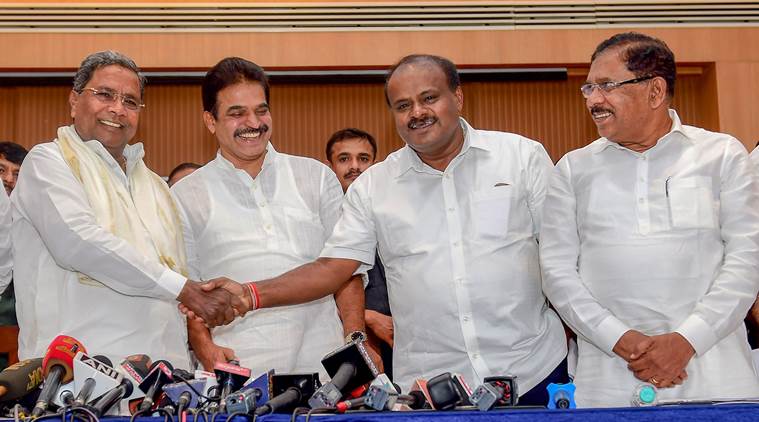
Karnataka meltdown: Congress leader Roshan Baig trains guns at Siddaramaiah, calls KC Venugopal a buffoon

Senior Karnataka Congress leader Roshan Baig has triggered a new controversy after he hit out on the party in-charge KC Venugopal and called him a buffoon. Baig even levelled allegations that the portfolios in the Karnataka state assembly were ‘sold’. Training his guns on former Karnataka Chief Minister Siddaramaiah, he said, “From day 1 Siddaramaiah said ‘I’m going to be CM’. You’ve gone to their doorstep to form govt!”


The Exit Polls on Sunday, that painted a grim picture for the fortunes of the coalition government of JDS and Congress in the state of Karnataka, has finally brought the simmering discontent within the Congress party out in the open.

Calling the in-charge of Congress Karnataka, KC Venugopal a buffoon, Baig asserted that the arrogance of Siddaramiah and the “flop show” of the party president Gundu Rao is why people have been disenchanted with the coalition government in the state. Baig made the remarks in the reference to the exit poll results that forecasted BJP sweep in the state.

Baig also alleged that the portfolios in the Karnataka coalition government were sold. He further added that Kumaraswamy cannot be held responsible for the failure of the coalition government because he was not allowed to function. According to Baig Siddaramiah asserted to be the CM of the state since day 1 of the formation of the government.


Baig has been relentless in attacking the Congress leadership in Karnataka. He also said that he has been unhappy with the party as no seats were given to the Christians and only 1 seat was given to Muslims. Baig alleged that the interests of the minorities, in contrast to the promises made, were ignored and they were used only to garner votes.

The rift between the Congress and the JDS was widening as both parties tried to outdo the other for the struggle to grab power in the coalition government. The coalition was formed against the wishes of the grass-roots cadres of both the parties who had fought bitterly during the state elections. Karnataka chief minister HD Kumaraswamy has expressed his laments many times over how he has been reduced to a clerk due to Congress interference in the governance.

Amidst the widening rift between the two parties, the forecast from the exit polls has delivered a body blow to the fate of the coalition government in the state. It is now widely speculated that if the exit polls turn out true, the coalition government in the state will collapse and many other disgruntled Congress leaders might come out to openly attack their state party leadership and switch over to the opposition.

Here is why Odisha CM Naveen Patnaik might be ditching his decade old ‘no political alignment’ policy

“Our policy is consistently to remain equidistant from BJP and Congress”, on 10th January 2019, BJP party supremo and CM Naveen Patnaik had said this while speaking on India Today Mindrocks conclave at Bhubaneswar. Fast forward to the election campaign of 2019, Naveen ditching his decade long policy of nonalignment announced that BJD is open to support any government at the centre that fulfils just demands of Odisha. A couple of weeks later, the official confirmation came from party spokesperson Surjyo Narayan Patro making it clear in no unambiguous term that the party will not adopt the equal distance policy anymore.

Naveen has maintained his equidistance policy since 2009 after breaking alliance with BJP and getting separated from NDA. He never has had any national ambition unlike most of his regional contemporaries. Even while being part of NDA, BJD never bargained for any plum post. So, what changed in 3 months. Why is BJD singing a new tune? There can be 2 explanations for this.

Naveen senses NDA to fall short of majority mark where he can play the kingmaker. By virtue of this, he can coerce the government of the day to meet the long-standing just demands of Odisha vis-a-vis special category status, getting the infrastructure and industrial projects for the state and so on. However, this theory of ditching equidistance policy for Odisha’s interest doesn’t hold water. Odisha has been at the bottom of the growth table for a long time despite Naveen’s government is at the helm for 19 years. It isn’t that, all of a sudden, in 2019, Odisha has demands and aspiration. To get the government at the centre to listen to Odisha’s demand, there were ample opportunities when UPA 1&2 worked under “Coalition compulsion”. Even with a  full majority, NDA government gave plum ministries to its allies. Naveen could have tried these avenues for getting Odisha’s due in return. But he didn’t.

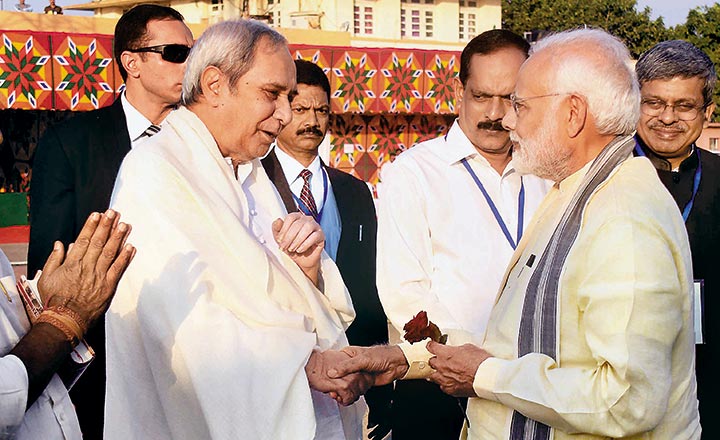
Another theory is, Naveen is wary of assembly results. His focus is clear. He needs to rule the state. There is no national ambition, no desire of any ministry, no ambiguity whatsoever. By ditching nonalignment, he has sent a signal to BJP that, if you fall short of a majority, I am your friend. But, you have to reciprocate, if the situation demands. Feelers have been sent from both sides. Naveen, whose primary line of attack during the campaign was centre’s neglect towards Odisha in times of natural calamity has thanked Modi government during relief and restoration of Fani, the cyclone that recently ravaged Odisha coast. The praise has been reciprocated from the other side as well. Naveen’s bête noire in this election season, Dharmendra Pradhan has gone beyond usual courtesy when he came to see off Naveen at IGI airport on the latter’s recent visit to Delhi. Even, party president Amit Shah has praised Naveen for conducting elections peacefully while speaking at a rally in Kolkata.

So what are we looking at post-23rd May? In the event, that both BJP gets a majority at centre and BJD gets a majority in the state, the talk of extending support won’t even arise. Ditching equidistance will meet a silent death. If BJP falls short of a majority, Naveen, as promised, will extend support on the condition of meeting long-standing demands of Odisha. If the case happens to be, Modi government getting majority while Naveen falls short of the magic number in the state, BJP will play the junior partner in Odisha, as it did from 2000-2009 while trying to cement its base further at cadre level.

In the 3rd case where BJD doesn’t get a majority and seeks support, BJP should play it to its advantage. Playing a junior partner in an alliance has never helped the party. UP with Mayawati, Maharashtra, J&K and Odisha where it was in government for 9 years along with BJD are ample examples. It should bite the bullet and go for the kill. And there is no way BJD is going to yield to this. Hence, there are 2 other options that remain. Re-election, which favours BJP. The second option is BJD forming government with Congress which will make sure the party dies a natural death as the party came to power on an anti-Congress plank.

All of these still remain grapevine. However, the pre-emptive declaration by BJD to ditch equidistance has set the rumour mills in motion. It’s not for no reason that a seasoned politician like Naveen will ditch his political stance of nonalignment for a decade. How all of this is going play out will depend on the numbers on 23rd. Till then, let’s enjoy the bonhomie between BJP and BJD netas till it lasts.

After Exit Polls indicate NDA victory, AAP leaders and journalist spread fake news to discredit EVMs

The opposition parties, in recent times, have made it a habit of trying to undermining the legitimacy of BJP’s electoral victories by claiming that EVMs have been tampered with to unfairly benefit the saffron party.

Soon after the Exit Polls for the 2019 Lok Sabha Elections were released, which hinted at NDA’s return to power, numerous politicians alleged that EVMs were tampered with. Congress President Rahul Gandhi himself voiced those allegations.

The Aam Aadmi Party, too, hasn’t been far behind with these wild allegations. In fact, Arvind Kejriwal cited EVMs as one of the reasons his party may not do to well in these elections.

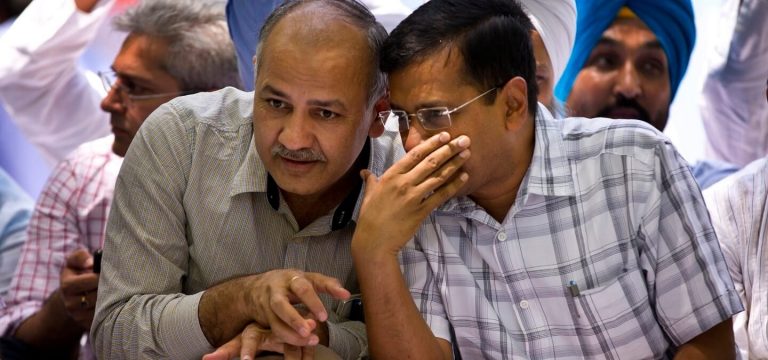
And on Tuesday, Deputy CM of Delhi, Manish Sisodia claimed that EVMs were being caught nationwide in open vehicles by the public. He further alleged that journalists were deliberately maintaining a stoic silence on the matter so that they could attack the Opposition parties instead after the results were declared.


Sisodia’s allegation appears to have been motivated by a tweet by one Vikas Yogi, National Media Coordinator of AAP. In his tweet, Vikas had alleged EVMs were caught in vehicles in Jhaansi and the people in the vehicles had made a run for it.


Brajesh Kumar Singh, Group Consulting Editor at Network18, whose news report was cited by Vikas Yogi to make his claims, responded to Sisodia’s allegations slamming him for his tweet and asserted that the media had been tracking this news aptly. He further asserted that the AAP media coordinator’s version of events was greatly at odds with actual facts.


Singh, in his tweet, had shared the screenshot of a Bhaskar report from the 30th of April, after the 4th phase of elections. The report speaks of EVM and VVPAT machines being caught in a private vehicle along with the city magistrate in Jhansi which created a ruckus. Upon receiving news of the matter, the District Magistrate reached the spot. In the presence of representatives from all political parties, the machines were checked and it was found that they were actually unused. Soon after, the ruckus dispersed by itself and things returned to normalcy.

Not just politicians, even certain journalists have resorted to peddling Fake News to further their political agenda. Faye DSouza of Mirror Now stated that the Election Commission ought to confirm that it is going to investigate the allegations that are being made against EVMs.


As it turns out, the Election Commission has already responded to these allegations. It has labelled them ‘baseless’ and ‘frivolous’. The EC has further stated that wherever any issue was raised, it was resolved amicably after discussions with all the stakeholders involved.


It appears there is a concerted attempt underway to discredit the EVMs used in the Lok Sabha Elections. It could have devastating consequences for our democratic institutions as the faith of the citizenry on these institutions is being undermined for petty politics.

‘Don’t let exit polls discourage you’, Priyanka Gandhi Vadra to party workers in audio message

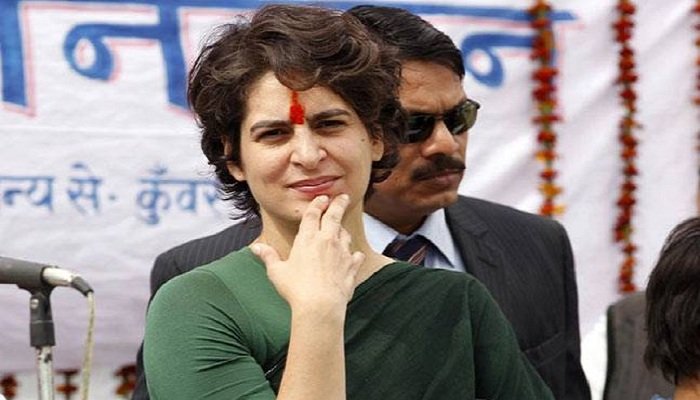
Rattled by the exit poll results which forecasted another term for PM Modi with an absolute majority to the NDA coalition, Congress General Secretary in charge of UP East, Priyanka Gandhi Vadra has urged her party workers to not to believe in the surveys.

On Monday the Congress leader released an audio message, advising her party workers to not fall for “rumours” intended to make them drop their guard ahead of the counting of votes on May 23.

“My dear Congress workers, sisters and brothers… Don’t let rumours and exit polls discourage you. This is being done just to break your determination. It is very important that you remain alert amid all this. Please continue to keep vigil outside strongrooms and counting centres. We are confident that our combined efforts will bear fruit,” she was heard saying in the audio clip.

The aggregate of exit polls released just after voting concluded on May 19 painted a dim picture of Congress rout in the 2019 Lok Sabha elections. Most exit polls forecasted that the NDA would sweep over 300 of the country’s 543 parliamentary seats while the Congress and its allies would manage around 120.

This was not well received by many liberals and journalists sympathetic of the Congress party, who jumped into the fray underplaying the predictions made by the Exit Polls and trying to rescue their preferred political party by the dint of obfuscation and deflection.

However, deep down, surrendering to these striking numbers falling in favour of the BJP, the Congress’ mouthpiece National Herald made a striking revelation claiming ‘moral victory’. It said that even if Modi wins the elections, he will emerge ‘weaker’ and ‘diminished’.

Amusingly, the Congress President Rahul Gandhi himself, almost conceding defeat, had already started whining about the EVMs even before the exit poll results were out. The Congress President posted a tweet blaming the Election Commission for the impending defeat of the Congress party.

Moreover, after EVM manipulation and ECI collusion theories, Congress has now come up with another excuse. It is trying to make believe that the people of North India are ‘pliable’ to manipulation because they are uneducated, and hence they have voted for the BJP.

Though Congress has been outwardly disregarding the exit polls and placing their faith in the dubious internal surveys according to which they are winning 160 seats, secretly they have resigned to the fact that Narendra Modi is coming back for another 5 years as the Prime Minister of the country.