Home Blog Page 700

Telangana: Extremists vandalise Hindu temple, desecrate idol of the deity, one detained

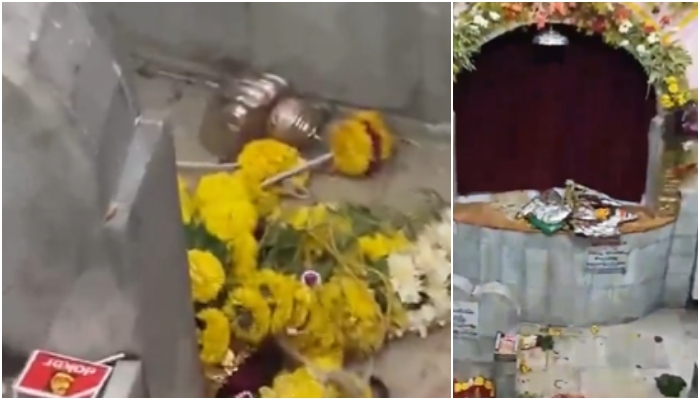
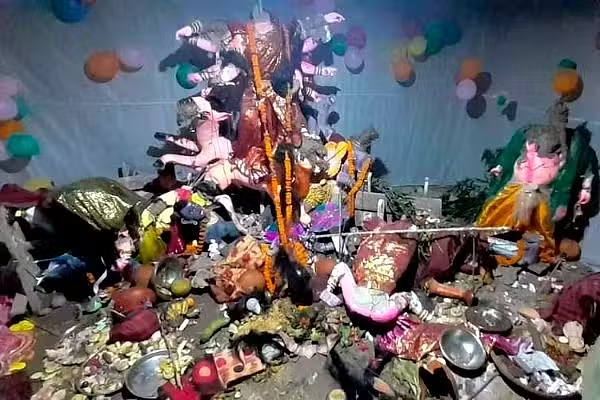
On Monday(14th October), an idol of Muthyalamma temple in Telangana’s Kurmaguda region in Hyderabad was vandalised by unidentified extremists. The incident stirred unrest among the Hindu community who launched a protest to demand strict action against the accused.

The incident is believed to have occurred near a passport office, and one of the extremists was immediately captured by locals. He was later turned over to the police within the Market police station limits. The video of the said incident is making rounds on social media.

“The Muthyalamma temple idol has been vandalized in Secunderabad’s Monda Market Division. Hindus and their temples are not safe under Congress rule. This is yet another attack on Hindu temples in Telangana in recent times. The State Govt should act quickly and arrest the culprits,” BJP’s Telangana official spokesperson said sharing the videos.

In the videos, the idol of the Goddess could be seen vandalized, causing insult to the sentiments of the Hindu community. Also, the outer area of the temple could be seen destroyed and vandalized.

Assistant Commissioner of Police Mahankali division took cognizance of the event and commented on the issue. “A Muthyalamma temple idol in Kurmaguda near a passport office in Hyderabad was allegedly vandalized and locals caught one individual and handed them over to police under Market police station limits. Police are currently at the spot,” he confirmed.

Further investigations into the case are underway.

Uttarakhand: Shoaib Khan becomes ‘Shubham’ to entrap Hindu woman in ‘love affair’, sexually abuses her before forcing her to convert to Islam

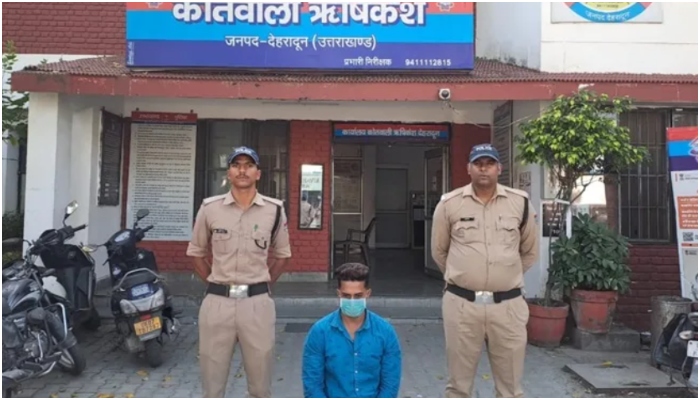
On Sunday(13th October), Uttarakhand Police arrested one individual identified as Shoaib Khan, 24 for entrapping a Hindu woman using the identity of Shubham. The accused also sexually abused the Hindu woman and threatened to kill her.

He also forced her to convert to Islam. The Uttarakhand police arrested Shoaib Khan in connection to the case. According to a report by Panchjanya, Shoaib and the Hindu woman, the wife of businessman Vishal Agarwal, met at the gym.

The accused then created a fake social media profile in the name of Shubham and began talking to the woman. He then initiated moves to get closer to her. However, the woman refused.

She asked ‘Shubham’ to stop keeping any association with her. She also warned him not to call or message anymore. Later, the accused threatened her and sexually molested her.

As per a local news report by JJN News, Shoaib Khan also forced the woman to convert her religion to Islam. The incident came to the fore only after the woman informed about the incident at her home.

She recounted being abused, assaulted and threatened with dire consequences if she failed to convert to Islam. The husband of the woman then filed a police complaint leading to his arrest.

Shoaib Khan arrested following police complaint

In the complaint, husband Vishal Agarwal said that the accused introduced himself as Shubham to his wife and began getting closer to her. He said that he got her phone number from somewhere and began calling and messaging her.

“When my wife refused to talk to him, he molested her, assaulted and also threatened her. After this on 11th October, I confronted him but he again assaulted and threatened me too,” he said.

Based on the complaint the police took immediate action to arrest the accused under the relevant sections of the law and arrested Khan. Further investigations into the case are underway.

Rise in love jihad cases in Uttarakhand

The state of Uttarakhand in the recent past has seen an increase in cases of Love Jihad at the hands of Islamists. In September 2024, Shahzad lured a 30-year-old divorced Hindu woman with two children by posing as Monu Choudhary in Dehradun. In July 2024, a Muslim young man named Azam in the capital city befriended a minor Hindu girl from Sahaspur by posing as Ajju and then raped her. He was arrested and the police also recovered obscene videos and photos of the girl from his phone.

In April 2024, one Atharuddin was accused of harassing a Hindu minor by introducing himself as a Sikh. He got the girl’s phone number when she visited his shop to buy a phone recharge. He lured her and forced her to be friends with him. Later it was also found that he used to follow the girl to college, had molested her several times, and had threatened to abduct her. Detailed reports in this case can be read here.

Notably, the state has seen massive demographic changes in the recent past. Amid such reports, Chief Minister Pushkar Singh Dhami’s government has started taking action. The police last month launched a ‘verification campaign’ to verify the people living in the state. They also stated that the CM had ordered them to take strict action against demographic change, conversion, and love jihad in the state.

According to the reports, the DGP said on 8th September that a month-long verification campaign had been started in some areas to check the anti-social elements settled in the state. After its completion, a conclusion could be reached about the demographic change. If there was any such case, then this campaign would provide information about it.

In fact, during the last census in 2011, the total population of Uttarakhand was about 1.10 crores. Out of this, about 84 lakh population was Hindu, which was 83% of the total population. At the same time, the population of Muslims was 14.06 lakh i.e. 13.9% and Sikhs were 2.34%. Notably, in the 2001 census, the Muslim population in the state was 10.12 lakh.

Regarding love jihad cases, the DGP then said that two adults are free to choose their life partners. However, if someone forms a relationship with the intention of converting the another’s religion, then the police will take action under the existing laws. If there is no such intention, then the police will not harass anyone. He said that both issues are a priority for the state police.

How Navratri, once targeted by jihadis has become the safest in Gujarat: Read the role of Bajrang Dal, Hindu unity, and the BJP govt

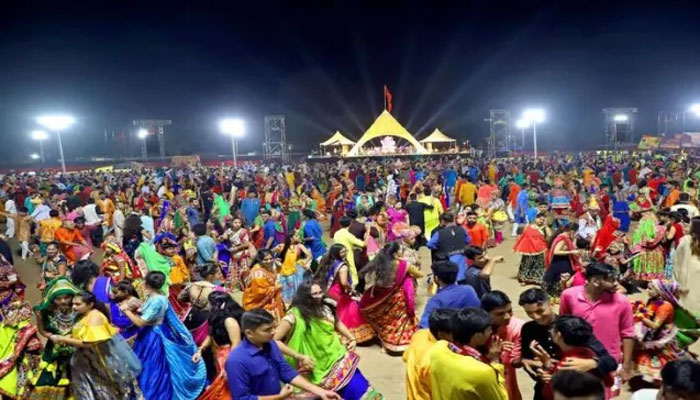
There are countless Hindu festivals that are being celebrated in India since ancient times. Among those celebrated in Gujarat, Navratri holds special significance. Navratri and the Garba dance performed during the festival are symbols of Gujarat and Gujaratis on the global stage.

Because of its importance to Hindus, Navratri, like other festivals, became a target for religious fanaticism and violence. In the past, several incidents have been reported where the sacred Navratri festival was targeted in different ways with the aim of deeply hurting Hindu sentiments.

However, in the last 2-3 years, the vigilance and awareness of Hindu organisations, the Hindu community, and the state government have simultaneously worked to control such incidents. The most recent example is Navratri 2024, where the celebrations took place peacefully without any disruptions or violent incidents.

Before we discuss the current changes in the situation, let’s take a look at the past to understand how the Hindu religion, culture, and beliefs were often attacked. Festivals like Ram Navami, Hanuman Jayanti, Ganesh Mahotsav, Shravan festivals, and Kanwar Yatra, all of which have a deep connection to the Hindu faith, became regular targets of jihadis. Year after year, several violent incidents were reported during these festivals across the country.

Sometimes, jihadis pelted stones at Ram Navami processions, and sometimes processions of Bhagwan Shiv were attacked. There have been incidents where Kanwar Yatris were targeted, temples were attacked, deities’ idols were vandalised, and temple premises were desecrated by urinating or committing other atrocities to hurt the sentiments of the Hindu community.

Liberal gangs protect Islamists attacking Hindu festivals

There have been hundreds of such incidents where jihadis did not miss an opportunity to hurt the religious sentiments of tolerant Hindus and put them in a pitiable mental state. The ironic part is that there is an entire gang actively protecting these Islamists for such acts. Members of this gang are present everywhere, including the media, politics, administration, and the education sector. These are the people who consider heinous crimes committed by jihadis against Hindus as “non-serious”. On the other hand, they take pleasure in labelling Hindu beliefs and religious practices as orthodox and ignorant. Above all, if Hindus retaliate, even by mistake, the left-liberal gang immediately begins to beat their chests in favour of the jihadis.

Navratri is one of the Hindu festivals that often come under attack from jihadis. Navratri and Garba are the identity of Gujaratis. However, the festival has faced the aforementioned issues for years. If we look into Gujarat’s past, there have been several incidents where religious fanatics caused terror among the Hindu community. Although the Gujarat government has always been intolerant of such incidents, and all efforts were made by the administration to curb them, the Islamists were not afraid of the law or the consequences of their actions, thanks to the liberal system backing them.

One prime example was when Islamists indulged in stone-pelting during Garba festivities in Udhhera village in Kheda during Navratri in 2022. The incident instilled fear among the Hindu community. The administration and police were quick to respond, arresting the rioters and publicly punishing them.

Do you know what happened as a result of the police’s swift action? The police officers who took action against the Islamists were later prosecuted, and the Gujarat High Court even sentenced them. Though the sentence was stayed by the Supreme Court, the police officials still had to go through the legal process. Several such incidents occurred before and after the Udhhera incident. In 2023, a similar case occurred in Bharuch, where some Muslim youths threatened Hindus not to play Garba. In 2022, Hindu organisations caught Muslim youths who entered Garba venues in Surat posing as Hindus.

During these incidents, the media did not question the real culprits but instead blamed the police for taking action against these fanatics. Not only have incidents of stone-pelting during Garba been reported, but incidents of desecration have also caused distress among the Hindu community during the Navratri festival.

Anti-Hindu desecrations during Navratri

When we speak of desecration, love jihad deserves a special mention. Interestingly, incidents of love jihad are often denied by liberal and leftist groups, who claim it is an imaginary phenomenon created by Hindutva groups. However, it is a significant problem during the Navratri festival. There have been incidents where non-Hindu youths posed as Hindus to enter Garba events, deceived Hindu girls with false identities, exploited them, and ultimately destroyed their lives.

Even without delving deep into the recent rape cases in Surat and Vadodara, it is easy to understand the implications. Not only Garba grounds, but also Garba classes run by non-Hindus have contributed to this menace. In the past, incidents have occurred where Garba classes were misused to exploit Hindu girls. From selling Chaniya Choli to setting up stalls at Garba grounds and non-Hindus entering these grounds posing as Hindus, these desecrations have corroded the festival like termites.

Why has the situation changed now?

If we compare the past with this year’s Navratri celebrations, we will notice a significant difference. There were no incidents of stone-pelting at Garba, and no reports of love jihad. The Garba programmes, which were held under strict laws every year, ran all night this time. According to an announcement made by Gujarat’s Home Minister Harsh Sanghvi, not only Garba but also shops and hotels remained open all night. People roamed the streets all night, and everything ended peacefully.

Reason for this dramatic change

The reason is simple: Hindu organisations became more active than before, and society itself became more aware. This does not mean that Hindu organisations were not vigilant earlier; they were. However, as the situation worsened and incidents continued to happen, the common Hindu awakened this year.

There was a time when some “progressive” Hindus considered Hindu organisations “anti-social thug elements”. However, when they realised that these organisations were working tirelessly for their protection, their attitudes changed. The incidents of the past few years have made Hindus realise the true value of Hindu organisations. As the intensity of these incidents grew, the organisations became more vigilant.

Over the past two years, Hindu organisations started receiving support from common Hindus across both big cities and small towns. These organisations remained vigilant during the Navratri festival. Despite sometimes facing opposition from their own people, Hindu organisations did not resent the Hindu community and never distanced themselves from ensuring their safety. It has been like the relationship between a mother and her children. Even if the children squabble, the mother never distances herself from them.

Their efforts over the past 2-3 years have shown significant results, especially this year. For instance, special arrangements were made to identify non-Hindus at Garba venues, ensuring that only Hindus were allowed to enter. Furthermore, only Hindu vendors were allowed to set up stalls or shops at Garba grounds. Garba classes operated by non-Hindus were also stopped. The dedication of volunteers and workers towards the religion and society paid off.

Possibility of peaceful celebrations of Hindu festivals

The Hindu community has realised the value of Hindu organisations. They have realised the importance of their timely advice and have supported their efforts. Simple changes, such as wearing a Tilak or standing in line to show their identity, have worked wonders. Hindus cooperated with the organisations, and it paid off. It was not just about the Garba-goers. The festival organisers also deserve credit for fully supporting the organisations in everything that benefited Hindus. In short, the peaceful celebration of Navratri this year can be attributed to the hard work of Hindu organisations, the understanding of the Hindu community, and the cooperation of the organisers.

Hence, it can be said with certainty that if the Hindu community learns from this Navratri in Gujarat, they will remain vigilant during every festival and work shoulder to shoulder with the Hindu organisations working for their protection. Those who criticise Hindu organisations as fanatics need to be made aware of the real situation. If this happens, then not only Navratri but all Hindu festivals will be celebrated in peace.

The state government and active administration and police played a vital role

While Hindu organisations played a crucial role in managing the situation during Navratri in Gujarat, the role of the state government, administration, and police cannot be ignored. The success of Navratri 2024 owes just as much to the efforts of the Gujarat government and police as it does to the Hindu community and organisations. The arrangements made by the government, the precautions taken, and the commendable work done by the police added notable layers of security, leading to the success of this year’s Navratri festival.

HM Sanghvi announced on the very first day of the festival that Garba would continue all night, and shops and hotels would remain open, which ensured the festival’s success. Simultaneously, Gujarat police remained vigilant throughout the festival to ensure the safety of Garba-goers, especially women. From day one, the police ensured that no incidents of stone-pelting or other disturbances occurred.

Above all, the women’s wing of the Gujarat police itself stepped onto the Garba grounds. These personnel, part of Gujarat police’s She Team, dressed in traditional attire, did commendable work. The Abhayam 181 helpline remained vigilant throughout. The police took even the smallest matters seriously, ensuring spotless festivities. With constant night patrols, checks, and tight security, the police played a vital role in the success of Navratri. Hence, the Gujarat government and Gujarat police also deserve credit for this year’s successful Navratri.

This report was first published in OpIndia Gujarati which can be checked here.

Uttar Pradesh: One Hindu devotee shot dead and several injured during attack on Maa Durga idol immersion procession in front of mosque in Bahraich

0

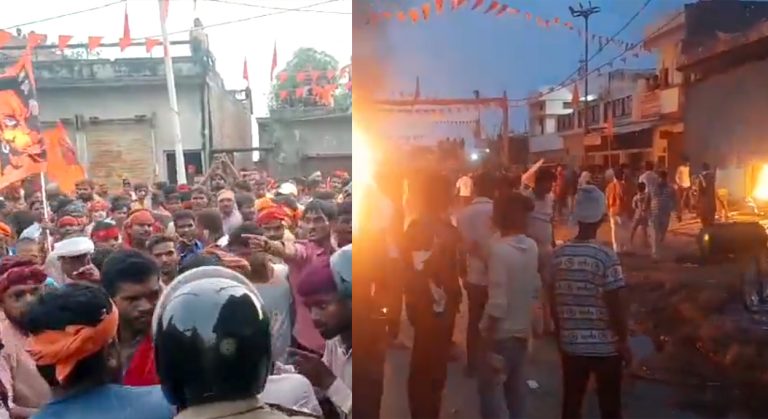
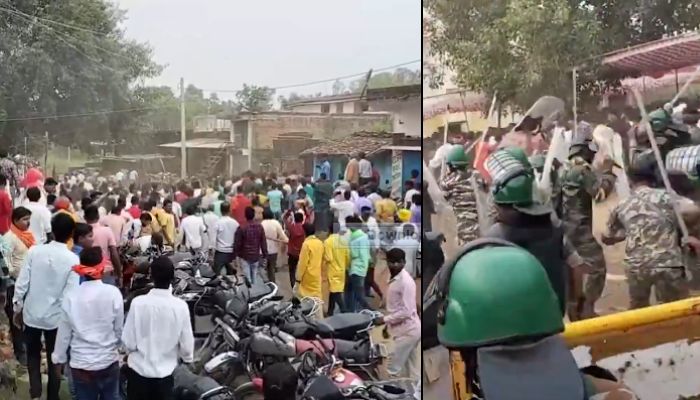
A clash broke out between two communities during the immersion of the Devi Durga idol in Rehua Mansoor village in the Hardi police station area of Bahraich in Uttar Pradesh on Sunday, after Muslims objected to DJ music played in the procession. One person was shot dead during the violence while several others were injured from stone pelting. The deceased has been identified as 22-year-old Ram Gopal Mishra, who was part of the idol immersion group.

Mishra was rushed to the medical college hospital after the firing, but he died there during treatment.

As per reports, the incident took place at Rehua Mansoor village on Sunday evening, when the idol of Maa Durga was taken out for immersion. When the procession heading towards Gauriya Ghat was passing in front of a mosque in the Maharajganj area chanting religious slogans, Muslims gathered near the mosque asked the procession to stop the DJ music.

This led to an argument between two sides, and amid the chaos, some people started pelting stones on the procession and the idols.

The Hindus asked the police present their to arrest the culprits, but in the meantime more people from Muslim community arrived there.

Amid the mayhem caused by the stone pelting, some miscreant opened fire. As per reporters, someone from the residence of Abdul Hamid in the area fired shots. Ram Gopal Mishra, son of Kailash Nath of Rehua Mansoor village was shot from a close range. He was shifted to the Medical College in Bahraich, but he succumbed to injuries during treatment.

Another person named Saroj Tiwari also have been hospitalised after he was injured from stone pelting.

Angry with the death of the youth, his family members and others part of the immersion blocked the road by placing the body outside the medical college. Immersions were stopped in the city after the incident, and the idols were placed on the road junction there. The idols have been damaged from stone pelting.

People involved in the immersion procession vandalised houses and vehicles in the Maharaj Gaj Bazaar area, and set them on fire. Reportedly four houses and several two wheelers were burnt by angry protestors.

The Hindu protestors allege that Hardi police personnel are responsible for the incident, claiming that the police could have pacify the situation at the beginning but they didn’t. They alleged that instead of taking action on Muslims, the police lathicharged the Hindus for protesting against the attack instead.

After around 2 hours, senior police officials reached the scene and brought the situation under control. Police forces have been deployed at the area to prevent escalation of the situation. However, police officers refused to talk to the media about the incident.

The police have asked the devotees to continue the immersion of idols, but the Hindus have refused to do so, demanding justice. A large number of devotees who were part of the procession had already fled due to the attack and the chaos.

Jharkhand: Violence erupts after police didn’t allow Devi Durga immersion procession through Muslim area, second such incident in Garhwa district

0

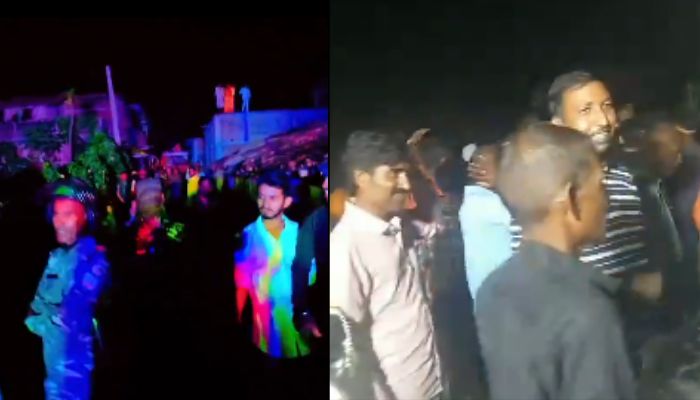
After Muslims stopped immersion of the idol of Goddess Durga at Lakheya village in the Garhwa district of Jharkhand on Saturday, another similar incident took place in a different village in the same district. The second incident took place at Madgadi village in Garhwa district, where violence erupted after the Hindus refused to change the route of idol immersion that goes through a Myslim area.

As per reports, ahead of the scheduled immersion of Devi Durga idol on Sunday, a dispute was going over the route of the procession in the last 3-4 days. The traditional route taken by the immersion procession goes through a Muslim dominated area, and the locals in that place had lodged a complaint against the procession going through that area.

Accordingly, the administration had changed the route of the procession carrying the idols for immersion to bypass that area as per the demands of the Muslims. However the Hindus in the area didn’t agree to, and they were adamant on using the old route. They argued that they have the permission to use the existing route.

On Sunday, despite police order, the Hindu devotees declared that they will take the old route, and this created a dispute with the police. A large number of police forces were deployed to force the devotees to carry the idols through the new route. The Hindus protested against this, and started sloganeering, refusing to comply with the dictate.

Police resorted to lathicharge on the protestors to disperse them, but the action increased tension instead. The villagers counter-attacked the police, and pelted stones on them. They chased away the cops for around a kilometre, and also vandalised police vehicles. The villagers also gathered anti-riot kits carried by the police and burnt them.

Several cops were injured in the attack, including SP Rahul Dev Baraik who was seriously injured.

After getting information about the incident, additional police force arrived and the situation was controlled. Top police and administration officials have arrived at the village and camping there. Garhwa SP Deepak Kumar Pandey said that the situation is under control at the moment and peace has been restored. Police personnel have been deployed in large numbers in the village.

The SP said that members of the Puja committee have been called for talks.

‘Non-believers will burn in hell,’ say illegal Rohingya Muslims living in Haryana’s Nuh who run their own madarsas

0

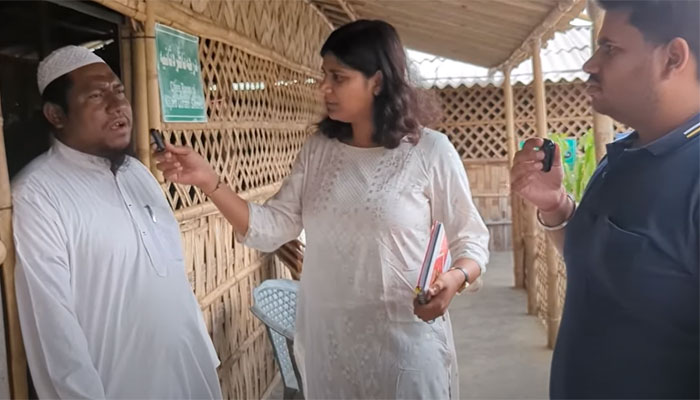
On 7th October, Organiser Weekly shared a disturbing video of a madarsa catering illegal Rohingya immigrants living in Nuh, Haryana. In the video, children studying in a makeshift madarsa claimed, “non-believers will burn in hell.” As reported by Subhi Vishwakarma, around 400 illegal immigrants live in the area. The children study Urdu, Pashto, Farsi, English, and Hindi in the madarsa. The children have no intention of becoming doctors or engineers and want to become “Hafiz” when they grow up.

Though the Muslim teacher, also a Rohingya, was cautious enough not to make any controversial statements, the children did not hold back and professed extreme beliefs. Not to forget, Nuh witnessed violence against Hindus in July 2023 when Islamists attacked Shobhayatra and killed innocent Hindus and security personnel. In the same Nuh, Mewat area, Mamman Khan, Congress candidate and one of the accused in Nuh Violence has won the Haryana Assembly Elections with the highest margin.

Rohingyas came to India illegally without visas or passports

In the video, the illegal immigrants from Myanmar informed the Organiser team that they reside in Nangal village near Nuh, Haryana. Speaking to the team, one of the teachers, Muhammad Yunus, said that there are around 400 refugees living in the area. He stated that all the children of the refugees living in Mewat and Nuh attend this particular madarsa.

Another teacher, Ziaur Rahman, who also teaches at the madarsa, said he crossed into India illegally via Bangladesh in 2016, escaping the violence in Myanmar. He openly admitted that he entered India illegally with the help of people at the border. He said that he did not have a passport or visa to enter India. Furthermore, when asked if they had any local identity cards, he claimed that they only had UNHCR refugee cards.

Though Yunus claimed that they teach Hindi and English at the madarsa, when Subhi and her team checked, the available books were all in Urdu and Farsi. When asked about the other books, Yunus claimed they were kept in another classroom, which was conveniently locked at the time.

Illegal immigrants’ journey from Myanmar and life in India

In the video, they discussed their harrowing journey from Myanmar to India. They explained that they fled to preserve their faith in the face of severe persecution. Rahman, who came to India in 2016, has been living without any identification documents other than the refugee card.

When asked if they received any government support to establish the “refugee camp,” Yunus said that the government did not provide any support, but no one stopped them either. The illegal immigrants have essentially been living on encroached land for around a decade without interference from the authorities.

Yunus also claimed that they keep away from illegal activities and that officials from CID often visit them, warning them not to come out if there is any potential for violence in the area. He said, “They [CID] come and tell us not to go out, and we oblige.” Despite the madarsa being an illegal structure on encroached land, it has become the primary educational institution for the Rohingya children in the area, where they receive religious education.

‘No doctors, no engineers, only Hafiz’

As the so-called Hindi and English books were unavailable for the Organiser team to check, it is safe to conclude that the madarsa’s educational curriculum is strictly religious. Children are taught Arabic, Urdu, Quran recitations, and the fundamentals of Islam. When the team spoke to a few children at the madarsa, they made it clear that their ambition is to become Hafiz and dedicate their lives to serving Allah. When questioned about choosing alternative careers such as becoming a doctor or engineer, one child refused and said, “I want to become Hafiz.”

Strong sentiments against non-believers

One of the most alarming aspects of the video was the views they hold about non-Muslims. When the reporter asked what the definition of the best Muslim was, one of the students said, “The best Muslim is the one who remains connected with Allah at all times, for whom religion always comes first. Those who do not believe in Allah will know when the Dajjal (Antichrist) comes, and he will take them to the fire of hell. The Dajjal will make false claims, but we will not believe in him; we will only have faith in Allah. Those who do not believe in Allah will definitely burn in hell.”

To which the reporter sarcastically replied, “Oh, we too will burn? We don’t believe in Allah, so are we going to burn? Well, yes, we are infidels, we are Hindus. But we don’t know much about this.”

The reporter then asked, “What are we to you, as Hindus?” The reply was, “Just brothers and sisters.” The reporter responded with humour, “Wow! Please don’t call us infidels (kafir), at least let us live in peace!”

From the conversation, it was evident that the students believe non-believers will burn in hell, but they had been taught not to say anything about Hindus or call them “Kafirs.”

Exposure to Zakir Naik’s controversial teachings

Another problematic aspect of the video was the confirmation that reporters received about the children being exposed to the videos of controversial Islamic preacher Zakir Naik, who is known for his anti-Hindu views. When asked if the children watched his videos, they praised him and said, “We like how he brings people to the path of faith with full force and conviction. That’s what we appreciate about him.”

Conclusion

The video has raised several questions about the situation in Nuh. There are multiple camps of Rohingyas in the region. One of the madarsa teachers confirmed that several of the illegal immigrants are living in Jammu and Kashmir, Hyderabad, Rajasthan, Delhi, and West Bengal. Apart from what he admitted, there have been reports of illegal Rohingyas being caught in Assam, Mumbai, and other places. Their presence in India and their children receiving religious education may have serious implications for the country’s social fabric.

While they express gratitude for the safety and security they enjoy in India on camera, their commitment to radical beliefs about non-believers points to a deep-seated ideology that could have far-reaching consequences.

Nuh Shobhayatra attack of July 2023

On 31st July, a mob of hundreds of Islmist rioters attacked Hindu devotees participating in the Brijmandal Jalabhishek Yatra in Nuh, Mewat of Haryana. At least six people were killed as a result of the riots.

During the investigation into the riots, OPIndia accessed over 25 FIRs and complaints that provided a clearer picture of what happened during the violence. Based on information available via FIRs, complaints and witnesses, it appeared that the attack was pre-planned. OPIndia came across several videos posted two days before the Jalabhishek Yatra instigating Muslims against Hindus.

Islamists have claimed the riots happened because of Bajrang Dal activist and Gau Rakshak Monu Manesar. Old videos of Monu were circulated to instigate Muslims saying he was going to Nuh on that day. The video that was mostly circulated was from October 2022. Detailed reports can be checked here.

Furthermore, a cyber crime police station was attacked in Nuh, Police officials were injured, Home Guards were killed. The rioters first shot one of the Bajrang Dal activists Abhishek, then his throat was slit and his head was crushed leading to his death.

OpIndia’s complete coverage of the Mewat Shobha Yatra Attack can be checked here.

Jharkhand: Muslims stop immersion of idol of Goddess Durga in Garhwa, pelt stones at Hindu devotees, several injured

On Saturday (12th October), chaos broke out in Lakheya village in the Garhwa district of Jharkhand after Muslims stopped immersion of the idol of Goddess Durga.

According to reports, Hindu devotees were carrying the idol of the deity through a Muslim-majority colony for visarjan when they were stopped mid-way.

The Hindu worshippers were not allowed to pass through the colony and were then attacked with stones by a Muslim mob. This left many of them injured.

On being informed about the matter, the police reached the scene. Instead of taking stringent action against the attackers, they began pleading with the residents of the Muslim-dominated colony.

BJP leader Babulal Marandi took to X (formerly Twitter) to confirm the development. In a tweet, he stated that the idol immersion procession was left stranded for 6-7 hours and that the cops were wasting time instead of taking action against the perpetrators.

“The DGP of Jharkhand Police should take immediate cognizance of the matter and take strict action against those who are stopping the immersion and ensure the immersion of the idol of Maa Durga, otherwise, the social harmony of the area may be disturbed,” he BJP leader cautioned.

Reportedly, the police later resorted to lathi charge to bring the situation under control. A large team was deployed in the area to prevent any untoward situation.

Former BJP leader Satyendra Nath Tiwari also reached the scene and reassured the Hindu devotees. In a tweet, he stated, “The idol of Lakheya village will be taken through the same route, even if we have to sacrifice our lives for it, we are ready.”

Tiwari accused incumbent MLA Mithilesh Kumar Thakur of Muslim appeasement.

The aftermath of the incident

A ‘peace meeting’ was thereafter arranged between the Hindu and Muslim sides by Satyendra Nath Tiwari.

A ‘deal’ was brokered wherein Hindus would not use the road passing through the Muslim colony for idol immersion. Similarly, Muslims in Lakheya village would not use roads passing through Hindu majority colonies for Muharram procession.

The Deputy Commissioner said that a written agreement was reached between the two sides. Thereafter, the idol immersion was carried out without any disturbance.

The Superintendent of Police (Garhwa) informed that a First Information Report (FIR) was registered against stone pelters. He claimed, “No one can get away by hijacking peace and harmony. Let it be very clear. Garhwa district police brook no such aberration. It acts tough.”

Concerted efforts to eradicate Hindus from Bangladesh: As successive governments failed to take action amid denial by media, attacks on Hindus and their Mandirs continue

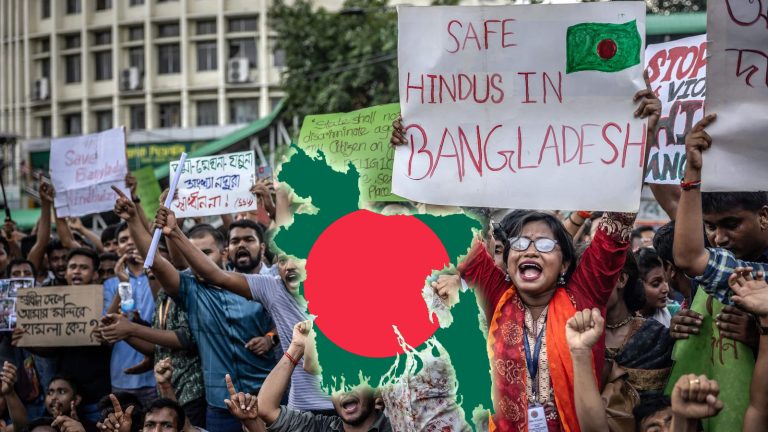
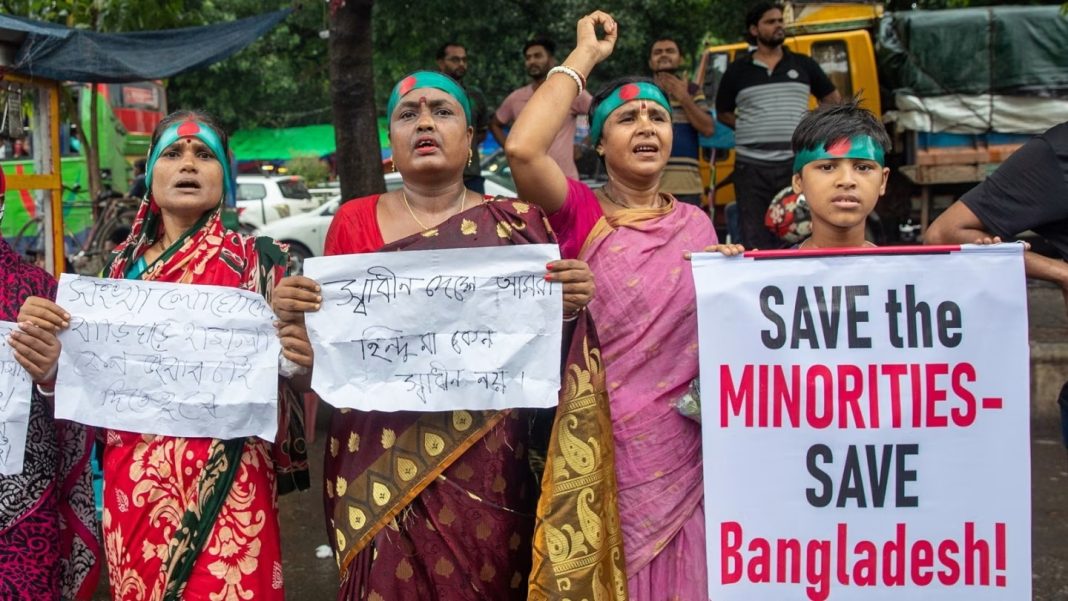
On August 5, 2024, the Sheikh Hasina-led Awami League government fell after over 15 years of continuous rule that began on January 6, 2009. During this period, incidents of violence, harassment, and attacks against the Hindu minority were rampant. Temples and puja pandals were vandalized, and in some cases, Hindu women were reportedly sexually assaulted. The pertinent question is: were there any efforts to bring the perpetrators of these acts to justice from 2009 to 2024? The answer remains, overwhelmingly, no.

Stepping further back into Bangladesh’s history, from the nation’s inception in 1971 to the present day, no government has successfully brought those responsible for attacks on the Hindu community to justice. Governments often made promises but failed to deliver. The only exception was in 2021 when one perpetrator Iqbal Hossain was arrested. Even then, no conclusive punishment followed. Why attacks on Hindus are not prosecuted or why have governments historically shown such reluctance to deliver justice to the Hindu community? This question warrants separate writing and in-depth research. For now, let’s focus on the recent incidents.

As soon as the news of the government’s fall spread on August 5, 2024, violence against Hindus began. Despite some attributing these attacks to political causes, actually they were not political at all. Let me explain why.

A political party can have people of all religions, all classes, all professions, it is their right. When that government or party falls, it would be logical for people from all communities—irrespective of religion, class, or profession—to face repercussions. However, why are people of only Hindu religion are attacked, not people of other religions? Why are only Hindu businesses vandalised? Why are only Hindu places of worship attacked? Moreover, Hindus who are directly involved in politics are also under attack. Why?

And, who are the attackers and what are their religions? What political parties have they aligned with? Or do they have no identity at all? Or are they afraid to catch or punish them even if they have identities? These crucial questions need answers.

As the world increasingly talks about being human, compassion, and tolerance, Bangladesh seems mired in discussions framed solely through the lens of religion. Every act, whether addition, subtraction, multiplication, or division, is filtered through religious identity. Is this the way a civilised state should operate?

In Bangladesh, the winter season witnesses an increase in religious gatherings, particularly “Waz Mahfils” (Islamic sermons). These gatherings, while religious in nature, have frequently turned into platforms where derogatory remarks are made about Hindu gods and goddesses, Hindu customs as well as the Hindu community. It has happened in the past. It will continue to take place in the future. Such sermons, which spread hatred, are readily available on platforms like YouTube. Despite this hate speech being widely available, was any action taken against the speakers? Did anyone ask, why is hatred being spread against Hindus? No.

However, one can imagine the consequences if a speaker from another community insulted a different religion. Would they be able to continue living in the country? Likely not. Yet, preachers spreading venom against Hindus seem to enjoy impunity. Over the past 15 years, these elements have been emboldened, and as a result, hate has permeated the consciousness of ordinary people.

It has become a predictable pattern, whenever something happens, Hindu homes and businesses are targeted. Whenever there is political turmoil—be it national elections, local elections, or fall of governments, government formations, or religious festivals such as Durga Puja, Saraswati Puja, places of worship, houses, and businesses of Hindus are vandalized. Is this something that happens to other religious communities? The answer is no.

In some incidents, fake social media accounts have been created using Hindu names to post offensive comments against Muslims and Islam. Several such instances have happened in the last two decades, where investigations have revealed that these comments were not made by Hindus.

In many such cases, Hindus who have been targeted with fake Facebook accounts in their names are poorly educated, they don’t even know how to use Facebook. In some cases, the targeted victims didn’t even have a smartphone. In some other cases, it has been found that the victim himself went to the police station and made a GD (General Diary) entry.

Yet, in every instance, the Hindu community becomes the target, and their homes are attacked. The administration also does on take action on those who attack Hindus and detains the victims instead. As per the police, it is the fault of the person in whose name a fake account was created, and the person who created the fake account and posted offensive comments is not guilty. Nobody feels the urge to find out who was behind it.

Over the past two decades, extremist groups have thrived in this climate of impunity, always looking for opportunities to incite violence against the Hindu community. And despite overwhelming evidence, justice is rarely served.

Following the fall of the Awami League government, there has been no instance of mosques or madrassas being attacked. I am not saying they should be attacked, I will never say that any place of worship should be attacked. Why were Hindu temples attacked? Who will answer that?

Awami League government fell on 5 August 2024, but even in the first week of September, Hindu homes and businesses were targeted, particularly in northern Bangladesh, with reports of arson in Thakurgaon, Nilphamari, and Panchagarh. These are not political attacks from any angle. These attacks, as verified by the victims and grassroots organizations like “Bangladesh Agnivir,” have confirmed that those targeted were not involved in politics but were simply helpless victims of senseless violence. People who don’t bother about anything other than their own regular activities are actually being attacked. When will this cycle of violence end? No one can say for sure.

While Hindus are majorly attacked, such acts of violence are not limited to Hindus. There have been a few isolated incidents targeting Buddhist temples and Christian churches. The Bangladesh Christian Association has reported several such attacks, including attacks on the Church of Bangladesh in Naogaon, Evangelica Holiness Church in Dinajpur, The Christian Co-operative Credit Union’s collection booth in Narayanganj’s Madanpur, three Christian houses in Barisal’s Gournadi, one in Khulna city, one in Mymensingh’s Haluaghat and one in Parbatipur. The statue of the Virgin Mary was vandalised at Nijpara Mission in Thakurgaon.

According to the human rights organisation Kapeng Foundation,  at least 18 houses were vandalised or set on fire in at least 10 attacks on ethnic minorities in regions like Dinajpur, Rajshahi, Naogaon, Chapainawabganj, and Thakurgaon. There were two incidents of land grabbing and fish looting. Statues of Sidhu Murmu and Kanu Murmu, historical figures from the Santal Rebellion, were also damaged in Dinajpur.

Apart from this, the Ahmadiyya community has also been attacked. The reason isn’t political either. They were attacked because they are not recognized as “true Muslims” by many in the country.

As per people from the Ahmadiyya community, 137 houses and six Ahmadiyya mosques were damaged in attacks in Panchagarh, Rangpur, Rajshahi, Nilphamari, Madartek, Sherpur and Mymensingh in Dhaka. Ahmad Tabshir Chaudhry, public relations secretary of the Ahmadiyya Muslim Community, said, “We do not do politics, we do not have relations with any party. I think the attack on us this time was to take advantage of the lack of law enforcement agencies.  He said attacks on Ahmadiyyas were also carried out during the BNP and Awami League regimes.

The Misconception About Attacks on Hindus

Since August 5, 2024, a series of attacks targeted Hindus in Bangladesh. Most media outlets claimed that these assaults were politically motivated. But is this truly the case? From the beginning, except for a few exceptions, the majority of the media was reluctant to cover these incidents as attacks on Hindus. They either reported them as isolated incidents or portrayed them as political violence. Even Gobinda Chandra Pramanik, Secretary General of the ‘Hindu Mahajot,’ initially labelled these attacks as political.

However, on August 23, 2024, at a press conference, Pramanik revealed that from 6th August to 22nd August, a total of 132 Hindu families—who had no political affiliations—were attacked. Nearly 1,000 families were victims of extortion, and 43 unprotected temples in rural areas were vandalized.

The reason for Pramanik’s initial statement was speaking without investigating the whole incident. Gobinda Chandra Pramanik, secretary general of the Hindu Mahajot, speaks on every incident. But he has less to say about Hindus or for Hindus. He creates more confusion. It is troubling that Pramanik’s contradictory statements are eagerly promoted by the media, which generally avoids publishing accurate reports of violence against Hindus. What they publish is just a press release or a statement from an organization.

The Hindu Mahajot’s data shows that the 43 temples vandalised in rural areas, were these temples engaged in political activities? Did the deities worshipped there have political leanings, or were they members of the Awami League? Clearly, these attacks were not politically motivated but rather deliberate and aimed at erasing Hindu identity.

The actual number of incidents is likely much higher. If the attacks that began on 5th August 2024, had been reported in full, the number would increase by 50-60 or possibly more. The country’s media, however, does not want to cover such statistics. If places of worship belonging to other religions were similarly targeted, would the Bangladeshi media have remained silent?

The Role of the Media

Our analysis and research of dozens of English and Bengali national dailies and online newspapers in August 2024 reveal that most media outlets either did not cover or were reluctant to report on the persecution of Hindus. Even when they did, the reports were so minimal and vague that one would hardly realize the extent of the attacks. Indian media, on the other hand, did report on the continuous violence against Hindus in Bangladesh, though in some cases, they exaggerated the events. Ironically, these exaggerations were eagerly picked up by Bangladeshi media to fact-check.

The question is: during the rule of the Awami League, has the Bangladeshi media adequately reported on the persecution of Hindus? No, they have not. For example, on October 13, 2021, during Durga Puja, a man named Iqbal Hossain placed a Quran at the foot of a Hanuman statue at a puja mandap in Nanuadighi in Comilla. This act was caught on camera and it was pre-planned.

This act incited a series of extremist attacks, including vandalism of Hindu temples across the country. The extremists first attacked the Durga Puja Mandap on the banks of Nanuadighi in Comilla. At one stage of the attack, they even forcibly immersed the idol. After that, for ten days, Hindu temples and Puja venues across the country were attacked.

Yet, at first, except for a few outlets, the media remained silent, most of them didn’t report the attacks on Hindus and their places of worship. There was almost a media blackout of the incidents. Only after the violence escalated did they begin to report on the incidents.

Will There Be Justice?

In October 2021, after the attacks in Comilla, Noakhali and Chandpur districts, 51 cases were filed, with 439 named and 5,700 unidentified suspects. However, even as of now, investigations for 94% of these cases remain incomplete. Charge sheets were submitted in just three cases in Noakhali.

This indicates a lack of seriousness by the administration and the government when it comes to attacks on Hindus. Moreover, it remains unknown under whose instructions Iqbal Hossain, the perpetrator, acted.

According to the Bangladesh Hindu Buddhist Christian Unity Council, between October 13 and November 1, 2021, in 27 districts, 117 temples and puja pandals were vandalized, and 301 businesses and homes were attacked and looted.

Nine people lost their lives, yet the state has not offered any compensation to the victims’ families. Neither have there been any punitive measures against the attackers of 117 temples and puja pandals.

Imagine if this kind of violence had been directed toward Muslims or any other religious group. Would the administration have remained silent? Personally, I stand against any form of violence. Every individual has the right to practice their religion freely, and it is the responsibility of the state to ensure peaceful religious observance for all. Yet, despite repeated attacks, justice for Hindus in Bangladesh remains elusive.

There have been several instances of targeted violence against Hindus in Bangladesh: the attack on Hindu villages in Sunamganj’s Shalla in March 2021, the October 2021 attacks in Comilla, continuous assaults in various districts, communal violence in Narail in July 2022, and now the August 2024 attacks. Throughout the last 50 years, no justice has been served for the violence against Hindus, and there is little hope that this time will be any different.

On September 12, 2024, the newspaper Prothom Alo published a report stating that, between August 5 and August 20, at least 1,068 homes and businesses belonging to minority communities were damaged in the attacks. However, this report only covered a fraction of the violence, and it is not a complete and comprehensive picture.

Information about attacks on all monasteries and temples were not included in the report. Attacks on 22 places of worship were mentioned. Most of these 22 places of worships belong to Hindus. The question is, were the deities of these attacked temples involved in politics? If there is no politics, then it must be admitted that the attacks on Hindus since August 5, 2024 are not political but aimed at the extermination of Hindus.

The Trauma of Persecution

The continuous violence has left Hindus in rural areas traumatized. In Naogaon, for example, minorities live in constant fear. They are reluctant to file complaints regarding attacks out of concern for their safety, they don’t want to increase enmity by filing cases. In Jessore’s Bagharpara, Hindus remained terrorised even two weeks after the attacks. Similar fear prevails in places like Manikganj, where BNP leaders are accused of land-grabbing and threatening Hindu families. Residents of Vidyadharpur, Rajshahi, remain on guard, sleepless after attacks on their community. In other regions like Mymensingh, Bogura, and more, people are still reeling from the trauma.

The BBC Bangla reported that a Hindu organization, the National Hindu Mahajot, claimed that there have been 278 attacks in 48 districts following the fall of Sheikh Hasina government. Another group, the Hindu Buddhist Christian Unity Council, asserts that at least 205 incidents of minority persecution have occurred across 52 districts.

Regardless of the exact figures, there is no denying that Hindus have been subjected to systematic violence. After such violence, attacks, torture, proper investigation and strict punishment of the culprits are needed, but none of this happens in Bangladesh, Hindus are repeatedly attacked and tortured.

Violence against Hindus has become so commonplace that perpetrators feel emboldened by the lack of consequences. Since 1947, there has been a concerted effort to eradicate Hindus from this region. While they may not disappear entirely, they are likely to suffer, maybe they will leave the country, or possibly rise up against the persecution. The question is, when will they rise?


PM Gati Shakti National Master Plan completes three years, achieves key milestones in transforming the country’s infrastructure landscape

The PM Gati Shakti National Master Plan (NMP) for muti-modal connectivity, launched by Prime Minister Narendra Modi on 13th October 2021, completed three years today, 13th October 2024.  The master plan has achieved significant milestones in transforming the country’s infrastructure landscape, a statement issued by the ministry of commerce and industry said.

On this occasion, the Union Commerce and Industry Minister, Piyush Goyal said, “PM GatiShakti has brought about a paradigm shift in how India plans and implements infrastructure projects. By integrating data from multiple Ministries and States, we have created a more efficient, transparent, and outcome-driven system. The impact is visible in faster project execution, lower logistics costs, and better services reaching every corner of the country.”

According to Secretary DPIIT, Amardeep Singh Bhatia, “PM GatiShakti NMP launched as the transformative approach 3 years ago by Hon’ble Prime Minister, has accelerated the infrastructure planning & development process leveraging geospatial technology and the Whole of the Government approach. During the last three years, more than 44 Central Ministries and 36 States/UTs have been onboarded, their data layers have been integrated and are provided with their own geospatial planning portal.”

With its vision to bring synergy across Ministries/Departments, and States/UTs, the PM GatiShakti has successfully laid the groundwork for seamless, multi-modal connectivity and accelerated economic growth, the statement said. The PM GatiShakti has redefined how India plans and executes large-scale infrastructure projects. By harnessing geospatial data from 44 Central Ministries and 36 States/UTs, the platform has significantly improved inter-ministerial coordination and streamlined project execution.

Key Achievements of PM GatiShakti 

On boarding Whole of the Government on the Single platform: PM GatiShakti has integrated 44 Central Ministries and 36 States/UTs with more than 1600 data layers, making it a crucial tool for planning and executing infrastructure projects. To date, over 200 big-ticket infrastructure projects have been evaluated by the Networking Planning Group (NPG) from the perspective of the principles of the PM GatiShakti viz. integrated planning & development of multimodal infrastructure, last-mile connectivity to economic and social nodes, intermodal connectivity, enhance logistics efficiency and synchronised implementation of projects.

Social Sector Impact: Extending the PM GatiShakti to the Social Sector Ministries, the focus is on increasing the usage of the PM GatiShakti for social development, identifying social gaps (schools, hospitals, anganwadis) using, and developing applications and planning tools for capturing data. This has enabled better infrastructure planning in essential areas such as primary healthcare, education, postal services, and tribal development, ensuring that even remote and underserved areas are part of India’s infrastructure growth story.

PM GatiShakti State Master Plans (SMPs): All 36 States/UTs have developed the PM GatiShakti State Master Plan (SMP) portals, aligned with the PM GatiShakti National Master Plan platform to synchronise infrastructure assets and enhance regional development. This unified approach has helped States streamline their capital investment for accelerating infrastructure development. Over 533 projects have been mapped by States/UTs on the PM GatiShakti portal.

EXIM and Trade Facilitation: Aligned with the National Logistics Policy (NLP), the PM GatiShakti has been instrumental in addressing critical infrastructure gaps, reducing logistics costs, and improving India’s logistics performance. According to the World Bank’s ‘Logistics Performance Index Report (2023) India’s rank (38) has improved by six places from 44 in 2018.

Regional Workshops and Stakeholder Engagement: Following the spirit of cooperative federalism, over the last three years, five regional workshops have been conducted, covering all 36 States/UTs to facilitate knowledge sharing, best practices, and project demonstration by Central and States Governments. These engagements have played a key role in strengthening local adoption and ownership of the GatiShakti framework.

Driving Sustainable, Data-Driven Development: The PM GatiShakti’s data-driven approach is powered by GIS-based tools and a real-time monitoring system that enables faster and more informed decision-making. The platform ensures that projects are aligned with national priorities and completed on time, minimising delays and reducing cost overruns. This integration is key to meeting India’s Net Zero by 2070 commitments, as the platform promotes the use of green infrastructure and sustainable logistics solutions.

Training and Capacity Building: As the PM GatiShakti is a new initiative with an advanced GIS platform, DPIIT has undertaken the task to train officials for build their capacities. The PM GatiShakti National Master Plan (PMGS NMP) has seen significant progress in capacity building through the institution of courses and workshops. A course on the PM GatiShakti, available on the iGoT platform, has already been completed by over 20,000 officials. Additionally, all Central Training Institutes (CTIs) have integrated a course module on the PM GatiShakti into their regular officers’ training curriculum. The resource persons and master trainers from DPIIT and BISAG-N conduct regular sessions on the PM GatiShakti across various CTIs and ATIs, including institutions like Lal Bahadur Shastri National Academy of Administration (LBSNAA), Sardar Vallabhbhai Patel National Police Academy (SVPNPA), and Sushma Swaraj Institute of Foreign Service (SSIFS). There have also been approximately 150 interactive training sessions on the PM GatiShakti with Ministries/Departments, and States/UTs, engaging over 1,000 officials.

Extending PMGS to the Districts: As India moves forward, the PM GatiShakti is expected to continuously evolve to keep playing a pivotal role in expanding multi-modal infrastructure, developing Smart Cities, and enhancing the country’s industrial capabilities through Industrial Corridors and Mega Investment Regions. Building upon the vision of the PM GatiShakti National Master Plan and the significant usage demonstrated by Central Ministries/Departments as well as States/UTs, a PM GatiShakti District Master Plan (PMGS DMP) portal is being developed with technical support of BISAG-N (Bhaskaracharya National Institute for Space Applications and Geoinformatics) for collaborative planning at the District level by State/District authorities. The NMP platform’s emphasis on cross-sectoral cooperation and emerging technologies such as AI and IoT will further revolutionise infrastructure management and planning.

Taking PMGS to international level and for promoting the use of  PM GatiShakti and Geospatial technology in the integrated planning of infrastructure, diplomatic engagements are underway with countries in the neighbourhood and other developing countries like Nepal, Bangladesh, Sri Lanka, Madagascar, Senegal and Gambia.

The government is also considering providing access to non-government users for the data (non-sensitive and shareable) relevant to the planning of the infrastructure and developmental activities by the sector. Such access to the data shall be provided in the most secure manner.

As India celebrates three years of the PM Gati Shakti, the initiative continues to fulfil its promise of creating a modern, interconnected infrastructure network that is key to India’s Atmanirbhar Bharat vision.

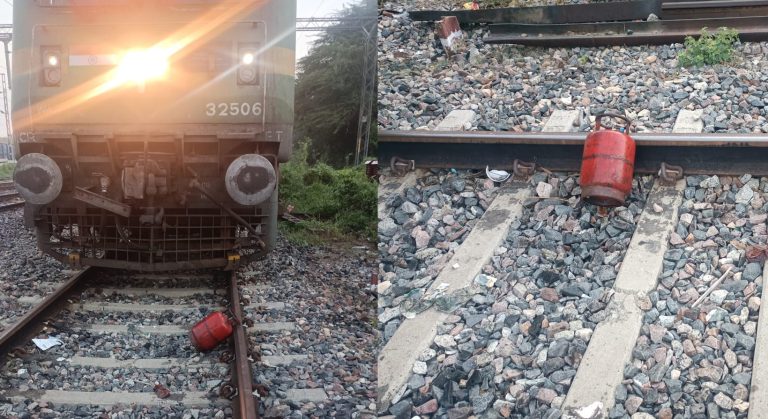
Accident averted after empty cylinder found on railway track between Landaura and Dhandhera, FIR registered

0

Loco pilots of goods train BCNHL/32849 on Sunday morning informed the Station master here that a cylinder was found on the track between Landaura (LDR) and Dhandhera (DNRA) at km 1553/01.

As per information from the Northern Railway CPRO, the spot is on KM from the DNRA station.

On receiving information, the pointsman immediately arrived at the spot and found the cylinder on the track empty. It was later placed under the custody of the station master at DNRA.

The area is surrounded by a civilian residential colony on one side and a boundary wall of the army cantonment on the other side.
The local police and GRP have been informed of the incident, CRPO said.

An FIR has also been registered at the Civil Lines Police Station.

On September 22, in a similar case, a major tragedy was averted after a 5-litre empty gas cylinder was found on the railway track in Kanpur, Uttar Pradesh.

Soon after spotting the cylinder on the track, the loco pilot promptly applied the brake to avert the incident. The incident occurred near Prempur railway station at around 5.50 am.

According to Indian Railway officials, the loco pilots of the goods train reported a 5-liter empty gas cylinder on the track, following which the driver halted the train.

On September 21, an attempted train derailment was thwarted after miscreants removed the fishplates and keys from a railway track near Kim railway station in Surat.

According to Western Railway, Vadodara Division unidentified people opened the fishplate and some keys from the UP line track and put them on the same track near the Kim railway station.

However service was soon restored.

(This news report is published from a syndicated feed. Except for the headline, the content has not been written or edited by OpIndia staff)