Home Blog Page 49

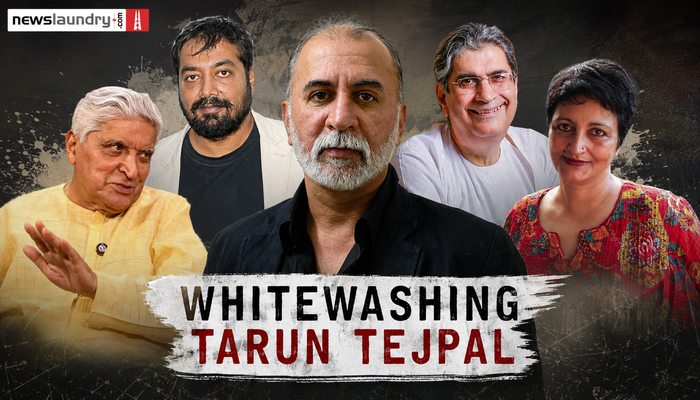
From Newslaundry to Javed Akhtar: How the left-liberal ecosystem whitewashed and shielded ‘Tehelka’ rapist Tarun Tejpal

0

Recently, the Bombay High Court overturned Tehelka founder-editor Tarun Tejpal’s acquittal and convicted him of rape and related offences, granting him 10 years’ rigorous imprisonment. The High Court convicted him under Sections 376(2)(f), 354(a) and 354(b) of the Indian Penal Code, which relate to rape by a person in a position of trust or authority, sexual harassment, and use of criminal force with the intent to disrobe a woman. The court verdict that put an end to the case that went on for over a decade contrasts with the narrative pushed by Tejpal and his coterie to suggest that he had been the victim of a political vendetta and a victim of a media trial.

The case goes back to November 2013, when Tejpal was accused of sexually assaulting a junior colleague inside a hotel elevator in Goa. The allegations grabbed nationwide attention, and the case emerged as one of the most polarising media stories. While the case went on in court, a parallel case was being manufactured by people from within the media establishment, who were trying to downplay the allegations against him and whitewash his public image. Here is an account of how the entire left-liberal ecosystem openly came out in support of Tejpal and made all possible efforts to shield him.

Filmmaker Anurag Kashyap and the “CCTV footage” claim

Filmmaker Anurag Kashyap was among the prominent public figures who brazenly defended Tejpal while the case against him was sub judice. Kashyap made a striking claim in a Facebook post where he said that he saw the CCTV footage of the hotel and that the allegations made by “the girl” were true. “And I have seen the CCTV footage too, and none of what the girl says about Tarun Tejpal is true,” Kashyap wrote in the post.

At a time when the case was out in public and was being tried in the court, Kashyap tried to delegitimise the victim’s claims and influence public opinion about Tejpal and the case. Kashyap’s claim was one among many similar claims made by his friends and colleagues, who claimed to have seen pieces of evidence which were not in public. Through their bogus claims, they tried to prove Tejpal innocent much before the court made any legal determination.

Tarun Tejpal: Javed Akhtar’s “man of impeccable values”

Veteran Lyricist and screenwriter Javed Akhtar also made statements to defend Tejp’al. Akhtar found himself at the centre of controversies after he described the (then) sexual assault accused as a “man of impeccable values”. “It is a shame that someone with such impeccable values has committed such an act, but unlike some, he has the guts to accept and repent,” these were the words uttered by Akhtar about Tejpal. In his statement, Akhtar not only diminished the serious allegations levelled against Tejpal but also praised him for having the courage to accept and express remorse for his acts.

Akhtar is known to have a personal association with Tejpal. He is someone who expresses his opinions about various social issues. Following his remarks about Tejpal, Akhtar received major backlash on X (formerly Twitter). People on X, including several journalists and feminists, slammed Akhtar, arguing that a ‘public intellectual’ of his stature was making remarks which amounted to downplaying the acts committed by him.

The Newslaundry letter casting suspicion on the victim

News and opinion website Newslaundry also jumped to support Tejpal by casting suspicions on the victim. In February 2014, Newslaundry published an open letter addressed to “Ms Tehelka-Assault-Victim,” written by Nirupama Sekhri, sister of Newslaundry’s founder Abhinandan Sekhri.

In the letter, devoid of all sensitivity, Nirupama Sekhri explicitly stated that she refused to see the complainant as a victim and described it as what she referred to as a case of “bubblegum feminism.”

Casting aspersions on the victim, Sekhri called her “irresponsible” and accused her of ripping Tejpal’s reputation apart. Laden with an accusatory tone, the letter dissected the victim’s conduct and questioned why she even chose to travel with Tejpal in the elevator. She also questioned the delay on the part of the victim in filing a complaint against Tejpal, which is not unusual in cases of sexual assault, where things like social stigma, shame and shock weigh on the victim’s mind.

In a sheer display of apathy for the victim, Sekhri suggested that Tejpal was being unfairly targeted. She questioned the victim’s own choices and credibility, effectively shifting scrutiny away from the accused and onto the woman who had accused him.

Senior journalist Seema Mustafa said that the victim did not look “raped”

Like Anurag Kashyap, Senior Journalist Seema Mustafa also delegitimised the victim’s testimony based on her reading of the CCTV footage. In an article, Mustafa outrightly claimed, “What happened around the lift does not bear any similarity to what the alleged victim claims had happened.” She concluded based on the appearance of the victim in the footage that she did not look like she was raped. “…the images do not show visible signs of agitation on her part,” Mustafa wrote.

Mustafa faced huge backlash for her misogynistic article, after which she reportedly removed her byline from it a few days after publishing it.

Vinod Mehta defended Tejpal’s “manic libido”

An equally damaging defence came from Vinod Mehta, Tejpal’s former editor at Outlook. In his memoir Editor Unplugged: Media, Magnates, Netas and Me, Mehta tried to dilute Tejpal’s heinous act by referring to it as “presumably non-consensual carnal favour”. Mehta wrote that Tejpal had a reputation for having “some difficulty in keeping his trousers zipped up”.

Mehta defended Tejpal’s “manic libido” by quoting the author William Dalrymple as having said that Tejpal possessed an “excessively charming sexual aura which women find difficult to resist.” Apparently, Dalrymple denied having made the statement in a Twitter post later.

The abovementioned remarks expose how the high and mighty, elite sections of society tried to defend Tejpal by downplaying a serious crime like sexual harassment in the workplace. From giving Tejpal the benefit of the doubt to questioning the credibility of the victim, the left-liberal ecosystem tried every trick in the book to whitewash his acts.

The victims that Punjab politics chose to forget

0

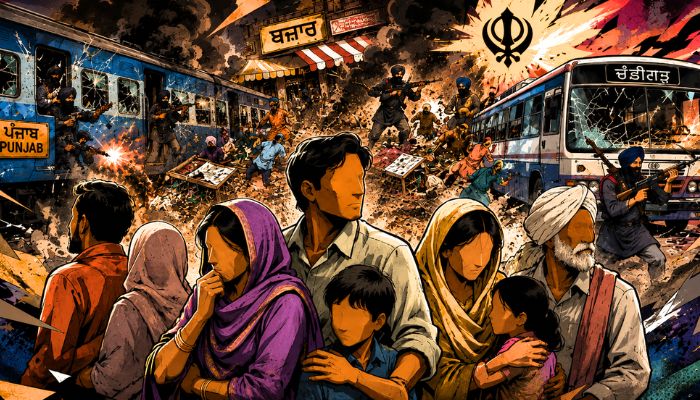
Punjab’s insurgency remains part of public debate, but many of those killed during the violence have gradually disappeared from popular memory. While terrorists, political leaders and major events retain detailed narratives, ordinary passengers, journalists, Sikh opponents of Khalistan and lower-ranking policemen often survive only as names in old reports, FIRs, memorials or casualty figures.

The 1987 Lalru bus massacre illustrates this imbalance. Thirty-eight people were killed, yet most victims remain largely anonymous. One was 28-year-old Savitri Devi, who shielded her husband and five-month-old daughter with her body and died while both survived. Abohar presents a different example, where residents continue commemorating those killed in the 1990 market massacre through a local memorial.

Sikhs who rejected Khalistani terrorism also became targets. Harchand Singh Longowal was assassinated after signing the Punjab Accord, while editor Sumit Singh and communist activist Baldev Singh Mann were murdered for opposing extremism. Their stories challenge attempts to reduce the insurgency to a Hindu-Sikh conflict.

Journalists and broadcasters faced similar violence. ML Manchanda was abducted and beheaded after Babbar Khalsa attempted to dictate broadcasting language, while AIR Chandigarh director Rajinder Kumar Talib was killed amid disputes over terminology. Newspaper agents and hawkers were targeted as terrorists sought to control the entire information network.

Punjab Police later began documenting 1,784 personnel killed during the terrorism period, yet many constables, guards, Home Guards and Special Police Officers remain little more than short departmental entries. At the same time, remembering victims of Khalistani terrorism cannot erase fake encounters, disappearances, illegal detention or the anti-Sikh violence of 1984. A complete history has room for every category of victim.

The challenge now is preservation. Punjab’s record remains scattered across police websites, newspaper archives, court documents, memorials and family collections. As survivors and relatives age, details that were never formally recorded risk disappearing permanently.

Read the full article on Chapter One Magazine.

How Punjab Police dismantled Khalistani terror networks

0

The Punjab Police that eventually dismantled organised Khalistani terrorism did not begin the insurgency as a dominant force. Terrorists assassinated officers, attacked police posts, killed suspected informers and operated across district boundaries using safe houses and automatic weapons. By the time Julio Ribeiro and later KPS Gill took command, conventional policing had become inadequate for an armed campaign that had weakened both state authority and local intelligence networks.

Ribeiro, who became Punjab Police chief in 1986, focused first on restoring morale and convincing personnel that the force would fight back. The phrase “bullet for bullet” became associated with him, although Ribeiro later said those were not his precise words. Police stations were fortified, weapons and vehicles improved, and commanders received greater operational freedom. Ribeiro himself narrowly survived a terrorist attack on the Punjab Armed Police headquarters in Jalandhar in October 1986.

Under Gill, the transformation became systematic. Punjab Police moved personnel away from static pickets towards mobile patrols, expanded from roughly 35,000 to around 60,000 personnel and increasingly relied on intelligence-led operations. “Focal point patrolling” and later “Operation Night Dominance” were designed to increase mobility, reclaim areas after dark and make it harder for terrorist groups to move, reorganise or intimidate villagers.

Local intelligence became the centre of the strategy. Punjab Police knew village geography, family networks, transport routes and local relationships in ways outside forces could not quickly replicate. Informers, spotters, surrendered cadres and joint interrogation teams helped identify commanders, couriers, safe houses and weapons routes. Intelligence was increasingly shared across districts and with agencies including the IB, R&AW, CBI and central security forces.

Gill’s model targeted not only individual gunmen but the ecosystem that allowed terrorist organisations to function: leadership, financiers, extortion networks, couriers, shelter providers and arms routes. Sustained pressure, factionalism, leadership losses, declining civilian cooperation with terrorists and the restoration of elections gradually produced what the article describes as organisational suffocation.

The campaign was effective in restoring state control, but its legacy remains contested. Allegations of torture, disappearances and staged encounters cannot be dismissed, and courts have convicted police personnel in specific cases. At the same time, those crimes do not establish that every encounter was fabricated. Punjab’s counterterrorism model emerged from an extraordinary security crisis, succeeded in destroying the organisational strength of Khalistani terrorism, and left behind difficult questions about effectiveness, legality and accountability.

Read the full article on Chapter One Magazine.

The coordinated drumbeat: Tracing the foreign funding targeting India’s Data Centres

Why do so many water crisis and land rights stories about Indian infrastructure seem to break at exactly the moment investors are deciding whether to commit? This final piece in the series argues that’s not a coincidence, it’s a pattern.

Imagine rumours about your new store’s water use and noise pop up right before opening day, and you later find the same person spread identical rumours about the store next door last year. That’s how the media coverage of India’s data centre boom, a $180 billion investment wave that’s tripled the country’s capacity since 2020, looks like.

The centerpiece is a 2024 investigation called ‘Dirty Data,’ published by the Environmental Reporting Collective and carried by outlets like Mongabay. The article traces its funding back to the Pulitzer Center’s Rainforest Journalism Fund, and from there to bigger funders, the Ford Foundation, Open Society Foundations, and Pierre Omidyar’s Omidyar Network, all of which have publicly documented histories of funding environmental and civil-society journalism in India. The argument isn’t that editors are taking orders, it’s that when grant money consistently rewards stories about infrastructure’s downsides rather than its trade offs, that’s simply the kind of journalism that gets pitched, funded, and published.

The article traces the familiar pattern through earlier similar incidents: the Sterlite copper plant shutdown in Thoothukudi, the collapse of POSCO’s $12 billion steel project in Odisha, the Niyamgiri bauxite mining dispute, and years of delay on Kerala’s Vizhinjam port. In each case, it argues, real local grievances existed, but they were, in its telling, picked up and amplified by international networks in ways that similar projects in other countries never experienced.

Then comes the timing argument: a Mongabay water-scarcity story right as the Google-Adani Vizag data centre deal was taking shape, a BBC water-stress piece in November 2025 just as global capital was weighing India’s next investment wave, and a burst of critical coverage during the exact window India was finalising its 2026-27 budget tax incentives. It calls for a public MeitY portal tracking real water and cooling data across data centres, a 48 hour rapid response fact check unit for major international stories, and formal disclosure of who funds the outlets covering Indian infrastructure.

The full article can be read in Chapter One Mag.

Why India’s Data Centres must answer to Indian law, not Washington’s

Who actually sets the rules for India’s data centre boom, and are they good enough? India’s data centre capacity has nearly tripled since 2020, pulling in almost $95 billion in investment. But the policies meant to govern this industry- data protection, cross-border data flows, sustainability standards- are still catching up. So what can India learn from everyone else who’s already been through this?

Europe offers the strictest playbook. GDPR forced any company handling EU citizens’ data to prove its facilities met tough security standards, which ended up funneling serious investment toward high compliance data centres. The EU has since gone further, mandating that big facilities report energy and water efficiency, and building a public rating system, think energy labels, but for data centres. Ireland’s story is a cautionary one, data centres ballooned to nearly 14% of the country’s electricity use, and regulators eventually froze new grid connections in Dublin until facilities agreed to bring their own renewable power. The Netherlands hit similar grid limits and responded with targeted moratoriums.

The US took the opposite path, almost no federal policy, just states competing on tax breaks and fast permitting. That’s how Northern Virginia ended up hosting roughly 35% of the world’s data centre capacity. But the cracks are showing, grid operators have warned capacity is running out, and New York recently paused new hyperscale data centre permits statewide, the first such freeze in the country.

Singapore took a more surgical approach as it froze new approvals in 2019, built a strict sustainability framework, then reopened only for facilities using recycled water and meeting efficiency benchmarks. The result is a premium, world-class industry. The UAE, meanwhile, paired fast approvals with clear data sovereignty rules.

Where does India fit? On data protection, the journey from the 2017 Puttaswamy privacy judgment to the 2023 Digital Personal Data Protection Act was long and bumpy, but the law is now rolling out in phases through 2027. On infrastructure, India has made real moves, declaring data centres essential infrastructure for cheaper financing, tying capacity growth to the IndiaAI Mission, and offering a tax holiday through 2047 for foreign cloud providers using Indian facilities. 

But gaps remain. There’s no unified national data centre strategy, no mandatory energy or water efficiency standards like Europe’s, and state policies vary widely, making multi-state investment tricky. The bigger stakes: laws like the US CLOUD Act mean American authorities can access data on US-company servers, anywhere, including data on Indian citizens. That makes keeping India’s data on Indian soil, under Indian law, a matter of genuine digital sovereignty.

The full article can be read in Chapter One Mag.

Busting the big myth: Why data centres aren’t the water villains they’re made out to be

Are data centres really draining India’s water supply? The numbers tell a very different story than the headlines.

When word got out in 2025 that a major data centre was coming to Visakhapatnam, locals panicked, and understandably so, given the city’s chronic water shortages. Similar fears have flared up in Bengaluru, Chennai, and Hyderabad. The narrative that’s taken hold, tech companies are quietly siphoning off water that should go to homes and farms. The scary numbers driving this story are real. India’s data centres could use around 150 billion litres of water a year, and a BBC report citing S&P Global found that 60-80% of the country’s future data centre capacity may be built in high water stress zones. Compared to household usage, that sounds enormous.

But here’s the catch, almost all of this coverage confuses ‘withdrawal’ with ‘consumption,’ and that distinction changes everything.

A 2026 report from the Council on Energy, Environment and Water found that data centres account for just 0.02 to 0.03% of India’s total water demand. For context, agriculture alone eats up 78-80%. The 150 billion litre figure isn’t wrong, but it’s measuring water passing through cooling systems, not water permanently lost. Most of that water evaporates in cooling towers and returns to the atmosphere as rain, the same water cycle a lake or irrigated field participates in. A smaller portion goes out as treated, regulated wastewater. Only a sliver escapes as stray droplets. Actual permanent loss is far smaller than the headline number suggests.

Regulation is already tighter than people assume, too. Groundwater use requires official clearance, discharge is governed by pollution control standards, and states like Rajasthan now mandate wastewater recycling and zero liquid discharge for new facilities. India’s IT ministry has said it hasn’t seen widespread complaints of unsustainable water use from the sector. Other water-stressed places offer a preview of where India could head: Singapore leans on recycled wastewater for cooling, Microsoft is targeting water positive status by 2030, and Equinix has pushed some facilities’ water-efficiency scores below the industry benchmark using recycled water and hybrid cooling.

There’s also an angle almost nobody raises: data centres increasingly run on solar and wind power, which use virtually no water, unlike coal and gas plants, which are heavy freshwater users for cooling. That’s a water saving nobody’s currently counting.

The full article can be read on Chapter One Mag.

Cool by design: How India’s data centres are learning to run on far less water

Ever wondered why data centres guzzle so much water? Here’s the story in plain terms.

Walk into a big data centre and the first thing that hits you isn’t the tech, it’s the noise. Thousands of servers, packed into towering racks, running non-stop and throwing off heat like commercial ovens. Keeping all that hardware from melting down is basically the second most important job in the building, right after keeping the power on.

The trick engineers use is surprisingly elegant: hot air and cold air are kept strictly separate in ‘hot’ and ‘cold’ aisles, and units called CRAHs blow chilled air across the cold side using coils full of cold water. But where does that cold water come from? That’s where things get interesting, there are actually two separate water loops. One circulates cold water indoors between chillers and those air handlers. The other carries the heat outside to cooling towers, and it’s only in this outdoor loop that water actually gets used up for good. Cooling towers work exactly like the desert coolers common in Indian homes, just industrial sized. Hot water trickles over a wet surface, fans pull air through it, and as some water evaporates, it drags heat away with it, the same reason sweat cools your skin. Most of what’s called water consumption (as opposed to just withdrawal) happens through this evaporation. A smaller portion is deliberately drained off as “blow down” to stop mineral buildup, and treated properly before disposal. Only a tiny fraction, under 0.01%, escapes as stray droplets called drift.

Now here’s the twist, AI is upending all of this. A single rack of AI chips can draw as much power as 100 Indian homes, and plain air just can’t carry that much heat away anymore. That’s pushing the industry toward newer, far less thirsty methods, Direct Liquid Cooling (piping coolant straight onto chips), full on immersion cooling (dunking servers in non-conductive fluid), and even free cooling that just uses naturally cool outside air. Microsoft has even tested underwater and orbital data centres to sidestep the water problem entirely.

For India, hot, water-stressed, and racing to build AI infrastructure, this isn’t academic. States like Rajasthan are already mandating recycled water and zero-waste discharge for new facilities.

The full article can be read in Chapter One Mag.

Data Centres are the new highways: India is racing to build them

Think about the last time you paid for something with UPI, sat through an online lecture, checked crop prices on your phone, or booked a train ticket. None of that just magically happens in the cloud. It all runs through data centres, those big, carefully cooled buildings packed with servers that store, process, and move our digital lives at lightning speed. You don’t notice them on your daily commute, but they’re the quiet engines powering modern India. What’s striking is how quickly this engine is ramping up. Back in 2020, India’s total data centre capacity was a relatively modest 0.5 gigawatts. By 2025, it had nearly tripled to around 1.5 gigawatts. 

Looking ahead to 2030, experts expect it to reach somewhere between 6.5 and 10 gigawatts. The money follows the growth; between 2019 and 2025 alone, nearly $95 billion was committed to the sector. That’s not marketing talk, that’s serious capital betting on India’s digital future.

This boom didn’t appear out of thin air. The government has deliberately treated data centres the same way it treats roads, railways, and power plants, as critical infrastructure. Policies now offer tax breaks, faster approvals, and easier access to land. States have joined the competition, offering cheaper electricity, land incentives, and single-window clearances to attract projects. The result is a genuine race to the top rather than a race to the bottom. The human impact shows up most clearly in jobs and opportunity. Every large data centre needs engineers, cybersecurity specialists, network administrators, and facility managers. By 2030, the sector could create more than one lakh direct jobs, plus many more indirect roles in construction, power, water, and support services. These facilities are also the backbone of India’s digital economy, which the government expects to contribute an extra $1 trillion to GDP by 2030.

There’s a security dimension too. When bank details, health records, and government data stay inside India, they remain under Indian law instead of foreign rules or surveillance regimes. As the United States and China compete for tech dominance, India is positioning itself as a stable, democratic third option for global companies looking for a reliable place to host their data. Of course, the rapid growth raises legitimate questions about water and electricity use. Operators are already responding by shifting to recycled water, more efficient cooling systems, and greater use of renewable energy. 

The map is expanding beyond the usual hubs. Mumbai and Chennai are no longer the only names in the conversation; Hyderabad, Visakhapatnam, and other cities are joining the list, helping spread digital infrastructure and opportunity more widely across the country.

The full article is available in Chapter One Mag.

Shipbuilding for the future world: India’s navigation path

In a rapidly changing world, the global contest in shipbuilding is not only about who produces the most bulk tonnage, but who can build the specialised ships the new economy actually needs. Modular subsea construction vessels laying cables for data centres or supporting deep-sea mining as per needs already exist in small numbers. Demand for them is rising because two forces arrived together: explosive growth in undersea fibre for AI and data centres, and a scramble for seabed minerals that power batteries and electronics. 

The technological bar is rising fast. Leading shipyards now use robotic welding, digital twins and ammonia- or methanol-ready propulsion. China has already launched Blue Sea Navigator, billed as its most advanced electric cable-layer of the world. 

A bold 2022 salvage of a crashed US Navy F-35C from 12,400 feet in the South China Sea illustrates how specialised vessels are driving power projection now. The only suitable diving-support construction vessels available for the salvage are China-built ships operated by a Singapore firm. Dominance now includes building the odd, high-value ships nobody else has built until everyone suddenly needs them. 

New routes and theatres are opening. A warming Arctic is making the Northern Sea Route commercially viable where Russia already controls access through Rosatom and a nuclear icebreaker fleet. Deep-sea mining will require collector and support ships. Energy transition is creating demand for ammonia, methanol, hydrogen and nuclear-powered designs. In each domain, the countries that build the ships will also sit closest to the resources and the profits. India is not starting from zero. It holds International Seabed Authority contracts for polymetallic sulphides on the Carlsberg Ridge and nodules in the Central Indian Ocean Basin, backed by the Deep Ocean Mission and the Matsya 6000 submersible. It has a working group with Russia on the Northern Sea Route. Combined with the ₹69,725 crore package, new clusters and early foreign partnerships, the ingredients for a long game are already at play. Rajendra Chola built ships strong enough for the goal in front of him. This article explains how policy alone will not close a thousand-year gap for India. Policy aimed at the ships the world will need in future is needed to put India back on the global shipbuilding map.

The full article can be read in Chapter One Mag.

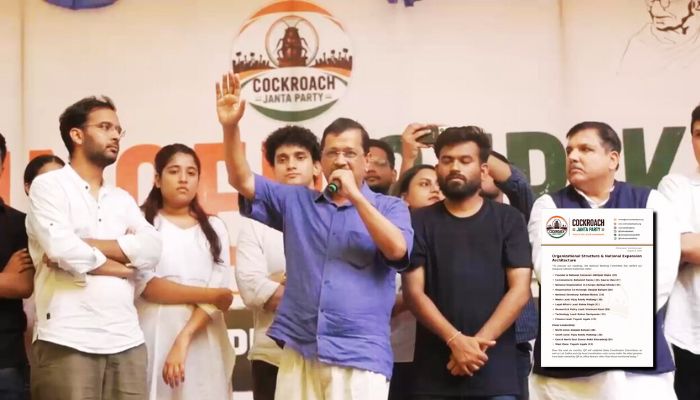
CJP appoints former AAP functionaries to its National Working Committee: Know who they are

The Cockroach Janta Party (CJP) has formally announced its National Working Committee on 6th August 2026, after a two-day core team strategy meeting at founder Abhijeet Dipke’s residence in Maharashtra. The formation of the CJP National Working Committee marks the next step toward structured national expansion. It has also announced a ‘Kya Bolti Public’ outreach campaign. The CJP’s expansion as a youth-led public pressure group, however, is being spearheaded by former Aam Aadmi Party (AAP) functionaries.

Beginning as an online satirical response to Chief Justice of India (CJI) Surya Kant’s courtroom “cockroaches and parasites” remark in mid-May 2026, the CJP gained serious public attention during its protest at Delhi’s Jantar Mantar. The CJI had said that young people who cannot find employment in their professions, “like cockroaches,” turn to RTI activism, social media, and journalism, becoming  “parasites of society” who attack the system. 

The CJP protest catapulted into a wider movement after climate activist Sonam Wangchuk launched a 26-day hunger strike to demand the resignation of former Education Minister Dharmendra Pradhan over the NEET paper leak and to push for broader educational reforms.

OpIndia reported earlier that the CJP picked up a genuine issue concerning students and rallied their support through “Laughtivism” only to further the anti-BJP/Modi agenda of the political Opposition. Although the CJP has said it has plans for state coordination committees, Lok Sabha, and city-level units over the next six months, the CJP’s expansion as a pressure group itself is quite revealing of how it is but an anti-BJP political party in the making.

Before elaborating on the CJP’s full-fledged pivot towards anti-BJP politics, it is important to know who all are on the CJP’s National Working Committee.

The announced CJP NWC roster includes:

  • Founder & National Convener: Abhijeet Dipke (30)
  • Co-Conveners: Ashutosh Ranka (30) and Saurav Das (27)
  • National Organisation In-Charge: Ajinkya Shinde (35)
  • Organisation Co-in-Charge: Deepak Baliyan (26)
  • National Secretary: Aafreen Nawaz (34)
  • Media Lead: Vijay Reddy Mallangi (30)
  • Legal Affairs Lead: Ratna Singh (31)
  • Research and Policy Lead: Vaishnavi Gaur (29)
  • Technology Lead: Rohan Deshpande (31)
  • Finance Lead: Yogesh Ingale (33)

The CJP has also appointed zonal leads. These include: Deepak Baliyan (North), Vijay Reddy Mallangi (South), Ankit Bharadwaj (East & Northeast), Yogesh Ingale (West).

Most CJP National working Committee office bearers are former AAP functionaries: The formalisation of AAP’s B-Team

Ever since the Cockroach Janta Party (CJP) came into existence, OpIndia has been highlighting how the CJP is the Aam Aadmi Party (AAP) in a new Gen-Z appealing packaging. Appointed as the National Convenor of the CJP, its founder, Abhijeet Dipke, previously served as AAP social media coordinator between 2020 and 2023. In 2023, Dipke left for the US to do an MS in Public Relations from Boston University.

Several reports during the 2020 Delhi Assembly elections identified him as a member of AAP’s social media and digital campaign machinery. Reports described him as a key figure involved in creating memes, short videos and digital content designed to promote Arvind Kejriwal and counter political opponents.

Dipke is also a part of AAP’s wider election war-room operations and social media coordination efforts. He was quoted in media interviews discussing campaign strategies aimed at millennials and first-time voters and worked with AAP’s IT and media teams during election campaigns.

Abhijeet Dipke is also known to have been a disciple of AAP leader and former Delhi Deputy CM Manish Sisodia. Dipke has been a part of AAP’s ‘war room’ and has consistently held an anti-BJP political line. It was seen how the Aam Aadmi Party aggressively supported the CJP protests, and AAP supremo Arvind Kejriwal and Manish Sisodia visited Jantar Mantar to show solidarity with the ‘cockroaches’.

Meanwhile, CJP Co-Convenor Ashutosh Ranka is an alumnus of IIT Kanpur and the London School of Economics, with prior experience as a management consultant at McKinsey in London. After returning to India last year, he has been engaged in civic campaigns in Jaipur focusing on environmental issues, education reforms, and youth concerns. Ranka gained wider attention during the NEET controversy due to his association with the CJP.

Ashutosh Ranka is no stranger to politics. In fact, his most notable political credential is his earlier role as a national spokesperson for the Aam Aadmi Party, where he aggressively defended Arvind Kejriwal and the party against allegations in the liquor policy scam, often dismissing them as ‘politically motivated’. Ranka was actively associated with AAP’s 2025 Delhi assembly campaign.

Ranka has previously written op-eds for leftist propaganda outlets like ThePrint and Newslaundry.

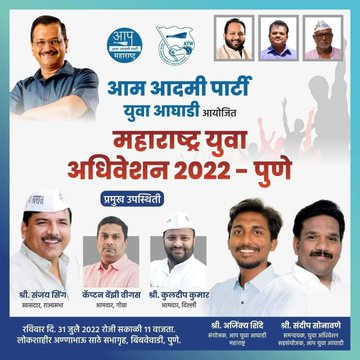
Appointed by the CJP as National Organisation In-Charge, Ajinkya Shinde is also an AAP functionary. He had resigned from his job to become a full-time AAP member. Shinde is a former AAP Maharashtra Youth Wing State President and state committee member.

Announced around May 2025, Ajinkya Shinde also served as AAP Goa Sah Prabhari before transitioning into the CJP’s organisational role.

In fact, reports are suggesting that Shinde continues to serve as the Convenor of AAP’s Maharashtra Youth Wing

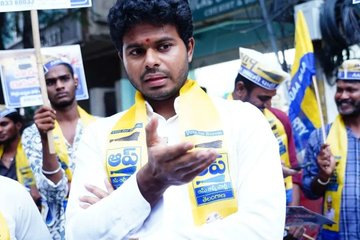
The CJP has given the charge of Media Lead and South Zone to Vijay Reddy Mallangi, who, unsurprisingly, happens to be an active AAP Telangana member.

Social media is replete with his videos and photos showing involvement in supporting AAP fundraising, leadership, and electoral campaigns last year.

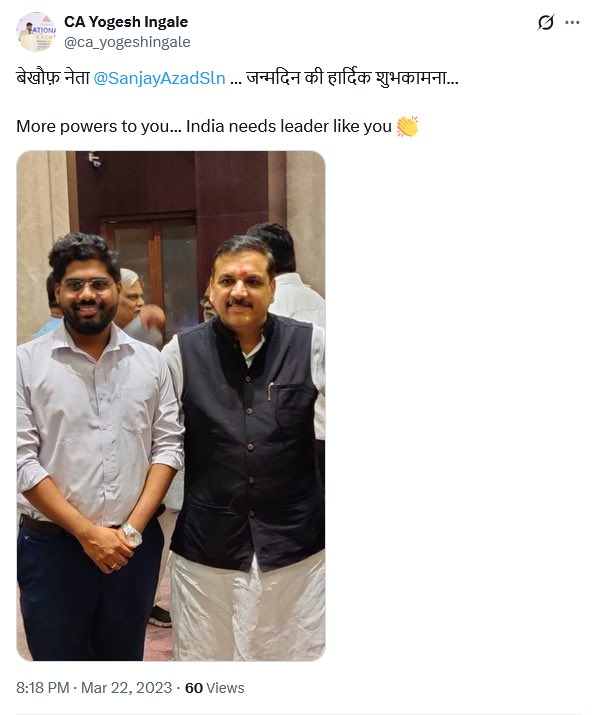
The CJP’s Finance Lead Yogesh Ingale is also reported to be a functionary of the Aam Aadmi Party in Maharashtra’s Pune.

Moreover, Ankit Bhardwaj, the CJP’s East and North Zone Lead, has also worked as a volunteer for the Aam Aadmi Party.

Clearly, the CJP indirectly formalised itself as probably the ‘youth wing’ of the Aam Aadmi Party by inducting maximum present or former AAP functionaries into its National Working Committee.

While CJP has claimed that past political associations of its members are irrelevant and that the group is ‘independent’ and ‘standalone’, picking persons with a recorded past with a particular political party and ideological bias points to the fact that the CJP is essentially an extension, rather a reinvention, of the Aam Aadmi Party.

OpIndia analysed earlier how, beyond the comedic surface, the CJP systematically advances opposition stances, targeting the judiciary, Election Commission, corporate interests, media, and political defectors, thus disguising partisan messaging as satire. It is evident that the CJP is nothing but an anti-BJP experiment with a ‘cool’ and ‘Gen-Z-appealing’ outlook.

The ‘cockroaches’ had made their political ideology and anti-Modi stance abundantly clear in May itself when they engaged in a self-imposed Instagram followers count competition with the BJP. During the protest, the CJP welcomed the support of known anti-BJP politicians like Mahua Moitra, Chandrashekhar Azad, and Kirti Azad, to Islamo-leftists like Yogendra Yadav, who expressed joy over CJP cockroaches successfully “occupying” Jantar Mantar and the streets leading to the Parliament. Kunal Kamra, who delivered derogatory remarks against Maa Sita from CJP’s protest stage; Delhi University professor Nandita Narayan sang “Bas naam rahega Allah ka” and glorified Pakistani poet Faiz Ahmed Faiz’s Islamic supremacist poem “Hum Dekhenge”; AISA, SFI, and other leftist student groups, which raised anti-national slogans of “Azadi-Azadi” and “Brahmanwad se azadi”.

The CJP also received support from notorious Hinduphobes and anti-BJP ‘activists’ like Prakash Raj, Swara Bhasker, Shabana Azmi, Arundhati Roy, and Nivedita Menon.

In fact, during the violent CJP protest on 20th July, Samajwadi Party, Azad Samaj Party, and workers of other anti-BJP parties actively participated in the so-called ‘student protests’. The protest was also joined by MACOCA-accused AAP-linked gangster Haji Afzal.

 The CJP’s top leadership boasts that people from across political ideologies supported the CJP during the July protests. In this view, the CJP inducting former AAP functionaries as its top office bearers lends credence to what was already speculated: the CJP is a B-Team of the Aam Aadmi Party.