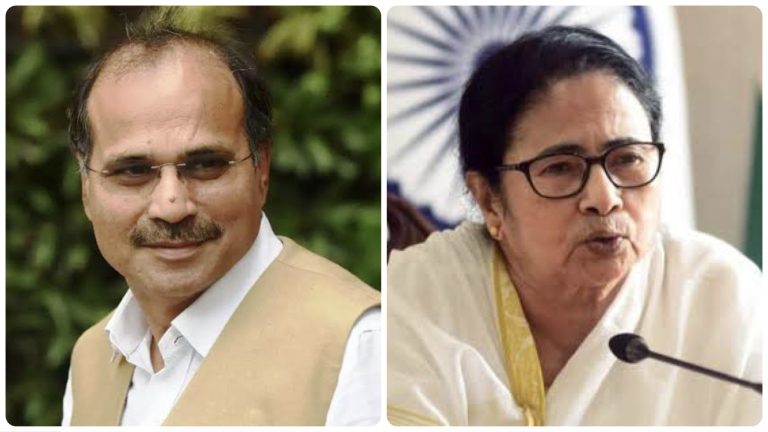
Congress leader Adhir Ranjan Chowdhury on Thursday said that Chief Minister Mamata Banerjee’s decision to extend outside support to INDIA bloc has come only after Trinamool Congress chief realised that she needs INDIA bloc to “save her face and fortune” in West Bengal.
The remarks of the West Bengal Congress chief came after Mamata Banerjee stated that TMC is “very much part of INDIA alliance” at the national level.
Addressing a press conference, Adhir Ranjan Chowdhury said, “Now, I think she has been able to read the situation which has been changing very fast across the nation. So, now she has been pleading for INDIA alliance because only the INDIA alliance can save the country from further destruction and despair. She has woken up from her political slumber. Only by citing and referring the INDIA alliance she can save her face and fortune in West Bengal. It is a ploy to save her fortune so that she does not get isolated.”
Chowdhury further said that Mamata Banerjee to date has not explained her “ignorance” towards the INDIA bloc. He also called Mamata Banerjee an “opportunist”.
“What triggered Mamata Banerjee to quit the INDIA alliance? INDIA alliance has been striding ahead and it is on the verge of forming a government, this is why as an opportunist political leader she thought of extending support in advance so that her support to the INDIA bloc will help her in fighting elections in the West Bengal. She now understands the crude reality on the ground that voters are gearing toward the INDIA bloc alliance,”
Mamata Banerjee in this vortex of political environment will be isolated because she is the leader who once boasted of heading the alliance. What triggered her towards quitting the INDIA alliance? This has not been elucidated by her to date…?” he asked.
Earlier West Bengal Mamata Banerjee had announced to extend an outside support to the INDIA bloc if it forms government at the Centre. West Bengal CM said that the INDIA bloc was her brainchild and TMC is very much a part of INDIA bloc.
Notably, elections in West Bengal are being conducted in all seven phases. The result of the elections will come on June 4th.
(This news report is published from a syndicated feed. Except for the headline, the content has not been written or edited by OpIndia staff)
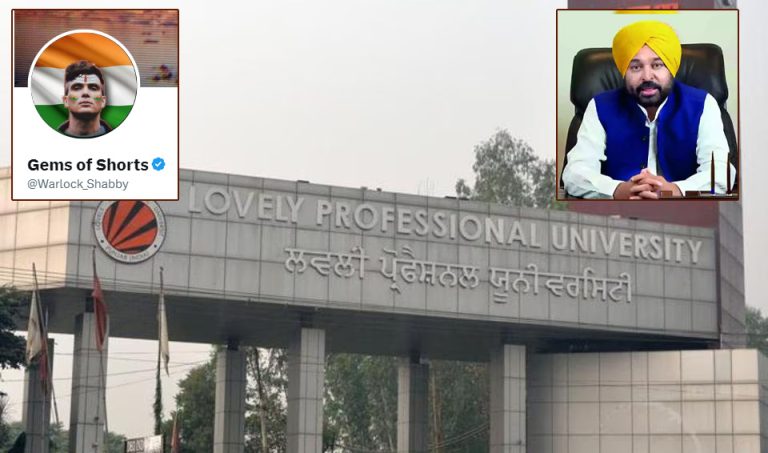
A user of social media platform X (formerly Twitter), warlock_shabby, is facing action by the Aam Aadmi Party-led Punjab Government for raising concerns over a video of alleged prostitution and the presence of a large number of liquor shops near Lovely Professional University in Jalandhar, Punjab.
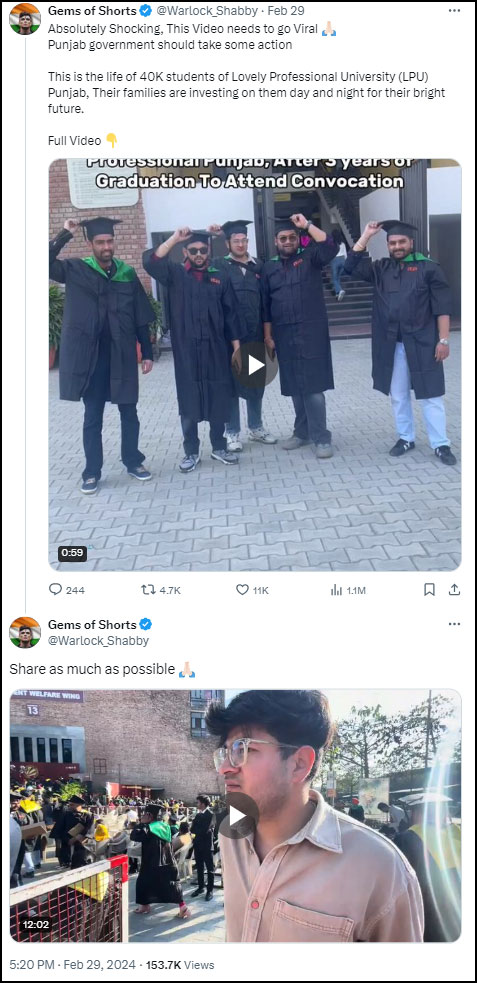
Notably, YouTuber Nikhil Singh came under Punjab Police’s radar for creating a video exposing an alleged prostitution racket and a large number of liquor shops near Law Gate of Lovely Professional University in March 2024. Initially, the FIR, on which Nikhil was arrested by Punjab Police and later released on bail by the High Court of Jammu Kashmir & Ladakh, was filed against the user who runs the handle warlock_shabby. He had shared the video and requested the Punjab Government to take action against the alleged prostitution racket. However, instead of taking action, the state police filed an FIR on X user who raised this issue.
Post on X by warlock_shabby that led to FIR against him and Nikhil.
While Nikhil was granted bail before Punjab Police could bring him to Punjab, the X user who shared the video has been running from pillar to post to get first bail and then to join the investigation.
Speaking to OpIndia, the X user said that he was granted bail by Kapurthala Sessions Court on 7th May 2024 on the condition that he would join the investigation within 7 days of the order at the Satnampura Police Station in Phagwara where the FIR was registered. When he went to join the investigation on 11th May, the investigation officer met him on the first day. However, the next day he was informed that the investigation officer was at police chowki near Lovely Professional University and he had to join the investigation there which made it difficult for the X user to join the investigation as directed by the court.
The X user further questioned why he was being targeted for raising concerns instead of investigating whether the content of the video was true or false.
State counsel opposed bail at the court
OpIndia accessed the court order in the case. During the bail hearing, X user’s advocate argued that the FIR filed against the user was false and frivolous and he was falsely implicated in the case. Furthermore, the advocate argued that the X user did not intend to hurt any religious sentiments. The argument was placed before the court as Section 295A was included in FIR based on an old post by the user on X where he had shared a photograph of a burning temple in Manipur and called for saving Hindus in the state.
The advocate further informed the court that the X user was neither the creator of the alleged video nor had circulated the same. Responding to the arguments, the public prosecutor appearing for the state opposed bail and said custodial interrogation of the X user was necessary for proper facilitation of the investigation.
However, in its order, the Sessions Courts accepted the arguments of the X user’s advocate and granted interim bail on the condition that he would join the investigation at the police station where the FIR was filed. The court granted the bail without going into the merits of the case and said that before deciding the bail application on merits, it would be appropriate to direct the accused to join the investigation within seven days. “In the event of arrest of the accused, such arresting officer is directed to release him on interim bail in this case on his furnishing bail bonds/surety bonds on the investing officer or SHO’s satisfaction subject to the conditions under Sections 438(2) CrPC.” The matter is scheduled for hearing on 18th May.
The video that led to FIR against warlock_shabby and Nikhil Singh
In the video, Nikhil raised concerns over the alleged prostitution ring rampant near the Law Gate of Lovely Professional University, where Nikhil himself earned his degree. In the video, he also raised the question of why there were four liquor stores nearby the area where hundreds of LPU students were living. He pointed out that LPU’s founder is Aam Aadmi Party’s Rajya Sabha MP and urged the state government to take immediate steps to curb the problem of anti-social activities around the college. Details of the event when Punjab Police reached Nikhil’s house and how they were not allowed by the locals to arrest him can be checked here and here. OpIndia could not independently verify Nikhil’s claims.
Content of the FIR against warlock_shabby and Nikhil Singh
OpIndia accessed the FIR registered in the matter under Section 295A, 153, 153A of the Indian Penal Code (IPC) and Section 3 of Indecent Representation of Women (Prohibition) Act, 1986 has been registered in Satnampura Police Station in district Kapurthala, Punjab. X handle “Warlock_Shabby” had shared a video clip of Nikhil’s video raising concerns over an alleged prostitution ring and anti-social activities running near Lovely Professional University (LPU) in Jalandhar, Punjab. A person named Vipan Kumar approached the police against Warlock_Shabby and claimed that the video he shared of the Law Gate area near LPU had “derogatory language” against women. He also claimed that over some time, the X handle had shared derogatory content against Hindu religion and Christian religions that might hurt the religious sentiments of Hindus and Christians. He further claimed such a post might lead to a riot-like situation in the country.
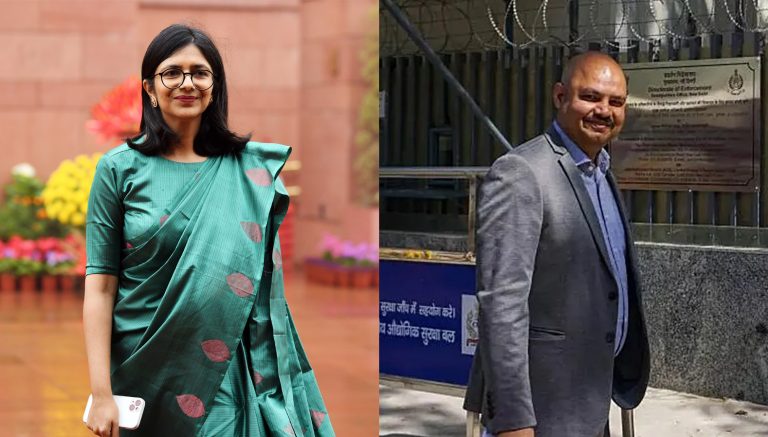
Three days after Aam Aadmi Party’s Rajya Sabha MP Swati Maliwal called the Police Control Room alleging that she was assaulted by the former Personal secretary of Arvind Kejriwal at the CM’s residence, she has finally filed a police complaint. As per reports, Delhi Police sources have confirmed that Maliwal has submitted a complaint against Delhi CM’s PS Bibhav Kumar in the matter.
Swati Maliwal assault case | AAP Rajya Sabha MP Swati Maliwal has given a Police complaint: Delhi Police Sources pic.twitter.com/otd9NX7w47
An FIR is likely to be registered at Civil Lines Police Station based on the complaint.
Earlier in the day, a team of Delhi police visited Swati Maliwal’s residence to seek details of the incident. The team spent around 4 hours at her residence and recorded her statement. She reportedly narrated the sequence of events that took place at the Kejriwal’s residence on Monday morning. She has maintained that she was physically assaulted by Bibhav Kumar at the residence of Delhi Chief Minister.
#WATCH | Senior Delhi Police official leaves from the residence of AAP Rajya Sabha MP Swati Maliwal, after around four hours.
On Monday, Swati Maliwal called the police control room of Delhi police accusing Bibhav Kumar, former Personal secretary of Arvind Kejriwal, of assaulting her in the CM’s residence. After some time, went to the Civil Lines police station in Delhi and repeated the allegations. However, police said that she returned without filing a formal complaint.
Later in the day, Swati Maliwal posted on ? saying that she has given her statement to the police on the incident that happened to her. She said that the last few days have been very difficult for her, and hoped that appropriate action would be taken.
मेरे साथ जो हुआ वो बहुत बुरा था। मेरे साथ हुई घटना पर मैंने पुलिस को अपना स्टेटमेंट दिया है। मुझे आशा है कि उचित कार्यवाही होगी। पिछले दिन मेरे लिए बहुत कठिन रहे हैं। जिन लोगों ने प्रार्थना की उनका धन्यवाद करती हूँ। जिन लोगों ने Character Assassination करने की कोशिश की, ये बोला…
However, she asked BJP members to not do politics on this incident. She said that an important election is going on in the country, adding that Swati Maliwal is not important, the issues of the country are important.
Earlier in the day, National Commission for Women (NCW) summoned Bibhav Kumar for questioning in the case. He has been appear before the NCW on 17 May. In its notice sent to Arvind Kejriwal’s office, the NCW said that it has taken suo moto cognisance of the news of DCW chief Swati Maliwal accusing Arvind Kejriwal’s aide of assaulting her at CM Kejriwal’s residence.
NCW has called for a hearing on the matter on May 17 and has ordered all concerned parties to appear before the commission in person. In case Bibhav Kumar fails to appear for the hearing, the NCW will ‘use the route of issuing summons through the police’ for further action against Kumar.
While AAP was initially silent on the issue, the party has vowed action against Bibhav Kumar.
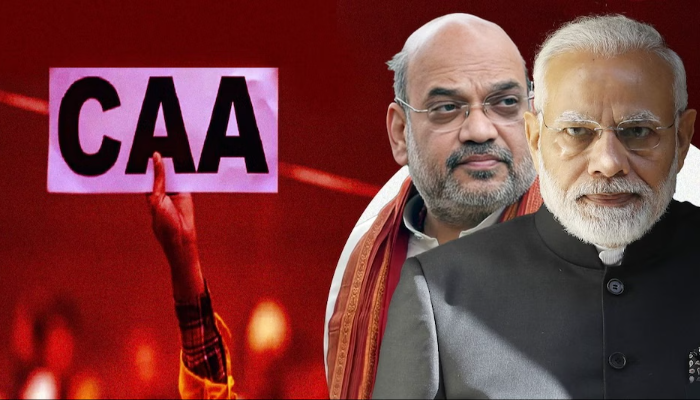
People who fled religious persecution in Pakistan, Bangladesh and Afghanistan are now able to obtain Indian citizenship through the Citizenship Amendment Act (CAA). 350 persons received citizenship on 15th May from the Ministry of Home Affairs and 14 of them were called and handed their documents while others were granted citizenship digitally. The recipients shared their great delight after the development and expressed gratitude towards Prime Minister Narendra Modi for changing their lives. Bhavna, who is the daughter of a family that escaped Pakistan, voiced her happiness and said, “It is equal to getting a new life for us.”
#WATCH आज दिल्ली में 14 आवेदकों को नागरिकता प्रमाणपत्र सौंपे गए। कई अन्य आवेदकों को डिजिटल हस्ताक्षर किया हुआ प्रमाणपत्र ईमेल के माध्यम से जारी किए जा रहे हैं: गृह मंत्रालय pic.twitter.com/EOFxgXeYaH
Bhavna narrated their ordeal and said, “We have to face a lot of difficulties there. It is hard for girls to go out of the house and they are unable to study. Muslims kidnap Hindu girls and force them to convert to Islam. Girls stay within their houses because they are terrified to step outside and have to wear a burqa if they ever want to head out. I have been here since I was very young. I don’t remember much except my home in Pakistan. The reason for this was that I never left my home. We still have many relatives there who want to come to India, but they are finding it difficult to get a visa. We are very happy to be in our country. Prime Minister Narendra Modi has helped us a lot. We want to thank him and Amit Shah. I was elated when CAA was passed. I am studying further and want to become a teacher and educate others, especially females as well.”
#WATCH नागरिकता प्रमाण पत्र प्राप्त करने वाले आवेदकों में से एक भावना ने बताया, "मुझे आज नागरिकता मिली है, मुझे बहुत अच्छा लग रहा है, अब हम आगे पढ़ सकेंगे… मैं 2014 में यहां आई थी। जब (CAA) पास हुआ था तब बहुत खुशी हुई थी…पाकिस्तान में हम लड़कियाँ पढ़ नहीं पाती थीं और घर से… https://t.co/I2RSEfGdeypic.twitter.com/1cu17UxFL1
Yashoda is also included among those who got Indian citizenship. She conveyed, “I arrived here ten years ago in 2013 but didn’t get citizenship until now. We are now glad to be Indians. Our children were not even able to get admission to schools. Now, things will be better and we will now have access to the same facilities as other citizens. We will also send our kids to school. We thank PM Modi and India for the citizenship.”
#WATCH नागरिकता प्रमाणपत्र प्राप्त करने वाले आवेदकों में से एक यशोदा कहती हैं, "हम 2013 से भारत में रह रही हूं, हम पाकिस्तान से आए थे…अब स्थिति बेहतर होगी क्योंकि नागरिकता मिल गई है। अब हमारे बच्चे पढ़ सकेंगे…हम नागरिकता के लिए PM मोदी और भारत का धन्यवाद करते हैं…'' https://t.co/I2RSEfGdeypic.twitter.com/1hsFDIqeFp
Harish Kumar, who became a citizen of India mentioned, “I have been living in Delhi for the last 13-14 years. It feels like a dream coming true, I am very happy. It is like a new birth for me. I am very thankful to the Bharatiya Janata Party’s central government. Rights are very important as now we can get higher education and secure jobs.”
#WATCH नागरिकता प्रमाण पत्र प्राप्त करने वाले आवेदकों में से एक हरीश कुमार ने बताया, "मैं पिछले 13-14 वर्षों से दिल्ली में रह रहा हूं। एक सपने के सच होने जैसा एहसास है, मैं बहुत खुश हूं। यह मेरे लिए एक नए जन्म जैसा है। मैं केंद्र सरकार का बहुत धन्यवाद करता हूं।" https://t.co/I2RSEfGdeypic.twitter.com/kSQZQy4MH5
Notably, on 11th March this year, the Modi administration notified CAA, allowing anyone eligible under CAA-2019 to petition for Indian citizenship which will be awarded to members of persecuted minority groups in Pakistan, Bangladesh and Afghanistan, including Christians, Parsis, Sikhs, Jains, Buddhists, Hindus and Sikhs who arrived in India on or before 31st December 2014, under the law that went into effect in December 2019. The CAA was approved by the president after it was passed, but the regulations granting Indian citizenship were not issued for over four years until this year which was the reason for their delay. Notably, Indian citizens will not be impacted by the CAA. It was brought in just to help the six oppressed minorities from Bangladesh, Afghanistan and Pakistan.
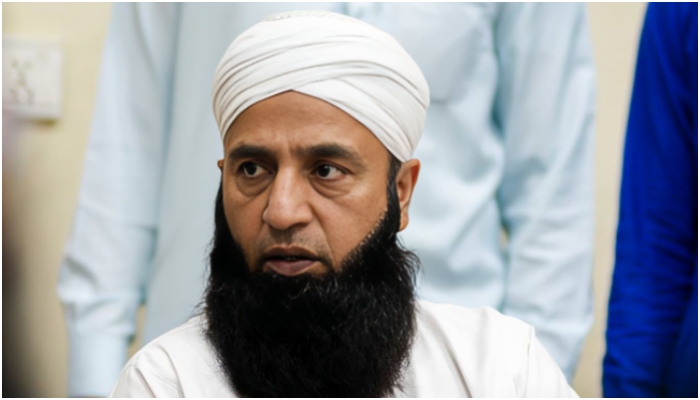
Saeed Anwar, former Pakistani captain has found himself in the middle of a massive controversy after making provocative remarks about women empowerment and financial independence. The cricketer-turned-commentator stirred fury on social media after a video of him voicing his views on women entering the job sector appeared online.
In a viral video circulating on the internet, Saeed Anwar laments the rise in divorce rates, attributing it to women’s ability to work outside the home and achieving financial independence. “I’ve traveled the world. I just returned from Australia and Europe. Children are suffering, and families are in horrible shape. Couples are fighting. The situation is so bad that they have to make their women work for money,” Saeed Anwar emphasises in the video.
#Viralvideo “I have travelled the world. I am just returning from Australia, Europe. Youngsters are suffering, families are in bad shape. Couples are fighting. The state of affairs is so bad that they have to make their women work for money,” It’s 2024 and Cricketer Saeed Anwar… pic.twitter.com/WOSepjWp7G
— Ghulam Abbas Shah (@ghulamabbasshah) May 15, 2024
Saeed Anwar described experiences with people from several countries who supposedly regretted the social collapse caused by women entering the workforce. He stated, “New Zealand’s captain of the national men’s cricket team, Kane Williamson called me to ask, ‘How can our society get better?’ Our culture has been destroyed since our women entered the workforce.”
Anwar’s comments have received harsh criticism for their patriarchal tone. Many on social media criticised his views as outdated and damaging, emphasising the importance of women’s financial independence and the ability to work. The cricketer additionally stated, “Since women have started working in Pakistan, divorce rates have climbed by thirty percent in the last three years.”
“The wives say ‘To hell with you, I can earn myself. I can run a household on my own.’ This is a whole game plan. You will not understand this game plan unless you find guidance,” Anwar emphasised the ‘risks’ of women embracing financial independence.
The former cricketer’s remarks prompted not just shock but also sparked debate about gender equality and the significance of breaking obsolete societal standards. While such conservative viewpoints from prominent men are frequent, they also contribute to increasing distortions of facts and figures.
Some of the netizens slammed the former Pakistani cricketer for making such comments. “His outdated mindset is a disgrace to progress and equality. It’s appalling that in 2024, someone still clings to such archaic beliefs, demeaning women’s contributions to society. Women working isn’t a game plan, it’s empowerment and economic necessity,” one user wrote.
His outdated mindset is a disgrace to progress and equality. It's appalling that in 2024, someone still clings to such archaic beliefs, demeaning women's contributions to society. Women working isn't a "game plan," it's empowerment and economic necessity.#WomenEmpowerment
Another user wrote, “So this man is essentially saying that you should enslave women, unclip their wings so that they can serve men like pets. And who are these people seeking his advice?”
So this man is essentially saying that you should enslave women, unclip their wings, so that they can serve men like pets. And who are these people seeking his advice?
Saeed Anwar played for Pakistan in international cricket from 1989 to 2003. He primarily batted as an opener in both Test and One Day International (ODI) formats. After losing his little daughter to a long illness, he stopped playing cricket and became a religious person. He returned for the 2003 World Cup, but retired from international cricket the following year after failing miserably.
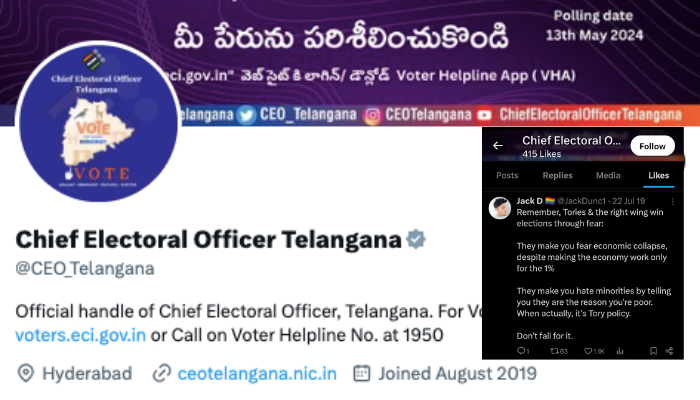
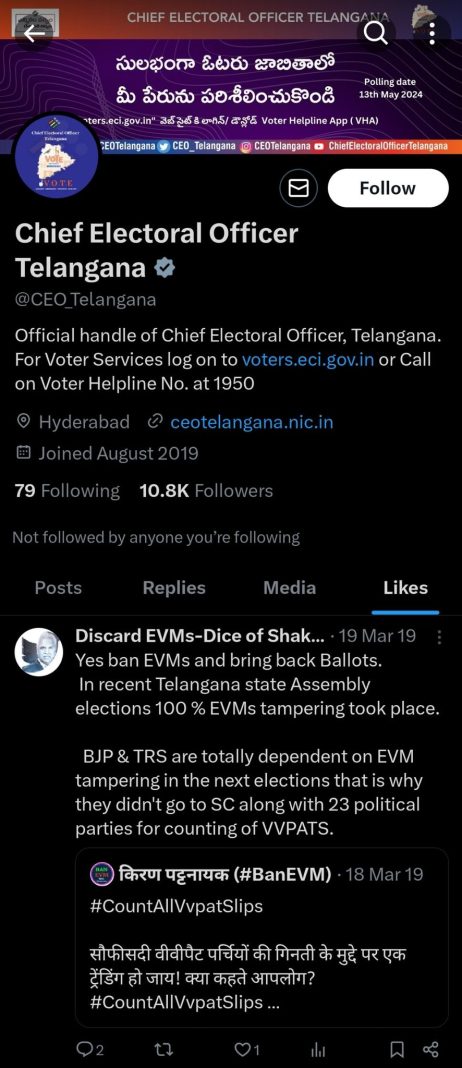
A few days ago, the District Election Officer of Hyderabad tagged AltNews co-founder Mohammed Zubair in an X post informing him about its action against BJP candidate Madhavi Latha over alleged violations of electoral regulations. Now the “Likes” section of the official X handle of Telangana’s Chief Electoral Officer (CEO) has sparked outrage as the Telangana CEO had liked posts favouring the return of the ballot paper.
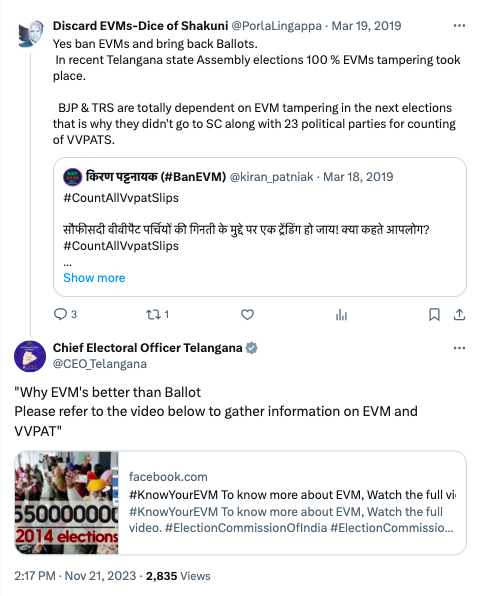
One of the posts like by the Telangana Chief Electoral Officer reads, “Yes ban EVMs and bring back Ballots. In recent Telangana state Assembly elections 100% EVMs tampering took place. BJP & TRS are totally dependent on EVM tampering in the next elections that is why they didn’t go to SC along with 23 political parties for counting of VVPATS.”
However, in response to said post, the Telangana CEO attached a link to a Facebook video telling “Why EVM’s better than Ballot Please refer to the video below to gather information on EVM and VVPAT.”
Another post liked by the Telangana Electoral Officer’s X handle said that Tories and the right-wing win elections through fear by making one hate the ‘minorities’.
“Remember, Tories & the right-wing win elections through fear: They make you fear economic collapse, despite making the economy work only for the 1%. They make you hate minorities by telling you they are the reason you’re poor. When actually, it’s Tory policy. Don’t fall for it,” the said post reads.
Some X users shared screenshots of posts in Arabic language liked by Telangana CEO’s official handle.
This @CEO_Telangana handle is definitely run by some hardcore Islamist who have no trust in current election system they are part of and at the same time they are biased politically @DEO_HYD@ECISVEEP kindly take note pic.twitter.com/KCs0Fnt0Wv
In response to a post by an X user Ajit Datta, CEO Telangana “clarified” that the official handle had responded to a post against EVMs and shared an educative video on EVMs. It added that the Likes timeline of @CEO_Telangana had certain “irrelevant likes” which have now been removed. The CEO added that they are investigating as to why this happened.
1/2 @CEO_Telangana responded to the tweet against EVMs from @PorlaLingappa on 21.11.2023 with an educative tutorial on EVMs which details the security and administrative protocols which make EVMs tamperproof. Looking at ‘Likes’ timeline, we realised that there were
— Chief Electoral Officer Telangana (@CEO_Telangana) May 16, 2024
“@CEO_Telangana responded to the tweet against EVMs from @PorlaLingappa on 21.11.2023 with an educative tutorial on EVMS which details the security and administrative protocols which make EVMs tamperproof. Looking at ‘Likes’ timeline, we realised that there were certain irrelevant likes from the account which pertain to late 2019 to early 2020. They have been removed. We are investigating the cause behind this. @CEO_Telangana remains committed to conduct free and fair elections strictly in accordance with law,” @CEO_Telangana responded. The Telangana Chief Electoral Officer’s official handle earlier had liked over 400 posts. The count has now come down to 150.
2/2 certain irrelevant likes from the account which pertain to late 2019 to early 2020. They have been removed. We are investigating the cause behind this. @CEO_Telangana remains committed to conduct free and fair elections strictly in accordance with law.
— Chief Electoral Officer Telangana (@CEO_Telangana) May 16, 2024
This comes days after the District Election Officer of Hyderabad tagged Alt News cofounder Mohammed Zubair in a tweet informing him about its action against BJP candidate Madhavi Latha over alleged violations of electoral regulations.
“A case has been filed against Smt. Madhavi Latha, Contesting candidate at Malakpet Police Station under 171C, 186, and 505(1)(c) of the IPC, along with section 132 of the RP Act for violating electoral regulations,” the official X account of the District Election Officer of Hyderabad tweeted on 13 May 2024, tagging Mohammed Zubair, the official X accounts of Telangana CEO, and the ECI.
India has emerged as the global leader in mobile wallet payments, with 90.8 per cent of its population using mobile wallets for transactions in 2023, according to GlobalData 2023 Financial Services Consumer Survey.
In April 2024, India’s Unified Payments Interface (UPI) showcased robust performance, with daily product statistics amounting to Rs 19.64 lakh crore.
Continuing this trend, the first half of May 2024 has already seen significant transaction volumes, reaching Rs 10.70 lakh crore by May 15th.
This achievement underscores India’s rapid advancement in digital payment solutions, surpassing other nations in mobile wallet adoption.The report suggests that the trend of increasing mobile wallet usage is also evident across the Asia-Pacific (APAC) region.
The COVID-19 pandemic played a significant role in accelerating the shift from cash to electronic payments, further boosting mobile wallet adoption. Ravi Sharma, Lead Banking and Payments Analyst at GlobalData, says the disruptive potential of mobile wallets is also impacting smaller countries like Hong Kong’s consumer payments space, predicting a gradual displacement of cash transactions.
Sharma stated, “Mobile wallet usage is all set to disrupt the consumer payments space in Hong Kong and gradually displace cash. Widespread QR code infrastructure, the availability of mobile-based instant payment systems, and rising consumer and merchant preference all contributed towards mobile wallet usage.”
A high percentage of adults have bank accounts and widespread smartphone usage provides a solid foundation for mobile wallet adoption. The presence of both domestic and international mobile wallet brands, like Apple Pay, Google Pay, PhonePe, etc offers consumers a variety of choices. The increasing acceptance of mobile payments by merchants further encourages usage.
GlobalData’s 2023 Financial Services Consumer Survey, conducted in Q2 2023, surveyed approximately 50,000 respondents aged 18+ across 40 countries.
(This news report is published from a syndicated feed. Except for the headline, the content has not been written or edited by OpIndia staff)
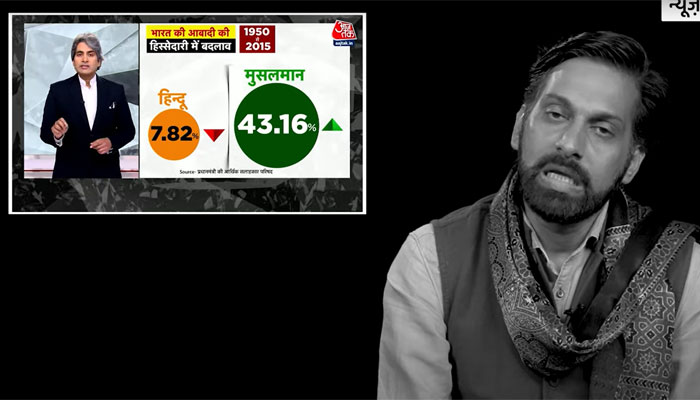
On 15th May, propaganda portal Newslaundry released a new episode of ‘Tippani’ hosted by Atul Chaurasia where they presented assertions regarding the Economic Advisory Council data on Muslim population growth. Chaurasia claimed that the methodology used to represent growth in the Muslim population was different from representing the growth of other religious groups. The interpretations used by Chaurasia and Newslaundry were incorrect and flawed.
Chaurasia claimed that Prime Minister Narendra Modi and several news portals used the data to say that the Muslim population share has increased by 43% from 1950 to 2015 while the Hindu population share in total population decreased by 8% and by saying so, they used different methodologies to represent the Economic Advisory Council data.
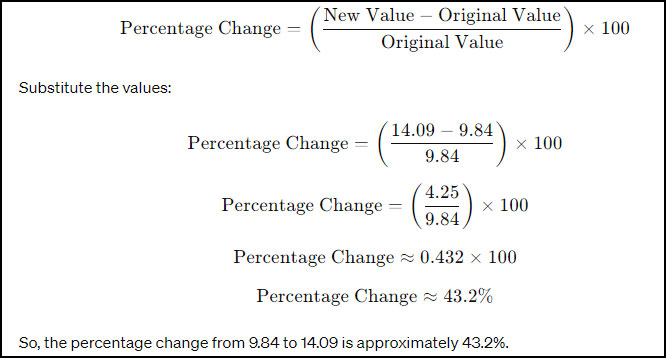
As per the data available, the Muslim population grew from 9.85% of the total population in 1950 to 14.09% in 2015. It represents an increase of about 43% when calculated as a percentage increase relative to the initial figure which is 14.09/9.84 = 1.43. The detailed calculation is shown in the image below.
Calculating the change in Muslim population share between 1950 and 2015
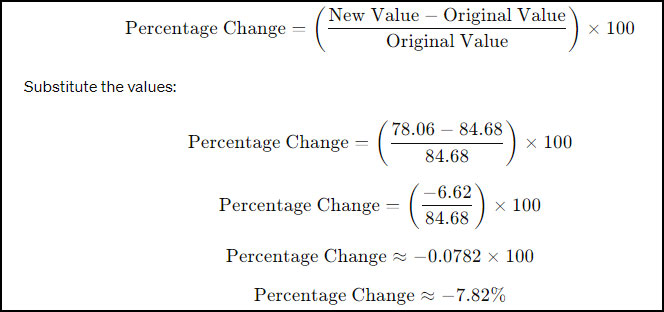
On the other hand, the Hindu population decreased from 84.68% in 1950 to 78.06% in 2015 which is a 7.8% decrease using the same methodology and calculated as 78.06/84.68 = 0.9218. The detailed calculation is shown in the image below.
Calculating the change in Hindu population share between 1950 and 2015
Both the percentage drop and percentage gain calculations are based on the same methodology. They use the difference between the new value and the original value divided by the original value and then multiply by 100 to convert the result into a percentage.
Both formulas measure the change relative to the original value and express it as a percentage. For Muslims, the change is 43.2%, which means a gain of 43.2% in the share of the population. On the other hand, the change in Hindu population share is -7.82%. This result is a negative number because the share of Hindus in the total population went down during the same period.
Chaurasia asserted that the growth rates of Hindu and Muslim populations were compared using different scales, which was incorrect. Both are based on the same time frame and demographic data which made it possible to directly compare the percentage change.
He claimed that the percentage change should be calculated by subtracting the 1950 percentage from the 2015 percentage, saying that using the corresponding numbers for Muslims and subtracting 10% from 14%, the result will be a 4% gain. This is a basic arithmetic error that has resulted in a huge difference in results, from 43.% to 4%. The reason is that the percentage differences in percentage figures can’t be obtained by subtracting the old number from the new number. This has to be calculated by obtaining the percentage difference between the two numbers, as shown in the calculations above.
Directly subtracting the numbers gives the absolute change in the percentages. But for statistical analysis, only percentage change is used, not absolute change. The percentage change is a measure of how much the initial value has increased or decreased relative to its original size, which provides a better understanding of the magnitude of the change.
The reason for using the percentage change formula is that it normalizes the change to the initial value, making it easier to compare changes across different scales. It gives the correct picture of the scale of the change in the number.
For example, if A changes from 10% to 25%, and B changes from 60% to 80%, the absolute method will show that A increased by 15% and B increased by 20%, indicating that B increased more. But this is completely misleading and wrong because A grew much faster than B. In this case, A grew by 150%, while B grew by 33.3%.
Atul Chaurasia said that if the same method is used to calculate the change in the population share of Buddhists, it will show an increase of 1520%. That is correct as the report states that the population of Buddhists went up from 0.05% to 0.81% during the same period. Just because it gives a large number does not mean the method is wrong.
While he referred to the Population Foundation of India’s concerns about using different measures, the data from the PM Economic Advisory Council provided a straightforward comparison without any manipulation.
Media must not misreport the study on population by PM-EAC: Population Foundation of India pic.twitter.com/kkyehskTxS
— Population Foundation of India (@PopFoundIndia) May 10, 2024
Chaurasia also used the alleged decline in the fertility rate of Muslims to prove that the Muslim population is not increasing as it has been represented by PM Modi and the news portals. However, the usage of the data was also misleading in that case. Similar assertions were made by The Hindu which was debunked by OpIndia.
In a statement during a political rally, PM Modi cautioned the people of India that Congress has planned to snatch away the wealth of poeple and distribute it to “people with more children”, an apparent reference to Muslims. The Hindu came up with a “fact-check” to check the veracity of the claims made by PM Modi. In its ‘fact-check’, The Hindu cited fertility rates among various religious groups over the years to cleverly conclude that the gap between the fertility rates of Muslims and other groups is rapidly narrowing.
The data shows the fertility rate among Hindus dropped from 2.78 in 1998-99 to 1.94 in 2019-21, whereas it dropped from 3.59 to 2.36 for Muslims in the same period. Needless to mention, Muslims had the highest fertility rate among all religious groups.
The data shows the fertility rate among Hindus dropped from 2.78 in 1998-99 to 1.94 in 2019-21, whereas it dropped from 3.59 to 2.36 for Muslims in the same period. Needless to mention, Muslims had the highest fertility rate among all religious groups. But instead of concluding that Muslims had the highest fertility rates among all religious groups, which would have vindicated PM Modi’s remarks, the authors of the article claimed the gap in fertility rates between Muslims and that of other religions is narrowing.
However, this wasn’t the premise on which PM Modi made the remarks. He alluded that Muslims have more number of children than others, which the data validated. Detailed report on fact-checking The Hindu’s “fact-check” can be checked here. Both Chaurasia and The Hindu used the same rhetoric to prove that the Muslim population is not increasing as asserted by PM Modi, but both of them misled the general public while doing so. Interestingly, The Population Foundation of India also tried to play with the Total Fertility Rate (TRF) data to claim the assertion that the Muslim population grew significantly was wrong.
Misleading people about Muslim population growth and its implications
Chaurasia suggested that the increase in the Muslim population was being used politically to create fear and division. While asserting so, he subdued the importance of discussion over demographic change in a country like India which is the only safer place for Hindus worldwide. The data in the Economic Advisory Council report showed a demographic change that has the potential to influence various socio-economic factors and significant population imbalance with possibilities of demographic threat in the coming future. By calling it manipulative data representation, Chaurasia and Newslaundry undermined the dangers of demographic change across the country.
A 24-year-old data entry worker and social media enthusiast was taken into custody by Kengeri police after she killed her 36-year-old landlady Divya by strangulation on 10th May to steal her assets while the victim and her 2-year-old child were at home. The accused has been identified as Monika HM from Chintamani in Chikkaballapura district.
As per reports, Monika overspent on luxury items and excessive partying, resulting in an Rs 8 lakh debt and was searching for quick ways to obtain cash. She also wanted to help her boyfriend purchase a goods vehicle (already bought, per some reports) which led her to commit the crime. She then took her victim’s gold chain and claimed innocence, but the authorities found her statements contradictory.
The accused woman had been renting a part of Divya’s residence at Konasandra for the last two to three months. She also worked for a private company as a data entry operator. She identified her boyfriend as her husband. He is a professional driver and would frequently drop by the home. Gurumurthy, the victim’s 39-year-old spouse, owns a salon in Shivanapalya, Kengeri. The murder occurred early in the morning when Gurumurthy had left for work. Divya and her two-year-old toddler were at home when Monika killed her and made off with a thirty-six-gram gold chain. Later, she pledged the item to a pawnbroker in the area. The residence was built by Gurumurthy four months ago.
The young woman reportedly quit her work a few days ago and was having trouble paying off her bills. The murder was discovered after Divya didn’t answer Gurumurthy’s repeated calls when he dialled Monika to check on his spouse’s whereabouts. However, she informed him that she had left the house. Gurumurthy discovered his wife dead in a room when he returned home a few hours later and notified the cops. The police believed the culprit was well-known to the family because there was no sign of a forced entrance into the place.
Monika misled the police by alleging that she was taking a bath and kept to herself in the house when they started an investigation. She was questioned by a squad led by police inspector Kotreshi BM. She continued to make contradictory claims and acted strangely. She further informed that two individuals had arrived requesting to rent the residence. However, the police double-checked the details, examined the CCTV tape and concluded that she was lying and there were no visits. Monika was then apprehended by them and after a thorough inquiry, she confessed to the crime, according to the authorities. They also found the gold chain based on the confession and they are still probing whether her male acquaintance was involved.
Monika was active on social media and enjoyed creating reels, per Kengeri police. She would travel and party all the time. She had even purchased a vehicle for her boyfriend. Gurumurthy and his family occupied the first level of the building and Monika had been living on the ground floor. According to the police, on 10th May, as Divya was busy in the kitchen, Monika strangled her to death with a white lace used for garments.
The incident came to light when Gurumuthy came home at 1.30 pm. Gurumurthy reported to the police that he and his mother departed for work at 8.45 am. He dropped his mother off at her job and then headed to his Shivanahalli salon. At 11:30 am, he contacted his wife on her cell phone, but she didn’t answer. Subsequently, he contacted one of his tenants and asked her to inquire about her wife. The latter told her that his wife was outdoors.
Gurumurthy contacted his wife about twenty-five times, hoping to get a reply, but to no avail. He hurried home, sensing danger and spotted Divya in the kitchen, lying face down. He doused her face with water, believing her to be unconscious. There was still no response and she had lost her gold chain. He called the police after informing the neighbours.
The National Human Rights Commission (NHRC) in New Delhi received a complaint from the Telangana Vishwa Hindu Parishad (VHP) about an attack on Hindus carried out by members of the Muslim community on 13th May in broad daylight at around 12:30 pm. The violent incident transpired during the fourth phase of the Lok Sabha election in the Jainoor town in Kumuram Bheem Asifabad district of Telangana. The assailants brandished weapons including knives, axes, sticks and iron rods and attacked the defenceless bystanders, comprising of women and children.
NHRC registered a case Case on the complaint given by VHP. On the election day, a Muslim group attacked Hindus in Jainuoor of Komaram Bhim Asifabad district,Telangana.@VHPDigital@bjptelangnaSM@ANIpic.twitter.com/fg4F85wWeu
— Dr.Ravinuthala Shashidhar (@shashidhar147) May 16, 2024
Afterwards, on 14th May, the NHRC registered a case (No: 394/36/19/2024) on the complaint given by VHP and stated, “The complainant, Dr Ravinuthala Shashidhar, State Joint Secy., Vishwa Hindu Parishad has drawn the attention of the Commission regarding the violent attack at 12.30 pm on 13.05.2024, during election day in Vaddera Basti, Jainoor Mandal, Kumuram Bheem Asifabad District, Telangana, wherein a mob from the Muslim community brutally attacked Hindu residents, including women and children, with weapons such as knives, axes, sticks, and iron rods causing serious injuries to the victims. The complainant has requested the Commission to urgently investigate the incident, ensure the perpetrators are brought to justice, and provide necessary medical care, rehabilitation, and legal aid to the victims.”
It asked that the Director General of Police Telangana, Hyderabad look into the charges and make sure the victims are safe and secure as well as provide the Commission with a report on the actions taken in a timely manner. Furthermore, the Kumuram Bheem Asifabad District, Telangana District Magistrate has been instructed to guarantee the appropriate medical attention and rehabilitation of the affected individuals and to submit a report on the measures taken to the Commission within a week.
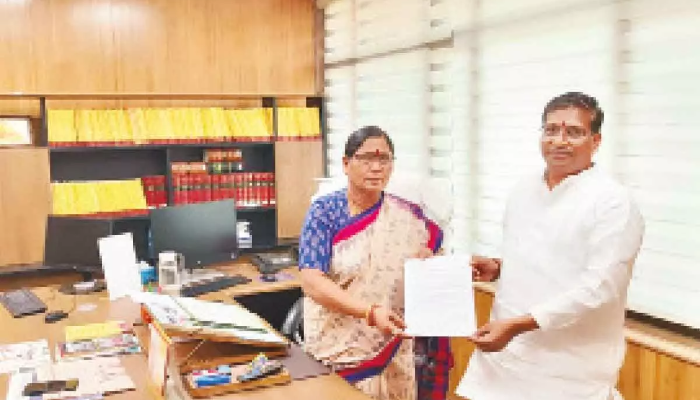
Earlier in the day, Dr Ravinuthala Shashidhar, Joint Secretary of Telangana VHP appealed to the National Human Rights Commission to step in immediately and launch an exhaustive probe into the situation. A written complaint was submitted to NHRC member Vijaya Bharati at the Commission’s office in Delhi, according to him. He implored the Commission to ensure that those in charge of conspiring and orchestrating the attack receive swift penalties in compliance with the law. He also urged the Commission to provide the victims and their families with all the support and help they need, including legal counsel medical attention and rehabilitation.
Today, I met the National Human Rights Commission member Smt.Vijaya Bharathi ji in New Delhi and filed a complaint to take action against the Muslims who attacked the Hindus in Jainoor of Asifabad District, Komaram Bheem district during the election polling on 13.05.2024 . pic.twitter.com/jk85Kpc6RJ
— Dr.Ravinuthala Shashidhar (@shashidhar147) May 14, 2024
The VHP leader conveyed confidence in the NHRC’s steadfast dedication to preserving the values of justice, equality and human rights for every one of the country’s citizens. He underlined how crucial it is to respond swiftly and decisively to uphold the integrity of the democratic ideal and restore confidence in the rule of law.