Home Blog Page 1386

‘Unlawful marriage case’: Ex-Pakistan PM Imran Khan and wife Bushra Bibi sentenced to seven-year imprisonment, third such conviction in a week

0

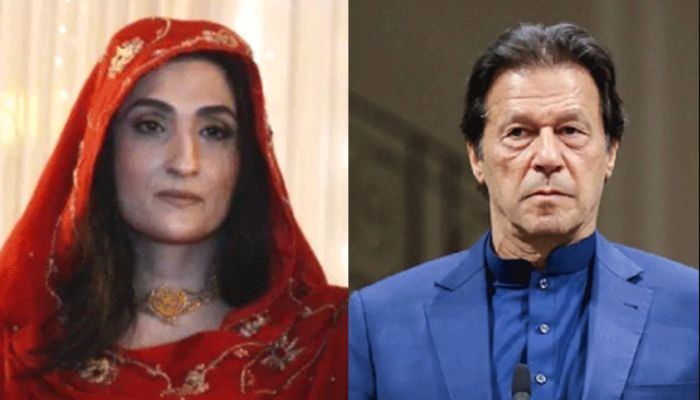
On Saturday (3rd February), a court in Pakistan’s Rawalpindi pronounced seven-year imprisonment for both Former Pakistan Prime Minister Imran Khan and his wife Bushra Bibi in the ‘un-Islamic’ marriage case – Iddat case. The court also imposed a fine of half a million Rupees each on the duo. The proceeding trials in the case were held at a makeshift court at the Adiala district jail.

Notably, this is the third time in less than a week that the Former Pakistan PM Imran Khan has been served jail sentencing. Earlier this week, he was sentenced to 10 years imprisonment in the Cypher case and 14 years imprisonment in the Toshakhana case.

Senior civil judge Qudratullah announced the verdict on Saturday in the ‘un-Islamic’ marriage case as it was reserved by the court last night following a lengthy 14-hour hearing that concluded on Friday night.

The case was filed by the first husband of Bushra Bibi, Khawar Fareed Maneka. According to his allegations, Bushra violated the Islamic practice of observing the mandatory pause, or Iddat, between two marriages. He also alleged that his ex-wife Bushra and Khan were having an adulterous relationship before their marriage.

As per proceedings, Imran Khan and his wife Bushra submitted a joint statement of 342 and answered 13 questions. In her statement, Bushra declared the divorce certificate of November 14, 2017, as fabricated. According to her claim, she completed her mandatory iddat period from April to August 2017 after she received an oral triple talaq from her husband Maneka in April 2017.

Speaking for the first time in Adiala Jail, Bushra Bibi claimed herself to be a victim of a plot to humiliate her and vowed not to succumb to pressure. She labelled the accusations as an attempt to weaken Imran and the PTI, emphasising that she is determined to stand firm. 

Meanwhile, following his conviction in the Iddat case, PTI founder and Former Pakistan PM Imran Khan told court reporters that the case against him was created to “humiliate and disgrace” both him and his spouse, Bushra Bibi. 

He said, “This marks the first instance in history where a case related to Iddat has been initiated.” 

He added that it was also the first time that someone was sentenced to 14 years imprisonment in a Toshakhana case.

Third sentencing in a week

The court verdict in the Iddat case was the third sentencing for Khan in a week. It is important to note that Pakistan is scheduled to go to polls on 8th February. 

On 30th January, a special court established under the Official Secrets Act sentenced Khan and his aide who was the former foreign minister Shah Mahmood Qureshi to 10 years imprisonment in the high-profile cypher case. The hearing for this case as well was held at Adiala Jail in Rawalpindi. Imran had said the trial was nothing less than a “joke” because the prosecution and defence team both belonged to the government.

OpIndia had earlier reported that the Federal Investigation Agency (FIA) quizzed Khan while he was behind bars, in connection with a diplomatic cable (Cipher) that reportedly went missing from his possession. Apparently, it was the same cable that he presented for a long time as evidence of a “foreign conspiracy” against him. On the basis of this purported cable, Khan had claimed that the US wanted to oust him from the Prime Minister’s office and install a puppet regime.

Further, on 31st January, Khan and his wife were sentenced to 14 years with rigorous punishment in the Toshakhana case. Consequent to his conviction in Toshakhana case, Khan was barred from contesting elections in 2023 for 5 years. 

‘Neither Mughal nor British allowed it”: Akhil Bharat Hindu Mahasabha moves court seeking a ban on the annual ‘Urs’ of Shah Jahan at Taj Mahal

0

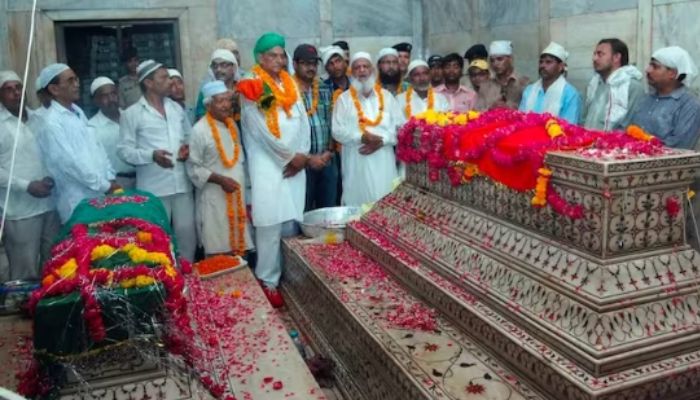
Days before the 369th ‘Urs’ of Mughal Tyrant Shah Jahan to be held at Taj Mahal, Akhil Bharat Hindu Mahasabha has filed a petition before a Civil Court in Agra seeking a ban on the commemoration of Shah Jahan’s death. Additionally, the petition also challenges the free entry for ‘Urs’ inside the Taj Mahal. The Civil Court accepted the petition and fixed 4th March as the next date of hearing in this matter. 

As per Islamic tradition, Urs means the death anniversary of a Sufi saint which is held at the latter’s dargah (shrine or tomb).

The petition was moved by the district president of the Hindu outfit, Saurabh Sharma. Speaking with PTI, his lawyer said, “They have sought for a permanent prohibitory injunction against the committee celebrating the ‘Urs’. The petitioner has also objected to having free entry for the Urs at the Taj Mahal.” 

According to the outfit’s national spokesperson Sanjay Jat, under the Right To Information (RTI) they had sought information from the Archaeological Survey of India (ASI). The outfit sought information on whether any permission for the commemoration of the ‘Urs’ was given by the Mughals, the British government, or the Indian government.

The ASI responded that there was no such permission granted to the ‘Urs’ organising committee.

The outfit’s Spokesperson said, “The petition has been filed on the basis of an RTI filed by a Raj Kishore Raje, an historian of Agra city. In the RTI, he asked ASI who permitted ‘Urs’ celebration and ‘Namaz’ in Taj Mahal premises. The ASI replied that neither Mughals, nor the British government or the Government of India have allowed ‘Urs’ celebration in the Taj Mahal.” 

Following the ASI’s response, the Akhil Bharat Hindu Mahasabha moved the court seeking a permanent prohibitory injunction on ‘Urs’. This year, the 369th Urs will be held for three days from February 6 to February 8. 

During the three-day event, the death of Shah Jahan under whose reign the Taj Mahal was built, is commemorated. It involves rituals like ‘chadar posh’, ‘sandal’, ‘gusul’, and ‘kul’, while on the final day of the ‘Urs’, a ‘chadar’ (bedsheet), measuring 1,880 metres or more, is offered.

Speaking with India Today, Hindu Mahasabha divisional president Meena Diwakar and district president Saurabh Sharma emphasised that the commemoration of the ‘Urs’ is illegal as no religious programmes could be held inside ASI monuments. 

Sharma further stated that the Hindu Mahasabha intends to file a petition for a survey of the Taj Mahal premises on the lines of the petitions in the Kashi Vishwanath and Krishna Janmabhoomi cases where a survey had been ordered.  

Meanwhile, during the three days of the Urs, entry to the Taj Mahal will be free, and the schedule will be notified by the ASI soon, as per media reports.

However, the ‘Urs’ organising committee chairman Syed Ibrahim Zaidi claimed that the ASI issues permissions for the event annually. According to him, this year, too, it has been granted. He added that a couple of days before, a meeting was held at the ASI office to discuss the arrangements for the ‘Urs’.

Zaidi further stated that the ‘Urs’ of Mughal tyrant Shah Jahan had been held at the Taj Mahal for centuries. He rejected the claim that there was no permission for the same stating that was completely “bogus”. 

He added that the British government and subsequently the Indian government have always permitted the ‘Urs’.

Tamil Nadu: Labour crisis grips Tiruppur as UP migrants return home over increased job opportunities with the consecration of Ram Mandir

0

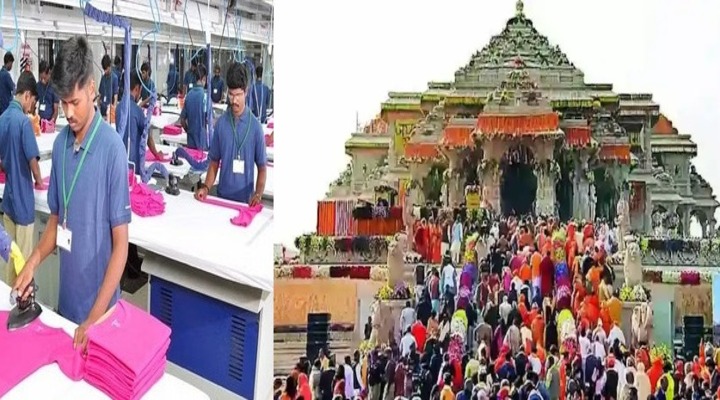
The Pran Pratishtha of Bhagwan Ram Lalla at the Ayodhya Ram Mandir not only enlivened the supreme deity but also the fortune and economy of Uttar Pradesh. The holy city of Ayodhya is set for a major economic boom as the city is transforming into a major hub of spiritual tourism. However, a migrant worker crisis has engulfed the Tirruppur apparel industry as the migrant workers from Uttar Pradesh are returning to their homeland with job opportunities opening up in their home state, especially after Ayodhya Ram Mandir’s consecration.

Economic Times reported that out of 6 lakh migrant workers at apparel units in this textile city in Tamil Nadu, around 60,000 of them have already left.

In a bid to prevent this exodus further, the association aims to enhance the living conditions of migrant workers in the city. It has organised a forum that would discuss different options such as housing societies, better medical facilities, wage raises, and prompt payment of wages for migrant workers. Subramanian stated.

PM Modi announces Rs 60 thousand crore investment in Ayodhya, UP migrant workers decide to return home

Raja Shanmugam, owner of knitwear company Warsaw International and former president of TEA, stated that since Prime Minister Narendra Modi announced that Ayodhya will attract Rs 60,000 crore in investments over the next two years, migrant workers have decided to go back to their homeland to stay closer to their families and earn a living, ET reported.  

Notably, the migrant workers at Tiruppur garment facilities, whose exports totalled Rs 34,350 crore in FY23, are primarily from Uttar Pradesh, Bihar, Jharkhand, and Odisha.

Tirruppur’s loss turns into Noida’s gains

Tiruppur’s loss has benefited apparel units in Noida, Uttar Pradesh. The Noida apparel cluster houses 3,000 units and expects to generate Rs 40,000 crore in export revenue this fiscal year. In addition, new apparel clusters are being established in Uttar Pradesh’s Gorakhpur and Bundelkhand districts.

Lalit Thukral, president of Noida Apparel Export Cluster said, “We are not feeling the heat of shortage of labourers anymore. The workers are returning to join us. Apparel manufacturers from neighbouring states are flocking to these areas to set up garment export facilities. So, it will be easier for the workers to get jobs. It is also beneficial for the migrant workers from Bihar and Odisha since they are neighbouring states and travel time to the homeland will be much less.”

Interestingly, an improved law and order situation in Uttar Pradesh under Chief Minister Yogi Adityanath’s leadership has also contributed to this paradigm shift leading businesses to set up manufacturing units in the state.

Ayodhya boosting India’s economic landscape

The Ayodhya Ram Mandir not only marked the reclamation of the birthplace of Bhagwan Ram and a Hindu religious-cultural resurgence but also opened doors of economic development and prosperity for the country, particularly Uttar Pradesh. Right after the historic Supreme Court judgement in favour of the Hindu side in the Ram Janmabhoomi case, the land prices in Ayodhya skyrocketed like never before. The holy city of Ayodhya known for its narrow lanes now has broader and cleaner roads, Ayodhya Dham Railway Junction, Maharishi Valmiki International Airport and numerous commercial and residential projects.

The city has turned into a major centre of real-estate investments with major industry players like The House of Abhinandan Lodha investing nearly Rs 300 crore in acquiring a 25-acre land parcel in Ayodhya.

Recently, a Memorandum of Understanding (MoU) was signed in the presence of Uttar Pradesh Tourism Director Prakhar Mishra, sealing an agreement with the American firm Anjali Investment LLC at Paryatan Bhawan. The deal involves the construction of a 100-room resort in Ayodhya.

Not a single life remains untouched in Ayodhya with the ‘return of the King’ Lord Ram to his holy abode. Be it it real estate, travel and hospitality sectors to traditional arts and education, the Mandir has opened floodgates of work opportunities for the local people with an influx of devotees and tourists to the city. It is interesting to note that around 5 lakh devotees had darshan at the Ram Janmabhoomi Mandir just a day after the pran pratishtha on 22nd January.

Ram Mandir will make Uttar Pradesh richer by Rs 4 lakh crore: SBI research outlines UP’s ascension as the “face of New India”

According to a recent SBI Research study, the Ram temple and other tourism-focused efforts could substantially increase Uttar Pradesh’s tax collections by much to Rs 25,000 crore in 2024-25.

“The completion of Ram Mandir in Ayodhya and multiple initiatives taken by UP government to promote tourism could result in an additional tax revenue of up to Rs 25,000 crore per annum due to spurt in tourists in FY2,” according to a report published by the SBI.

The report said that Ayodhya would be the most significant factor, and with an expected tourism boom, Uttar Pradesh might gain almost Rs 4 lakh crore this year.

The report further stated that “Given the completion of Ram Mandir in Ayodhya this year and a melange of initiatives taken by the Uttar Pradesh government to promote tourism, we believe that the total expenditure by tourists (domestic + foreign) in UP may cross Rs 4 lakh crore mark by end of this year.”

The convergence of divinity and progress is certain to improve India’s cultural and economic strength while also reviving India’s lost history. It is also a slap in the face for those who opposed the construction of the Ram Mandir in Ayodhya, claiming that “Mandir se rozgar nahi milta”.

Days after a student hanged to death, Kota hostel seized for not installing ‘anti-suicide device’ in rooms

0

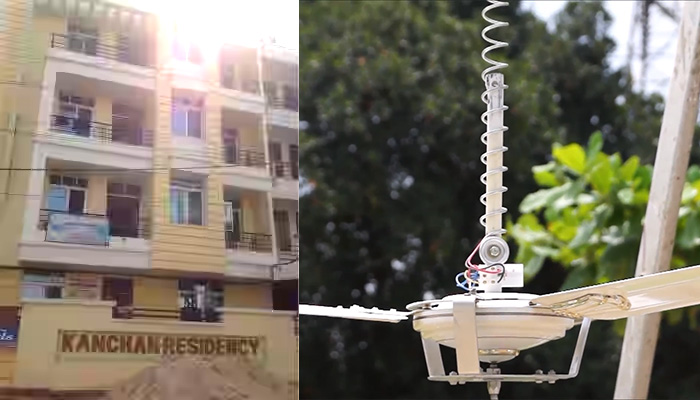
On Saturday (February 3), the Kota district administration said that the hostel where a NEET aspirant from Uttar Pradesh committed suicide by hanging from a ceiling fan has been seized. The officials said that action was taken after it was found that the hostel lacked ‘anti-suicide devices’ in ceiling fans.

On January 23, a 19-year-old student Mohammad Zaid from Moradabad, Uttar Pradesh, allegedly committed suicide by hanging himself from a ceiling fan in his hostel room at Kanchan Residency in Rajiv Gandhi Nagar, which comes under the Jawahar Nagar police station precinct.

The action against the hostel was taken after it was found to be in violation of student safety norms, according to a press statement on Friday evening by Kota district collector Dr Ravindra Goswami.

Goswami added that an inquiry was launched by the additional district magistrate court after a student allegedly committed suicide by hanging himself in a hostel room last month, and based on the inquiry report, the ADM court directed to take action under CrPC Section 133 and seize the hostel Kanchan Residency in Rajiv Gandhi Nagar, Talwandi Kota.

ADM Brijmohan Bairwa stated that the residency has 32 rooms, 10 of which are taken up by students, and the rest 22 rooms have been vacated. The hostel’s director and warden have been directed to shift the remaining ten students to another residency by February 5th. Written orders have been issued to ensure full compliance with the orders issued by the Director and Warden of the Residency.

Anti-suicide device

In August last year, the Kota district administration issued an order requiring all hostels and paying guest (PG) accommodations to install spring-loaded ceiling fans in every room “to provide students mental support and security”. These spring-loaded fans work as an ‘anti-suicide device’ since as soon as the weight on the fan exceeds 20 kg, the fan comes down with the spring, thus preventing the person from ending their life.

Kota suicides

It is worth noting that in recent months, several cases of student suicides have been reported in Rajasthan’s Kota, the hub of coaching centres in the country. On February 2, it was reported that a 27-year-old student pursuing the final year of an online BTech course in Chennai was found deceased in an apparent suicide in a rented room located in the town’s Vigyan Nagar area. The student hailing from Uttar Pradesh was found hanging from the ceiling fan in his rented room.

There have been three suicides in Kota this year. Earlier this week, an 18-year-old girl from Kota’s Borkheda was found hanged in her house. According to authorities, the deceased was living with her father, who worked in a bank and was retaking Class 12. The girl was under a lot of pressure due to the competitive exams.

In 2023, 26 student suicides were reported in Kota. Notably, Kota is a hub where students from all across the country come to prepare for competitive tests such as the National Entrance Exam (JEE) for admission to top engineering colleges.

Watch: Khalistani referendum in San Francisco turns violent as rival factions clash

0

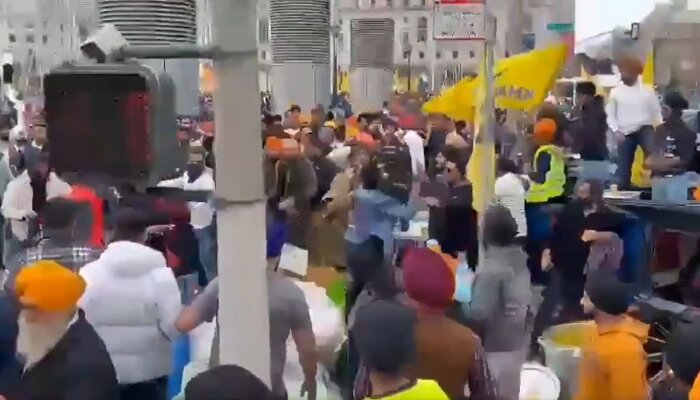
A dramatic video featuring a violent altercation between two rival Khalistani factions is making the rounds on social media. Several individuals could be observed hitting one another while the security officials attempted to contain the situation. Khalistani flags are also being displayed by those taking part in the unrest. The incident transpired on 28th January during the Khalistani referendum in California’s San Francisco which was arranged by terrorist Gurpatwant Singh Pannun and his outlawed pro-separatist organisation, Sikhs For Justice.

Two groups reportedly dominate the Khalistan narrative, Major Singh Nijjar gang and Sarabjit Singh (Sabi) gang. It is reported that the former is being marginalised by Gurpatwant Singh Pannun and his outfit while the latter is being promoted which led to the violent encounter.

Thousands of supporters of Khalistani independence gathered in the city in vehicles, buses, and trains while waving their flags and casting their ballots for their separate nation. The vote asks whether Punjab, an Indian state with a large Sikh population should secede and become Khalistan, an independent country. However, it is a futile exercise supported by anti-Indian forces and designed to create a ruckus without producing any tangible outcomes.

Notably, the ballot proposal known as the “Khalistan referendum” is nonbinding which means that even if the majority of voters support independence, it won’t ensure the creation of a new country. These events are planned by Khalistanis and take place in various cities on various dates, where radicals turn up to cast ballots in the absence of an actual result.

Khalistanis resorted to an arson attack on the Indian consulate in San Francisco on 2nd July last year. According to reports, the fundamentalists set fire to the structure between 1:30 and 2:30 in the morning. The staff members, however, escaped uninjured and the damage was confined. The San Francisco Fire Department put out the fire swiftly. The occurrence was also reported to the federal, state and local authorities.

Kanhaiya Lal-like murder attempt in Bhavnagar: Sahil, Shaukat and Munna attack a Hindu tailor, victim says targeted for playing Hanuman Chalisa

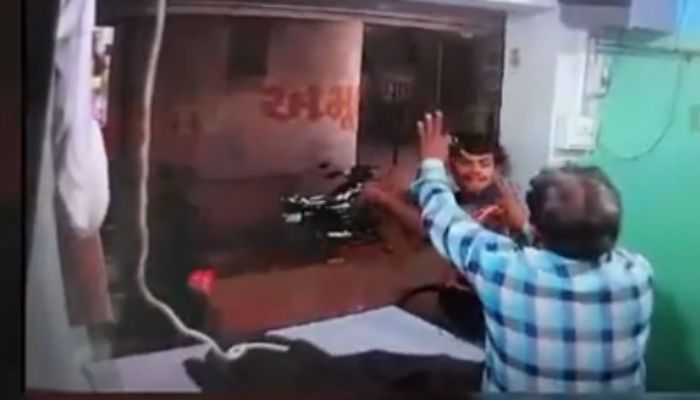
A brutal Kanhaiya lal-like murderous assault was recently reported from Gujarat’s Bhavnagar in which a Hindu tailor was attacked with Iron rods. The victim suffered a head injury and was taken to hospital for treatment. The victim has accused Sahil, Shaukat, and Munna of attacking him for playing Hanuman Chalisa at his shop.

The victim, a tailor in Kumbharwada, Rajendrabhai Chauhan, filed a complaint with Boratalav Police, leading to the initiation of an investigation.

According to the complainant, on the evening of February 1, while working in his shop, Sahil Padarshi and Shaukat Mankad entered with a pipe in Sahil’s hand. They verbally abused and threatened the victim, he said, blaming him for filing a complaint against Munna Bilal Padarshi. Subsequently, Sahil hit the victim on the head with the pipe, causing injuries. The victim was rushed to the hospital, where he received medical attention.

The incident is said to have occurred on Thursday (1st February). The brutal assault was caught on camera and the CCTV footage of the incident is doing rounds on the internet.  

Several netizens have shared the video of the brutal incident seeking strict action against the accused while recalling the Islamist attack on Hindu tailor Kanhaiyalal in Rajasthan’s Udaipur.

Rajendrabhai Chauhan, the complainant, mentioned that Sahil’s father Munna Bilal Padarshi had visited him a few days earlier, questioning why he filed a complaint against his son. Munna allegedly made threats, indicating that if the complaint was not withdrawn, severe consequences would follow. The complainant claims that this incident is related to the ongoing tensions between the two families.

Speaking to OpIndia, the victim said he has been actively involved in various activities, including organizing processions on Hanuman Jayanti and undertaking Kavad Yatra. He emphasized the communal harmony in the area, mentioning that both Hindu and Muslim communities reside peacefully. However, the recent incident has disrupted this harmony.

When We asked him why there is no mention of Hanuman Chalisa in the FIR as mentioned by him in his statements, he said, “I had told these things to the police too, but if they don’t mention so what I can do? Otherwise, I have gave all these details to them as well.” However, he said that recently local police officers visited him and recorded his statement.

OpIndia also spoke to the local police in this matter. The police officials assured that a thorough investigation is underway, and additional information will be disclosed after further examination of the case.

Officials conducting the overall investigation, the investigating officer PSI (Police Sub-Inspector) from the Special Operations Group, informed us, “FIR (First Information Report) has been filed for the ongoing investigation, noting down the details for further inquiry. Both parties had reached a compromise earlier, and when the case was filed, it was withdrawn by those involved. An assault had taken place during the filing of the complaint. In the meantime, we are continuing our investigation, and more information will be revealed after further examination.”

Regarding the link to Hanuman Chalisa in the incident, the IO said, “There is no Hanuman Chalisa angle in recent incident and that’s why we haven’t mentioned it in the FIR. Though, the investigation is still going on and we’re probing all aspects.”

The assault, nevertheless, has chilling parallels with the bloodcurdling murder of Udaipur man, Kanhaiya Lal, a Hindu tailor who was hacked to death by two Islamists for expressing solidarity with former BJP spokesperson Nupur Sharma.

Kanhaiya Lal murder case

On 28th June 2022, a Hindu man named Kanhaiya Lal was brutally murdered in Udaipur, Rajasthan, over an alleged post in favour of former Bharatiya Janata Party (BJP) spokesperson Nupur Sharma. The post was reportedly made by accident from Kanhaiya Lal’s phone by his son while playing a video game.

His neighbour Nazim filed a complaint against Kanhaiya Lal, following which he was arrested. Nazim also leaked Kanhaiya Lal’s number, photograph, and address to his community groups. After being released on bail, he continued to receive threats.

Feared for his life, Kanhaiya Lal shut his shop for six days and approached the Police for protection. Instead of giving him protection, the Police asked him to compromise with the Islamists who were threatening him. After six days, when he opened his shop, two Islamists came as customers and beheaded him. 

Following his murder, his killers Mohammed Riyaz Akhtar and Mohammed Gos escaped the scene on a bike with number 2611. 26-11 is the date of the Mumbai Terror Attack. The killers were nabbed by the Police 130 KM away from Udaipur at Bhim Highway. As per reports, the bike with the 2611 number belongs to Mohammad Riyaz. The case is being investigated by the National Investigation Agency (NIA) under the Ministry of Home Affairs’ direction. 

BBC brazens out its anti-Ram Mandir propaganda peddled by Geeta Pandey, anti-Hindu ‘journalist’ who eulogised gangster Atiq Ahmed as ‘Robinhood’

On Thursday (1st February), the British Broadcasting Corporation (BBC) attempted to rationalise its propaganda piece against the newly constructed Ram Mandir in Ayodhya.

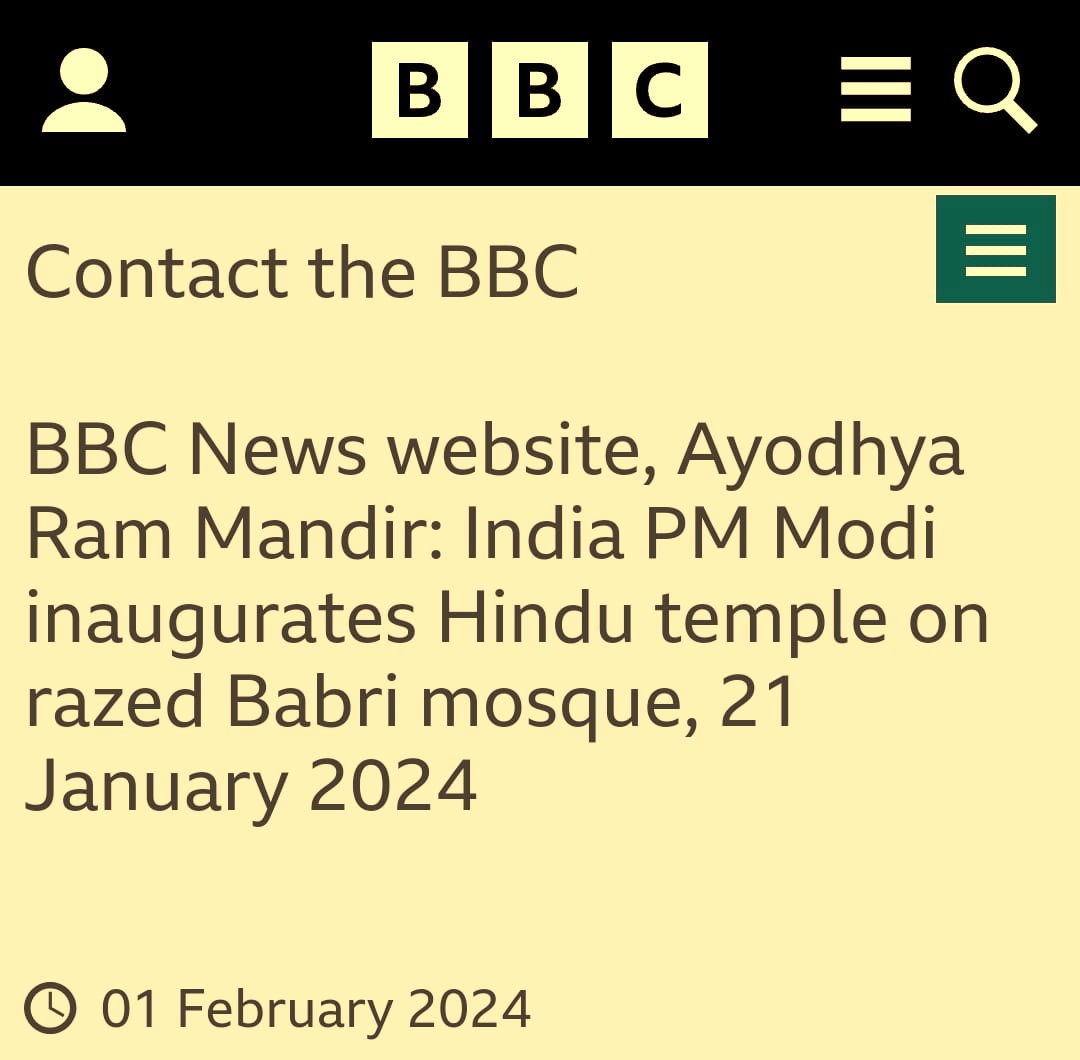
The UK’s national broadcaster published a contentious article titled ‘Ayodhya Ram Mandir: India PM Modi inaugurates Hindu temple on razed Babri mosque site‘ on 22nd January this year i.e. the occasion of Ram Mandir Pran Prathistha.

After receiving complaints from Hindu readers about the misleading nature of the article, BBC put out a statement shamelessly defending its anti-Hindu propaganda.

Screengrab of the BBC’s response to complaints by Hindu readers

In a statement, it claimed, “Some readers felt that the article was biased against Hindus and used inflammatory language. They also objected to us reporting in the headline that the temple had been built on the site of a 16th- Century mosque which we explained in the second paragraph of the story had been “torn down by Hindu mobs in 1992”.”

It further stated,”We believe that to be a fair and accurate account of what happened.  We also mentioned that “many Hindus believe the Babri mosque was built by Muslim invaders on the ruins of a temple where the Hindu god (Ram) was born” and we provided more context, reporting on the 2019 Indian Supreme Court judgement which gave the disputed land to Hindus, who form 80% of India’s population.”

While completely ignoring allegations of anti-Hindu propaganda, BBC asserted, We do not agree that the article was demeaning to Hindus. Quoting Mr Modi who said it was a “historic occasion”, we reported on the ceremony and on the celebrations in India and in other countries too.”

BBC downplays evidence of pre-existing Ram Mandir under disputed structure

On 22nd January, the BBC published an article alleging that a Ram Mandir is being built at a site where a 16th-century mosque (Babri Masjid) stood at one point in time.

The UK’s national broadcaster conveniently ignored the fact that a Ram Mandir existed underneath the disputed structure, which was constructed in the 16th century after destroying the ancient temple.

As such, a new Ram Mandir is being rebuilt not at the site of a demolished mosque but at the site of a destroyed temple. The BBC conveniently avoided this important context to allege the ‘destruction’ of an Islamic place of worship and not a disputed structure.

Screengrab of the article by the BBC

While ignoring the evidence presented by the Archaeological Survey of India (ASI) about the existence of a temple underneath the disputed structure, the BBC claimed, “Many Hindus believe the Babri mosque was built by Muslim invaders on the ruins of a temple where the Hindu god was born.”

The UK’s national broadcaster thus attempted to give a clean chit to Islamic invaders and decried the ASI findings as mere beliefs of the Hindu community.

“Critics have also accused the government of exploiting a religious celebration in a country which – according to its constitution – is secular. For Muslims, India’s biggest minority, the event evoked fear and painful memories, members of the community in Ayodhya told the BBC in the run-up to Monday’s ceremony,” BBC continued with its fear mongering.

BBC journalist had previously whitewashed gangster Atiq Ahmed

The propaganda piece ”Ayodhya Ram Mandir: India PM Modi inaugurates Hindu temple on razed Babri mosque site‘ was authored by BBC ‘journalists’ Geeta Pandey and Yogita Limaye.

Interestingly, Geeta Pandey is the same scribe who tried to create a sympathy wave for deceased gangster-politician Atiq Ahmed in April 2023.

In her piece titled ‘Atiq Ahmed: The brazen murder of an Indian mafia don-turned-politician,’ Pandey went on to weave a sorry tale around Ahmed’s childhood days. “The 60-year-old was born in a poor family in Prayagraj and was a school dropout…” the report read.

Hinting at a rags-to-riches story, she added, “…But over the years he amassed huge wealth, enjoyed political patronage and power and came to wield immense influence in the city of his birth and beyond.”

Citing former Uttar Pradesh DGP Vikram Singh, Geeta Pandey highlighted how the gangster Atiq Ahmed was a sort of ‘Robinhood’ who helped people in distress. “(He) spent lavishly to help poor people – paying for weddings, giving them money during Eid festivals, and helping poor women buy school uniforms and books for their children,” she quoted Singh as saying.

The BBC journalist also cast doubts on the police encounter of Asad Ahmed, the son of Atiq Ahmed, but decided to not delve into the details of his criminal activity. Coincidentally, she was able to find a 40-year-old anonymous ‘Muslim’ man, who was left wondering whether the assassination of Atiq Ahmed was related to his Islamic Faith.

OpIndia had reported how Geeta Pandey has been involved in peddling anti-India propaganda in the guise of ‘good journalism.’ The BBC journalist had also batted for fake news peddler Prashant Bhushan in an article titled ‘India finds an unlikely hero in lawyer-activist.’

Geeta Pandey has also tried to discredit ‘love jihad’ as a conspiracy theory, despite 100s of documented cases of forced conversion and identity fraud.

Complaints against BBC

British MP Bob Blackman, who was felicitated with Padma Shri in 2020, lashed out at the BBC in the House of Commons.

“Sadly, BBC reported that it was the site of the destruction of a mosque, forgetting that it had been a temple for more than 2,000 years before that, and that the Muslims had been allocated a five-acre site adjacent to the town on which to erect a mosque,” he pointed out.

” (We need a debate on) the impartiality of the BBC and its failure to provide a decent record of what is going on all over the world,” Bob Blackman emphasised.

“

Hindu advocacy group ‘INSIGHT UK’ also sent its complaint to the BBC and called out the broadcaster for clear omission of facts.

It pointed out, “(The article) repeatedly mentions actions taken by Hindus and the Indian government against Muslims without properly considering why the Mosque was demolished and a new Temple built. It ignores key scientific evidence found till much later and instead states “Many Hindus believe Muslim emperor Babur destroyed a Temple”. It is not just Hindus who believe this, in fact it was KK Muhammad, a Muslim archaeologist that found the evidence that a Hindu Temple stood there.”

“By the use of the word “believe” and the omission of the facts above, it creates a doubt as to the veracity of the Hindu case for building a Temple, or more properly, rebuilding the Temple in Ayodhya,” it pointed out.

“The article does not mention how many other Mosques were built over religious structures worldwide. For example how the Hagia Sophia was previously a Church that was turned into a Mosque. It fails to mention that the Hindu Temple was originally destroyed by Mughals, led by a Muslim ruler that was barbaric to the locals. The removal of Babri was the Hindu equivalent of the BLM movement to remove oppressive structures. Often these structures were made by enforcing jizya tax on Hindus by Muslim rulers. This is a serious omission of fact and balance, by not stating that the original Hindu Temple was destroyed by Muslims to build the Mosque,” INSIGHT UK concluded.

Stunning visuals of the UAE’s first BAPS Hindu Mandir in Abu Dhabi, to be inaugurated by PM Modi, emerge online: Watch

0

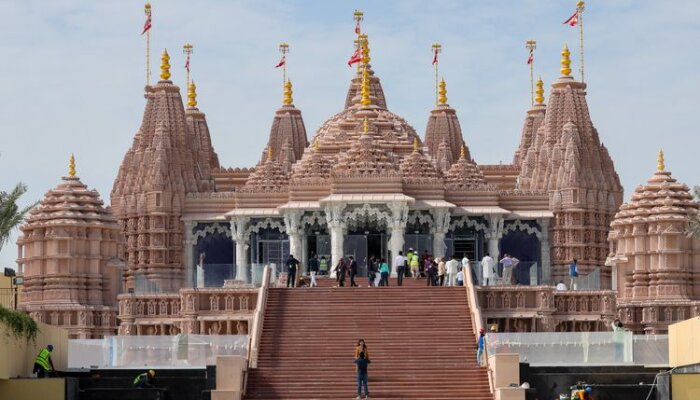
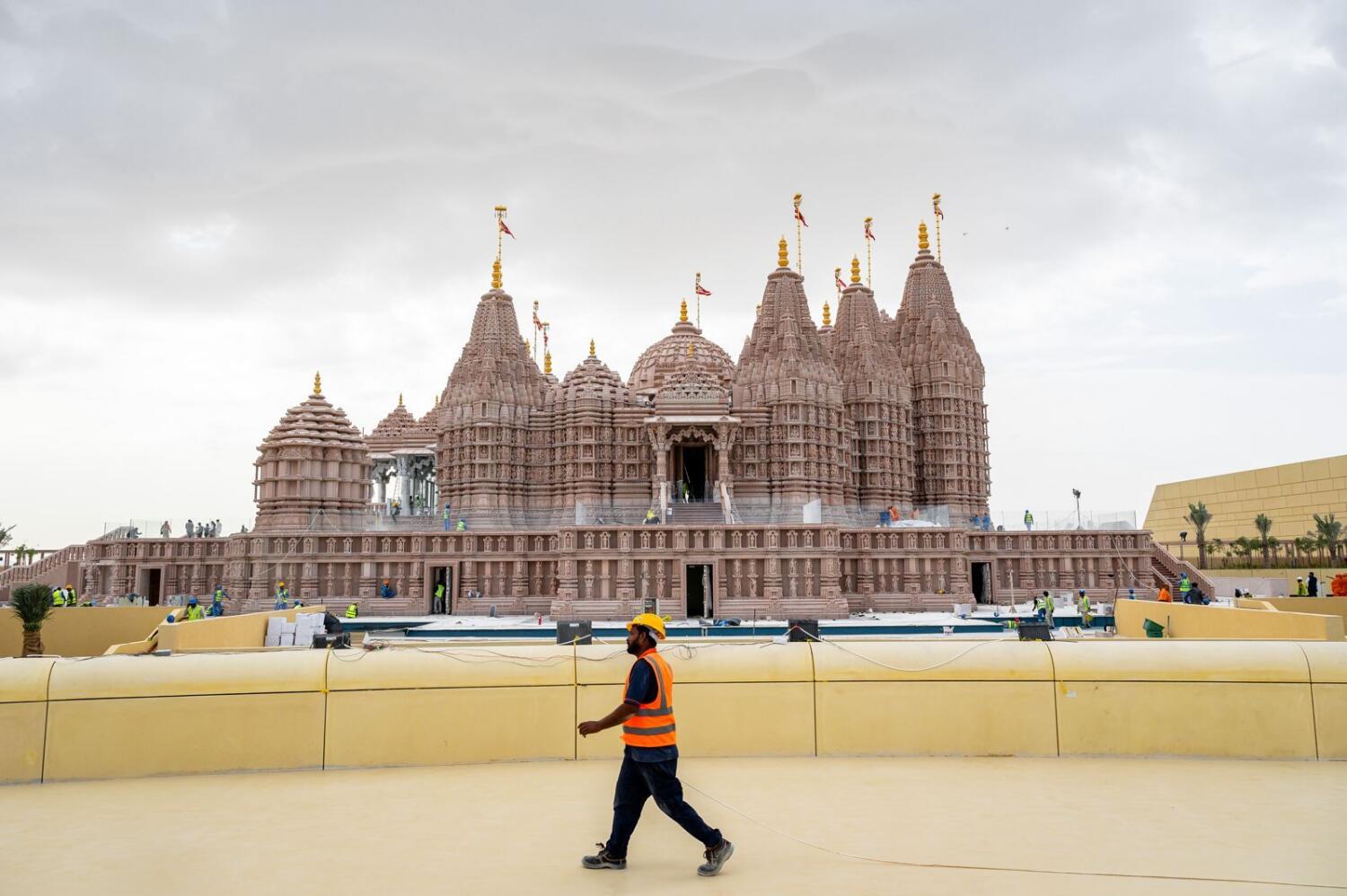
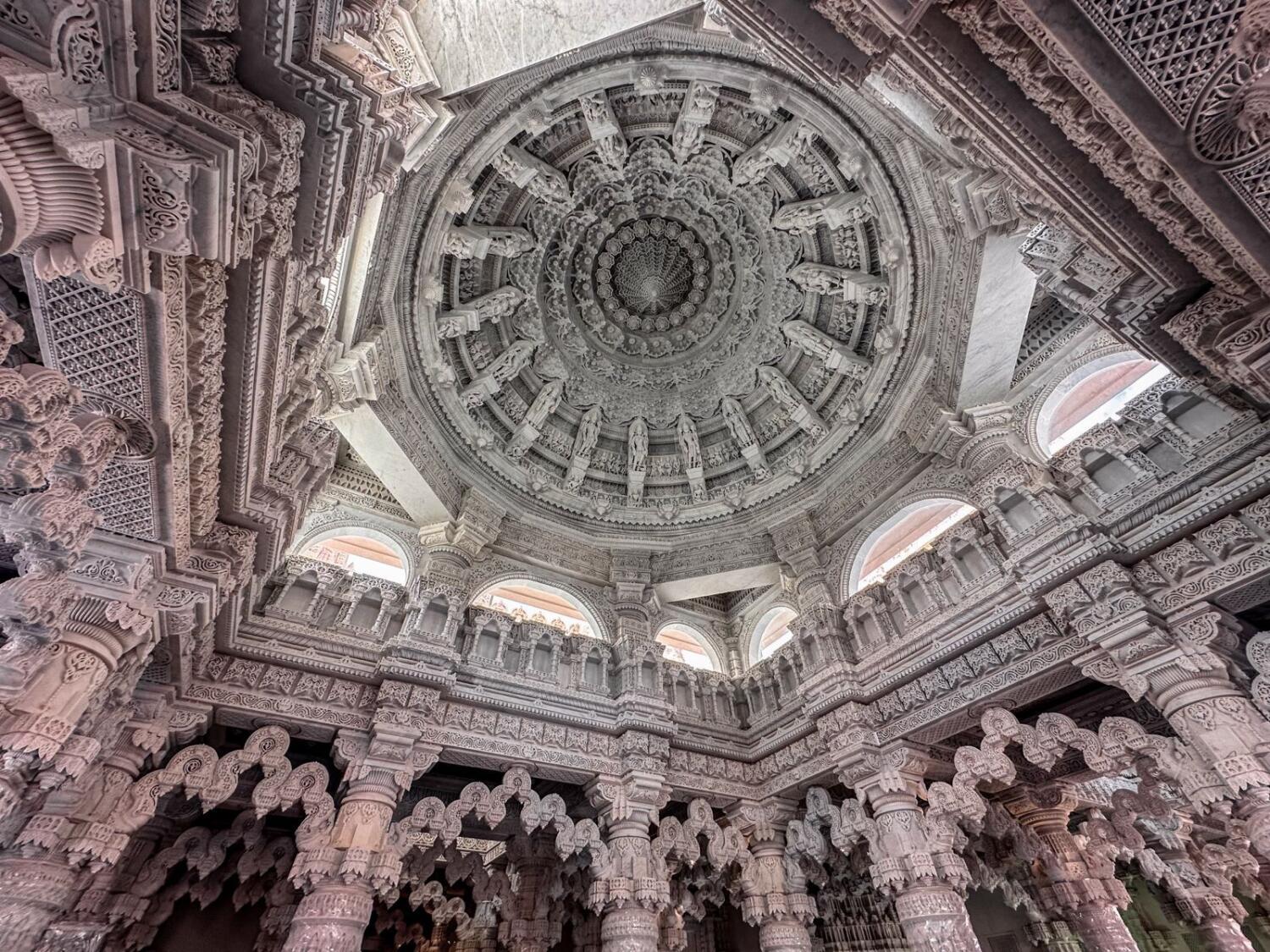
A sprawling Hindu temple constructed at an estimated cost of Rs 700 crore, the Bochasanwasi Akshar Purushottam Swaminarayan Sanstha (BAPS) Hindu Mandir is a huge, 108-foot-tall structure located just outside of Abu Dhabi in the capital’s Abu Mureikha area. It is the first stone Hindu temple in the United Arab Emirates and the largest in West Asia as well as among the biggest temples beyond India.

His Holiness Mahant Swami Maharaj, the current spiritual teacher of BAPS Swaminarayan Sanstha and Indian Prime Minister Narendra Modi are set to attend the much-awaited grand opening ceremony on 14th February. The public can register to access the house of worship starting on 18th February.

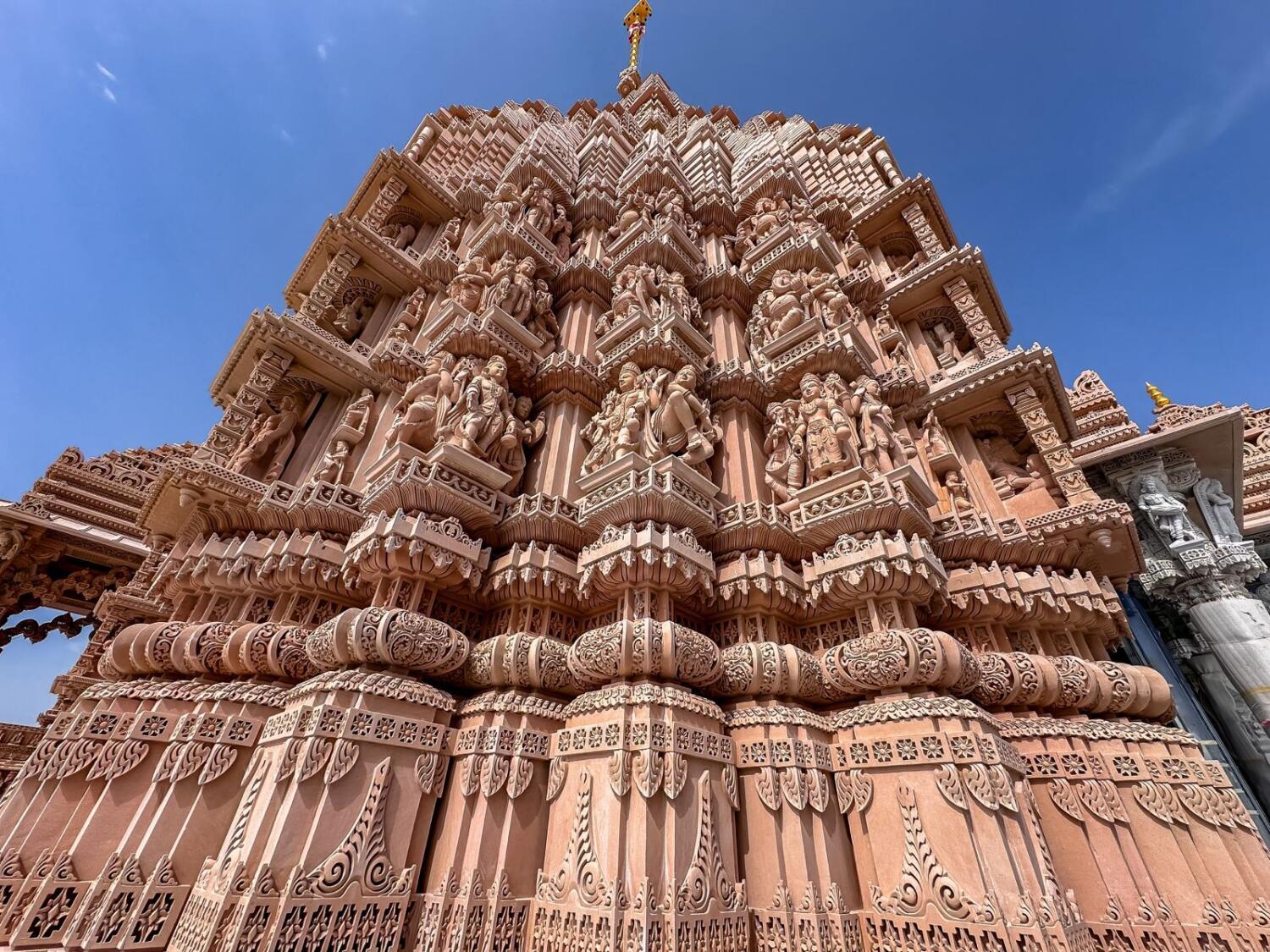
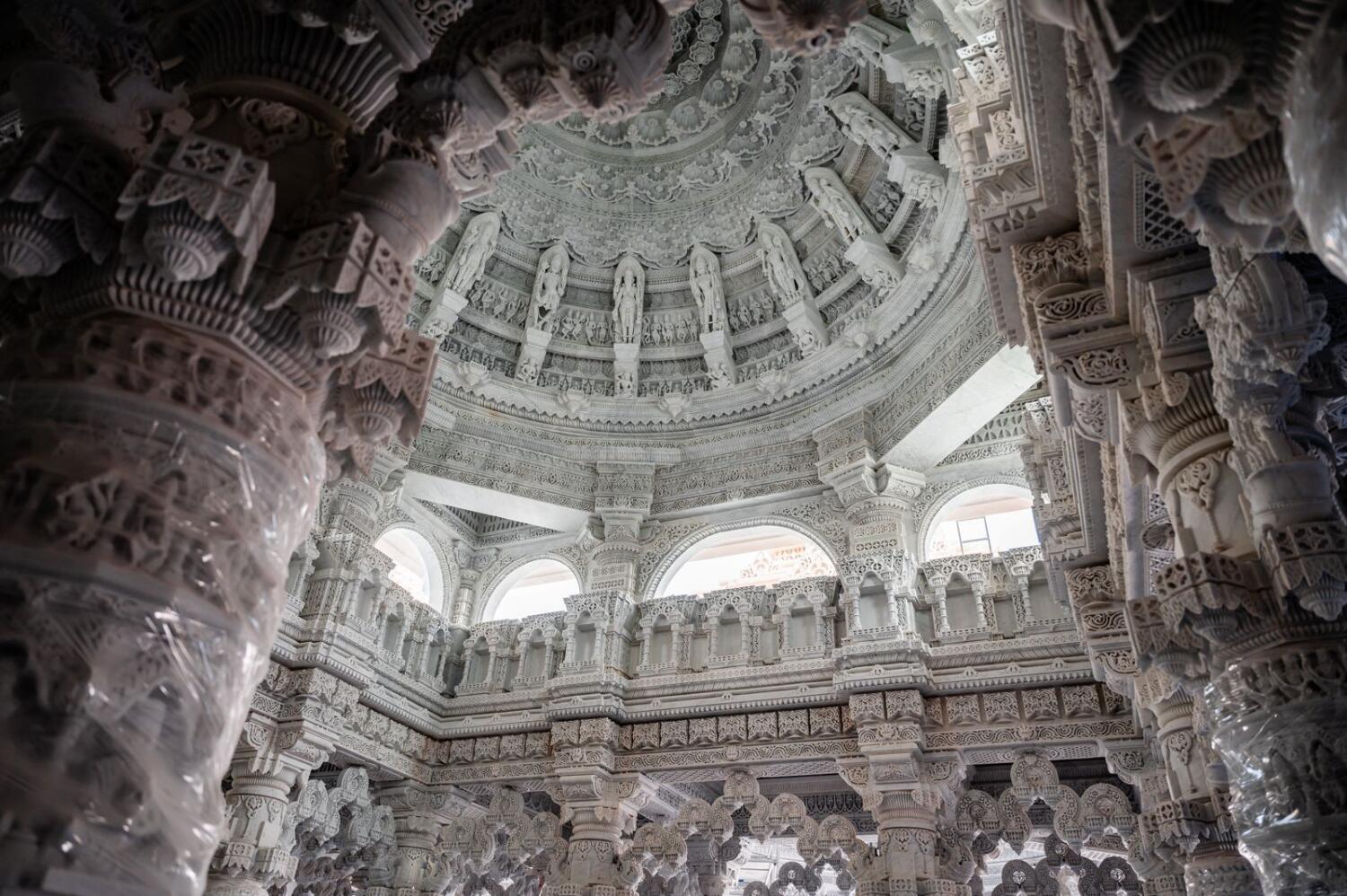
An architectural marvel of intricately carved artworks and a plethora of fascinating tales, it is praised as a spiritual haven of serenity. Standing on 27 acres of land provided by Sheikh Mohamed bin Zayed Al Nahyan, the President of the nation, the temple is a beautiful structure with two spectacular domes and seven towering spires, one for each of the emirates.

The spires can be witnessed from far away as one takes a detour to the Cultural Village in Abu Mureikhah from the Dubai-Abu Dhabi highway. Many volunteers are assisting with the cleaning procedure, while over 100 employees are currently adding finishing touches to the magnificent temple construction. The UAE and Indian flags are flown at the temple’s entrance. There is a “Wall of Harmony,” a building donated by the Bohra community in the country.

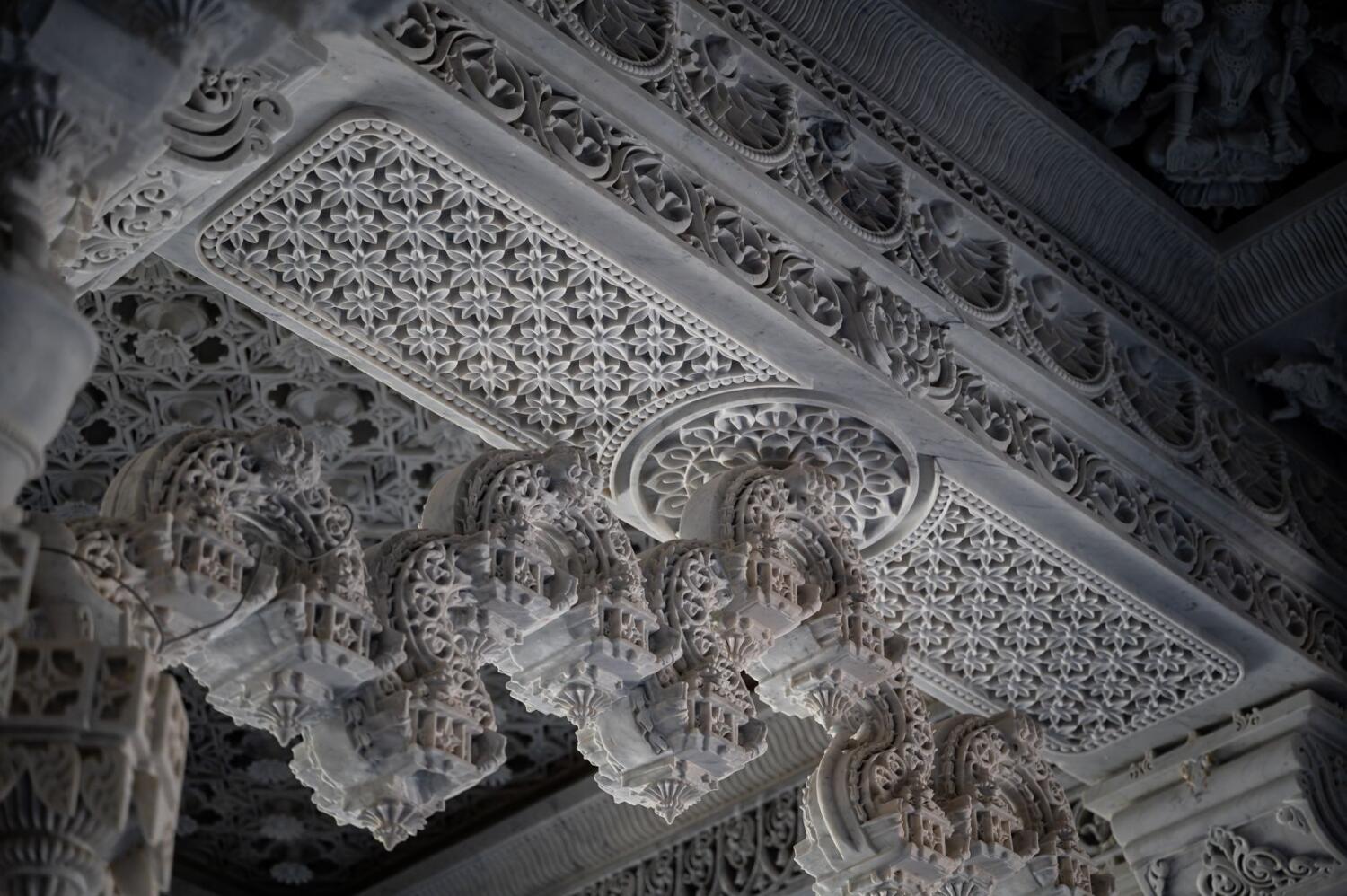
Created by proficient Indian artisans, the pink sandstone edifice stands as a testimony to humanity’s inclusiveness, exhibiting not only Hinduism but also the representation of all religions and civilizations.

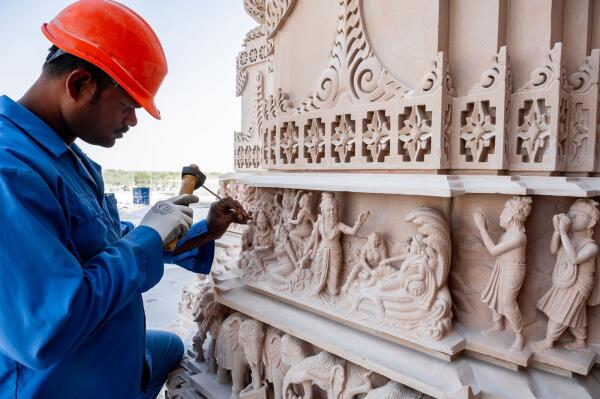
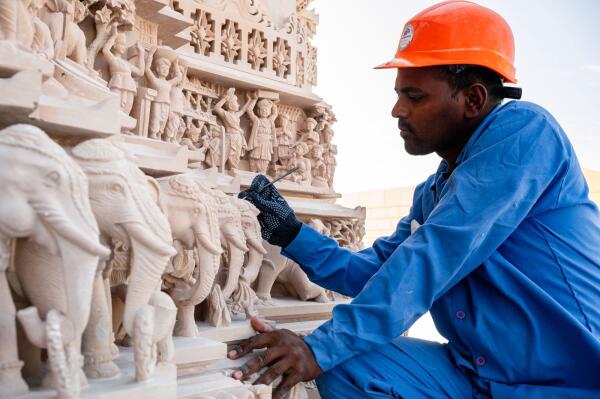
An artisan gives final touches to the stone carvings that depict stories from Hindu scriptures at BAPS Hindu Mandir in Abu Dhabi. (Source: Neeraj Murali/Khaleej Times)
Image via Neeraj Murali/Khaleej Times

The striking dune formation made of sand from all seven emirates is the first thing one observes when entering the premises, aside from the magnificent sight of the iconic temple. It was founded as a memorial to the vision of His Holiness Pramukh Swami Maharaj, the late spiritual leader of the Sanstha, who in 1997, while standing in the middle of the Sharjah desert, asked for the construction of a temple in Abu Dhabi. The BAPS organisation, the leadership of India and the UAE and their generosity have made that goal a reality.

Image via Khaleej Times

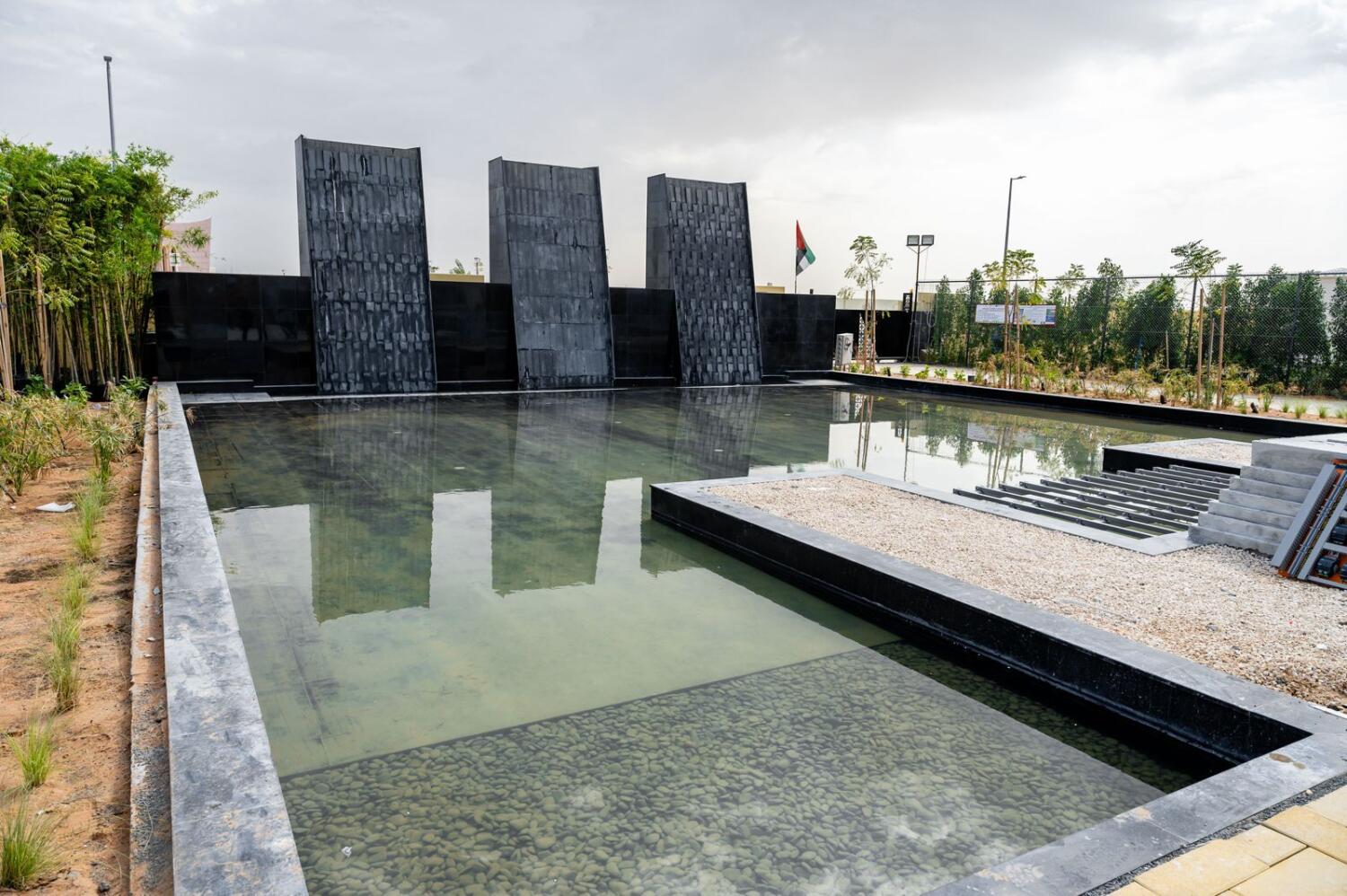
A gorgeous waterfall cascade that symbolises the source of the holy Indian rivers Saraswati, Yamuna, and Ganga and is dotted with six trees imported from the Czech Republic. Tourists can enter the temple premises barefoot because the flooring was built using cutting-edge technology to keep the temperature cool.

Image via Khaleej Times

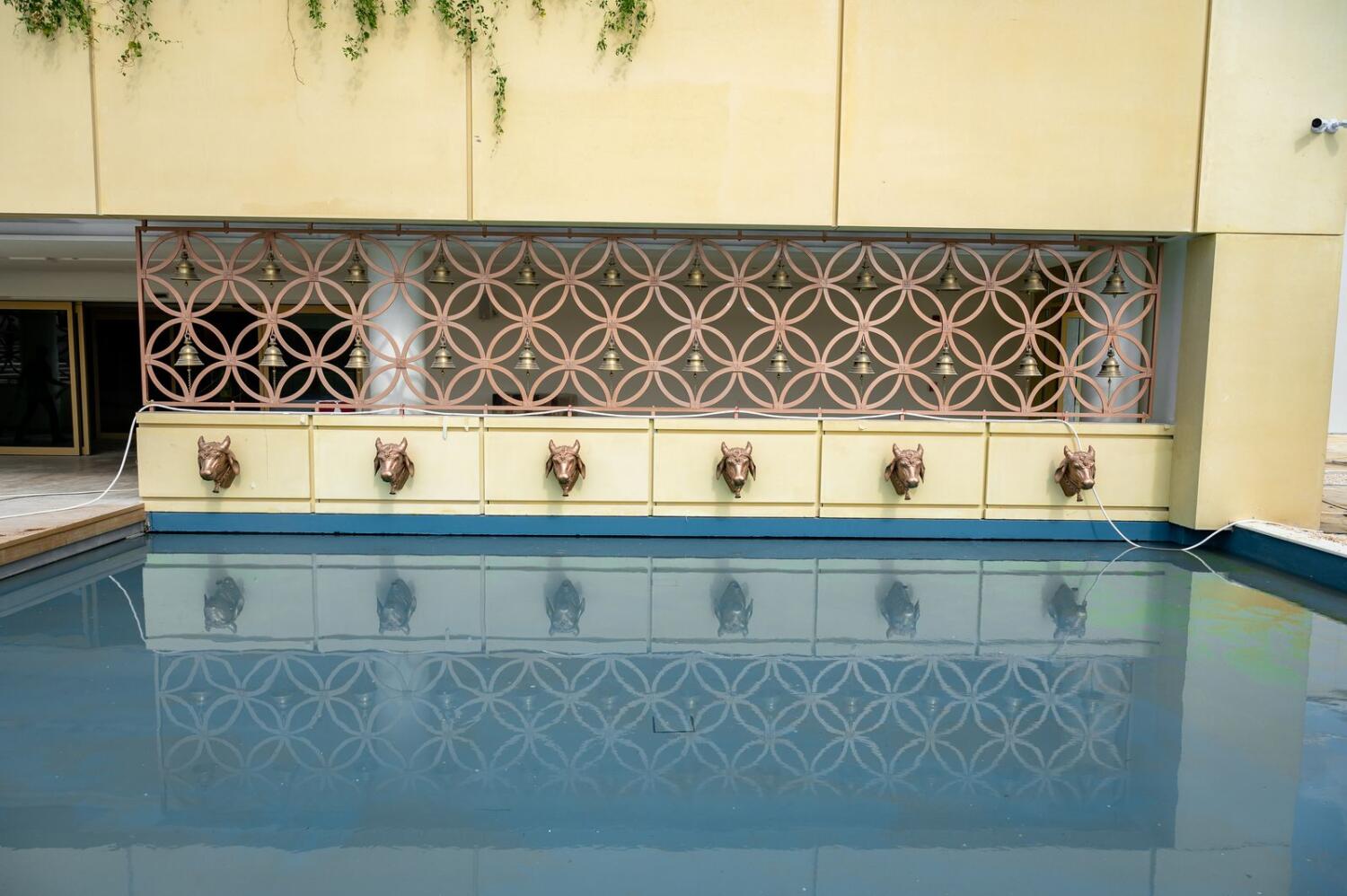
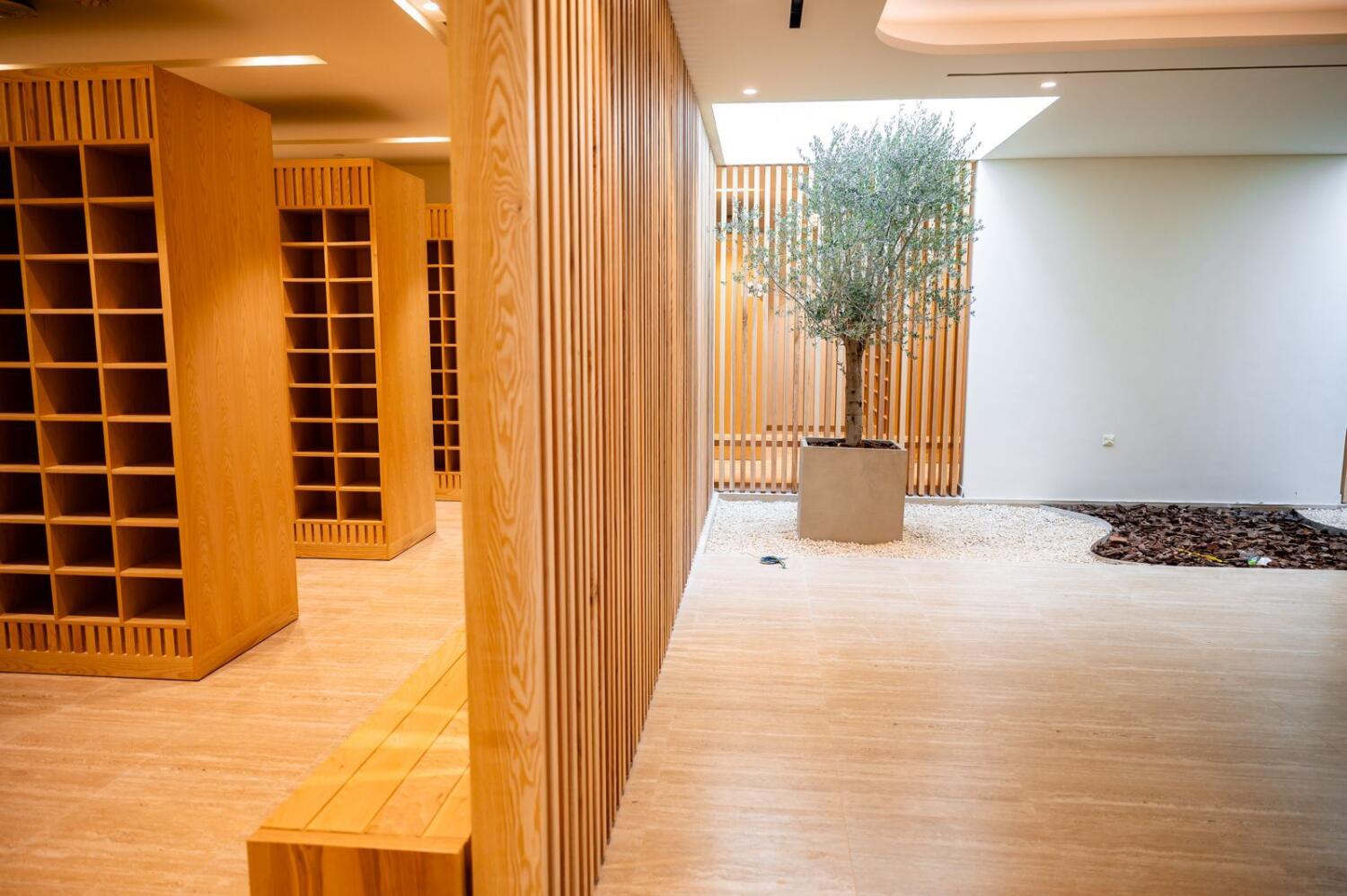
There are environmentally friendly shoe cottages with 96 bells which the worshippers can ring as they walk towards the temple on the outside as a memorial to the late Pramukh Swami Maharaj. The wooden pallets that were used to move the stones were recycled into benches, tables and chairs in the food court. The temple is among the most sustainable destinations of Hindu worship because of these attributes.

Image via Khaleej Times

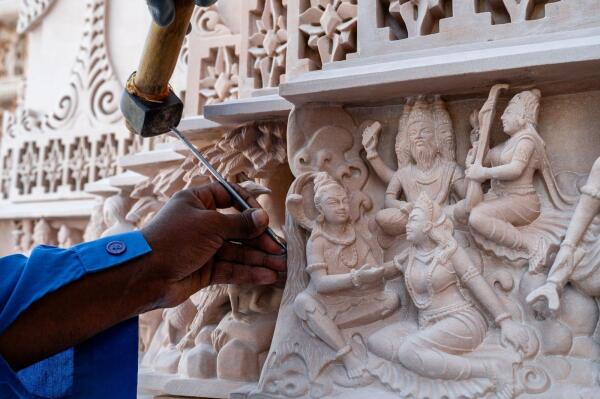
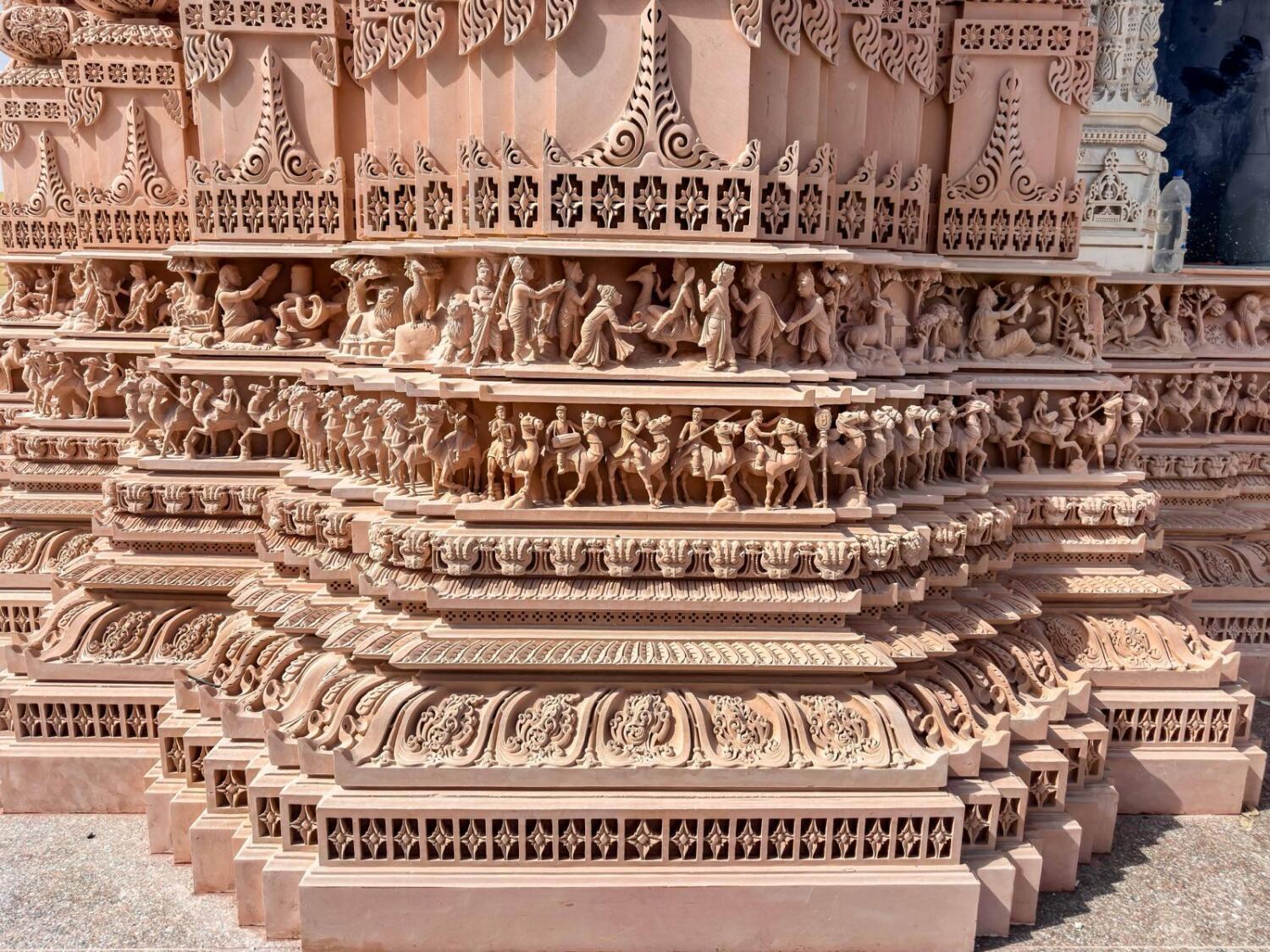
The temple itself is the main draw as it combines Arabic symbols with the rich cultural heritage of India. The elaborate stone carvings tell stories from Hindu scriptures and mythology as well as pivotal episodes from the Indian epics Ramayana and Mahabharata. The temple features carved representations of important stories drawn from the civilizations of Arabia, Egypt, Mesopotamia, Aztec, and India. It was constructed in accordance with the ancient Hindu “shilpa shastras” which are Sanskrit architectural texts.

Image via Khaleej Times

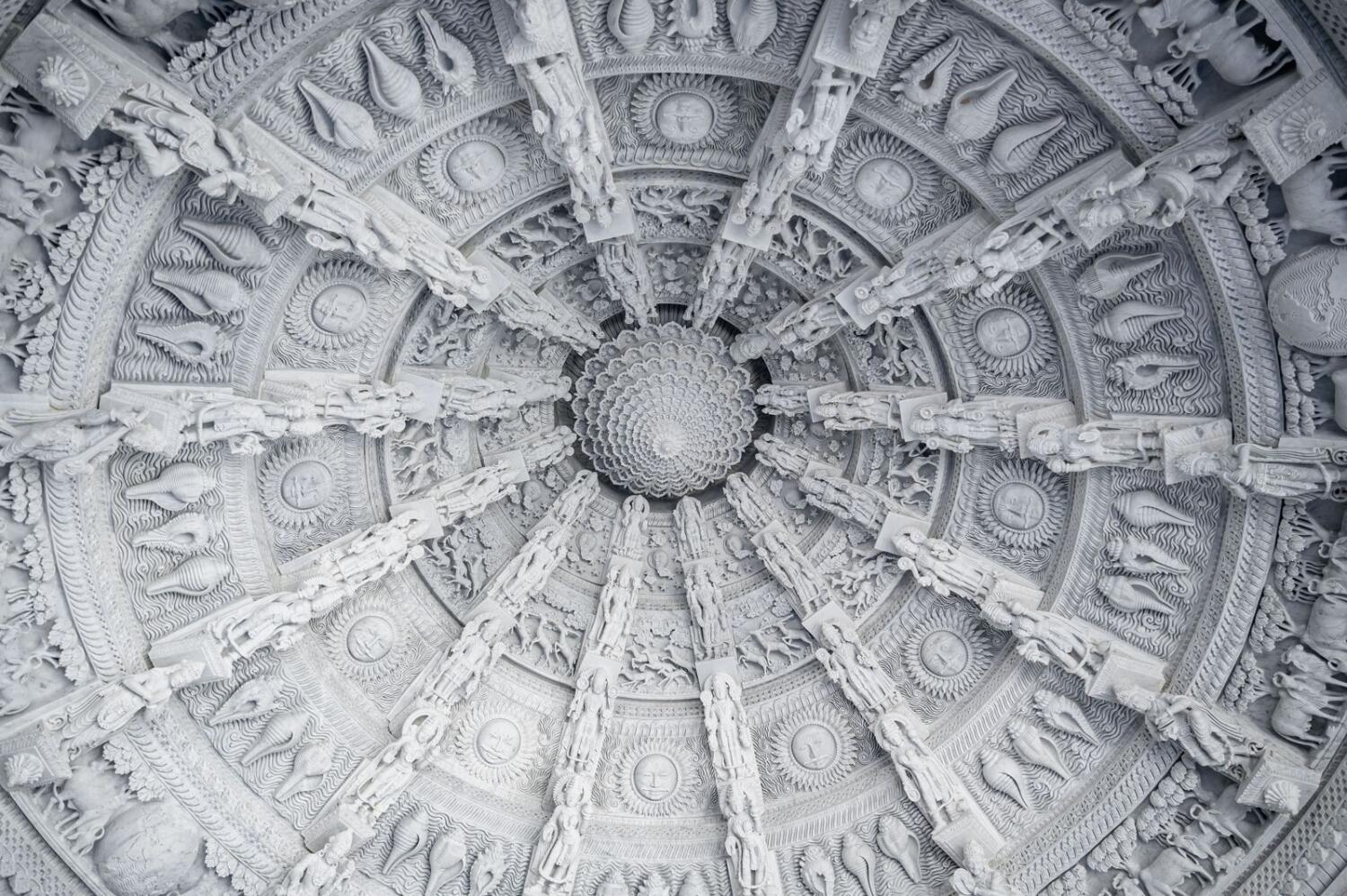
The temple’s interior artwork is breathtaking. The “Dome of Harmony” and the “Dome of Peace,” two magnificent carvings are what draw the most attention. The enthralling symbolism of “Dome of Harmony” spans five layers and captures the essence of fire, water, earth, air, and space. The “Maha Pillar” also known as “Pillar of Pillars,” which is decorated with thousands of finely etched tiny pillars, is an astounding piece of art. It is composed of 400 little white Italian marble pillars.

Image via Khaleej Times

The temple will be dedicated to Hindu deities representing various regions of India, such as Lord Swaminarayan, Lord Ram, Goddess Sita, Lord Krishna and Lord Ayyappan. The gods will be positioned beneath every one of the seven spires. The official opening of Abu Mureikhah is preceded and followed by several activities. This famous site has the potential to teach visitors new ideals from many faiths, religions, and civilizations in addition to serving as a place of prayer for Hindus.

Image via Khaleej Times

According to Pranav Desai, the temple director, there is an orientation hall where an overview of the temple will be conveyed through an audiovisual presentation. The temple can resist earthquakes up to a magnitude 7 on the Richter scale and its base is outfitted with 300 sensors that can detect tectonic activity. The building of the temple is designed to endure a millennium. Lifts have been skillfully incorporated into traditional architecture to give accessibility to the entire edifice, although a few flights of steps lead to the main temple structure.

The visitor’s shoes will be kept in storage using a Radio Frequency Identification (RFID)-tagged system. Pranav Desai’s wife Shaily informed, “With the Radio Frequency Identification technology, when you come closer to the exit, those in charge of the footwear can make sure that your shoes and footwear are ready for collection.”

Over 30,000 carved stones, each created by more than 2500 artisans in Rajasthan, India, make up the temple’s structure. The temple project coordinator, Sanjay Parikh noted, “At the peak time of construction, we had more than 5,000 artisans carving these stones.” Associated with forty BAPS temple projects, he asserted that the elaborate sculptures conveyed stories of numerous scriptures from Hindu mythology and moral lessons from around the world.

He highlighted, “We have stories from the Mesopotamian culture, Greek culture, Aztec culture, African and Native American cultures etc.” The carvings of oryx, gazelles, camels, and falcons represent Arab civilization, while those of elephants, peacocks, and cows depict themes associated with Indian culture. Each of them tells a distinct story.

The centre dome transmits a message of harmony and interconnectedness among various communities by symbolizing the five elements of nature, earth, light, fire, air, and space. A dune built with sand from the seven emirates on the other side provides a view of the temple that gives the impression that you are viewing it from the United Arab Emirates, while an amphitheatre with a ghat-like structure (riverfront steps) gives a view that makes one feel that you are watching it from India, according to Desai.

There is a communal centre within the temple complex where worshippers can carry out different rites. 3,850 centres and more than 1100 mandirs make up the BAPS Global Network. Anyone is invited to stop by any of these locations.

Watch the entire video of the BAPS Hindu Mandir below:

From migrant Hindu to Home Minister and Deputy Prime Minister, ‘Bharat Ratna’ LK Advani who turbocharged the Ram Janmabhoomi Movement

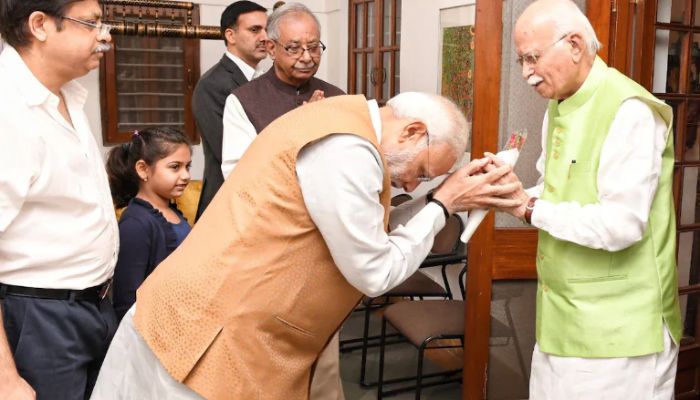
On Friday (3rd February), Prime Minister Narendra Modi announced on X (formerly Twitter) that veteran BJP leader LK Advani will be conferred India’s highest civilian award, the Bharat Ratna. While making the announcement, PM Modi hailed Advani describing him as, “One of the most respected statesmen of our times, his contribution to the development of India is monumental.” PM Modi also enlisted major achievements of BJP stalwart throughout his decades-long service in public life. 

LK Advani who was born in an undivided India, rose from a kid born to a migrant Hindu family to the face of the Ram Janmabhoomi movement. He served as the President of the Bharatiya Janata Party for the longest period since its inception in 1980. 

Here is a brief overview of how he played a key role in shaping Indian polity for decades. 

Initial life, RSS Swamsevak

Lal Krishna Advani was born on 8th November 1927, to a Sindhi Hindu business family residing in Karachi, Sindh – an erstwhile part of undivided India under the control of the British. He completed his schooling at Saint Patrick’s High School, Karachi, Sindh, and enrolled in Government College Hyderabad, Sindh.

At the age of 14, Advani joined the Rashtriya Swayamsevak Sangh in 1941 and steadfastly started attending the Karachi shakha. His stature among the Sangh ranks grew as he became a pracharak of the Karachi branch of the RSS. He was later designated as the Secretary of Rashtriya Swayamsevak Sangh, Karachi, in 1947.

In the aftermath of partition, his family migrated to India and settled down in Bombay, where he graduated in Law from the Government Law College of the Bombay University.

After the partition, he extensively worked in Alwar, Bharatpur, Kota, Bundi, and Jhalawar as a Pracharak until 1952. Advani started his political career as secretary to SS Bhandari, who was General Secretary of Jana Sangha, a political party formed by Syama Prasad Mookharjee in association with RSS in 1951.

In 1957, Advani moved to Delhi and soon became general secretary and then President of the Delhi unit of the party. In 1967, he was elected as the chairman of the First Delhi Metropolitan Council. In 1970, he became a member of the Rajya Sabha for six years. 

After serving the Bharatiya Jana Sangh in various capacities, he became its President in 1973 at the Kanpur session of the party working committee meeting. In 1970, Advani became a member of the Rajya Sabha from Delhi, and was reelected in 1976, during the emergency imposed by Indira Gandhi.

Post abrogation of Emergency, in 1977 when elections were called, Jana Sangha merged with Janata Party along with many other parties to contest Lok Sabha elections. Advani, along with his colleague former PM Atal Bihari Vajpayee had fought the Lok Sabha elections.

They won the elections held after the Emergency. Afterward, Janata Party made LK Advani the Minister of Information and Broadcasting. At that time, Vajpayee was made Foreign Minister, and Morarji Desai became the Prime Minister. 

However, Jana Sangh faced internal conflicts which forced several leaders of Jana Sangh to part ways. Advani too quit the Janata Party and formed the Bharatiya Janata Party (BJP) along with Atal Bihari Vajpayee and others. Advani was one of the distinguished leaders of the newly founded party BJP and was elected to Rajya Sabha from Madhya Pradesh for two terms starting in 1982.

BJP’s embrace of Hindutva and Ram Janmabhoomi movement under the leadership of LK Advani

Under the leadership of Advani, the party aligned itself with the ideology of Hindutva. It unreservedly put its weight behind the Ram Janmabhoomi movement in Ayodhya. 

During the early 1980s, the Vishwa Hindu Parishad (VHP) launched a movement for the construction of a Mandir dedicated to Lord Rama at the site where the disputed Babri structure was standing. The BJP extended their support to the movement, including it in their poll manifesto. The party secured a massive upswing in the 1989 Lok Sabha elections. From winning just 2 seats in the 1984 elections, the BJP won a staggering 85 Lok Sabha seats in the general elections in 1989, becoming the third largest party in Lok Sabha after Congress and Janata Dal.

The tally was remarkably impressive for just a decade-old party. Owing to its upswing, Congress fell short of the majority mark and it declined to form a government. As a result, the VP Singh-led National Front Government came to power, supported by the BJP and the left parties from the outside.

During this time, the Ram Mandir movement gained momentum. Many political leaders and organisations played a crucial role in strengthening of the Ram Mandir movement in the late 1980s, including BJP leaders like Murli Manohar Joshi, Uma Bharti, Pramod Mahajan and groups such as VHP and the RSS. Advani became the political face of the movement.

LK Advani’s Rath Yatra that culminated in the demolition of the disputed structure in Ayodhya

In 1990, Advani commenced a ‘Rath Yatra’ from the hallowed temple of Somnath in Gujarat to Uttar Pradesh’s Ayodhya to drum up support for the Ram Janmabhoomi movement and to mobilise karsevaks and get them to assemble at the disputed sit. His aim was to educate people about the Ayodhya dispute and enlist their support for the construction of a Mandir at the former disputed site in Ayodhya that was awarded to Hindus by the Supreme Court of India in 2019. 

The choice of Somnath was not accidental as Advani would later explain in his memoir ‘My Country My Life’: “The intention was to contextualise Ayodhya in the historical lineage of Muslim aggression and then to seek legitimacy for Mandir movement by drawing a parallel.”

LK Advani: The man who laid the building blocks of India’s political right

Advani’s Rath Yatra was abruptly halted and he was arrested by the Lalu Yadav government in Bihar in October 1990. Then the Mulayam Singh Yadav government in Uttar Pradesh ordered police to fire on Karsevaks to prevent them from reaching the Janmabhoomi site. As a result, the BJP withdrew support to the VP Singh govt and the govt fell in November 1990.

These incidents nevertheless galvanised Ram Bhakts and it culminated in the demolition of the disputed structure two years later. On 6th December 1992, protesting karsevaks, members of Hindu groups scaled the fencing of the mouldering building and razed the disputed construction to the ground. 

Advani and other BJP leaders were accused of being provocateurs, of inciting people to bring the disputed structure down. However, after almost three decades of protracted legal battle, on 30th September 2020, the CBI’s special court acquitted Advani and released him from all charges. The court said the demolition was not pre-planned and that the accused were “trying to stop the mob and not incite them”.

Advani on his part has always maintained that it was never his intention to demolish the structure and all he sought was to revive civilisational pride in a great and ancient culture through the means of the Ram Temple movement. 

Advani also played a key role in ushering the BJP into the era of dominance and shifting the Overton window to mainstream the politics of Hindutva. He called out the Congress party’s treachery by referring to its minority appeasement as “pseudo-secularism”. He is also to be credited for laying the foundation of India’s political right which has been furthered by PM Narendra Modi.

After the BJP-led NDA formed the government in 1998 under Atal Bihari Vajpayee, Advani became the home minister, and later in 2002, he was made the Deputy Prime Minister. After BJP lost the elections in 2004, Vajpayee retired from active politics, and Advani became the tallest leader of the party. He was the Prime Ministerial candidate of the party in the 2009, however, BJP failed to defeat the Congress-led UPA, and the dream of Advani to become the prime minister of India was never fulfilled. He was the leader of the opposition in the Lok Sabha from 2004 to 2009, and earlier from 1990 to 1993.

LK Advani won the Lok Sabha elections from Gandhi for the fifth consecutive time in 2014. However, by now the Narendra Modi era in BJP had begun. Later Advani was part of the Marg Darshak Mandal of the BJP, along with Murli Manohar Joshi and Atal Bihari Vajpayee


Pune: Professor, 5 students arrested for a play mocking Lord Ram, Goddess Sita at Savitribai Phule University

0

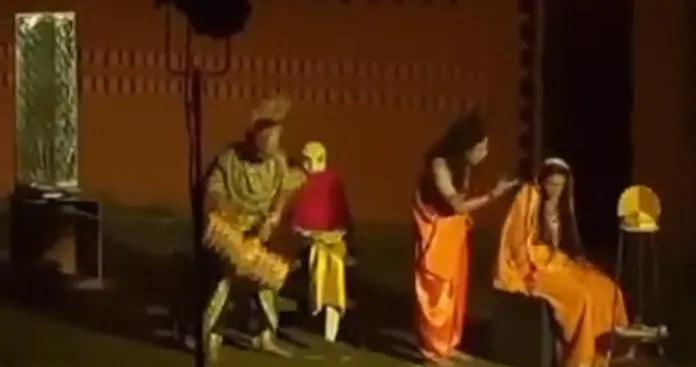
A professor and 5 students were arrested for mocking Lord Ram and Goddess Sita with abusive dialogues in a play staged by the Lalit Kala Kendra, a centre for performing arts affiliated with Pune University. The professor, Dr Pravin Bhole, and five students were accused of offending religious sentiments through objectionable dialogues and scenes in the play based on ‘Ramleela’.

The offensive portrayal of Lord Ram and Goddess Sita was strongly objected to by the members of Akhil Bharatiya Vidyarthi Parishad (ABVP) and students from Lalit Kala Kendra. The play centred around the backstage banter of actors in ‘Ramleela’, depicted a male artist portraying Sita smoking a cigarette and using abusive language.

Taking to X, ABVP Pune shared a video of the offensive play and wrote, “Prabhu Shriram and Sita Mata were portrayed as clowns in the dramas presented by the department of Fine Arts Center of Savitribai Phule Pune University.”

Following a complaint by ABVP functionary Harshvardhan Harpude, a case was registered under section 295 (A) of the Indian Penal Code, dealing with deliberate and malicious intent to outrage religious feelings. The arrested individuals include Dr Pravin Bhole and students Bhavesh Patil, Jay Pednekar, Prathamesh Sawant, Rishikesh Dalvi, and Yash Chikhle.

According to the FIR, when ABVP members objected to the play and halted the performance, the artists allegedly responded by heckling and assaulting them.