Home Blog Page 1439

Kapil Sibal, who opposed Ram Mandir in SC, now calls the consecration ceremony a ‘show-off’ while saying Lord Ram resides in his heart

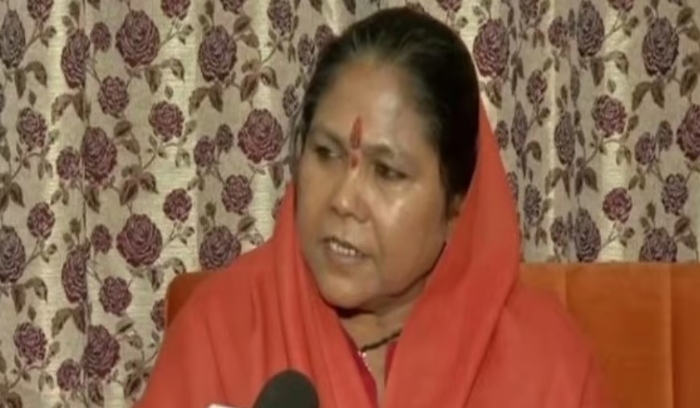
On 25th December (Monday), Former UPA Law Minister and Rajya Sabha MP Kapil Sibal described the Pran Pratishtha, or consecration ceremony of Ram Lalla at the Ram Janmabhoomi in Ayodhya as a “show-off”, hinting that he would decline any invite extended to him to attend the grand inauguration of Ram Mandir.  

Notably, while responding to the news agency ANI regarding the opposition’s stance on Ram Mandir, the Former Congress veteran leader, and UPA Minister argued that Lord Ram resides in his heart and the grand spectacle for Pran Pratishtha is a “show off”. 

Targeting the Bhartiya Janata Party, the Rajya Sabha MP claimed that the BJP doesn’t follow the traits of Lord Ram but they are building a Ram Mandir.    

The former Congress leader said, “This whole issue is a show-off. They (BJP) talk about Ram but their behaviour, their character are nowhere close to Lord Ram’s. Truthfulness, tolerance, sacrifice, and respect for others are some of the traits of Lord Ram but they do exactly the opposite and say we are glorifying Ram.”

Responding to the query whether he would attend the ceremony on 22nd January, Sibal added, “Mere dil mein toh Ram hai, main koi dikhave ke liye kaam nahi karta hoon.” (Lord Ram resides in my heart, I don’t do anything for show-off).

He added, “Ram has taken me here, then I must be doing something right.”

Incidentally, senior Congress leader Shashi Tharoor had earlier used the same rationale to oppose the construction of a Ram Mandir. He had claimed that no ‘good Hindu’ would want a Ram Mandir at the Babri site and urged that one should have the Ram Mandir in one’s heart.

However, it is pertinent to note that Kapil Sibal was spearheading legal course of action in courts, opposing the rights of Ram Lalla and the reclamation of the birthplace of Lord Ram. 

UPA government had denied the existence of Lord Ram

In September 2007, the Congress-led UPA1 government had submitted in court that there is no historical proof of Lord Ram’s existence.

In 2007, an affidavit filed by the Congress-led government read, “Valmiki Ramayana and Ramcharitmanas admittedly form an important part of ancient Indian literature, but these cannot be said to be historical records to incontrovertibly prove the existence of the characters and occurrences of events depicted therein.” The affidavit was filed to register the UPA government’s opposition to the demand to scrap the Setusamudram project as it would damage the Ram Setu.

Additionally, former UPA Minister and Supreme Court advocate Kapil Sibal fought the Ram Janmabhoomi case for the Sunni Waqf Board opposing the building of a magnificent Ram Mandir at the then-disputed site in Ayodhya. He also employed dilatory tactics and asked the apex court to delay the decision in the Ram Janmabhoomi case till the 2019 elections. 

Opposition’s stance on Ram Mandir

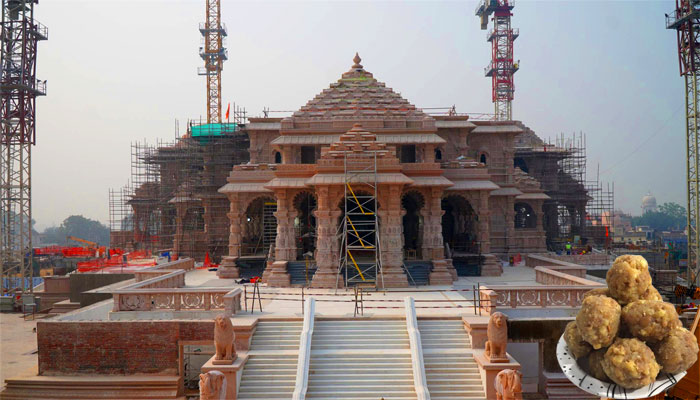
On 22nd January, Prime Minister Narendra Modi will perform the Pran Pratishtha of Ram Lalla in Ayodhya. For the grand occasion, the Ram Mandir Trust has sent invites to eminent personalities from all walks of life. Congress president Mallikarjun Kharge, Sonia Gandhi, and the party’s leader in Lok Sabha, Adhir Ranjan Chowdhury have also been invited.

CPI(M) leader and I.N.D.I. Alliance member Sitaram Yechury has reportedly already turned down the invite while his counterpart in the CPI D Raja could also skip the ceremony. Further on the list now, Rajya Sabha MP Kapil Sibal has hinted that he would not be attending the Ram Mandir citing Lord Ram’s place in his heart.  

Everything you need to know about The Telecom Bill 2023, and how it aims to modernise and secure the telecommunication sector in India

On 21st December, the Telecom Bill 2023 was passed in Rajya Sabha, a day after it was passed in Lok Sabha. The bill introduced several critical changes aimed at benefitting the general public by modernising and securing the telecommunication sector in the country.

Replacement of outdated laws

The telecom industry was managed in India by the Indian Telegraph Act of 1885 and the Indian Wireless Telegraphy Act of 1933. These two laws needed to be updated, and were not fully aligned with the current technological realities. The Telecom Bill 2023 replaced both of them and introduced several clauses that will streamline the telecommunication industry as per the latest technological scenario in the country.

Streamlined Authorisation and Spectrum Allocation

One of the most prominent aspects of the bill is the streamlined authorisation and spectrum allocation. The bill mandates prior permission from the union government for telecommunication-related activities. The main aim is to streamline the process of managing telecommunication services. Spectrum allocation is primarily done via auction, except the allocation is done for specific purposes such as disaster management and national security.

The approach will provide for a more flexible and scalable regulatory framework. It will help in forming a mechanism for quicker responses to technological advancements. The central government will be authorised to re-purpose or reassign any required frequency range. The government of India now holds the power to permit the sharing, trade, lease, and surrender spectrum.

Enhanced Security Measures

The bill emphasises on a strong verification process for telecom service provided. Now, it will be mandatory to get biometric-based identification for the subscribers before issuing SIM cards. The government has brought this change to enhance security and accountability within the telecom sector.

Notably, the new bill has introduced strict penalties for fraudulent SIM procurement, mandatory consent for advertising messages, biometric-based subscriber verification, specific conditions for spectrum allocation, and stringent penalties for unauthorised telecom services or equipment. Furthermore, companies can procure telecom equipment only from trusted sources per the government’s guidelines.

The government has now the power to intercept the messages and a class of messages between two or more persons if the government deems it necessary to do so for reasons including national security, prevention of incitement of offences or public order. On similar grounds, the government will have the right to suspend the telecom services. Furthermore, the government may take temporary possession of any telecom infrastructure or service for any public emergency. However, unlawful interception will attract penalties.

In the earlier draft of the Telecom Bill, Over-The-Top services were categorised under telecommunication services. However, in the revised bill, the government opted for a more inclusive approach and encapsulated OTT within a broader definition of telecommunication. In short, if the government wishes to classify OTT services as “telecommunication services”, it can do it. The aim is to combat digital fraud and misuse of communication platforms.

While services like WhatsApp, Signal and Telegram are out of their purview, it has to be noted that OTT content is going to be monitored. The OTT entities will come under the purview of the Ministry of Electronics and Information Technology, and the content distributed on these platforms will be overseen by the Information and Broadcasting Ministry.

Policy Shift in Satellite Spectrum Allocation

In the case of the satellite spectrum allocation, the bill specifically benefits the satellite broadband services sector. The bill has moved away from auction-based allocation to an administrative assignment model. It will allow the operators to bring enhancements efficiently in the sector.

No Fee Refunds for Surrendered Licenses

If the company surrenders the spectrum license, it could claim the fee paid at the time of the allocation. However, as per the new bill, there is no option to receive a refund of the fee if the entities surrender their license, registration, authorisation or assignment. It is aimed to bring financial discipline and commitment across the telecom sector and operators.

Absence of Restructuring and Insolvency Provisions

The bill has removed the provisions of restructuring, the default of payment and insolvency. The aim is to bring a more market-driven approach to the sector where the telecom operators will be held responsible for their financial sustainability and risk management. It has been seen in the past that telecom operators leave the market all of a sudden due to financial mismanagement. By removing the provisions that may support such withdrawal of service from the market, the government aimed to bring more accountability on the operators’ part.

Renaming and Expansion of USOF

The government renamed the Universal Service Obligation Fund (USOF) “Digital Bharat Nidhi”. The bill introduced a broader operational scope to allow its use for new and existing telecommunication services and technologies. The idea is to move towards a more inclusive approach to telecommunication development in India.

Clear Distinction between Telecom and Broadcast Services

The bill has brought a clear distinction between broadcast services and telecommunications. Now, the broadcasting services have been referred to as per the Cable Television Networks Act for regulatory guidance. It will bring clearer regulatory boundaries and help streamline the frameworks across the sectors.

The criticism that should die 100 deaths

Media houses are criticising the bill as it puts journalists under the scanner. According to mainstream media, as the new bill requires to furnish correct information, it could “impede whistle-blowers as well as journalists who operate under anonymity”. Interestingly, in recent times, several of the mainstream media stories turned out to be fake. Be it the Meta fiasco of The Wire or the Pegasus story that turned upside down when investigated. Who can forget how The Wire forged a complete investigation to blame the BJP for running an underground app, “Tek Fog“?

Furthermore, PRS Legislative Research claimed that the provision of surveillance would lower the degree of privacy of communications for all users. However, such arguments fail to comprehend the depth of telecommunication usage by the anti-India elements and terrorist organisations. Any such activity can be put to rest at the foundation stage if the interception of such messages is done properly as per the guidelines.

Ram Mandir consecration ceremony: Engraver of foundational stone among chief invitees to ‘pran pratishthha’ event

Among many dignitaries invited for the pran pratishthha event during the consecration of Ram Lalla in the garbh-griha (sanctum sanctorum) in Ayodhya is one man whose contribution to the construction of the Ram Mandir is unparalleled. Annubhai Sompura, the skilled engraver responsible for crafting the inaugural stone for the forthcoming Ram temple, is among the distinguished luminaries invited for the consecration ceremony of the Ram Mandir, a report published in New Indian Express said.

Recognising Sompura’s significant role in the temple movement, Shree Ram Janmabhoomi Teerth Kshetra Trust has extended an invitation to the engraver to be a part of history. The event, graced by the presence of Prime Minister Narendra Modi and other dignitaries in the temple town, marks an epoch-making milestone in the ongoing journey of the temple’s construction.

Upon the advice of the esteemed chief architect and sculptor Chandrakant Sompura, Annubhai, who was 45 years old at the time, shifted from Ahmedabad to Ayodhya in 1990. Accompanied by his brother Pradeep Sompura and son Prakash, he established Ayodhya as his permanent residence. Together with his brother and son, Annubhai commenced the carving of stones and pillars intended for the future temple. This marked the beginning of their dedicated efforts, with Annubhai earning the distinction of being the craftsman behind the first stone crafted explicitly for temple construction.

The engraver’s accommodations in Ayodhya were organised by Ashok Singhal, the former international president of Vishwa Hindu Parishad (VHP) and a key figure in the temple movement. Sompura reportedly resides in housing provided by temple trust chief Mahant Nritya Gopal Das at Maniram Chhavni Ashram.

With only two stones and no machinery at his disposal, Annubhai began his carving journey. Armed with a hammer and chisel, he began sculpting the raw stones in a secluded location surrounded by a dense forest. Over time, this once desolate spot has transformed into a fully equipped workshop dedicated to the construction of the upcoming temple.

According to local sources, the initial stone-cutting machine reached Ayodhya in 1996. Subsequently, a significant number of heavy machinery units were brought in for stone cutting, accompanied by the hiring of hundreds of artists to further refine and carve these stones.

“In the beginning, Annubhai, alongside his son and brother, were the sole artists engaged in chiselling the stones. However, over time, the workforce expanded. Currently, approximately 150 workers from Gujarat, Rajasthan, Mirzapur, and Ayodhya are tirelessly working day and night to engrave the stones destined for use in the temple,” reported a local source.

Furthermore, the completion of carving a significant quantity of stones intended for the ground floor of the temple occurred under the supervision and guidance of Annubhai Sompura until November 9, 2019. This milestone coincided with the Supreme Court’s resolution of the longstanding Ram Janmabhoomi Babri Masjid title suit.

Overcome with emotions over the consecration of Rama Lalla in the sanctum sanctorum, the 78-year-old Annubhai considers the forthcoming moment when Ram Lalla will be enthroned in the garbh griha as the most significant festival of his life. Expressing a sense of fulfilment, he describes his life as nothing short of a penance, dedicated to witnessing this historic occasion. Anticipating the culmination of his devotion on January 22, when Ram Lalla takes residence in his palace amid celebrations, Annubhai reflects on the emotions that will engulf him during those long-awaited moments that have defined his existence.

CPM leader Brinda Karat says their I.N.D.I. Alliance partner, Congress, is working with the BJP

Hitting out at the Congress, Communist Party of India (Marxist) senior leader Brinda Karat said on Monday that in Kerala, the grand old party is aligning with the RSS and the BJP against the ruling CPI (M).

The Politbureau member of the CPI (M) was responding to Congress leader KC Venugopal’s allegations that his party workers are being attacked in Kerala. “Everywhere, our boys were brutally attacked by the police and CPI(M) goons in the state,” Venugopal had alleged.

In response, Brinda Karat said that the Congress speaks the same language as the Bharatiya Janata Party and Rashtriya Swayamsevak Sangh.

“In Kerala, the Congress is clearly with the RSS and the BJP against the CPI(M). At the national level, they talk about fighting against Modi, but in Kerala, where there is a government with alternative policies and a pro-people stance, the Congress cannot tolerate it,” she said.

“What the BJP and RSS say in the morning, the Congress says in the evening. This is the politics in Kerala, and it is a shame that the national party, which claims to be mentally fighting against Modi, should be in a state like Kerala, an oasis of communal harmony, an oasis for pro-people policies, is using the most wild tactics to destabilise the state government,” Karat said while speaking to ANI.

Earlier on Sunday, Venugopal claimed that Congress workers were brutally attacked by CPI(M) goons and the police.

He further claimed that Kerala Chief Minister Pinarayi Vijayan was treating the opposition the same way the BJP does with opposition parties.

“Everywhere, our boys were brutally attacked by the police and CPI (M) goons. We are fighting against Prime Minister Narendra Modi, the dictatorial government and their attitude at the national level, but unfortunately, Kerala CPI (M) leader Pinarayi Vijayan is doing the same thing to attack the opposition parties, basically Congress and the UDF. This is condemnable,” Venugopal had said.

(This news report is published from a syndicated feed. Except for the headline, the content has not been written or edited by OpIndia staff)

OP Jindal University dating App row: FIR filed against professor Sameena Dalwai for harassing students and breaching their privacy

0

The Haryana Police have filed an FIR against Sameena Dalwai, a professor at the OP Jindal University, for harassing students and breaching their privacy by displaying their profiles in a dating App inside a classroom.

The FIR has been filed on the complaints of Renu Bhatia, the chairperson of Haryana State Women’s Commission. As per a report in the Indian Express, Anjoo Mohun, the Chief Communication Officer at the varsity, said, “We will follow the next steps as required by the authorities. Nothing is in place as of now as to what exactly is going to be the next step, but authorities have our cooperation.”

Earlier this month,  the Haryana State Commission for Women (HSCW) had called for an FIR against the professor in the dating-app case. Notably, Dalwai did not appear before the commission on 6th December.

The HSCW said the “safety, security and dignity of the female students cannot be compromised with merely because she has chosen not to appear before the commission”.

In September, Dalwai allegedly violated the privacy of a student in the classroom by opening their Bumble dating-app account. Dalwai displayed the student’s private account on a Smart TV in a classroom full of students.

A video and screenshots of some chats doing rounds on X, formerly Twitter, showed the professor indulging in a detailed discussion about a dating account, which was allegedly a student’s. Moreover, as per reports, when the students refused to open their profiles, Dalwai allegedly told them to create fake IDs and suggested using Congress leader Rahul Gandhi’s picture.

After Dalwai failed to appear before the HSCW twice, chairperson Renu Bhatia had written to the Police commissioner seeking an FIR against her. Bhatia insisted that the HSCW has spoken to several students in the University and has video evidence of their testimony against the professor.

It is notable here that, prior to the Bumble dating App row, an email by Sameena Dalwai had come to the fore, where she had claimed that Hamas didn’t do any atrocities on Israeli civilians, and it was all ‘fake news by Indian troll armies’. She wrote, “India’s response has been sad. Fake news of Hamas atrocity is created by Indian troll armies. We know their power- many of us get trolled regularly for our writing.”

The email was reportedly written to some persons who were against a talk held at the University by Professor Achin Vanaik, Retired Professor of International Relations and former Head of the Department of Political Science at the University of Delhi, now an activist.

The talk, titled ‘The History and Politics of the Palestinian Present’, reportedly made statements condoning the terrorist activities of Hamas against Israel, and glorifying ‘suicide bombing’ by terrorists.

Send kids towards Lord Hanuman, not towards Santa Claus: Dhirendra Shastri asks Sanatan followers to stop celebrating Christmas

0

Bageshwar Dham Sarkar Dhirendra Krishna Shastri, while interacting with the media, announced that Bageshwar Dham Peeth will openly oppose the celebration of Christmas and Santa Claus. He asserted that this is Western culture that is not in accordance with the Indian, and Sanatani traditions and culture. 

He advised that Hindu parents should send their kids to the nearby Hanuman ji temple instead of sending them to Santa Claus. He also urged all Sanatanis to boycott the Western culture. 

Dhirendra Shastri said, “Christmas on 25th December is not in accordance with Indian culture. Parents of Hindu children should send their kids to the nearby temple of Param Sant Hanuman Ji Maharaj and not to Santa Claus. We are Indians, we should think about this. We are Sanatani. Indians and Sanatanis should boycott this culture. Bageshwar Peeth openly opposes this culture.” 

The Chief of Bagheswar Dham also proposed that Hindus should embrace and observe Tulsi Pujan and celebrate Matra-Pitra Diwas instead of partaking in the Christmas celebrations. 

He added, ‘Tomorrow is also ‘Matra-Pitra Divas’, do Tulsi Puja, get in the service of your parents. Go to Hanumanji’s temple and have a darshan. Bring Prasad from there.”

Shastri also issued an appeal to the parents urging them to tell their children about great men like Swami Vivekananda. He asserted that parents should inspire their kids with great personalities like Meera Bai, Maharani Lakshmi Bai, and Swami Vivekananda among others. 

Meanwhile, regarding the query that schools mark Christmas celebrations, Dhirendra Shastri opposed the Christmas celebration in schools. It is important to note that recently Madhya Pradesh’s Shajapur district made it mandatory for all schools to take parents’ permission before involving a student in Christmas celebrations, including children dressing up as Santa Claus or Christmas trees.

(The order was issued by the education officer of the Shajapur district on 14th December. Sourced from India Today)

The order was issued by the education officer of Shajapur district on 14th December. The order warned that both government and private schools will face action if students are found to be taking part in Christmas-related events without the permission of their parents. 

It read, “Students should have written permission from parents before they are made part of Christmas-related events, which include making them dress up as Santa Claus, Christmas tree, or any other role.”

Madhopur, Bihar: Md Sahil kidnaps 17-year-old Hindu girl, BJP leader gives ultimatum to police to find and bring victim back in 2 days

0

On 25th December, a former minister of the Bihar government and Bharatiya Janata Party leader, Neeraj Kumar ‘Bablu’, gave an ultimatum to the police and administration in the Madhopur kidnapping matter. He said that in case the kidnapped 17-year-old Hindu girl is not brought back in two days, he and his supporters would take the protest to the roads.

As per reports, a person named Mohammed Sahil, son of Mohammed Kalaam, resident of Murliganj groomed a teenage girl and kidnapped her on 20th December 2023. Her parents filed a complaint at Madhopur Sadar Police Station about her abduction. In the complaint, her parents said that the girl went to college on 20th December and went missing at around 4 PM. The girl’s family members tried to find her but failed.

Speaking to The Bihar Bulletin, her mother said that the girl said on the phone that she would not come back. After having a chat with her mother, she switched off her phone. Her brother said that they tried her phone multiple times. When she picked up, she said, “I am not coming back. I have got married.” Then she disconnected the call while crying. Since then, her phone was untraceable.

Reportedly, Sahil’s grandparents live next door to the missing girl. Mohammad Afroz, Mohammed Firoz and other family members have been named in the complaint.

BJP leader Neeraj Kumar reached out to Bhan Tekdi after learning about the incident. He said in a statement that it was a clear case of Love Jihad, and if the administration failed to find the girl in two days, they would protest on the roads.

Madhopur Superintendent of Police Rajesh Kumar said in a statement that the police are investigating the matter and they will recover the girl by night.

The Print rekindles fake news about Periyar, calls him ‘South Indian Socrates” which Dravidians falsely claim was a title conferred by UNESCO

0

On Sunday, 24th December, the Congress and its ecosystem marked the death anniversary of anti-Hindu Dravidian leader EV Ramasamy Periyar.

On this note, The Print shared one of its old reports on X. The post on its X handle dated 24th December read, “Periyar, the ‘South Indian Socrates’ who smashed Brahminical patriarchy.”

Notably, the DMK had reportedly stated in the past that Periyar was awarded the title ‘Socrates of South India’ by UNESCO. This was challenged by a petitioner in the Madras High Court in 2021.

The Print in its X post has tried to peddle the same old lie once again which was, notably, also printed in Class 9th Tamil textbooks and in college textbooks.

In 2021, the Madras High Court reportedly directed the Tamil Nadu government to consider the petition which demanded the removal of the false information in the Class 9th Tamil Samacheer Kalvi book.

The information claimed that UNESCO had bestowed the “Socrates of South Asia” title on Periyar. State secretary of Tamil Nadu BJP, Dr SG Suryah in 2019 accused the DMK of spreading fake news over the same.

Suryah wrote on X that no such records exist anywhere. He also shared an image of the said award. The text on the so-called award says it was presented by then Tamil Nadu CM M Karunanithi.

The award also mentions UNESCO Mandram whereas no such office of the global body exists except for its India office in New Delhi.

“Lol! This is that #FakeAward that was apparently conferred to EV Ramasamy by UNESCO it seems! Funny thing is there’s no such office in Chennai at all for UNESCO but only in Delhi ?! & look who presented this #FakeAward to EVR??, it’s Karunanithi.?! Now, 100% confirmed its fake!” Suryah wrote on X in 2019.

Netizens had a field day pointing out how The Print and its columnist Dilip Mandal were reviving the fake news against court orders in order to hail the Hindu-hating leader has some global icon and intellectual.

A user wrote, “Dravidian Parties literally taught lies in School Text books in Tamil Nadu that Periyar was given title of Socrates of South India by UNESCO & were told by Madras High Court to remove it. Now Print peddling similar lies.”

Moreover, a book titled “Father Periyar in the eyes of UNESCO” was also authored by DK President K Veeramani using the same fake news. Veeramani and his party Dravidar Kazhagam’s patrons have been accused of manufacturing the lie and spreading it through leading Tamil magazines, citations in Tamil books and biographies of Periyar.

The fake award conferred upon Periyar by UNESCO when no such office of the global exists in Chennai but only in New Delhi (image source: Dr SG Suryah/X)

Similarly, in February 2021, another such lie glorifying Periyar was busted. Dravidian followers claimed that Periyar was conferred with the Tamrapatra award for his contribution to the Indian freedom movement.

However, in reply to an RTI, the Central Government said that no such record has been found. “Distribution of the first batch of Tamrapatras was done on 15th August, 1972 at a ceremony at the Red Fort to which 1000 freedom fighters were specially invited. Thereafter it was decided that the tampatras should be distributed at State level functions and the State Government were requested to complete this work. As far as Shri E.V. Ramasamy Naicker is concerned his name is not found in the available record of Tamra patra awardees from Tamil Nadu,” the reply read.

As per reports, Periyarists used to show that Periyar was a recepient of Tamrapatra award but it is unclear who conferred it if not the Centre.

Chinese funding case: Newclick HR head moves Court to become approver in UAPA case against founder Prabir Purkayastha

0

On 25th December (Monday), Amit Chakravarty, the Head of Human Resources at the online portal Newsclick, filed a plea in a Delhi court to become an approver (government witness) in a case lodged under the stringent Unlawful Activities (Prevention) Act against Newsclick and its founder. It is alleged that the news portal “received foreign funds from Chinese agents to spread anti-India propaganda, disrupt India’s sovereignty, and cause disaffection against the country.” 

As per reports, Amit Chakravarty moved the application on 23rd December (Saturday) before Special Judge Hardeep Kaur in which he sought pardon in the case. In his application, he claimed that he had material information that he was willing to disclose to the Delhi Police, which is investigating the matter.

Subsequently, the judge posted the matter before a magisterial court to record his statement. Republic TV reported citing sources that his statements were recorded on Saturday.

The latest development comes shortly after the Patiala House Court in New Delhi granted a 60-day extension of judicial custody to Delhi Police, allowing them to complete their investigation into the case against Chakravarty and the founder of the news portal, Prabir Purkayastha.

Crackdown on NewsClick

The Delhi Police arrested both the founder and HR head of Newsclick on 3rd October under the Unlawful Activities (Prevention) Act (UAPA). The special cell of the Delhi Police had registered an FIR in the matter on 17th August under Sections 13, 16, 17, 18, and 22 of the UAPA and Sections 153A and 120B of the Indian Penal Code (IPC) against the news portal.

On 3rd October, the NewsClick office was raided and sealed by Delhi Police in connection to the case regarding foreign funding from China to propagate anti-India narratives. Apart from locations linked to NewsClick, the residences of 40 journalists were also raided by Delhi Police across the country as they were connected to the news portal. Teesta Setalvad, Abhisar Sharma, Paranjoy Guha Thakurta, CPI(M) leader Sitaram Yetchury, Sanjay Rajoura, and others were among those who faced action by the Delhi Police.

The Enforcement Directorate (ED) also conducted searches at the company’s premises. Additionally, the Central Bureau of Investigation (CBI) filed a case under the Foreign Contribution Regulation Act (FCRA).

The investigation gained pace after the New York Times in August this year published a report stating that NewsClick had received ₹38 crore from a US-based millionaire Neville Roy Singham who allegedly has close ties with the propaganda arm of the Communist Party of China (CPC). 

The FIR states that a large amount of funds to the news portal allegedly came from China to ‘disrupt the sovereignty of India’ and cause disaffection against the country. 

“Foreign funds in crores have been infused illegally in India by Indian and Foreign entities inimical to India in pursuance of conspiracy with the intention to disrupt the sovereignty and territorial integrity of India, to cause disaffection against India and to threaten the unity, integrity, and security of India,” Delhi Police stated in the FIR.

It is further alleged that Newsclick founder Purkayastha conspired with a group named People’s Alliance for Democracy and Secularism (PADS) in order to sabotage the electoral process during the 2019 Lok Sabha polls.

According to The Hindu, democracy has died yet again after the passage of the Telecom Bill. Why? Because it won’t allow journalists to lie and cheat

Bharat’s Parliament approved the Telecommunications Bill, 2023 in the recently concluded winter session. This act will now replace three archaic laws from the years 1885, 1933, and 1950. You read the years right. They are not a typo. Up until now, we were still governed by laws passed in 1885 too!  

According to the English media, democracy is either in danger in India or has already died in India. Any small action (such as waking up in the morning) by any member of the Modi government causes the death of democracy in India. The passing of the Telecommunications Act, 2023 was no exception. The usual suspects went berserk with their headlines. If you take a look at the collage below, it is clear that these media editors are still driven by archaic language from the year 1885.

However, the reasons they have given this time as a justification for their archaic rants will blow your mind. A good summary of their rants was provided by The Hindu. Wanting to stand out from the crowd, The Hindu published a detailed article under the section “FAQ” with an innocent headline – “Will new telecom bill streamline the sector?”. 

And to make life easy for us, they summarized the reason why all English media editors have yet again declared the death of democracy in India. First, the Telecommunications Act, 2023 is draconian. Why? Because – wait for it – it DOES NOT allow users to furnish false particulars while obtaining telecom services. The largest group that is impacted by this draconian provision is the journalists. I am not saying it – The Hindu has graciously told us the same. 

India is perhaps the only country in the world where democracy dies a thousand deaths every day because of laws that don’t allow people to lie, cheat and fabricate. And since journalists have descended from a different universe, they reserve all rights to “furnish false particulars” under the garb of doing their job. I often wonder if these people even read what they write! 

The “draconian” bill apparently also provides for “legal architecture for mass surveillance and internet shutdowns”. Notice the use of complicated language such as “legal architecture” just to sound highly intellectual! What “mass surveillance” are we talking about here? According to The Hindu’s own article, we are looking at the “controversy surrounding Pegasus targetting 300 mobile phone numbers…”. First of all, the Pegasus story has turned out to be a fake one. Assuming it is true – we are looking at a whopping 300 phone numbers in a population of 140 crores! Second of all, the government has no role in private software being used for “illegal surveillance”, so it is best left to your imagination what “mass surveillance” The Hindu and their ilk are talking about. 

Their arguments on the Internet Shutdown are even more nauseating. While The Hindu’s article focussed only on the Internet shutdowns in Manipur and J&K, their soul sister, The Wire, went ahead and told us that India already has the highest number of Internet shutdowns in the world, and additionally referred to Rajasthan and Odisha too. 

Well, guess what? When it comes to maintaining law and order, governments all over the world have extraordinary powers to ensure peace. Bill or no bill, state and central governments already have the power to order Internet Shutdowns in the interest of public safety, whether you like it or not. Going by the administrative scale of India’s area and population, what we have seen are minuscule shutdowns focussed on small areas (except for Manipur and J&K). External Affairs minister, S. Jaishankar summarized the situation aptly, in his inimitable style – “Now, if you’ve reached the stage where you say an internet cut is more dangerous than the loss of human lives, then what can I say?

He is right. These people do not value human life. They just want to encourage more violence under the garb of freedom of speech and fundamental rights. These people speak as if the internet has never been used for destructive purposes and feign shock when told otherwise. At one stage, it looks like these people realise that their arguments are not being understood by normal folks. So they come up with a stunning argument to create scare amongst people – sample this snippet from The Wire. 

First of all, they make it sound like a KYC document is equivalent to you writing your property in the name of WhatsApp! Second and most importantly, at no place is it told that KYC is needed for WhatsApp or similar applications. The ministry has even removed the references to OTT applications from this act because they are covered in the IT Act, of 2000. Again, if the government wants to ban or control any apk, OTT or otherwise, it doesn’t need this particular Telecommunication Act! There are enough laws that give it leeway to take such actions. 

If anything, this Act brings in much-needed structural changes to how the industry is governed. Certain key demands of the industry and citizens have been incorporated into the Act, thus making it easier for the industry to flourish. Significant amongst such provisions are spectrum auctions for telecom but allocations for satellite communications; the mandate of Do Not Disturb to help us from spam and scam calls; ease of deploying telecom infrastructure on private properties etc. 

The English media has yet again failed to provide an accurate assessment of an important legislation. As is their wont, they have fallen back on archaic arguments expecting the people to lap them up. The people have done well to ignore them.