Home Blog Page 1628

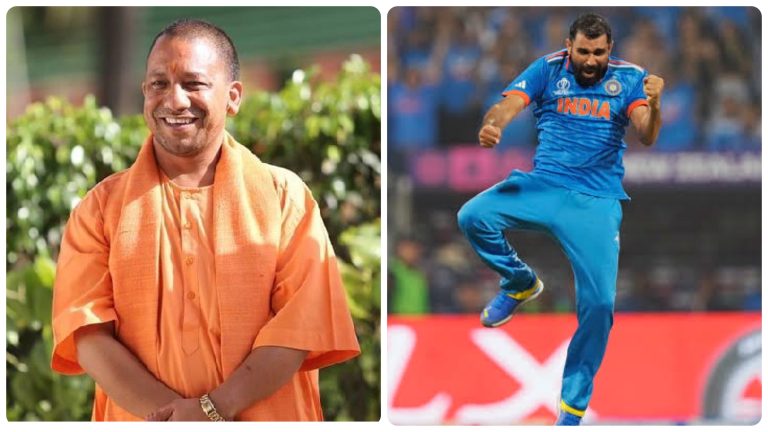
UP: Mohammed Shami’s village likely to get a cricket stadium, local administration survey land for construction

Due to Indian cricket team’s fast bowler Mohammed Shami’s outstanding performance in the World Cup, his village, Sahaspur Alinagar, is now in discussions. The administration has announced the construction of a mini stadium in his village.

On Friday, CEO Ashwani Kumar Mishra and other officials visited the village of Shami in Joya Development Block. They explored land for the stadium and provided necessary directions. Shami’s family resides in the village, and Shami frequently visits them. The villagers are delighted about this development.

District in-charge minister Sanjay Singh Gangwar has also expressed the intention to develop their village. Consequently, the administration has decided to build a mini stadium in the village under the Youth Welfare Department.

At noon, the Chief Development Officer, along with Additional Development Officer Nitin Jain, Gram Panchayat Officer Rajkumar Singh, Additional Program Officer Brajbhan Singh, and Junior Engineer A.K. Mittal, reached the village.

The village head, Noor-e-Shaba, showed the land for stadium construction, and the CEO instructed officials to clean and assess the land. They also visited Shami’s farmhouse, gathered information about village issues from the residents, and directed officials to address the problems.

Shami has been sensational in the ongoing World Cup, scalping a staggering 23 wickets, including 3-fifers to help India’s cause in the quadrennial tournament. Shami’s stunning seven wickets in semis against New Zealand resulted in an emphatic victory for India and sealing the berth in the finals.

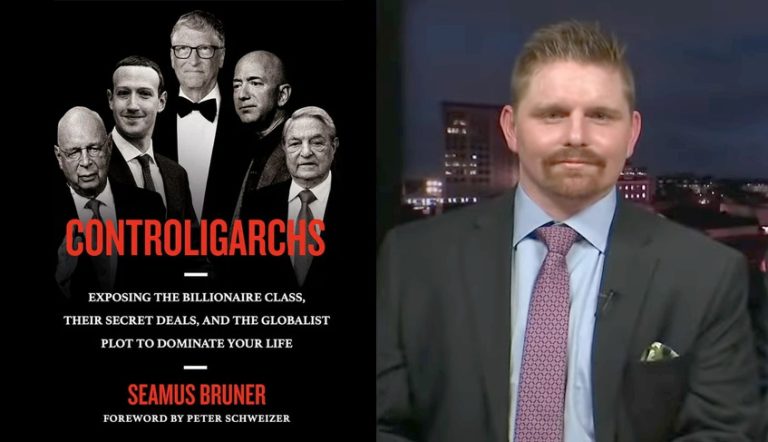
A felon in France, profiting from pro-abortion campaigns, gambling with economies, Clintons, Ukraine and more: What book “Controligarchs” says about George Soros

American author and investigative journalist Seamus Bruner has released his new book titled “Controligarch” exposing the exploits of globalist billionaires including Bill Gates, Michael Bloomberg, Warren Buffet, Klaus Schwab, David Rockefeller, and more importantly, George Soros, the funder of economic meltdowns and social and political disruptions across all such countries he sets his eyes on.

George Soros was among the billionaires whose assets increased by 37.4% post-pandemic from $263,429,906,000 to $362,009,025,000. Others included Bill Gates, Michael Bloomberg and the Rockefeller Foundation. The personal net worth of George Soros increased by nearly $300,000,000 between 2019 to 2022.

How Soros and gang profited from the pro-abortion campaign

Chapter one of the book, titled “The Good Club”, reveals that Soros was part of a secret club of billionaires which met in May 2009 to identify an area of interest for the coterie and turn it into their pet project in the name of saving humanity. “They were there to save the world-or, at least, to set the agenda for the future of global health,” the opening lines of the book read. The meeting was convened by Bill Gates, Warren Buffet and David Rockefeller, all of whom had invested heavily in Obama and Biden’s 2008 election campaign.

The subject that the club decided to turn into a global “philanthropic” mission was overpopulation. And from it emerged the pro-abortion campaign in America and eventually the world. According to Bruner, Soros, Buffet, Rockefeller, Bloomberg and Gates poured a combined total of more than $1.5 billion into increasing women’s access to contraceptives and abortions. “Enough to fund the termination of approximately 3 million unborn babies,” the author writes.

The proceeds from Clinton’s pro-abortion policies, specifically the distribution of abortion pill mifepristone or RU-486 earned George soros and Warren Buffet heavy profits. In 1997, the Rockefellers’ Population Council – which was granted the rights by the developer to market and sell the pill – transferred the distribution rights of RU-486 to a shadowy pharmaceutical startup called Danco Laboratories. Danco had an unlisted phone number and its only known address was “somewhere in ‘midtown Manhattan’.”

According to author Seamus Bruner, the transfer of RU-486 rights from a nonprofit Population Council to the for-profit Danco Labs allowed investors to cash in. It took several years to uncover the investors, but it just so happened that Good Club members George Soros and Warren Buffet were among the lucky Controligarchs to profit from RU-486.”

Soros crushed the coal industry and pushed green policies after investing in green energy

The author reveals that “Soros helped the Obama administration crush the coal industry” and his motives were profit-driven. “He shorted coal stocks as the administration smashed the industry. Soros then grabbed the coal stocks for pennies on the dollar.” Talking about the same, a Forbes financial analyst stated, “I think George Soros used the government like a blunt object to beat down coal stocks and make money shorting them.”

It is safe to say that Elon Musk’s Tesla-charging solar company SolarCity was rescued by Soros. Soros pushed policies that benefited financial interests in green energy and put in $1.1 billion into environmental think tanks. These green investments have helped Soros and gang “profit mightily through corporate welfare while avoiding taxes”. “They, like Gates, do so by moving their personal funds to their tax-exempt foundations,” the author writes.

Soros had a role in triggering the Russia-Ukraine conflict?

The European Union (EU) was George Soros’ pet project. According to the book, EU was regarded by the business magnate as an embodiment of “an open society”. At the World Economic Forum (WEF) in 2022, Soros delivered an alarmist address about the Russia-Ukraine conflict. The development had shaken Europe to its core, he said. “The invasion may have been the beginning of the Third World War and our civilisation may not survive it,” Soros said.

Sounding this alarm was the subject of Soros’ address. According to the book, Soros admitted that Russia’s invasion of Ukraine did not come out of the blue. The author writes that the conflict had been long in the making and in a way Soros had played a role. “Soros was Russia’s public enemy number one, and he and his philanthropic outfits were famously banished from that country. Soros had done more, perhaps, than any one person to steer Ukraine away from Russia and toward the neoliberal Western establishment.”

“The Russia-Ukraine conflict was the culmination of many failures, not just the EU’s, especially for a globalist such as Soros. Not only had he worked tirelessly for decades on EU epansion, but he had also been a staunch defender of NATO,” the author writes. Soros once wrote in the early 1990s that NATO was critical to his and others’ plan for what they called the “New World Order”.

But again, Soros was initiated into the Russian and Ukrainian economy and politics decades before the current conflict broke out.

“Soros had operated in both Russia and Ukraine before their post-Soviet separation. His Open Society Foundations and vast network of affiliated NGOs had infiltrated both countries during the Soviet era prior to 1990.” The book further reveals that in 1992, Russian President Boris Yeltsin signed off on a similar post-Soviet Union economic reorganisation, which sent inflation skyrocketing 2,500 per cent and led to a handful of connected oligarchs amassing unimaginable wealth by taking control of Russian state assets.

“Just write that the former Soviet Empire is now called the Soros Empire,” were the words Soros said to The New Republic in 1994 about his involvement in Russia’s economic transition.

The book also exposes how Soros invested and operated his shadowy network of NGOs in post-Soviet Russia for more than two decades until Putin banned him and his NGOs in 2013. Soros had also helped cause a ruble crash in the late 1990s. After the ban, Soros began funding a proxy war in Ukraine.

Soros’s Orange Revolution in Ukraine overthrew the pro-Russia Ukrainian government resulting in the rise of the Volodymyr Zelenskyy regime

A “political philanthropist” for the Democrats

The book Controligarch reveals that Soros pumped $178.5 million into federal campaigns making him the biggest contributor. Not a single penny went to Republicans, the author points out. “In Soros’s 1993 speech on the future of NATO, he declared that the United Nations had failed as an organisation that could assume control over US troops. Soros was not a fan of ‘American Supremacy’. The very idea of American exceptionalism needed to be watered down, and NATO could be the means to do so,” the author writes.

Soros Fund Management was the largest single contributor in the 2022 midterm elections. But because it cannot legally contribute directly to candidates or party committees, the fund funnelled cash to political affiliates, the largest being Democracy PAC II, whose president is Alexander Soros, son of George Soros.

In the 2020 election cycle, Soros funnelled more than $80 million to Democratic groups and candidates. Soros, in a statement to Politico, said that the spending was necessary for “strengthening the infrastructure of American democracy: voting rights and civic participation, civil rights and liberties and the rule of law.”

But this is nowhere near new. Soros’ “political philanthropy” has been active since at least the 1990s. In an interview to PBS in 1995, Soros said, “I like to influence policy. I was not able to get to George (HW) Bush. But now I think I have succeeded with my influence…I do now have great access in (the Clinton) administration. There is no question about this. We actually work together as a team.”

In 2016 too, Soros was calling the shots for Hillary Clinton’s campaign against Donald Trump and poured millions into her presidential bid. The book reveals that Soros committed more than a whopping $25 million. Albeit, Soros lost nearly $1 billion owing to Trump’s victory. Nonetheless, ousting Trump became Soros’s next project and thus followed the conspiracies of framing Trump as a Russian agent and the 2019 impeachment.

How Soros gambled with global economies

The book reveals that in 1988, Soros was caught buying and selling 95,000 shares of Societe Generale, a Paris-based multinational bank, after receiving information about a planned corporate raid. Soros was found guilty of insider trading, fined 2.2 million euros ($2.3 million), and became a convicted felon in France. In 2006, the highest court in France declined to drop the “felon” designation from his record. Soros had challenged his conviction at the European Court of Human Rights, but the court ruled against him in 2011.

Soros is heroically called “the man who broke the Bank of England”. Here is what the heroics cost the British taxpayers, in his own words, according to the book. “In 1992, Soros and his Quantum Fund were credited with breaking the Bank of England. He took an enormous short-selling position against the British pound, betting that it would be devalued as the UK raised interest rates. Soros encouraged his chief portfolio manager, Stan Druckenmiller, to “go for the jugular,” and they sold pound sterling to anyone who would buy it.”

“On what came to be known as Black Wednesday, Soros won the siege and netted over $1 billion. The British government could no longer support its currency amid the Soros-driven takedown, and the pound sterling was successfully devalued. The British people, however, lost,” Bruner writes. Journalist Stefan Kanfer said, “Retirees on fixed incomes saw their pensions diminished and their savings wiped out.”

Soros had later recalled, “I was in effect taking money out of the pockets of British taxpayers. But if I had tried to take social consequences into account, it would have thrown off my risk-reward calculation, and my profits would have been refused.”

The book reveals that news reports and open-source documents tied Soros to the Polish Solidarity Movement in the 1980s. During an interview in 1989 featuring then US senator Joe Biden, Soros advocated for the “radical reorganisation of the Polish economy.”

“All that was needed was a massive taxpayer-funded “aid” program and the backing of the US government,” the author writes. PBS anchor Robert MacNeil asked Senator Biden in the interview, “Do you think the US should back such a package of that magnitude this weekend?” Biden was ecstatic to respond positively. A question was then asked to Soros in this regard.

The author writes, “With a buy-low, sell-high grin and the public backing of a key US senator, Soros replied, “In Poland, the political will is now there, and in a strange way, the very bad condition of the Polish economy is an opportunity.” Because the Polish economy was “spinning out of control” and “the standard of living is very low,” Soros said, grinning wide still, “the resources that would be needed to turn it around were actually quite modest.”

“Soros called the economic reorganisation “a kind of macroeconomic debt-for-equity swap.” That is a fancy way of saying taking control of a struggling nation’s economy by shackling the nation’s population with debt,” Bruner writes.

The book exposes how the economic reorganisation plan instituted in 1990 caused immediate hyperinflation. Bruner writes critically, “From the safety of the Wall Street, Soros shrugged off the mass suffering while admitting the fallout was “very tough on the population, but people were willing to take a lot of pain in order to see real change”.

One of Soros’s favourite hobbies is inciting revolutions in vulnerable nations. These are famously known as “Colour Revolution” which included the Velvet Revolution in Czechoslovakia in 1989, the Rose Revolution in Georgia in 2003, the Orange Revolution in Ukraine in 2004, the Arab Spring in 2011 and another revolution in Ukraine in 2014.

The book quotes Soros from an interview with The New Yorker in 1995 wherein he chuckled and said, “I would say one thing in one country and another timing in another country.” In 2004, Soros initially denied any involvement, according to the author, in the toppling of Georgia’s government after the Rose Revolution.

“But months later, he bragged to the Los Angeles Times, “I am delighted by what happened in Georgia, and I take great pride in having contributed to it.”

Hit jobs of Soros through Open Society Foundation – a pandemic in its own right

“Soros invests in far more than mere commodities. Soros invests in powerful people and concepts such as “open societies” and “social justice” and that word that many politicians like to throw around” democracy,” author Seamus Bruner writes.

“Controligarchs” further exposes the destructive nature of Soros’s so-called philanthropy saying, “For decades, Soros has spent his money on initiatives such as influencing society’s attitudes on birth control, gun control, drug legalisation, criminal justice, the nuclear family and parents’ role in childhood education. If a society comports with Soros’s preferences, he declares it “an open society.” If it does not, he declares it “a closed society” and seeks to reform it.”

“Soros pioneered political philanthropy, creating a new form of political dark money fifty years ago, and has furthered it with tax-exempt entities such as his Open Society Foundations. Ironically, the societies he builds and shapes are sometimes the most closed of all.”

The author exposes Soros’s interference in Eastern Europe and Asia, a part of which has been exposed by OpIndia too. The author writes, “Eastern Europe and Asia became the breeding grounds for the radical left-wing activism, regime-changing Colour Revolutions and repressive governance tactics now spreading like a cancer across the West.”

After the US government passed the Dodd-Frank Wall Street Reform and Consumer Protection Act in response to the 2008 financial crisis, Soros closed his hedge fund, Soros Fund Management. In a bid to surpass the scrutiny brought about by the Dodd-Frank regulation, Soros created a “family office worth $24.5 billion”, which allowed him to avoid the transparency rules related to registration and disclosure requirements.

In 2017, Soros made a whopping $18 billion personal gift to his Open Society Foundations. “The stunning wealth transfer was to ensure the mission would far outlast George Soros’s earthly years. But whom could he trust to manage such vast resources and globalist, Esperanto-level goals? His heirs,” Bruner writes.

He further explains how Soros’s children are now carrying his open societies legacy further. “Soros’s five adult children are critical to his mission and have run his various enterprises -both for profit and nonprofit- for decades. And they personally donate to the causes their father is passionate about such as Planned Parenthood, the Center for Reproductive Rights and the Brennan Center for Justice.”

In the sub-chapter “Open Societies Indoctrination”, Bruner talks about Soros’s takeover some of the elite universities in Europe and US to produce a generation of open societies flagbearers.

Soros founded the Central European University in 1991 in Hungary. According to the university’s website: “His vision was to recruit professors and students from around the world to build a unique institution, one that would train future generations of scholars, professionals, politicians and civil society leaders to contribute to building open and democratic societies that respect human rights and adhere to the rule of law.”

Soros spent a staggering $400 million through his Open Society Foundations to the Central European University and Bard College. Harvard, Georgetown and state-university programmes like Ohio State’s Kirwan Institute dedicated to race and ethnicity and University of Connecticut’s Human Rights Institute have also been at the behest of Soros several times.


Punjab & Haryana HC strikes down 75% quota for locals in private sector in Haryana calling it unconstitutional, says conditions are like “Inspector Raj”

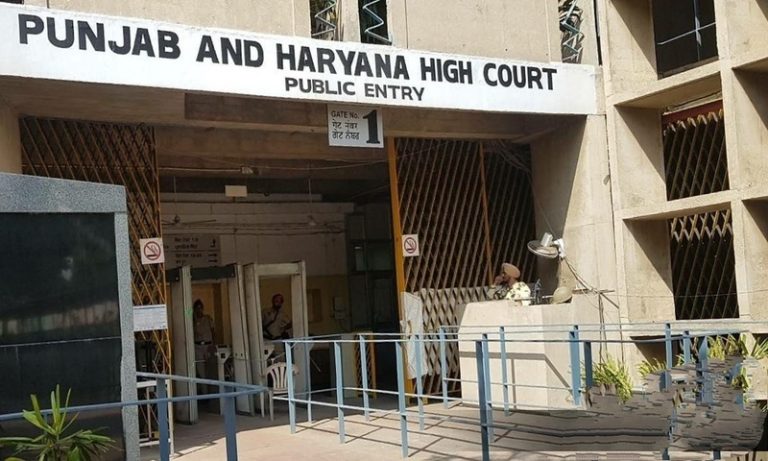
The Punjab & Haryana High Court on Friday struck down the 75% quota for locals in private sector in Haryana, calling it unconstitutional. The Haryana State Employment of Local Candidates Act, 2020 made a provision for reservation of 75% jobs with monthly salary upto ₹30,000 in the private sector, but the high court said that Private employers can’t be forced to employ persons from a particular state.

The bench of Justice G.S. Sandhawalia and Justice Harpreet Kaur Jeewan of the High Court said that the “law is unconstitutional and violative of the part-III of the Constitution.” The court accordingly allowed a batch of petitions challenging the law reserving 75% private jobs for locals in Haryana, saying that the state law violates Article 19 of the constitution.

The law was introduced in 2020, saying that the influx of a large number of migrants competing for low- paid jobs placed a significant impact on local infrastructure and housing, which led to proliferation of slums, which further causes environmental and health issues. The law stated that giving preference to local candidates in low-paid jobs is socially, economically and environmentally desirable and in the interests of the general public.

Several petitions were filed against the law, stating that it amounted to introducing reservation in the private sector. Faridabad Industries Association stated that it was an unprecedented intrusion by the government into the fundamental rights of private employers to carry out their business and trade, as provided under Article 19. Its petition had stated that the move was not reasonable and it was arbitrary, capricious, excessive and uncalled for.

The petitioners also argued that the Act is contrary to the principles of justice, equality, liberty, and fraternity laid down in the Preamble of the Constitution. Further, the Act is contrary to the right to equality enshrined in Article 14 and Article 19 of the Constitution. After hearing the arguments, the court had reserved the verdict on 19th October.

In the verdict delivered today, the court agreed with the petitions, and ruled the law unreasonable and unconstitutional. The court stated that the state cannot discriminate against the individuals on account of the fact that they do not belong to a certain State and have a negative discrimination against other citizens of the country.

The court in its order said, “The private employer being a builder, for example, raising a multi-storeyed complex, cannot be asked not to employ a person who is skilled in the work of installation of wood work who might come from a particular area of the country i.e. Kashmir; where this skill has been enhanced, whereas from another part of the country, labour which is more skilled in setting up the steel frames and building are found i.e. Punjab; whereas similar persons with different skills who would be more proficient in just executing the civil work i.e. Uttar Pradesh and Bihar”

The high court ruled that the state can’t direct the private employer who it has to employee keeping in view the principles of laissez faire that “the lesser it governs, the better itself”.

“Once there is a bar under the Constitution of India, we do not see any reason how the State can force a private employer to employ a local candidate as it would lead to a large scale similar state enactments providing similar protection for their residents and putting up artificial walls throughout the country, which the framers of the Constitution never envisaged,” the court said.

The judgement added that the law imposes unreasonable restrictions regarding the right to move freely throughout the territory of India or to reside and settle in any part or the territory of India. It said, “while referring to Article 19(6), it can be said that the right of the State is regarding the provisional or technical qualifications necessary for practicing any profession or carrying on any occupation, trade or business to restrict the right under Article 19(l)(g) or to carry on any trade, business, industry or service exclusively by the State or its Corporations to the exclusion of other citizens. It can, thus, be said that the Act as such cannot be said to be reasonable in any manner and it was directing the employers to violate the constitutional provisions.”

The high court judgement stated, “the restrictions imposed upon all types of private employers as defined under Article 2(e) are gross to the extent that a person’s right to carry on occupation, trade or business is grossly impaired under Article 19(l)(g) of the Constitution of India. The requirement to register any employee on the designated portal within three months who was being paid less than Rs.30,000/- per month upto 75%, thus, is violative of the fundamental rights protected under the Constitution of India.”

The court added that the control of the State by a designated officer having a right to consider the cases of exemption to reject them are onerous. It added, “The requirement of submitting quarterly reports and the power of the Authorized Officer to call for records and to inspect premises for purposes of examining the records, registers and documents by just giving one day prior notice as such are conditions which can be termed as the “Inspector Raj” of the State.”

It further said, “The private employer, thus, has been put under the anvil of the State as to whom to employ and the penalties which are liable to be imposed on contravention which have already been noticed which multiply on account of any violations apart from leading to criminal prosecution by filing of a complaint. The bar under Section 20 of not being able to challenge the legal proceedings in any Court against any Authorized Officer or designated officer further ties the hands of the employer.” It is notable that the The Punjab & Haryana High Court had issued an interim order staying the implementation of the Act in 2022. But that interim order was set aside by the Supreme Court, asking the High Court to expedite the hearing into the merits of the act.

Dehradun: 21-year-old Hindu youth commits suicide, father accuses his ‘friend’ Alisha and her family of conspiring his death

0

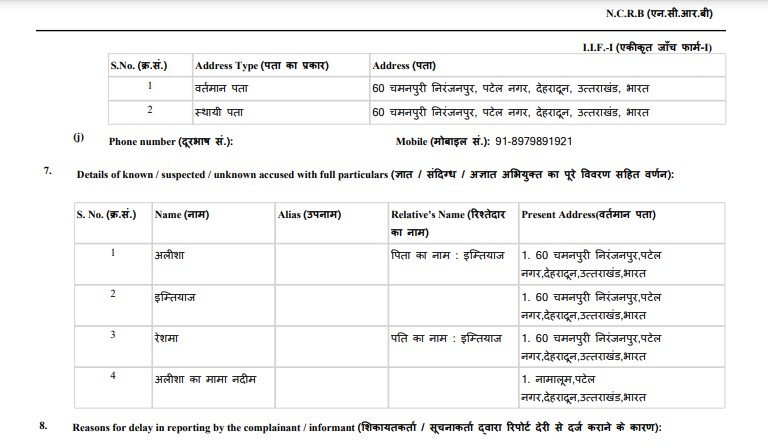
The Dehradun police in Uttarakhand have booked a woman named Alisha, her parents Imtiaz and Rishma, and her maternal uncle Nadeem for abetting the suicide of a 21-year-old Hindu youth named Rohit Sharma. The case was registered based on a complaint lodged by Rohit Sharma’s father who accused his son’s ‘friend’ Alisha and her family members of harassing and mentally torturing which in turn pushed his son to take the drastic step.

The incident occurred in the Patelnagar neighbourhood of Dehradun city. Rohit Sharma, who had reportedly ingested some poisonous substance had passed away while receiving medical treatment at a hospital on November 2.

Rohit’s father, Mahipal Sharma, filed a complaint against Alisha, her parents, Imtiaz and Rishma, and her maternal uncle Nadeem on November 4.

OpIndia has accessed a copy of the FIR filed in the case.

The disturbed father in his complaint, alleged that Alisha, who resided with her family in the same neighbourhood, had trapped his son in a love affair. He asserted that she and her family members had been harassing Rohit. He also said that the accused had resorted to physical violence against his son. He added that Alisha and her family members gave his son so much mental trauma and it led to him taking the drastic step.

“In response to the complaint, a case of abetment of suicide under IPC section 306 has been registered against the four,” said sub-inspector Sanoj Kumar, adding that no arrests have been made as of now.

Notably, the Organiser Weekly on November 16, published a report on the incident. The correspondent of the web portal shared excerpts of the conversation she had with the deceased youth’s father, where he accused Alisha and her family members of killing his son. He revealed that they were unaware of their son’s relationship with Alisha until November 25, when Rohit had consumed the poison.

“On October 25, after consuming something, Rohit was unable to communicate. Upon checking his phone, we discovered a chat between him and Alisha, where she mentioned that her family had discovered their relationship and intended to marry her off to someone else. Rohit hurried to her house, and upon his return, he experienced vomiting and eventually fainted. In his pocket, my wife found a packet of rat poison,” Mahipal Sharma was quoted as saying.

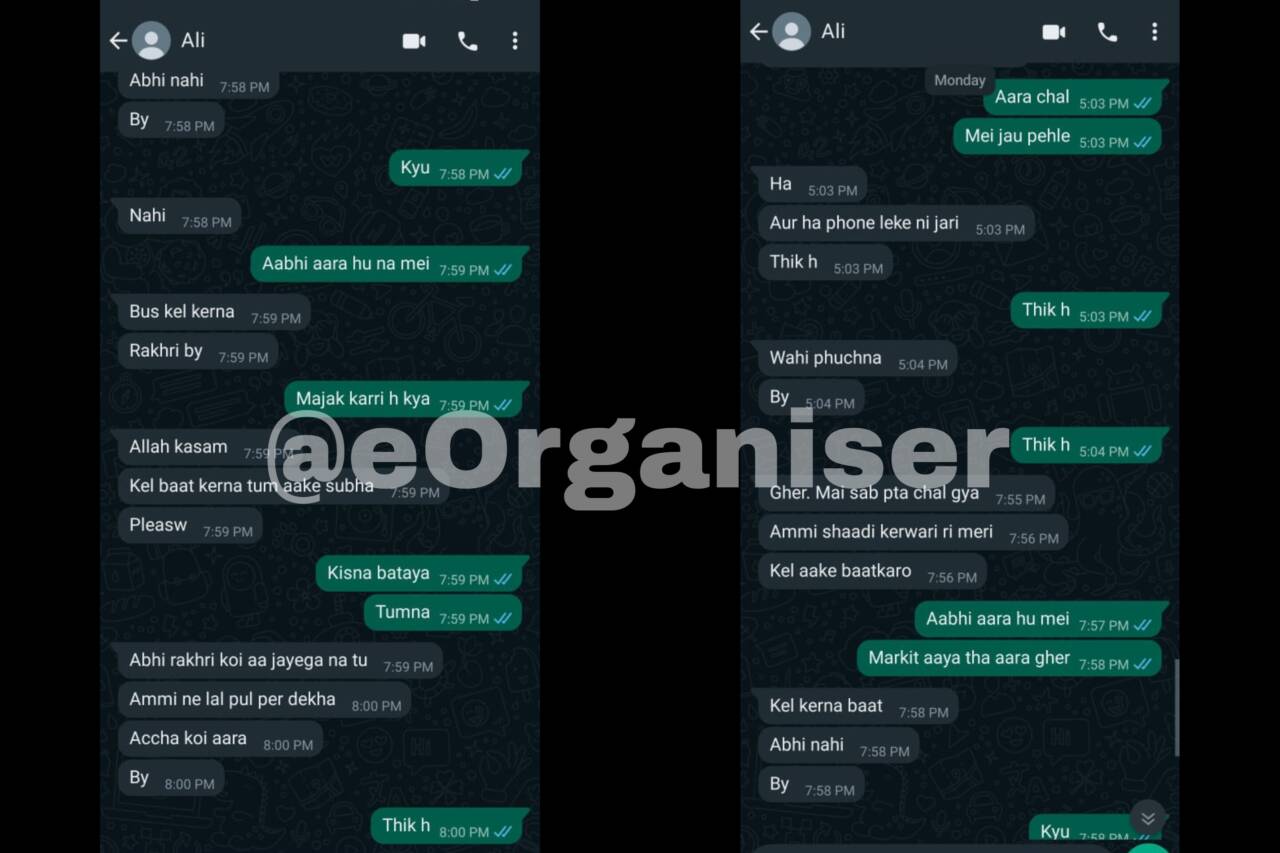
Mahipal Sharma also shared screenshots of WhatsApp chats between his deceased son and Alisha, the screenshot of which was shared in the report published by the Organiser. In the chat, Alisha can be seen telling Rohit about her family members learning about their affair and deciding to marry her to someone else.

Image credit: Organiser

The boy’s father was further quoted as accusing Alisha’s family of being behind the untimely death of his son. “Imtiyaz and his family left the same day Rohit consumed poison, deepening our suspicions about their involvement,” he said.

Organiser also spoke to sub-inspector Sanoj Kumar, who is also the investigating officer in this case, on November 16. He told the portal that the accused are currently on the run and that the police are on the lookout for the accused. He further confirmed that the postmortem examination had been conducted, and the findings from it formed the basis for accepting the FIR in this case.

‘Laal Diary’ contains Gehlot’s ‘Kacha Chitta’, it has calculations of scams worth thousands of crores: Amit Shah in Rajasthan’s Vijay Nagar

0

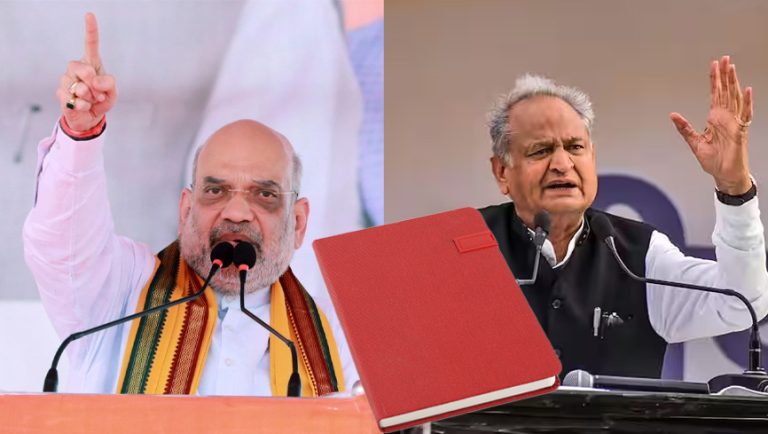
In the run-up to the November 25 assembly elections, Union Home Minister Amit Shah hit out at Rajasthan Chief Minister Ashok Gehlot, saying that the ‘Laal Diary’ contains Gehlot’s ”Kacha Chitta’, pointing to the rough draft of all calculations about the alleged scams that took place in the state under his watch.

“‘Laal Diary’ has Ashok Gehlot’s ‘Kacha Chitta’. It has all calculations of corruption worth thousands of crores,” Amit Shah said while campaigning in Rajasthan’s Bijainagar on Friday.

The Red Diary has become one of the most talked-about political accusations ever since sacked Rajasthan Minister Rajendra Gudha claimed that it contained information about financial transactions involving the Chief Minister.

Taking a jibe at the incumbent Chief Minister, Amit Shah advised some youths present at the public meeting not to wear ‘red’ clothes to Gehlot’s campaign.

“Some youths have come here wearing red shirts and jerseys. It is okay that you have come to my public meeting. But don’t go to Gehlot’s meeting. Just like the bulls run seeing red, Gehlot will also…Do you know why? What is in the ‘Laal Diary’?” Shah asked.

The Union Home Minister said that Ashok Gehlot has indulged in so much corruption in these five years that the total proceeds of those scams, amount to more than those done by all the state governments in Rajasthan since independence.

“Gehlot has indulged in so much corruption in these five years that it amounts to more than those done by all the governments in Rajasthan since Independence,” Shah said.

Listing out the scams done by the Gehlot government, he said, “Whether it is in the Mining department, for giving mining pattas, Udaisagar Jheel, Pratapgarh Limestone mining…Even from their secretariats, in the offices of the secretaries, Rs 2 crore and some kilogrammes of gold were found in their cupboards.”

Continuing his attack against the Gehlot government, Shah said, “For five years, you’ve seen the Congress government. In these five years, if Congress has done anything big, it is corruption.”

Appealing to people to vote for the “double engine” government in the state, Shah said, “When you cast your vote for the Rajasthan Vidhan Sabha elections, do not think that you are voting to elect an MLA or BJP. But your vote is for Rajasthan and the country to prosper, to bring about a double-engine government in Rajasthan under the leadership of Narendra Modi.”

Rajasthan is set to undergo assembly polls on November 25 and the counting of votes will be done on December 3. The BJP won 163 seats in the 2013 Legislative Assembly elections and formed the government in Rajasthan.

In the 2018 assembly elections, the Congress won 99 seats, while the BJP won 73 seats in the 200-member House. Gehlot eventually took the oath as CM with the support of BSP MLAs and Independents. 


(This news report is published from a syndicated feed. Except for the headline, the content has not been written or edited by OpIndia staff)

As BRS promises IT clusters for minorities on Waqf land, here’s how temples in Telangana are suffocating under a piling list of land-grabbers

Hectic parlays are underway in the poll-bound state of Telangana which will cast the ballot on 30th November. Politics has been at its peak what with the occasional sensational war of words generally launched by Chief Minister K Chandrasekhar Rao (KCR) against the BJP and PM Modi ever since he officially made public his sentiments to become the next Prime Minister of India when he renamed his party, Telangana Rashtra Samiti (TRS) to Bharat Rashtra Samiti (BRS).

It is perhaps this desperation that has made BRS a party dedicated to the cause of minority appeasement politics while simultaneously hurting Hindu sentiments. It was therefore surprising when in September, the Telangana Finance Minister reportedly asserted that KCR was a genuine Hindu and his efforts to develop temples in the State proved this. But the ground reality tells an entirely different story.

In March this year, the Telangana High Court sought a response from the state government on reasons for encroachment on temple lands by realtors. The petition, filed on the basis of a letter by a resident of Jadcherla, C Anil Kumar, was filed along with local new reports that mentioned that 102.05-acre land belonging to the Venkateswara Swamy temple in Jadcherla was illegally occupied whereas private realtors had taken over 63.03-acre land.

Moreover, the petitioner submitted that land measuring 44-acre belonging to the Anjaneya Swamy temple of Chinna Rajamure area in Devarakadra Mandal was infringed upon. It was also alleged that the realtors were supported by local politicians with the connivance of revenue officials to convert temple land into layouts and plots for sale.

A public interest litigation (PIL) was reportedly filed recently based on a communication addressed to the court by the Chairman of Pragna Bharati, Dr TH Chowdary raising concerns about the management and administration of Hindu temples under state control. The PIL was disposed of by the Telangana High Court in October.

According to Dr Chowdary, Hindu temples controlled by the government in Telangana were headed by converts to Christianity and the several members of the temple boards lacked merit. However, the government filed a counter affidavit claiming that of the 243 temples in Secunderabad, 199 are under the control of the Endowment Department and that none of the temples were headed by non-Hindus.

In July, the Rashtriya Vanara Sena Mission, which works to safeguard temples across the country, reportedly cited government data alleging that more than 23 per cent of temple lands (20,124.03 acres of 87,235.39 acres) is encroached upon. But, they claimed, their review of the audit records showed a much higher area that was encroached upon.

“According to official data, more than 23 per cent (20,124.03 acres out of 87,235.39 acres) of temple lands have been encroached upon. However, upon reviewing the audit records of 19 temples, we discovered that almost 80 per cent (6,343 acres out of 7,976 acres) of these temples have encroached,” said N Ram Reddy, president of Rashtriya Vanara Sena Mission.

It was further alleged that under the orders of CM KCR and his son KT Rama Rao, many temple lands were sold off to repay debts and allocated temple lands for non-Hindu purposes.

Exactly a year ago, in November 2022, a committee formed by the Telangana government found that the Sri Seetha Ramachandra Swamy temple land parcel at Devarayamjal village in Shamirpet mandal had concluded that the temple land was encroached upon and illegal sale transactions had also taken place over the years. Times of India quoted sources as saying that of the 1,521 acres of land being claimed by the endowment department, about 1,350 acres was under the grip of alleged land grabbers.

The finding was submitted by the committee which was tasked with probing into the land temple-grabbing case owing to allegations against former minister Eatala Rajender. The ACB and Vigiland officials probing the case confirmed the fraudulent transfer of 100 acres from endowment lands to others through 35 registrations over a period of four years.

The case of Sri Seetha Ramchandra Swamy temple

The size of the land of Sri Sita Ramachandra Swamy temple in Bhadrachalam has been waning for nearly a century now. The land reportedly spanned around 1,250 acres and is situated in Khammam district of Telangana and the remaining in East Godavari, West Godavari, Krishna, Guntur and Prakasam districts of Andhra Pradesh.

Around 910 acres of this land is situated at Purushothapatnam near Bhadrachalam town. This land was donated to the temple by a devotee in October 1978. In 1998, 27.5 acres of this land were sold to some institutions including the tobacco board and finally, the temple was left with 889.50 acres of land.

A major part of this land measuring 722 acres came under cultivation by local farmers owing to which a the temple authorities had to fight a legal battle. Consequently, the farmers began paying a nominal lease amount in 2005 but a few years after the formation of Telangana, the situation had come to square one.

“Though the lease amount was very less – around ₹3,300 per acre – we allowed them to continue cultivation, as the lands still belonged to the temple trust board as per the documents. But the land sharks eyed the precious lands, whose value now run into crores of rupees due to proximity to Bhadrachalam town. They are now trying to start real estate ventures in the temple lands. We are struggling to protect them,” Bhadrachalam temple executive officer B Shivaji told Hindustan Times in July 2022.

This is the same temple which, in 2020, was out of funds to organise the traditional ‘Seetha Rama Kalyanam’, the celestial wedding of Mata Sita with Shri Ram Chandra, and had to sell tickets to fund the divine celebration.

Now these are all developments from this year and the year 2022 even when in 2021, reports suggested that the Telangana government is working towards introducing strict laws on endowment lands in order to retrieve encroached temple lands and prevent future encroachments.

But what has happened in the past two years subsequent to the encroachment was nowhere near in line with the KCR government’s assurances. Moreover, Hindus rights and religious sentiments have only been mocked.

In April this year, an FIR reportedly registered against pastor Mr Gandham Arun Kumar and others for conducting Christian prayers inside a Hindu temple in Warangal, Telangana.

The matter pertains to Christians conducting prayers in a Hindu temple constructed by the Kakatiya dynasty in Fort Warangal, a video of which had gone viral on social media, drawing outrage from several quarters on the internet. The temple is reportedly under the control of the Archeological Department and being administered by the Telangana Endowments Department.

The local Hindu community was concerned after learning about the large-scale prayers being held directly in front of Ramalayam and Swayambu Ramalingashwara Swamy temple near Gundu Cheruvu.

The endowment department in September 2022 issued an order to three temples to contribute ₹1 crore each for the construction of three floors of the Warangal endowment office. This order was given by the additional commissioner of endowment, E Srinivas Rao.

The order was issued to the Bhadrakali Temple in Warangal, the Seetharamachandra Swamy Temple in Kazipet Town’s Madikonda village, and the Medaram village in Mulugu district’s Sammakka-Saralamma Jatara organisers.

Nearly 20,124.08 acres of endowment land were under encroachment in the state as of June 2019. The encroachments have happened as the lessees are taking the temple lands at throwaway prices and in turn, they had given them on sub-lease at market prices, which has also resulted in huge revenue loss to the Endowments department.

The Telangana government back then reportedly decided to take action against illegal occupants of large tracts of temple lands. Telangana Endowments Minister, A Indra Karan Reddy, directed the officials to act against encroachers and evict them from the state lands.

Another report from April 2019 claimed that more than 24,000 acres of temple land, constituting 25 per cent of 87,000 acres of endowment land in the state, was encroached. The encroached land was reportedly double the size of Cyberabad.

The report cited data shared by endowments department which stated that the Nalgonda district had lost 3,500 acres to encroachers and about 2,200 acres were lost in Hyderabad and nearly 1,800 acres were with land grabbers in Ranga Reddy district. Of the total encroachments, 16,000 acres were already registered in the names of private persons.

It is more than clear that the matter of temple land grabbing has essentially eaten into the assets that sustain the Hindu culture, tradition and rituals and by extension, the Hindu faith. These are matters waiting to be resolved even as large scale temple land grabbing continues in Telangana. Alas, the government has other land matters to cater to, that of the Waqf land.

Just two days ago, on 15th November, KCR said that his government would develop IT clusters for young men and women from minority communities if voted to power. While addressing the crowd in Nizamabad, the BRS chief said that the state had been thinking about this for some time and would take permission from the Waqf board for the same.

Ironically, in the same speech, KCR urged both Hindus and Muslims to work together for the development of Telangana while he conveniently held discussions about state projects with Waqf. And still, KCR kept appeasing as he pointed out that Telangana is the only state that officially organised EId for Muslims and Christmas for Christians.

In September 2020, the Telangana government was reportedly contemplating on extending judicial powers to Waqf Board. The Minority Welfare Minister Koppula Eshwar said that the issue of granting judicial status to Waqf Board will be soon considered by the Chief Minister.

This promise has been made by KCR to the Muslim community several times and should he decide to stand by his words, the Waqf Board would essentially have the power to evict encroachers from its properties without having to take the legal route.

In July 2020, KCR announced that his government would construct new mosques in place of those demolished by the Hyderabad civic body in the new secretariat premises at government expense after Muslim clerics and AIMIM protested the demolition of two mosques at the old Secretariat complex. The demolition was done to make way for the new secretariat in Telangana.

Issue raised by PM Modi

On 3rd October, PM Modi, while addressing a rally in Telangana’s Nizamabad remarked that the state government had captured the temples and that the temples were being looted through a conspiracy involving governments. He pointed that this was particularly the case in DMK-ruled Tamil Nadu. 

“In the south, especially in Tamil Nadu, the state government has control of temples. The state government has captured temples. The temples are being looted through a conspiracy involving governments. Temples are being looted. Temples are being captured. But they will not touch the worship places of minorities. They don’t bring them under government control,” he was quoted as saying.

Moreover, with the BRS making promises to the likes of Waqf and the Congress allying with IUML, its existing partner in Kerala, PM Modi’s statement on the state of temples in Telangana and Tamil Nadu has given the subject much-needed attention this election season.

Wajihuddin Ali Khan arrested: Meet the ‘Amir’ of ISIS in India, with links to terror modules in Pune, Aligarh, and Delhi; was also connected to the Delhi riots

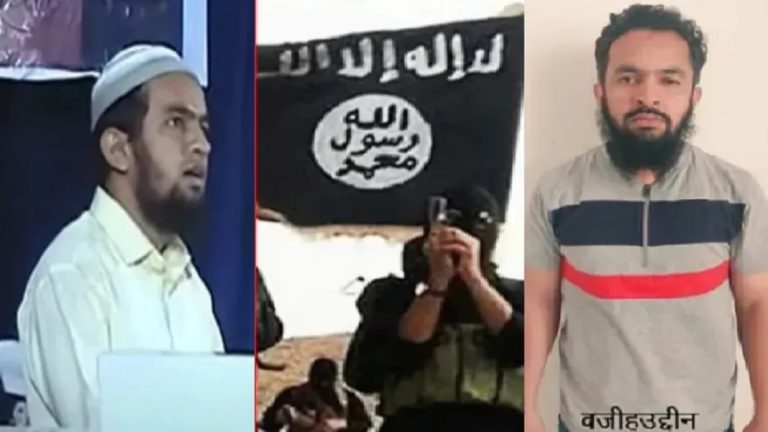
In India, the infamous terrorist outfit Islamic State (ISIS) has faced a significant setback. Wajihuddin Ali Khan, the self-declared caliph of the Islamic State, is now in the custody of the Uttar Pradesh Anti-Terrorism Squad (UP ATS). He is currently being interrogated, and the UP ATS has secured a 10-day remand for him through legal proceedings.

The UP ATS is delving into his complete profile and is also probing extensively into the backgrounds of those associated with him. The action taken by the UP ATS has thus proved true the report by OpIndia, which revealed that Wajihuddin Ali Khan holds the position of the chief of ISIS in India, referred to as ‘Amir’ by members of the organisation.

According to a report by Bhaskar, the UP ATS said that Wajihuddin is identified as the ‘Indian Amir’ of ISIS. Working in tandem with foreign handlers, he was involved in a conspiracy to orchestrate several attacks in collaboration with the Pune and Delhi modules. Under his directives, his associates had identified notable ‘targets,’ including Yati Narsinhanand Saraswati in Ghaziabad.

Beyond this, he had initiated training sessions for explosive attacks, collaborating with Shahnawaz, a member of the Pune module of ISIS. Wajihuddin was actively involved in preparing an ‘Islamic Army’ against India for ‘Jihad’ through different contacts, stretching from Rampur, Sambhal, and Aligarh to Prayagraj in Uttar Pradesh.

Earlier, OpIndia detailed how Wajihuddin, employing the pretext of ‘Haya’, manipulated the minds of young people, steering them towards fanatic Islamic extremism and violence. Methodically establishing an anti-India atmosphere through ‘Haya’ programs in schools, colleges, and various institutions, he spurred over-excited youths to take up arms against India.

From an overground worker to an Amir

OpIndia also highlighted in its report how Wajihuddin was revered like an ‘Amir’ or leader for individuals associated with different organisations spanning from ISIS to SAMU in the Aligarh Muslim University and from Delhi to Prayagraj. His followers praised him on social media, addressing him as ‘Amir.’ In Muslim countries, the term ‘Amir’ signifies a ruler or supreme leader.

Wajihuddin Ali Khan initially started working for ISIS as an Over Ground Worker (OGW) and later established himself as an ‘Amir’ in organisations like SAMU (Students of AMU). Through the ‘Haya’ program, he regularly held formal gatherings and delivered Islamic speeches.

In these gatherings, he sought support by quoting the rhetoric of arrested Islamists like Sharjeel Imam, attempting to validate Sharia governance by speaking against democracy. Through these assemblies, he prepared individual goons like Abdullah Arshlan and Maj bin Tarik to join ISIS.

Wajihuddin was wanted for a long time

Wajihuddin had been on the radar of security agencies for quite some time. He was so cunning and sharp that he left very few traces against himself. This time, after the Delhi Police Crime Branch arrested Shahnavaz, Arshad Warsi, and Rizwan from Delhi, Muradabad, and Aligarh, respectively, the UP ATS had to launch a dedicated operation to apprehend Wajihuddin.

After the arrest of Abdullah and Maj, Wajihuddin was apprehended by the UP ATS in Durg, Chhattisgarh. According to information provided by the UP ATS, they received intelligence that individuals in Aligarh, inspired by the ideology of ISIS, were influencing others in the region.

The UP ATS also disclosed that the individuals arrested by the Delhi Police in connection with terrorism had ties to the student organisation “Students of Aligarh Muslim University” (SAMU). These individuals are influenced by the ideology of ISIS. In light of this, the ATS expanded its investigation, gathered evidence, and took appropriate action.

Wajihuddin hails from Durg, Chhattisgarh, and besides obtaining his PhD at AMU, he was engaged in educating junior students in social sciences, encompassing subjects like history, geography, and political science. Notably, his students comprised individuals from diverse backgrounds, including Hindu students.

Wajihuddin was also connected to anti-CAA protests and Delhi anti-Hindu riots conspiracy

Wajihuddin Ali Khan and Arshad Warsi were close for several years, at least since 2018. They have both been arrested for being ISIS terrorists. It is also pertinent to note that Arshad Warsi and Wajihuddin were closely involved in the anti-CAA protests that were taking place in Jamia and AMU at the time.

Arshad Warsi was intimately in touch with Sharjeel Imam during the early phases of the Delhi violence. Arshad Warsi shared a video of Wajihuddin Ali Khan on the 6th of December 2019. It was the anniversary of the demolition of the disputed structure at Shri Ram Janmabhoomi. This is when the conspiracy of the Delhi violence had already taken seed and Arshad Warsi was intimately in touch with Sharjeel Imam. From Arshad Warsi’s various social media posts, it is evident that he was not merely praising Wajihuddin but was also connected with him on a personal level.

Wajihuddin sent to 10-day custody

On Thursday, the UP ATS brought Wajihuddin before Special Judge Dinesh Kumar Mishra in the NIA ATS court. Designating him as the key figure of ISIS, the UP ATS sought a 10-day remand, a request granted by the court. Presently, the UP Police is conducting a thorough investigation into all of Wajihuddin’s connections, endeavouring to determine the extent of radicalisation he has influenced among individuals.

Uttarakhand: Rickshaw driver Shavez rapes a five-year-old girl in Udham Singh Nagar, accused and his family absconding

0

On 14th November, an e-rickshaw driver named Shavez raped a five-year-old Hindu girl in Udham Singh Nagar district of Uttarakhand. The accused lured the girl to go along with her to a sugarcane field in Kichha Tehsil and raped her. As the minor victim screamed, several villagers arrived at the spot, however, the accused managed to escape on his rickshaw. The victim is reported to be a neighbour of the accused.

Following the incident, the victim’s mother lodged a complaint at the Pulbhatta police station and demanded strict action against the accused Shavez. The police have registered a case against the accused under the POCSO Act and are searching for the absconding accused. Meanwhile, it has been reported that accused Shavez’s family members are also missing.

In her complaint, the victim’s mother who works as a labourer said that on the day incident unfolded, she had gone to work while accused Shavez came and took the five-year-old girl to a sugarcane field on his rickshaw and raped her. After the accused fled the spot, the local villagers rushed the victim to a nearby government hospital. The victim’s condition is reported to be stable now.

The complainant said that the horrific crime has left her minor daughter traumatised and the family shocked. The locals are infuriated after the incident and the police have been deployed to ensure law and order. Pulbhatta station in charge Kamlesh Bhatt arrived at the crime scene and seized the accused person’s rickshaw. The police are also analysing CCTV footage to find the accused, however, the accused Shavez is still at large.

Meanwhile, SP Manoj Katyal said that the accused has been booked under the provisions of the Protection of Children from Sexual Offences Act on the complaint submitted by the victim’s mother and the efforts are on to arrest him.

MP Assembly polls: Over 70 pc voter turnout recorded till 5 PM

0

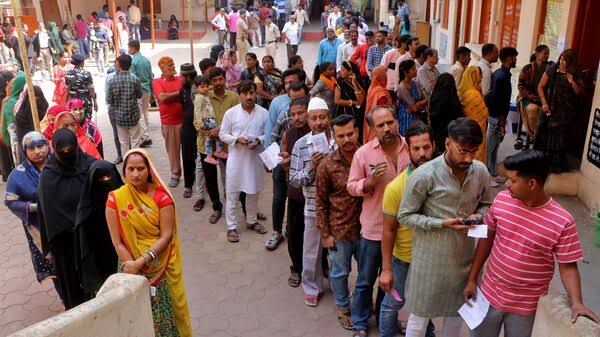
Madhya Pradesh, where elections for its 230 assembly constituencies are currently underway, recorded a total of 71.16 per cent voter turnout till 5 pm on Friday, the Election Commission of India said.

As per the poll body, Agar Walwa saw 82 per cent of voter turnout, while Anuppur recorded 74.85 per cent.

The capital city- Bhopal, recorded 59.19 per cent of voter turnout, while Chhindwara recorded 78.85 per cent, Damoh at 73.83 per cent, Dhar at 72.35 per cent, Dindori at 78.30 per cent, Datia at 69.66 per cent, Indore at 64.95 per cent and Jhabua at 73.10 per cent. 75.54 per cent voter turnout was recorded in Khargone, 78.07 per cent in Mandsour and Neemuch recorded 81. 19 per cent till 5 pm.

Till 3 pm, the MP saw a voter turnout of 60.52 per cent.

“The percentage of voting till 3 pm in Madhya Pradesh stands at 60.52 per cent. Maximum voting has taken place in Shajapur followed by Agar-Malwa and Neemuch. Districts like Bhopal, Alirajpur, and Gwalior have recorded the lowest voting percentage so far,” said Madhya Pradesh Chief Electoral Officer (CEO) Anupam Rajan, giving details of the elections after 3 pm.

Voting for 230 Assembly seats in Madhya Pradesh began at 7 am on Friday. Madhya Pradesh is proving to be a tough fight for the BJP, with the fatigue factor associated with sitting Chief Minister Shivraj Singh Chouhan, who has been in power for close to two decades.

Webcasting has also been made available at about 42,000 polling stations.

Nearly 700 companies of the central forces and two lakh police personnel of the state have been deployed for security during the poll. The election will decide the electoral fates of over 2,500 candidates.

Nearly 5.59 crore voters are eligible to exercise their franchise. It includes 2.87 crore male and 2.71 crore women voters. There are over 5,000 booths run by women and 183 polling stations run by the disabled, officials said. The polls, coming nearly six months ahead of the Lok Sabha polls, are crucial for both the BJP and Congress for various reasons.

The counting of votes for the five states including Rajasthan, Telangana and Mizoram will be done on December 3.

(This news report is published from a syndicated feed. Except for the headline, the content has not been written or edited by OpIndia staff)

Pro-Hamas activist Huwaida Arraf, who funded Congresswoman censured for anti-Israel views, had visited India and met prominent Muslim leaders

Amid growing antisemitism and massive pro-Palestine protests in several cities and university campuses in the USA, recently it was revealed that Congresswoman Rashida Tlaib was funded by several pro-Hamas Palestinian activists. One such activist who has been advocating in support of Hamas, Huwaida Arraf, had visited India and met several activists and politicians.

According to an expose by activist research group Canary Mission, Democrat politician Rashida Tlaib was funded by 6 Hamas-linked activists during her 2018 Congressional campaign, Mwafaq Jbara, Sheikh Muhammad Qatanani, Huwaida Arraf, Salah Sarsour, Rafeeq Jaber and Abdelbaset Hamayel.

Huwaida Arraf is a Palestinian-American activist and lawyer who co-founded the International Solidarity Movement (ISM), a Palestinian-led organization fighting for the Palestinian cause in the USA. She is allied with several Palestinian terrorist groups, including Hamas.

She was also the co-founder of the Free Gaza Movement, which sent ships carrying activists to fight Israel’s naval blockade of the Gaza Strip. FGM had sent several ships on this mission, and Arraf herself went there onboard such ships. Huwaida Arraf participated in seven Free Gaza Movement flotillas to Gaza between August 2008 and May 2010.

It is notable that the Naval blockade of the Gaza Strip by Israel and Egypt was approved by the United Nations as a security measure to stop Hamas from acquiring sophisticated rockets. Voyages arranged by Huwaida Arraf’s Free Gaza Movement attempted to breach the blockade, and one of them had had a violent confrontation with Israeli forces.

This pro-Hamas activist visited India in the year 2009 when she met former MP Syed Shahabuddin. Huwaida Arraf visited the office of All India Muslim Majlis Mushawarat on 28 September 2009. During this visit, she met Majlis president Dr. Zafarul Islam Khan and several other prominent Muslim leaders including Feroz Mothiborewala, Mujtaba Farooq, Syed Qasim Rasool Ilyas, Abdul Wahab Khilji, Dr. Taslim Rahmani, M. Wadood Sajid, Ahmad Kazmi and others, as per a report by Milli Gazette.

It is notable that Syed Qasim Rasool Ilyas is the father of Umar Khalid, one of the chief instigators and conspirators of the 2020 Delhi anti-Hindu riots.

Huwaida Arraf’s International Solidarity Movement is considered one of the top 10 anti-Israel organizations in the USA. ISM was probed by the FBI as part of a terrorism investigation between 2004 and 2006, however, no charges were filed.

Rashida Tlaib censured by Congress for pro-Hamas views

Rashida Tlaib, who was funded by Arraf and other pro-Hamas activists, is the only Palestinian American in the US Lower House. She was censured by the US Congress earlier this month following her openly anti-Israel rhetoric following the 7 October Hamas terror attack on Israel and Israel’s retaliatory military action in Gaza.

Tlaib had shared a video showing Palestinian protestors chanting the slogan “From the river to the sea, Palestine will be free,” a highly controversial slogan that calls for the elimination of the Israeli state. This slogan calls for the entire land between the Jordan River and the Mediterranean Sea to be brought under Palestinian control, essentially abolishing Israel. While her democrat colleagues had supported her initially, later several party leaders, including Jews, voted against her to censure her in Congress.

Recently it has also been revealed that Rashida Tlaib is part of a hidden Facebook group that glorifies Hamas. Members of the group Palestinian-American Congress were seen mocking the Israeli civilians kidnapped and kept hostage by Hamas terrorists. The group has posted news of the death of Israeli soldiers in the fight against Hamas as “achievements” of the “resistance in Northern occupied Palestine.”