Home Blog Page 1795

Moradabad: Muslim woman accuses ‘childhood friend’ Shoaib, his brother and two friends of raping her after spiking her drink, blackmailing her with video

0

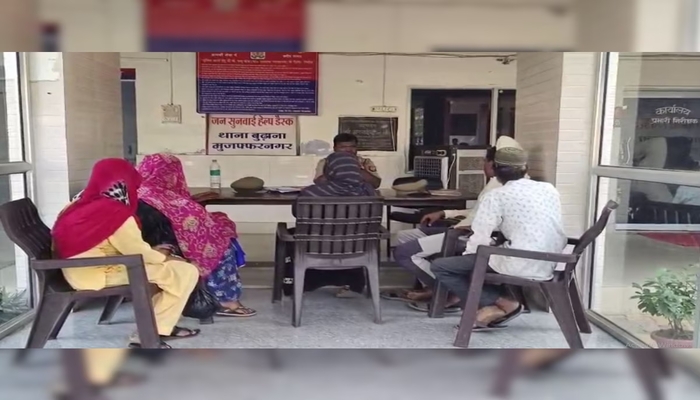
On September 6, 2023 (Wednesday) a woman belonging to the Muslim community in Moradabad, Uttar Pradesh reached the Senior Superintendent of Police office. She demanded action against her boyfriend Shoaib, his brother and two others. According to the victim, the police had registered a case against the accused on August 19, but no arrest has been made till now.

According to the victim, she was sexually assaulted on June 18. She did not file the case earlier due to the fear of shame in society, however, a month later she mustered the courage and filed a complaint against her boyfriend Shoaib and three others accusing them of rape. She also wrote in her complaint, that the accused filmed the heinous act and threatened to leak it on social media if she complained.

Shoaib worked as a compounder in a nursing home in Kohinoor Tiraha, according to the victim. He has since disappeared from there after the incident.

Sumit Tandon, a Moradabad-based journalist working for Sudarshan News shared a video where the woman, a resident of a locality in the Majhola police station area of Moradabad, Uttar Pradesh, shared her harrowing tale and grieved the betrayal of her companion.

Speaking to OpIndia, the journalist said that the victim mentioned receiving threats when telling him about her ordeal. He said that the woman alleged that she was being pressured to drop the complaint. The accused are allegedly threatening to file fake complaints against the victim’s relatives, Tandon quoted the woman as telling him. He added that the victim confirmed that the accused had already filed a bogus complaint against her cousins.

The victim, narrating her ordeal, said that on the fateful day of June 18, Shoaib, who lived in her neighbourhood, took the victim for a drive in his car. He was accompanied by his brother Uvaish and two other friends. Shoiab offered the victim cold drinks and samosa, which she suspected was spiked as she fell unconscious after eating it.

There wasn’t a single cloth on my body when I regained consciousness: Moradabad Muslim victim narrates how her childhood friend betrayed her

When she regained consciousness, there wasn’t even a single article of cloth on her body and the four accused were standing in front of her, she added. Afterwards, her boyfriend showed her the videos on his phone and threatened, “If you don’t want these videos to go viral on social media, keep your mouth shut.”

She stated that she had known him since childhood and the two shared a strong friendship since the beginning. However, one and a half years ago their bond turned into a love affair. They met regularly and also developed a physical relationship after he promised marriage, she said, adding that she was unaware of what was going on in his mind and never thought that he would ruin her life in such a manner.

Continuing to narrate her story, she said that she lived with her father as her mother died when she was just two years old. She added that she used to be alone at home when her father went to work and Shoaib took advantage of the opportunity. He used to come to her residence and establish physical relationships with her, promising to marry her. She too used to visit his place.

Shoaib’s father, however, decided to install cameras after his mother witnessed their rendezvous. The girl started to meet him outside after that.

She charged that when the offender’s family learned about their relationship, he refused to acknowledge their affair and declined to marry her after violating her sexually for around one and a half years. Therefore, she registered the complaint after which both he and his family agreed to the marriage, she asserted.

The victim conveyed, “After the agreement at the police station, Shoaib and his family members made us feel that they have started preparing for the wedding. Meanwhile, on 18 June, Shoaib claimed that he wanted to take me to the highway and brought me along. He was taking me in a white vehicle with three other young people inside and his brother Owais was one of them and gave me a samosa and cold drink.”

“I became unconscious after drinking it. When I regained consciousness around 11 at night, I was lying near the tower in Kundarki. I was completely naked with nothing covering me. When I looked up, my lover Shoaib was standing right in front of me with a mobile in his hand. He revealed my naked clip and warned me that he would make the video viral if I disclosed anything to anyone.”

She further added, “At first, I kept quiet out of concern for public shame. I didn’t say anything to anyone. Then on 30 July his mother also threatened me. After this, I met SSP Moradabad and told him about the whole situation after which the police registered an FIR (First Information Report) of gangrape against Shoaib, Owais and other unknown culprits.”

She voiced that she is receiving constant threats from the accused. The station in-charge Kundarki informed the reporters that no arrests had yet been made. He added that an investigation is being conducted into the victim’s accusations.

West Bengal: Police arrest Anandabazar Patrika journalist after report on hooch dealers in Kharagpur, BJP says

On 7th September, leader of the opposition and Bharatiya Janata Party (BJP) West Bengal MLA Suvendu Adhikari said that Anandabazar Patrika journalist Debmalya Bagchi was arrested after a report on hooch dealers was published in the newspaper. Accusing media and left-liberals of maintaining silence on the arrest, he narrated the chronology of events that led to Bagchi’s arrest.

On 27th August 2023, the Kharagpur edition of Anandabazar Patrika published a report highlighting hooch traders operating from houses in the residential area of Sanjoal in Ward No 24 of Kharagpur Municipality.

As per the report, Basanti Das and other women of the locality formed a group and worked together to lawfully obstruct the illegal trade of illicit alcohol in the area.

In his post on X (formerly Twitter), Adhikari pointed out that because of the unrestricted trade of illicit alcohol or hooch in the area, the teenagers were getting involved, and the ward atmosphere became unsafe for the women. They went to the police seeking help but they were reluctant to act. Furthermore, the women sought help from the local councilor and chairperson of the Municipality but could not get anyone to act on their complaint.

Following the article, the administration and police allegedly got rattled, leading to the arrest of a few drunkards in the area. Adhikari said it was done to contain the public outrage in the backdrop of hiding the main operators of the illegal business.

Interestingly, on 28th August, the relatives of hooch traders filed a complaint against the women who initially went to the police to file a complaint against the illegal business. Police sprung into action and filed an FIR under Section 3(1)(r)(s) of The Scheduled Castes and Scheduled Tribes (Prevention of Atrocities) Act, 1989. In the complaint filed on 27th August, the complainant accused the women of attacking them and using castist slurs. She also accused the woman of pulling her clothes and injuring her.

On 7th September, Anandabazaar Patrika published another report highlighting the hooch dealers’ attack on Basanti Das and other complainants.

The report pointed out that seven houses in the area are indulged in the business of illicit hooch trade in the area. The women have been complaining about it for over two years, but the police or the administration took no concrete action.

As per the report, the dealers surrounded the houses of the complainants and kicked the door. They demanded to withdraw the complaint. The woman called the police, but they arrived around one hour after the call. However, the police claimed they reached the spot soon after receiving the call.

Journalist Debmalya Bagchi was allegedly picked up by the police from his residence in the aftermath of the reports published by Anandabazaar Patrika.

Rabies virus has a 100% fatality rate, and India is ‘world leader’ in Rabies deaths: Read about the dangers of stray dog problem

Rabies is a preventable viral disease most often transmitted through the bite of a rabid animal. The RABV virus infection is the root of the ailment. The virus infects the central nervous system of mammals which ultimately results in brain disease and death. It causes encephalitis (inflammation of the brain) in humans and other mammals.

Rabies was historically referred to as hydrophobia (fear of water) due to the symptom of panic when presented with liquids to drink. It is spread from the saliva of infected animals. The majority of rabies in the United States are linked to skunks, raccoons, bats and foxes. However, dogs continue to carry the rabies virus in many other nations, including India, and dog bites are the leading cause of rabies-related deaths in humans worldwide.

The animals most likely to spread the rabies virus to people include pets and farm animals like cats, cows, dogs, ferrets, goats, horses and wild animals like bats, beavers, coyotes, foxes, monkeys, raccoons, skunks and woodchucks.

How rabies is transmitted

Rabies is caused by the lyssaviruses, including the rabies virus and Australian bat lyssavirus. It is spread through direct contact with saliva or brain/nervous system tissue from an infected animal, such as through a break in the skin or mucous membranes in the eyes, nose, or mouth.

The disease is typically transmitted to humans by an animal’s bite. The risk of contracting rabies from non-bite exposures, such as scratches, abrasions, or open wounds exposed to saliva or other potentially infectious material from a rabid animal is also theoretically possible but unlikely.

Other forms of interaction, for instance caressing a rabid animal or coming into touch with its blood, urine or faeces are not considered to present a risk of infection and are not regarded as rabies exposures to be concerned about. The disease can be diagnosed only after the start of symptoms.

Dogs are the most common animals involved in rabies transmission on a global scale. More than 99% of rabies cases in countries where rabies is often spread are due to dog bites. Less than 5% of rabies cases in the Americas are caused by dog bites with bat bites being the most frequent cause there. Rodents are very rarely infected with rabies.

On rare occasions, the virus has been transferred from an infected organ to recipients of tissue and organ transplants. Furthermore, rabies might be spread by bites and non-bite exposures from an infected individual, but no such cases have been reported.

There is no risk of infection from incidental contact with substances like touching a person who has rabies or touching urine, blood or faeces. Any contact with a person who is undergoing rabies vaccine does not result in rabies exposure, infection risk or the need for postexposure treatment.

When the rabies virus dries up and is exposed to light, it loses its ability to transmit the infection. The rate at which the virus deactivates varies depending on the environment, however normally, if the virus-containing material is dry, the virus can be categorised as non-infectious.

The symptoms of rabies

The rabies virus first reaches the brain following exposure before it is able to begin to produce symptoms. The incubation period is the span of time between exposure and the onset of symptoms. It could continue for weeks or months. The incubation period could change depending on the type of rabies virus, the location of the exposure site (the distance from the brain) and any prior immunity.

The initial signs of rabies, such as weakness or pain, fever, or headache, could resemble those of the flu. Additionally, there might be pain, prickling or an itchy sensation at the part where the animal attacked you. The signs could persist for several days.

The symptoms then intensify to include agitation, anxiety, confusion and brain dysfunction. The person might suffer from delirium, bizarre behaviour, hallucinations, hydrophobia (fear of water) and insomnia as the illness progresses.

In general, the disease’s acute phase lasts between two and ten days. The disease is largely fatal once clinical symptoms of rabies manifest and treatment tends to be supportive. Less than 20 human cases of clinical rabies survival have been recorded. Only a small number of survivors had never received pre or postexposure prophylaxis.

Postexposure prophylaxis (PEP) consists of a dose of human rabies immune globulin (HRIG) and rabies vaccine given on the day of the rabies exposure, and then a dose of vaccine given again on days 3, 7, and 14.

The symptoms, indications and prognosis of rabies in animals can differ. Animal symptoms often mimic human ones. Early nonspecific signs, immediate neurologic problems and ultimately mortality are some of them.

Rabies facts by WHO

The prevention of rabies

Rabies is a deadly but preventable viral disease. A life can be saved by being aware of rabies risk and knowing what to do if you come into contact with an animal. A strategy to prevent rabies is to keep away from wildlife. All wildlife, especially injured animals, should be left alone. Don’t handle an injured animal. instead, get in touch with the appropriate authorities to request help.

Preventing rabies in pets is a crucial step in reducing the number of human rabies cases since pets can contract the disease from wild animals and then potentially carry it to humans. In the event that you do come into contact with a rabid animal, timely and adequate medical attention would completely prevent rabies in people. If you are uncertain about whether you require PEP or have been bitten or scratched, consult a healthcare professional.

Every dog and cat older than four months need to have a rabies vaccination and always keep your vaccines up to date. Cats and dogs should be kept under supervision and they cannot be left unattended.

When compared to pets under their owners’ control, roaming or stray animals are more likely to have been exposed to rabies. Do not approach stray or unfamiliar cats or dogs. Animals on the loose are more prone to attack people and have rabies exposure. Keep pets and stray animals separate.

Rabies is 100% preventable by vaccine

If an animal bites, scratches, or comes into contact with you wash the wound thoroughly right away as well as scrub and flush for a few minutes with lots of soap and water. Any animal bite should be reported right away to your local animal control agency, police department or health department for further investigation. If the animal is stray or wild identify it and keep watching it to help with ultimate capture, but refrain from exposing yourself to risk again.

An intramuscular regimen of four 1-mL doses of the HDCV or PCEC vaccination is recommended for previously unvaccinated people. The four-dose course’s initial dose needs to be given as soon as feasible following exposure. On days 3, 7, and 14 following the initial immunisation, further doses should be administered. Adults should always receive the immunisation intramuscularly in the deltoid region (arm).

The anterolateral side of the thigh is also appropriate for children. Since delivery of the rabies vaccination in this location is thought to induce lower neutralising antibody titers, the gluteal region should never be used for injections.

Wild animals should be left alone. Although they seem friendly, stay away from them and never encourage one to feed from your hand. Do not be afraid of them, rather, respect them and keep your distance.

WHO has targeted zero rabies death by 2030

The epidemic of rabies in India

The number of human deaths globally due to dog-mediated rabies is estimated to be 59,000 annually. India is responsible for 36% of rabies-related deaths worldwide, according to the statistics of the World Health Organisation. Moreover, India is responsible for 65% of the such fatalities in South-East Asia. The National Rabies Control Programme recorded 6644 medically suspected cases and fatalities of rabies between 2012 and 2022.

The unexpected increase in rabies infections in India is a serious public health issue. Deaths from rabies among both vaccinated and unprotected people have raised a lot of public concern, particularly in Kerala. Within the last five years, the state has seen a two-fold increase in the number of sick canines.

A comparable study conducted in 2016 indicated that 32% of the 300 samples obtained from dogs tested positive for rabies, while this year, 168 samples (or 56% of the total) did. More than 200,000 dog bite instances and 21 fatalities, almost twice as many as during the previous year have been reported by the state, 12 of which have been confirmed by a laboratory.

Despite getting anti-rabies immunoglobulin (RIG) and a vaccine, six of the patients, including a 12-year-old child, passed away. 250 anti-rabies shots were given out without the necessary quality checks due to a serious vaccine shortage brought on by an upsurge in rabies cases.

The new Thai Red Cross Schedule for intramuscular (IM) and intradermal (ID) immunisation is presently implemented in India. The current post-exposure prophylaxis (PEP) protocol calls for either five intramuscular (IM) doses on days 0–3, 7–14, and 28 or eight ID doses (two locations per visit). Ineffective RIG administration, non-administration or inadequate wound care allows the virus additional time to proliferate. A painful consequence could occur even with the right PEP.

The body’s production of antibodies and the virus’s ability to enter the brain compete for control of the body once the vaccination is given. It has been hypothesised that the vaccination wouldn’t have enough time to work if damaged areas of the body were close to the brain or rich in nerve tissue. Therefore, RIG must be administered as soon as feasible for passive immunity because the vaccination alone cannot protect against rabies in category III exposure. There have also been a few documented instances of fraudulent or subpar vaccines and cold chain failure.

307 died of rabies in India last year

India records 1.7 crore dog bites per year, per the Association of Prevention and Control of Rabies in India (APCRI). In 2022, rabies claimed the lives of 307 people. Delhi had the most occurrences (48), West Bengal came in second (38) while Maharashtra, Karnataka, and Andhra Pradesh each had 29 fatalities.

The information was provided in answer to a query posed by Dean Kuriakose, the Congress MP from Idukki, Kerala, last week, by SP Singh Baghel, the Union minister of state for health and family welfare, during the current monsoon session of the Lok Sabha. Rabies is a major cause of morbidity and mortality in India, according to the National Centre for Disease Control (NCDC).

“A large stray dog population and limited success in control methods, such as mass dog vaccination and animal birth control, are among the reasons for the high number of animal bite and rabies cases in India. Almost all of these deaths can be prevented with safe and efficacious rabies vaccines, but somehow the efforts have fallen short so far,” stated Indian Medical Association’s central working committee member, Dr Sharad Gupta.

Why India is struggling with rabies

The Global Alliance for Rabies Control (GARC), the World Organisation for Animal Health (OIE), the Food and Agriculture Organisation of the United Nations (FAO), and nations from all around the world convened in December 2015 to discuss eradicating human rabies mortality by the year 2030. In her own words, WHO Director-General Dr. Margaret Chan stated that eradicating rabies is a possibility. She remarked, “Rabies belongs in the history books.”

With a high prevalence of the disease and the ability to mobilise the support of other nations in the region owing to its wealth of technical expertise and resources, India has to play a significant role in the effort to eradicate human mortality from dog-mediated rabies by the year 2030.

According to specialists, this is feasible only if the Indian government changes the status of rabies and makes it a “notifiable” illness like tuberculosis or polio. It basically means that the government would give it the attention it requires, calculating the incidence rate, tracking the development, and providing resources along with money.

For example, health clinics across the nation would need to maintain sufficient supplies of the rabies shot, as opposed to the existing scenario, in which clinics in rural locations frequently run out of supplies or lack the competent staff to administer a full course of injections. Along with the essential issue of immunising and sterilising stray dogs, a government strategy would need to include a campaign to raise public awareness.

India now has more stray dogs than ever before. An estimate puts the number at 35 and 40 million. There are bound to be packs of dogs everywhere in the streets. The animals are typically fed by dog lovers, but no one is in charge of administering their shots. A dog can have numerous puppies in a year even after vaccination and before sterilisation, which starts the cycle all over again.

The population of stray dogs must be sterilised and immunised in order to eradicate rabies which is challenging. It is difficult to capture stray dogs, not lumbering and obese labradors, rather tough and street-smart animals to vaccinate them.

The dogs are able to observe the dog catchers coming from a mile away which starts a chase that could or might not end with a dog being caught, rendered immobile, and given a shot. Dog vaccination is typically given low priority by most municipal authorities, who already have to deal with significant pollution, waste handling and homelessness challenges.

Conclusion

Controlling rabies is proving to be a difficult task for India with the problem gradually escalating every year. As Dr Reeta Mani, Associate Professor of India’s National Institute of Mental Health & Neurosciences (NIMHANS) highlighted, “Control of canine rabies through vaccination and dog birth control is imperative, although with 25 million stray dogs in the country, this is a formidable task.”

However, the country has an impressive history of completely eradicating severe diseases like plague, leprosy, and smallpox in spite of all the challenges. She further added, “Collaborative efforts between the medical, veterinary, and public health sectors have already made a significant difference. We have seen improved rates of pre-exposure vaccination (PrEP) for vulnerable populations, such as children, and improved awareness of the need for post-exposure prophylaxis (PEP) after a bite.”

Just like before, India needs to make a concentrated and dedicated effort in order to make progress in this direction along with better facilities and support from all sections to comprehend the gravity and risk the disease poses to society.

An extensive plan needs to be devised on the part of the government and implemented to tackle the menace of rabies and people need to understand that one can practice their love for dogs and animals without putting the lives of others in danger. The matter requires us to be sensitive towards others, particularly children, who are the main victims of all of this.

As Shah Rukh Khan’s film ‘Jawan’ releases, Sameer Wankhede gets major relief from CAT in Rs 25 crore bribery case against him

0

On Thursday, 7th September 2023, the Central Administrative Tribunal (CAT) reportedly ruled an order stating that NCB Deputy Director General Gyaneshwar Singh should not have been a member of the special inquiry team (SET) established to investigate alleged procedural deficiencies by former NCB Zonal Director Sameer Wankhede.

This decision was based on the fact that Singh had provided instructions to Wankhede during the investigation of the Cordelia cruise drugs case, which involved Shah Rukh Khan’s son, Aryan Khan. Coincidentally, this development has come on the release day of Shah Rukh Khan’s film ‘Jawan’.

The Central Administrative Tribunal (CAT) acknowledged the National Control Bureau’s (NCB) argument that the special inquiry team (SET) report was preliminary and that any actions against Wankhede would be independently determined by the Union government and the NCB. A panel of judges heard Sameer Wankhede’s petition, in which he sought the dismissal of a CBI case against him for alleged extortion and bribery, based on the findings of the SET led by Gyaneshwar Singh.

The CAT, based on a thorough investigation, evidence, and documents, held that Gyaneswar Singh, being actively involved in the Cordelian. cruise investigation, could not have been a part of the SET set against Wankehde.

According to the case, Sameer Wankhede and four others were accused of soliciting a bribe of Rs 25 crore from actor Shah Rukh Khan to avoid framing his son Aryan, who was allegedly involved in the 2021 drug seizure on the Cordelia cruise ship. Sameer Wankhede, refuting these allegations, sought to have the CBI case against him dismissed, contending that Gyaneshwar Singh, his reporting boss during the case in question, was “acting as the judge of his own cause and conduct.” He pursued this argument in both the CAT and, more recently, the Bombay High Court.

Meanwhile, Shah Rukh Khan’s film ‘Jawan’ is released today. The movie also stars Nayanthara, Vijay Sethupathi, Sanya Malhotra, and Priyamani, and includes cameo appearances by Deepika Padukone and Thalapathy Vijay. ‘Jawan’ is a Red Chillies Entertainment production directed by Atlee, produced by Gauri Khan, and co-produced by Gaurav Verma. The film has been released in Hindi, Tamil, and Telugu languages.

On 3rd October 2021, Aryan Khan, Arbaaz Merchant, and other 6 people were detained from a luxury cruise liner where a rave party was going on. As per reports, cocaine and ecstasy pills were found on Khan and others with him. The Court had then held that a prima facie case is made out against Khan and other co-accused. However, on 28 October 2023, the Bombay High Court granted Khan and two others bail in the case.

TMC plans an agitation to hide their corruption, writes letters to Delhi police seeking permission: Here is why centre withheld MNREGA funds from Bengal

0

As the central as well as Delhi authorities are busy preparing to host World leaders at the G20 Summit in Delhi, the Mamata Banerjee led TMC government in West Bengal has on September 6 written to the Delhi police seeking permission to hold a protest rally in the national capital against the centre’s decision to withhold the Mahatma Gandhi National Rural Employment Guarantee Scheme (MGNREGS) funds for West Bengal.

According to reports, TMC’s Rajya Sabha leader Derek O’Brien wrote three letters to DCP Parliament Street Police station, New Delhi, seeking permission to organise dharnas at Jantar Mantar, outside Krishi Bhavan and in front of Union agriculture minister Giriraj Singh’s residence on October 2 and October 3.

In the letters, O’Brien asked the Delhi Police for “permission for the Trinamool Congress to hold dharnas involving workers from the state of Bengal who have been denied wages under the MGNREGA scheme from 10 am. to 6 pm. on October 2 and 3 at Jantar Mantar, Krishi Bhavan, and outside the minister’s residence from 10 am. to 6 pm. on October 2 and 3.”

Abhishek Banerjee, national general secretary of the TMC, will lead the protests in New Delhi.

The letter was written after the central government decided to withhold Mahatma Gandhi National Rural Employment Guarantee Scheme (MGNREGS) funds for West Bengal for the fiscal year 2023-24, extending the imposition of Section 27 of the MGNREGA, which allows for the suspension of funds for violations of rules in the scheme’s implementation by the state.

The decision was reportedly taken last week after a meeting with the West Bengal administration and the Centre on March 13.

This is not the first time that the ruling TMC government in West Bengal has been denied funds for central government schemes. The Centre had first invoked the rule in December 2021. In fact, West Bengal is the only State in the country against whom this Section 27 of the MGNREGA was invoked.

Since the central government decided to halt the disbursement of funds for central government schemes to the state, Mamata Banerjee and her party loyalists have attempted to accuse the union government of discriminating against Bengal by failing to provide the state with its fair share of funds under centrally-sponsored schemes. The party has been feverishly defending itself against allegations of gross malfeasance and corruption by its employees in numerous centrally-sponsored development initiatives and projects.

The truth, however, is that the fund disbursal was suspended only after large-scale anomalies in the implementation of the welfare schemes of the central government including the Mahatma Gandhi National Rural Employment Guarantee Act (MGNREGA) by Trinamool functionaries, especially in the rural areas, had been exposed.

Central govt stopped fund disbursal to WB after large-scale anomalies by Trinamool functionaries unearthed

As per the scheme’s norms, a job cardholder can directly approach the panchayat or other implementing agencies for work and is entitled to get at least 100 days of work. However, in West Bengal, a large number of Trinamool officials in rural areas have been accused of placing ineligible people, including family members, on PMAY beneficiary lists.

The list of PMAY beneficiaries in Bengal was discovered to be filled with wealthy individuals with ties to the ruling party, as well as children, wives, and close relatives of Trinamool functionaries.

Similarly, Trinamool employees in rural organizations have been accused of distorting MGNREGA beneficiary lists, generating bogus job cards, and misrepresenting records of assets produced under the scheme in order to siphon off funds, among other violations.

The union administration suspended fund disbursement after central audit teams discovered these large-scale errors and malfeasance.

BJP leader Suvendu Adhikari accuses TMC govt of creating fake data to claim employment generation in rural Bengal

It may be recalled that in 2022, BJP leader Suvendu Adhikari had taken to X, formally Twitter to share the letter he had written to Union Rural Development Minister Griraj Singh seeking an investigation against Mamata Banerjee administration in West Bengal. Asking for a CBI probe or a probe by any central agency, the BJP leader alleged that the WB Govt was creating ‘fake’ jobs and misusing the job holder details to create false employment data.

Alleging that the details of the Job Card holders are being used arbitrarily and at whim by the Mamata Banerjee administration, the BJP leader said that if an audit is conducted the following facts would certainly be revealed:

  • The Jobs/Works against such “so-called employment” that have been generated are mostly fake. The Administration won’t be able to provide the Work Orders or Tender Details of the Jobs/Works to tally such employment.
  • The mode of payment to the labourers is questionable & lacks clarity. An inquiry must be done whether the payment has been made in cash. If so, then who made such payment & for which job? Whether the person/agency making such payment has been actually assigned to execute such a job. And if the payment has been made through account transfer, in that scenario the Administration must come clean regarding the money trail.
  • A large number of Job Card holders’ details seem to be fake. The figures for the Job Card holders are hugely exaggerated. If compared to the 2011 Census it would be found that the job cards issued in a Block seem to outnumber the people residing in that area.

Saying so, BJP Leader Suvendu Adhikari urged Union Rural Development Minister Griraj Singh to launch an investigation against Mamata Banerjee’s administration in West Bengal.

In fact, for the uninitiated in 2019, Mamata Banerjee herself had inadvertently admitted that ‘cut money’ was taken by members of her own party, for implementing the welfare schemes of the government.

Mamata Banerjee’s MGNREGA lie

In 2013, two years into office, Mamata Banerjee made big claims of development, especially about providing 100 days of work to unemployed adults under the Mahatma Gandhi National Rural Employment Guarantee Act (MGNREGA). Her government claimed that the state topped the chart in 2012-13 with the implementation of projects worth Rs 4475.80 crore, which is the highest in the country and generated employment for 57.76 lakh families. 

TMC government’s ad in a local newspaper made tall claims of topping the development scale.

This also turned out to be nothing but a deception. The national statistics then suggested that West Bengal ranked 24th on the list. The then Union Minister of State for Urban Development Deepa Dasmunsi had said in a statement: “The state has ranked 24th on the list, whereas the (Trinamool) government very boastfully claimed otherwise. It easily nailed the lie of the state administration as they are misleading people with wrong information ahead of the panchayat elections”.

The national statistics also suggested that West Bengal dipped to the 35th position in the list in the year 2019.

So, contrary to the lie peddled by Mamata Banerjee about topping the MGNREGA chart, there has been an unprecedented growth of unemployment under the TMC rule. Between October 2016 to 2020, unemployment in West Bengal has grown by an astounding 217 per cent.

West Bengal also always has the highest percentage of delayed MGNREGA payments and it is plagued by TMC’s cut-money across the state, where workers are forced to pay hefty sums to avail work under the scheme.

Though all facts have been out in the open the Trinamool top leadership has succeeded time and again in fooling the people of the state by distancing itself from the corrupt within the party’s ranks, corruption and extortion have become too endemic within the party to be rooted out. This letter to the Delhi Police requesting permission to protest the central government for withholding Mahatma Gandhi National Rural Employment Guarantee Scheme (MGNREGS) funds for West Bengal for the fiscal year 2023-24 could be a new strategy of the Mamata-led government to mislead the public by diverting attention from the widespread corruption inside her own party due to which the central government has been compelled to withhold the Mahatma Gandhi National Rural Employment Guarantee Scheme (MGNREGS) funds for West Bengal.

‘Even those with specific roles have got bail’: Delhi court says while granting bail to Md Khalid, accused in Ratan Lal’s murder in 2020 anti-Hindu Delhi Riots

0

On Wednesday, September 6, Mohammad Khalid, a person accused of involvement in the murder of Head Constable Ratan Lal during the anti-Hindu Delhi Riots of 2020 was granted bail by the court of Additional Sessions Judge Pulatsya Pramachala. While granting bail to the accused Mohammad Khalid, the court directed him to furnish a bond of Rs 15,000.

ASJ Pramachala stated that he does not find the role attributed to accused Mohammad Khalid worse than those of other co-accused persons. He added that the “other accused persons with similar kind of allegations being part of that mob without further specific role attributed to them have been granted bail in this case.”

The court also stated that even those persons who were accused of a specific role, such as damaging CCTV cameras, were given bail by the Delhi High Court.

Khalid had been living in Dehradun since December 2018, according to the accused’s lawyer, Mohammad Hasan. He further stated that Khalid’s bank transactions show that he was present at a gas station in Dehradun on the date of the said incident.

It is notable that Mohammad Khalid who was arrested in July this year is the brother of Mohammad Ayaz, one of the main conspirators of the murder of Head Constable Ratan Lal. Ayaz was arrested by the Delhi Police’s Special Cell on June 21 this year.

Earlier, it was reported that during questioning, accused Khalid had admitted that he took part in the Chand Bagh anti-CAA/NRC rally in 2020 with his older brother Mohammad Ayaz and several friends. At a private meeting held at his home, it was resolved by everybody present to bring sticks and iron rods to block the roads.

Ratan Lal Murder

A crazed Muslim mob had brutally lynched Head Constable Ratan Lal of Delhi Police while he was trying to perform his duty on the main Wazirabad Road, Chand Bagh, during a violent riot. The 42-year-old police officer lived with his family in Amrit Vihar, Burari, Delhi.

Lal belonged to Fathepur Tihwali village in Rajasthan’s Sikar district. His wife and three children survive Lal. The Sikar resident had joined the Delhi Police as a constable in 1998. He married a Jaipur resident in 2004. Ratan Lal was posted at Gokulpuri Police Station. He lived with his family in a house in Delhi’s Burari area.

A mob attacked police officers stationed in Maujpur, Delhi’s North-East area, on February 24, 2020. Ratan Lal died from a bullet wound, according to the autopsy report. A video surfaced in March 2020 where a violent mob of rioters can be seen attacking the Delhi Police officers with stones and sticks.

BJP will take one-sided decisions if opposition boycotts special session of parliament, there should be debates: Jairam Ramesh of Congress

0

If the opposition parties boycott the special session of Parliament, the BJP will take a one-sided decision, said Congress leader Jairam Ramesh on Thursday, adding that “there should be a discussion in Parliament about important issues, and we will put them forward”.

Ramesh’s statement comes as leaders from the opposition parties are demanding to know the motive behind calling a Special Session in Parliament.

On Wednesday, Congress Parliamentary Party Chairperson Sonia Gandhi wrote a letter to Prime Minister Narendra Modi demanding to discuss and debate several issues, including the Manipur violence, the economic situation of the country, the MSP, and other demands of farmers, among other issues.

In the letter, the former Congress chief also mentioned that the session is being held without any consultation with other political parties, and none of them had any idea of the agenda for the session.

“You have convened a special five-day session of the Parliament beginning September 18, 2023. I must point out that this special session has been convened without any consultation with other political parties. None of us have any idea of its agenda,” she said in her letter.

“All we have communicated is that all five days have been allocated for government business. We most certainly want to participate in the special session because it will give us an opportunity to raise matters of public concern and importance,” Sonia Gandhi said.

Responding sharply to Sonia Gandhi’s letter, Parliamentary Affairs Minister Prahlad Joshi said, “You are politicising the work of our Parliament, and when there is no controversy, you are unnecessarily raking it up.”

Reacting to the Congress leader’s claim that the agenda of the special session wasn’t shared, Prahlad Joshi, Union Minister for Parliamentary Affairs, said, “Never before, even when other governments were at the Center, the agenda was circulated in advance. Unnecessarily, they (Congress) are politicising the issue, and that’s really unfortunate.”

Meanwhile, other leaders from the opposition bloc have also raised a similar concern. 

Rashtriya Janta Dal MP Manoj Jha said on Thursday that when special sessions were called before, their agenda was shared with the public, but now only two people know PM Modi and Home Minister Amit Shah, and no one knows why this special session has been called.

“It’s not a common session; it’s a special session. Before this, every time a special session was called, people had an idea why it was called. … This is the new transparency in India. Now only two people know PM Modi and Home Minister Amit Shah and no one knows why this special session has been called.”

Speaking to ANI, Chhattisgarh Deputy CM TS Singh Deo repeated his party’s stance on the special session of Parliament. He demanded to know the agenda of the upcoming session. “The agenda of the special session of Parliament should be told… If a special session is called, it is for a special reason, and that should be stated,” he added.


(This news report is published from a syndicated feed. Except for the headline, the content has not been written or edited by OpIndia staff)

Parliament of World’s Religions cancels talk by Vivekananda Kendra Vice President Nivedita Bhide after vicious campaigns by leftists and Islamists

On Monday, 14th August 2023, organizers of the Parliament of the World’s Religions in Chicago, Illinois, abruptly informed Nivedita Raghuram Bhide from Swami Vivekananda Kendra, Kanyakumari, India, that her scheduled plenary session speech on August 16, 2023, had been cancelled. Bhide’s exclusion from the Parliament’s plenary session stemmed from a targeted campaign. The collaboration between left-wing media, academia, and Islamist groups worked to stifle authentic Hindu representation at the event.

Who is Nivedita Bhide?

Nivedita Bhide, a Padmashree awardee of 2017, is a ‘Jeevanvrati‘ of Vivekananda Kedra Kanyakumari – an organisation she has been working for since 1977. ‘Jeevanvrati’ is a lifetime devoted worker in the work of the organisation, where Nivedita Bhide is currently working as the vice president. Nivedita Bhide boasts an impressive literary record with more than 15 published books to her name. She conducts regular yoga teachings and spiritual retreats worldwide, imparting her wisdom.

Additionally, she has delivered numerous papers at both national and international conferences and has lectured at prestigious educational institutions across the globe. As a trustee of the Vivekananda International Foundation since its establishment, she has been actively involved in promoting cultural relations and has been a member of the Indian Council for Cultural Relations since July 2020.

What is Vivekananda Kendra?

Vivekananda Kendra Kanyakumari, often simply referred to as Vivekananda Kendra, is a well-known spiritual and cultural organisation in India. It was founded in 1972 in Kanyakumari, Tamil Nadu, in honour of the great Indian philosopher and spiritual leader Swami Vivekananda. The organisation takes its inspiration from Swami Vivekananda’s teachings and aims to promote his vision of a spiritually awakened and culturally vibrant India.

Vivekananda Kendra Kanyakumari was founded by Eknath Ranade in 1972. Eknath Ranade (1914-1982) joined the Rashtriya Swayamsevak Sangh (RSS) while still in school. He became an important organiser and leader for the organisation, rising through its ranks to serve as its general secretary from 1956–62. Eknath Ranade was a dedicated social worker, spiritual leader, and follower of Swami Vivekananda’s teachings. He played a pivotal role in establishing and nurturing the Vivekananda Kendra Kanyakumari, which continues to promote Swami Vivekananda’s ideals and values to this day. His birth centenary year was celebrated by the organisation in 2014-2015 and Prime Minister Narendra Modi was present as the chief guest.

Key features and activities of Vivekananda Kendra include Yoga and Meditation, Vivekananda Rock Memorial in Kanyakumari, cultural and educational activities at various places in India, rural development, Vivekananda Kendra Vidyalayas (schools), publication of various literature related to the life and works of Swami Vivekananda and the organisation, youth empowerment, and spiritual retreat.

What is the Parliament of the World’s Religions?

The Parliament of the World’s Religions is an international gathering that brings together individuals, organisations, and leaders from various religious and spiritual traditions to promote interfaith dialogue, cooperation, and understanding. It is supposed to serve as a platform for discussing and addressing global issues, fostering peace, and promoting social justice.

The Parliament of the World’s Religions was first held in 1893 in Chicago, Illinois, USA. It was organized as part of the World’s Columbian Exposition, a world’s fair celebrating the 400th anniversary of Christopher Columbus’s arrival in the Americas. The 1893 Parliament is considered a landmark event because it marked one of the earliest attempts at interfaith dialogue on a global scale. It featured representatives from various religious traditions, including Christianity, Hinduism, Buddhism, Islam, and more.

The Parliament of the World’s Religions typically includes a wide range of activities and events, such as plenary sessions, workshops and panel discussions, interfaith dialogues, cultural performances, exhibitions and displays, youth programs, community services, etc.

The Parliament of the World’s Religions 2023

Since its inception, the Parliament of the World’s Religions has been held at irregular intervals, with subsequent gatherings taking place in different cities around the world. In 2023, it was held in Chicago from 14th August to 18th August. The theme of this year’s gathering was ‘ A Call to Conscience: Defending Freedom and Human Rights’. Unfortunately, the organisers of this conference surrendered before the leftists and Islamists and denied the freedom and human rights of one of the invitees to speak in the plenary session. The organisers cancelled a talk by Nivedita Bhide scheduled for 16th August 2023.

How Nivedita Bhide was demonised by leftists and Islamists?

The rise of intellectual intolerance is a notable trend in both the United States and other Western countries. Academic institutions, think tanks, and even corporations are becoming more accepting of practices such as cancel culture, censorship, de-platforming, disciplinary measures, financial penalties, and in some cases, legal actions as their preferred means of addressing dissenting voices and a variety of viewpoints.

Prior to her departure for Chicago, Bhide came across a social media post by Audrey Truschke, a leftist Islamist faculty member at Rutgers University. In this tweet, Truschke labelled Bhide as a “Hindu nationalist.” She said, “Bhide has personally engaged in spreading disinformation that demonises Indian Muslims in recent years, during which anti-Muslim violence has risen precipitously in India, under Hindu nationalist leadership. Bhide has deep connections with far-right political organisations that support Hindu nationalism, a deeply Islamophobic political ideology.”

This Audrey Truschke is on the advisory board of the Students Against Hindutva Ideology (SAHI), an activist body in the United States of America with close ties to the Democratic party establishment. The activist body is most famous for organising the Hinduphobic ‘Holi Against Hindutva’ campaign in 2020 when it was simply called ‘Students Against Hindutva’.

A fellow member of the advisory board of SAHI is Ajit Sahi, advocacy director of the Indian American Muslim Council. Ajit Sahi is the former executive director of the disgraced Tehelka magazine. He has appeared on prominent platforms in the USA on several occasions to spread propaganda against India.

The Indian American Muslim Organisation (IAMC), one of the event’s sponsors, also took active steps to remove Bhide from the platform. They disseminated pamphlets containing propaganda in the guise of criticism of India’s Prime Minister Narendra Modi and the Rashtriya Swayamsevak Sangh (RSS). The Indian American Muslim Council is a radical Islamist group that has alleged links with banned terror organizations such as the Students Islamic Movement of India (SIMI) and has a long history of lobbying against India.

Rasheed Ahmed, the executive director of the Indian American Muslim Council (IAMC) said, “Participants in the Parliament of World Religion must vocally oppose the inclusion of Hindu nationalist Nivedita Bhide in the ‘A Call to Conscience: Defending Freedom & Human Rights’ conference. As the leader of the Vivekananda Kendra, an affiliate of the Rashtriya Swayamsevak Sangh (RSS) organization, Bhide is helping to advance a fundamentally exclusionary vision of India – the very opposite of ‘defending freedom and human rights’.”

The IAMC is a Jamat-e-Islami-backed lobbyist organisation claiming to be a rights advocacy group. In the past, it had reportedly collaborated with and had even paid money to various groups in the USA to get India blacklisted by the USCIRF (United States Commission on International Religious Freedom). A detailed report by Disinfo Lab has exposed its links with the terror outfit Jamat-e-Islami.

On 7th August 2023, the Middle East Eye published an article titled, ‘Activists raise alarm over Hindu nationalist presence at Parliament of World Religions’. This article was written by Islamist propagandist Azad Essa. He wrote, “Nivedita Bhide has routinely shared the rhetoric of right-wing Hindu nationalists who demonise prominent Indian activists. Targets have included Afreen Fatima, a researcher and activist; Washington Post columnist Rana Ayyub; and the late Christian Priest, Father Stan Swamy.”

Azad Essa, posing as a journalist, spearheads the campaign against Nivedita Bhide. Under the guise of addressing Islamophobia, he employs his writing and collaborates with similar voices to portray Muslims as victims and others as aggressors. Audrey Trushke is one of the links in this narrative. Azad Essa has quoted her remarks about Nivedita Bhide to bolster his argument. The other culprits he utilised at his convenience are figures like Rasheed Ahmed from IAMC, who received support from Azad Essa, a self-styled journalist with a controversial background, previously associated with Al Jazeera English, a network linked to the Muslim Brotherhood.

Azad Essa works for Middle East Eye (MEE), which is owned by Jamal Awn Jamal Bessasso, a former official associated with Al Jazeera in Qatar and the Hamas-affiliated al-Quds TV in Lebanon. Hamas is the Palestinian Islamic fundamentalist terror organisation. Hamas has a long history of violating human rights. Hamas is designated as a terrorist organisation by several countries including The European Union, the United States, Canada, Israel, Japan, Australia, the United Kingdom etc. 

Jamal Bessasso operates MEE through M.E.E. Ltd. In the past, he has worked as the director of planning and human resources for Al Jazeera and the director of Human Resources for the Samalink Television Production Company in Lebanon, which serves as the registered agent for Al Quds TV’s website. It was MEE and other leftists and Islamists that launched a severe attack on Nivedita Bhide, leading to the cancellation of her address at the Parliament of World’s Religions’ plenary session.

Karma is cyclic in its operation.

On Friday, 18th August 2023, ‘historian’ Audrey Truschke, known for her history of anti-Hindu narratives, faced an unexpected turn of events during her scheduled talk at the Parliament of World’s Religions in Chicago. She was slated to discuss topics like ‘censorship,’ ‘free speech,’ ‘disinformation,’ and alleged ‘threats and harassment from right-wing groups,’ alongside fellow anti-India proponents Sunita Vishwanath and Rasheed Ahmed. Despite the event, titled ‘The Importance of Freedom of Speech to Defend Human Rights,’ being conducted virtually, Truschke found herself addressing empty chairs and vacant halls.

The cold reception faced by those advocating for Nivedita Bhide’s exclusion from the religious conference serves as a reflection of the Karma principle, which finds various interpretations in Hindu scriptures. The essence of this principle is that one ultimately experiences the consequences of their actions. Audrey Truschke aimed to prevent Nivedita Bhide from addressing the conference to suppress her views, but ironically, she found herself addressing an audience of empty chairs during her own turn at the same event.

Parliament of World’s Religions and Swami Vivekananda

It is notable that the first Parliament of World’s Religions held in Chicago in 1893 is remembered for the distinguished presence and speech of Hindu monk Swami Vivekananda – a Dharmik figure inspiring the Vivekananda Kendra in Kanyakumari. Swami Vivekananda made his iconic address at the Parliament’s gathering in 1893, addressing the issues of sectarianism, bigotry, and its horrible descendants, which have filled the earth with violence, destroyed civilisations, and sent whole nations to despair. He also highlighted a faith that has taught the world both tolerance and universal acceptance – that is Hinduism. One hundred thirty years later, Nivedita Bhide, a devoted follower of Swami Vivekananda, was denied the opportunity to speak at the Parliament of the World’s Religions.

Sanatan Dharma should be compared with HIV, leprosy, Udayanidhi Stalin was soft in comparing with dengue, malaria: DMK MP A Raja

DMK leaders continue to abuse Hinduism after Udhayanidhi Stalin compared it with diseases like Dengue, Malaria, and Covid, and called for its annihilation while participating in the ‘Annihilation of Sanatana’ conference on September 2. On 6th September, DMK MP A Raja added fuel to the controversy by saying that Udayanidhi was soft while commenting on Sanatan Dharma and added it should have been compared to HIV and social stigmas.

In his derogatory remarks, A Raja said Udhayanidhi only compared Sanatan Dharma to diseases like Malaria and dengue as he had a soft approach. “Sanatan Dharma should be compared to diseases with social stigma like HIV and leprosy,” he added.

Raja said, “I am prepared to give answers for all cabinet ministers if the Prime Minister convenes the meeting and let them permit me. I will explain which one is ‘Sanatana Dharma’ thereafter you decide…”

Earlier, in a public meeting in Puducherry on 5th September, Raja challenged Home Minister Amit Shah and any other BJP leader to participate in a debate on Sanatan Dharma. He claimed Sanatan Dharma promoted inequalities among people, curbed women’s rights and advocated Sati. He said, “Do we want to revive such practices? We have fought all odds (in eradicating such practices). If we accept this Sanatana Dharma, we are against the principles advocated by Periyar (late social activist and Dravida Kazhagam founder E V Ramasamy), Anna (former Tamil Nadu chief minister C N Annadurai) and Kalaignar (Karunanidhi). Accepting this dharma will make us an enemy of fellow human beings. I am not a human if I accept this dharma.”

Udhayanidhi wants to ‘eradicate’ Sanatan Dharma

On 2nd September, the Minister for Youth Welfare and Sports Development of Tamil Nadu, Udhayanidhi Stalin, went on a tirade against Sanatan Dharma on social media. The development came hours after he courted controversy for comparing the Hindu civilisational, religious philosophy with ‘malaria’ and ‘dengue.’ While talking to X (formerly Twitter), Udhayanidhi Stalin wrote, “Sanatan Dharma is a principle that divides people in the name of caste and religion.”

“Uprooting Sanatan Dharma is upholding humanity and human equality…I spoke on behalf of the oppressed & marginalised who suffer from the Sanatan Dharma. I spoke on behalf of the oppressed & marginalised, who suffer due to the Sanatan Dharma,” he said.

“Let me reiterate the crucial aspect of my speech: I believe, like the spread of diseases like COVID-19, Dengue, and Malaria by mosquitoes, that Sanatan Dharma is responsible for many social evils,” he further emphasised.

However, he today issued another statement claiming that BJP is distorting his statement, alleging that BJP is saying that his statement is incitement for genocide. He also claimed that BJP is demanding action against him based on fake news.

‘If the law is same for everyone, why my son faces NSA and Udhay Stalin does not’: Manish Kashyap’s mother writes to President Murmu

On Wednesday, September 6, Madhu Devi, the mother of YouTuber Manish Kashyap wrote a letter to President Droupadi Murmu raising questions over the National Security Act (NSA) invoked against her son by the Tamil Nadu police for allegedly fueling tensions between two states while no such action taken against DMK leader and state minister Udhaynidhi Stalin who called for the “eradication of Sanatan Dharma”, posing an even greater threat to national security.

In a letter dated September 6, 2023, Manish Kashyap’s mother Madhu Devi stated that her son had raised the issue of alleged mistreatment faced by some Bihari laborers in Tamil Nadu through his YouTube video, however, Tamil Nadu police found it false and filed six different FIRs in addition to slapping the stringent NSA against her son.

Moreover, the letter mentioned that the video in question was being circulated since February 15 this year from Tamil Nadu only adding that the country’s print media published news articles about the same after 21st February. Subsequently, the electronic media also picked up the issue with the politicians commenting on the news eventually. Madhu Devi stated that the Tamil Nadu and Bihar governments conspired to frame Manish Kashyap even though his “contentious” video came out in March.

“My son also made a video on the news of Bihari migrant labourers, but in March, and questioned the Bihar government over why the Bihari labourers are subjected to such discrimination, but the Bihar government and Tamil Nadu government colluded to invoke the stringent NSA,” the letter reads.

Furthermore, YouTuber Manish Kashyap’s mother questioned that if her son’s video pertaining to the Bihari laborers created a situation of clashes between two states, “then how come, Udhaynidhi Stalin, has not been booked under the National Security Act or jailed since being a minister, his remarks against Sanatan Dharma could have sparked clashes across the country.”

Letter by YouTuber Manish Kashyap’s mother to President Droupadi Murmu (Image via Sach Tak News)

Manish Kashyap’s mother demanded that if the constitution is same for all then even Udhaynidhi Stalin should be booked under the NSA too. Moreover, she demanded that an independent committee formed by the Supreme Court should investigate the video of the migrant Bihari labourers.

Concluding the letter, Madhu Devi hoped that President Droupadi Murmu would ensure justice and that the son of the chief minister would also face the same punishment as any ordinary citizen faced for the violation of the law.

“I am not well educated but I am the wife of a soldier and mother of a brave son. I am hopeful that honorable President will do justice with my son and the chief minister’s son will face the same punishment decided by the court as faced by any other citizen of Bharat,” the letter added.

Meanwhile, Manish Kashyap’s brother Karan Kashyap has confirmed that the said letter has been sent to President Murmu. In a Sach Tak News report, he reiterated his mother Madhu Devi’s assertions and said that “it is the ordeal of a man who used to struggle for the youth of Bihar and their issues and how the NSA was invoked against him. It is the letter from a woman whose husband laid his life in the Kargil War and is the daughter-in-law of a soldier who made the supreme sacrifice in the war against China.”

Karan Kashyap said that he is hopeful to get to meet President Murmu soon. Manish Kashyap’s brother said that the law is different for the “big” people as Manish Kashyap is held under NSA over the allegations of an attempt at inciting clashes between Bihar and Tamil Nadu while Udhaynidhi Stalin’s slanderous remarks against Sanatan Dharma could also have caused clashes at national level.

“This is also the same situation, in both cases, there was possibility of clashes but the NSA was never invoked against Udhaynidhi Stalin. If no action is taken against him (Udhaynidhi) then that page in the law books that states that the law is the same for everyone should be torn apart. It cannot be the same if multiple FIRs are filed against one person (as in Manish Kashyap’s case) at different places in Tamil Nadu and in Bihar even when he was in custody. However, a minister who is also the son of a chief minister makes derogatory comments against the Sanatan Dharma, the sacred religion of the hundred crore population of the country. If something unfortunate would have happened, nobody would have been able to compensate that,” Karan Kashyap said.

Manish’s brother added that similar action should be taken against Udhaynidhi Stalin as was taken against Manish Kashyap saying that the court will decide right and wrong but the law should be the same for everyone.

Manish Kashyap’s arrest

Earlier this year, on 18 March, the Police arrested YouTuber Manish Kashyap aka Tripurari Kumar Tiwari from Bihar in connection with the alleged attacks on migrant workers in Tamil Nadu. A special team of the Tamil Nadu police brought him to the southern state on transit remand after the Madurai Crime Branch police registered a case against him.

Back then, it was reported that Kashyap had tweeted a ‘fake video’ of the attacks on migrant workers from Bihar in Tamil Nadu which went viral over social media. However, the video was created by the main accused Rakesh Ranjan Kumar, a native of Gopalganj district in rented accommodation in Patna. Later, the Tamil Nadu police slapped stringent NSA on Kashyap. He has been in jail since then despite moving bail petitions multiple times.