Wednesday, April 1, 2026
Home Blog Page 2021

Karnataka: Siddaramaiah-led Congress government repeals anti-conversion law introduced by previous BJP govt

In line with its anti-Hindu poll promises, the Siddaramaiah-led Congress govt in Karnataka has announced that it will repeal the anti-conversion law.

The decision was taken at the Cabinet meeting and the amendment will be introduced in the Budget session next month. The decision was announced by Karnataka Law Minister HK Patil.

The Congress government has decided to repeal the Karnataka Protection of Right to Freedom of Religion Act, 2022, popularly known as the anti-conversion law, which was introduced by the previous BJP govt. It was passed by the assembly in December 2021. Congress had opposed the bill at that time.

What is the Anti-Conversion Law?

The Karnataka Protection of Right to Freedom of Religion Act “provides for protection of right to freedom of religion and prohibition of unlawful conversion from one religion to another by misrepresentation, force, undue influence, coercion, allurement or by any fraudulent means.” It further “prohibits conversion from one religion to another religion by misrepresentation, force, fraud, undue influence, coercion, allurement or by promise of marriage.”

Violation of the law was punishable with imprisonment for a term of three years, which could extend to five years, and a fine of ₹25,000. If the conversion involved a minor child or a person of unsound mind or a woman or a person belonging to the Scheduled Caste or Scheduled Tribe, the imprisonment term was extended to ten years.

The Congress had staged a walkout from the Assembly when the Bill was passed by the then-govt. It used as many adjectives as available in the English dictionary calling the Bill “anti-people”, “inhuman”, “anti-constitutional”, “anti-poor” and “draconian”.

Several cases were filed in the state under the Act since it was implemented. More than one case was reported every month.

Cases of Conversion in Karnataka

13 October, 2022: 19-year-old girl converted to Islam

The first case of conversion was filed in October last year after the family of a 19-year-old girl alleged that their daughter was forcefully converted to Islam by a 24-year-old Syed Mueen on the promise of marriage.

The accused, who used to run a chicken stall, was arrested and remanded to judicial custody.

12 December 2022: Pastor and his family convert Dalit family

The Koppal police arrested a pastor and his wife for allegedly forcing a Dalit family to convert to Christianity. Their teenage son, 17, was also booked under POCSO Act for raping the minor daughter of the family.

The victim Dalit family, belonging to the Budgajangam community, later reverted to Hinduism.

24 Semptember, 2022: 12 booked for converting Dalit man to Islam

The Hubballi police filed a case against 12 persons including Nadeem, Iqbal, Rafiq and Shabbir for converting a Dalit man to Islam.

26-year-old Sridhar Gangadhar was forced to undergo circumcision and also forced to consume beef.

Congress heeding demands of Amnesty International?

On 23 May, 2023, the dubious organisation Amnesty International that closed its office in India after multiple agencies started probing against it over allegations of FCRA violation, raised a list of anti-Hindu demands for the Congress govt in Karnataka.

In its demands, it called to remove the hijab ban in schools, allow cow slaughter and take action against Hindus who boycott Muslim shops.

Notably, Karnataka’s Animal Husbandry and Veterinary Sciences Minister K Venkatesh had recently remarked, “What is wrong with slaughtering cows?”

It seems from where its headed that the Siddaramaiah govt might as well meet these demands.

More controversial decisions announced

Revising the state syllabus, the Karnataka govt has decided to remove chapters on RSS founder BK Hedgewar and freedom fighter Veer Savarkar.

The revised syllabus will instead include chapters on Jawaharlal Nehru and Ambedkar.

The Karnataka Cabinet has also made mandatory the reading of the Preamble of the Constitution in schools and colleges.

Khalistani terrorist Avtar Singh Khanda dies in London, Khalsa Aid demands probe: Read how he radicalised youths, fanned anti-India sentiments

Khalistani terrorist Avtar Singh Khanda, chief of the banned Khalistan Liberation Force (KLF), died in a London hospital on Thursday. It is suspected that the main handler of Khalistani separatist Amritpal Singh was suspected of being poisoned. However, medical reports show that he was suffering from blood cancer.

The death of Avtar Singh Khanda was confirmed on Instagram by Khalsa Aid founder Ravinder Singh. “It is with great sadness and deep pain I am announcing that @avtar_singh_khanda_azaad_ has passed away,” he wrote. Khalsa Aid is a United Kingdom-based pro-Khalistan organisation, and Ravinder Singh is known for his anti-India comments.

Avtar Singh Khanda was getting treatment at Sandwell Hospital in Birmingham, where he was admitted around two weeks ago. He was reportedly on life support for the last several days. While his supporters claimed that he was poisoned and initial reports also indicated poisoning as the cause of the death, the medical reports do not mention anything regarding it. An official statement from the hospital is awaited.

Avtar Singh Khanda was the mastermind behind the attack on Indian High Commission in London where he had pulled down the Indian national flag and attempted to hoist the Khalistan flag. He was arrested after the March 19 incident.

Khalsa Aid demands a probe

The Khalsa Aid has written a letter to the West Midlands Police & Coroner to investigate the ‘sudden death’ of Khanda. Requesting a full investigation and full coroner’s report, the letter states that “the death of this previously young and healthy individual has caused much concern amongst the community across the UK and globally.” Saying that this death follows a number of other untimely deaths of Sikh activists within the last 18 months, Khalsa Aid wrote that they seek “reassurance that this death is not politically motivated or sinister.”

Hinting that foreign powers (read India) could be behind the death, Khalsa Aid mentioned alleged death squads run by Russia in the UK. “We know too that the police are only too acutely aware of foreign powers operating within UK from the experience of Russian governments conducting death squads in the UK. We request a similar thoroughness in this investigation as he was a very healthy young man whose demise has been very sudden,” the letter stated.

It is notable that the Khalsa Aid is suspected to be a front organisation for the Khalistani outfit Babbar Khalsa International (BKI). The NIA had registered a case in this regard in December 2012, alleging that Khalsa Aid was one of the organisations linked to the BKI funding the Indian BKI members to commit terror acts in the country.

Who was Avtar Singh Khanda?

Avtar Singh Khanda, born in Punjab’s Moga district, was the son of terrorist Kulwant Singh Khukrana who was associated with the Khalistan Liberation Force and Khalistan Commando Force. He was also a member of the Shiromani Akali Dal Amritsar.

He was also a member of Babbar Khalsa International (BKI), a Khalistani terrorist group banned in several countries including Canada, the US and the UK, apart from India.

He was believed to be close to other KLF leaders like Jagtar Singh Tara and Paramjit Singh Pamma. He was also related to another militant leader Gurjant Singh Budhsingwala.

Avtar Singh Khanda worked with other London-based Khalistani separatists like  Joga Singh, Kuldip Singh Chaheru and Gursharan Singh, and was behind several Khalistani demonstrations in the UK. According to Indian intelligence agencies, he radicalised and trained several youths in extremist and separatist ideology.

The London-based Khalistani terrorist nurtured Waris Punjab De (WPD) chief terrorist Amritpal Singh. He mentored and prepared Amritpal to lead Waris Punjab De before sending the latter to Punjab. He also assisted Amritpal Singh in evading the Punjab police during the crackdown on WPD.

He also had ties with slain Khalistani radical Deep Sidhu who was heading WPD before Amritpal.

On 19 March, 2023, Khand pulled down the Tricolour at the Indian embassy in London. The video went viral creating uproar.

Khanda was an expert in making bombs and IEDs, and he radicalised and trained Sikh youth in a UK-based Gurudwara. He was closely and actively connected to the Khalistani nexus in the UK and India.

Khanda was also associated with a pro-Khalistani organization named Dal Khalsa. He had been a part of a rally organized by Dal Khalsa in 2012. He had also been promoting Khalistani activities on social media and instigating the youth.

Avtar Singh Khanda regularly appeared on the pro-Khalistan channel Khalsa TV, where he worked as a news anchor and used to talk against India. The channel’s licence was suspended in April last year by British Telecom regulator Ofcom for inciting violence. Later, he worked as a journalist for USMI News, a channel run by ‘Sikh For Justice’.

Khanda further is believed to have shared close ties with Mahboob Ali, leader of the outlawed Jammu Kashmir Liberation Front (JKLF).

Khanda was named in a list of people conspiring against India that the Indian government had handed over to the UK government in 2015. But he was allowed to live in the UK on political asylum. He had entered the UK on a student visa. Even though the Indian govt had asked the British govt to put a check on his anti-India activities, he was allowed to run the Khalistani propaganda without any prescription. However, India strongly objected to the attack on Indian High Commission in London on March 19, he was arrested on March 20.

Maharashtra: NCP’s Mayur Shinde, close to Sanjay Raut and his brother, arrested for issuing death threats to Sanjay Raut and his brother

On Thursday, the Mumbai police made another arrest in relation to the murder threats made against Sanjay Raut, the head of the Shiv Sena (UBT), and his brother Sunil Raut, an MLA. Five people in total have been detained in connection with the case now. The arrested person has been identified as Mayur Shinde, an NCP employee who is reported to be close to the Raut family.

According to the reports, the accused is also a political activist who maintains a tight relationship with regional authorities from the city’s eastern suburbs. His social media accounts also feature images and videos of him with MLA Sunil Raut. He will be held in police detention until June 19.

Notably, it is now being speculated that the entire conspiracy of death threats to Sanjay Raut was orchestrated to enhance Raut’s security measures. It is also being said that Shinde didn’t call himself but asked his other accomplices to call Raut and issue death threats.

Following the police investigation, BJP leader Prasad Lad commented on the issue and said that Sanjay Raut’s facade had been exposed in the public now. “The manner in which Shinde has been arrested raises a suspicion of fabricated threat. They attempted to misguide the police, the government and the general public. The Mumbai Police should investigate the association between Mayur and any criminal elements,” Lad said.

BJP’s Nitesh Rane also indicated that the threat call recording that was played in the media last week was between Sunil Raut and his close associate Mayur Shinde. He also called Raut and his team as a ‘Golmaal gang’.

Last week, Sunil Raut had stated that he and Sanjay Raut had been recieving death threats. Mumbai Police Commissioner and state Home Minister had also been informed regarding the incident. The first information report (FIR) in this connection was registered at the Kanjurmarg police station.

‘Punishing white employees’: Here is what happened and why Starbucks will be paying $25 million to a white ex-manager in racial discrimination case in Philly

In a case of racial discrimination, Starbucks has been directed to pay $25.6 million to a white former manager. According to reports, the firm fired Shannon Phillips, a former manager, following an incident that happened at Starbucks in Philadelphia’s Rittenhouse Square in the year 2018.

Starbucks was found to have violated Phillips’s federal civil rights and a New Jersey law that forbids discrimination on the basis of colour by a federal jury in New Jersey, who also awarded her $600,000 in compensatory damages and $25.6 million in punitive damages. On Monday, a New Jersey jury awarded Phillips $600,000 in compensatory damages and $25 million in punitive damages after concluding that race played a significant role in her termination, in violation of both federal and state anti-discrimination laws.

In April 2018, a business manager in Philadelphia dialled 911 to report two Black men who were waiting in the coffee shop without placing an order. One of the men asked to use the loo while the others waited for a third person to come. The workers demanded that the men depart, but they refused. The staff phoned the police when they refused to leave. 

Starbucks temporarily shut down 8,000 locations as a result of the incident while store managers completed training to combat “unconscious bias.” The incident sparked a large-scale outcry back then. Phillips claimed in her lawsuit that in spite of the fact that she was not even involved in the incident, the business punished her and other white employees in the Philadelphia area after it happened.

The regional manager of operations at the time, Phillips, was not involved in any arrests that took place in Philadelphia, southern New Jersey, or elsewhere. Phillips said she was fired less than a month later after objecting to the manager being placed on leave amid the uproar, according to her lawsuit.

The lawsuit claims that the firm used the claim that Black store managers were paid less than white managers as a justification for suspending the district manager, who was not in charge of the store where the arrests took place. That argument, according to Phillips, was absurd because district managers had no say in how much employees were paid.

Instead, the lawsuit claimed, Starbucks was “punishing white employees” who were local “in an effort to convince the community that it had properly responded to the incident.”

Despite having promoted the worker who contacted the police, Phillips said that the black manager of the Rittenhouse Square business received no punishment. Meanwhile Starbucks said in court documents that Phillips was let go because the Philadelphia market needed a leader who could deliver “during this time of crisis” and “Ms. Phillips failed in every aspect of that role,” and that she was punished not because of her race.

According to the reports, Phillips’ attorney Laura Mattiacci said during closing arguments that Starbucks was seeking a “sacrificial lamb” to quiet the uproar and indicate that company was taking action. Picking a Black employee for such a purpose “would have blown up in their faces,” she said.

Bageshwar Dham’s Dhirendra Krishna Shastri demands renaming Aligarh as Harigarh, irks Maulana Mufti Jahid who says place named after Hazrat Ali: Details

On 12th June 2023, Dhirendra Krishna Shastri of Bageshwar Dham demanded to rename Aligarh as Harigarh. After this statement, Maulana Mufti Jahid – a retired professor from Aligarh Muslim University – criticised the Hindu saint. Maulana Mufti Jahid said that Dhirendra Shastri’s statement is perplexing. Maulana Mufti Jahid said that this statement will fill hearts with hatred and that religion and politics should not be mixed.

Maulana Mufti Jahid said, “The statement made by Dhirendra Shastri, who suggests changing the name of Aligarh to Harigarh, shows a lack of understanding. Such statements breed hatred in people’s hearts. Mixing politics with religion is wrong. Chief Minister Yogi Adityanath does not want to change the name of Aligarh. The district was named after Hazrat Ali, and the CM does not intend to alter this name. This is a positive thing.”

Maulana Mufti Jahid added, “During the Sultanate and Mughal periods, it was known by the name “Kol.” The name “Kol” has not been eliminated. Even today, there is a legislative assembly in Aligarh district called “Kol.” The British named it Aligarh. Before that, this district was known as Akbarabad and Jalali. In 1903, it separated from Bulandshahr.”

He further said, “Statements like these are made only to sow discord and create distance. They are a small faction that indulges in politics in the name of religion. The country is grappling with poverty and unemployment. Politics does not revolve around these core issues. The British wouldn’t have succeeded if we didn’t have divisions amongst ourselves. This will breed hatred in the country. Love and affection cannot flourish in the country by such statements.”

According to Maulana Mufti Jahid, the true purpose of religion is to cultivate humanity within individuals, fostering empathy and compassion. It should not give rise to political agendas, social hierarchies, discrimination, or the intent to divide a nation. Maulana Mufti Jahid said that Dhirendra Shastri’s statement can incite discord in the country. Interestingly, he made these assertions while wanting the names given during the times of the Mughals, who were tyrants murdering and converting Hindus, to be preserved.

Mulana Mufti Jahid said, “If the intention behind changing the name were noble, then changing the name would hold some significance. However, the manner in which the proposal to change the name is being made reflects a lack of careful consideration. In this country, everyone has the right, regardless of whether they are Hindu or Muslim, or belong to any other community. Our country follows a system that does not discriminate against anyone.”

Earlier, on 12th June 2023, Dhirendra Krishna Shastri of the Bageshwar Dham said that Aligarh should be renamed Harigarh. He issued a statement via a late-night video conference. Near Khereshwar Dham in the Lodha area, along the Palwal road, the 108 Kundiyai Mahalakshmi Dhanvarsha Mahayagya and Shrimad Bhagwat Katha are currently taking place in Haridaspur village. On Monday, during the Bhagwat Katha, the narrator Indresh Upadhyay was delivering the discourse. At that time, through a video conference, Dhirendra Krishna Shastri expressed his inability to participate in the Bhagwat Katha and proposed changing the name of Aligarh to Harigarh.

Mumbai: St Lawrence School in Vashi Mexpels 6 students for chanting ‘Jai Shri Ram’, Principal denies charges

On Wednesday, the Maharashtra Navnirman Sena (MNS) party workers staged a protest in Mumbai’s Vashi area after a private school named St Lawrence School suspended around 6 students of class 10 for chanting Jai Shri Ram near the washroom area of the school premises. The MNS members met the school principal Saira Kennedy on June 14 and asked her to immediately call those students to the school and tender a written apology.

According to the reports, the incident is said to have happened on Monday, June 12. Around 10-12 students studying in class 10 had gathered in the area near the washroom and chanted ‘Jai Shree Ram’. One of the school teachers took cognizance of the event and informed the principal after which around 6 students were expelled by the school.

MNS leader Sandesh Dongre condemned the incident and said, “The principal did give us an apology letter and has agreed to take back the students.” Reportedly, the Bharatiya Janata Party (BJP) and the Sakal Hindu Samaj also said that they would protest if the students are not called back againt by the school.

Responding to the situation, Principal Kennedy said the students, during recess time, were screaming while rushing from the corridor to the washroom. She said that the students were making noise and she didn’r hear any slogan, and denied that the students have been suspended. “I heard it and went to the floor to check. The students were screaming in a very unusual manner, which was not normal. It is a matter of concern because of indiscipline. Hence, we took disciplinary action. We asked the six students to bring their parents to the school within three days. The parents of four of them came on Tuesday. We met them and asked them to find out why the children behaved in such a manner and told them that such behavior was unacceptable,” she said.

Further, refusing that the students were suspended, the principal added, “I never once mentioned the word rusticate or suspend. Our intention is not to create any problem for the children. They are our Lawrence children. We do not have the right to rusticate. The children are attending class and that’s what is important.”

The principal later is said to have issued a letter expressing regret if any ‘misunderstanding’ had hurt anyone’s religious sentiments.

Nagpur: Javed roams around a hospital in a burqa, pretending to be a woman doctor, claims he is gay and was hiding his face to lure men

On Wednesday, June 14, a bizarre situation unfolded at the Indira Gandhi Government Medical College & Hospital (IGGMCH) in Nagpur when the security guards caught a man roaming around the hospital in a burqa, pretending to be a woman doctor. The accused was identified as 25-year-old Javed Shaikh, a resident of Tajbagh.

The hospital authorities reported the man to the police after his true identity was revealed. Cops from the Tehsil police station reached the spot and arrested the accused. During interrogation, Javed Shaikh said that he was transgender and went to the hospital in a burqa, pretending as a woman doctor, to befriend men.

Dr Sagar Pande, deputy medical superintendent at IGGMCH, said, “Our security personnel had never seen this person before and frankly no doctor goes around hiding their face. We have Muslim female doctors who wear a hijab that covers the head only. But since the burqa was hiding the entire face, security personnel became suspicious.”

“It turned out to be a man. We immediately called the cops because this was definitely a unique situation, a man cross-dressing as a female doctor and roaming in our hospital,” Pande added.

The police revealed that Javed was visiting the hospital posing as a woman doctor for the last 20 days. He wore a burqa and a female doctor’s apron over it and introduced himself as ‘Dr Ayesha Siddiqui’ to the staff and patients.

The police further said that Javed used to primarily focus on male patients. He used to speak to other doctors also frequently, but since he wore a burqa and modulated his voice, no one could identify him.

For the last three-four days, a female security guard named Santoshi, however, found his behaviour to be a little strange. On Wednesday morning, when Javed reached the hospital in the burqa, Santoshi confronted him. She asked him some questions and when her suspicion grew, she urged him to remove the burqa. Javed resisted saying that he was shy to remove the burqa in front of male colleagues.

Santoshi then took Javed to a separate room where she insisted that he removes the burqa. Santoshi was shocked to see a male inside the burqa. She immediately alerted the hospital authorities who in turn phoned the police.

Javed Shaikh was taken into custody and booked under IPC section 171 (impersonation with fraudulent intent), 380 (theft), and 451 (trespass).

Media reports quoted sources in the hospital as saying that Javed had feminine features, and spoke openly about his interest in men. “The man said he was trying to hook up with other men,” a source who was there when Shaikh was stopped at the hospital recalled. In order to try his luck, he would speak with unrelated patients’ family members and get their phone numbers, he added.

Though the police are looking into the homosexual angle, nothing specific to that has been discovered thus far. The Tehsil Police Station’s API S Pandhre stated, “We are investigating that (homosexual) angle as well. But prima facie it seems that Shaikh was there to steal mobile phones.”

In view of public sentiments, consumption of meat and alcohol should be banned in Ayodhya: Uttar Pradesh CM Yogi Adityanath

Uttar Pradesh Chief Minister Yogi Adityanath has hinted that meat and liquor can be banned in Ayodhya, where the grand Ram Mandir will be inaugurated next year. He has not specifically discussed any such action but mentioned that Ayodhya is a sacred city and there these items should not be allowed. “In accordance with the feelings of the populace, meat and alcohol use should be prohibited here,” he stated during his visit to the city on Wednesday.

The proposal comes two years after banning meat and alcohol in Mathura in Uttar Pradesh. In September 2021, CM Yogi Adityanath had announced a ban on the sale of liquor and meat within 10 square km radius area around Krishna Janmabhoomi in Mathura. Similar bans are also in place in Haridwar and Rishikesh in Uttarakhand.

Ayodhya is home to the Ram temple, and efforts are in full swing to turn it into the country’s religious capital. The government of Yogi Adityanath is putting forth a lot of work in this regard. Ayodhya is intended to serve as a showcase for urban development, he announced, stressing that in line with Prime Minister Narendra Modi’s vision, the spiritual city will be a global centre for peace. The administration’s principal priority is global development. He remarked that people in the nation and throughout the world are eager to visit “Divine, Grand, Navya Ayodhya.”

He travelled to Ayodhya for a two-day tour to assess the progress of Ram temple construction as well as the development of other projects. He highlighted during the review meeting that Ayodhya is currently home to hundreds of crores worth of public interest initiatives.

He pointed out, “We must make sure that every visitor to Ayodhya, whether a devotee or a tourist, leaves with a unique sense of joy, fulfilment, and tranquilly.” He also urged the police to protect regular people and emphasised the importance of demonstrating consideration for tourists and devotees. Furthermore, he reiterated that law and order should be strengthened and instructions were issued for the same.

The statement of the chief minister is justified, according to a Bharatiya Janata Party legislator who participated in the meeting. “Ayodhya is a holy city that will one day become the spiritual capital of the world. This place has to be meat and alcohol-free,” he noted.

Yogi Adityanath arrived in Hanumangarhi, worshipped in the temple and afterwards went to the still-under-construction Shri Ram Janmabhoomi temple. He met with the saints and inquired about their well-being. He was informed about the construction work of the grand temple on behalf of the Shri Ram Janmabhoomi Trust.

He and the trust representatives also addressed the preparations for the installation of Lord Ram’s idol in the temple. He also went to Karsevakapuram on Thursday morning to meet Champat Rai, the general secretary of the trust and talked about the construction of the temple.

Surya Pratap Shahi, the state government’s minister of agriculture, Anil Mishra, and senior Vishva Hindu Parishad member Purushottam Narayan Singh were also present on the occasion. The trust periodically updates the public on the status of the Ram Mandir construction. It has been reported that the first floor’s construction is expected to be wrapped up by October.

He interacted with around a dozen senior government officials during his trip. The status of development initiatives carried out in Ayodhya was examined by additional chief secretaries and principal secretaries of different departments, who also touched on the religious and cultural significance of Ayodhya. The guidelines for transforming Ayodhya into a “model city of urban development” were also provided.

He was informed that 30% of the four-laning of the National Highway (NH)-27 bypass from Tedhi Bazar Shri Ram Janmabhoomi through Mohbra Bazar has been completed and 95 per cent work is accomplished. The work from Ayodhya Sultanpur National Highway NH-330 to Purushottam Bhagwan Shri Ram International Airport has been concluded. More than 84 per cent of the runway work at Maryada Purushottam Shriram International Airport has been finished. The chief minister gave the order to expedite the construction process.

The grand Ram Temple is scheduled to be inaugurated in January of next year and the prime minister along with other dignitaries is likely to be invited for the auspicious ceremony.

ED arrests former Deccan Chronicle chairman T Venkattram Reddy and two others in money laundering and bank fraud case

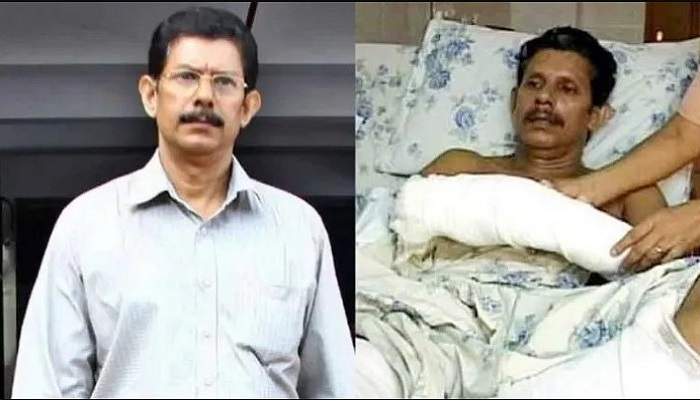
On Tuesday, June 13, the Enforcement Directorate (ED) arrested T Venkattram Reddy, the former chairman and promoter of the Deccan Chronicle Holdings Private Limited (DCHL) in a money laundering case. The ED has also arrested DCHL’s former director P K Iyer and auditor Mani Oomen. According to the ED, the arrested persons were allegedly involved in money laundering adding that they defrauded the banks by submitting forged documents. 

The arrests happened after the three were questioned by the ED earlier on Tuesday. The case originates from another investigation conducted by the Central Bureau of Investigation (CBI) into bank fraud and loan non-payment.

Taking to Twitter, the Enforcement Directorate said that the arrest was made on June 13, adding that it has attached movable and immovable properties valued at Rs 386.17 crore belonging to DCHL and its promoters and directors in connection with the case.

“ED has arrested T. Venkattram Reddy, P. K. Iyer, Promoters & ex-Directors of M/s Deccan Chronicle Holdings Limited & Mani Oommen [statutory auditor of DCHL]on 13/6/2023 in a bank fraud case under the PMLA, 2002. Total attachment, as on date, in this case, stands at ₹386.17 Crore,” ED tweeted. 

According to a press release issued by ED, the probe agency alleged that Deccan Chronicle Holdings Ltd obtained 111 credit facilities in the amount of Rs 9,805 crore from 16 public and private banks under the guise of working capital/business expansion.

“However, these loans were taken by DCHL on the basis of fabricated books of accounts and the company did not disclose its correct loan

liabilities to the banks. DCHL and their promoters/directors understated the financial charges and overstated advertising revenues to consistently defraud the banks for obtaining new loans,” the press release stated.

The ED further listed the ways in which the loan funds were diverted and siphoned off by the DCHL promoters. 

According to the investigation agency, DCHL and its promoters and directors consistently underestimated financial charges and exaggerated advertising revenues in order to deceive banks and secure additional loans.

“In complete violation of the loan terms & conditions, DCHL utilised 73 per cent of the loan amounts only for the cyclical repayment of existing loans. Eventually, the loans turned into non-performing assets and DCHL defaulted on principal loans of around ₹3,000 crore and caused a total loss of ₹8,180 crore to the banks and other financial creditors,” ED stated. 

ED further accused the arrested persons of diverting funds to subsidiaries and affiliated organisations, including investment in the Indian Premier League (IPL). T. Venkattram Reddy purchased a private plane, while P. K. Iyer purchased a fleet of high-end cars valued at more than Rs. 30 crores. Payments to charitable trusts that were withheld and illegally returned to M/s DCHL’s promoters in cash. Declaring and distributing dividends on the basis of fake profits. The promoters, who controlled up to two-thirds of the company, collected approximately Rs. 143 crore among themselves. “Diversion of Rs. 253 crores for share repurchase in order to boost stock prices and paint a financially rosy picture,” ED alleged.

Notably, DCHL was the initial owner of the now-defunct IPL franchise Deccan Chargers and publishes the English daily Deccan Chronicle.

Madhya Pradesh: Bail plea of the principal, others, of Damoh school rejected even as defence lawyers claims complaints of Hindu students were ‘dictated’

On Wednesday, 14th June 2023, Special Judge Rajni Prakash Botam dismissed the bail applications of the three arrested accused in the case against Ganga Jamuna Senior Secondary School in Madhya Pradesh’s Damoh district. The three were arrested under the allegations of the imposition of restrictions on Hindu religious practices, compulsory Urdu subjects, and the recitation of poet Mohammad Iqbal’s ‘Lab pe aati hai dua’. Further, they had also forced Hindu girls to wear the Hijab and added their picture to a school poster. The three accused include Afsha Sheikh, the school principal Anas Atahar, and another person named Rustom Ali.

The complaint was lodged by three students after a photograph displaying non-Muslim students of the school wearing hijab caused protests from the Hindu community. The school tried to duck the issue by issuing a clarification that it was a headscarf and not a hijab. The school also claimed that it was part of the uniform. However, the issue gained significant attention, with the Home Minister calling for an investigation and Chief Minister Shivraj Singh Chouhan criticizing the school.

The defence lawyer, Anunay Shrivastav, argued in court that the statements of the complainants in the police FIR “did not appear to be written by a child, but rather seemed dictated by adults with the intention of implicating the accused.”

Furthermore, the defence lawyers informed the court that although there were several hundred Hindu students attending the school, none of them or their parents had raised allegations of religious conversion until the issue became politicized.

The primary complainant in the case stated that from the sixth grade onwards, “we are given a dupatta, salwar, hijab in a class of 56 girls comprising students from Hindu, Muslim, and Jain religions.”

According to the FIR, the complainant stated, “It is compulsory to wear the hijab with our uniform. If we don’t wear it, our teachers scold us. We don’t wear the hijab and leave our home, but used to wear it when we reached the school gates.” The complainant alleged that Urdu was taught as a compulsory subject since the first grade without any alternative options.

“In the morning, we recite the Muslim prayer, Lab pe aati hai dua, along with the national anthem. It is forbidden to wear a tilak or kalava, and the teachers scold us… The school administration forces us to act against our religious beliefs by threatening us. These actions have hurt my religious sentiments, and I am mentally disturbed because of this,” the complaint further alleged.

The school administration refuted the allegations. A senior committee member stated, “Urdu is a third language subject taught in this minority school. Nobody compels students to refrain from wearing their tilak or kalava. These students have been part of our school since nursery. Why are these allegations being made just before the elections?”

On Tuesday, a bulldozer arrived near the school, which has now been derecognized, to initiate the demolition of the unauthorized first floor, as deemed by the local civic body. Following protests by school children, the municipal authorities decided not to utilize the bulldozer.

B. L. Singh, the Chief Municipal Officer said, “People gathered outside the school because of the bulldozer and this created huge law and order problems. The bulldozer could also not enter the premises properly, so we decided against it. We are manually removing the illegal encroachments. It will take several days.”

What is the controversy?

Ganga Jamuna Higher Secondary School in Damoh district, Madhya Pradesh, became embroiled in a significant controversy when allegations emerged that the school was compelling students to wear hijabs. The claims surfaced after an advertisement for the school, published on May 31, showcased accomplished students, including Hindu and Jain girls, wearing hijabs.

Ganga Jamuna Higher Secondary School is a private English-medium institution situated in ward number 4 of the Futera neighbourhood in Damoh. The posters featuring the names of exceptional students, both boys and girls, gained traction on social media. Among the eighteen students, four girls from the Jain and Hindu communities were depicted wearing hijabs.

On June 7, the police registered a case against 11 members of the school management committee, charging them under IPC sections 295 (pertaining to damaging or defiling objects considered sacred by certain groups), 506 (related to criminal intimidation), 120B (punishment for criminal conspiracy), as well as relevant provisions of the Juvenile Justice (Care and Protection of Children) Act and the Madhya Pradesh Freedom of Religion Act, 2021.

Earlier, the affiliation of Ganga Jamuna Higher Secondary School of Damoh was suspended for non-compliance with Madhya Pradesh Secondary and Higher Secondary Schools Recognition Rules 2017 and amended rules 2020. 

According to a circular, there was no proper arrangement of a library in the school, old furniture and old materials were kept in the laboratories rooms and there were no proper experimental materials in the school. There were 1,208 students registered in the school and there was neither proper arrangement of separate toilets for boys and girls nor pure drinking water.