Home Blog Page 204

How Trump’s egoistic 50% tariffs on India over Russian oil imports will impact Indian exporters and what lies ahead

On 6th August (local time), President of the United States, Donald Trump, signed an executive order imposing a fresh 25% tariff on Indian goods. The additional duty, according to Trump, has been imposed in response to India’s continued imports of Russian oil. The additional tariff has taken the overall burden on selected Indian goods to a staggering 50%.

While the step is likely to cause turbulence for sectors like textiles, leather, seafood and chemicals, all India needs to do is diversify its export basket and work on ties with other nations, which will help cushion the long-term impact.

Who is affected and when will it kick in?

The first 25% tariff, which was part of Trump’s earlier trade tightening measures, takes effect on 7th August. The second tranche, which was announced on 6th August, will come into force on 27th August. Together, they will double the cost burden on Indian goods entering the US market, making them significantly less competitive compared to products from countries including Vietnam, Malaysia, and even China.

Among the sectors that will feel the most heat are textiles and clothing (₹85,000+ crore exports to the US annually), gems and jewellery (₹1 lakh crore+), shrimp and seafood, leather and footwear, organic and inorganic chemicals, and electrical and mechanical machinery.

For example, shrimps going to the US from India are already subject to anti-dumping and countervailing duties totalling 8.26%, which will now attract a 33.26% duty from 7th August. Apparel (both knitted and woven), carpets, diamonds, and machinery are also slated to attract total levies exceeding 50%, according to estimates by think tank GTRI.

Is it a knockout blow? Not quite

The Federation of Indian Export Organisations (FIEO) has warned that nearly 55% of India’s US-bound exports will now be impacted. However, the overall impact of the tariff may be brief.

Pharmaceutical and electronic exports are the two high-performing categories. They have not been touched in the new tariffs imposed by the US. These account for a sizeable chunk of bilateral trade. Moreover, New Delhi has long been working to expand its trade partnerships across Europe, Africa, the Middle East and ASEAN, which will eventually reduce the overdependence on the US.

According to Chief Economist, ICICI Securities Primary Dealership, A Prasanna, the 50% tariff “creates a disadvantage” but India continues to enjoy access to several tariff-exempt categories. Not to forget, India always has room to pivot to new markets in case the US continues to pressure India with tariff impositions.

Pressure tactic, not permanent policy?

The sudden escalation may have more to do with Trump’s characteristic deal-making style than long-term policy. Representatives from the US are scheduled to come to India to have talks on trade by the end of August. Imposition of such high tariffs might be just a pressure tactic to push India to reduce oil purchases from Russia and push India to buy oil and defence equipment from the US.

The tariffs are widely seen as an attempt to push India to concede ground in the pending India-US trade deal. Washington has been pressing New Delhi to lower tariffs on sectors including electric vehicles, dairy, apples, and genetically modified crops, all contentious items that New Delhi has resisted. Furthermore, the US has been pressuring India to allow dairy products from the US into the Indian market but India has categorically denied this because of their non-vegetarian nature.

Trump’s decision also aims to corner India on its continued Russian oil imports, even though India has repeatedly emphasised that its purchases are guided by domestic energy needs and market pricing, not politics.

Agneshwar Sen, Trade Policy Leader at EY India, has called the development “disappointing”, especially at a time “when both sides are making efforts to resolve past issues. Political differences are best resolved through mutual dialogue, not tariffs.”

How did India respond?

India has responded strongly and called the decision “unfortunate, unfair and unreasonable”. The Ministry of External Affairs stressed that oil procurement decisions are dictated by energy security considerations for a population of 1.4 billion and that many countries purchasing Russian oil have not faced such punitive measures.

The ministry added, “India will take all actions necessary to protect its national interest.”

What is next for Indian exporters?

There is no doubt that exporters are going to face a squeeze as American buyers may pause and try to renegotiate contracts. In MSME-led sectors including gems, garments and seafood, margins are already tight and sudden duties could disrupt long-standing relationships.

However, India is already exploring opportunities in the EU, Africa, West Asia and Southeast Asia. With the global demand for Indian goods like pharma, textiles, IT services and electronics on the rise, the long-term prospects remain resilient.

Bottom line

Trump’s 50% tariff move may create temporary challenges for Indian exporters. However, it is not the beginning of a full-blown trade crisis. India’s export base is robust and its trade alliances are expanding. India’s economy is far more resilient than it was during previous tariff wars. With deft diplomacy and market diversification, India is likely to weather this storm and emerge stronger.

Brazil President Lula says he will talk to India and China for a possible joint response to Trump’s tariff mayhem

In yet another embarrassment for US President Donald Trump, who is on a tariff imposing spree, Brazil’s President Luiz Inacio Lula da Silva said that he will not call Trump to negotiate with him. Silva said that Trump is not interested in negotiation as it would be akin to “humiliation”.

Lula added that he would rather speak to Chinese President Xi Jinping and Indian Prime Minister Narendra Modi. This comes as Trump’s tariffs against Brazil increased to 50 per cent.

“I’m not going to call Trump to negotiate anything, because he doesn’t want to talk. But rest assured, I will call Trump to invite him to come to the COP, because I want to know what he thinks about the climate issue. I’ll have the courtesy to call him. I’ll call him, Xi Jinping, I’ll call Prime Minister Modi, I’ll call. I just won’t call Putin, because Putin can’t travel right now. But I will call many Presidents,” he said on 5th August.

“The day my intuition says Trump is ready to talk, I won’t hesitate to call him. But today my intuition says he doesn’t want to talk. And I won’t humiliate myself,” Lula said in an interview.

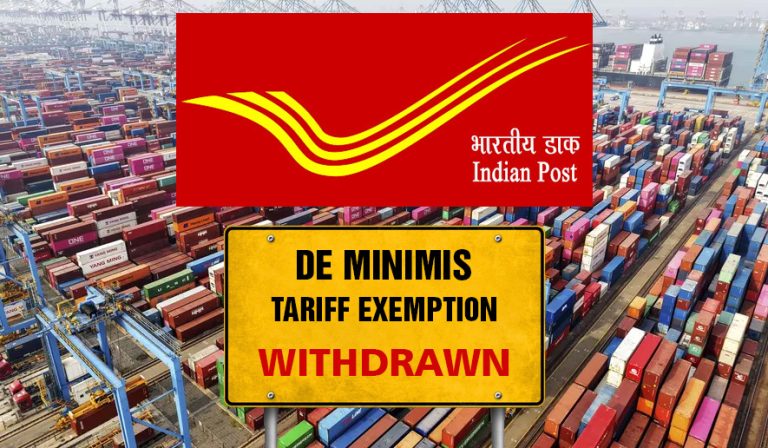
The statement comes as Trump said that he would impose a 50 per cent tariff on Brazilian goods. Trump on July 30 signed executive actions on Wednesday imposing a 50% tariff on Brazil, a 50% tariff on certain copper products and suspending a tax perk for all countries that allowed cheap packages to fly into the US dutyfree.

Earlier in the month of July, Trump in a letter threatened the hefty tariff if Brazil did not end its trial against right-wing former president, Jair Bolsonaro. He accused the Brazilian government of “serious human rights abuses that have undermined the rule of law in Brazil.” The new tariff on Brazil appeared to be spurred by non-economic matters. Bolsonaro bragged about his closeness with Trump. He is facing trial for allegedly attempting to stage a coup against Lula. Trump has publicly objected to that proceeding, and his order alleged Bolsonaro’s prosecution was “politically motivated.” 

“The Order finds that the Government of Brazil’s politically motivated persecution, intimidation, harassment, censorship, and prosecution of former Brazilian President Jair Bolsonaro and thousands of his supporters are serious human rights abuses that have undermined the rule of law in Brazil,” the order read. 

Lula expresses confidence in BRICS

President Lula also expressed confidence in BRICS and said that “There is no coordination among the BRICS yet, but there will be.”

The Brazilian President’s strong remarks have left Trump embarrased, again. Trump’s attempts to weaponise tariffs and use it as arm-twisting tactic against sovereign nations has not yielded any positive results for the US. 

On 6th August, the Indian government issued a statement after Donald Trump issued an Executive Order slapping additional tariff of 25% on India for continued purchase of Russian oil. With the earlier announced tariff of 25%, this brings total tariff imposed on products imported by US to India to 50%.

The statement issued by the ministry of external affairs said that the Indian government reiterates that these actions are unfair, unjustified and unreasonable. The MEA spokesperson said, “We have already made clear our position on these issues, including the fact that our imports are based on market factors and done with the overall objective of ensuring the energy security of 1.4 billion people of India. It is therefore extremely unfortunate that the US should choose to impose additional tariffs on India for actions that several other countries are also taking in their own national interest.”

The MEA statement added that India will take all actions necessary to protect its national interests.

Last month, Trump had announced new trade penalties on India, including a 25 per cent tariff on almost all Indian imports, effective from 1st August. Trump also expressed his frustration over India being a top buyer of Russian military equipment and energy. 

The US President published a post on Truth Social on 1st August, calling Indian and Russian economies ‘dead’ and complaining about India imposing “the highest tariffs in the world”. He also blamed these tariffs for the low trade volume between the two countries.

However, OpIndia reported earlier how the US itself has been continues to trade with Russia in various sectors. Even three years after Russia invaded Ukraine, the United States has not fully cut off its trade ties with Moscow. The US has imported more than $24.5 billion worth of Russian goods since January 2022. This year alone, it bought $1.27 billion worth of fertilisers, $624 million in uranium and plutonium, and nearly $878 million in palladium.

Import of non-ferrous metals such as palladium and aluminium were valued at $876.5 million for the period January to November in 2024. Inorganic chemicals made up $683 million, followed by power-generating machinery at $79 million and cork and wood manufacturers at approximately $64 million. Other commodities included nuclear reactors and machinery worth $80.81 million, prepared animal feed, iron and steel, and oil seeds, although these contributed smaller shares to the overall imports.

Ironically, when asked about US imports from Russia despite the ongoing conflict with Ukraine, Trump said that he does not known anything about it. 

India refuses to break ties with Russia, PM Modi might visit China for SCO Summit

Besides calling out America’s hypocrisy, India is bolstering ties with Russia, giving a clear message that India cannot be arm-twisted into abandoning its allies at Trump’s whims. When Trump was signing excutive order imposing additional 25 per cent tariff against India, India and Russia signed protocol to deepen industrial and technological cooperation on 6th August. 

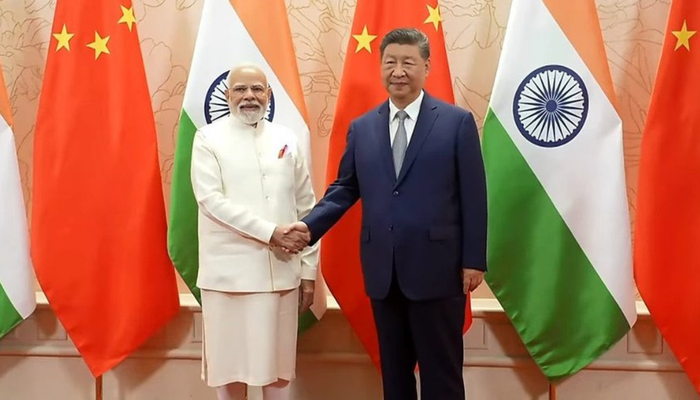
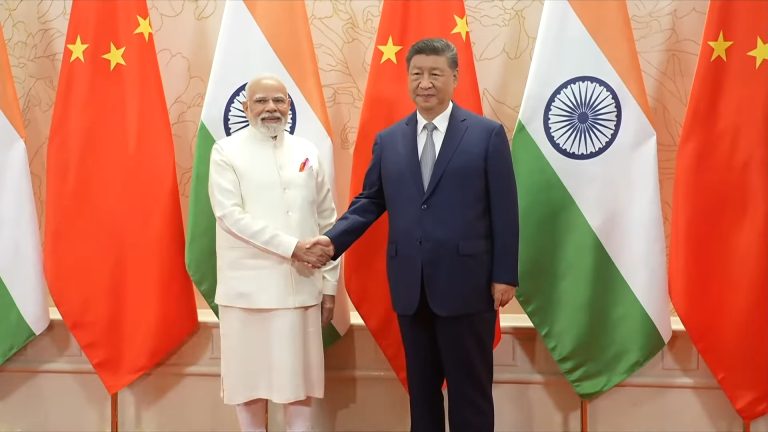
Meanwhile, reports say that Prime Minister Modi will be visiting China later this month for the SCO Summit. PM Modi’s first such visit to China in the last seven years, indicates a shift in wind. India and China have their own set of issues to resolve, be it China’s aggression at LAC, backing of terror sponsor Pakistan, or blocking India’s actions in the UNSC, however, when it comes to protecting national interests and sovereignty against Western hegemony, the two countries seem ready to cooperate.

With India, Brazil and China refusing to bow down before Trump in the ongoing ‘game of tariffs’, the loudmouth US President’s efforts to ‘punish’ BRICS nations, only serving as a unifier. 

India, Russia sign protocol to deepen industrial and technological cooperation in shadow of US tariff threat

India and Russia on Wednesday convened the 11th Session of their Working Group on Modernisation and Industrial Cooperation at Vanijya Bhawan, New Delhi, under the framework of the Intergovernmental Commission on Trade, Economic, Scientific, Technological and Cultural Cooperation.

Focus on industrial modernisation

The Indian delegation was led by Amardeep Singh Bhatia, Secretary of the Department for Promotion of Industry and Internal Trade (DPIIT), while the Russian side was headed by Alexey Gruzdev, Deputy Minister of Industry and Trade. The session reviewed progress since the 10th meeting and examined ways to boost cooperation across multiple sectors, including mining, fertilisers, modernisation, and railway transport.

Aerospace and advanced technologies

Among the most significant discussions were joint projects in aerospace science and technology. Plans include setting up a modernised wind tunnel facility, producing small aircraft piston engines, and developing carbon fibre technology. Both countries also explored collaborations in additive manufacturing, 3D printing, and rare earth and critical minerals extraction. Underground coal gasification and modern industrial infrastructure were identified as further areas of partnership.

Expanding sectoral engagement

The two sides welcomed opportunities for deeper engagement in aluminium, fertilisers, and railway transport. Technology transfer and capacity building in mining, along with industrial and domestic waste management, also featured prominently.

Protocol signed to reaffirm ties

The session concluded with the signing of the official Protocol, reaffirming India and Russia’s strategic commitment to strengthening economic and industrial ties. Around 80 delegates, including senior officials, experts, and industry representatives, participated in the session.

Defence cooperation in focus

In a parallel development, Russia’s Deputy Defence Minister Colonel General Aleksandr Fomin met Indian Ambassador Vinay Kumar in Moscow. According to the Russian Defence Ministry, the meeting focused on bilateral defence cooperation and underscored the “particularly privileged strategic partnership” between the two nations. The Ministry described the talks as having taken place in a warm and friendly atmosphere, reflecting the longstanding nature of Russia-India relations.

RBI Governor Sanjay Malhotra educates US President Donald Trump over his ‘dead economy’ remark, reminds him India is contributing more to global growth right now than US

“The Indian economy is doing very well and is contributing more to global growth than the US,” said Sanjay Malhotra, the Governor of the Reserve Bank of India (RBI), hitting out against US President Donald Trump, who recently called the Indian economy ‘dead’. Addressing the media at the RBI’s headquarter in Delhi, Malhotra also said that India with its supposedly ‘dead’ economy contributing more to global growth at this point than the United States.

“We are contributing about 18%, which is more than the US where the contribution is expected to be much less – about 11% or something. We are doing very well and we will continue to improve further,” the RBI governor said.

He added India is expected to grow 6.5%, as against the International Monetary Fund’s (IMF’s) estimate of about 3% global growth in 2025.

Malhotra noted that India has historically grown at an average annual growth rate of 7.8% and that the country’s aspirational growth rate should be higher than the 6.5% the RBI projected for FY25.

Addressing the tariff threats by Donald Trump over India buying Russian oil, the RBI governor said, “We don’t see a major impact of US tariffs on the Indian economy unless there is a retaliatory tariff. We are hopeful that we will have an amicable solution.”

The RBI governor’s strong statement schooling Trump over his skewed understanding of a ‘dead economy’, comes after the US President published a post on Truth Social on 1st August, , where he not only mocked India’s economy but also questioned its trade practices.

“I don’t care what India does with Russia. They can take their dead economies down together, for all I care,” Trump posted, taking a jibe at both New Delhi and Moscow. He complained about India imposing “the highest tariffs in the world” and blamed it for the low trade volume between the two countries.

Before this, Trump had announced new trade penalties on India, including a 25 per cent tariff on almost all Indian imports, effective from 1st August. Trump also expressed his frustration over India being a top buyer of Russian military equipment and energy.

Taking to Truth Social, Donald Trump posted on 30th July, “Remember, while India is our friend, we have, over the years, done relatively little business with them because their Tariffs are far too high, among the highest in the World, and they have the most strenuous and obnoxious non-monetary Trade Barriers of any Country. Also, they have always bought a vast majority of their military equipment from Russia, and are Russia’s largest buyer of ENERGY, along with China, at a time when everyone wants Russia to STOP THE KILLING IN UKRAINE – ALL THINGS NOT GOOD! INDIA WILL THEREFORE BE PAYING A TARIFF OF 25%, PLUS A PENALTY FOR THE ABOVE, STARTING ON AUGUST 1st. THANK YOU FOR YOUR ATTENTION TO THIS MATTER. MAGA!”

In addition to imposing a 25 per cent tariff and calling India’s economy ‘dead’, Trump has issued a fresh threat of imposing a ‘substantial tariff’ on India for “fuelling the Russian war machine.”

Rahul Gandhi endorsed Trump’s ‘dead economy’ jibe, even as numbers tell India’s economic game is strong

While Indian social media welcomed Trump’s tariffs with hilarious memes, market responded with strong NIFTY and SENSEX points, government reiterated that it will always prioritise national interest and not succumb to any pressure, PM Modi indirectly responded with giving the mantra of “Swadeshi” to Indian people, a section of the political opposition gleefully cheered when Trump made his irresponsible, outrageous and divorced-from-reality remarks.

In this vein, Rahul Gandhi, the Leader of Opposition (LoP), shamelessly endorsed Trump’s unwarranted criticism of India’s economy. Days after provoking Prime Minister Narendra Modi in Lok Sabha to publicly refute Trump’s claim of brokering an India-Pakistan ceasefire during Operation Sindoor, Gandhi said he was “glad” the US President had “stated a fact” by calling the Indian economy “dead.”

“Yes, he is right. Everybody knows this except the Prime Minister and the Finance Minister. The Indian economy is dead. I’m glad President Trump has stated a fact… BJP has finished the economy to help Adani,” Gandhi told the media on 31st July.

Last month, Rahul Gandhi stood up in the Lok Sabha to speak on Operation Sindoor. Displaying sheer lack of respect for Indian sovereignty, and understanding for foreign policy and diplomacy, Gandhi dared PM Modi to call former U.S. President Donald Trump a “liar” on the floor of Parliament. Just to score political points against the BJP-led government, the Congress leader laid a trap to solicit an emotional, probably aggressive response from PM Modi against Trump and his ‘I stopped India-Pakistan war’ rhetoric.

Despite the backlash, the Congress leader is behaving like a foreign agent, more so a stooge, and is provoking Donald Trump to use the ‘Adani Card’ against India.

“India, please understand: The reason PM Modi cannot stand up to President Trump despite his repeated threats is the ongoing U.S. investigation into Adani. One threat is to expose the financial links between Modi, AA, and Russian oil deals. Modi’s hands are tied,” Gandhi wrote on X on 6th August.

Not to forget, Rahul Gandhi has for long been pushing a baseless narrative linking PM Modi and businessman Gautam Adani, alleging a nexus of corruption. After the Hindenburg report came out in 2023, Rahul Gandhi used the report to attack Prime Minister Modi by alleging that he gave undue favours to the company. The now-defunct US-based short-seller had published another hit job against Adani Group; however, an expert committee constituted by the Supreme Court found no regulatory failure. The court refused to order an SIT probe on the allegations made by short-seller Hindenburg.

In March last year, the US Attorney’s Office for the Eastern District of New York decided to investigate whether the conglomerate, along with its founder Gautam Adani, may have engaged in bribery.

Now despite, there being no proven illegal activity on the part of Adani Group or there being any involvement of PM Modi in these matters, Rahul Gandhi has once again proved himself a useful idiot, by provoking Trump to use the Adani card. Gandhi is instigating Trump to ‘expose’ supposed financial links between Modi, Adani, and Russian oil, even as it essentially amounts inviting foreign interference in India’s domestic policy.

Apparently, the Gandhi scion is resorting to desperate, even near-treasonous measures to secure a political comeback after suffering back-to-back defeats in general and many state elections since 2014.

Rahul Gandhi is aiding Trump’s pressure tactics against India, which refused to bow down to sign a half-baked trade deal that heavily favours American interests and undermines Indian interests. Negotiations were ongoing, and a waiver could have been on the cards had India agreed to allow unrestricted access to U.S. agricultural products and dilute its protective framework for domestic industries. India, however, upholding its interests, did not.

Trump’s tirade against India comes at a time when the two countries are negotiating a major trade deal. A deal that Trump has repeatedly claimed to have been the reason why India halted Operation Sindoor in May in the aftermath of a Pakistan-backed jihadist terror attack in Pahalgam in April this year.

Ironically, Trump never forgets to call India and Prime Minister Narendra Modi his and the USA’s ‘friend’ every time he hyphenates India, the world’s fourth-largest economy, one of the fastest-growing economies and the failed state of Pakistan, the ‘Islamic republic, which literally breathes on an IMF loan ventilator. Trump makes tall claims of using trade deals as leverage to stop the India-Pakistan conflict; however, the loudmouth US President has failed to strike a deal with India till now.

Probably, India’s loud and clear statement that no foreign leader, not even the self-declared ‘ceasefire specialist’, mediated ceasefire between India and Pakistan, has irked Trump, reflecting in his sudden tariff and ‘penalty’ imposition against his ‘friend’ India.

In fact, a lack of a Indo-US trade deal to this day, not only confirms that no such offer by the US President played any role in India-Pakistan arriving at ceasefire understanding, but also that Trump had no say in India deciding to heed Pakistan’s desperate plea to halt Operation Sindoor.

While Trump boasts of being a decisive peacemaker in the Indo-Pak conflict and leveraging the prospect of a trade deal, if trade alone could stop wars, his trade offers would have ended the Russia-Ukraine conflict. Despite Trump’s earlier claims of ending the Russia-Ukraine conflict within hours, the two countries continue to fight, reducing his boastful statements to a joke.

Now, probably, to deflect attention from his own failure to halt the Russia-Ukraine war with ‘trade’, Trump is targeting India with his senseless rhetoric, tariffs and penalties.

Trump vilifies India for having trade ties with Russia, but claims to not even know that US continues to import non-essential items from Russia: Is India trading with ‘bad Putin’ and US with ‘good Putin’?

President Trump’s delusion and hypocrisy stretch beyond measure when he makes the audacious attempt at ‘punishing’ India with tariffs and penalties for trade ties with Russia, while the US itself continues to do trade with the country.

While the US may have cut its Russian crude oil imports from Russia due to sanctions, it continues to trade with Russia in various sectors. Even three years after Russia invaded Ukraine, the United States has not fully cut off its trade ties with Moscow. The US has imported more than $24.5 billion worth of Russian goods since January 2022. This year alone, it bought $1.27 billion worth of fertilisers, $624 million in uranium and plutonium, and nearly $878 million in palladium.

Import of non-ferrous metals such as palladium and aluminium were valued at $876.5 million for the period January to November in 2024. Inorganic chemicals made up $683 million, followed by power-generating machinery at $79 million and cork and wood manufacturers at approximately $64 million.

Other commodities included nuclear reactors and machinery worth $80.81 million, prepared animal feed, iron and steel, and oil seeds, although these contributed smaller shares to the overall imports.

The US government’s own data indicates that U.S. exports in goods to Russia fell to $528.3 million in 2024, while imports were worth an amount phenomenally higher. In the year 2023,  the U.S. exports to Russia stood at around $598.8 million. Despite Russia enjoying a massive surplus and being involved in war with Ukraine, there was never really a hiatus in the Russia-US trade.

Ironically, while Trump is upset with India for its trade ties with Russia, he claims not to even be aware of the massive trade partnership the US continues to have with Russia. Trump said that he didn’t know the United States was still doing business with Russia, even as he criticised India for continuing to import oil from Russia.

“I don’t know anything about it. We will have to check it out, and we will get back to you,” he told an ANI reporter on 5th August during a media interaction.

Either Trump is actually unaware of the trading ties and the scale of the same his country has with Russia, or he is embarrassed to admit, while he accuses India of ‘fuelling’, what he calls Russian ‘war machine’, it is the US doing the same. In fact, the US, on one hand, is fuelling the Russian war on Ukraine by continuing trade with Kremlin, on the other, it is fuelling Ukrainian war on Russia, by providing military and financial aid to Kyiv.

Trump’s hypocrisy has been called out by the Indian government as well. In a strong statement, the Indian Ministry of External Affairs pointed out that India started importing oil from Russia because traditional supplies were diverted to Europe after the outbreak of the conflict between Russia and Ukraine. At that time, the United States actively encouraged such imports from India for strengthening the stability of global energy markets. The MEA also gave the statistics of the trading ties the United States and the European Union continue to have with Russia, while NATO backs Ukraine.

India’s statement not only received global praise, but also backing from Russia, which called Trump’s tariff threats “illegal”.

In contrast to Donald Trump’s ‘dead economy’ rhetoric, global financial assessments paint a far more resilient picture of India’s economy. According to the latest report by Morgan Stanley’s Global Investment Committee, India is expected to remain the fastest-growing economy in its global coverage. The report forecasts India’s real GDP growth at 5.9% in 2025 and 6.4% in 2026, far ahead of the US (1.0%) and China (4.0%).

“India remains the fastest growing economy in our coverage,” the committee noted, highlighting the country’s robust domestic demand, structural reforms, and investment momentum. In fact, while the global economy is projected to slow down, from 3.5% in 2024 to just 2.5% in 2025, India is expected to outperform significantly.

While Trump may satisfy his ego by calling Indian economy ‘dead’, levy tariffs and penalties, receive indirect support from a section of India’s political opposition acting like the fifth column, Indian economy continues to grow, India continues to uphold its national interests, maintain ties with its allies, and not submit to the whims of a hypocrite and full of himself bully.

Karnataka: Born as Mohammad Nisar, Lingayat seer leaves Gurumalleshwara Shakha mutt after being exposed for hiding his Muslim past

0

A 22-year-old seer, who had been living in a mutt in Chamarajanagar in Karnataka, left the mutt on Monday (4th August), after locals found out about his Muslim identity. The seer named Nijalinga Swamy had arrived at the Gurumalleshwara Shakha mutt located in Gundulpet taluka six weeks ago. His Muslim identity was exposed last week after a devotee saw his photos wearing a skull cap and holding a beer in his hand.

The expose occurred after a local devotee requested the seer to lend him his spare mobile phone as his phone had stopped working. The seer, who had two mobile phones, gave the devotee his older phone. When the devotee went through the phone, he saw the seer’s pictures wearing a skull cap and holding a beer. The devotees swiftly informed the other devotees of the mutt, who were shocked to hear the information.

Soon the devotees confronted him about his Muslim identity, the seer admitted that he was a Muslim before joining the Lingayat sect. His Aadhaar Card also mentioned his birth name, Mohammad Nisar. He clarified that the pictures were from the time before he became a Lingayat. He said that he had not drunk beer since he converted. However, the devotees, who felt betrayed for keeping them in the dark, asked him to step down.

The seer claimed a became a Lingayat five years ago

Nijalinga Swamy was born a Muslim named Mohammad Nisar in Yadgir district. As per reports, he was influenced by the teachings of Lingayat social reformer Basavanna. He is said to have taken his vows five years ago, at the age of 17. Nisar said that he was inclined towards Basavanna since childhood, and this worried his Muslim parents, who sent him to a madrassa. “At a very young age, I was attracted towards Basavanna and his ideas. I used to perform puja just like any Lingayat. My parents were frightened, and they sent me to a madrassa to study. It gave me another dimension, and at the age of 17, I took deeksha (initiation) to become a Lingayat,” the seer told Indian Express.

Nisar expressed his resolution to continue to follow Basavanna’s ideology. Another Lingayat mutt in Rane Bennur (Haveri district) has reportedly given him shelter. “I left my parents and Islam only because I believe in Basavanna’s ideology. I will continue to do so, and nobody can stop me from doing that. A lot of seers and people from the Lingayat community have come to my support. In fact, another Lingayat mutt in Rane Bennur (Haveri district) has given me shelter now. I will continue to follow Basavanna and his ideas,” Swamy said. He said that some people have levelled false accusations of financial misappropriation against him after his past identity was revealed. “I will not give up, but will live the rest of my life to propagate Basavanna’s ideas,” he asserted.

Nisar said his well-wishers advised him to conceal his Muslim identity

After taking deeksha from his Guru, Nisar became a Lingayat. He started following Lingayat rituals at a mutt in Basavakalyan, Bidar. An Australia-based philanthropist named Mahadev Prasad had donated land to build a mutt in Chamarajanagar district’s Chowdahalli, on which the Gurumalleshwara Shakha mutt was established. Mohammad Nisar, who had become Nijalinga Swamy and was following Lingayat rituals at a mutt in Basavakalyan, Bidar, after taking diksha from his Guru, was appointed at the Gurumalleshwara Shakha mutt. He said that his Guru suggested his name for appointment at the mutt. He added that some well-wishers advised him not to reveal his past Muslim identity and work for the betterment of the mutt.

In a similar case in 2020, a 33-year-old former autorickshaw driver Diwan Sharief Rahimsab Mulla took deeksha and became the fourth Muslim to head a Lingayat mutt in 300 years.

Pakistan govt not left with enough money to fund its beloved terrorists? Jaish-e-Mohammad starts crowdfunding campaign to rebuild its HQ destroyed in Operation Sindoor

Terror group Jaish-e-Mohammed (JeM), led by Maulana Masood Azhar, is now asking people to donate money to help rebuild its headquarters in Bahawalpur, Pakistan. This comes nearly three months after the Indian Air Force destroyed the building during Operation Sindoor – a major airstrike launched in response to the killing of Indian tourists in Kashmir.

The JeM headquarters, known as Jamia Masjid Subhan Allah, was not just a home for Maulana Masood. It was the main hub for planning terror attacks and training recruits. Established in 2015 and located in Bahawalpur, around 100 km inside Pakistan’s Punjab province, this compound also housed Azhar, his brother Mufti Abdul Rauf Asghar (who is considered the group’s de facto chief), and other close family members.

Terror outfit now asking for “discreet donations” to rebuild the camp

In a recent post shared in Urdu on social media, JeM appealed for donations to “revive” the destroyed headquarters. The terror group said that the building played an important role in their movement and called upon followers to work together for the success of the campaign, which was launched last Wednesday (30th July).  

The post did not make a direct appeal like a usual fundraiser, but asked people to donate “quietly”. They don’t want to attract too much attention, knowing well that such funding activities could be tracked.

Given that the Pakistani establishment directly supports various terror groups including Jaish-e-Mohammad, the fundraising appeal has raised questioned whether the Pakistan government has run out of money to rebuild the JeM headquarters.

Target of Operation Sindoor

Jamia Masjid Subhan Allah was one of the main targets during Operation Sindoor, which was India’s response to the deadly Pahalgam terror attack that killed 26 tourists on 22nd April. Indian agencies had identified Bahawalpur as a key location where JeM’s top leaders were hiding and where weapons and recruits were being prepared for attacks in India.

The precision airstrikes carried out by India caused huge damage to the building. Satellite images released by Maxar and analysed by NDTV showed the destruction of several structures at the site.

Masood Azhar claims family members were killed

Masood Azhar, the 56-year-old UN-designated global terrorist and chief of JeM, later issued a statement claiming that ten members of his family and four close ones died in the strike. He named his elder sister, her husband, a nephew and his wife, a niece, and five children from the extended family as those who were “martyred”.

In his message, Azhar wrote, “Ten members of my family were blessed with this happiness together tonight… five are innocent children, my elder sister, and her honourable husband. My scholar Fazil Bhanje (nephew) and his wife, and my beloved scholar Fazilah (niece)… my dear brother Huzaifah and his mother. Two more dear companions,” he said, adding that those killed have become the guests of Allah.

Azhar’s long terror record of terrorist attacks

Masood Azhar was arrested in 1994 in India but let off in 1999 during the Indian Airlines flight IC 814 hijack. He established JeM and has been held responsible for multiple fatal attacks in India, such as the 2001 Parliament attack, the 2016 Pathankot attack, and the 2019 Pulwama suicide attack, where 40 CRPF jawans were martyred.

In 2019, India legally designated Azhar as a terrorist under the Unlawful Activities (Prevention) Act. He is listed as a global terrorist by the UN Security Council, too. But to date, even with all the evidence, Pakistan denies that Azhar is on its territory. It’s something no one believes.

From terror to charity drive, JeM now begging for money online

It’s almost ironic that a terror outfit like JeM, which once enjoyed full support and protection from the Pakistani establishment, is now begging for funds on X (formerly Twitter) like an online fundraiser. The same group that used to train fidayeen squads and carry out suicide bombings is now asking for money to rebuild a “headquarters” that was a front for terrorism.

This also shows how deep Pakistan’s financial crisis has become. For years, Pakistan pumped money, weapons, and intelligence support into groups like JeM and Lashkar-e-Taiba to keep its proxy war against India alive. 

But now, it seems like the Pakistani government had no money left to fund its beloved terrorists. The country’s economy is in shambles. With an inflation rate of 12.04% in 2024, which is much higher than the average. The country is surviving on massive foreign debt and IMF bailouts, keeping the economy alive. 

And now, the same terrorists it nurtured are doing the same, instead of giving up arms and doing something productive with their lives.

Background of Operation Sindoor

On the night of 6th May, India launched a powerful retaliation after the Pahalgam terror attack killed 26 innocent tourists in Kashmir. Under Operation Sindoor, the Indian military fired 24 precision missiles at nine carefully chosen terrorist bases across Pakistan and Pakistan-Occupied Kashmir.

The strikes targeted terror launchpads, training centres, and safe houses. According to Indian government sources, more than 70 terrorists were killed in the attacks, and at least 60 others were injured. 

The JeM camp in Bahawalpur was one of the worst-hit locations. This operation sent a clear message that India would not tolerate any attack on its civilians and would strike back with precision and power.

Teen hacker Vansh, who lost his father during Covid, makes NASA Hall of Fame: Read how his mother and his father’s employer Adani Cement powered the young prodigy to dizzying heights

0

At the peak of the second wave of Covid in 2021, Vivek Kumar, who had served with Adani Cement for nearly 23 years as Head of Environment & Horticulture, succumbed to the pandemic. He left behind his wife Pooja Saxena and their teenage son Vansh.

Now, the young cybersecurity expert Vansh has been inducted into the Hall of Fame of National Aeronautics and Space Administration (NASA).

Vansh had discovered a significant vulnerability in a NASA web application—an achievement that earned him a spot on the Hall of Fame. Recalling the moment, he said, “I’d been testing for days, and then suddenly I found it. I just stared at the screen. I couldn’t believe it.”

Powered by the support of his single mother and with the backing of his father’s employer Adani Cement, the young man has reached dizzying heights in the field he chose to pursue.

Despite losing her husband at that time, Pooja Saxena kept backing her son’s dreams and supported him fully in his endeavors.

Adani Group, respecting the legacy left behind by her husband in the company, backed the mother-son duo all the way and honoured the trust the family had placed in the company through their loyalty over decades.

After suffering her husband’s loss, Pooja continued her work with Adani Group and found solace in her extended family as she let her son pursue his dreams.

Vansh’s mother said, “It felt surreal. Not just because it was NASA, but because I knew how hard he had worked—how focused, how ethical, how passionate he was.”

While Vansh continues to make responsible disclosures to global tech platforms and dives deeper into cybersecurity, Pooja continues her work with the Adani Group—a space that became an extension of family during their most vulnerable time.

Metallurgy research centre under central govt develops new laser technology to machine superalloys used in jet engines, nuclear reactors & space vehicles

A new technology promises to transform how we cut through some of the hardest materials known to engineering like Inconel 625 (IN625), which are used in areas ranging from aerospace and chemical to nuclear as well as in power production systems, such as boilers, heat exchanger tubes, and steam turbines.

The hybrid technique called Laser-Assisted Turning (LAT), that combines localized laser heating with mechanical cutting of such superalloys using tools coated with materials like tungsten carbide and CrAlSiN nanocomposite as well as the wear mechanisms of tungsten carbide cutting tools during the machining of IN625 superalloy, paves way for next-generation turbine blades, surgical tools, and high-performance automotive parts that are lighter, stronger, and more efficient.

Machining superalloys, the ultra-tough metals used in jet engines, nuclear reactors, and space vehicles, has always posed a challenge. Their exceptional strength and heat resistance — qualities that make them indispensable — also make them incredibly difficult to shape. Traditional cutting tools struggle, suffering rapid wear and producing inconsistent results. But now, ARCI researchers have cracked the code.

Under the Clean Coal Research Initiative of the Department of Science and Technology (DST), researchers at the International Advanced Research Centre for Powder Metallurgy and New Materials (ARCI) have successfully demonstrated the effectiveness of Laser-Assisted Turning (LAT) for machining high-performance materials such as Inconel 625 (IN625), a nickel-based superalloy.  

This breakthrough offers a scalable, high-precision solution for industries that require the machining of difficult-to-machine materials, particularly in aerospace, power generation, and marine sectors.

IN625 is renowned for its exceptional mechanical strength, corrosion resistance, and ability to endure extreme temperatures. While ideal for demanding environments, its inherent toughness poses serious machining challenges, such as excessive tool wear, high cutting forces, and poor surface finish, when using traditional turning techniques.

To overcome these limitations, researchers of ARCI, an autonomous institution of the Department of Science and Technology (DST) developed Laser-Assisted Turning, a hybrid technique that combines localized laser heating with mechanical cutting. A high-power diode laser (up to 2500 W) precisely heats the workpiece just ahead of the cutting tool, inducing thermal softening in the material. This significantly reduces cutting resistance, improves chip formation, and enhances tool life and machining quality.

The study evaluated the turning of IN625 using both uncoated tungsten carbide tools and CrAlSiN nanocomposite-coated tools, known for their superior hardness, thermal stability, and oxidation resistance. When paired with LAT, these coated tools delivered outstanding performance such as, 69% reduction in cutting force, 46% lower tool wear, and 56% improvement in surface finish compared to conventional methods. The team has also investigated the wear mechanisms of tungsten carbide cutting tools during the machining of IN625 superalloy at elevated temperatures.

A key innovation was the integration of a Computer Numerical Control (CNC) turn-mill center with a fiber-coupled diode laser, custom-designed adapters, and real-time monitoring tools.

The novelty of the approach lies in the synergistic use of LAT with advanced tool coatings, a combination not widely explored earlier. These results underscore the effectiveness of thermal softening when paired with surface-engineered tools. The CrAlSiN-coated tools, in particular, demonstrated excellent resistance to wear mechanisms like abrasion and oxidation while maintaining cutting-edge sharpness and dimensional accuracy under high temperatures. Their study wear mechanism of tungsten carbide cutting tools during the machining of IN625 superalloy, revealed that it transitioned from fatigue and abrasion at room temperature to oxidation and adhesion-dominated behaviour at higher temperatures. These insights could help in understanding tool failure modes and estimating the thermal stability and service life of the cutting tool.

This technological advancement published in the journal of Process Mechanical Engineering and Materials Letters offer a significant leap in the machinability of superalloys, opening new avenues for high-strength, high-precision components.  It also aligns with India’s strategic goals of boosting domestic manufacturing, improving energy efficiency, and adopting cleaner industrial technologies.

Words of a foreign agent? Rahul Gandhi provokes Donald Trump to use the ‘Adani Card’ against India, Mossad had earlier tied Gandhi to Soros-backed Adani hit job

In a deeply troubling move that raises grave questions about national loyalty and political opportunism, senior Congress leader Rahul Gandhi has once again provoked global powers against India. This time, the Gandhi scion targeted PM Modi by invoking the ongoing U.S. investigation into the Adani Group.

Days after Gandhi echoed former U.S. President Donald Trump’s baseless allegation that “the Indian economy is dead,” the Congress leader went a step further by tweeting: “India, please understand: The reason PM Modi cannot stand up to President Trump despite his repeated threats is the ongoing U.S. investigation into Adani. One threat is to expose the financial links between Modi, AA, and Russian oil deals. Modi’s hands are tied.”

This shocking attempt to draw a foreign power into India’s internal affairs is not new for Rahul Gandhi. However, this time, he appears to be inciting the U.S. President to leverage a geopolitically motivated investigation against a leading Indian business group to arm-twist the Indian government into submission. What else can explain his glee in aligning with anti-India narratives, even if it means compromising national interest?

Israeli intelligence had already exposed Rahul Gandhi’s alleged role in Adani hit job

This is not the first time Rahul Gandhi’s name has come up in connection with attacks on the Adani Group. According to an unverified but explosive report by Sputnik India, Israel’s intelligence agency Mossad uncovered a covert nexus between Rahul Gandhi, Sam Pitroda (head of Indian Overseas Congress), and U.S.-based short-seller Hindenburg Research.

Mossad reportedly hacked into Pitroda’s home servers and decrypted communications that pointed to an orchestrated campaign to use Hindenburg’s defamatory report against the Adani Group as a weapon to damage PM Modi and the Indian economy. Hindenburg’s 2023 report accused Adani Group of “pulling the largest con in corporate history”, allegations that were dismissed by the Indian Supreme Court in 2024.

The timing of the Hindenburg report also raised eyebrows, coming just days before Gautam Adani was to finalise a $1.2 billion deal to acquire the Haifa port in Israel. The Israeli government, viewing the report as a strategic attack, reportedly launched “Operation Zeppelin” to uncover the forces behind the smear campaign. Israeli sources found links to Chinese and Western lobbies, activist lawyers, hedge funds, and a “key face from India’s opposition dynasty.”

Soros-linked NGO network and Rahul Gandhi’s secret US visit

Adding fuel to the fire is Rahul Gandhi’s documented association with far-left and anti-India groups during his 2023 foreign tours. Notably, during a 10-day visit to the US, Gandhi met secretly with officials at the White House, a major breach of diplomatic protocol, as the trip was not coordinated through India’s Ministry of External Affairs.

At the Hudson Institute, Gandhi was seen seated beside Sunita Vishwanath, co-founder of “Hindus for Human Rights,” a Soros-funded outfit known for Hinduphobic rhetoric. George Soros himself has publicly called for regime change in India, and his Open Society Foundation has funded the Organised Crime and Corruption Reporting Project (OCCRP), which also published reports against the Adani Group.

Further, Rahul Gandhi’s trip to Uzbekistan overlapped with USAID administrator Samantha Power’s visit, an operative known for liaising with Soros-backed networks. These overlaps, coupled with Pitroda’s NGO Global Knowledge Initiative’s funding from USAID, the Rockefeller Foundation, and the U.S. State Department, raise critical questions about foreign collusion.

Political treason or just bad judgment?

While the Mossad revelations await official confirmation, the circumstantial evidence paints a troubling picture of Rahul Gandhi’s politics. From meeting Soros-linked activists to egging on foreign powers to act against Indian interests, Gandhi has repeatedly crossed red lines that no responsible opposition leader in a democracy should.

His latest tweet calling on Donald Trump to “expose” financial links between Modi, Adani, and Russian oil is not only unsubstantiated but comes dangerously close to inviting foreign interference in India’s domestic policy. It could also be seen as a backdoor attempt to undermine India’s geopolitical standing, economic confidence, and global partnerships — all for scripting a political comeback after losing countless state elections and three Lok Sabha polls on the trot.

Washington’s growing pressure on India and the Adani card

However, it is important to understand the broader context in which Rahul Gandhi made his remarks. The United States has been actively pressuring India to sign a half-baked trade deal that heavily favors American interests. When India pushed back, Washington responded with threats of imposing up to 25 per cent tariffs on Indian goods. More recently, this pressure escalated further, with the US accusing India of “funding Russia’s war machine”, a charge riddled with hypocrisy, given that both the US and EU continue to import billions worth of essential goods from Russia.

By invoking the Adani probe at such a moment, Gandhi seems to be encouraging American strong-arming of India using flimsy pretexts. If successful, this manoeuvre could open the door for an imbalanced trade deal that undermines India’s economic sovereignty.

Whose side is Rahul Gandhi on?

In democracies, opposition parties play a vital role in holding governments accountable. But when political ambition leads to aligning with foreign actors, promoting hostile narratives, and potentially compromising national interests, the line between dissent and betrayal blurs.

Rahul Gandhi’s history of courting foreign intervention, colluding with shady lobbies, and now provoking Donald Trump to act against India using the ‘Adani card’ begs a serious question: Is this the voice of an Indian politician, or the script of a foreign agent?

Massive operation launched against spurious life-saving drugs racket operating in northern India, 2 factories in Haryana and Himachal busted

The Anti-Gang Squad of the Crime Branch of Delhi Police has busted a major interstate racket involved in the manufacturing, selling, and supplying of counterfeit lifesaving medicines. Six people have been arrested, including the kingpin Rajesh Mishra.

Police said that the racket has a pan-India network across several states, including Moradabad, Deoria, Gorakhpur in UP, Panipat and Jind in Haryana, Baddi and Solan in Himachal Pradesh. Two factories involved in the manufacturing and packaging of these fake medicines were busted at Jind, Haryana and Baddi, HP.

Counterfeit/fake drugs of reputed companies were recovered in huge quantities, police said. The fake medicines were being sold under the names of reputed pharmaceutical companies such as Johnson & Johnson, GSK, and Alkem. The accused communicated through encrypted apps and managed money transactions via fictitious accounts and hawala channels.

The breakthrough came when Head Constable Jitendra received a tip-off from an informer about a large consignment of fake medicines arriving in Delhi. Baesd on this input, a trap was laid at the HP CNG Petrol Pump, Shyamnath Marg, Civil Lines, Delhi on 30 July. A car was intercepted, and two persons identified as Mohd. Alam and Mohd. Saleem from Moradabad, UP, were found to be transporting counterfeit medicines.

A large quantity of fake Ultracet and Augmentin tablets was recovered from the vehicle. Representatives of Johnson & Johnson and GSK, who were present at the spot, confirmed that the packaging and stamping were not in accordance with company standards. Lab tests further confirmed the drugs to be counterfeit.

This led to the unearthing of the entire counterfeit medicine racket, which expanded through subsequent raids and custodial interrogations across Uttar Pradesh and Haryana. The racket had ordered packaging boxes, foil and blister packing materials from various sources, and manufactured the counterfeit drugs in factories located in Jind and Baddi. These were then distributed by road and rail across various regions.

Prem Shankar Prajapati from Deoria handled the movement of drugs from the manufacturing units to the distributors, while Rajesh Mishra from Gorakhpur was identified as the mastermind behind the entire operation, overseeing the production and network management. 

Six accused have been arrested, including Mohd. Alam (35), Mohd. Saleem (42), Prem Shankar Prajapati (25), and Parmanand (50). Investigations are ongoing to trace the full network, including the source of raw materials, financial transactions, and other co-accused.