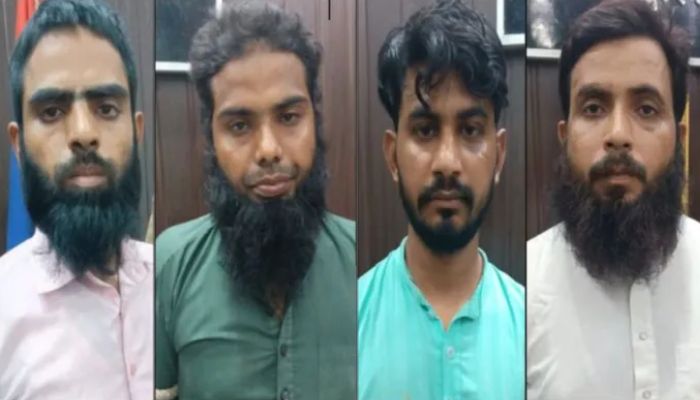
The Islamic conversion racket was exposed in Uttar Pradesh’s Bareilly district recently. Now it has emerged that Hindu youths were shown dreams of marrying four times and living a luxurious life to get them to convert to Islam. The youths, including even handicapped people, were brainwashed and converted to Islam.
A few days back, the police had rescued blind professor Prabhat Upadhyay from a madarsa. He was being held hostage and was being forced to convert. The process of circumcision was going on in the madarsa when the police raided and freed him. The conversion gang had already named him ‘Hamid’. 4 accused, including madrasa maulvi Abdul Majeed, Salman, Mohammad Arif have been arrested. Zakir Naik’s CD, conversion certificate, suspicious transactions in 22 bank accounts and clues related to foreign funding were recovered from the accused.
As per a Dainik Bhaskarreport, on 31st August 2025, when their team reached Kareli village of Subhash Nagar and Faiznagar, they found that the accused Salman and Mohammad Arif, had converted Brijpal, and even his mother and sister to Islam. These people had also converted Piyush and a minor of Faiznagar. The people of the village are terrified about this gang and are afraid that one day, they might make their children their victims.
‘Honey trap’ was executed by creating WhatsApp group
The gang had more than 20 WhatsApp groups. Photos and videos were uploaded every day. Slowly, Hindu youths were trapped by uploading obscene photos and videos. If the youth showed interest, he was called to the madrasa. There were girls who were tasked with brainwashing the Hindu youths. The Maulana would explain to Hindu youths that if they wanted four girls, Jannat and a luxurious life, then they should become a Muslim.
During these brainwashing sessions, Hindu gods and goddesses were abused and insulted. The gang members, while explaining the goodness of Islam, also shared how one can easily accept Islam. The gang explained that the benefits are four wives, house, servants, money and other things. The targeted youths were taught Urdu, Quran and Hadith. The youths were also told that they would also get a chance to become a Maulana or Maulvi.
Arrested in Prabhat’s case, Abdul Majeed trapped Piyush by sending photos and videos of his sister Ayesha. Piyush was first called to a madrasa and was enticed with a chance to marry Ayesha. However, first he was asked to convert to Islam. After brainwashing Piyush, he was circumcised. He was given a new name – Mohammad Ali. Gradually, Piyush himself became a part of the gang and started offering namaz five times a day.
This madrasa of Bareilly came into existence in 2014. Police investigation has revealed the conversion of 6 people in Bareilly so far. However, this figure may increase further.
Everyone was assigned different tasks in the Islamic conversion racket
The mastermind of the gang was Abdul Majeed. He had distributed tasks among his gang members. A member of this gang was one Salman, who worked as a tailor, but his real job was to provide books, CDs and other material related to Islam. Arif used to help him. Another member Faheem used to run a barber shop. He had all the information about the people coming to his shop and used to share it with Majeed.
Madarsa operator Abdul Majeed had connections across 27 districts
The police suspects that these people used to collect donations from different states and run the conversion business with this money. In view of this huge transaction, the agencies are investigating the possibility of funding from other countries including Pakistan.
SP South Anshika Verma said that the network of this gang is not limited to Bareilly only, but is spread across many states of the country. Abdul Majeed’s travel history is linked to more than 27 districts. Rs 13 lakh has been recovered from his account. Also, cheque books of many banks and 21 bank accounts have been found. He said that the police will arrest more people in this case. This incident has once again exposed the seriousness of conversion gangs, which are a big threat to our society.
The United States-India relationship has been in decline ever since the Modi government refused to nominate President Donald Trump for the coveted Nobel Peace Prize and rebuffed his claims of mediating a ceasefire between New Delhi and Islamabad, unlike Washington funded jihadi-shrill, Pakistan.
The characterisation of the Russia-Ukraine conflict as “Modi’s war,” allegations of India financing the bloody conflict and the imposition of additional 25% tariffs (50% in total) on India for purchasing Russian oil while brazenly defending Beijing’s acquisition of the same, have not only damaged present relations but also undermined the diplomatic efforts established between the two nations over the past several decades.
India’s assertiveness and sovereignty have definitely wounded Trump’s fragile ego, however, Prime Minister Narendra Modi appears disinclined to acquiesce to his bullying tactics. Furthermore, while the Republican leader engages in childish outbursts and severely jeopardizes the relationship with the world’s largest democracy, it important to note that he has already allowed anti-Indian elements to join his administration.
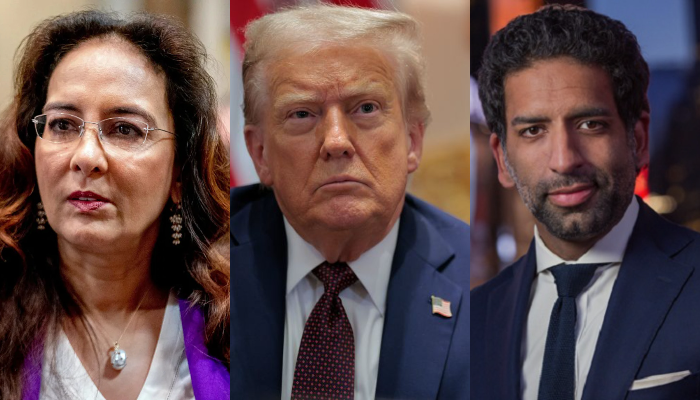
Pro-Khalistan advocate Harmeet Dhillon and half-Pakistani Omeed Malik are two such individuals who belong to the inner circle of the US president.
Who is Omeed Malik
46-year old Omeed Malik was born to Iranian and Pakistani immigrants. He was raised in New Jersey. His parents held Democratic political fundraisers, reported The Free Press. He was also a staunch supporter and voted twice for former president Barack Hussein Obama, donated to Hillary Clinton as well as served in Congress for two New Jersey Democrats.
Nevertheless, Malik grew disillusioned with the party following movements such as “Black Lives Matter,” “Me Too” and other liberal policies, ultimately deciding to switch sides. He is now in the epicentre of the MAGA (Make America Great Again) where power, money and politics collide during Trump’s second term in ways that frequently spark controversy within and outside of the establishment.
His friendship with Donald Trump Junior has reportedly made him associated with the messy financial affairs of the Trump family. The pair met in the summer of 2019 at a Hamptons party and started meeting regularly. He had known Kimberly Guilfoyle, Trump Junior’s then girlfriend for 10 years.
Trump Junior asked Malik to attend a 2020 presidential campaign fundraiser that summer. Afterward, he made his first donation of $5,600 to Trump only a month after giving $2,800 to Joe Biden. The current president’s eldest son is also a partner at Malik’s “1789 Capital” which was the biggest investor in journalist Tucker Carlson’s company. Carlson and Malik became friends in 2015 during their time at Bank of America.
The ex-Fox host, infamous for his anti-Israel rhetoric, has made no secret of his prejudice against India and praised the British Empire as beneficial to the subcontinent. “Strong countries dominate weak countries. This trend hasn’t changed. When the British pulled out of India, they left behind an entire civilisation, a language, a legal system, schools, churches and public buildings, all of which are still in use today,” he argued in 2022, resulting in a backlash.
Malik has been the target of multiple charges due to his firm’s ownership in Tucker Carlson Network (TCN). Laura Loomer painted him as the mastermind behind Carlson’s criticism of Israel and the introduction of guests with divisive opinions. A man who alleged that Adolf Hitler was in heaven was interviewed by Carlson last year.
The same person later returned for another program about sex trafficker Jeffrey Epstein and was described as “the best and most honest popular historian in the United States,” by Carlson. Moreover, MAGA became embroiled in a contentious discussion concerning the Israel-Iran issue when he interviewed the Iranian president in July.
Malik’s name had surfaced once more, including in an X post referring to him as the network’s “key backer.” 1789 Capital is no longer involved as an investor in Carlson’s company which completed the buyout of all its investors in March.
Omeed Malik’s profound ties with Trump administration
Malik was a part of the Council on Foreign Relations, a gathering place for Washington and Wall Street insiders. He contributed money to the Milken Institute, a prominent think tank. Additionally, he was on the board of Network 20/20, a foreign policy nonprofit that has hosted yearly galas honouring liberal figures including the notorious George Soros.
Malik quit Bank of America in 2018 to launch his own financial advising business. According to media reports, the corporation accused him of personal conduct that went beyond corporate standards and he was sacked after being charge with inappropriate behaviour. He adamantly disputed any wrongdoing and sued Bank of America for over $100 million. Later the two sides came to an eight-figure settlement and Malik used the amount to launch Farvahar Partners, his investing company.
Malik landed in Florida in 2021 and quickly rooted himself in the Republican political landscape there. He also joined the conservative donor organisation Rockbridge Network which was founded by JD Vance and Chris Buskirk, a co-founder of 1789 Capital and publisher of the right-wing website American Greatness.
Malik founded “1789 Capital” in 2023 alongside Buskirk and Republican megadonor Rebekah Mercer whose family financed anti-India Breitbart News. The first investment made by his company was in Carlson’s network.
Malik has become one of most well-known entrepreneurs in the Trump world. He spends a lot of time at Mar-a-Lago club in Palm Beach, Florida where he sends cheques to Republican candidates and charities totalling tens of thousands of dollars at a time. A little over ten years before Scott Bessent was appointed treasury secretary for Trump, he met him and assisted him in launching his first hedge fund in 2015.
Bessent recently reiterated Rahul Gandhi’s Adani-Ambani jibe, asserting that the “wealthiest Indian families” are profiting from Russian oil.
Malik is profoundly engaged with the present administration and collaborates on numerous projects with Trump Junior, including the establishment of a “parallel economy” to bolster anti-Democratic enterprises as well as a club alongside investments in various conservative initiatives including those bigoted sentiments towards India, Hindus and Modi government.
Meet pro-Khalistani separatist Harmeet Dhillon
Donald Trump appointed Indian-American Harmeet Kaur Dhillon as the Assistant Attorney General for Civil Rights in the US Department of Justice following his re-election to the office. She has a legal practice called “The Dhillon Law Group” which has offices throughout the country. However, her inclusion in the Trump administration caused her to leave the company in 2025.
Her controversial past and open support for the separatist Khalistan movement rapidly drew scrutiny and objections regarding her position in the administration.
Dhillon has been repeatedly charged with supporting Khalistanis based in the United States and having sympathy for their nefarious agenda. She has been a vocal supporter of the anti-India bandwagon, accusing New Delhi of running “death squads” to the US as well as Canada and implying that the Indian diaspora “participated” in the killing of critics.
Dhillon alleged that Modi government was behind the assassination of Khalistani elements and claimed the Indian American democrats were “strangely silent.” She even asked about the measures taken by the United States government to ensure the safety of the country’s citizens.
Dhillon even cited Pierre Poilievre, the leader of the opposition in Canada who backed Prime Minister Justin Trudeau’s outrageous allegations against India for the “extrajudicial murder of Sikh leader Hardeep Singh Nijjar.” She termed him as a “Sikh leader” rather than a “Khalistani leader” to capitalise on the religious convictions of the Sikh diaspora in the US while also underplaying the radical ideology he promoted.
Canada’s conservative leader joins other Canadian officials in condemning the extrajudicial murder of Sikh leader Hardeep Singh Nijjar. Good to see them unite against this shocking act. https://t.co/vObNOuzl8o
Dhillon even mentioned a Reuters article about purported violations of human rights in India and commented that Punjab’s residents suffered as a result of the recent internet outage. She further stressed that Sikh activists and journalists had been singled out. She was alluding to the internet shutdown in Punjab which was implemented as part of a crackdown on Khalistani preacher and MP Amritpal Singh to prevent the transmission of false information.
Dhillon was previously a supporter of Democratic leader Kamala Harris. According to reports, she made political contributions during the latter’s campaign for district attorney of San Francisco. However, she was seen using caste rhetoric to criticize the former vice president during her appearance on Carlson’s show after the dramatic change in her political allegiances.
Addressing the pronunciation of her name by Harris, Dhillon indicated that she stresses the second syllable, thus making it Kamala whereas Camala is how it is called in India. “She comes from a high-caste Brahmin family. Her mother is a Brahmin,” Dhillon pointed out to which a scornful Carlson responded, “I thought she was oppressed.” She then retorted that Harris is a shape-shifter.
Harmeet K Dhillon brought up Kamala Harris's caste to target her during an interview with Tucker Carlson.
Now the MAGA base is attacking her (again) over her Sikh identity.
— Sensei Kraken Zero (@YearOfTheKraken) June 8, 2025
The Trump administration also perpetuates this unfounded Brahmin-privilege narrative in their ludicrous attacks on India regarding the purchase of Russian oil. White House Trade Adviser Peter Navarro tried to invoke caste politics and insisted that Brahmins are the true beneficiaries of this trade.
Dhillon also faced corruption charges after a June 2023 story in The Guardian revealed that a non-profit under her leadership invested over $1 million in her legal practice.
“The Guardian has found that at least $1.32m has been transferred from the Center for American Liberty (CAL) to her law firm, Dhillon Law Group, in a move one charity expert described as problematic. Additionally, state and federal filings show Dhillon takes a $120,000 salary from CAL for a two-hour work week,” the report unveiled.
Harmeet Dhillon’s equally radical law firm partner
John-Paul-Deol is one of the partners in “The Dhillon Law Group.” He acts like an online troll who regularly insults Hindus and Hindu gods. He sent out a disparaging tweet for Lord Shiva in reaction to a user’s post denouncing terrorist Jarnail Singh Bhindranwale on The Wire’s article, in 2023.
Although the tweet was eventually removed, he has a history of using casteist and racial epithets to attack Hindus and Sikhs who don’t share his beliefs. He frequently targets “Brahmins,” mocks Hindus as “Lindus” and calls them the most “backward civilization.”
Deol, a fervent supporter of the anti-caste Hinduphobic law in the United States, likewise demonised Vedas by associating them with caste. Ironically, he dubbed a fellow Sikh named Puneet Sahani as “Mahachura” for exposing the agenda.
Deol even dog-whistled about an Federal Bureau of Investigation special agent of Indian descent following the arrest of terrorist Harpeet Singh, who was in charge of carrying out assaults in Punjab, by the FBI field office in Sacramento. He shared a photograph of the officer with “accha (okay)” and later justified his action by claiming that the agency had already posted about the latter.
Conclusion
The only thing greater than Trump’s conceited conduct is his misguided notions about the sway he thinks he possesses over the rest of the world. He is employing every fraudulent propaganda peddled by the Indian opposition regarding the connection between Gautam Aadani and Mukesh Ambani with the Modi government as well as the caste-politics plank to provoke voters, in order to intimidate New Delhi into complying with his demands.
Trump’s desperation has led him to reduce international diplomacy to mere local political maneuvering but India stands firm, only adding to his frustration. Nonetheless, the recent developments that might appear unprecedented are, in reality, not particularly surprising, considering Trump’s inflated ego and the anti-India individuals he has surrounded himself with, who have not only refrained from vocally opposing India but have also glorified Khalistani terrorism.
Global politics took a fresh turn after Donald Trump’s tariff move against India backfired. Instead of giving in to pressure, India is mending is further strengthening its ties with Russia, and improving its ties with China. Notably, President Donald Trump has accused India of funding Russia’s war in Ukraine by buying discounted crude oil from Moscow. To pressure India, Trump’s administration has imposed a 50% duty on a wide variety of Indian goods.
The U.S. Department of Homeland Security formally notified the hike, saying the additional taxes were a reaction to “threats to the United States by the Government of the Russian Federation.” Any Indian product arriving after 27th August at 12:01 am (Eastern Daylight Time/EST) would face the extra duty, effectively doubling costs for Indian exporters, the notification read.
Trump signed Executive Order 14329 authorising the move and has even threatened “very big consequences” for any country that continues to trade with Russia. While India has been directly targeted, curiously, Washington has avoided imposing similar penalties on other major buyers of Russian oil, including China and several European nations.
Trump first announced a 25% duty on Indian goods, but he subsequently declared that he would increase it to 50% by adding 25% more as a penalty for purchasing Russian oil, which he insisted “funded war in Ukraine.”
He had set the implementation date for 27th August. Interestingly, his government has been accusing India and the “wealthiest Indian families” of profiting from Russian oil while continually defending Beijing.
This uneven strategy has generated universal criticism that the U.S. is selectively employing tariffs as an instrument of bullying instead of an equitable global policy. For India, the tariffs remind it that economic coercion is being employed as leverage in geopolitics.
India’s response: Energy security first
India, however, has not taken this lying down. Prime Minister Narendra Modi was adamant in his response, “The pressure on us may increase, but we will bear it all.” He emphasised that national interests of farmers, small and medium-scale industries, and common citizens are given priority.
External affairs minister S Jaishankar also strongly endorsed India’s energy decisions, asserting that New Delhi would keep making choices that serve its strategic autonomy and national interest.
Dr Jaishankar pointed out that the US tariff issue is being misrepresented as “oil dispute”. He pointed out that bigger importers like China and European countries have not received the same criticism as India for buying Russian oil.
India has been purchasing more than a million barrels of Russian crude daily, most of it at discounted prices. These imports help India manage fuel costs for its 140 crore citizens, keeping inflation under check in a volatile global market. Indian officials have pointed out that after the war began, Europe diverted much of its oil supply, leaving India with limited options but to look toward Russia.
Dr Jaishankar has also repeatedly reminded Western leaders of their double standards that Europe continues to purchase Russian liquefied natural gas (LNG) in massive quantities, and the United States still imports Russian uranium for its nuclear plants. Yet, India alone is being singled out and punished with tariffs.
Defence ties with Moscow
India’s ties with Russia are not limited to energy. Nearly 60-70% of India’s defence equipment originates from Russia, ranging from fighter jets to missile systems. New Delhi has consistently argued that abruptly cutting off these supplies would harm its national security.
Here too, Western criticism appears selective. NATO member Turkey purchased Russian S-400 missile systems in 2019. While it faced some sanctions, Turkey continues to remain a NATO member and engages in trade with Russia. India, on the other hand, is being targeted despite not being bound by any alliance obligations to the West.
PM Modi at the SCO Summit
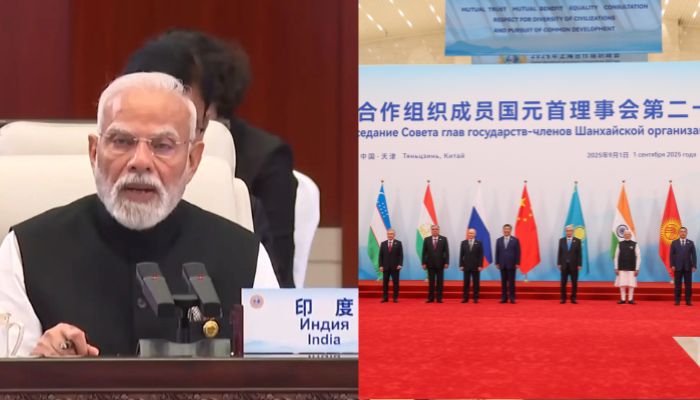
The Indian Prime Minister reached the SCO Summit on Sunday, 31st August. He landed in Tianjin, China and attended the official reception for Heads of State and Heads of Government.
Prime Minister Narendra Modi addressed the plenary session of the Shanghai Cooperation Organisation (SCO) Summit in Tianjin, China, on Monday, 1st September. He spoke strongly against terrorism and outlined India’s priorities as a member of the grouping in the session.
In a major diplomatic success for India, the Shanghai Cooperation Organisation (SCO) strongly condemned the 22nd April terrorist attack in Pahalgam, Jammu and Kashmir, which claimed 26 innocent lives. The Tianjin Declaration, signed on 1st September, expressed deep condolences to the families of the victims and demanded that the perpetrators, organisers, and sponsors of the massacre be brought to justice.
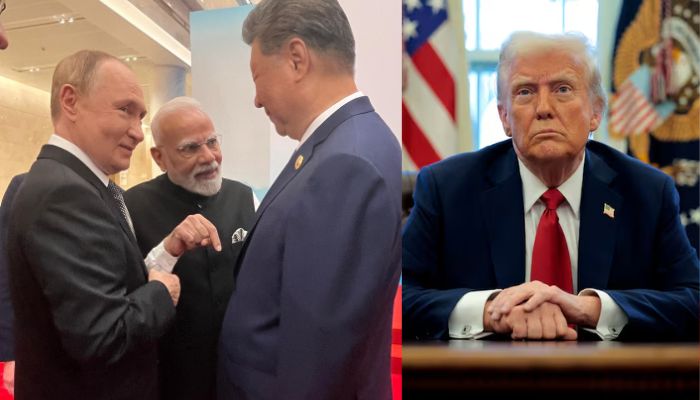
Modi-Putin bonhomie at the SCO summit
On Monday, 1st September, Russian President Vladimir Putin greeted Prime Minister Narendra Modi with a warm hug at the plenary session of the SCO Summit.
The two leaders, hold a bilateral meeting today on the sidelines of the Summit, meeting for the first time after the US imposed 50 per cent tariffs on India over its Russian oil imports.
In a gesture of togetherness, they travelled together in the same car to their bilateral meeting venue. PM Modi shared on X, “After the proceedings at the SCO Summit venue, President Putin and I travelled together to the venue of our bilateral meeting. Conversations with him are always insightful.”
After the proceedings at the SCO Summit venue, President Putin and I travelled together to the venue of our bilateral meeting. Conversations with him are always insightful. pic.twitter.com/oYZVGDLxtc
The optics were unmistakable, far from buckling under U.S. pressure, India is strengthening its ties with Russia.
During his bilateral meeting with Russian President Vladimir Putin in Tianjin, China, Prime Minister Narendra Modi also addressed the war in Ukraine and said, “We have been continuously discussing the ongoing conflict in Ukraine. We welcome all the recent efforts for peace. We hope that all parties will move forward constructively. A way has to be found to end the conflict as soon as possible and establish lasting peace. This is the call of the entire humanity.”
“We welcome all the recent efforts for peace,” PM Modi said in the meeting.
This was not just a symbolic friendship. It was a calculated statement, India will not be bullied out of its choices.
Putin’s upcoming visit to India
Russian President Vladimir Putin will travel to India in December, the Kremlin made it official on Friday, 29th August. His visit comes at a time when ties between Moscow and New Delhi are becoming stronger after the United States imposed tariffs on India over its purchases of Russian oil.
This is going to be one of Putin’s few overseas trips after the International Criminal Court (ICC) issued a warrant against him over the Ukraine war. India is not a signatory to the ICC, so it is not bound to implement the warrant. Vladimir Putin visited Alaska in US earlier this month for a meeting with President Donald Trump, U.S. is also not a member of the ICC.
Putin’s India trip also highlights the fact that in spite of sanctions and political pressure, Russia has been able to hold on to important strategic partners like India.
The Modi-Xi meeting: Improving ties with China
The relationship between India and China has been complicated in recent times, particularly following the Galwan clashes of 2020. However, at the SCO Summit, both leaders hinted at wanting to move on.
Modi posted after the meeting, “Had a fruitful meeting with President Xi Jinping in Tianjin. We reviewed the positive momentum in India-China relations since our last meeting in Kazan. We agreed on the importance of maintaining peace and tranquility in border areas and reaffirmed our commitment to cooperation based on mutual respect, mutual interest and mutual sensitivity.”
Had a fruitful meeting with President Xi Jinping in Tianjin on the sidelines of the SCO Summit. We reviewed the positive momentum in India-China relations since our last meeting in Kazan. We agreed on the importance of maintaining peace and tranquility in border areas and… pic.twitter.com/HBYS5lhe9d
Foreign Secretary Vikram Misri later added that both nations discussed narrowing the trade deficit, increasing investment transparency, and enhancing people-to-people contacts through tourism and direct flights. They also discussed cooperation on transboundary rivers and combined efforts to combat terrorism.
PM Modi invited Xi to the 2026 BRICS Summit in India, and Xi welcomed the invitation, pledging support.
The emerging Russia-India-China triangle
Modi’s visible friendship with both Putin and Xi at the same summit. The three leaders exchanging handshakes, hugs, and smiles was a rare sight.
Interactions in Tianjin continue! Exchanging perspectives with President Putin and President Xi during the SCO Summit. pic.twitter.com/K1eKVoHCvv
Russia’s envoy to international organisations in Vienna, Mikhail Ulyanov, described the growing India-China partnership as part of a “qualitatively new system of international relations,” amid global uncertainties and US tariffs. His comments followed PM Modi’s meeting with President Xi Jinping at the SCO Summit in Tianjin, where both leaders welcomed positive momentum since their last meeting in Kazan.
This is not to indicate that India has turned its back on the West. But it reminds us that Indian foreign policy is not Washington’s or Brussels’ to direct. It is informed by its own national interest, based on strategic autonomy.
Conclusion: India charts its own path
Trump imposed tariffs to punish India for its Russian oil purchases. Instead, they have backfired. India has not reduced its imports; it has doubled down. Far from drifting away from Russia, Modi is welcoming Putin to New Delhi. Far from locking horns with China, Modi is shaking hands with Xi.
The SCO Summit in Tianjin was more than a routine multilateral meeting. It was a turning point, a moment that highlighted India’s refusal to bow to external pressure.
As Putin prepares for his December visit, one thing is clear: Donald Trump’s attempt to bully India has not weakened it. If anything, it has pushed India into an even stronger position, closer to Russia, improving ties with China, and more determined than ever to chart its own independent course in global politics.
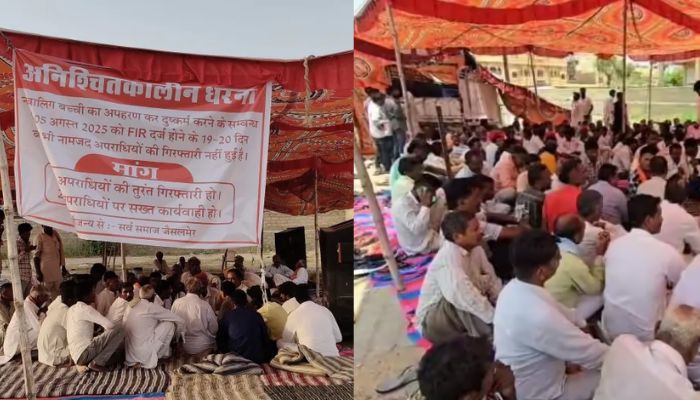
In Rajasthan’s Jaisalmer, a case of kidnapping and gang rape of a minor girl belonging to a Hindu family from Pakistan has come to the fore. The minor Hindu girl was allegedly kidnapped and raped by Mohammad Fazal l and his accomplices Qurban Khan, Sabir Khan and another accused.
On the complaint of the victim, a case was registered in the women’s police station, Jaisalmer on 5th August 2025.
On 25th August, Vishwa Hindu Parishad activists, joined by local Hindus and Pakistani Hindu refugees belonging to the Bhil community, sat on a dharna in front of the Jaisalmer District Collectorate Office. The protest came after the police failed to arrest the accused persons even after 20 days had passed since the complaint was lodged.
The minor victim was living in Mohangarh in Jaisalmer. The main accused is Fazal Mohammad. He is a resident of Haryana’s Ferozepur Jhirka, and currently lives in Mohangarh. He first raped her on Valentine’s Day, kept blackmailing her by making photos and videos, and called her 8-10 times and further exploited her.
Reports say that Fazal was stalking the victim for quite some time and was pressuring her to elope with him and perform Nikah. However, the victim refused his advances and decided to marry a Hindu man. To avenge this, it is alleged, Fazal decided to abduct and rape the victim.
The victim was married on 8th June 2025, after which she came to her maternal home on June 27, 2025. On the night of 28th July, at around 1.30 am, Fazal and his accomplices Qurban Khan, Sabir Khan and another accused abducted her from her house and made her sit in a Swift car, took her to a room located at the Mohangarh bypass and raped her and left her on the road after threatening to kill her.
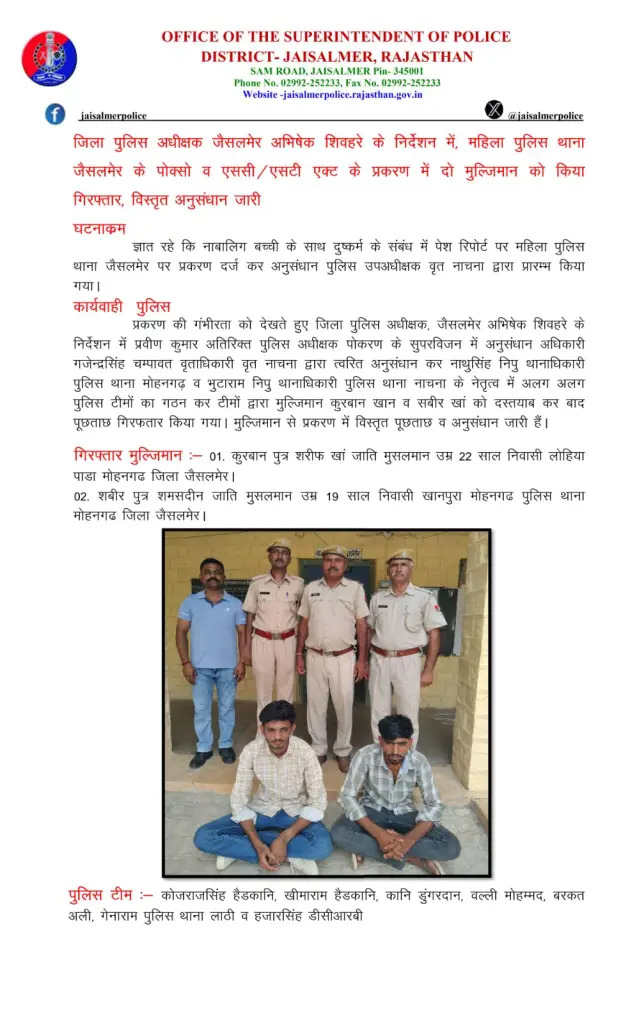
The victim got scared and did not tell anyone about the incident, later she informed her uncle and got an FIR registered. Reports say that amidst protests by Pakistani Hindu refugees and Vishwa Hindu Parishad, the police arrested two of the accused Muslim men while the main accused Mohammad Fazal is still at large.
CO Nachana Police Gajendra Singh, who is investigating the case, said that the police raided many places to find and arrest the accused. On the night of Wednesday, 27th August, 2 accused, Sabir and Qurban, were arrested. The officer added that raids are being conducted in Haryana as well to nab the absconding main accused.
Meanwhile, the victim’s family says that their protest will continue until the main accused is arrested.
The city that became a global case study in how Islamist disinformation can spark real-world violence is once again facing a dangerous provocation. Hindu organisations in Leicester have filed a police complaint against the Muslim Council of Britain (MCB) for branding saffron flags at a Ganesh Chaturthi procession as “extremist.”
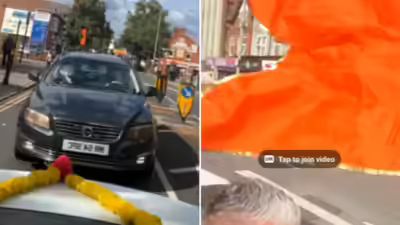
The MCB’s August 28 statement demanded “urgent action” from authorities, alleging that saffron flags in a Hindu religious car procession represented “Hindutva extremism.” But the Hindu Community Organisations Group (HCOG), representing 40 Hindu bodies across Leicester, hit back, calling the claim “factually incorrect, inflammatory, and a gross misrepresentation of a sacred symbol.”
HCOG convenor Vinod Popat stated:
“The saffron flag (Bhagwa Dhwaj) is revered for centuries. It stands for peace, courage, and truth. To brand it extremist not only insults Hindus but risks stoking hostility against our community.”
Echoes of Leicester 2022: When fake news lit the fuse
This latest controversy is not occurring in isolation. On August 28, 2022, after India defeated Pakistan in an Asia Cup cricket match, tensions in Leicester spiraled into unprecedented anti-Hindu riots. What began as a flag-snatching incident on Belgrave Road was twisted into a false narrative of “Hindu extremists chanting racist slogans.”
Leicester Police’s Chief Inspector Paul Allen initially repeated the baseless claim that Hindus shouted “death to Muslims.” Though he retracted his statement the next day, the damage was already done, Islamists seized on it to legitimise violence.
What followed was a month-long orgy of Islamist violence. Hindu homes and cars were vandalised, saffron flags desecrated, and a Hindu youth stabbed. On Ganesh Chaturthi, Hindu families faced assaults: eggs thrown, knives brandished, and women punched. A Hindu temple was besieged, its sacred flag torn down as mobs shouted war cries.
All of this was fuelled by fake news and conspiracy theories: Claims that Hindus abducted a Muslim girl (debunked by police); rumours of a Quran being desecrated, and lies about “busloads of RSS extremists” being ferried to Leicester by a temple (refuted by the bus operator).
Islamist influencers like Majid Freeman and Mohammed Hijab weaponised social media, spreading incendiary videos and rallying mobs with slogans like “Muslim patrol in Leicester.” Videos later surfaced of Hijab openly mocking Hindus as “cowardly” and urging Muslims to “teach them a lesson.”
Think tank report exposed the narrative
In November 2022, the Henry Jackson Society (HJS) released a 39-page report titled “Hindu-Muslim civil unrest in Leicester: ‘Hindutva’ and the creation of a false narrative.” The findings were clear: No evidence of Hindu extremism was found in Leicester. The riots were instigated by Islamist misinformation and mobilisation, not “Hindutva terrorism.” And Social media influencers linked to Dawood Ibrahim, Hizb ut-Tahrir, and even Taliban sympathisers exploited the chaos.
The report warned that media outlets, including BBC, The Guardian, and Reuters, amplified the false Islamist narrative by giving platforms to the very agitators spreading hate, thereby deepening mistrust and endangering Hindus.
Today’s warning signs
The MCB’s attempt to equate saffron flags with extremism bears a chilling resemblance to the same pattern: demonise Hindu symbols, spread panic, and legitimise hostility under the guise of “community concern.”
Hindus in Leicester fear that what should have been a joyous religious festival could once again be twisted into a trigger for hate. As one local leader put it: “Last year, fake stories led to attacks on our homes, families, and temples. Today, the MCB is laying the groundwork for history to repeat itself.”
The Leicester saga underscores a larger lesson
The Leicester saga underscores a larger lesson: Islamist disinformation, when legitimised by institutions and amplified by media, creates real security risks for minority Hindus in the UK. Branding a sacred flag extremist is not just offensive; it’s a deliberate move in a continuing campaign to marginalise, vilify, and endanger an already targeted community.
Unless the British establishment learns from Leicester 2022 and stops pandering to false narratives, Hindus in the UK may continue to pay the price for a dangerous game of victimhood politics.
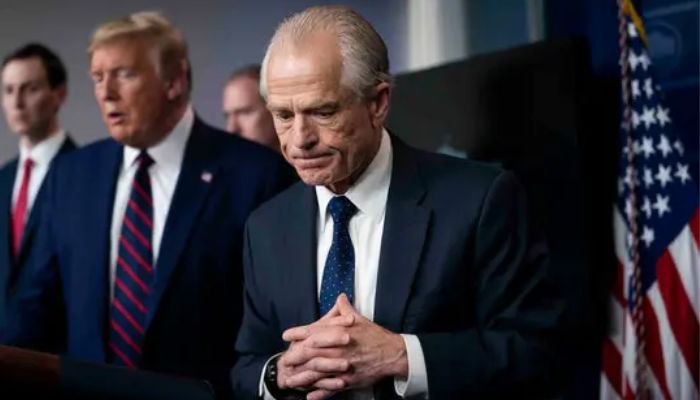
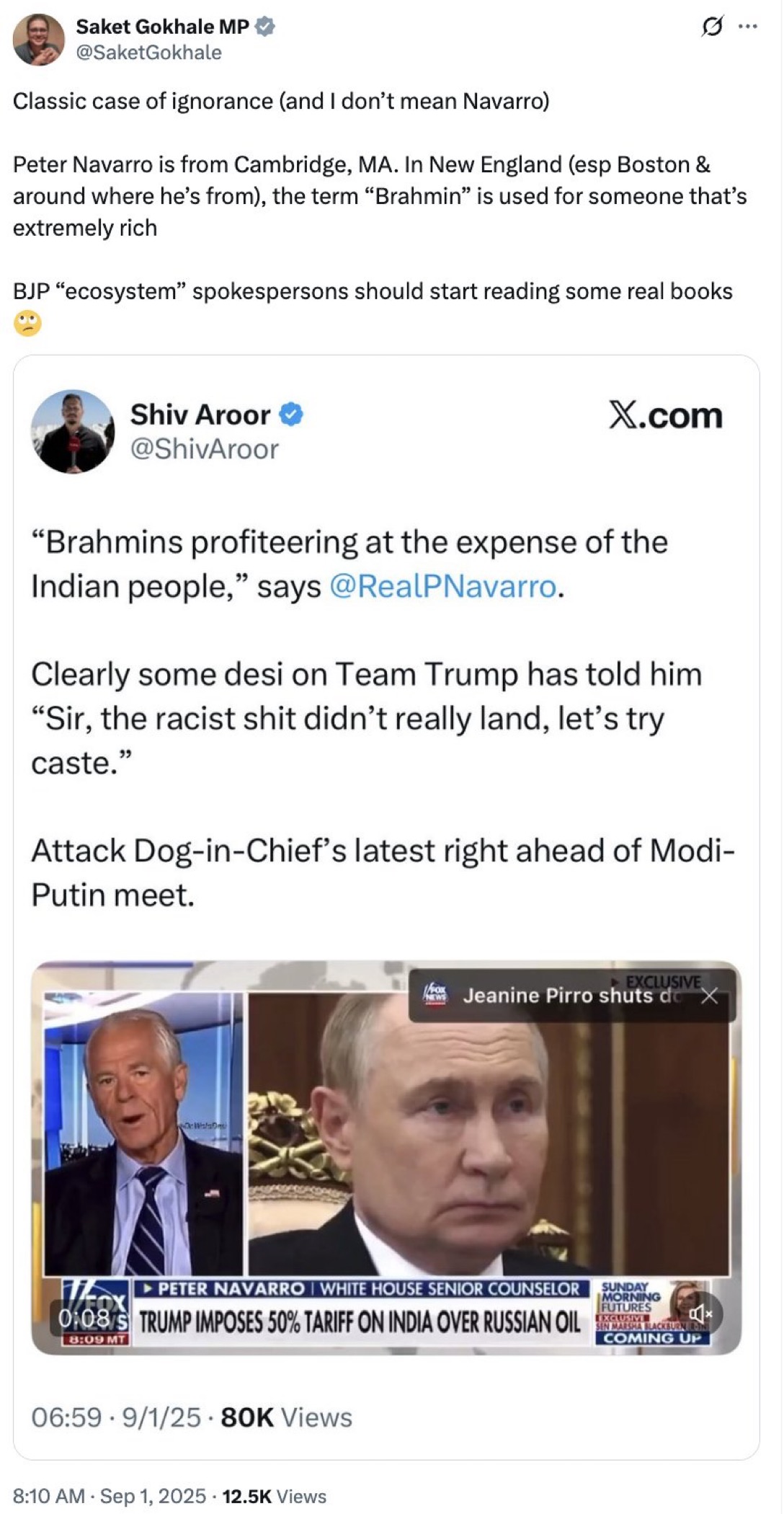
It is said that the more you talk, the more you reveal your true self. White House Trade Adviser Peter Navarro has been on interview giving spree to justify US President Donald Trump’s senseless 50 per cent tariff imposition on India. Marking a shift from usual anti-India rants, Peter Navarro, Trump’s attack dog-in-chief has invoked caste and accused the Brahmins of India of “profiteering at the expense of the Indian people.”
Referring to India as “nothing but a laundromat for the Kremlin”, Navarro, during an interview with Fox News on Monday, accused New Delhi of enabling trade imbalances and geopolitical alliances that run counter to US interests.
Just as Trump would call Prime Minister Narendra Modi and India his friends before launching his tirade against New Delhi, Navarro called PM Modi a “great leader” only to criticise his foreign policy approach. Navarro suggested that India’s engagement with Russia and China undermines its status as the world’s largest democracy.
“And on top of that, by the way, 25 per cent or 50 per cent is because India is the Maharaja of tariffs. They have the highest tariffs in the world. They won’t let us sell to them, so who gets hurt, workers in America, taxpayers in America… Ukrainians in cities are getting killed by Russian drones,” the Navarro said.
“So, you know, look, Modi’s a great leader… But I don’t understand why he’s getting into bed with Putin and Xi Jinping…when he’s the leader of the biggest democracy in the world. I would just simply say to the Indian people. Please, understand what’s going on here. You’ve got Brahmins profiteering at the expense of the Indian people. We need that to stop,” he added.
SHOCKER: Navarro uses caste to divide India. "Brahmins profiteering and Indians suffering…". What an illiterate, uncouth ambassador for the Trump "Regime". This kind of "orientalism" shames America. WE EXPECTED A REACTION, NOT THIS UNHINGED RACIST RANT. pic.twitter.com/w4261ZsLG3
Navarro’s latest anti-India rant followed Prime Minister Modi’s bilateral engagement with Chinese President Xi Jinping on Sunday, on the sidelines of the SCO leaders’ summit, during which both leaders welcomed the positive momentum and steady progress in bilateral relations since their last meeting in Kazan on the sidelines of the BRICS Summit in October 2024.
Earlier on Friday, Navarro accused India of profiting from Russian oil in scalding remarks. “India’s Big Oil lobby has turned the largest democracy in the world into a massive refining hub and oil money laundromat for the Kremlin. Indian refiners buy cheap Russian oil, process it, and export fuels to Europe, Africa, and Asia – shielded from sanctions under the pretence of neutrality,” he said in a series of posts on X.
In an interview with Bloomberg, White House Trade Adviser Peter Navarro blamed India for being the reason behind the US and Europe funding Ukraine against Russia’s aggression. He went on to call the ongoing Russia-Ukraine war as “Modi’s war”.
“Ukraine comes to us and Europe and says give us more money (for its war). Everybody in America loses because of what India is doing. Consumers and businesses lose; workers lose because India’s high tariffs cause jobs, income and higher wages. The taxpayer loses because we got to fund Modi’s war,” Navarro harangued and called Indians “arrogant”.
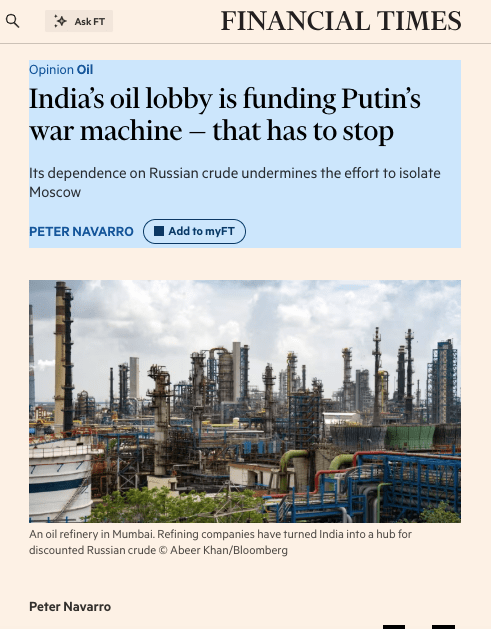
Before this, Navarro wrote an opinion piece titled: “India’s oil lobby is funding Putin’s war machine — that has to stop”, in the Financial Times, and alleged that India’s purchases of Russian crude oil were funding Moscow’s war against Russia and that New Delhi needs to stop this. He asserted that India needs to stop cosying up to Russia and China if it wants to be treated as the US’s strategic partner. Navarro, however, did not advise Trump against mollycoddling Islamic terror sponsor Pakistan and its Madrassa-bred de facto ruler Asim Munir.
Navarro sermonised India on how it should act to be treated as the US’s strategic partner; however, the White House advisor did not give any advice to Washington on what it should do to make India feel equal in this partnership.
Navarro blamed India’s ‘greed’ for deaths in Ukraine while US has been profiteering from Russia-Ukraine war
Interestingly, while Navarro suggests that Ukrainians are dying because India is buying Russian oil for its own profits, however, OpIndia has reported earlier, the US has been the biggest profiteer of the Russia-Ukraine war. During his meeting with the US President in Alaska on 16th August, Russian President Vladimir Putin revealed that US-Russia bilateral trade had expanded by over 20 per cent in the past few months, exposing Trump’s persistent claims that the US has been pressuring Moscow to end its war in Ukraine.
American oil companies have made record profits since the Russia-Ukraine war broke out in 2022. From liquified natural gas (LNG) exports, arms sales, and several other war-driven opportunities, the US is apparently the biggest profiteer of Russia-Ukraine war.
The US sold its cheap LNG to Europe at monumentally higher prices, often four times the US domestic rate citing ‘war-induced disruptions, benefiting from Europe’s urgent need for alternatives. In 2022, US oil and gas companies like Chevron and ExxonMobil registered record profits with a massive 125% jump from pre-war 2021.
Beyond energy, the US also benefitted from Russia-Ukraine war through its defence exports. Donald Trump is selling its weapons to Ukraine through European nations at a 10% premium, essentially to fill America’s coffers while people from both Russia and Ukraine continue to lose life. Trump has even put a cost to US involvement in providing security guarantees to Ukraine.
The US profiteered from Russia-Ukraine war and now even in peace talks, Trump is pursuing profits but Navarro wants the world to believe that India fuelled Russia’s ‘war machine’.
Brahmins profiteering: Is Peter Navarro trying to stir caste unrest in India?
Peter Navarro singled out Brahmins as the elite class, to suggest that Brahmins are benefitting from Russian oil deals. In reality, however, Brahmins do not dominate India’s oil industry. Brahmins are also not dominant in political leadership. Be it business tycoons Mukesh Ambani and Gautam Adani to Prime Minister Modi and Home Minister Amit Shah, none of them are Brahmins.
On the face of it, one would think that Peter Navarro is ignorant about India’s socio-economic landscape and thinks that all affluent businessmen and industrialists, are ‘upper caste’ Brahmins. Even Donald Trump has many a times said that India and Pakistan have been at war for ‘hundreds of years’, being completely ignorant of the fact that hundred years back, Pakistan did not even exist.
However, a deliberate attempt at fomenting caste unrest in India cannot be ruled out, considering the renewed focus of opposition parties on caste politics. Hating on Brahmins earns quick fame in India’s left liberal and anti-Hindu circles.
Navarro’s anti-Brahmin tirade perfectly dovetails with Opposition’s attempts to fuel caste divisions in India
Navarro’s anti-Brahmin remarks align with the opposition’s narrative that somehow the so-called upper caste rich people have taken control over India’s resources while the ‘lower castes’ are deprived of their rights. Not to forget, Congress leader Rahul Gandhi’s ‘caste X-ray’ and ‘Jitni aabadi utna haq’ rhetoric. The Congress leader promised to not only get caste census done but also carry out caste-based wealth redistribution. The DMK’s anti-Brahmin politics has become so entrenched in Tamil Nadu politics that it no longer sparks massive outrage. Several anti-BJP parties have been advocating increasing reservations for the SC, ST and OBCs. Apparently, Navarro has noticed that anti-Brahmin rhetoric sells in India and also can be weaponised against the Modi government.
Navarro’s anti-Brahmin remark seeped in orientalism is not that surprising since even in the United States, caste propaganda has been ongoing for the last few years. In 2023, the California State Senate in the US passed legislation (SB-403) that banned caste-based discrimination in the State. OpIndia reported earlier how anti-Brahmin NGOs like Equality Lab have been pushing caste propaganda in the US.
From Brandeis University in Massachusetts adding caste to its non-discrimination policy in December 2019, the CISCO caste discrimination case, Harvard University, Colby College, Brown University, and California State University adding caste to its non-discrimination policy, the dismissal of CISCO case, Seattle council passing a bill to add caste to protected category, California Senate approving the outrageous SB403 bill to events and seminars vilifying Brahmins and pushing caste discrimination narrative, America is witnessing a significant rise in anti-Hindu, particularly, anti-Brahmin propaganda by anti-Hindu forces, all in the name of social justice and struggle for ‘equality’.
It was reported last year how DEI programs have been normalising hatred against Brahmins in the US. In their attempts to foment same hate Nazis had for Jews, several DEI programs were creating prejudices against Hindus, particularly the so-called “upper-caste” Hindus like Brahmins, who are already at the receiving end of hate campaigns of the anti-Hindu elements.
It seems that even Trump administration’s officials have taken note of the anti-Brahmin rhetoric in India unleashed by Congress and other anti-BJP parties and realised that this narrative can be used to get things done and pressure the Modi government into acting as per US’s whims.
Given the desperate attempts by the opposition at re-mainstreaming caste politics, Navarro’s remarks against Brahmins come across as an attempt to exploit caste divisions. Perhaps, Navarro is trying to push a false and sinister narrative that Brahmin dominance is fuelling Russia-Ukraine war and that the Modi government is favouring Brahmins elites. It seems that after amplifying Donald Trump’s ‘dead economy’ jibe, Rahul Gandhi has found another point to agree on with Trump administration. It won’t be surprising if the opposition parties amplify and try to capitalise on Navarro’s remarks.
From ‘Indian refiners profiteering from Russia-Ukraine war’, ‘Indians are arrogant’, ‘Modi’s war’, to ‘Brahmins profiteering’, Navarro’s verbal attacks on India have levelled up. Intensifying efforts to destroy India-US relations, it seems that Trump administration officials are moving from usual vilification of India to influencing socio-political narratives in India.
Indian Opposition’s anti-Brahmin bent: Rationalisation of Navarro’s hate reflects Opposition’s deep-seated hatred for Brahmins
As if to prove the United States hawks weren’t acting on their own volition and taking cues from their counterparts in India, the Congress ecosystem quickly swung into action, promptly contextualizing and defending Navarro’s abject attempt to fuel caste divisions in India. Several senior Congress leaders came to the fore to rationalize Navarro’s contentious remarks.
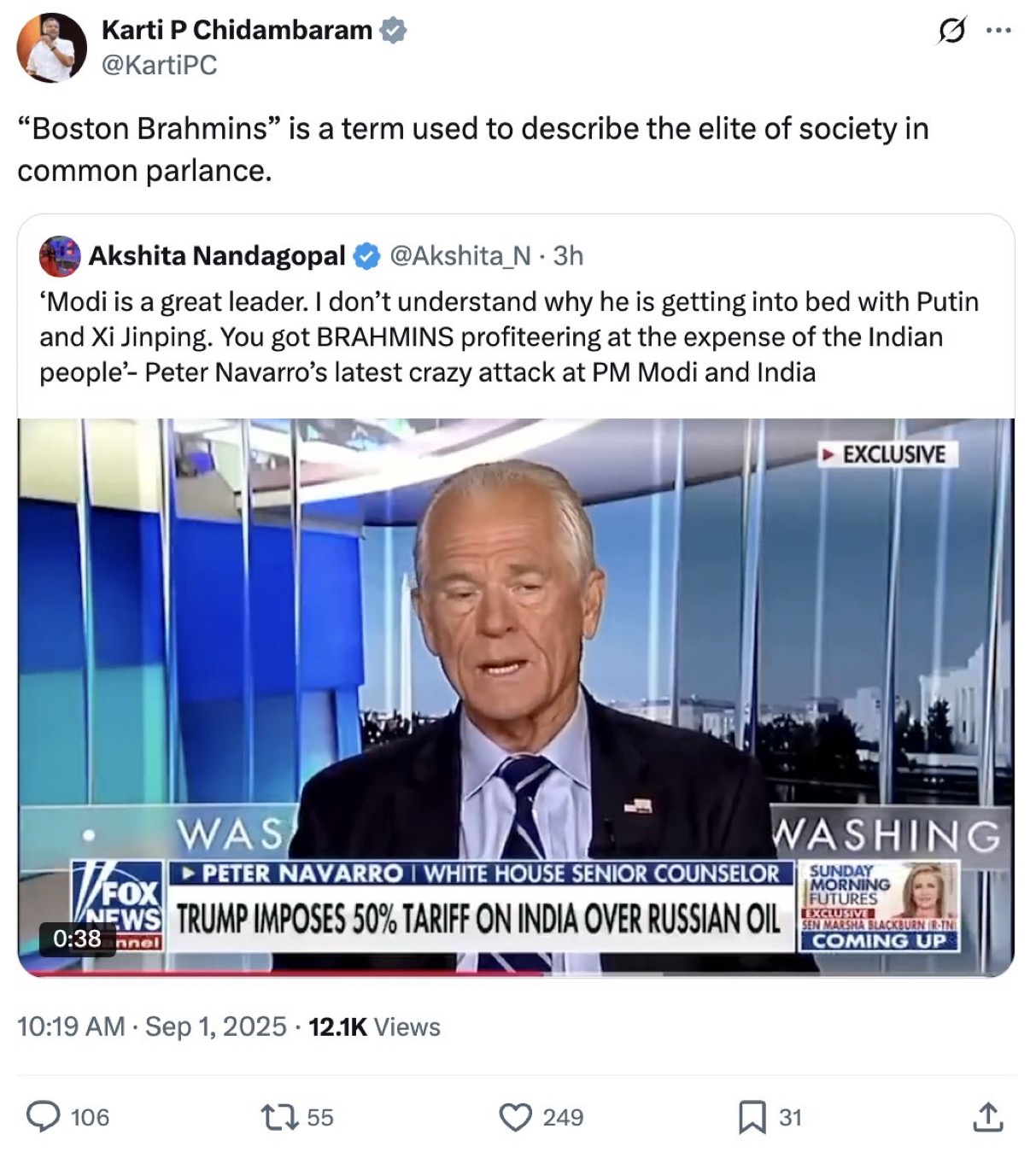
Congress leader Karti Chidambaram defended Navarro’s attack on India claiming, “Boston Brahmins” is a term used to describe the elite of the society in common parlance.
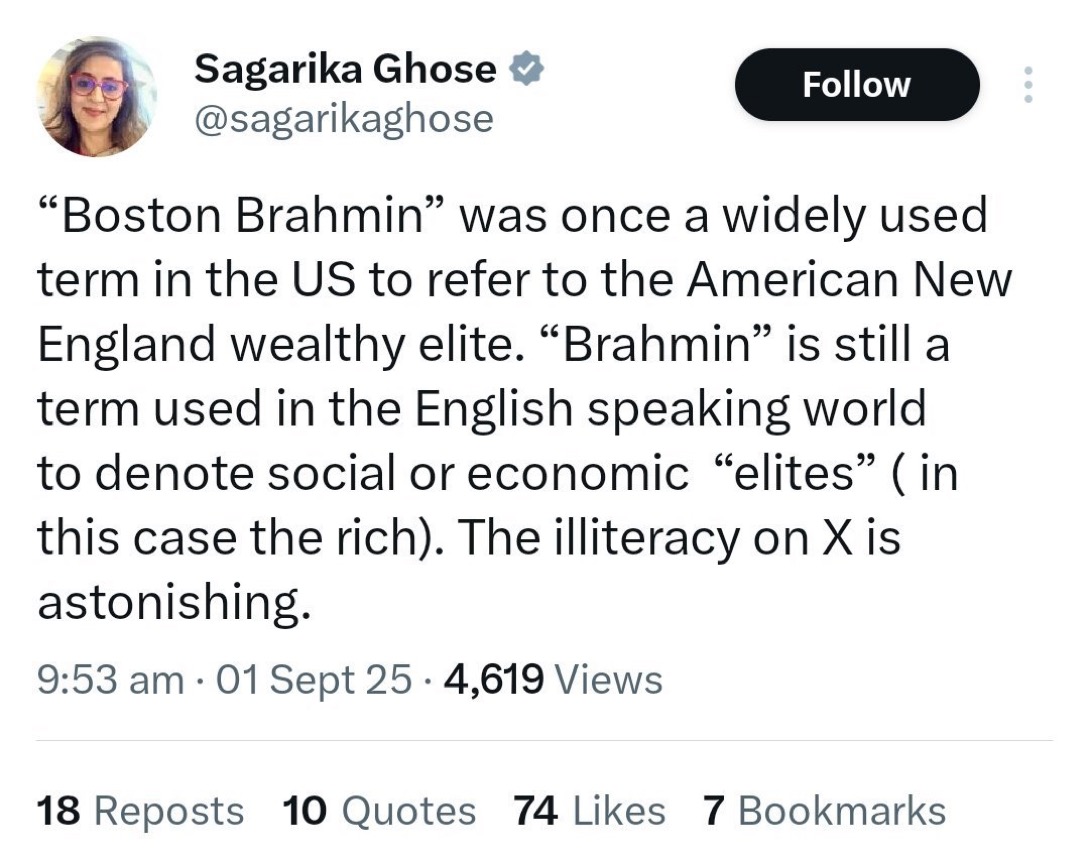
A similar shoddy attempt to rationalize Navarro’s attack was also attempted by TMC Rajya Sabha MP Sagarika Ghose.
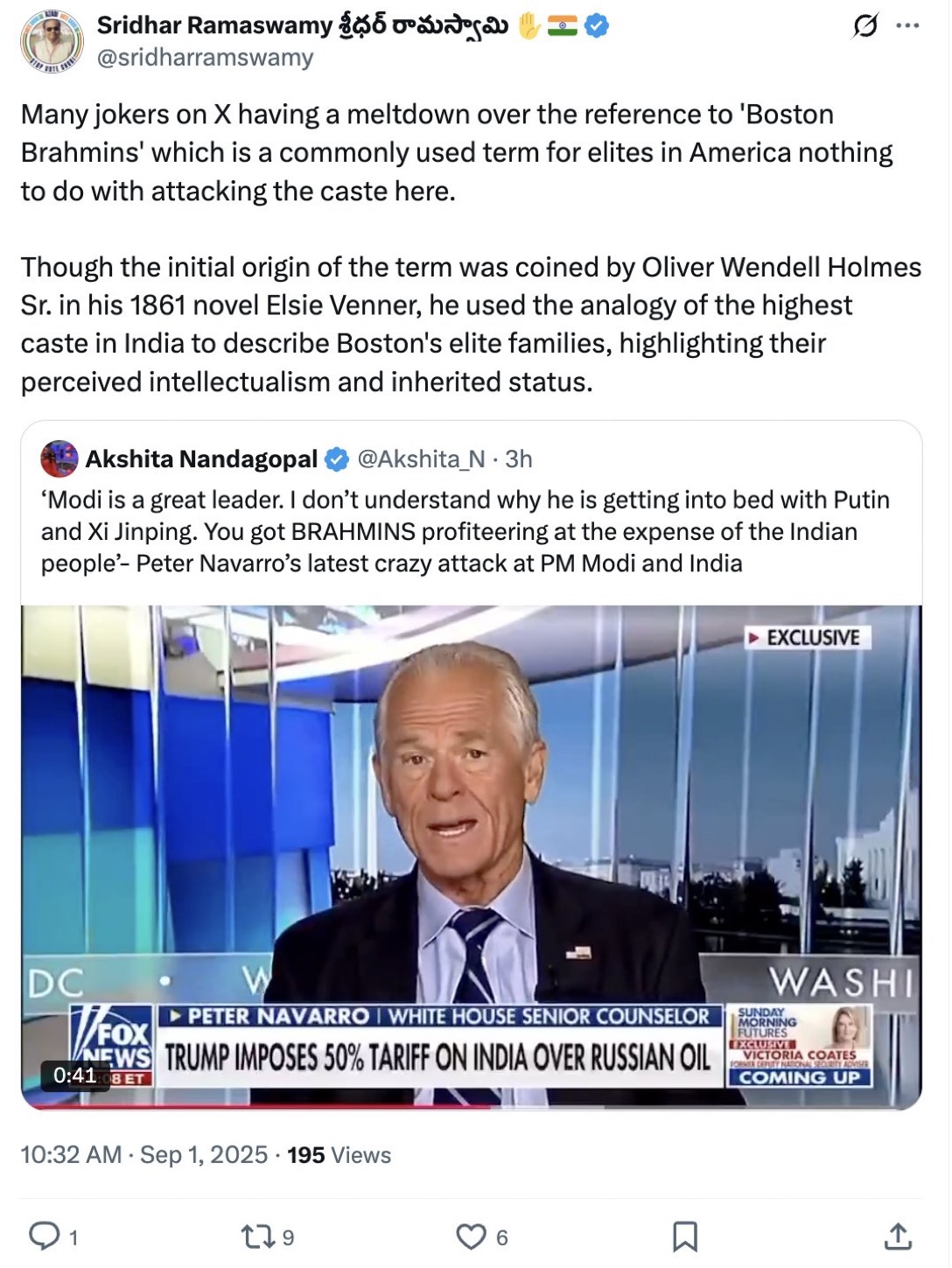
Other members of the Congress ecosystem have also been working overtime to contexualise Navarro’s rant against Brahmins.
What is more revealing than Navarro’s rant is the manner in which sections of India’s Opposition ecosystem rushed to contextualise and rationalise it. Congress functionaries, senior leaders, and even TMC Rajya Sabha members treated his comments as if they were a legitimate critique instead of a brazenly racist and casteist slur directed at a section of Indians. That they do not mind Brahmins being demonised by a foreign official merely because Prime Minister Modi refused to sign a lopsided trade deal with Washington, one that would have dealt a body blow to India’s farming community, exposes their priorities. Political one-upmanship against Modi takes precedence over standing up for Indians when insulted abroad.
Even more telling was the attempt to “intellectualise” Navarro’s remarks by invoking parallels with the so-called “Boston Brahmins.” By rationalising his comments through this lens, Opposition leaders betrayed how little they care when Brahmins are vilified. In fact, it points to a deeper, entrenched hostility within their own political culture. For if a foreigner had made such vile and sweeping remarks about any other community in India, the very same leaders would have rushed to issue unqualified condemnations, projecting themselves as defenders of that community’s honour. Their studied silence, and in some cases, active validation, when it comes to Brahmins reflects a hypocrisy that cannot be missed: selective outrage rooted not in principles, but in political hatred.
On 1st September, in a major diplomatic success for India, the Shanghai Cooperation Organisation (SCO) strongly condemned the 22nd April terrorist attack in Pahalgam, Jammu and Kashmir, which claimed 26 innocent lives. The Tianjin Declaration, signed on 1st September, expressed deep condolences to the families of the victims and demanded that the perpetrators, organisers, and sponsors of the massacre be brought to justice.
Prime Minister Narendra Modi addressed the plenary session of the Shanghai Cooperation Organisation (SCO) Summit in Tianjin, China, on Monday, 1st September. He spoke strongly against terrorism and outlined India’s priorities as a member of the grouping in the session.
Tianjin Declaration of the Council of Heads of State of the Shanghai Cooperation Organisation (SCO)
"The Member States strongly condemned the terrorist attack in Pahalgam on 22 April 2025. They expressed their deepest sympathy and condolences to the families of the dead and the… pic.twitter.com/Wz6xyZDXjm
While addressing the summit, Prime Minister Narendra Modi asked whether open support for terrorism by some nations could ever be tolerated. Notably, during the address, Pakistan’s Prime Minister Shehbaz Sharif was also present. PM Modi declared the Pahalgam terrorist attack an assault on humanity and urged the SCO states to adopt zero tolerance.
He added India had been facing the impact of terrorism for the last four decades. “India has been bearing the brunt of terrorism for the last four decades. Recently, we saw the worst side of terrorism in Pahalgam. I express my gratitude to the friendly country that stood with us in this hour of grief,” he added.
Speaking about India’s role in the SCO, Modi explained that the country’s approach was guided by three key pillars: Security, Connectivity, and Opportunity. “India has played a very positive role as a member of the SCO. India’s vision and policy for the SCO is based on three important pillars. S – Security, C- Connectivity, and O – Opportunity.”
Prime Minister Narendra Modi delivered India’s statement at the Shanghai Cooperation Council (SCO) Members Session in Tianjin, China.
He said, “I am happy to participate in the SCO Summit. I want to thank President Xi Jinping for giving us a grand welcome. Today is the Independence Day of Uzbekistan, I congratulate them as well…”
PM Modi meets Russian President Putin
Ahead of the plenary session, Prime Minister Modi met Russian President Vladimir Putin and Chinese President Xi Jinping. “Interactions in Tianjin continue! Exchanging perspectives with President Putin and President Xi during the SCO Summit,” PM Modi posted on X.
Interactions in Tianjin continue! Exchanging perspectives with President Putin and President Xi during the SCO Summit. pic.twitter.com/K1eKVoHCvv
The interaction between PM Modi and President Putin came ahead of their bilateral meeting, which is scheduled to take place after the plenary session.
PM Modi’s meetings with world leaders in Tianjin on Sunday
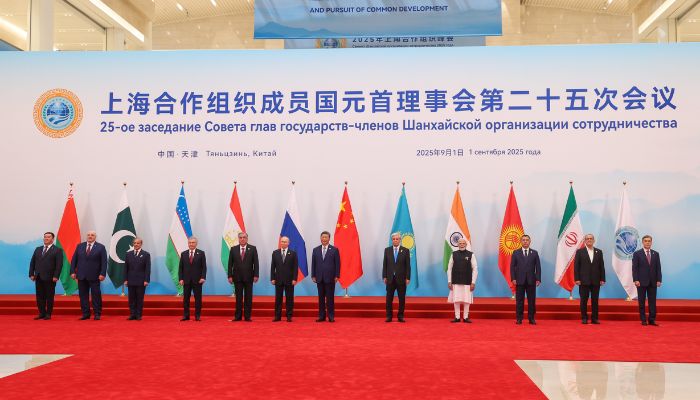
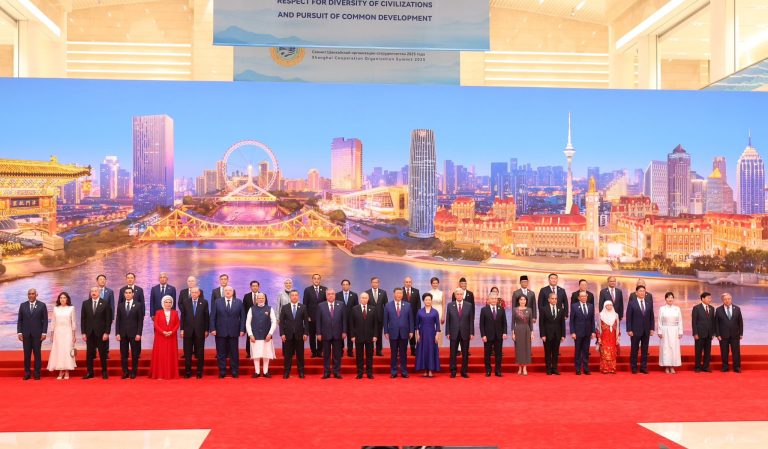
The Prime Minister’s schedule during the SCO Summit began a day earlier. He landed in Tianjin on Sunday, 31st August and attended the official reception for Heads of State and Heads of Government. All the delegates attending the SCO summit, including PM Modi, were received at the venue by Chinese President Xi Jinping and First Lady Peng Liyuan. After Xi greeted all the leaders, the customary group photo of all the leaders was taken.
After the official ceremony, Prime Minister Modi met with several world leaders ahead of the gala dinner and shared details of his interactions on X.
PM Modi interacted with several heads of state/government at the venue. He first met Nepali Prime Minister KP Oli. Posting a photo on X, he said, “India’s relations with Nepal are deep-rooted and very special.”
After that, he met Maldives President Mohamed Muizzu, a month after he visited Maldives. PM Modi posted on X, “Interacted with President Muizzu of Maldives on the sidelines of the SCO Summit in Tianjin. India’s developmental cooperation with the Maldives is greatly beneficial for our people.”
Interacted with President Muizzu of Maldives on the sidelines of the SCO Summit in Tianjin. India’s developmental cooperation with Maldives is greatly beneficial for our people.@MMuizzupic.twitter.com/DyQJH77Snc
Prime Minister Modi also met Mostafa Madbouly, the PM of Egypt, at the SCO Summit. During the interaction, he fondly recalled his Egypt visit a few years ago. He added that India-Egypt friendship is scaling newer heights of progress!
Met PM Mostafa Madbouly of Egypt at the SCO Summit. Fondly recalled my Egypt visit a few years ago. India-Egypt friendship is scaling newer heights of progress! pic.twitter.com/SvPSY7llZ8
Next, he met Alexander Lukashenko, the president of Belarus. “We both are very optimistic about the beneficial opportunities ahead as far as our nations are concerned,” Modi posted on X. Notably, Belarus has been an important ally of Russia in the war against Ukraine.
Glad to have met President Alexander Lukashenko of Belarus. We both are very optimistic about the beneficial opportunities ahead as far as our nations are concerned. pic.twitter.com/GWd2k5Xs33
PM Modi also talked to Emomali Rahmon, the President of Tajikistan. He said that India’s trade and cultural linkages with the landlocked Central Asian nation are increasing, and this is a wonderful sign.
He also met the president of another Central Asian country, President Tokayev of Kazakhstan. “Our nations are working closely in many key sectors, including energy, security, healthcare and pharma,” PM Modi posted on ?.
In a significant meeting, he also met Senior General Min Aung Hlaing, the acting president of Myanmar. PM Modi said in a post on ?, “Myanmar is a vital pillar of India’s Act East and Neighbourhood First Policies. We both agreed that there is immense scope to boost ties in areas like trade, connectivity, energy, rare earth mining, and security.”
Senior General Min Aung Hlaing and I held talks in Tianjin. Myanmar is a vital pillar of India’s Act East and Neighbourhood First Policies. We both agreed that there is immense scope to boost ties in areas like trade, connectivity, energy, rare earth mining and security. pic.twitter.com/Sxs32TsiTK
At the SCO summit, Prime Minister Narendra Modi then had a brief talk with Phạm Minh Chính, the Prime Minister of Vietnam. He said that India is very keen to further deepen ties with Vietnam in defence, trade, green energy, and more.
Prime Minister Narendra Modi then had a meeting with Thongloun Sisoulith, the prime minister of Lao People’s Democratic Republic, another South East Asian nation. He said that “Closer friendship between our nations is greatly beneficial, especially ties in trade as well as culture.”
PM Modi also interacted with Serdar Berdimuhamedow, President of Turkmenistan. They exchanged perspectives on diverse issues.
After meeting Armenian President Nikol Pashinyan, PM Modi called it a very good interaction. “India and Armenia share warm and growing ties, rooted in friendship and mutual cooperation,” he said. This was the first direct interaction between the Indian Prime Minister and Armenian President after the US-brokered deal between Armenia and Azerbaijan.
Very good interaction with Prime Minister of Armenia, Mr. Nikol Pashinyan. India and Armenia share warm and growing ties, rooted in friendship and mutual cooperation.@NikolPashinyanpic.twitter.com/fiK1q3kLOe
PM Modi also posted on X about meeting President Shavkat Mirziyoyev of Uzbekistan. “India and Armenia have warm and expanding relations based on friendship and cooperation,” he added.
Met President Shavkat Mirziyoyev of Uzbekistan. India and Uzbekistan are bound by a dynamic partnership that continues to expand across culture, economy and people-to-people ties. pic.twitter.com/iysjTCJv2K
He then met with Sadyr Japarov, the president of Kyrgyzstan. “A very fruitful discussion with Kyrgyz President Sadyr Japarov in Tianjin. Our countries enjoy a strong partnership and we will continue cooperating to put more dynamism into our developmental cooperation,” he said in a post on X.
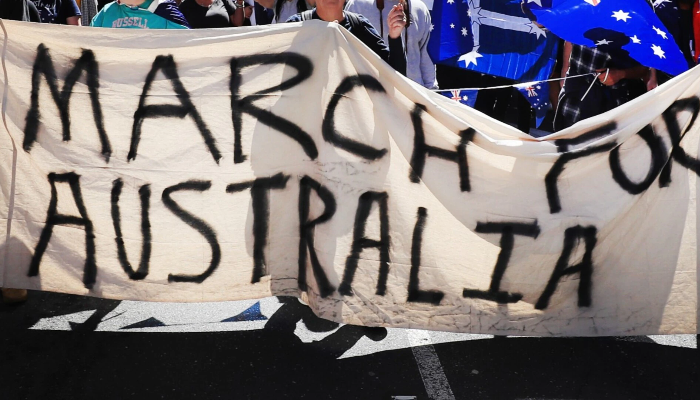
On 31st August, thousands of Australians participated in anti-immigration marches nationwide and carried placards that specifically targeted Indian migrants. Notably, the authorities denounced the events as being associated with neo-Nazis and inciting hate. The “March for Australia” banner was used to organise the rallies in Sydney, other state capitals, and regional hubs.
Its website read, “Our streets have seen growing displays of anti-Australian hatred, foreign conflicts, and disintegrating trust, whilst mass migration has torn at the bonds that held our communities together. This march is a stand for the people, culture, and nation that built Australia and for our right to decide its future.”
Anti immigration protests in Australia singles out Indians
"March for Australia" group's manifesto & flyers prominently feature statistics about Indian migration causing "cultural replacement."
The goal, according to the group, was to urge a halt to mass immigration, which “the mainstream politicians never have the courage to do.” Right-wing extremism, including neo-Nazi protests, has been on the rise in Australia, where one in two people was born abroad or has an overseas parent.
“All Australians, no matter their heritage, have the right to feel safe and welcome in our community,” Prime Minister Anthony Albanese government stated in an official statement. On the other hand, the agitators claimed to be concerned about infrastructure, hospitals, crime, wages, traffic, housing, water supply, culture, and the loss of community.
?BREAKING: Protests across Australia have erupted.
500,000 patriots on the streets across the country demanding remigration.
The organisers clarified that Indian migration is their primary issue, portraying it as a danger to the country’s cultural heritage. “More Indians in 5 years than Greeks and Italians in 100,” the flyer claimed. It further elaborated,” And that’s just from one country,” while referring to immigration as a “replacement plan.”
“We know migration has a cultural impact. This isn’t a slight cultural change – it’s a replacement, plain and simple. Australia is not an economic zone to be exploited by international finance,” the group argued.
Currently, almost 3 percent of the country’s population is Indian-born. The numbers reportedly doubled from 2013 to 2023 to reach roughly 845,800. Additionally, Indians were similarly singled out in a pre-event Facebook post with the promotional materials.
Neo-Nazi launch an attack
During the rallies, a Sydney police officer was attacked, while a group of women in Melbourne were hurt. A group of men, some of whom belonged to the neo-Nazi National Socialist Network, attacked Camp Sovereignty, a permanent First Nations protest site in Melbourne’s Kings Domain, reported the Guardian.
The video captured the sun setting as at least fifty individuals, primarily dressed in black, approached the Camp Sovereignty location. They were “completely unprovoked, they ran up the hill and immediately targeted women, grabbing them, throwing them to the ground, and striking them in the head,” according to Camp Sovereignty and the Black Peoples Union.
According to the camp, two individuals were admitted to the hospital with serious head injuries, including one who had a large cut on their head, and four others needed medical assistance. All of the victims were younger women of colour. They raised extremist slogans like “white power,” “white man’s land,” alongside sexist and racist slurs.
Govt slams the protests, calls them neo-Nazi
Murray Watt, a senior minister in the Labor Government stated, “We absolutely condemn the March for Australia rally that’s going on today. It is not about increasing social harmony,” reported Sky News. He added, “We don’t support rallies like this that are about spreading hate and that are about dividing our community.” Watt also highlighted that the demonstrations were “organised and promoted” by neo-Nazi outfits.
“Multiculturalism is an integral and valued part of our national identity. We stand with all Australians, no matter where they were born, against those who seek to divide us and who seek to intimidate migrant communities. We will not be intimidated. This brand of far-right activism grounded in racism and ethnocentrism has no place in modern Australia,” Minister for Multicultural Affairs Anne Aly declared.
“There is no place in our country for people who seek to divide and undermine our social cohesion. Nothing could be less Australian,” lashed out Tony Burke, Minister for Home Affairs.
Protesters holding anti-immigration signs and Australian flags gathered at Flinders Street station in Melbourne before marching to the state parliament. Speaking during the rally, Thomas Sewell, a neo-Nazi, asserted that “his men” had spearheaded the march. “If we do not stop immigration, then our death is certain,” he announced.
Meanwhile, hundreds of people held a counter-rally organised by the Refugee Action Coalition in Sydney. A representative expressed, “Our event shows the depth of disgust and anger about the far-right agenda of March For Australia.”
Australia implemented laws this year that forbid the Nazi salute and the sale or display of symbols linked to terrorist organisations in reaction to a series of antisemitic assaults on synagogues, structures, and vehicles after Israel’s war in Gaza started in October 2023.
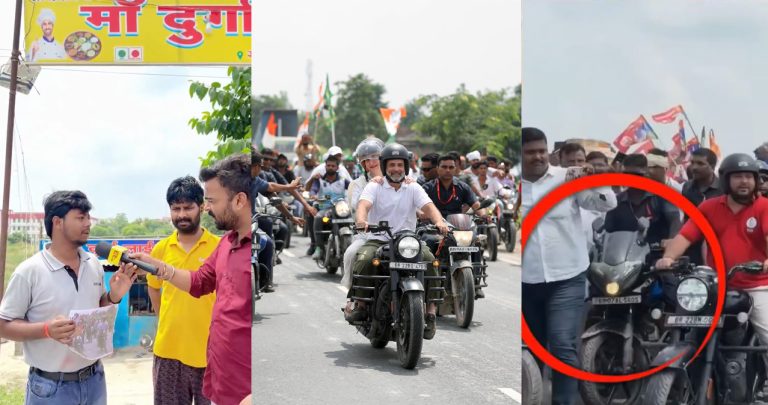
A man from Bihar’s Darbhanga has come forward with serious allegations that his Pulsar 220 motorcycle has gone missing after allegedly being taken forcefully by SPG commandos accompanying Congress leader Rahul Gandhi during the Voter Adhikar Yatra. Dhaba owner Shubham Saurabh said that the incident took place on August 27 when the rally went through Darbhanga.
Saurabh alleged that the SPG commandos had taken 7 motorcycles from the spot after having tea at his Dhaba. But while 6 of them were returned, he has not got his motorcycle back. He said that missing Pulsar 220 with registration number BR 07 AL 5605 is registered under his father-in-law Anil Rai’s name.
He said the incident unfolded at his roadside eatery near the NH-27. The commandos, he claimed, initially had tea at the Dhaba and then insisted on borrowing the parked motorcycle for a 2-km rally from Shahpur Chowk to Shobhan Chowk. Despite his initial refusal, he acceded under pressure. Along with the Pulsar 220, they also took six other motorcycles from the place similarly.
बिहार के दरभंगा में ‘वोटर अधिकार यात्रा’ के दौरान राहुल गांधी की सुरक्षा टीम ने एक आम आदमी की बाइक हड़पी, 3 दिन से मालिक परेशान!
क्या यह सही है कि एक बड़े नेता की सुरक्षा के नाम पर किसी भी आम इंसान का सामान बिना अनुमति के ले लिया जाए? pic.twitter.com/XLpVSgDACT
“I was attending visitors at the hotel when six security personnel came, asking for tea. In the meanwhile, they found the rally passing and requested me to hand over the keys of seven bikes parked on the campus, asking me to sit in the four-wheeler they had come with,” he said.
As per Shubham Saurabh, the other six bikes were later found scattered across the town, but his own remains untraceable. He said that he searched for the vehicle at various places, but could not find it. He talked with several people, but nobody could say anything.
In pursuit of his bike, Saurabh and his family scoured neighbouring districts of Muzaffarpur, Sitamarhi, Dhaka, and Motihari. He said that he has already spent around ₹15,000 to ₹20,000 in these searches. He further claimed that he has call recordings with the security personnel, who asked him to go to various places in search of the motorcycle.
Congress MLC Madan Mohan Jha said that Saurabh had been promised assistance after a scheduled party engagement in Patna. He added that there is a possibility that the motorcycle was stolen.
Meanwhile, local police officials confirmed they are looking into the matter, though Saurabh only informed the police verbally about the incident, and a formal written complaint is yet to be lodged.
Prime Minister Narendra Modi on Sunday attended the official reception for Heads of State and Heads of Government at the Shanghai Cooperation Organisation (SCO) Summit in Tianjin, China. After the Chinese president officially welcomed all the delegates, PM Modi met with several world leaders ahead of the gala dinner.
All the delegates attending the SCO summit including PM Modi was received at the venue by Chinese President Xi Jinping and First Lady Peng Liyuan. After Xi greeted all the leaders, the customary group photo of all the leaders was taken.
After that, PM Modi interacted with several heads of state/government at the venue. He first met Nepali Prime Minister KP Oli. Posting a photo on X, he said, “India’s relations with Nepal are deep-rooted and very special.”
Interacted with President Muizzu of Maldives on the sidelines of the SCO Summit in Tianjin. India’s developmental cooperation with Maldives is greatly beneficial for our people.@MMuizzupic.twitter.com/DyQJH77Snc
After that he met Maldives President Mohamed Muizzu, a month after he visited Maldives. PM Modi posted on X, “Interacted with President Muizzu of Maldives on the sidelines of the SCO Summit in Tianjin. India’s developmental cooperation with Maldives is greatly beneficial for our people.”
Met PM Mostafa Madbouly of Egypt at the SCO Summit. Fondly recalled my Egypt visit a few years ago. India-Egypt friendship is scaling newer heights of progress! pic.twitter.com/SvPSY7llZ8
Prime Minister Modi also met Mostafa Madbouly, the PM of Egypt, at the SCO Summit. During the interaction he fondly recalled his Egypt visit a few years ago. He added that India-Egypt friendship is scaling newer heights of progress!
Glad to have met President Alexander Lukashenko of Belarus. We both are very optimistic about the beneficial opportunities ahead as far as our nations are concerned. pic.twitter.com/GWd2k5Xs33
Next, he met Alexander Lukashenko, the president of Belarus. “We both are very optimistic about the beneficial opportunities ahead as far as our nations are concerned,” Modi posted on X. Notably, Belarus has been important ally of Russia in the war against Ukraine.
Always a pleasure to interact with Mr. Emomali Rahmon, the President of Tajikistan. India’s trade and cultural linkages are increasing and this is a wonderful sign. pic.twitter.com/9J5oRm8HXN
PM Modi also talked to Emomali Rahmon, the President of Tajikistan. He said that India’s trade and cultural linkages with the landlocked Central Asian nation are increasing and this is a wonderful sign.
Productive exchange of views with President Tokayev of Kazakhstan. Our nations are working closely in many key sectors, including energy, security, healthcare and pharma.@TokayevKZpic.twitter.com/l74Wyhem6X
He also met the president of another Central Asian country, President Tokayev of Kazakhstan. “Our nations are working closely in many key sectors, including energy, security, healthcare and pharma,” PM Modi posted on ?.
Very productive conversation with PM Phạm Minh Chính of Vietnam. India is very keen to further deepen ties with Vietnam in defence, trade, green energy and more. pic.twitter.com/EYzpOnG8FE
At the SCO summit, Prime Minister Narendra Modi then had a brief talk with Phạm Minh Chính, the Prime Minister of Vietnam. He said that India is very keen to further deepen ties with Vietnam in defence, trade, green energy and more.
Senior General Min Aung Hlaing and I held talks in Tianjin. Myanmar is a vital pillar of India’s Act East and Neighbourhood First Policies. We both agreed that there is immense scope to boost ties in areas like trade, connectivity, energy, rare earth mining and security. pic.twitter.com/Sxs32TsiTK
In a significant meeting, he also met Senior General Min Aung Hlaing, the acting president of Myanmar. PM Modi said in a post on ?, “Myanmar is a vital pillar of India’s Act East and Neighbourhood First Policies. We both agreed that there is immense scope to boost ties in areas like trade, connectivity, energy, rare earth mining and security.”
Happy to have met President of Lao PDR, Mr. Thongloun Sisoulith on the sidelines of the Tianjin SCO Summit. Closer friendship between our nations is greatly beneficial, especially ties in trade as well as culture. pic.twitter.com/08s0FxlQLp
Prime Minister Narendra Modi then had a meeting with Thongloun Sisoulith, the prime minister of Lao People’s Democratic Republic, another South East Asian nation. He said that “Closer friendship between our nations is greatly beneficial, especially ties in trade as well as culture.”
Exchanged perspectives on diverse issues with Mr. Serdar Berdimuhamedow, President of Turkmenistan during our conversation in Tianjin earlier this evening. pic.twitter.com/HzB4yYPpqS
PM Modi also interacted with Serdar Berdimuhamedow, President of Turkmenistan. They exchanged perspectives on diverse issues.
Very good interaction with Prime Minister of Armenia, Mr. Nikol Pashinyan. India and Armenia share warm and growing ties, rooted in friendship and mutual cooperation.@NikolPashinyanpic.twitter.com/fiK1q3kLOe
After meeting Armenian President Nikol Pashinyan, PM Modi called it a very good interaction. “India and Armenia share warm and growing ties, rooted in friendship and mutual cooperation,” he said. This was first direct interaction between Indian and Armenian President after the US-brokered deal between Armenia and Azerbaijan.
Met President Shavkat Mirziyoyev of Uzbekistan. India and Uzbekistan are bound by a dynamic partnership that continues to expand across culture, economy and people-to-people ties. pic.twitter.com/iysjTCJv2K
PM Modi also posted on X about meeting President Shavkat Mirziyoyev of Uzbekistan. He said, “India and Uzbekistan are bound by a dynamic partnership that continues to expand across culture, economy and people-to-people ties.”
A very productive conversation with Kyrgyz President Sadyr Japarov in Tianjin. Our nations share a robust partnership and we will keep working together to add more vigour to our developmental cooperation. pic.twitter.com/e9v3vsSOgY
He further had an interaction with Sadyr Japarov, the president of Kyrgyzstan. Posting about it on X, he said, “A very productive conversation with Kyrgyz President Sadyr Japarov in Tianjin. Our nations share a robust partnership and we will keep working together to add more vigour to our developmental cooperation.”